Category Archives: Dry Flies

Parachute Adams – 02/27/2015

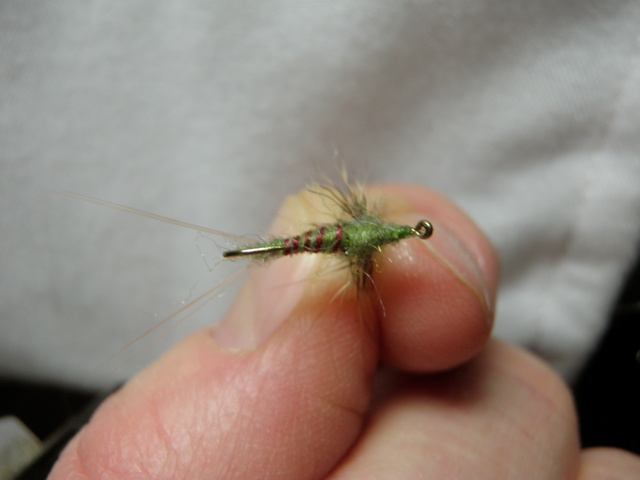
When I began tying flies in the 80’s, the classic Adams ruled top five lists of “must have” flies. It did not imitate anything; it imitated everything, if that makes any sense. It was characterized as a general buggy looking dry fly that could pass for many different aquatic food sources of trout. I can remember reading several articles where accomplished fly fishermen swore they never carried any flies on the water except for a size 14 or 16 Adams. A classic Adams possessed a pair of barred grizzly hackle tips for wings, a medium gray body, brown hackle fiber tails and grizzly and brown hackle wound around the hook shank behind and in front of the wing. The distinguishing characteristic of this tie to me was the barred hackle tip wings.

Fast forward to 2015, and as with most things, there are all manner of permutations of the Adams. There are Adams wet flies and Adams dry flies with wings that are angled backward. Some were created with egg sacs, and an array of materials have been substituted for the wings, body and tails. At what point does an Adams cease to be one and become a totally different fly? Of course I probably skipped the most significant variation of the Adams; the parachute Adams.

A Parachute Adams

My fishing friend Danny has been joining me for fly tying sessions on Tuesday nights, and I introduced him to many of my productive favorites. Two weeks ago, however, I completed my standards so I asked him what he would like to tie. Danny quickly replied, “parachute Adams”. I had not tied any of these for quite some time, so I agreed we would produce some. Before we started, we viewed a YouTube video where a tier demonstrated how to tie off the parachute hackle against the wing post instead of to the hook shank. I prefer this method as it greatly reduces the risk of trapping hackle fibers in front of the wing while tying off and whip finishing. Danny began with a white poly wing post while I elected to attach calf body hair. The originator was probably shuddering at this scandalous defamation of the classic Adams and the substitution for two barred hackle tips.

Five Parachute Adams Ready for Action

Danny produced a very passable first prototype and then proceeded to knock out eleven more and took home a dozen beautiful parachute Adams dry flies. With each fly, Danny’s wing post and tie off improved until his flies surpassed the quality of store bought imitations. I meanwhile churned out five, and three left the vise with calf tail wings while two possessed pink poly wings. After I completed five, I moved on to another new fly pattern I planned to test in 2015, but that is the subject of another post.

May the Adams live forever in all its different forms. It appeals to all fishermen and all fish.

Deer Hair Caddis – 02/16/2015

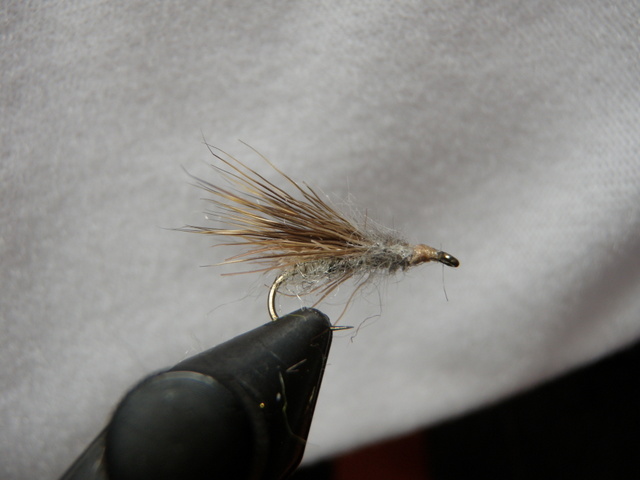
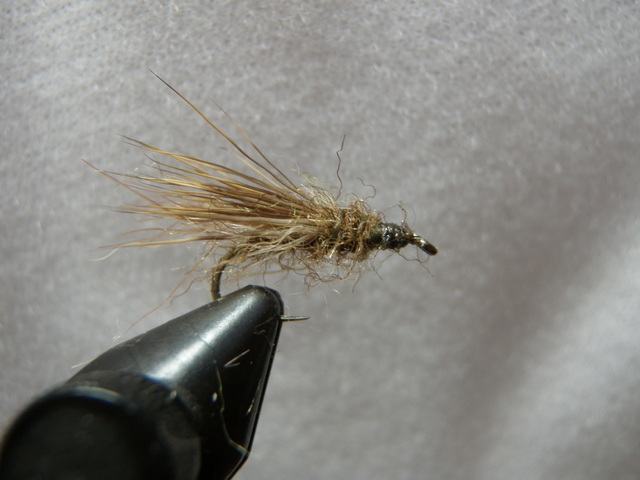
Last winter I sorted through my four canisters of damaged and unraveling flies and consolidated all the caddis into one container. As I resumed my off season tying in October, I placed the plastic caddis cylinder on the counter top, and it remained there as I worked my way through nymphs, terrestrials, attractors and mayflies. Last week I completed the green drake inventory, so I dumped the clump of bedraggled caddis on to my magnet.

Damaged and Unraveling Caddis Flies

I separated the flies into four piles by body color, and I discovered peacock, olive hares ear, gray, and light yellow. In excess of forty mostly size 16 flies were arranged on my fly tying counter top, so I began the process of rescuing them from a date with the landfill. I began with the peacock and quickly completed five.

A Neater Head on This One

For the most part the misfit flies exhibited unraveling thread in the head area, possessed cut hackles, or suffered from hair loss. In a few cases I could reattach my thread and simply tie a new whip finish knot to lock up the loose thread, but the prevalent situation called for replacement of the hackle and deer hair wing. In these instances I used my X-Acto knife to slice through the thread head and the hackle tie down point. I simply removed the thread and hackle waste along with any remaining deer hair and reattached my thread in front of the dubbed abdomen.

A Closer Look

I essentially saved forty dubbed hooks, and I was only required to complete the final two steps of the tying process. The resulting finished flies look nearly new, and I transferred five peacock, twenty olive hares ear, ten gray, and five light yellow caddis to my Montana Fly Company boat box. At this point I estimate that I have enough of the various body color caddis to take me through 2015, and I did not have to tie any new versions from beginning to end. Recycling has never been more fun.

A Group of Gray Rehabilitated Deer Hair Caddis

Green Drakes – 02/13/2015

The western green drake hatch has been a roller coaster ride for this avid fisherman. I’ve encountered them on the Big Thompson River, St. Vrain Creek, Roaring River, Clear Creek and South Boulder Creek along the front range in the state of Colorado. One year not long after I moved to Colorado I chanced upon a decent hatch on the Fraser River near Tabernash. In the south central part of the state I was fortunate to meet large green drakes on the upper Conejos River one July. These fish were not the least bit picky, and they smashed my large bushy green drakes with reckless abandon.

Moving west my best green drake experiences have been on the Taylor River and Frying Pan River. I remember one fine day on the Eagle River when I spotted one or two in the air during my lunch break, and I then switched to a green drake imitation and enjoyed a great afternoon attracting fish to the surface.

The most dependable source of green drake activity remains the Frying Pan River. Nearly every afternoon that I visited this reliable tailwater after mid-July resulted in some level of green drake emergence, and this continues into October. I have enjoyed spectacular days when the feisty residents relished my flies like no other, but I have also had days of frustration when large dark olive mayflies blanket the river, and yet my various offerings went ignored. This is the roller coaster ride that I alluded to at the beginning.

The worst scenario is when I have a very successful outing on my last trip to the Frying Pan, and this leads me to believe I solved the puzzle. I make a note of the type of fly that produced success, and when I sit down at my vice during the winter, I churn out five to ten specimens with the misplaced notion that these flies will yield many more days of double digit fish counts. Typically when I return to the Pan and tie on my fresh killer pattern, I experience disappointment. This cycle repeats itself from season to season. Last winter I did some online research and discovered there are two if not three species of western green drakes on the Frying Pan River.

Dark and Light Wing Color

According to my findings, the early green drake is larger in size and darker in color, and a later species is a hook size smaller and possesses a lighter olive body color. Armed with this information, I tied some size 14 comparaduns with a lighter olive body. On my trips to the Frying Pan in 2014 I met with mixed success. During two memorable days I had decent success in the early stages of the hatch, but once the density of adult flies peaked, the fish ignored my offering.

Tissue Background

So what is a fly fisherman and fly tier supposed to do? I’ve reached a point where I tie three different styles of fly in two sizes with two types of abdomen. The three styles are a bushy version that is a heavily hackled Catskill style. This fly is quite buoyant, rides high on the surface and seems to work well when the emerging green drakes create a frenzied commotion as they try to become airborne. I usually tie these flies with a fairly dark olive dubbing and rib with a maroon section of thread. I make these flies mostly in size 12 with a few size 14’s to cover my bases.

The second style is a parachute green drake, and I tie these in both size 12 and 14. These flies have a moose mane tail and white calf tail wing post that I color black, but I keep the tip white for visibility. I wind a dyed olive grizzly parachute hackle around the wing post, and the body is the same color as I described previously for the Catskill style. These flies float quite well and are very visible, and they seem to work quite well early in the hatch. In the two hour period before the expected hatch time I like to prospect with the paradrake because it is quite visible in fast riffles and pockets. If green drakes are present, the fish will generally hammer a paradrake opportunistically.

A Green Drake Comparadun

The final style that I carry in my fly box is a comparadun. I’ve had some superb days with the comparadun style, but mostly the smaller size 14 3XL version. I make these flies with a splayed microfibbet tail, and I use three fibers on each side. These stiff tailing materials serve as outriggers to keep the large comparadun afloat. I tie some comparaduns with a very dark wing of coastal deer hair, but I also arm myself with several that utilize a lighter charcoal coastal deer hair wing. For the body I make some with the medium olive/maroon ribbed combination, and then I supplement these with a sampling with olive antron yarn and no rib. Several of my best days developed when I tied the antron yarn size 14 comparadun to my hook.

Green Drake Comparaduns with Antron and No Rib

I am sure the reader’s head is spinning my now, but at least you understand the complex nature of finding success on the Frying Pan River during a western green drake hatch. Of course I have not even mentioned the simultaneous hatch of red quills, pale morning duns and blue wing olives. What are the chances of selecting the correct fly during these frenzied feeding orgies on the Frying Pan River? It is fun to continue attempt to solve the puzzle, so I have tied a bunch of the above versions, and I anxiously await the opportunity to continue the experiment in the outdoor lab.

Cinnamon Comparadun – 02/01/2015

Every once in a while something occurs that feeds my penchant to horde and stockpile flies. I’m perpetually reading articles about traveling light, carrying only a minimal supply of flies, and preparing fly boxes for the season of the year and the stream being fished thus leaving behind the excess flies that rarely come into play. Unfortunately my personality imposes a level of thoroughness to everything that I do that dictates that I carry four or five fly boxes just in case some rare event comes that causes me to dig deep. One of the small fly boxes that I always have with me contains flies that I tied for my trips to Pennsylvania even though I fish in Colorado rivers and streams most of the time.

On a trip to the Frying Pan River in September 2013 with my friend Jeff Shafer, I observed some pale morning duns that had a light olive and maroon body. The combination of these two colors yielded a hue close to cinnamon. The fish were feeding actively on these flies, but the pale morning comparaduns that I normally use with great success were generating only refusals. My favorite PMD fly is a size 16 light gray comparadun. Besides not being a close match from a color perspective, it also was a size larger than the mayflies on the water.

A Nice Close Up

I systematically began rummaging through my fly boxes and eventually came upon the Pennsylvania box. There along the edge I spotted a size 18 comparadun that was tied with a  blend of light olive and maroon dubbing. I recalled tying these fifteen years earlier after a trip to the Dolores River in southwestern Colorado. I tied this fly on to my line and experienced an exceptionally fast paced hour and a half of hot action as the Frying Pan trout slurped my antique comparadun.

Cinnamon Comparaduns

I purchased some cinnamon dubbing the next winter and produced 5-10 cinnamon comparaduns in case I visited the Frying Pan River again during 2014. On several occasions during the summer when I encountered pale morning dun hatches I tried the cinnamon comparadun and had reasonable success. During a trip to the Frying Pan River in September, it produced a few fish, but I did not encounter the dense PMD hatches that I expected. In addition, I believe several were in the fly box that I lost while trying to untangle a massive monofilament snarl.

20 Cinnamon Comparaduns

As I moved through my fly bin stocking process during January, I decided to tie twenty new cinnamon comparaduns; fifteen size 18 and five size 16. Hopefully this supply will carry me through another summer season, and I will be prepared for pale morning dun hatches on western rivers.

CDC Blue Wing Olive – 03/11/2014

CDC Blue Wing Olive 03/11/2014 Photo Album

I can remember numerous frustrating outings on the South Platte River during fairly dense blue wing olive hatches when I was unable to catch a single fish. At the time I was probably using a parachute adams or a small comparadun. The comparadun served me well in larger sizes, but it was next to impossible to produce a size 20 or smaller imitation with a slender body due to the density of the deer hair wing.

This frustration caused me to evaluate other wing materials, and when I read about CDC and its water repellent qualities, I decided to try using it as a replacement for deer hair. CDC is very light and compresses well at the tie in point to enable a slender body, yet it looks fluffy and bulkier when dry for a visible wing. In addition its water repellent qualities allow it to help float the body of the fly, and the sihouette of the fly remains in line with the comparadun style.

Enlarged Side View

Enlarged Side View

I tied some one winter, and the first memorable success with these flies occurred on the Williams Fork tailwater above its junction with the Colorado River. A friend and I chanced upon a very dense blue wing olive hatch during August late in the afternoon, and I pulled a CDC olive from my fly box and tied it to my 5X tippet. This fly produced some sensational results over a two hour period in a large pool on the Williams Fork, and ever since then it has become a mainstay in my flybox. My partner during this outing was using a parachute style BWO, and his results did not come close to the success that I enjoyed. I’ve enjoyed numerous additional successful experiences using the CDC olive during intense BWO hatches on the Frying Pan River, Colorado River, South Platte River, Arkansas River and Big Thompson River.

The only downside to the CDC blue wing olive is the difficulty encountered in refreshing the wing after catching a fish. Once the CDC wing gets wet it has a limp narrow profile so I typically dip the fly in dry shake several times, blow on it, and continually fluff it with my finger until it gets back to a reasonable wing appearance. If it is raining as is often the case during a strong BWO hatch, the task of drying the wing becomes even more problematic. I put up with this extra effort and the extended fluff time because the fly is so effective.

From Underneath

From Underneath

I’ve recently considered substituting snowshow rabbit foot hair for the CDC in a comparadun style BWO imitation. Now that I’ve worked with snowshoe rabbit hair in the muggly caddis, I recognize that it might be a nice compromise between deer hair and CDC in terms of being lighter and able to compress to minimize body bulk, while at the same time presenting a stiffer wing that can be dried faster after being submerged.

For now I tied 10-15 additional CDC blue wing olives in two different shades of light olive for the upcoming season. One olive carries a more yellowish hue, while the other is more green on the color scale. Hopefully I’ll experience some strong BWO hatches soon on the Arkansas River so I can verify the effectiveness of my recent tying efforts, and maybe I can find some time at the vice to make a few snowshoe olive prototypes to test.

Green Drake 2014 – 03/04/2014

Green Drake 2014 03/04/2014 Photo Album

When I last reported on green drake imitations in 2013, I felt I solved my poor flotation problem of comparadun green drakes by tying some attractive parachute flies in size 14 and 12. I constructed these flies with more moose mane fibers for the tail and a parachute hackle to assist in flotation. Unfortunately the puzzle is never completely solved in fly fishing.

Early in the season I experienced some fine results using my new parachute green drakes on the Big Thompson River and also during my first trip to the Frying Pan River. Unfortunately as the season progressed, and I made two subsequent trips to the Frying Pan River, I discovered that the paradrake was not the total answer. I encountered several significant hatches where the old comparaduns outperformed the parachute style fly, and in one instance achieved some success with a parachute fly purchased from Taylor Creek Fly Shop.

Another Side View

Another Side View

I’ve now come to believe that the green drakes that appear late in the season are drunella flavilinea, and these are smaller and best imitated with a size 14 fly with a more slender body than that of the larger size 12 early season green drakes. I’m guessing this explains why my parachute green drakes worked well during my first visit in mid-August, but the same flies proved too large during my September days on the Frying Pan River.

A New Green Drake Comparadun

A New Green Drake Comparadun

With this hypothesis in mind, I returned to my vise and produced some new green drake comparaduns. In order to address the flotation issue, I tied them with six microfibbets split in a wide V for the tail thus providing large outriggers to support the fly. Because I had some success with a purchased parachute green drake with a light olive body exhibiting more of a yellow tinge, I made five with a similar dubbing. I also covered my bases by tying five with my previously favored light olive and maroon thread rib. Finally I refurbished five carry over comparadun style flies by carefully adding more microfibbet tails for better support. These were flies that did not float well when presented two summers ago thus leading to the parachute green drake experiment.

Underside

Underside

I now believe I have numerous options that will serve my needs depending on the size of the green drakes and coloration of the body. The challenge will be to observe and identify what is transpiring on the water and to select the correct option for the situation.

Muggly Caddis – 02/27/2014

Muggly Caddis 02/27/2014 Photo Album

Last winter after completing my production tying of tried and true patterns that have earned a permanent place in my fly box, I decided to experiment with some new patterns. I paged through magazine articles and several of my fly tying books for patterns that caught my eye. As I flipped thorugh Charlie’s Fly Box, I spotted the muggly caddis. This fly appealed to me because it had a very shaggy buggy look and used snowshoe rabbit foot hair as an underwing. I’d read articles about snowshoe rabbit foot hair, and my friend Jeff in Pennsylvania had mentioned that he experimented with it.  The hair possesses natural oils that repel water, so I was intrigued to use this material in a dry fly.

The other interesting thing about this fly is it is tied to look used. Charlie Craven provides an explanation for this with a story in his book before describing the tying steps; but in short another fisherman was outfishing him, and Charlie asked to see his fly, and it was mangled and chewed up to the point that it barely looked like an insect.

I bought a pair of snowshoe rabbit feet and tied 10 or 15 muggly caddis with tan and olive bodies in sizes 14 and 16. They looked great, or perhaps it is better to say they looked shaggy and used, and I tested them on several occasions during 2013 with some positive results. In addition the snowshoe rabbit feet brought me an inordinate amount of good luck in 2013. Actually I did have a reasonably good year in 2013, but I’m hesitant to attribute it to the good luck charm of a rabbit’s foot.

A Gray Muggly Caddis

A Gray Muggly Caddis

For 2014 I decided to augment my supply of muggly caddis by tying five more to bring my total inventory to 20; however, I got carried away and made five with a light gray body and then five more with an olive brown hares ear body. These are the two body colors I use the most when prospecting with caddis to match the local insects.

Olive Brown Muggly Caddis

Olive Brown Muggly Caddis

Once I’d completed the 10 muggly caddis, I thought of the idea to create some muggly sallies to imitate yellow sally stoneflies. I always seem to be short of these flies, and a quick scan of my box indicated that I only had 5-10 in my backlog, so I churned out five yellow muggly sallies. The yellow versions were tied in size 16, and they look very similar to the deer hair yellow sallies I normally tie minus the hackle. Hopefully the fish like them as well, and the snowshoe rabbit hair makes them float well. The fish will be the ultimate judge of the muggly sally.

Muggly Yellow Sally

Muggly Yellow Sally

Comparaduns – 02/21/2014

Comparaduns 02/21/2014 Photo Album

Every time I type the word comparadun, my spell checker goes crazy. What in the world is a comparadun?

When I began fly fishing in the 1980’s in Pennsylvania all the classic dry flies were created in the Catskill tying style. Nearly all mayflies were imitated with a fly consisting of a dry fly hook (Mustad 94840), fibers from a rooster neck hackle for a tail, a dubbed body, a wing made from wood duck flank feathers, and a hackle from a rooster neck wound around the hook shank behind and in front of the wings. The size of the fly and color of the dubbing and hackle were varied to match all the various mayflies that served as significant food to the trout.
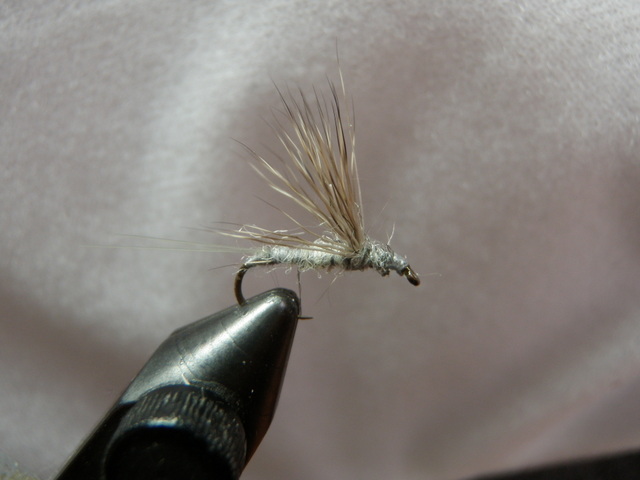
Another Side View

Another Side View

Sometime during this learning time period I purchased the book Hatches and read about the many types of mayflies and their unique characteristics and how to imitate them. The authors introduced a system of flies that they claimed could match most mayfly hatch matching situations, and they placed the prefix “compara” in front of their flies. For adult mayflies they offered a chart that consisted of four to six color combinations that could match a large percentage of the mayflies one might encounter. They also designed a style of fly that rode low in the surface film, and they claimed that this style presented a more precise silhouette of a mayfly dun particularly in smooth water. These flies were named comparaduns.

I quickly read all the chapters on the various mayflies that frequented the Northeast, but I continued to tie the Catskill style flies that required the purchase of expensive rooster necks with quality hackle feathers. I recall experimenting with a few comparaduns, but I didn’t like the appearance of my efforts using fairly undeveloped tying skills.

When I moved to Colorado I continued tying Catskill style dry flies; however, the variety of mayflies was much narrower in scope, so I didn’t need to tie nearly as many mayfly imitations as I did in Pennsylvania. In fact after hiring several guides I was introduced to nymphing with a strike indicator and began to experience a significant amount of success with this method. This also pushed me away from tying mayflies and fishing the surface.
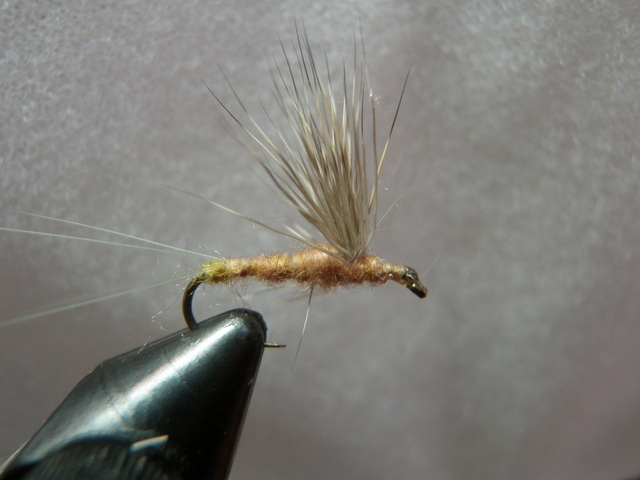
Cinnamon Comparadun

Cinnamon Comparadun

Fairly soon after our move to Colorado I began attending the outdoor exposition that is held in Denver every winter, and on one of these visits I watched Marty Bartholomew demonstrate how to tie a comparadun. This lesson motivated me to tie a few so I could reinforce the tips and lessons learned. The two keys to making a good looking comparadun are splitting the tail fibers so that they serve as outriggers to support the hackle-less fly, and being able to splay the deer hair so that it forms a semi-circle around the hook shank. The bottom fibers of the deer hair also help to support the fly. My early efforts ignored these two basics, and I ended up with ugly flies that would not stand up, and the wing typically leaned forward unlike natural mayfly duns.

Marty showed me how to split the tails so they V’ed outward from the end of the abdomen, but his major contribution was advice on forming the wing. He suggested purchasing coastal deer hair as it is much finer and easier to work with particularly on small flies; but the significant tip was to stop the dubbing short of the wing, and this left a small gap. This allowed the wing to slant slightly backward once the tyer wrapped the dubbing tightly in front of the wing; and then after the wing was positioned, he took a wrap or two behind the wing to fill in the space beneath the wing. What a difference this made! My flies looked like real mayflies with the wing cocked slightly toward the rear, and they floated nearly as well as Catskill style flies. Best of all, I no longer needed expensive neck hackles to form a collar on my flies.

I now produced a nice batch of size 16 comparaduns, but I suspect they took up space in my fly box and were not utilized for a few years, until I encountered a strong pale morning dun hatch on the Colorado River. I tried some Catskill style PMD’s to no avail and in desperation reached in my box and extracted one of the size 16 light gray comparaduns. Much to my amazement this fly began to dupe brown trout like no other dry fly I had ever used. It didn’t take long before I became a disciple of the comparadun, and I began to tie them for pale morning duns, green drakes, and various eastern mayflies prior to infrequent return visits to Pennsylvania.

The final step in my comparadun evolution was the discovery of microfibbets. Microfibbets are synthetic fibers that take the place of hackle fibers. One buys them as bunches and they are dyed various colors, and they look like very fine monofilament or bristles from a synthetic paint brush. Microfibbets are much stiffer than hackle fibers and make even better outrigger tails for supporting comparaduns.
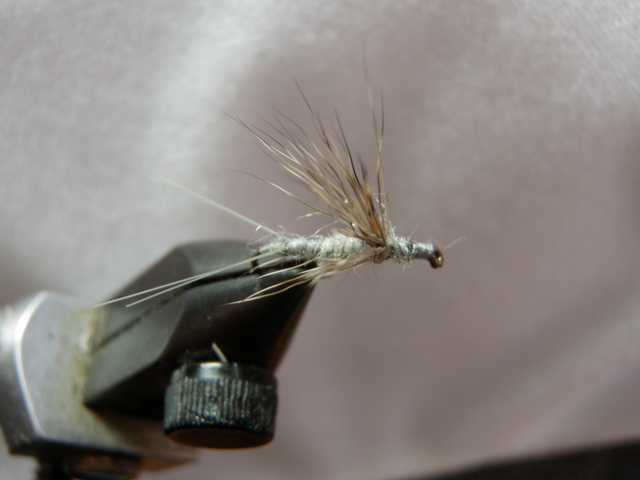
Good View of Split Microfibbet Tails

Good View of Split Microfibbet Tails

My supply of light gray comparaduns dwindled a bit over the last two summers, so I visited my fly tying desk and cranked out 28 new imitations over the last week or two. I tied them in sizes 14, 16 and 18 and made an equal number of light gray and cinnamon versions. During a visit to the Frying Pan River in September 2013 I discovered that the educated trout in that fabled river were selective to pale morning dun imitations with a cinnamon body, and the size of the late season PMD’s seemed to be on the small side, thus the size 18 flies.

There you have it. My evolution to a comparadun fan, and where I’m focusing my dry fly tying efforts in 2014.
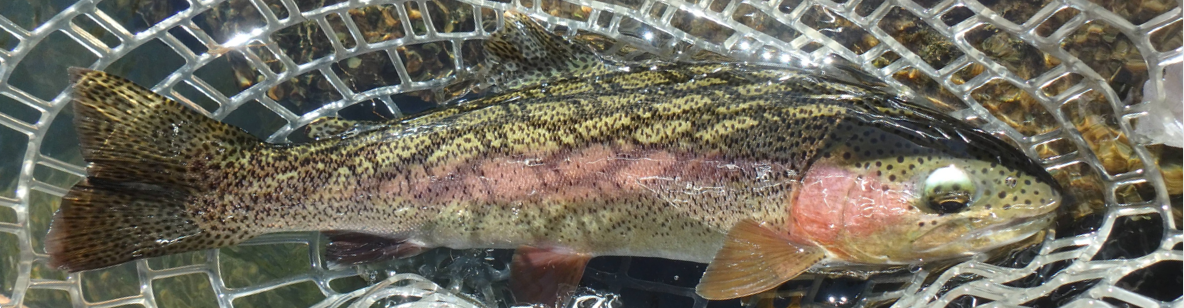
Chernobyl Ant – 02/13/2014

Chernobyl Ant 02/13/2014 Photo Album

Prior to 2013 my workhorse flies and the first flies I would offer to fish as I began my day were a yellow Letort hopper trailing a beadhead hares ear nymph. These flies served me well; however, I became increasingly annoyed by the tendency of the yellow dubbed body of the Letort hopper to become saturated with water and sink. If the fish tuned into the surface fly I could tolerate frequently pressing the body against my shirt to absorb moisture and then a quick dunk in my dry shake canister.

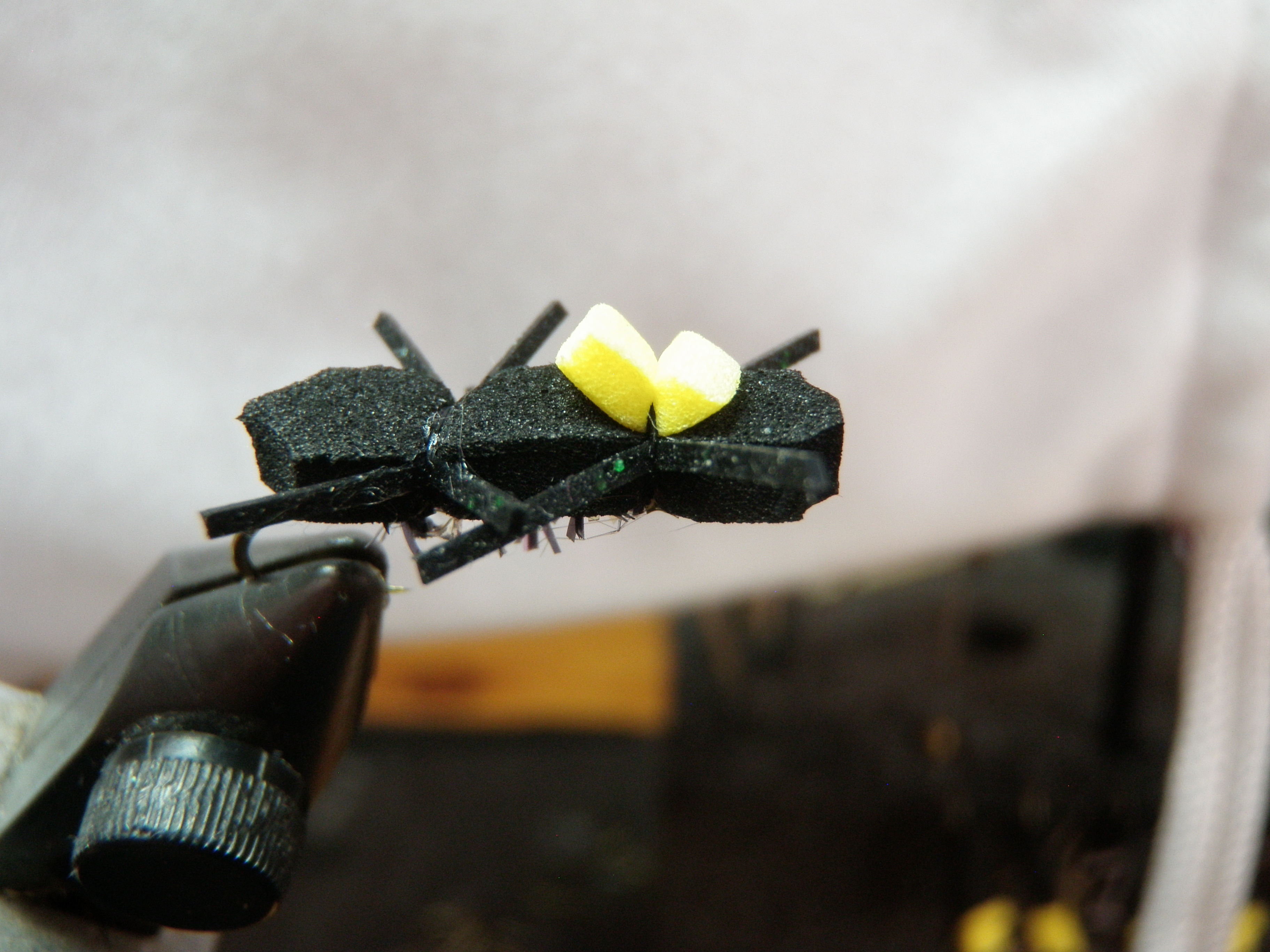
I tried making alternative hoppers such as the Charlie boy hopper and the pool toy that employed a foam body and offered more buoyancy, but these flies did not catch fish at the same rate as the yellow Letort hopper. When I realized that the foam hoppers were not as effective as my trusty Letort hopper, I began to go to a Chernobyl ant more and more as my first fly of the day, and I quickly discovered that fish love Chernobyl ants. The black foam body floats much better than the Letort hopper and can easily suspend beadhead flies such as size 14 beadhead hares ear nymphs. A size 10 Chernobyl ant replaced the Letort hopper as my new number one visible attractor top fly on a dry/dropper arrangement. The beadhead hares ear remains as my number one subsurface option.

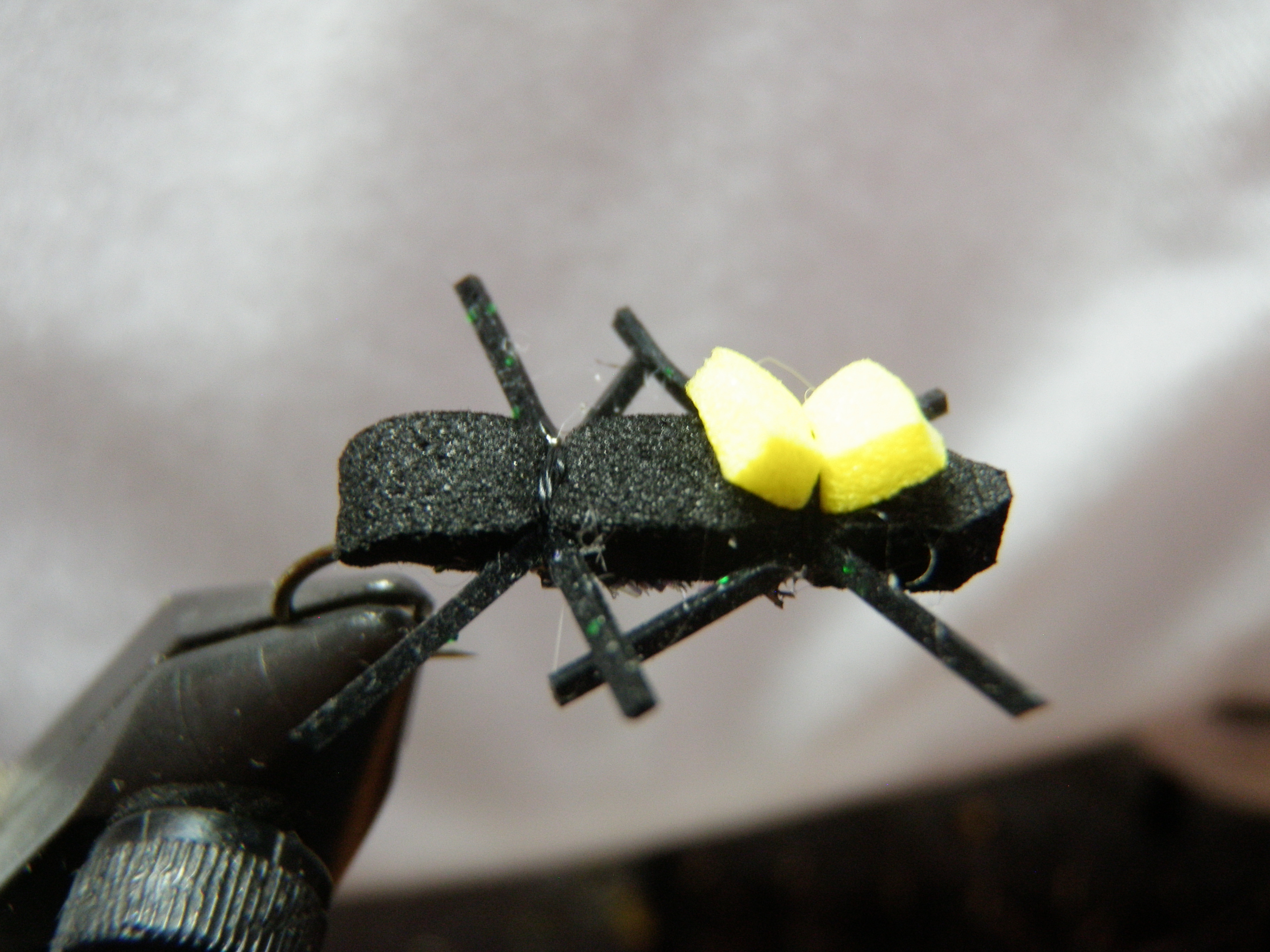
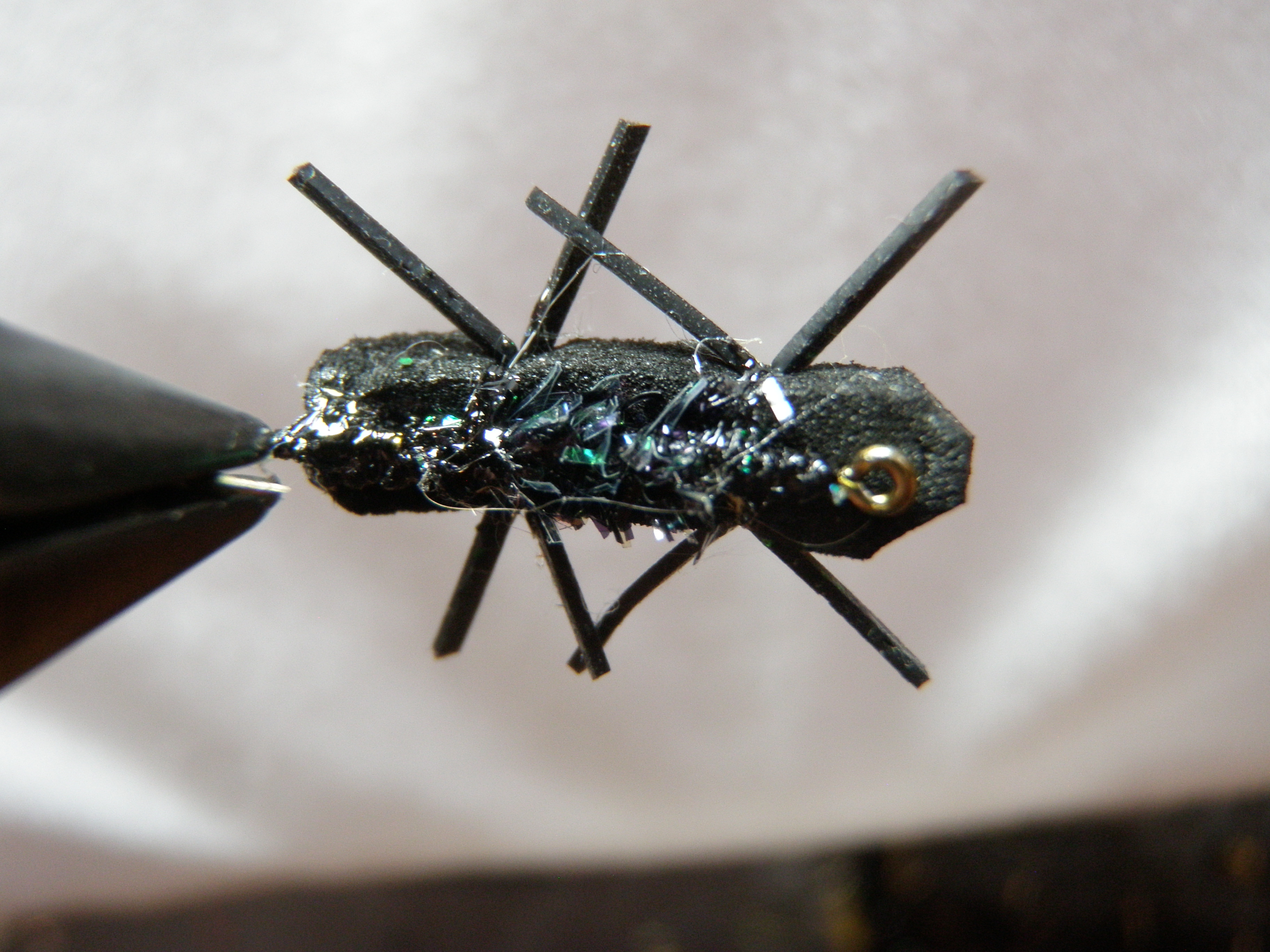
Given its status as my new number one, I decided to manufacture 15 new flies in preparation for 2014. As I began, I decided I wanted to improve the fly and eliminate the spinning problem that is endemic to my method of tying. Most Chernobyl patterns and tying instructions use two layers of foam with one on top of the hook shank and one below creating a hook sandwich. I like mine to have an iridescent body so I wind a pearl black chenille around the hook shank between the two tie down points and expose the underside of the top layer of foam. Unfortunately if the foam on top of the shank is too wide, I cannot obtain a solid tie down to the narrow hook shank. I improved the strength of the bond somewhat by wrapping dubbing over the thread at the tie down points to provide more bulk and friction for gripping. In addition I apply excess amounts of head cement to the tie downs and the head, but even with these improvements, a solid Chernobyl ant eventually spins after two or three catch and release cycles. It is very frustrating to hook an apparent decent fish only to lose it and discover that the hook twisted so that the hook point was pointing sideways instead of downward.

Old Style

Old Style

My friend Jeff visited last summer for some September fly fishing, and having read my rave reports about the Chernobyl ant, he decided to tie some in advance of his trip. I didn’t bias his tying with my methodology, and he invented his own unique method which included notching the foam at the tie down points. As I began to tie Chernobyl ants I planned to experiment with notching, but when I made my first prototype I discovered that the narrow V notch caused the rubber legs to flare out perpendicular to the foam as two tight parallel appendages. I didn’t like this look so I fired off a text message to my friend Jeff for advice on his methodology. In the process of exchanging text messages, Jeff mentioned that he tied the foam in at the bend and then bent it back over the top of the shank. This set off flashing lights in my brain as I guessed that a solid tie down of the foam at the hook bend would prevent the foam from spinning.

Foldover Style

Foldover Style

I immediately began a new fly and cut the end of my black foam strip to an arrow point and then attached it to the bend of the hook with quite a few solid wraps. I moved forward and created the dubbed bases for tie down along with the iridescent underbody with the pearl black chenille and then returned my thread to the rear tie down point. I folded the foam forward and snugged two or three strong wraps around the body creating a slight indentation. At this point I attached the rubber legs to the side of the foam as I had done previously and then moved on to the forward tie down point and added an indicator and front legs. I feel that this method of tying solves the spinning problem while maintaining the key triggering points of the original fly that has produced well for me.

Black Pearl Chenille Underside

Black Pearl Chenille Underside

A season of fishing will be the true test, and I can’t wait to get out on a stream to toss some new and improved Chernobyl ants.


November Fly Tying – 11/27/2013

November Fly Tying 11/27/2013 Photo Album

It’s 9:30AM on November 27 and I’m killing time waiting to depart for the airport and our long flight to Buenos Aires, Argentina. High temperatures in Buenos Aires are around 80 degrees and highs in Bariloche are upper 60’s and low 70’s. I can’t wait, even though highs in Denver for Thanksgiving are projected at 55 degrees. My bags are packed, my checklists are marked, and in an hour Jane and I will depart for the RTD terminal where we will board the Skyride shuttle that will transport us to DIA.

Size 14 Black Caddis Tied for Argentina

Size 14 Black Caddis Tied for Argentina

In preparation for the fishing in Argentina I purchased some flies and allocated some of my inventory to an Argentina fly box. In addition Taylor Edrington advised that I should be prepared with some large caddis as Patagonia has a heavy population of these insects. I have quite a few caddis that I tie for Colorado, but they are mainly size 16, so I sat down at my vice and produced some size 14 caddis. I made three with a medium olive body, three Adams gray, three black and three tan. I already possessed three yellow versions that I purchased. I tied these flies with a deer hair tail, brown hackle palmered over the body, a deer hair wing and a grizzly hackle in front of the wing. These flies should float well and present a very bushy image on the lakes and streams of Argentina.

Nice Scraggly Hares Ear

Nice Scraggly Hares Ear

Another phase of my preparation was to take an inventory of all my go to nymphs and attractors. I created a list with a count of the flies I had and then also noted how many I planned to tie this winter for the 2014 season. My top producer year in and year out has been Dave’s beadhead hares ear nymph and I like to enter each season with 100 of these in stock. My count revealed to me that I needed to tie 44 to rebuild my inventory to 100, so I’ve been busy working on this goal over the last two weeks. In addition I tied 15 for a fishing buddy and packaged them up and put them in the U.S. mail. I tied my beadhead hares ears in the same manner as I’ve used historically, however, I initiated the practice of applying head cement at three critical junctures in the process to improve durability. I noticed that my hares ears tend to unravel just in front of the tail and also just behind the bead, so I dab head cement on the thread wraps just in front of the tail before dubbing the abdomen. Once I’ve tied in the wing case I apply more head cement to the wraps in the thorax area before wrapping the dubbing. Finally I apply clear nail polish to the final wraps behind the bead. Hopefully all these improvements will enhance the durability of Dave’s hares ear nymph.