Monthly Archives: March 2026

South Platte River – 03/30/2026

Time: 11:00AM – 4:00PM

Location: Eleven Mile Canyon

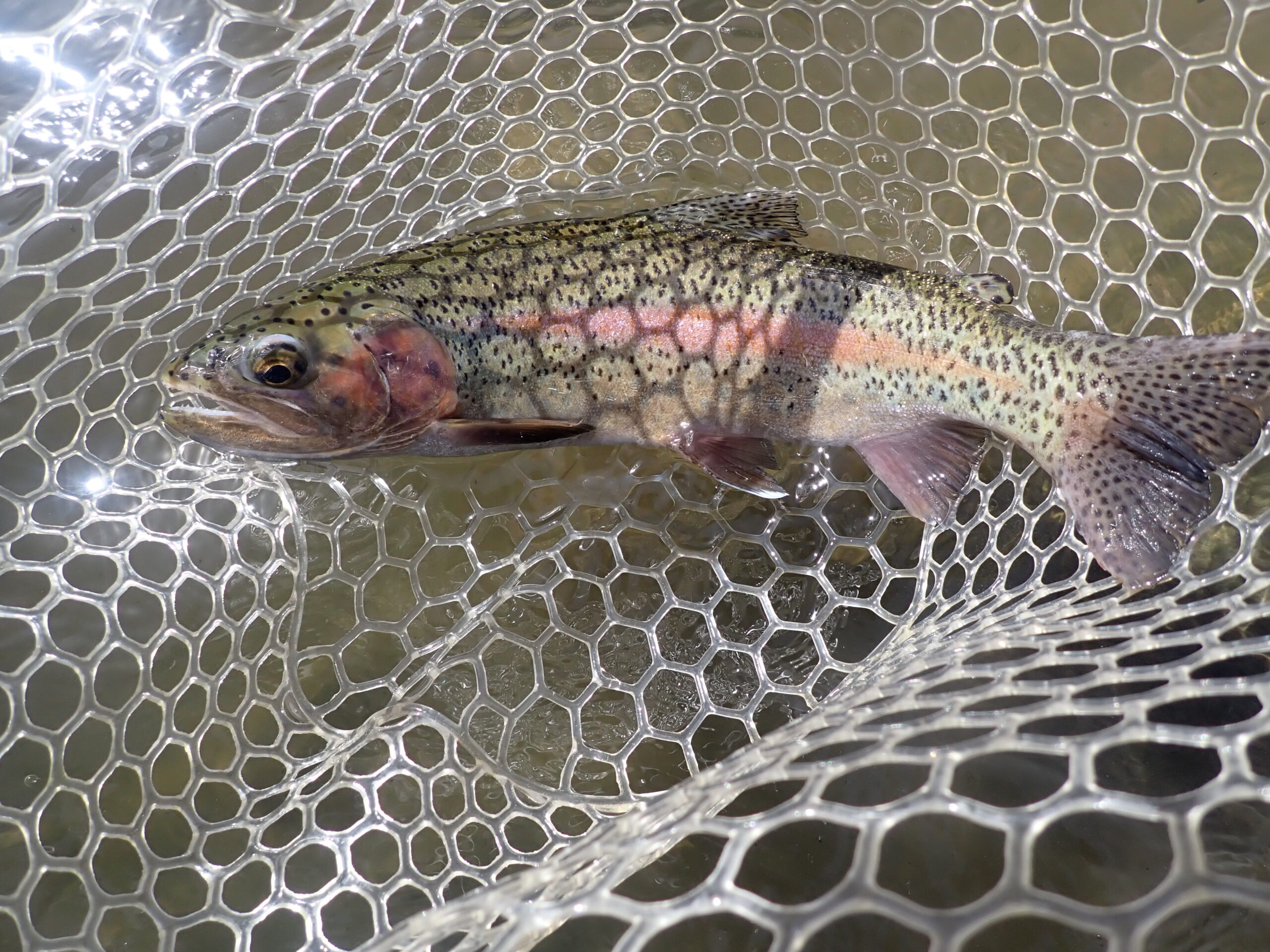
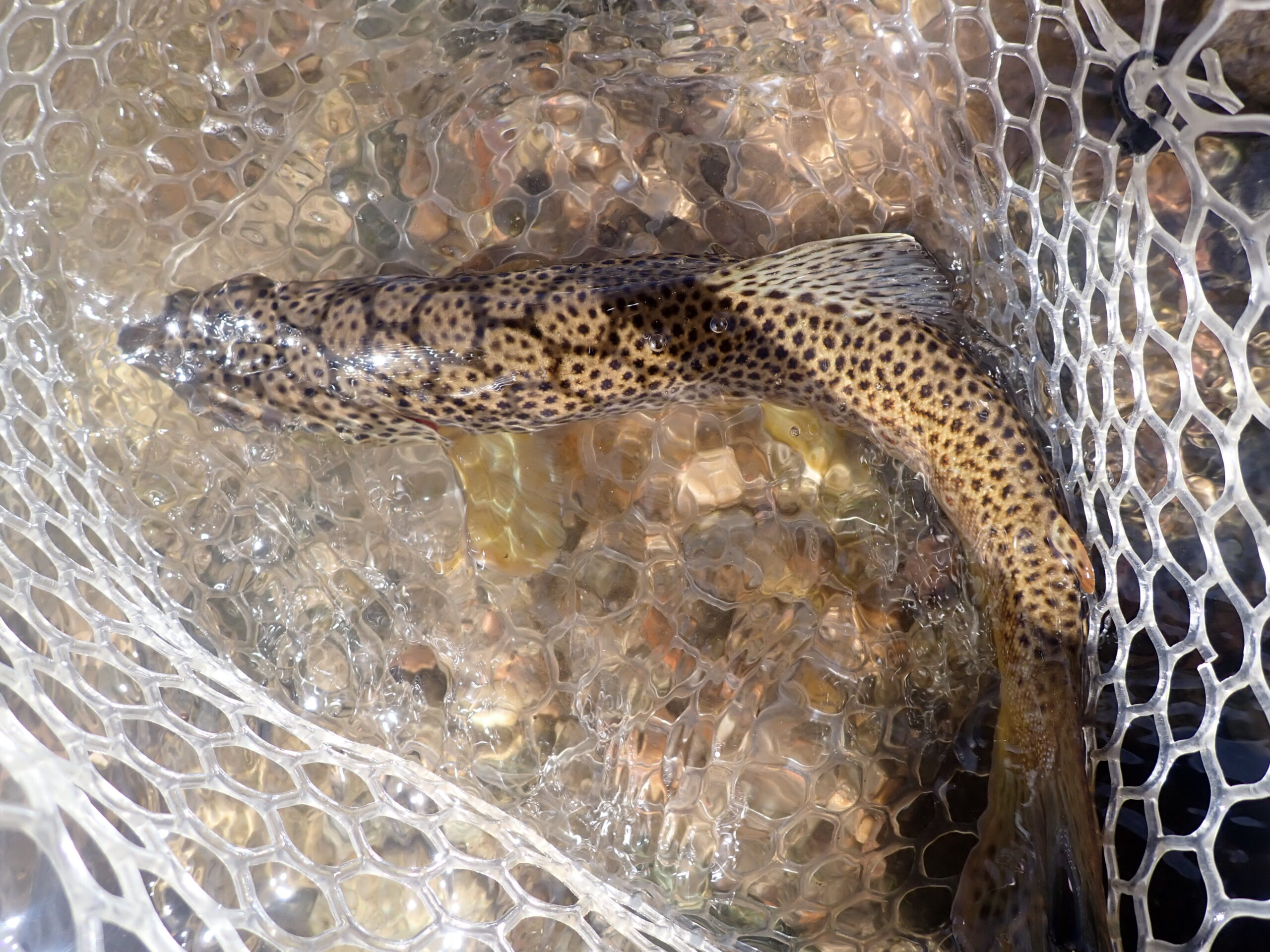
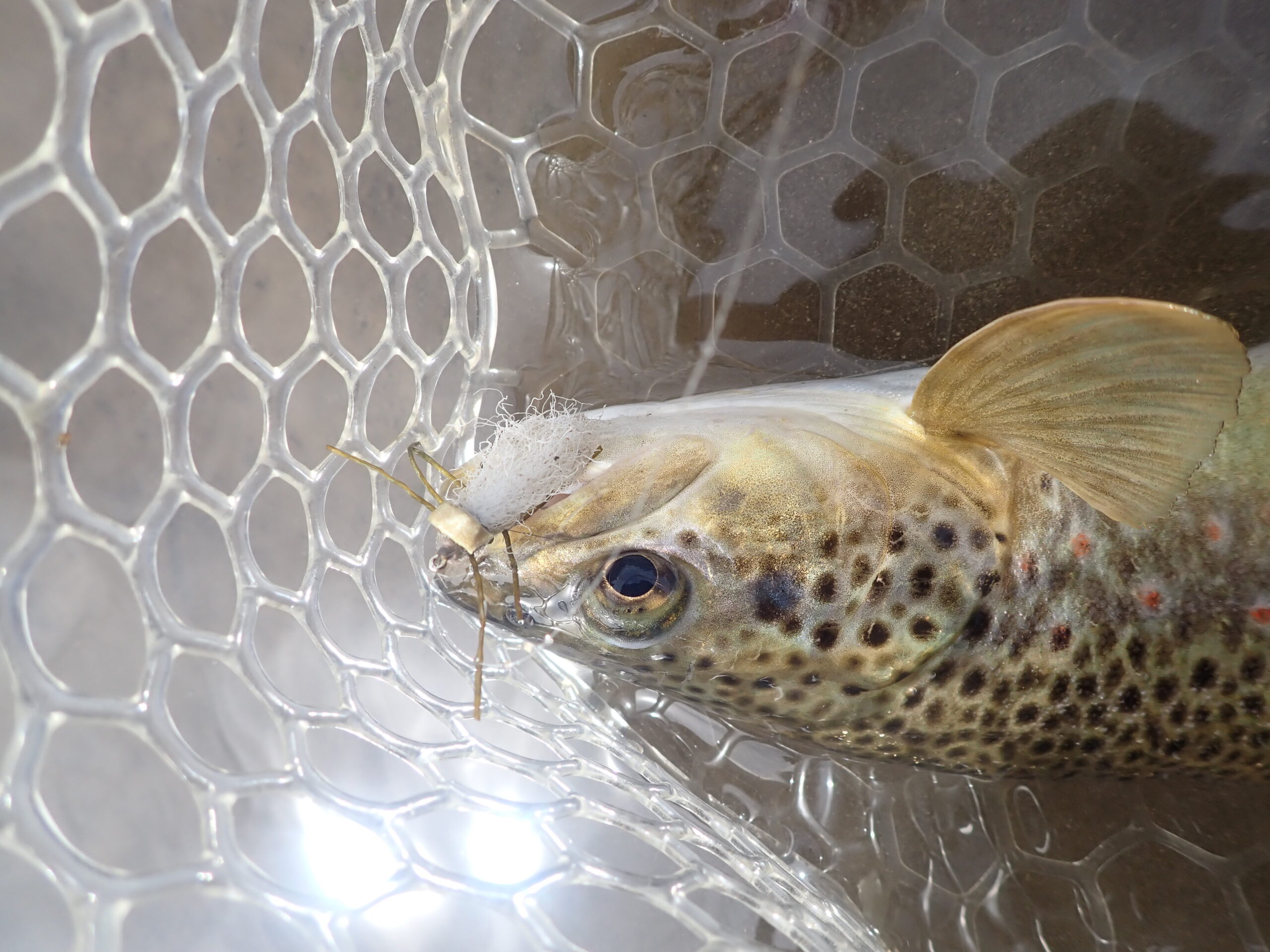
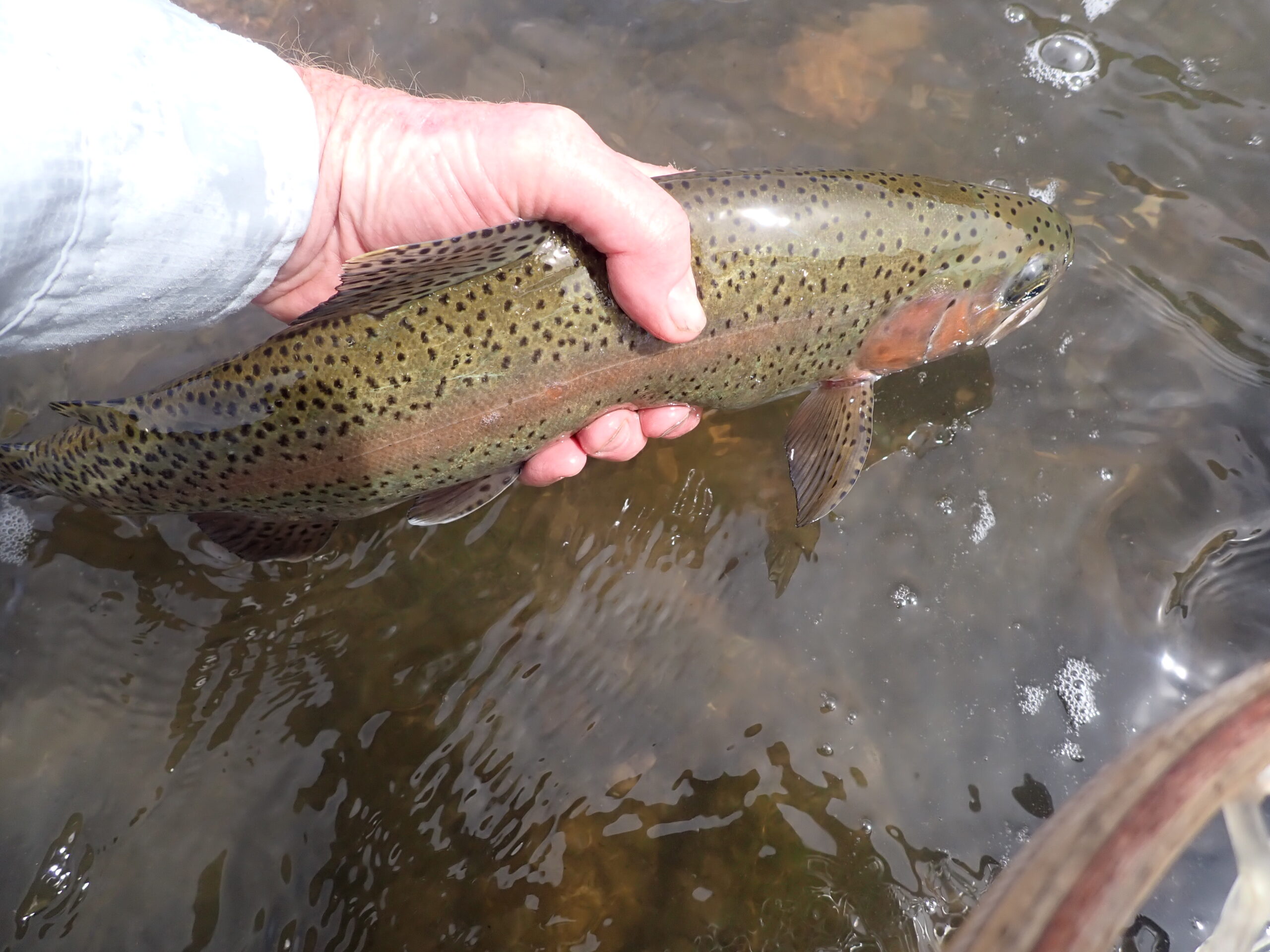
South Platte River 03/30/2026 Photo Album

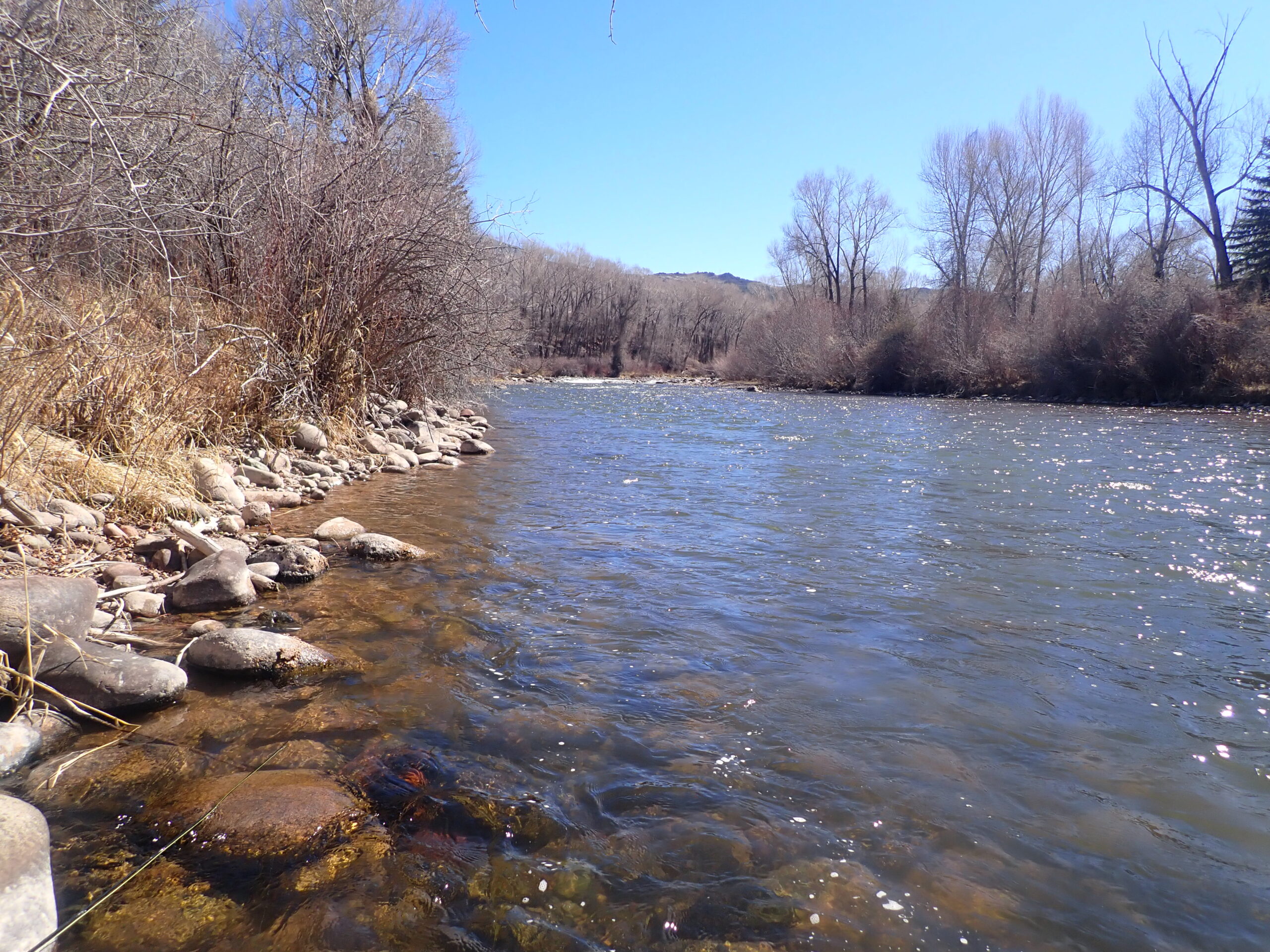
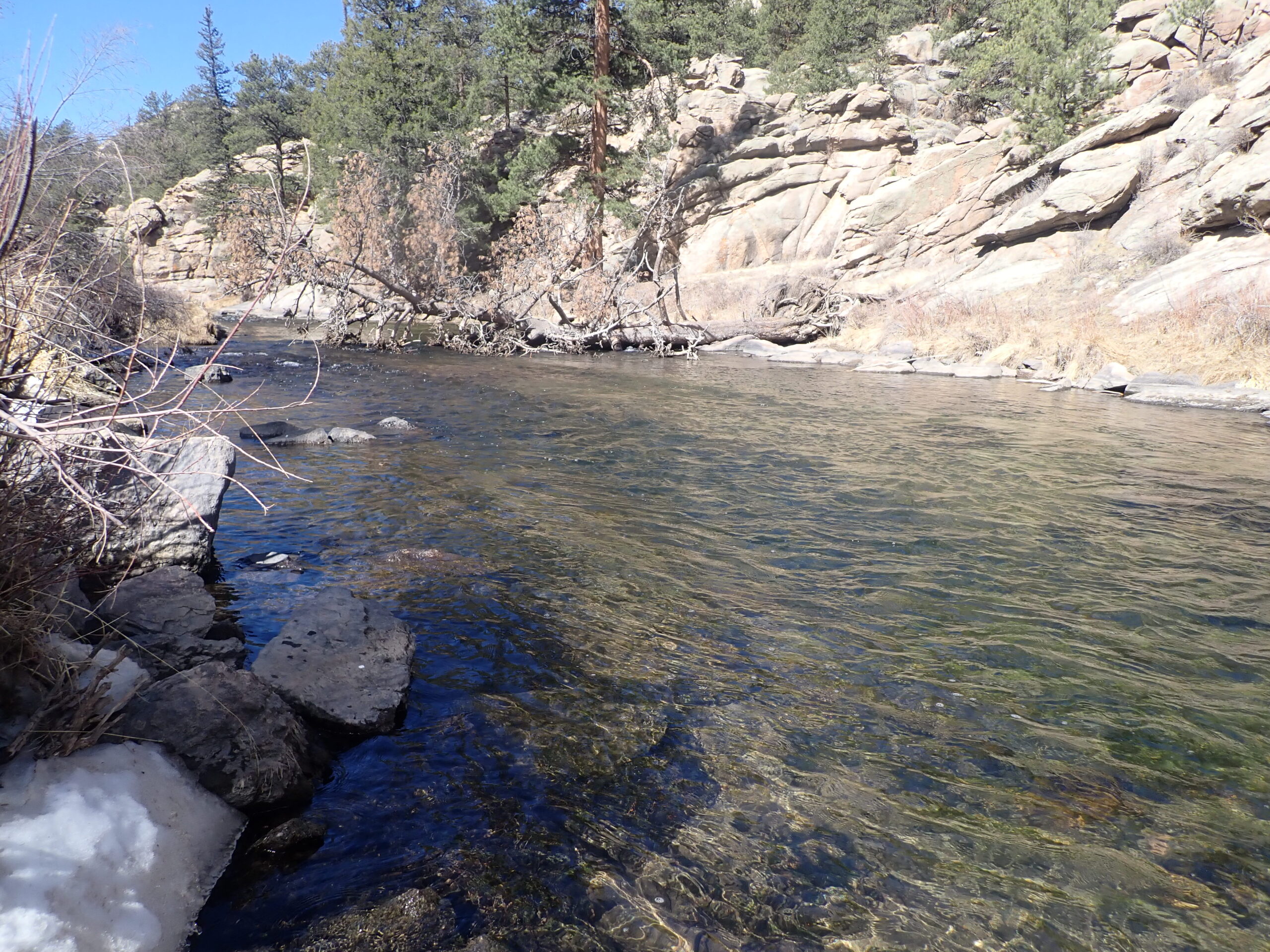
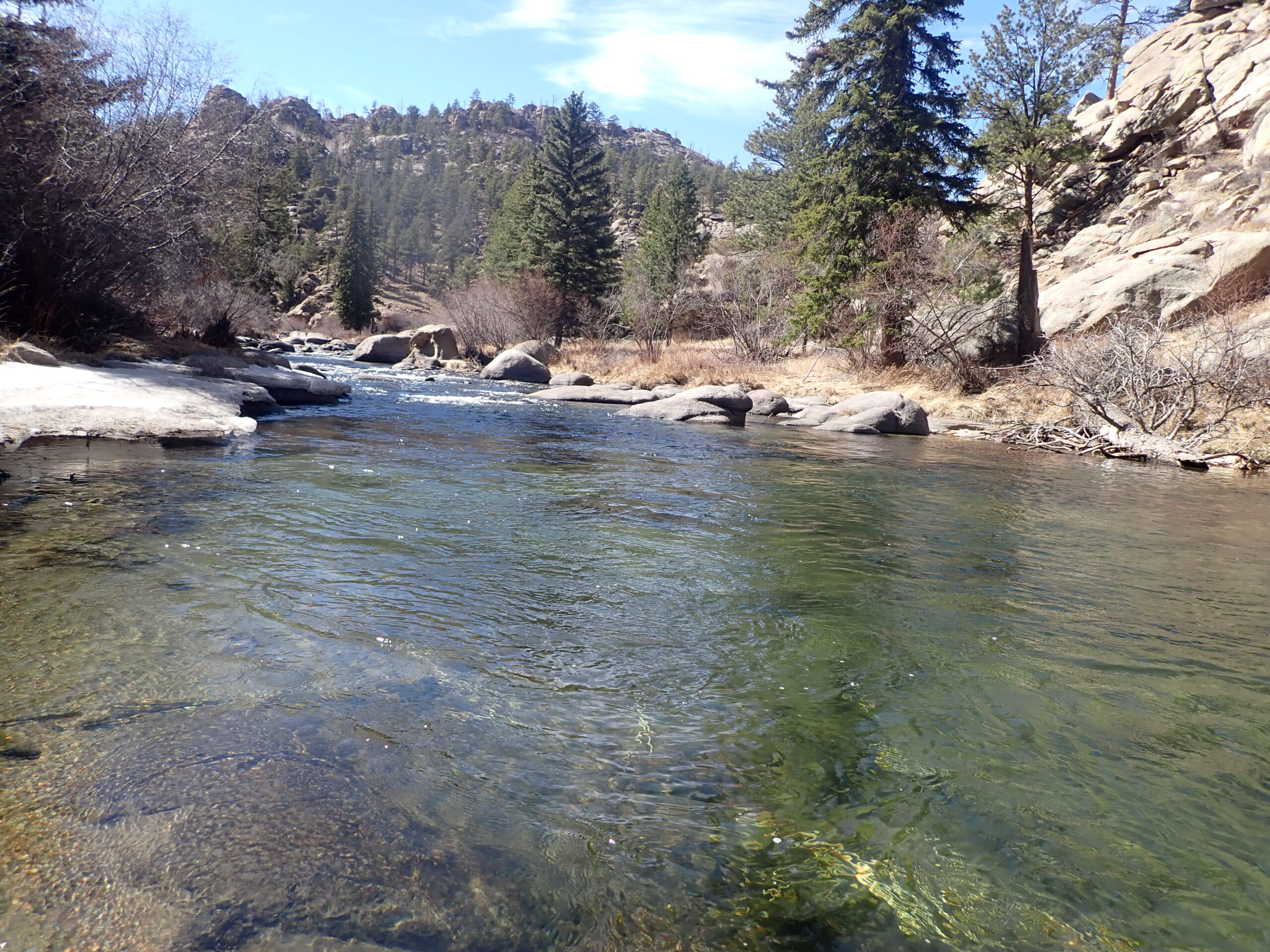
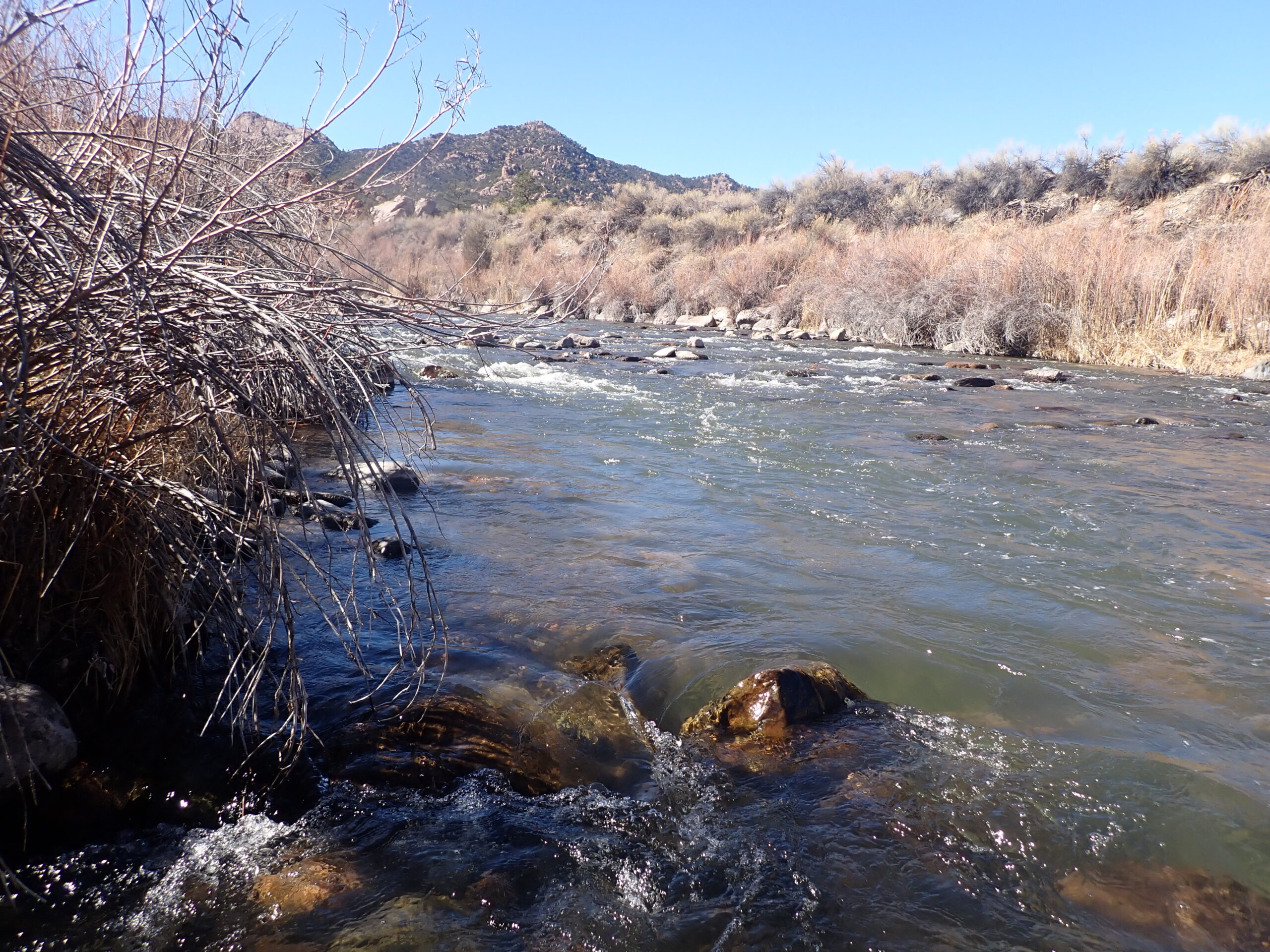
After a stellar day on March 24, I was anxious to return to a stream on Monday, March 30. The Arkansas River was my first choice; however, forecast wind speeds in the high teens deterred me. In addition, the 24 Fire forced the closure of CO 115, and this extended my drive time to lower Bighorn Sheep Canyon by thirty minutes to nearly three hours. Instead I chose the South Platte River in Eleven Mile Canyon. Wind speeds were predicted to be in the low teens, and I knew from previous experience that the north/south orientation of the canyon offered some amount of protection.

Early Action in This Section

I arrived at my chosen starting point by 10:30AM, and the dashboard thermometer registered 45 degrees. This was colder than I expected, so I pulled on my fleece hoodie and added my rain shell for wind protection. I rigged my Sage One five weight, and that meant that I used the same rod for every fly fishing outing in 2026.

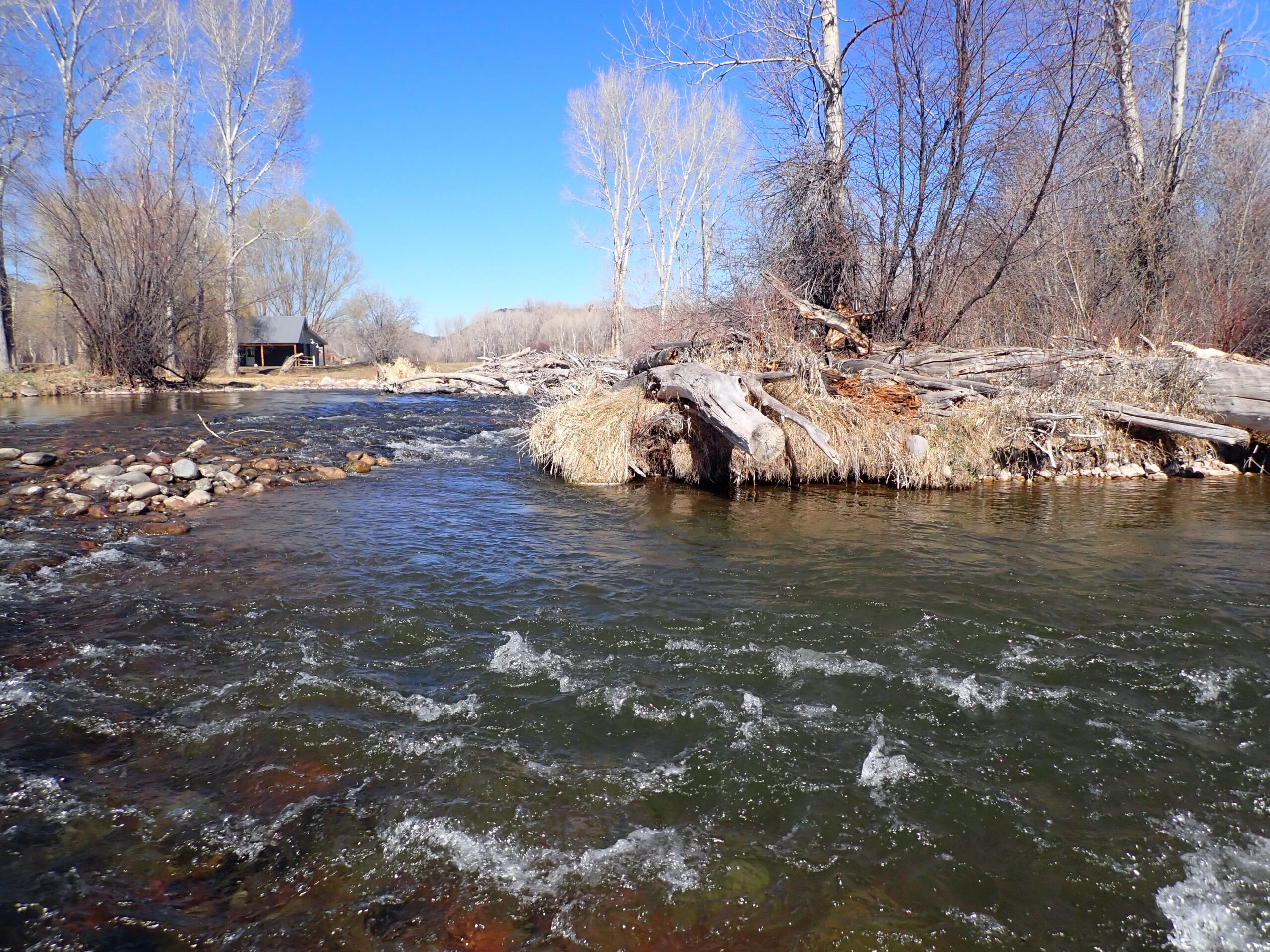
Prime Shape

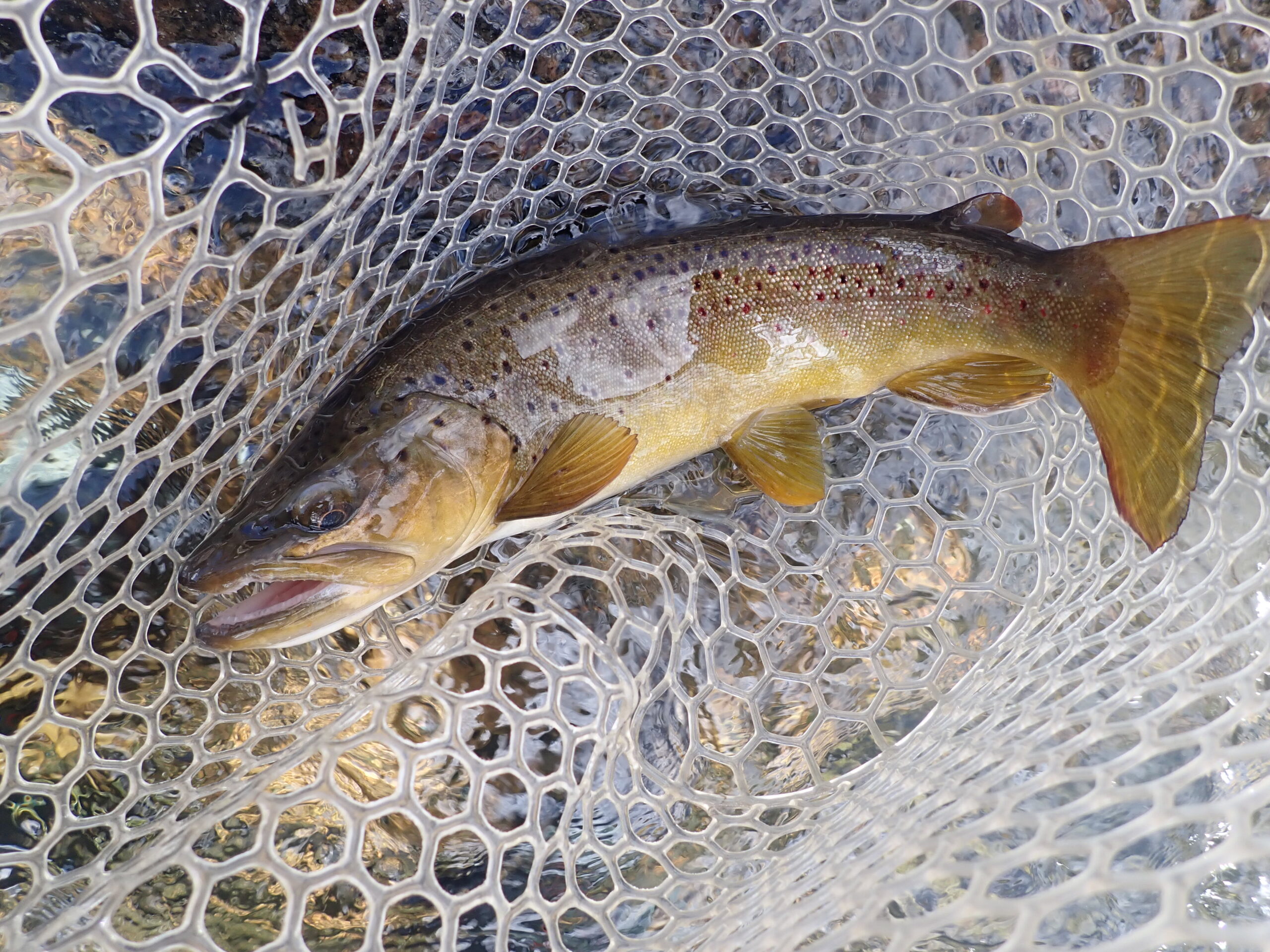
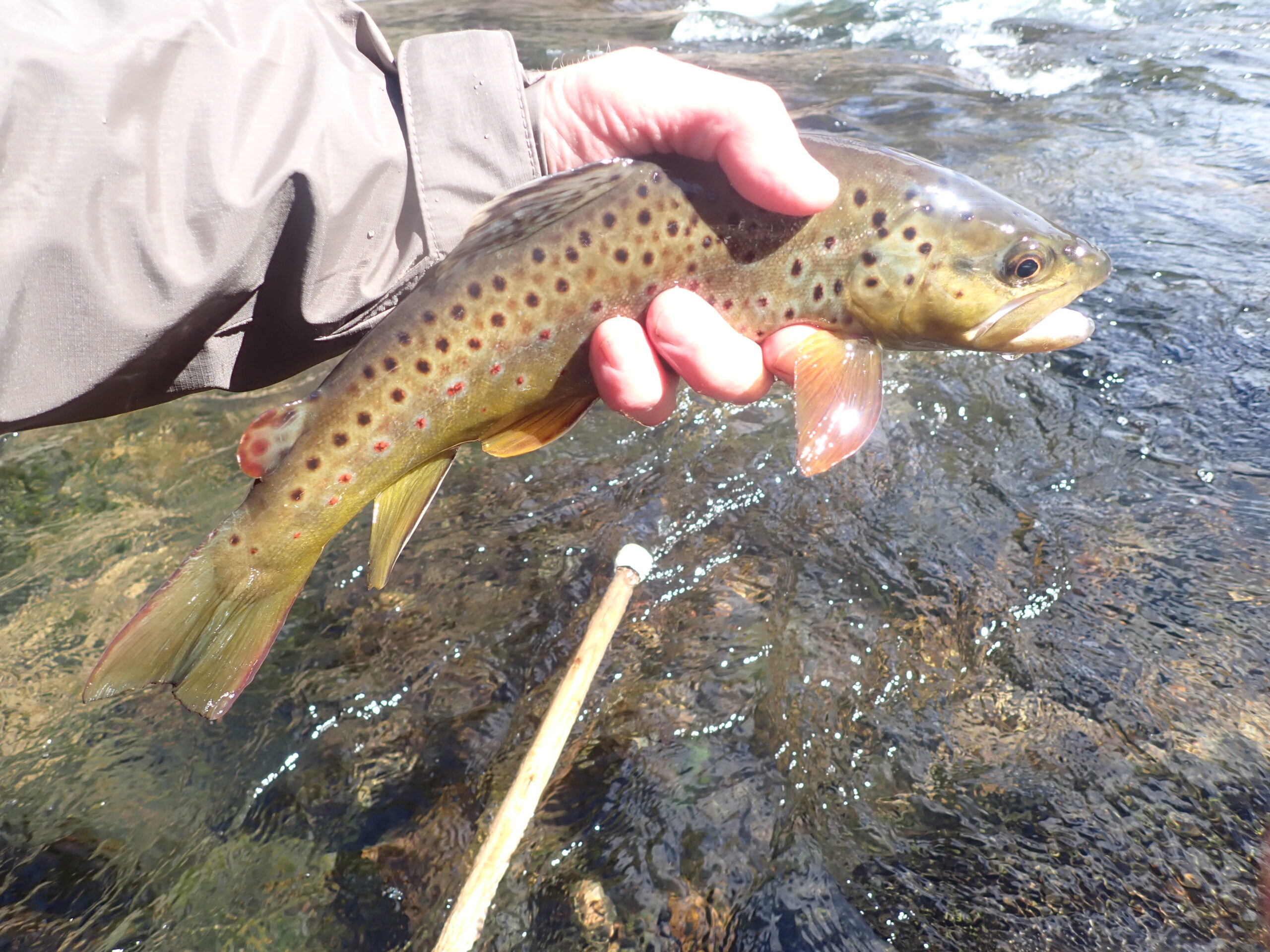
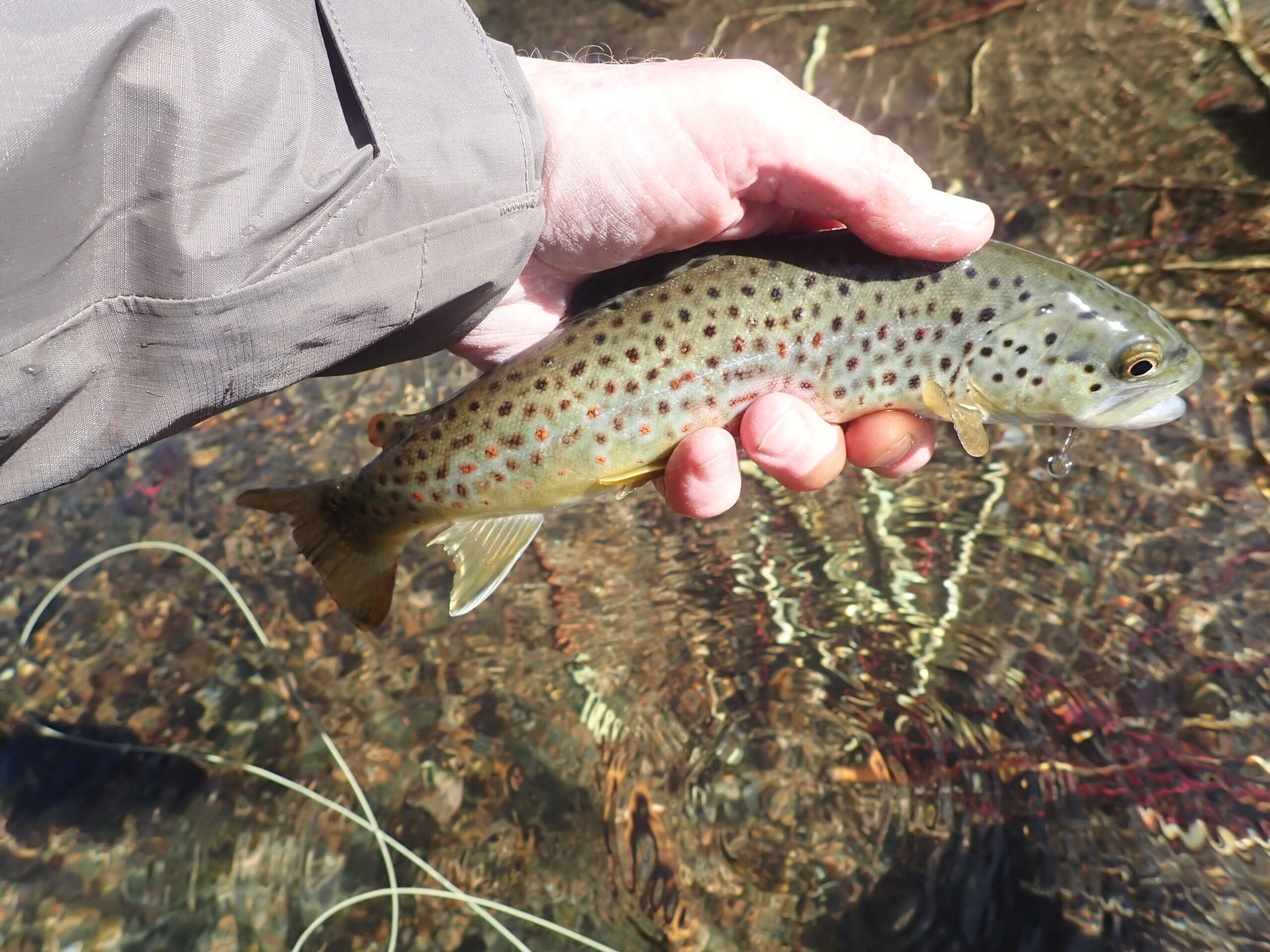
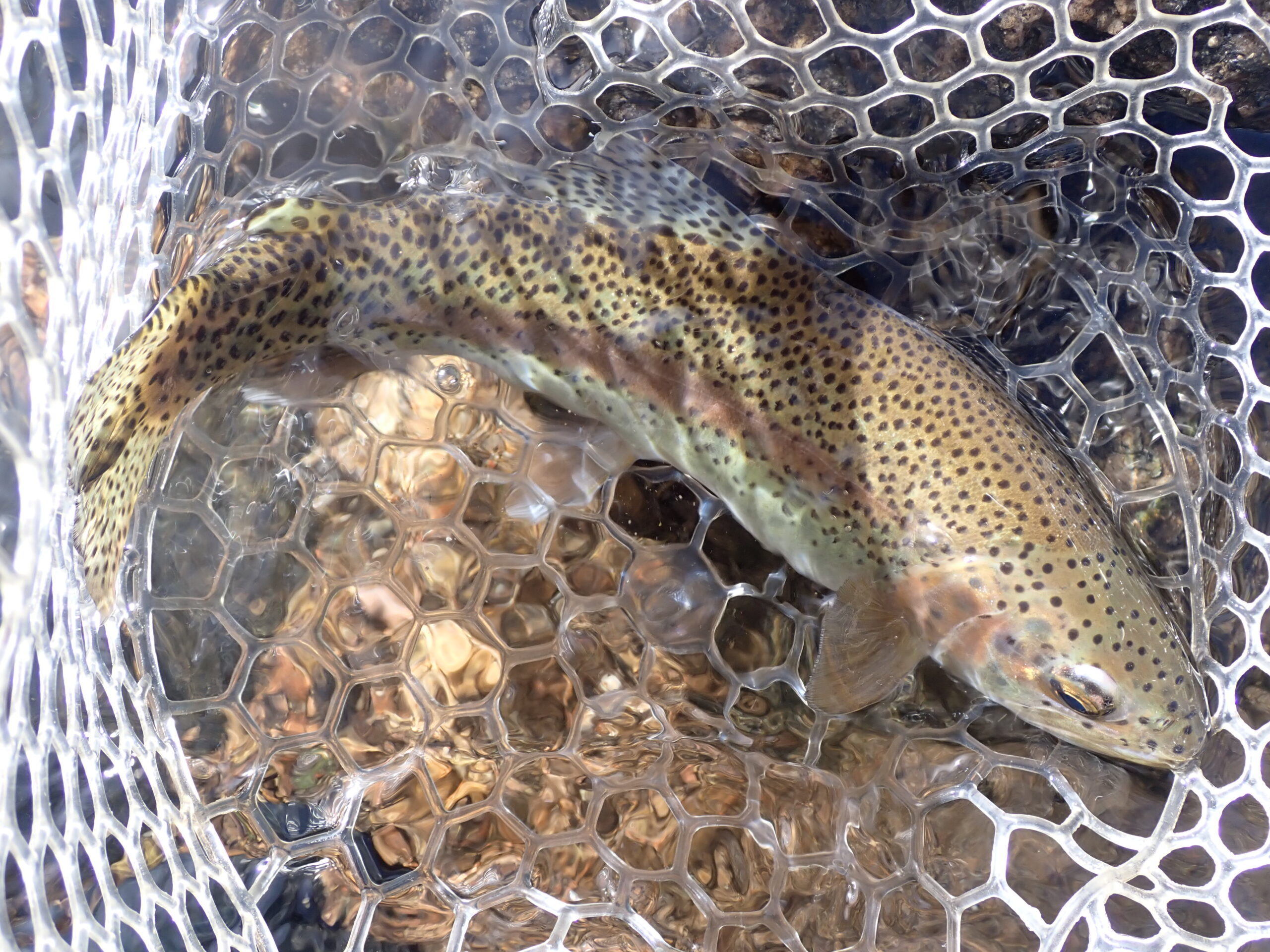
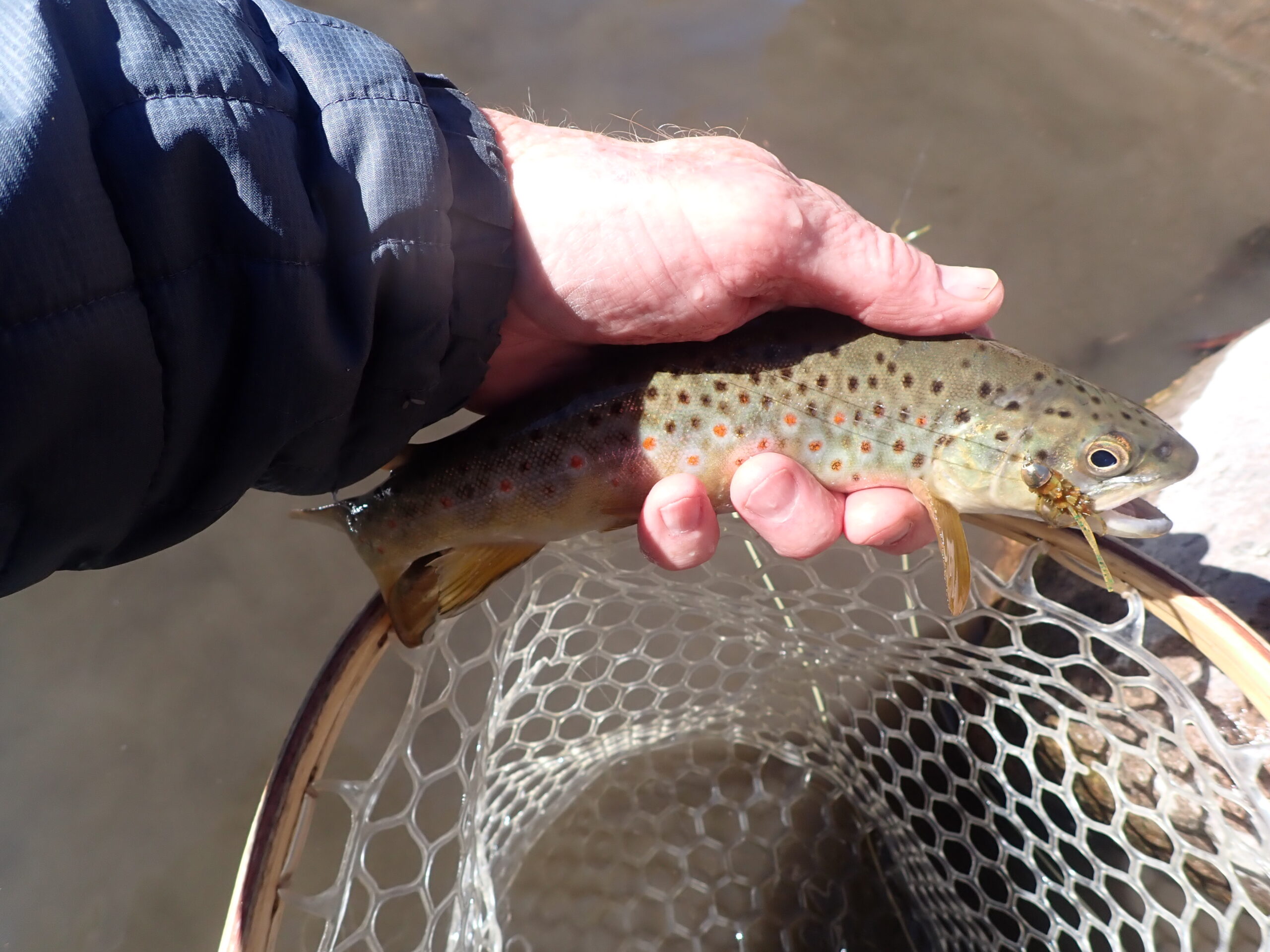
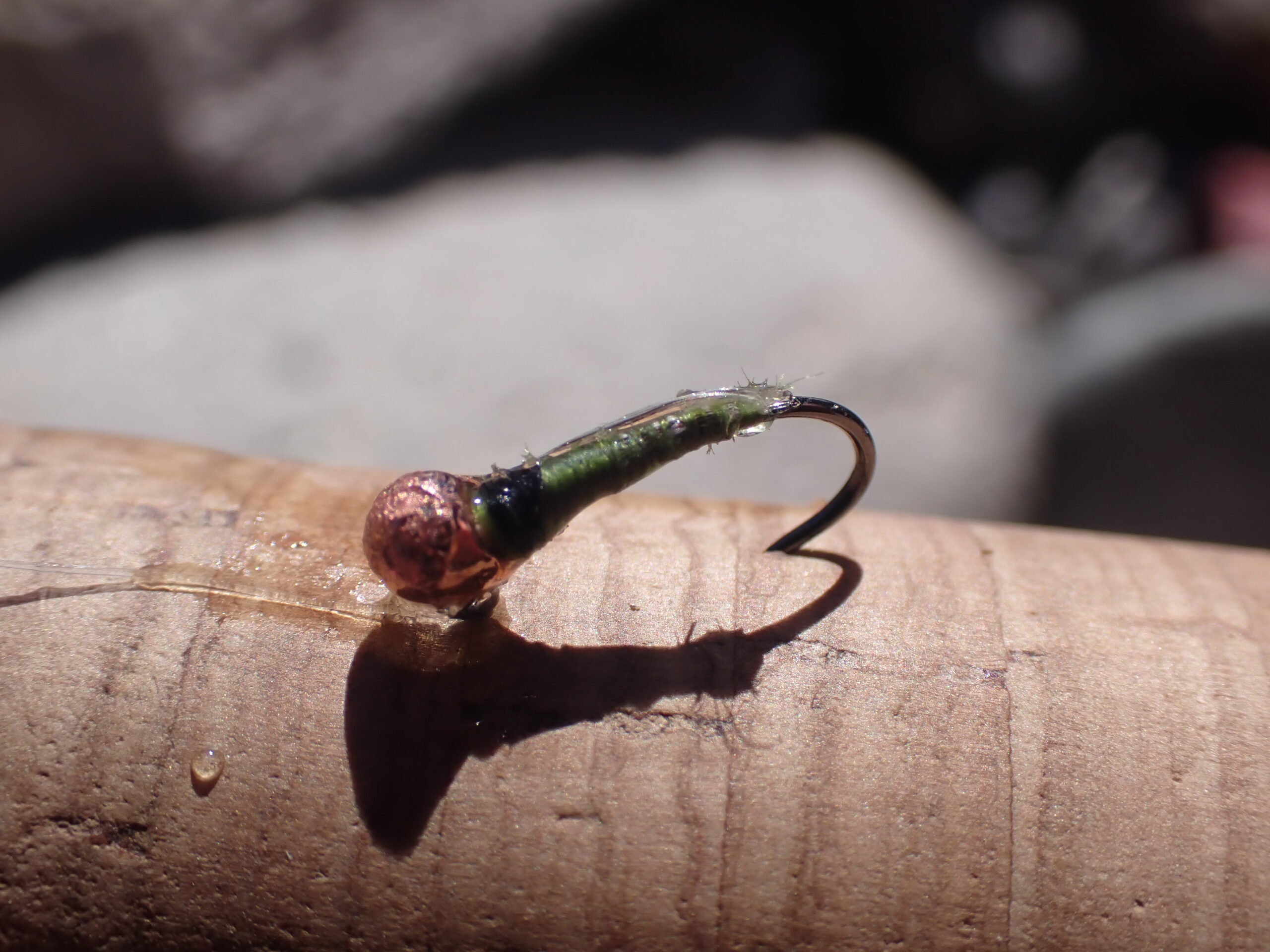
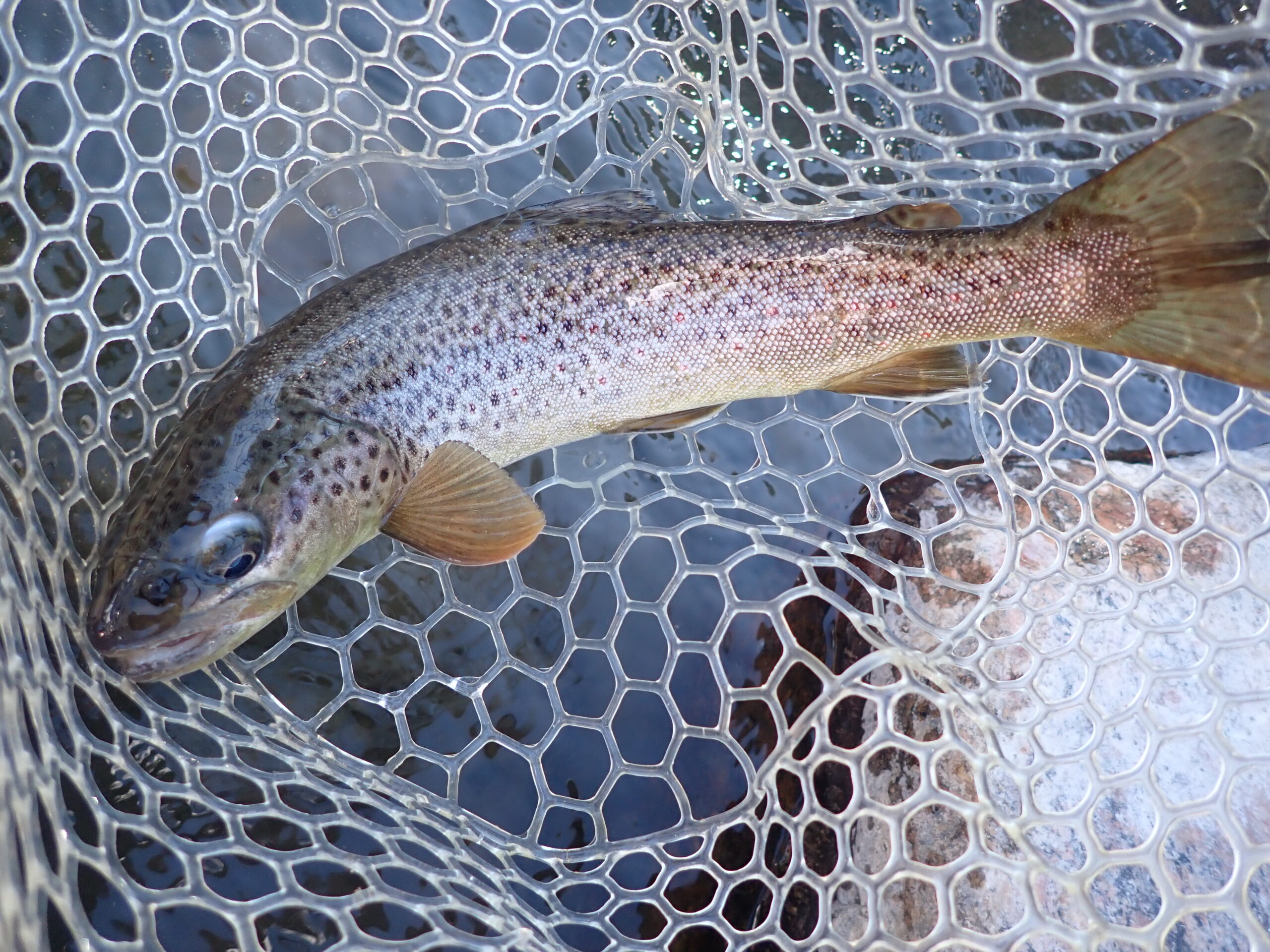
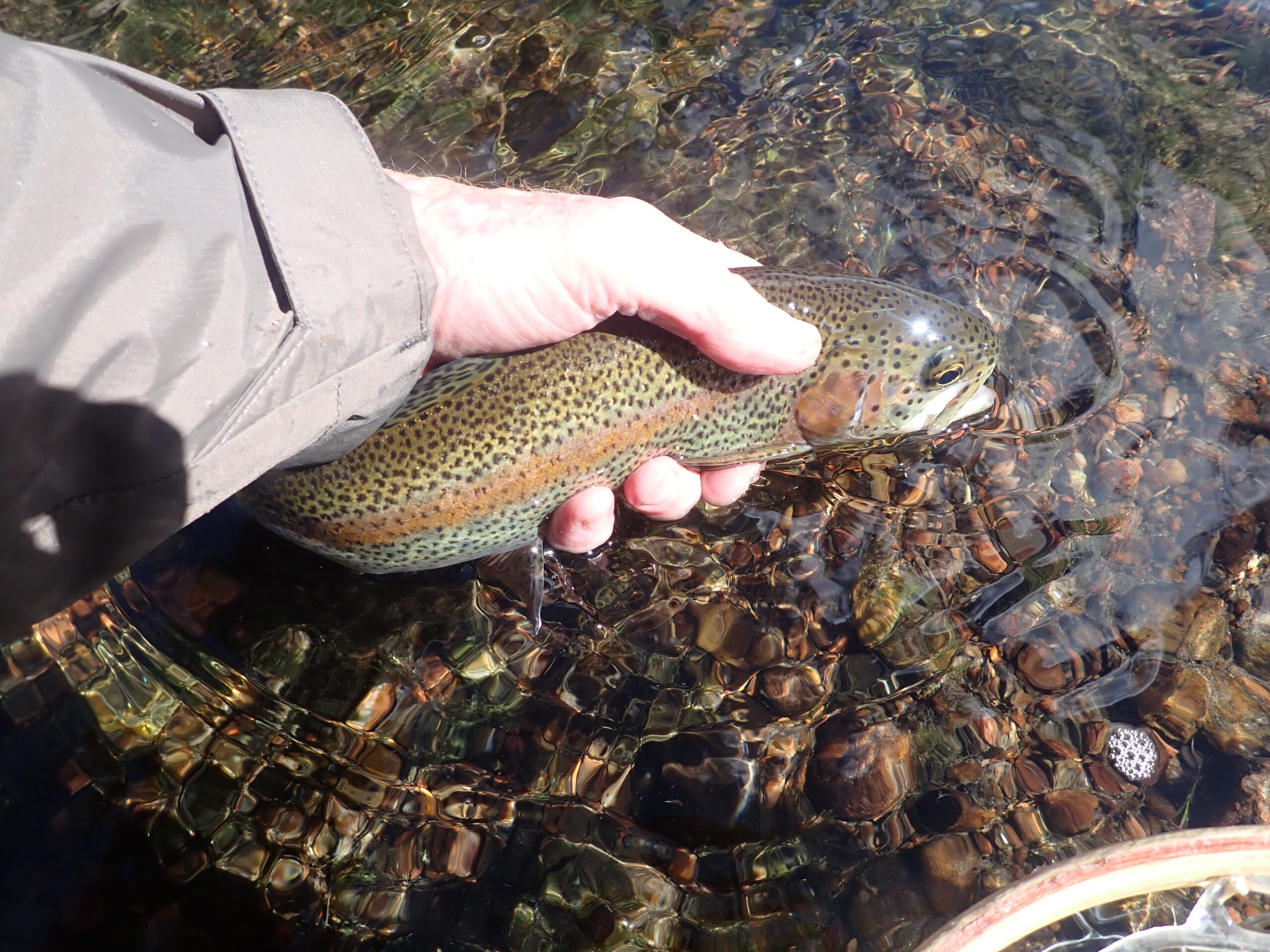
To begin, I chose a peacock hippie stomper and an olive perdigon. I went light because the river was tumbling along at 60 CFS and clarity was excellent. I began just above a bridge, and I was shocked, when a thirteen inch brown trout grabbed the perdigon within the first ten minutes. In the same run but higher up, two rainbows snatched the perdigon, and I was off and running. By the time I broke for lunch at around noon the fish count was perched on six, and this included a thirteen inch rainbow and a few more trout beneath twelve inches. All the trout nabbed the olive perdigon. My confidence was sky high, and I anticipated an afternoon olive hatch.

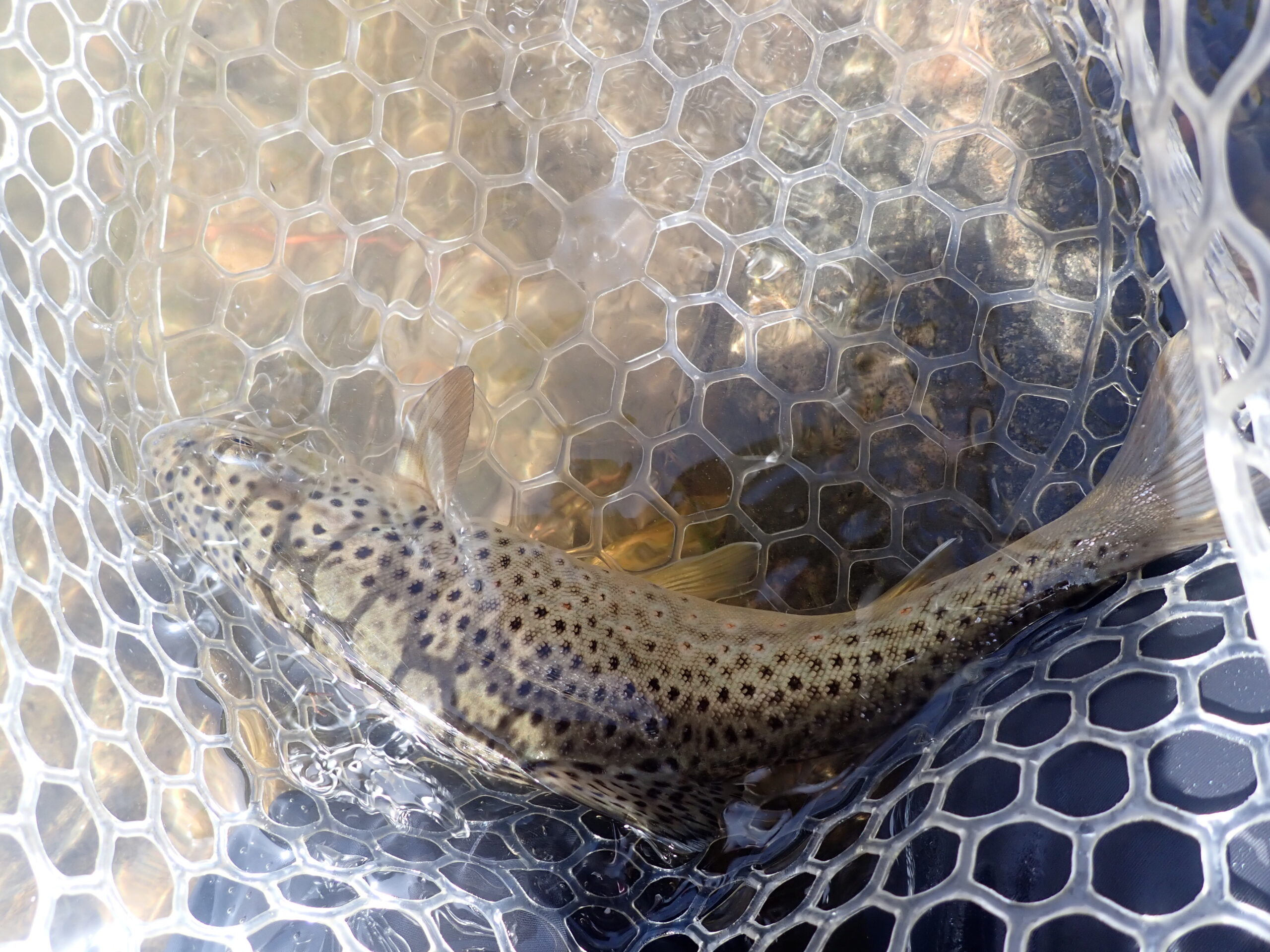
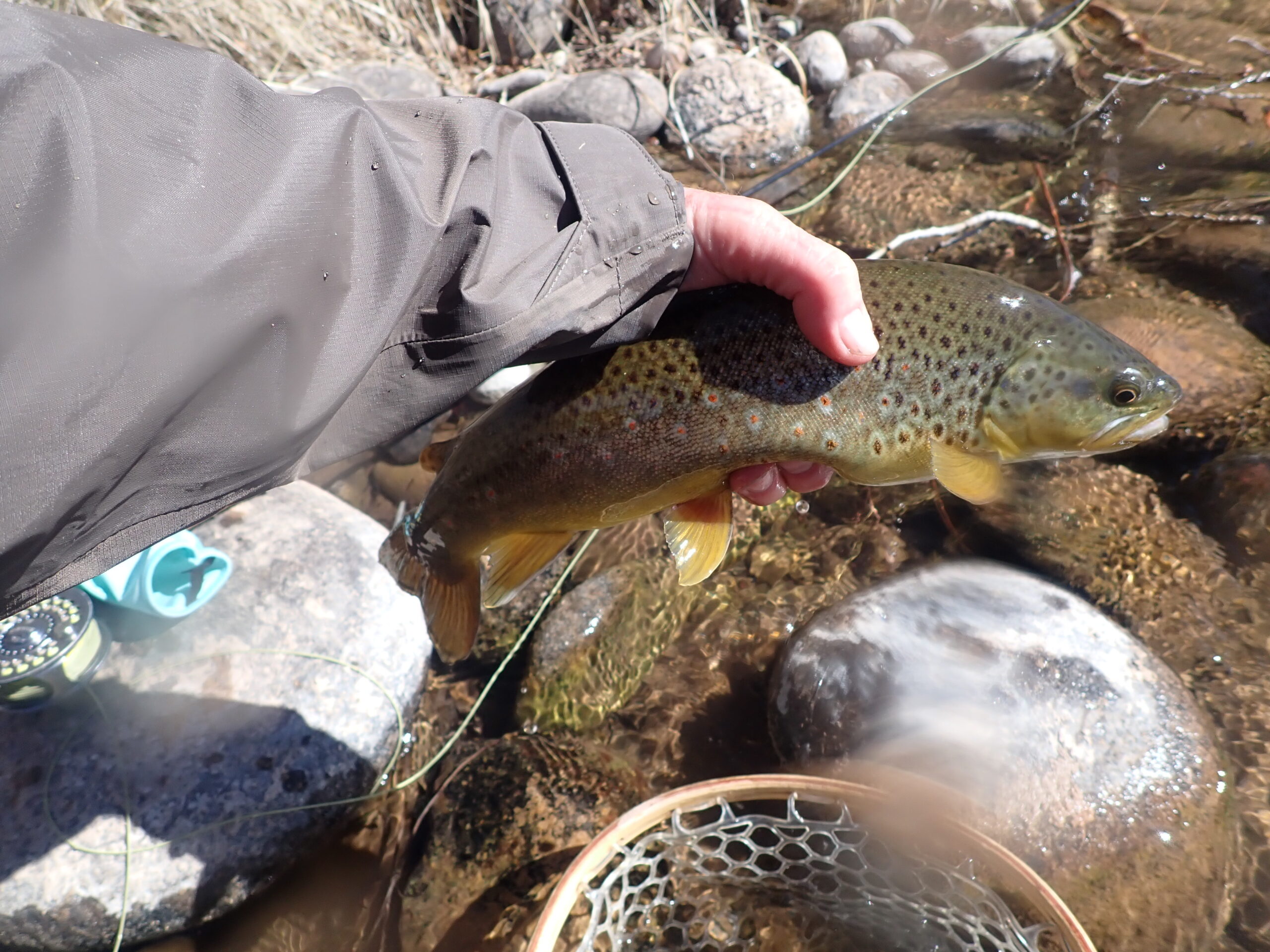
Pleased with This Catch

For the remainder of the day I continued with the hippie stomper and the olive perdigon. At 1:30PM I noticed a couple baetis fluttering about, so I added a classic RS2, and I eventually cycled through a sparkle wing RS2, and a sniper baetis. I hooked a fish momentarily with the classic RS2, but that was the extent of my success with BWO nymph imitations. For the last half hour I swapped the sniper baetis for a beadhead hares ear, and the shaggy nymph produced two trout.

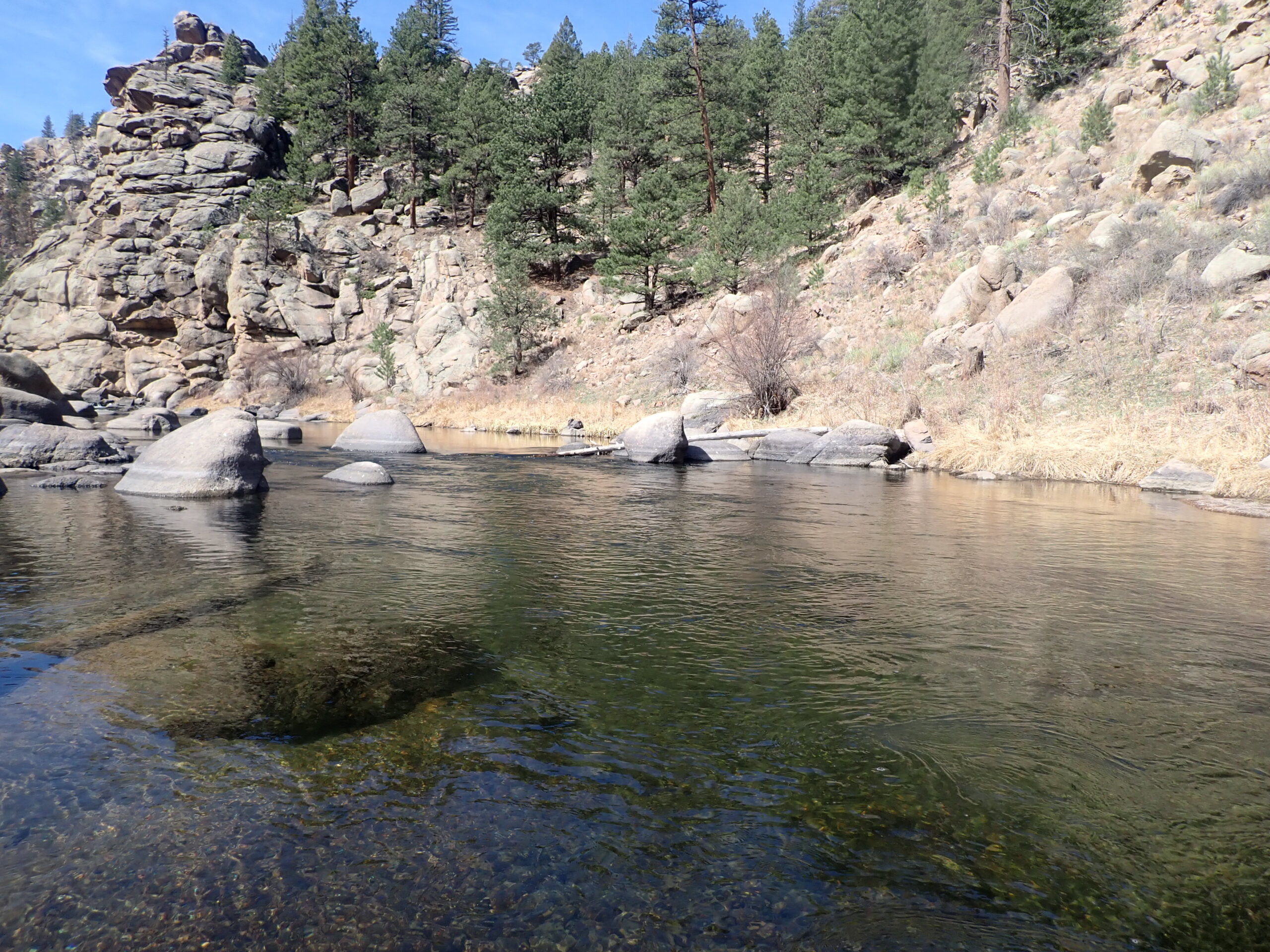
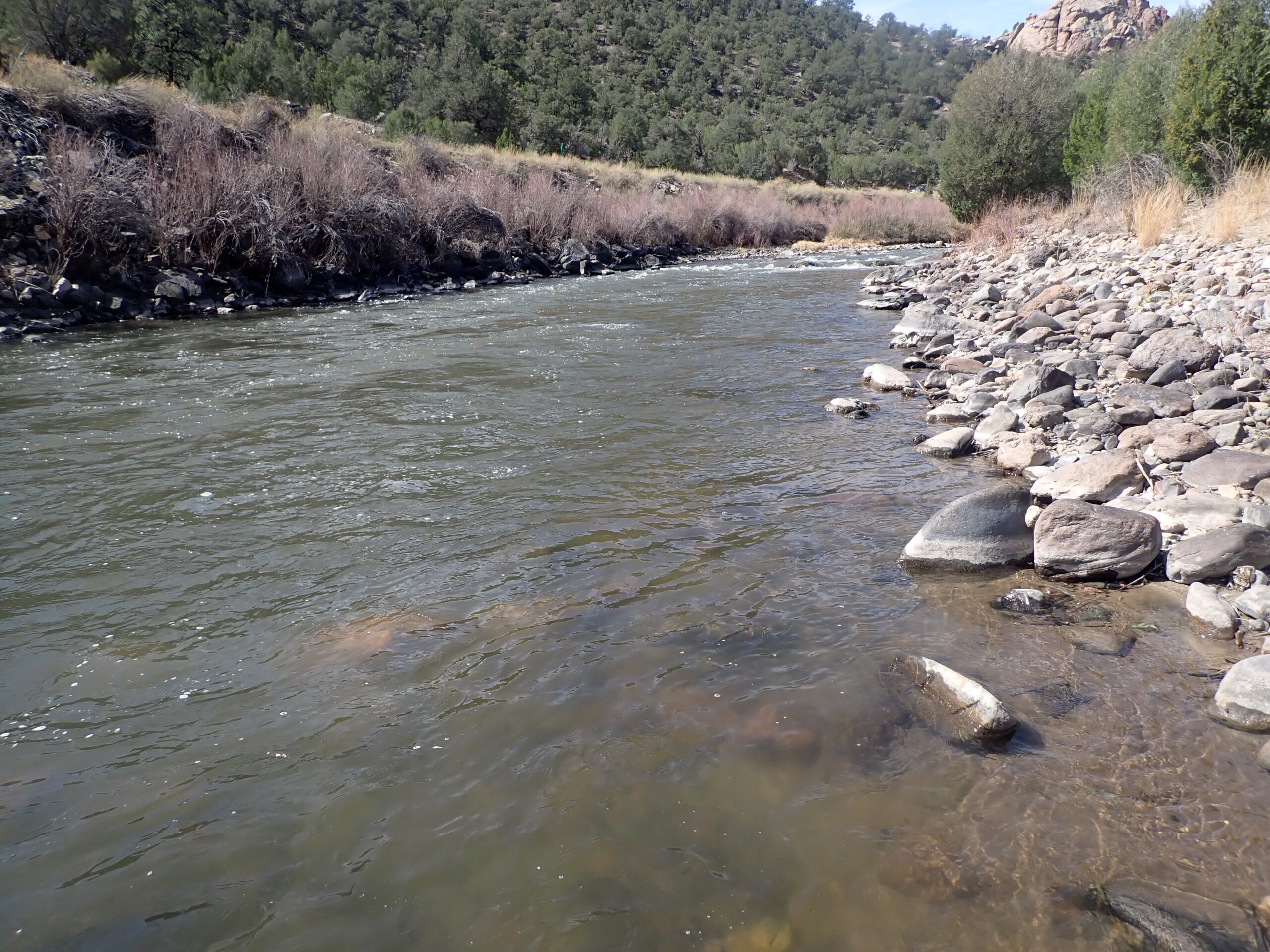
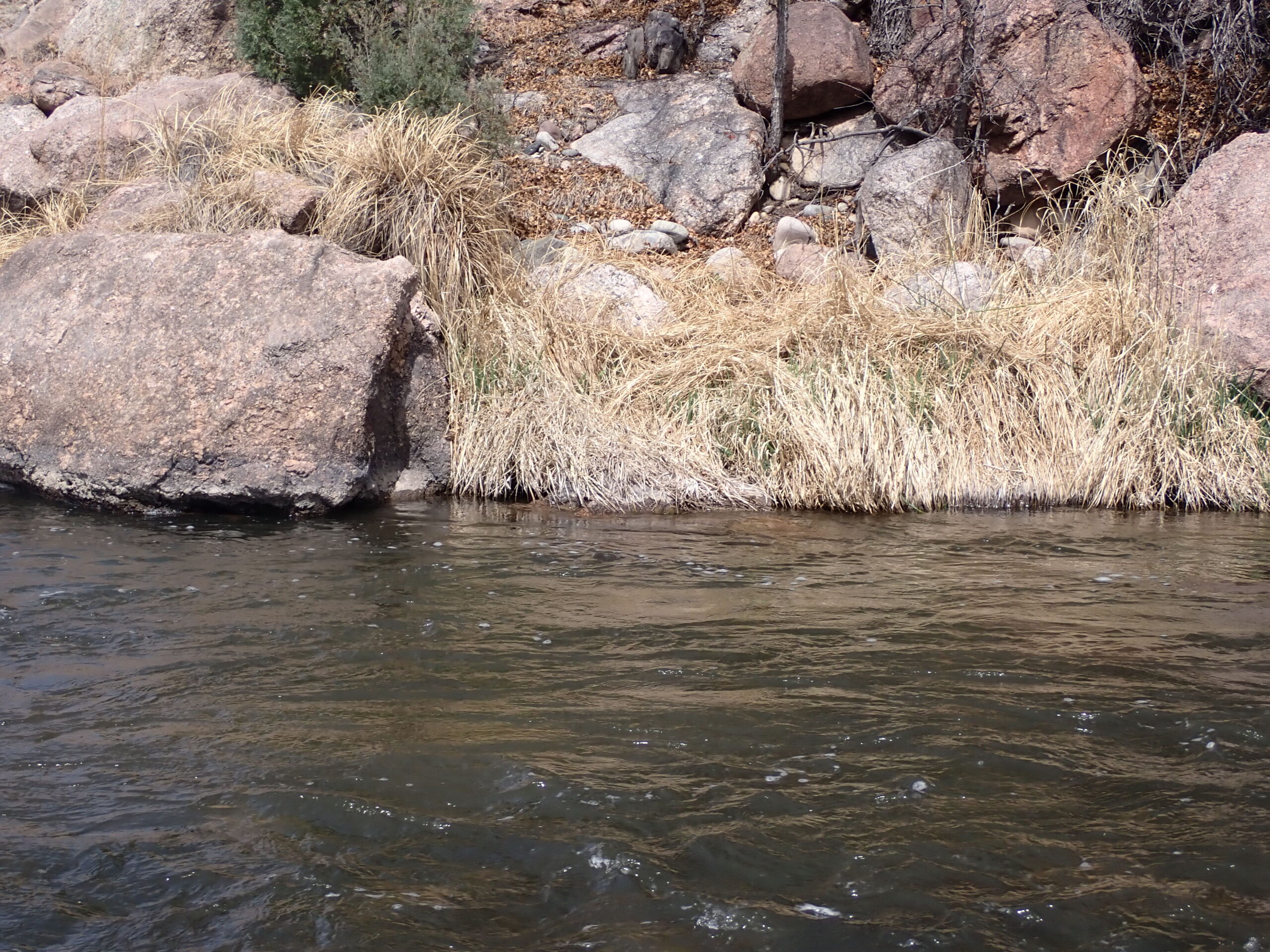
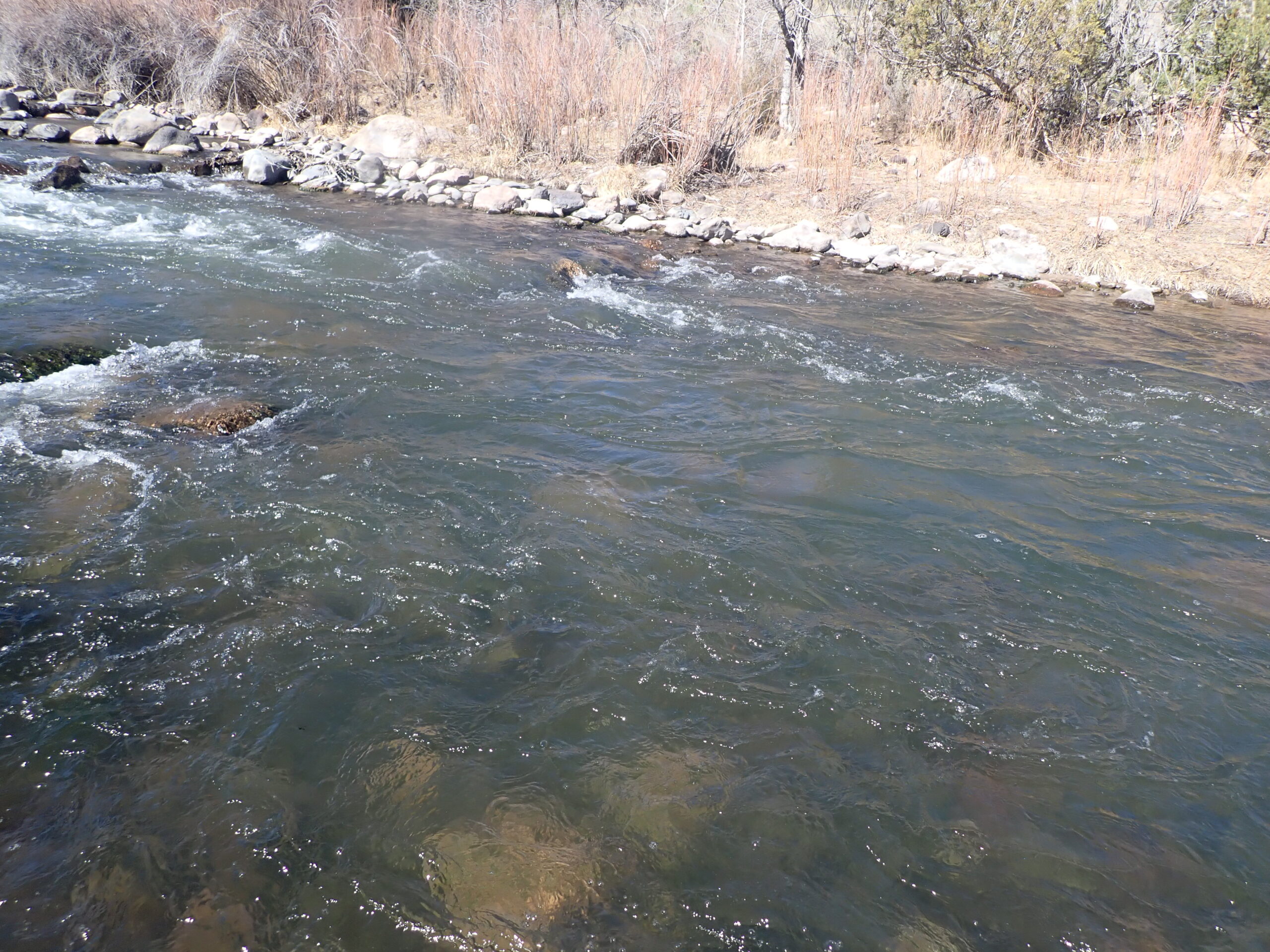
Wide Moderate Depth Riffle

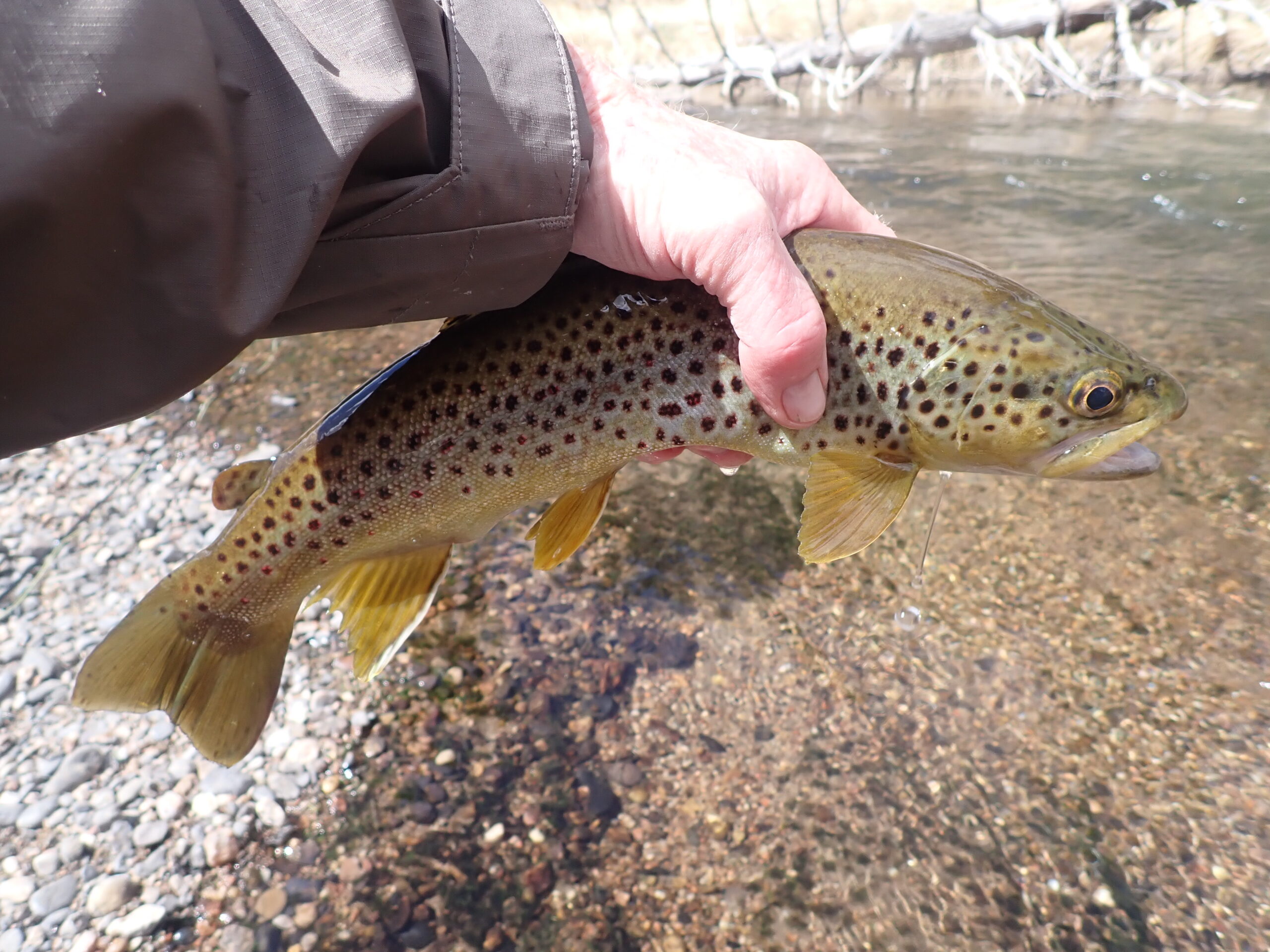
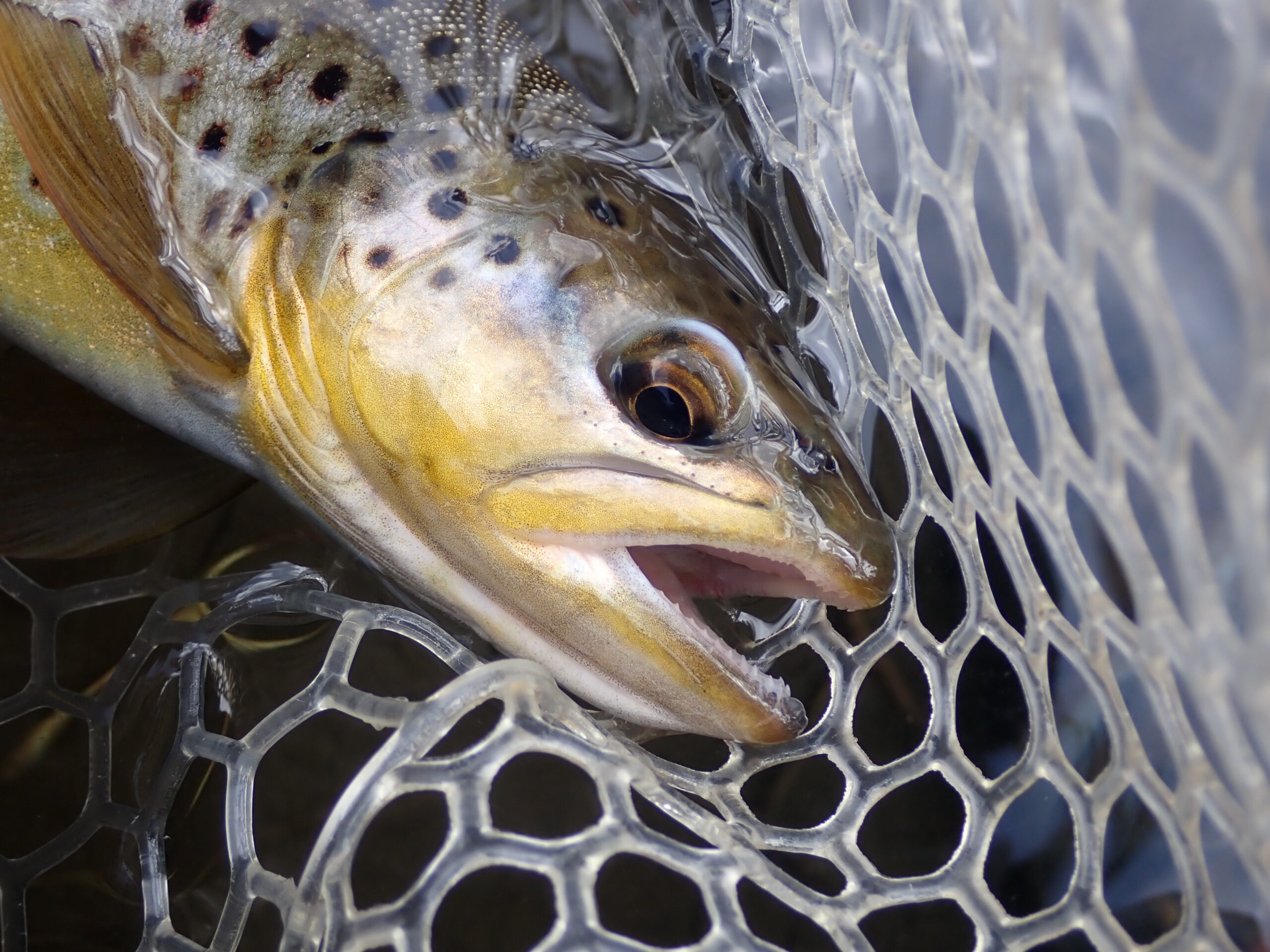
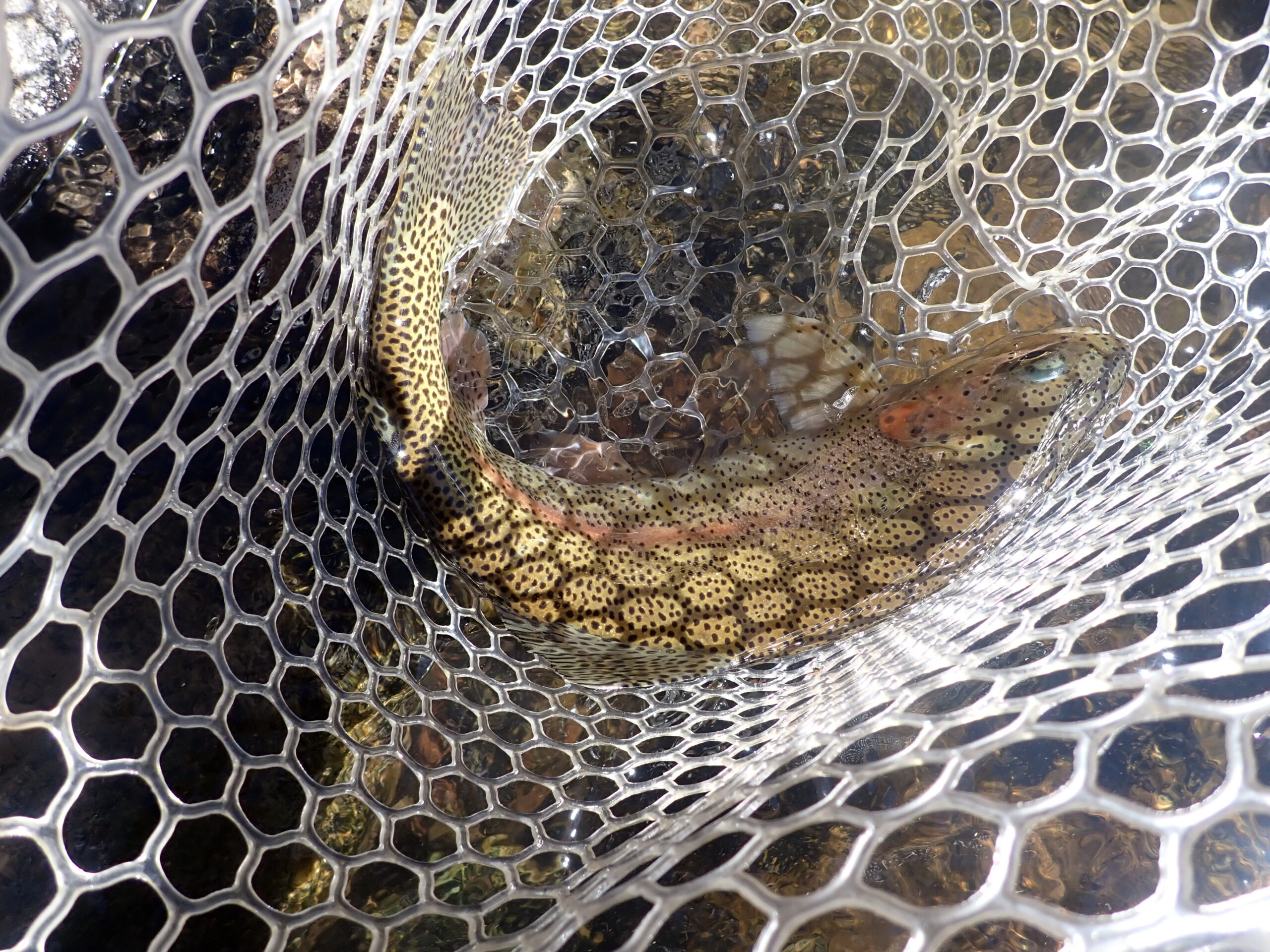
Head Shot

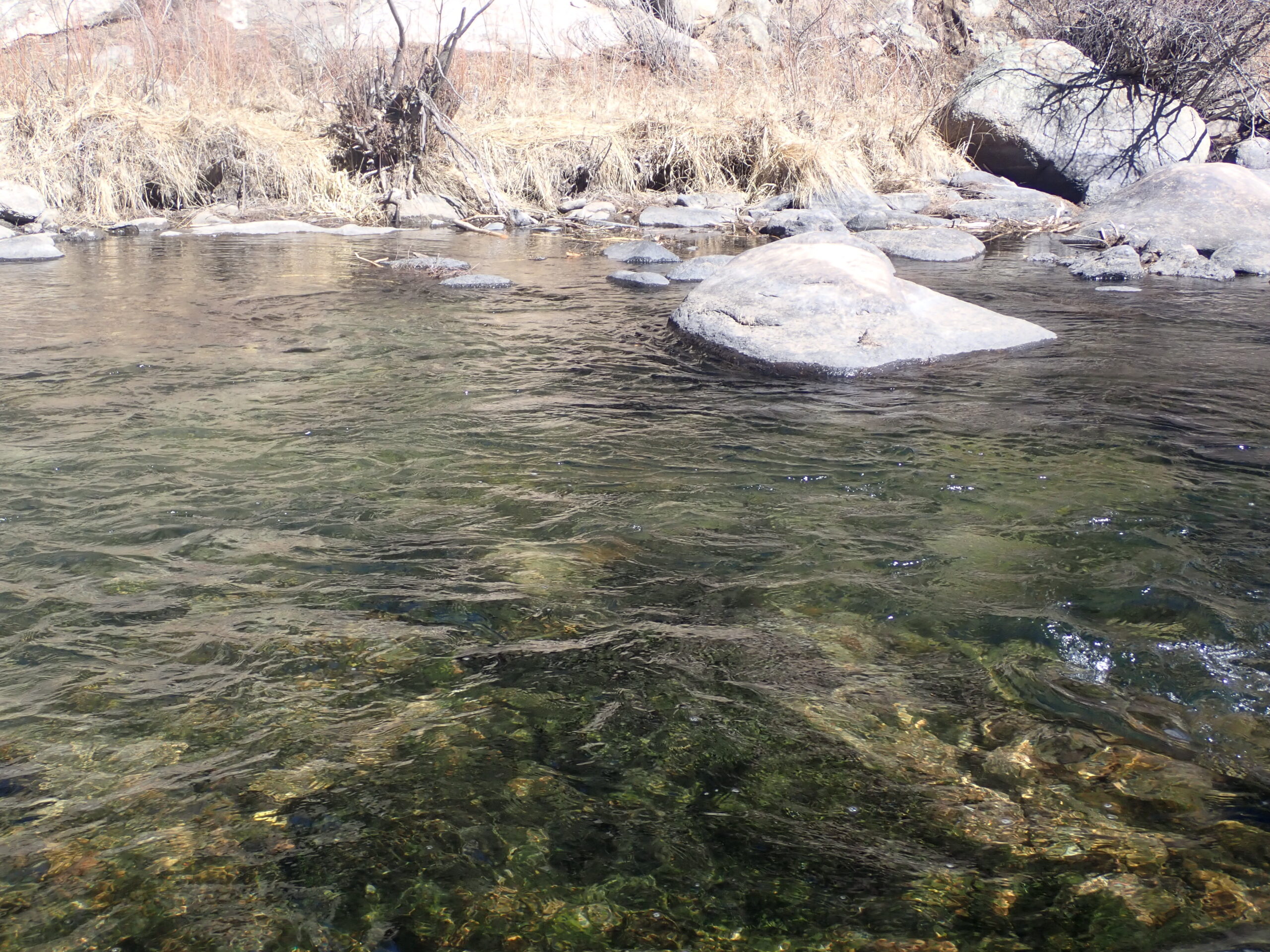
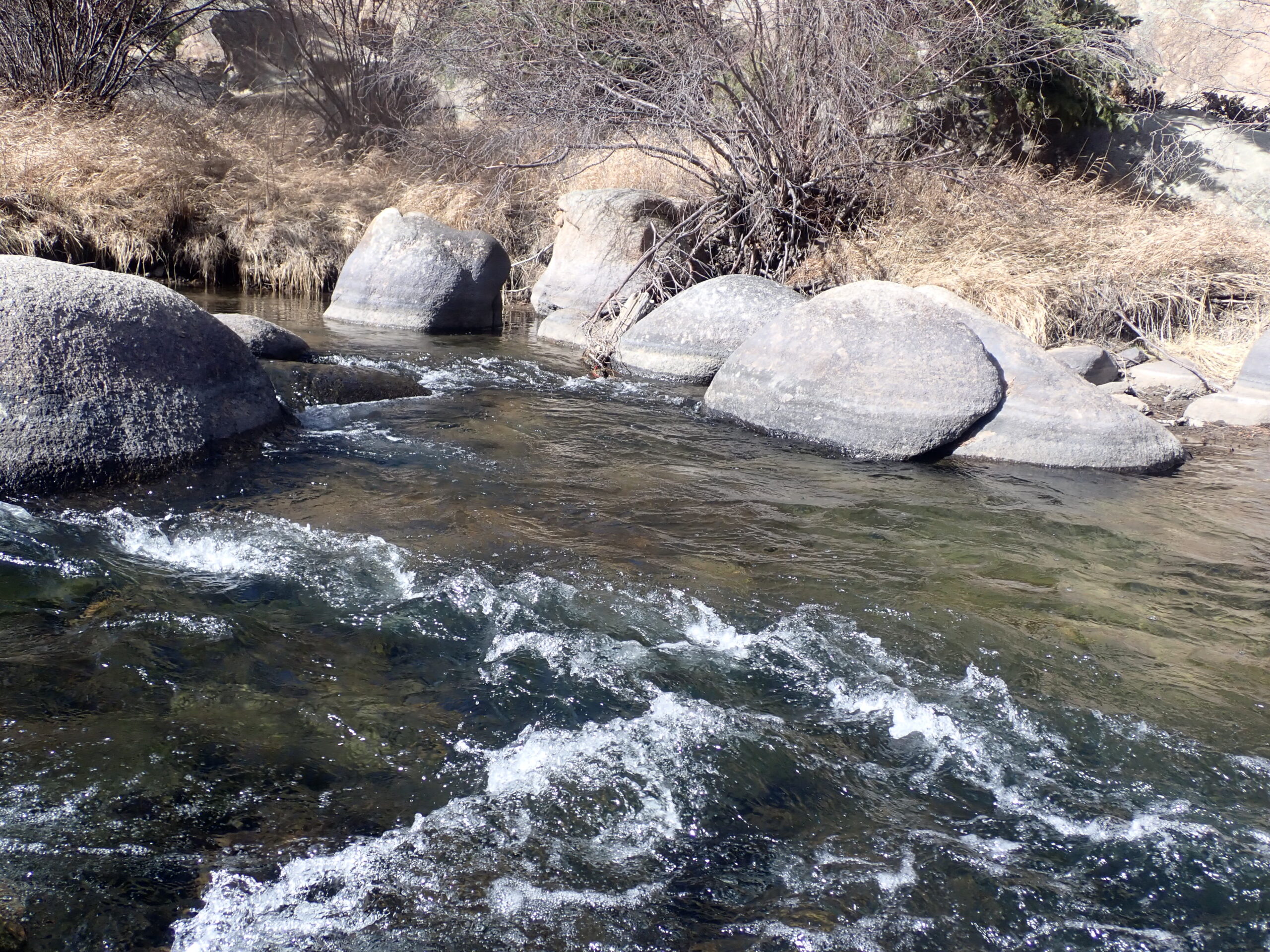
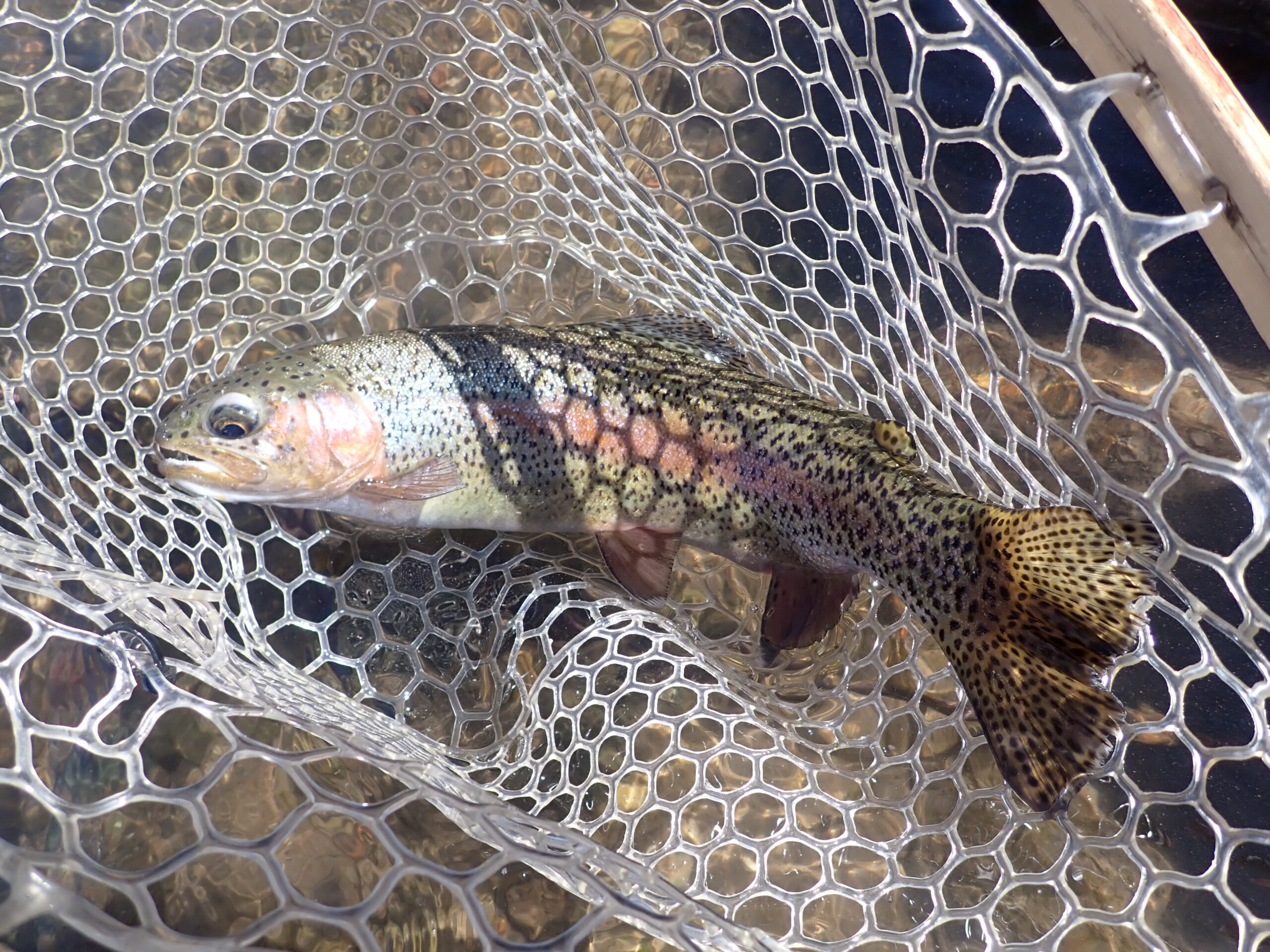
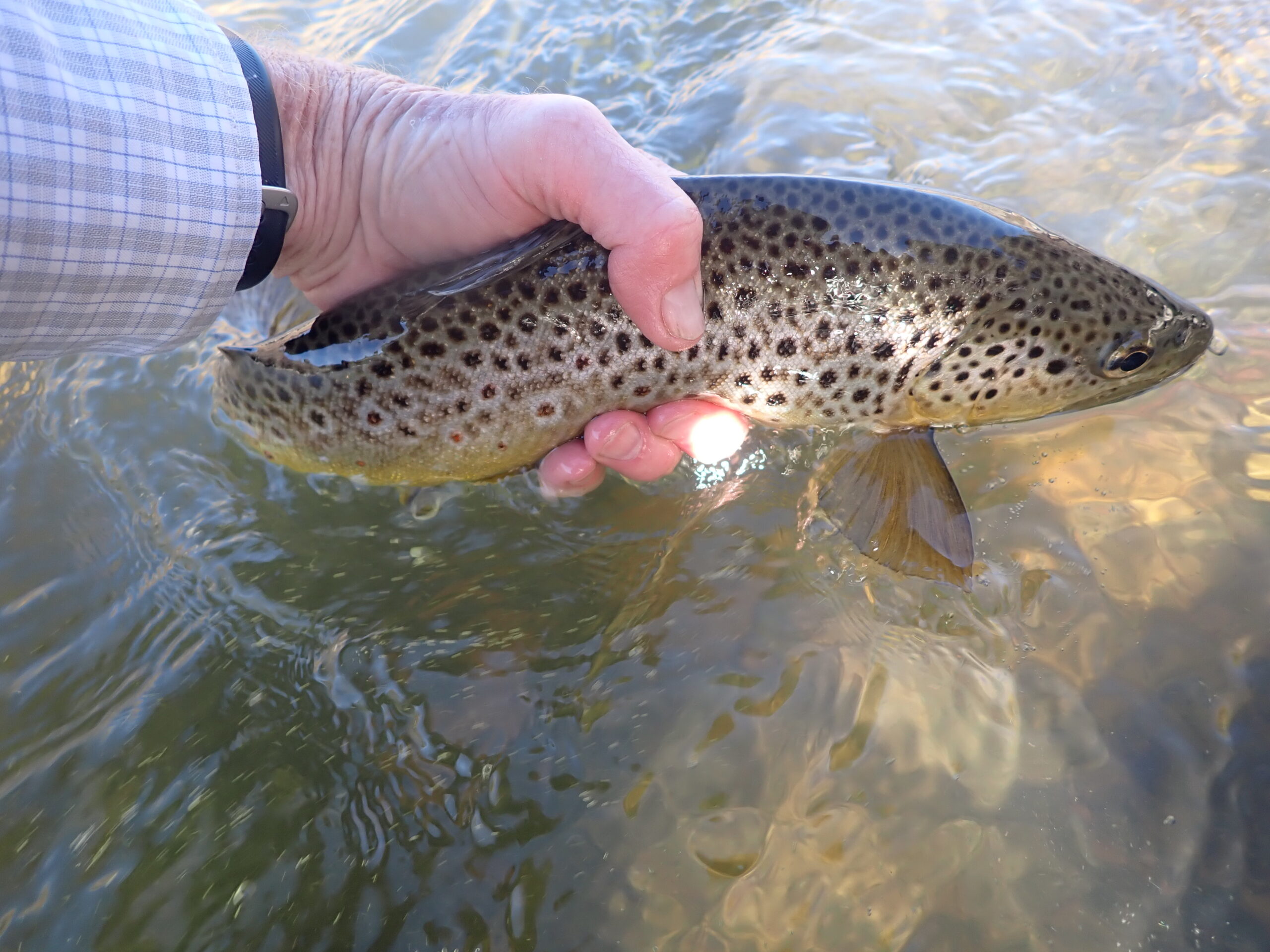
The star of the afternoon was the hippie stomper. In quick succession I prospected two moderately attractive riffles, and two fat fifteen inch brown trout responded. I have no idea what they mistook the attractor dry for. These two fish were numbers seven and eight. The hippie stomper then produced a 14 inch brown and two robust thirteen inch rainbows. I spotted five spawning rainbows, while I ate lunch, but I did not bother them. Apparently not all the rainbows were in  reproduction mode, as I landed the two hippie stomper eaters after lunch.

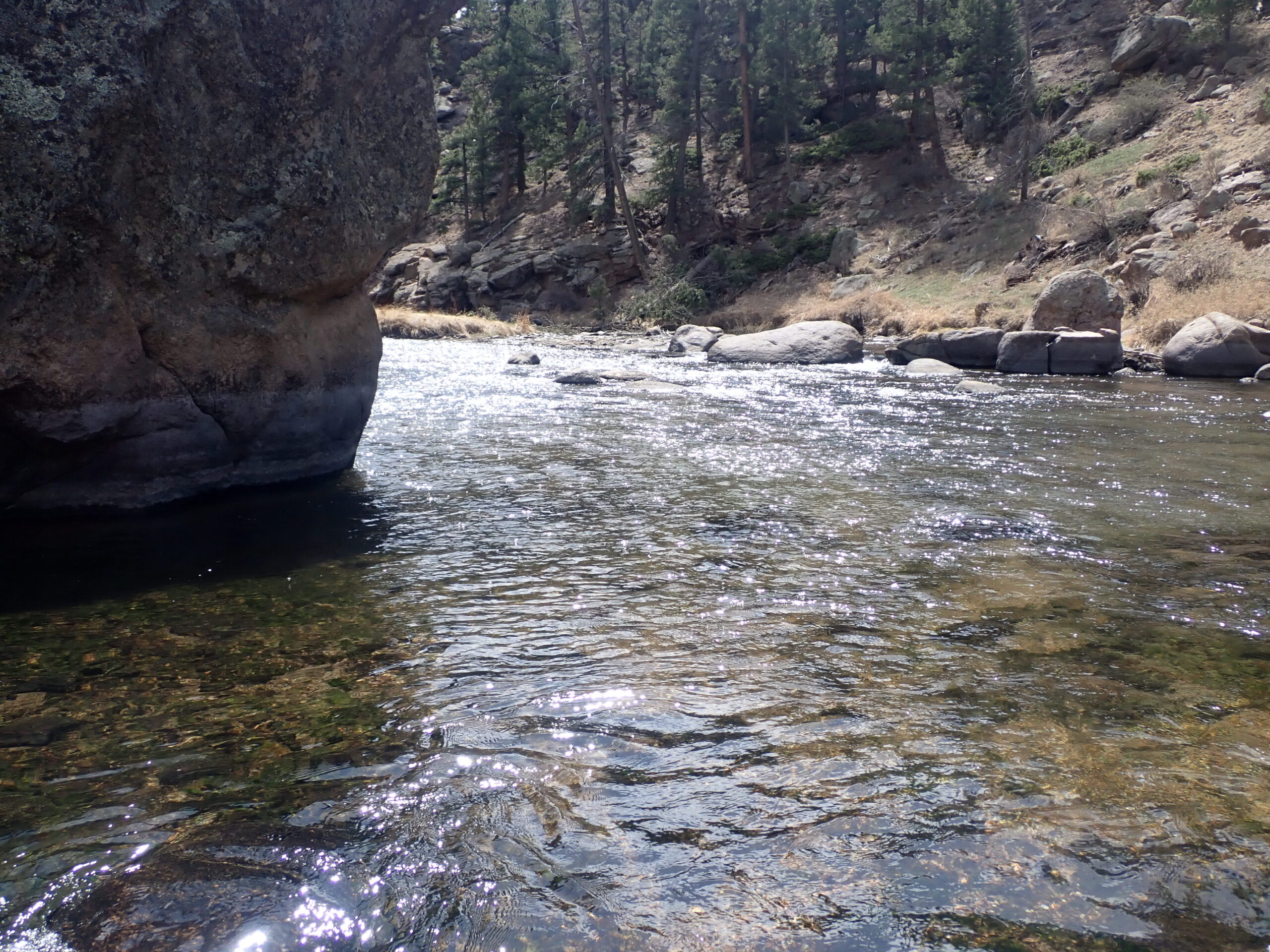
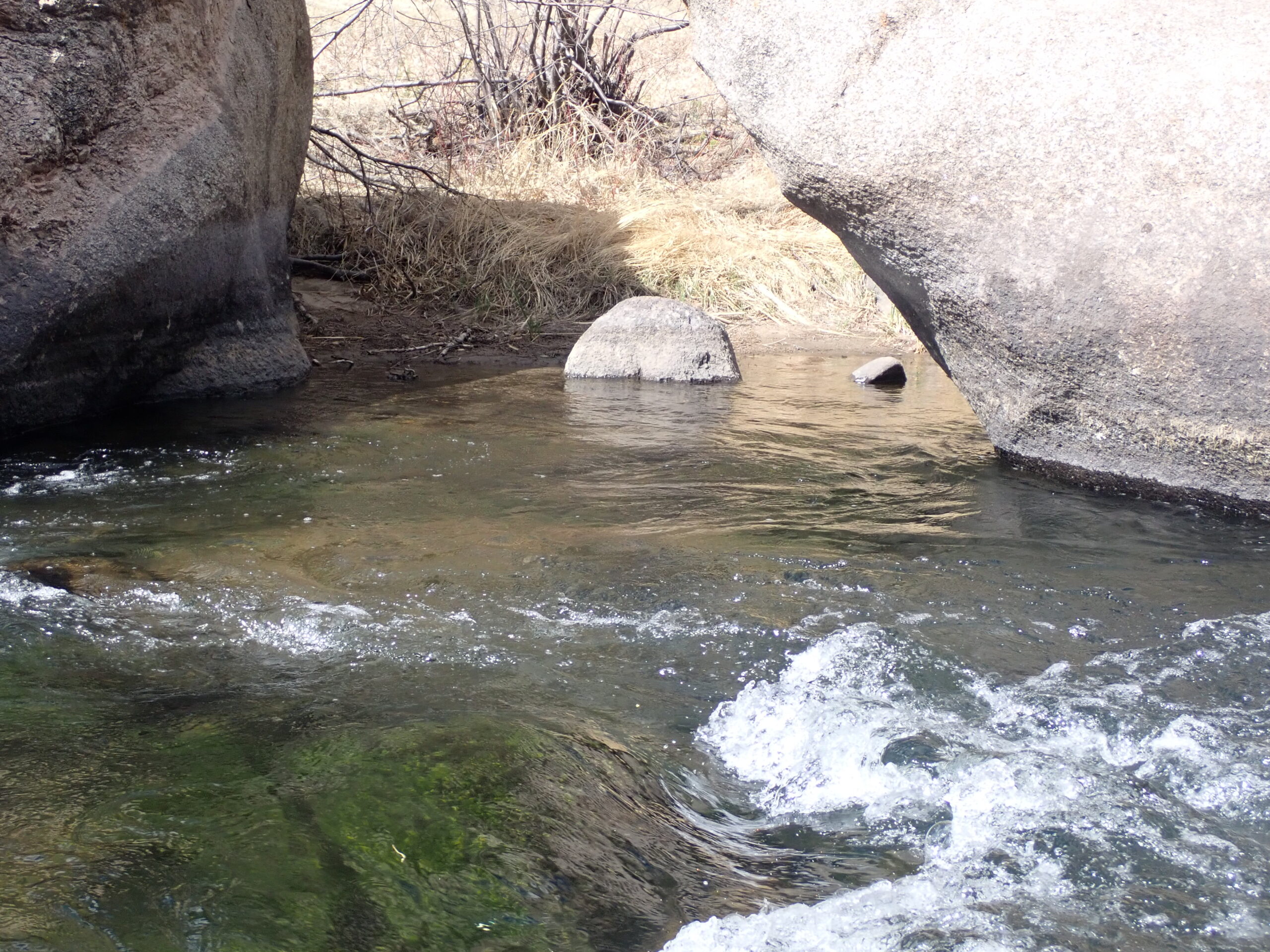
A Brown Emerged from This Hole

Monday was a rewarding day in Eleven Mile Canyon. I avoided the wind for the most part, and I landed fifteen trout including five in the thirteen to sixteen inch size range. The air temperature reached the upper sixties, and I was comfortable for my entire tenure on the river. March continues to be superb.

Fish Landed: 15

Arkansas River – 03/24/2026

Time: 10:15AM – 3:30PM

Location: Big Horn Sheep Canyon

Arkansas River 03/24/2026 Photo Album

The Arkansas River was on fire yesterday. Well, not literally, although I had to detour thirty minutes out of the way to avoid using CO 115, as it was closed due to the 24 Fire at Ft. Carson. Before the news of the fire, I was quite determined to return to the Arkansas River after my stellar outing on 03/09/2026. Upon learning of the fire, I checked out other options such as the South Platte River in Eleven Mile Canyon and the Eagle River. The unseasonably warm weather caused the water flow graph for the Eagle River to turn upward with a fairly decent slope. This spooked me with concerns over early snow melt and turbid conditions. I sensed that the progression of spring hatches in Eleven Mile was lagging the Arkansas as a result of the cold bottom release from the dam and the narrow width of the canyon.

Section Number Three

After pondering the variables, I decided to depart early and follow the detour route to Pueblo and then head west on US 50 through Canon City. I arrived at my chosen pullout by 9:45AM after departing at 7:00AM, The temperature was in the low fifties, but the high was expected to reach 90 degrees. I elected to wear my fleece hoodie with the intent of tying it around my waist and under my waders, as the temperature climbed. I chose my Sage One five weight as my casting tool.

Now We Are Talking

Beast of a Rainbow

As I approached the river, I noticed that it was tinged with sediments, but the clarity was adequate for fish visibility. In fact, the turbidity was probably a boon for the angler, as it helped prevent detection. Between 10:15AM and 11:00AM I worked a deep run along the high bank near US 50, but I failed to ignite any action. I was using a gray body chubby Chernobyl, a 20 incher and an olive perdigon. In fact, these three flies remained on my line for the entire day. After my fishless first forty-five minutes, I contemplated a change, but I maintained my offerings, and persistence paid off.

Love It

This Chubby Eater Surprised Me

At 11:00AM I crossed the river and walked upstream to a stretch, where the river fanned out into a nice long pool. I moved toward the top, and I finally saw the chubby dart, and I landed a twelve inch brown trout. I was on the board. Next I moved downstream to another section where the river ran tight to a bank along the highway. I started in a long pool that fanned out to a shelf along the right shoreline. Much to my amazement the action began to click. I discovered that casting upstream to the seam next to the fast water resulted in some hot action. Before breaking for lunch, I netted five additional trout, and these were very fine fish ranging from thirteen to sixteen inches. The first two from this area were a brown and rainbow, and I was shocked at their length. All the landed fish were larger than twelve inches during this time, and all nabbed the 20 incher. The dark colored stonefly imitation was likely visible in the cloudy water conditions.

The Release Suggests the Size

After lunch I resumed my migration up the river, and the willingness of Arkansas River trout to ingest my flies continued unabated. I doubled the fish count from six to twelve by 1PM, boosted it to sixteen by 1:30PM, and then landed an additional six between 1:30PM and quitting time at 3:30. Obviously the pace of catching slowed as the afternoon wore on, and the temperature gauge spiked. I only spotted a handful of blue wing olives, and only two sporadic rises revealed a fish. Roughly half the trout landed between noon and 3:30PM consumed the 20 incher and the remainder snatched the olive perdigon. I also suffered at least five long distance releases and a couple foul hooked fish. I snagged quite a few sticks, but I was able to rescue all the flies from these challenging situations.

Another Fine Spot Bankside

What was the quality of these fish? Outstanding. I can recall only one fish below twelve inches, and the remainder were all in the twelve to sixteen inch range. I estimate the average size of the fish was skewed to thirteen to fourteen inches. Tuesday was my second outstanding day on the Arkansas River, and I am very anxious to return. I have my fingers crossed that some cooler weather arrives on Friday, thus, putting a halt to the premature run off. 2026 March fly fishing has been prime.

Fish Landed: 22


Roaring Fork River – 03/21/2026

Time: 10:00AM – 12:00PM

Location: Near Carbondale, CO

Roaring Fork River 03/21/2026 Photo Album

Jane and Amy reserved a time slot to hike to Hanging Lake at 2:00PM, so my fishing window was confined to the late morning on Saturday, March 21. I knew that prime hours for hatch activity were 1:00PM – 4:00PM, but I needed to optimize the window I was allocated. I chose to fish another section of the Roaring Fork relatively close to Carbondale.

I arrived at a parking area at 9:50AM, and I quickly prepared to fish. I rigged my Sage One five weight, and I pulled on my raincoat for some additional warmth, as the temperature was in the low fifties. I was not very familiar with the area, so I chose an upper trail out of the lot, and this necessitated a .3 mile hike, before I found a worn path to the river. A trail sign at the parking lot displayed “fisherman access”, and I now know this was probably the means to accessing the lower river next to the parking lot.

This Spot Teased Me

To begin I rigged a gray chubby Chernobyl, a 20 incher, and an olive perdigon. For the first hour the fish failed to cooperate. I fished some very attractive runs and holes with nary a fish sighting. During this time I cycled through the olive perdigon and an olive midge larva, before settling on a Frenchie.

Big Gap in My Grip

The dry/dropper finally clicked with the 20 incher and Frenchie, and I landed two superb trout in the eighteen inch range. One was a hook jawed brown, and the other was a rainbow. These fish emerged from a nice band of slower moving riffle water along the left bank over moderate depth. Apparently the warming temperatures woke up the fish from their cold night stupor. The brown chomped the 20 incher, and the rainbow snatched the Frenchie.

Rainbow of Similar Size

I continued moving up the river along the left bank and landed a twelve inch brown trout on the 20 incher to boost the fish count to three. A short lull ensued, as the clock ticked toward noon, my chosen departure time. By 11:45AM I approached a deep angled pool above a dense collection of driftwood that formed a makeshift dam. I climbed on top of the stick dam, and I began to fire casts to the deep hole.

Just before this approach I noticed a stray strand of something poking out from the 20 incher. I stripped in the fly to discover that the strand was a spike of tinsel rib that had apparently been cut by the teeth of a trout. I nipped off the rogue strand of wire to create a ribless 20 incher. Perhaps my lull was attributable to the damaged fly, because my third cast to the curled deep hole resulted in a take, and I battled an energetic fourteen inch rainbow into my net. I held my rod high and stripped quickly to prevent the bow from running beneath the stick dam, as that would have been game over.

Scene of Bank Eaters

Upon releasing the rainbow, I flicked a cast to the slower shelf section of the pool, and a ten inch brown immediately crushed the ribless 20 incher. By now it was quitting time, but I executed the proverbial last cast, and the chubby dipped thus provoking a hook set. I was connected to a very energetic rainbow, and I once again raised my rod high to prevent branch entanglement; however, in this instance, the estimated thirteen inch rainbow popped free.

It was now minutes after noon, so I hooked the Frenchie to my rod guide and hustled back to the car to meet my Hanging Lake engagement. Saturday was another surprise success on another new stretch of the Roaring Fork River. The ratio of large to small fish during my two brief days was amazing. Amy can expect plenty of future visits from her dad to the Roaring Fork Valley.

Fish Landed: 5

Roaring Fork River – 03/20/2026

Time: 3:00PM – 5:30PM

Location: Near Carbondale, CO

Roaring Fork River 03/20/2026 Photo Album

I love exploring new water, and Friday was one of those days. Jane and I drove from Louisville, CO to Carbondale, CO on Thursday evening and checked into a hotel room. We reserved Thursday through Saturday nights, while we visited with daughter, Amy, on the weekend. Originally Friday was planned as a ski day, but high temperatures in the 80’s scuttled that plan. Instead we completed a two mile hike on the Marian Gulch Trail among intermittent mud and ice sections. We had two dogs to keep us company. After the hike we walked to Plosky’s Deli for sandwiches, and then I departed for the Roaring Fork River.

I debated between the Frying Pan and Roaring Fork, but flows of 41 CFS out of Ruedi Reservoir persuaded me to pass on the low water that probably required technical fishing. In addition, my late start made the closer Roaring Fork a more convenient option.

I arrived at my chosen parking lot, and as I prepared to fish, another angler arrived. He advised me to go downstream from the bridge to a pool that he just vacated. He offered that a blue wing olive hatch was in progress, but he also mentioned that there was another fisherman in place. I rigged my Sage One five weight, and the warm temperatures allowed me to simply wear my fishing shirt with no additional layers.
Promising Ahead

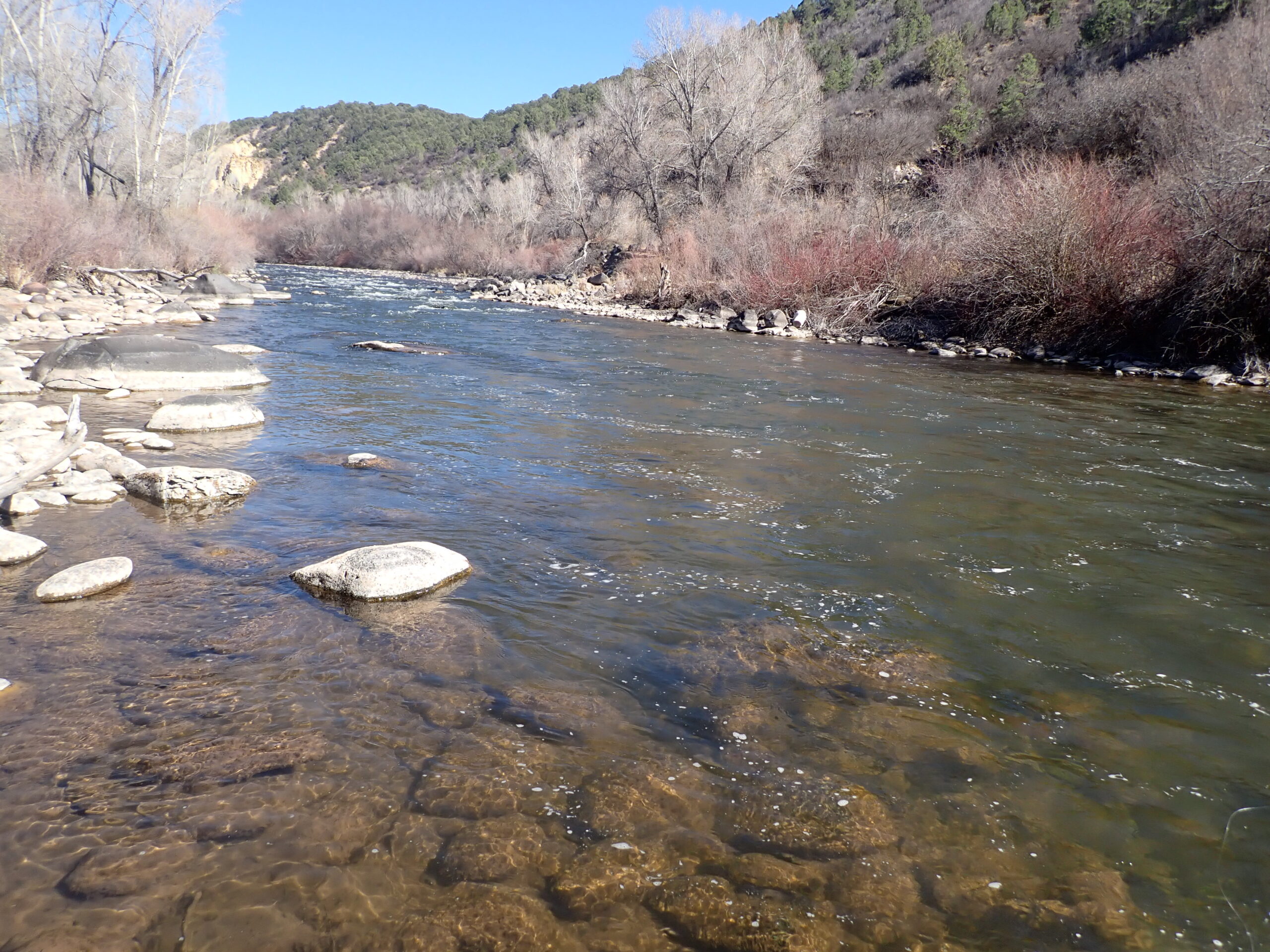
When I hiked down the path to the river, I peered under the bridge, and sure enough an angler was waded into the middle of the pool. I decided to adhere to my original plan, and I hiked for .3 mile upstream. I bypassed a long section of wide, shallow water, before I cut to the bank, where I noticed more depth. To begin I knotted a gray body chubby Chernobyl to my leader, and then I added a 20 incher and olive perdigon. These have been hot flies in recent spring outings.

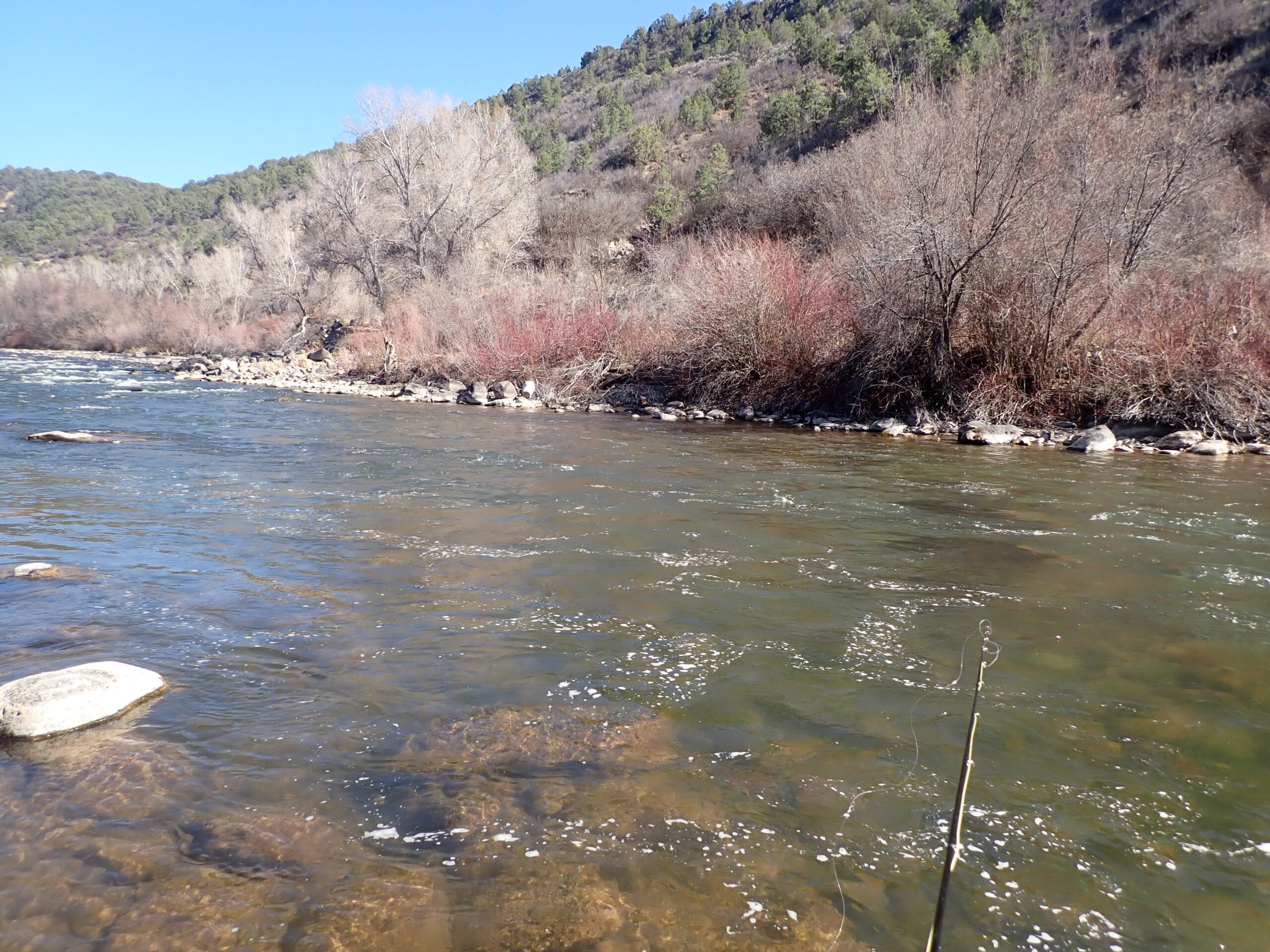
I prospected some decent pockets and runs, but the fish did not cooperate. The flies were hanging up fairly frequently, so I swapped the 20 incher for a RS2 and moved the perdigon to the upper position. After quite a bit of casting through relatively attractive structure, I managed to land a twelve inch brown that snatched the perdigon. I also experienced a temporary connection, but for the most part my flies were ignored. I cycled through the RS2, a sniper baetis, and a crystal stone nymph, but none of those flies created interest.
Nice Moderate Depth and Velocity

I returned to the 20 incher as the top fly and placed the perdigon on the bottom, and still the fish showed no interest. By this time it was 4:30PM, and I approached the fast water that fed a nice pool and pockets, so I decided to hike back toward the bridge to cherry pick prime lies.
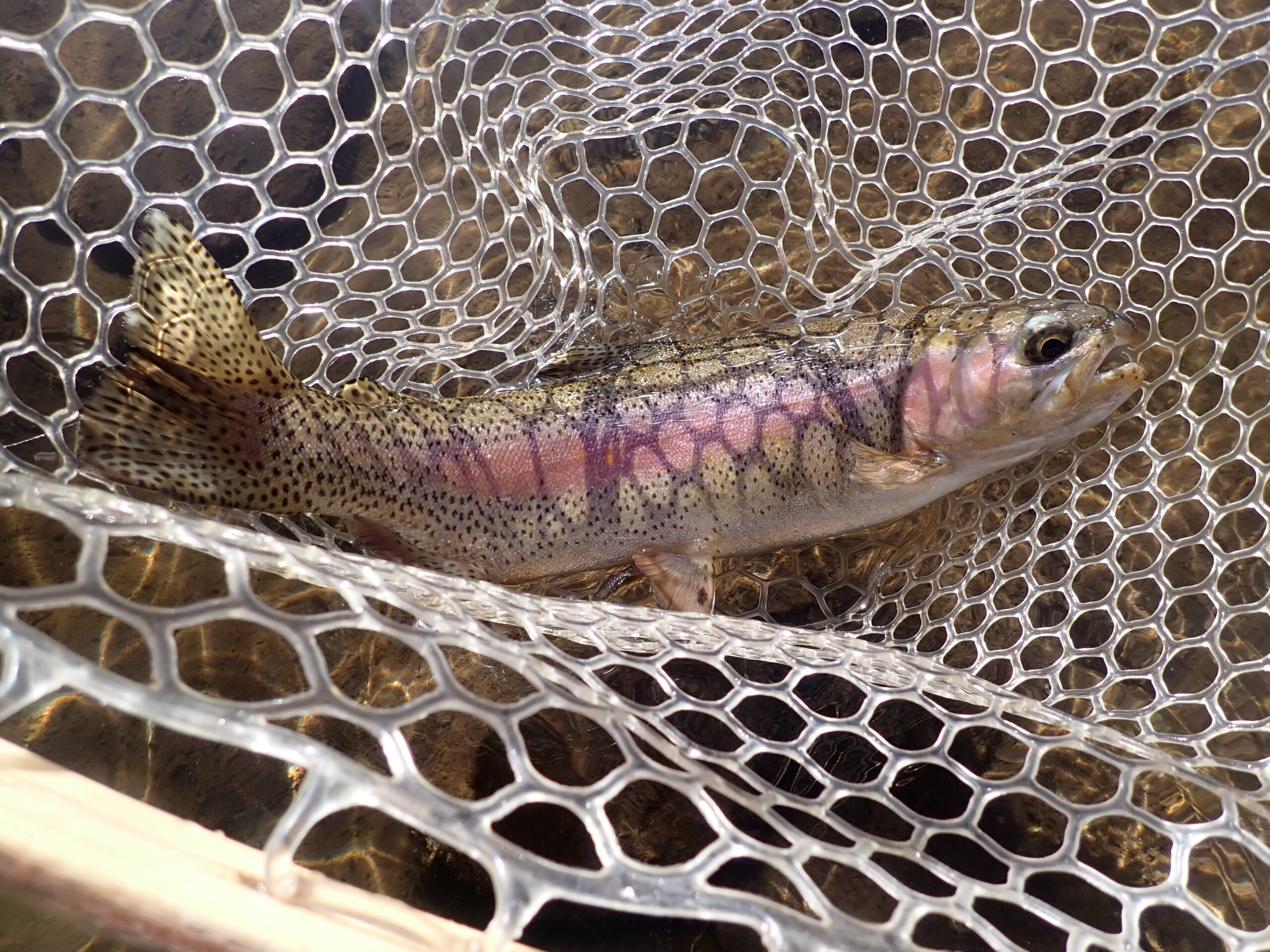
Mole Fly Produced

As it turned out, most of the intervening section was the unattractive wide and shallow area, so I arrived at a moderately attractive run above the bridge. A man was just exiting the river in wet shorts after taking a dip on the first day of spring, but he told me his swim was limited to a small deep spot next to the beach. I cast up the river to the attractive seam along the faster current, but once again futility was the result.

I gazed under the bridge and noted an angler in the pool, but it was a long section of slower moving water, so I gambled that I could fish the tail below the other fisherman. I crossed the road and found the path, and just as I was about to pass the other angler, he shouted that he was leaving, and I was welcome to his spot. I accepted his invitation and moved toward the upper one-third of the long pool.
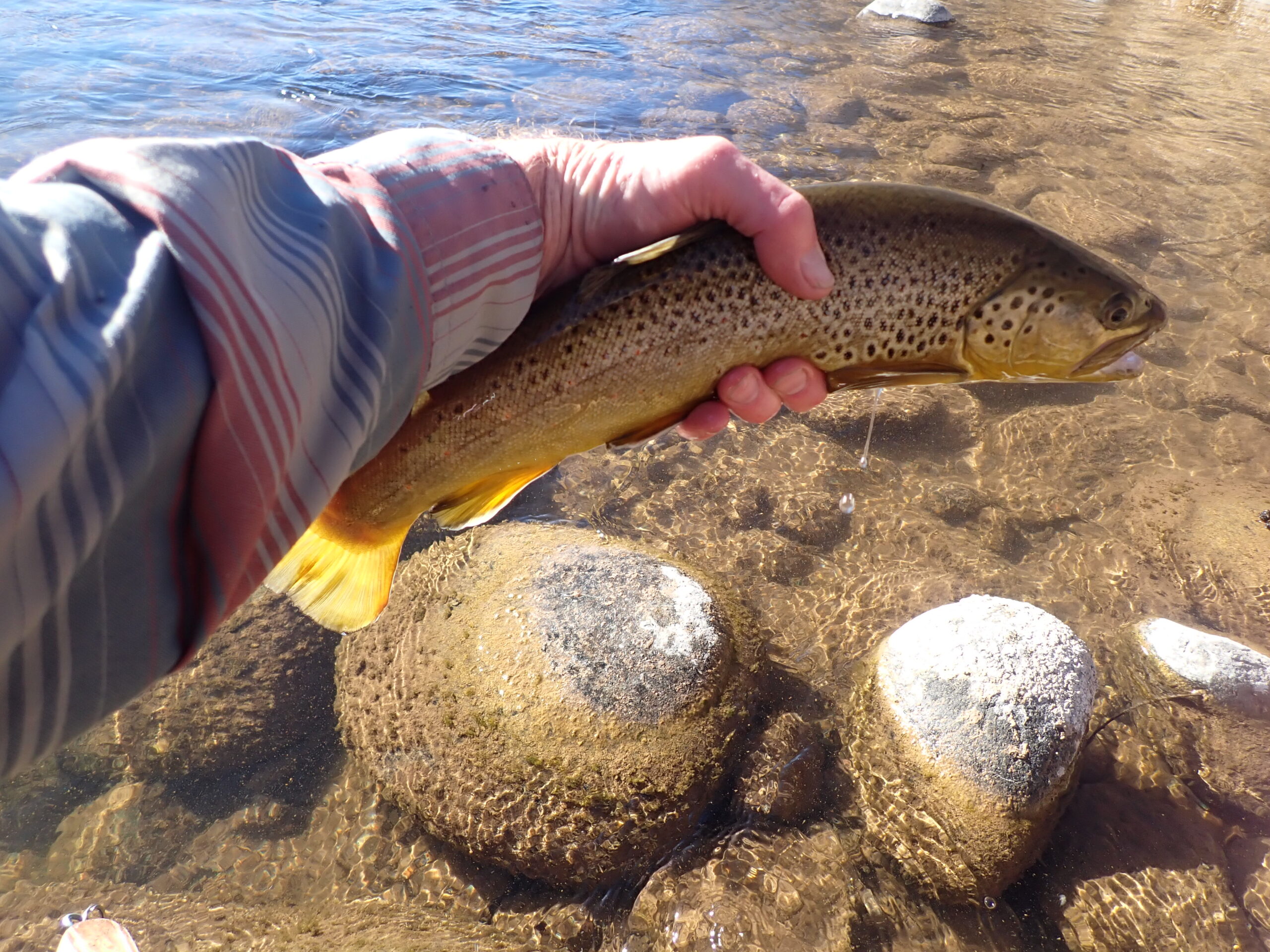
Gorgeous

I noticed a few straggling mayflies, as they flitted about, and some sporadic rises resulted. I paused briefly to observe, and then I decided to migrate to a double dry approach. I removed the three fly dry/dropper and added a peacock hippie stomper trailing a size 20 mole fly on an eighteen inch dropper of 5X tippet. I tied a small batch of mole flies several weeks ago, since they were highly recommended by Charlie Craven, so I was anxious to give them a try.

Between 4:30PM and 5:30PM I cast this combination, and the results were gratifying. Initially I focused on sporadic rises near the midsection, but this was futile, and the downstream area was in a glare, so I waded to the tail for better visibility. Sure enough, when I stared across the pool, I could see more regular rises near the far bank. The river was shallow enough that I could wade beyond the middle of the pool and cast to the bottom corner. Much to my delight a pair of eighteen inch fish grabbed the mole fly. These were stunning wild and large fish, and I was transported into a state of euphoria. My confidence in the mole fly soared.
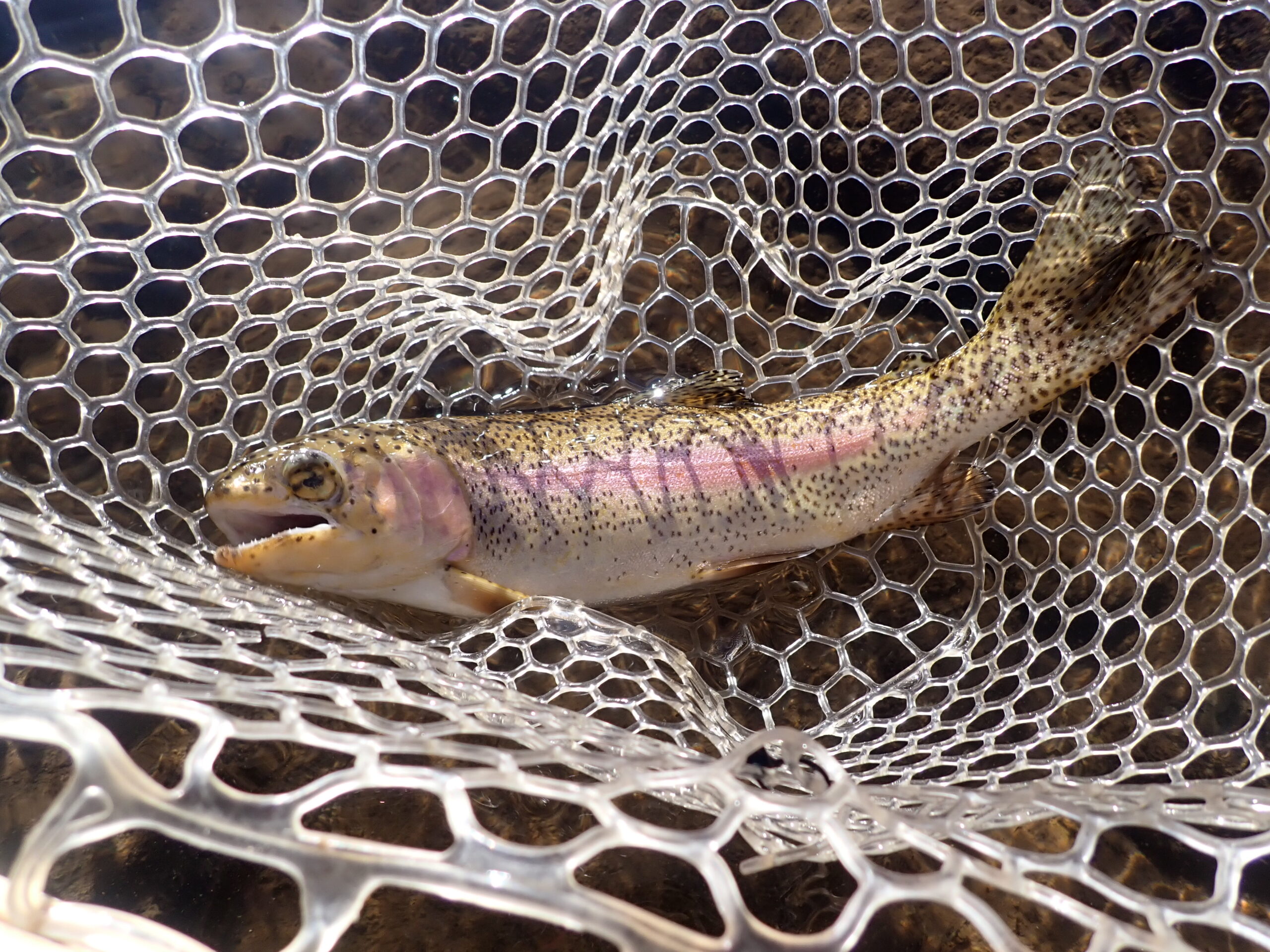
Fought Hard

The rises in the “corner” area slowed, so I turned my attention upstream. A splashy rise upstream and left of center caught my attention, so I fired a series of casts to the area, and on the third drift, a fourteen inch rainbow smacked the hippie stomper. I was incredulous.

The number of rises now slowed, so I decided to begin my exit. I crossed to the east bank, and as I began wading the shallows, I noticed three successive rises within a small area. I decided to make another attempt. On the fifth cast to the area of the rises, a bulge appeared near the hippie stomper, and I reacted with a swift hookset. Voila! I was connected, and a brief battle ensued, before I slid my net beneath a marvelous brown that approximated twenty inches. What a fish! It had the mole fly in its mouth. Perhaps Charlie is not exaggerating the effectiveness of his simple mole fly.
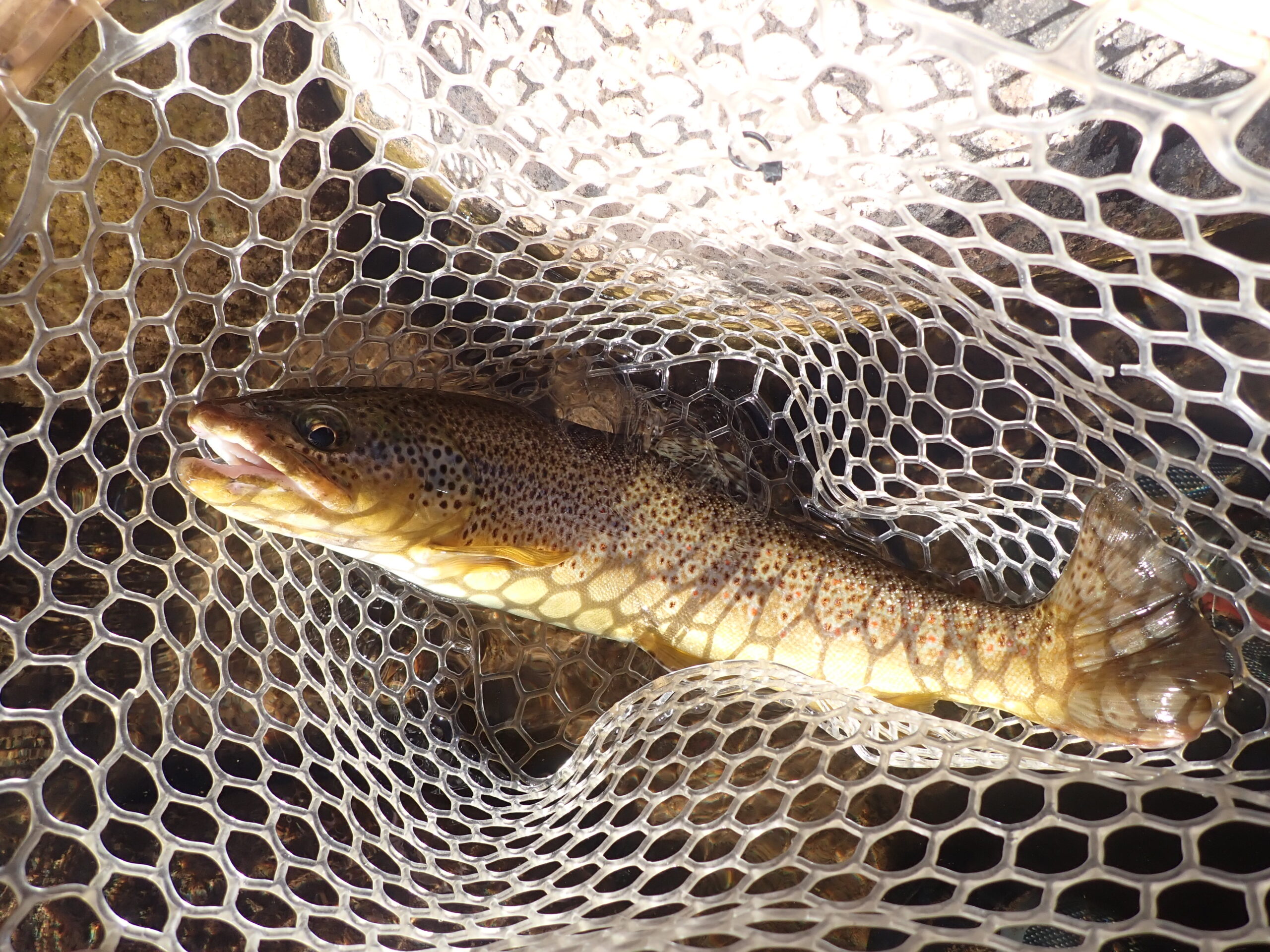
Fish of the Week

It was now 5:30 PM, so I called it a day, but some fairly regular feeding continued under the bridge near the far bank. I left these for another day. A day that began as a dud, evolved into a very rewarding outing, as I landed five trout and four sipped dry flies in the last hour of fishing. I missed the main hatch, but enough straggling baetis initiated sporadic feeding that allowed me to spot fish. The four trout landed on dries were all very fine wild specimen in the fourteen to twenty inch range. The last brown trout was quite the beast. I definitely found a new section of the river to explore more extensively.

Fish Landed: 5
South Platte River – 03/13/2026

South Platte River 03/13/2026 Photo Album

Two months in a row offering a Friday the 13th is a rare occurrence. Is the number thirteen lucky or unlucky? I tend to think it is bad luck, so was a day of fishing a good idea? After experiencing a stellar opener on Monday on the Arkansas River, I was excited to give fly fishing another try.

The weather forecast was mostly auspicious with a high in Denver in the seventies. Unfortunately, the fly fisherman’s four letter word, wind, was raising its ugly head. I checked out the weather in three possible destinations, and finally settled on the South Platte River in Eleven Mile Canyon. Why? The temperatures on the lower Arkansas were more favorable, but the wind was severe, and I knew from experience that wind in the wide open canyon running west to east was not something to confront. I briefly entertained the option of visiting the Eagle River, but the temperatures were in the low fifties, and wind was an existential factor there as well. Wind in Eleven Mile Canyon was expected to peak in the 14 – 16 MPH range, but I knew from previous trips that the river flows from north to south, and the canyon actually shelters the angler to some degree.

Very Pleased

I took my time and arrived at my chosen spot by 11:10. I discovered that the rates for entering the canyon were raised once again to $11, and I had the foresight to stash a pair of quarters that allowed me to pay my fee of $5.50 using my 50% senior discount. The temperature was 50 degrees, as I prepared to fish, so I pulled on my insulated long sleeve undershirt, light down North Face coat and my new raincoat as a windbreaker. These remained in place throughout the day.

Emerged from in Front of the Large Exposed Rock
Eleven Mile Canyon on this day had a completely different aura than Big Horn Sheep Canyon on Monday, and although I was hoping for a day that approached my opener, I immediately sensed that was not going to be the case. A fair amount of snow remained along the eastern banks, and the narrower canyon shaded much of the water in the morning and early afternoon. The air felt exceptionally dry as the wind whipped across the water.

Goodbye Rainbow

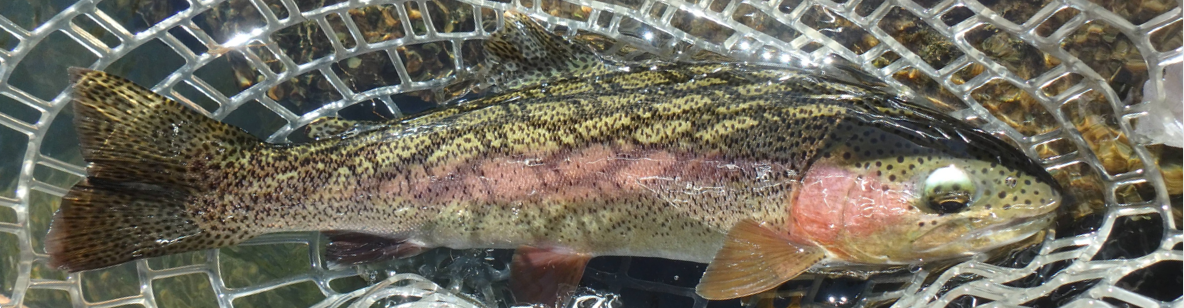
I rigged my Sage One five weight in order to combat the wind, and I hiked down the road a ways, until I encountered a very narrow section with whitewater chutes. That became my starting point. I rigged with an amber ice dub body chubby Chernobyl, a 20 incher and a silver bullet nymph. I began casting at 11:30AM, and by the time I broke for lunch at noon I netted two fine trout. The first was a fifteen inch brown that grabbed the stonefly imitation, as it swung in front of an exposed boulder. The fourteen inch rainbow emerged from a nice riffle of moderate depth, and it also snapped up the 20 incher. I was very encouraged by my thirty minutes of success in the morning.

Rainbow Was From This Run

After lunch I continued up the river prospecting with the dry/dropper, although I swapped the silver bullet for an olive perdigon. The sky continued to vary between large clouds and brief periods of sun, but the wind chill reinforced my decision to wear several layers.

Pointed Back

In the two hours after lunch I covered a significant amount of river real estate, and I managed to increase the fish count to four. One of the landed fish was a spunky thirteen inch rainbow, and the other was a thirteen inch brown trout. These fish preferred the olive perdigon, but I executed an abundant number of casts and carefully waded through quite a few very attractive pools and runs in order to net two trout. This was the slow going I expected, when I arrived and felt the winter-like conditions.

Nice Section Ahead

By 2:30PM I reached another whitewater chute area, so I exited and hiked back to the car and moved downstream .5 mile to an area that I was familiar with from some trips last summer. I liked the structure of the canyon in this locale, and I was convinced that it would yield better results.

Nice Chunk

It did. In the last hour, before I called it quits, I landed two nice trout in the thirteen inch range. One was a rainbow and one was a brown, and ironically they emerged from the same nice long pocket and run along the west bank. Both of these fish showed a preference for the olive perdigon. This bit of good fortune improved my confidence, so I persisted for another thirty minutes, but I once again experienced only futility.

Two Trout Came from This Area

Was Friday’s fly fishing an unlucky Friday the 13th outing? It was actually fairly decent for winter conditions in the early season. Did it match Monday? No, but Monday was surely an outlier for early March, and I did not expect a repeat. I will, however, keep my eye on the weather over the remainder of March and look for an opportunity to return to the Arkansas River. Another week or two of mild weather will probably elevate Eleven Mile and the Eagle River into consideration for March fishing trips.

Fish Landed: 6


Arkansas River – 03/09/2026

Time: 11:30AM – 4:00PM

Location: Big Horn Sheep Canyon

Arkansas River 03/09/2026 Photo Album

I wrapped up my fly tying, and with high temperatures forecast to reach the mid-70’s on Monday, March 9, 2026, I sought a destination for my maiden fly fishing outing of 2026. I did not have to search very far, before I settled on the Arkansas River in Big Horn Sheep Canyon. The flows were around 300 CFS and ideal for wading, and the high temperature was projected to be around seventy degrees. These were prime fishing conditions for September, not late winter.

With the recent time change in place, I did not plan to be on the river early, since 11AM was really comparable to 10AM temperature-wise under standard time. I departed Denver by 8:20AM, and this enabled my arrival at my chosen fly fishing destination by 11AM.

New Setup

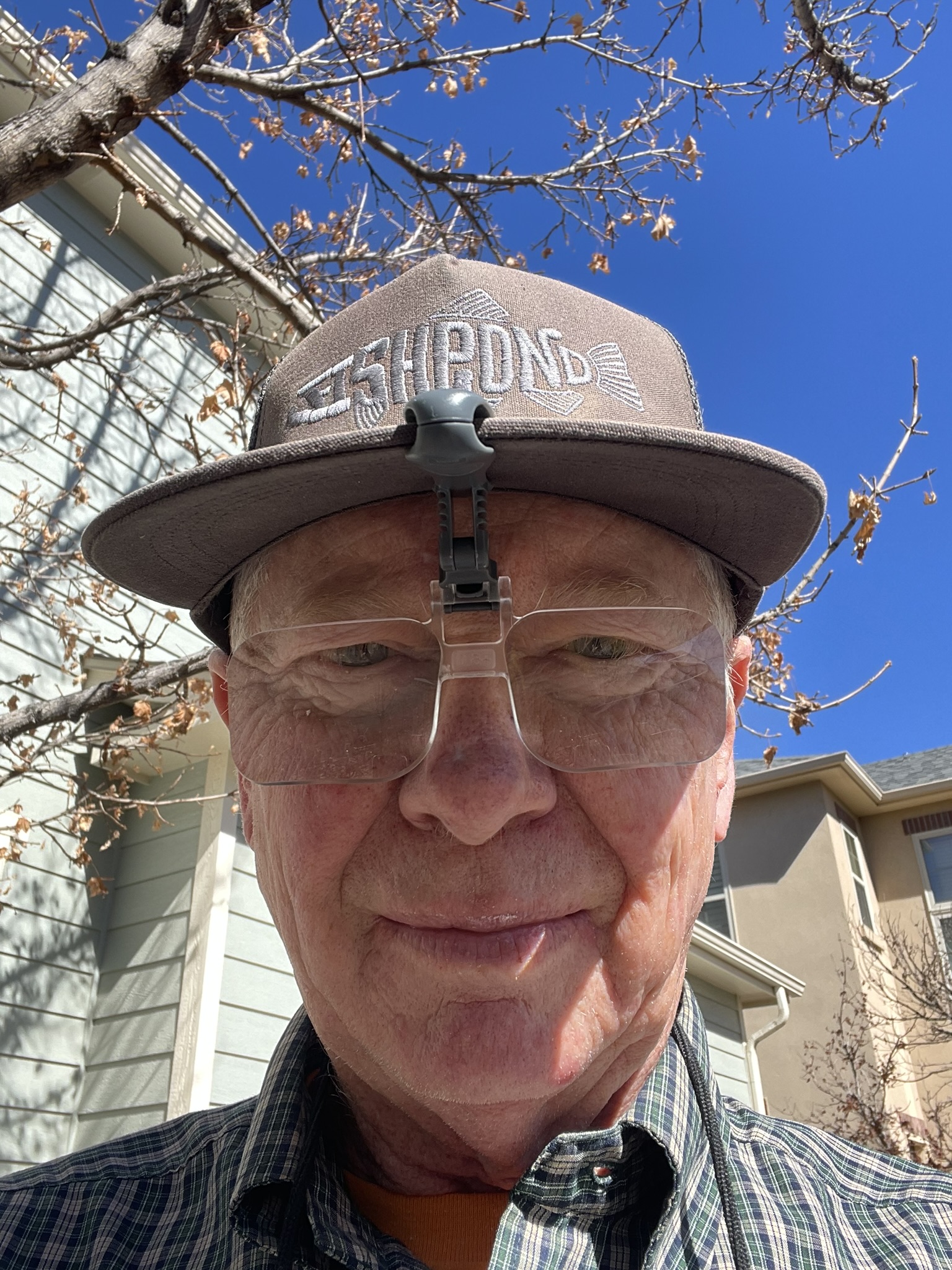
For my first day of fly fishing in the new year, I was breaking in a new raincoat, sungloves and new eyes. New eyes you ask? This was my first attempt to fish following cataract surgery on both eyes in December. I had my distance vision restored to 20/20, but the offset to this was an inability to see up close without the aid of magnifiers. Consequently, I was sporting new non-prescription sunglasses and magnifiers that clipped on to the brim of my hat. I tested Clic readers, but the retainer on the Clic tangled with the retainer on my sunglasses. The clip-ons only cost $10, so I concluded that the experiment was cheap, and I could always default to dueling magnifiers. In fact, I stuffed the magnifiers in my backpack just in case. The eyewear conundrum also created a change to my headwear. My floppy wide-brimmed hat was not stiff enough to hold the clip-ons, so I opted for a billed baseball cap. How would all these changes work out? Stay tuned.

First Fish of the New Year

In addition to the equipment modifications, I tied quite a few new flies over the course of the winter, and I was anxious to break them in as well. I had two Lance Egan flies, the Frenchie and silver bullet. From Juan Ramirez I tied some sniper baetis, and from Charlie Craven I produced some mole flies. I hoped to see some blue wing olive activity in order to test the baetis, silver bullet and mole fly.

Beast Filled the Net

Because of all the changes in my routine, it took me longer to prepare to fish than normal, but I found myself situated along the river ready to make my first cast at 11:30AM. I started my pursuit of trout with an amber ice dub chubby Chernobyl, Arkansas rubber legs, and silver bullet. I read that molting stoneflies were in play and that blue wing olives were hatching. There was intermittent gusting of wind, but for the most part the weather was nearly perfect. During the thirty minutes before my lunch break at noon, I landed one twelve inch brown trout on the Arkansas rubberlegs, and I experienced two temporary hook ups. I was pleased with the amount of early action.

Olive Perdigon Still Stars

After lunch I continued up the river, but I suffered through a forty-five minute drought. The section that I fished was a bit marginal, and I managed another long distance release, but my nymphs continually snagged bottom. I concluded that the conehead Arkansas rubber legs was too heavy, so I exchanged it for an olive perdigon and swapped the silver bullet for a sniper baetis. This move paid dividends, and I landed a gorgeous eighteen inch rainbow that snatched the olive perdigon.

Long Brown Trout

Unfortunately another cold spell ensued, and I now felt as if my drifts were not gaining enough depth, so I added a 20 incher and trailed the tungsten bead olive perdigon. This action turned the tide, and for the remainder of the afternoon I progressed up the river and built the fish count from two to fifteen. Needless to say, I was a very happy angler.

Great Trough

Roughly half of the landed fish snapped up the olive perdigon, and the remainder chomped the 20 incher. The quality of these fish was unsurpassed. I fought and landed a football sized brown trout that probably extended to eighteen inches, and another brown trout filled the net to about sixteen inches. A few more rainbows were in the mix, but the catch on March 9 was predominantly brown trout. Every fish that I landed on Monday was twelve inches or greater and many browns in the thirteen inch slot prevailed. I was quite pleased with the size of the trout that rested in my net.

This Was a Hot Spot

Between 2PM and 3PM there was a fairly dense blue wing olive emergence, although I never saw surface feeding. The wind was at its worst, and the tiny mayflies tumbled across the surface and through the air, as I looked on. By this time I was in faster pocket water, and it was impossible to see naturals or rises among the swirling currents, so I stuck with the dry/dropper approach. And why not, since I was landing gorgeous fish along the way. Nevertheless, I never had the opportunity to experiment with the mole fly.

Best Brown of the Day

What a day! This was, in all likelihood, my best opening day ever during my many days of fly fishing. The river was in perfect condition, and it appears that hatches are two to three weeks ahead of schedule.

Fish Landed: 15

Sniper Baetis – 03/06/2026

Sniper Baetis 03/06/2026 Photo Album

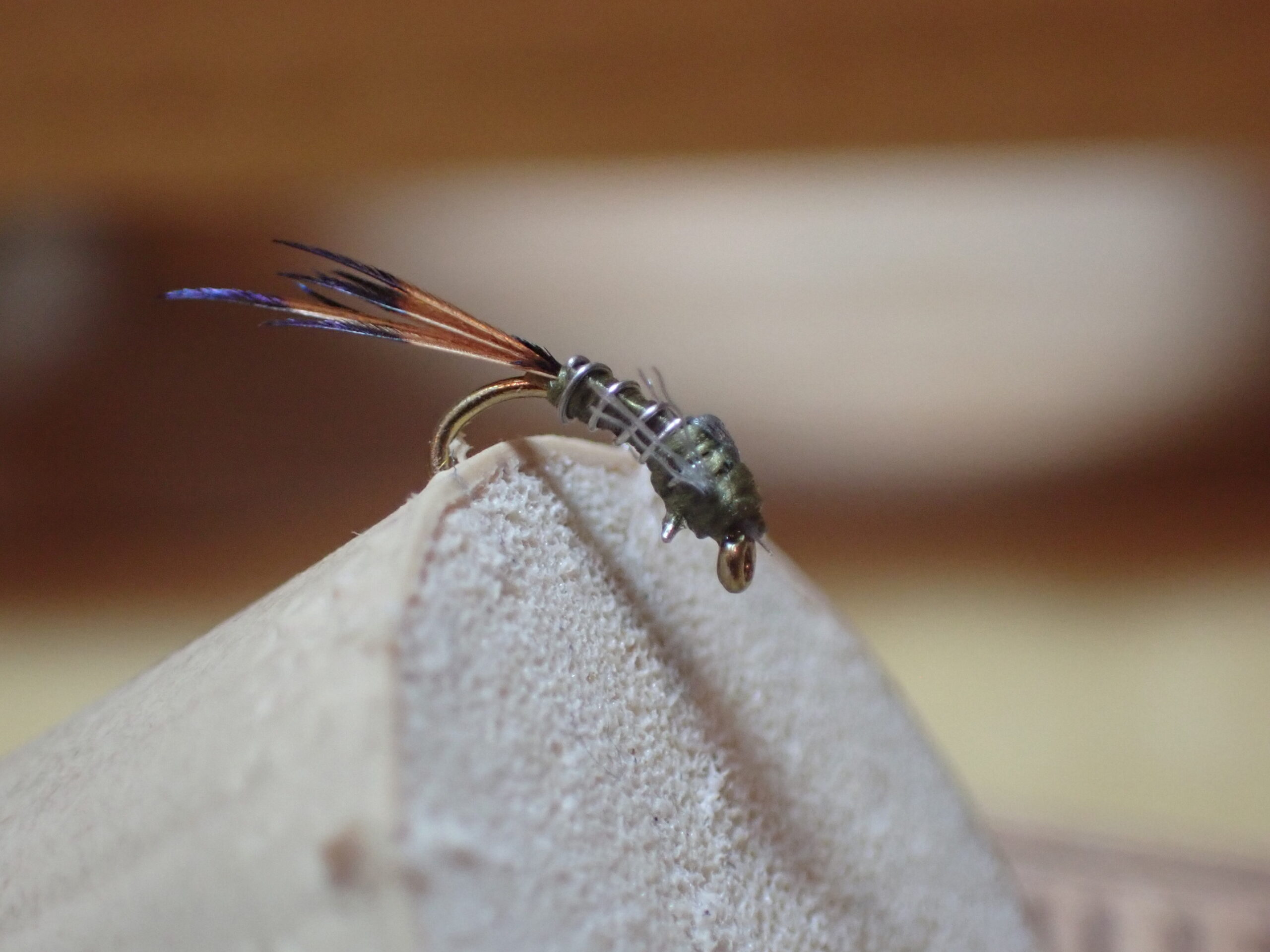
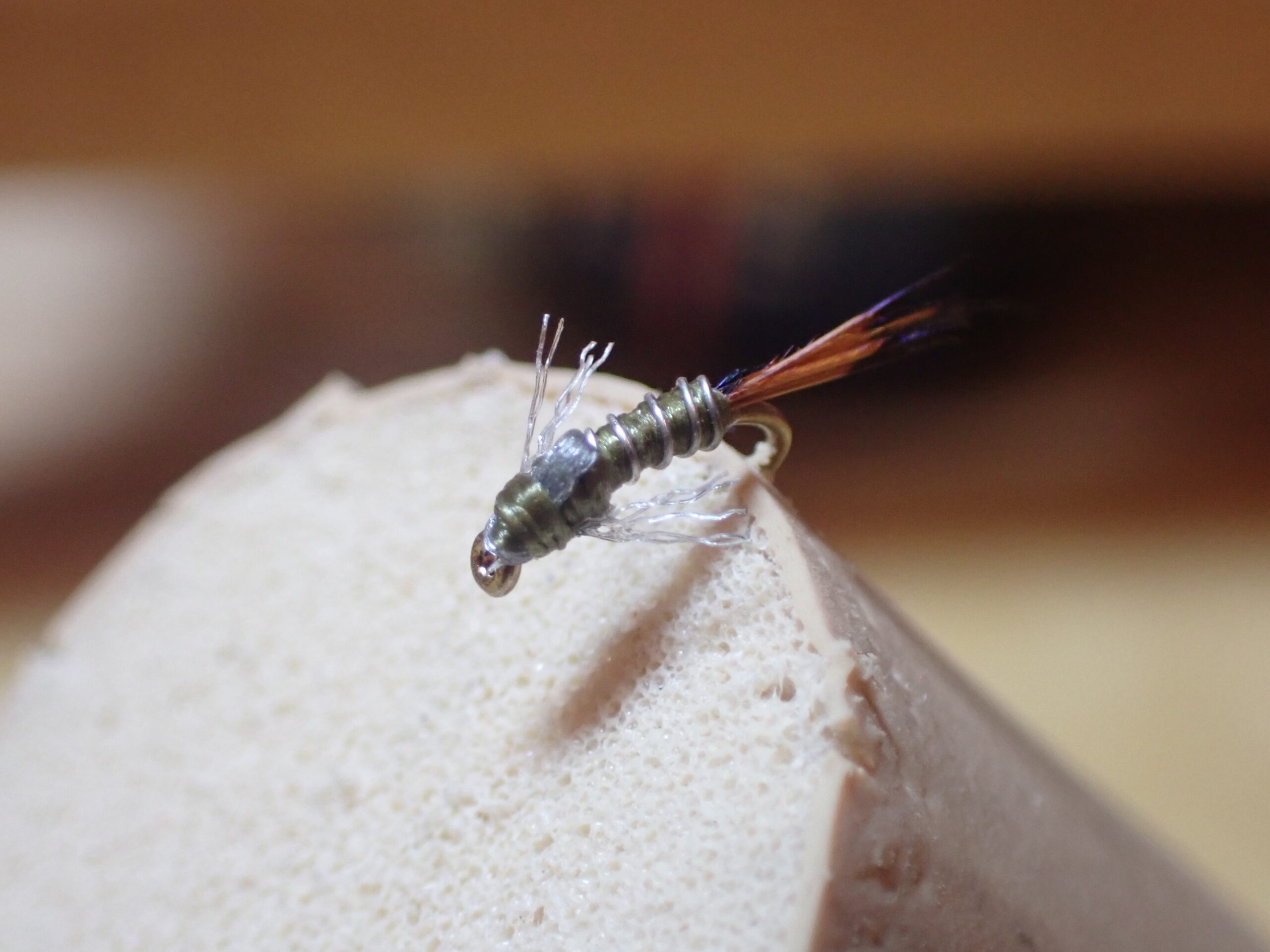
I am a fan of Juan Ramirez and a follower of @hopperjuan_fly_fishing on Instagram, and I recently saw a post of Juan’s sniper baetis. I watched the tying video and determined that it was a fairly straightforward tie, so I added it to my list. I reached the end of my list of all the standard flies that I tie based on my many years of fly fishing. It was now time to try a new fly.

Slim Baetis

My go to baetis nymph flies are RS2’s. Juan posted a photo of his sniper baetis next to some natural nymphs, and I concluded that his imitation possessed a slimmer profile and, thus, a more precise imitation of a baetis nymph.

Left Side Angled

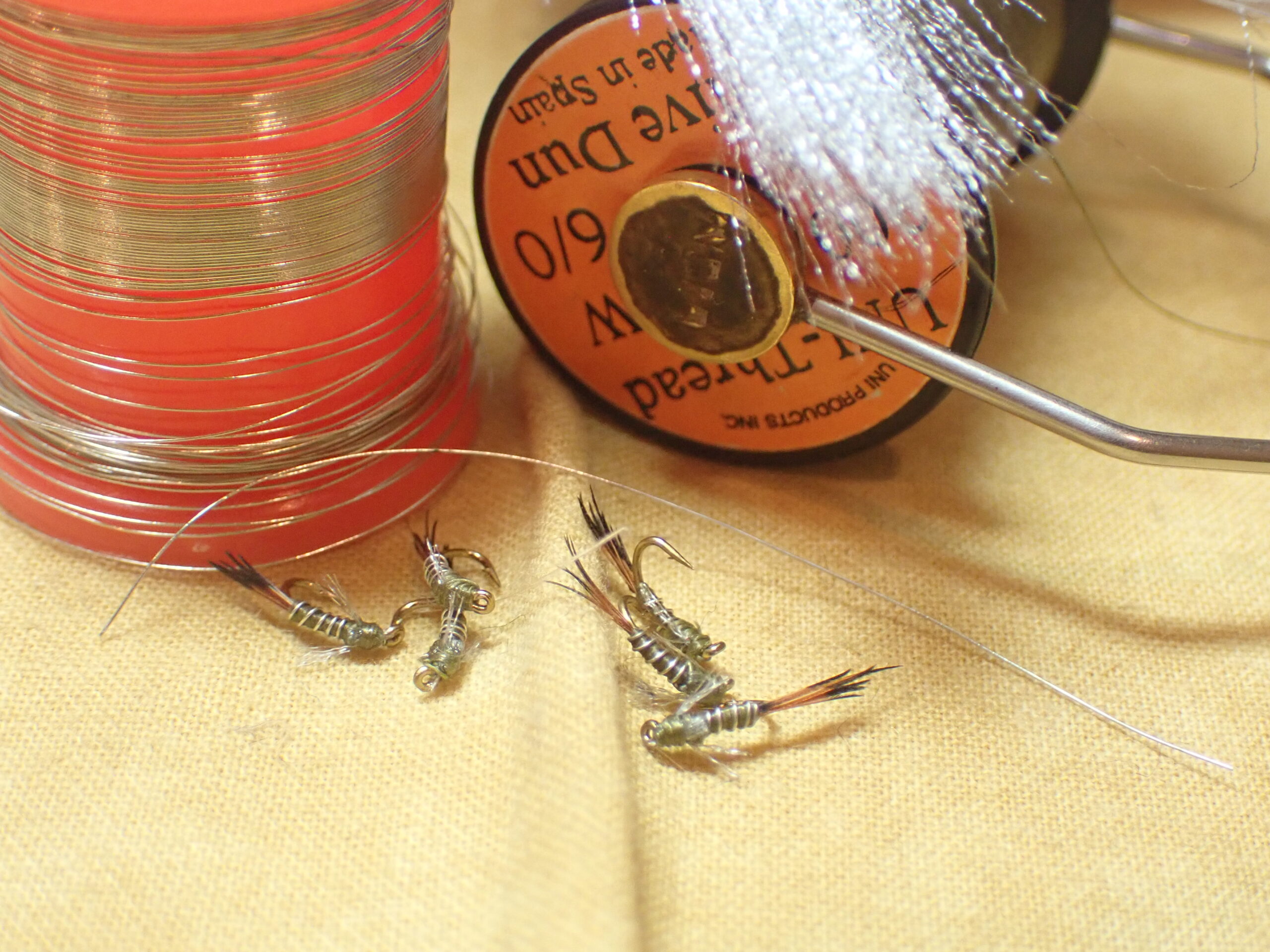
Juan’s example was a brown version of the sniper, but he suggested they could be tied in brown, olive and gray. I decided to go with olive. I did not have the requisite fine black wire, so I substituted silver, and I made the tail from brown ring neck pheasant body feathers. For the legs and wing case, I used gray fluoro fiber. Juan’s fly did not include a bead, so I followed suit in that regard.

Background Materials

I tested the sniper baetis on my first outing on the Arkansas River, but it did not yield results, although I gave up on it after twenty minutes. I plan to give it more trials, before I draw any conclusions. If I tie more, I will probably elect to use a darker olive thread for the body. The naturals in Juan’s photo were quite dark.

Sunken Tricos – 03/01/2026

Sunken Tricos 03/01/2026 Photo Album

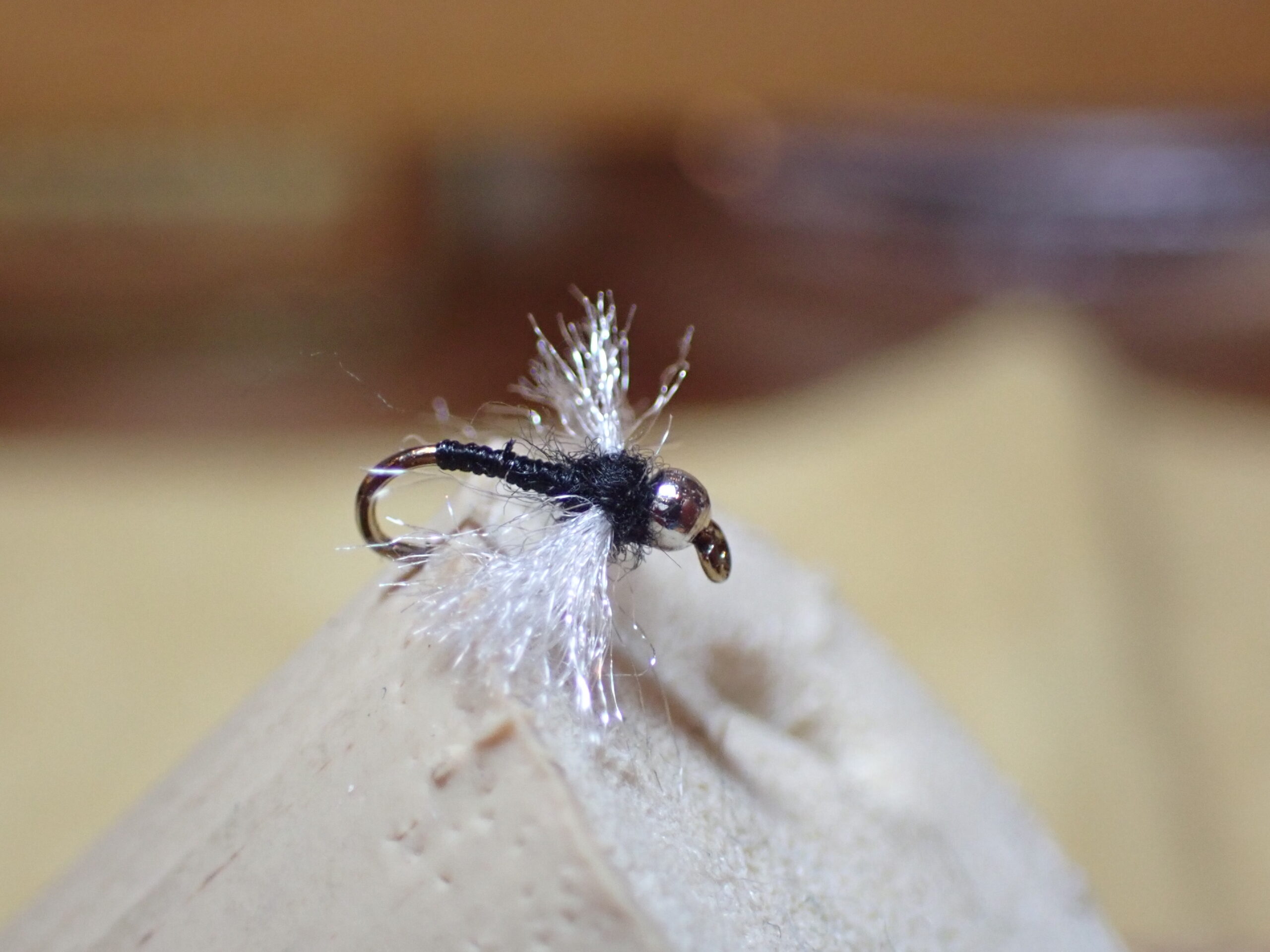
As I prepared to write this blog post on sunken tricos, I searched for and found my oldest previous post on this fly. The story behind my introduction to sunken tricos was well documented, and I enjoyed refreshing my memory. A materials table was also present, although I failed to use it to tie new sunken tricos.

Lovely

I had quite a bit of success on the North Platte River with the sunken tricos that I purchased; however, I must admit that I have not repeated that magical day. I am convinced, however, that an opportunity during a dense trico hatch would make my ownership of sunken tricos pay off.

Angled Head On

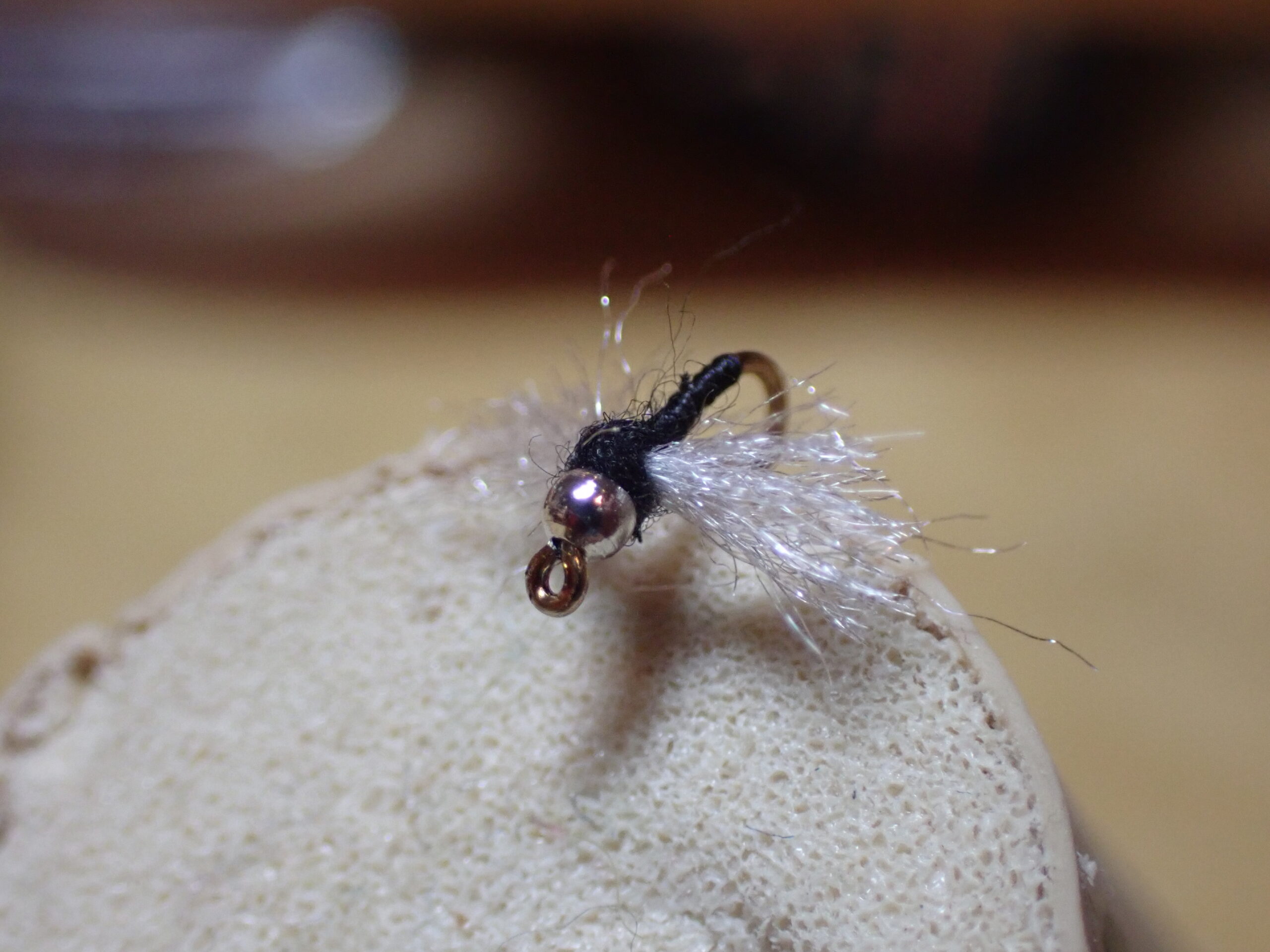
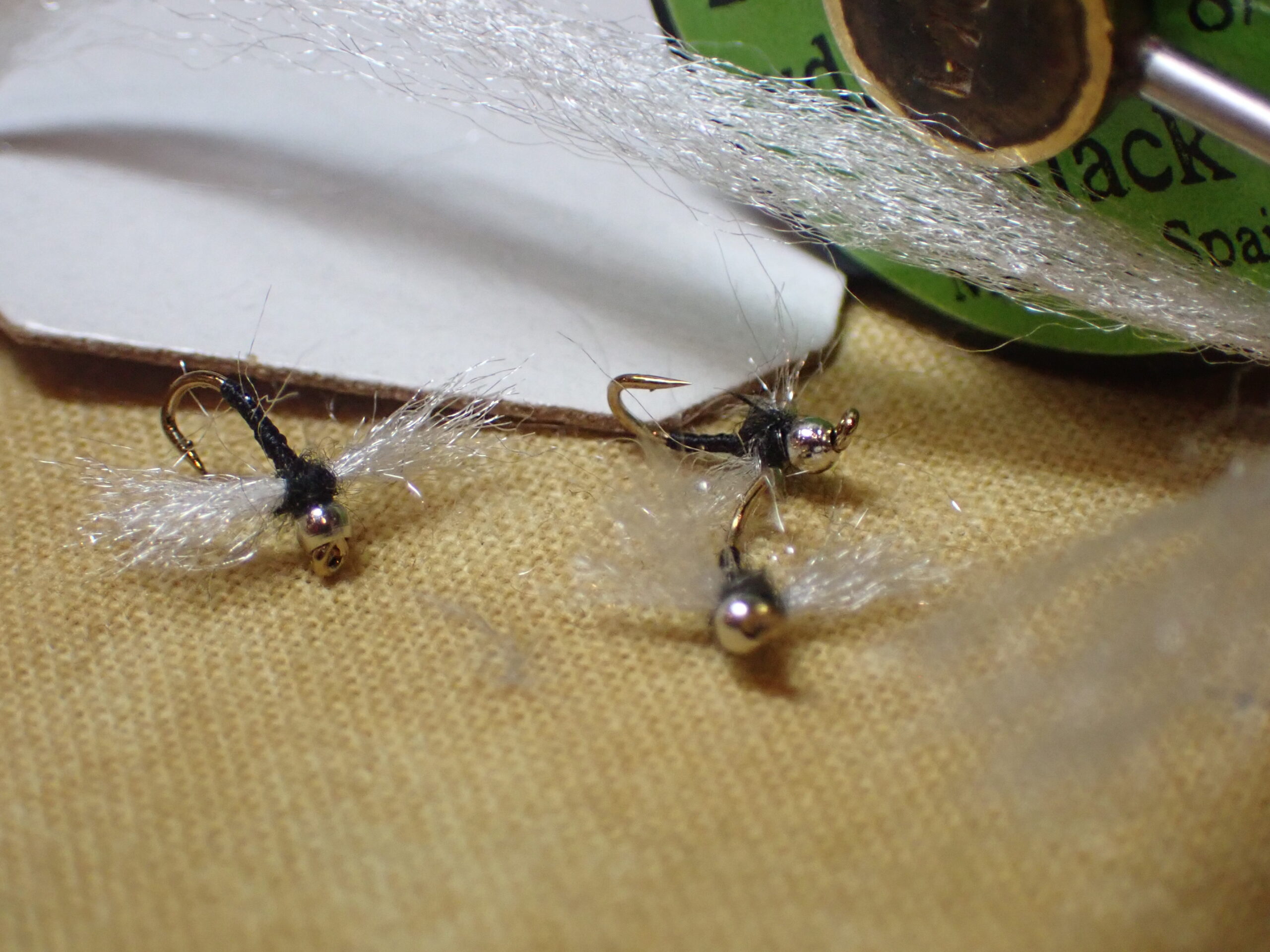
I counted my inventory, and I decided to tie three additional tiny versions to increase my supply to a nice round number. The output from my effort now resides in my small fly canister, and I am prepared for a trico hatch in 2026.

Materials in the Background