Time: 12:00PM – 2:30PM
Location: Canyon downstream from Estes Dam
Big Thompson River 11/04/2025 Photo Album
A forecast high of 77 degrees in Denver prompted me to complete a last gasp fly fishing excursion. I was not interested in a long drive, so I considered Clear Creek, South Boulder Creek and the Big Thompson River. According to my weather sources, highs of 62 were expected at all three spots. My intuition suggested that I should visit South Boulder Creek; however, I was averse to making the one mile hike to and from the creek, so I settled on the Big Thompson instead. Spoiler alert. It was a lackluster day.
I arrived at a pullout by 10:45AM, and I quickly prepared for a day on the river. The flows were tumbling along at 25 CFS, and the stream was low and clear, but it looked promising nonetheless. The dashboard temperature was 56 degrees, so I slipped on my fleece hoodie and assembled my Loomis two piece five weight. I like the slower action of the Loomis, and I expected to toss a dry/dropper most of the day.
I crossed the highway and found a fairly friendly route to the river, and then I knotted a Jake’s gulp beetle to my line. The beetle produced well on my last trip to South Boulder Creek, so I was anticipating a repeat on a different Front Range stream.
I completed two desultory casts, and then I decided to move to more attractive pools, but when I stepped with my left boot, it slipped and shot backward. I tipped forward and stopped my fall by bracing with my right hand, but it was not before a small amount of water spilled over the top of my waders. I felt the dreaded trickle down both legs, and then the wetness, as my right sock absorbed liquid. What now? I was wet and chilled, and I barely began to fish.
Had it been the summer, I would have fished on, but I was concerned about the cooler temperatures of autumn, so I scaled the bank and returned to the car. First I removed my fleece hoodie with a drenched right sleeve. Next I removed my undershirt and replaced it with a long sleeve version. I pulled off my waders and turned them inside out and placed them on the hood of the Telluride to dry in the sun. I removed my long underwear and socks and pulled on a dry pair of each. I wanted to provide adequate time for the inside of the waders to dry, so I ate my lunch early, and sure enough, after eating, the neoprene booties were dry, and I pulled them on and resumed my fishing. The sleeve of my fishing shirt was a bit wet, and the front pack was also showing the effects of being submerged, so I pulled on my raincoat to guard against additional soaking from the front pack.
 Glare and Shadows Were a Challenge
I wish I could say it was worth it. I began fishing in earnest at noon and continued until 2:30, The beetle was ineffective, so I removed it and replaced it with a peacock hippie stomper and then added an olive perdigon on a two foot dropper. The perdigon registered two small trout barely beyond my six inch minimum for counting. I covered quite a bit of stream real estate to log two small fish, so I added a beadhead hares ear nymph hoping that it would extend the depth of the drift and attract more action.
 Small Jewel
The move worked somewhat, as I raised the fish count from two to six by the time I quit at 2:30. The four additional trout were only slightly longer with the biggest extending to eight inches. It was a lot of casting for minimal return. I moved back and forth between the two banks, and the shade and sun glare were alternating hindrances to catching fish. Deep pools were not productive, although I continually attempted to cash in on their appeal.
 Productive Spot
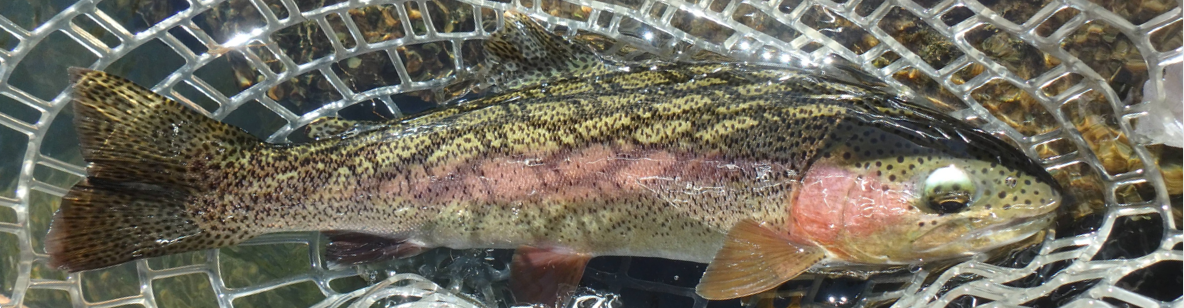
I fished around a large bend in the stream and continued into a canyon stretch. I was hoping that the canyon was not as easily accessed by anglers, as it required more rock hopping and difficult wading, and I did manage to land four small trout, but it was not close to the unpressured bonanza that I envisioned. On the day, three of the landed fish were brown trout and three were rainbows. In the last hour I connected with two or three fish that felt slightly larger, when the flies began to swing at the tail of the run or pool, but in every case I only felt the weight of the fish for an instant.
 Foam Pool
Tuesday was a bonus day for this fair weather angler, but it probably convinced we to refocus my efforts on stocking my fly boxes for 2026.
Fish Landed: 6
 Reburbished UZB
 Left Side
 Materials and New Flies
 Refurbished Nymph
 Side View
 Love This Shot
 Twenty-Five Salvations
 Left Side View
 Sixteen New Hares Ear Nymphs and Necessary Materials
 Look at the Taper
 A Batch of Seven and Materials
 Side View
 Opposite Side
 Thread, Feather and Finished Product