Monthly Archives: February 2026

Wiggle Damsel – 02/28/2026

Damsel Nymph 02/28/2028 Photo Album

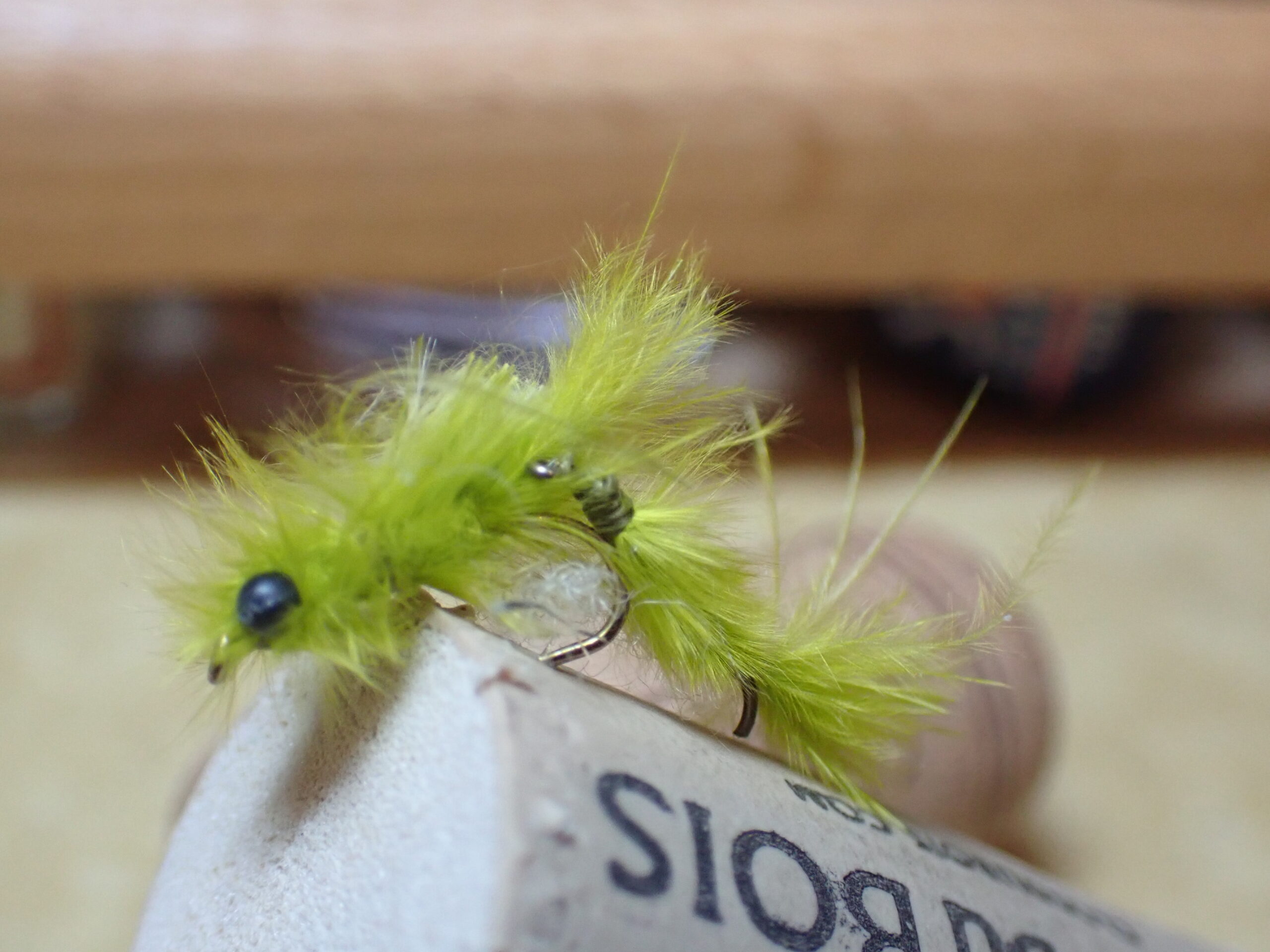
For a description of my early experimentation with damsel nymphs, check out my post of 12/04/2011. This marked the advent of the wiggle damsel in my fly box. My most memorable experience with the wiggle damsel occurred on Lago Fonck in Argentina, when I pulled out a wiggle damsel without my guide’s advice, and it performed in amazing fashion.

Humped

Unfortunately my other interactions with this fly have not been as momentous. I have had some sporadic success, but perhaps the larger problem has been finding damsel nymph emergences. Apparently timing is everything.

Articulated

The wiggle damsel is another example of a fly that I maintain adequate quantities of, so I skipped additional tying. Maybe this is the year, when I hit a thick damsel emergence.

Yellow Sally – 02/28/2026

Yellow Sally 02/28/2026 Photo Album

When I counted my yellow sally stock, I learned that I was adequately supplied. My post of 02/02/2016 provides a nice report on the timing of yellow sally emergences and my interaction with them.

Diving

I have witnessed some of the densest emergences of yellow sallies on the Eagle River in early July. I would not want to be without some of these flies during those times. I tried different patterns, but I settled on a version that is essentially a deer hair caddis tied in yellow. They work. I have also experienced success with iron sally and hares ear nymphs during yellow sally hatches.

Diving the Other Way


Tricos – 02/28/2026

Tricos 02/28/2026 Photo Album

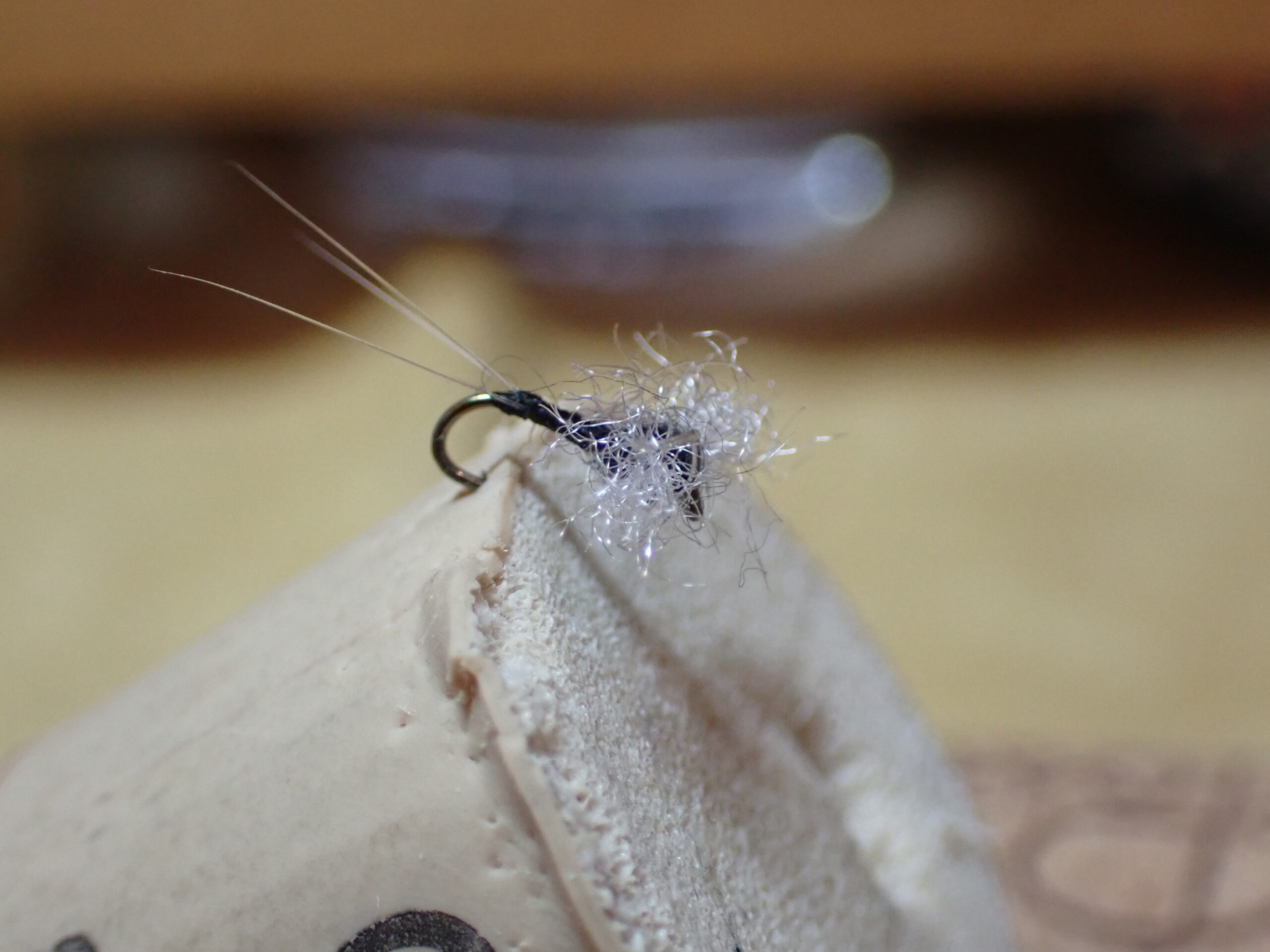
The oldest previous blog post that I could find on trico spinners was dated 01/15/2012.  I reread it with interest, and it captures my earliest days of fly fishing using trico spinners. The place where I encounter tricos in Colorado the most consistently is on the South Platte River in Eleven Mile Canyon, although I have not experienced this phenomenon in recent years. Nevertheless, I like to have some on hand just in case.

Long Tails and White Wings

My 01/15/2012 post cites the usage of gray sculpin wool for the wing, but I have since reverted to white antron wings. I am not sure why. The change probably relates to the long amount of time that elapsed between tying trico spinners. I like the look of the crinkly white antron wing quite a bit. Hopefully I will get an opportunity to test some out in 2026. The trick is to be in the right place at the right time.

Overhead

I counted my trico spinners and determined that I was adequately supplied, so I did not spin out any additional imitations. I will hope for a trico spinner fall in 2026.

Parachute Ant – 02/27/2026

Parachute Ant 02/27/2026 Photo Album

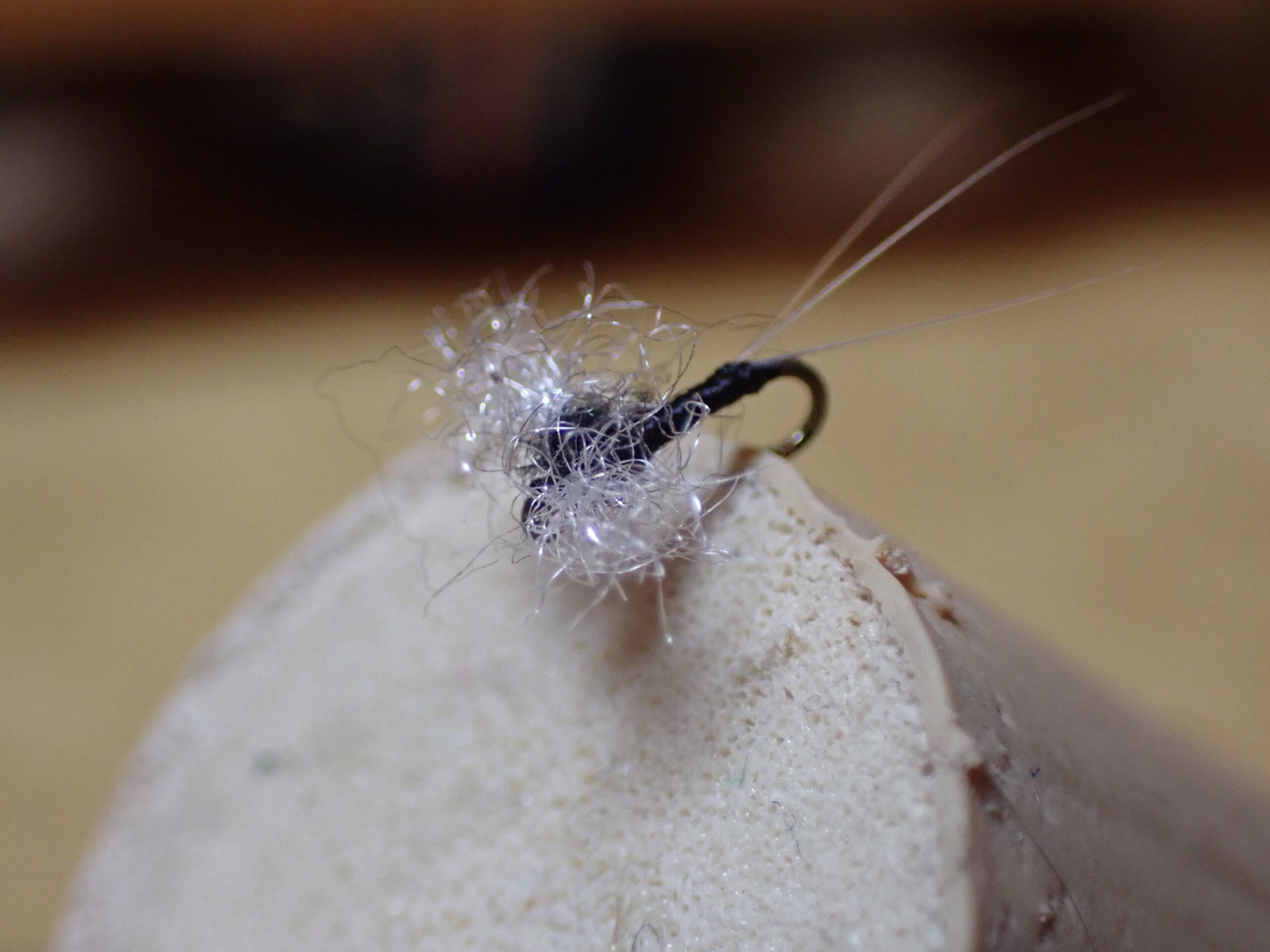
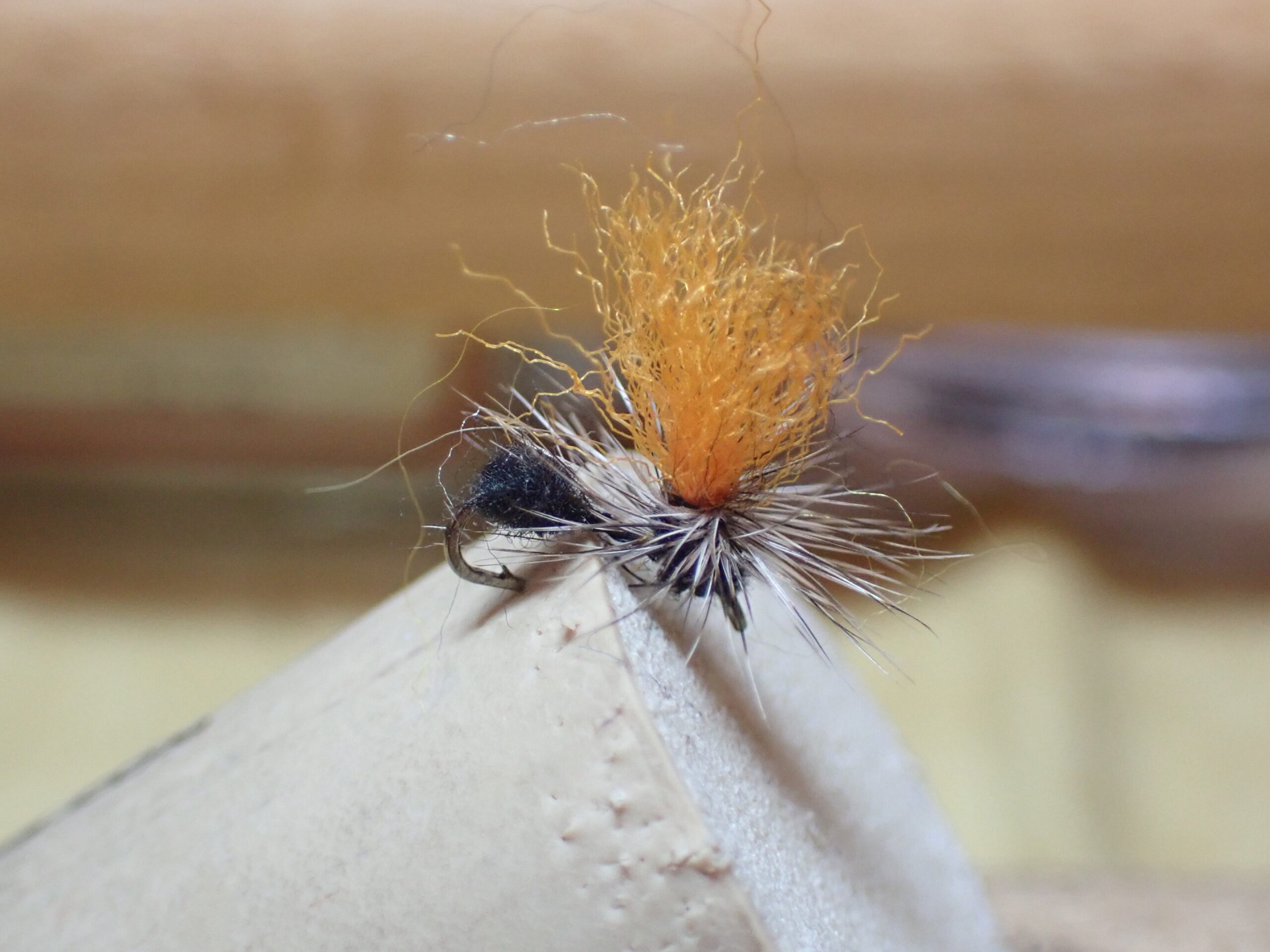
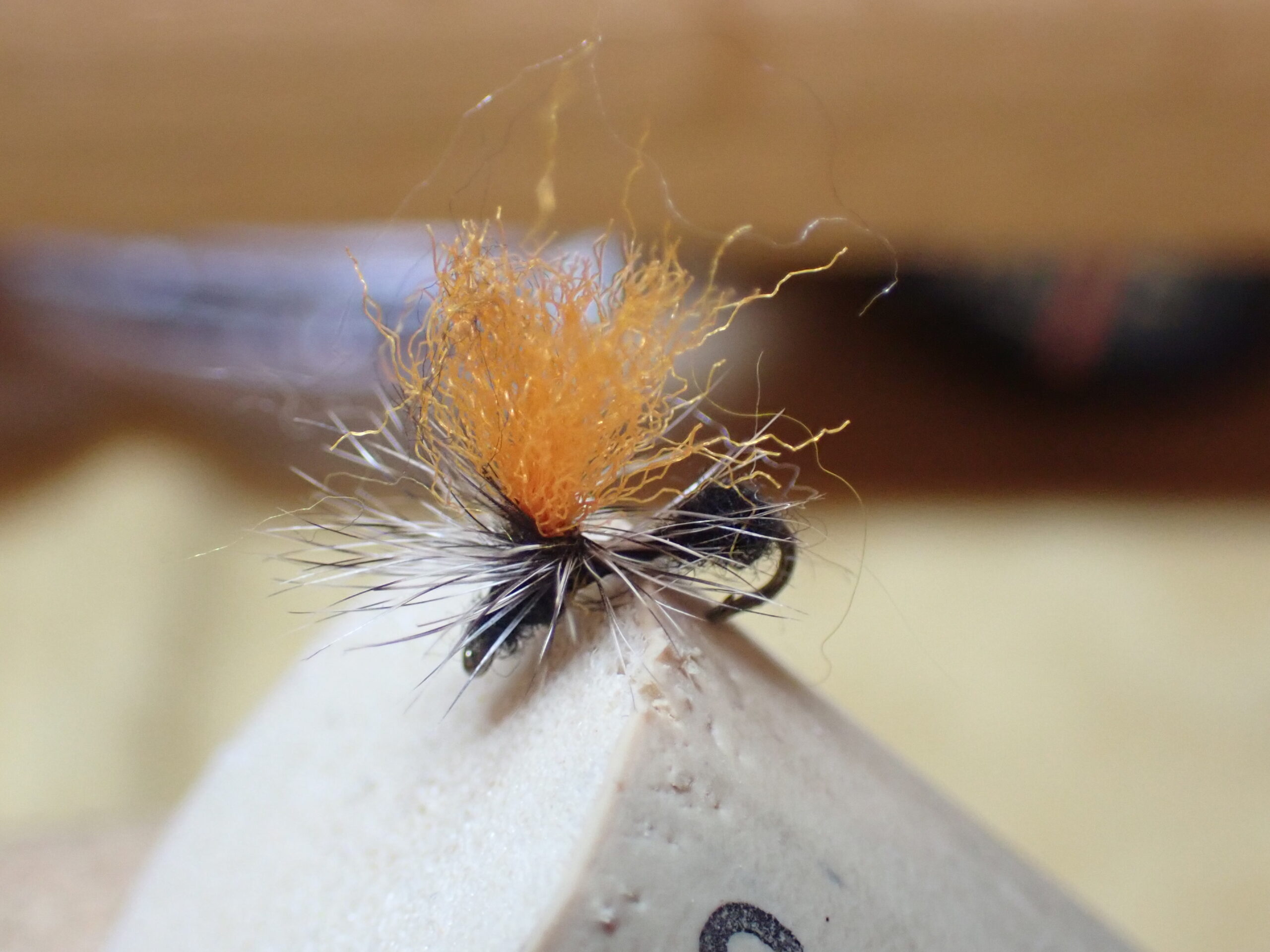
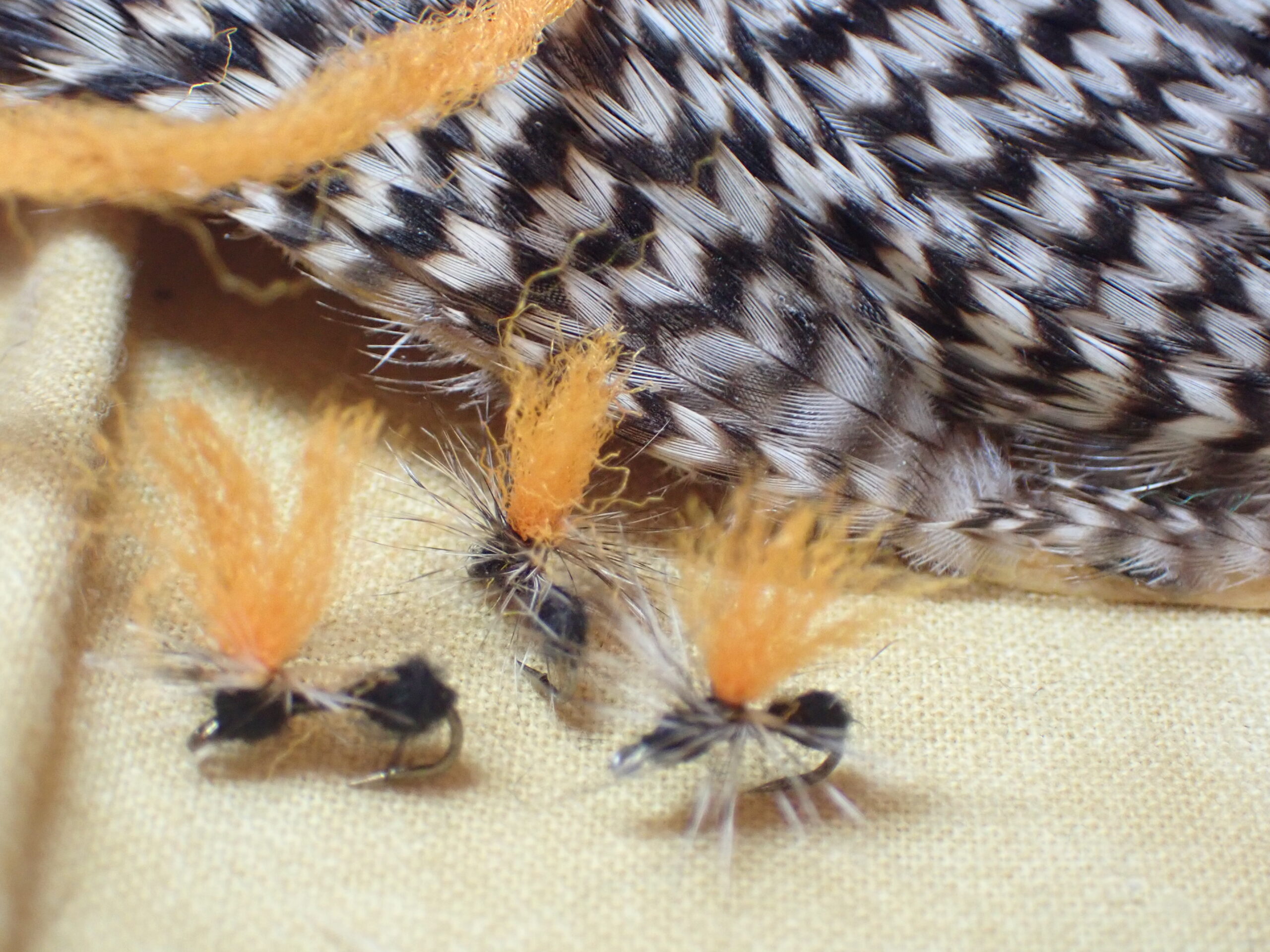
Every time I decide to tie parachute ants, I refer back to my post of 01/11/2012, because it contains a materials table and step-by-step tying instructions. I watched a tier from Pennsylvania tie these and recorded notes in my iPhone, as he walked me through the steps.

I do not use this fly frequently, as I am burdened with the paradigm that fish cannot see small flies as well as larger flies. Shame on me. I suspect that a size 18 black ant would produce quite well as the tail fly in a two dry fly arrangement when paired with a more visible leading  fly.

Right Side Angled View

The situations when I gravitate to a parachute ant are nearly all very challenging. When I encounter a regularly feeding trout, and I am unable to gain attention with what I feel is an imitative dry fly, I sometimes resort to the black parachute ant. While not always the case, the ant does come through in many difficult situations, and fooling a fish under these circumstances is highly rewarding. I would not want to be on a stream without a supply of parachute ants.

Left Side View

For some reason I stock only black ants, although I am sure that brown or even red might get the job done as well. I tie nearly all size 18. I have a few larger bionic ants made of foam, but I rarely pull them from my box. I was preparing to tie another fly, and as I searched through my zip lock bag of materials, I stumbled on some McMurray ant bodies. My friend in Pennsylvania gave me these, and I should probably whip out a few. They float quite well and are very realistic in profile as they contain the ever critical narrow waist.

Nice Waists on These

I counted my parachute ants and discovered that I needed two replacements to bring my total to a nice round number. I found one damaged ant, and after my efforts were complete, I possess three additional black parachute ants. Having an adequate supply gives me a feeling of comfort.

Comparaduns – 02/25/2026

Comparaduns 02/25/2026 Photo Album

My post of 02/21/2014 provides an excellent story behind the concept of a comparadun and my long road to adopting them as my preferred style of imitating mayfly duns. I highly suggest reading this report.

I have been fishing in Colorado and the west since 1990. That’s thirty-six years, and the comparadun has evolved into my workhorse fly for imitating mayflies. I previously posted a report on the green drake comparadun, so I will not repeat text on that fly here. The main mayfly species that I continue to imitate with comparaduns is the pale morning dun. PMD’s emerge from the middle of June until September in western waters. The freestones provide pale morning dun activity between mid-June and early August, while the tailwaters feature these abundant mayflies during August and September. I have experienced some hatches into October on tailwaters.

Cinnamon and Light Gray

During these hatches I knot a cinnamon or light gray comparadun to my line, and more times than not, they deliver fish. The trout take them with confidence. Occasionally one color works better than the other, so I have to experiment with a few fly changes. Size is another variable that throws in a wrinkle. I carry mostly size 16 along with some 18’s and a few 14’s. Late season hatch matching on the Frying Pan River typically demands cinnamon comparaduns in size 18.

Turned Around

I counted my comparaduns, and not surprisingly, my supply seemed adequate. I do not recall encountering many pale morning dun hatches during 2025. I will certainly need to remedy that situation in the coming year. I did not tie additional PMD’s, but I did refurbish one that was reduced to a very sparse clump of deer hair fibers for the wing.

CDC Blue Wing Olive – 02/18/2026

CDC Blue Wing Olive 02/18/2026 Photo Album

For an early narrative on the origin of the CDC blue wing olive (CDC BWO) please refer to my post of 03/11/2014. I read it before writing this post, and it was a nice refresher.

This fly remains my go to choice, when I encounter a blue wing olive hatch in the spring and fall. It seems to work quite often, and it is a relatively easy fly to tie. I find that it functions best, if I can make a downstream cast. Of course, this involves staying low and out of the trout’s window, since they are looking upstream, and I am above them.

Nice View

I tie these small flies primarily in size 20 and 22, although I have been known to produce a few 24’s. I tie in a small clump of CDC first in the same manner, as I create a comparadun wing. Next I move the thread rearward and create a tail made from two microfibbet tips. When I start the thread, I do not snip off the tag end, because I use it to pull back through the microfibbets to split the tails. As a last step, I dub a very fine noodle to form a tapered body and thorax.

Left Side

This fly is normally the first one I choose during a hatch. However, there are occasions, particularly when it is windy (quite often the case during BWO hatches), when the fish totally ignore this fly. These instances are very frustrating. I have had some success with adding some hackle, wound Catskill style, behind and ahead of the CDC wing. I believe that baetis mayflies create a commotion fighting the wind to get airborne, and the trout key in on movement, and the addition of hackle conveys more motion.

Five New Hackled Versions

I counted my CDC BWO’s of all sizes and determined that my inventory was adequate, so I approached the vise and produced five new versions with hackle collars in size 20. Hopefully these will fool trout during windy conditions, when the trout’s feeding habits become too finicky.
 

Purple Haze – 02/17/2026

Purple Haze 02/17/2026 Photo Album

My early adventures with the purple haze are documented in my 02/15/2021 post, and the report includes a materials table. The purple haze has become a useful addition to my dry fly arsenal, although I probably deploy it less frequently than many of my old reliables.

Opposite Side

I sometimes believe that it serves as a green drake imitation in a pinch, and on a trip to the Rio Grande several years ago, my guide did, indeed, utilize a purple haze during a fairly prolific green drake hatch, and it produced.

Materials

I counted my supply of purple hazes, and I determined that I was properly stocked. I did, however, discover one in my damaged fly canister, so I stripped it down and tied a new one. Recycling is something that I pride myself on.

Stimulators – 02/17/2026

Stimulators 02/17/2026 Photo Album

For an account of my introduction to stimulators as well as a hard luck story visit my post of 01/26/2015. Stimulators have become a foundation fly in my dry fly box since the 2015 time period.

Stimulators can be a bit tricky to tie. The original pattern calls for counter wrapping a fine wire rib through the palmered hackles. I do not like the idea of having the extra weight of wire, albeit thin, on a dry fly, so I skip that step and simply palmer the hackle. Another hazard related to tying stimulators is allowing the deer hair wing to spin around the hook shank. When mounting the wing, maintain a solid pinch of the deer hair to the top of the hook, until five or six thread wraps coil through the butt ends of the hair.

Olive Stimulator

Now that I accumulated ten plus years of experience with stimulators, I boiled the pattern down to three productive body colors; yellow, gray and olive, and the olive is somewhat interchangeable with the gray.

Yellow Stimulator

The yellow finds its way on my leader during golden stonefly hatch time. The gray and olive seem to be solid general searching patterns during the summer post-run off time. If a hippie stomper is generating refusals, I often swap it for a stimulator as the leading fly in a double dry setup.  Like the hippie stomper, stimulators are quite buoyant and are relatively easy to track, although I feel that the white wing of the hippie stomper is a bit easier to follow.

Another Olive

I counted all my stimulators and determined that I was adequately supplied. I chose to save time, and I bypassed tying additional stimulators. It’s a great fly that I should probably float more frequently.


Deer Hair Caddis – 02/12/2026

Deer Hair Caddis 02/12/2026 Photo Album

For an early report on the deer hair caddis check out my post of 11/28/2011. It contains a materials table.

This is one of the earliest flies I tied, and it remains a winner with minimal modification. It Is very sparse, as it has no tail and only a dubbed body, deer hair wing and hackle collar. The most difficult aspect of tying this fly is preventing the deer hair from twisting around the hook shank. One way to prevent this is by making one full wrap around the deer hair bundle above the hook shank. I have done this, but I find that if I maintain a solid pinch on the hair above the hook shank and then make two wraps with moderate tension and then snug down, I can prevent the hair from rolling. I must warn, however, that you must maintain a solid pinch throughout this step and even after you snug down the first two wraps.Olive Deer Hair Caddis

I carry three body colors: olive-brown, light gray and tan, and I rarely use the tan. The olive-brown and light gray seem to satisfy the fish in nearly all situations. I also have size 14, 16, and 18. I do not utilize the size eighteens very much, but I like having them in case of a small caddis appearance, such as I encountered on the Frying Pan River on one occasion.

Left Side Gray

Over the last several seasons I have enjoyed significant success trailing the deer hair caddis a foot or eighteen inches behind a hippie stomper in a double dry fly configuration. The hippie stomper allows me to track the earth-toned caddis quite well, and the fish seem to favor the more natural looking caddis. I love fishing this combination and the enjoyment derived from a sudden eat from a hungry trout.

Standing on Hackle Tips

The technique described in the last paragraph has led me to use more larger, size 14, deer hair caddis. When I counted my supply, I decided that I could use more14’s, so I spun out five additional light grays and three olive-browns. Caddis are present nearly year round, so I am armed with adequate quantities to dupe western trout.

User Friendly Green Drake – 02/09/2026

User Friendly Green Drake 02/09/2026 Photo Album

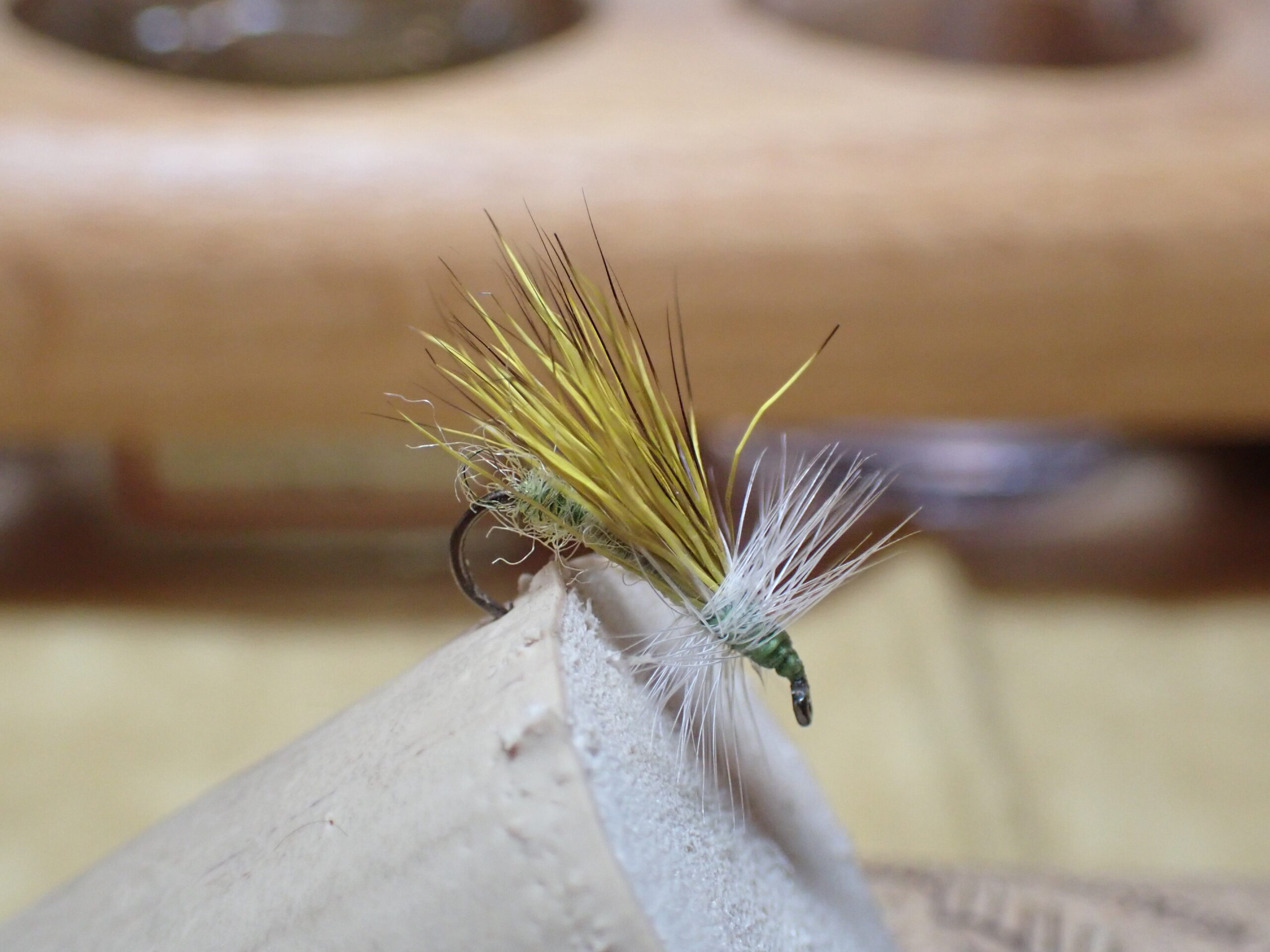
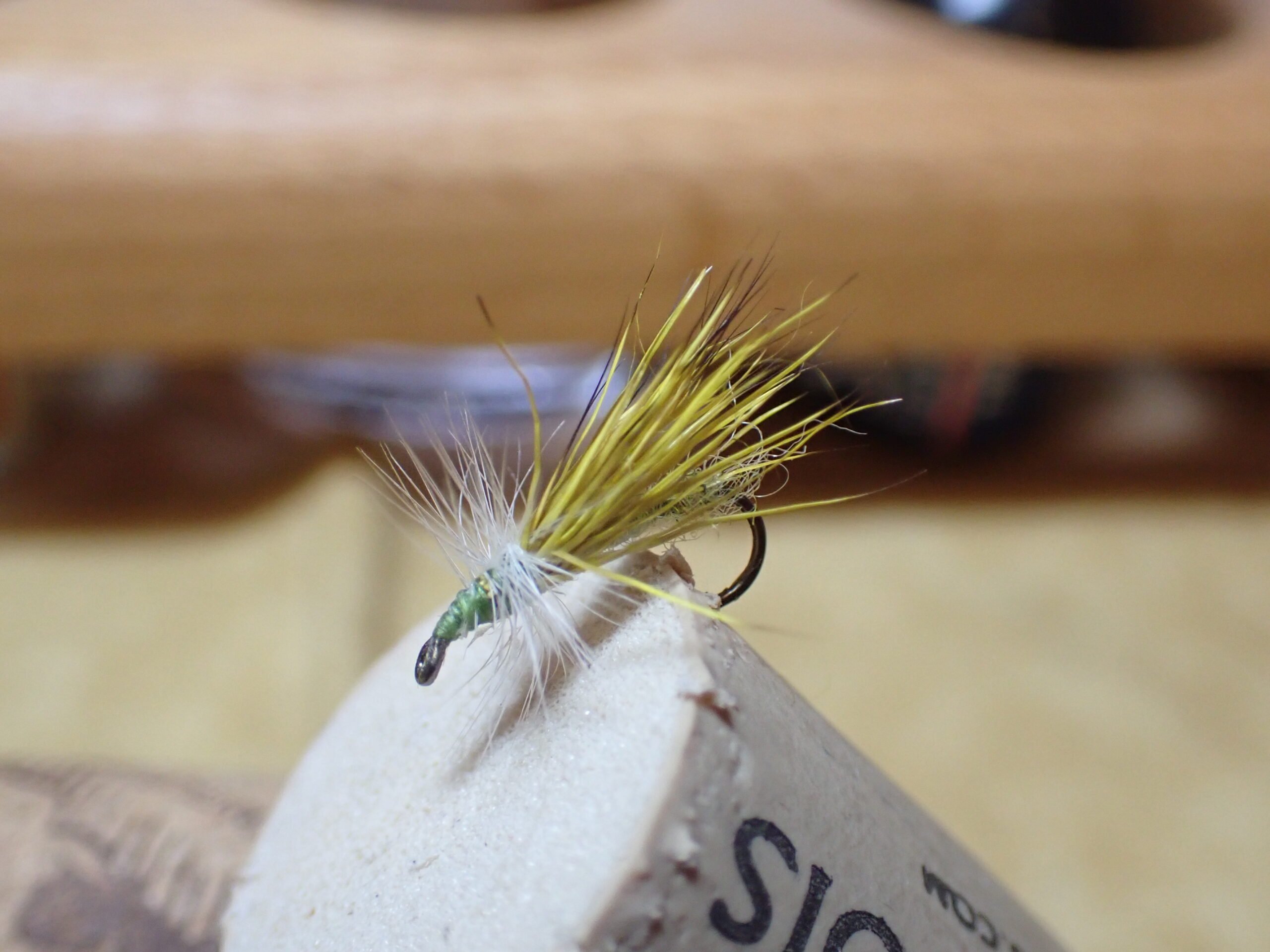
My initiation to the user friendly green drake is described in detail in my post of 01/31/2019. In addition, a materials table is provided. Like the other green drakes, I experienced mixed levels of success with this fly, and I generally resorted to it as my fourth and final option during green drake hatches.

Moose Mane Tail

All that changed in the summer of 2025. On two separate trips with my friend, Nate, and son, Dan, I gave them a user friendly, and they both began to hook and land fish after fish. Upon witnessing these success stories, I switched to a user friendly and generated similar levels of interest.

Big Wing

Given the revival in the user friendly, I decided to devote time to tying some fresh versions for the 2026 green drake season. In addition, I made some modifications. As was the case with the other styles of western green drake, I substituted moose mane fibers for the tail. I am going all in on moose mane tails for green drakes. For the wing I used white McFlylon (poly), and I left the wing higher and fuller than previously. These user friendlies look great, and I am very excited to test them. The narrow strip of foam adds buoyancy, and if the fly performs as it did in 2025, I may have a new long floating green drake imitation.

Five for the Fly Box

I tied five brand new user friendlies with my modified materials recipe. Bring on the green drakes.