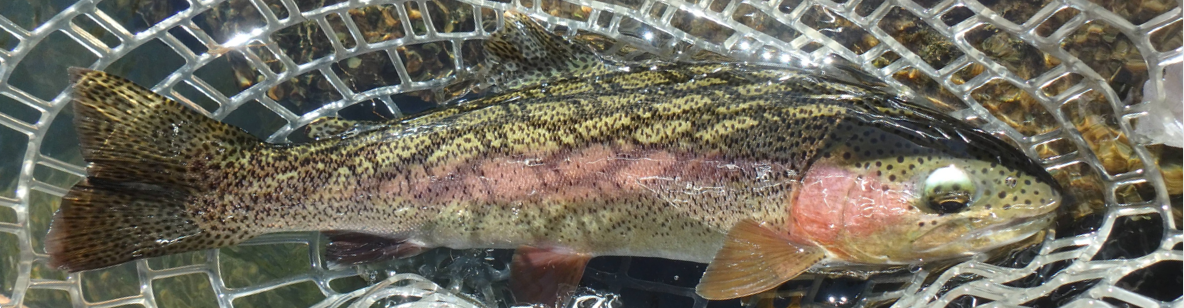
Parachute Ant 02/27/2026 Photo Album
Every time I decide to tie parachute ants, I refer back to my post of 01/11/2012, because it contains a materials table and step-by-step tying instructions. I watched a tier from Pennsylvania tie these and recorded notes in my iPhone, as he walked me through the steps.
I do not use this fly frequently, as I am burdened with the paradigm that fish cannot see small flies as well as larger flies. Shame on me. I suspect that a size 18 black ant would produce quite well as the tail fly in a two dry fly arrangement when paired with a more visible leading fly.
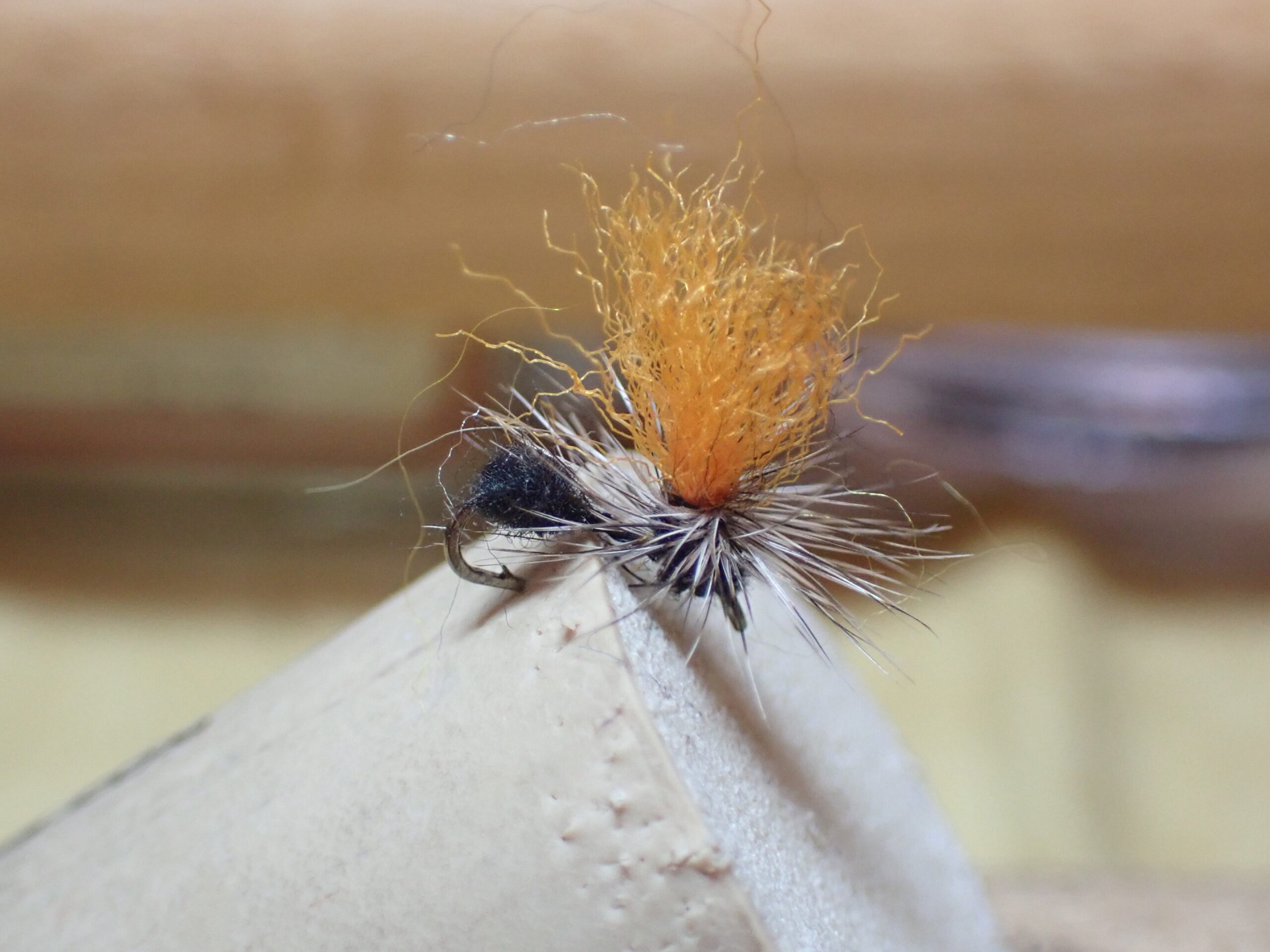 Right Side Angled View
The situations when I gravitate to a parachute ant are nearly all very challenging. When I encounter a regularly feeding trout, and I am unable to gain attention with what I feel is an imitative dry fly, I sometimes resort to the black parachute ant. While not always the case, the ant does come through in many difficult situations, and fooling a fish under these circumstances is highly rewarding. I would not want to be on a stream without a supply of parachute ants.
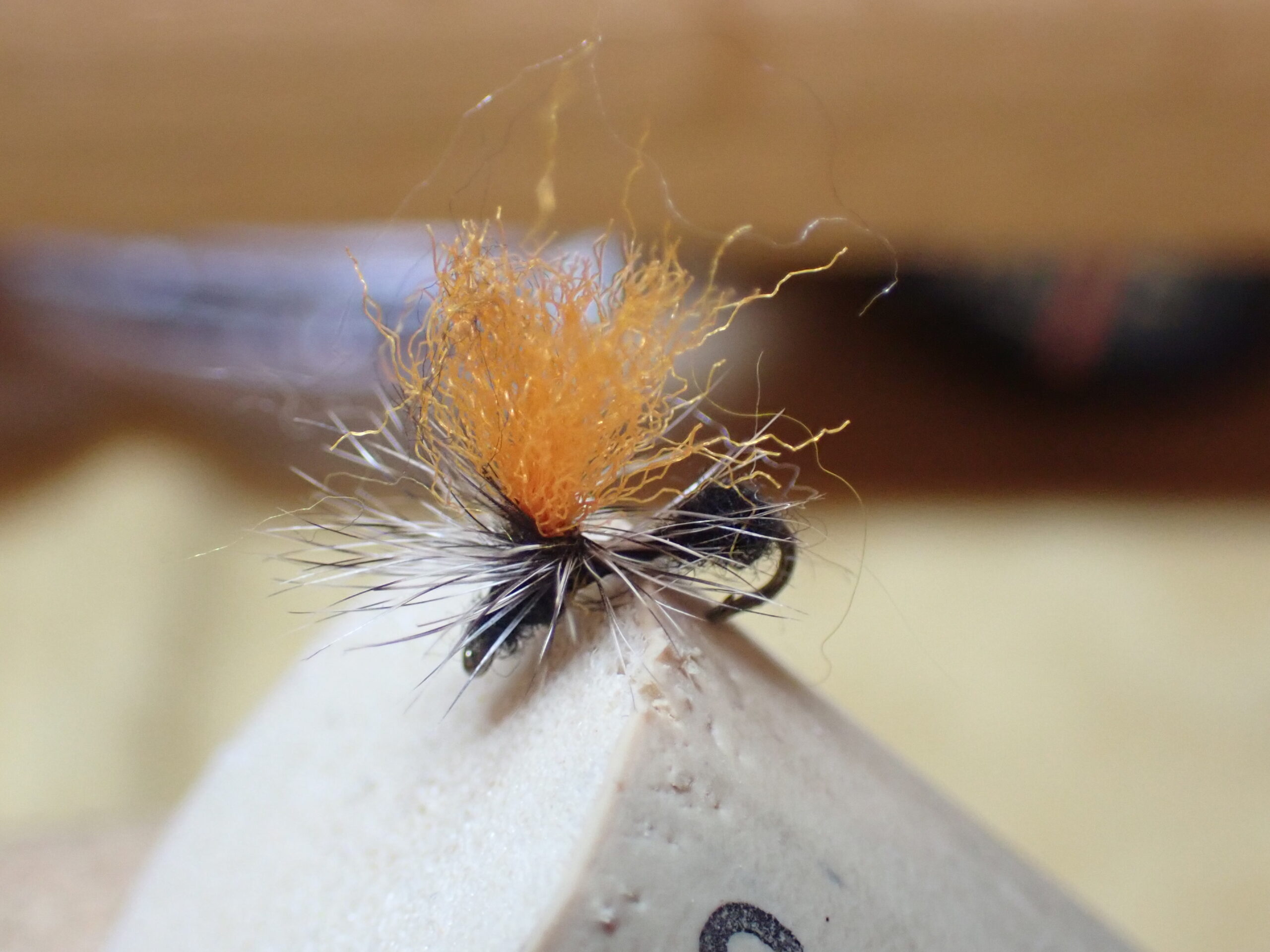 Left Side View
For some reason I stock only black ants, although I am sure that brown or even red might get the job done as well. I tie nearly all size 18. I have a few larger bionic ants made of foam, but I rarely pull them from my box. I was preparing to tie another fly, and as I searched through my zip lock bag of materials, I stumbled on some McMurray ant bodies. My friend in Pennsylvania gave me these, and I should probably whip out a few. They float quite well and are very realistic in profile as they contain the ever critical narrow waist.
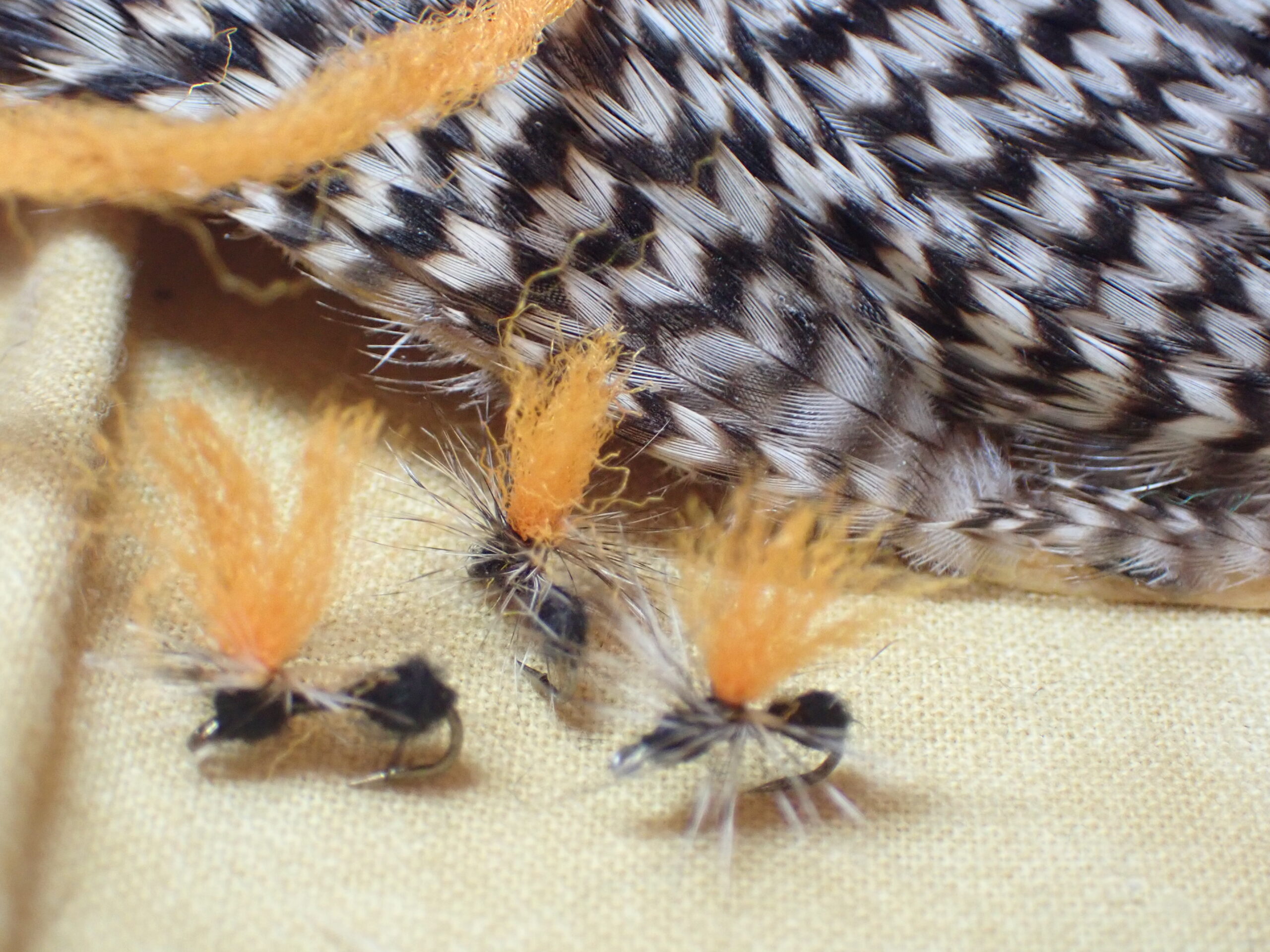 Nice Waists on These
I counted my parachute ants and discovered that I needed two replacements to bring my total to a nice round number. I found one damaged ant, and after my efforts were complete, I possess three additional black parachute ants. Having an adequate supply gives me a feeling of comfort.