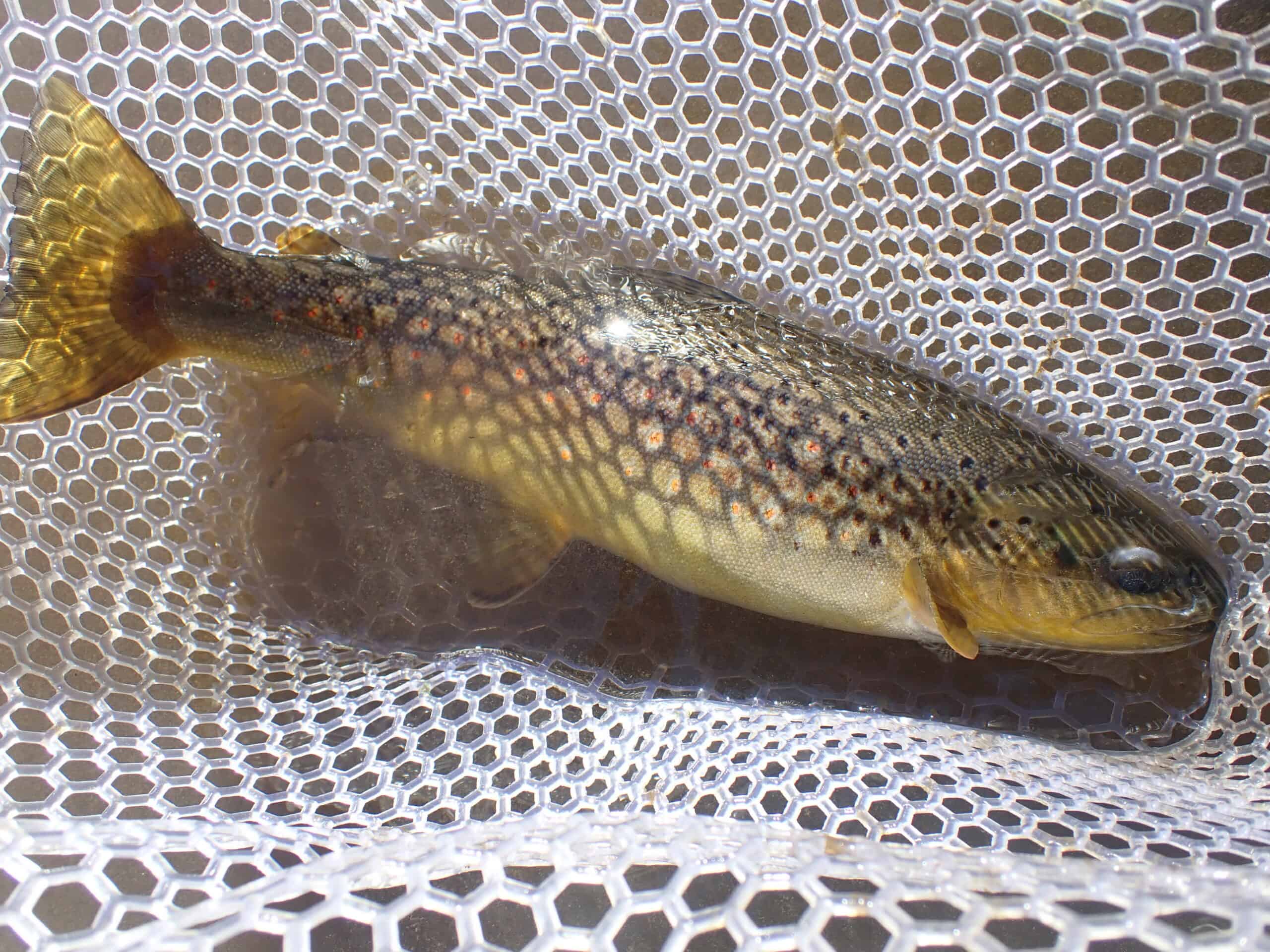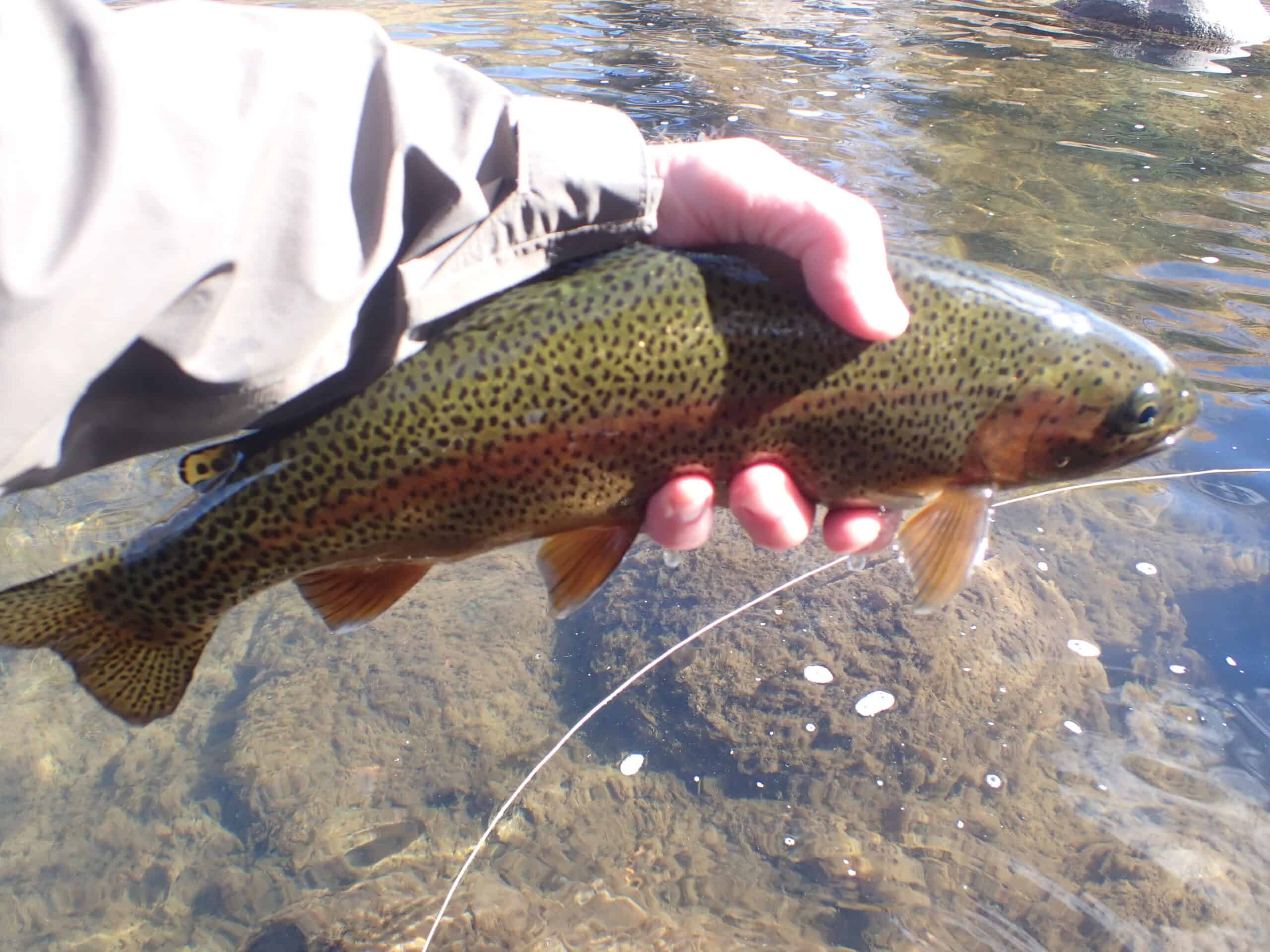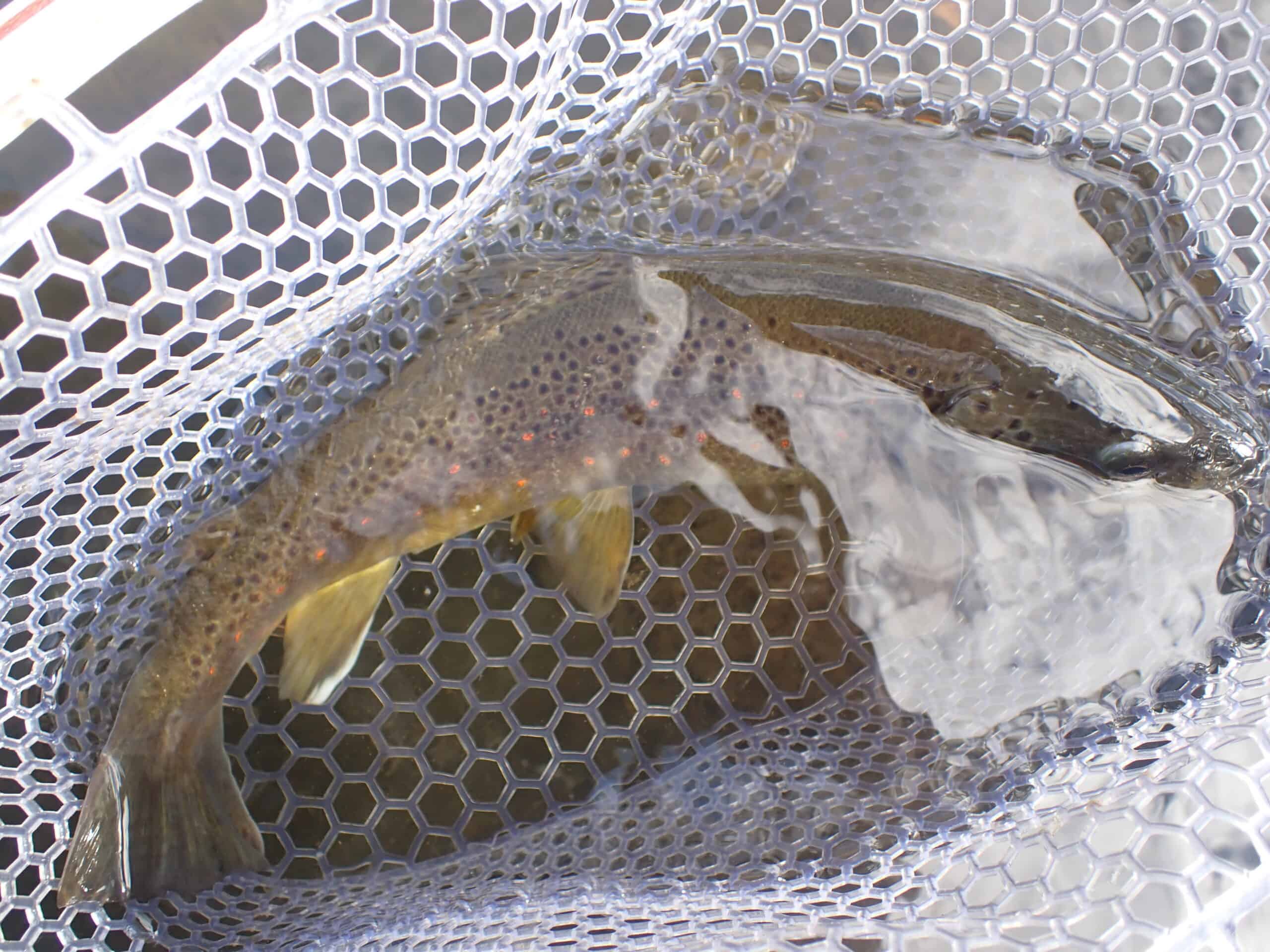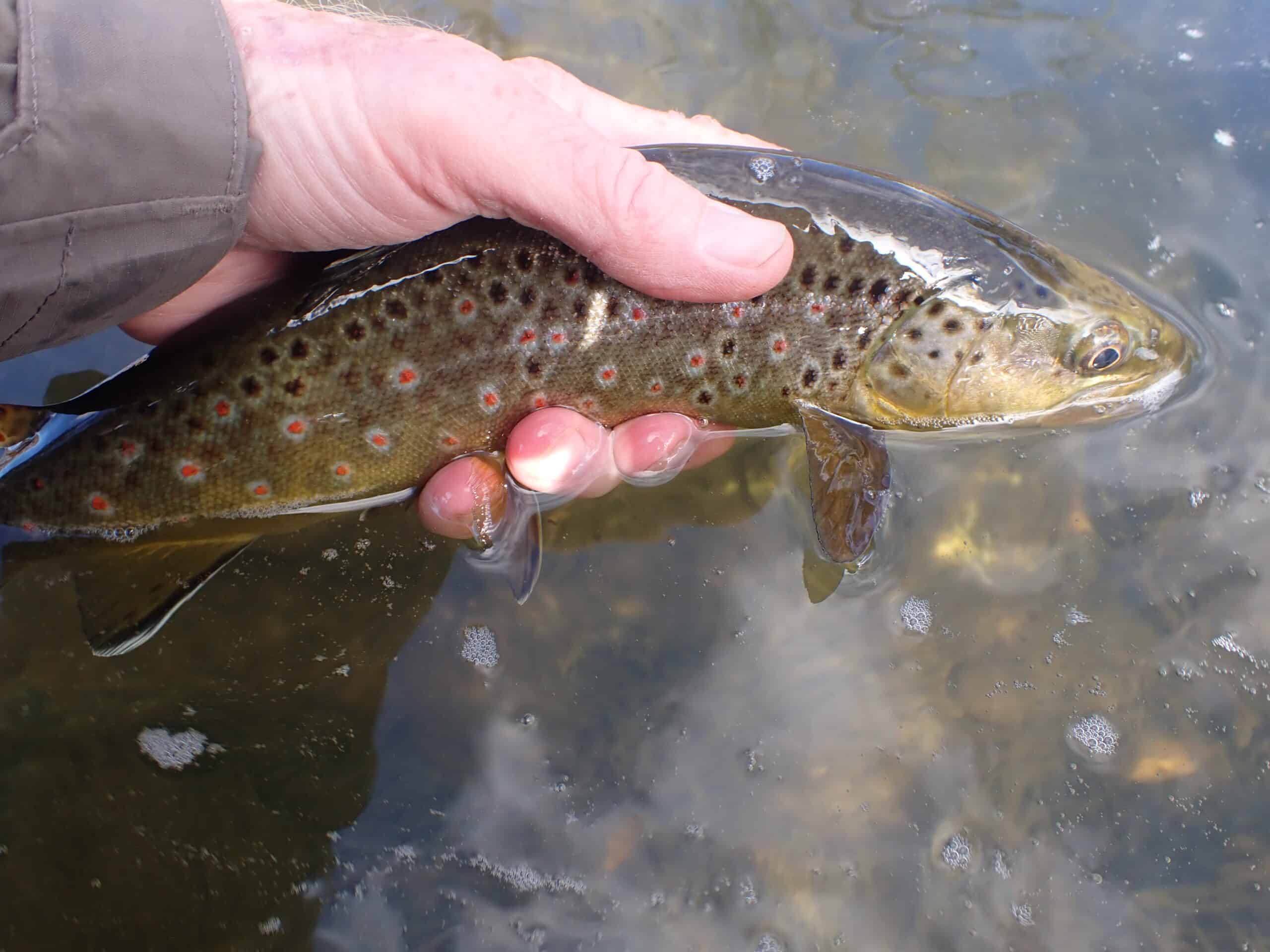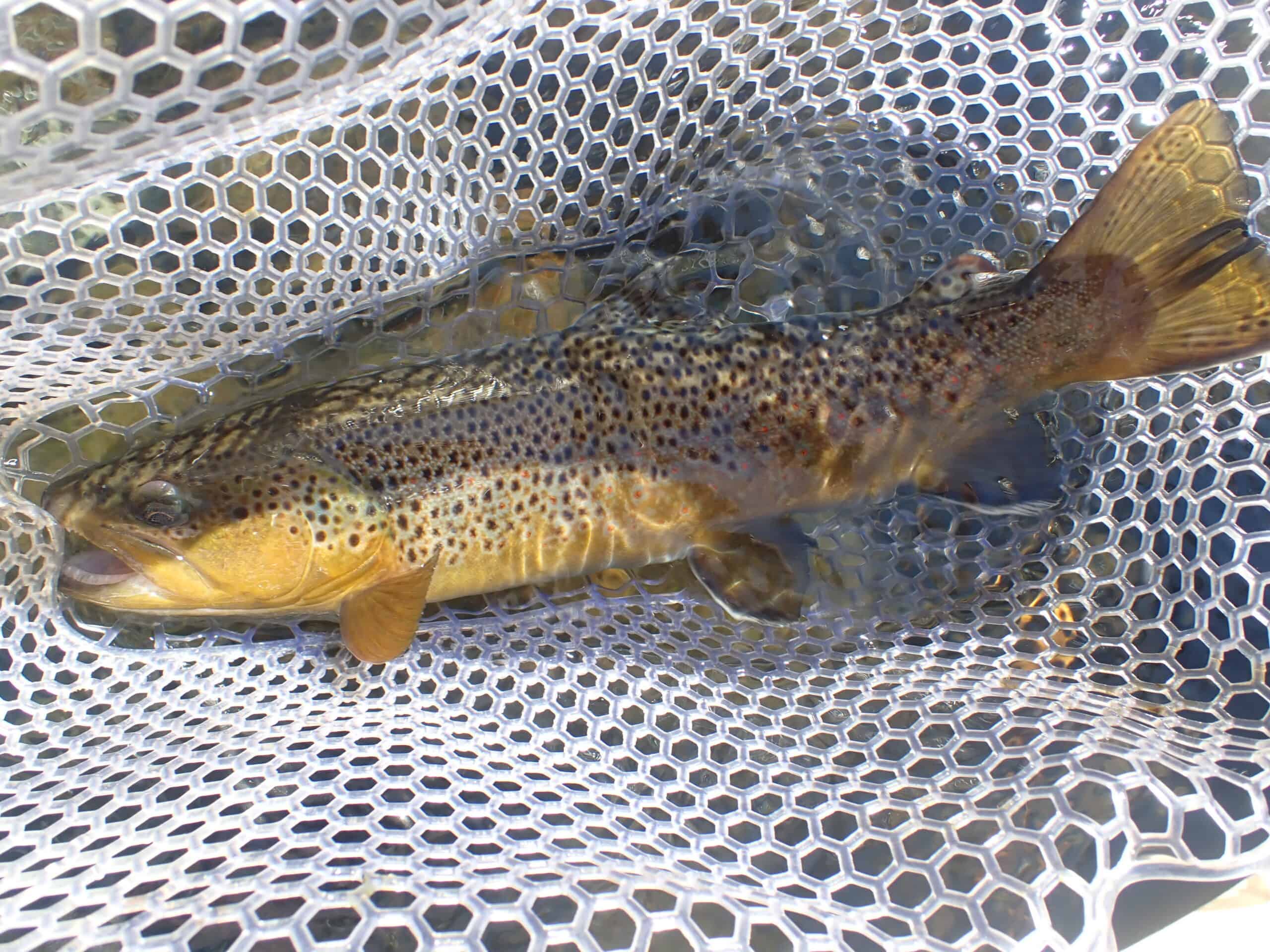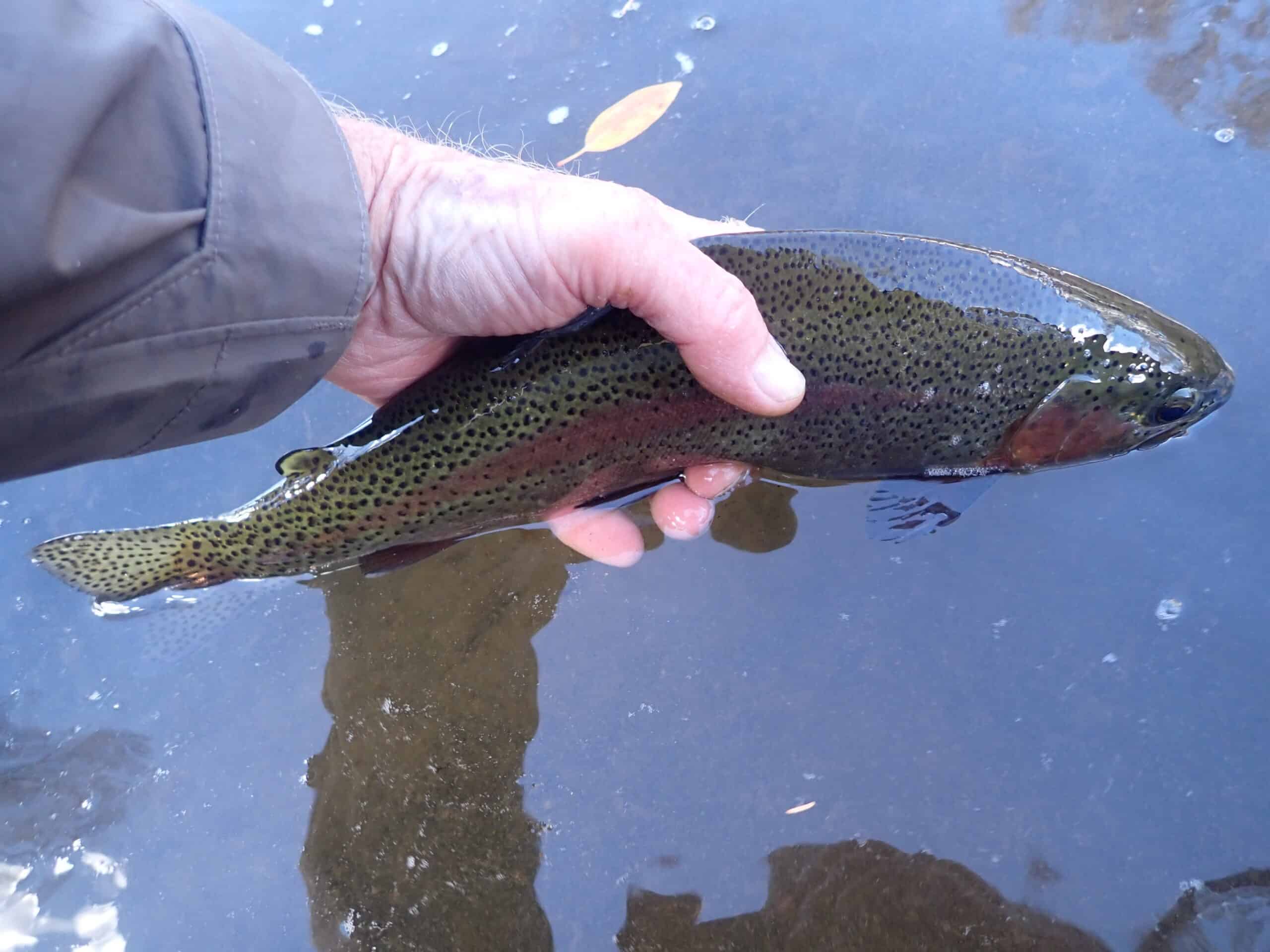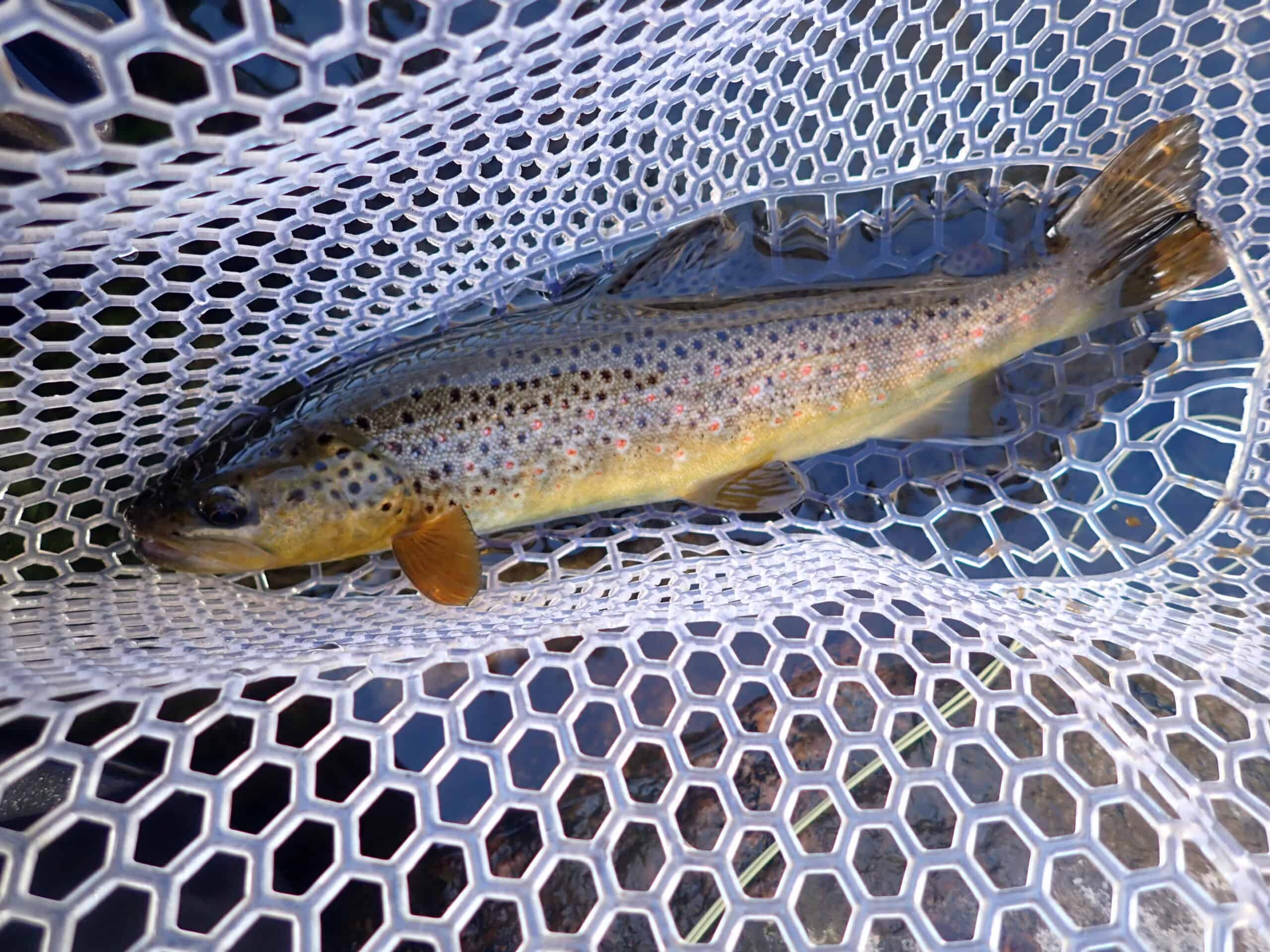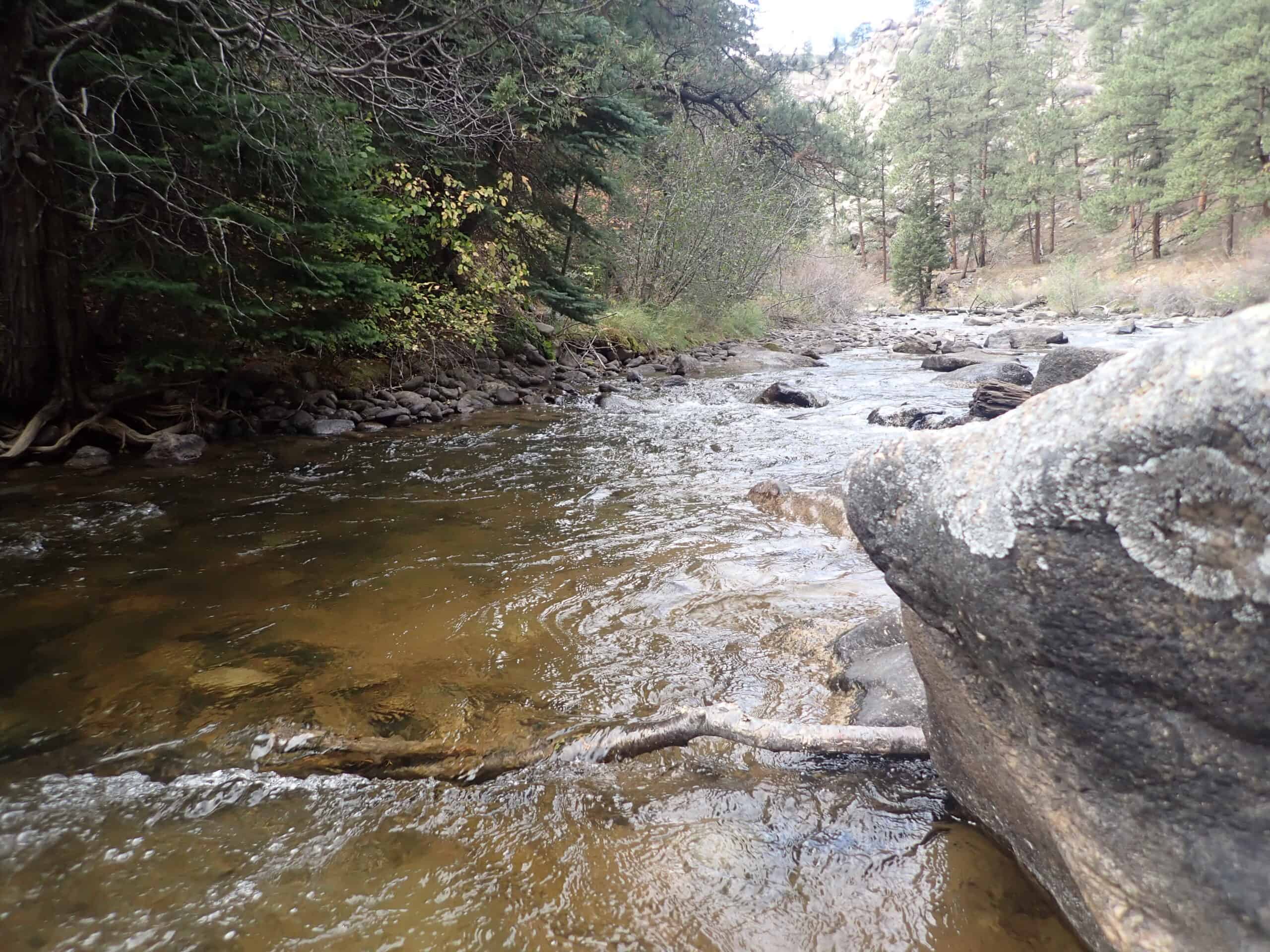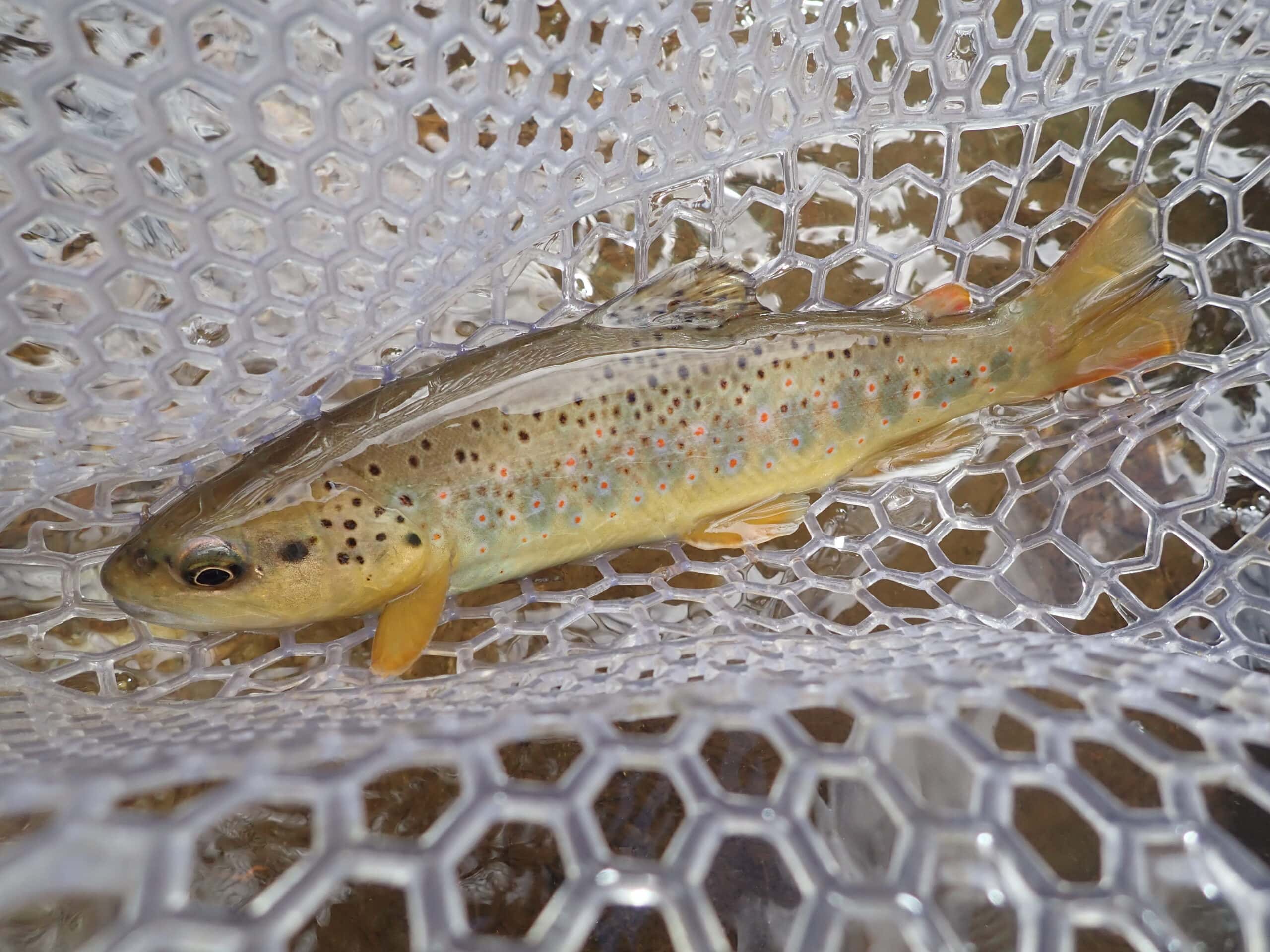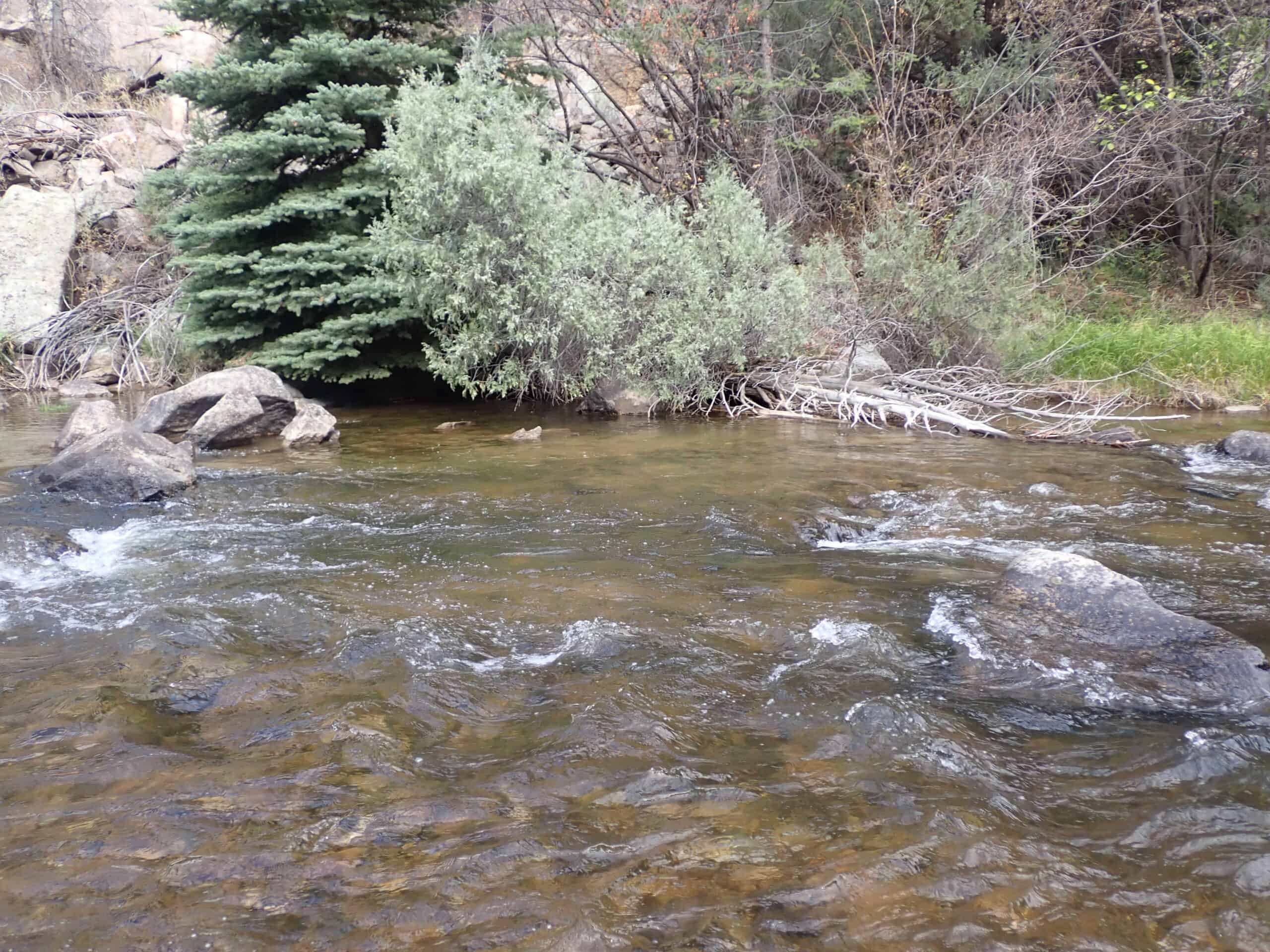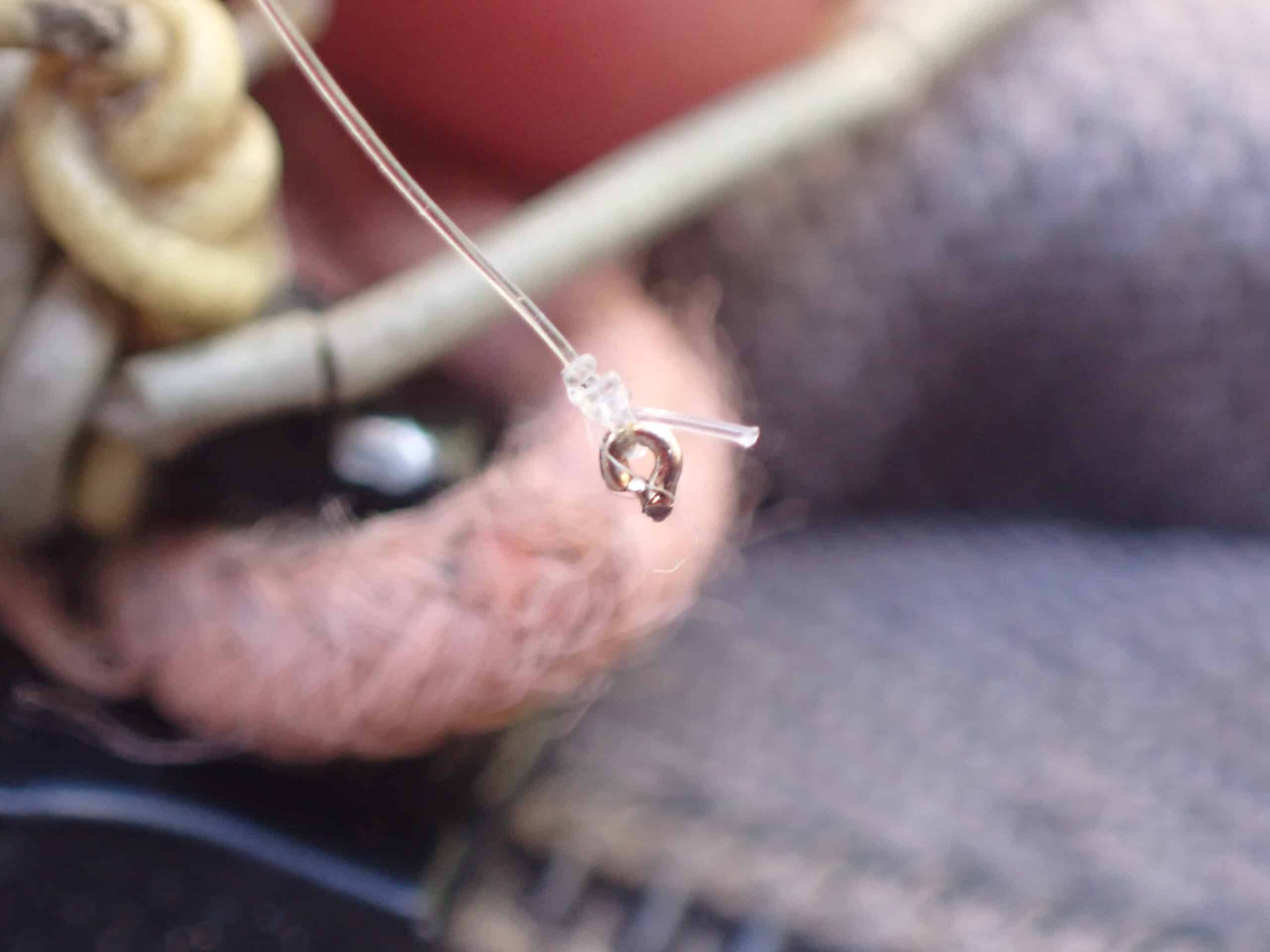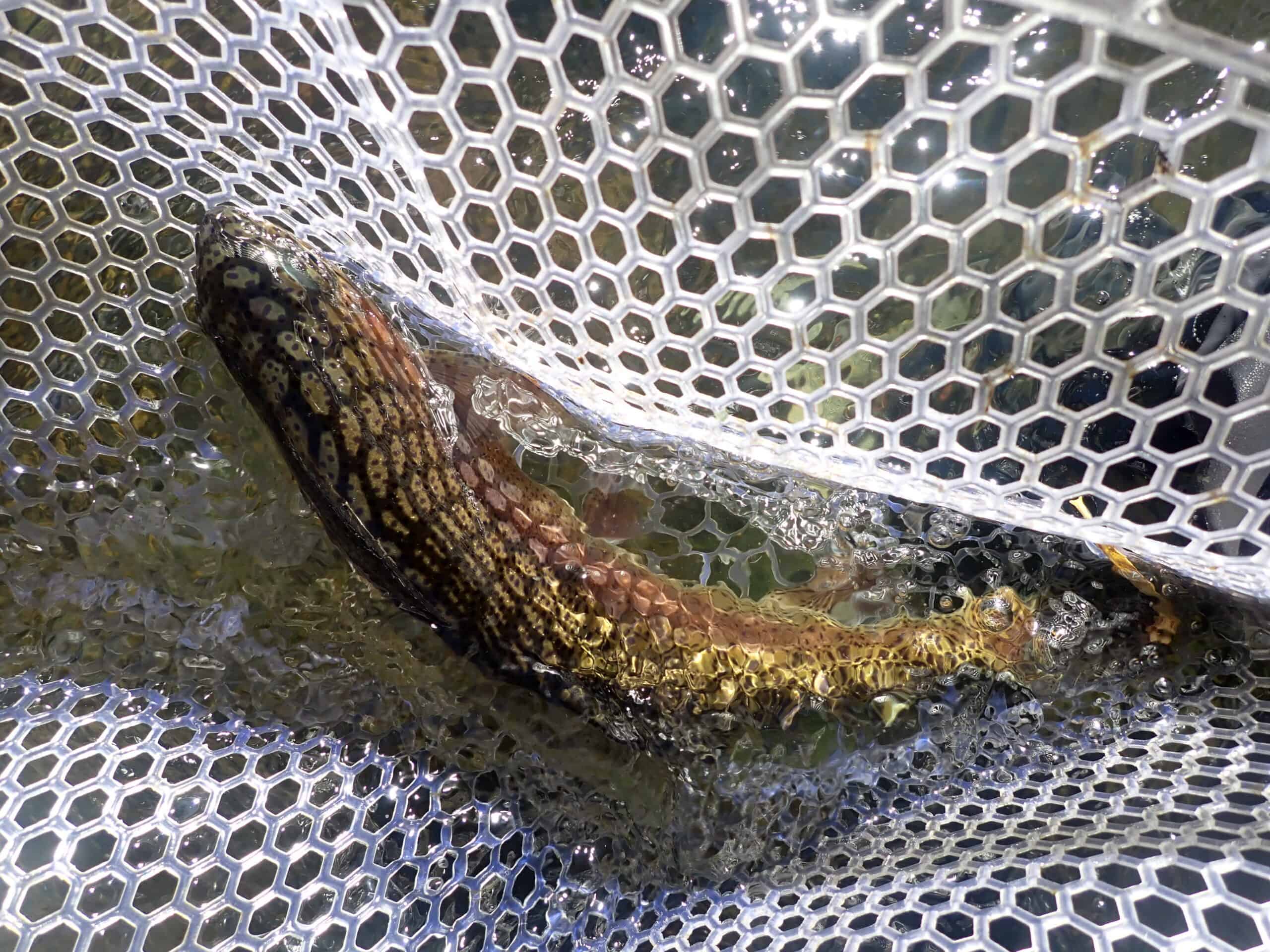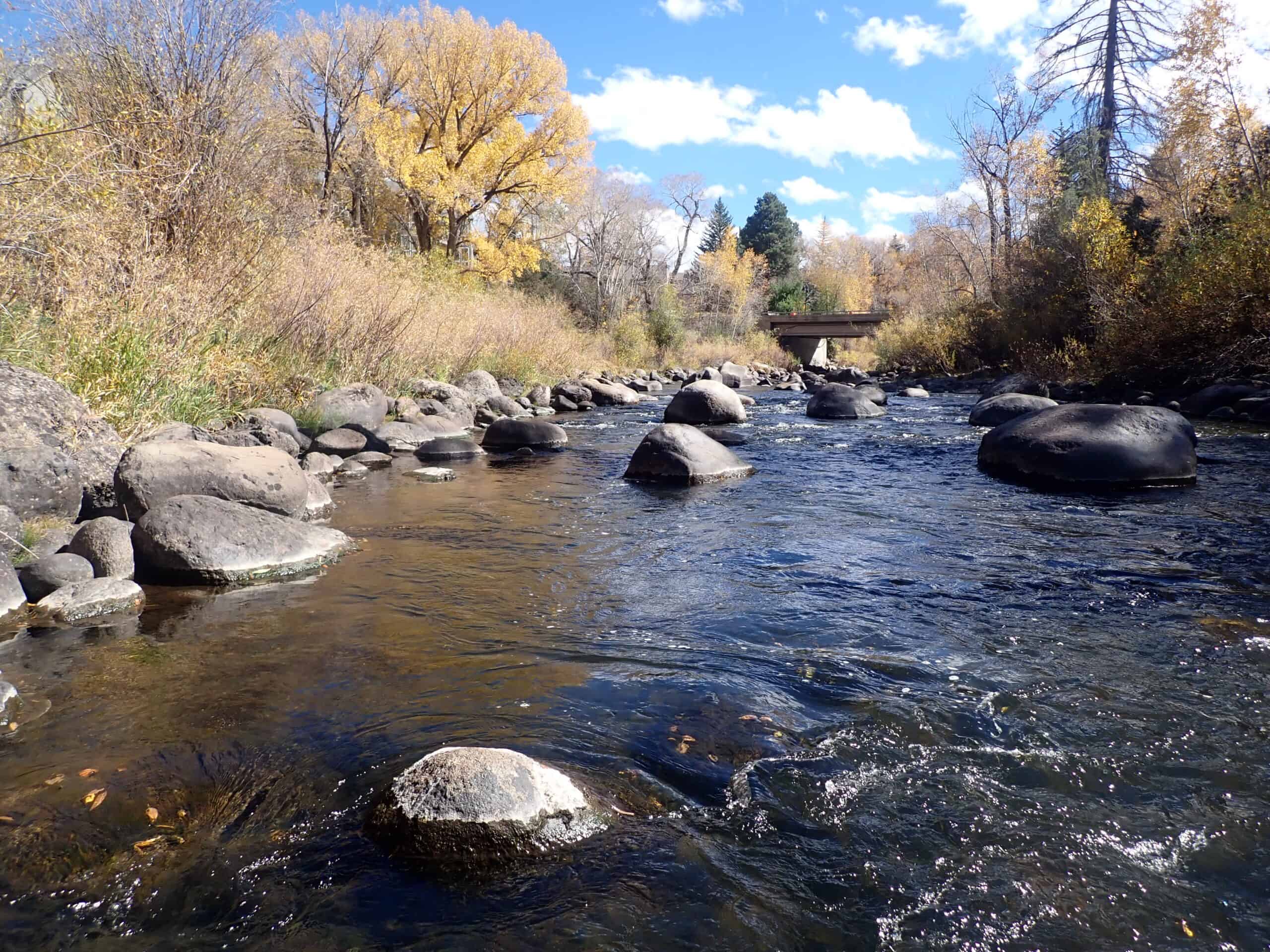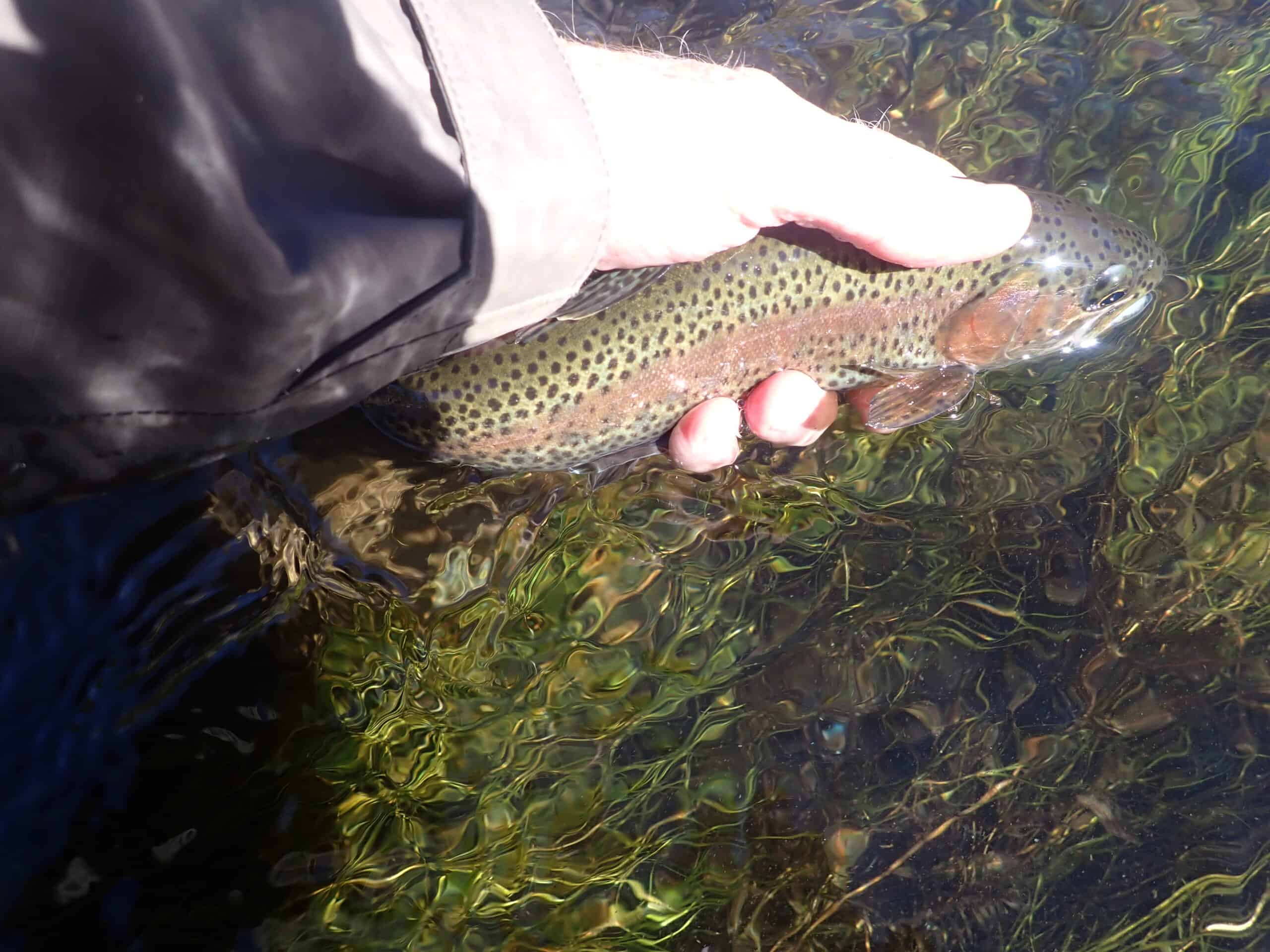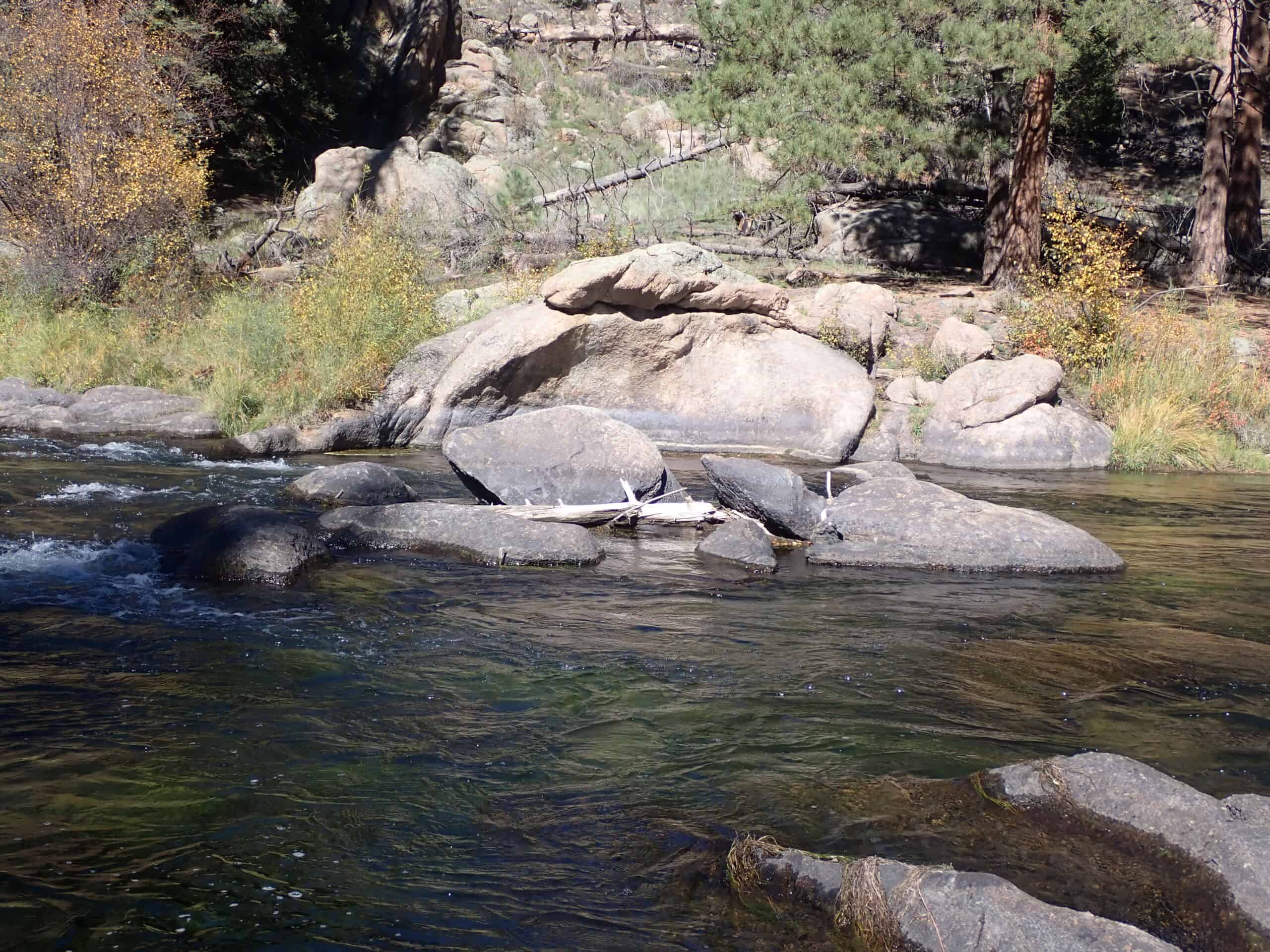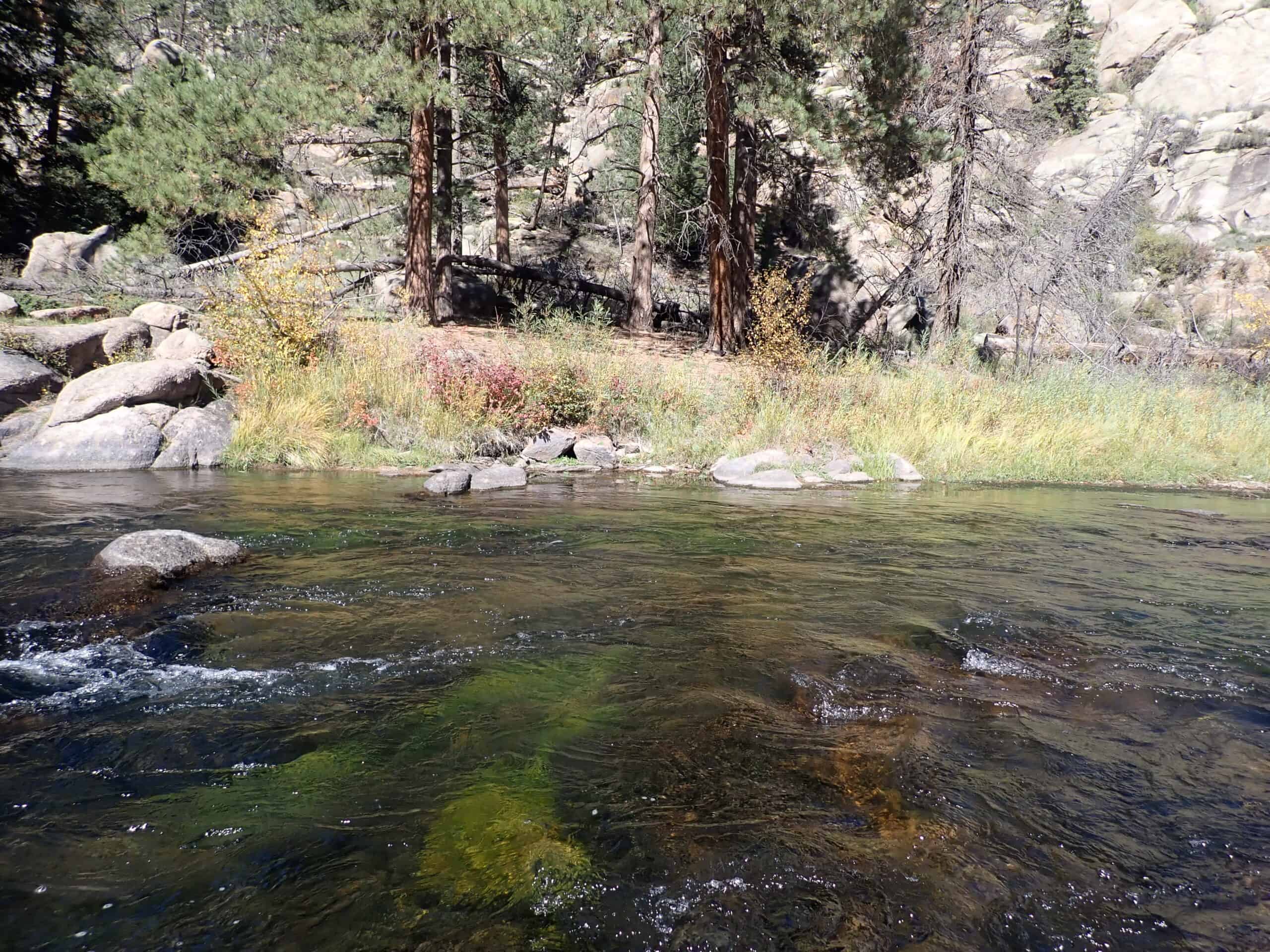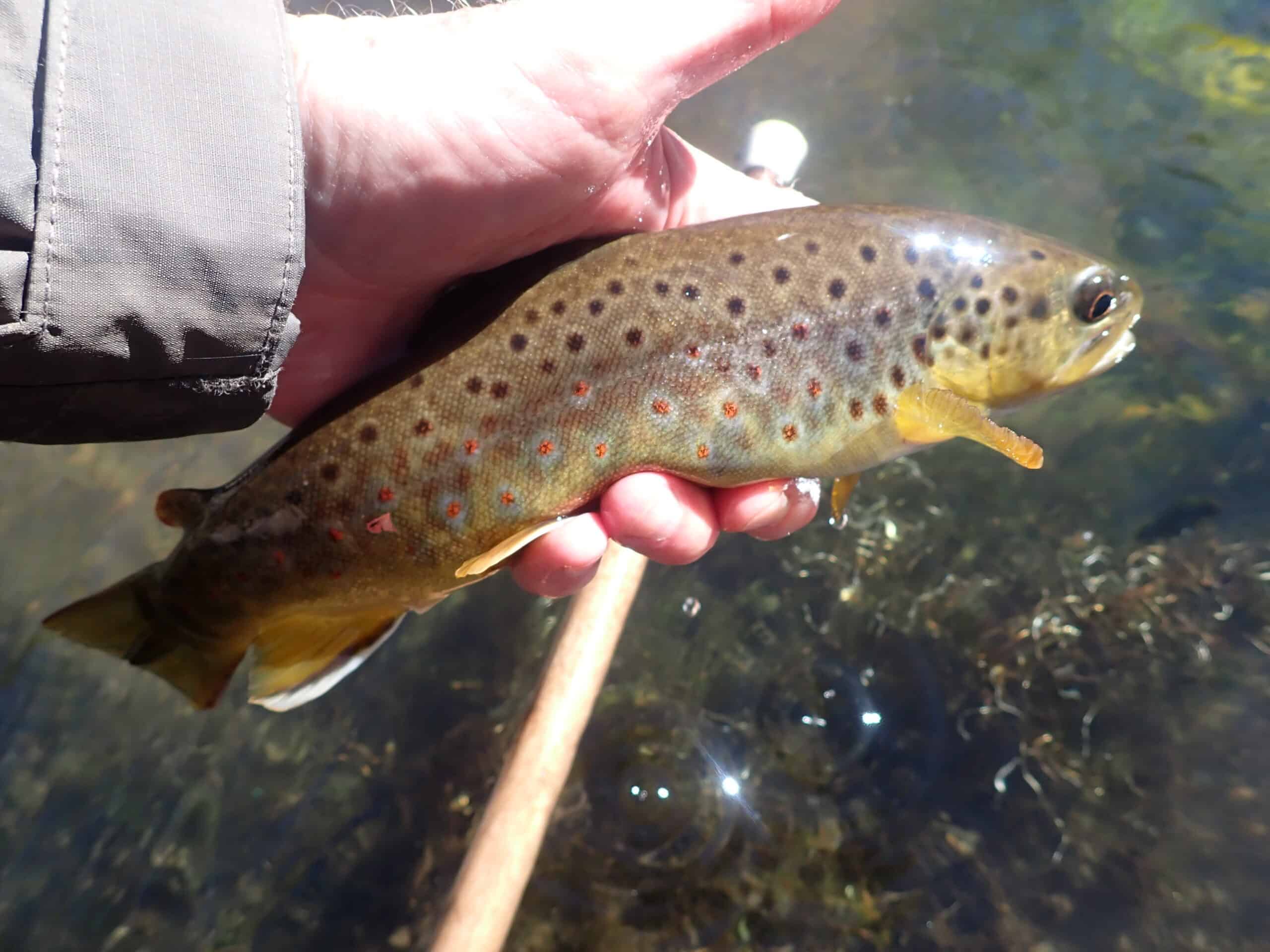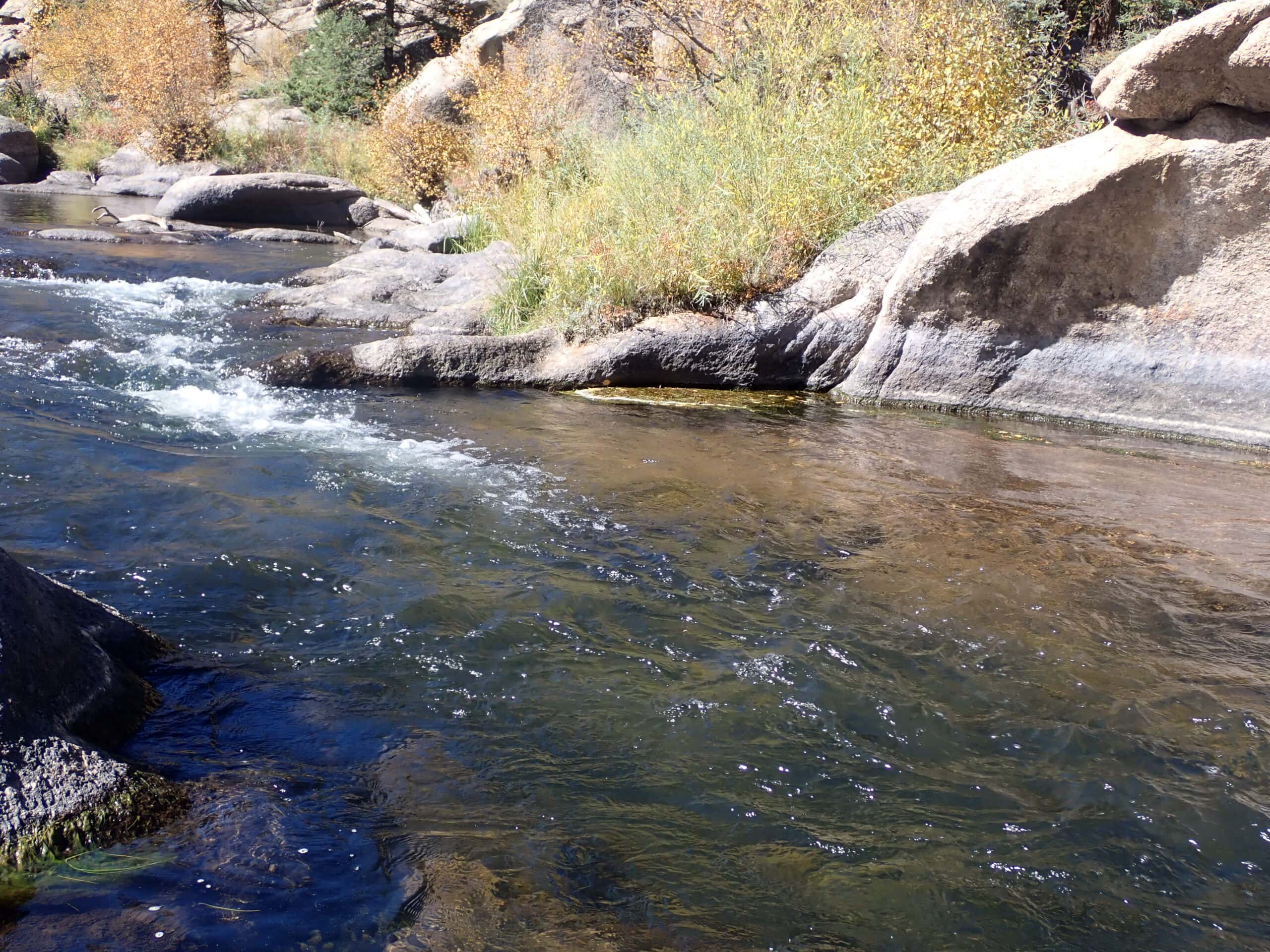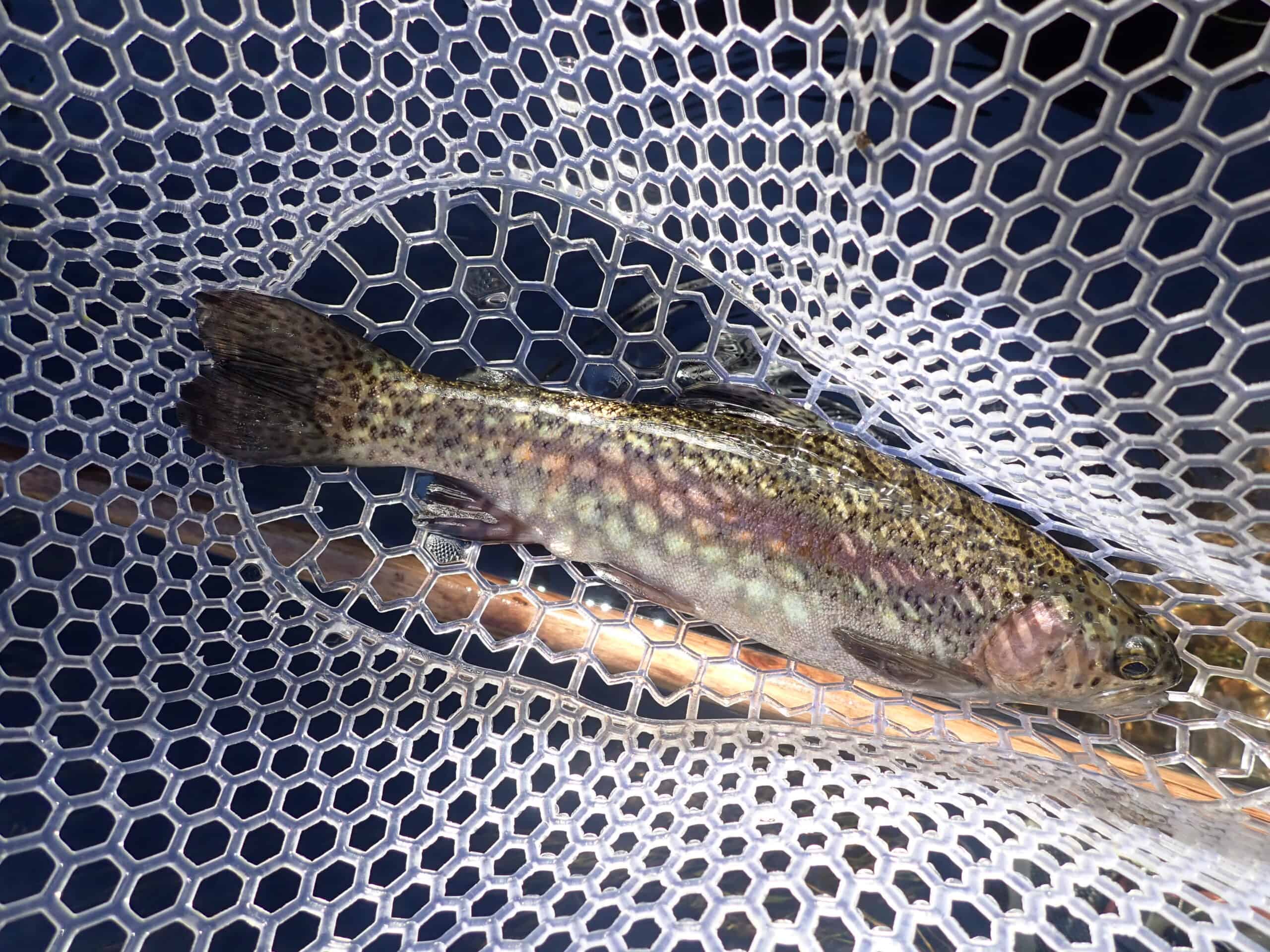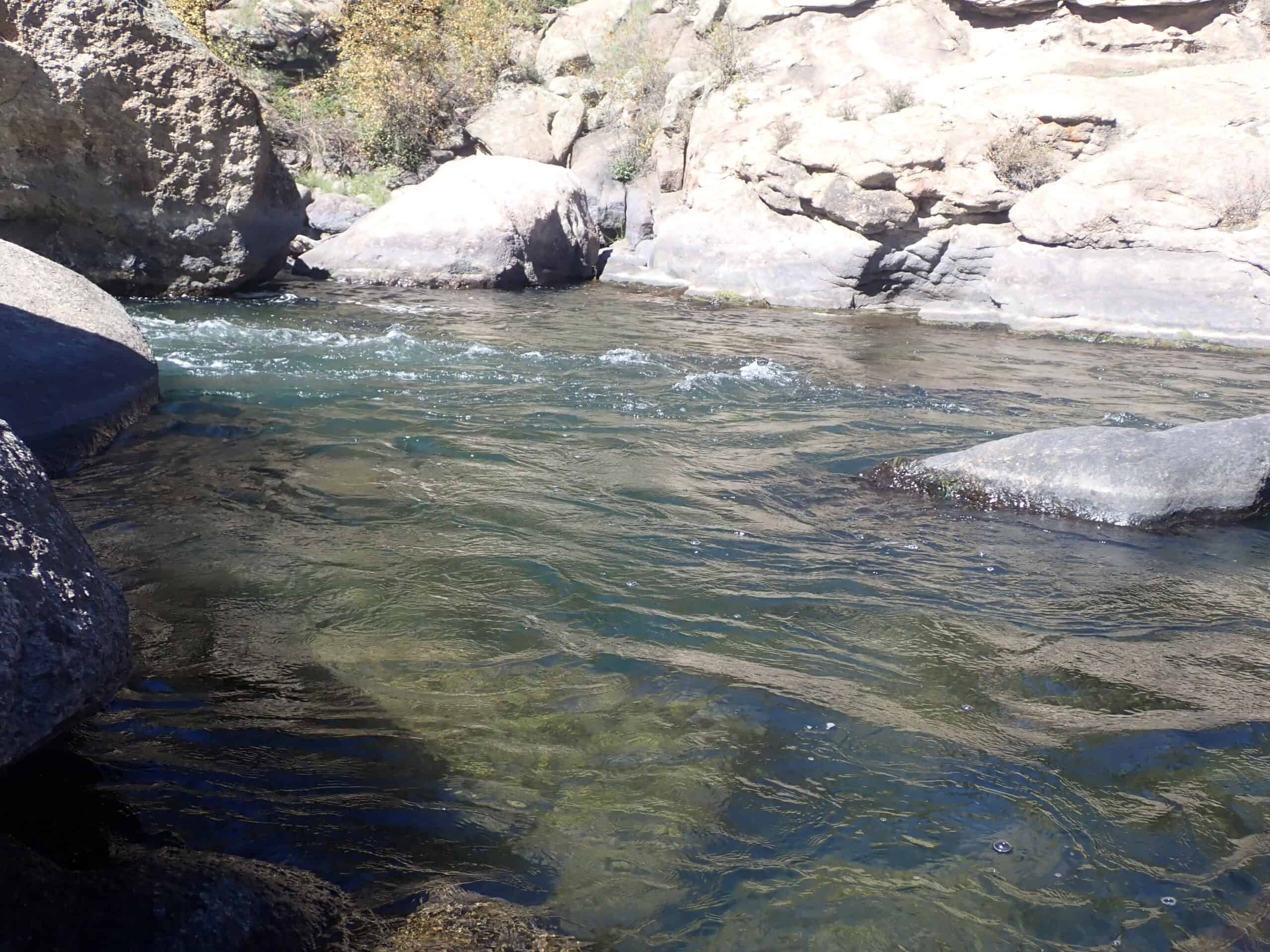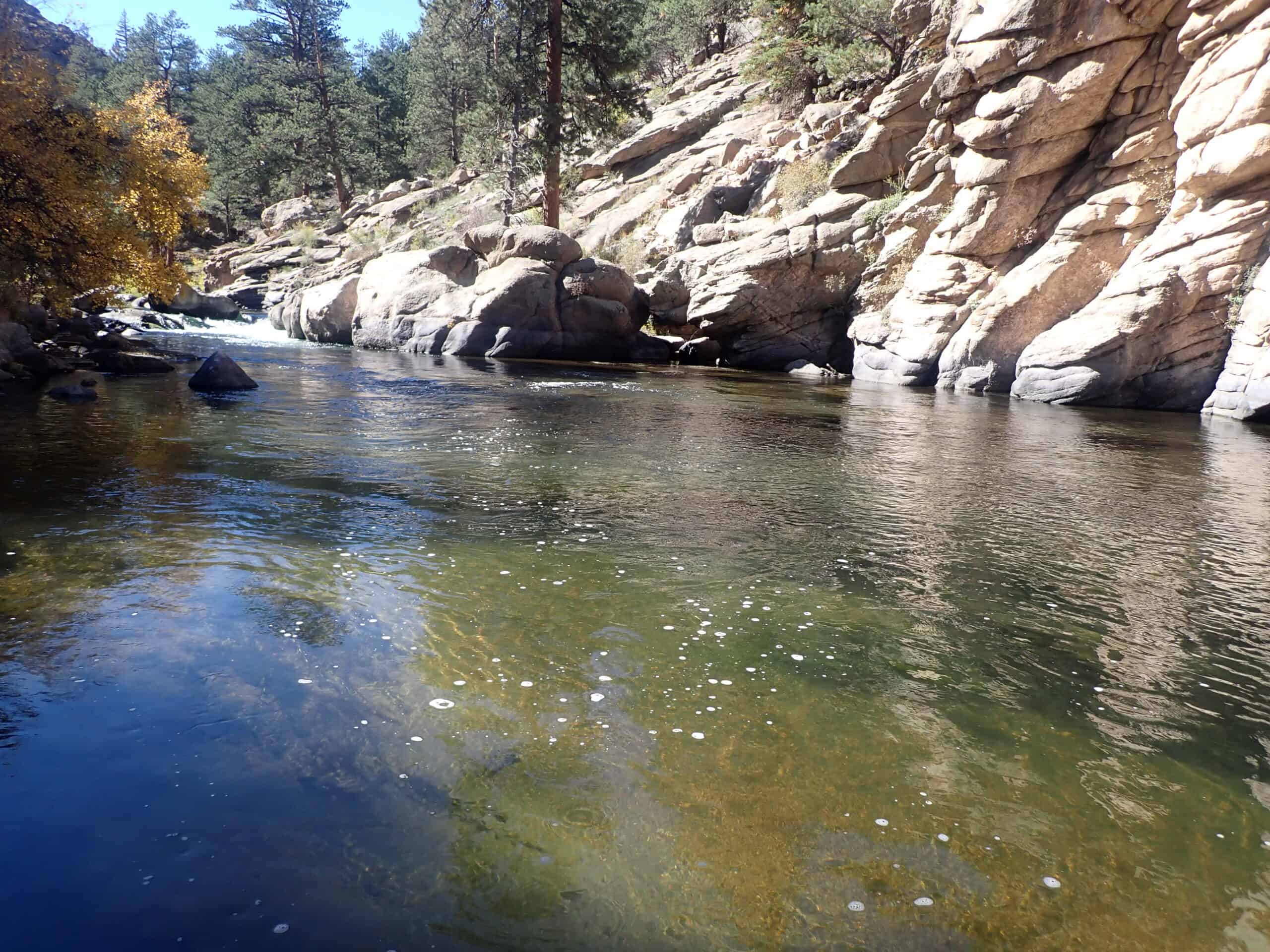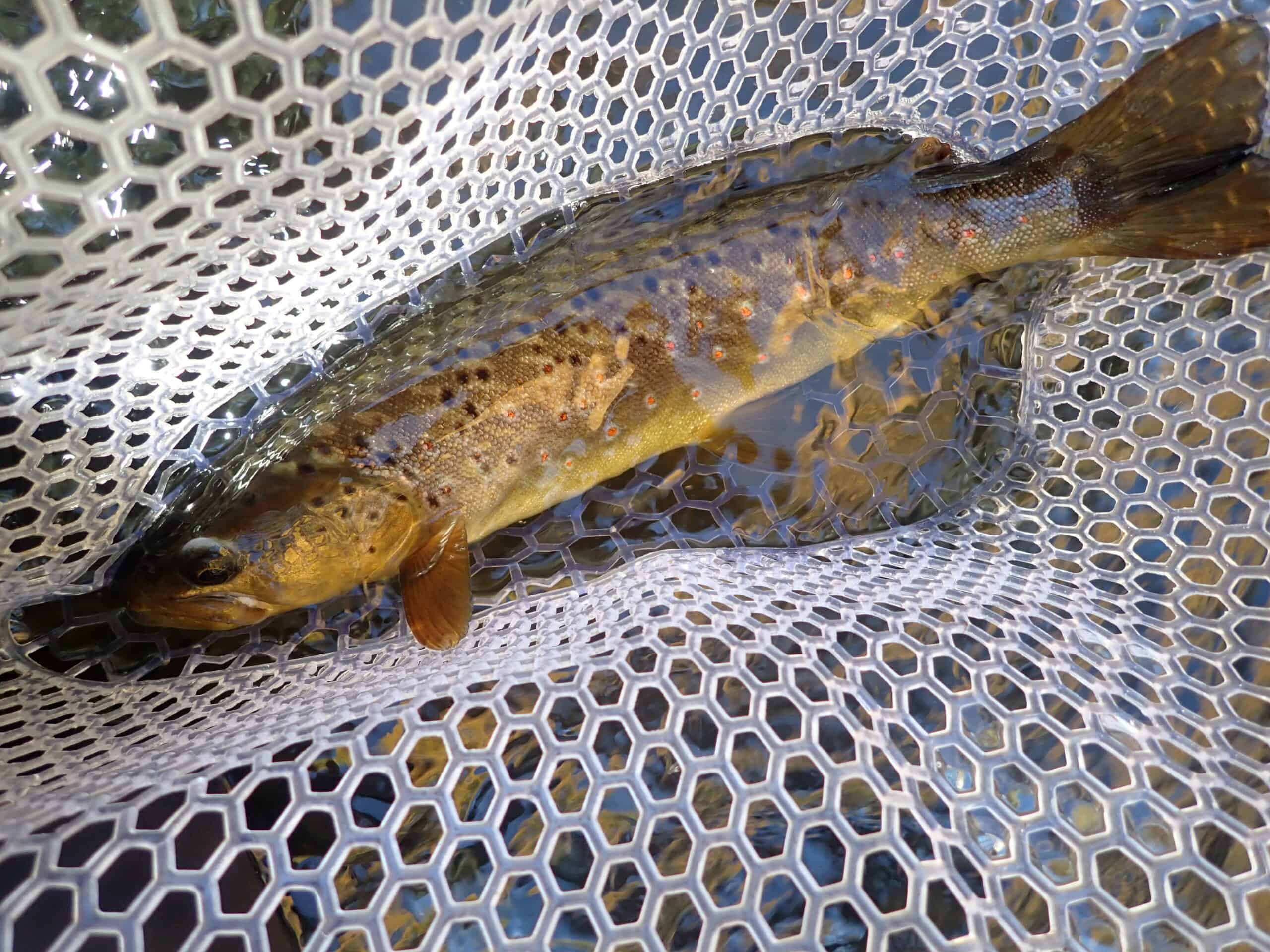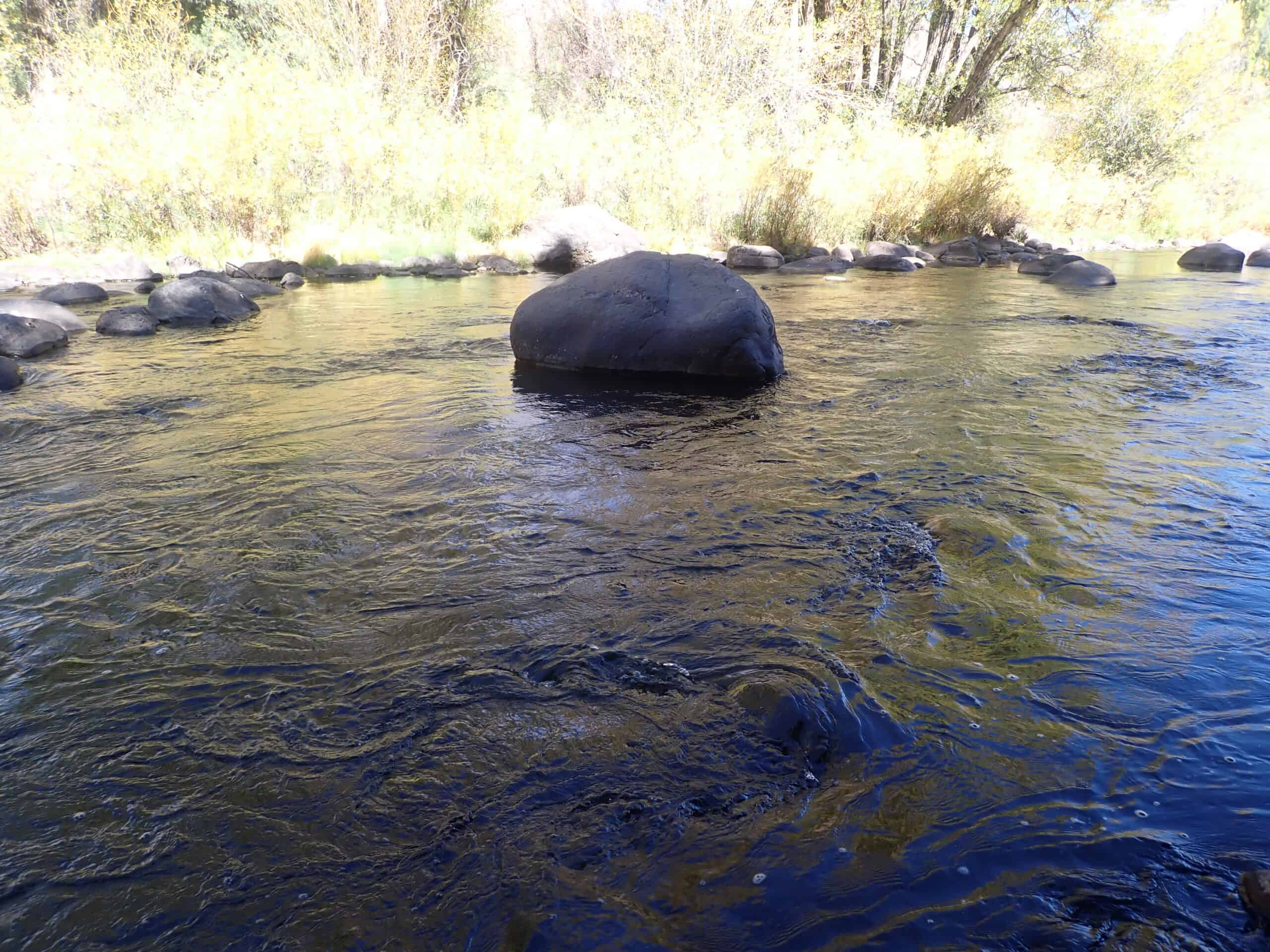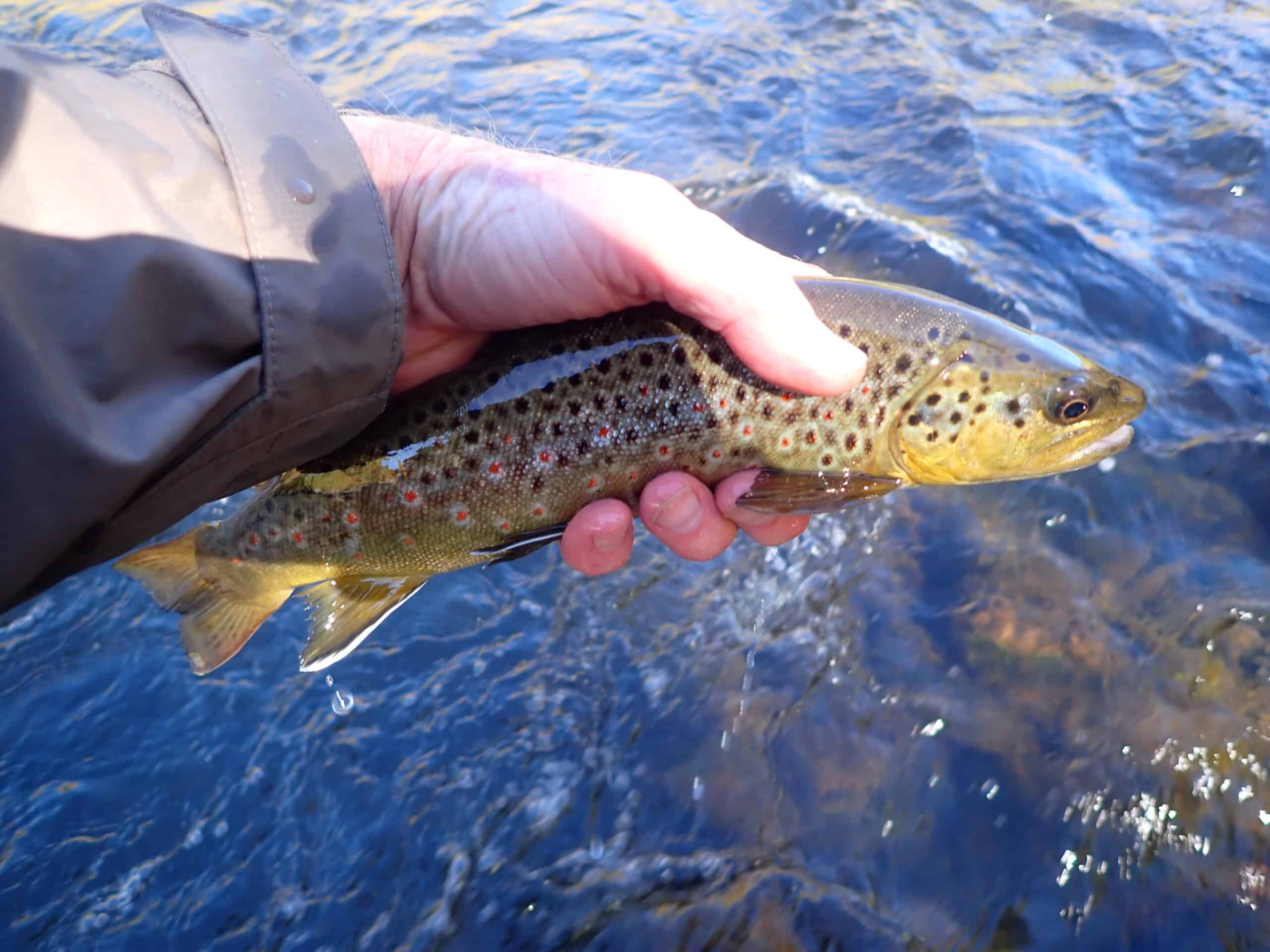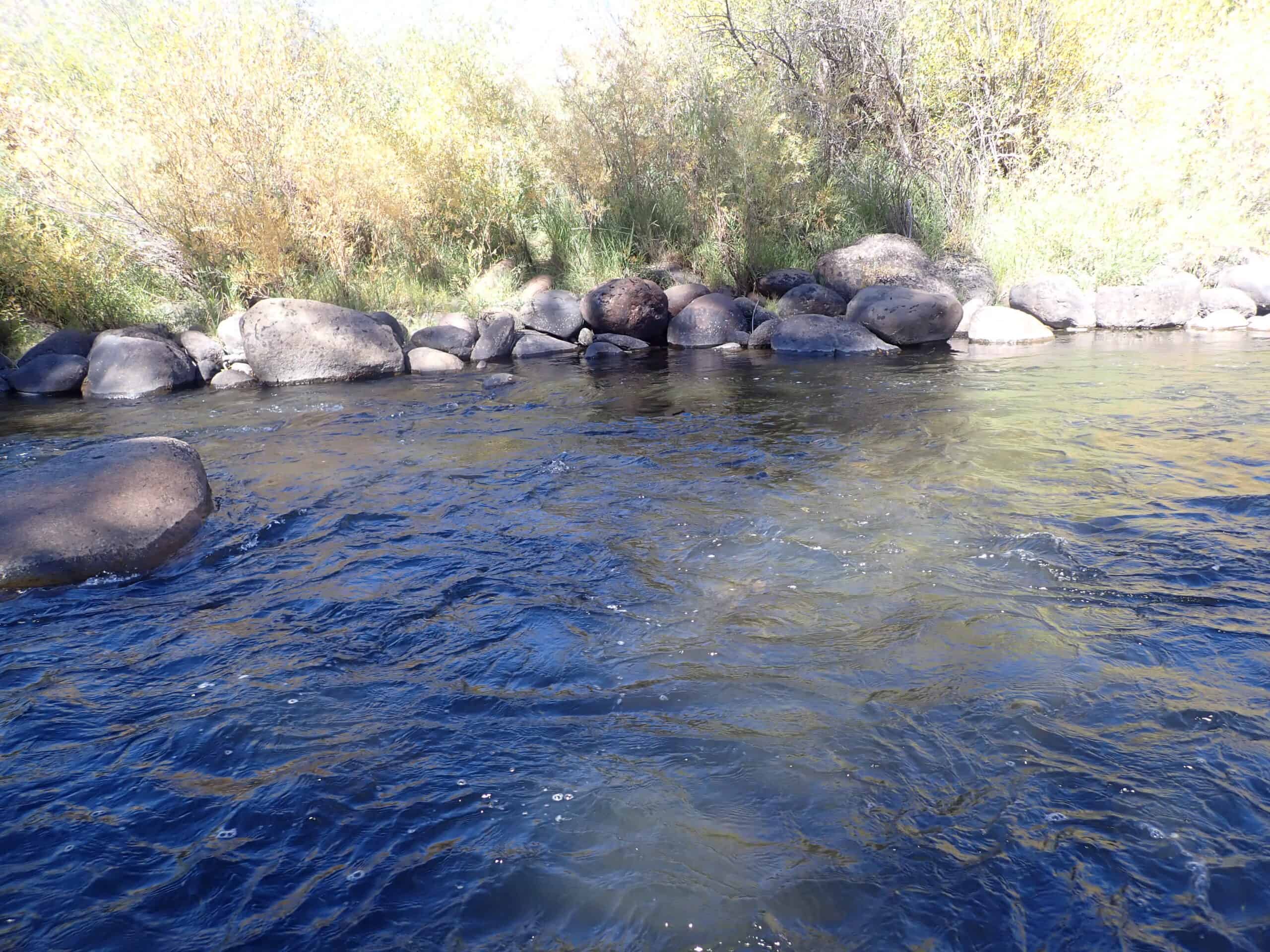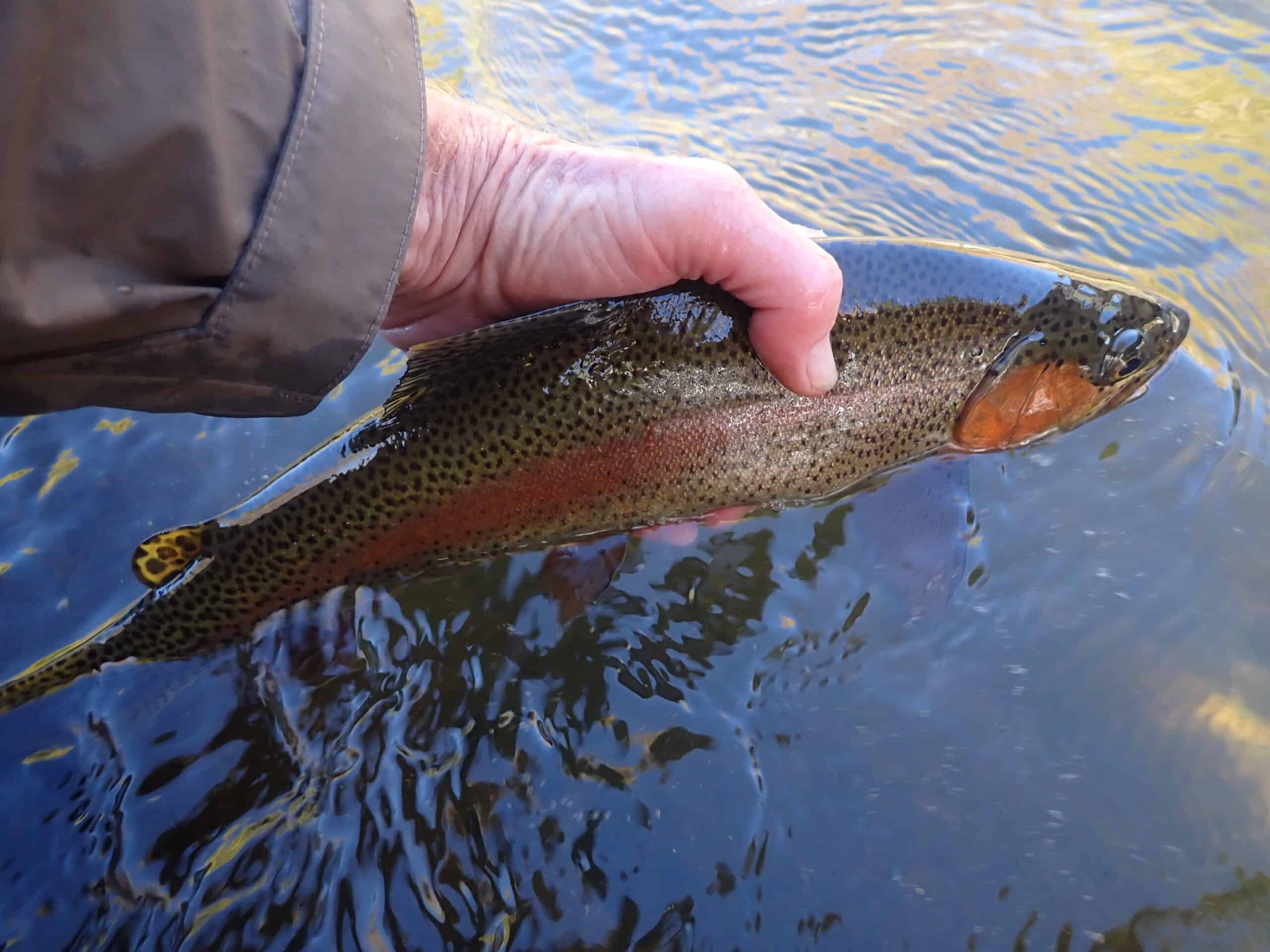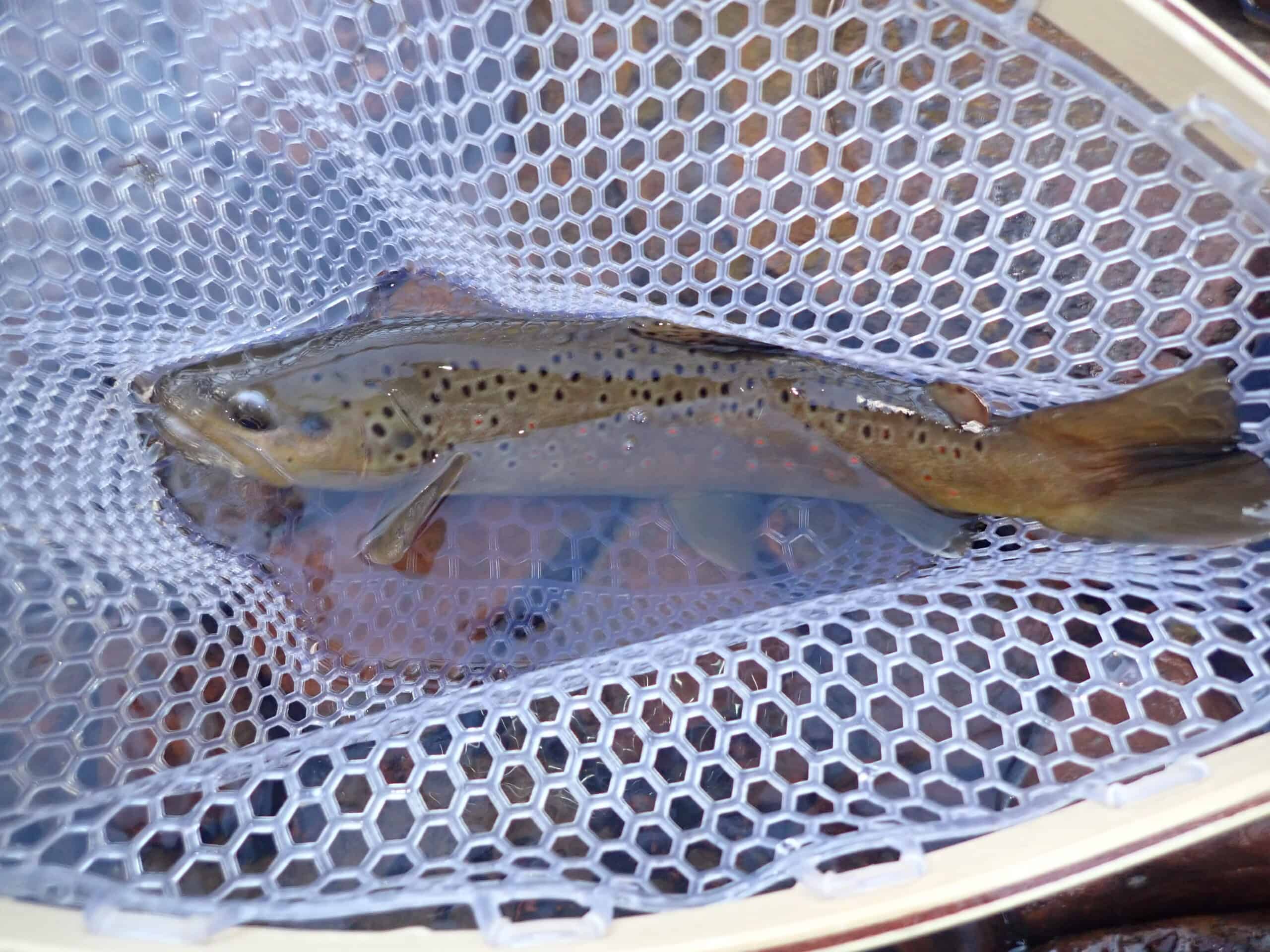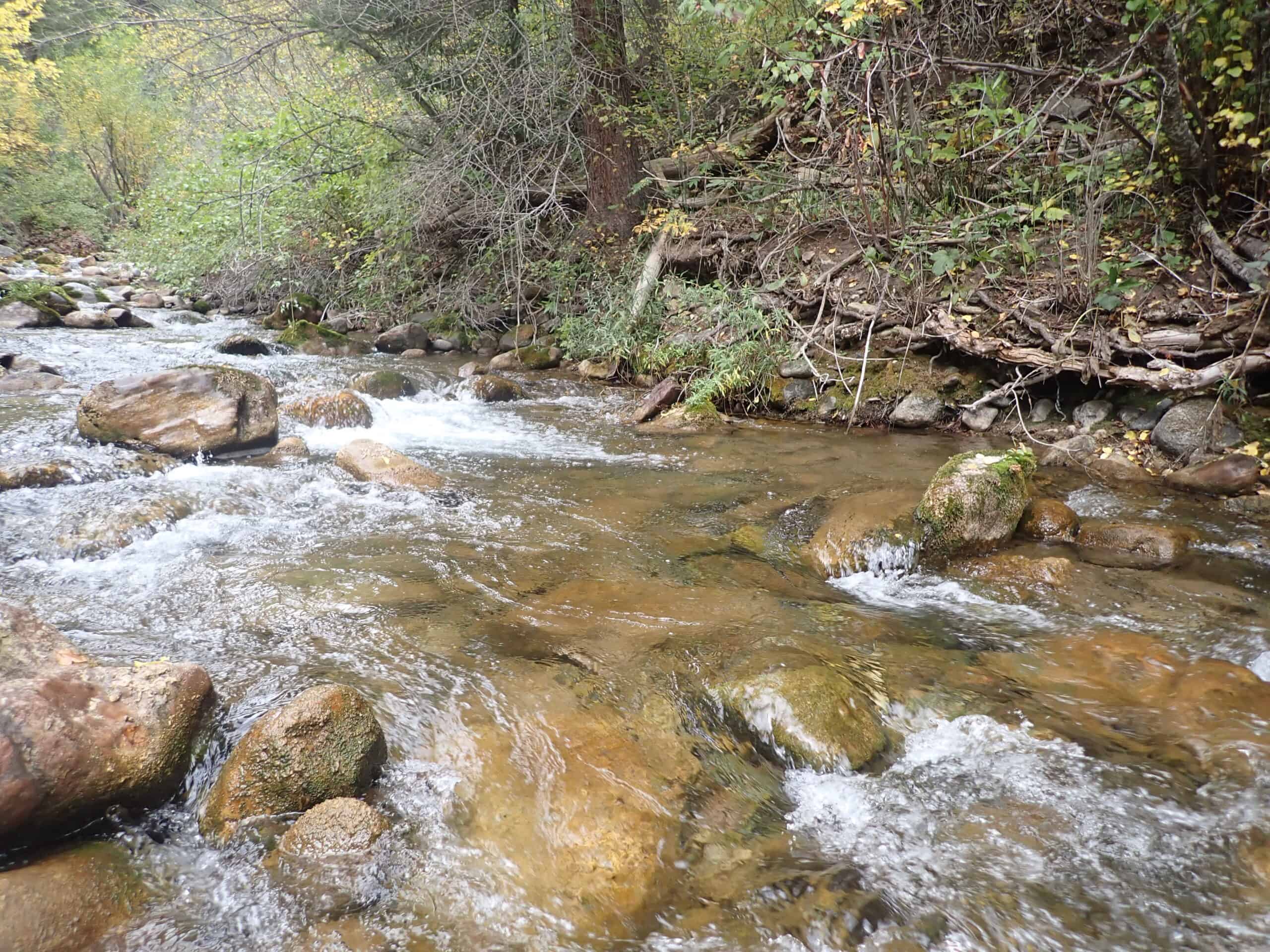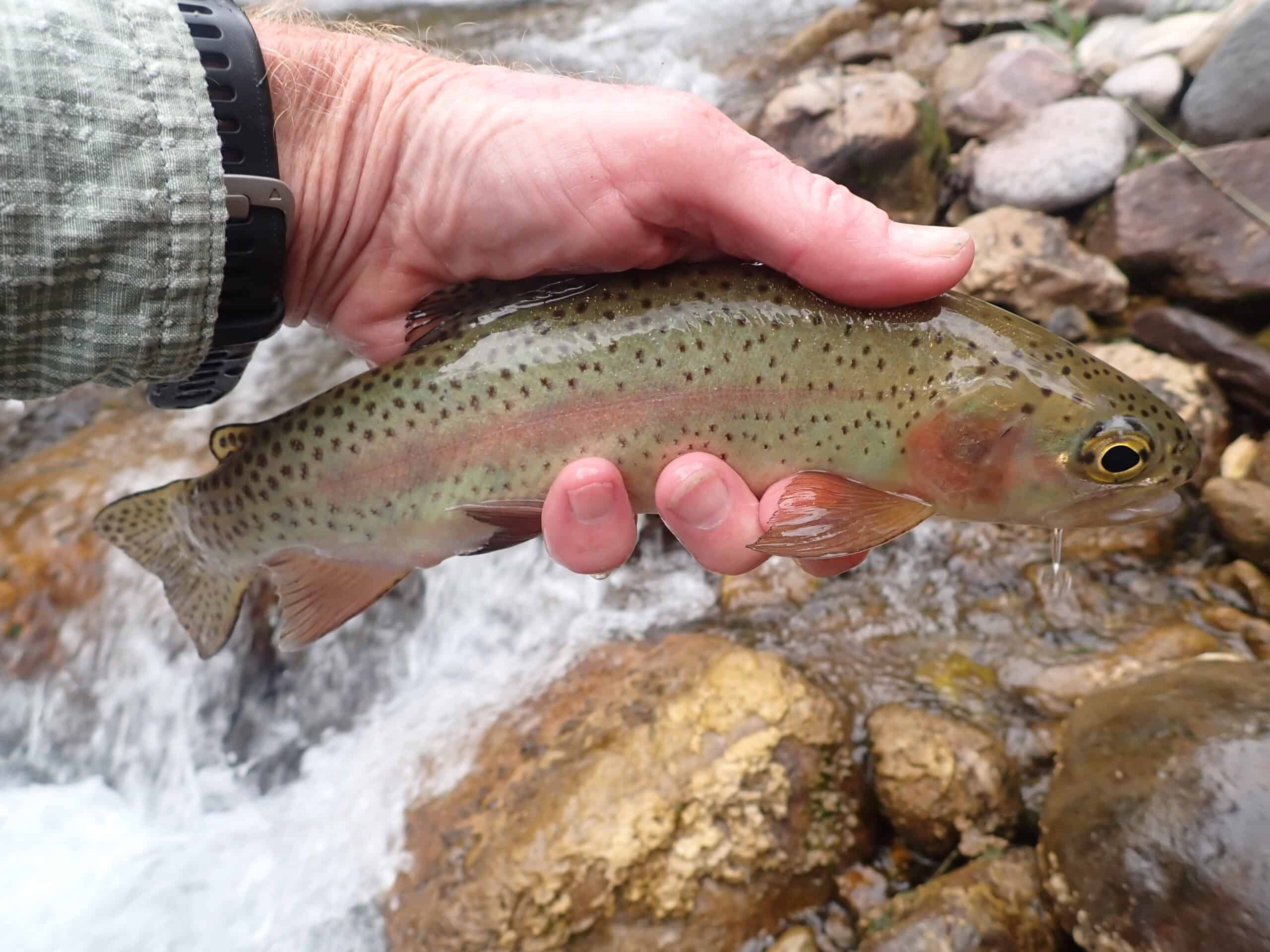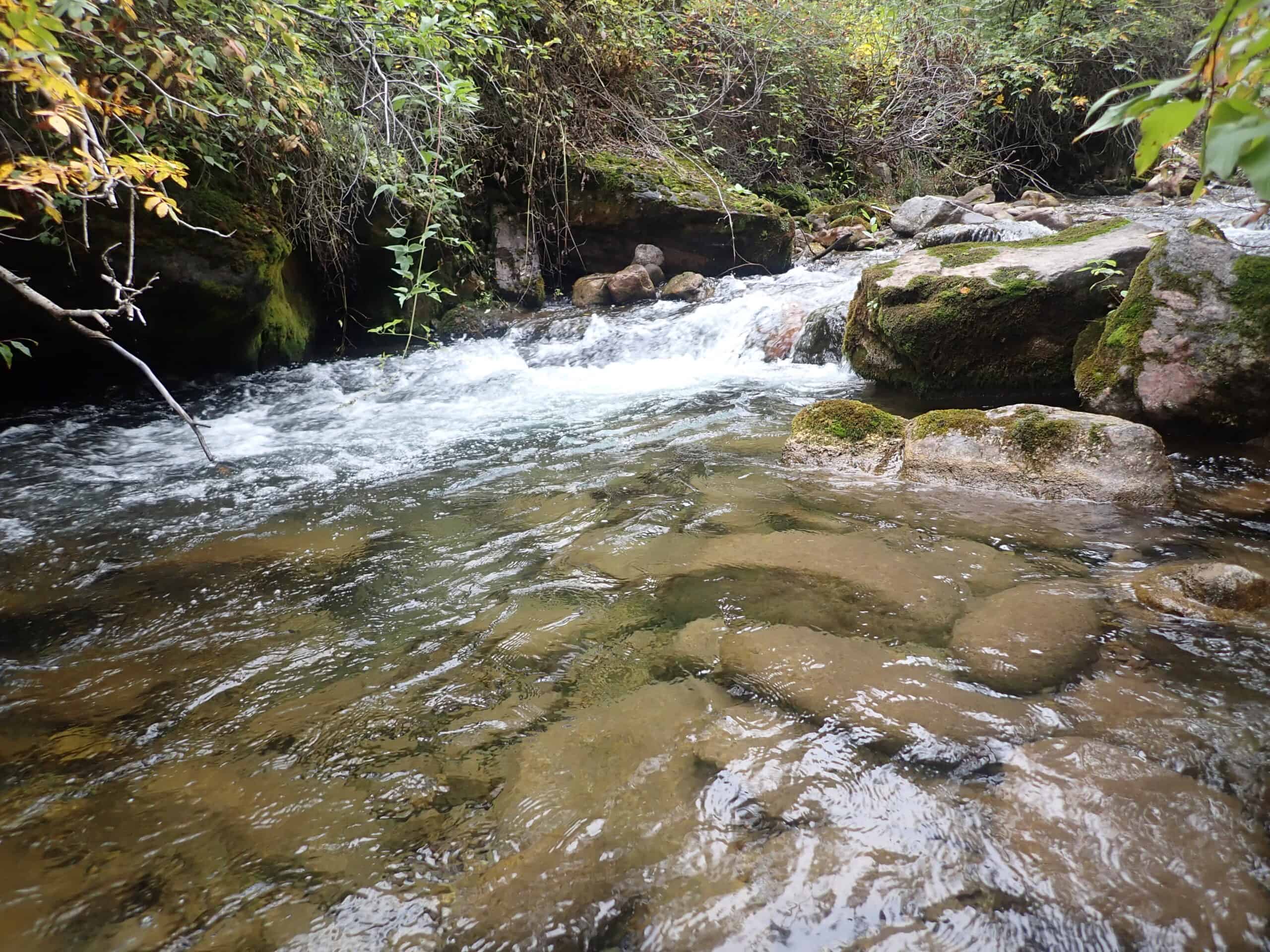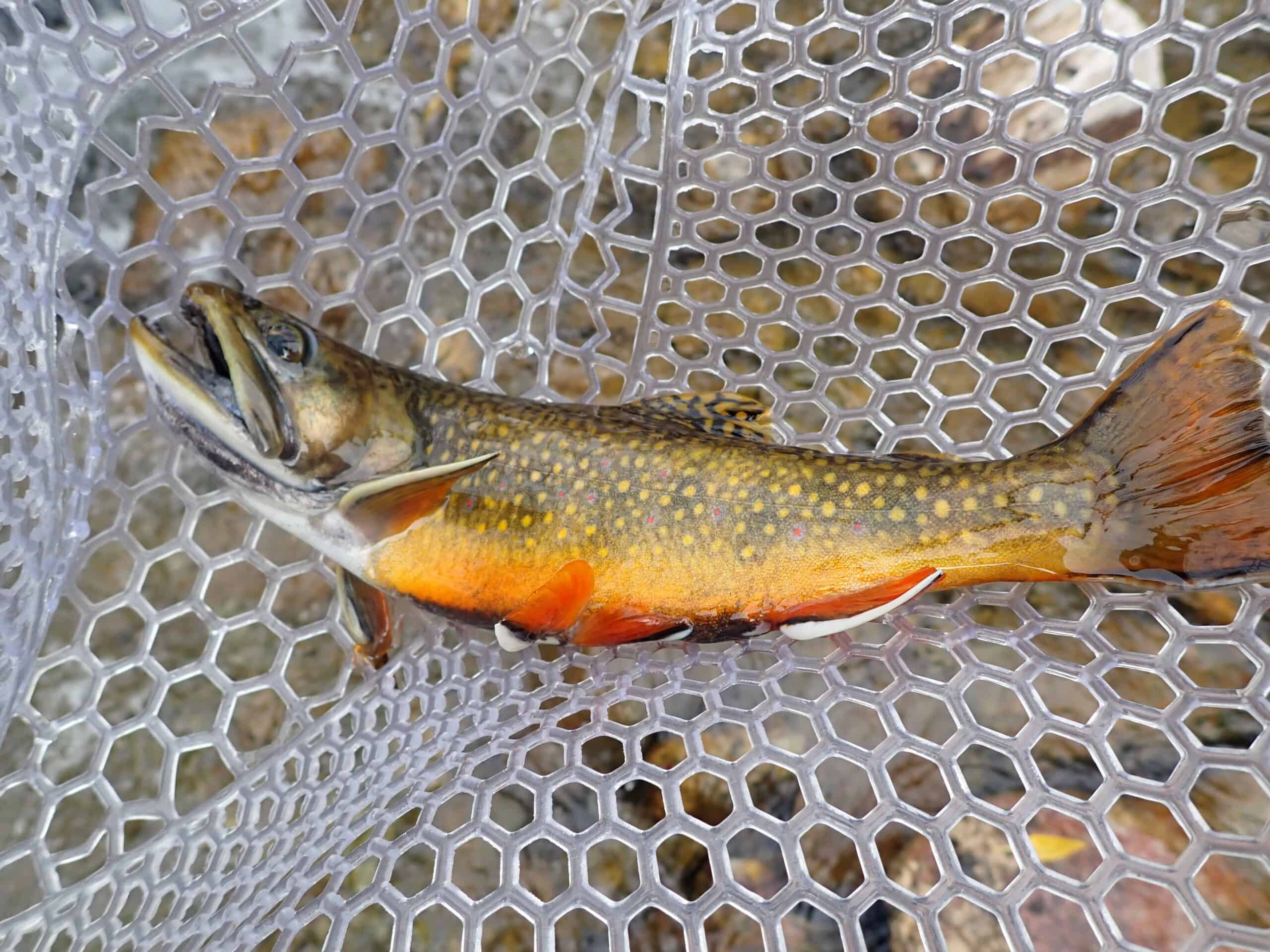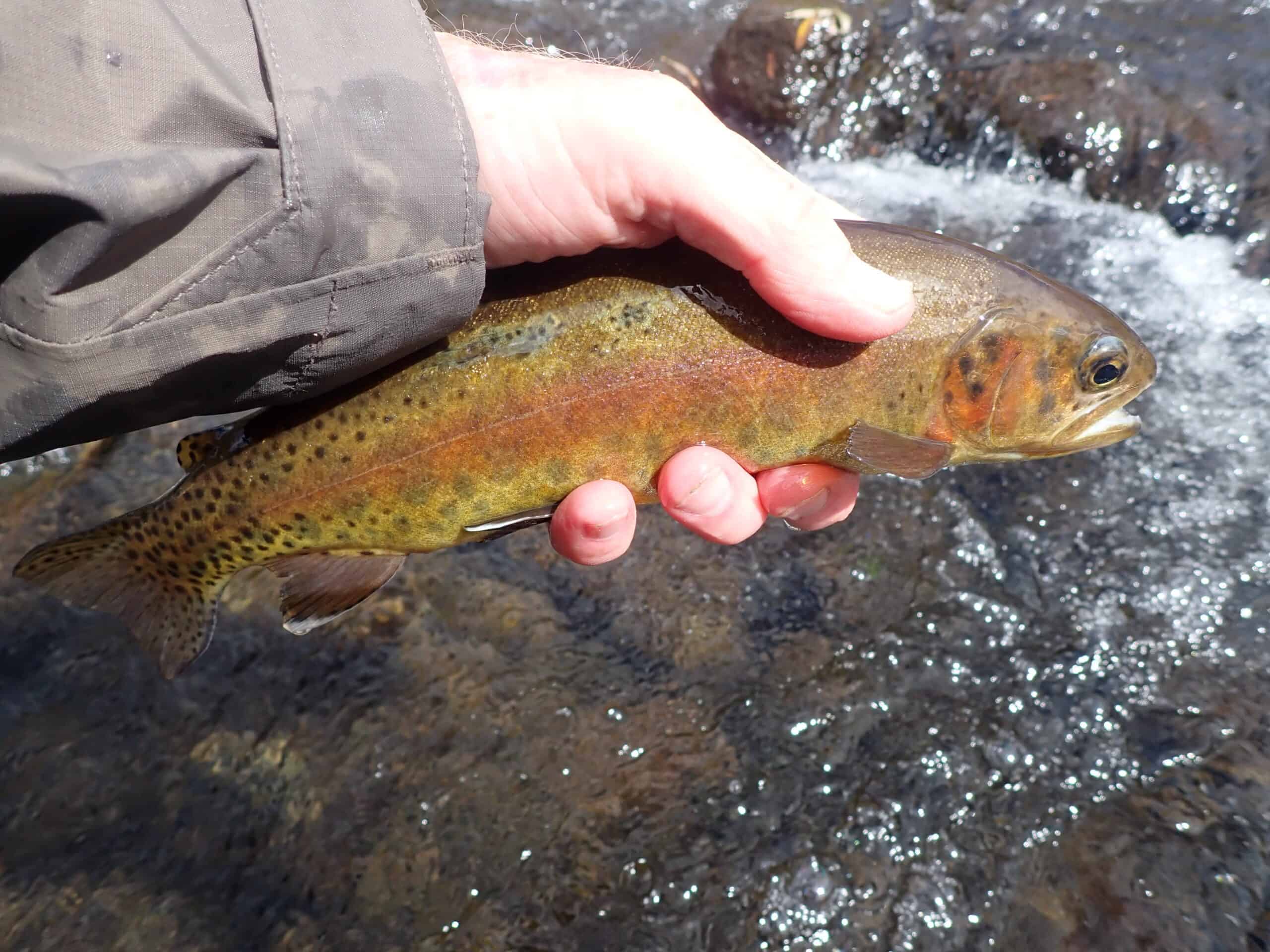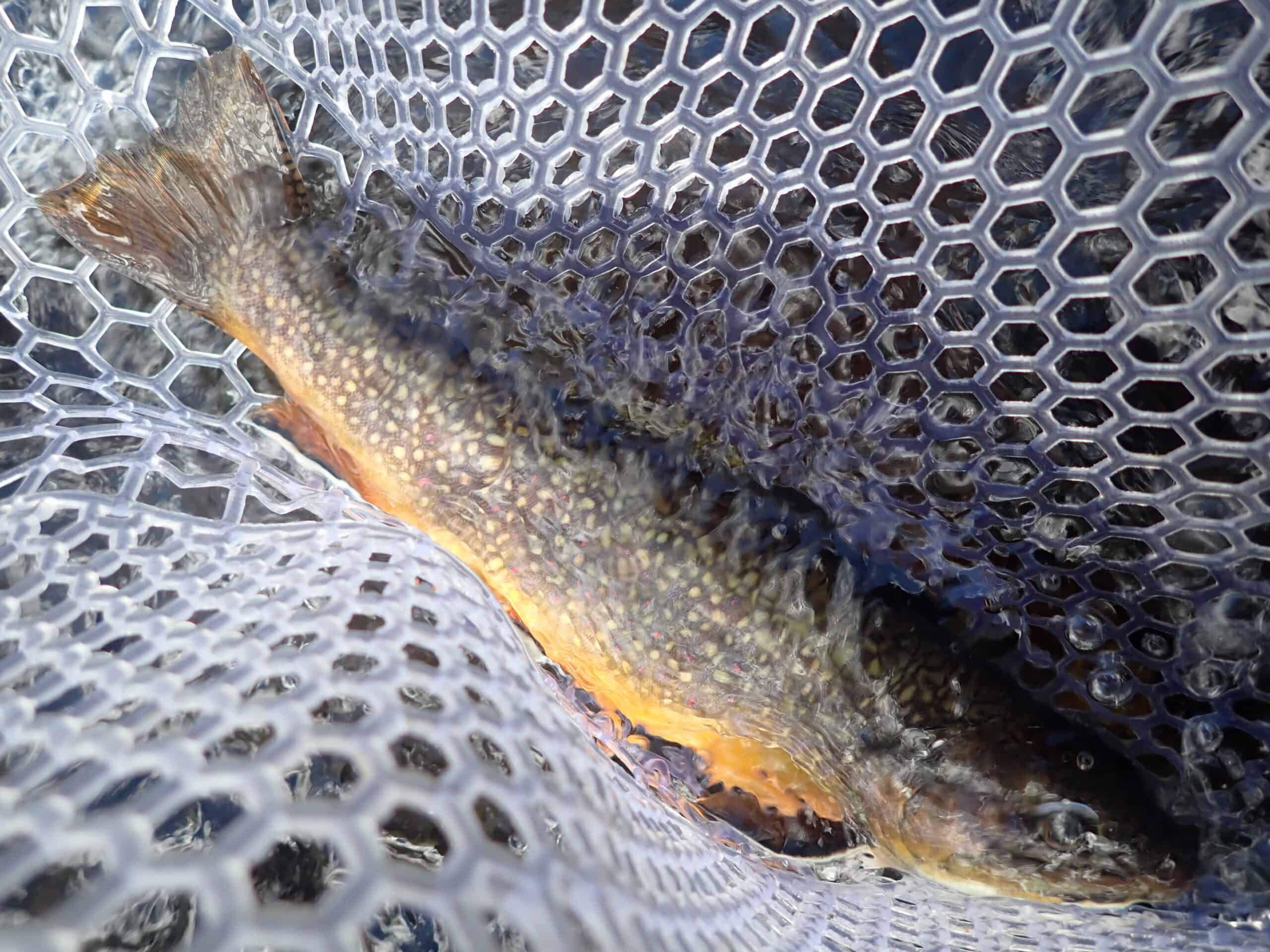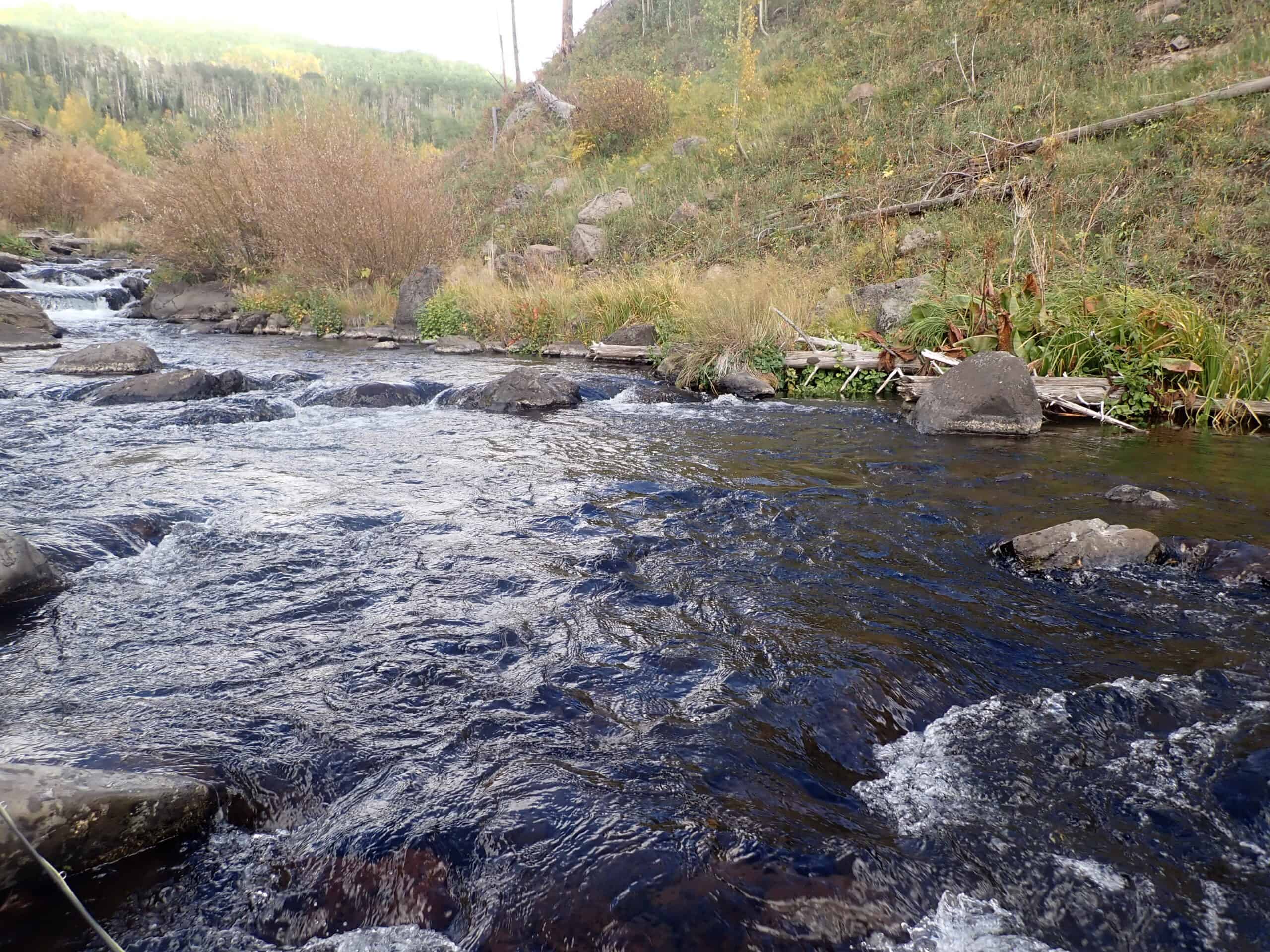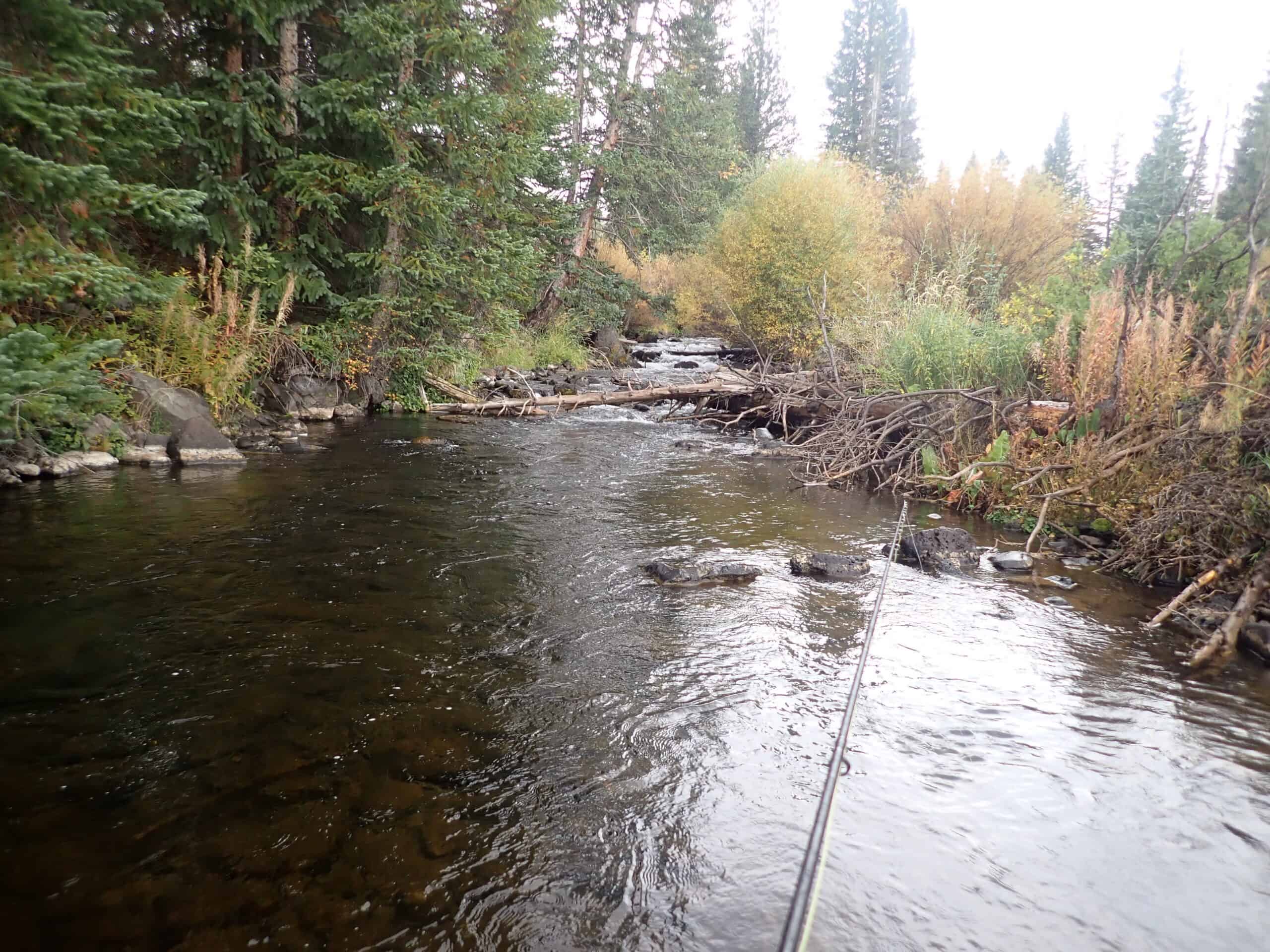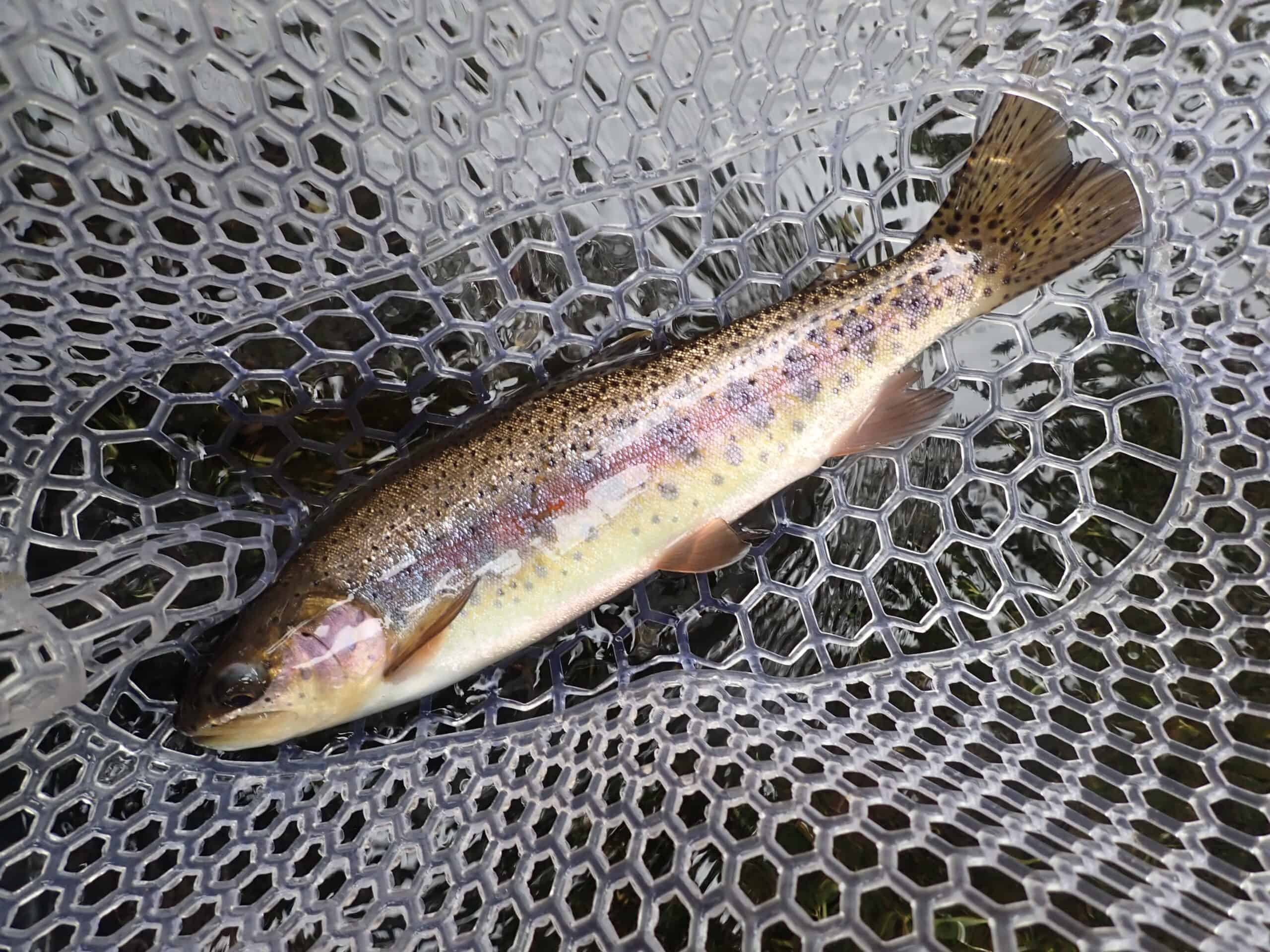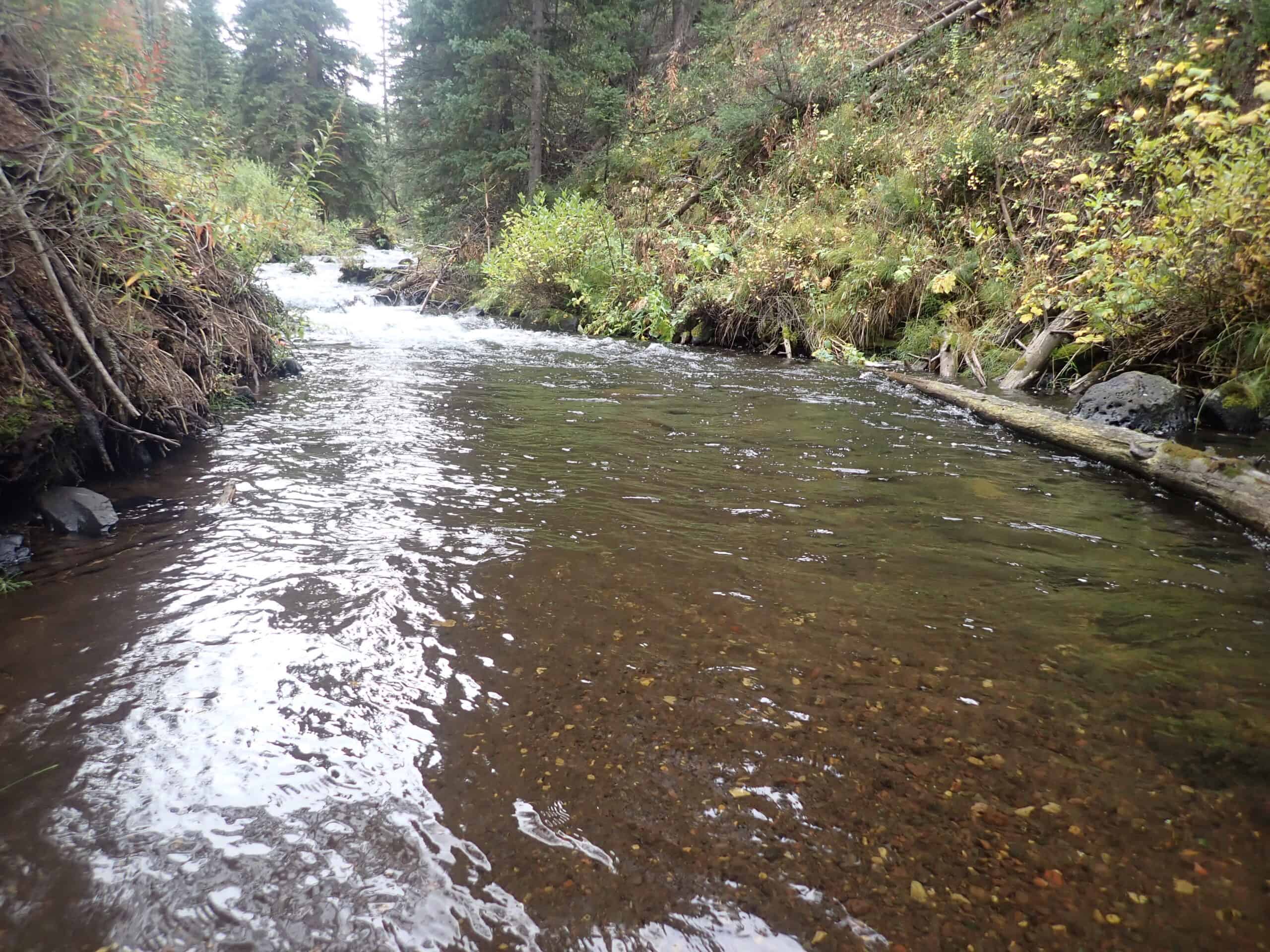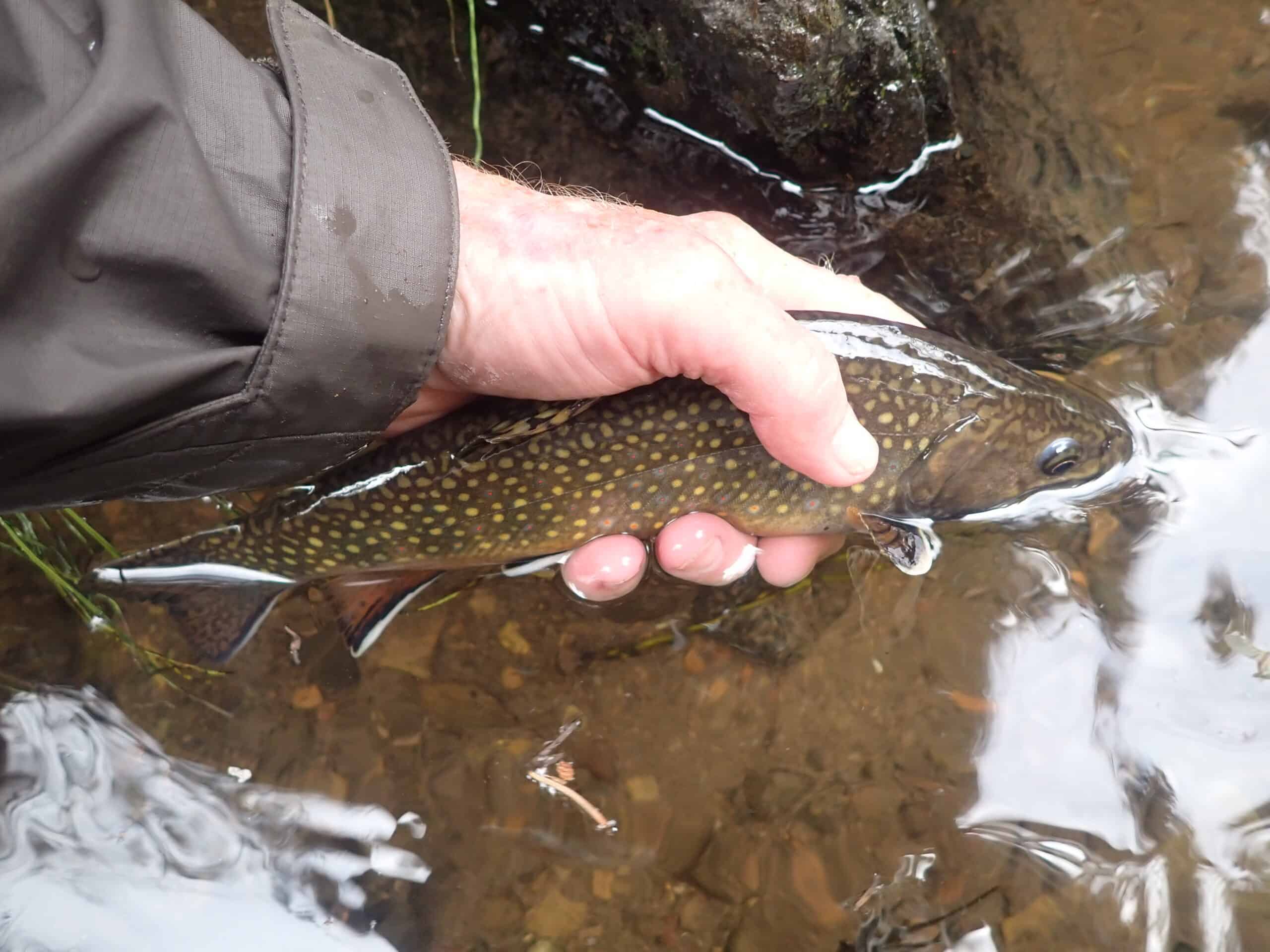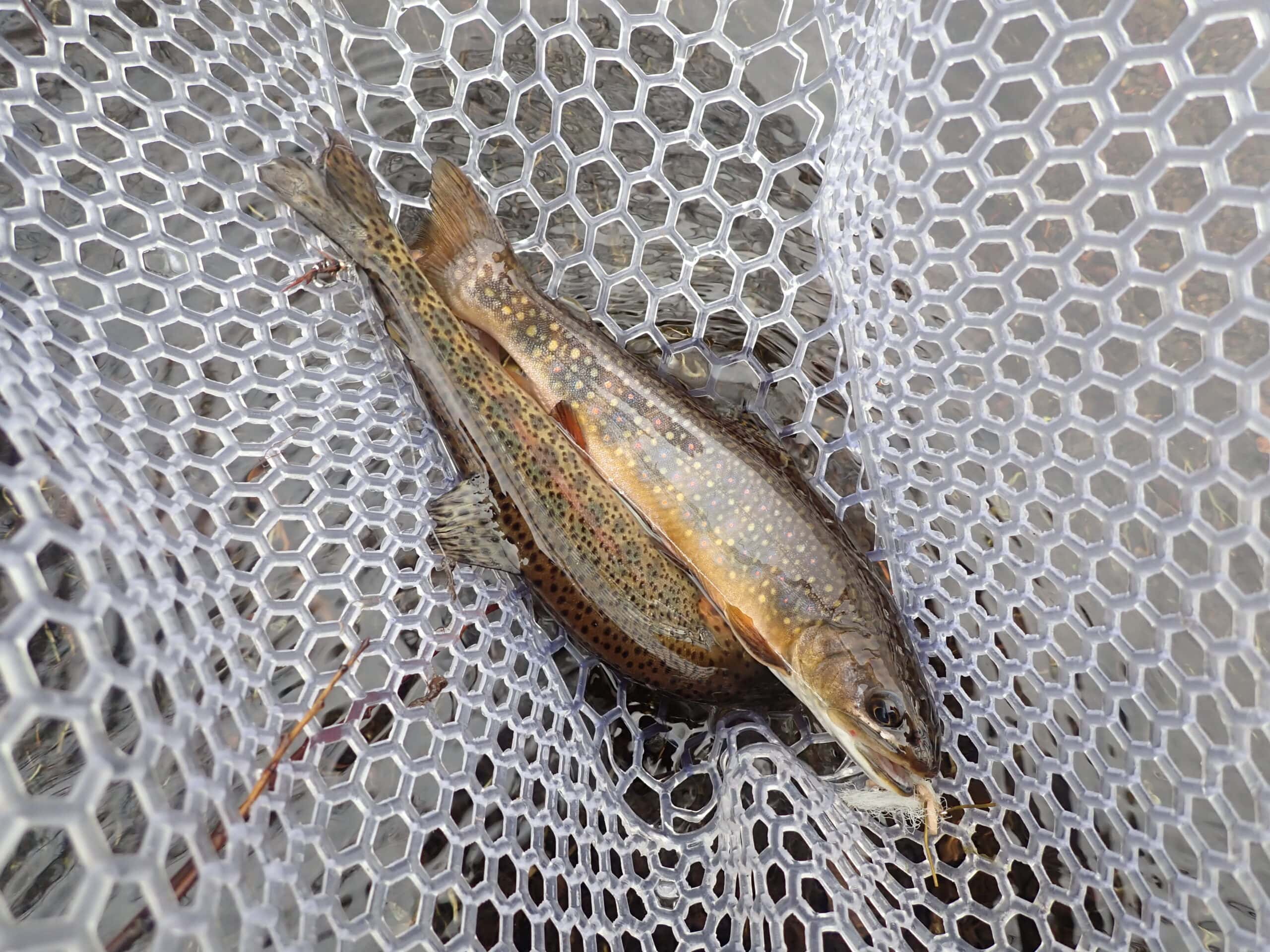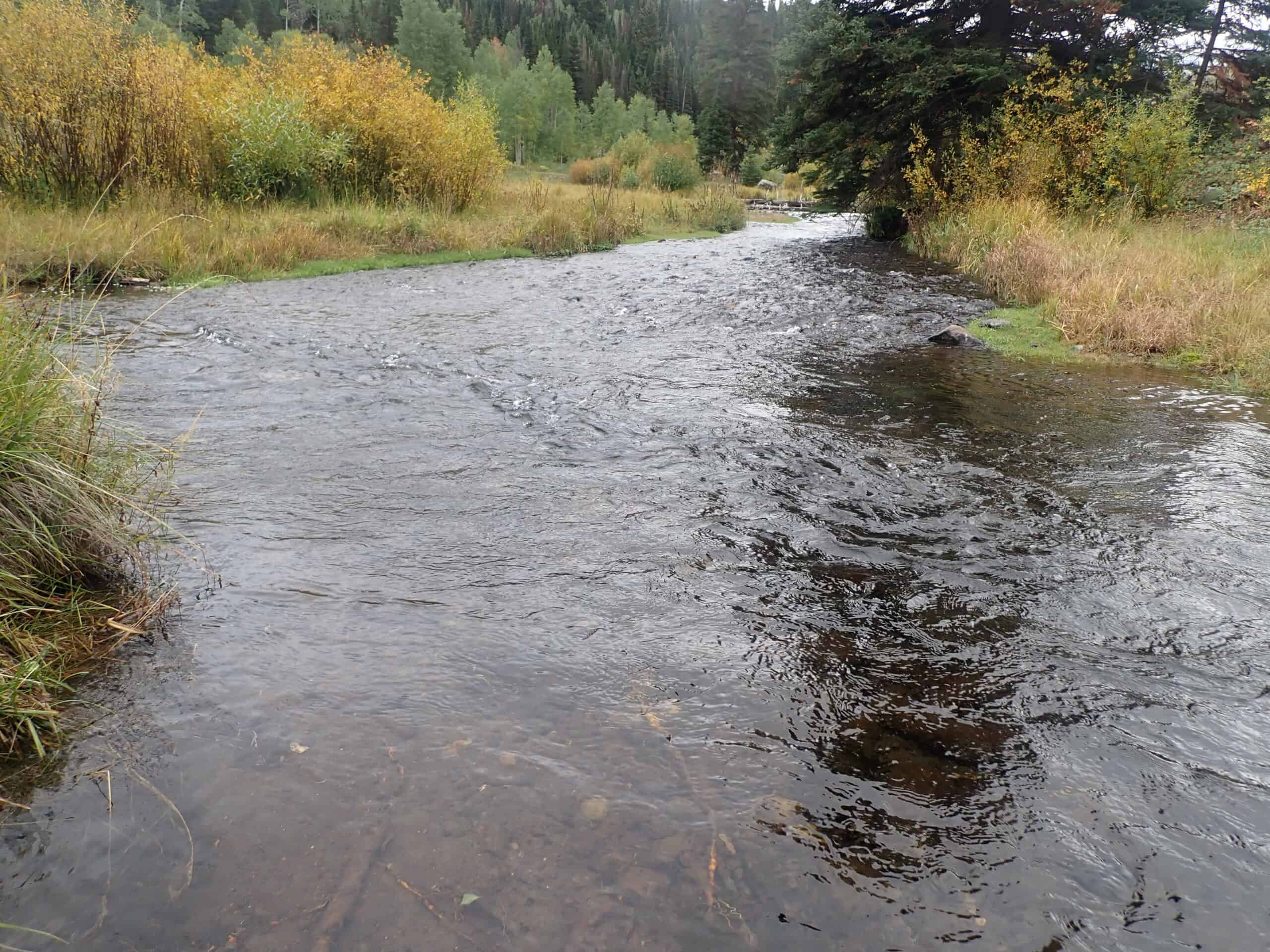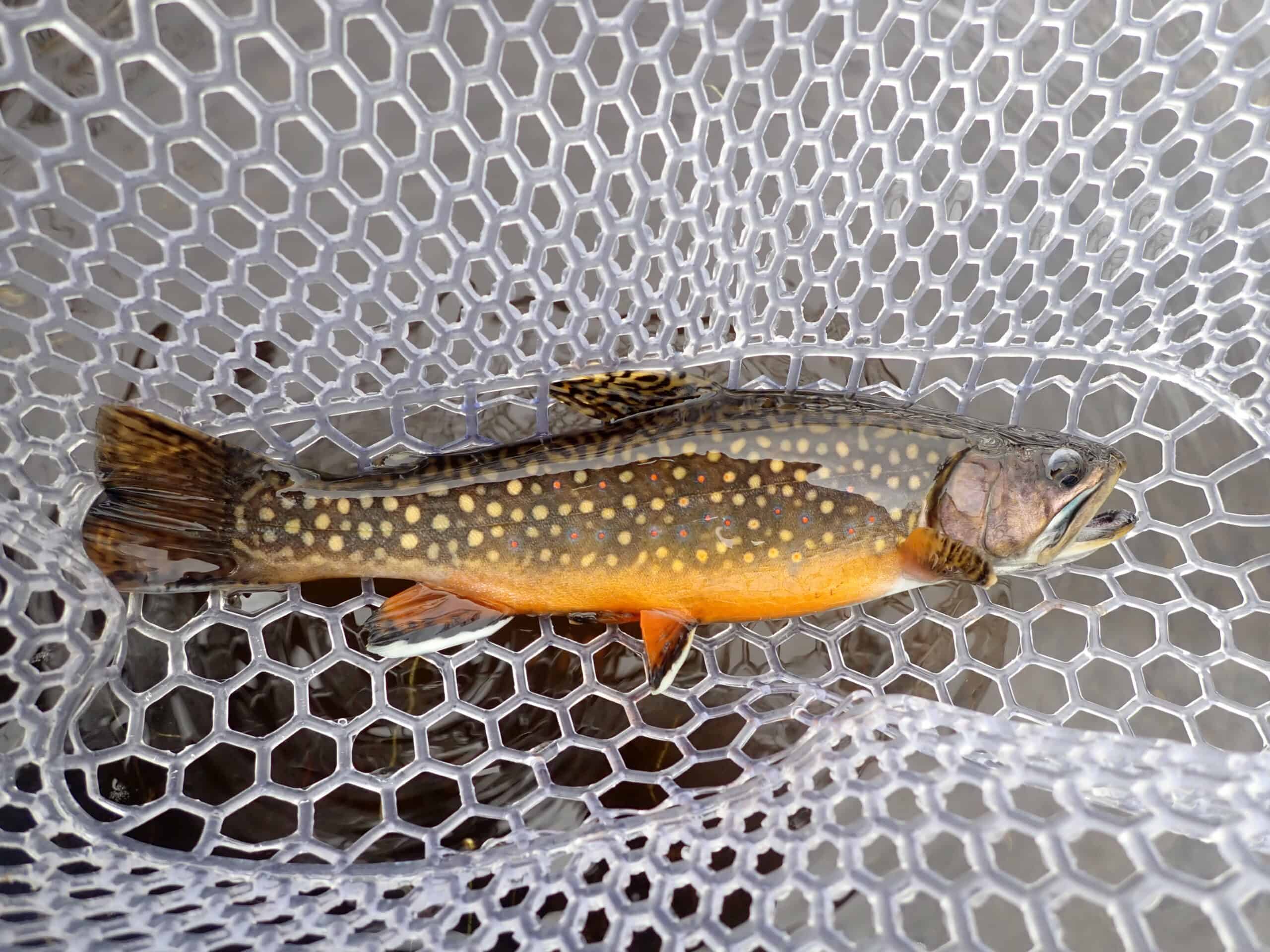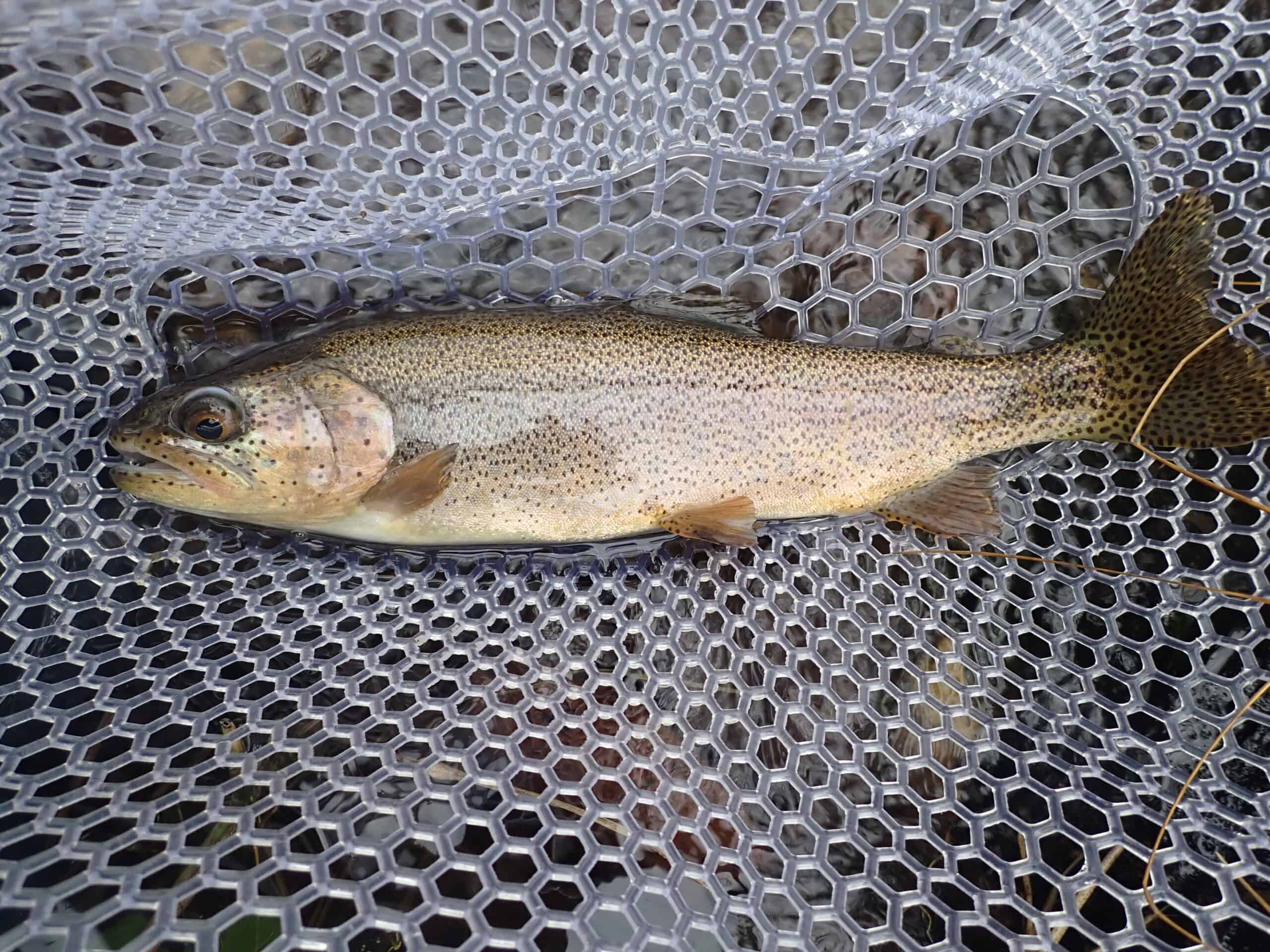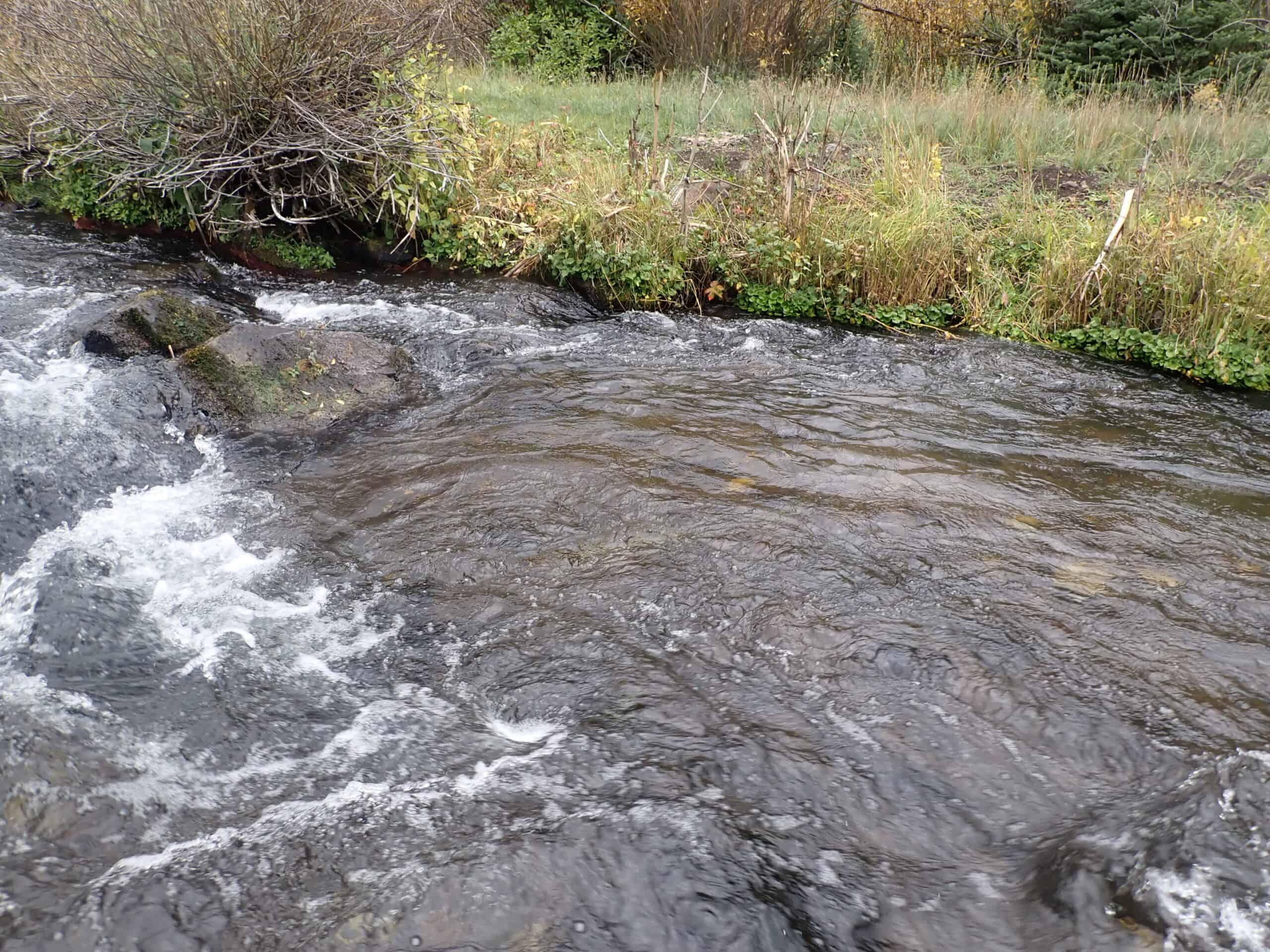
Brown Perdigon – 11/10/2025

Brown Perdigon 11/10/2025 Photo Album

If an olive perdigon is effective, why wouldn’t a brown version produce as well? I plan to find out. My salvation nymphs, pheasant tail nymphs, and supernova PMD’s are productive flies throughout the season, but particularly favored during pale morning dun time. It seems to me that a brown perdigon brings a similar size and color to the menu with the added benefit of extra weight to sink the nymph or sink a second fly on the dropper. What about pairing a brown perdigon with a PMD nymph imitation?

Look at the Taper

I get excited thinking about the possibilities. A month or so ago I tied three brown perdigons, but I never introduced them to the Colorado rivers during the fall. While my perdigon hooks and tungsten beads remained out on my tying tabletop, I decided to add seven additional brown perdigons to my storage boxes to bring my total to an even ten for 2026.

A Batch of Seven and Materials

I simply substituted brown thread for olive and brown spade hackle fibers for grizzly. I am now excited to test these flies and my theories on fly attractions.

Olive Perdigon – 11/08/2025

Olive Perdigon 11/08/2025 Photo Album

The olive perdigon is a relatively new addition to my fly box, but what a weapon it has become! Two years ago I possessed none, and I just finished building my supply from thirteen to thirty for the 2026 season. How did this happen?

On 10/03/2023 my friend, Dave G., invited me to join him on a private stretch of the Eagle River. Within the first hour, Dave G. was landing nice fish after nice fish, and I managed a couple dinks. I asked to borrow one of his productive flies, and it happened to be an olive perdigon with a tungsten copper-colored bead. My fortunes reversed, and I experienced a twelve fish day that included some very respectable fish.

Fast forward to the spring of 2025, and for some reason I began to experiment with the olive perdigon. I tied around ten of them over the winter of 2024-2025, and I was amazed with their productivity in the early season. They produced quantities of fish on all the Colorado rivers that I visited prior to run off. Their fish catching ability faded a bit in the post run off time frame, but when I returned to the large river valleys in the fall, their effectiveness resumed.

Side View

I attribute much of their success to the tungsten bead, I theorize that the very dense bead sinks the fly rapidly to the bottom of the river and provides a longer drift within the feeding range of the trout. When I combine it with another nymph in a three fly dry/dropper, it also sinks the paired nymph to the eye level of the trout. Although the density of the nymph is a positive for achieving long deep drifts, it also offers the disadvantage of snagging more frequently, and consequently I lost quite a few flies. The beads are quite a bit more expensive than the typical brass bead, so each lost fly is mourned by this frugal angler. The loss of flies forced me to approach my vise to tie additional perdigons during the fishing season; a task I normally try to avoid.

Opposite Side

The olive perdigon has climbed from absent to a top five mainstay in my fly box. I tie an olive perdigon to my line more frequently than my revered hares ear nymphs and salvation nymphs, so that is saying something. Given this new status as the top dog of my fly inventory, I kicked off my fly tying season yesterday by augmenting my olive perdigon supply. I counted thirteen among my fly boxes, and I decided to target a starting inventory of thirty. I can report that seventeen flies were added to my count.

Although more expensive than most nymphs due to the cost of the tungsten bead, these flies are relatively straightforward to tie. All that is required is a copper colored slotted tungsten bead, a jig hook, medium olive thread, spade hackles from a rooster neck, a black permanent marker, and UV resin and lamp.

Thread, Feather and Finished Product

Place the bead on the hook with the slot facing upward and toward the rear. Start your thread behind the bead and make tight wraps to lock the bead in place on the angled portion of the jig hook. Wrap the thread to the rear and then wrap forward to one hook eye behind the bead. Tie in six barbules from the grizzly feather to form a tail approximately three-fourths of the length of the hook shank and then wrap the thread to the bend. Wrap the thread forward to the bead and snip off the ends of the hackle. Now repeatedly wrap the thread to the rear and back to the bead to form a nice tapered body. Once you create the taper that flows nicely into the bead without leaving a gap, whip finish and cut off the thread. Grab your permanent black marker and carefully place a black spot on top of the body, where it meets the bead and then on the top of the bead. Get out your UV resin and apply a coat to the point where the bead meets the body of the fly and then coat and cover the entire thread body. Try to make the UV resin at the junction a bit thicker than the body coat. Fire up your lamp and cure the resin. You now have a new sleek olive perdigon.

Hopefully thirty will suffice for the 2026 season. If not, it probably means that the olive perdigon demanded a lot of time on my line, and running out and having to tie more in season is a good problem to have.


Big Thompson River – 11/04/2025

Time: 12:00PM – 2:30PM

Location: Canyon downstream from Estes Dam

Big Thompson River 11/04/2025 Photo Album

A forecast high of 77 degrees in Denver prompted me to complete a last gasp fly fishing excursion. I was not interested in a long drive, so I considered Clear Creek, South Boulder Creek and the Big Thompson River. According to my weather sources, highs of 62 were expected at all three spots. My intuition suggested that I should visit South Boulder Creek; however, I was averse to making the one mile hike to and from the creek, so I settled on the Big Thompson instead. Spoiler alert. It was a lackluster day.

I arrived at a pullout by 10:45AM, and I quickly prepared for a day on the river. The flows were tumbling along at 25 CFS, and the stream was low and clear, but it looked promising nonetheless. The dashboard temperature was 56 degrees, so I slipped on my fleece hoodie and assembled my Loomis two piece five weight. I like the slower action of the Loomis, and I expected to toss a dry/dropper most of the day.

I crossed the highway and found a fairly friendly route to the river, and then I knotted a Jake’s gulp beetle to my line. The beetle produced well on my last trip to South Boulder Creek, so I was anticipating a repeat on a different Front Range stream.

I completed two desultory casts, and then I decided to move to more attractive pools, but when I stepped with my left boot, it slipped and shot backward. I tipped forward and stopped my fall by bracing with my right hand, but it was not before a small amount of water spilled over the top of my waders. I felt the dreaded trickle down both legs, and then the wetness, as my right sock absorbed liquid. What now? I was wet and chilled, and I barely began to fish.

Had it been the summer, I would have fished on, but I was concerned about the cooler temperatures of autumn, so I scaled the bank and returned to the car. First I removed my fleece hoodie with a drenched right sleeve. Next I removed my undershirt and replaced it with a long sleeve version. I pulled off my waders and turned them inside out and placed them on the hood of the Telluride to dry in the sun. I removed my long underwear and socks and pulled on a dry pair of each. I wanted to provide adequate time for the inside of the waders to dry, so I ate my lunch early, and sure enough, after eating, the neoprene booties were dry, and I pulled them on and resumed my fishing. The sleeve of my fishing shirt was a bit wet, and the front pack was also showing the effects of being submerged, so I pulled on my raincoat to guard against additional soaking from the front pack.

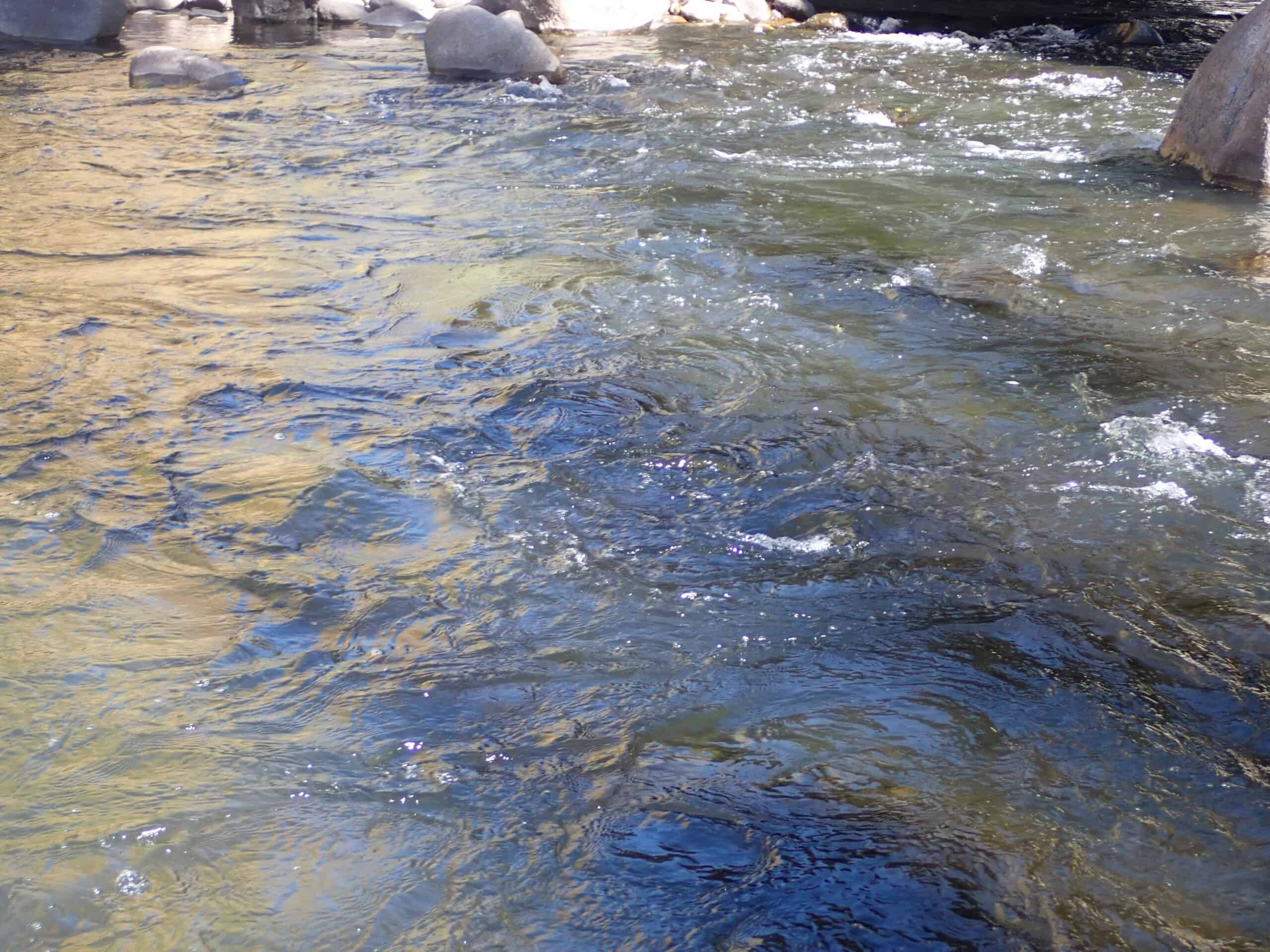
Glare and Shadows Were a Challenge

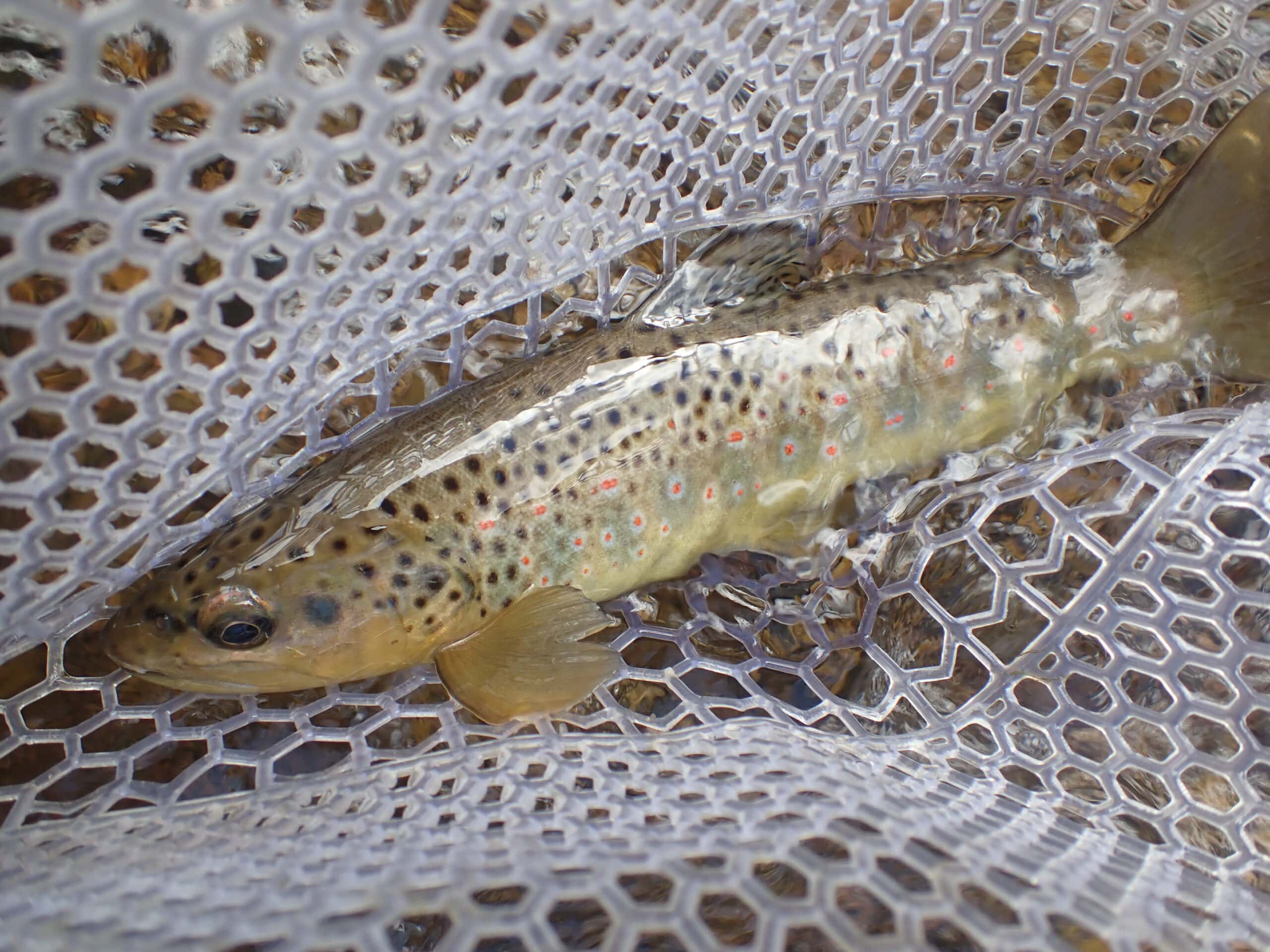
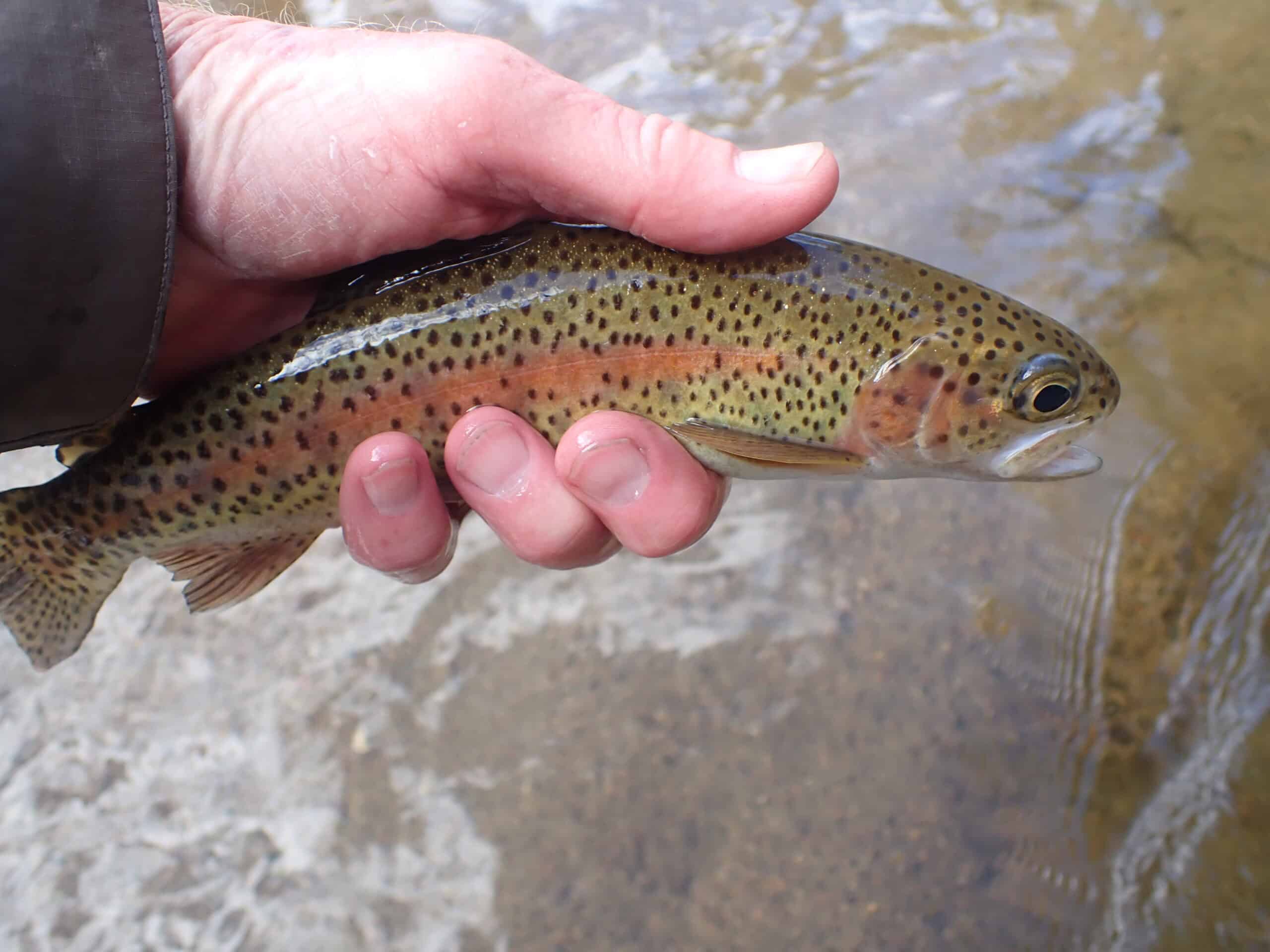
I wish I could say it was worth it. I began fishing in earnest at noon and continued until 2:30, The beetle was ineffective, so I removed it and replaced it with a peacock hippie stomper and then added an olive perdigon on a two foot dropper. The perdigon registered two small trout barely beyond my six inch minimum for counting. I covered quite a bit of stream real estate to log two small fish, so I added a beadhead hares ear nymph hoping that it would extend the depth of the drift and attract more action.

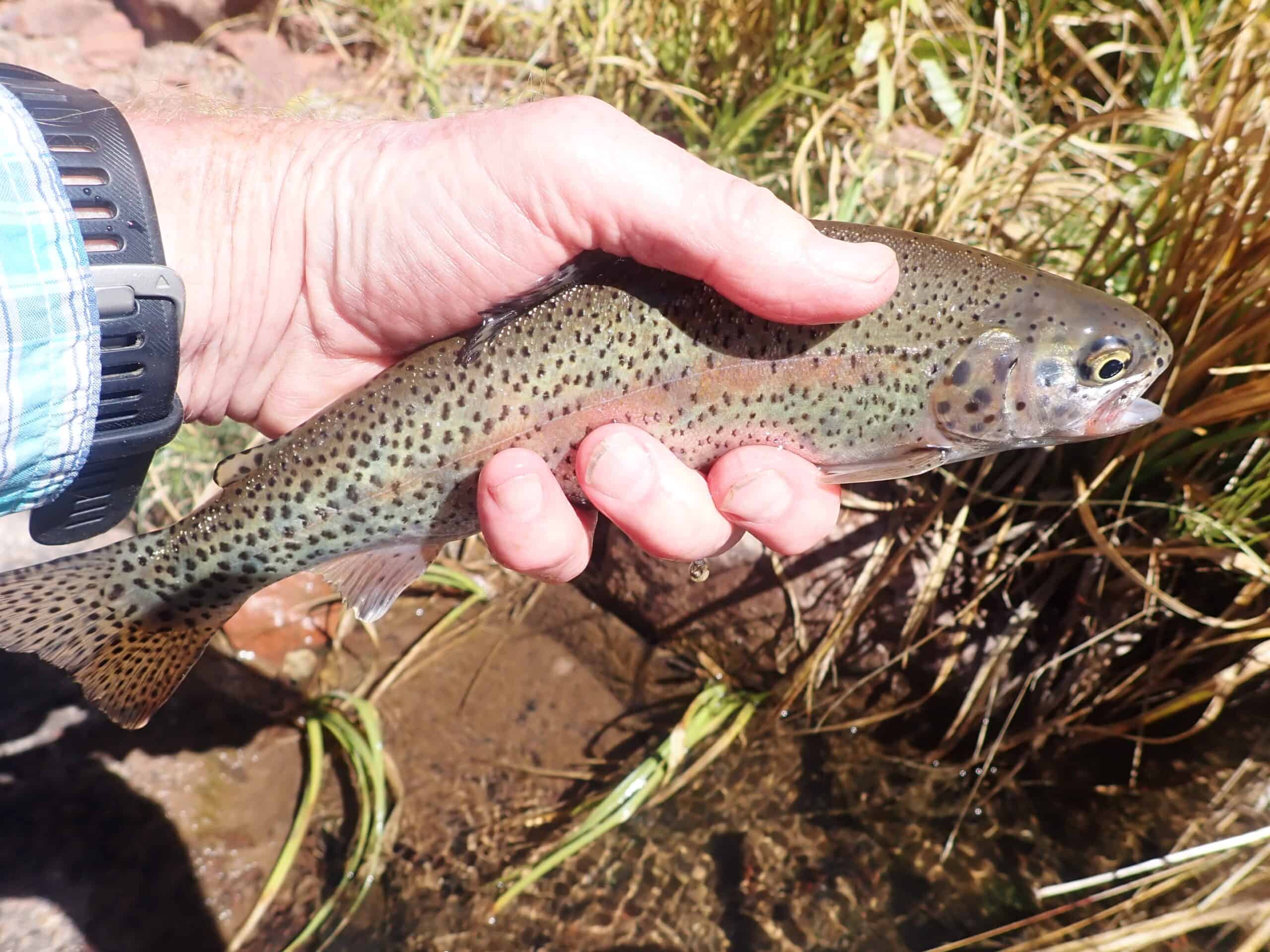
Small Jewel

The move worked somewhat, as I raised the fish count from two to six by the time I quit at 2:30. The four additional trout were only slightly longer with the biggest extending to eight inches. It was a lot of casting for minimal return. I moved back and forth between the two banks, and the shade and sun glare were alternating hindrances to catching fish. Deep pools were not productive, although I continually attempted to cash in on their appeal.

Productive Spot

I fished around a large bend in the stream and continued into a canyon stretch. I was hoping that the canyon was not as easily accessed by anglers, as it required more rock hopping  and difficult wading, and I did manage to land four small trout, but it was not close to the unpressured bonanza that I envisioned. On the day, three of the landed fish were brown trout and three were rainbows. In the last hour I connected with two or three fish that felt slightly larger, when the flies began to swing at the tail of the run or pool, but in every case I only felt the weight of the fish for an instant.

Foam Pool

Tuesday was a bonus day for this fair weather angler, but it probably convinced we to refocus my efforts on stocking my fly boxes for 2026.

Fish Landed: 6

South Platte River – 10/27/2025

Time: 11:00AM – 3:30PM

Location: Eleven Mile Canyon

South Platte River 10/27/2025 Photo Album

With nice days dwindling during the 2025 fly fishing season, I jumped on the chance to fish on Monday, 10/27/2025. Air temperatures have arrived as a prime factor in choosing a fly fishing destination, and after I surveyed all the likely locations, I settled on the South Platte River in Eleven Mile Canyon. The high in Lake George was forecast to peak at 61 degrees, and that was well within my comfort zone.

Looking Up the River

I arrived at my chosen roadside pullout by 10:30AM, and after pulling on my fleece hoodie and raincoat and assembling my Sage R8 four weight, I was prepared for a day of autumn fishing. I recently saw an Instagram post lauding the superb streamer fishing on a Colorado river. I decided to take advantage of the information, and I loaded my reel with my sinking tip line and knotted a size 8 Mickey Finn bucktail streamer to my line. I crimped a split shot a foot above the streamer, and for thirty minutes before lunch, I cast and stripped the streamer in all directions and varying degrees of stripping speed and movement. I never saw so much as a follow. I have no confidence in my approach to streamer fishing. I suppose I need to fully commit to the method and experiment with different streamers and varying amounts of weight.

Pleased to Land a Fish

Run Near Far Bank Produced

I ate lunch at 11:45AM across from the car, and then I returned to the Telluride and swapped the sinking tip reel and line for my normal four weight. For the remainder of the afternoon I worked my way up the river with my reliable dry/dropper configuration. I suppose repetition breeds confidence, and confidence yields fish. An amber ice dub chubby Chernobyl and olive perdigon were constants on my line, and I cycled through several flies on the end position. I began with a salvation nymph and then converted to a hares ear nymph and ended with a small apricot egg.

Headed Back

One aggressive brown trout clobbered the chubby Chernobyl and created a nasty snarl in the process. One of the early fish nabbed the salvation nymph, and the remainder snatched the olive perdigon. Seven fish in 3.5 hours of focused fishing does not translate to hot action, but given the timing in late October and the absence of insects, I was pleased with the results.

Shelf Pool Was Explored

Two landed fish were rainbow trout in the thirteen to fourteen inch range. Two trout were on the small side, and the remainder were average trout in the twelve inch slot. Large deep pools were unproductive as were seams and glides of moderate depth in areas where the stream widened. I focused most of my attention on long and deep troughs and slots particularly where the deep hole was right above the junction of two faster currents.

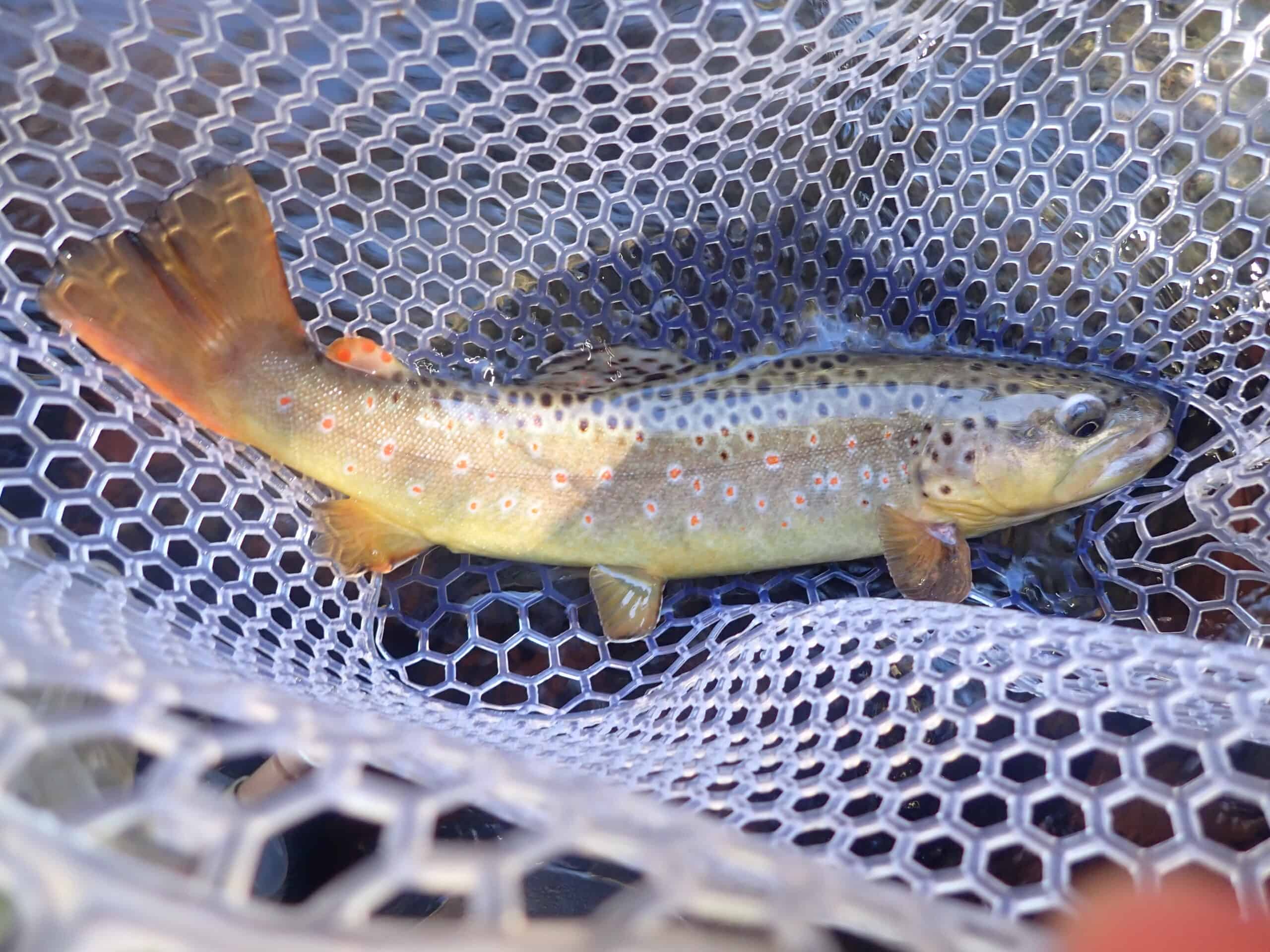
Spread Out in the Net

Future outings in 2025 are weather and health dependent. The month of November calendar is sprinkled with various dentist and doctor appointments. I will keep my eyes and ears open for opportunities to extend the season

Fish Landed: 7


Eagle River – 10/24/2025

Time: 11:30AM – 3:30PM

Location: Private water between Wolcott and Eagle

Eagle River 10/24/2025 Photo Album

My friend, Dave G., who lives in Eagle Ranch near Eagle, CO belongs to a fishing club with access to private water on the Eagle River. Dave G. invited me to join him on Friday, October 24, 2025; and I accepted the invitation pending favorable weather. When I checked the weather forecast for Friday, I noted that the high near Eagle, CO was in the mid fifties, so that clinched it, and I made the drive on Friday morning.

Held Aloft

I arrived at a wide pullout at 10:45AM, and Dave G. arrived within a few minutes. We car pooled a short distance to a dirt parking area across from the private section of the Eagle River. The dashboard temperature was 46 degrees, so I pulled on my fleece hoodie and rain jacket along with my billed hat with earflaps. I was prepared for the worst. I chose my Sage One five weight in anticipation of tangling with some muscular trout of above average size. The river was quite turbid, and the color resembled a creamy split pea soup. Dave G. said it rained within the last twenty-four hours, but not that heavily, so he was perplexed with the lack of clarity. We walked to the edge of the river to inspect more closely, and we concluded that it would fish decently with two feet of visibility along the edge.

The Waterway Ahead

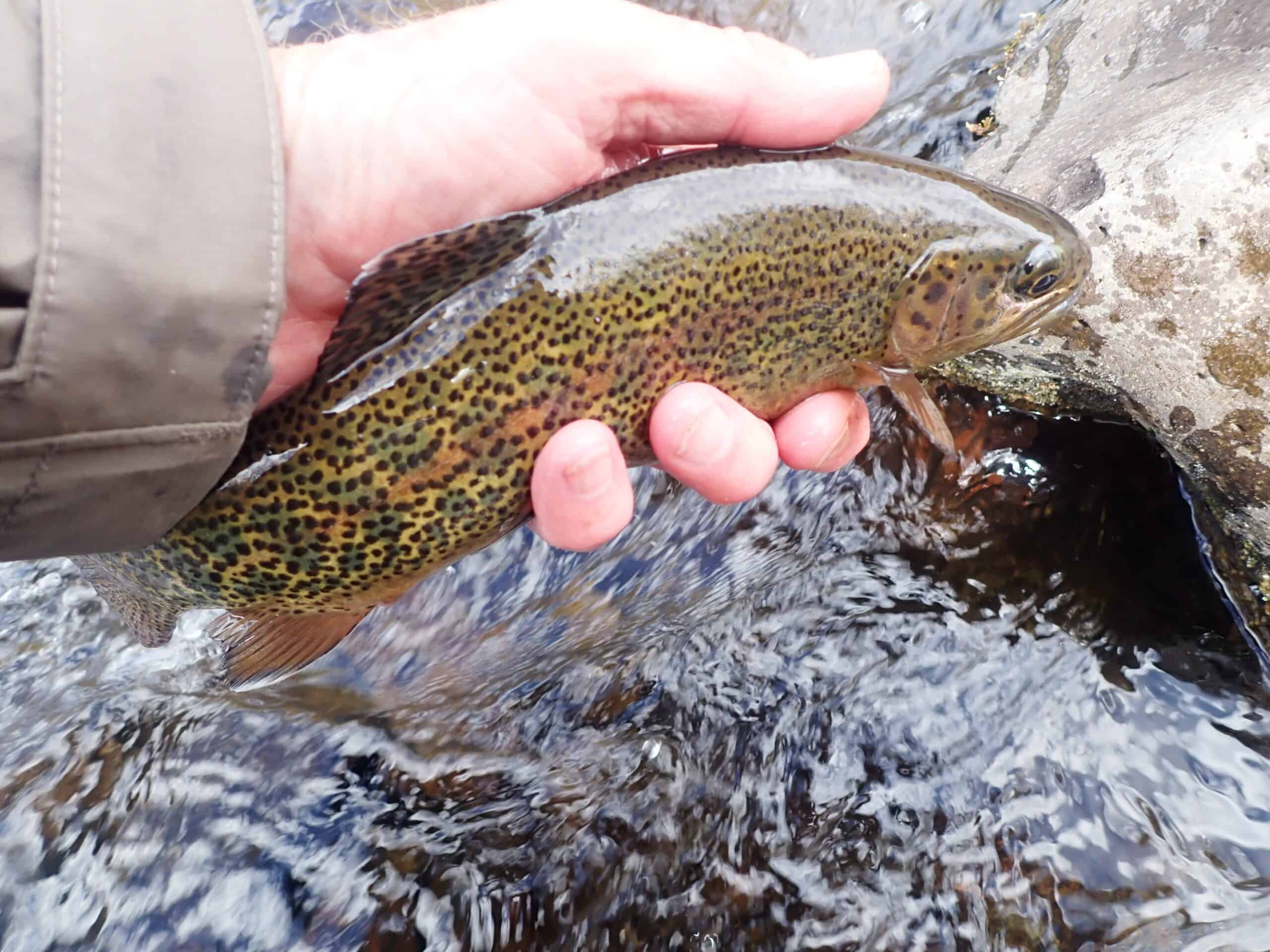
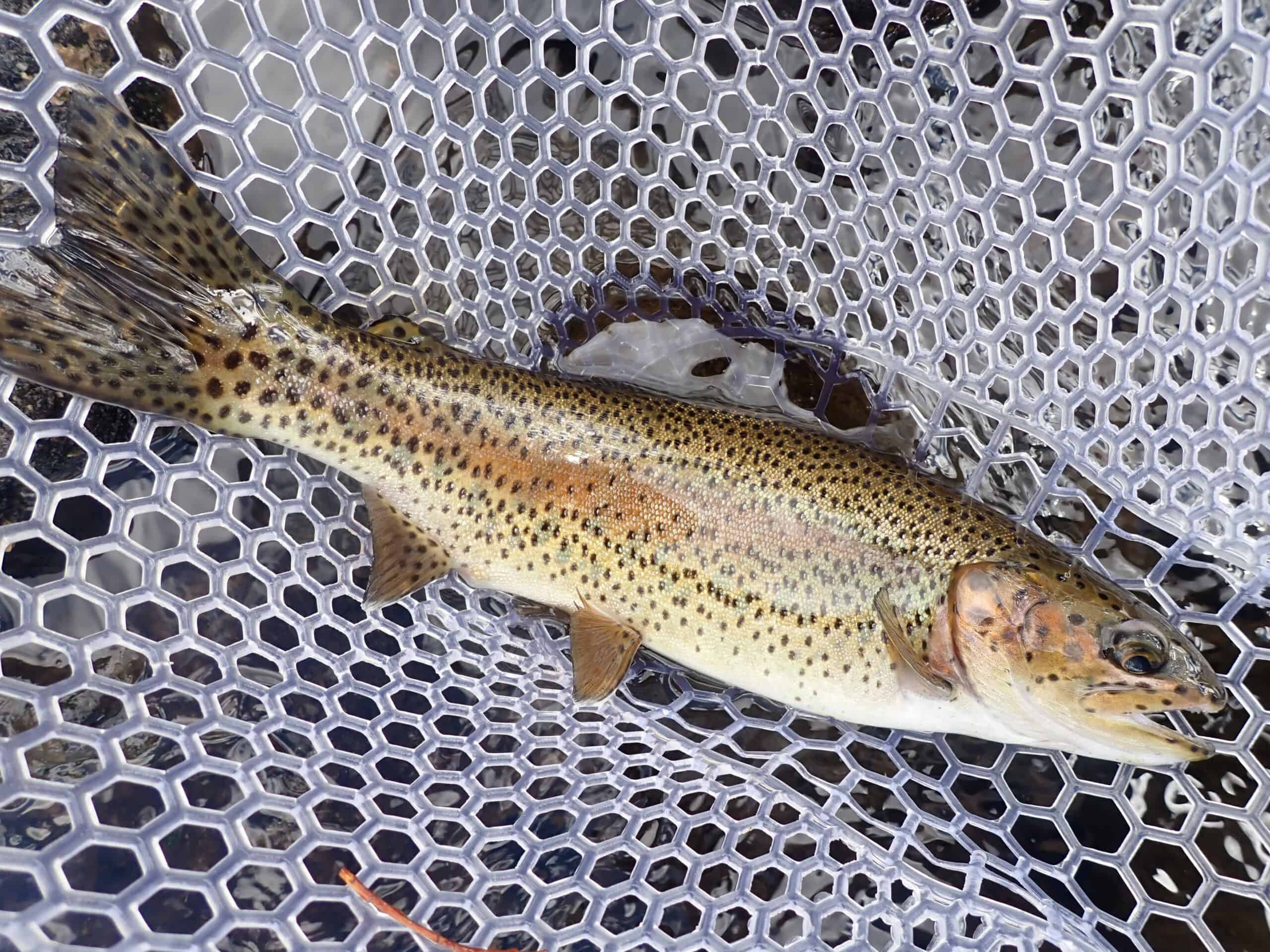
I waded across the murky river at the wide tail of a shallow pool, and I progressed along the far bank (south bank?). To begin I chose an amber ice dub chubby Chernobyl, olive perdigon, and salvation nymph. In short order Dave G. landed a couple fish on a zebra midge, and I was shut out, so I followed suit with a black zebra midge with a fine copper rib. Finally after an opening drought, I connected with a fish and hauled a nice, fat thirteen inch rainbow trout into my net. The zebra midge was in its lip, and I was amazed that a fish saw the tiny midge larva imitation in compromised river clarity.

Lots of Foam

I continued onward, and before I broke for lunch I landed two small brown trout. One was around eleven inches and the other was smaller. The first and smaller brown nabbed the zebra midge, but after another dry spell, I swapped the zebra for a psycho prince and then an apricot egg. The second larger brown grabbed the olive perdigon.

Decent Brown Trout

After lunch and another slow phase, I exchanged the egg fly for a return to the salvation. Between two and three o’clock the temperature peaked, and I removed my raincoat and folded up the earflaps on my hat. The pace of action improved, and I managed to land a chunky fourteen inch rainbow and a small rainbow barely greater than six inches. Both fish snatched the olive perdigon. In addition, I hooked and failed to land three decent trout during this time, and I sensed that they favored the olive perdigon. Was the increase in action attributable to the warming water temperature, improved water clarity, or my fly choice? I suspect all three, although the improved effectiveness of the olive perdigon along with less olive tinged water suggested clarity as a prime reason.

Love the Riffle Sections

By 3:30PM I reached the end of the private section of the river, so I reversed direction to another wide shallow crossing spot. Dave G. indicated that he was fished out, so we called it a day and returned to our vehicles. Friday was a slow day on private water, although had I landed all the fish I connected with, I may have reached double digits. I was appreciative of Dave G.’s willingness to invite me to share the private water. Was this my last outing of 2025? The answer depends on the weather with a turn to colder temperatures predicted for Tuesday. Stay tuned.

Fish Landed: 5

South Boulder Creek – 10/22/2025

Time: 11:00AM – 3:30PM

Location: Below Gross Reservoir

South Boulder Creek 10/22/2025 Photo Album

What a day! October 22 is kind of late in the season for this fair weather angler, but the high in Denver was projected to climb into the seventies, and when I checked the two locations close to my intended fishing destination, the weather indicated temperatures in the sixties. I decided to pay an autumn visit to South Boulder Creek.

Source of Early Trout

The flows were reduced at 17 CFS, but I knew from previous experience that I fished successfully at 10 CFS. Low clear flows would dictate stealthy approaches, longer casts and light flies. I was prepared.

So Pretty

I arrived at the Walker Ranch Loop Trailhead, and I quickly geared up with my Sage R8 four weight. For clothing I wore a short sleeve high tech undershirt and my fishing shirt, but I loaded my backpack with my raincoat and a long sleeve Under Armour shirt. If I perspired excessively, I planned to change undershirts, before I began to fish.

Another Early Rainbow Trout

There were three cars in the parking lot besides my Telluride, but none of them were obviously fishermen. In fact, I never saw another angler during my entire time on the creek, nor did I encounter any on my hike to and from the stream. I had the entire small tailwater to myself. Perhaps the low flows scared away other anglers.

Shelf Pool

As I descended the trail to the creek, I heard the sound of heavy equipment operating to the west. Almost instantly I went into panic mode, as I envisioned the 17 CFS as a muddy mess from excavation taking place at the dam expansion site. You can imagine my relief, when I caught my first glimpse of the creek, and it was crystal clear.

Stealth Required

When I finally arrived at my chosen starting point, I concluded that I was perspired but not to the degree that I required a shirt change. I began my quest for South Boulder Creek trout with a solo peacock size 14 hippie stomper, and the dependable fly yielded three fish including a nice eleven inch brown.

Fine Rainbow Trout

After the early success, the trout’s interest in the stomper seemed to change into observation, and refusals ruled the day. I paused at 11:45PM to enjoy my lunch, and then afterward I replaced the hippie stomper with a size 14 olive deer hair caddis. The caddis produced a few fish to boost the fish count to seven, but it was very difficult to track in the glare and shadows, and it also elicited some refusals.

Next to the Exposed Boulder Was a Target

My mind went into overdrive, and I considered the idea of a beetle. Hatches are rare late in the season, but the 2025 autumn has been unusually mild thus enabling the survival of terrestrials. I knotted a size 14 Jake’s gulp beetle to my line, and I added a sunk ant on an eighteen inch dropper. Large black ants are quite prevalent in the South Boulder Creek canyon.

Very Nice Brown for a Small Stream

The move paid handsome dividends, and I built the fish count to eighteen, before I once again stalled. Five of the eaters during this span of time gobbled the sunk ant, but the rest sipped in the beetle. In addition I experienced many temporary hook ups, where the trout nipped the beetle, and I set and connected, but the fish wriggled free in a short amount of time. Beetle takes are very subtle probably because the small foam fly rides low in the water, and the fish dart to the surface and execute a quick sip.

Another Brown Trout Run

When I got stuck at eighteen, I began to notice an increased number of airborne insects over the water. The naturals included small caddis, a couple mayflies and a stonefly. This observation prompted me to swap the sunk ant for a size 16 gray deer hair caddis. The beetle and caddis combination raised the fish count from eighteen to twenty-four; its final resting place before I quit and completed the exit hike.

Large Tail

Twenty-four trout landed on a fall day in October is very satisfactory, but of course, many of the fish were small and in the six to nine inch length slot. However, I also landed a fat thirteen inch rainbow and two fourteen inch brown trout that challenge for the largest browns that I ever landed in South Boulder Creek. The second brown smacked the caddis near the end of the day.

As predicted, the weather was gorgeous. I had the stream completely to myself and the beetle was a solid attractor. I took advantage of one of the remaining nice days of 2025, and I am pleased with the results.

Fish Landed: 24

Arkansas River – 10/15/2025

Time: 12:00PM – 3:30PM

Location: Pridemore State Wildlife Area

Arkansas River 10/15/2025 Photo Album

Wednesday was projected to be the nicest day of the week, so I cleared my calendar for another day of fly fishing. A high in the seventies in Denver translated to a high in the upper sixties near Salida, so I made the Arkansas River my destination. The flows were in the 300 CFS range, and this meant I could probably cross the river and fish the bank away from the highway in one of my favorite hangouts below Salida.

Salvation Nymph Eater

I departed Denver at 8:00AM, and heavy traffic on Interstate 70 prompted me to use the Express Toll lane for $5.50. The move saved me fifteen minutes, as my estimated arrival time moved up from 11:00AM to 10:45AM. Unfortunately that was the one piece of good news that preceded a series of unlucky events. When I merged on to CO 470 on the western side of Denver, I passed two gravel trucks, and I heard a loud thwack on the windshield. I immediately cursed my misfortune, and when I stopped for gas on the way home, I inspected the windshield and discovered three chips that joined the curved crack already in place. It is impossible to keep a windshield free of cracks and chips in the state of Colorado.

Deep Seam Produced

As I drove southwest on US 285, I found myself creeping along at 25 miles per hour behind a row of vehicles in a 50 MPH speed limit zone. I stared ahead, and there was a huge road construction vehicle with flashing amber lights, and the slow moving caravan crept along for a mile, before we stopped, where a flagman was displaying a stop sign. Fortunately the delay only lasted a few minutes, and the westbound traffic that included me was allowed to proceed. This little stoppage slipped my estimated arrival time by five minutes.

Decent

Bubble Line

I finally arrived at my chosen destination along the river below Salida, and I quickly jumped out of the car to inspect the river. Imagine my disappointment, when I observed murky flows in the river below me. I immediately returned to my car and dialed the ArkAnglers Fly Shop, and the helpful young man who answered informed me that rain and snow were causing the turbity. He said that a couple feet of visibility existed along the edges, and fishing was still a possibility. He also volunteered that most of the murkiness was generated by the South Fork of the Arkansas River, and he suggested that I could leap frog that tributary to find clearer conditions. I thanked him for his useful information, and I decided to move upriver above the South Arkansas River.

Olive Perdigon

Of course, there was construction in progress in Salida, so I was forced to detour, but this delay was minor, and I arrived at the Arkansas Headwaters Stone Bridge access area by 11:30AM. I geared up and rigged my Sage One five weight, and then I ate my lunch. The temperature was 65 degrees, but it felt colder because of the gusting wind, so I pulled on my light raincoat as a windbreaker.

Chunk

I was finally ready to fly fish, so I hiked along the top of the bank for .4 mile, until I reached the downstream boundary of the public water, and then I cut down a steep bank to the river. For my opening act, I chose a size 8 amber ice dub chubby Chernobyl, an olive perdigon, and a salvation nymph.

Model Brown Trout

I began migrating upstream, and I was very particular about my casting targets. I skipped wide areas, as they presented relatively shallow riffles and pockets, and the probability of landing fish was low. Instead I focused on deep seams and pockets next to structure. The approach paid dividends, as I landed eight brown trout between 12:00PM and 3:30PM, when I quit for the day. I covered a significant amount of river real estate and ended my day on the north side of CO 291 at the Stone Bridge boat launch ramps.

Bubbles and Rock Bottom

The first four trout grabbed the nymphs, with one nabbing the olive perdigon, and the others were attracted to the salvation nymph. Once I hit four, the action stalled for thirty minutes, so I changed out the olive perdigon for a 20 incher, and the chubby/20 incher/salvation remained my lineup for the remainder of the afternoon. During this time I boosted the fish count from four to eight, and the final four were wild browns in the thirteen inch range. My success accrued from swinging and lifting the nymphs as has been the case on my recent fall outings. All the fish that I landed grabbed the salvation nymph, but it seemed like the 20 incher was a more effective partner to the salvation than the olive perdigon.

Pocket and Exposed Rock

Wednesday was a nice October day aside from the annoying wind. I overcame quite a few obstacles to fly fish for 3.5 hours on Wednesday, but I managed to land eight wild fish including five brown trout in the twelve to thirteen inch range. Quite a few attractive places failed to produce, and I worked hard for my catch, but I was satisfied with the results. I suspect that spawning activities are in progress, and this perhaps explained the relatively slow action. This may have been my last visit to the Arkansas for the year, and it was a solid day of fishing on the big river.

Fish Landed: 8

Eagle River – 10/13/2025

Time: 11:00AM – 3:30PM

Location: Between Avon and Wolcott

Eagle River 10/13/2025 Photo Album

Monday, October 13, 2025 was Indigenous Peoples Day, and I decided to make it a day of fly fishing. What, you say? Why Indigenous Peoples Day and not Columbus Day? Indigenous Peoples Day is the official name of the holiday in Colorado, and I am a Coloradan. In addition, I believe that the culture and beliefs of Native Americans more closely align with my personal ideology. Native Americans were and remain stewards of the land and environment. They lived sustainably, before we even knew the meaning of the word. The Native Americans realized that the land, air, water and wildlife were what enabled them to carve out a living in the New World.

Upstream Beauty

Typical Productive Spot

When I surveyed the prospects for Monday, weather was a significant concern. I set my sights on the Arkansas River, the South Platte River and the Eagle River. Weather forecasts for all three included high temperatures in the fifties and rainfall. The highs for the Arkansas River near Salida and the South Platte River in Eleven Mile Canyon were in the low fifties; whereas, the highs near Avon and Edwards were mid-fifties. The probabilities for rain were also higher in Salida and Lake George, so I decided to gamble on the Eagle River.

Getting Larger

An uneventful drive allowed me to arrive at my chosen spot by 10:00AM, but the temperature was 48 degrees, the wind was blasting from the east, and rain was coating my windshield with moisture. I questioned my judgement for choosing to fish under such adverse conditions. I sat in the car with the engine and heat running, while I listened to sports talk and completed my favorite New York Times games. After fifteen minutes I forced myself to utilize the Port-a-let next the parking lot, and then I decided to face the elements and begin my day of fishing. I could always quit and return home.

Look at Those Colors

Along the Rocks on the Bank

By the time I layered up with my Brooks long sleeve shirt, fishing shirt, North Face light down parka, fleece hoodie, and raincoat along with my billed hat with earflaps, the rain stopped. I rigged my Sage R8 four weight and ambled along the road a short distance to the river. I followed a bike path downstream and then cut to the river near my exit point on my last Eagle River fishing outing.

Loving the Submersion

I began my quest for trout with an amber ice dub body chubby Chernobyl, an olive perdigon, and a salvation nymph. This lineup has become my go to combination in recent fall fishing trips. Between eleven o’clock and 12:15PM I netted seven decent fish, and I was quite pleased with the action. Three of the seven were rainbows and four were browns. The salvation nymph was the favorite fly in the early session, with a few nabbing the olive perdigon. As was the case in recent visits to the Eagle River, I sought areas where the riverbed narrowed thus creating deeper runs, seams, pockets and riffles. Most of these locations also contained large exposed boulders which provided cover and protection for the cold water fish.

More Opportunity

After lunch I continued with the dry/dropper; and, in fact, this approach was utilized for the remainder of my time on the river. Within fifteen minutes after lunch, a trout grabbed one of the nymphs and instantly ran beneath a branch that was wedged in front of an exposed rock. I waded upstream a bit to get above the snag, but the current was very fast and deep. I managed to position myself above the boulder, and I could leverage the branch up a bit with my wading staff, but the fast current pushing against the branch was stronger than my feeble efforts to counter it. I was in a precarious position, and not wishing to lose my footing, I applied direct pressure and broke off the valuable perdigon and the salvation.

Fat One

This was my third lost salvation, so I replaced it with a PMD supernova. Later in the afternoon I also lost the supernova and replaced it with an ultra zug bug. By 12:30PM the sky cleared, and the weather improved immeasurably. and my good fortune continued. I boosted the fish count from seven at lunch to sixteen by the time I quit at 3:30PM. The quality of the fish throughout the day was outstanding. All but two fish were twelve inches or greater. Nine rainbows arrived in my net compared to seven brown trout. This ratio was different from my earlier experience on the Eagle, so I concluded that some portion of the brown trout population was in spawning mode.

Wild Mint

The fish of the day was a seventeen inch brown trout that gobbled the olive perdigon. I cast to the middle of a featureless wide section, and the brown tugged the chubby under, and I was attached to a large fish. The brown relied mostly on a diving and rolling routine in its efforts to escape, but I was able to counter its best moves and coaxed it into my net. What an unexpected thrill! Why wasn’t this beast procreating?

Big Head Todd

Look at the Length and Girth

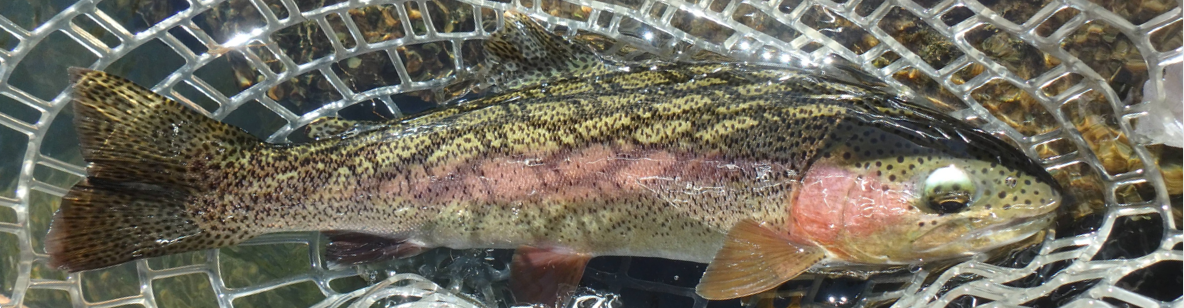
Just before the brown trout confrontation, I connected with a fifteen inch pink striped rainbow. As is the custom with wild rainbows, it incorporated hot streaks in its escape effort, but once again my four weight possessed enough backbone to bring it to the net. Besides these highlights, most of the fish were in the thirteen to fourteen inch slot, and they were all wild and fresh in the cold autumn flows of the Eagle River.

Back to Chubby Rainbows

My most effective techniques were swings at the end of drifts on across and down casts and lifts at the end of a drift before the river spilled over or around a rock. Dead drifting was also a winning approach, and one nice rainbow smacked the chubby Chernobyl on a directly upstream cast and drift.

Lavender Stripe

On Monday, October 13 persistence paid off. I outlasted the rain and wind and cold, and I was rewarded with a very satisfying day of fly fishing. Sixteen trout in the middle of October is outstanding, and the quality of the fish was exceptional. I was warm throughout the day, and I was even too warm toward the end of my time on the river. The Eagle River has been a top producer in 2025, and I may try to visit the freestone river again in 2025.

Fish Landed: 16

Blue River – 10/08/2025

Time: 11:00AM – 3:30PM

Location: Between Silverthorne and Kremmling

Blue River 10/08/2025 Photo Album

For quite some time now my fishing friend, Nate, has been touting the Blue River, so we arranged for a trip on Wednesday, October 8, 2025. We agreed to meet at the Woolly Mammoth parking lot just off of Interstate 70 at 8:00AM, and I arrived a bit early. As I waited for Nate to arrive, my iPhone rang, and I answered and heard the voice of Nate. He was calling to tell me he had a blowout on Interstate 70 just beyond the last on-ramp before the exit to the parking lot that I occupied. He dropped me a pin, and I circled around the interstate ramps, until I was parked in a precarious position behind his VW. We were in a triangular space between the on-ramp and high speed traffic blasting by on Interstate 70.

Nate had already extracted his temporary spare and tool kit, and he made the change over expeditiously. My only contribution was to observe and advise, and he did learn from me to loosen the lug nuts before jacking up the tire, and to fully tighten once the car was lowered back to the ground.

Once Nate’s tire was replaced with the spare, we carefully got on the entrance ramp and returned to the Woolly Mammoth lot. I was the obvious choice to drive, since Nate’s temporary spare advised to not drive over 50 MPH.

Nate Ready to Roll

We arrived at our chosen destination to fish the Blue River by 10:30AM. The temperature was 51 degrees, so I pulled on my North Face light down coat and raincoat. I chose my Sage One five weight for casting in case I tangled with a larger fish, and also because the flows were elevated at around 700 CFS. We hiked down a bank and along the river for a mile, and we began fishing in a long and wide riffle section.

I began my efforts with an amber ice dub chubby Chernobyl, an olive perdigon and a salvation nymph, and I was certain that I was going to enjoy a productive day in a new section of the Blue River that I never fished previously. Nate, likewise, launched his day with a dry/dropper set up.

In the half hour before I broke for lunch I made a host of futile casts, and my confidence seemed misplaced. Nate, meanwhile landed a small brown trout during this time period, and he delayed his lunch.

Love the Drop of Water Off the Lip

After lunch we progressed up the river, but the fishing was truly a challenge. I was having no luck in the long slides and troughs, so I began to skip the featureless areas and focused on shelf pools, moderate depth riffles and deep slots around structure. In addition to unresponsive trout, we were plagued with a nasty cross wind that pushed my backhand casts back toward my body and bushes and branches along the shoreline.

Site of First Brown Trout

Over the course of the afternoon I cycled through different flies including a 20 incher and RS2 for nymphs and a hippie stomper and size 16 olive-brown deer hair caddis for dries. For the last 20 minutes I tested a black ghost streamer and a white and tinsel streamer. How did these flies produce? I landed two trout; a nice chunky thirteen inch brown that munched the olive perdigon and a smaller brown trout that grabbed the classic RS2. That was it. I spotted some tiny mayflies, midges and caddis; and these sightings prompted the RS2 and caddis dry. I worked the double/dries along the bank thinking that some opportunistic bank huggers could be tempted, but that ploy was to no avail.

Nice Colors

The streamers failed to generate so much as a follow, but I was pleased I stepped out of my normal routine to try them. I did not test a deep nymphing setup with a strike indicator, and given the elevated flows, I regret that oversight.

It was a gorgeous fall day among spectacular scenery, and I scouted out new water with my good friend, Nate. Hopefully I will return at a future date with lower flows and more insect activity.

Fish Landed: 2

Big Thompson River – 10/07/2025

Time: 11:30AM – 3:30PM

Location: Below Lake Estes

Big Thompson River 10/07/2025 Photo Album

After a non-fishing weekend in the Flattops, I was anxious to resume my sampling of western waters in 2025. I made plans to fish with my friend, Nate, on Wednesday, so I was reluctant to make a long drive on Tuesday, and I decided to visit the Big Thompson River. The flows were a favorable 51 CFS, and the high temperature was expected to peak around the mid-fifties, which is in my tolerable range.

I arrived at a pullout in the canyon below Lake Estes a bit after 11:00AM, and I quickly geared up with my rod choice being my Sage R8 four weight. The dashboard registered 51 degrees, and the sky was quite overcast. I judged that the sun’s rays would not be warming things up to a great degree, so I wore my Under Armour long sleeve undershirt, fishing shirt, North Face light parka, and raincoat. For head gear I pulled on my billed hat with earflaps. I was concerned that I dressed too warm, but I was glad to have the layers throughout my day on the stream.

Not a Bad Start

My day can be divided into three segments. The first was the morning, when I deployed an amber ice dub chubby Chernobyl, an olive perdigon, and a salvation nymph. I used these flies for thirty minutes before lunch and netted a couple small rainbow trout.

Nice Pocket

After lunch I switched to a peacock hippie stomper and trailed a size 14 caddis in a double dry arrangement. In the first session the chubby attracted a few refusals, so I concluded that the trout were looking to the surface for their food; and, thus, the double dry. The hippie stomper accounted for one fish as did the caddis, but the two surface flies followed the lead of the chubby Chernobyl and produced quite a few refusals. By 2:00 the fish count rested on seven, but I suffered a long dry spell, so I modified my approach for segment three on the day.

Another Respectable Brown Trout

I replaced the hippie stomper with a tan body mini chubby, since trout were attracted to the chubby Chernobyl in the early session, but refused to eat. I bet that a smaller chubby with a tan body might generate improved effectiveness. Next I downsized the trailing dry fly to a size 16 deer hair caddis with an olive body. The small caddis yielded a trout, but, otherwise I was no better off.

Slots Along the Far Bank

I noticed a few tiny blue wing olives in the air, so I reverted to a dry/dropper with the mini chubby leading an olive perdigon and size 22 sparkle wing RS2. This combination produced a few fish to elevate the fish count to ten. During this time the most effective technique was an across stream cast, and then I held my line high to keep the fly line off the water, while the flies drifted downstream, and I completed the maneuver with a lift. This action seemed to spur the interest of the fish.

Better Side

By 3PM the sparse hatch was over, and I once again endured a slump, so I exchanged the RS2 for a bright green caddis pupa. The caddis pupa and the mini chubby fooled a pair of fish, and I ended my day by 3:30PM with the count at twelve.

Nice Little Pool

After fishing the last pool, before I quit, I looked up and was a bit startled to encounter a young fly fisherman. He was playing a fish, and his rod was in a significant bend. He asked if I could net the fish for him, so I waded within range, but as I approached, the fish dove under a large exposed boulder. The young angler climbed on the rock and reached down and pulled the leader away from the rock and freed the fish. By now I was within range, and I could see that the fish was foul hooked, so I scooped it into my net. The young man thanked me and quickly announced that he forgot his net. He said that the fish hit the dry fly on the second cast, and it was his first trout landed in Colorado. I asked him where he lived, and he said Pennsylvania, and I told him I was also from Pa. He was from the western part of the state, and he was in Loveland, CO on a job and searched on line for a nearby stream. I was pretty happy for the young man and his early success.

Tuesday was a so-so day on the Big Thompson River. I managed to hit double digits, but the fish were small. Six of the landed fish were browns in the nine to eleven inch range, but the fish count also included a bunch of six and seven inch dinks. I was never able to find a consistently productive fly or combination. It seemed like the fish were not selective, but they also were not very hungry. I was pleased to record one more day with reasonable weather before the winter cold moves in.

Fish Landed: 12