Category Archives: Dry Flies

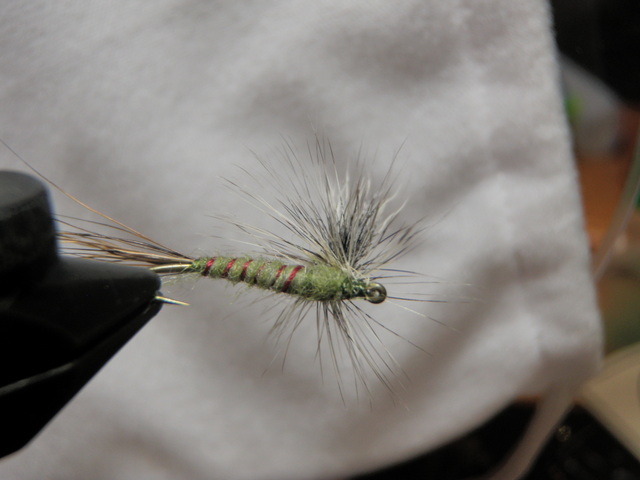
Lime Green Trude 2013

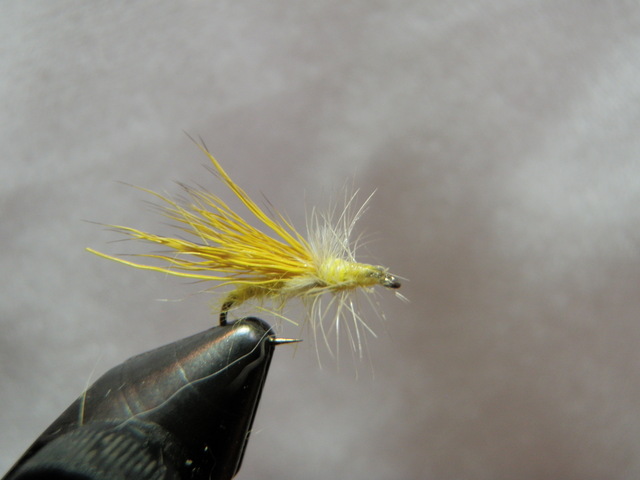
I first became aware of the lime green trude during a trip to Jackson, WY in the 90’s. I arranged for a day of float fishing on the Snake River and the fly shop where I booked the trip forced me to pre-buy a quantity of flies. I was not pleased with this as I only paid for the flies I used in all my other guided fishing trips, but I went along with the policy and of course at the end of the day I possessed quite a few new unused flies. Among this residual inventory of flies were several lime green trudes.

Lime Green Trude 2013 Photo Album

Being the frugal fly fisherman that I am, I rotated a few on to my active fly patch and on occasion tied one on to my line to experiment with their effectiveness. I remember one of my early lime green trude successes was catching some fish on a lake in the Flat Top Wilderness. As time progressed I gained more confidence in the fly and had some nice action on the Roaring River in Rocky Mountain National Park and also caught some decent fish late in the afternoon on the Eagle River. One nice aspect of the lime green trude is the white calf tail wing which creates good visibility in many difficult lighting conditions.
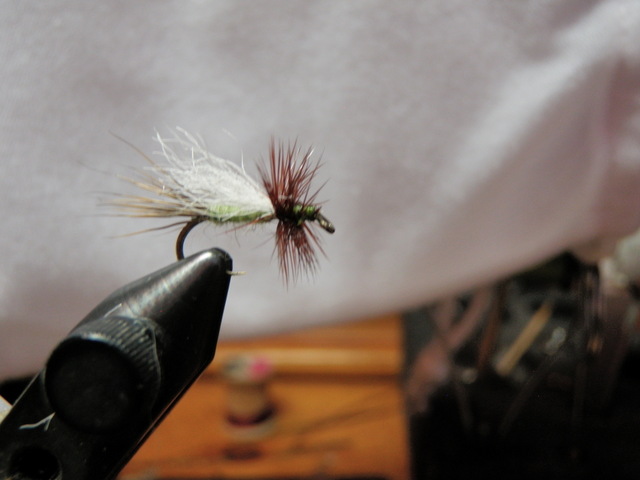
Lime Green Trude

Lime Green Trude

Recently I’ve gone to the lime green trude when I spot yellow sallies, but I’ve had mixed results with this. I tend to tie them in size 14, so they may be a bit large for this application. Probably my favorite way to use a lime green trude is as the top fly on a dry/dropper setup generally in combination with a beadhead RS2 or beadhead pheasant tail. A size 14 trude can support these small nymphs but is probably not buoyant enough to stay afloat above a size 14 beadhead hares ear or larger nymph. I particularly like casting the trude and nymph combination in smooth relatively shallow pools where skittish fish are easily spooked by the increased surface disturbance caused by a larger fly.
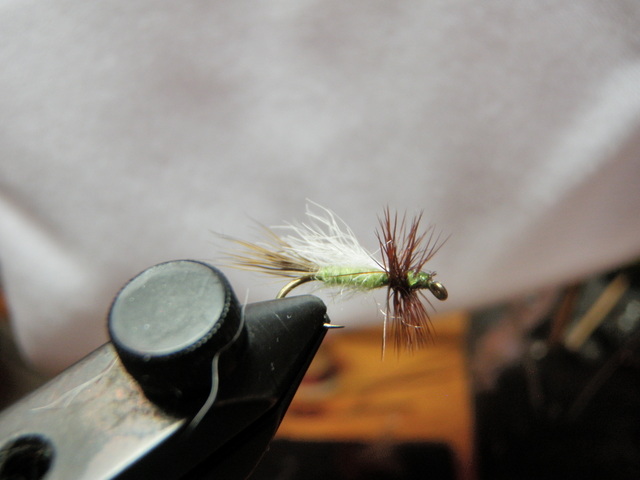
Tilted at 45 Degrees

Tilted at 45 Degrees

The original trude pattern calls for a golden pheasant tippet as the tail; however, I’ve substituted a small clump of deer hair, and the fly seems to remain effective. In fact I believe that the deer hair supports the hook better and offers more buoyancy.

I tied enough additional lime green trudes so that I have around 20-25 as I get close to kicking off the 2013 season.
Green Drakes 2013

I love fishing green drake dry flies. I’ve encountered them on quite a few streams throughout Colorodao including the St. Vrain Creek, Roaring River, Clear Creek, the Conejos River, Fraser River, South Boulder Creek, Taylor River and the Frying Pan River. The most consistent for me has been the Frying Pan River and it is rare that I don’t encounter them on any trip in August through October. This summer I discovered South Boulder Creek and ran into green drakes on two or three visits to that pretty canyon stream below Gross Reservoir.

Green Drakes 2013 Photo Album

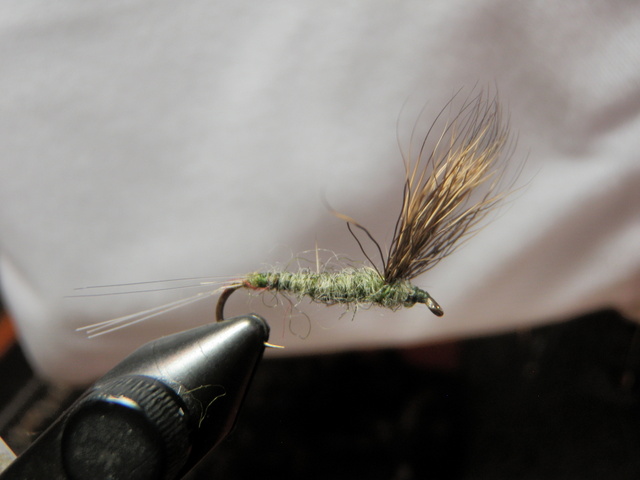
I was confident I had the green drake fly puzzle solved until this summer. I locked into making green drake comparaduns using microfibbet tails, medium olive dubbing with a maroon thread rib, and a dark deer hair wing. Mistake number one is locking into something and even worse was convincing myself that I had it figured out.

My problems began in July when I visited the Taylor River below Taylor Reservoir. According to the fly shop fishing report I was catching the tail end of the green drake hatch in the upper river near Lottis Creek Campground. Unfortunately my green drake comparaduns were not fooling the fish and in addition my flies became waterlogged and sank shortly after I tied them on to my tippet. I sorted out my flies at the campground that night and discovered that I had both size 14 and 12 comparaduns. The next day I managed to land a fair number of fish on the comparaduns, but I spent quite a bit of time blotting the abdomen and shaking flies in my dry shake cannister.

Green Drake Comparadun

Green Drake Comparadun

On another outing on South Boulder Creek I ran into the same problem; my flies were too large and they sank too easily. This prompted me to tie a few green drake parachute flies. I tied these on a Tiemco 200R size 12 hook and eagerly transported them along on a trip to the Frying Pan in August. These flies solved the flotation problem, but once again the fish did not show interest in them except for one gullible cutthroat trout. I switched back to the size 14 comparaduns, and these produced nicely during one overcast afternoon near the spring.

I was now at a stage in my winter fly tying where I needed to stock some green drake dry flies. I decided to do some research on the internet before beginning and discovered there are actually three species of western green drakes present in Colorado. One hatches earlier than the others and is imitated with a size 12 fly. The others hatch later in the season and are best matched with a size 14 hook. This probably explains my inconsistent success when I failed to pay close attention to the size of the comparadun I was using. I also watched a YouTube video of a tyer in Oregon making a parachute green drake and noticed that he used five or six moose mane fibers to create a tail that was much thicker than the split microfibbets I was using.

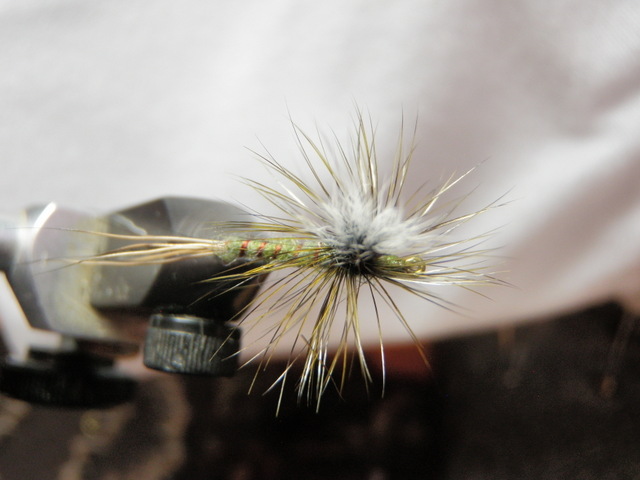
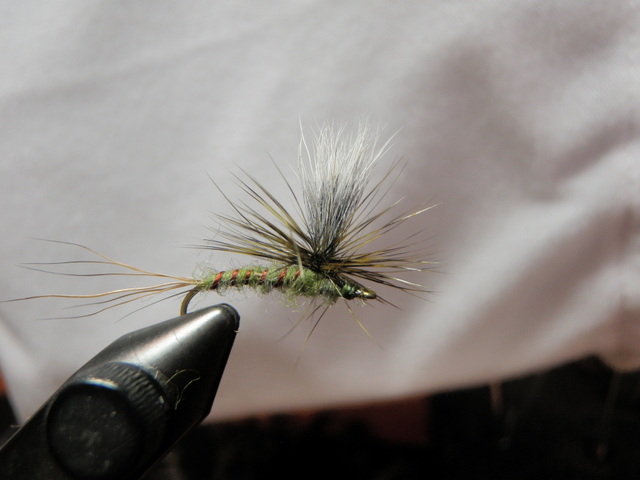
Size 14 Parachute Green Drake

Size 14 Parachute Green Drake

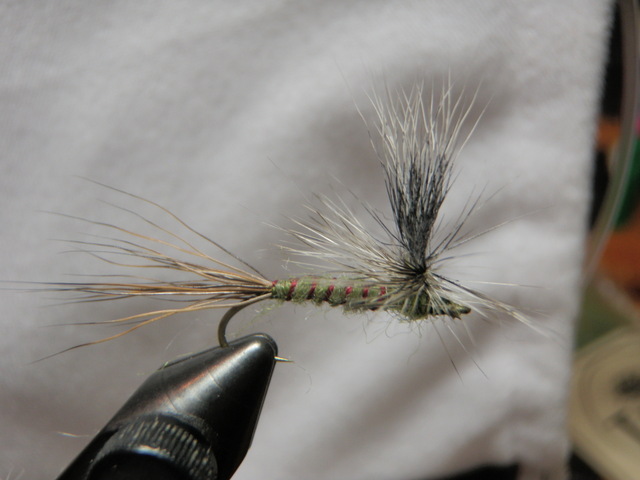
With these observations planted in my brain I sat down and tied eight size 14 parachute green drakes using a moose main bundle for the tail and grizzly saddle hackles dyed dark olive for the hackle. I purchased a nice olive Keough saddle hackle patch at the fly fishing show in January for this very purpose. I’m very pleased with these flies and hope that they will prove effective this summer. Since I already tied three of the larger size 12 paradrakes last year, I plan to produce three additional models so that I have six going into the new season.

Top View

Top View

Fishing large dry flies to feeding trout in a cold mountain stream in summer is one of the most enjoyable experiences I can think of. Hopefully I’ll have a few more days like this in my future.


Light Gray Comparadun 2013

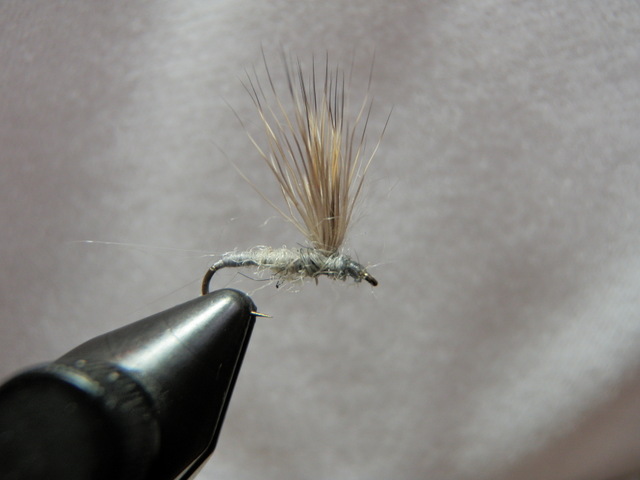
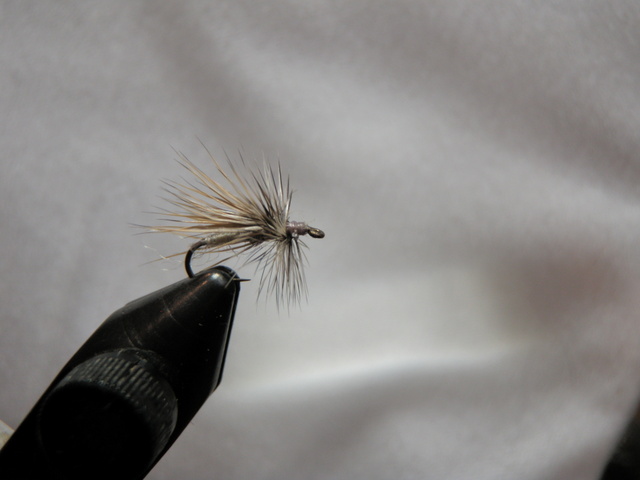
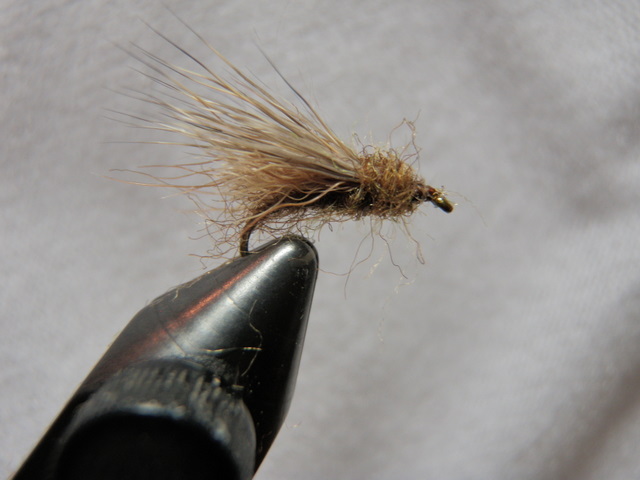
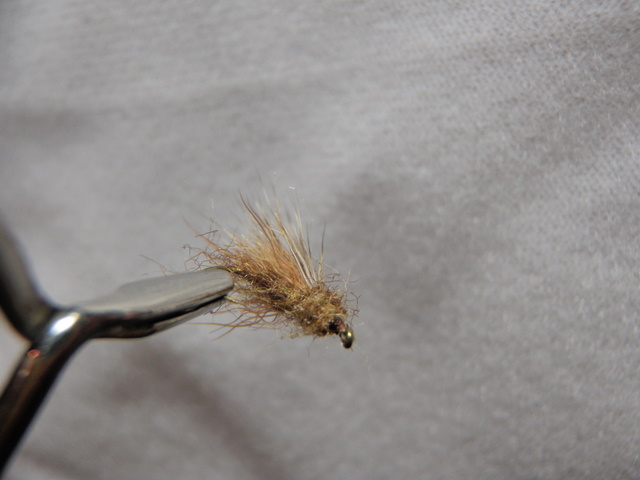
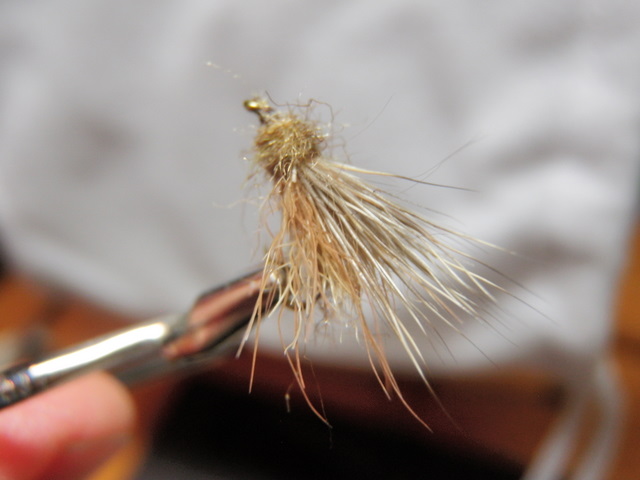
I completed the deer hair caddis and yellow sallies and decided to take inventory of my light gray comparaduns also known as the money fly. I counted ten size 14’s and ten size 16’s and decided to tie an additional 10 size 16’s.

This fly has been a great producer for me over the last three or four years, particularly  when I encounter a pale morning dun hatch. I’m not sure why the light gray body fly works so well as pale morning duns tend to have a light yellow body in my opinion. The light gray poly dubbing that I use for the body has very slight yellow undertones so perhaps that explains the success.

New Light Gray Comparadun

New Light Gray Comparadun

Several years ago my friend Jeff Shafer was scheduled to visit me and fish in Colorado. He asked what flies he should tie before his trip, and I told him about my great success with the light gray comparadun on the Colorado River. He asked me to send a photo so he could tie a few. I was looking for a nice background to photograph the fly against and placed it on the margin of a page of the Wall Street Journal. I told Jeff this was an appropriate choice since the light gray comparadun was a money fly thus the alternative name, money fly.

Little Black Stonefly 2013

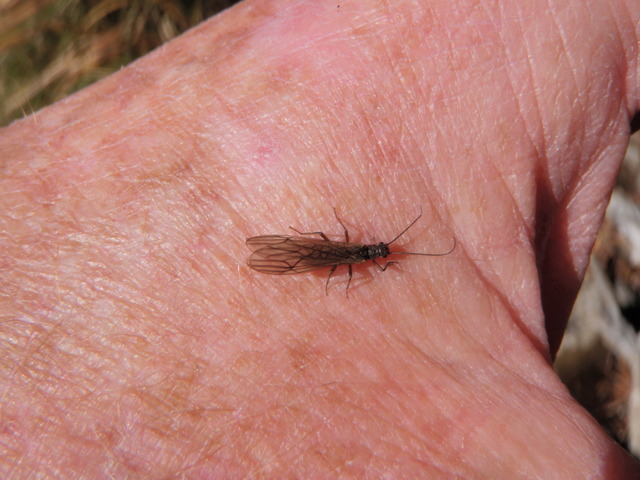
During two late fly fishing outings to South Boulder Creek I encountered a small black stonefly hatch. During the first meeting I was able to catch a few fish using a size 16 deer hair caddis that was tied sparsely; however, I felt I could have done better with a fly that more closely imitated the natural stoneflies.

South Boulder Creek 10/23/2012 Photo Album

Small Stonefly Rests on Photographer's Hand

Small Stonefly Rests on Photographer’s Hand

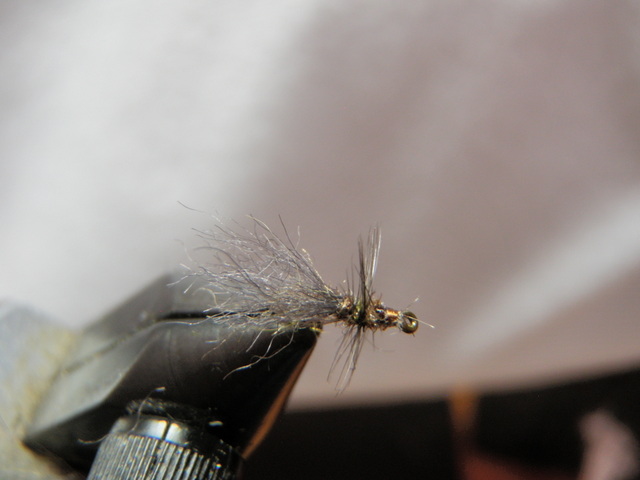
I returned to my vise and produced some decent size 18 black stonefly imitations that used a dark coastal deer hair wing and dark olvie brown dubbing for a body. On a return to South Boulder Creek on 10/23/2012 this fly produced nicely in the afternoon, but I felt it was still a bit large to match the naturals in South Boulder Creek. My friend Jeff Shafer has been tying stonefly adults using sculpin wool for wings and suggested I give this a try. Jeff had mailed me several chunks of this material so I produced three or four with sculpin wings. I never returned to South Boulder Creek to test this pattern, but I did try them out on the Big Thompson River late in the season, and landed several fish. The dark body and charcoal wool wing make this fly extremely difficult to follow on the river, but it is a very close reproduction of the natural insect. Not wanting to fall short on my inventory of small black stoneflies, I crafted ten size 20 flies using the sculpin wool for a wing.

From the Top

From the Top

There are probably addtional hatches of small caddisflies where this fly might produce as well, so I am armed with some small stonefly and caddis imitations for the coming season.

Yellow Sallies 2013

Yellow Sallies 2013 Photo Album

Yellow sallies are quite prevalent on Colorado Rivers during the summer months, and I probably don’t use them as often as I should. I’ve seen fairly steady emergences of yellow sallies on the upper Colorado River near Parshall and have experienced fair success there fishing a yellow sally imitation. I just finished tying quite a few deer hair caddis and the yellow sally pattern I like is essentially the same style fly so I moved right into producing ten size 16 yellow sallies.

Yellow Sally

Yellow Sally

The pattern only requires a hook and thread and three materials; yellow dubbing, yellow elk hair, and a ginger hackle. Similar to the deer hair caddis, I applied head cement to the thread wraps in front of the body before attaching the elk hair wing. I hope to use this fly as a prospecting dry fly during the summer of 2013.

Deer Hair Caddis

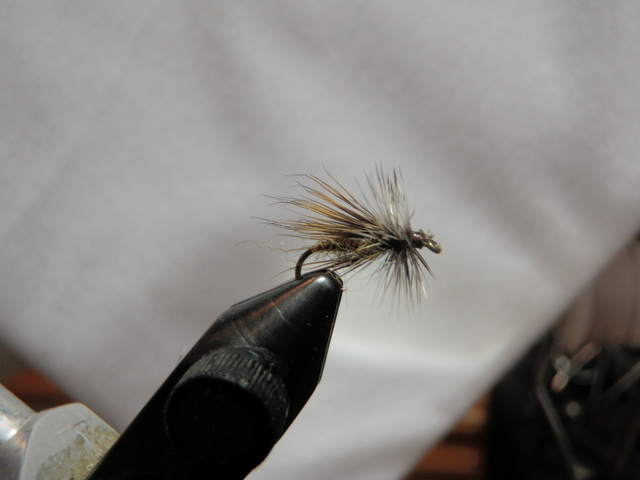
A stalwart consistent reliable fly in my arsenal has always been the deer hair caddis. I tie these flies with dark olive brown bodies and light gray bodies. The dark olive brown body versions are matched with darker wings; whereas, the light gray body model is paired with light tan wings. I add grizzly hackles on the front of both colors.

Deer Hair Caddis Photo Album

Entering the 2013 season I plan to have 15 of each color in size 16 and an equal number in size 14 and I’ve completed all the dark olive brown versions and have five more size 14 light gray flies to complete.

Light Gray Deer Hair Caddis

Light Gray Deer Hair Caddis

I’ve been tying these flies almost since the beginning, but this winter I’ve added a couple improvements to the process. To improve the durability of the fly I’ve begun adding a small drop of head cement to the thread wraps in front of the body before attaching the deer hair wing. This improves durability and helps prevent the deer hair from rolling around the hook shank. The second change is using long size 16 or 14 grizzly saddle hackles. I can tie approximately ten flies from one long saddle hackle and with my rotary vise, it is easy to grip the long hackle while spinning the vise to put three or four nice wraps in front of the wing.

Dark Olive Deer Hair Caddis

Dark Olive Deer Hair Caddis

Another plus this year was using the two deer hair patches that my friend Jeff Shafer mailed to me. The hair on these patches is so even that I skip the hair stacking step, and that’s another huge time saver.

Paradrake – 09/11/2012

Paradrake 09/11/2012 Photo Album

I was not satisfied with the performance of my green drake comparaduns during my last visit to the Frying Pan River and also on a recent outing on South Boulder Creek. I was able to get only a couple drifts until the fly began to sink and required sponging the moisture with my shirt and dipping in the drying powder. As I planned another trip to the Frying Pan River, I decided to do something about it.

ComponentMaterial
HookTiemco 200R
ThreadOlive
WingWhite calf body hair with bottom half colored with black permanent marker
Tail5-6 moose mane fibers
RibMaroon sewing thread
AbdomenLight olive dubbing
HackleGrizzly hackle
ThoraxLight olive dubbing

I searched on line for green drake parachute fly and found a link to an Oregon fly shop with a video demonstrating the tying of a paradrake. I liked the style of fly and decided to make some prior to leaving for the Frying Pan on Thursday, September 13. The main feature I gained from the tying demonstration was how much thicker the moose mane tail was. The fly shop pattern used CDC as the wing and goose biots for the body and I didn’t care for these options so I adapted my own materials.

New Paradrake for Better Flotation

I stayed with the same Tiemco 200R size 12 3XL hook that I was using previously. I feel that this is the correct size other than for the smaller South Boulder Creek version, and I’ll address that later before I visit that stream again. I used olive thread and tied on a white calf tail wing. After I stood the wing up and created a thread base for wrapping the parachute hackle, I used a permanent black marker to color the bottom half of the wing. This resulted in a gray shade, but the top or tip of the wing remained white for better visibility. Hopefully this won’t turn off the fish. Picking up the drab olive/gray green drake is very difficult for my aging eyes.

Wellerfish Paradrake from Bottom

Next I moved to the tail and tied in five or six stacked moose mane fibers. I wrapped the thread up over the butt section of the moose mane almost to the base of the wing. I feel the hollow moose mane fibers will also add buoyancy. Next I returned to the base of the tail and tied in a section of maroon sewing thread for the rib. I dubbed the abdomen with the same light olive material that has proven itself on my comparaduns and then wrapped the ribbing to the base of the wing. Next I tied in a grizzly hackle concave side pointing down. The fly shop video used a grizzly hackle dyed olive, and if I had this material I would have used it. Hopefully my version isn’t a bit too light. I applied the same dubbing that I used for the abdomen to the thread and wrapped the thorax and then wrapped the hackle parachute style around the wing post.

I’m fairly certain this fly will improve over my comparaduns from a flotation perspective. I’m convinced the main features that are important to a trout from its underwater vantage point are the color of the underside of the body and the general size and silhouette of the fly. I think my version of the paradrake clicks on all these factors. Hopefully I’ll find out tomorrow how my paradrake performs on the upper Frying Pan River.

Mugly Caddis – 01/22/2012

Mugly Caddis 01/22/2012 Photo Album

I’m quite excited about the latest batch of flies I tied today, Sunday, January 22. I spotted the fly and tying directions in Charlie Craven’s book, Charlie’s Fly Box, and today I generated six size 16 mugly caddis with olive brown bodies. These flies are purposely designed to be shaggy and unruly, and I love flies that fit that description. I’ve often caught numerous fish on a bedraggled fly, and it seems the more the fly deteriorates, the more the fish respond. The mugly caddis is analogous to buying faded jeans as it is created to look used.

ComponentMaterial
HookTiemco 100, size 16
ThreadBrown 6/0
AbdomenOlive brown dubbing
UnderwingTan or natural snowshoe rabbit foot
WingFine coastal deer hair
ThoraxOlive brown dubbing

Olive Body Mugly Caddis

In order to tie this fly I purchased two tan snowshoe rabbit feet. I’ve never tied a fly with this material, and I’m excited to see how it works. It certainly seems to bring a lot of air pockets to the underwing. In addition to offering a life like appearance, the mugly caddis is fairly easy to tie with only three materials involved.

Underside


Snowshoe Rabbit Underwing

Jujubaetis – 01/15/2010

At the end of October Dave Gaboury and I drove to the fairgrounds parking lot in Eagle, CO and gathered our rods and headed down the bank to fish the Eagle River across from where Brush Creek enters. The river was fairly low and Dave and I were hoping to catch a few fish after a very slow morning on Brush Creek. The sky was quite overcast and air temperatures fell into the 40’s while we were fishing.

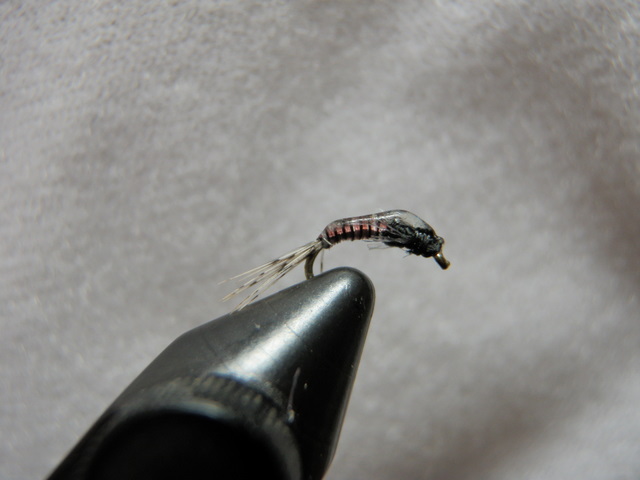
Jujubaetis with Epoxy

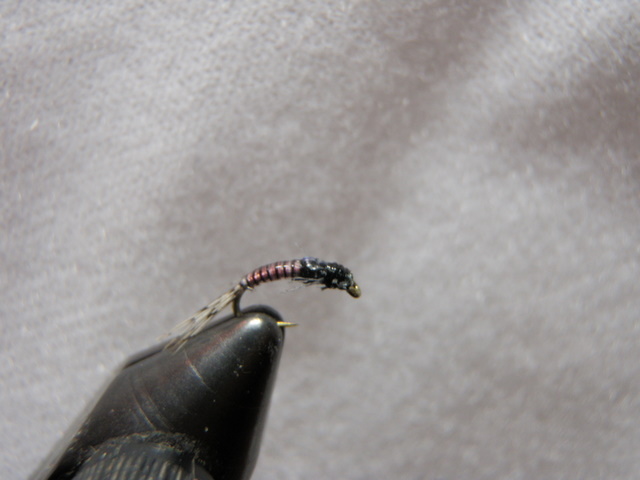
Jujubaetis

We immediately saw a fisherman across from us in the nice long run and riffle below the entrance of Brush Creek. He was landing a fish as we approached the river, and Dave G. called out and asked him what he was using. The friendly fisherman replied, “prince nymph and jujubaetis”. I had seen the jujubaetis pattern in my Charlie’s Fly Box book authored by Charlie Craven, so I resolved to tie this great looking fly. The fact that the gentleman across from us was catching fish on it only reinforced my desire.

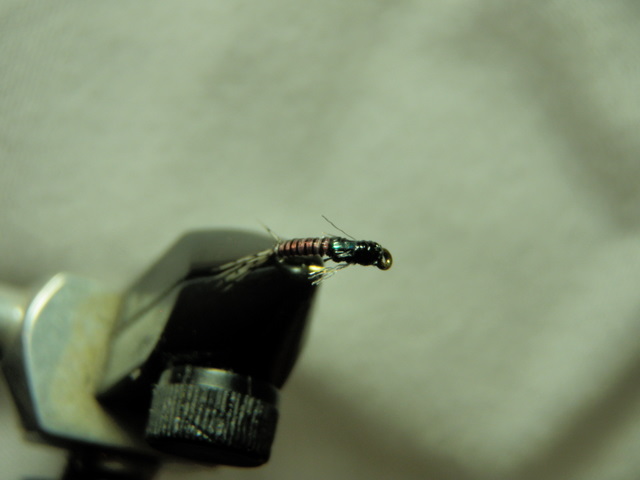
Flashback on Top


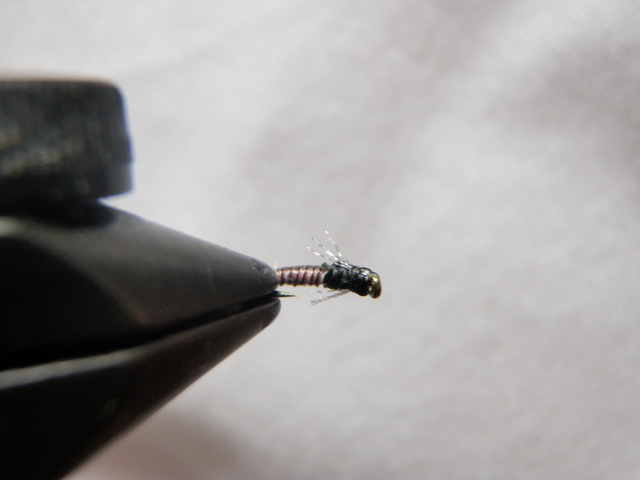
As I prepared to tie flies for the upcoming season, I made a list of what I planned to tie, and from that list I created a bill of materials. On a Saturday Jane and I drove to Old Arvada and visited Charlie’s Fly Box, and the salesman there helped me obtain the materials necessary to tie jujubaetis nymphs. This weekend I pulled out my book and the purchased materials and made five of these great looking flies. Since tying the jujubaetis involves using two different colors of thread, I made the tail and abdomen on five flies with the white thread and set aside. Next I switched to black thread and tied on the remaining materials. I set these aside and as a last step I added a layer of clear nail polish. I hope to purchase some five minute epoxy and finish them off with the appropriate coating.

Underside with Legs Visible

Trico Spinner – 01/15/2012

Perhaps the first dry fly that I had any consistent success with was the trico spinner. Tricos hatch like clockwork during the summer on the Little Lehigh Creek in Allentown, Pa., and I spent many weekend mornings trying to hook gulping trout on this waterway within the city limits of Allentown. This proved to be a great education in stealthy approach, casting and following a tiny dry fly for a relatively novice fly fisherman like myself.

ComponentMaterial
HookTMC 100 Size 24
ThreadBlack
TailStiff blue dun hackle fibers
AbdomenBlack thread
WingCharcoal Sculpin wool or white poly yarn
ThoraxBlack dubbing

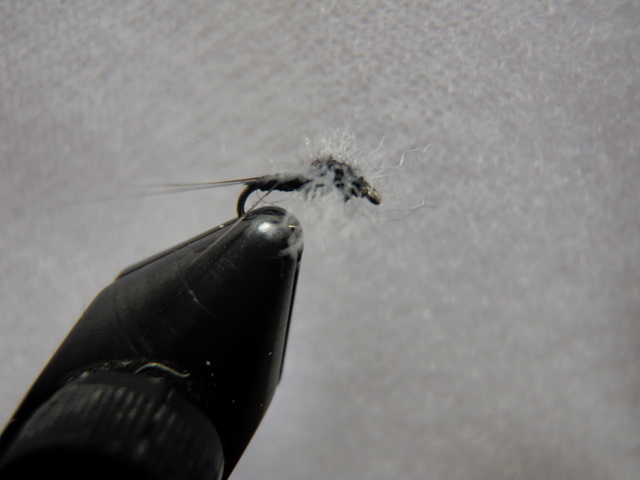
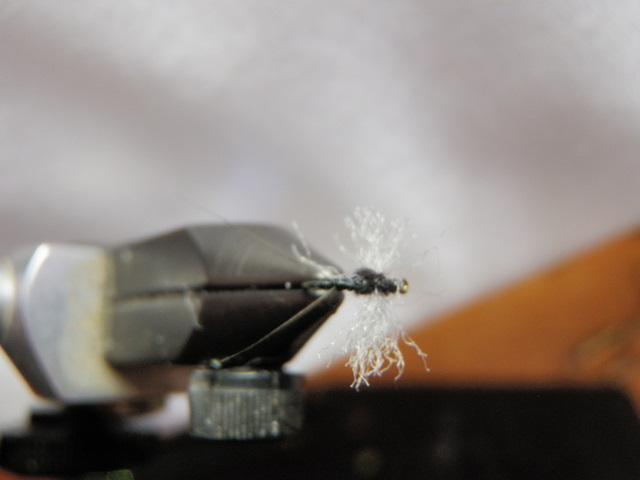
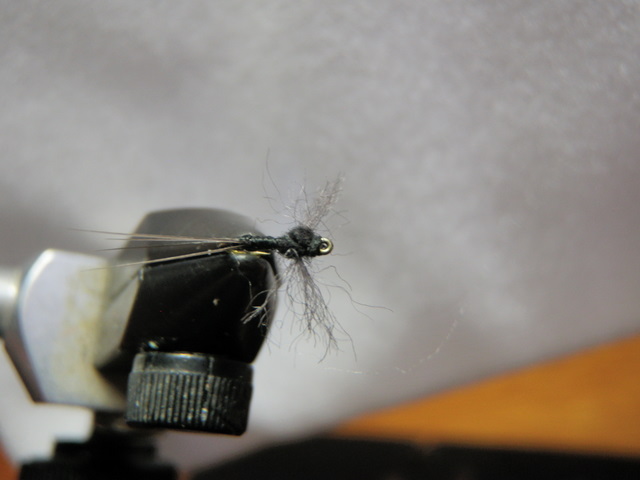
Trico Spinner

When I moved to Colorado I assumed that my pursuit of trout sipping trico spinners was behind me, but I was mistaken. There are numerous streams in Colorado that host fairly dense trico hatches. Some of the first ones I witnessed were on the South Platte River between Spinney and Eleven Mile Reservoirs. Eventually I encountered spinner falls on the South Platte River near Deckers and some particularly predictable and steady hatches in Eleven Mile Canyon. This past summer I caught a few nice fish on trico spinners on the Arkansas River below Salida.

Top View of Trico Spinner

Because of these occasional encounters with the trico, I depleted my supply and decided to replenish this during January. I consulted my friend, Jeff Shafer, who continues to live in the Lehigh Valley about the latest trends in trico spinner tying. Jeff told me he has had good recent success using charcoal sculpin wool for the wings. This material more closely matches the gray opaque natural trico wing when viewed from beneath the water. Jeff was kind enough to mail me several hanks of sculpin wool, and I used this material to produce seven trico spinners. I also tied five spinners using the white poly wing from my past. Bring on the tricos as I’m ready to offer my charcoal wing imitations this summer.

Charcoal Wing Spinner