Beaver Creek – 02/10/2014

Beaver Creek 02/10/2014 Photo Album

I can probably count on one hand the number of times I’ve skied fresh untracked powder since I began skiing forty years ago, and fresh untracked powder is defined as a minimum of four inches of fresh snow overnight. In order to be able to enjoy this experience roughly four main factors need to merge simultaneously. First, there needs to be heavy overnight snowfall, enough to add four inches to the packed snow already on the ground. Second it needs to be a day when I am not already committed to work or some other activity. Third, the driving conditions cannot be so severe as to preclude driving to the destination ski area, and lastly I need to be lodging close enough to the ski area so that I am able to reach the ski lift before it begins running.

Skiing fresh untracked powder does not include finding out-of-the-way stashes several days after the event in glades or expert terrain or in places where strenuous hikes are required while carrying one’s skis on one’s back.

Amazingly Monday February 10 was a day when the confluence of all of the above factors occurred, and I enjoyed skiing some fresh untracked powder at Beaver Creek in the morning. Five inches of fresh snow piled up Sunday night into Monday morning, and Jane and I were staying at the Timbers at Bachelor Gulch as guests of Jane’s sister Judy and husband Bill. We were in the enviable position of being located in a ski in, ski out condo, so we made plans to get up early enough to be in the lift line before 8;30.
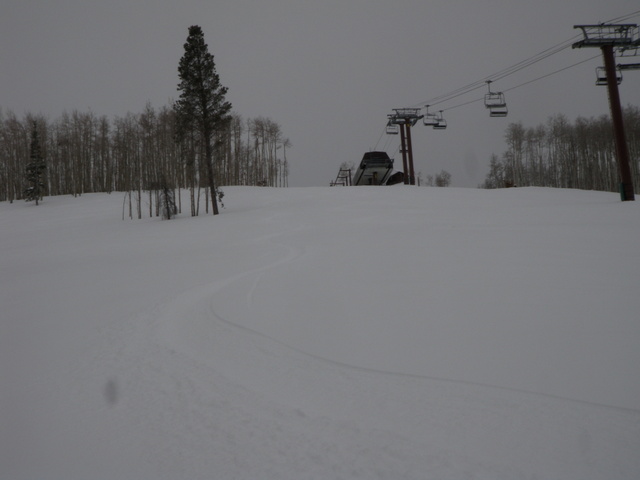
Dave's Solitary Tracks Through Fresh Powder on Grubstake

Dave’s Solitary Tracks Through Fresh Powder on Grubstake

We ate a light breakfast and hustled to put on our boots and jumped in our skis and poled over to the Bachelor Gulch express lift and took our positions fourth in line. Sure enough when the lift opened at 8:30 we were on the fourth chair, and we were whisked to the top of the Bachelor Gulch area. It was still snowing quite heavily when we skied off the chairlift, but the snow was easily five inches deep and my heart raced at the prospect of encountering fresh untracked powder. Grubstake was my trail of choice as it was probably the steepest intermediate trail that would get me to the Beaver Creek Express.
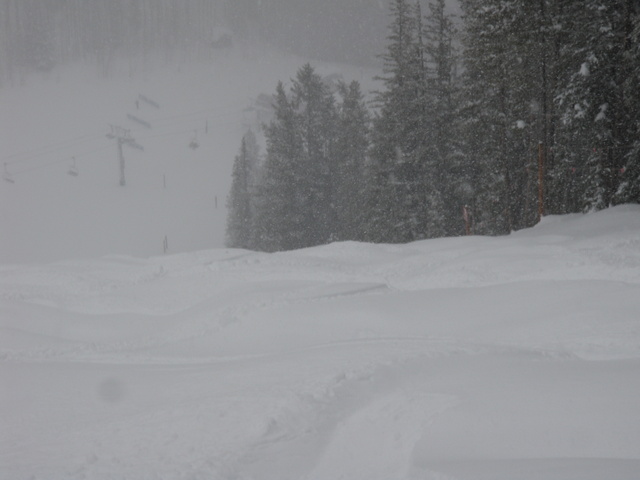
Large Powder Covered Moguls at Bottom of Ripsaw

Large Powder Covered Moguls at Bottom of Ripsaw

Jane elected a different path that Y’d off to skier left, and I was on my way down Grubstake right below the chair. What fun! I floated on the puffy soft powder and hooted and hollered to my heart’s content as I was by myself with only an occasional occupied chair infringing on my solitary entertainment.

This was really the only pure untracked run of the morning, but Jane and I continued across the ski area to the Rose Bowl and Ripsaw where we found more sparsely tracked powder that added to our euphoria. Once we skied Ripsaw we were at the extreme eastern end of Beaver Creek so we worked our way back across the mountain toward Bachelor Gulch, and by now most of the runs were tracked out as skiers appeared in increasing numbers.

View of Moguls Blanketed with Fresh Snow on Screech Owl

View of Moguls Blanketed with Fresh Snow on Screech Owl

I analyzed the trail map and hypothesized that the last places to get tracked would be the black and double black runs on Grouse Mountain, so I asked Jane if I could make one run there before we returned to the condo. She approved of my plan, but decided that she would bypass the expert venture and remain on Larkspur while I searched for steep powder, and we would meet again at the Larkspur lift.

Off I went up the Grouse Mountain lift and the slopes below did indeed appear to be largely untracked with copious amounts of snow converting the large moguls into small mounds commensurate in size with prairie dog hills. Once I disembarked on the summit of Grouse Mountain I chose Screech Owl as my trail for descent as it plunged immediately off to skier right, and it seemed most of the skiers were heading toward Raven’s Ridge below the chair. It turned out to be a great move as the steep upper portion of Screech Owl was largely unmolested, and I bounced over and through the large moguls topped with soft white stuff in a rare euphoric state that I will label “powderstruck”. First tracks on fresh snow remains an experience to be cherished.


20 Incher – 02/06/2014

20 Incher 02/06/2014 Photo Album

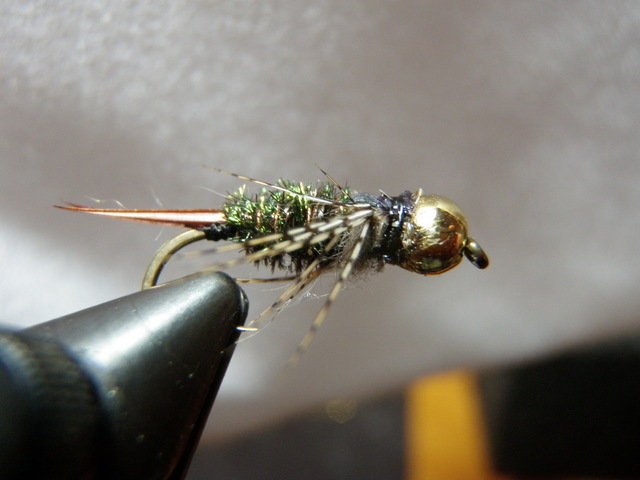
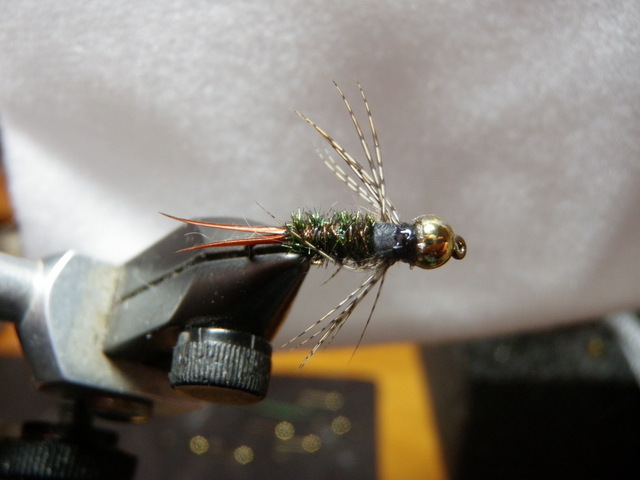
Two of the buggiest natural materials used in tying flies are peacock herl and hare’s mask fur. The 20 incher combines both to create a fish catching machine. I’ve had a decent amount of success with the 20 incher pattern in the spring before snow melt and in the fall season. It may produce at other times, but I’ve only been using it for two years and haven’t experimented with it extensively in other portions of the fishing season.

Profile

Profile

I weight my 20 inchers with lead wraps that span 2/3 of the hook shank beginning at the bead, and this yields a large weighted fly that sinks rapidly. In the spring season I like to use the 20 incher as my top fly with another hatch matching fly such as an RS2 or caddis pupa below it as the point. The weight of the 20 incher enables me to forego crimping a split shot to my line.

I plan to tie eleven additional 20 inchers for 2014, and I made good progress last night with four remaining to be completed. I have been using copper wire to counter wrap the rib over the abdomen, but the standard pattern calls for a larger flat gold wire. I think I have some wire that fits that description, and if I can locate it in my fly tying desk, I will use it on my final four. Another deviation I make is to use Tyvek for the wing case. Tyvek is the material used in FedEx envelopes and is nearly indestructible. I color a section of Tyvek on both sides with a black magic marker and then cut a strip the width of the abdomen and tie it in where a turkey wing section is normally added.

Nice View from the Top

Nice View from the Top

Hopefully I will use the 20 incher more in 2014 and enjoy great success. Do buggy materials equal a buggy fly? I thinks so, but the fish will be the true judge.


Iron Sally – 02/04/2014

Iron Sally 02/04/2014 Photo Album

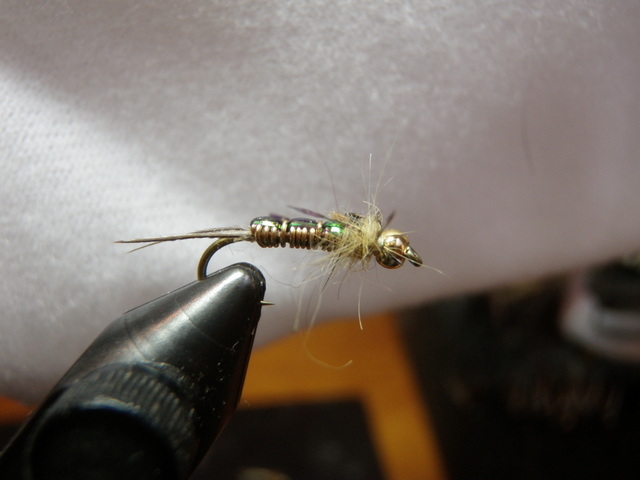
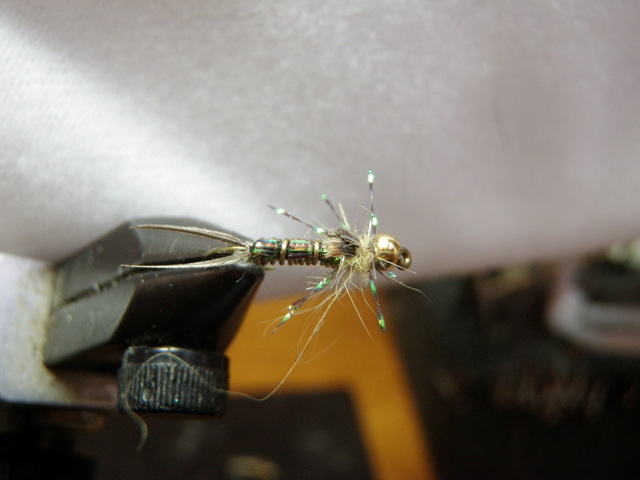
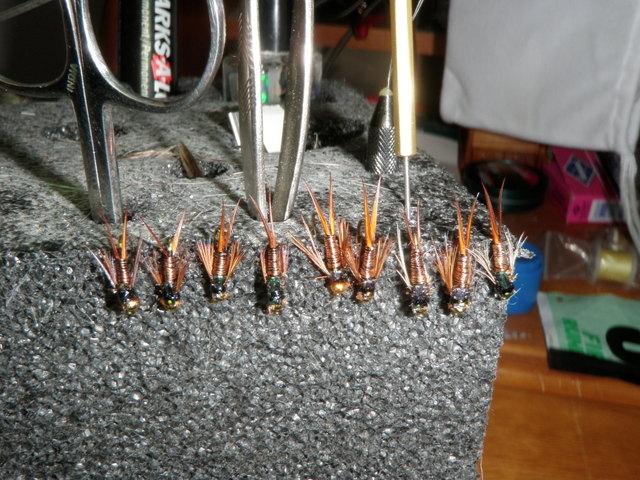
How can a fisherman ignore the allure of an iron sally? In my opinion this fly is the most attractive nymph ever invented with its abdomen constructed with woven gold ultra wire and black crystal flash strands. Using the remnant crystal flash strands for legs and the associated movement and flash was another creative stroke of genius.

Iron Sally

Iron Sally

I first became acquainted with iron sallies when my friend Dave Gaboury and I booked a day of guided fishing with Taylor Edrington of Royal Gorge Anglers on private water on the Arkansas River around the middle of September 2012. After experiencing some solid fishing with the iron sally during this fun day on the river, I resolved to tie some for the 2013 season. I watched an excellent YouTube video demonstrating how to manufacture these beauties, and then headed to my favorite local fly shop to purchase additional necessary materials – gold ultra wire and black crystal flash.

From the Top

From the Top

Last winter I tied five prized iron sallies and upon completion decided to add them to my flybox rather than convert them into earrings for my wife. They are that pretty. I fished the pre-snowmelt season without ever touching my new creations, but during a trip to the Arkansas River in early August when I was struggling to find a productive fly, I spotted the iron sally in my fleece pouch. It was a warm day with no cloud cover, and I was landing an occasional fish, but nothing seemed to produce any consistency. The iron sally is intended to imitate yellow sally stoneflies, and I spotted several fluttering above the river, so I decided to experiment with the glittering nymph. The decision proved to be a smart one as my catch rate improved, and I landed quite a few nice fish on the jewel on my line.

Now it is the winter of 2014, and I decided to produce ten more shiny iron sallies. They are completed and hang from my foam tool organizer near the window and reflect light from all angles. I can’t bring myself to stash them in my flybox because they are so beautiful.


Cross Country Skiing – 02/02/2014

Cross Country Skiing 02/02/2014 Photo Album

Shortly after Jane and I moved to Colorado in 1990 we decided to purchase cross country ski equipment since we experienced more snowfall in Castle Rock than we were accustomed to in Allentown, Pa. More important than the amount of snow, however, was the quality of the snow due to the higher elevation. We quickly learned that when it precipitates in the winter; it snows, and we weren’t faced with rain, freezing rain, or sleet.

We continued enjoying our equipment over the next twenty years, but Jane gradually realized that her boots did not fit properly thus leading to foot pain and blisters. Consequently for the last two or three years when we’ve skied together, we generally visit a nordic center where she can rent boots, skis and poles. True to my frugal nature, I persisted with my 20+ year old skis and boots, although I noticed my skis tended to ice up quickly on snow that was soft or warmed by the intense rays of the sun.

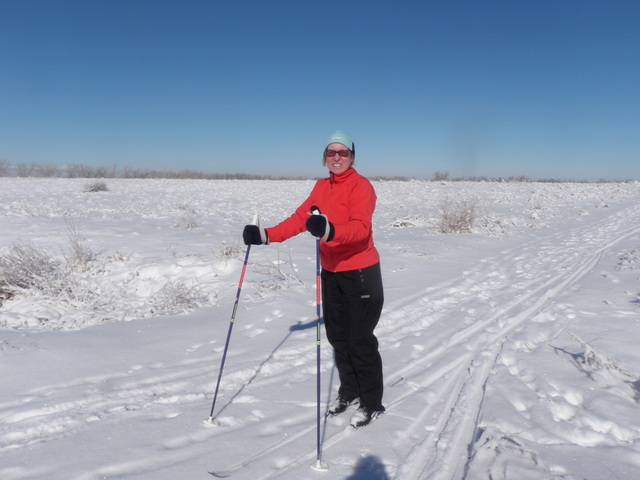
A Pause Early On

A Pause Early On

As Christmas approached in 2013, I asked Jane if she had any gift wishes, and she mentioned cross country ski boots. Before departing for Argentina we made a visit to Wilderness Exchange and then REI to examine their ski packages, and Jane eventually settled on some new skis and fashionable black boots. I purchased these and hid them from her and then wrapped and placed them under the tree. While at REI I asked the salesman if there was a way to revive my ancient Fischer skis, and he suggested a can of SWIX wax. Jane purchased this item for me; I totally forgot about it, and it reappeared as a stocking stuffer on Christmas morning.

On the Sunday after Christmas our entire family decided to go cross country skiing, and Jane welcomed the chance to test out her new skis and boots. We chose Eldora Nordic Center because Joe, Amy and Dan needed to rent skis, and we didn’t wish to battle interstate 70 traffic on a Sunday between Christmas and New Year’s. Jane had a great day on her new set up and did not experience any sort of pain or blisters. I meanwhile defaulted to my old skis and boots, and I was noticeably slower than the rest of the family. The air temperature was quite cold, probably around 20 degrees, so I did not have issues with ice forming on the bottoms, but clearly my skis did not glide smoothly like those of Jane, Amy, Dan or Joe. My new can of ski wax was still secure in its packaging as I forgot to break it out for the Eldora trip.

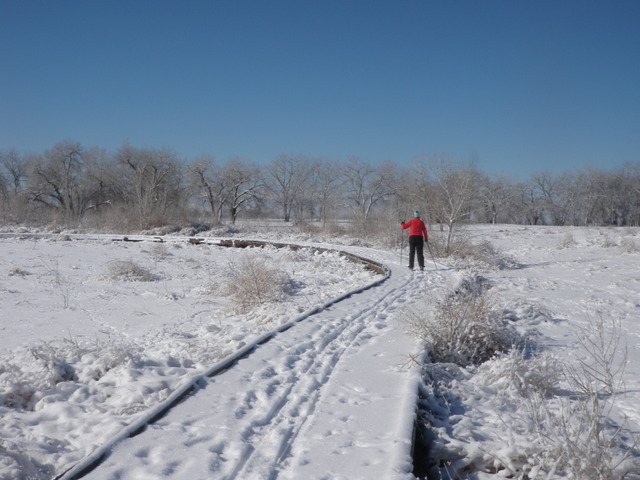
Navigating the Boardwalk

Navigating the Boardwalk

When I returned from Eldora I remembered to carry my skis downstairs and then the next day after they had dried, I applied a coat of the new wax. Applying was a simple task using the sponge pad that came in the can, allowing the wax to dry for one minute and then wiping off with a rag. My newly waxed skis rested in the garage awaiting some significant snowfall in Denver to be tested.

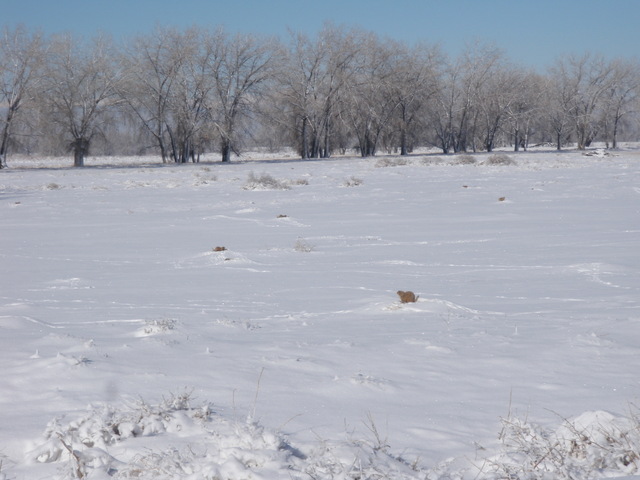
Four or Five Prairie Dogs Visible Here

Four or Five Prairie Dogs Visible Here

At the end of the last week of January Denver received approximately 4-5 inches of snow, so Jane and I decided to break out the cross country gear on Saturday morning. We did a loop along the Sand Creek Trail and then through Bluff Lake Wildlife Area and then returned to the house. I was ecstatic over the performance of my “new” old skis. In fact, I can’t believe I skied with slow sticky boards for as long as I did without applying wax. We had so much fun on our one hour and fifteen minute loop that we decided to venture north five miles to the Rocky Mountain Arsenal Wildlife Refuge on Sunday morning.

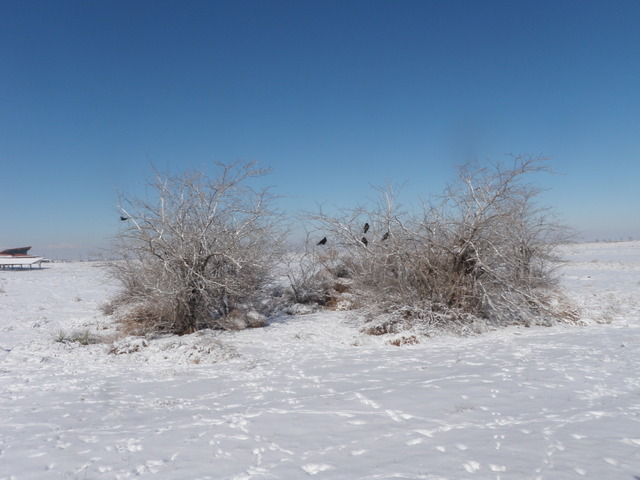
Another Cluster of Blackbirds

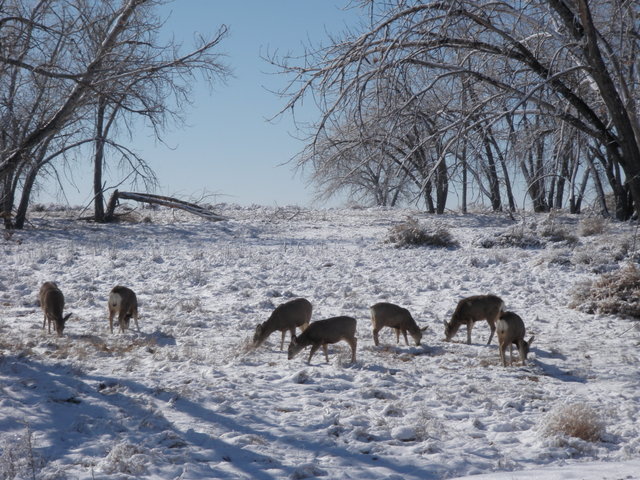
A Herd of Deer

A Herd of Deer

What a joy it was to smoothly glide over the crisp four inch layer of snow in the refuge with no one else around except for prairie dogs, deer, eagles and a coyote! I can’t wait for more snow to arrive so I can continue to cruise in my twenty year old skis.

Caddis Pupa – 01/26/2014

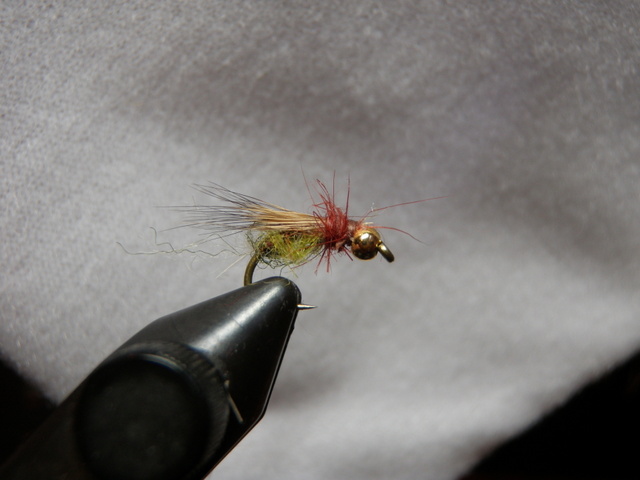
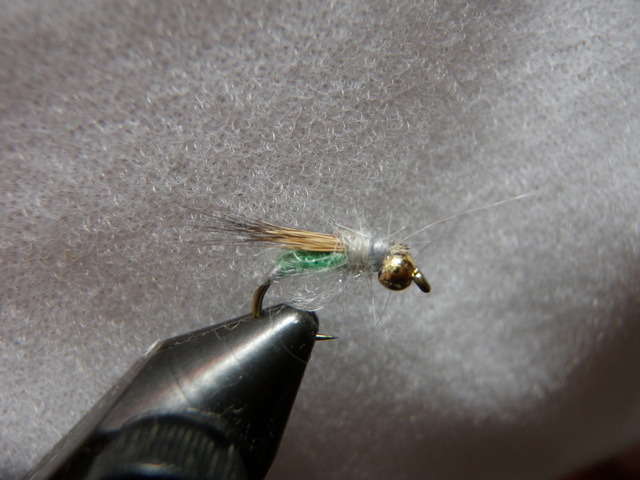
Bright Green Caddis Pupa 01/26/2014 Photo Album

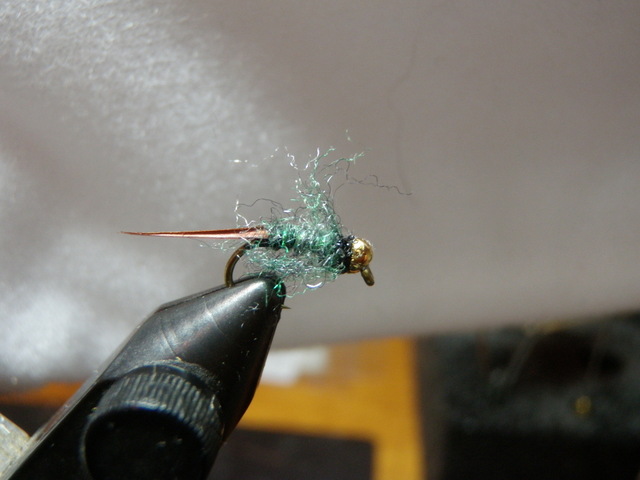
Emerald Caddis Pupa 01/26/2014 Photo Album

Caddis are very prevalent on all Colorado rivers and in fact in nearly every river and stream  that I’ve fished. Caddis adults are easy to recognize due to their wing folded like a tent over the abdomen and their erratic style of flying above the water. I’ve experienced some great outings when caddis are the preferred surface food, and on many of these occasions an active drift is required to initiate a take by the fish. The fish recognize the fluttering caddis and selectively seek movement in their prey.

Trout may devour even more subsurface caddis in the form of larva and pupa, but this activity is much more difficult to recognize as we fishermen cannot readily see the actions of fish beneath the surface. Through many years of experience and by reading reports and suggestions from the experts at fly shops, I have managed to achieve some level of success using caddis pupa. The period of time in April before the major caddis emergence on the Arkansas River is my main workshop, and the caddis pupa has proven to be a great fly to entice takes during this period.

Bright Green Caddis Pupa

Bright Green Caddis Pupa

The bright green caddis pupa which imitates the grannom caddis typically represents my strongest producer, particularly in the weeks closest to the main emergence of the adults. I have discovered that the best time to fish the bright green caddis is from 11AM until around 3PM, and success depends to a large degree on imparting movement to the fly. I typically fish a two fly system with a strike indicator and split shot during this time period with the bright green caddis on the point and either a caddis larva, emerald caddis pupa, or prince nymph as the upper fly. In some instances I fish the bright green caddis in combination with a RS2 since BWO hatches may overlap with caddis activity.

To provide movement to the pair of flies I use two techniques. If I cast directly upstream, I continually raise and lower my rod tip as the flies tumble back toward me. This creates the illusion of a rapidly emerging caddis pupa, and I’ve experienced quite a bit of success with trout grabbing the rising fly.

The second technique contradicts one of the universal laws of fishing; mend the line to allow the fly to flow naturally with the current. When fishing the bright green caddis pupa, I do the opposite and mend the line with the current. This generates a quick acceleration of the flies, and many times the fish slash at the pupa imitation thinking it is emerging and escaping their jaws.

Emerald Caddis Pupa

Emerald Caddis Pupa

The emerald caddis is effective during spring, summer and fall but it doesn’t generate the frenzied feeding that corresponds to the bright green caddis and the April emergence. The emerald caddis is more of a distance runner compared to the sprint of the bright green caddis. I’ve caught several adult caddis that had a tinge of emerald color on their abdomen, so I believe that the emerald pupa offers a color that the fish have seen and recognize as a tasty meal. I can recall numerous instances when the water seemed dead in late afternoon, and I’ve tied on an emerald caddis and landed a few fish that snatched the pupa as it began to swing at the end of a drift.

These two flies are definitely solid producers, and I always attempt to enter a new season with a generous supply from which to draw. For 2014 I tied twelve bright green caddis to bring my inventory to 50, and then I added six emerald versions to my carry overs to reach 30 as spring approaches.

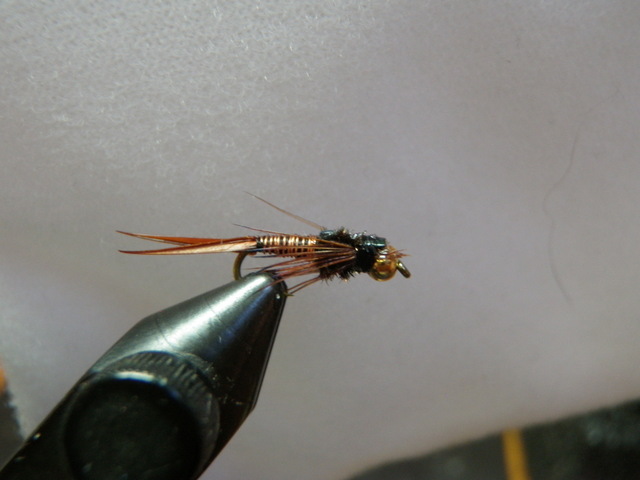
Prince Nymph 01/25/2014

Prince Nymph 01/25/2014 Photo Album

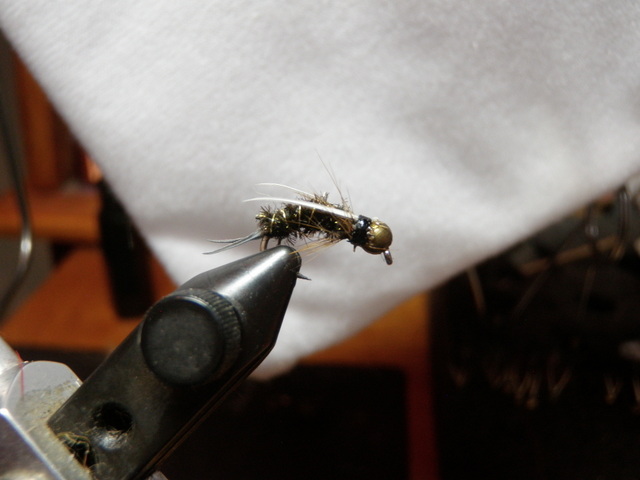
Ultra Zug 01/25/2014 Photo Album

Prince nymphs are very productive flies in Colorado so it’s a good idea to have a supply in one’s fly box at all times. Unfortunately I do not enjoy tying these peacock body flies probably because of the temperamental white goose biots that never seem to cooperate when I mount them behind the bead and on top of the body of the fly. The splayed goose biot tails can also be frustrating, but I’ve improved my ability to attach these after watching a YouTube video.

I’ve had the most success with prince nymphs on the Arkansas River in April and May after the heavy caddis hatch arrives, as I believe the peacock body and white wings mimic egg laying caddis adults as they dive to the river bottom. I recall quite a few outings where caddis pupa and dries were not producing so I knotted a prince nymph to my line and began to enjoy some fairly fast action.

Ultra Zug from the Side

Ultra Zug from the Side

Several winters ago I was paging through my Scott Sanchez fly pattern book, and I discovered his ultra zug pattern, so I decided to give it a try. This pattern is a much simpler fly, but it retains the peacock body and presents a very shaggy buggy look. During visits to the Arkansas in the spring of 2012 and 2013 I substituted the ultra zug for the prince nymph in caddis egg laying situations, and I discovered that it worked quite well. As I planned my tying for 2014, I decided to produce more ultra zug flies and skip the more time-consuming prince nymph.

Refurbished Prince Nymph

Refurbished Prince Nymph

As I prepared to tie ultra zugs I went through my canisters of damaged flies and set aside seventeen prince nymphs in varying states of disrepair! This is probably an indictment of my prince nymph tying capabilities as many were missing one or both of the white goose biot wings. I spent a few hours reconstructing these wounded prince nymphs on Saturday, and I now have some of the real thing in addition to the scaled down ultra zugs. Perhaps this spring I can perform some tests and alternate between the two peacock imitations to see which one delivers the best results?


Copper John – 01/24/2014

Copper John 01/24/2014 Photo Album

The copper john came into vogue as a hot fly perhaps 15 – 20 years ago, and I jumped on the bandwagon and tied a batch at that time. They proved to be quite effective, and I can remember some hot fishing in the pocket water of the Eagle River with a copper john being the primary target of some nice brown trout. I attached the copper john to a yellow Letort hopper using a three foot dropper, and the fish gobbled the shiny nymph like candy.

Side View of Copper John

Side View of Copper John

Aside from the flash of a copper john and a generally fishy look, they are also appealing because of their rapid sink rate particularly when used as a dropper in a dry/dropper arrangement. I tie some of my copper johns with lead wire wrapped behind the bead, and when combined with the copper wire abdomen and the bead, this fly sinks quickly upon entering the stream. The flash of the wire abdomen, the bead, the peacock herl thorax and the flash on the wing case make this fly difficult for trout to miss.

Completed Copper Johns Drying

Completed Copper Johns Drying

For some reason I’ve strayed from using the copper john in recent years and consequently I have not needed to replenish my supply. As I prepared for my trip to Argentina; however, I realized that I was down to nine relics from the copper john heyday so I decided to replenish my stock. I dug through my fly pattern binder and found the John Barr materials list and tying instructions and quickly got in the groove of producing a fresh supply. After generating ten brand new copper nymphs I found four more in need of refurbishment. I was able to salvage the copper wire abdomen and reconstructed the thorax, legs and wing case on these unraveling flies. I feel comfortable with my 2014 supply now, and I plan to test the effectiveness of this solid standby particularly early in the season.

Zebra Midge – 01/24-2014

Zebra Midge 01/24/2014 Photo Album

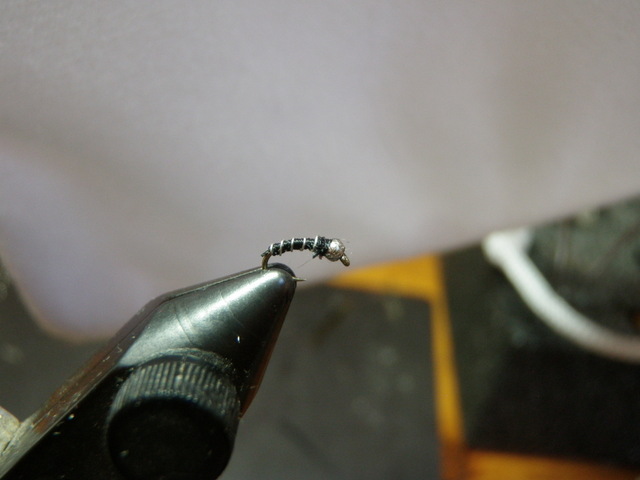
Perhaps one of the easiest flies to tie is the zebra midge. I had 13 of these small flies in stock so I decided to tie an additional 7. I completed this project in less than half an hour as the most time consuming part of the process is centering the tiny bead over the point of a size 20 hook and sliding it around the bend to the hook eye without dropping the bead or the hook on the floor. Because these hooks and beads are so tiny I clamp the hook in my vice in a backwards J position and use my tweezers to grab the bead and position it over the point of the hook. I always try to hold my hand beneath the hook in case I miss because if one of these falls to the carpet, it is goodbye bead.

Once the bead is on the hook, I simply attach my black thread to the hook and then attach a length of fine silver wire. I wrap the thread up the hook shank making sure that the metal is covered and at the same time creating a gradual taper. Once I’ve covered the hook shank, I wrap the fine silver wire forward to form a rib and then tie it off just behind the bead. The final step is to whip finish behind the bead and this creates a bit of bulk that imitates the head.

Zebra Midge

Zebra Midge

The zebra midge is a fly I should probably fish with more frequently. I fall into the trap of thinking that the fish cannot see such a tiny morsel drifting in the current; however, I must say that on the occasions when I’ve used one, I’ve had a fairly high success rate. Generally I’ve used a zebra midge in the morning before I observe larger insect activity, and it has produced fish. I can remember instances on the Frying Pan River, Big Thompson River and Arkansas River where I’ve added a zebra midge to my line and experienced some success. I’ve added it as the point fly on a two fly nymphing setup with a strike indicator, but more success has resulted from using it as the second fly below a buoyant attractor with a larger nymph above it.

I seldom fish lakes, but I’ve also had good luck with a zebra midge dangled off a Chernobyl ant or similar large attractor when I’ve noticed adult midges fluttering above the water. Hopefully I’ll recognize midge situations during 2014, and the zebra midge will serve me well.

Dollar Shave Club – 01/18/2014

Dollar Shave Club 01/18/2014 Photo Album

I was probably nine or ten when I would sit in our living room in Boyertown, Pa. and watch a sporting event with my father. Although it is now fuzzy in my memory, I seem to recall we were watching a football game together, and I asked my father which team he was rooting for? He replied with the name of the team he favored, and I followed up with the inevitable question, “Why?” Dad paused and replied, “Because I like rooting for the underdog.” That brief experience molded my character forever going forward, and while it has often resulted in frustration and sadness, it also forms a fundamental foundation for what drives me through many life experiences. I’m nearly always a fan of the underdog.

This preference for the underdog has carried over beyond sports teams to the business arena. One reason I love to read the Wall Street Journal is to follow businesses and corporations in their journey through the ebb and flow of financial success and failure. I particularly love the in depth features that delve into the fabric of companies and the strategy and thinking that makes them what they are. This all brings me to another underdog story and how it touched my life.

In my younger days because of my red hair I could get away with shaving every other day, but for some reason, as I’ve aged I’ve been forced to follow the shaving ritual on a near daily basis. Fifteen years ago I purchased a Gillette Sensor Excel razor, and I’ve been using it faithfully ever since, but the price of replacement blades has been an ongoing irritant. For a while I discovered some cheaper generic Kroger two blade cartridges, and kept a supply of these in my drawer to partially temper my frustration with high blade prices. I also received a free supply of disposable razors from a previous neighbor and my brother, but I discovered that these dulled quickly, and I didn’t like the light plastic feel.

In order to prolong the interval between the agony of purchasing overpriced twin blade cartridges I resorted to using one cartridge for three to four weeks before replacing. Only when it was necessary to drag the dull blades over the same difficult patches of stubble on my face multiple times, did I take the plunge and buy a new pack of replacement blades. This cheapskate approach to shaving served me well until the last year or so, when after a remodeling of the local King Soopers, I discovered that they no longer stocked the generic twin blades. I gritted my teeth and purchased a five pack of Gillette twin blades for an obscene price in excess of $20, and I milked these cartridges for six months.

Unfortunately I inserted my last cartridge from this pack into my razor a couple weeks ago, and when I visited the local supermarket discovered that their buyers no longer stocked twin blades of any sort. What was I to do now? I needed to either purchase the ridiculously overpriced and over engineered four blade cartridges or even worse a six blade system, or find an alternative source for my ancient twin blade razor.

Enter the internet. I fired up my browser and began searching online for generic twin blades, and I discovered that Amazon offered five packs for roughly $17, and I filed this information in my memory banks while I continued to search for alternatives. $17 for five cartridges equals in excess of $3 per cartridge, and in this day of inexpensive flash drives with gigabytes of storage, I refused to believe that someone could not manufacture a decent twin blade cartridge at a lower cost. In fact, I thought to myself that there might be a business opportunity to manufacture replacement blades and offer them to the marketplace at a slight discount off the prices charged by the market leaders, Gillette and Schick.

I decided to defer the purchase until I could do more research, as I was convinced there was a better deal. This research took place on a weekend, and the following Monday morning when I started up my computer at work, I noticed a link to a story about Dollar Shave Club. I thought it was ironic that this popped up in the same time frame that I was searching for a razor blade deal, so out of curiosity I clicked on the link and the browser took me to a page featuring a video. I plugged in my earbuds and clicked the play button and was entertained by a fast paced “in your face” style of ad for Dollar Shave Club. I was now very curious so I transferred to the Dollar Shave Club page and clicked on the offer and then chose the humble twin option. Dollar Shave Club was offering five twin blade cartridges per month for $1 plus $2 shipping for a total of $3 per month.

I did some quick math and estimated that I was buying 2.5 packs per year or 12 cartridges at a price in excess of $20 per five pack so this equaled an annual razor blade cost of close to $50. The Dollar Shave Club deal would cost $36 per year, and five blades per month meant I could replace my cartridge every week. The deal seemed very inviting, but I searched on Dollar Shave Club reviews and read four or five accounts to assure myself that the company was legitimate and the blades were good quality. Nearly all the reviews verified the quality and confirmed the legitimacy of Dollar Shave Club, but I still waited another day before placing an order.

On Tuesday I decided that I would make the plunge and joined the club. Unfortunately there was a glitch with the web site order process, so I had to chat online with a customer service representative, but eventually my order was placed, and I could see it on my club membership page.

With this task now out of the way, I was fascinated by this new entrant into the shaver market, and I wondered how the underdog was faring. I did some more online research and discovered that Dollar Shave Club began offering their service in April 2012. At the time of the Dollar Shave Club launch Gillette held 80% of the razor market and Schick trailed at 18%. Simple math told me that the two big guys comprised 98% of the razor market. I began searching for information that updated the razor market share to 2013 numbers to see if the underdog Dollar Shave Club was making any inroads, but unfortunately I was unable to uncover any new information.

I did, however, find some interesting articles that critiqued and applauded the Dollar Shave Club strategy, and one of these identified the manufacturer of the blades offered by DSC. I checked out the source and found that I could buy bulk packs of blade cartridges directly from the supplier of DSC for under $1 including shipping. I decided to remain in the club for six months to see how the service pans out, but perhaps eventually switch to buying direct from the supplier.

A New Dollar Shave Club Razor

A New Dollar Shave Club Razor

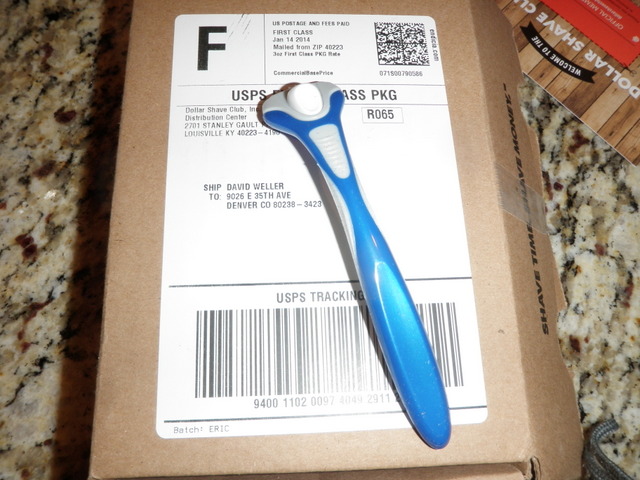
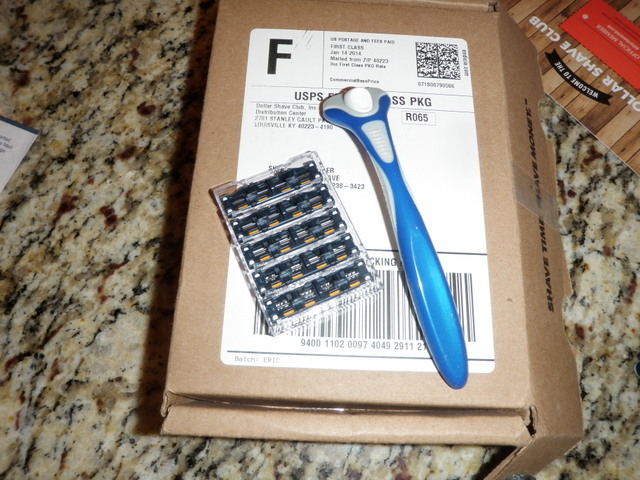
When I checked the mail after my run on Thursday I found a small cardboard box and quickly carried it back to the kitchen where I opened my DSC razor and pack of five blades. I’m happy to report that I’ve now used the razor twice, and it delivers comparable shaves to a new Gillette cartridge. The razor itself is all plastic and it makes small squeaking noises as it shifts across my face, but it is certainly adequate for a light beard like mine.

And Five New Cartridges for $3

And Five New Cartridges for $3

I’m still pulling for the underdogs to make a dent in the razor market. My dad cheered the underdog, and I will follow in his footsteps.


Vail – 01/17/2014

Vail 01/17/2014 Photo Album

Lovers Leap. It is visible from the chair as one ascends the Blue Sky Basin area at Vail, and ever since Blue Sky opened in 2000, it gnaws at my total being when I gaze upon it for the first time each season. It must have something to do with being a man, or perhaps in more recent years it is a test of the aging process. A ridge runs along the top edge of a bowl just beneath the chairlift, and the wind whips across the high flat surface and deposits snow in a fifty yard long cornice. In big snow years such as 2014, the snow curls around the rock ledge that forms a rim on the bowl, and that creates a beautiful curved overhang and beneath the curling lip lies the steep face of the bowl which looks nearly vertical as one gazes over the edge. The best comparison to a cross sectional view of the overgrown 2014 cornice would be the overhang of a muffin top; the type where too much batter was poured into the pan and the top spills over the muffin paper by a half inch or so.

There we stood on Friday, January 17, 2014. Fred Young was with me, and we contemplated taking the plunge. It was a rite of passage each season, but could I generate enough courage to do it again on this my third day of skiing in the new season? We worked our way down along the ridge and bypassed the upper portion where not only is the bowl steep, but also populated with numerous large boulders to make the adventure even more dicey. Fred and I did display a smattering of good judgement as we slowly skied further down along the ridge to a slight trough ahead of where the flat edge rose slightly.

I stopped a couple times before this point, but I couldn’t even look over the edge to inspect the bowl beneath because the cornice was very wide and curved, and I could envision myself breaking off the snowy lip and tumbling down the concave half pipe in a ridiculous display of bad judgement, so I followed Fred to the obvious entry point. There were numerous ski tracks at the low point of the rim, so it was now a matter of summoning the courage to point my skis down and taking the plunge. Fred was just above me, and as is typically the case, he dropped off the lip first and streaked down the bowl while kicking up a plume of snow.

My heart raced and my breathing quickened. It was now or never. I couldn’t summon the nerve to actually jump and catch air so I simply dropped off the lip and instantly gravity sucked me down the hard-packed and wind-blown surface. It was an exhilarating five seconds as I made a quick series of jump turns and controlled my speed as I zig zagged down the steep slope just above Fred. We continued on our way creating tiny snowball avalanches until we gathered our bodies and senses thirty yards below the rim. I’d done it! Once again the prospect of the thrill and exhilaration overcame the inner fear, and I conquered Lovers Leap.

Jane, Fred and Douggie at Mountain Top

Jane, Fred and Douggie at Mountain Top