Time: 11:00AM – 3:30PM
Location: Big Horn Sheep Canyon
Arkansas River 04/29/2026 Photo Album
With the Arkansas River still moving along at a relatively modest 331 CFS at Wellsville, and a weather forecast suggesting a high of 61 degrees, I decided to pay another visit to
Big Horn Sheep Canyon. The fly shop reports were very vague about the advancement of the caddis hatch, so I decided to expect no caddis interaction and simply fish the river like it does not exist. Chasing the hatch over the last several years has been an exercise in frustration.
I got off to a nice early start and arrived at my chosen parking space along US 50 by 10:30AM. The dashboard display registered 50 degrees, and it was accompanied by a chilling wind, so I pulled on Under Armour undershirt, fleece hoodie and rain shell. These layers proved to be effective throughout the day. For a fly rod I chose my Sage One five weight. It is perfect for the large river, and its stiffness facilitates fighting the wind. I could have used my Scott six weight, but I was concerned about elbow and shoulder fatigue with a lot of casting in my future.
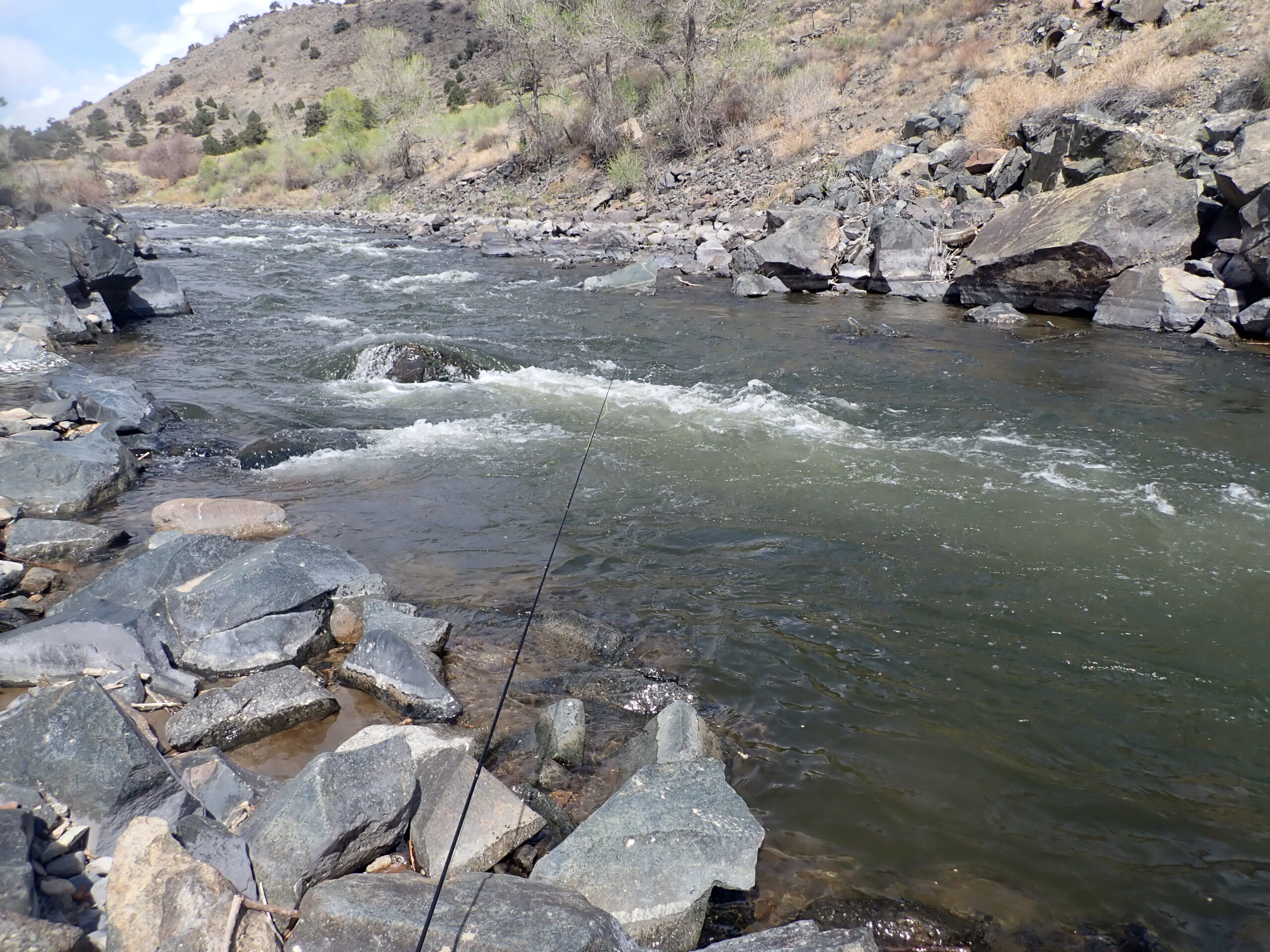 Starting Point
Once I was prepared, I hiked downstream along the bank for approximately .2 mile, and I rigged my line to start with an amber ice dub chubby Chernobyl, a 20 incher and an olive perdigon. I am embarrassed and sad to report that I lost all three flies to a tree limb. I attempted to direct a cast away from the bank without checking my surroundings, and the backcast lodged high above me. I mounted the bank and considered trying to bend the entire tree down, but I wisely concluded that was a recipe for injury. Instead I applied direct pressure to the line and snapped off the three flies.
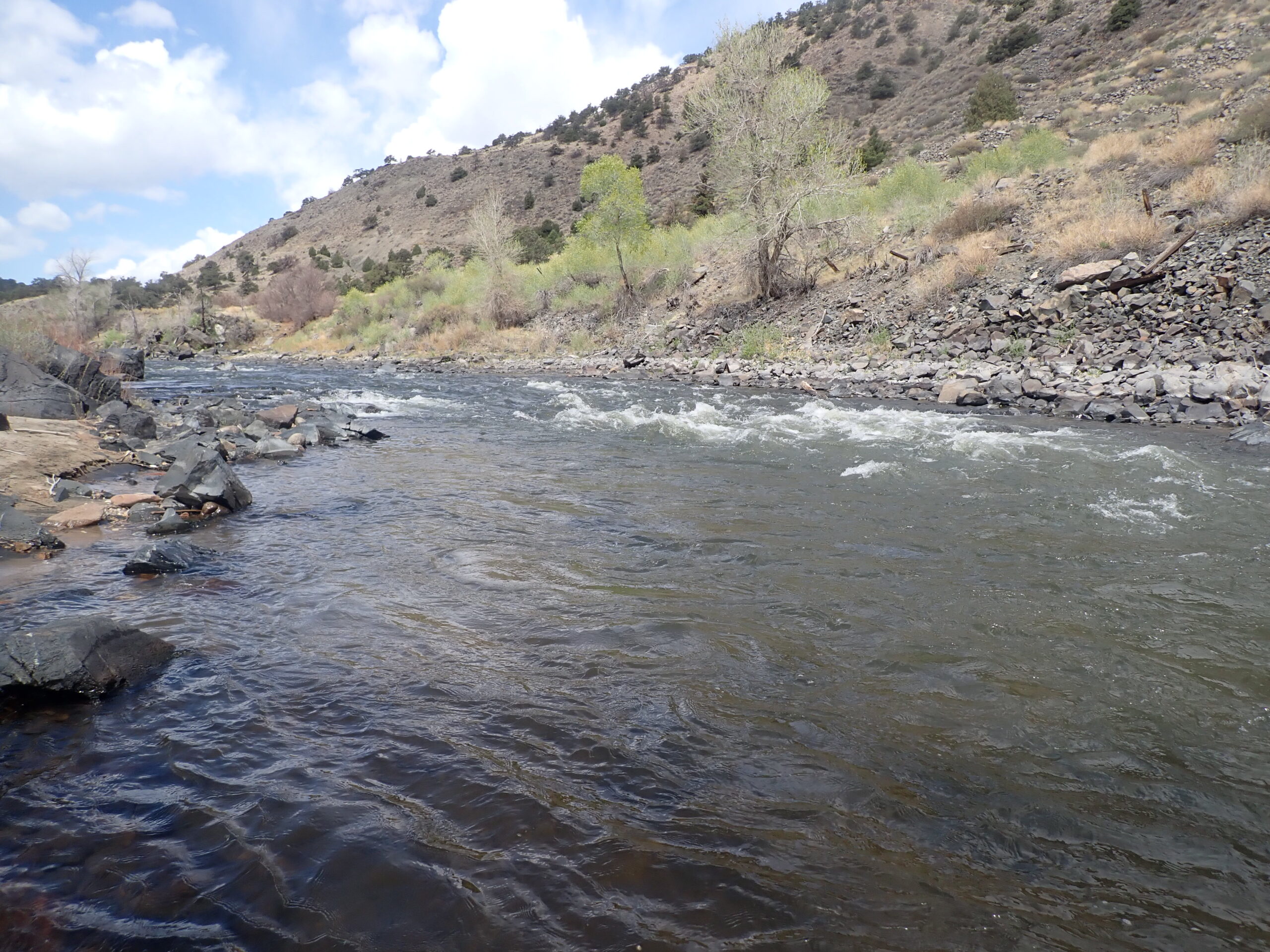 Salivating Over This Wide Riffle
Neither fly produced in the first fifteen minutes, so I replaced the olive perdigon with an emerald caddis larva while maintaining the chubby Chernobyl and 20 incher. I wanted the 20 incher for weight, and the chubby Chernobyl was my indicator. My distance from the surface fly to the bottom nymph was 4. 5 feet, as I planned to probe deep in the large river.
 Getting Larger
The 20 incher finally produced a small brown trout, but the caddis larva was avoided. I shook some willows and examined rocks, but I saw very few caddis. Nevertheless, when the larva fell out of favor, I switched to a bright green sparkle caddis pupa tied to the specifications of Gary LaFontaine in his book Caddisflies.
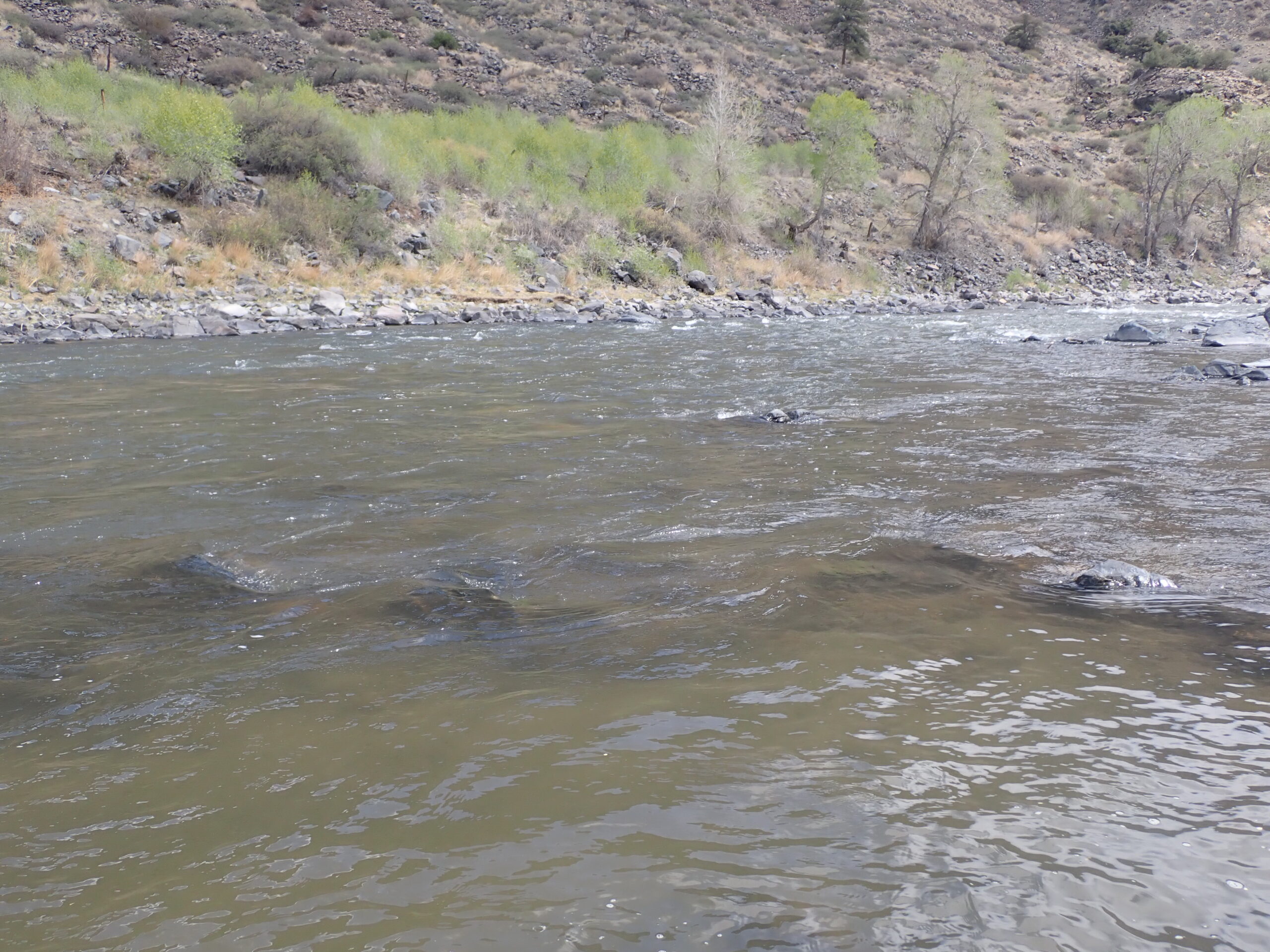 Many Fish Hung Out in Front of Large Boulders
The caddis pupa generated results, and I landed a pair of small brown trout on the green imitation, before I broke for lunch at noon. I observed the river intensely while eating, and I spotted a handful of adults dapping on the surface. One was rather large, and the others were small, so I was not sure they were grannom; the caddis species I was attempting to imitate.
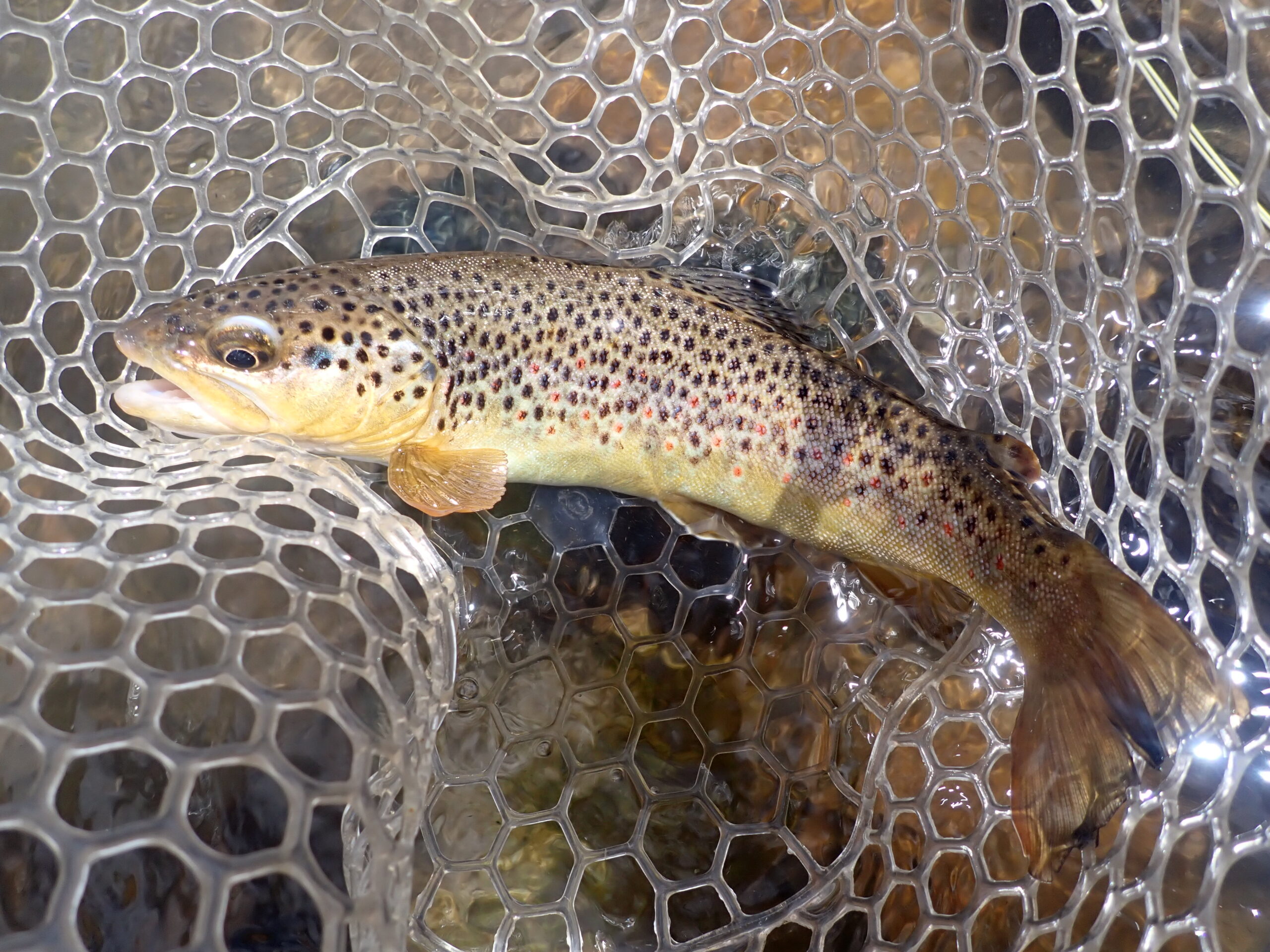 Wide
WideBetween lunch and 2:30PM I persisted with the three fly dry/dropper featuring the chubby, 20 incher, and bright green caddis pupa. I built the fish count to nine, and the netted fish included some substantial brown trout in the fourteen to fifteen inch range. One of these fish nabbed the 20 incher and two crushed the chubby Chernobyl. In fact, several fish slashed at the chubby, as I dragged it across the surface in the process of executing another cast. These instances caused me to consider a switch to a caddis dry, but I never attempted the conversion.
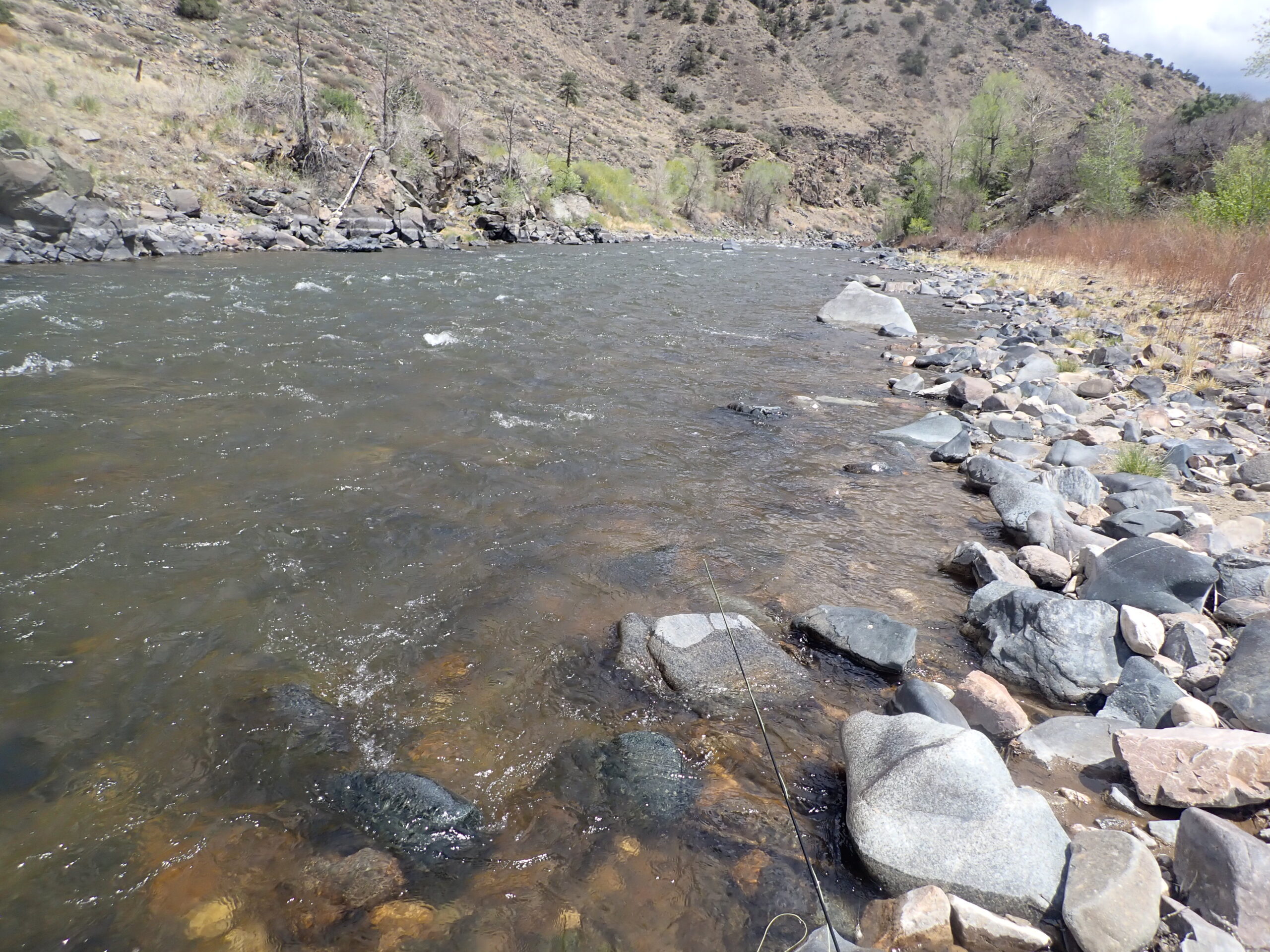 Downstream Dangle Worked Here
Instead I worked the caddis pupa aggressively, and it accounted for five of the first nine fish landed. I discovered that the ticket to making the pupa work was stripping, lifting and dangling the flies. Purely by chance I allowed the flies to dangle downstream in front of large exposed rocks, and several decent browns grabbed the pupa while it dangled. In other instances the trout snatched the fly, as it began to swing and lift across the current near the end of the drift, or the fish chased and corralled the pupa as I lifted to make another cast after dangling briefly. I fished the three flies aggressively including bad mends that jerked the flies and downstream mends to accelerate the flies through riffles and runs.
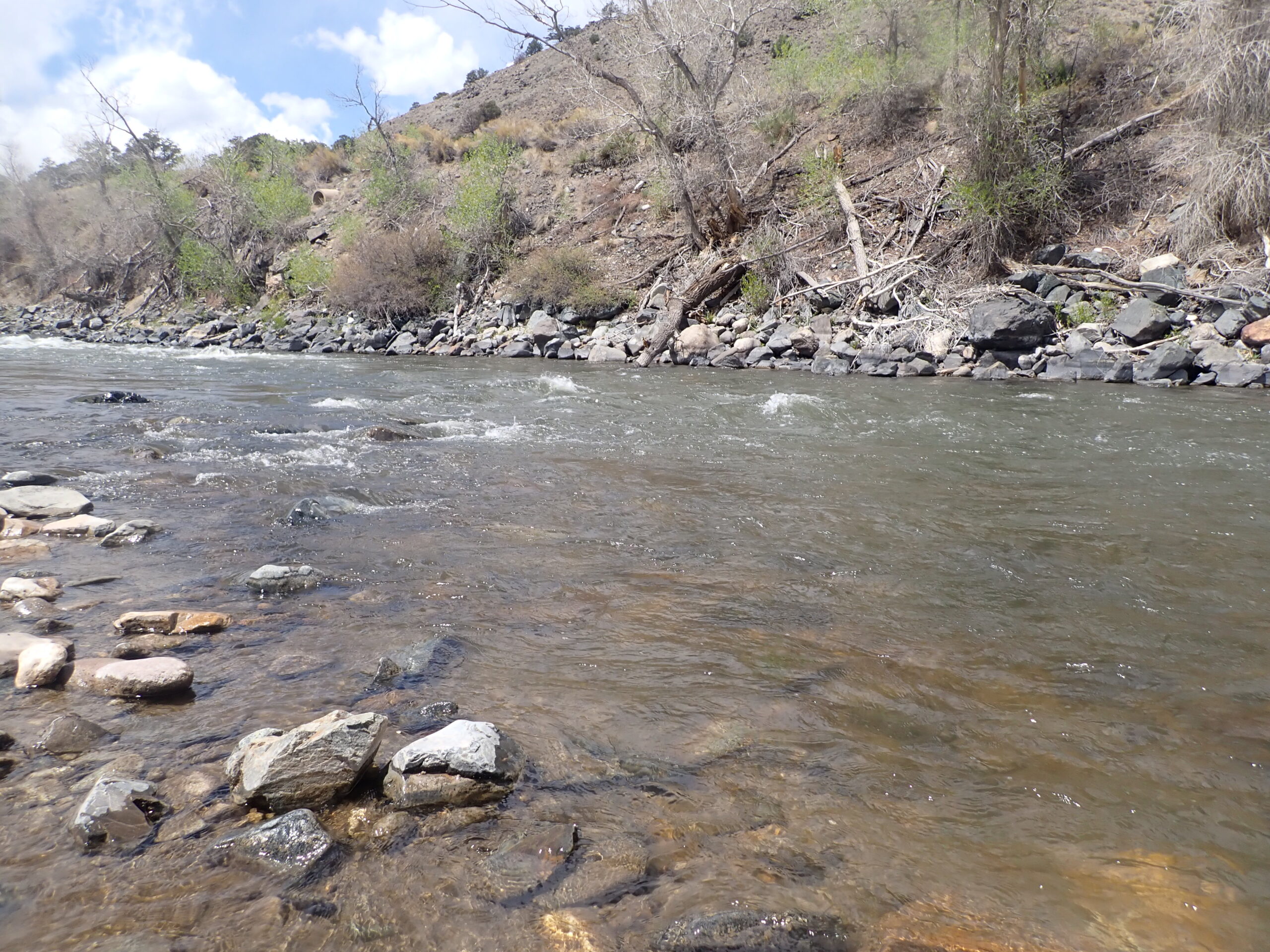 Another Promising Area
The five connections with the sparkle pupa were much appreciated, but I was also frustrated by the number of bumps and split second connections. During this time I swapped the bright green caddis pupa for a go2 caddis pupa. The go2 version features a bright and shiny chartreuse body, and this fly never yielded a fish. It was the king of bumps and half second hits. It seemed that the fish were teasing me by inspecting with a bump without taking the fly confidently.
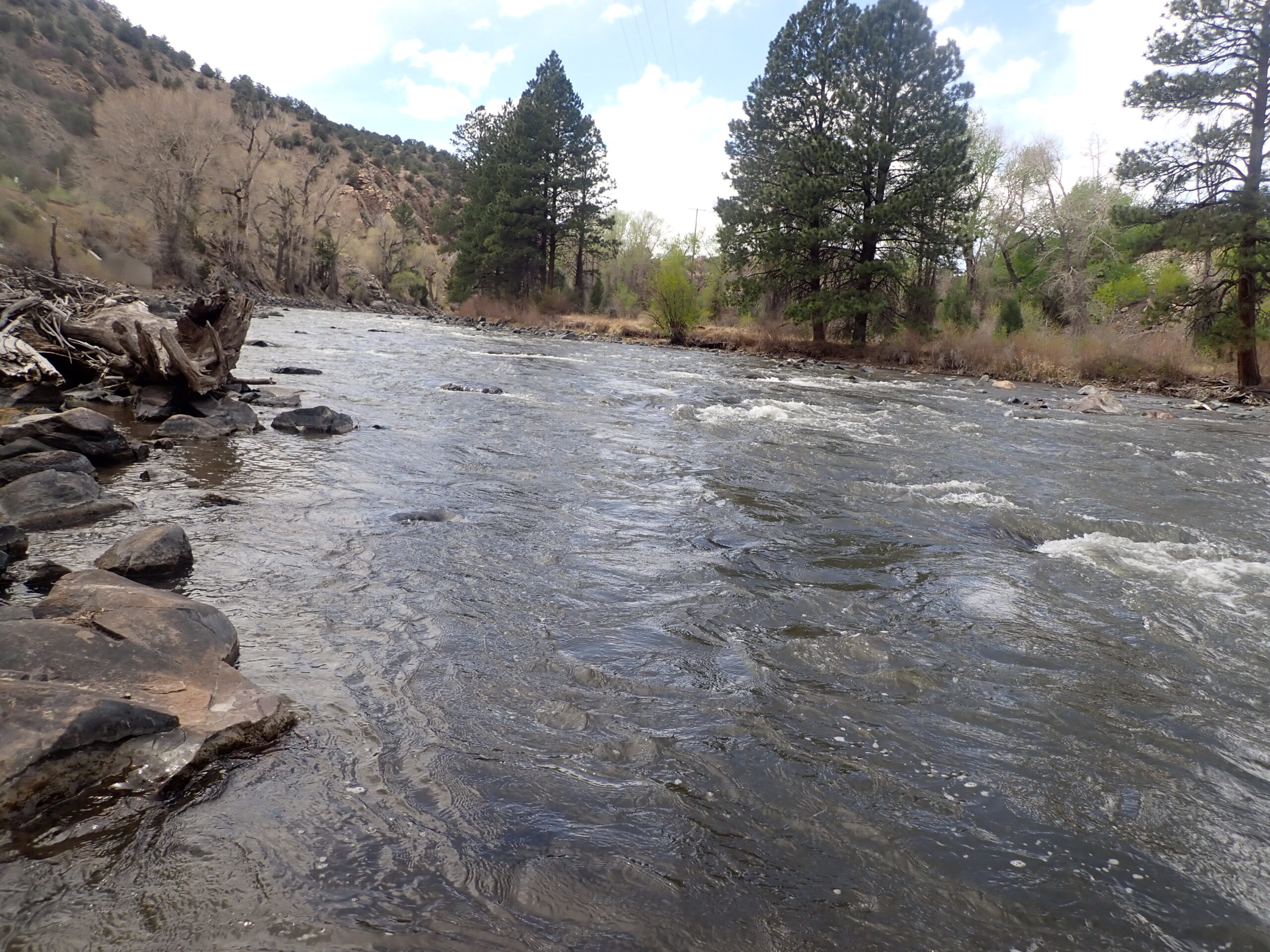 Lots of Pockets to Explore
At 2:30PM I approached a fifty yard section of pocket water, and I somehow broke off the bright green caddis pupa. Rather than replacing it with another, I substituted an ultra zug bug. I knew from reading that the female adult caddis return to the water in the late afternoon and evening to deposit their eggs, and they do so by diving to the bottom of the river. In past years I experienced a decent level of success with a size 14 beadhead prince nymph, but for some reason on Wednesday I chose a size 16 ultra zug bug.
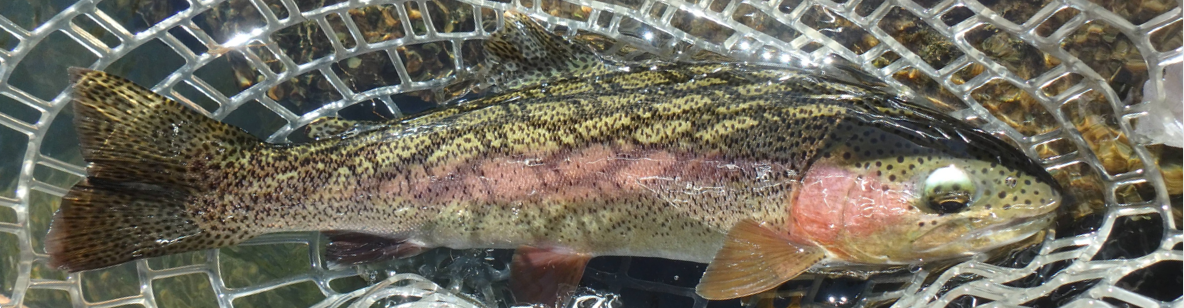
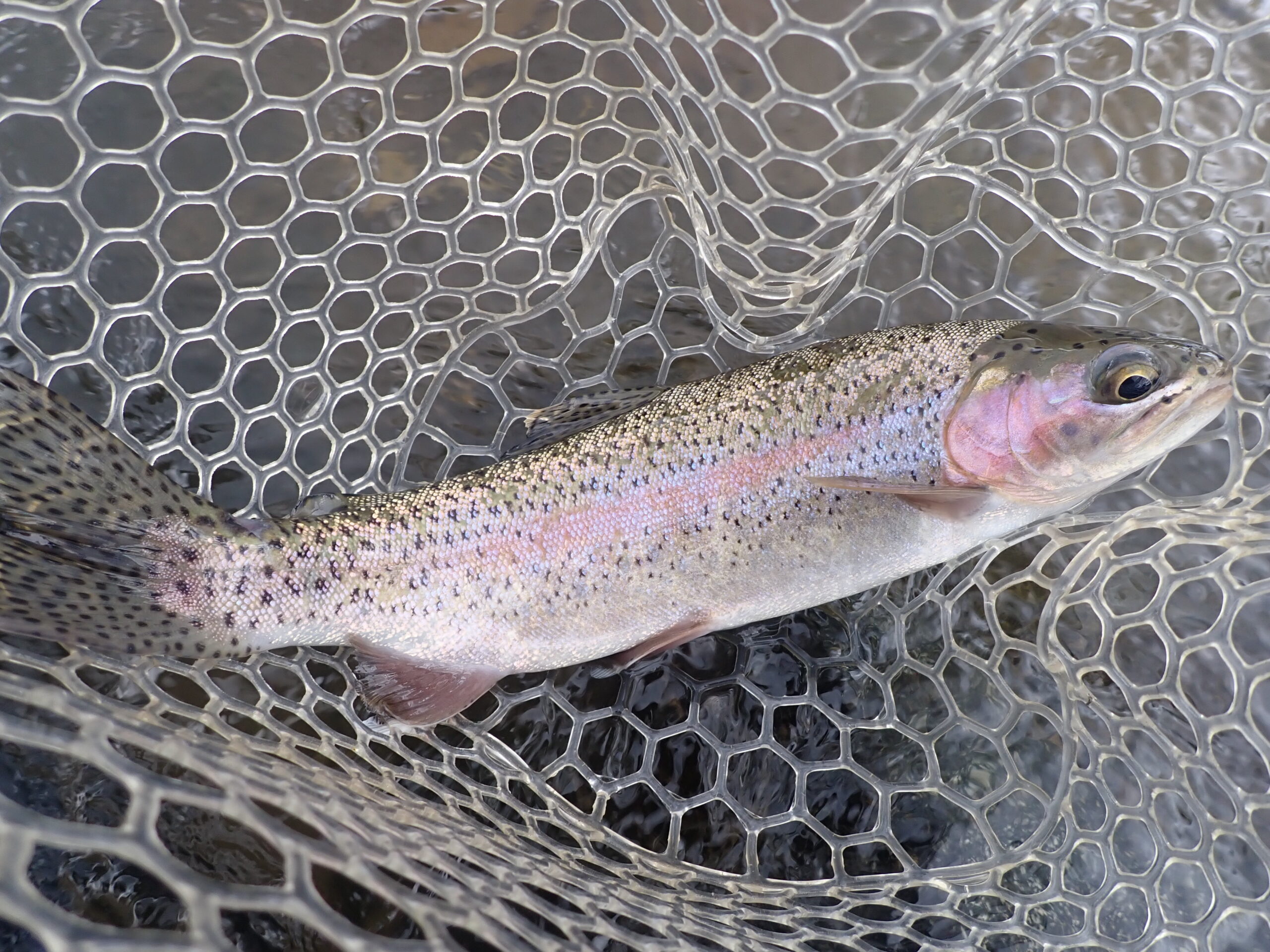 Just a Beauty
What a move! I fished all the deep pockets I could safely reach, and I moved the fish count from nine to twelve. All three of these fish were stunning rainbow trout in the fourteen to fifteen inch size range, and they were fierce fighters. I found it interesting that all the fish that ate the ultra zug bug were rainbows. Was there something about the flash that attracted rainbows more than browns? I decided to test the theory.
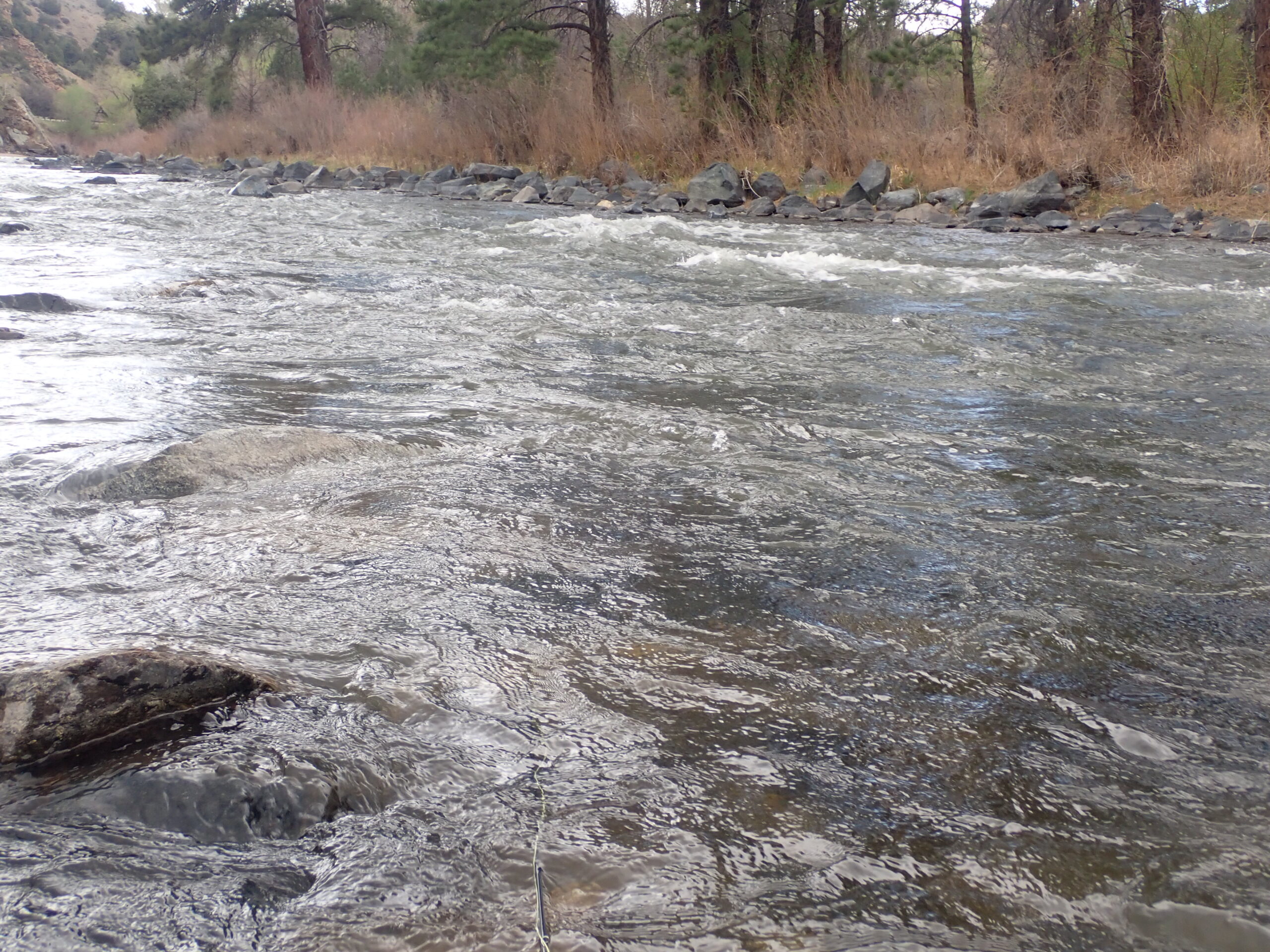 Rainbow Haven
I retreated to my car and then hiked down the path that I used at the start of my day, until I reached a delicious wide moderate riffle area. I fished this section in the early afternoon, but I was convinced that the ultra zug bug might generate better results, and I was curious to see whether any brown trout would succumb to the UZB flash. Well, I managed one eleven inch brown trout near the end of my time in this section, so the results were rather inconclusive. The ultra zug bug did not replicate the success that it provided in the pocket water.
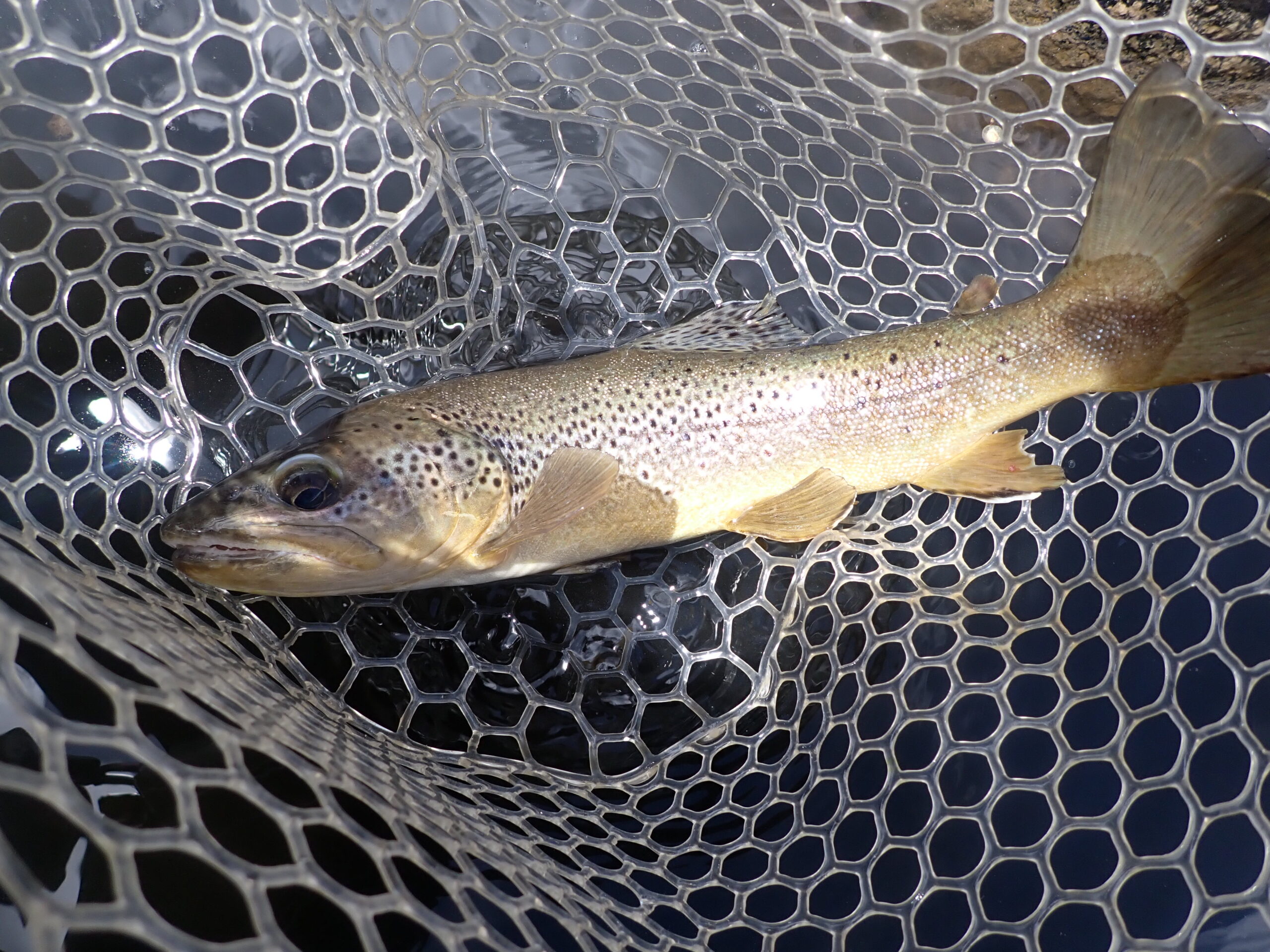
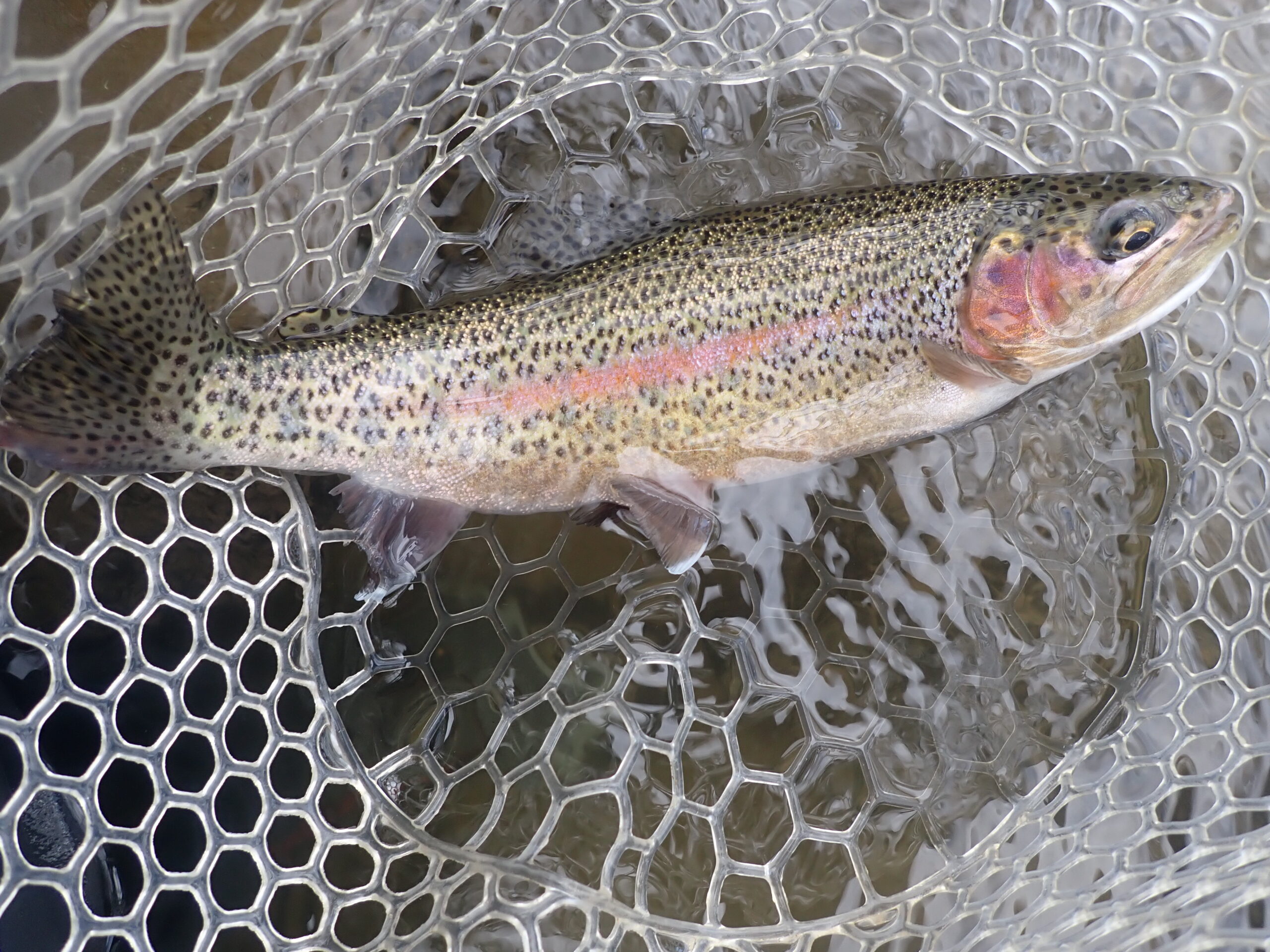 Gorgeous Spot Pattern on This One
Wednesday was a nice day of fishing on the Arkansas River. I landed thirteen trout, and quite a few were very respectable fish. The three rainbows in the pocket water were the jewels on the day, but I also landed three brown trout in the fourteen to fifteen inch range. I was proud to discover the technique of swinging, dangling and lifting that aroused the attention of the resident trout. Enduring quite a few temporary hook ups was a frustration. The near term forecast calls for continued cool temperatures, so perhaps another visit to the Arkansas River is in my future, before run off commences in earnest.
Fish Landed: 13