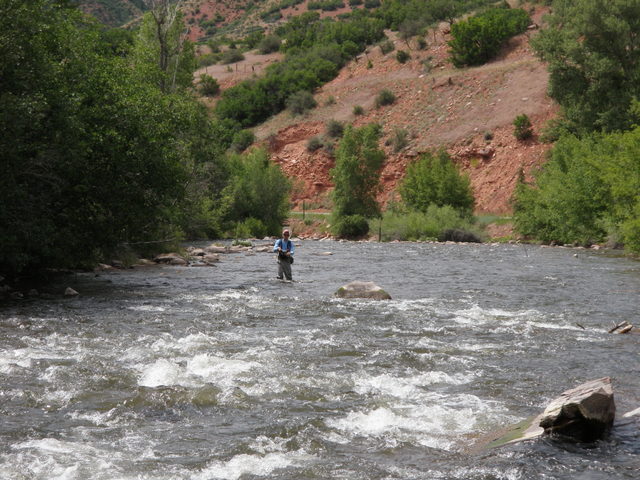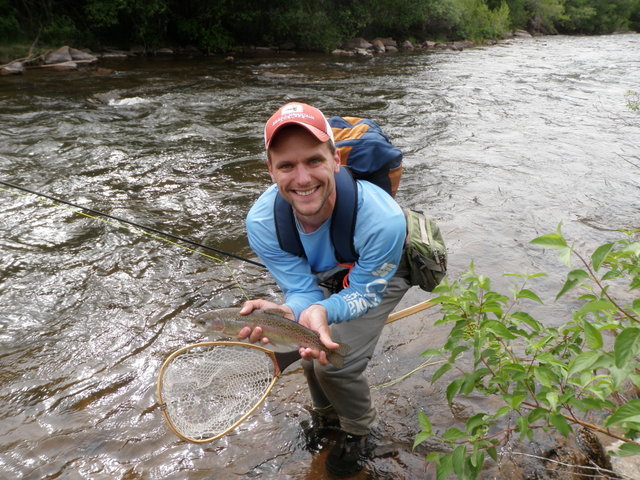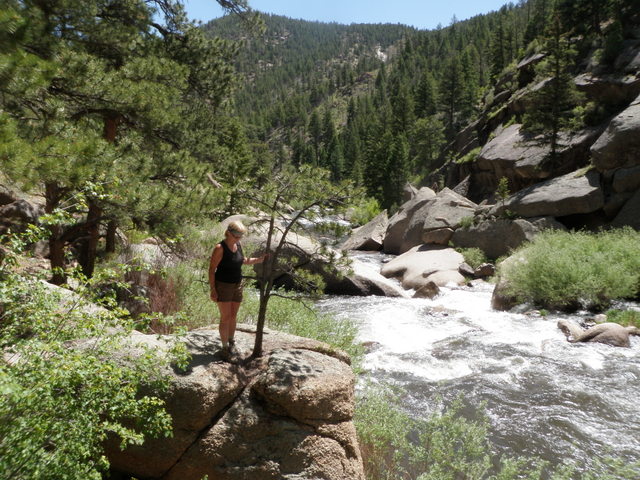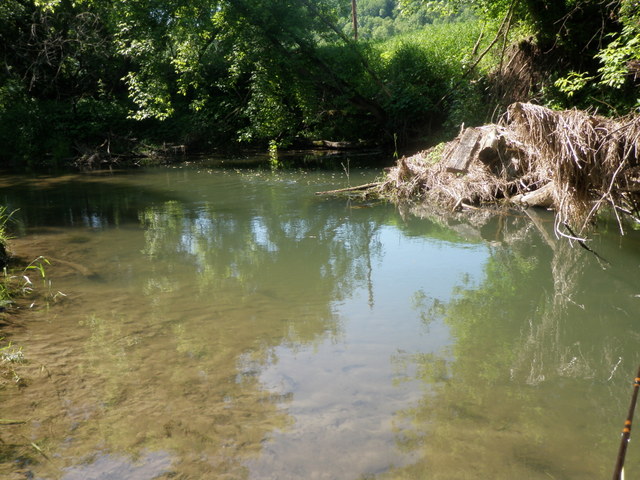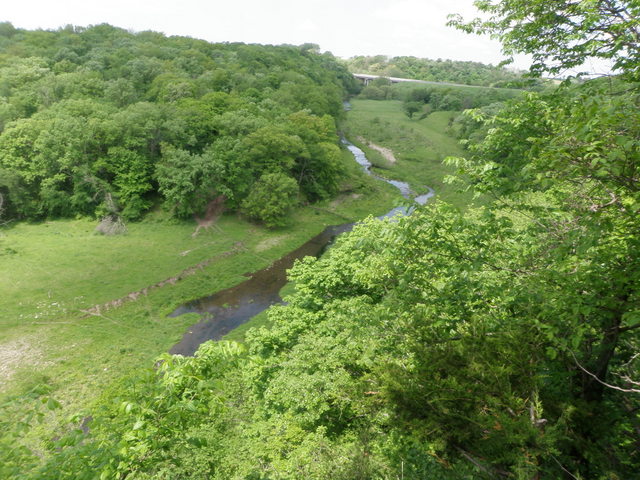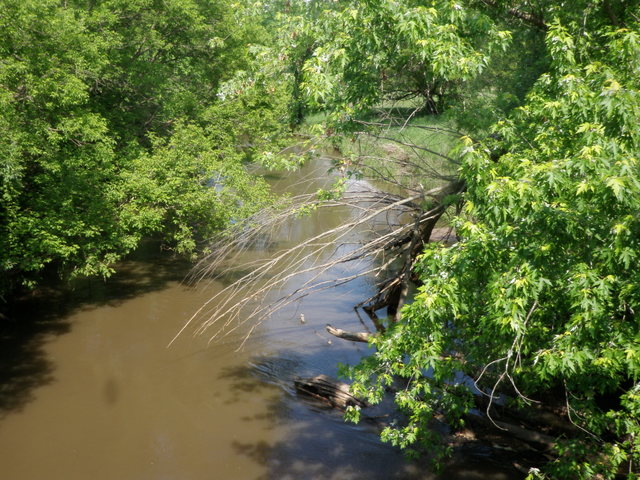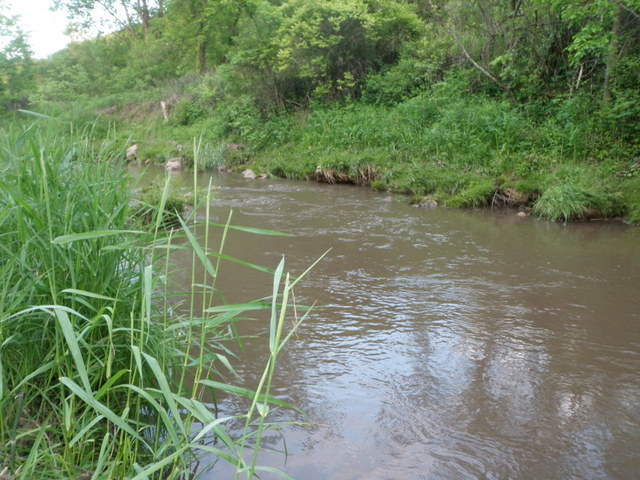
Colorado River – 06/30/2014

Time: 9:00AM – 7:00PM

Location: Lone Buck access at Hot Sulfur Springs State Wildlife Area

Fish Landed: 7

Colorado River 06/30/2014 Photo Album

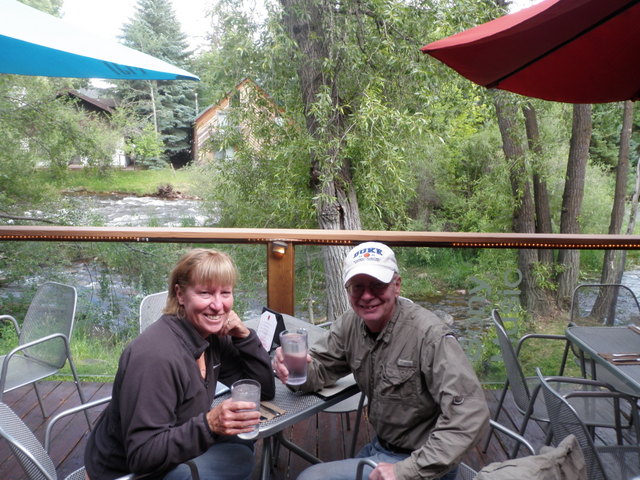
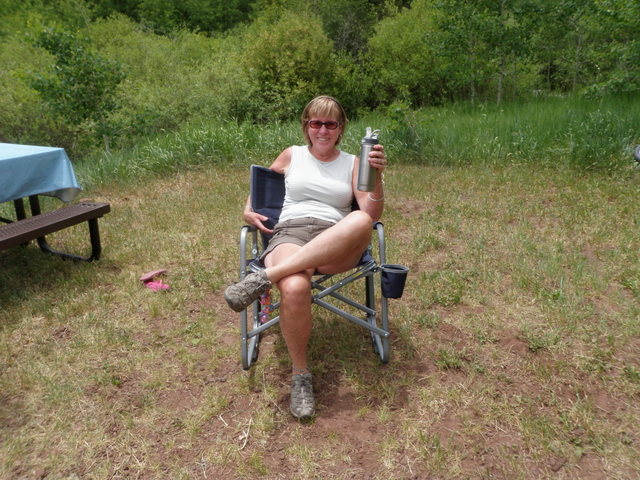
David Luther called early during the week of June 23 to remind me that he and his family would be in Winter Park from June 28 – July 2, and he invited Jane and I to join them for a few days. He was particularly interested in collaborating on some fishing. Fortunately Jane and I planned to return from our camping trip to the Frying Pan River on Saturday, so a trip to Winter Park fit in our plans. I called David back and asked if we could drive to their condo on Sunday and do some activities and then make Monday a fishing day. David approved of the plan and sent us directions to the condo.

On Sunday morning Jane and I packed our suitcases, bicycles, and fishing gear; and we departed for the Indian Peaks Resort. The Luther’s vacation condo was actually near Fraser, CO, but the town of Winter Park was only four miles away. It was a gorgeous day in the mountains and actually on the cool side. Since it was not a fishing day for David, his wife Becky was in charge of choosing an activity. Jane and I suggested a bike ride from Fraser to Winter Park and back, and Becky quickly embraced this idea. We jumped in our cars and drove to a bicycle rental shop on the southern edge of Fraser, and the Luthers rented cruisers and helmets.

We were right next to the trail, so once their seats were adjusted, we began our leisurely ride to Winter Park. It turned out to be a fun afternoon as we stopped at a restaurant in Winter Park for lunch and then continued on to Winter Park ski area where we rode the Zephyr lift to the top of the mountain. Here we found a snow bank and posed for photos and watched some crazy mountain bikers cruise down upper Hughes at a high rate of speed. Apparently youth knows no fear.

For our return trip David and his daughter Sarah and I biked on the Fraser River Trail, and it twisted and turned around several lakes and along the Fraser River. David L. and I were both scouting the stream as a possibility for Monday’s fishing expedition. It was high but clear with numerous slack water areas that appeared to be fishable despite the runoff level. When we returned the bikes, we spoke to the gentleman manning the fly shop and asked for his suggestion on where to fish the next day. He was hesitant to suggest a spot, but he did mention the upper Colorado River at the downstream end of Byers Canyon as a solid choice. When we returned to the condo, David L. and I researched stream flows on the various options and also reviewed several fly shop reports. We concluded that the upper Colorado was probably our best bet from a stream flow perspective, so that became our destination.

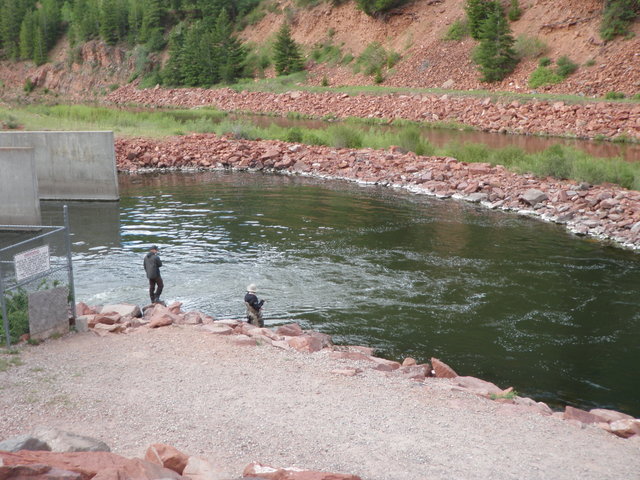
We woke up fairly early on Monday, and Jane departed quickly so she could make a 9:30 tennis match. David L. and I ate a light breakfast and then prepared lunches for our day on the river. I drove the Santa Fe so Becky and Sarah could use the rental car, and we reached Hot Sulphur Springs and the bottom of Byers Canyon by 8:30. We stopped and looked into the canyon, but we decided to move on as the steep canyon walls would probably shade the water until noon, and we wanted more warmth and daylight. A short distance beyond the bridge over Byers Canyon we found a turn off to Lone Buck access, and we descended a steep rough dirt road to the river and then made a left turn and drove to a small turnaround.

David Luther Almost Ready to Fish on Monday Morning

David Luther Almost Ready to Fish on Monday Morning

I straddled a fire pit for my parking space in order to get off the turnaround, and then David L. and I prepared to fish. Almost instantly mosquitoes began to swarm around David L.’s head so we both doused ourselves in sunscreen and insect repellent. Once we were geared up, we hiked on the dirt road and then cut down to an irrigation canal that paralleled the river. A path along the canal provided us additional downstream access, but eventually after a 20 minute hike we encountered a fence and a no fishing sign, and this is where we began our fishing day.
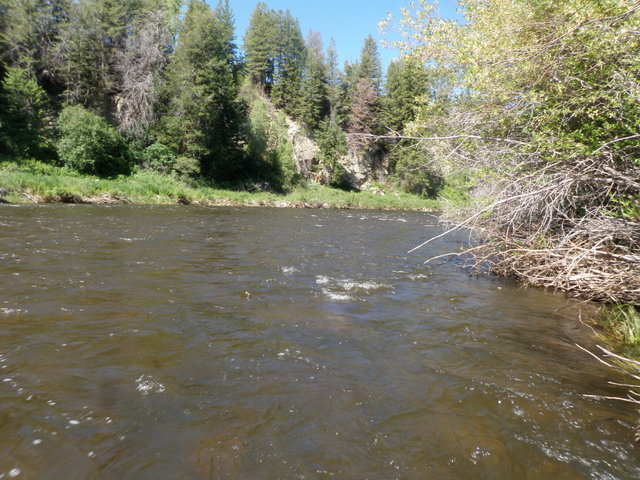
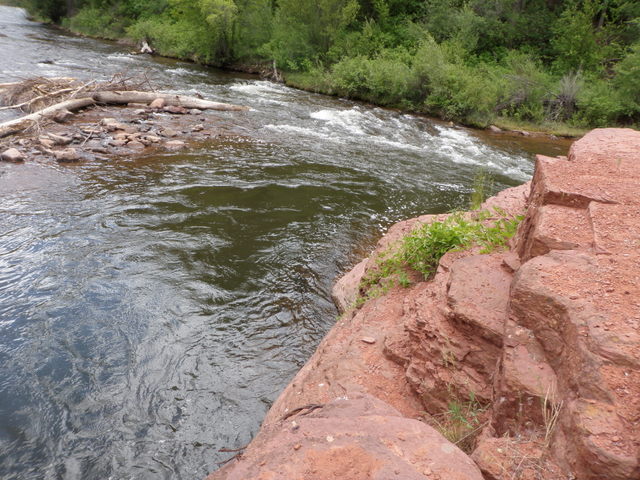
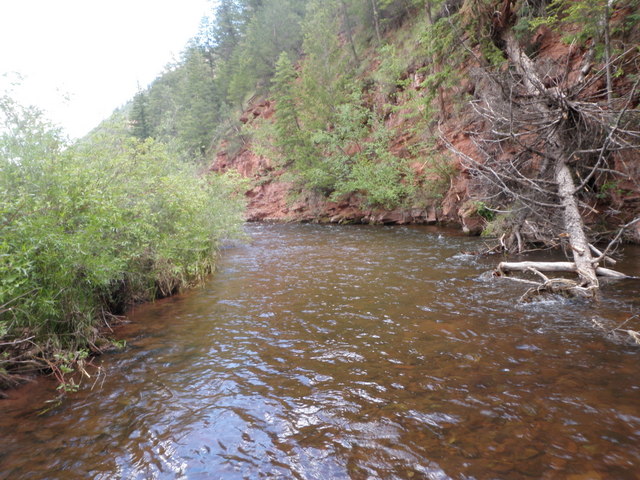
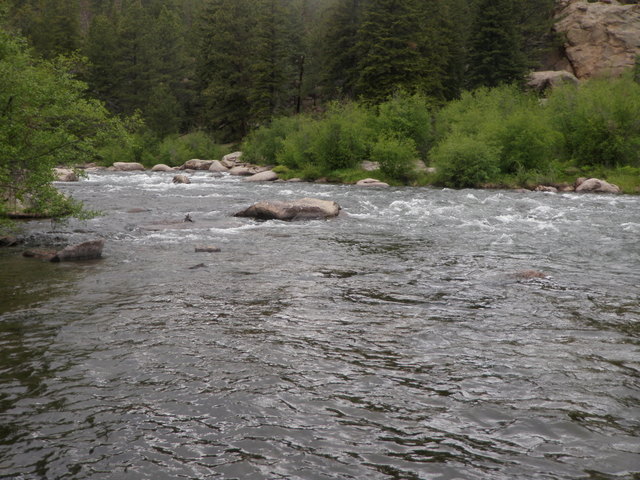
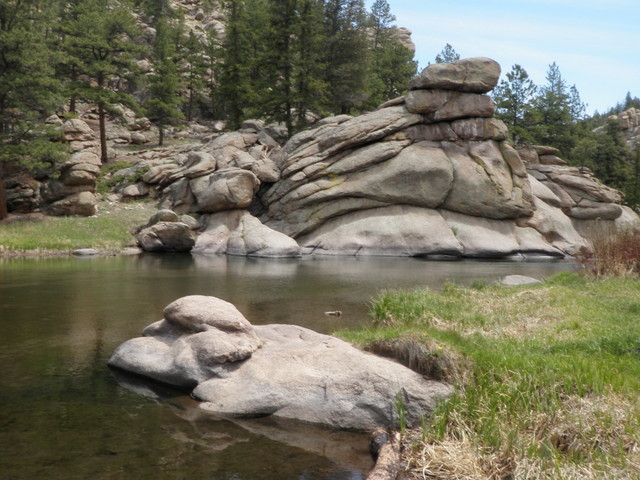
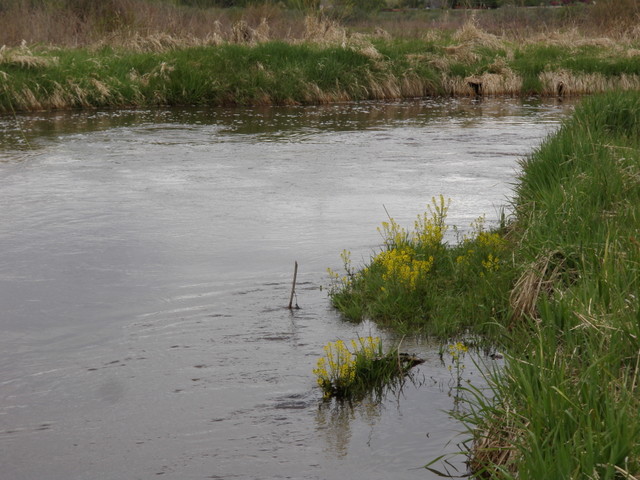
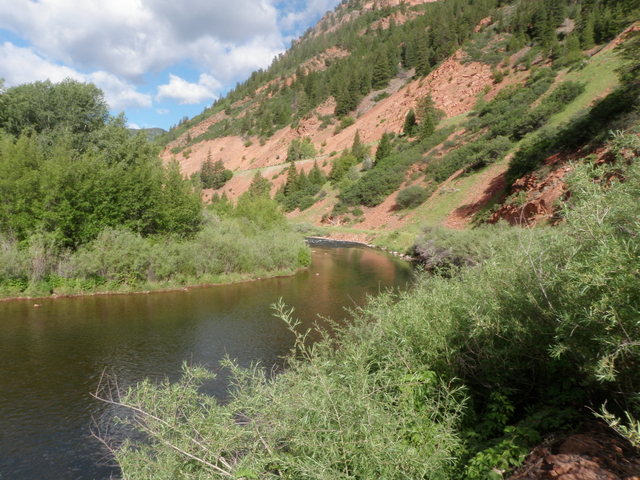
The Colorado River Was High and Slightly Stained

The Colorado River Was High and Slightly Stained

David L. committed to streamers and added a weighted head to his line to improve the sink rate. In contrast, I elected to fish with a Chernobyl ant and a beadhead hares ear nymph and began to move upstream along the bank seeking slack areas where fish could escape the high and slightly stained water. The flows were actually around 750 cfs, and for a large stream bed like the Colorado that is not extreme, but the water was moving at a fairly rapid pace in the middle of the channel. The Chernobyl and hares ear did not produce as I covered a fair amount of water and began to despair that there were no fish in this wide stretch of river. I read several articles that said the Colorado above the confluence of the Williams Fork was suffering due to withdrawals for the Front Range and the warming impact of the shallow Windy Gap Lake.
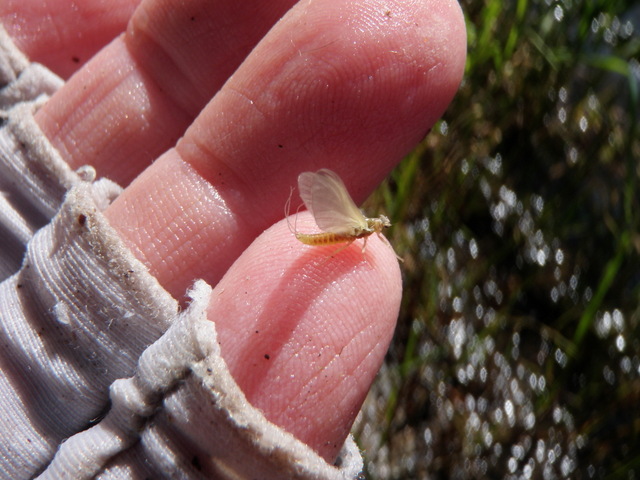
A Pale Morning Dun

A Pale Morning Dun

By eleven o’clock I began to notice a few mayflies emerging along the edge of the river and after ten minutes or so the intensity of the hatch increased. In fact between 11 and 12:30 I fished through an intense pale morning dun hatch. There were emergers and cripples and duns all over the surface, but the fish didn’t seem to be interested. Initially I tried adding a pheasant tail nymph as a dropper, but it had no impact. When greater numbers of duns appeared on the surface, I converted to a single light gray comparadun; the fly that has served me well on the Colorado River during PMD hatches later in the summer. I spotted two or three surface rises, but that was the extent of surface interest despite an intense hatch that lasted 1.5 hours. Toward the end of the hatch I spotted a cinnamon colored parachute dun in my front pack that I’d purchased for the PMD hatch on the Frying Pan River, so I clipped off the ineffective comparadun and replaced it with the purchased fly.
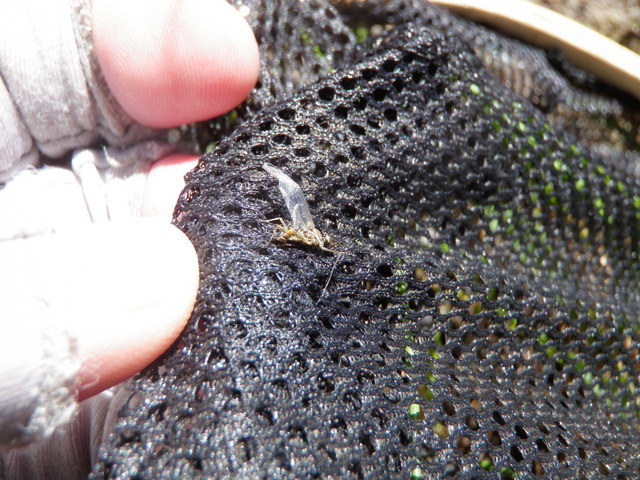
Never Emerged

Never Emerged


Much to my surprise as I drifted the fly to my right in some slightly faster water, a fish rose and sucked it in. I played the fish for a brief period and then my line went limp, and when I reeled it up, I discovered that the fly was gone as apparently I’d tied a poor knot.

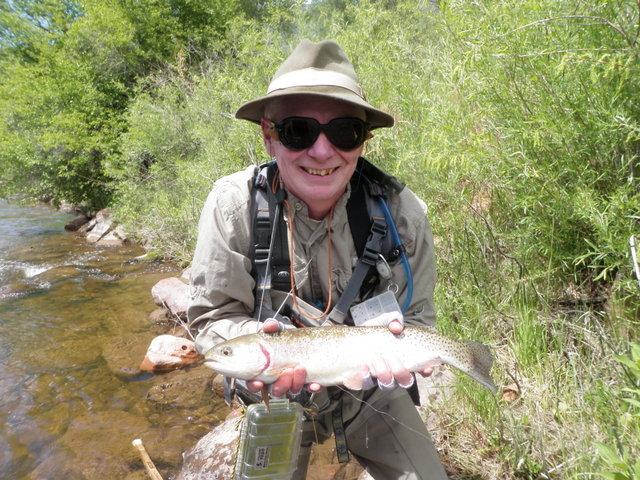
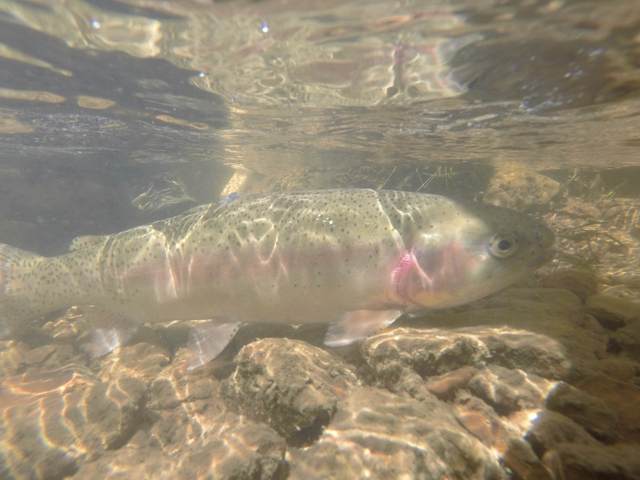
When the pale morning dun hatch ended, I tied on a yellow Letort hopper as I hoped it might imitate a golden stonefly, as I spotted these large insects during visits in previous years. I also exchanged the hares ear nymph for an iron sally since one report suggested that yellow sallies were beginning to appear. Finally after an hour or two of fishing, a small brown snatched the iron sally, and I had my first fish of the day. Shortly after this bit of action, I added a salvation nymph as my third fly, and this produced a chunky eleven inch rainbow.

Unfortunately these two fish would be my only catches during three and a half hours of intense morning fishing. Finally David L. appeared with a big grin on his face, and we decided to walk back to the car for our lunches. David L. informed me that he had a great morning and landed at least six fish including quite a few in the fifteen inch range. He showed me his streamer, and it was an ugly olive concoction with a wide pearl chenille body.

After lunch I decided to jump on the streamer bandwagon, so I stashed my four weight Sage in the Santa Fe and got out my Loomis five weight. I swapped my floating line for a sinking tip line and extended the short 0X leader with some additional 2X. David L. looked at my streamer box and pointed to a sculpzilla that I purchased for my Argentina trip, so I tied the big olive weighted monstrosity to my short heavy leader. I was now prepared to go deep and ugly.

David L. negotiated a crossing of the wide river so he could reach a deep drop off near the opposite bank. His ability to cross was proof that the river had recently descended to manageable levels for fishing. I meanwhile circled back to the area I’d fished in the morning with my ineffective dry/dropper combination. I now concluded that I was not getting deep enough, and the water remained too high and cold for fish to be looking for food on the surface.

I began working the sculpzilla in a variety of techniques including tossing upstream and allowing to dead drift, throwing three quarters upstream and allowing it to swing, and stripping as the streamer reached the end of its drift. I even executed a dangle and simply allowed the streamer to hang and pulse downstream. It wasn’t long before I felt a tug shortly after I dropped the big ugly in some frothy water behind an exposed boulder, and I set the hook and battled a nice hard fighting fish. The fish charged downstream and circled back up toward the hooking point, and then streaked downstream a second time. Once I stopped the run, the fish made a sharp stop and turn and the fly line fell limp. How could a trout escape such a large hook? I can’t answer my own question, but the fish did in fact fight for and achieve its freedom.

I continued working the streamer with renewed focus and felt another tap on the swing, and then also experienced multiple taps on the dangle. I lost confidence in the sculpzilla so I switched to a large dragonfly nymph. This had a wide body like the Luther streamer, but did not contain any flash. The dragonfly nymph was a bust so I next tied on a big black woolly bugger with a beadhead and flashabou strands in the tail. Again I found myself simply exercising my arm. I was observing a fair number of caddis on the shrubs along the river, and each time I pushed aside a branch so I could move upstream, several would flit over the river.

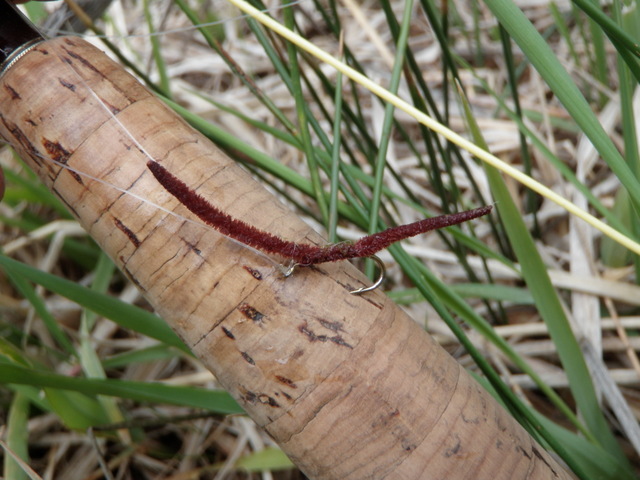
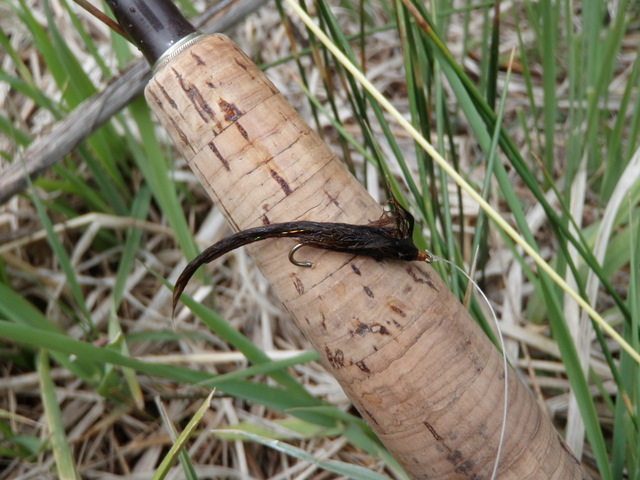
Black Woolly Bugger Spent Some Time on the Line

Black Woolly Bugger Spent Some Time on the Line

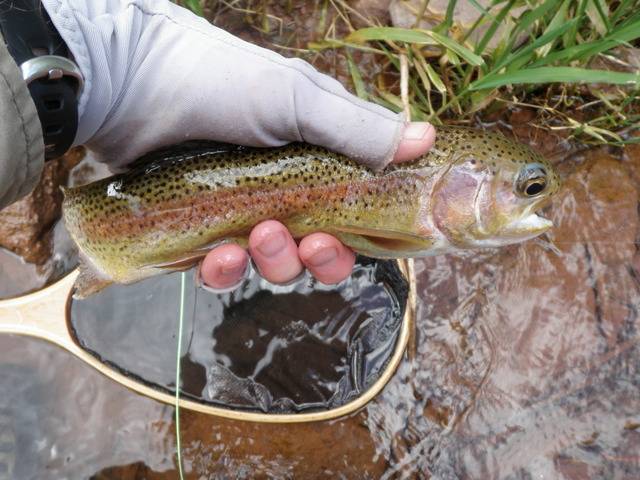
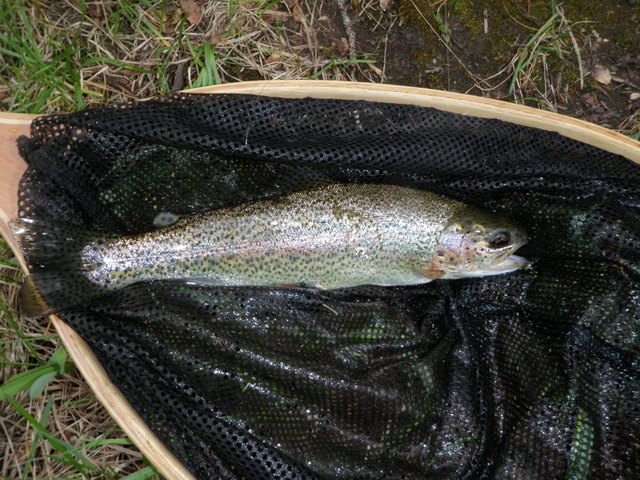
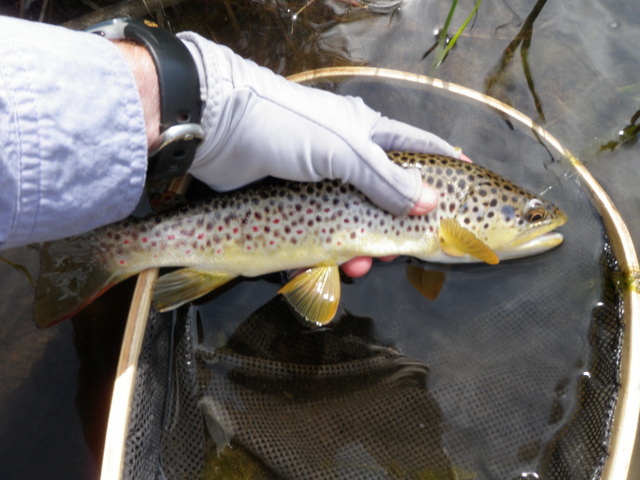
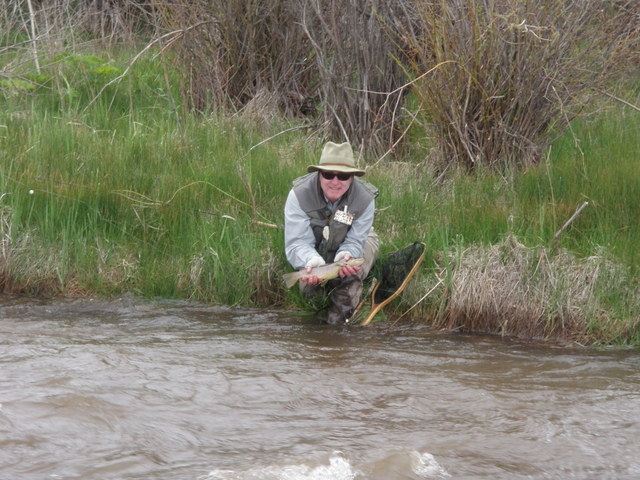
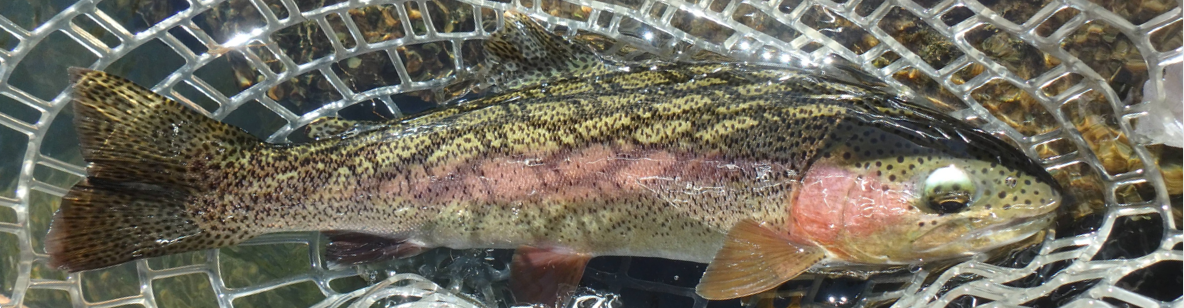
Perhaps the Nicest Fish of the Day

Perhaps the Nicest Fish of the Day


I decided to tie some tippet to the bend of the woolly bugger and add a second fly; an emerald caddis pupa. I’m guessing this was an unconventional approach, but it was a combination of streamer fishing and wet fly swinging. Much to my surprise this method yielded two decent brown trout and in both cases I cast to the very top of a long run, and the fish nabbed the caddis pupa as it began to drag downstream with the current.
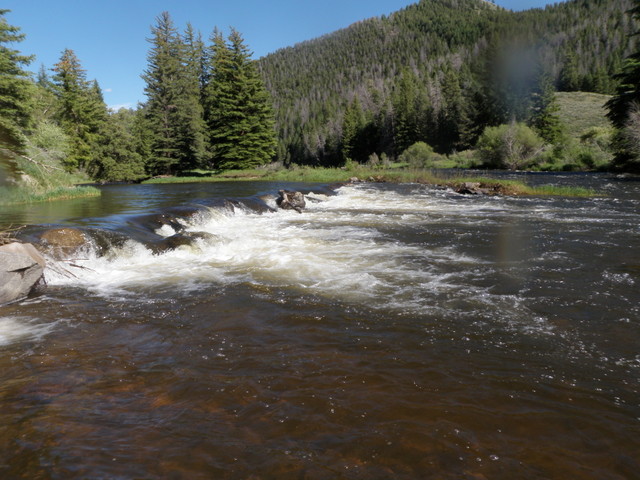
A Small Cascade

A Small Cascade

I stuck with the bugger and caddis combination for much of the remainder of the afternoon until I reached a three foot waterfall just below a small midstream island. It was now late afternoon and the sky clouded up a bit and I didn’t feel like continuing further so I retreated to the car. I’d moved through some very attractive water next to the bank so I decided to revert back to my dry/dropper approach for the remainder of the evening. I secured my Loomis five weight back in the case, and extracted the Sage that remained in the back of the Santa Fe. At least I would not need to take time to rebuild my rod and line.
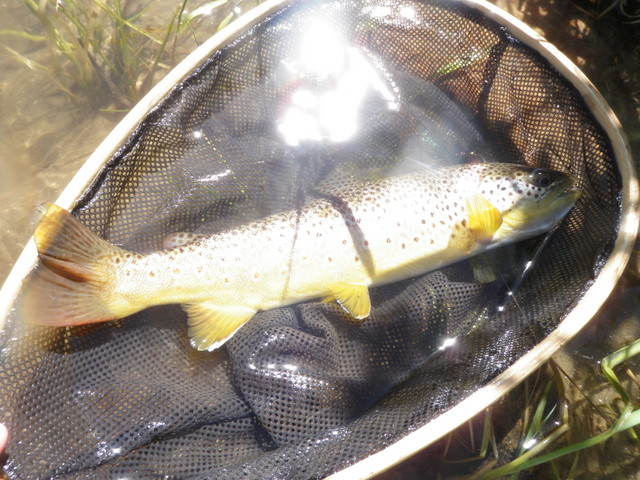
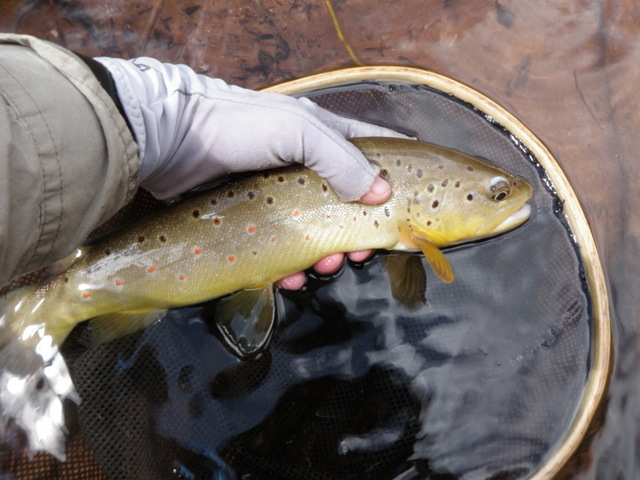
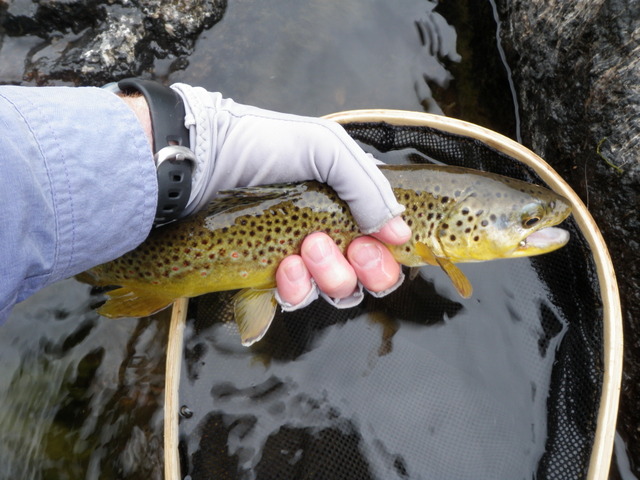
Another Nice Colorado River Brown Trout

Another Nice Colorado River Brown Trout

For the next several hours I worked my way back upstream from the Santa Fe to beyond the waterfall with the Chernobyl ant and salvation nymph. I covered quite a bit of water, but I did have enough success to keep things interesting. Three nice browns were landed with each in the chunky 12-13 inch range. In addition I foul hooked two fish and had another nice fish that shed my fly.

By 7PM I’d gone 50 yards above the waterfalls, and the water above me did not appear to be very appealing so I began hiking back down to the car. Along the way I spotted David L. on the opposite bank working a girdle bug through likely holding spots. I motioned that I was returning to the car, and he signaled that he would cross and return as well.

It was a long day of fishing and I only landed seven fish in ten hours, but I experimented with some streamers and had some fun with the dry/dropper combination late in the day. David L. proved to me that streamers can be quite effective, and I was pleased to discover that the Colorado River above the Williams Fork confluence does hold a fair number of decent fish.
Frying Pan River – 06/27/2014

Time: 7:00AM – 9:00AM; 11:00AM – 4:00PM

Location: Big Bend just below the dam and later between mile marker 3 and 4

Fish Landed: 10

Frying Pan River 06/27/2014 Photo Album

I’ve read significant amounts of literature about the Frying Pan River, and one of the most frequently mentioned places is the Toilet Bowl. The Toilet Bowl is located where water gushes from the bottom of Reudi Reservoir and forms a huge swirling bowl. One of the prevalent foods that flush through from the dam are mysis shrimp; a small translucent freshwater crustacean. According to written accounts, huge trout reside in the Toilet Bowl and gorge on the mysis shrimp that pour from the outlet of the dam.

A Better View of the Toilet Bowl

A Better View of the Toilet Bowl

My new fishing friend, Danny Ryan, apparently also read these stories, and he was anxious to explore the iconic Frying Pan hole on Friday morning. We were camping at Reudi Reservoir within a couple miles of the bowl, and Danny only had the morning available to fish before he needed to return to Denver and pack for a two week work assignment in Alaska. Why not get up early and head to the Toilet Bowl and secure a spot before the hordes arrived later in the morning? This became our plan as we slid into our tents and sleeping bags on Thursday evening.

I woke up at 6:15, and as I climbed out of the tent, Danny stuck his head out of his tent and greeted me. Clearly this young man was not going to oversleep. For the first time in my life I went from my sleeping bag to my waders without any intermediate step. We jumped into Danny’s Camry and made the short trip to the parking lot, and we were disappointed to discover a white pickup truck occupying the first slot closest to the river. In spite of our best efforts, another fisherman had beaten us to the spot. Several milk crates were on the ground next to the truck, so I hypothesized that the fishermen were still sleeping, but before I could suggest anything else, Danny jumped from the car and ran to a point overlooking the Toilet Bowl.

In a bizarre coincidence, Danny recognized the pickup truck as belonging to another Instagram acquaintance named Justin who goes by the screen name of Screamingdrag. Danny has only lived in Colorado for a year and knows only three or four other fishermen and had somehow stumbled into one of those fishermen at the Toilet Bowl at 7AM on a Friday morning in June. After Danny and Justin hugged like long lost brothers, Justin invited us to join him at the Toilet Bowl, but we decided to opt for a bit more space and chose our second choice; the Big Bend pool just downstream. I think Danny and I both felt that Screamingdrag and his friend deserved to have the Toilet Bowl to themselves as they drove all night and slept in their pickup truck next to the river to obtain first rights.

Big Bend Pool Below the Toilet Bowl

Big Bend Pool Below the Toilet Bowl

Danny and I crossed the river in some shallow flats that separated the Toilet Bowl and Big Bend and configured our lines to fish a mysis shrimp and zebra midge larva. It was quite chilly early in the morning particularly in the shadows created by the steep canyon wall, and we were standing in cold water just released from the bottom of the dam that probably registered 45 degrees on a stream thermometer. I began to drift my nymphs at the top of the large pool, and Danny took a position near the tail. It was strangely silent as I flipped cast after cast to the head of the pool and allowed the tandem subsurface offerings to dead drift through the slow moving water.

As this was taking place I began to notice very sporadic bulges near the surface and occasional rises. An hour of dredging with the nymphs failed to interest any fish, so I removed the flies, split shot and strike indicator and tried a black parachute ant. Previous experience has taught me that trout love ants and often sip them opportunistically even if they do not represent the predominant food source. This was a great train of thought, but it didn’t produce a fish. I’d seen a fair number of small caddis flitting about on Thursday, so I removed the ant and tied on a size 16 gray deer hair caddis and covered the top one half of the pool with this imitation. Again my strategy was soundly rejected.

By 8:30AM Danny and I met up and compared notes and discovered that neither of us had landed a fish or even experienced a refusal. Two hours of fishing in Big Bend allowed me to improve my stack mending technique, but that was the most positive outcome. Both of us were feeling quite hungry after skipping the necessities of life to reach the Toilet Bowl early, so we agreed to return to the campground for some sustenance.

We finished removing our vests and packs and threw our rods in the car, when Danny remembered that he needed to say goodbye to Screamingdrag, so he darted off to the edge of the parking lot. Apparently Justin and Danny have some sort of sensory connection, because at that very moment Sceamingdrag appeared on the other side of the stream and called out Danny’s name. Justin had spotted some nice fish and was returning to the parking lot to recruit Danny to “catch the biggest fish of his life”. Danny asked if he could use Screamingdrag’s rod, and Justin agreed, so off they went to the channel on the far side of the Toilet Bowl where a small stream joins the Frying Pan and creates a wide slow-moving lagoon.

Justin and Danny Return from Landing 21" Cutbow

Justin and Danny Return from Landing 21″ Cutbow

I waited for twenty minutes or so and killed time by walking back to Big Bend and taking some photos. Eventually the two Instagram buddies appeared, and Danny announced that he had in fact caught the largest fish of his life, a 21″ cutbow that Screamingdrag guided him to. Justin invited me to return later in the weekend, and he would put me on a similar fish, and then we said our goodbyes and returned to the campground. Danny’s last hurrah before heading to Alaska proved to be quite rewarding.

Jane prepared a delicious breakfast of scrambled eggs, and then Danny packed up his tent and departed for Denver and beyond.  I stayed in my waders as the plan was for Jane to drop me off along the river so she could keep the car and go on a hike to Savage Lake. I made a lunch and shoved it in my backpack along with my raincoat, and then we made the drive back downstream along the river. Because there weren’t any large hatches at the end of June, I was convinced that I could catch fish with buggy flies anywhere along the Frying Pan River, so I decided to explore some new water. I asked Jane to pull into a large pullout above mile marker 3, and I planned to hike downstream to the first available path and then fish upstream to whatever point I could reach by late afternoon. Jane agreed to return to the drop off point after her hike, and then I would loop back and meet her there.

I held to my plan and hiked downstream to a place where the river curved back toward the  road and away from some spectacular vertical red cliffs. Here I found a faint path through the brush that led to the river. I began my second fishing venture of the day with the tried and true Chernobyl ant and hares ear nymph, but this combination did not produce, so I added a salvation nymph to the point. The salvation nymph is becoming the rock star of 2014, and Friday would prove to be no different than earlier outings, as I landed three medium size browns before lunch on the attractor nymph.

Big Pool Created by Large Red Rock

Big Pool Created by Large Red Rock

At 12:30 the sun was high and the air warm so I decided to take a break to eat my lunch. I found a nice perch on a huge red rock that jutted into the river below the pullout where Jane dropped me off. I observed the nice deep pool in front of the rock and the riffle at the head of the pool, but I didn’t see any insect activity or active fish. After lunch I slid down the side of the rock and carefully maneuvered to a position where I could cast to the seam created by the riffle at the drop off to the deep hole. On the third or fourth cast I spotted a swirl near the Chernobyl ant and set the hook only to discover that I foul hooked a pretty 14 inch rainbow trout. I was disappointed but pleased to see a fish attracted to the surface fly.

I continued fishing the left bank, but only landed one 12-13 inch brown between 12:30 and 3:00PM as the bright sun and warm temperatures made this an unusually slow period. By 3PM the periodic clouds became larger and the wind stronger, but I was never concerned about rain. The cloud cover did, however, provoke a very sparse blue winged olive hatch so I moved the salvation nymph to the top subsurface fly position and then knotted a size 20 soft hackle emerger as the point fly. This paid a small dividend as a twelve inch brown attacked the emerger in a shallow riffle below a small island.

Small Right Channel Around Island

Small Right Channel Around Island

The Rainbow Lifted from the Net

The Rainbow Lifted from the Net


The bank along the left channel next to the island appeared to be nearly impassable due to dense vegetation, so I waded up the smaller south channel to get above the island. Over the next hour I moved fairly quickly between attractive locations and added five additional trout to my count. All these fish attacked the salvation nymph, and the net felt the weight of a fourteen inch brown and a thirteen inch rainbow. It’s not clear whether the increased catch rate resulted from the overcast skies or the difficult access to this stretch of river, but nevertheless I enjoyed the fast action immensely.

Same Brown Held Above Net Momentarily

Brown Held Above Net Momentarily

By 4:10PM I reached a point where I could ascend the steep bank and reach the shoulder of the road, so I took advantage and made the climb. I quickly hiked back along the road to the large pullout where Jane dropped me off, and there I found her reading in her new camp rocking chair. I changed out of my waders and returned my rod to its tube, and we continued on to Basalt where we enjoyed beers and appetizers on the deck at the Riverside Cafe. It was an appropriate ending to a fun day on the Frying Pan River.

Jane and Dave Toast Basalt with Waters

Jane and Dave Toast Basalt with Waters


Frying Pan River – 06/26/2014

Time: 1:30PM – 5:00PM

Location: Mile marker 10.5 below spring

Fish Landed: 9

Frying Pan River 06/26/2014 Photo Album

The rivers and streams in Colorado are gradually receding, but not fast enough for an avid fly fisherman like myself. Three weeks elapsed since my fun day in Wisconsin, and the brief foray in Eleven Mile Canyon only served to whet my appetite for more. I exchanged some emails with my new fishing friend, Danny Ryan, and he suggested doing a trip a bit further away from Denver such as the Frying Pan River.

I fired up my laptop and learned that the flows on the Frying Pan were 220 cfs, and that reading is nearly ideal for my favorite Colorado tailwater. I also noted that the Taylor River below Taylor Reservoir was at 401 cfs, and that is an attractive flow as well. I checked with Jane to see if she was interested in a camping trip to Reudi Reservoir, and she indicated that she approved. I wasn’t sure what campsite availability would be, so I logged into the web site to make reservations and discovered that twelve sites were unreserved so I staked my claim to number 7 in Little Maud. Jane and I were now committed to the trip, so I informed Danny of our plans in hopes that he and his girlfriend, Juls. would also make the camping trip to the Frying Pan River.

Early in the week I heard from Danny, and Juls was unable to accompany him, and he needed to prepare for a two week work assignment in Alaska beginning on the weekend, so he could only stay for one night. He asked if he could put his tent up on our site Thursday night, and of course we agreed. Danny’s plan involved getting up very early on Thursday morning, and then leaving on Friday after some early morning fishing right below the dam. I asked Danny to describe his car, so I could look for it along the river on our way from Basalt to Reudi Reservoir on Thursday.

Jane and I finished packing the Santa Fe with our excessive array of camping gear on Thursday morning and departed by 9AM. The drive was relatively uneventful and by noon we were driving up the twisting two lane road that follows the Frying Pan River. Sure enough at mile marker four we spotted Danny standing next to his green Toyota Camry with a Missouri license plate. He informed us that he’d had a good morning and was about to move further upstream to another location. I told him that I’d seek him out after we ate lunch and shed some of our cargo at the campground.

Jane on Her New Camp Rocking Chair

Jane on Her New Camp Rocking Chair

Much to our surprise, Danny appeared at our campsite as we were eating lunch. Apparently most of the pullouts that he targeted were full so he continued on so he could pick me up and allow Jane to have the Santa Fe for the afternoon.

After I finished lunch, I put on my waders and threw my gear in the trunk of the Camry, and we were off on our Thursday fishing adventure on the Frying Pan River. I suggested parking at the spring or below the spring if no one else was there, and Danny agreed as it was only his second visit to the fabled Frying Pan River. The spring pullout was open, but we continued downstream to the border with the next private water and parked there at mile marker 10. The river was wide enough that we decided we could fish both sides as long as we stayed across from each other.

First Fish Landed on Thursday Afternoon Was a Nice Brown

First Fish Landed on Thursday Afternoon Was a Nice Brown

Danny began his afternoon with a nymph rig, but I elected to start with my traditional Chernobyl ant and beadhead hares ear nymph. This was the earliest in the season that I ever fished the Frying Pan River, and the reports I read suggested there was very little mayfly activity, so I felt that the fish would be more opportunistic compared to my normal visits in late July, August and September. Within the first 15 minutes I foul hooked a brown trout that refused the Chernobyl ant, and as I reacted, I set the trailing hook in the fish.

Unfortunately after this early encounter with a fish, I continued along the left bank with no action, so I decided to make a change and tied on a yellow Letort hopper and then added a salvation nymph as a third fly behind the hares ear. The deer hair wing of the Letort hopper is more visible than the low riding Chernboyl ant, and I was hoping that perhaps the slender body and profile of the hopper might imitate golden stoneflies should they be present.

18" Rainbow Was Number Two

18″ Rainbow Was Number Two

The stonefly theory never materialized but the addition of the salvation nymph paid big dividends. The hopper dipped as I was across from Danny, and I set the hook and played and landed a strong 14 inch brown trout. The salvation nymph was indeed living up to its name as I cast further upstream along the bank and again saw the hopper disappear. I set the hook and this time I battled an eighteen inch rainbow that eventually flopped into my net. This brought Danny across the river so that he could snap some photos while I attempted to pose with the scarlet beauty.

Danny Took an Underwater Photo with His New GoPro

Danny Took an Underwater Photo with His New GoPro

Since I’d landed two very nice fish with the salvation nymph, I asked Danny to accept two of my flies so he could experiment with them over the remainder of the afternoon. A short distance above the spot where I landed the large rainbow, we encountered a small island, and I elected to fish the pockets on the side of the island that was away from the road. I also realized that the Letort hopper was not producing, and it was not very buoyant due to the dubbed body, so I swapped it for a pool toy. The large foam pool toy was much more effective at supporting the two trailing nymphs in the turbulent pocket water that I was now prospecting. Danny meanwhile found a stone to sit on and rest and observe, as he was feeling the effects of his early start to the day.

Over the remaining two hours of the afternoon I used the pool toy with the hares ear and salvation nymphs as droppers and picked up seven additional brown trout at a fairly regular pace. I was using my favored technique of popping casts to all the likely holding spots, but then quickly moved on if a fish did not emerge after three or four casts. I gradually angled across the middle of the river above the island and began working the south side, and I was pleased to see that Danny resumed fishing the bank closest to the road, and he began landing fish on the salvation nymph.

Looking Downstream at Danny

Looking Downstream at Danny

Eventually we were separated by 50 yards or more. Danny reached some juicy deep slots between the bank and the main current, and I later learned that he was slowed down my some nice catches. As I was now directly across from the spring, I checked my watch and discovered that it was 5PM. Some of the best water between mile marker 10 and 11 was ahead of me, but I did not wish to commit to crossing again to the south bank, so I carefully waded back to the left bank and climbed to the shoulder of the road.

Danny Displays His Nice Catch

Danny Displays His Nice Catch

I quickly hiked back downstream and found Danny with a sharp bend in his rod, and as I looked on, he landed his own 18 inch rainbow. It was his second of the day as it matched a pink striped beauty that he landed in the morning. I returned the favor and snapped some photos of Danny with the rainbow, and then we called it quits for the day. We both rode the short distance back to Little Maud campground in a euphoric state. Danny informed me that in addition to the rainbow, he landed several other fish in excess of 15 inches and also battled a large fish that escaped his fly. A chubby chernobyl was performing well for him along with a large black foam creature, and the salvation nymph also contributed greatly to his afternoon success.

As we backed into the parking space at site number 7, we discovered that Jane prepared appetizers, so we joined her and sipped some tasty beers while telling fish stories. It was a great start to a three day camping trip.


South Platte River – 06/14/2014

Time: 2:30PM – 5:00PM

Location: Upstream from the second of the twin tunnels in Eleven Mile Canyon

Fish Landed: 1

South Platte River 06/14/2014 Photo Album

For Fathers’ Day weekend 2014 Jane and I planned our first camping trip of the year. For the last three or four years we have gone camping; however, we discovered that this is a popular choice for many fathers in the state of Colorado. Now that Jane is retired, however, we felt we were safe to secure a national forest campsite if we departed early on Friday as we would arrive ahead of those who had to work on the last day of the work week.

After a brief discussion we settled on Spruce Grove, a nice campground along Tarryall Creek in Pike National Forest. We packed most of our gear on Friday morning and then headed to the supermarket for some last minute food. Upon our return we loaded the remaining items and began our drive to the southeast corner of Park County. We camped at Spruce Grove quite a few years ago, and it remains one of our favorite campgrounds. There are 20+ campsites in total but seven of them are walk-ins in one of the nicest settings in Colorado. From the parking lot one hikes down a short path and then crosses a footbridge and encounters five sites on the north side of Tarryall Creek. Huge boulders loom over these sites while sweet scented ponderosa pines are scattered among the area. The forest floor consists of coarse natural reddish gravel.

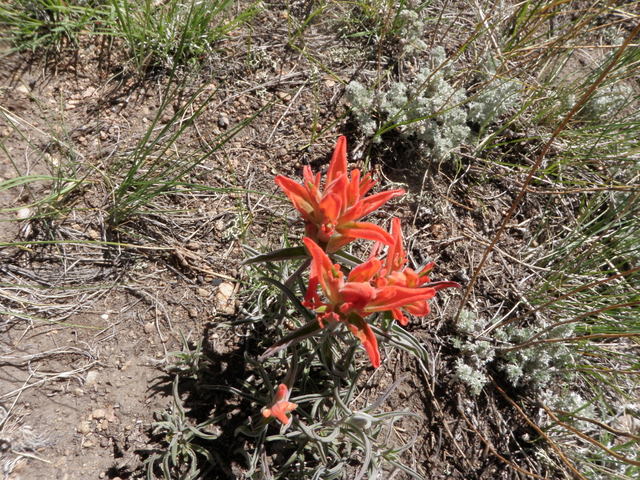
Indian Paintbrush

Indian Paintbrush

Jane and I both had our hearts set on revisiting one of the walk-in sites, but when we arrived, we discovered that they were all occupied or reserved. Next we cruised the drive-up sites along the road that circles through the campground, and these were all reserved or taken as well. We couldn’t believe our bad fortune, or was it really a lack of planning? We resolved to make reservations for future trips or at least check campground availability.

With Spruce Grove out of the picture, we moved into crisis mode. My backup option was Round Mountain just off of U.S. highway 24 five miles beyond Lake George and one-third of the way to the top of Wilkerson Pass. We used a shortcut to avoid returning to Lake George and found Round Mountain less than .5 mile down the pass toward Lake George. We held our breaths as we entered and circled the campground, but we were relieved to discover quite a few empty sites and eventually settled on site number 13.

After eating lunch and putting up our tent, we decided to enjoy a bike ride. I was familiar with Eleven Mile Canyon, so I suggested that we ride from the entrance hut to the dam and back since it is a very gradual grade. Jane agreed, and we had a great time carrying out this plan. We began a mile or two beyond the entrance gate and probably biked a total of 14 miles. Of course as we cycled along the beautiful stream as it cascaded through the narrow canyon, I noticed that the flows were high, but the water was quite clear and many spots beckoned as high water fish-holding locales.

Perspective

Perspective

On Saturday Jane and I took a two hour hike into a different canyon location, although this experience was the opposite of Eleven Mile Canyon as we encountered only one other party of five during the entire round trip. In the afternoon Jane agreed to accompany me back to Eleven Mile Canyon so that I could test the waters for a few hours to see if my observations of Friday would deliver some fishing action on Saturday.

Cold Water Refreshes

Cold Water Refreshes

By the time we drove to Lake George and purchased some propane to break a twenty dollar bill and secure some ones to pay our entry fee it was 2PM. We drove up the canyon to just beyond the twin tunnels amidst significant weekend traffic and many fishermen. I climbed into my waders and strung my fly rod and then descended the steep bank to the river, and I was finally in a position to begin casting by 2:30PM. I spotted a pair of fishermen below the car, so I hiked up the road a short distance before dropping down the embankment thus allowing a 50 yard buffer between me and the two fishermen below.

I was convinced that the higher flows (250 cfs) would cause the fish to recognize worms and scuds in the water column, so I tied on a chocolate San Juan worm and below that added a pink squirrel that I purchased at Driftless Angler. I fished this combination with a thingamabobber and split shot, but despite covering some very attractive water, I had no success. I began cycling through alternative offerings including a beadhead hares ear and a salvation nymph with equally disappointing results.

South Platte River in Eleven Mile Canyon

South Platte River in Eleven Mile Canyon

As I was covering the likely runs, riffles and seams with my nymphs I spotted a swirl above me in some relatively slow moving shallow water, so after 45 minutes of futile prospecting with nymphs I decided to switch to dry flies. Shortly after seeing the swirl I spotted a yellow sally that launched from a willow along the river and then dapped on the surface in front of me several times. Could this be what provoked the earlier rise above me?  I switched to a double dry fly set up with a Chernobyl ant and a muggly yellow sally. This pairing was as unproductive as the nymphs had been, so I removed the yellow sally and resorted to my “go to” beadhead hares ear nymph. As the day advanced into late afternoon, some gray clouds appeared and blocked the sun. This created difficult lighting conditions, so I elected to switch the Chernobyl ant for a tan pool toy thus making it easier to follow my flies on the riffled surface of the river. A bit after this change I clipped off the disappointing hares ear nymph and substituted an emerald caddis as I spotted two or three caddis fluttering about along the bank.

I chose emerald thinking it might be more visible and attract some interest. Sure enough at 3:50 as I was considering an ascent of the neighboring steep bank, a ten inch rainbow grabbed the caddis pupa as it began to swing at the end of the drift. I was resigned to catching no fish, so this was quite a windfall late in my fishing day. After I released the rainbow, I reeled up my line and found a steep path to the dirt road where I found Jane still in the Santa Fe reading her book. I expected Jane to be riding her bike down the canyon, and she still wanted to explore that option, so we agreed to drive further up the road to a point within a mile of the dam.

My Only Catch on Saturday Afternoon

My Only Catch on Saturday Afternoon

Jane encouraged me to fish for another hour while she planned to bike down the canyon to the pullout where we began our bike ride on Friday, and she would wait there for me to meet her. I walked down the road a bit to the same place that I’d fished in early April. During that visit I’d witnessed huge quantities of trout in the riffles of moderate depth feeding regularly on an intense blue winged olive hatch. This would not be the case on Saturday, and in fact I did not witness nor see evidence of fish during my final one hour of fishing.

I converted back to nymphs with a strike indicator and worked upstream with the emerald caddis and a salvation nymph, but you could not prove to me that any fish were present in this stretch of the South Platte River. Unlike the water I’d just departed from, this location was more similar to the South Platte River near Deckers with long riffles flowing over a granular sand bottom. It was more difficult to pinpoint likely fish holding locations, so I covered a lot of water and continually moved upstream in hopes of finding a pod of fish. This hope however was dashed as 5PM approached, and I had no success. In fact I was anxious to quit as the sky grew darker and a biting wind swept down the canyon on a regular basis.

I slowly drove back down the canyon as there was a decent amount of oncoming traffic, and by 5:20 I spotted Jane pedaling the opposite direction. I turned into a nice pullout, and we loaded Jane’s bike and returned to the campground where we made hot drinks and pulled on three layers to combat the chilling wind under overcast skies. It was definitely a slow 2.5 hours of fishing, but I managed to avoid a skunking and enjoyed the beauty of Eleven Mile Canyon. I reviewed the flows on my favorite Colorado streams on Monday, and the graphs definitely indicate a declining trend. Hopefully some edge fishing will be available within a week or two.

Camp Creek – 06/05/2014 PM

Time: 5:30PM – 7:30PM

Location: From where I ended in the morning to the fence behind Viola Park

Fish Landed: 6

Camp Creek 06/05/2014 Photo Album

I was still glowing from the excellent morning of fishing when I discovered Jane walking along the highway on her return from shopping in Viroqua. We were both anxious to undertake a canoe trip so we changed into our swimsuits and jumped in the Ford Fiesta and made the drive to Ontario, WI where several canoe outfitters were located.

We traveled north through Westby and then on to Cashton where we turned eastward and drove to Ontario, WI. We were both amazed at how similar this area of Wisconsin was to central Pennsylvania. The landscape was a patchwork quilt of neat farmland. We rolled from hills to valleys, crossed small streams and encountered three or four Amish driving their horse drawn carriages on the rural roads. We also passed a few farms with horse drawn plows in action.

Lunch Spot in Ontario, WI Where Our Canoe Trip Began

Lunch Spot in Ontario, WI Where Our Canoe Trip Began

Since Ontario is a hub for canoeing we assumed there would be numerous eating establishments catering to the tourists who flocked to this area. This turned out to not be the case as there were four canoe outfitters but only one restaurant, the Milk Jug Cafe. On this gorgeous Thursday, Jane and I were essentially the only patrons of the Milk Jug Cafe, and we soon discovered that it was free milk month for all of June. Jane enjoyed a free cold glass of milk with her lunch while I passed on the offer due to my lactose intolerance.

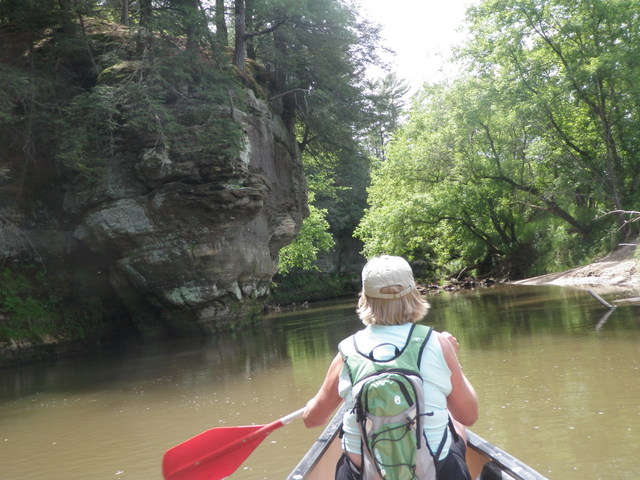
Approaching Another Ledge Cliff Area

Approaching Another Ledge Cliff Area

For some unknown reason we selected Mr. Drifty Canoes over Mr. Duck and Titanic. Titanic didn’t convey safety to us, and Mr. Duck seemed a bit juvenile. We paid for a two hour float, and then Mr. Drifty led us to the take out at bridge four where we left our rental car. We rode back to Ontario in the Mr. Drifty van, and then we jumped in the canoe and pushed off on our river adventure. Jane claimed a seat in the bow, and that left Dave steering from the stern. We actually completed the float in one hour and fifteen minutes as we apparently did too much paddling and not enough floating and relaxing. The whole experience was delightful as there was only one mild rapid, and the only danger was avoiding the overhanging branches as the river curved and snaked through the beautiful Driftess countryside. There were numerous high rocky walls on both sides of the river that added a Tom Sawyer and Huck Finn aura to the experience.

When we reached bridge 4, we dragged our canoe up the concrete ramp and left it in the grass at the top, and then we hopped in the car and returned to Viroqua. I was still riding a high from the morning fishing and enthusiastically anticipated a return to Camp Creek. Jane decided to accompany me, and I described the small Viola Park as a place where she could read for the two hours I planned to fish. I also warned her about the likelihood of persistent gnats, but she decided she could take refuge in the car if the bugs proved to be too great a menace.

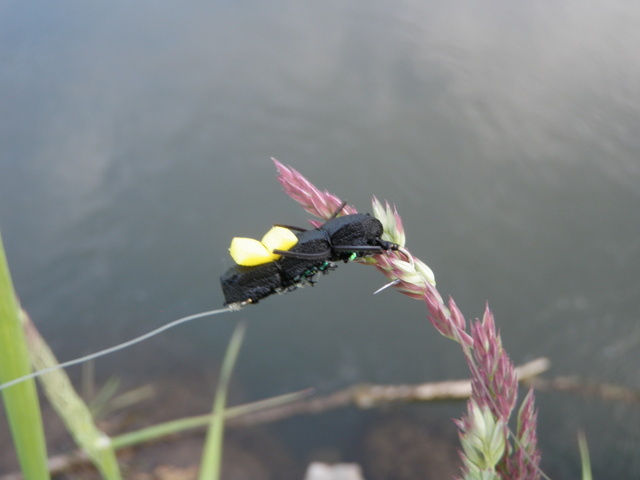
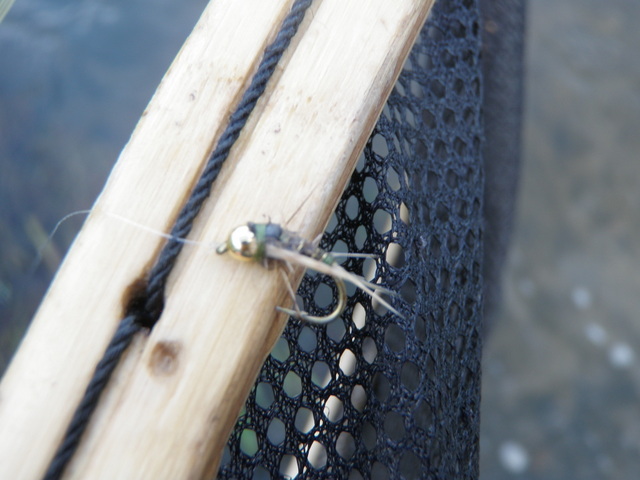
All went as planned, and we pulled into the Viola Park turnaround, and I prepared to fish. I was ready between 5 and 5:30 and decided to walk down the road again, and then I skipped the water that I covered in the morning and began fishing at my ending point. I tied on the Chernobyl ant and beadhead hares ear that earned my confidence in the morning and began my stint of evening fishing with renewed confidence. It was a pleasant evening with some clouds in the sky, but I fished comfortably in just my fishing shirt with no additional layers. Once again I sprayed myself liberally with insect repellant, and although I did not suffer any bites, the Off did not seem to have much impact on the tiny gnats that emerge in dense clouds on Wisconsin evenings in June.

Chernobyl Ant Was the Top Fly

Chernobyl Ant Was the Top Fly

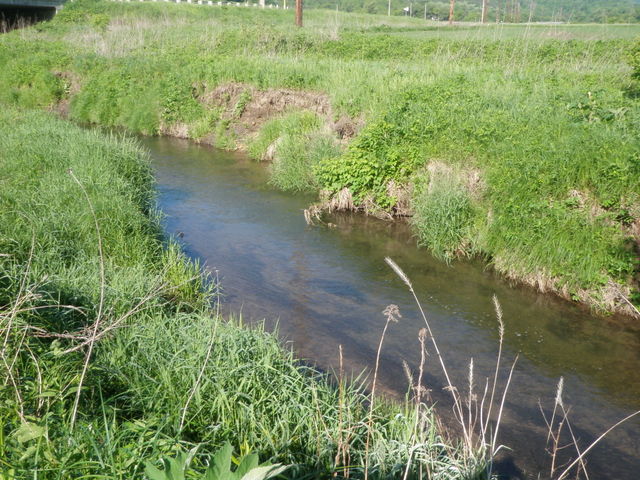
The stretch of water I fished in the evening was more akin to the water below the bridge where I began the morning session, as it consisted of many pools and short riffles with several deep bend holes. It appeared that a group had done stream improvements on the outside banks of many of the bends as a series of large boulders created a reinforced barrier to contain the stream. The boulders were constructed like a wall, and that is what leads me to believe that they resulted from a project.

Another Shot of the Hares Ear

Another Shot of the Hares Ear

However they came into being does not matter, but they proved to be great fish holding areas. I landed six brown trout during my two hours of fishing, and at least three of them grabbed the beadhead hares ear as it drifted tight along the rock wall. Once again the slow moving sections of the pool did not produce any signs of trout, and most of the fish that showed interest in my offerings emerged from the seams and edges of faster water.

I moved along quickly and jumped over the unproductive slow moving water to concentrate on the runs and riffles at the heads of the pools. Because of this rapid progress, I arrived at the barbed wire fence that runs perpendicular to the stream behind Viola Park by 7:30. I’d fished for two hours and landed six fish, and my head was surrounded by annoying gnats, so I decided to follow the fence line back to the park and call it a day.

And what a day it was! I went from ridiculously low expectations including writing off evening fishing to landing 18 trout over 4.5 hours. In truth the fish were on the small side, but the water was clear and rich with aquatic weeds and reminded me of small spring creeks in Pennsylvania. Best of all the fish were receptive to my dry/dropper approach, and other than fishing dry flies to a heavy hatch, this is my favorite method of fishing. I would certainly jump at a future opportunity to fish in the Driftless Area particularly if the streams were clear and flowing at normal levels. Jane and I celebrated our wonderful day in the Driftless Area with New Glarus lagers from Dave’s Pub in Viroqua. It was an appropriate wrap up to a fun day of adventures.


Camp Creek – 06/05/2014

Time: 9:00AM – 11:30AM

Location: Below bridge before Viola Park to 1/3 of the way between bridge and fence

Fish Landed: 12

Camp Creek 06/05/2014 Photo Album

As I gathered my gear on Thursday morning, my expectations were frankly quite low. While I was fishing on Wednesday evening, Jane wandered up the highway to the Viroqua Hills Golf Club and decided to rent clubs and play nine holes of golf while I fished. This was welcome news as I didn’t want Jane to be bored while I was exploring the Driftless Area fishing.

The first area that Danny recommended when we started exchanging emails was Camp Creek, and the fly shop highlighted this stream as well. Camp Creek was east of Viola and not too far from the Kickapoo River, and after viewing the clarity of the Kickapoo, I was somewhat concerned about the condition of Camp Creek. I was equally lacking information about the other streams on the map, so I decided to at least sample Danny’s favorite choice.

I made the drive on route 56 beyond the turn off to La Barge, WI and arrived in Viola. On the way I passed Bishop Creek and the Kickapoo River, and they remained quite murky although by now a lighter shade of brown. I was already reconciling myself to a morning of drifting dark colored nymphs and woolly buggers when I passed through Viola and reached the first bridge that spanned narrow Camp Creek. Did I really see what I thought I saw? When I glanced upstream through the car window as I went over the bridge, the water appeared to be crystal clear.What had I done to deserve this good fortune?

Clear Camp Creek Was a Relief to Dave on Thursday Morning

Clear Camp Creek Was a Relief to Dave on Thursday Morning


I continued .2 mile until I passed a ramshackle barn and mobile home and turned into Viola Park. Two vehicles arrived ahead of me, but one appeared to be associated with a tent camper. The other may have been a fisherman, so I decided to begin fishing back at the bridge that I had passed over assuming that another fisherman would walk directly behind the park and begin there. I sat in the grass and pulled on my waders and tied the laces on my wading boots and put together my Orvis Access four weight pack rod. I was now set and began walking back along the road until I reached the bridge where I gazed upstream and then down. I noticed some signs on a downstream tree that indicated the water was leased for the public, and I was attracted to this area despite the tight vegetation and large overhanging tree branches.

I decided to take the riskier path and whacked through some tall grasses until I reached the edge of the stream 25 yards below the bridge. I paused at this point to tie a Chernobyl ant to my line and then added a beadhead hares ear nymph as a dropper. I was now set, so I executed a roll cast upstream next to the weeds and grass on the opposite side of the narrow stream and immediately a fish rose and splashed the surface just short of the Chernobyl. I already experienced a refusal, and the water was in fact crystal clear!

A Small Brown from Camp Creek in the Morning

A Small Brown from Camp Creek in the Morning

I was intrigued by the water downstream as it appeared to be more difficult to fish than the open water above the bridge so I once again took a calculated risk and crossed the stream and began to hack through tall grasses. I continued downstream beyond several large bends until I found a spot where I could gradually work my way to the water, and here I resumed prospecting with the Chernobyl ant and hares ear. It wasn’t long before I experienced additional refusals to the foam attractor, but then I connected on a nine inch brown and paused to take a photograph. I worked my way upstream and landed a few more browns in the 9-11 inch range, but this was accompanied by some more refusals and some momentary hook ups. In short I was having a blast prospecting a small spring creek with a dry/dropper combination with enough action to hold my interest.

Beautiful Spring Creek Pool on Camp Creek

Beautiful Spring Creek Pool on Camp Creek

In this stretch of water with tight cover I worked through several very attractive deep pools at sharp bends in the stream, but much to my amazement these areas did not produce fish or even refusals. Eventually I reached the point where I had crossed below the bridge, and I began working back upstream. The water from my crossing point to 100 yards above the bridge was characterized by more velocity and a lack of deep pools and bends. I expected to cover this water type quickly, but what do I know? As things worked out, this became my most productive water of the morning. I discovered that the larger fish (11-12 inches) loved to hide under clumps of overhanging grass and vegetation. I cast the Chernobyl to the edge of the grass and as it swept by, the fish couldn’t resist snatching the trailing beadhead hares ear. I probably landed three or four nice browns using this approach.

Several Fish Were Caught from Edge of Creek Under Overhanging Grass

Several Fish Were Caught from Edge of Creek Under Overhanging Grass

Once I passed the faster water stretch, I encountered more of a pool and riffle mix similar to the area below the bridge but without the heavy canopy because I was moving through a large open pasture. I continued to use the dry/dropper technique, but I was forced to deliver many more casts per fish landed. Much to my surprise, the large slow moving deep pools did not yield fish and most of my action originated at the heads of the pool or where the faster water fanned out into the deeper water.

Nice Brown Landed Near the End of the Morning

Nice Brown Landed Near the End of the Morning

By 11:30AM I had landed twelve brown trout in the 9-12 inch range. The sun was high in the sky and beating down relentessly causing temperatures to rise into the 70’s, and the fishing action had slowed considerably. I told Jane to expect me back at the motel at around 12PM, so I called it quits and made a long return hike to the barbed wire fence that began in Viola Park.

Needless to say, I was feeling quite euphoric about the Driftless Area after spending 2.5 hours in a clear spring creek and landing 12 fine fish. The fish were not overly fussy, and I had the place to myself. My plans for Thursday evening were shifting back to a return visit to Camp Creek.

Bad Axe Creek – 06/04/2014

Time: 6:30PM – 8:30PM

Location: Lower end parking lot of Duck Egg Vernon County Forest

Fish Landed: 2

Bad Axe Creek 06/04/2014 Photo Album

The antidote to fly fishing runoff blues in Colorado is traveling to an eastern location that does not experience the bloated streamflows associated with high elevation warming and subsequent melting snow. At least that was my theory when we planned a trip to Minneapolis to visit our son Dan, who has a summer internship with Emerson Electric in the land of 10,000 lakes. I read several articles about the wonderful fly fishing in the Driftless Region of Wisconsin, Minnesota and Iowa, and I decided to sample this experience. As it turned out, Dan needed to fly to Houston for training, and given his absence, it was not difficult to persuade Jane to spend a couple days in Viroqua, WI.

As noted in my previous post, I met my new Instagram friend Danny Ryan at a coffee shop in Denver, and he graciously highlighted four or five streams that I could visit on my two day stay. As the streams and rivers in Colorado ballooned to dangerous levels, I clung to the knowledge that I would have a few days in the Driftless Region to partially quench my thirst for fly fishing in flowing water. Or would I?

When I checked the weather map on Monday morning, the day before our scheduled departure, I noticed that Minneapolis had received 2.9 inches of precipitation. I related this to Jane, and she quickly opened her Weather Channel app and found a warning that the Kickapoo River was expected to reach flood stage by Wednesday June 4. This was the very day that we planned to canoe on the Kickapoo River! My mood instantly plummeted to one of deep despair. After all the planning and excitement, I was now forced to accept the reality that heavy rain and consequent flooded muddy streams would likely scuttle my fishing plans. With this news, was it even worthwhile to lug my fishing gear from Denver, CO to Minneapolis, MN and then ultimately to Wisconsin?

I decided to call the Driftless Angler in Viroqua, WI where we were staying for two days. Viroqua is near the epicenter of Driftless fly fishing, so I concluded that they would have up-to-date knowledge of the stream conditions. Unfortunately when I called twice on Monday afternoon, no one answered the phone, and I left two messages. Since the shop closed at 4PM, and I needed to decide whether to pack my fishing gear before our flight Tuesday morning, I tried one last call just before closing time on Monday. Much to my surprise a person named Sandler answered the phone, and he was quite optimistic that I would be able to fish in area streams by Wednesday. He admitted that some rivers would remain high and muddy but also felt confident that there would be some clearing and even a few stream options with near normal conditions. On Tuesday morning after I was already packed, Matt, the owner of the Driftless Angler, also called in response to my messages, and he echoed Sandler’s comments.

As Jane and I boarded our Southwest Airlines flight on Tuesday morning, I remained quite apprehensive about my prospects to land any fish in the Driftless Region, but I was now committed. We spent the night in Bloomington, MN near the airport, and on Wednesday morning we began the three hour road trip to Viroqua, WI. We had reservations for two nights at the Hickory Hill Motel, and I planned to fish Wednesday evening, Thursday morning and Thursday evening, and I saved the afternoons to bicycle and canoe with Jane.

The aftermath of the recent rainstorm was beautiful with mostly clear skies and high temperatures in the low 70’s. The landscape was lush green with tall grass and leaves everywhere. We stopped at a rest area in the southeast corner of Minnesota called Enterprise and took a brief hike to an overlook where I could see a small stream below, and the water was crystal clear. Could I dare to think that I would encounter similar water in Wisconsin?

A Small Clear Stream by the Rest Area

A Small Clear Stream by the Rest Area

We continued on and crossed the Mississippi River at La Crosse and then drove southeast to Viroqua, WI. Here our first stop was the Viroqua Food Co-Operative where we bought lunch and some breakfast supplies. Next we found the Driftless Angler where I purchased an annual Wisconsin fishing license and trout stamp as well as ten flies. As it turned out, I could buy an annual license for only $1.75 more than a four day license, so I took advantage of the deal even though the likelihood of returning to Wisconsin is rather slim. Matt, the owner, was running the shop on Wednesday, so I pumped him for information and recommendations on flies. He suggested a local favorite, the pink squirrel, so I bought five of them plus two gray scuds and three black woolly buggers. I was looking for pine squirrel leeches, but they were sold out. Matt then opened the same Driftless Region map that Danny gave me and highlighted five possible destinations for me to fish with a pink marker. Did he choose a pink marker to somehow reinforce the pink squirrel idea in my brain?

The streams recommended by Matt coincided almost exactly with Danny’s suggestions with a couple additions. Matt mentioned that the West Branch of the Kickapoo and Bishop Creek were likely still muddy, but he offered no such information on the other locales.

Next Jane and I visited the Blue Dog Bike Shop (also the Brew Dog Coffee Shop) along Main Street in Viroqua. We wanted to rent bikes to ride in the Kickapoo Valley Reserve during the afternoon, but we quickly learned that the bike shop did not rent bike racks, so we did not have a means to transport two bikes from Viroqua to the Reserve. We decided to abandon riding in the Reserve and attempted to rent bikes to ride in the Viroqua area, but the shop closed at 3PM, and we were faced with the logistical dilemma of having to move two bikes and a rental car to the motel which was two miles south of town. We eventually gave up on the entire idea of biking and decided to visit the Kickapoo Valley Reserve and simply hike some of the trails.

Muddy Kickapoo River

Muddy Kickapoo River

We departed the bike shop and checked in to our room at the Hickory Hill Motel and then changed into hiking clothes and made the 16 mile drive to the Reserve just north of LaBarge, WI. We checked in to the visitor center, and a helpful man at the counter suggested a hike from the center where there was no trail charge. We enjoyed a one hour loop and crossed the muddy Kickapoo River along the way, and this caused more concern regarding fishing prospects for Wednesday evening. Once we completed our hike, we returned to the motel, and I reviewed the map and decided to sample Bad Axe Creek. I only had an hour or two to fish, so I chose one of the closer streams to minimize driving time.

I arrived at the lower parking lot of Duck Egg County Forest and parked in a U-shaped turnaround next to a small equestrian park. By the time I put on my waders, rigged my rod and doused myself with insect repellent it was 6:30PM. I ambled down to the stream by the bridge and encountered brown water that was quite opaque thus providing resident trout with limited visibility. For this reason, I decided to tie on a black conehead leech and a pink squirrel. I reasoned that the black and pink were colors that would contrast with the muddy water in the stream.

Bad Axe Creek Also High and Murky on Wednesday Evening

Bad Axe Creek Also High and Murky on Wednesday Evening

I had never fished Bad Axe Creek, and now the brown water made it very difficult for me to read the depth. There was a nice run that angled toward the opposite bank and then ran along the bank for fifteen feet, so I began drifting my fly combination along the seams on either side of the main current. Much to my surprise when the indicator was halfway down the run, it darted sideways, and I hooked and landed a feisty nine inch brown. Perhaps I was being too negative, and the fishing wasn’t bad in spite of the discolored water?

I moved further upstream to a location where the water was extremely deep. I discovered this when the woolly bugger got hung up, and I waded to the far side to dislodge it. Suddenly I was standing in water above my waist, and this scared me a bit. Unfortunately the conehead fly proved to be too heavy, perhaps because the bead was made out of tungsten, and I was constantly working to dislodge my flies. I abandoned the conehead bugger and tied on a pine squirrel leech, but this also got hung up in a deep area, and I broke off both flies. I now took the time to add another section of tippet and split shot and then knotted on a chocolate San Juan worm and an egg sucking leech with an orange head.

After an hour of fishing these flies subsurface I still had only the nine inch brown from the very first section to show for my efforts. I decided to make a radical change and switched to a Chernobyl ant with a beadhead prince nymph below that and then a salvation nymph on the point. All three of these flies are dark in color, so I hoped that they would contrast with the brown water. By now the bugs were quite a menace as they covered my neck and face despite the presence of a heavy application of bug spray. The only positive was that they did not seem to be biting insects.

Finally in some slow moving water off to the side of the main current I noticed a fish rise, and then I observed a few small blue winged olives in the air. This prompted me to clip off the prince and salvation and to tie on a soft hackle emerger to imitate a blue winged olive. After a few casts, I lifted my flies to cast again, and as I did this another nine inch brown grabbed the soft hackle, and I landed and released my second fish of the evening.

I fished the Chernobyl ant and soft hackle emerger for another 15 minutes, but the light began to dwindle and the upstream path began to disappear, so I decided to experiment with some streamers in a nice deep hole. I determined that this would be my end point, but I wanted to try some old school flies that I felt would contrast with the turbid currents. First I tied on a black-nosed dace, but that did not produce any results. Next I discovered a slender Mickey Finn in my fleece pouch and decided to give it one last try. The red and yellow bucktail with a tinsel body should contrast nicely with the dark water, but alas it also failed to entice any trout on Wednesday evening.

Because I was in an unfamiliar area, I did not want to risk stumbling back to the rental car in the dark, so I called it quits and followed the path through the woods to the small parking lot. The gnats continued to invade my ears and nose, but I’d managed to beat the odds and land two small brown trout under challenging conditions. I was prepared to give fishing one more chance on Thursday morning, but I was pretty much ruling out another evening outing as I drove back to meet Jane at the Hickory Hill Motel. At least the Driftless Area did not totally shut me out, and I could claim that I landed a couple trout in Wisconsin.


Palmer Reservoir – 06/01/2014

Time: 12:00PM – 2:30PM

Location: Inlet to Upper Palmer Reservoir

Fish Landed: 1

Palmer Reservoir 06/01/2014 Photo Album

I promised myself that I would continue fishing in Colorado through the runoff time period even if it meant exploring lakes and reservoirs in the Centennial state. Selecting lakes to fish for trout is a balancing act. The lake cannot be too high in elevation, or it will remain frozen until late June or early July. Another challenge may be getting to the lake if snow and ice remain on the trail. On the other hand, lakes that are too low in elevation will probably contain mostly warmwater species or stocked trout. I’m not opposed to fly fishing for bass and panfish; but I’d rather pursue coldwater species if that option exists.

When my daughter Amy visited at the end of January, she introduced me to Instagram, and I’ve become a serious fan. There is a significant community of fly fishermen who are active on Instagram, and I’ve actually initiated deeper conversations with several of them. Danny Ryan is one such Instagram acquaintance, and I began exchanging comments with him because his profile indicated that he lived in Denver, CO, and he posted numerous photos from fishing in the Driftless Region of Wisconsin. Jane and I were planning a trip to Minneapolis to visit our son, Dan, and I included a two day detour to the Driftless Region in our itinerary.

As a result of our Instagram dialogue, Danny and I met for coffee and tea at an establishment near our places of employment. Most of the conversation centered around fishing in the Driftless Region; however, we also digressed into a discussion of fishing in Colorado. I informed Danny that I wished to explore more lakes during the runoff season of 2014, and he was kind enough to suggest some destinations that he enjoyed.

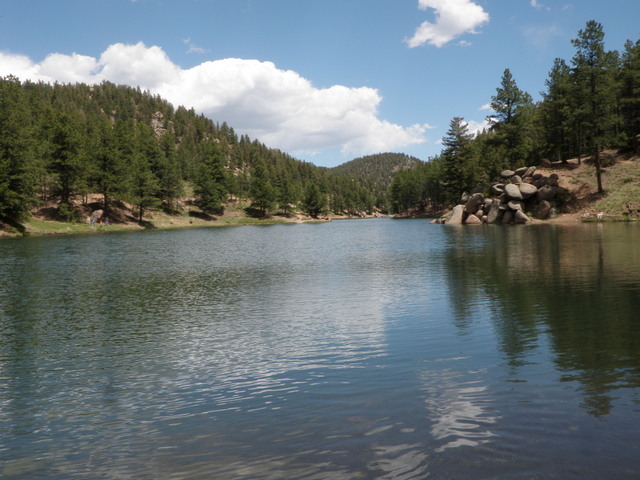
Upper Reservoir

Upper Reservoir

One of the lakes that he directed me toward was Palmer Reservoir near the town of Palmer Lake, CO. This interested me because it represents a shorter drive from Denver than many of my fishing favorites such as the South Platte and Arkansas Rivers. Jane was interested in joining me for some outdoor adventure on June 1, so we planned an exploratory hike to Palmer Reservoir.

Unfortunately our trip got off to an inauspicious start as we heard a flapping sound as we sped east on interstate 70 no more than five miles from our house. I pulled on to the shoulder and examined the tires and noticed that the left rear tire was quite low. We exited at the first ramp and found an air pump at a gas station where I used our digital tire gauge to measure the air pressure. Sure enough three of the tires registered 35 psi or greater, but the left rear tire was at 14 psi. Even though I was certain that the tire had a slow leak, I did not want to risk driving to Palmer Lake on a compromised tire, so we returned to the house, switched our gear, and traded the Santa Fe for the Forte.

Once we were underway in the Forte, we experienced no more incidents and arrived at the Palmer Reservoir trailhead by 10:30AM. I never asked Danny if wading was allowed, nor did I see anything regarding wading on any of the web sites I researched, so I packed my waders and boots and other fishing gear in a backpack. Jane and I departed the parking lot by 10:45 and after a short but steep hike, we arrived at the upper inlet area of the upper reservoir.

Apparently Palmer Reservoir is a popular location in the Colorado Springs area of Colorado, as we encountered a steady stream of hikers and dogs moving in both directions on the trail. In addition quite a few of the worn fishing spots were occupied with fishermen and families tossing spinners and bait into the clear lake. Fortunately when we arrived at the upper shoreline, no one was there so we found a nice fallen log and established a base camp. The sky was a brilliant bright blue and the air temperature was probably in the upper 70’s or low 80’s. The bright sun and lack of cloud cover concerned me from a fishing perspective, and by now we’d read signs that announced that wading was forbidden. I was a bit disappointed that I lugged the heavy waders and wading boots on the strenuous uphil hike, and now they would linger in the backpack.

My Fly and Line Are Visible on the Left

My Fly and Line Are Visible on the Left

I put together my rod and slid the line and leader through the rod guides and walked across the trail to the western shore of the lake. Almost immediately I discovered that the land bordering the reservoir was a quagmire as apparently the snow melt seeped through this area. I carefully tip toed my way around some obvious swampy spots, but even with the utmost care, I began to feel some cold wetness penetrating my socks just above the soles of my running shoes. I found some solid ground on a small point next to a two foot wide trench with flowing runoff water and tied on a damsel wiggle nymph and began to spread casts out in many directions. The articulated marabou damsel nymph did not seem to sink as rapidly as I desired in spite of some tiny dumbbell eyes, so after a reasonable trial period I snipped it off and replaced it with a size 14 stimulator with a green body.

This fly was ignored just as much as the damsel nymph, and I now grew curious to explore more of the western shoreline and particularly the area where the small stream entered the lake. Unfortunately I did not want to wade through the muck in my running shoes, so I maneuvered my way back to the base camp that Jane and I created near the log on the other side of the trail. I went from chastising myself for carrying the wading boots and waders on my back unnecessarily to complimenting myself on having the foresight to bring them and gain an advantage over the other fishermen.

I threw on my waders and boots and slushed through the marsh to the inlet area. The dry fly continued to underperform, so I once again decided to change tactics. I reached in my fleece pouch and extracted an olive woolly bugger with a black marabou tail and knotted this to my leader. The fly felt fairly heavy so I concluded that I had weighted it with lead wire. I began casting the weighted woolly bugger to the area where the stream entered and then gradually moved to my left until I was halfway back to the base camp.

When I reached the solid ground point that I’d first used on my initial foray without waders, I stripped the woolly bugger back toward me, and as I began to lift, I noticed a fish turning away just as the streamer left the water. I had managed to grab the fish’s attention, but I was unable to tempt it to actually take my fly. I pondered this a bit, and noticed a rare caddis skitter across the surface of the lake. Why not add another fly to the bend of the woolly bugger? I pulled a beadhead bright green caddis pupa from my fleece pocket and added it below the woolly bugger.

My Sole Catch on Sunday Was Very Pretty

My Sole Catch on Sunday Was Very Pretty

Once again I began spraying casts thirty to forty feet into the lake in spite of some strong cross winds that kicked up during this time period. I tried various speeds but on one of the hand twist retrieves, I detected a bump that transferred from the hook to my fingers. Could that have been a fish, or did I momentarily snag on a weed? I cast to the same area and repeated the same hand twist gathering of line, and this time I felt a jolt and set the hook and found myself attached to a fish. It fought and swirled and eventually I brought it close to shore and slid my net beneath a beautiful twelve inch brook trout. The pretty shimmering char displayed a bright orange belly and brilliant spots along its back and sides. I photographed my prize and gently released it into the cold clear water of the lake.

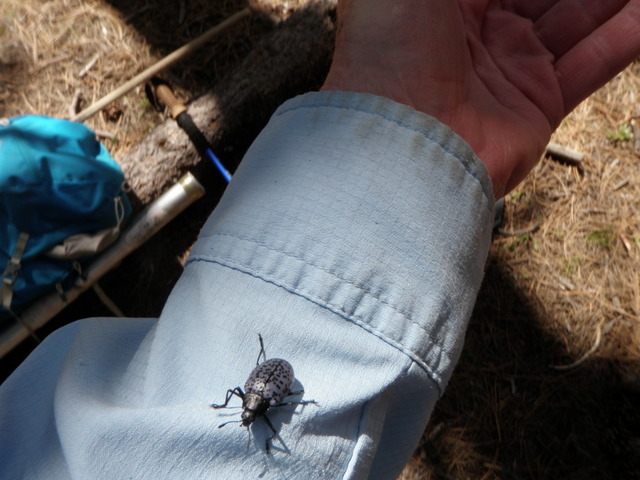
Interesting Beetle, Blue Back with Speckles

Interesting Beetle, Blue Back with Speckles

I now felt renewed confidence that I’d stumbled on an effective tactic for taking brook trout from Palmer Reservoir under warm bright conditions. I continued working to my left back toward the trail with renewed focus, but I was not rewarded. But what about the area from the inlet to the point where I caught the brook trout? Surely my two fly presentation would capture the imagination of fish that ignored the solitary woolly bugger on the first pass. I sloshed back to the inlet and methodically covered the entire western end of the lake a second time. These were all solid thoughts and strategies, but unfortunately the fish did not reward me, and I decided to call it quits at 2:30.

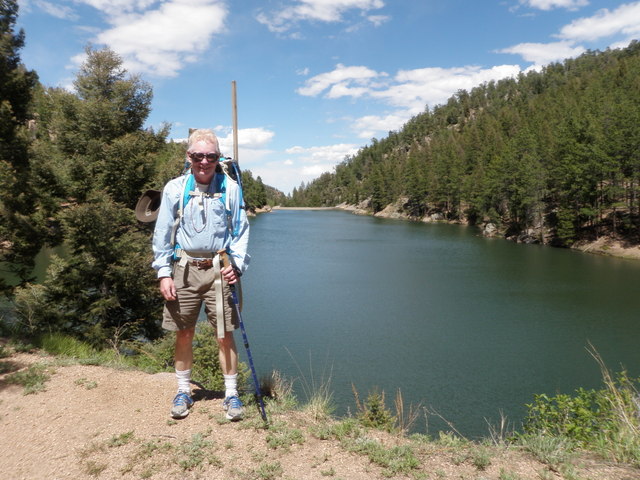
Dave Enters the Picture

Dave Enters the Picture

I returned to the log where Jane sat and read her book, and I removed my waders and boots and restocked my backpack. We descended the trail in 45 minutes and snapped some nice photos along the way. Despite catching only one colorful brook trout, it was a fun day in a gorgeous setting, and I might return during a weekday under more favorable weather conditions.


South Platte River – 05/29/2014

Time: 9:30AM – 4:30PM

Location: Below first bridge after Springer Gulch and then upstream from huge pool below wide pullout up to the twin tunnels

Fish Landed: 6

South Platte River 05/29/2014 Photo Album

May 29 is very late in the runoff time period to think about fishing in a Colorado river, but that is what I did on Thursday. With epic volumes of water tumbling down rivers and streams in Colorado, the South Platte River in Eleven Mile Canyon remains at 75 cfs. In addition the South Platte below Cheesman Reservoir near Deckers was holding steady at 100 cfs, however, this stretch of river had been running at 400 and only recently plunged to the 100 level. I am not a fan of fishing rivers that experience recent significant changes, so I decided to pay Eleven Mile Canyon a visit.

The weather forecast for Denver was a high of 88 degrees with a small chance of afternoon thunderstorms. I translated this to highs in the low 70’s in Eleven Mile Canyon. I paid my day use fee to a lady at the entrance station, and she complimented my music selection. I had a Monkees and Four Seasons playlist blasting on my radio, and she appeared to be in my age bracket. The dashboard temperature registered 59 degrees when I arrived at the pullout .2 miles below the first bridge above Springer Gulch Campground, but the sun was bright so I elected to forego any extra layers.

When I was prepared, I walked down the path a bit to the second nice run and pool below the car; however, as I moved toward the water, a father and son appeared. Clearly I was there first, but I decided to surrender the bottom pool to the father and son team and moved upstream to the next juicy pool. The water was as advertised; clear and flowing at 75 cfs. A bit more volume would be welcome, but I was more than willing to accept somewhat low flows given the condition of the other rivers in the state. I tied on a Chernobyl ant and beadhead hares ear and began to prospect the wide angled run and pool in front of me. I noticed several refusals by a fish in the seam along the center run, but nothing was showing interest in my hares ear. I noticed two random rises as I was covering the water, and the only insect I could conceive of being on the water in the morning was a midge.

I pulled up my line and added an 18 inch section of tippet to the eye of the hares ear and tied on a zebra midge. Finally on a drift along the seam on the right side, the Chernobyl ant paused and I set the hook and felt the weight of a decent fish. The trout began to streak toward the middle of the run and then reversed back to its original location. I held tight, but after a couple aerial maneuvers where I could see the trademark pink stripe of a rainbow, it made a quick turn, and my hook came free. I’m guessing the tiny zebra midge was the food of choice for the hungry rainbow, but I’ll never know for sure. I could hear the father and son moving closer behind me, so I moved above the attractive pool and began exploring pockets and smaller runs.
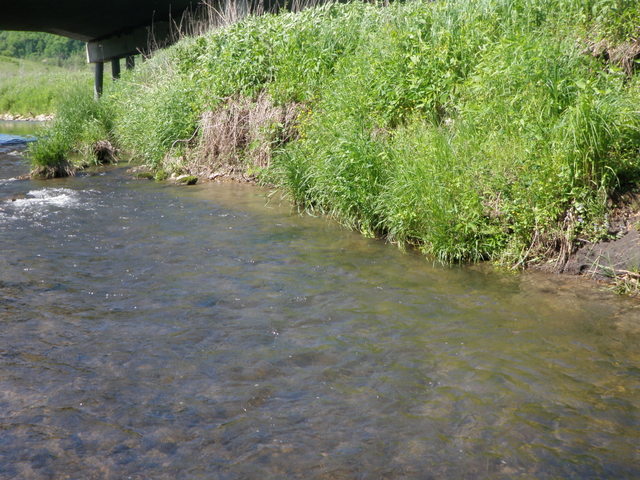
First Fish in the AM

First Fish in the AM

It didn’t take too long before I hooked and netted an eleven inch brown on the hares ear nymph, and I photographed this fish as I wasn’t sure how many more I’d entice to my net. The next stretch was wide and shallow with a series of manmade deadfalls anchored on angles to create more structure; but in spite of this effort, the fish holding locations were minimal.

I was bothered by the refusals to the Chernobyl ant, and I wondered if something more sparse might provoke surface takes, so I tied on a yellow Letort hopper. I fished this for a bit, and it became waterlogged so I brought it in and sopped up the moisture absorbed by the body on my shirt sleeve. Next as is my custom, I searched for my dry shake canister to give it a dunking, but I was disappointed to discover that the green canister was upside down with the lid open. The vial was empty, and I was now stressed as dry shake is an essential ingredient to dry fly fishing.

With the newfound knowledge that I was handicapped by the absence of dry shake, I decided to convert to a nymphing configuration. I converted to a strike indicator, small split shot and two flies. At least under this method the fish could not refuse my top fly, and I didn’t need dry shake. I stayed with the beadhead hares ear and added a RS2 and ran these flies through some juicy deep runs but once again to no avail. I swapped the RS2 for a soft hackle emerger at some point, but my fortunes remained the same.

After covering a nice run and a couple small pockets with no success I encountered a trio of fishermen that entered the river from above. It was around 11:45 so I decided to use this as an opportunity to exit, and I returned to the Santa Fe.

Large Pool Where I Ate Lunch and Began Fishing in the PM

Large Pool Where I Ate Lunch and Began Fishing in the PM

I decided to move upstream to search for another location with some room to move, and a half mile further along, where there is a huge wide pullout high above the river, I found such a place. I grabbed my lunch bag and water bottle and very carefully descended the rocky path. The river narrowed right below the car and created a huge white water cascade, but above the narrow chute was a huge wide clear pool that extended forty yards further upstream. I sat by the water and ate, and during a lull in the breeze when the water was clear, I spotted a group of four brown trout slowly moving along in the slow shelf water. They were occasionally plucking tiny morsels from the drift, and every once in a while one would slowly fin to the surface and sip something extremely tiny.

This didn’t last long however as the breeze resumed, and my vision could no longer penetrate the riffled surface of the pool. Once I finished my lunch, I carefully climbed to the road and returned to the car for my rod and gear. I decided that the smooth pool was too technical and likely would lead to hours of frustration, so I moved to the head of the pool. Also my rod was still rigged with the nymphs, and I wasn’t anxious to invest the necessary time to convert back to dry flies to make the delicate casts required by the smooth pool.

I began to prospect the nice pools and runs above the large pool, but I was losing confidence quickly. By now the sun was high in the clear blue sky, and I was feeling quite warm and sluggish. I suspect the trout were in a similar state, but I continued on hoping that something would change my fortunes. It didn’t take long for change to come in the form of another fisherman ahead of me. I decided to make a big loop around him and cut back to the worn path on the bank and circled above him to some more nice pocket water.

By now the nymphs were out of favor, so I clipped them off and removed the indicator and split shot and returned to my favorite dry/dropper technique. I tied a yellow pool toy to my line as the buoyant indicator fly and below that I added a beadhead hares ear and then knotted a salvation nymph below the hares ear as my third offering. I quickened my pace and resolved to no longer dwell in one spot even if I spotted fish or experienced a refusal.

Surprised by Cutthroat That Fell for the Salvation Nymph

Surprised by Cutthroat That Fell for the Salvation Nymph

This paid dividends as I landed four more fish over the remaining two hours of fishing. Number three was a pretty bronze cutthroat with the trademark slash under its jaw, and this fish snatched the salvation nymph at the tail of a run. One of the last three fish was a rainbow and the other two were browns, and they all found the salvation nymph to their liking. By three o’clock some large gray clouds appeared on the western horizon and this seemed to improve the fishing. The temperature dropped and a breeze picked up, and I carefully looked for blue winged olives. I spotted two or three over the course of a half hour and switched the salvation nymph for the soft hackle emerger, but this had minimal impact on my success. After a solid trial period I abandoned this dose of over-analysis and reverted back to the salvation nymph, and I was rewarded with the three fish I described previously.

Afternoon Brown with Salvation Nymph in Corner of Mouth

Afternoon Brown with Salvation Nymph in Corner of Mouth

Late in the afternoon I bumped into another pair of fishermen and executed another bank detour to get above them. It was during the last hour of the day that I encountered a second muskrat that surfaced near my left leg, and then I spotted a small creature scurrying along the rocks to my left. It was a small slender animal with a long tail, light brown fur, and a round face with small round ears. I’m guessing it was some sort of weasel or mink, but I always imagined these animals to be much darker in color.

Finally I approached another beautiful long pool and another young fisherman was above me; however, he seemed to tire of the area he was fishing and moved to the top more than fifty yards above me. I began casting the pool toy and trailing nymphs to the tail of the pool, but as I did this I began to observe several surface rises. The surface disturbances were spread out and not repeated by the same fish. I was going to quit in a half hour, and the other fisherman blocked my path upstream to water more appropriate for dry/dropper fishing, so I decided to commit to dry fly fishing. When I waded to the tail of the pool I could see quite a few decent fish hanging in the current, but in addition there were at least five or six large suckers huddled in the trough ahead of me. I’d seen groups of suckers earlier in the day, and I wondered if they were spawning, and what sucker eggs look like.

With more rises scattered about the pool I decided to try a CDC BWO even though I didn’t see any riding on the surface of the river. After quite a few unproductive casts of the blue winged olive imitation, I changed to a gray deer hair caddis. This fly actual induced a few looks and a solid refusal as a brown swirled at the surface in front of the fly, but did not suck it in. Next I resorted to an olive caddis with the thought that perhaps the body color was off a bit. Again the fish rejected my theory, and finally I tied on a fur parachute ant. This fly prompted some casual looks, but no takes until I finally declared the fish winners and found a steep exit path.

It was a fun day in spite of my relatively low catch rate. I spotted quite a few fish and experimented with numerous approaches. I never fully solved the riddle, but did manage to land a few fish on a splendid late spring day on the South Platte River.


Brush Creek – 05/25/2014

Time: 10:30AM – 1:00PM

Location: Private water up to Sylvan Lake Road Bridge

Fish Landed: 4

Brush Creek 05/25/2014 Photo Album

Dave G. reserved the private water for Sunday so once again I would be exposed to fishing under snowmelt conditions. When I gazed at Brush Creek behind the Gaboury house on Sunday morning it appeared that the stream had risen even higher than the level we experienced on Saturday. In addition the sky was quite overcast, and it seemed inevitable that we would encounter rain at some point during the day. After a tasty breakfast of scrambled eggs and spinach, Dave G. and I once again prepared to fish.

Dave G. came up with a two car strategy for fishing the private water. Dave G. drove the BMW to the bridge near where we would end and parked it there, and then we both hopped in the 4 Runner driven by Beth. Beth took me to the entry point to Brush Creek below the private water and then dropped Dave G. off on the other side of the creek. By doing this, Dave G. was locked into the east side of the creek while I was committed to the west bank.

We began our fishing adventure at 10:30AM, and the foreboding clouds continued to build in the western sky. Dave G. was also out of red San Juan worms, so he was forced to experiment with the brown variety, and guess what? He began catching fish on the brown worms that I had rejected on Saturday because I didn’t think there was enough contrast against the brown water.

Pretty Flowers Along Stream on Sunday

Pretty Flowers Along Stream on Sunday

Initially I used the red annelid worm as my top fly and returned to the orange and black woolly bugger, but once again I was not having any success while Dave G. landed a fish or two. The private water contains many more oxbow bends, and this actually provided more slack water where fish could gain shelter from the raging main current. At one long juicy slow moving stretch, I actually saw a fish rise and jump from the water in pursuit of some sort of emerger. This provoked me to try an emerald caddis pupa as my point fly, but I suspect I was overanalyzing at this point. I ran through a bunch of fly changes as my point fly including a prince nymph, 20 incher, egg fly and the caddis pupa.

Brown San Juan Worm

Brown San Juan Worm

Once again my frustration was building when we arrived at a huge pool with an eddy in a 90 degree bend in the stream. Dave G. worked ahead of me, but it was here that I looked in my fleece pouch and spotted a pine squirrel leech that I purchased in Wyoming. I figured this fly would offer contrast, and it also offered the seductive wiggling movement that drives fish crazy. I replaced the caddis pupa and began lobbing the worm and leech combination to the current seam on the opposite side of the main current. Wham! The indicator dove, and I set the hook and felt the weight of a decent fish. Unfortunately in a short amount of time I discovered that the leech was embedded in the side of the head of the trout, and the fish wasn’t as big as I expected.
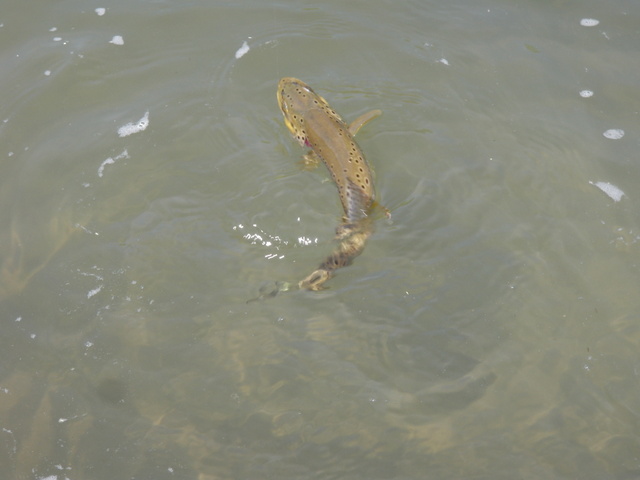
Pine Squirrel Leech

Pine Squirrel Leech

At least the fish was attracted to my flies in the murky conditions. I continued to drift the long slack water area between the opposite bank and the rushing main current, and in a brief amount of time the indicator paused, and I once again set the hook. This time I was relieved to discover that the brown trout had grabbed the top red annelid worm. I’d finally broken through and hooked and landed a trout during runoff! Had I been able to reach across the stream, I would have high-fived Dave G., but instead I moved on.

Over the remainder of our time on Brush Creek on Sunday I landed three more browns to bring my snow melt total to four. Three of the fish grabbed the red annelid worm and one took the leech. The one that hit the leech actually responded to a lift as I tried to avoid getting snagged on a stick.

A Nice Grip

A Nice Grip

As 1PM arrived the dark clouds hovered above us, and the wind kicked up, and some light rain began to fall. I was already wearing my raincoat for added warmth so I was prepared for the moisture. We crossed Sylvan Lake Road and prospected a spot that historically yields nice fish, but the deep run and pool of summertime was now a raging torrent with only a small pocket along the west bank that might hold fish. We gave this area a solid effort, but nothing was showing, so we reeled up our flies and stashed our gear in the BMW and returned to the Gabourys to escape the building rainstorm.
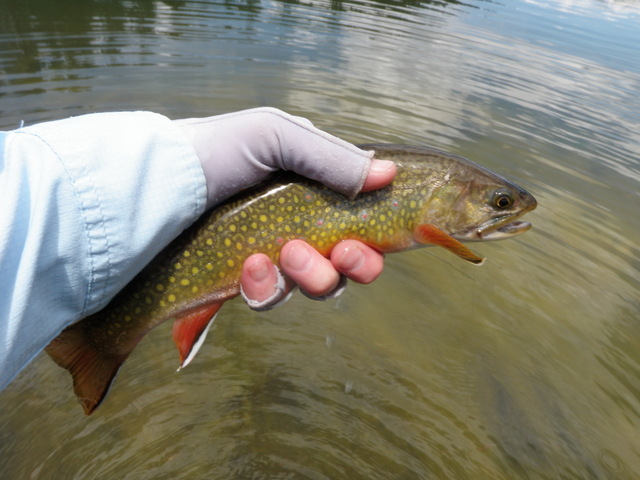
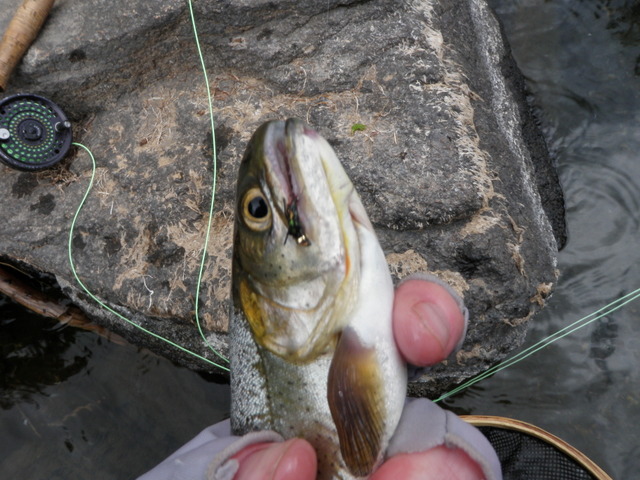
It was a fun day in the high and turbid waters of Brush Creek, and I now have confidence that I can catch fish in these conditions. I also resolved to learn how to tie pine squirrel leeches, as I’ve now discovered their effectiveness on several occasions.