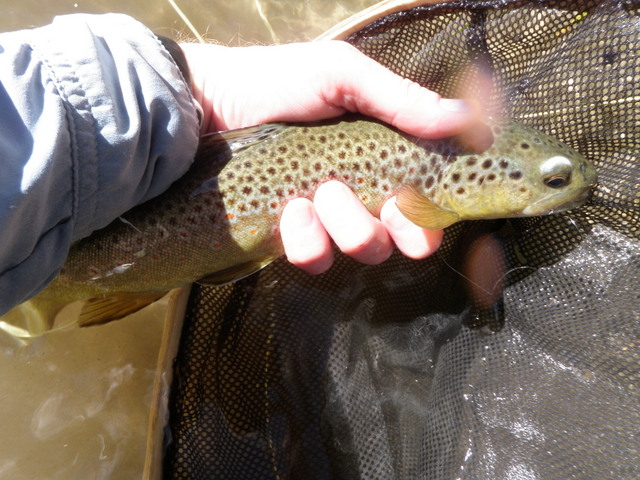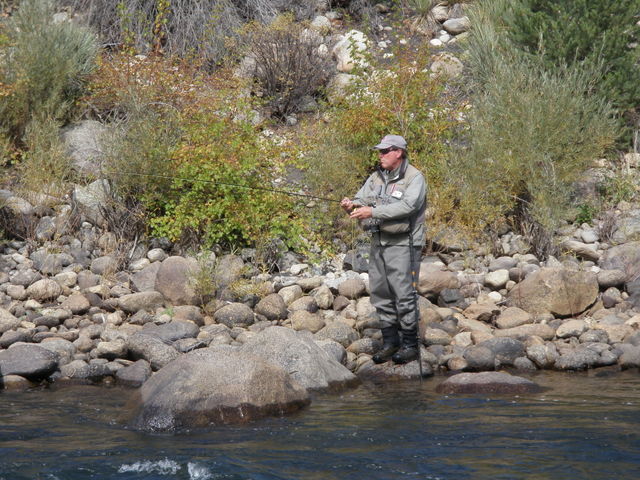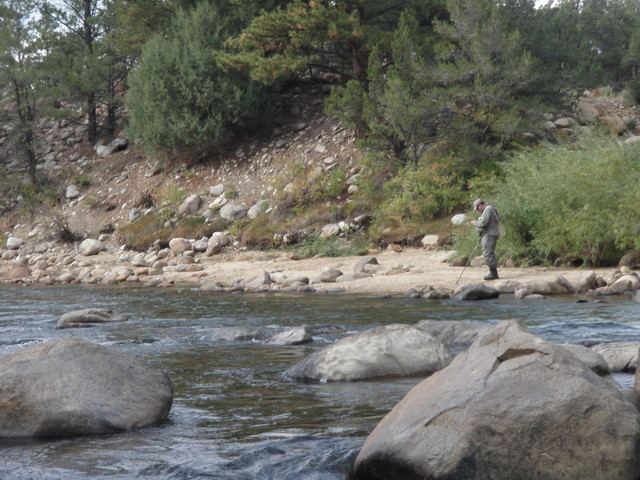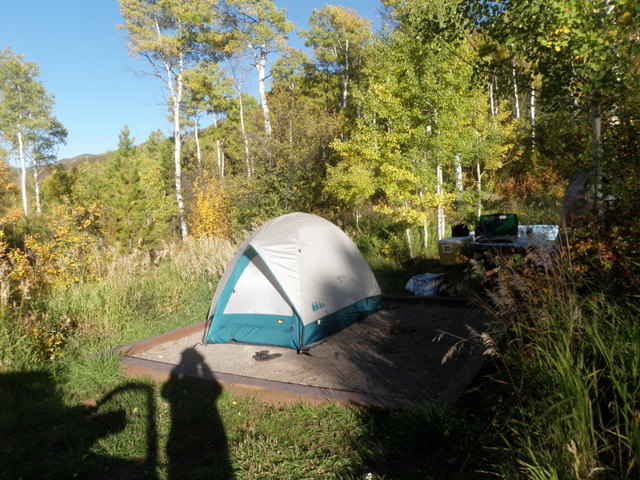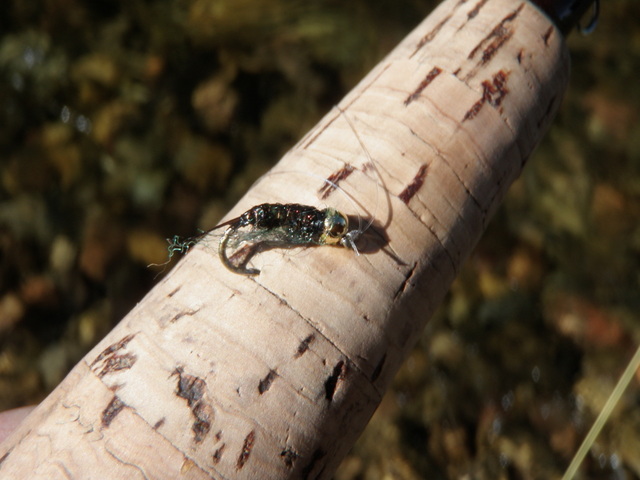
South Boulder Creek – 10/24/2014

Time: 2:00PM – 4:30PM

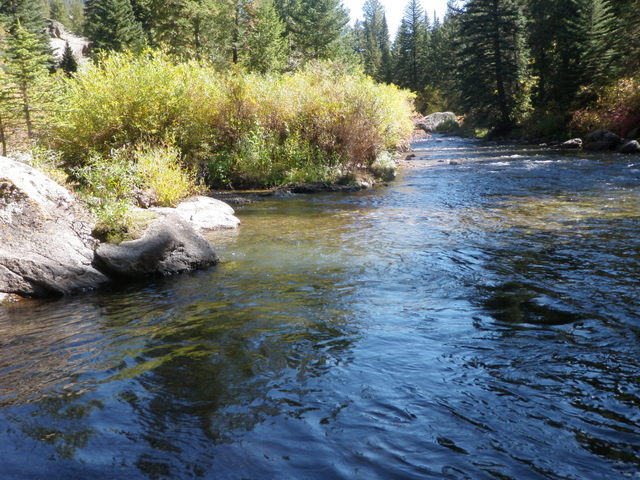
Location: Just downstream of rock moraine area

Fish Landed: 13

South Boulder Creek 10/24/2014 Photo Album

The meteorologists forecast unseasonably warm weather for Denver, Colorado for Friday October 24 through Sunday October 26, so Jane and I made plans for an outdoor day on Friday. I hiked the Walker Ranch Loop in July 2013 with my friend Don Batchelor, but Jane had only completed pieces of this trail. I had the ulterior motive of wanting to scout the point where the trail intersects with South Boulder Creek, so I suggested that we hike out and back on the Crescent Meadows section, and then I would spend the rest of the afternoon fishing in South Boulder Creek. From the Crescent Meadows parking lot to the bridge over South Boulder Creek was 2.3 miles, so we were undertaking a 4.6 mile hike, and we both felt this was about right.

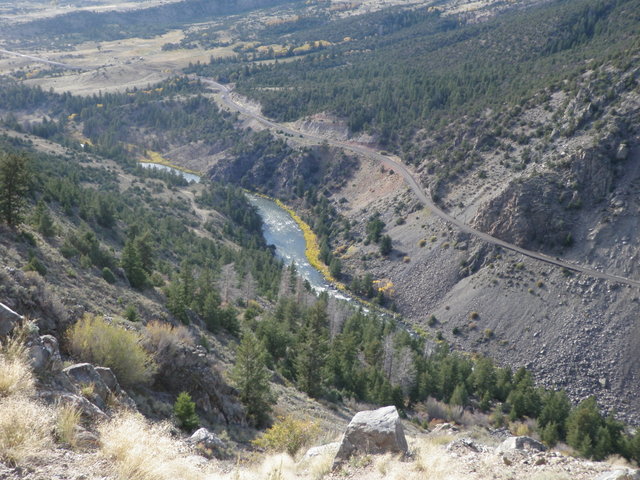
[pe2-image src=”http://lh3.ggpht.com/-sjQyr7MNpIc/VE2_TpVLDlI/AAAAAAAAoII/fWJ3KL76klw/s144-c-o/PA240041.JPG” href=”https://picasaweb.google.com/108128655430094950653/10242014SouthBoulderCreek#6074721816625745490″ caption=”Dave on the Steep Descent to South Boulder Creek” type=”image” alt=”PA240041.JPG” ]

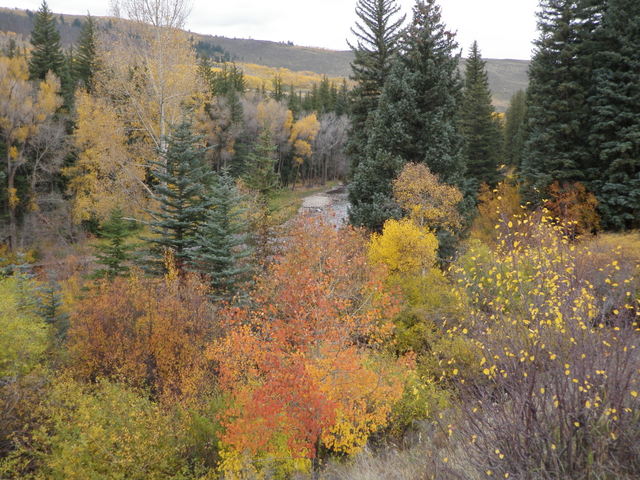
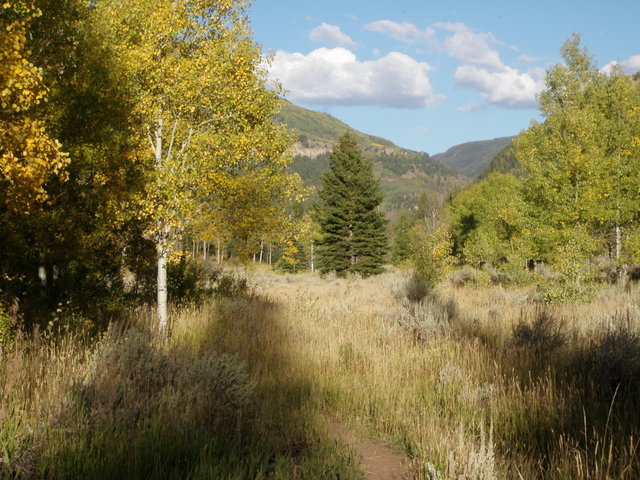
Jane and I completed the 4.6 mile hike on Friday morning in approximately two hours. It was great fun as we snaked through a sparse forest of pine trees and junipers before eventually dropping down some steep steps to the edge of South Boulder Creek. From that point we climbed over a short rocky hill and then found ourselves at the bridge that spans the stream. We passed one biker and four female runners, so we essentially had the area to ourselves. When I checked the stream flows on area streams on Thursday, South Boulder Creek below Gross Reservoir was listed at 91 cfs. As I gazed at the stream as it passed under the bridge, I suspected that the current flow was much less.

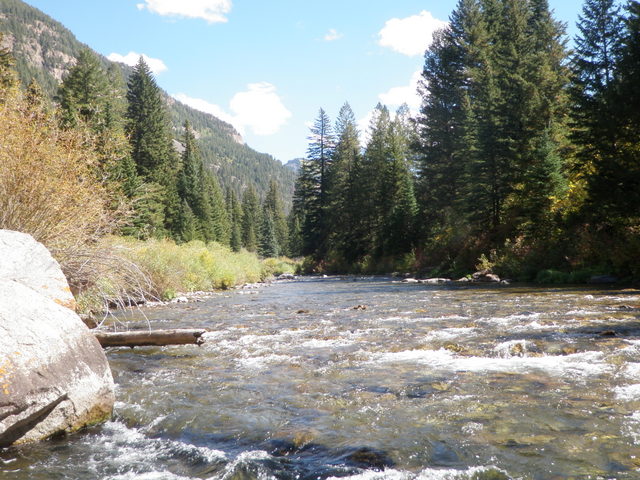
[pe2-image src=”http://lh6.ggpht.com/-CCP7ZzFuxvo/VE2_VZ2DN1I/AAAAAAAAoG4/BaGP3KLz9gI/s144-c-o/PA240044.JPG” href=”https://picasaweb.google.com/108128655430094950653/10242014SouthBoulderCreek#6074721846828414802″ caption=”The Upstream View” type=”image” alt=”PA240044.JPG” ]

Our return hike was a 900 foot vertical climb over 2.3 miles so we were constantly fighting a gradual grade. We began the day with added layers, but by the time we reached the car, we were clad in just T-shirts. It was 1PM when we reached the parking lot, and then we drove to a second lot just beyond the first bend on the north side of the stream. I pulled on my waders and assembled my Loomis 5 weight rod, and Jane and I then descended the steep path to the small tailwater. Jane wanted to set up her chair to read at the base of the path, so we stopped next to the stream and ate our lunches. After lunch I said goodbye and hiked downstream for twenty minutes to a point just beyond a large jumble of boulders that form the base for the trail and then continue down to the edge of South Boulder Creek.

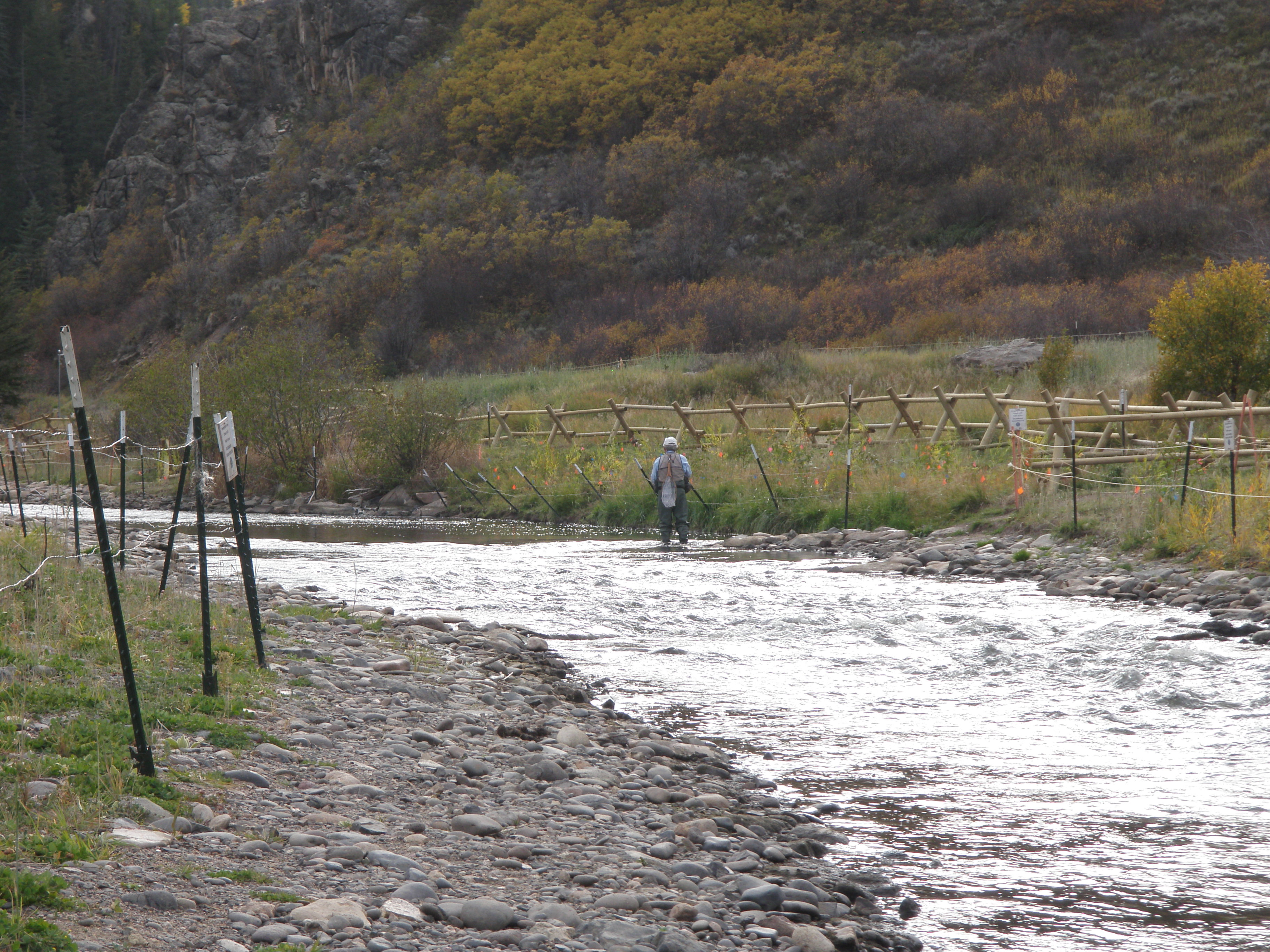
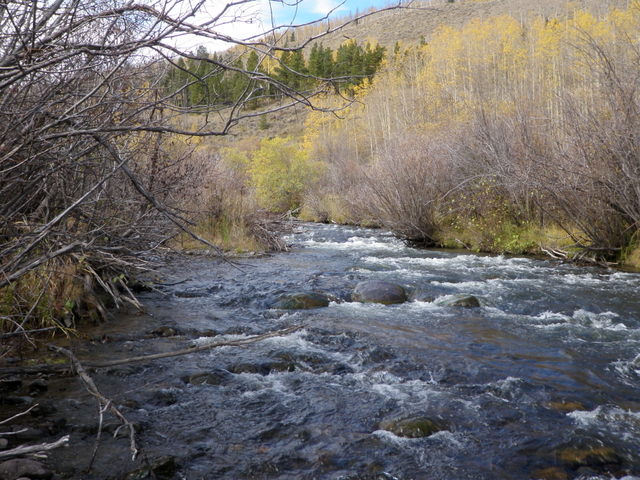
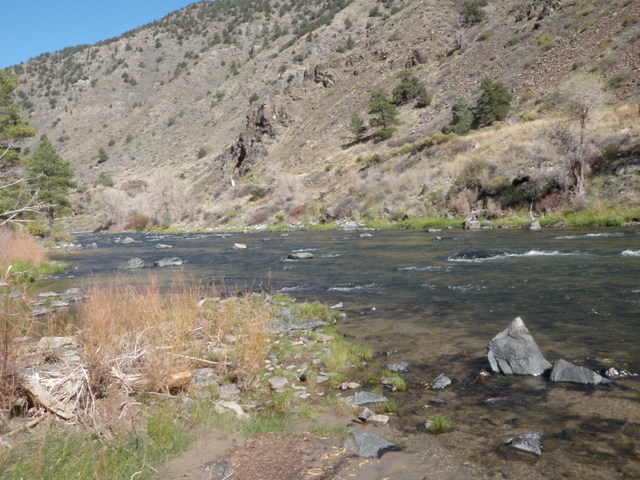
[pe2-image src=”http://lh3.ggpht.com/-Trc6RLKUH14/VE2_YC65nzI/AAAAAAAAoHY/cuwsqm-9ivk/s144-c-o/PA240048.JPG” href=”https://picasaweb.google.com/108128655430094950653/10242014SouthBoulderCreek#6074721892214349618″ caption=”Flows Were at 17 CFS” type=”image” alt=”PA240048.JPG” ]

I could not believe the number of exposed boulders in the stream bed, and I was certain that the flows were drastically reduced from the DWR web site reading on Thursday. When I checked the flows on Saturday, I was surprised to see that the water managers dropped the flows on South Boulder Creek from 91 to 17 in one day! What a dramatic change. By 2PM I was finally ready to fish, and I tied on a size 16 olive deer hair caddis. I pulled my fly line out of the tip, and to test the flotation of the fly, I flicked it into a shallow riffle below me and fed out some slack. It was bobbing along nicely when a small brown trout attacked it, and I had my first fish in a matter of minutes.

My curiosity was aroused, so I floated the caddis through the riffle a second time but allowed it to dance farther downstream until it was just beyond a protruding boulder, and at this point a second small brown inhaled the small dry fly. I released this fish and waded toward the center of the stream, and then I dropped a cast into the short pocket behind the exposed boulder, and trout number three smashed the caddis. What a way to start my day!

I was now rather euphoric as I began working my way upstream, and it did not take long before I landed a fourth brown trout on the caddis in a run that was only two feet deep. However, as I’ve learned through many years of fly fishing, the only constant is change, and now the confident takes changed into frustrating refusals. Obviously my imitation was close enough to attract the attention of the trout, but it differed in some critical way causing the fish to turn away at the last instant. As this thought was bouncing around in my head, I began to observe quite a few tiny black stoneflies flying erratically above the stream, and simultaneously a few sporadic rises caught my attention.

[pe2-image src=”http://lh6.ggpht.com/-2k_sfTKmjHg/VE2_Z0JpoXI/AAAAAAAAoHw/VOX2Ejgawnw/s144-c-o/PA240052.JPG” href=”https://picasaweb.google.com/108128655430094950653/10242014SouthBoulderCreek#6074721922609422706″ caption=”A Beautiful Deep Pool” type=”image” alt=”PA240052.JPG” ]

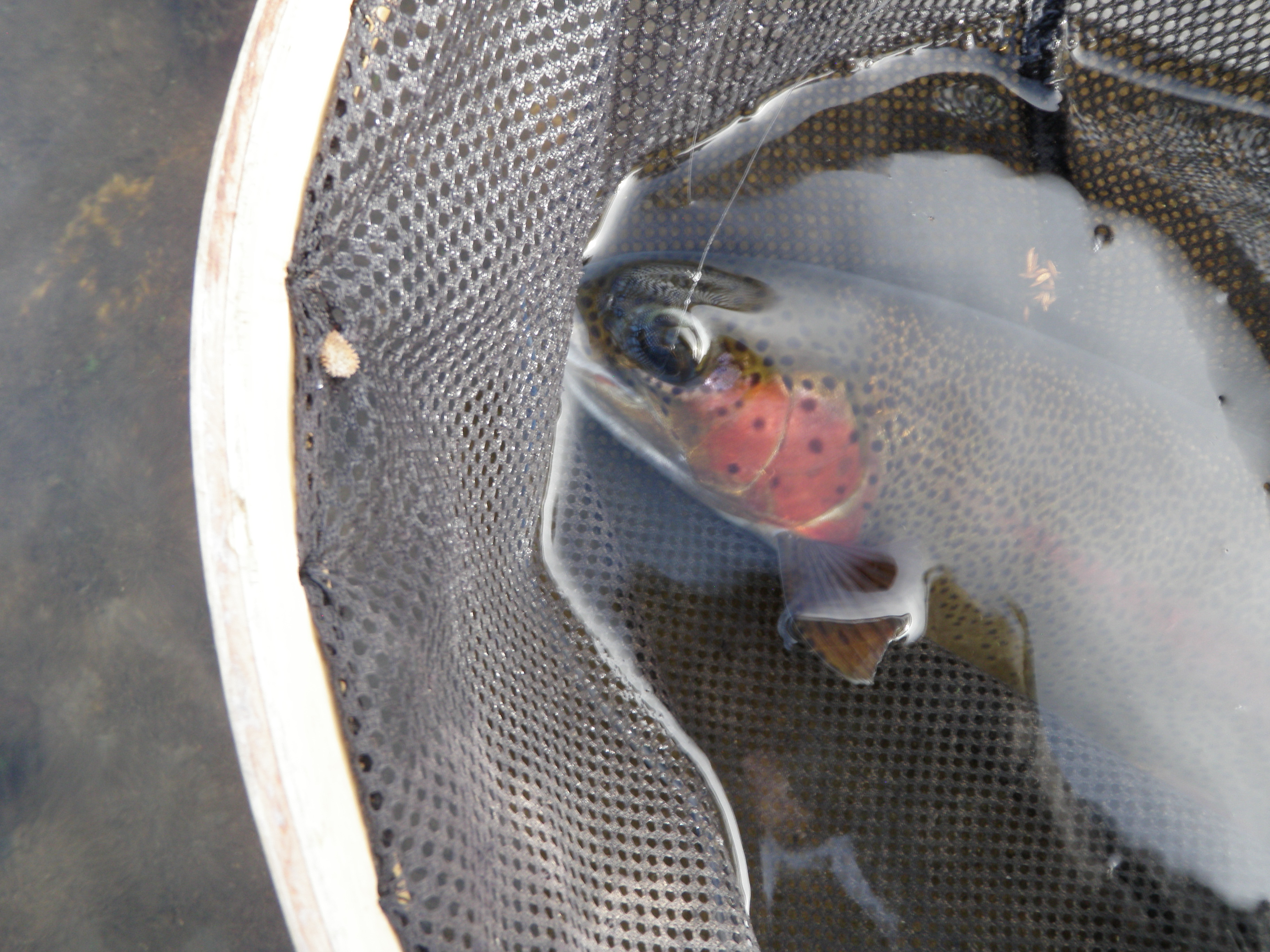
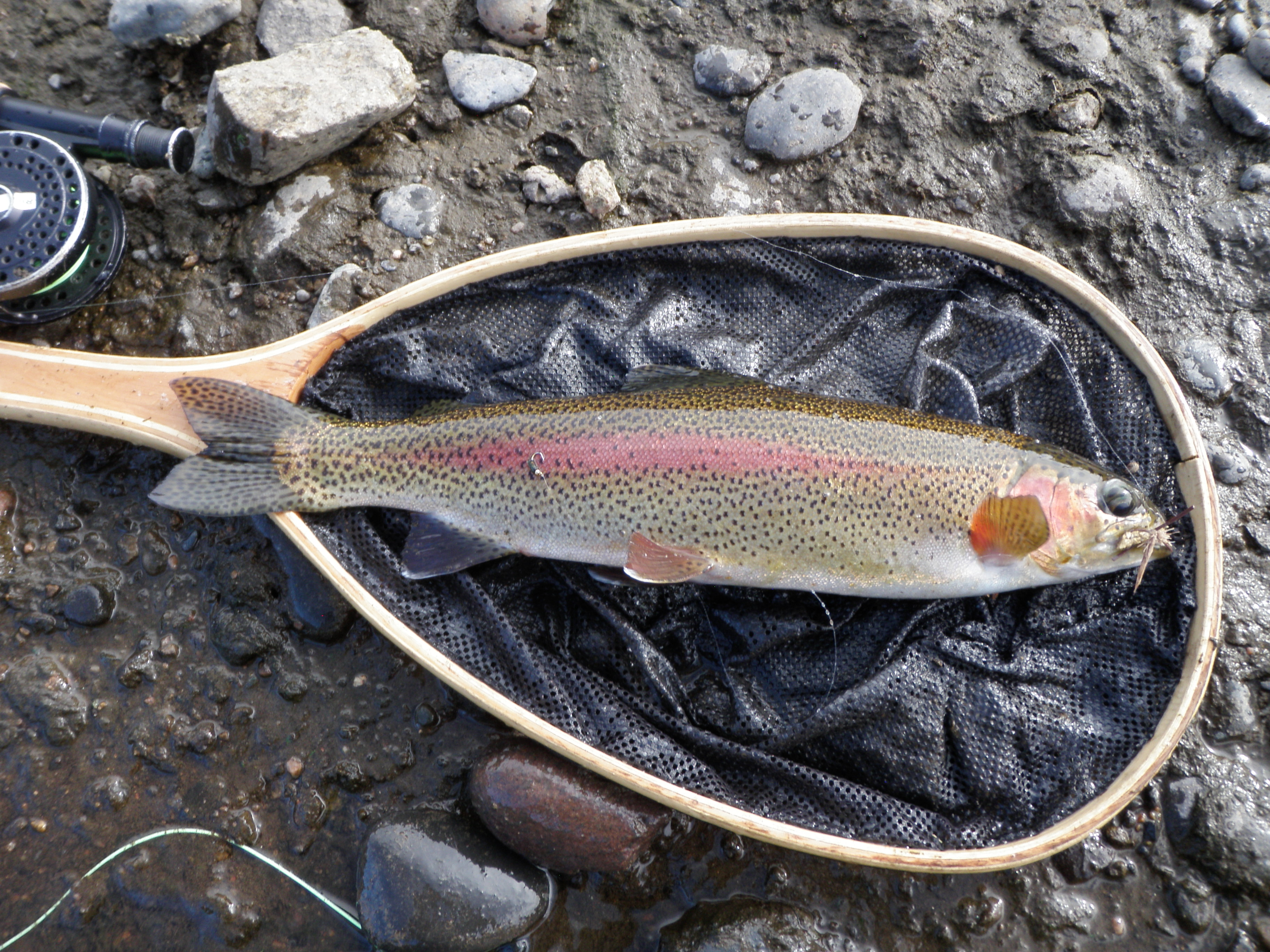
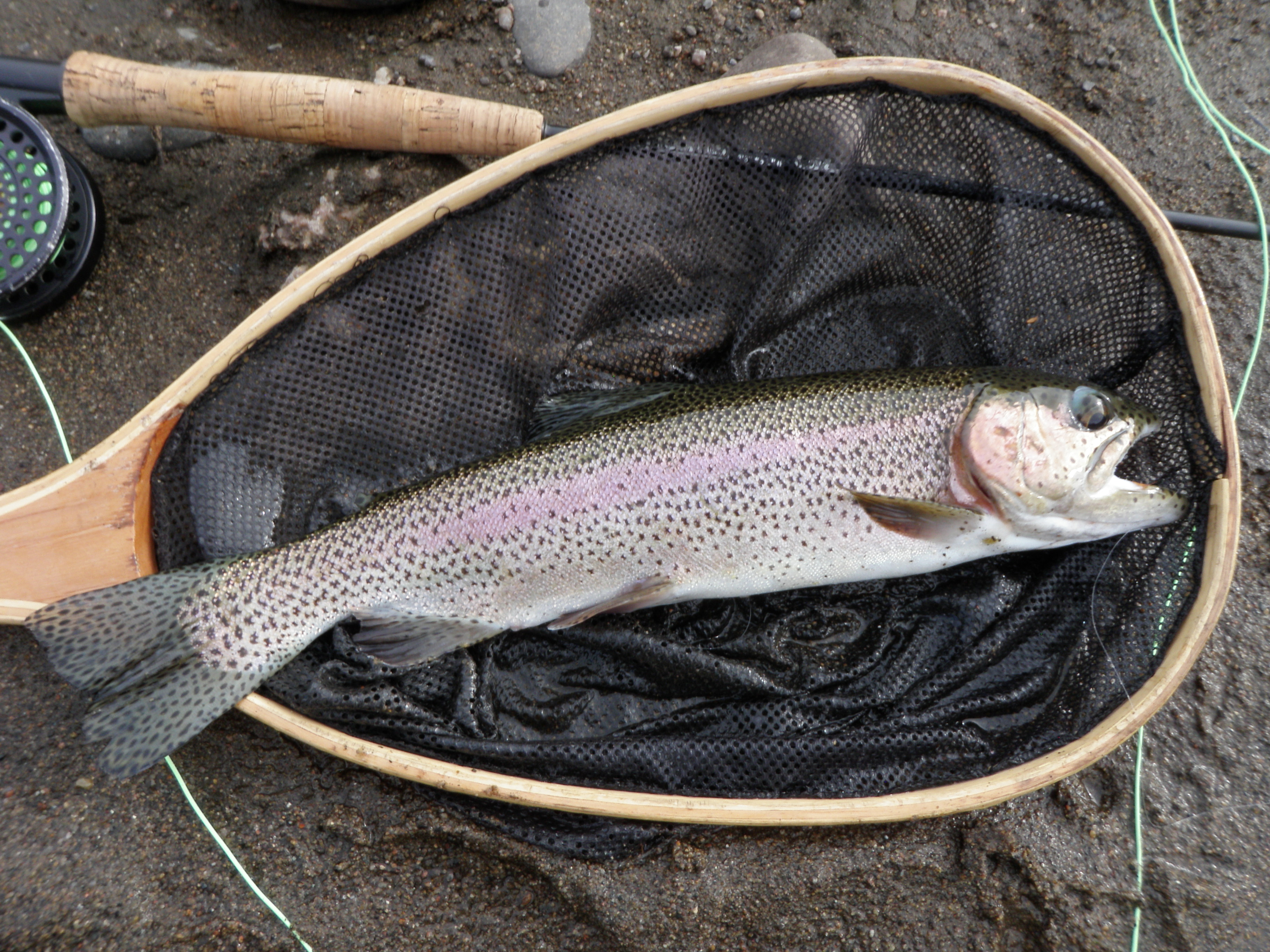
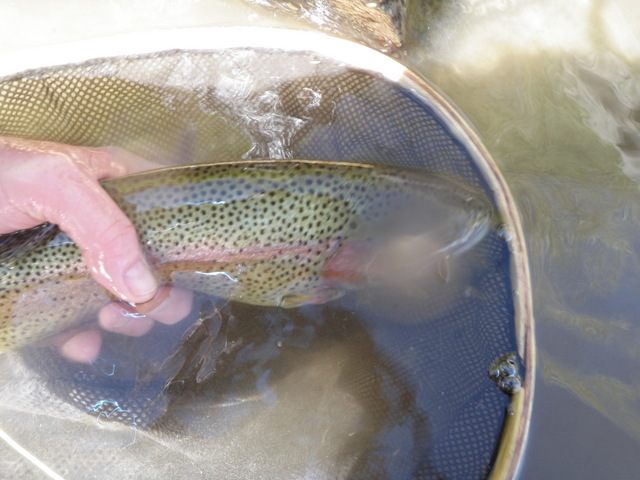
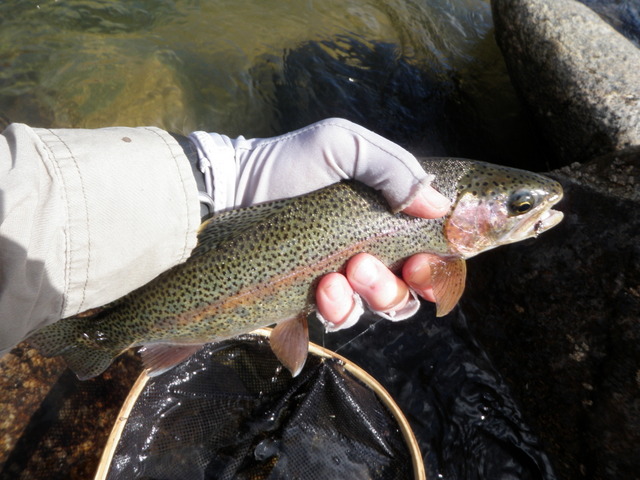
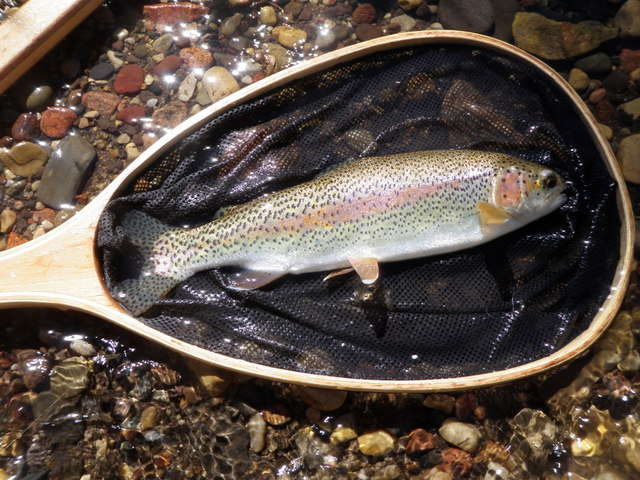
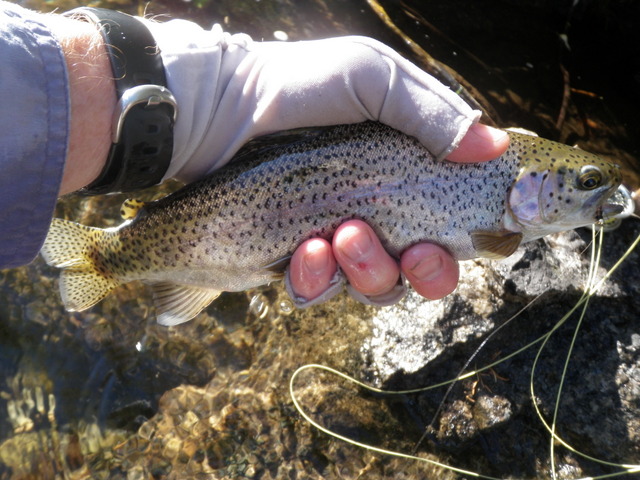
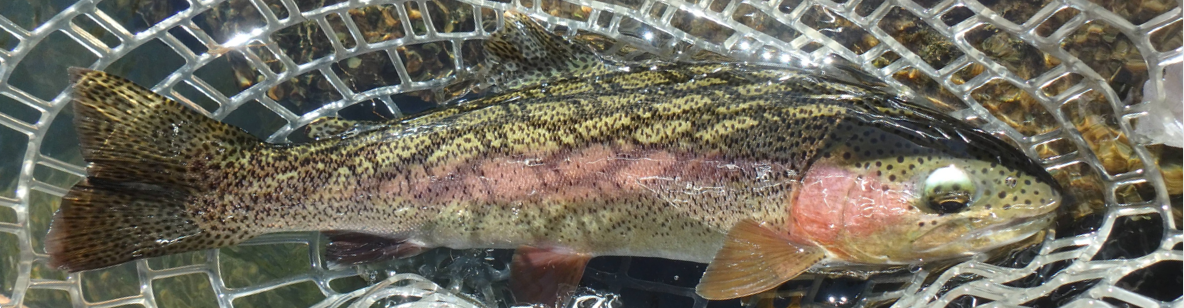
I read my two blog posts from October 21 and 23, 2012 before making the Friday trip, and in these reports I described encountering small size 18 black stoneflies between 2 and 3PM. Being a smart fisherman, I stashed five or six size 18 black stonefly imitations in my fly box in anticipation of this event, and now I replaced the size 16 caddis with one of these. The move was magical, and I landed four trout over the next thrity minutes. The fish were gulping the little fake bug with utter confidence, and one of the fish that I landed during this time period was a colorful rainbow that would become my best catch of the day.

[pe2-image src=”http://lh6.ggpht.com/-e3ctz-O83Ys/VE2_ZQwfr0I/AAAAAAAAoHo/JDABKayXwFY/s144-c-o/PA240050.JPG” href=”https://picasaweb.google.com/108128655430094950653/10242014SouthBoulderCreek#6074721913108672322″ caption=”A Colorful Rainbow” type=”image” alt=”PA240050.JPG” ]

After this fast action I continued moving upstream, but the number of visible stoneflies diminished, and the fish began to ignore my previously red hot offering. The small stonefly with a charcoal colored wing was very difficult to follow in the glare and riffles and thus made a poor searching pattern, so I clipped it off and returned to the size 16 olive brown deer hair caddis. The caddis generated some success as I landed four more trout by prospecting likely lies. The pace of catching was slower, so I moved rather quickly from place to place, but there were enough interested fish to keep me focused.

At 3:30 I looked up and was startled to discover two fishermen in my path next to a nice deep pool. I quickly concluded that they were a father and son team, so I exited and allowed the father to continue fishing with his son while I circled around and above. I allowed fifty yards of space before I cut back to the stream and resumed my progress. Shortly after reentering the creek I approached a spot where the current flowed between an exposed rock and the bank via a three foot wide gap. Below the gap the current formed a nice long deep run that ran for eight feet and was never wider than five feet. I paused to observe and saw two decent fish in the run. One was just below the rock, and the second fish was five feet farther downstream in front of a smaller underwater boulder.

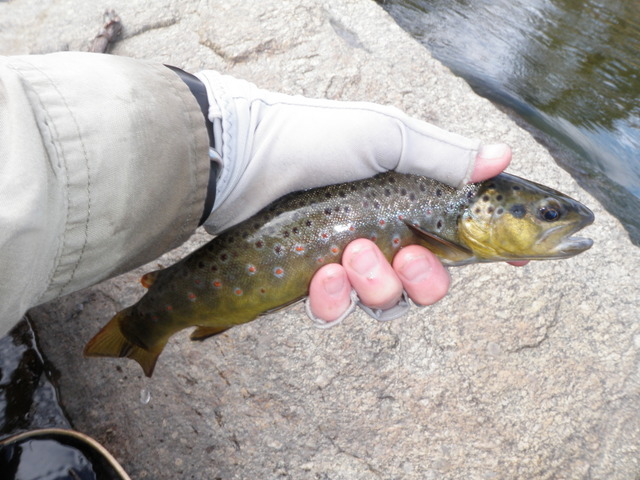
Because of the low clear water I elected to hold my distance and began tossing longer than normal casts to the visible fish. My stealth could not overcome the fact that they ignored my caddis, so I tied on a size 14 light olive stimulator and then dropped a soft hackle emerger off the bend of the dry fly. After several casts a brown trout snatched the soft hackle emerger as it went along the bank. This fish was not one of the two I spotted, and those two, which appeared to be rainbows, ignored my offerings so I moved on.

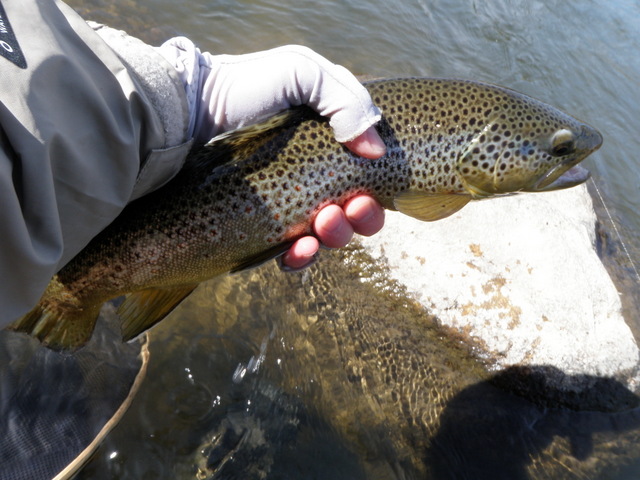
[pe2-image src=”http://lh6.ggpht.com/-s_YXpD4jlmg/VE2_afBD1tI/AAAAAAAAoH0/jLV8aQcZqPY/s144-c-o/PA240053.JPG” href=”https://picasaweb.google.com/108128655430094950653/10242014SouthBoulderCreek#6074721934116116178″ caption=”A Nice Brown Trout from South Boulder Creek” type=”image” alt=”PA240053.JPG” ]

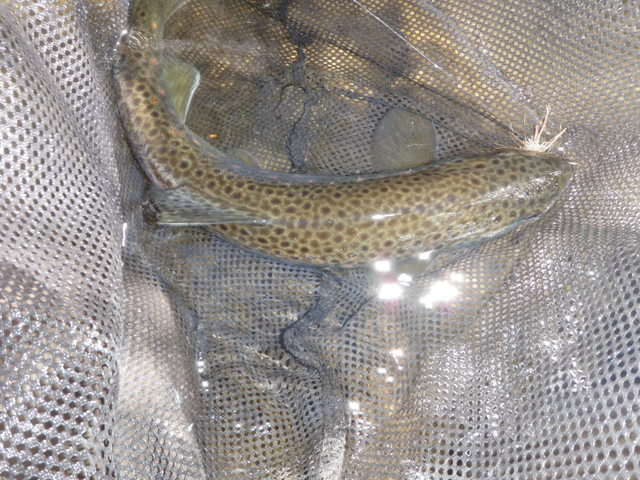
My last fish of the day was a brown trout that grabbed the soft hackle emerger as it began to swing away from the bank as I executed a downstream drift on the south side of the creek. By 4PM the shadows covered nearly the entire stream, and the air was beginning to feel cooler. I had quite a distance to hike, and I guessed that Jane was getting anxious to leave. I climbed the bank and made the 15 minute hike along the trail to Jane’s retreat, and I found her folding her chair to head back to the car. My timing was perfect as we gathered everything and climbed the steep path to the parking lot.

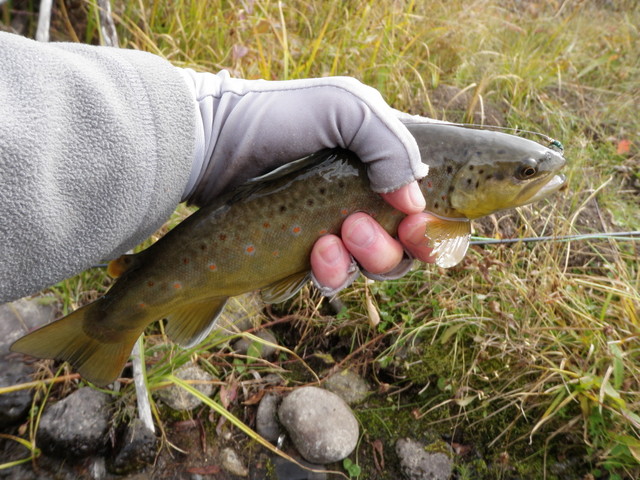
It was a fun day on South Boulder Creek with a high temperature in the middle 70’s. I had the stream almost entirely to myself, and the abnormally low flows seemed to concentrate the fish in the deep pools, and the fish were still looking toward the surface for food. This translated into dry fly success. Best of all, I did my homework, and it paid dividends as four of the better fish gulped my little black stonefly imitation.
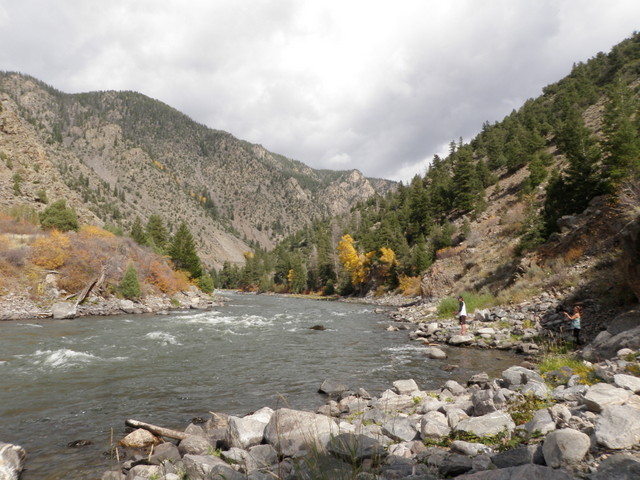
Colorado River – 10/11/2014

Time: 2:15PM – 4:15PM

Location: Pumphouse access

Fish Landed: 1

Colorado River 10/11/2014 Photo Album

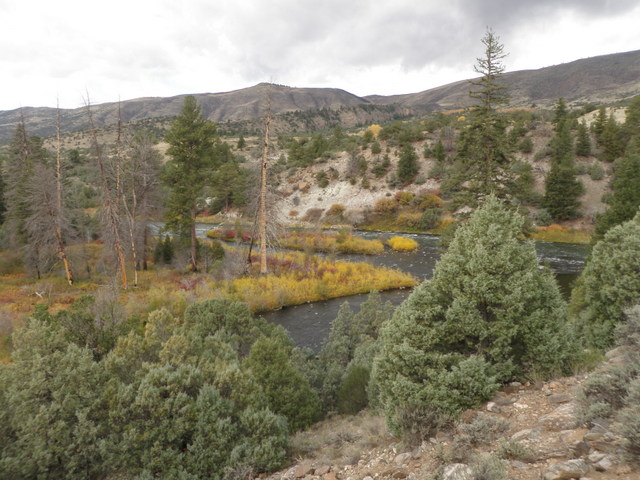
After visiting the Pumphouse access area of the Colorado River with my friend Steve on Tuesday October 7, I was very curious about the water upstream from the boat launches. Steve and I fished up the river perhaps .3 mile, but we stopped at some gorgeous water below a large island, and the Gore Canyon Trail continued. I really wanted to explore the river in the canyon as far as one could reasonably access it.

The weather on the weekend was forecast to continue its glorious trend, and Jane was interested in undertaking a hike somewhere in the mountains, so I suggested the Gore Canyon Trail. It was a two hour drive to Pumphouse, but I convinced her it was a very scenic area that she had never visited. I also searched Gore Canyon Trail on Google and discovered that the length was 1.5 miles one way, but one could continue another mile if not averse to scrambling over boulders.

Looking Back at the Tip of a Large Island

Looking Back at the Tip of a Large Island

Saturday did indeed develop into a very nice day weather wise with high temperatures in the upper sixties before some clouds rolled in during the late afternoon resulting in some brief showers and a cool wind. Jane and I began hiking the Gore Canyon Trail at approximately 11AM, and we covered the entire trail by noon. After the island above the attractive water featuring various merging currents, one trail split off and followed the river while the official Gore Canyon Trail ascended the steep slope of the canyon and then traversed high above the water. After approximately a mile, the trail gradually descended and ended in a boulder field right next to the river.

Jane and I found some large rocks in the sun and ate our lunches, but we were not alone, as two groups of fishermen arrived shortly after we began to eat. Apparently the additional mile into the canyon meant scrambling over the large rocks next to the river, and I assume that eventually a fisherman or hiker would encounter a place where the steep canyon walls prevented additional progress toward the east. The end of the trail was not marked at all, and Jane and I speculated that we missed a turn that would have kept us high above the river. On our return hike we searched carefully for such a turn off but never found one, thus we concluded that we hiked to the end of the trail.

Fishermen at the End of the Trail

Fishermen at the End of the Trail

As we hiked out and back on the trail, we counted at least twenty other fishermen between Pumphouse and the end point, but the Colorado River is such a large body of moving water that plenty of space remained. Naturally before we left Denver I asked Jane’s permission for two hours of fishing time, so when we returned to the parking lot I prepared to fish. I elected my Scott six weight rod, as it is perfect for the large deep flows of the Colorado River. I made sure to stuff my spool of sinking tip line in my fishing backpack, and then Jane and I once again hiked east on the trail.

I was hoping to start at the water below the large island, but when we arrived another fisherman was already enjoying the juicy deep runs and eddies. Jane set up her folding chair on the gravel beach, and I crossed the south braid next to the island and began fishing the north channel where it bordered the northern edge of the island. My first flies were a gray pool toy, beadhead hares ear, and an ultra zug bug. This threesome is developing into my standard starting combination of flies. The first nice pool behind some large boulders was quite attractive so I spent fifteen minutes there, but had no success.

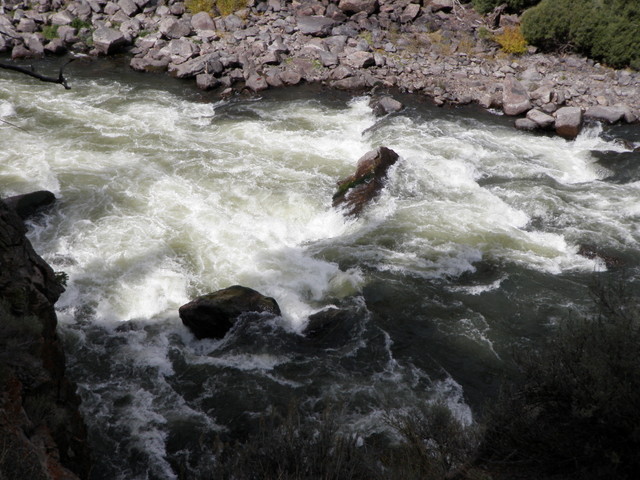
A Very Dangerous Rapid

A Very Dangerous Rapid

After abandoning the starting pool, I continued around a bend and fished along the north side of the island. I had the water to myself, but I moved rather quickly as the runs and pockets in this stretch were quite marginal. The river on the north side was essentially a wide fast riffle, so I crossed the island and forded the south braid and returned to Jane. The fisherman occupying my favored destination remained, so I continued downstream below him. The river made a large bend below the island and then as the main current angled back toward the middle of the river, it formed a nice twenty-five foot wide pool that continued for a length of around seventy feet.

I fished this pool thoroughly with my three flies, but again I saw no sign of fish. Once again I reeled up the flies and climbed the bank until I found the Gore Canyon Trail, and then I walked farther downstream to the area where I caught two fish and observed numerous rises on Tuesday. I carefully observed the water in this area for rising fish, but seeing none, I once again prospected likely places with the three fly combination. After ten minutes of fruitless casting, the sky clouded up and the wind picked up, and I noticed a few sporadic rings on the surface.

I moved up a bit until I could execute a backhand roll cast, and on the third drift the hopper paused, and I hooked a small brown. The bend in my rod was short lived as the fish quickly broke free, and I was disappointed to miss my opportunity to prevent a skunking. Now the sky grew darker and the frequency of rising trout increased, so I moved up the river a bit to gain a better position closer to the visible fish. Once I was settled in my new position I swapped the ultra zug bug for a soft hackle emerger with the hope that the fish were seeing a lot of subsurface BWO nymphs and emergers.

The two fish that were rising in the smooth water above where I had the first hook up showed no interest in my offerings, and then I hooked a branch on a backhand cast, and this forced me to disturb the water to rescue my flies. Once again I gazed upstream and spotted a few rises in a faster current below a protruding rock that was positioned farther out and away from the bank. I decided to study the water for a bit in hopes of confirming that blue winged olives were the insects that enticed the trout to the surface. Initially I could not find any evidence of a hatch, but then I glanced at a smooth spot next to the eddy downstream and a bit to the side of the rock. Finally I saw a flotilla of tiny mayflies with upright wings silhouetted against the sun glare on the smooth water.

This discovery caused me to consider converting to a CDC olive, but between the swirly water and the sun glare, I knew I would never be able to see my fly, so I cast the trio of flies to the run and along the seam between the fast and slack water. The combination of adverse lighting factors was so difficult that I could not even see the pool toy and its bright neon pink indicator tuft. My answer to this frustrating circumstance was to remove the pool toy and replace it with a chubby Chernobyl, and the bulky white poly wing of this fly did in fact improve my ability to follow.

Unfortunately shuffling the top fly was all for naught, as the fish ignored the emerger and the hares ear, and after ten minutes the rising fish ceased their feeding. The sky brightened at this point and the quantity of tiny mayflies in the glare spot dwindled. Once again I looked upstream to an extended stretch of smooth water and again I observed a couple rises. Insanity is continuing to do the same thing and expect different results, so I must be insane because I repeated the whole process once again. I waded to a new position below the pair of rises, and I lobbed the three flies above the location of the fish. Again the fish ignored my flies and stopped rising.

By now the hatch ended, but the sky remained gray and the air temperature began to plummet. I was frustrated with my futile attempts to match the hatch with an emerger, and I planned to experiment with streamer fishing, so I decided now was the time. I sat on a rock and removed my spool of floating line and replaced it with a sinking tip line. I rummaged through my fleece patch and ripped out a large ugly sulpzilla with a silver conehead and knotted this to the end of my short stout leader. I began chucking the heavy weighted fly toward a current seam fifteen feet across from my position, and then I stripped, jigged and swerved it back to my feet.

The Only Fish of the Day

The Only Fish of the Day

I repeated these steps as I worked my way up toward a protruding rock and varied my retrieve motions and speed. Just when I was ready to denounce streamer fishing as a waste of time, and as I was midway between where I began and the exposed rock, my rod began to throb. I quickly set the hook and felt the weight of a fish! My first thought was that I foul hooked a fish with my huge streamer. I used the flex of my Scott six weight to apply side pressure and guided a twelve inch brown trout into my net. When I got a closer look, I rejoiced to see that the articulated streamer hook was clearly in the mouth of my little meat eater.

Meat Eater

Meat Eater

I took a few photos to prove to myself that I actually caught a fish on a streamer and avoided a Saturday skunking, and then I resumed fishing with renewed enthusiasm. Of course, streamer success comes in small doses, and on my second cast I snagged a solid immovable object. I waded upstream in an effort to pull in a different direction to save my sculpzilla, but despite the heavy leader I left the ugly olive streamer on the river bottom. It was now approaching 4PM, and Jane had passed by me on her return to the parking lot thirty minutes prior. My allotted fishing time was near an end, and it was quite chilly, so I reeled in my line and called it quits. I really wanted to see if I could repeat the streamer success, but other factors trumped this desire.

Blue River – 10/09/2014

Time: 10:30AM – 1:00PM

Location: Last public access above Green Mountain Reservoir

Fish Landed: 0

Blue River 10/09/2014 Photo Album

Sometimes fishing is not about catching fish. That pretty much summarizes Thursday October 9. The weather forecast for Thursday called for increasing cloudiness with heavy rain beginning by 1PM. Apparently the remnants of hurricane Simon were moving into Colorado from Baja California, and the southern part of the state was expected to receive more rain than the north. Steve and I were returning from Steamboat Springs to Denver, but we planned to fish somewhere along the way. We did not expect to fish all day, so rain in the afternoon would not affect our plans.

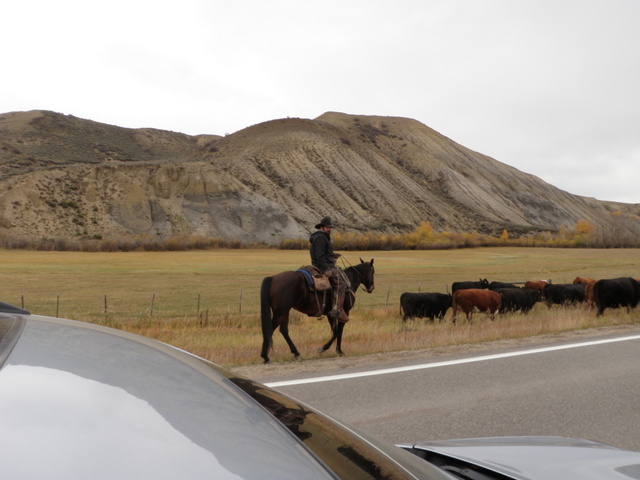
We departed Steamboat Springs and crossed Rabbit Ears Pass and then headed south over Muddy Pass toward Kremmling, but as we sped down the highway we saw a traffic jam ahead. One would normally expect a traffic tie up to involve cars, but on this occasion several vehicles were stopped to allow cattle to cross the highway. We joined them and watched as real cowboys wearing cowboy boots, spurs and chaps herded a group of moving beef across the road. I snapped a few photos, and within five minutes the road was clear, and we resumed our trip.

A Real Cowboy

A Real Cowboy

On our way from the Pumphouse Access on the Colorado River to Steamboat Springs on Tuesday, we noticed a dirt road that turned left before we reached route 9, and we were curious where this led so on our return trip to Denver we decided to detour a bit and check it out. Perhaps this would be a fishing destination for Thursday. We turned right as we climbed the hill south of the Colorado River crossing, and then made another right just before reaching the Blue River. We were now driving north along the Blue River, and after a couple miles we reached a parking lot and BLM pay station. We jumped out of the car and stood on a high bank at the edge of the parking lot where we could see the confluence of the Blue and Colorado Rivers. The Blue River was running at 750 cfs, and that is quite high for that tributary. With flows farther west at Pumphouse running at 1250 cfs, the Blue River was contributing more that 50% of the combined river.

Both rivers were wide smooth pools just above the confluence, and Steve and I both concluded that this would dictate very challenging wade fishing. The rivers were far better suited for boat anglers who could pound the banks with streamers or hopper/dropper rigs. Since we agreed that other locations were more attractive, we moved on and continued traveling south on route 9.

Next we reached a turn that would take us to the dam at Green Mountain Reservoir, and we made another detour to check out this water. Neither Steve nor I had ever fished the tailwater below Green Mountain, but we had read articles about it and were anxious to scout it and possibly make it our destination for Thursday. The road that turned off of route 9 took us across the top of the dam, and then we turned right and slowly drove down a steep hill to a small parking lot. When we jumped out of the car and walked to the trailhead, two young fishermen were preparing to launch their pontoon style raft into the river. There was a thirty yard long steep bank from the parking lot to the river, and they had backed their trailer to the edge of the precipice where they planned to slide the boat downhill while holding it back with a long rope. Rather them than me!

We approached the would be boat launchers and asked if there was a path that could be used by wade fishermen. One of the young men replied that there was a trail that angled more gradually down to the river than the boat launch slope. He informed us that there are two miles of public water below the dam, but only .5-1 mile of it was accessible on foot as a huge vertical rock wall eventually blocked farther downstream progress. Steve and I gazed down at the river, and it was rushing through a narrow canyon with steep walls on both sides at 750 cfs. We both felt that this would be fun water to explore in the future when the flows are 500 cfs or less, but we were not interested in fishing it when the current was crashing through the canyon at its current rate.

We both jumped back in the car and drove along the western shore of Green Mountain Reservoir and then crossed the Blue River above the inlet and proceeded a short distance to the first public access point above the lake when heading south toward Silverthorne. Here we finally decided to halt our scouting trip and actually fish. The sky was quite gray by this time, and we already experienced periods of drizzle and light precipitation. As mentioned previously, the weather experts were calling for heavy rain at times, so we hoped to register a few hours of fishing before the forecast became reality.

When Steve and I were prepared, we hiked down a path that led to the downstream border of the public water. I elected to wade across the Blue River to the west bank, and Steve began fishing with his nymph rig on the east side. The flows on the river above Green Mountain were nearly ideal at 110 cfs. My first choice of flies was a gray pool toy plus a beadhead hares ear and an ultra zug bug. The water was wide and shallow initially and offered few attractive fish holding spots so I moved upstream rather quickly.

After covering a fifty yard stretch of water as described in the previous paragraph, I approached a different section where the river narrowed a bit, and this created deeper pools and pockets. Finally in a relatively nondescript stand-alone pocket behind an exposed boulder, a rainbow rose and slapped the pool toy. I quickly set the hook despite my surprise, and I pricked the fish for a split second. I immediately popped a second cast behind the rock, and a fish once again rose to the hopper. Once again I set the hook, but the rise was either a refusal or I set to quickly, and when I netted the thirteen inch rainbow I discovered it was foul hooked.

At least I found evidence of fish, so I moved on and changed the ultra zug bug for a soft hackle emerger in case the overcast conditions provoked a blue winged olive emergence. BWO’s typically become prevalent as the morning moves into afternoon particularly on gray overcast days. The change however did nothing to reverse my fortunes, and I moved upstream and covered a huge amount of very attractive water with nothing to show for my persistence. By 1PM I replaced the soft hackle emerger with a salvation nymph thinking that attractor nymphs may be the answer if a blue winged olive hatch was not on the menu.

Nice Colors in This Direction

Nice Colors in This Direction

In a long ten foot slick behind a protruding boulder, I cast across to just behind the rock and then held my rod high to keep the fly line off the water as the flies drifted to the tail. As the flies began to sweep and lift, a fish grabbed one of the imitations for a moment, and I set the hook; but once again the weight of a fish was momentary. I continued up the right braid around a midstream island with no reprieve in my bad fortune, and when I reached the top of the island, I encountered Steve. Steve’s fly was in his hook keep, so I concluded he was ready to call it a day. Given my lack of success, I was in agreement, so we waded back across the river and followed the fence line back to Steve’s car.

Once we reached the car, we loaded our gear and departed for Denver before the serious rain developed. Thursday was not about catching fish. Instead scouting locations for future fishing trips was the positive, and that information will be put to good use.

Yampa River – 10/08/2014

Time: 3:30PM – 5:30PM

Location: Tailwater below Stagecoach Reservoir

Fish Landed: 5

Having finally connected with Steve at our parking place along Bear River, we both agreed that we had sampled enough of Bear River to satisfy our collective curiosity, and we were anxious to move on. Steve told me on the drive to Steamboat Springs on Tuesday that the tailwater below Stagecoach Reservoir had changed dramatically since the stream improvement work was completed in 2013. He suggested that we stop at that magnificent fishery on our return from Bear River so that I could judge it for myself. Steve commented that the stream improvement work straightened the stream and removed rocks and current breaks. I was led to believe that the opposite is true of stream improvement; rocks and structure are typically added to straight and shallow featureless water. I was very curious to understand what Steve meant by these observations.

Only two or three other cars populated the normally crowded lot near the Yampa River tailwater below Stagecoach Reservoir, and the fishermen that were present appeared to be crowding into the upper unimproved stretch of water. Steve and I remained in our waders and our rods remained strung from our Bear River expedition, so we were on the water in a short amount of time. As we negotiated the well worn trail to the lower portion of the public water, Steve realized that he forgot to remove his phone from his shirt pocket, and not wishing to risk water damage, he returned to the car. This allowed me to access the water first, and I began fishing just below the only large bend in the upper catch and release section.

Steve Sneaks Up on Pool

Steve Sneaks Up on Pool

The state park and department of wildlife personnel went to great pains to re-vegetate the land bordering the river by hammering unattractive metal posts into the bank and then stretching metal fence wire in between. The fence was so close that it leaned over the stream a foot or two in many places. There were well marked chutes between the fenced areas to allow fishing access. It reminded me of the crowd control mazes that exist at amusement parks and ski lift lines.

Yampa Tailwater Rainbow

Yampa Tailwater Rainbow

The portion of the stream where I began was representative of the stream improvement area. It appeared to be a deep trough, and the main current began at the center and then angled to the far bank where the river curved. Once the current deflected against the bank closest to the parking lot, it ran for another thirty feet before tailing out and continuing. The mangled Charlie Boy hopper remained on my line from the end of my fishing time on Bear River, so I decided to stick with it for a bit, and the ultra zug bug dropper continued to dangle below the hopper.

The Charlie Boy hopper is an interesting story. I am in a perpetual quest to find the ideal grasshopper imitation. Earlier in my fly fishing career, my preferred hopper imitation was a yellow Letort hopper, and I enjoyed tremendous success with this fly. But as time went by, I grew more and more disillusioned with the dubbed body of the Letort hopper and yearned for an equally effective imitation that was more buoyant. The Letort hopper required frequent trips to my sleeve to sop up the absorbed water and then subsequent dunkings in my dry shake canister.
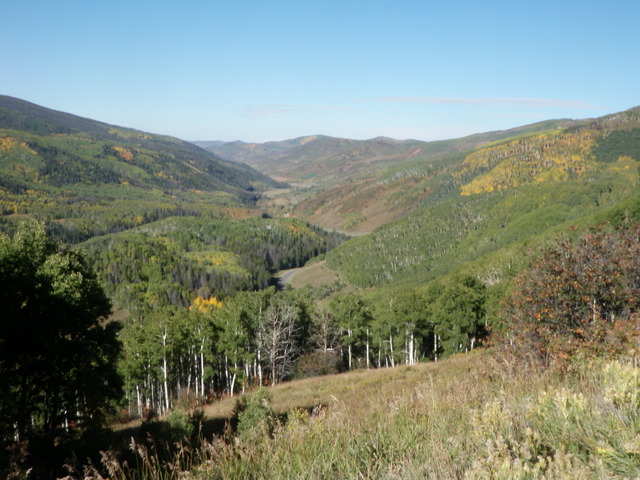
Jane bought me a fly tying book authored by Charlie Craven, and there was a chapter for the Charlie Boy hopper. Several winters ago I tied a batch of tan and yellow Charlie Boys and anxiously awaited the arrival of fishing season to test the effectiveness of this new pattern. The recipe in the book included unknotted rubber legs, but I have noticed that Charlie’s latest directions on his web site incorporate knotted rubber legs. At any rate, the Charlie Boy served the purpose of floating several medium weight nymphs without sinking, and it was very visible in various difficult lighting situations. Unfortunately it rarely produced fish.

For this reason I continued searching for alternatives, and on a guided fishing trip with Taylor Edrington, I asked him what his favorite hopper pattern was. Taylor was quick to reply “pool toy”. I greatly value Taylor’s opinions on matters that relate to fishing, so I dutifully returned to my vise the following winter and churned out 10-15 pool toys in colors ranging from yellow to tan. The next summer I began using pool toys as my number one hopper imitation, and the Charlie Boys began gathering dust in my large plastic fly bin.

During 2014 I continued using pool toys, but for various reasons including tree branches and broken off fish, my supply dwindled to the point that I was concerned I would have enough for the prime late summer hopper season. On several outings when I needed a large buoyant fly to support several nymphs, I decided to use a tan Charlie Boy since I had a bunch of them, they were visible and buoyant, and I was just using them as in indicator. Guess what happened? Fish started smashing the Charlie Boy! The Charlie Boy was staging a revival that put all of Brett Favre’s comebacks to shame. On two trips to the Arkansas River in October the brown trout craved the tan Charlie Boy as I tossed it upstream along the bank. Not only did they favor the Charlie Boy pattern, but I was catching these fish on the same fly.

Beautiful Fish Fell for Charlie Boy Hopper

Beautiful Fish Fell for Charlie Boy Hopper

By the time I tied this very same tan Charlie Boy to my line on Bear River, it exhibited numerous holes and tears from the teeth of a long line of ravenous fish. The Bear River usage served to mangle my treasured Charlie Boy even more. Now I was casting my poor workhorse hopper to the inside seam of the main current on the Yampa River. At 3:30 in the afternoon I was certain that it would only be an indicator, and despite its ragged appearance, it still floated reasonably well. Guess what happened? I’m sure with that history lesson on the Charlie Boy, you must have guessed the answer. As the Charlie Boy danced along the inside edge of the current seam and drifted back toward me, a large silvery missile with a crimson flank dashed to the surface and inhaled it. I could not believe my eyes, but somehow I reacted in an appropriate manner and set the hook in the lip of a hungry rainbow trout. The rainbow streaked up and down the slow moving water next to the faster current several times until I could apply side pressure and slide my cracked net beneath it.

I expected difficult fishing in the late afternoon using tiny midge imitations and in my first section of water, I landed a sixteen inch brightly colored rainbow trout on a large foam hopper imitation. Apparently the fishing gods were rewarding me for my patience on Bear River. I moved on and approached another section where the main current flowed down the center of the river in a deep run. This created slack water on both sides, but the area between the opposite bank and the center current featured an eddy and a small white foam patch. I flicked the Charlie Boy and ultra zug bug along the downstream edge of the eddy, and as the top fly slowly floated upstream next to the foam, it disappeared. I set the hook and felt significant weight, so I responded by battling a second sixteen inch rainbow. This tough fighter sucked in the ultra zug bug, and I was quite surprised to experience this exciting action late in the afternoon when there did not appear to be any significant source of food present.
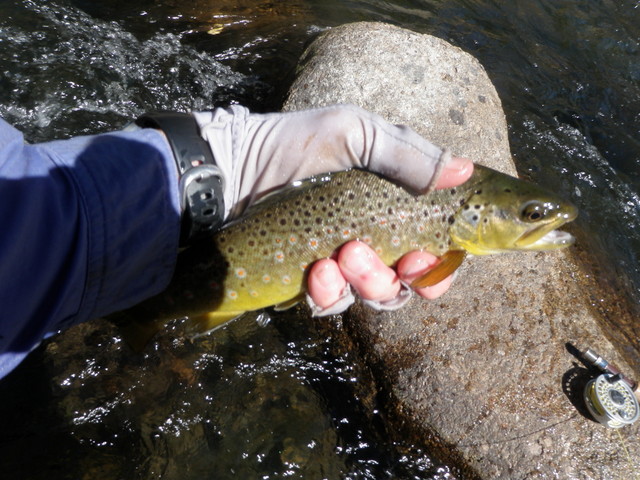
A Second Gorgeous Rainbow from the Yampa

A Second Gorgeous Rainbow from the Yampa

Once again I moved upstream, but now my success rate fell, and I began to make numerous casts without any response. I decided to add a third fly to hopefully attract more attention and spied a gray scud in my fleece patch that I purchased in Viroqua, WI. The Yampa tailwater typically contains quite a bit of aquatic vegetation, and that usually suggests scuds, so I added the gray scud to my lineup. I approached another deep run in the center of the stream and ran my three flies along the seam and witnessed another dip of the Charlie Boy. Could the scud have made the difference already? I managed to land this fish, and it turned out to be a thirteen inch brown that fell for the ultra zug bug. The late afternoon time on the Yampa was proving to be icing on the cake.

I continued on, but now I was covering attractive water, and I was not generating any response so I clipped off the gray scud and replaced it with an orange version, but this also was ignored by the residents of the Yampa River. I did observe a fair amount of midge activity in the cool late afternoon air with shadows beginning to lengthen across the river, so I opted to follow the conventional wisdom and tied on a zebra midge as my bottom fly. By now I arrived in a slow deep pool and fish were sipping something sporadically on the surface. I cast the Charlie Boy one third of the distance up the pool, and as it slowly drifted back toward me, it dipped and I set the hook and discovered a small seven inch rainbow had sipped the zebra midge. It was not much of a fish, but at least I now knew that the tiny zebra midge was viewed as a viable source of food on the Yampa River in the late afternoon.

A short stretch of faster water separated the slow deep pool from another nice pool closer to the dam. The second pool was above the stream improvement area, and it exhibited many of the features that were prominent in the entire tailwater prior to stream reconstruction. There were numerous large boulders with downstream pockets, and the current split into many areas and did not just run down the center of the river. But I’m getting ahead of myself. In the faster water below the second classic pool, I landed a nine inch brown trout that followed the lead of the rainbow and grabbed the zebra midge just as it started to swing at the tail of the drift.

Stagecoach Reservoir Late in the Afternoon

Stagecoach Reservoir Late in the Afternoon

I was quite optimistic as I waded into the tail of the classic pool, but my optimism was misplaced as I covered the entire area with casts and received no response. Steve walked up from below, and his fly was in the hook keep, so we decided to call it quits. It was a pleasant day weather wise with temperatures around 60 degrees when we began on Bear River at 10:30AM, and they probably reached a high in the upper 60’s. I wore a fleece all day and never felt too warm. Landing five fish from the notoriously difficult Yampa tailwater was a pleasant surprise, and I felt rather satisfied as we drove back to Steve’s condo in Steamboat Springs.

Bear River – 10/08/2014

Time: 10:30AM – 11:30AM; 11:45AM-2:45PM

Location: Above Bear Lake; One mile below Yamcolo Reservoir

Fish Landed: 12

Bear River 10/08/2014 Photo Album

When Steve originally contacted me with the proposal to spend three days fishing in the vicinity of Steamboat Springs, one place he mentioned was the Bear River. I read a small amount of information about this fishery, so I was quite intrigued to see what it might have to offer. We chose Wednesday as our day to explore Bear River. I read that Yampa means bear in the native tongue, and the Bear River is actually the main headwater for the Yampa River. I’m not sure where the name changes, nor do I know why they used the Native American name at lower elevations and then converted to the English word in the headwaters.

The Bear River begins in the southeastern section of the Flattops Wilderness and flows in a northeasterly direction through the town of Yampa, CO and then continues as the Yampa River until it fills Stagecoach Reservoir and then bends northwest through Steamboat Springs until it merges with the White River. Steve and I departed Steamboat Springs on Wednesday morning and stopped at Steamboat Flyfisher to gather information about the Bear River area, and we asked questions about public vs. private access and of course suggestions on productive stretches to fish. Armed with this info, we were on our way on a roughly 45 minute drive to explore new water southwest of Yampa, CO.

Bright Fall Colors

Bright Fall Colors

We drove seven miles on a route 7 southwest of Yampa, CO until we reached the national forest boundary. The folks at Steamboat Flyfisher suggested that we could fish anywhere on national forest land. They mentioned three lakes in the area and suggested that the stream between the lakes was also productive, so Steve and I continued along the road until we reached the first stillwater, Yamcolo Reservoir. After Yamcolo there was a short stretch of stream, but it was not very close to the road, so we traveled along the road to Bear Lake. Quite a few rings appeared in the smooth surface of Bear Lake indicating feeding fish, but we were more interested in exploring the moving water, so we continued to the stream above Bear Lake.

The Bear River Above Bear Lake

The Bear River Above Bear Lake

The stream in this area meandered through a wide meadow, and the water appeared to be quite clear and smooth, but there was a section just above the lake that exhibited a higher gradient with pockets and runs. We decided to begin our quest for Bear River trout here and pulled into a pullout on a bluff high above the meadow. I was prepared to fish first, so I carefully negotiated my way down a steep bank, crossed a small tributary stream on the breast of a beaver dam, and then intersected with Bear River. I crossed to a small knoll on the other side and then crashed my way through some bushes until I was quite a distance below the smooth meadow water. Traces of snow remained in the shadow of the hill and the air temperature hovered in the low 50’s as I made my first cast.

I chose my Loomis five weight and began fishing with a light olive stimulator. The stream at my starting point was quite narrow and fast and offered few desirable deep pockets to test with my high floating imitation. I worked upstream for ten minutes with no sign of a fish; not even the flash of a disturbed bank hugger. With this disappointing turn of events I removed the stimulator and tied on a Chernobyl ant with a hares ear dropper. Over time I have discovered that if there are fish in a stream, these flies will always provoke at least a refusal.
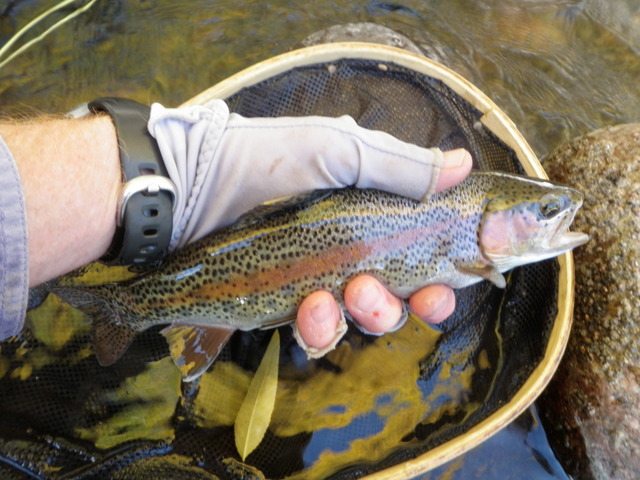
Unfortunately Bear River is apparently an outlier when it comes to this Dave Weller law of flyfishing, because I fished upstream for another twenty minutes until I met Steve, and I had yet to see any evidence of trout in Bear River. I skipped around Steve who was having an equally disappointing experience, and I arrived at the tail of the meandering smooth water that looked like a very long winding beaver pond. I scared one nice fish that was resting near the bank just in front of me, and then I shot a long cast to the middle of the pool approximately thirty feet upstream. The instant the Chernobyl and beadhead hit the water, I saw three or four fish in the 12-14 inch range scatter downstream. There may have been even more that streaked upstream, but I could not see into the water that far ahead.

On the one hand I was excited to finally see evidence of nice sized fish in Bear River, but at the same time I was rather intimidated by the clear smooth water and skittish fish. Clearly a dry/dropper was not the proper approach for these conditions, so I clipped the flies off and tied on a size 16 gray deer hair caddis. Steve meanwhile circled around me and moved a comfortable distance upstream, and was seeing the same challenging conditions. I began making long distance casts with the caddis and checked my cast high as though I were casting my fly toward the sky. This allowed my solitary caddis to flutter down softly to the surface, however, I did not take the time to extend my leader or convert to a 6X or 7X tippet. Despite the tantalizing flutter cast, the line and its shadow probably disturbed any trout that might have had an interest in my caddis imitation. I did make one cast within a foot of the high right bank, and as I lifted my fly to recast, I saw a large bulge on the surface behind my fly. I attempted to repeat this movement on subsequent casts, but I was never able to initiate another follow or bulge.
Steve and I conferred, and we both concluded that we could spend the entire day in this place and achieve nothing more that frustration, so we climbed back up the hill to the car and drove back downstream below Yamcolo Reservoir. As we moved downstream we stopped several times to inspect the water, but each time it was rushing downhill at a rapid pace, and the small narrow torrent was bordered by backcast-menacing willows. Finally we found a pull through where the stream opened up a bit and lacked tall trees close to the water. We agreed to give this a test, and Steve chose to walk upstream from the parking spot while I hiked down a two lane road until I reached a bridge of sorts. It was a large log that spanned the river and a stiff wire was strung between two posts to use as a handrail.

A Nice Brown Took Ultra Zug Bug

A Nice Brown Took Ultra Zug Bug

I decided that this would be my beginning point and ducked under some tree limbs to reach the rushing water. I made a few casts with the tiny gray caddis, but it was impossible to see in the frothy water, so I exchanged it for a size 12 royal stimulator. This proved to be a fortuitous move, as I landed two brown trout and a rainbow in the first fifteen minutes. One of the browns and the rainbow were nice chunky twelve inch fish. I was rather euphoric with this sudden turn in my fortunes, but the rapid catch rate would not sustain itself. As I moved upstream and away from the crude bridge, I began to experience refusals to the stimulator, and the stream offered fewer decent fish holding nooks. I replaced the stimulator with a Chernobyl ant and beadhead hares ear in hopes that the denizens of the small river would favor a subsurface morsel of food, but these flies did not perform any miracles.

Fast Water

Fast Water

The stream was running high relative to the small streambed, and this restricted the number of pockets and pools and made wading quite difficult. The current was rushing right along the bank, and the thick overhanging brush made it challenging to exit and work around troublesome passing spots. Just before returning to the car, I replaced the Chernobyl with a gray parachute hopper, but this fly did not produce any better than the previous. By 1 o’clock I covered a vast amount of stream real estate, so I climbed up the bank and discovered that I was just above Steve’s car.

I visually surveyed the area looking for Steve, as I sensed this was not the type of water that he favors, but I did not see any signs of him so I walked up the road forty yards. Since Steve was not present at his car, I assumed he was still fishing his way upstream. I turned right and cut through a thick stand of evergreen trees until I reached the stream, but I saw no signs of Steve. Oh well I thought, perhaps he found some water to his liking. I decided to resume fishing and replaced the parachute hopper with a Charlie Boy in order to create more visibility from my top fly. In addition I swapped the hares ear nymph for an ultra zug bug.

This combination of flies clicked as I landed another eight brown trout before quitting at 2:45PM, but these fish did not arrive in my net without significant effort. The wading continued to be as difficult as it was in the morning, and I covered a lot of water between locations that might yield fish. Casting to marginal small pockets was a waste of time as the swift current swept the flies into fast water before a fish could obtain half a look.

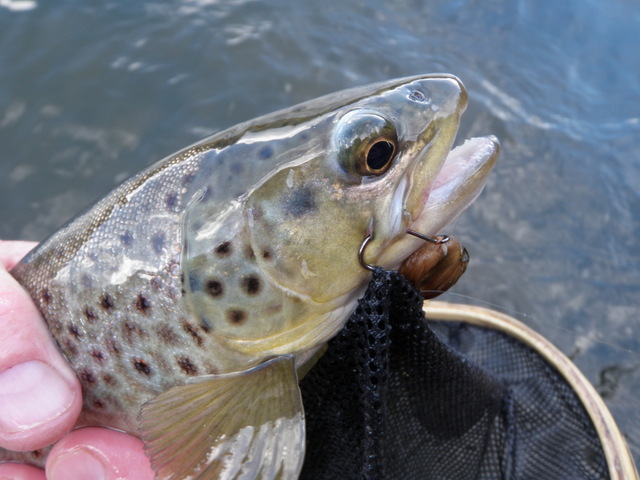
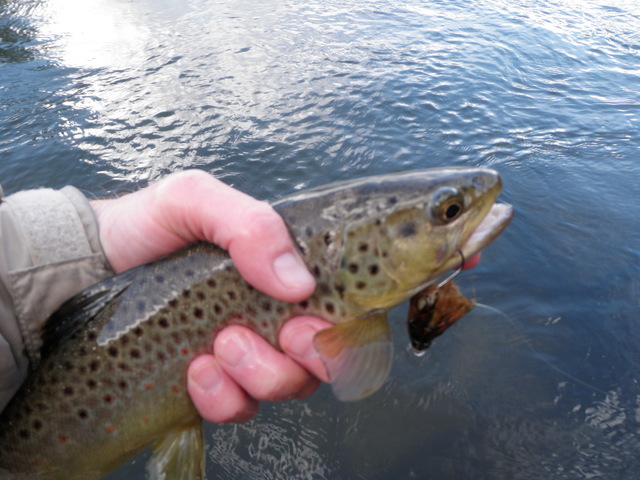
Toward the end of my time on Bear River the Charlie Boy began to produce, as I landed two or three brown trout in the 12-13 inch range. In fact the last fish of the day proved to be the best as a thirteen inch brown confidently smashed the Charlie Boy hopper. I savored this fish by taking three photographs before gently releasing it into some slow moving water along the bank.

Victim of a Charlie Boy Hopper

Victim of a Charlie Boy Hopper

Of the twelve trout I landed on Wednesday from the Bear River, ten were browns and two were rainbows. I returned to the car at 2:45 and discovered Steve perched on a large rock next to the road waiting for me. Apparently he had quit within thirty minutes and went searching for me, but by some stroke of misfortune we must have passed without seeing each other. It was fun to explore the Bear River, but Steve and I agreed that we would only return if the flows were reduced by 25% or more.


Colorado River – 10/07/2014

Time: 11:00AM – 4:00PM

Location: Pumphouse recreation area and upstream

Fish Landed: 4

Colorado River 10/07/2014 Photo Album

Discovering new water is always fun, and it was such a proposal that my friend Steve sent me in the form of an email a week prior to Tuesday October 7. Steve and his wife Judy own a condo in Steamboat Springs, and Steve inquired if I would be interested in accompanying him on a three day fishing trip. He proposed using his place in Steamboat as a home base, and we would fish surrounding rivers and streams. It did not take long for me to accept this enticing invitation. I responded positively, but then began experiencing the signs of a head cold on Thursday as mentioned in my last blog post. I was undeterred, however, and by Tuesday the cold was on the downside, and on a positive note, the weather continued to be unseasonably warm and dry.
Steve arrived at my house at 8:30 on Tuesday morning, and we were on our way to the Colorado River at the Pumphouse access. I never fished this middle section of the Colorado River, but I read quite a few glowing reports on the quality of the fishing. Steve researched the location and the directions ahead of time, so I was in good hands as we drove west on interstate 70 to Silverthorne where we exited and continued north on route 9. After passing Green Mountain Reservoir we continued another six miles until we turned on to a packed dirt road with a sign indicating 10.5 miles to Pumphouse. The dirt road stretch was simply gorgeous as we traveled through a wide valley with sagebrush that blended into aspen trees and then evergreens on the surrounding hills.

After seven miles we made a large curve to the right and descended to the rim of Gore Canyon. Another three miles, and we found ourselves turning right to the BLM Pumphouse access area which contained three boat launches, parking lots and a campground. We quickly climbed into our waders and assembled our rods, and began our quest for fish. There were two groups of three or four fishermen, and they appeared to have guides, and the groups were fishing right next to the boat ramps. Steve and I knew nothing about the hierarchy of prime locations since we were new to Pumphouse, so we began fishing in a nice pool between the two boat ramps.

I chose my Scott six weight for the Grand River and began by rigging it with a strike indicator, weighted 20 incher, and beadhead hares ear and entered the water just above Launch #3. Steve waded into the edge of the river twenty yards above me and also began with two nymphs including a beadhead pheasant tail and a RS2. As we began prospecting the deep slowly flowing water, we noticed some sporadic rises in the middle of the river beyond casting range. After 15 to 20 minutes, Steve shouted that he had one and quickly landed the first fish of the day, a feisty brown trout. As he released his catch, he informed me that the pheasant tail was favored by the hungry trout, so I stripped in my line and replaced the hares ear with a salvation nymph.

Steve Drifts Nymphs at Pumphouse

Steve Drifts Nymphs at Pumphouse

The air temperature was fifty degrees when we began, but with the bright sunshine overhead, the temperature quickly escalated to the upper 60’s. The only blemish on the spectacular October weather was occasional windy periods during the afternoon. I wore my raincoat as a windbreaker for the entire day, and I never felt uncomfortably warm. After converting to the salvation nymph I hooked a fish at the end of my drift as I began to lift to make another cast, but the curious fish quickly performed an escape maneuver and thwarted my efforts to land it. Steve meanwhile landed a second brown trout in the first hour at which time we both felt hungry and returned to the car where we consumed our lunches.

After lunch we hiked up Gore Canyon a short distance to get above a group of fishermen who were stationed around an island just above the boat ramp that was across from the camping area. During the 1-2PM time period a fairly dense hatch of very small size 22 blue winged olives erupted. During the first half of the hatch no fish were rising, so I moved the salvation nymph to the upper fly and then added a soft hackle emerger as the bottom offering. I found a flat pointy rock that jutted into the river three or four feet and used it as a casting platform for up and across drifts of the nymphs. After quite a few passes through the deep pool, a fish bumped my fly and I set the hook. A strong battle ensued, but I finally netted a gorgeous sixteen inch brown trout with dark spots and a deep olive coloration, and the soft hackle emerger was tucked in the corner of its mouth. A photograph was in order, and then I set the muscular fighter free to fight another day.

Fine Brown Settled Down

Fine Brown Settled Down

Next I continued fishing upstream in the deep pool, but my flies got wedged between some rocks, and the water was too deep to wade so I broke off the soft hackle emerger. Although the soft hackle had delivered a fine first fish, it required numerous casts in a time when a heavy hatch was evident in the air and on the water. I selected a RS2 and used it as my new point fly. I moved up along the bank a bit farther to a spot where the river gained a bit of velocity as it flowed over a submerged boulder, and in the V behind the rock I hooked and landed a thirteen inch brown on the RS2. I was encouraged by this sudden success on the previously unexplored water of the Colorado River at Pumphouse.

After releasing fish number two, I gazed upstream and spotted some fish rising in a steady rhythm in the next pool. I had recent success with the nymphs, and I was reluctant to remove the split shots, indicator and two flies but after observing for a few minutes, I could not resist the allure of fishing dry flies to steady risers. As quickly as possible I removed all the nymphing paraphernalia, and tied on the smallest CDC BWO that I could find in my foam patch. Of course by the time I was finally ready to cast, the fish stopped rising. Despite this setback I managed five or six futile backhand casts and actually generated a refusal from a brown trout in the vicinity.

Once again I gazed upstream to another nice deep run off to the side of a strong deep current, and again I noticed a flurry of rises from three or four fish along the current seam. The lighting at this spot was very poor with shadows extending over the water from tall trees on the bank and sun glare interspersed with the shadows. In addition I had virtually no room for a back cast. By the time I got in position to make a cast and dried the wet CDC wing, the fish once again ceased rising. Once again I did generate a refusal and actually nicked the fish on the hook set, but the dry fly fishing was proving to be quite a challenge.

I was having great difficulty seeing the tiny olive in the glare and shadows and riffles, and the fish ended their surface feast. A nice stretch of riffles over moderate depth was just ahead, so I decided to return to a dry/dropper approach before opting for nymphing. I tied on a Chernobyl ant, beadhead hares ear, and soft hackle emerger and waded upstream to the tail of a huge long pool. Once again the tease began, and I saw a few regularly rising fish. I was committed to the dry/dropper now, so I executed a backhand roll cast of the three flies above the closest rise, and on the third drift the Chernobyl paused, and I set the hook and landed a twelve inch brown on the hares ear.

Shortly after releasing this fish, I roll cast farther upstream and more toward the left, and this resulted in a second twelve inch brown once again on the hares ear. Perhaps I had solved the puzzle. One more fish continued to rise farther above the spot of the last catch, but I tangled my line around the rod and by the time I resumed, the rising ended. I now found myself prospecting in big water with no rises or signs of fish to give their position away, and this proved fruitless.

Steve walked back downstream to meet me, and we decided to quit at 3:15PM, but before doing so, we both agreed to hike up the trail to check out a place where the river appeared to merge after splitting around a large island. We were scouting for future reference. When we arrived at the merge point, there was a large foam pool bordered by multiple eddies, and it was one of the fishiest places I had ever seen. I could not resist the urge to make some casts, and Steve encouraged me to give it a try. I began casting to the top of a riffle where the current from the small south channel ran into the larger main river. After five or six casts I allowed the Chernobyl to drift deep into the nook of the merging currents right next to the foam, and I thought the Chernobyl disappeared. I raised the rod tip to bring the foam fly into view, and suddenly I felt weight. I accelerated the lift into a hook set, but after the momentary weight, the fish was gone. Judging from the type of water I was in, this may have been the best fish of the day, but I’ll never know.

Colorado River at West End of Gore Canyon

Colorado River at West End of Gore Canyon

With that disappointment we hiked back on the Gore Canyon Trail to the parking lot and returned our gear to the back of Steve’s car. Next we were on our way to Steamboat Springs, but we both saw enough of the Colorado River at Pumphouse to commit to a future trip.


Arkansas River – 10/03/2014

Time: 10:30AM – 4:00PM

Location: Fremont – Chafee county line up and downstream

Fish Landed: 9

Arkansas River 10/03/2014 Photo Album

Every day of fishing is better than a day at work, but not all days are equal. Friday October 3 was one of those fishing days that tested my patience. Jane and I returned from a trip to Pennsylvania where we attended my high school reunion and visited with family members. Since I had not fished in over a week, I was anxious to make a trip while the weather remained relatively comfortable. My last trip to the Arkansas River was disappointing due to the rain and muddy water conditions, and I was convinced that a return would yield some very enjoyable fishing. I opened my blog and read my reports on two trips that I took in previous years on October 2, and this served to increase my desire to make the trip on October 3.

Unfortunately I began feeling the effects of a developing head cold on Wednesday, but I decided to ignore my body’s desire for rest and make the long drive in spite of a stuffy head and a body sapped of energy. The weather forecast called for highs in the low sixties, and this actually sounded fairly pleasant to me for early October. The piece of information I failed to factor into my planning however was wind, and a constant breeze hindered my fishing the entire time I was on the water.

I got off to a reasonably early start, but by the time I reached the pullout at the Fremont – Chafee county line, another car was parked in my spot, and two fishermen were pulling on their waders. I decided to reverse my direction and drove west on route 50 to the next large pullout. The dashboard thermometer registered 39 degrees as I prepared to fish at 10:30AM, so I pulled on my UnderArmour underlayer plus my Adidas insulated pullover and then added my raincoat as a windbreaker. For head gear I chose my New Zealand billed hat with ear flaps, and then I stuffed my lunch in my backpack and rigged my Sage four weight four piece rod.

Starting Point on the Arkansas River

Starting Point on the Arkansas River

I carefully descended the steep bank next to the highway and crawled through a tunnel that another fisherman had pruned through the willow canopy and found myself on the edge of the river. I remembered a place where I thought I could cross to the opposite bank, but it was forty yards farther upstream, so I began fishing the edge pockets as I moved in that direction. I began with a Chernobyl ant and a beadhead hares ear, and in the first 30 minutes I landed two small trout barely over six inches. The small rainbow slurped the Chernobyl, and a brown trout snagged the hares ear before I reached the place where I planned to cross the river.

As I scanned the river at my intended crossing point, I concluded that it was too risky particularly given my low energy levels from fighing the developing head cold. I hooked my fly in the rod guide and climbed up the steep embankment to the highway and returned to the car and then hiked along the shoulder to the county line pullout. Of course the fishermen that diverted me from my orginal plan were no longer present, and I could have driven to my favorite pullout. I thought about returning to the Santa Fe in order to move it closer to the area I hoped to fish, but I decided that the extra walking was good exercise.

As is my usual practice, I dropped down to the river and waded across the shallow tail of the long pool and then climbed the north bank to the railroad tracks and walked east until I was above the small island that I favor. Much to my amazement there was another fisherman on the north side of the river twenty yards below the tip of the island. I did not feel it would be courteous to take my normal path and cut in just above him, so I scrambled down to the river above the island and then waded along the southern edge to a point where I could begin fishing the small north channel. I skipped the bottom third of the small braid, but I still had the upper two-thirds remaining to fish, and that is generally the most productive portion of the braid.

I was finally in a desirable position, and I began prospecting the north channel with the Chernobyl ant, beadhead hares ear, and ultra zug bug. After overcoming numerous obstacles to reach this water, I expected to be rewarded, but that was not the case. I experienced a couple long distance releases, but failed to land a single fish from my favorite stretch of water on the Arkansas River. From the tip of the island I continued for another fifty yards along the right bank, and once again the fish were uncooperative, so I welcomed a break and found a nice spot to eat my lunch and observe the river. It was now a few minutes after noon, and all I had to show for my efforts were the two trout barely over six inches.

After lunch the sun was high in the sky and quite bright, and I was too warm with my multiple layers, so I removed my Adidas pullover and wrapped it around my waist and rolled up the raincoat and stuffed it in my backpack. In a final concession to the warmer air temperatures I folded my earflaps up under my hat. In addition to changing my clothing, I also elected to swap the Chernobyl ant for a tan Charlie Boy hopper since the Chernobyl was generating occasional refusals. As I made this exchange, I moved the ultra zug bug to the second fly position and replaced the hares ear with a soft hackle emerger on the point. I was refocused with a new positive attitude as I resumed my upstream migration through some very attractive deep pockets that generally are quite productive.

Well I suppose everything is relative. The nice pocket water yielded a ten inch brown and another smaller fish, so that was better than my morning results, but it did not compare favorably with my history in this area. I was now across from the county line pullout at the bottom of the long slow moving pool that I typically skip, but I decided to cast along the edge while I moved quickly and covered a lot of water. I was targeting fish that were holding tight to the bank that might jump at the opportunity of a quick grasshopper meal. The wind continued to blow constantly with intermittent strong gusts, so surely some late season hoppers were getting blasted into the river.

In the deep slow water at the lower end of the pool next to a large protruding rock a nice fourteen inch brown trout smashed the Charlie Boy hopper, and I successfully battled it to my net. Since this fish far exceeded the size of my previous catches, I decided to take a photo; but when I reached inside my wader bib where I usually keep my camera in its waterproof case, I discovered that it was missing. I quickly released the wild brown and remembered that I removed my camera and case in the process of removing layers of clothing at lunch, so I hustled back along the rocky shoreline and fortunately recovered my camera at the lunch spot.

Instead of returning along the river, I scaled the steep bank to the railroad tracks and returned to the point of my missing camera revelation where I resumed prospecting the edge of the pool. During this early afternoon time frame a severe headwind kicked up and hampered my casting, however, I managed to land another decent brown on the trailing soft hackle emerger. I was actually pleasantly surprised that the slow deep water was producing better than the normally preferred deep pockets and runs. Next I approached a very attractive spot where some nervous water fanned out from a deep pocket. It was one of those places that screamed large trout, so I cast the Chernobyl so it plopped at the very tail of the fan area, and the nymphs dropped into the deeper water below the swirly surface. Immediately I saw a large rainbow emerge from the riffled water as it grabbed something. I surmised it was one of my trailing flies, so I reacted with a solid hook set and battled a sixteen inch rainbow to my net. This would be my best fish of the day, and it was an exciting visual experience.

Nice Rainbow Squirmed and Splashed the Lens

Nice Rainbow Squirmed and Splashed the Lens

As I attempted to photograph my prize catch, the rainbow resisted all attempts to be calmed and in the process splashed my camera lens with water. I snapped a couple photos anyway, so I would have something to remember and then carefully released my valiant foe to return to the depths of the river.

Once again I moved on and landed two more much appreciated medium sized browns in riffle areas. Both fish snatched the soft hackle emerger as it drifted back toward me in water of moderate depth, but I covered many other sections of similar water without similar results.

A Decent Brown Trout

A Decent Brown Trout

By late afternoon the sun glare frustrated my efforts to follow the surface fly, the temperature dropped, and wind continued its relentless assault on my patience, so I decided to call it quits at 3:45 and hiked back to the crossing point. I climbed the bank once again to the highway and then paid my dues for not moving the car by hiking along the shoulder for another .2 miles. The last hour of fishing was nonproductive and a late afternoon hatch did not seem imminent.

Given my developing cold, my lack of energy, the vexing wind and the lack of a hatch, I was quite happy to land nine fish including three fish in the fourteen to sixteen inch range. The casual sip of my nymph by the large rainbow was certainly a highlight of the day and perhaps one of the better moments of 2014. The season is quickly dwindling, but hopefully I will have a few more opportunities to enjoy autumn fly fishing before the weather drives me to the fly tying bench.

Arkansas River – 09/21/2014

Time: 11:00AM – 4:30PM

Location: Tunnels area north of Buena Vista

Fish Landed: 17

Arkansas River 09/21/2014 Photo Album

Sunday September 21 was probably my last opportunity to fish in September, so I made plans to visit the Arkansas River. The weather report concerned me with a high probability of rain, but overcast skies and light rain generally portend blue winged olive hatches and good fishing, so I decided to follow through with my plan. I mentioned my planned fishing trip to Todd Grubin on Friday, and he agreed to join me. I described the location of the Fremont- Chafee border to Todd, and we agreed to meet there at around 10AM.

I departed Stapleton by 6:40, and the sky was quite overcast and foggy for much of the trip. Unfortunately when I turned left off of 285 on to CO 291, the drizzle changed to rain, and as I crossed the river at the bridge just before Salida, I was disappointed to see a red mud color. Normally I would have turned around at this point, but Todd was meeting me at the county line, so I proceeded downstream. I executed a U-turn and pulled next to Todd along route 50, and we agreed that fishing in the Arkansas River below Salida was not going to happen.

We agreed to continue on route 50 to the ArkAnglers fly shop to inquire about alternative fishing options. It continued to rain steadily as we pulled up to the shop. The salesperson inside told us that the mud was originating in Browns Canyon, and our safest contingency plan would be to fish in an area north of Buena Vista that is referred to as the tunnels. We left with the intention of following ArkAngler’s recommendation, however, as I crossed the Arkansas River at the Stone Bridge access, the river did not look off colored. This surprise caused me to turn left and drive to he Smythe Lease.

The dirt road converted into mud, and Todd and I carefully negotiated the slippery surface to the entrance to the lease. The lease sign was gone, and the gate was open, and excavation equipment was parked near the entrance. Since there was no sign indicating private or no trespassing, we agreed to drive to the parking area. The steady rain changed the recently graded road to mud, and I grew quite concerned that one of us would get stuck and require a tow. Just before the parking area we needed to cross a newly carved lane that ran perpendicular to the road we were on, and there was a drainage ditch between us and the parking lot. I gunned the engine and slid across with a bit of fishtailing and breathed a sigh of relief when I made it.

We prepared to fish while the rain continued to descend in steady sheets, and then we walked down the path to the river. We discovered a very new stair step structure over the fence, so we concluded that the area was still open to the public. Unfortunately when we reached the river, we discovered the water was a deep brown color, rather than the red hue we had seen below Salida  When I glanced down at the river while crossing the bridge, I failed to notice the murky color because I was expecting to see red mud  Todd tied on a San Juan worm, and I knotted on a black leech, and we fished for ten minutes with no action.

Todd and I concluded that it was futile and decided to move on to the tunnels where the water was at least clear. We both agreed it was foolish to continue flailing in dirty water when clear water beckoned farther upstream  Crossing the ditch on the gradual uphill was even scarier than on the way in, and I was thankful for the AWD which activated for 20 seconds as I spun through the treacherous mud. As we drove north on route 285 the rain slowed, but the sky remained overcast with dense gray clouds everywhere.

Finally at 10:45 we reached the tunnels area, and as one would expect, there were a series of short tunnels cut in the rocky hills that ran up to the edge of the river. We parked beyond the last opening and descended a steep path that crossed the railroad tracks before reaching the river. As the sky remained quite gray, and the sun was nowhere in sight, I chose not to apply sun screen. Finally after leaving the house at 6:40AM, I was ready to begin fishing at 11:00AM.

Todd Concentrates on His Fly

Todd Concentrates on His Fly

Both Todd and I elected to begin fishing with strike indicator nymph rigs since that is what remained on our lines from the brief visit to the Smythe Lease. The water in the tunnels area was crystal clear and deceptively deep as a result of the narrow streambed, and this thwarted my efforts to cross to the opposite bank. Consequently Todd and I alternated positions on the eastern side over the first hour. I beganwith a 20 incher and a beadhead hares ear, but these flies yielded no results. After a bit I exchanged the hares ear for a RS2, but this likewise failed to produce, so I abandoned the nymphing approach and switched to a dry/dropper with a tan Charlie Boy hopper, beadhead hares ear, and the RS2. As these flies swept by the front of a large exposed boulder, I felt some weight and set the hook, and a fish shot diagonally upstream. I gave the fish line at a rapid rate, but my efforts were to no avail as the streaking missile snapped off the hares ear and RS2.

I replaced the lost flies with matching imitations from my fleece pouch and resumed fishing and quickly landed a small brown trout to register the first landed fish of the day. I now moved upstream along the bank and popped casts to the pockets and riffles of moderate depth where the dry/dropper approach is typically effective. I continued to alternate stretches with Todd, and at 12:30 we arrived at a long deep pool. I was about to skip around the pool since this type of water is not very conducive to the dry/dropper method, but we began to see rises near the tail. It was also around this time that the sun broke through the clouds, and Todd loaned me his sunscreen. Brief periods of sunshine began to appear among the predominant dense cloud cover.

While Todd and I stood at the tail of the pool observing the frequent rises, I spotted a pair of blue winged olives, and with this information, Todd jumped in and began casting to rising fish. I meanwhile moved to the midsection still intending to skip by the pool and fish the soft hackle emerger in the faster water at the head of the pool and above. As I moved along, however, I observed an increasing number of emerging mayflies and rising fish. I couldn’t resist the challenge, so I snipped off the dry/dropper flies and tied on a size 20 CDC olive.

A strong breeze was blowing up the river, and this played havoc with my attempted downstream and across presentations, as the wind repeatedly straightened my leader and removed all the slack. In addition I experienced difficulty picking up where my fly landed because of the repositioning caused by the breeze. I persisted in this frustrating manner of fishing for 30 minutes with a refusal or two as my only reward, while Todd meanwhile landed a pair of fish on his size 18 parachute Adams with an olive body. In addition Todd also experienced numerous refusals, or “swats”, as he refers to them.

During a pause in the hatch I decided to eat my lunch on a large high rock above the pool, but before doing so I planned to take a photo of Todd. At this point I discovered that I left the camera in the car, so I walked back to the Santa Fe and retrieved the camera, disposed of some trash, and removed my raincoat and pulled on sungloves.

When I returned to the pool, the hatch resumed, but I resolved to save myself frustration and moved to the top of the pool and returned to the Charlie Boy, hares ear, and soft hackle emerger. I managed to land a few more small brown trout on the hares ear, but the soft hackle emerger was not adding value and the hatch ended, so I substituted a beadhead pheasant tail.

The Sole Rainbow on Sunday

The Sole Rainbow on Sunday

I finally reached a wide shallow point where I was certain I could safely cross, and I successfully did so. Now Todd and I could work up the river in parallel. The Charlie Boy began to inspire rejections from curious fish so I once again made a change to my array of offerings and tied on a Chernobyl ant in place of the hopper. I also suspected that my leader was too short for the deceptively deep pockets and plunge pools in this rocky area, so I extended my tippet an additional 18 inches.

With these changes I finally fell into a nice rhythm on the west bank, and my catch frequency surged, although the fish were predominantly 9-11 inch brown trout. I am convinced that the deeper drift created by extending my leader was a major contributing factor to the higher catch rate. One of the fish succumbed to the pheasant tail, but more snatched the hares ear, so I once again reconfigured by moving the hares ear to the point position and then tried the ultra zug bug as the middle fly.

This combination of flies really clicked, and I rapidly moved my fish count to 17. Interestingly the ultra zug bug began to outperform the hares ear as the afternoon progressed. The most productive areas on the river were wide riffles of moderate depth and the cushion in front of large boulders when accompanied by a lift or sweep. Also prime areas were narrow deep slots between large rocks and faster currents.

Best Brown Trout

Best Brown Trout

Sunday was not the day I expected in my favorite water east of Salida, but the water was clear and the weather evolved into a cool pleasant afternoon, and I managed to land 17 small trout. My best fish was a 12 inch rainbow, and I added three eleven inch browns. Todd did not sample the best that the Arkansas River has to offer, but hopefully I can convince him to return another time under more favorable conditions.

Todd Changes Flies

Todd Changes Flies


Eagle River – 09/19/2014

Time: 1:00PM – 5:00PM

Location: The Preserve at Edwards

Fish Landed: 9

Eagle River 09/19/2014 Photo Album

How much fishng can one man endure? I’d been fishing for three consecutive long days in the Flattops region of Colorado, and I was weary of camping and anxious to return to my wife and the comforts of modern living. Yet on the other hand, Colorado was experiencing a wonderful run of gorgeous early fall weather. The leaves in the high country were on fire, and my return route would take me over the Colorado River and along the Eagle River. I resolved to be open to the possibility of spending an afternoon fishing. After all it was right along the way, and I had another day away from the office to enjoy.

Last Photo of Campsite Before Departure

Last Photo of Campsite Before Departure

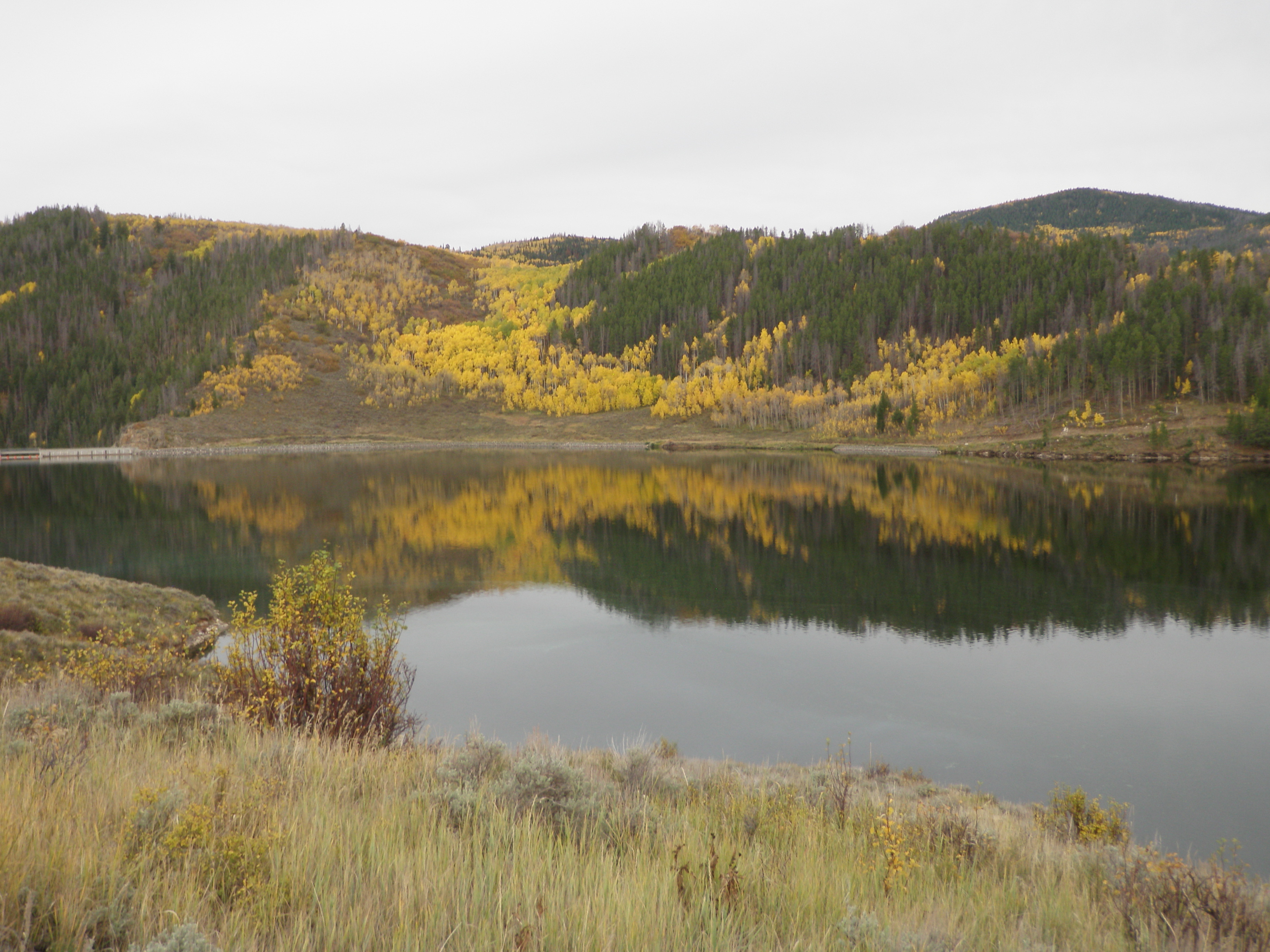
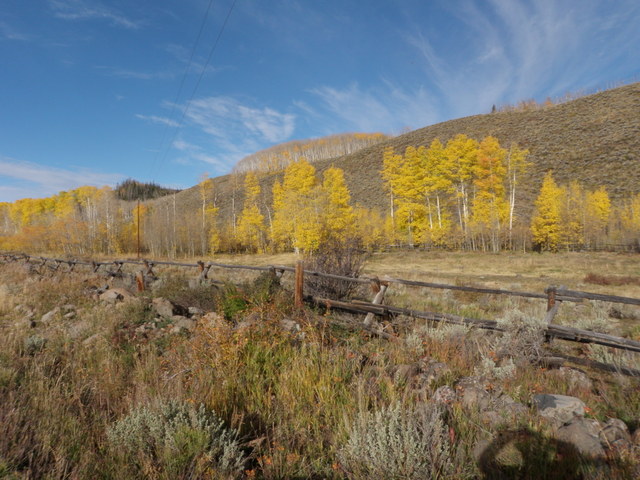
I woke up early, and since the air temperature continued to be relatively comfortable in the morning, I made breakfast and packed up the tent and began the four hour journey to Denver. As I traveled on the gravel Trappers Lake scenic byway, I stopped numerous times to snap photos of the brilliant yellow aspen trees.

I passed over the Colorado River at Pumphouse and noticed quite a bit of boating activity with many drift boats in the launch area waiting to depart. This area looked quite interesting, and I made a mental note to explore it on a future trip, but since I only had a half day available on Friday, I did not want to spend it on unfamiliar water. I continued for another half hour until I crossed the Eagle River at Wolcott. The sight of the crystal clear flows clinched my decision, and I decided to spend the afternoon attempting to entice trout with my personally tied flies.

Looking Back at the White River Valley

Looking Back at the White River Valley

I gave Jane a quick call to let her know I would not be home until the evening, and then I called my friend Todd Grubin to see if he was available to join me. He replied after only one ring, and sure enough he was headed to the very same section of the river that I had in mind. I pulled into the parking lot at The Preserve at Edwards at around 12:30PM and immediately downed my lunch. I must have known all along that I planned to fish because I prepared a lunch at the campsite. I assembled my rod and pulled on my waders, and I was prepared to fish by the time that Todd arrived. It was quite warm again on Friday with bright sunshine, and it would get even warmer by the middle of the afternoon. The flows were in the 150 cfs range, and that is a bit low, but certainly ample volume to keep the trout happy especially with the colder overnight temperatures.

Todd and I followed the trail to the river, and I decided to cross at the tail of a shallow riffle sEction so I could fish upstream on the far side which included a long stretch of tantalizing deep pockets and runs. Todd meanwhile hiked downstream to a wide deep run where he recently experienced a fair amount of success. I had my eye on the pocket water ever since I first discovered The Preserve with Todd and Dave Gaboury in the fall of 2013, and I was anxious to apply my dry/dropper technique since it appeared to be ideally suited for that approach.

I tied a Chernobyl ant to my line and below that added the ever present beadhead hares ear and then my newly discovered favorite, the ultra zug bug. On nearly the first cast I hooked and landed a small brown trout on the ultra zug bug, but then as I hopped from pocket to pocket, the flies ceased producing. It wasn’t long before I observed some tiny mayflies in the air so I removed one of the flies and replaced it with a RS2 in hopes that the fish would be active on the nymph form of a blue winged olive.

Brown Trout from Eagle River

Brown Trout from Eagle River

Between one and four o’clock I covered the entire north bank of The Preserve and landed a total of seven trout. Most of the fish were in the 7-9 inch range with one reaching 12 inches. The fishing was anything but easy, and I covered a lot of water and made a significant number of casts in the warm September weather. My luck improved somewhat after I exchanged the Chernobyl ant for a tan Charlie Boy hopper and combined that with an ultra zug bug and a soft hackle emerger. Late in the afternoon the air temperature fell a bit, and this provoked a second wave of BWO’s, and perhaps this increase in insect activity aroused the trout and improved the bite on my flies. During this window of time I endured quite a few long distance releases, and two of these brief connections felt more substantial than the bulk of my hook ups.

At 3:45 I waded downstream to say goodbye to Todd, as the quality of the fishing did not merit staying late. While chatting with Todd, I noticed a few sporadic rises, and Todd knew what buttons to push. He encouraged me to toss my flies to the area of the rises since I had the dry/dropper configuration, while in contrast he was set up for fishing deep with an indicator and nymphs. I could not resist the siren call and executed a few futile casts with the clumsy hopper/dropper. I paused to observe the water, and after seeing only debris floating in the surface film, I spotted a small mayfly drifting by. This confirmed that the fish were tuned into a sparse blue winged olive hatch.

A few fish continued to rise, and I was now challenged to fool these fish, so I clipped off the dry/dropper flies and tied on a CDC BWO. Before I began casting to the rising fish, I observed another mayfly floating toward me. It executed an aborted lift off and fell back in the river at which point I scooped it with my net. Todd was standing to my side and behind me, so I reached the net across my body and pointed to the small mayfly so he could inspect it. He seemed quite impressed that I actually caught a mayfly and played the match the hatch game.

Settled Down

Settled Down

I now refocused on the challenge at hand and waited for a fish to reveal itself. It didn’t take long before I spotted a small rise on the edge of the center riffle, and I immediately shot a cast above that position. It took a few casts, but in a short amount of time, I saw a sip near my fly and executed an immediate hook set. Refusal! Todd was acting as my cheerleader, and he commented that the fish “slapped at” my fly. I was disappointed with this turn of events, but I decided to make a few more casts before searching for a slightly different fly that might better pass the fish inspection gauntlet. The water was quite swirly and riffled, so I felt that I might get by with this near enough imitation.
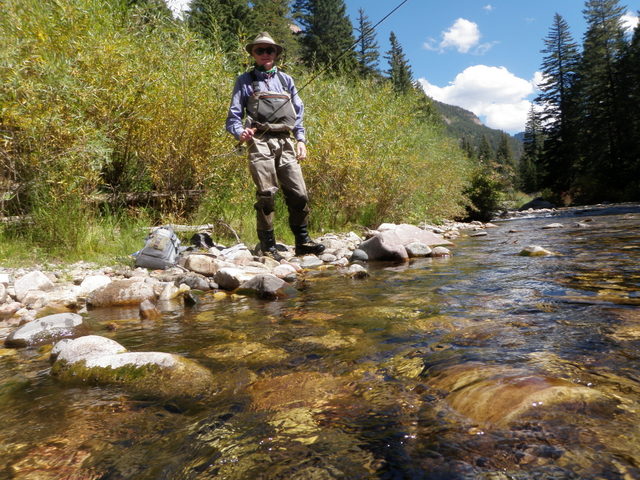
A few more casts and I was proven correct. Near the same area as the refusal a ten inch rainbow made a tactical error and slurped my fraud. I quickly played it to my net to the cheers of Todd and then went through the multiple step process of drying the CDC wing. When I was ready, several more fish resumed feeding on the surface, so I shot some long casts and eventually duped a second ten inch rainbow. This one also came after a splashy refusal. Unfortunately by the time I dried out the CDC BWO again, the hatch halted, and I decided I needed to be on my way. I gave Todd two CDC olives to use should the hatch resume, and then we shook hands, and I hiked back to car. Catching two fish on tiny dries at the end of the day was a fun way to end my fishing week.


South Fork of the White River – 09/18/2014

Time: 10:30AM – 6:00PM

Location: 40 minute hike from trailhead; just above a narrow chute area with tall vertical walls and whitewater.

Fish Landed: 24

South Fork of the White River 09/18/2014 Photo Album

In September 2013 I visited the Flattops Wilderness and spent a day on the South Fork of the White River. I spent a full day on the beautiful clear backcountry stream and landed seven fish with all but one on the small side. In 2014 I spent two days on the North Fork above Himes Peak Campground and enjoyed some wonderful fishing, but I was in need of a change. Did I want to commit another day to the South Fork? Another option might be to fish the upper North Fork below Trappers Lake and even combine that with some fishing on Trappers Lake. Since the weather was supposed to be clear and warm again on Thursday, I decided to give the South Fork another try. In 2014, however, I decided to hike even further than my last venture so that I would begin above the stretch of water characterized by high vertical rock walls and deep pools.

Part of the attraction of the South Fork is the fact that it flows for over forty miles through national forest and wilderness area, and the river is relatively large over most of the drainage allowing for open space for backcasting and wading. Most headwater streams in national forest lands are small and necessitate casting in tight quarters and difficult wading over deadfalls and through dense brush.

I executed my plan flawlessly and after a vigorous forty minute hike, I arrived at a position just above the narrow stretch with vertical rock walls where the trail dropped very close to the river. It was 10:30, and the sky was bright blue, the air temperature was around 50 degrees, and it was clear that Thursday would be a warm late September day in this remote area of the Flattops Wilderness. The water was higher than a year ago due to the heavy rain on Monday and Tuesday September 8-9, and it was crashing through the narrow canyon chute at a rapid clip. I brought my Sage four weight and began my day with a purchased stimulator with a peach colored body.

First Fish Came from Current Entering from Side Channel

First Fish Came from Current Entering from Side Channel

Despite my optimism I fished for fifteen minutes without any sign of a fish, so I converted to a yellow Charlie Boy hopper with a beadhead hares ear and copper john. This move paid off somewhat as I tallied a nine inch rainbow in a small deep hole where a side channel entered the main river. I continued working my way upstream rapidly, as I encountered quite a few wide shallow riffle areas that I simply waded through. In the first hour of fishing I added a couple more small rainbows plus a foul hooked fish and a momentary hook up. I decided to break for lunch early as the fishing was relatively slow, and as I munched my sandwich, I had visions of a repeat of my 2013 experience. I was having difficulty identifying holding water in this clear backcountry river.

The South Fork

The South Fork

A Better Sun Angle

A Better Sun Angle


After lunch and a continued lack of success, I decided to exchange the yellow Charlie Boy for a tan version, and then I removed the copper john and replaced it with a beadhead pheasant tail nymph. Only the hares ear remained on my line from the morning. This change improved my success rate a bit, but the air temperature was now heating up rapidly, and I was feeling quite sluggish in the bright sunny conditions. If I was sluggish, wouldn’t a coldwater fish feel the same way?

Aspens Change Colors on the Hillsides

Aspens Change Colors on the Hillsides

At some point during this early afternoon period while reconfiguring, I dropped the hares ear nymph in the water, so I elected to replace it with an ultra zug bug as I desired more flash in a subsurface attractor. The ultra zug bug is a Scott Sanchez creation that is actually a stripped down version of a prince nymph sans hackle and white wings. By 3PM I began noticing tiny blue winged olive mayflies drifting up slowly from the surface of the river, and my catch rate seemed to improve during this time as fish began to grab the pheasant tail even though I don’t typically view this size 18 fly as a good imitation of BWO nymphs. I’m guessing the BWO emergence caused the fish to become active feeders, and they were not particularly selective about what subsurface food morsel they ate.

This Fly Produced

This Fly Produced

Concurrent with the increased insect activity I continued wading upstream and the river narrowed a bit thus creating more deeper pockets and attractive holding areas for trout. The combination of increased insect activity, better holding water and more distance from the trailhead seemed to combine to improve my action and this in turn improved my confidence and focus. Also during this period I went through a stretch of water where I landed three or four brook trout, although only two made my six inch cut off for registering on the fish counter.

Unfortunately the blue winged olive hatch waned, and I entered a another slow period when I decided to abandon the three fly system and reverted to a size 12 stimulator with a light olive body. This did nothing for my success rate, although I enjoyed making some great fluttering casts to some nice pocket water for twenty minutes.

Perhaps the Best Fish from the South Fork

Perhaps the Best Fish from the South Fork

By 4:30 the sun sank lower in the western sky, and parts of the river were enveloped in shade. Following a fly from sun to shade and back to sun is always a difficult task, and I debated quitting and getting a jump on my return hike. However, I remembered that some of my best fishing took place in the late afternoon on Tuesday and Wednesday as the air temperature cooled, so perhaps the same might apply to the South Fork. I resolved to stick it out this time to see what developed.

The lengthening shadows and cooler temperatures caused the caddis to become active, and numerous small tan insects dapped and skittered on the surface along with the occasional lagging blue winged olive. I decided that I should return to nymphs in case the fish became active subsurface feeders again as they had earlier in the afternoon, so I tied on a Chernobyl ant with striped legs and a large visible neon yellow indicator. This would help me follow my flies in the shadows and sun glare. Below the Chernobyl I attached an ultra zug bug, and then on the point I knotted a classic beadhead prince nymph.

Silvery Rainbow Took Pheasant Tail Nymph

Silvery Rainbow Took Pheasant Tail Nymph

This combination caught fire over the remainder of the afternoon as I landed ten additional fish before quiting at 6PM. This was truly my type of fishing as I moved rapidly from pocket to pocket making three to five casts, and more often than not I was rewarded with a dip of the Chernobyl and a feisty streaking fish that inhaled the ultra zug bug or prince. The decision to continue fishing into the early evening was rewarded.

Near the beginning of the late afternoon productive period, I tossed the Chernobyl and nymphs into the nook of an eddy where the water returned from its swirl to a current break. The Chernobyl disappeared, and I instantly set the hook thus provoking a huge rainbow to streak across the river. This fish looked like a giant in this stretch of water that consistently produced twelve inch rainbows. I gave the fish line and allowed it to run, but after a twenty foot highlight reel, the flies popped free, and I was quite disappointed.

Remote Beauty

Remote Beauty

I probably hooked but did not land at least ten additional fish during the last one and a half hours, and some of these fish were quite nice and probably measured thirteen to fourteen inches. The rainbows of the South Fork seemed comparatively powerful for their size, and that may partly explain my higher than normal ratio of lost fish. I also had a difficult time maintaining side pressure because the fish tended to run in a circle around my position, and there were numerous branches and bushes along the bank that interfered with my attempts to reach the rod sideways. Another reason may have been the tendency of the rainbows to attack the middle fly of my trio, and I’ve historically noticed that more fish seem to escape from the middle fly position.
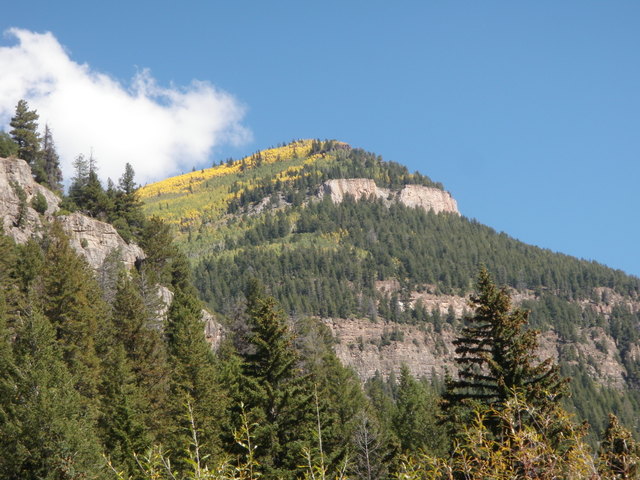
By the late afternoon I discovered the most productive water types. The first and best water consisted of long riffle sections with four feet of depth, and these areas produced fish at the tail in front of current breaks and along the outer seams. The water needed to be four feet or greater in depth, however, as shallow riffles seemed to be void of fish. Deep pockets also produced, but again these needed to be substantial, and this is defined as five to ten feet long and four feet or greater in depth. Even better was a deep pocket or slot that met these dimensions, but bordered on one side by a bank or structure.
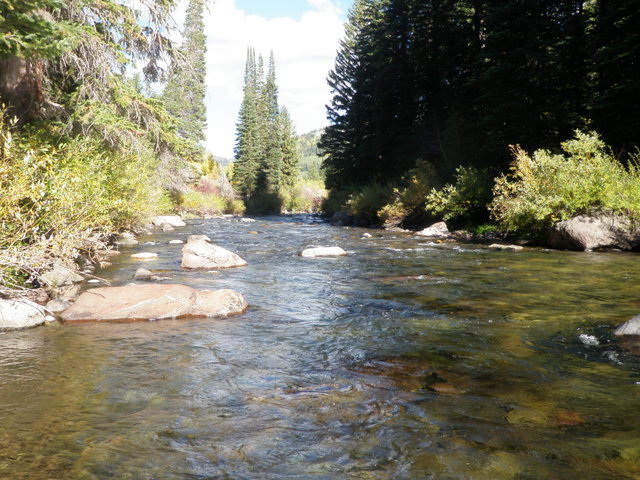
Overall it was a decent day and my best day ever on the South Fork. I landed three or four nice rainbows in the thirteen inch range and the bulk of my catch was nine to ten inch fish. Had I landed the big one or a few more of the late afternoon escapees, my rating would improve from decent to outstanding. Regardless of fishing success, the South Fork is a gorgeous remote setting deep in the Flattops Wilderness and worth visiting for that reason alone.

The Return Trail

The Return Trail

I began my return hike at 6PM, and I clocked twenty minutes until I reached my entry point in the morning. I estimate that I covered one mile of water over the course of the day, and when combined with the two mile inbound hike, means that I was three miles from the trailhead at my farthest point. It was a fun day.