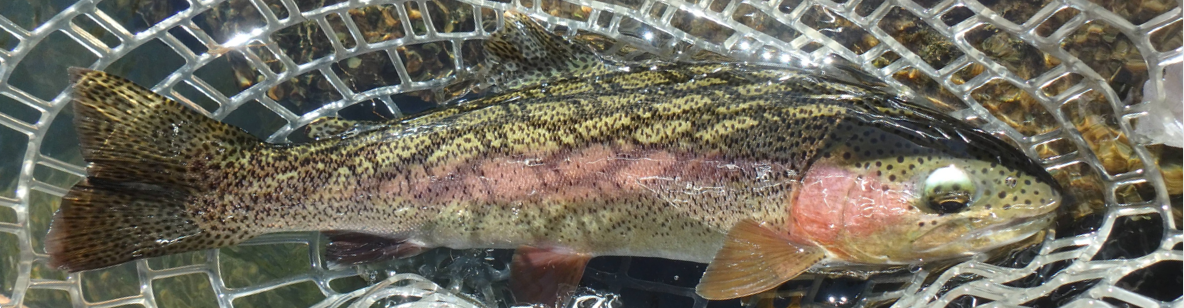
South Platte River – 05/13/2016

Time: 10:30AM – 4:00PM

Location: Near Happy Meadows Campground.

South Platte River 05/13/2016 Photo Album

Insanity is continuing to do the same thing but expecting different results. We have all heard this proposition. Is the corollary to this, therefore, that continuing to do the same thing will yield the same result? The corollary proposition is what I set out to test on Friday May 13. The other question weighing on my thoughts was whether it was a good idea to engage in a fishing trip on Friday the 13th?

Thursday was a spectacular day on the South Platte River, and the conditions for Friday were likely to match the previous day in nearly every aspect. The high temperature was expected to be in the mid-60’s in the Lake George area and the stream flows continued to release from Eleven Mile Reservoir at a very benign 64 cfs. I had my eye on the section of the South Platte River downstream from Lake George near the Happy Meadows Campground.

I sampled this stretch one time several years ago for a few hours, and I landed eight small fish, so I knew that trout were present. The area impressed me as a haven of bait and spin fishermen, so I suspected that it received considerably more pressure than the Eleven Mile segment, and since normal regulations apply, there was a greater risk that fish were harvested. At the very least it was likely that the bigger fish were killed and consumed for table fare. Perhaps I would undertake a two plus hour drive only to discover that small fish resided in the river, but the weather and scenery would certainly compensate for a pedestrian fishing experience. Most of the other stream options along the Front Range were beginning to exhibit the higher flows related to run off conditions, so I decided to gamble on the South Platte River in the Happy Meadows Campground area.

If you read my post from Thursday, you may recall that I suffered some disappointing equipment failure, so before I departed on Friday, I decided to attempt a contrived temporary repair. The metal button on the heel of my right boot snapped off, and with no place to hook the rubber tab; it flapped, and the rear section of the sole was loose. I was concerned that this situation could worsen if the tab wedged beneath a rock, so I created an on stream solution by knotting a section of 0X monofilament through the hole in the tab and then around my ankle. This held for a few hours until I made a quick movement which caused the heavy duty mono to snap.

Another Contrived Boot Repair Held Up Better on Friday

My new solution on Friday morning was to deploy a small bungee cord. I hooked one end of the cord through the hole in the tab and then stretched it across the front of my boot and around the other side before I hooked the other metal end of the bungee through the same hole. Voila! The bungee cord was sized perfectly and it stretched enough to hold the rubber tab taut against the heel of the boot, and thus the sole was lifted up against the mid-sole. I was pleased with my creativity, and the temporary fix did in fact bridge me through a day of fishing.

I took my time preparing for the Friday fishing venture, and therefore I departed the house by 7:40AM, and this enabled me to cruise into a narrow dirt pullout a mile or two below Happy Meadows Campground by 10AM. The air temperature was around sixty degrees with a slight breeze blowing, so I opted for a single fleece layer. It was warmer than Thursday, but it remained slightly uncomfortable without an extra layer over my fishing shirt. As was the case on Thursday I assembled my Sage four piece four weight for a day of fishing on a relatively small river.

Cannot Wait to Drift Flies Through That Run

I could continue to describe my tactics and fly choices, but it was really a fairly simple scenario. In the opening paragraph I questioned whether continuing to do the same things would yield the same results? In addition to weather and stream flows, I utilized the same fly patterns and same tactics as Thursday, and the results were in fact quite similar. At this point I emphatically declare that the beadhead hares ear nymph is back in a big way. On Friday I slapped on the same yellow fat Albert and then added a beadhead hares ear, and I utilized my favorite dry/dropper technique to prospect all the likely runs, riffles pockets and pools; and the results attest to the effectiveness of this fly fishing strategy.

A Beast

The fish in the South Platte River simply have a love affair with the beadhead hares ear nymph. By noon when I quit for lunch, I registered nineteen landed fish with another five or six brief hook ups that escaped. Once again the pace of fishing was insane. Admittedly the size of the fish was a bit lacking with numerous seven and eight inch fish, but there were enough twelve and thirteen inchers in the mix to keep me guessing. A few fish slurped the fat Albert on the surface, and an occasional refusal to the large buoyant indicator fly generated some frustration, but the constant effectiveness of the hares ear induced me to persist with the winning combination.

Tiny Slot Yielded a Decent Fish

After lunch it seemed that I covered a few juicy pockets with no results, so I decided to augment my offerings. I added an ultra zug bug in the top position and moved the beadhead hares ear to the end of the three fly lineup. Whether because I moved onto better water, or because of the addition of a second fly, the action resumed at a torrid pace. Toward the late afternoon I bumped into another fisherman who was tossing live minnows in a long deep run and pool. I did not want to infringe on his space, and the water he was covering was not to my liking, so I hiked back to the car and drove upstream a half mile and then reentered the river and resumed my progression.

Gorgeous Rainbow

The late afternoon section featured more white water and deep pockets with numerous large protruding boulders, and the ultra zug bug began to shine. I estimate that greater than 50% of the landed fish displayed the ultra zug bug in the 1.5 hour session from 2:30 until I quit at 4. In addition a higher percentage of netted fish were rainbow trout, whereas, the morning split was closer to 50/50. Several of the rainbows were very chunky thirteen and fourteen inch battlers.

A Wide Shallow Section

Friday was another fabulous day on the South Platte River. My gamble paid off in a big way, and the hares ear nymph temporarily resumed its place at the top of Dave’s favorite fishing flies. Will this last through the summer? Stay tuned. I continued to do things the same, and the results were similar. Friday the 13th did not seem to have a negative impact on my fishing results.

Fish Landed: 58

South Platte River – 05/12/2016

Time: 10:30AM – 4:30PM

Location: Eleven Mile Canyon

South Platte River 05/12/2016 Photo Album

Sometimes the stars align. Thursday represented one of the most insane fishing days I ever experienced. Did I really land sixty-two fish? Yes I did plus or minus two or three. I probably had ten to fifteen additional hooked fish that I was unable to bring to my net. The only downside was the size of the fish; but constant action, while most streams balloon with run off, is nothing to scoff at.

In addition to a great day of fishing, I received positive news on my Tuesday blood test related to my January surgery. In the grand scheme of things, that was probably greater cause for celebration than any sort of fishing accomplishment. But this is a fishing blog, so I will stick to the script.

I got off to a nice early start and arrived at the river and prepared to fish with my Sage four weight four piece rod. The air temperature was in the low 40’s, as I waded into the water, so I threw on my fleece to maintain some semblance of warmth, although I expected the temperature to rise into the sixties as the morning progressed into a sunny afternoon. The river was flowing at 64 cfs, and it looked nearly ideal. There was enough water to allow wading without requiring excessive caution, yet I could easily cross from side to side to fish attractive runs and pockets

Gorgeous Setting

One piece of bad news that placed a small blemish on a wonderful day was the discovery of a defect in my right wading boot. Jane purchased the Korkers for me as a Christmas gift, so I only used them this season; and as I prepared to fish, I noticed that the rubber loop at the heal was dangling away from the boot. I compared the right boot to the left and realized that the button or rivet over which the rubber loop stretched was missing. Hopefully this can be repaired and is covered by the warranty. I feel like a wading boot should last more than a couple months before breaking. I took a few minutes to contrive a repair, and it lasted for roughly half my time on the water. I cut a three foot length of 0X monofilament and threaded it through the hole in the rubber loop. I then tied a loop on the other end and wrapped the line around my ankle, and finally I used the end without a loop to tie a clinch knot through the mono loop. Unfortunately there was too much play in the leader, so I then wound the slack around the boa dial until it was taut. It worked for awhile, and I was rather proud of my creativity.

On Stream Boot Repair

To start my day of fishing I tied on a yellow fat Albert. I hoped that this would be the only fly required to dupe South Platte River trout, but unfortunately it was not the answer. Almost immediately I observed a refusal, and several juicy pockets failed to generate any interest, so I pulled up the fly and attached a beadhead hares ear on a three foot leader. This adjustment proved to be a stroke of genius, as I went on to land seventeen fish between 10:30 and my lunch break at noon. All the trout hammered the beadhead hares ear except for one gorgeous fifteen inch brown that rose and crushed the fat Albert. This was the largest brown trout I ever caught in Eleven Mile, and it was also the biggest trout landed on Thursday, May 12. The fat Albert fooled one fish on Thursday, and it was the largest of the day.

Fat Albert Fooled This Guy

My biggest concern was that I would deplete my supply of beadhead hares ear nymphs. In the morning two broke off and one unraveled. After lunch I decided to test a different fly in case my beadhead hares ears disappeared. Why not, as my fish counter already registered seventeen fish? I replaced the hares ear with an emerald caddis pupa, and I began to prospect the attractive spots in a manner similar to my morning experience. After coming up empty in two spots that screamed fish, I concluded that the trout were selective to a hares ear nymph. Instead of exchanging the emerald caddis for the hares ear, I added it on a second dropper, so that I was fishing three flies. This would now be an experiment to see if the fish ate only the hares ear, or whether they attacked both subsurface flies.

Beadhead Hares Ear Ruled

Guess what happened? Nearly all the fish landed in the afternoon grabbed the hares ear. It was amazing. In nearly every deep pocket, moderate riffle and deep run, a fish materialized from nowhere to snatch the hares ear as it tumbled along behind the fat Albert. In many cases I could observe fish move a foot or more to intercept the simple gray beadhead nymph. At one point I removed the emerald caddis pupa because it did not seem to be serving any purpose, but when I then fished with only the beadhead hares ear, it seemed that my catch rate deteriorated. I concluded that the two fly combination somehow attracted more fish, even though they were predisposed to take the hares ear

Instead of an emerald caddis pupa, I elected to knot an ultra zug bug to my line as the top fly, and this simple nymph did hook four or five fish. By 3:30 I reached fifty fish, and two more hares ears unraveled as the thread was severed by the repeated attacks of sharp teeth. Quite a few additional hares ears remained in my MFC fly box, but I once again decided to experiment. Over the course of the afternoon, the sky clouded up often, and during these gray periods I witnessed a fair number of blue winged olives. I never bothered to switch to a BWO imitation because the fish seemed to relish the hares ear, and who was I to tamper with success? But now I removed a beadhead soft hackle emerger from the fly box and added it to my line below the ultra zug bug. The soft hackle emerger accounted for four or five fish in the late afternoon time period, but it also generated many more long distance releases perhaps due to the smaller hook size.

Pink Stripe

Fly fishing on Thursday was outstanding and reduced to its simplest form. The beadhead hares ear was what the fish wanted, and I probably could have landed more fish if I yielded to their preference. Instead I over analyzed and experimented with other patterns. Since fly selection was a no brainer, the only challenge was wading and moving quickly from place to place. It was important to recognize the water types that yielded fish. The best spots were deep narrow runs or V-shaped pockets where currents merged. If I allowed the flies to drift beyond the sweet spot and then lifted, I hooked numerous larger than average fish from this type of structure. Riffles over a rocky bottom with moderate depth were also productive, and deep pockets longer that five feet yielded many fish as well.

Some Nice Water Ahead

It was a blast. I love this sort of fast paced action. I covered more than a mile of the river, and in most cases I found fish where I expected to find fish. Hopefully the ideal flows will last a bit longer so I can enjoy another opportunity to fish the South Platte River.

Fish Landed: 62


Clear Creek – 05/10/2016

Time: 12:00PM – 4:00PM

Location: Half a mile upstream from Tunnel 6.

Fish Landed: 8

Clear Creek 05/10/2016 Photo Album

Day two of my fly fishing blitz in advance of the inevitable snow melt in Colorado unfolded on Clear Creek on Tuesday May 10. The DWR web site indicated flows of 89 CFS at Lawson, and I knew from experience that this is a manageable level for fishing. The graph did not portray any significant fluctuations within the last four days, so that was another positive. My only concern was clarity, but I decided to make the drive and discover first hand what the stream conditions were. A 9:30AM appointment with the doctor dictated that I fish in a local waterway, and Clear Creek is the closest, and all the factors indicated that it was a relatively safe bet.

I departed from Stapleton at 11:15 and arrived at a pullout roughly .5 mile west of Tunnel 6. The water was fairly murky at the eastern end of the canyon near Golden, but the turbidity gradually diminished as I drove westward and passed several sites where construction equipment was disturbing the earth in the process of building a bike path along the creek. The path will be a future recreational asset once completed, but heavy equipment is playing havoc with stream clarity on the eastern end of the popular stream in the present.

The weather was similar to Monday with more clouds than sunshine. The temperature never surpassed the mid-fifties, so I wore my fleece and raincoat as a windbreaker. The likelihood of rain was real, so I also wore my brimmed hat with ear flaps in the event I needed to pull my hood up. A fair amount of stain was present in the section that I planned to fish, but the rocks and stream bottom were visible throughout the creek, and I rarely fish any portion of Clear Creek other than the edge.

Typical Water and Santa Fe Within View

Once I assembled my Orvis Access four weight rod, I marched along the shoulder of route six for .2 mile, and then I dropped down the bank at a location where some nicely spaced boulders provided a natural stairway. I was optimistic that a solitary Chernobyl ant would draw hungry Clear Creek trout to the surface, so I knotted one to my line and began prospecting the pockets and shelf pools along the right bank. Very little time transpired before I discovered that the Chernboyl created refusals. I was looking for commitment not curiosity, so after four or five juicy spots yielded only inspections of the huge ant, I elected to make a change. The emerald caddis pupa caught the attention of the trout on the Big Thompson on Monday, so perhaps the Clear Creek fish were aware of emerging caddis as well.

It was a great thought, but the addition of the dropper did not change my fortunes, so I paused and pondered my next action. Surely caddis were present during May, but I did not wish to default to the small size 16 deer hair caddis just yet. I looked through the dry fly section of my fly box and spotted the size 14 stimulators that I carefully tied during the winter. A peacock body stimulator was my choice, but I was unable to locate one, so instead I slid a gray version from the foam slit and tied it to my line. This fly possessed the same shape and triggering characteristics as a caddis, but it was larger and floated better than the deer hair varieties.

Fooled by a Stimulator

My choice proved to be excellent. I landed seven small trout over the remainder of the afternoon on the gray stimulator. This may sound like some hot fishing, but in reality it was quite difficult. I covered nearly a mile of stream and made hundreds of casts to deliver these fish to my net. The most vexing challenge was the wind which blasted down the canyon in typically unrelenting fashion. In many cases the air currents pushed my light dry fly back to my feet, but more frustrating were the situations where a cross wind thwarted my attempts to place the stimulator in the sweet spot of a small pocket. Whereas normally from a short distance I can drop a a dry fly precisely where I intend on the first cast, on Tuesday such placement necessitated four or five casts, as it was impossible to anticipate the impact of the cross wind on the resting spot of my fly.

Persistence was the name of the game, but it was not easy to endure refusals, wind, and obstinate fish. The large deep pools and eddies once again failed to deliver feeding fish, and the most productive areas were deep still pockets next to large rocks along the bank. In addition a few appeared in riffles over moderate depth, but the steep Clear Creek gradient did not present much of this type of stream structure.

Nicest Catch on the Day

Near the end of my day an errant backcast caused me to donate a gray stimulator to a young tree, so rather than replace it with another copy, I experimented with an olive brown muggly caddis. This fly does not feature hackle, but instead it is constructed with an underwing of snowshoe rabbit foot hair. This fly floated quite nicely, and a spunky brown trout found it desirable in some moderate riffles. Unfortunately number eight was my last fish of the day, and the muggly caddis lost its magic over the last half hour of fishing.

It was great to visit a stream within a forty-five minute drive from my home, and eight fish over four hours represented my average catch rate. I am certain that I could have achieved double digits with more favorable wind conditions, preferably no wind at all, but any day of stream fishing on May 10 capitalizes on borrowed time.

Big Thompson River – 05/09/2016

Time: 11:30AM – 3:30PM

Location: Downstream border of special regulation water near mile marker 73.

Fish Landed: 10

Big Thompson River 05/09/2016 Photo Album

Having finally conceded that emerging caddis on the Arkansas River were not on my list of 2016 fly fishing successes, I refocused my efforts on other local stream options. High temperatures in Denver in early May remained in the sixties, and this delayed the inevitable run off on Front Range streams. Realizing that I was living on borrowed time, I committed to take full advantage of my retirement status to jam as much fishing into the next couple weeks as possible. Monday was the beginning of promise fulfillment.

On Mothers’ Day Jane and I drove to Rocky Mountain National Park, and we completed several hikes in various popular sections of the park. During these travels I obtained a good look at the Big Thompson in Moraine Park and Cascade Creek along the road to Bear Lake. Both streams were a bit high but very clear. In addition Jane and I traveled along the Big Thompson River in Estes Park and also skirted the North Fork of the St. Vrain northwest of Lyons, CO. All the drainages mentioned remained in fine shape for fishing in advance of the inevitable high muddy snow melt.

On Monday morning I checked the stream flows and fly shop reports on the Big Thompson River in the canyon below Lake Estes, and all the information indicated that this was a solid destination for a day of fishing. I departed from my house at 9:45 and after a stop for gas made the two hour drive and arrived at the extreme downstream boundary of the catch and release water below Lake Estes. I parked facing west near mile marker 73, and I elected to assemble my Sage four weight rod.

The air temperature was in the low fifties so I pulled on my green Columbia fleece to provide added warmth. The fleece remained a critical part of my attire throughout the day, and I added a raincoat and my hat with ear flaps in the afternoon when numerous large gray clouds blocked the sun and held temperatures in the range requiring extra layers.

2013 Scoured the Vegetation

I read some blog posts from previous trips to the Big Thompson in late April and early May, and based on this review, I opted to begin with a single size eight Chernobyl ant. In 2015 at this same time, the solitary Chernobyl produced a solid day, and I did not want to over complicate my choices. Within the first fifteen minutes I generated two split second hook ups with the foam ant, but then the large attractor simply drew refusals. After four or five teasing looks with no take, I decided to experiment with some alternatives. First I tried a smaller size ten Chernobyl, and this also drew some inspections accompanied by rejection. Next I downsized again to a size 14 Jake’s gulp beetle. Although this fly looked more like a real terrestrial than the Chernobyls, it was soundly ignored.

I hoped to avoid the next step in fly experimentation, but several of the reports I read referenced success with dropper flies. I returned the size eight Chernobyl to the end of my line, and then I added a three foot dropper with an emerald caddis pupa attached. This combination finally delivered my first fish of the day at 12:30. I celebrated the success of the emerald caddis pupa by breaking for lunch.

Quite a Meal for This Little Guy

As I munched my sandwich on a large rock near the river, I observed two small blue winged olives. I was not surprised by this development because the sky was growing increasingly overcast, and perfect blue winged olive weather arrived. When I resumed my upstream progress, I added a Craven soft hackle emerger to my dry/dropper configuration. I was now certain that I had the correct combination of flies to accumulate some landed trout over the remainder of the afternoon. My last remaining hope, the ability to cross the river flowing at 97 cfs, finally reached fruition when I found a section with a wide and relatively shallow depth. I was now positioned to prospect the most attractive pools, runs and pockets on the side of the river away from the highway and less pressured by most fishermen.

A Nice Shelf Pool Produced a Rainbow

Between 1PM and 3:30PM I built my fish count to ten. I would be embellishing the truth to state that it was hot fishing, but my catch rate was steady. The entire lower section of the catch and release area belonged to me, and I took full advantage by moving quite rapidly from prime run to juicy hole. I disciplined myself to deliver only three to five casts depending on the quality of the location. Most of the landed fish were on the small side, but I also netted a twelve inch rainbow and a couple eleven inch brown trout.

Lots of Pockets and Pools

The overwhelming highlight of the afternoon unfolded when I reached a deep pocket where two currents merged. One small flow skirted below a large exposed boulder at the very top of the small pool. A larger run merged at an angle from the right. Initially I was certain that any resident fish would hold out in the deep pit in front of the merging currents, but my drifts through this area proved fruitless. The small run that flowed from the left was only two feet wide, and a small foam slick hovered just below it. I lobbed a cast to the left side so that the smaller current carried the flies along the edge of the foam and, wham, a fish nose appeared beneath the Chernobyl. I reacted with a swift hook set, and I was certain that the fish inhaled the ant.

The fish reacted to my quick lift by making a dive and then thrashing around the perimeter of the pocket. Either I connected with a decent fish, or I foul hooked a smaller trout when it refused the Chernobyl. I held my breath and maintained tension on the line as the fish slid downstream into some moderately faster water. I followed it for a few steps until I could lever the head above the surface and guide it to my net. Much to my delight the fish in my net revealed the emerald caddis pupa in its mouth, and a quick glance told me that it was the largest brown trout I ever caught in the Big Thompson River. In fact it was likely the biggest trout of any kind that I landed in the Big T. Once Mr. Brown settled in the net, I estimated that it was sixteen inches long, and it carried a decent amount of weight for its length.

Beautiful Fish

Monday proved to be a solid day on the Big Thompson. Ten fish landed in 3.5 hours of fishing represents a reasonable catch rate, and the Big Thompson trophy brown was icing on the cake. I moved about freely and used my dry/dropper method effectively. Three of the ten smashed the Chernobyl on the surface, two fish nabbed the soft hackle emerger, and the remainder were attracted to the emerald caddis pupa. Clearly Monday was solid justification for maintaining wellerfish.me, as my review prompted me to use the Chernobyl ant and the emerald caddis pupa. Four more weekdays remain in the current week, and the weather forecast improves with each additional day. I cannot wait.

Arkansas River – 05/05/2016

Time: 9:30AM – 3:00PM

Location: Between Lunch Rock and Fremont/Chafee County line

Fish Landed: 5

Arkansas River 05/05/2016 Photo Album

Although I was convinced that I would not encounter the magical leading edge of the Arkansas River caddis emergence, I continued to be excited about another day of fishing. Instead of attempting to move around and chase the hatch, I decided to commit to a location and fish the water. I enjoyed numerous successful trips on the segment between Salida and Wellsville in the past, so I was sure that if I applied my normal fishing techniques and knowledge to gold medal water, I could achieve positive results even if I struck out on the caddis hatch. I camped on Wednesday night, so this offered the additional advantage of being in close proximity to the river, and this translated into an early start. The fishing was best between 11AM and 1:30PM on Wednesday, so perhaps the time period before 11AM was even better. I had no sample size from which to draw conclusions regarding the morning fishing.

Frosty Morning

Once again I relied on information from my weather app to decide to camp on Wednesday night, as the forecasts suggested low temperatures in the forties. Therefore I was quite surprised to discover a layer of frost on the stove, tablecloth and rain fly when I woke up at 6:30. In addition to the colder than expected temperatures I shared the campground with a stray black angus bull. I never determined how he circumvented the fence surrounding the campground, but I noticed him grazing among several campsites on Wednesday evening, as I set up the tent. He eventually migrated to the grassy area between the campground and the road, and this is where he remained when I surveyed the area on Thursday morning. In fact he paused from munching his grass breakfast to scrutinize me, as I passed him on my return from the bathroom.

You Again. Campground Host Gives Me the Eye

At any rate I had to wait for the tent and tablecloth to thaw and dry before I packed them in the car, but I still managed to be on the water fishing by 9:30, and this created an additional 1.5 hours of morning angling compared to the previous day. I decided to return to the section of water between Lunch Rock and the Fremont/Chafee County line where I quit on Wednesday before moving to Vallie Bridge. It was sunny and bright, but the temperature was in the low fifties so I wore my fleece when I embarked on my second day of fishing on the Arkansas River. In another change from Wednesday I switched from my Sage One five weight to my Sage four weight, as my arm and shoulder cried for some relief.

First Hour on Thursday Spent Here

Big Tail

I began with a nymph set up and tied on a prince nymph as my top fly and an ultra zug bug as the bottom offering. I hoped to find some fish feeding on egg laying caddis. I also tried one of the two locking thingamabobbers that I purchased at ArkAnglers on Wednesday morning. Halfway between my start point and the place where the river moves away from the highway, I was surprised to see a dip in the indicator, and I set the hook and landed a nice thirteen inch brown trout that grabbed the prince nymph.

When I approached the large sycamore tree between the river and the road, I climbed to the shore and circled above to a nice run and riffle area. This water was similar to the type that yielded decent success on Wednesday, and I was excited to notice a few blue winged olives, so I replaced the ultra zug bug with a soft hackle emerger. The nice deep slow moving water at the tail and along the side of the run did not deliver, but when I cast to some very shallow riffles among some rocks at the extreme top, the indicator paused, and I set the hook and landed a twelve inch overweight brown that featured the soft hackle emerger in its lip. My fish count stood at two, and I had only been fishing for an hour, so perhaps the morning period would be more productive.

I continued up the river for a bit to a huge deep pool and an eddy behind a massive rock that jutted into the river. I never have much luck in this type of water, but I donated fifteen casts to the location, and this reaffirmed my avoidance of deep pools on the Arkansas River. Another fisherman was above me, so I considered my options and decided to ascend the bank to the road, and then hiked back to the car, and moved to the Fremont/Chafee County line. I hoped that the flows remained at a level where I could make a crossing, and this would position me to fish the northern edge of the river where far fewer fishermen ventured.

I parked at the pullout at the county line and removed my fleece and stuffed my lunch in my backpack. As I assumed, I was able to slowly and carefully cross at the tail of the long pool below the car, and then I hiked down the railroad tracks to my favorite area of the Arkansas River. I began at the top of the second deep run below the island, but I was surprised that no fish attacked my flies. Past experience assured me that numerous trout reside in this attractive section of the river.

Beginning Point After Move

The next nice run and shelf pool was similarly difficult on Thursday despite some nice casts and focused fishing. By now I witnessed a fairly dense BWO emergence, and I was at a loss to explain why my soft hackle emerger was not producing. It worked on Wednesday, and this was the same river. I exchanged the Craven soft hackle emerger for one that I purchased from Royal Gorge Angler, since Taylor Edrington vouched for the fat CDC wing case. This was also ignored. I worked my way quickly up along the left side of the island with nothing to reward me for my thorough search.

Next I waded along the edge of the river and back to the downstream tip of the island, and I paused along the gradual gravel beach next to the long pool on the small north braid. I waited quite awhile for a fish to show, and eventually two rises emerged in the lower portion of the pool. I took the time to remove the nymphs, indicator and split shot; and I knotted a CDC BWO to my line. I lofted some nice casts to the area of the rises, but the fish ignored the small baetis imitation. Next I shot some prospecting casts upstream and then up and over, but still no response.

Normally Productive Pool Skunked Me on Thursday

It was 11:45, and I was hungry, so I decided to eat my lunch and observe. While I ate, I spotted a subtle rise off the point of a large ledge rock across from me, and two splashy rises in the current seam twenty feet above where I saw the two rises when I first approached the pool. I decided to try a double dry to cover the possibility that the upper splashy riser was slurping caddis. I tied on a size 16 olive brown deer hair caddis and then added the CDC BWO on a six inch dropper.

First I took a shot at the fish off the point of the rock, and this resulted in a refusal, but it was obvious that this fish was quite small. Next I targeted the splashy riser, but neither of my offerings interested the fish. I waded to the midsection of the pool and began lofting casts to the top segment from distance, but much to my amazement no fish were attracted to the dancing dry flies. The top portion of the long pool on the small right channel is normally money in the bank, but on Thursday morning it was simply frustrating. I did see one fish below the surface move toward the flies, but it backed off at the last instant. This is always an inauspicious sign.

Clearly my surface flies were not what the fish wanted, but the fish were obviously feeding as evidenced by the few rises. I decided to use my normal dry/dropper approach, as it worked quite well in this area on previous visits. I tend to over analyze situations, and I surmised that this may have been one such incident. I tied on a tan Charlie boy hopper that displayed numerous teeth marks from previous usage, and below the Charlie boy I knotted a go2 sparkle pupa and the soft hackle emerger. This combination resulted in a foul hooked fish that apparently rose to the hopper, and in my zeal to connect after a long drought, I set the hook and dragged one of the trailing nymphs into its body.

Along the left edge in some fairly nondescript shallow pockets, I generated a couple refusals, and then I approached a narrow deep slot that runs along a large vertical rock on the north bank. On the first cast a huge fish rose and inspected the hopper and then dropped back to the depths. My heart stopped for an instant at this sighting. Then as the flies continued toward the tailout of the slot, a second smaller brown refused the hopper. I made several more casts, and on the fourth drift the large fish once again appeared. This time it actually did a circle under the Charlie boy, but once again it rejected my large foam terrestrial. This fish, which probably measured between 15 and 20 inches had my attention. Perhaps it was looking up for terrestrials, but not grasshoppers. I tied on a Letort hopper as I hoped the more slender profile would turn the tide. This did not even provoke a look. Next I tried a Jake’s gulp beetle. Nothing. Finally I pulled out my trusty size 8 Chernobyl ant. This big attractor did not interest the big guy, but it did generate a second refusal from the lower brown trout. I threw up my hands and decided to move on.

It was now around 1PM, and the sun was bright, and the air temperature was moving toward its peak of 76 degrees. I knew from Wednesday that these conditions were quite pleasant for human beings, but not to the liking of trout, and I feared I squandered the best part of the day stubbornly dwelling on the normally productive north channel along the island. I debated quitting, but I worked hard to cross the river, and I was now positioned on the side that few fishermen attempted to reach. Certainly I needed to capitalize on this investment in stream field position.

Same Fish, Different View

I retained the large Chernobyl ant as my surface indicator fly, and below that I tied on the go2 sparkle pupa and the soft hackle emerger. I planned to stick to the right edge of the river and prospect the best pockets, and perhaps I could find a few bank huggers willing to move to one of the flies.

Lowering to the River

Between 1 and 3PM I deployed this strategy, and I added three more fish to my count. They were all very nice fish in the thirteen to fourteen inch range, but I covered a ton of water and wore out my arm in the process. All three came from short deep pockets where the current formed the outside border. I tossed the flies to the center area, and when they reached the sweet spot where the outer currents merged, the fish nabbed one of the trailing flies. On several occasions a large cloud blocked the sun, and during these brief periods of cloudiness, I observed a few straggling blue winged olives. This probably explains why two of the afternoon browns displayed the tiny soft hackle emerger in their lip. The third brown grabbed the go2 sparkle pupa.

Snake or Rock Border

When I reached my initial crossing point, I climbed out of the water and then scaled the steep bank to the railroad tracks. On the way up the bank I almost stepped on a snake, but I spotted it in time to make a right turn and not disturb it. I took the railroad tracks express lane to the pockets, runs and riffles above the long pool, and I was certain I would pick up a few additional fish, but I was mistaken. By 3 o’clock I made the long return hike and slowly and safely made the crossing to the highway side of the river.

Wating for the Rude Human to Pass

It was a tough day from a numbers perspective with five fish finding my net over five hours of concentrated fishing. But all the fish were quite nice, and I enjoyed having the entire north bank of the large river to myself. I love to move about and do not relish having my progress impeded by upstream fishermen. Clearly I did not encounter the caddis hatch that I deeply yearned to meet. It seems that a fisherman cannot count on beautiful weather and hot fishing. They are mutually exclusive events. I was in a gorgeous setting on a lovely spring day in a relatively solitary position, and I fooled a few fish. That pretty much sizes up my fishing venture on May 5.

Lots of Snow on Mt. Princeton

Arkansas River – 05/04/2016

Time: 11:00AM – 4:30PM

Location: Lunch rock and upstream and then Vallie Bridge lease in late afternoon.

Fish Landed: 10

Arkansas River 05/04/2016 Photo Album

For some reason I am obsessed with meeting the Arkansas River caddis hatch in 2016, and a forecasted window of nice weather enabled me to resume my quest on May 4 and 5. I packed most of the camping and fishing gear on Tuesday evening, and this enabled me to depart my home in Denver by 7:20AM. I drove the US 285 route, since I planned to fish in the upper portion of Bighorn Sheep Canyon, and I pulled into the parking lot at ArkAnglers by 10:15AM. My stated reason for visiting the shop was to purchase thingamabobbers and split shot, but my true motive was to gain useful information regarding the location of the leading edge of the caddis hatch.

A young lanky gentleman behind the counter helped me find the split shot peg board, and after paying for my purchases, I popped the question regarding the caddis hatch progression. The young man quickly replied that I should begin near the Wellsville Bridge, although he also cautioned me that quite a few other fishermen preceded me, so I would likely encounter others in that area. He then went on to say that caddis were present from Cotopaxi to Salida, so that did not give me confidence or narrow down the possibilities very much. Another red flag appeared in my mind, when he added that the hatch no longer appears in dense clouds, but instead is more scattered in small clusters.

Up the River from Lunch Rock

Since he mentioned the Wellsville Bridge first, and I happen to favor the stretch of the Arkansas River between Wellsville and Salida; I made a beeline for the spot that I named Lunch Rock above the Wellsville Bridge. A huge rock juts into the river, and I often relax there to eat my lunch and observe the eddy below for trout or insect activity. One other car preceded me, but the associated fisherman was in the run below Lunch Rock, and I planned to fish upstream, so I parked and prepared to fish. I elected to assemble my Sage One five weight, and began my quest for trout with a nymphing set up that included an ultra zug bug and a go2 sparkle pupa. This is a fly I created that combines the chartreuse diamond braid body from Tak’s go2 caddis with the structure of a LaFontaine sparkle pupa.

First Fish Was This Brute

Much to my amazement I landed four brown trout in the first half hour of fishing, and I was feeling quite euphoric about my choice of fishing location and fly selection. Two of the thirteen inch trout sucked in the ultra zug bug, and two grabbed the go2 sparkle pupa. What a start! As this story was unfolding, I spotted a few blue winged olives, and although I felt it was early, I replaced the ultra zug bug with a Craven soft hackle emerger size 20. I now had a caddis pupa in case of a brachycentrus emergence, and a baetis emerger in case the fish favored the mayflies. Despite this keen observation and an arsenal of match the hatch offerings, I suffered through a half hour with no action despite casting through some very attractive shelf pools.

Respectable Fish

It was now noon, so I stopped to eat my lunch back at the car on lunch rock. How appropriate! After lunch I resumed my migration up along the left bank from the point where I quit to eat. I approached the huge wide deep slow moving tail of a pool where the strong center current cut the large river in half. This created two relatively smooth slower moving shelf pools on either side, but I could only reach the one on the south side of the river. I began drifting my nymphs at the tail by casting toward two o’clock, dead drifting  downstream, and then allowing the wet flies to swing at the end. What a smart tactic! Nice brown trout in the twelve to thirteen inch range began attacking my flies like kids in a candy store. It was a pleasant turn of events, as I landed six additional brown trout between 12:30 and 1:30 from this area. Four fish consumed the soft hackle emerger, but two pounced on the go2 sparkle pupa, so both flies caught the attention of the fish at the tail of the long pool.

Back You Go

As one might imagine, I was feeling rather confident by 1:30 when I encountered another fisherman twenty yards above me just upstream from another large rock and associated deep eddy pool. In fact the fisherman and vehicle appeared to be the same as the person at lunch rock when I arrived earlier in the morning. I climbed the bank to the shoulder of the highway and returned to the car and moved a bit farther west. The bank between the Santa Fe and the river was relatively low where I resumed, and I fished some juicy edge pools with no signs of fish. I was actually in a state of disbelief, as I was confident I had the correct imitations, and the water looked like a brown trout fish farm with deep pockets and runs among large submerged boulders.

The guy in the fly shop mentioned a fisherman who reported that he had success casting a caddis dry fly along the edge even though there were no visible rises, so I decided to experiment with this tactic. I tied on a size 16 olive brown deer hair caddis and hoped to attract some opportunistic edge dwellers, since a fair number of caddis were dapping the water. It did not work. Next I tried a Chernobyl ant trailing the go2 sparkle pupa and the soft hackle emerger, and these flies were likewise firmly ignored. I realized that blue winged olives were absent from the environment for quite awhile, so I swapped the emerger for the ultra zug bug in the event that the fish tuned into egg laying caddis as the afternoon progressed. None of these changes evoked interest from the suddenly lockjawed trout of the Arkansas River.

At 3PM the sun was beating down, and it was quite warm, and I approached another fisherman, so I returned to the car once again and continued driving east on route 50 to the Vallie Bridge area, where I planned to camp. Perhaps the caddis progression had not yet reached Wellsville despite the fly shop’s recommendation, and I surmised that Vallie Bridge was a reasonable guess regarding the whereabouts of the elusive insects. I drove past the campground and continued for another two miles, until I reached the lease area where I parked. I usually fish upstream from the parking lot, but since no competing fishermen were present, I decided to explore the extreme eastern portion of the lease. I hiked down the railroad tracks for a half mile, and then I fought my way through some dense willows and bushes. I dipped through a dry irrigation bed and then climbed the berm between the ditch and the river and found myself adjacent to a nice stretch of water with deep runs among large submerged boulders.

Lower End of Lease West of Vallie Bridge

The dry/dropper set up remained on my line, and it was not exciting the fish, and it was after 4PM. In anticipation of a late afternoon egg laying caddis event, I returned to the nymph rig and tied on a prince nymph along with a Gary LaFontaine diving adult. The latter fly is a wet fly that uses sparkle yarn as one of its components, and it is intended to imitate the female caddis as they dive to the bottom of the river to lay their eggs. Over the next hour I managed to hook two fish on the egg laying imitations, but both escaped before I could net them and identify which fly they favored. Nevertheless I was thrilled to experience action on some newly discovered water.

I thought I was far from other fishermen, but miraculously I bumped into another angler at this remote corner of the lease. This surprise encounter forced me to execute an early exit strategy, so I scrambled through some thick brush and then once again traversed the dry irrigation ditch. Once I reached the railroad tracks, I was lucky to find a gap in the fence, and this allowed for an express route along the dirt road back to the car.

I decided to make one more last ditch effort to surpass ten fish, so I hiked the railroad tracks west until I reached some nice deep runs and pockets at the upper end of the lease. The egg laying imitations failed to produce, and I returned to the campground by 5:30.

My Tent in the Midst of Cattle

I managed to reach double digits, and I enjoyed two relatively short intense periods of action. The ten fish were all quite nice, as they measured in the twelve to fourteen inch size range. The weather was perfect with blue skies and high temperatures in the mid seventies. I sampled some new water on the lower end of the Vallie Bridge lease. Despite all these positives I once again failed to achieve my goal of meeting the magical emergence of caddis on the Arkansas River. I suffered through long periods of fruitless casting around the two time spans of concentrated fish catching success. I am coming to the conclusion that the dense caddis emergence of previous years no longer takes place. Thursday would be another chance to discover the caddis, but I was increasingly skeptical that this scenario would develop.

Clear Creek – 05/03/2016

Time: 1:00PM – 4:30PM

Location: Western section of Clear Creek Canyon just beyond Tunnel 6.

Fish Landed: 9

Clear Creek 05/03/2016 Photo Album

I have long stopped relying on Clear Creek as a numbers boosting proposition, and Tuesday was no exception.  After fishing in severe temperatures on Friday and Saturday, the projected high of 65 degrees in Denver made me yearn for a day on the stream in mild weather. In addition I organized the streamer side of my fleece pouch, and I discovered a batch of old mangled flies, that I stripped and reconditioned. Since I experienced a fair degree of success with the go2 caddis with a bright green diamond braid body, I elected to tie some caddis pupa Lafontaine style, but I strayed from the original recipe by substituting the green diamond braid for the body. I was quite anxious to give these new go2 sparkle pupa a test.

Since I was planning a longer trip to the Arkansas River on Wednesday and Thursday in an effort to once again meet the caddis hatch, I desired a relatively close destination for Tuesday. Close proximity yields four options: Bear Creek, Clear Creek, South Boulder Creek and Boulder Creek. Bear Creek was evidently in the early stages of run off with flows posted at 265 cfs. This is quite high for the small stream that flows through Morrison, CO. South Boulder Creek on the other hand was being starved for water with releases from Gross Reservoir trickling at 16 cfs. Boulder Creek was rushing down the canyon at 84 cfs, which is probably reasonable, but elevated from my last visit. Clear Creek was bouncing between 55 and 48 cfs, and these are reasonable levels for the small stream that flows west of Golden, CO. I searched my blog and discovered that I fished Clear Creek at 50 cfs on April 28 in 2015 and enjoyed a reasonably successful outing, so this clinched my choice.

Clear Creek Fairly Clear

I arrived at the pullout just east of Tunnel 6 at 12:30 and decided to eat my lunch before entering the stream. Originally I considered eating on a rock overlooking the creek, but temperatures in the mid-fifties and a breeze persuaded me to reconsider, and I ate in the shelter of the Santa Fe. Just as I finished my yogurt and began to apply sunscreen, another fisherman pulled into the parking lot across from me, and he pulled wading boots and waders out of his trunk. I was deciding whether I could work around this angler, when a Suburban parked at the entrance to the parking area, and an older gentleman, already attired in waders, emerged and headed straight for the creek. Working around one other fisherman was manageable, but two caused me to throw my gear back in the vehicle, and I departed for another location farther west.

I found a nice wide pullout .3 miles west of the tunnel, and I could see another car parked fifty yards upstream, but I concluded that there was enough space for me to fish, and if I encountered another fisherman, I could exit and walk farther west. I quickly rigged my Orvis Access four weight and then climbed down a rough path the the stream. I tied a size 8 Chernobyl ant to my line and added the go2 sparkle pupa on a two foot dropper. In the first half hour I experienced five refusals to the Chernobyl, so I decided to make a change. I downsized the top fly from a Chernobyl to a size 12 Jake’s gulp beetle. This terrestrial was also apparently too large, as two additional refusals frustrated my efforts to land a fish.

Quite a few caddis were present on the streamside boulders and vegetation, so I opted to try a size 14 gray stimulator. It was larger than the naturals, but I hoped that I could avoid going to the less visible size 16 deer hair caddis that probably matched the adults that fluttered about. Finally I hooked and landed a small brown trout on the stimulator, and I celebrated with a smile and congratulated myself. I was disappointed to learn, however, that the stimulator was a one trick pony, and the fish began to ignore this fly as well.

An Early Success

Although I tried to avoid it, I now elected to match the hatch, and I knotted an olive brown deer hair caddis to my tippet. This was what the fish desired, and I landed six additional brown trout over the next 1.5 hours. I quickly learned to ignore the gorgeous deep pools, as these did not even produce a look or refusal. All the fish emerged from slow moving water along the bank or runs of moderate depth that did not exceed four feet. If I stayed back a safe distance and dropped the caddis in a smooth pocket next to a rock with adequate slack, I was likely to catch a fish.

Bright Spots on This One

By 3:30 I was near the bridge where route six crosses to the north side of Clear Creek, and the shadows began to cover the south side of the stream. This made it extremely difficult to follow my small caddis, so I elected to return to the Chernobyl ant albeit a smaller size 10. It was a nice attempt to create visibility, but the trout quickly informed me that they did not approve by rudely refusing the large foam impostor.

Edge Water Like This Produced

As the shadows lengthened, I also began to spot a few mayflies, as they slowly glided up from the surface of the water. They were likely blue winged olives, and surely I would not be able to follow one of my tiny CDC olives in the late afternoon shadows and glare. I retreated to the bridge and crossed and then began casting to the pockets on the north side, as they continued to be bathed in sunlight. Some more olives caught me attention, so I took the time to add a six inch section of monofilament to the bend of the Chernobyl, and then I tied on a size 20 CDC olive. I did not find instant success, but in the fourth or fifth shelf pocket, a ten inch brown sipped the trailing BWO, and I moved my fish count to eight.

The double dry produced a fish, but in the next couple prospecting locales, I observed fish inspecting and rejecting the Chernobyl. I concluded that I needed an indicator fly that was more natural and less an attractor, so I exchanged the Chernobyl for a size 16 olive brown deer hair caddis. The move paid dividends in the last small pocket before re-entering the shadows, when a nice brown slurped the blue winged olive imitation. It was getting late, and I did not relish battling the shade again, so I reversed my direction and returned to the water below the car. I was obsessed with double digits, and I worked my way along the south bank for twenty yards, but I could not generate any interest. At 4:30 I reeled in my line and hooked the BWO to a guide and climbed the bank to the car.

Nine fish in 3.5 hours is a reasonable afternoon, and I enjoyed the challenge of solving the Clear Creek puzzle. The small brown trout in the tumbling stream near Denver are not easy pickings. They taught me that lesson on numerous occasions.


Brush Creek – 04/30/2016

Time: 10:30AM – 1:30PM

Location: Confluence with Eagle River and then upstream in Eagle Ranch Water.

Fish Landed: 1

Brush Creek 04/30/2016 Photo Album

Saturday April 30 was our getaway day from Eagle Ranch, and the weather forecast appeared to be a mirror image of what Dave G and I endured on Friday. The high temperature was projected to peak at fifty degrees, and rain and snow were expected to descend off and on throughout the duration of the day. Dave G was unable to reach the owners of the private water to secure approval, so we made alternative plans.

Dave G. suggested that we begin fishing in the Eagle River at the confluence with Brush Creek. This strategy would enable us to fish in the bigger water of the Eagle in case the action and size of fish we experienced on Friday translated to the lower water by the confluence. If the Eagle was not productive, we could move into Brush Creek. I approved of Dave G.’s plan, and it was 39 degrees when we parked at the lot off of Violet Lane at 10:30 and hiked to the river. I bundled up similar to Friday, and I felt like the Michelin man of tire advertisement fame.

Two other fishermen were preparing to fish, so we hustled to beat them to the confluence. Fortunately we already had our waders on and our rods rigged, so we were successful in our efforts to reach the water first. We made a beeline for the deep run below where Brush Creek merges with the Eagle River, and I began my quest for fish with a beaded red San Juan worm and trailed an ultra zug bug behind it.

Dave G was ready before me, so he took the top half of the run below the entrance of Brush Creek, and I began in the bottom half. I fished it thoroughly for fifteen minutes with no results, so I moved to the attractive edge pockets above Brush Creek. I covered the deepest areas, and half way through this pursuit I exchanged the ultra zug bug for a salad spinner. I did not sniff any action, so I reeled up my flies and joined Dave G on Brush Creek. By now the two fishermen in the parking lot were scanning Brush Creek, and it appeared they were about to fish from the Eagle River up to Violet Lane, so Dave G and I returned to the car and moved to the shoulder of Violet Lane just below the route 6 bridge.

We advanced upstream from there and prospected a very nice long run and pool. I switched to a fat Albert with a beadhead hares ear and salad spinner, but this change did not improve my success rate to something greater than zero. Dave G was fairly convinced that Brush Creek was not going to be productive, since this honey hole did not produce, so we debated whether to move upstream to the Eagle Ranch section of Brush or to return to the Horn Ranch segment of the Eagle River, where we had decent success on Friday.

Because it was cold and Brush Creek was closer and easier to fish, and we were already rigged with dry/dropper configurations, we chose Brush Creek. Horn Ranch would have entailed switching back to a nymphing rig. We walked the short distance back to the car and drove back to Eagle Ranch where we parked at the bridge on Capitol Street and bushwhacked through the meadow until we reached the upper border of the private water. Over the next 1.5 hours we worked our way back to the Capitol Street bridge before quitting for the day.

This Pool Yielded My Only Fish on the Day

The second pool that I fished outside the private water was a huge bend pool where the current ran directly into a high bank and deflected at a ninety degree turn. I lobbed several casts directly upstream so that the fat Albert and trailing flies floated along the current seam back toward the bank. On the fourth drift the fat Albert paused, and I set the hook and found myself attached to a fish. Initially I thought the fish was foul hooked, but once I coaxed it into my net, I realized that it wrapped some line around its body in its efforts to reach freedom, and the beadhead hares ear was firmly embedded in the corner of the mouth. I snapped some photos, as I was not certain I would see any additional fish besides this nice thirteen inch specimen.

My One and Only Brush Creek Catch

After releasing the precious brown trout, I proceeded upstream and prospected all the likely sweet spots that delivered fish in past visits to this waterway. Nothing. Dave G., whose confidence was already tattered at the lower end of Brush Creek by the Eagle River, experienced the same success rate. At 1:30 we reached the bridge, and the fish gave us no reason to continue fishing, and the rain picked up a bit. We were both damp and chilled and hungry, so we called it quits and returned to the warmth of Dave G’s house.

A Tumbleweed Collection Point

Where were the fish? Dave G had no explanation. My theory is that Brush Creek is nearly 100% a brown trout fishery. Brown trout are much less opportunistic than rainbows or other trout species. The water was cold, and there was little evidence of any hatching activity, so the browns retreated to their prime holding lies for safety and to conserve energy until some more abundant food source lured them out to more open feeding locations. The spots we were fishing were the locations that they claimed for feeding when food was more abundant. If I were forced to return to Brush Creek under similar conditions as Saturday, I would switch to a streamer, and I would be very selective and strip the meat past the undercut banks and along logs and rocks where the brown trout might hold. Perhaps a large minnow or crawfish imitation might lure a cautious brown trout from the security of its protected lair.

My main accomplishment on Saturday was the confidence I earned in my ability to fish in relative comfort in forty degree temperatures. I wore three layers, a hat with ear flaps, a neck gaitor, and fingerless wool gloves. Dave G taught me that I needed to remove the gloves in the event of landing a fish so that they remained dry, and this was a very useful piece of information for withstanding cold weather angling. Hopefully some warmer temperatures will arrive in Colorado soon, and that will enable me to enjoy a few more days of stream fishing before the heavy run off commences.

Eagle River – 04/29/2015

Time: 10:30AM-2:30PM

Location: Across from Wolcott post office and Horn Ranch land trust in the afternoon

Fish Landed: 2 (of 7 hooked)

Eagle River 04/29/2016 Photo Album

Our friends, Beth and Dave Gaboury, invited us to visit them at their gorgeous home in Eagle Ranch for April 28 through April 30. We quickly accepted and made the 2.5 hour drive to Eagle, CO on Thursday afternoon. The weather forecast was rather forbidding with highs around fifty degrees for all three days, and the constant threat of snow and rain throughout our stay.

Dave G arranged to meet our friend Todd Grubin, who lives in Arrowhead, on Friday morning at 10AM for fly fishing, and despite the harsh weather conditions, we arrived at a pullout near the Wolcott post office at the appointed time. Todd’s SUV was visible, but he was no where in sight, so Dave G called him and ascertained that he was already in the river. Dave G and I quickly returned to the car and did our best to bundle up as the temperature on the dashboard was 38 degrees and pellets of ice were descending from the sky. I pulled on my fleece, my Adidas pullover, and a raincoat. In addition I snugged my neck gaitor up under my chin and then securely stretched my New Zealand billed hat with ear flaps on to my head. At this point I did not believe that I had fingerless gloves with me, so Dave G graciously loaned me his Simms fleece hand covers. This configuration of cold weather attire served me reasonably well through the winter conditions on Friday, April 29.

Our Day Begins on the Eagle River

I began fishing in a beautiful deep pool just below the boundary with a golf course. I set up my Sage One five weight fly rod with a thingamabobber, split shot, flesh colored San Juan worm, and a salad spinner. I the first segment of water I experienced a momentary hook up on a decent sized fish. In fact initially I thought that I was snagged on a rock until I lifted in an effort to free my fly and felt a heavy throbbing weight and then caught a glimpse of a reasonably sized rainbow trout. The bright pink stripe on the side of the fish gave away its species.

I moved upstream a bit, and I experienced a second long distance release. In this case I was connected to a fighting fish for a slightly longer amount of time, and I wrestled it near the surface long enough to know that it was also a rainbow and also a decent sized fish. Two fishermen were above me at the boundary with the golf course, so I retreated along the bank and moved down the river to a place where the Eagle got wide and split around a long narrow island. On my way I passed Dave G who informed me that he landed a seventeen inch brown and a fifteen inch rainbow. He was fishing in the exact location where I began casting at the start of my morning.

I surveyed the new water for a bit and then moved a bit farther downstream, until I was just above a white water chute where the river narrowed once again. There were several slicks behind large exposed boulders that offered small pools of moderate depth, so I began probing the lowest example of this structure. On the fifth cast the indicator dipped, and I set the hook and felt active weight on my line. The object on the end of my line felt the sting of my action and immediately streaked to the top of the small pool. I applied some pressure, and I quickly realized that I was dealing with a sizable fish, and a brief glimpse revealed that it was a substantial rainbow trout.

My pressure caused the football shaped missile to turn around and it sped down the river toward the tail, and I quickly released line and allowed it to slip from my hand and the reel. Fortunately the fish stopped and rested for a bit, and this was my clue to gain back some line. I began to slowly strip line which caused the adversary to gradually move back toward my feet. Suddenly without any provocation on the part of the fish, as I made a strip, the weight disappeared, and the line went limp. When I stripped the line back to examine it, I discovered that the monofilament separated at the first knot that connected the tapered leader to the tippet. I have a habit of tying additional sections of tippet to previous sections when they get reduced to four or five inches, and at the time of the lost fish, I had a series of three of these. I can only guess that these surgeons knots were relatively old and perhaps abraded, thus the unfortunate premature release of my best fish of the day and season.

I lost my trophy fish, my split shot and two flies, so as I mourned this event; I rigged anew with another flesh worm and a size 20 soft hackle emerger. Dave G told that the two fish he landed earlier took a flashback RS2, so the fluoro fiber soft hackle emerger was the closest imitation I had to a flashback nymph. A bit above the site of the lost rainbow, a fish grabbed the soft hackle emerger as I lifted, and I finally landed a nice 13 inch rainbow. Could this be a change in my luck? Amazingly I was not bothered by the weather when fish were attacking my flies.

Pretty Fish Took Soft Hackle Emerger

I photographed the rainbow trout and released it and dried my hands before resuming my casting to another similar pocket and slick a bit farther upstream. As the flies began to swing at the end of the drift, another rainbow attacked the soft hackle emerger, but once again my connection was short lived, and the streaking silver fish shed my hook and escaped. At this point I was one fish landed out of five hooked. This is not a good average in baseball and a poor showing in fly fishing as well. Adding insult to the situation was my loss of two flies.

I waded across the river at the shallow wide area and fished some nice deep pockets behind exposed rocks that served as a current break, but this move yielded no action. Next I climbed the north bank and passed Todd and fished the top of the run across from my starting position. This water was shallower than the south side and did not produce, but as I progressed to the top of the riffle, I got snagged and broke off both flies again. I took this as a sign, and Dave G was anxious for lunch, so I circled back to the wide shallow area and crossed and returned to the car.

Dave G and I piled into the Santa Fe, and I turned the ignition and ran the engine so we could blast the heater while eating. Todd joined us, and we discussed options for the afternoon. After evaluating several possibilities, we settled on the Horn Ranch segment of the Eagle River. I parked near the railroad tracks at the western end of the land trust, and as Todd crossed to the opposite side, and Dave G worked upstream; I walked back toward the route 6 bridge. This entailed climbing some metal steps over a fence, and then I began fishing in a deep long pocket at the tail of a pool.

Lots of Length on This Fish

I was out of flesh worms, so I chose a bright pink version and added another soft hackle emerger since that fly seemed to be attracting a lot of attention in the area across from the post office. The fish showed no interest in the long pocket, so I moved to another smaller replica just above the bridge. On the fourth drift as the indicator moved beyond the midsection toward the tail, it dipped, and I executed a swift hook set. This resulted in a throbbing heavy weight on my line, and I played the fish carefully, as it executed several
escape maneuvers before I slid the net under a seventeen inch hook jawed brown trout that nipped the soft hackle emerger. What a thrill to finally land a significant fish after losing several earlier in the day.

The Bend at the Western End of Horn Ranch

I had now landed two out of six hooked fish and felt slightly better about my fishing skills, as I advanced along the left bank and reached the large bend in the river. Here it was not long before I hooked a rock or stick along the bottom of the rocky stream bed. I applied pressure from various directions until the flies eventually broke free, but the pent up energy of the bent rod caused the split shot and flies to catapult from the river until they lodged in a dense grove of sumacs behind me. I seriously desired to recover the flies, but I could not reach them, and the sumac stand was too dense to push through. I surrendered to the fishing gods and snapped off both files and replaced them with exact duplicates.

Near the top of the bend pool eddy I hooked the bottom again and repeated the break off.
At this point I was very frustrated, so I swapped my reel and floating line for a reel with a sink tip line. I tied on a sparkle minnow and on the first cast my favorite streamer snagged, and I broke off my ninth fly on the day. I was extremely exasperated, but I scanned my fleece wallet and spotted a new cheech leech and knotted it to the short leader attached to the sinking line.

I moved up to a run that Dave G had fished, and after temporarily hooking bottom twice, I lobbed the articulated streamer across the top of the run. A pause allowed the streamer to sink a bit, and then I gave the line one strip and felt weight. My MFC friends taught me not to set the hook when stripping a streamer, so I repeated a strip and felt some solid resistance. Much to my dismay the weight disappeared, as I spotted the side of a decent fish, and then I realized that my prized cheech leech was absent, and I was the victim of a second break off. I was now two landed out of seven hooked fish, but even more disappointing was the fact that the lost fish all felt like substantial trout.

I tied a peanut envy to my line for a bit, but after five half-hearted casts, Dave G appeared and informed me that it was time to depart, if we planned to meet our wives to see a movie at 3:40.

It was a frustrating day on the Eagle River, but I learned that quite a few sizable fish reside in the lower Eagle River, and they can be hooked during the time period prior to run off. I also hooked a fish on a newly tied cheech leech, so that gives me a bit more confidence to try the streamer method of fishing. I endured some harsh weather, and I will be more apt to undertake a fishing trip when temperatures are projected to peak in the upper forties. And finally I landed a seventeen inch brown trout, and that fish represents my largest fish so far in the 2016 season. All was not lost despite an abysmal fish landed ratio and the loss of ten flies.

Arkansas River – 04/26/2016

Time: 10:30AM – 4:00PM

Location: Down river from Cotopaxi in the morning and then Vallie Bridge and upstream in the PM.

Fish Landed: 6

Arkansas River 04/26/2016 Photo Album

After rallying to land eleven fish late on Monday afternoon including a fifteen inch brown, the largest brown trout of the 2016 season, one would assume that I was pleased and prepared to spend another day between Parkdale and Texas Creek. But one would be mistaken. The allure of finding the leading edge of the hatch gnawed at my brain, and additionally I did not wish to spend another morning and early afternoon wading and casting with no results to justify my activity.

My Five Points Campsite

I camped at Five Points on Monday night along with two other crazy early season enthusiasts. One of the other campground inhabitants had the comfort of a RV, but the other fellow was toughing it out in a tent. After I snuggled up in my sleeping bag at 9PM, light rain began to patter on the rain fly. I read for a while before dozing off, and I remember hearing the wind and rain as I entered my dream world.

Frozen Water Droplets on My Rainfly on Tuesday Morning

I planned to pack everything up in the morning before I embarked on another fishing adventure, so I was concerned that the rain fly would be wet and delay my departure. As I climbed out of the tent on Tuesday morning, I immediately inspected for moisture, and except for some large scattered drops along the top seam, it appeared that the wind had taken care of most of the rain. Upon closer review I was surprised to learn that the large raindrops were actually frozen! What happened to the forecast lows of 42 degrees? I suppose that was Canon City, and I was ten miles farther west, although I guessed that it was a combination of a missed forecast and a different location.

When I left the river on Monday, I vowed to return to Royal Gorge Anglers to obtain some local insight. The fishing in the morning was less than spectacular anyway, so why not invest an extra hour to obtain some professional direction? In addition I needed to replace the retractor for my nippers, as the cord snapped during a fishing trip the previous week.

I was pleased to discover that Taylor Edrington, the owner, was present in the fly shop, so I asked him for advice. He informed me that I was below the leading edge of the advancing hatch, and this explained my lack of success on caddis pupa as well as the late action on the adult dry. The fish were tuned into egg laying adults in the late afternoon and evening, so I caught the early portion of this activity. Taylor went on to note that his guides and clients encountered a decent emergence in Cotopaxi on Monday, and he suggested that I migrate to that area or even as far up river as Vallie Bridge, if I hoped to fish to emerging brachycentrus.

I mentioned that I had success with an RS2 in the middle of the afternoon, and he politely dismissed the RS2 as being too slender to imitate emergers, and he sold me some CDC folded wing emergers. Taylor is a persuasive salesperson. Armed with five new flies, a new retractor, and confidence that I would meet the caddis hatch below Cotopaxi; I departed and returned to the campground and took down my by now dry tent. In my absence the sun peaked over the ridge to the east, and the combination of the sun and wind removed any remaining ice and water.

In a supercharged state of anticipation I continued west on route 50 until I reached a nice wide pullout .3 miles below the Cotopaxi bridge. After I rigged my Sage One five weight, I walked back along the highway to the bend and then followed a path half way around the curve, before I dropped to a section of river that was narrow with swift currents in the center. The edge closest to me featured some nice shelf pools, so I tied on a bright green diamond braid caddis (Go2 Caddis) as my top fly and added one of the newly purchased CDC BWO nymphs as the bottom fly on an indicator nymphing system.

Another Pretty Brown Trout

Between 10:30 and 11:30 I worked the most attractive runs and pockets along the edge of the river and landed three trout. Two were respectable thirteen inch browns, and the third was a small fish barely over the six inch minimum. I was pleased with this late morning production, and I remained confident that Taylor’s advice would lead me to caddis hatch nirvana. Meanwhile the air temperature was in the low fifties and the wind was stronger than Monday but tolerable. Some large dark gray clouds were building in the distant western sky. I decided to break for lunch early, as I was roughly fifty yards below the car.

I climbed the steep bank to the car and gathered my water and lunch bag and returned to the edge of the river as I am apt to do, so I could observe any insect activity while eating. I can report that I saw no evidence of blue winged olives and only a couple small caddis dapping on the water. In fact when I brushed the trees and willows, far fewer caddis scattered compared to when I executed similar actions on Monday farther to the east.

After lunch I resumed from my exit point and fished intensely from 12 – 1PM, at which point I was getting close to the town of Cotopaxi. I landed a fourth brown during this time period, and this one was around twelve inches. In addition I had a chubby brown hooked for a split second, but it shed the fly when it leaped high above the water. This bit of action transpired early on, and then I went through a fish catching drought despite casting to some exceptionally attractive water. The sun was shining brightly at this time, and I concluded that the fish should have been responding to the caddis pupa, if they were staging for an emergence in the early afternoon. Based on this logic I guessed that a leading edge emergence was not ilikely, so I decided to move farther upstream in search of the elusive hatch.

Unfortunately there is minimal public water between Cotopaxi and Vallie Bridge, and the section that is open was occupied by two groups of fishermen. I continued westward to Vallie Bridge and parked at the boat launch, and then I crossed to the south side of the river above the bridge. Here there is a long deep pool and a huge eddy where the water cycles back upstream and creates a large foam slick.

Back in the Net Big Guy

I covered this water thoroughly with no action, and then I retreated to the downstream side of the bridge. I began fishing just above the point where a small channel forks away from the main river. I made an obligatory half-hearted cast thirty-five feet across and allowed the bright green caddis pupa and soft hackle emerger to drift to the tail. Much to my surprise as the flies began to swing, the indicator paused, and I set the hook and found myself attached to a significant weight. The angry fish on the end of my line made several speedy and abrupt attempts to free itself, but I allowed line to escape and then eventually recovered and guided a fifteen inch brown trout into my net. What a surprise! This was the type of featureless water that I typically skip, but perhaps I need to reevaluate my approach.

I fished upstream through some more appealing deep water along the current seam below the bridge, but this proved fruitless. Next I crossed back to the car and drove to the lease water two or three miles to the west on the north side of the river. I parked, and in short order I hiked down river along the railroad tracks and eventually cut to the river. I discovered that I was above another fisherman by thirty yards, so I began my upstream migration at this point. The water above me was relatively unattractive, but after my surprise below the bridge, I dutifully cast upstream to the narrow six foot band of slower moving water next to the bank.

This time, however, my hunch was correct, and I simply exercised my arm. I moved rather quickly with only one or two casts to each section, and then I approached a much more interesting wide shelf pool where the river merged after splitting around a small gravel island. I worked this twenty-five yard segment of water thoroughly and drifted the flies along the current seam numerous times, but again I was disappointed.

When I reached the top, I noticed there was a deep trough just above the point where the currents merged. I lobbed several casts to the top of the trough, and on the third drift, as the indicator passed through the merge point, it dipped, and I intuitively reacted with a solid hook set. The fight was on. Once again I released line a few times to compensate for a strong run, but again I was able to scoop a fifteen inch brown trout into my net. This brown was actually not as long as the previous catch, but it was much heftier. I snapped quite a few photos and then released the brute.

Impressive Width on This Guy

The rest of the afternoon was consumed by moving quite a distance upstream along the right bank. I skipped huge amounts of stream real estate, as the river is relatively wide with many sections of shallow riffles or wide smooth water of moderate depth. The latter may actually harbor a decent amount of fish, but without any rocks or logs or current breaks, I am intimidated by the prospect of prospecting this type of water without some sign of fish such as a rise.

Near the end of my progression, I encountered two fishermen on opposite sides of the river. I was fifty yards below them in some very attractive deep runs below some exposed boulders. The sky grew extremely dark, and the wind kicked up, and a large quantity of dainty blue winged olives emerged and tumbled across the surface. Just prior to this point in time I swapped the soft hackle emerger for a CDC emerger that I purchased from Taylor, and I was certain that the trout would attack my subsurface imitation given the large population of olives on the surface.

Nothing. The fish never rose to feed on the surface because the wind blew the adults away before they could react, and my wet fly was totally ignored. This rude rejection of my offerings caused me to reel up my line, and then I scaled the steep bank until I reached the railroad tracks and hiked back to the car. Along the way I spotted a single rise in the lower end of the wide nondescript pool, so I slid down the bank and switched to a double dry setup with a size 16 olive brown caddis and a size 20 CDC BWO. I cast to the vicinity of the rise and on the tenth drift, just when I looked away for a split second, I heard the sound of a rise and instinctively set the hook. I felt some momentary weight and then the fish was off. I don’t know if the fish refused one of the flies, and I grazed it with the trailer, because I reacted to the sound, and never saw what happened.

That was the end of my Tuesday, and I returned to the car and made the long return trip to Denver. I spent two days on the Arkansas River in pursuit of the elusive 2016 caddis emergence, and never sniffed it. Of course I second guessed my decision to leave Cotopaxi, and I imagined waves of caddis popping from the green tinged surface of the river, while swallows criss-crossed overhead, and hungry trout slurped skittering emergers. I will never know if this was the case. I convinced myself that the emergence occurred in the long segment of water between Cotopaxi and Vallie Bridge, and only a short section is open to the public. Land ownership is my excuse for not finding the caddis sweet spot on April 25 and 26.

I am not done. Cool rainy weather is forecast for the rest of this week, so the progression will likely stall. This means I may have another shot at the caddis emergence in the vicinity of Salida early next week. Stay tuned.