Category Archives: Nymphs

Hares Ear Nymph – 11/18/2025

Hares Ear Nymph 11/18/2025 Photo Album

This fly is a perennial workhorse fly among my collection. It is a classic for a reason; it produces. Here is a link to last year’s post, as I have little to add. You can also search on hares ear nymph for historical posts, and if you go back far enough, I am certain you will find a materials table.

Left Side View

There are tons of fly tying videos and materials lists online for the hares ear nymph. I am sure my version is a variation, but I suspect they all work equally well. I use actual fur from the mask of a rabbit that a friend shot many years ago. In spite of tying hundreds of these flies, I suspect that I have a supply of hares mask that will last my lifetime. I like using the real hares mask because it contains a dense amount of guard hairs, and I suspect that the stiff protruding hairs account for much of the fly’s effectiveness. The combination of the soft fur and the spikey guard hairs creates an irresistible buggyness.Sixteen New Hares Ear Nymphs and Necessary Materials

I felt like I utilized the hares ear less in 2025, than I did in previous years. This suspicion was supported by a reduced shrinkage in flies compared to normal. I counted eighty-four flies in my storage containers; and, therefore, I tied sixteen additional versions to bring my total to one hundred for entering the new year. One explanation for the reduced usage may be the ascent of the olive perdigon in popularity as a weighted top nymph that also attracts trout in a major way.

Olive Perdigon – 11/08/2025

Olive Perdigon 11/08/2025 Photo Album

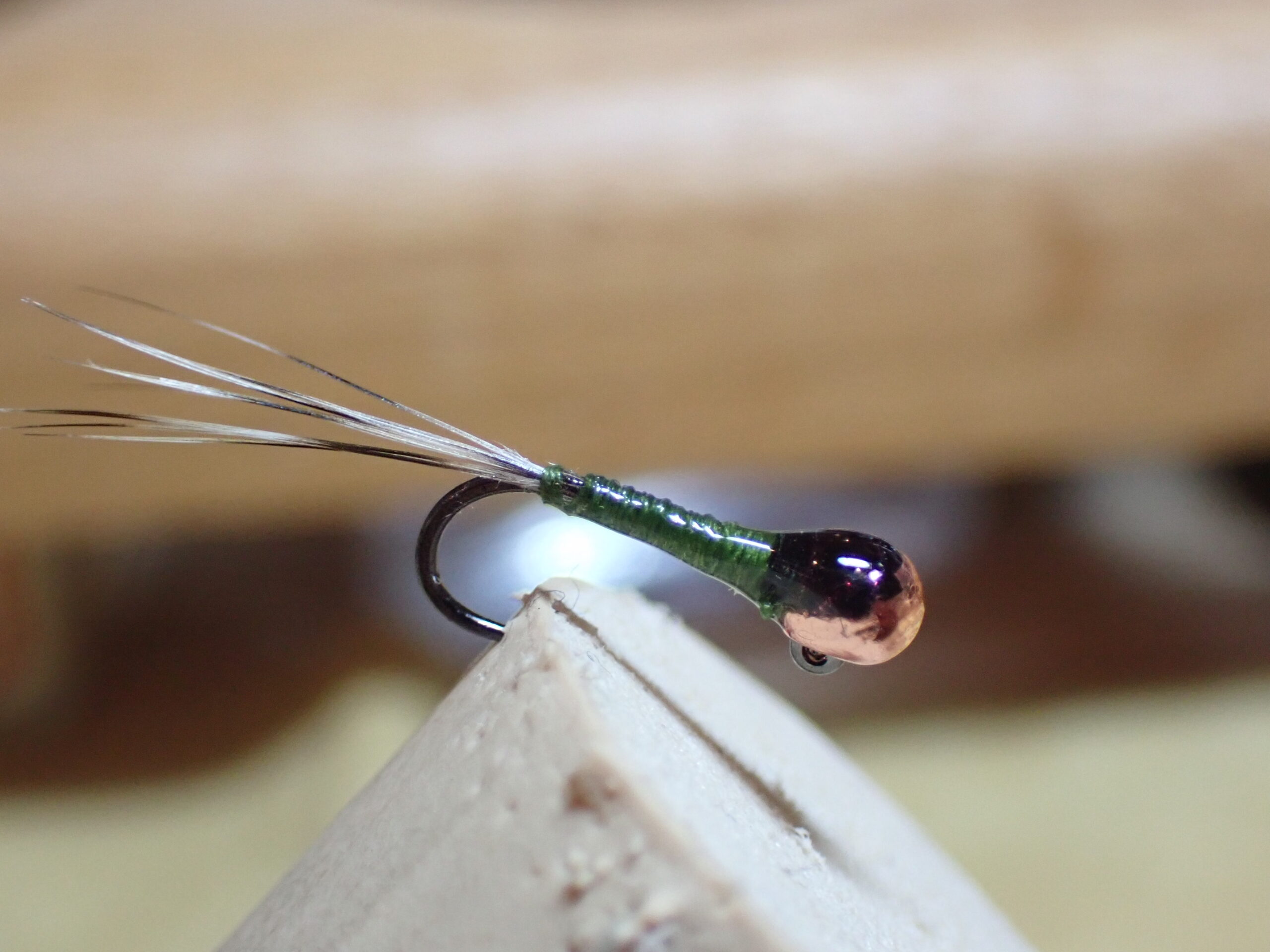
The olive perdigon is a relatively new addition to my fly box, but what a weapon it has become! Two years ago I possessed none, and I just finished building my supply from thirteen to thirty for the 2026 season. How did this happen?

On 10/03/2023 my friend, Dave G., invited me to join him on a private stretch of the Eagle River. Within the first hour, Dave G. was landing nice fish after nice fish, and I managed a couple dinks. I asked to borrow one of his productive flies, and it happened to be an olive perdigon with a tungsten copper-colored bead. My fortunes reversed, and I experienced a twelve fish day that included some very respectable fish.

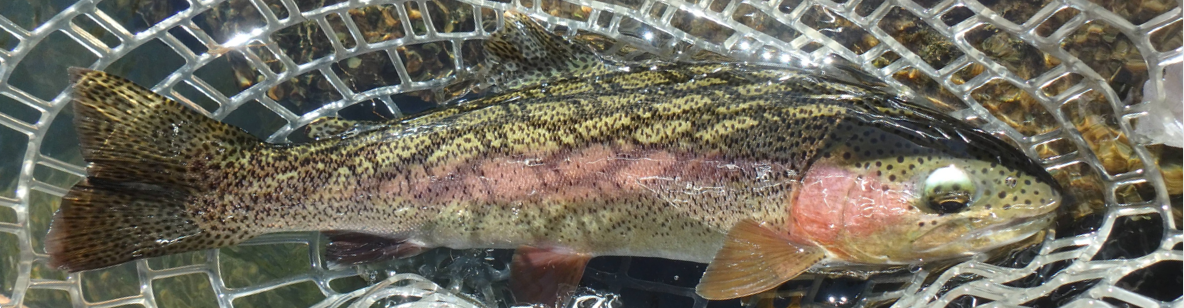
Fast forward to the spring of 2025, and for some reason I began to experiment with the olive perdigon. I tied around ten of them over the winter of 2024-2025, and I was amazed with their productivity in the early season. They produced quantities of fish on all the Colorado rivers that I visited prior to run off. Their fish catching ability faded a bit in the post run off time frame, but when I returned to the large river valleys in the fall, their effectiveness resumed.

Side View

I attribute much of their success to the tungsten bead, I theorize that the very dense bead sinks the fly rapidly to the bottom of the river and provides a longer drift within the feeding range of the trout. When I combine it with another nymph in a three fly dry/dropper, it also sinks the paired nymph to the eye level of the trout. Although the density of the nymph is a positive for achieving long deep drifts, it also offers the disadvantage of snagging more frequently, and consequently I lost quite a few flies. The beads are quite a bit more expensive than the typical brass bead, so each lost fly is mourned by this frugal angler. The loss of flies forced me to approach my vise to tie additional perdigons during the fishing season; a task I normally try to avoid.

Opposite Side

The olive perdigon has climbed from absent to a top five mainstay in my fly box. I tie an olive perdigon to my line more frequently than my revered hares ear nymphs and salvation nymphs, so that is saying something. Given this new status as the top dog of my fly inventory, I kicked off my fly tying season yesterday by augmenting my olive perdigon supply. I counted thirteen among my fly boxes, and I decided to target a starting inventory of thirty. I can report that seventeen flies were added to my count.

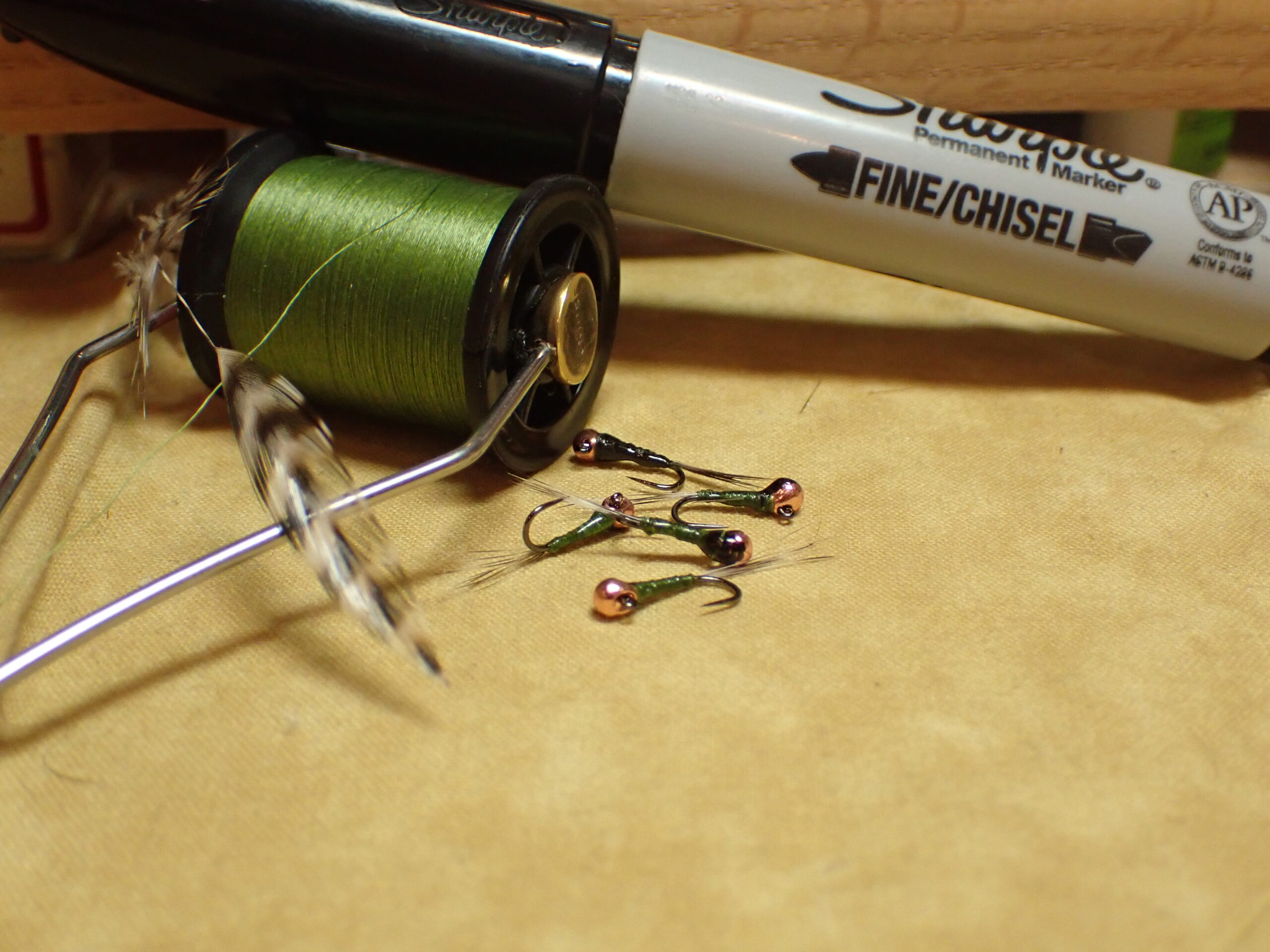
Although more expensive than most nymphs due to the cost of the tungsten bead, these flies are relatively straightforward to tie. All that is required is a copper colored slotted tungsten bead, a jig hook, medium olive thread, spade hackles from a rooster neck, a black permanent marker, and UV resin and lamp.

Thread, Feather and Finished Product

Place the bead on the hook with the slot facing upward and toward the rear. Start your thread behind the bead and make tight wraps to lock the bead in place on the angled portion of the jig hook. Wrap the thread to the rear and then wrap forward to one hook eye behind the bead. Tie in six barbules from the grizzly feather to form a tail approximately three-fourths of the length of the hook shank and then wrap the thread to the bend. Wrap the thread forward to the bead and snip off the ends of the hackle. Now repeatedly wrap the thread to the rear and back to the bead to form a nice tapered body. Once you create the taper that flows nicely into the bead without leaving a gap, whip finish and cut off the thread. Grab your permanent black marker and carefully place a black spot on top of the body, where it meets the bead and then on the top of the bead. Get out your UV resin and apply a coat to the point where the bead meets the body of the fly and then coat and cover the entire thread body. Try to make the UV resin at the junction a bit thicker than the body coat. Fire up your lamp and cure the resin. You now have a new sleek olive perdigon.

Hopefully thirty will suffice for the 2026 season. If not, it probably means that the olive perdigon demanded a lot of time on my line, and running out and having to tie more in season is a good problem to have.


Olive Perdigon – 03/05/2025

Olive Perdigon 03/05/2025 Photo Album

I tied a few of these simple flies in 2020 during Covid to kill time while quarantined. I used them infrequently, and like many new patterns they lingered in my fly box, as I opted for tried and true patterns that I had confidence in.

Slender Nymph

Fast forward to 11/04/2023. If you read this post, you learn that I had an outstanding fall day on the Eagle River, when the olive perdigon delivered superior results for my friend, Dave G. and me. Needless to say, this prompted me to tie a batch, but I must confess that I did not test them to any great extent during 2024. I plan to make amends for this oversight, and as a result I approached my vise and produced five additional olive perdigons. I am confident that if I give them a chance, they will become a new favored fly from my fleece wallet.

A Batch of Five and Associated Materials
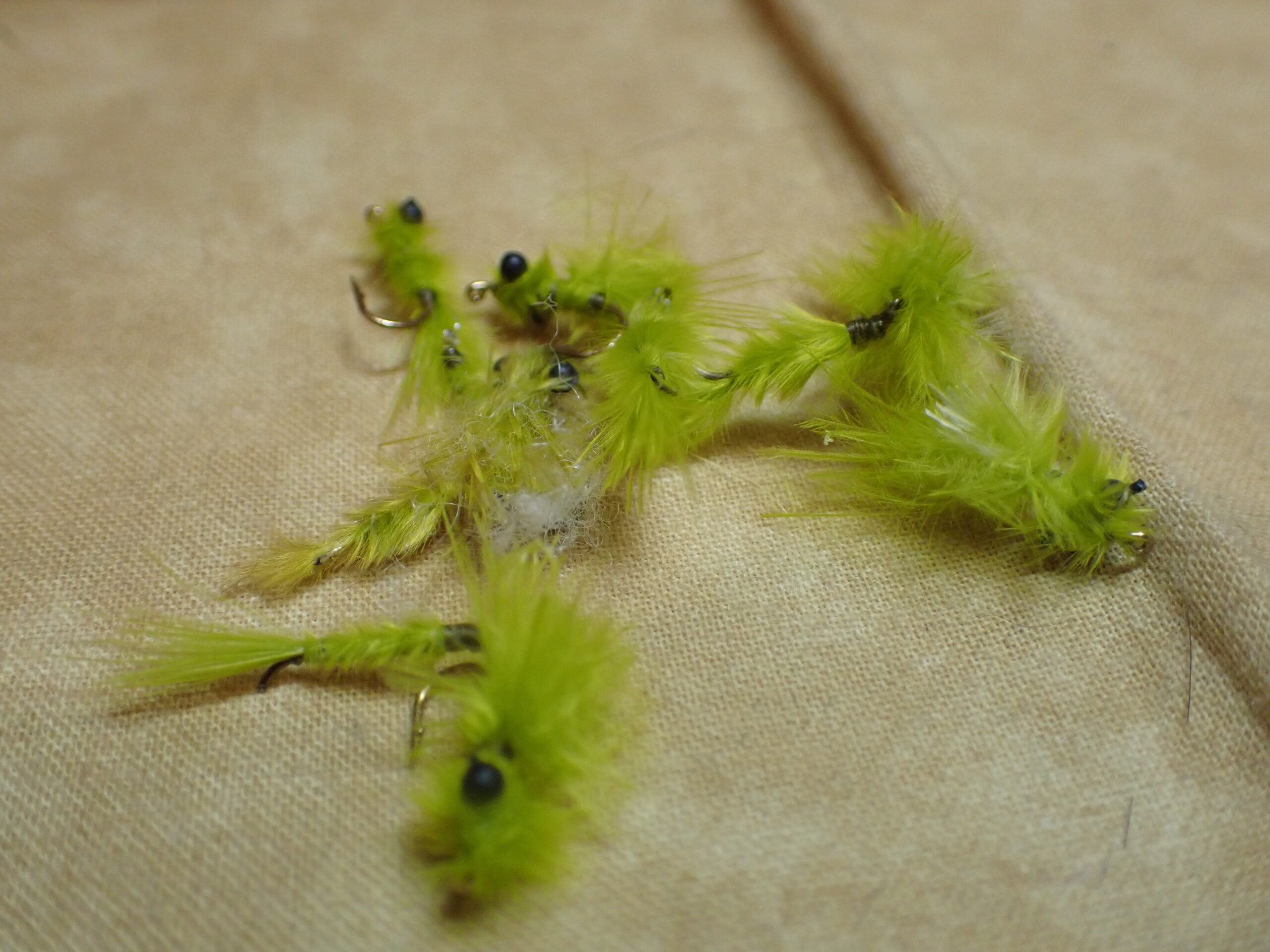
This fly is quite easy to tie, although I am not a fan of messing around with UV resin application. I have squeeze tubes, and the caps become a gooey mess. I plan to switch over to product with applicators, but being a frugal fly tier, I am attempting to use up the resin in my tubes. These olive perdigons require only six materials if you count the hook, bead and a black marker. Otherwise, all you need is some grizzly spade hackle fibers, olive thread and UV resin. The result is a very slender heavy fly that rapidly sinks to the bottom. If I can discipline myself, I would like to test these in pocket water, where it is necessary to get the fly to the bottom quickly. Doesn’t it seem like this is a perfect application for the olive perdigon?

Wiggle Damsel – 02/19/2025

Wiggle Damsel 02/19/2025 Photo Album

More background on the wiggle damsel is available in my post of 01/06/2020. These flies are mainly reserved for stillwater fly fishing. I often read about damsel emergences on lakes, which motivate trout to gorge on the migrating nymphs, as they move toward reeds and weeds along the shoreline. I have never encountered this situation, but I have tried.

Last year in early June I fished Beaver Lake in the town of Marble, CO, and an abundant quantity of damsel flies were present including some nymphs in the process of emerging on the shoreline rocks. I switched to a wiggle nymph, but I was unable to tap into the action. A reader of this blog commented that damsel nymphs should be fished just below the surface, and I think I was using weight, so that may explain my lack of success. It was a lesson learned, and I will surely try one without using weight should I encounter another promising damsel emergence situation.

Wiggle Damsels from My Storage Container
This fly was designed by Charlie Craven, and it features an articulated body. I love the way the rear section undulates, as I slowly hand twist my retrieve.

I counted my wiggle damsels, and I learned that I had adequate quantities for the new season, so I bypassed additional tying. Last winter I also tied some olive mini leeches, and these could also serve as damsel nymphs. It is always good to have backup.

San Juan Worm – 01/14/2025

San Juan Worm 01/14/2025 Photo Album

If you are squeamish about worms, you will not want to read my post of 02/15/2016. If, on the other hand, you are fond of slimy earthworms and nightcrawlers. you might enjoy my walk down memory lane as described in that post. I know I certainly did.  When I searched my blog on San Juan worms, the 02/15/2016 post was the only one that appeared. Could it be that long, since I tied San Juan worms?

At any rate, my usage of the worm has dwindled over recent years. I’m not sure why. It is most effective during high murky conditions, and I try to avoid those scenarios, so that may be the reason. I do recall a relatively recent outing on the South Platte River in Eleven Mile, when the river was a bit high and discolored, and I landed a few fish on the San Juan worm.

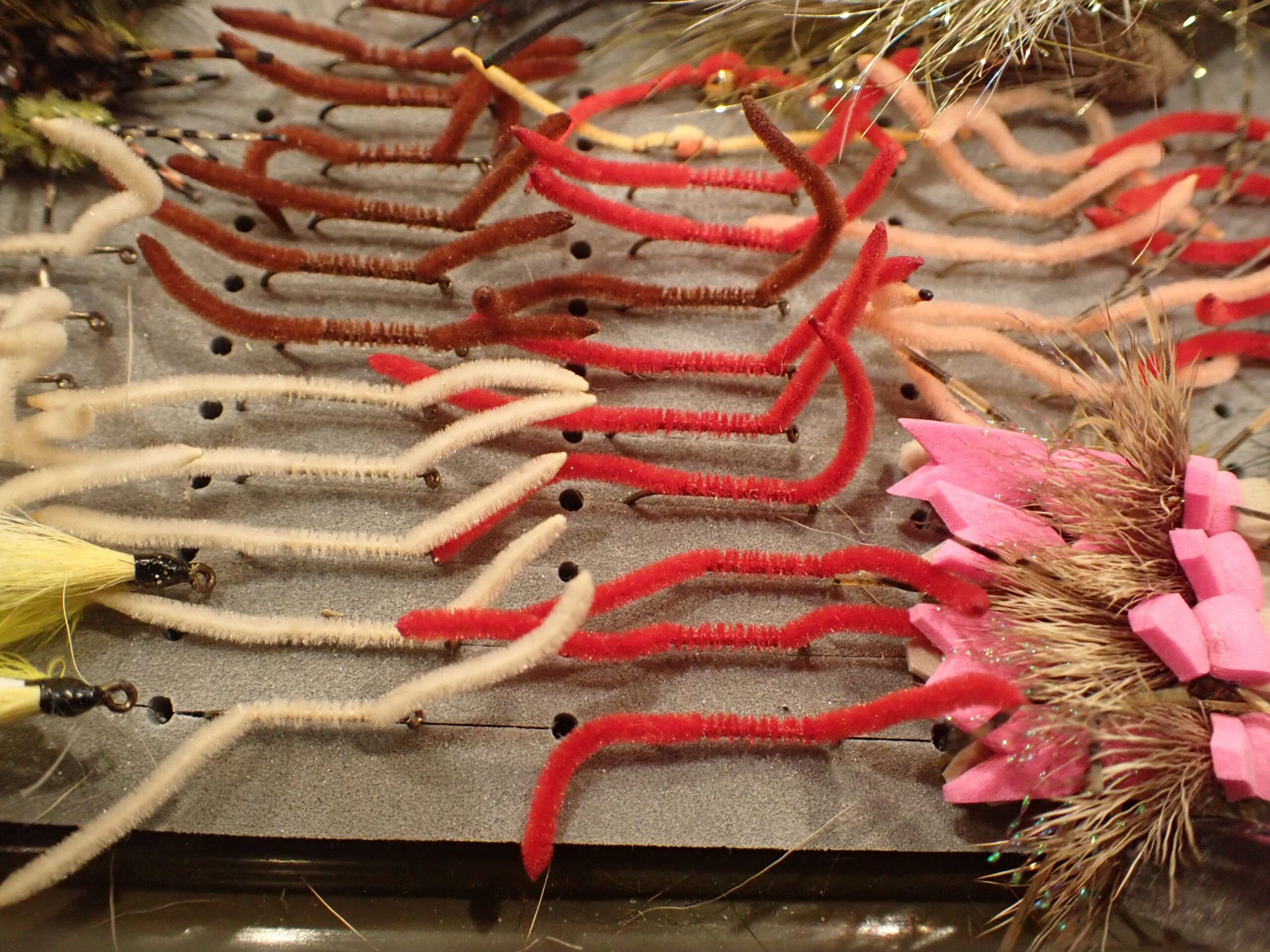
Lots of San Juan Worms

I decided to review my supply of San Juan’s of the various colors, and I counted at least ten of my most popular shades, so I decided to pass on tying more. I can knock then out in a matter of five minutes, so the time saving result of my decision to skip tying them was minimal. I took a picture of the section of my boat box that is loaded with various San Juan worms. My favorite colors are flesh, pink, chocolate, red and tan. Perhaps 2025 will be the year, when I stumble into a situation, where the San Juan worm is a must have fly.

Crystal Stone – 01/12/2025

Crystal Stone 01/12/2025 Photo Album

Despite my pledge to do otherwise, I mostly ignored this fly in 2024. I have spotted small black stoneflies in the spring and fall, yet for some reason I overlooked this nymph that I designed to imitate those very hatches. I continue to believe that my crystal stone would be a productive fly should I allocate more time on the end of my tippet. For additional information on the crystal stone click on my 01/03/2023 post. My 03/06/2021 post contains a materials table and tying steps. I used this report myself to refresh my memory on steps to tie this fly.

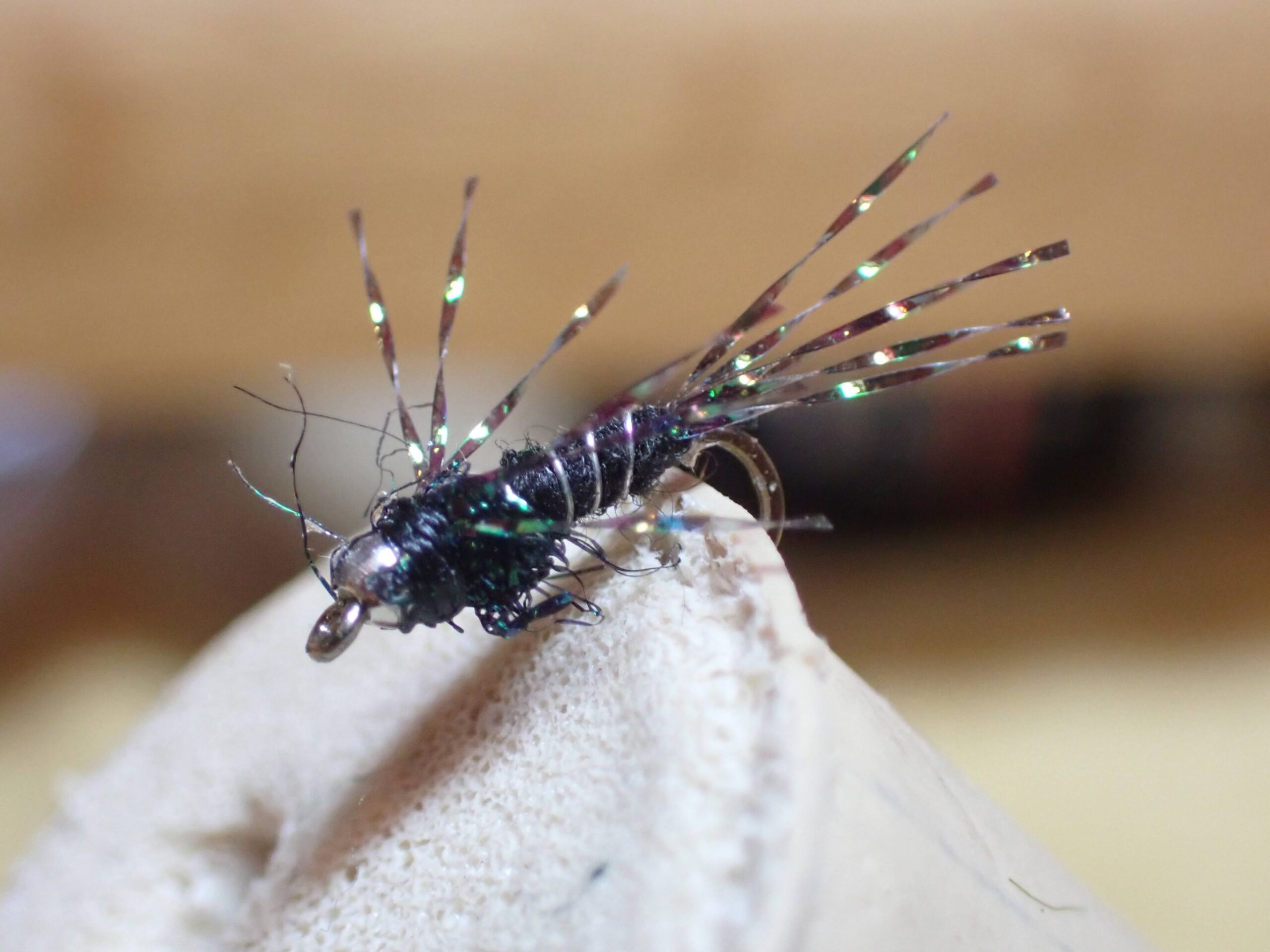
Close Up of Crystal Stone

I love the look of this fly, and perhaps I am the first to design such an imitation. Crystal flash black is used for the tail, wing case and legs; so very few materials are required. I counted my stock of crystal stones, and I concluded that my supply was adequate, but I tied two more to stay in practice. I need to tie one to my line in March, and I plan to keep that thought foremost in my thoughts.

Two New Crystal Stones

Pat’s Rubber Legs – 01/10/2025

Pat’s Rubberlegs 01/10/2025 Photo Album

Pat’s rubber legs has become a fairly recent essential addition to my stable of flies. My post of 12/29/2023 contains a link to a post from an outing on the Arkansas River, where the rubber legs nymph convinced me of its permanent place in my fleece wallet.

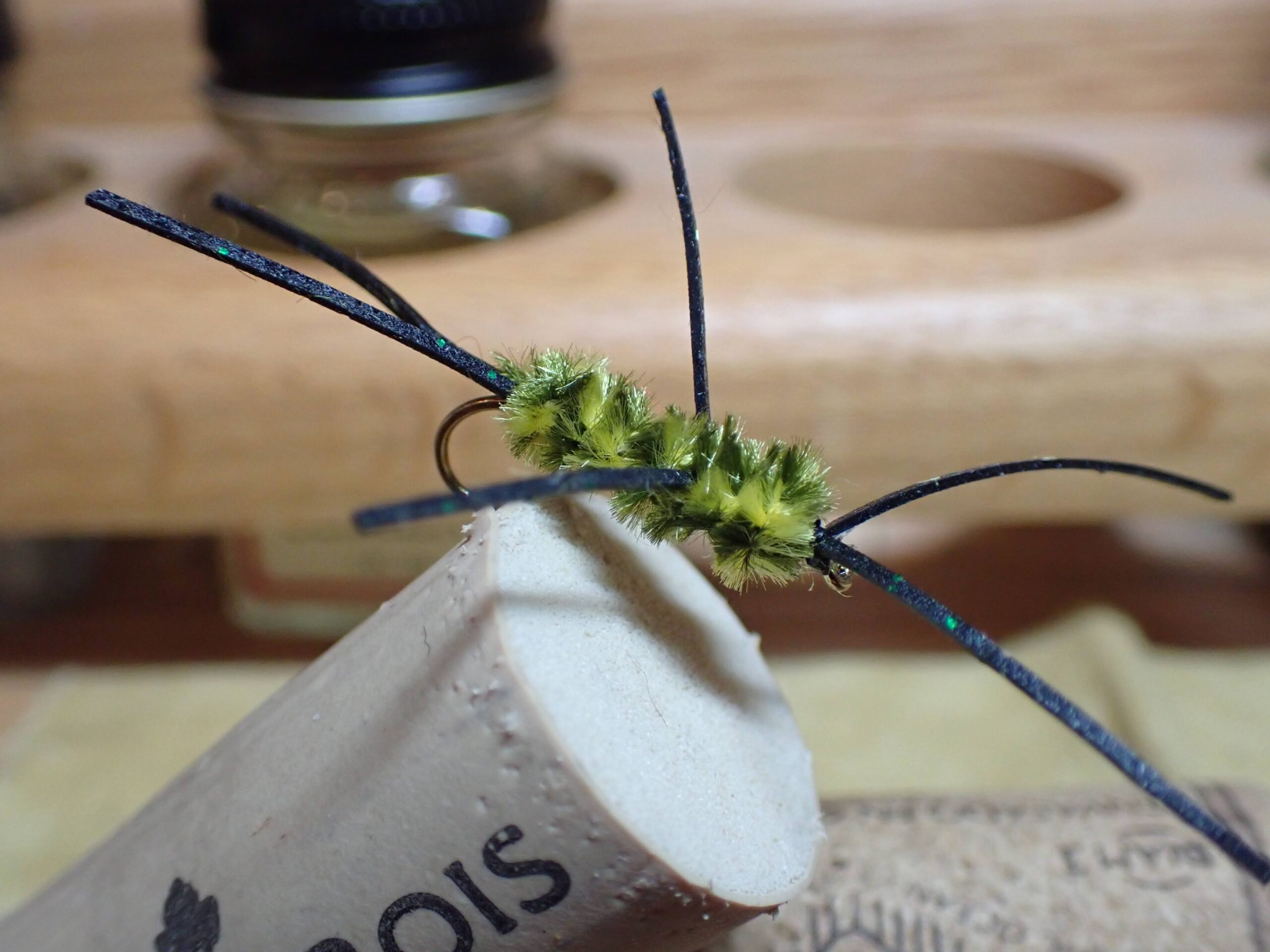
Dangling Legs

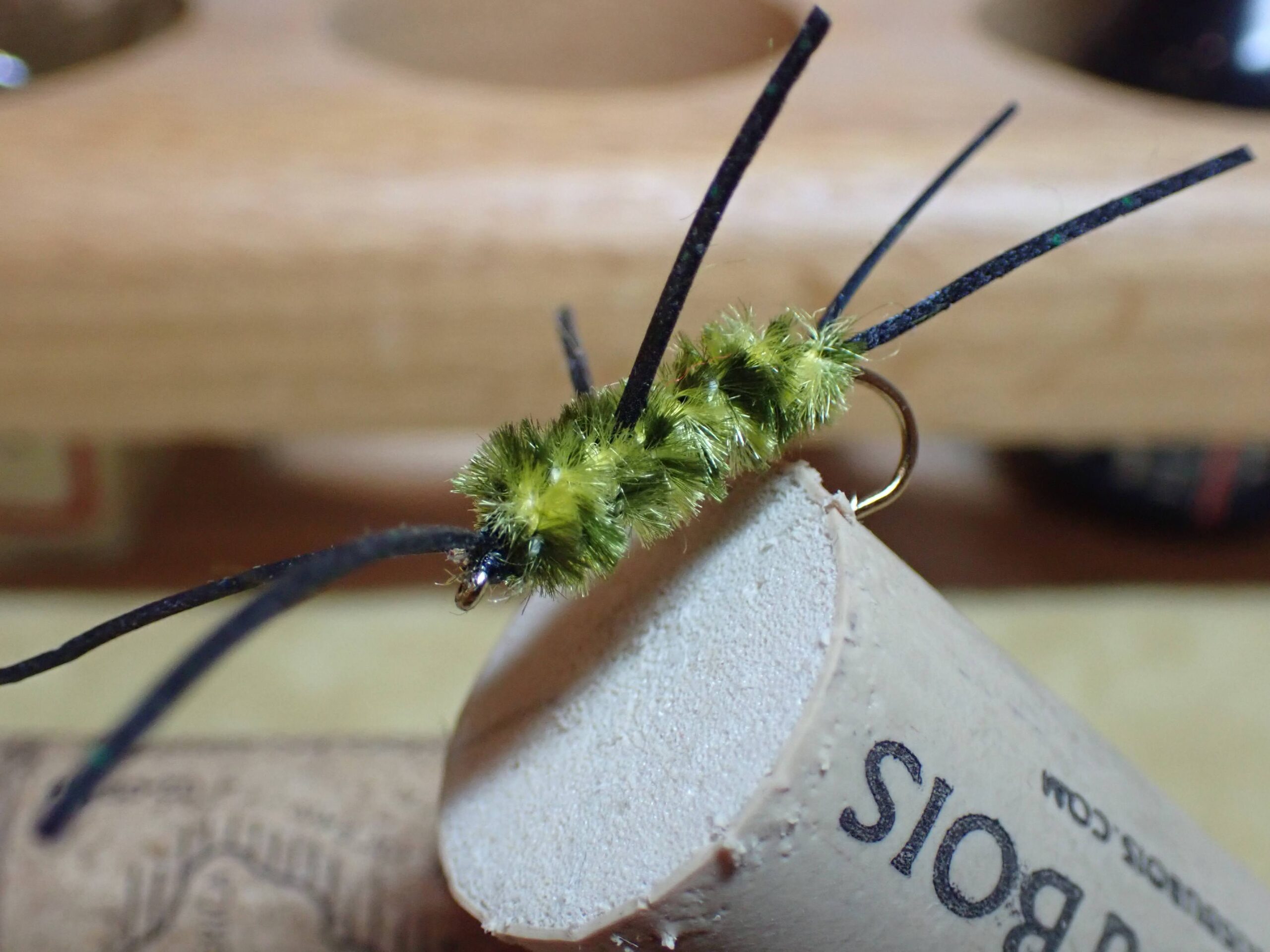
This is a fly that, in my opinion, truly lives up to the name ugly. It strikes me as a mish mash of materials that were lashed on to a hook by a very young beginner fly tier. Do not judge Pat’s rubber legs by viewing it, when it is dry. When I strip it in along the river to inspect it for aquatic junk, it is obvious why the trout go for it. The chenille takes on a translucent appearance with soft undulating fibers, and the long dangling legs flop along in an enticing manner. It looks like a tasty morsel that is easy prey for the fish.

A Different Angle

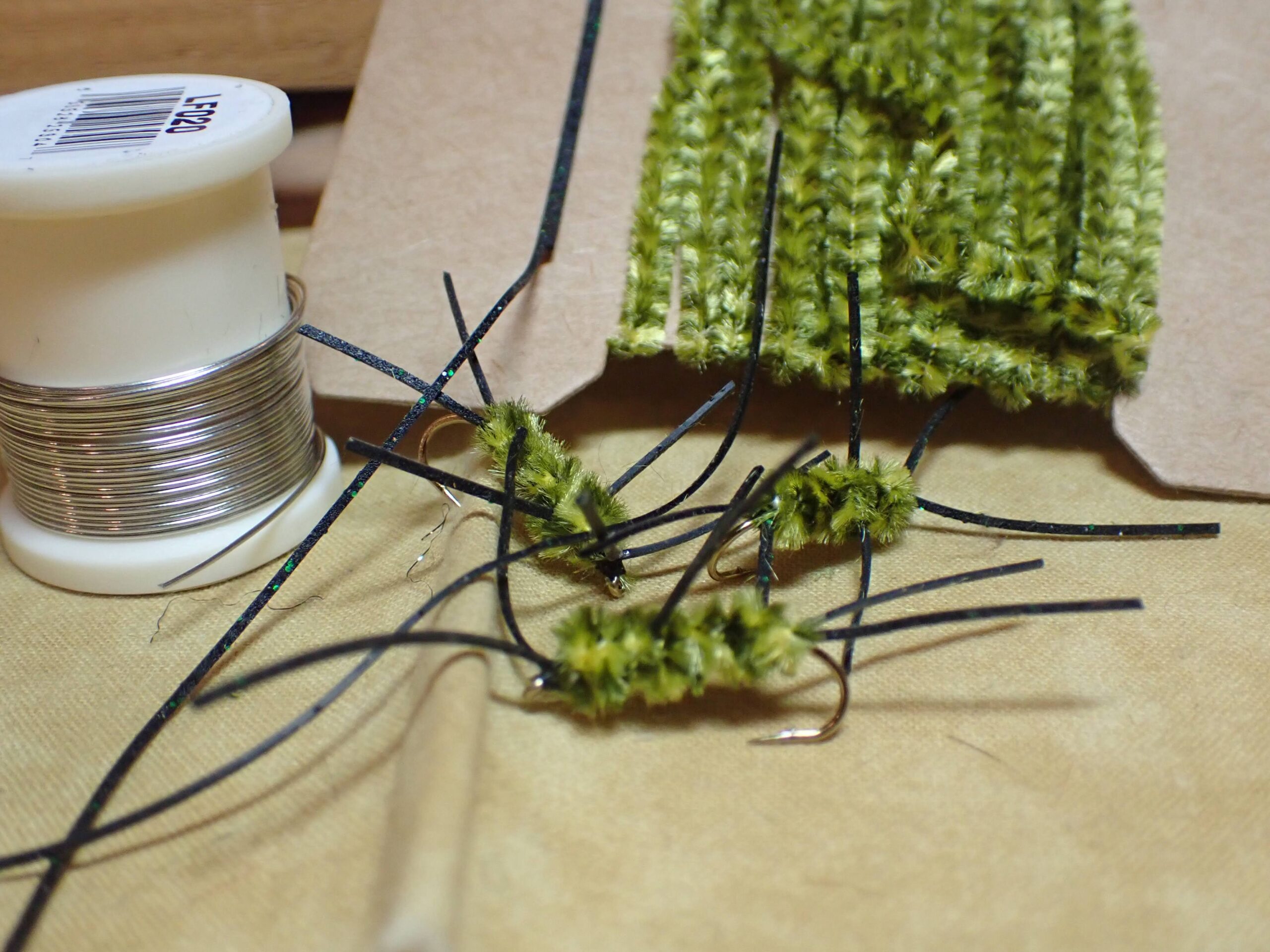
Although this fly is fairly simple in terms of materials required, it can be a bit tricky to tie, and the complicating culprits are the six dangling rubber legs. Up until this year I followed tying instructions from Tim Flagler on tightlinevideo on YouTube. As I prepared for my new tying session on 01/10/2025, I decided to refresh my memory, since the video outlined a series of steps involving UV Resin to bind the legs to the hook shank before wrapping the chenillie. When I completed my search on YouTube, I noticed a newer Pat’s rubber legs video from Flagler that was eight months old. I viewed this revision to method, and it struck me as much more straightforward, so I utilized it to tie three additional rubber legs in the green/black color. I was quite pleased with the new method, and it avoids dealing with UV resin and an awkward leg wrapping maneuver.

Three New Rubber Legs

The three new size 10 Pat’s rubberl egs increases my inventory to adequate levels of black/green, coffee/black and yellow/green. I am ready to dredge stoneflies in the early season and beyond.

Zebra Midge – 01/08/2025

Zebra Midge 021/08/2025 Photo Album

The zebra midge is another fly I should deploy more frequently, particularly when I am fishing lakes during the run off time frame. Here is a link to my post regarding zebra midges from December 2023.

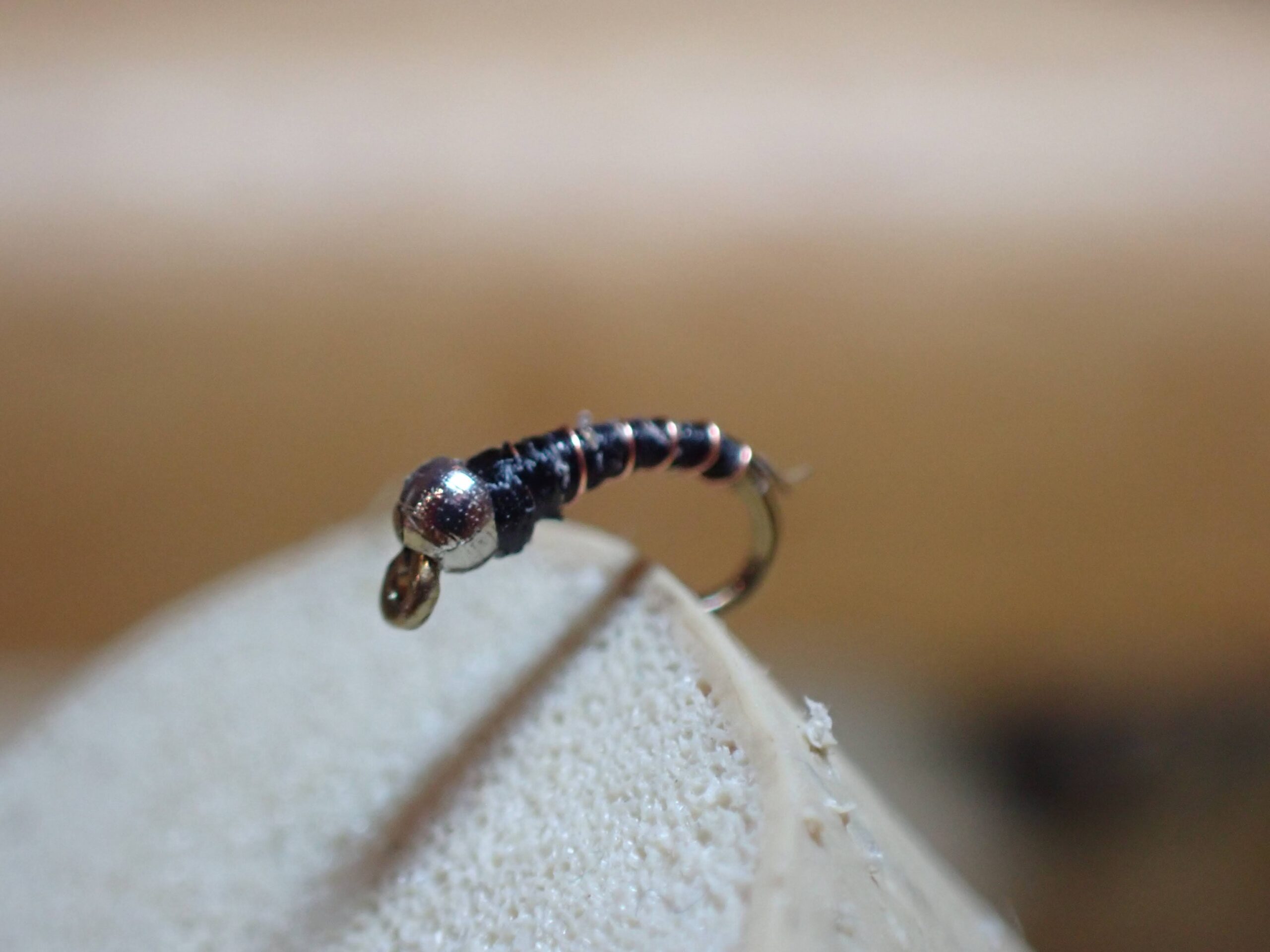
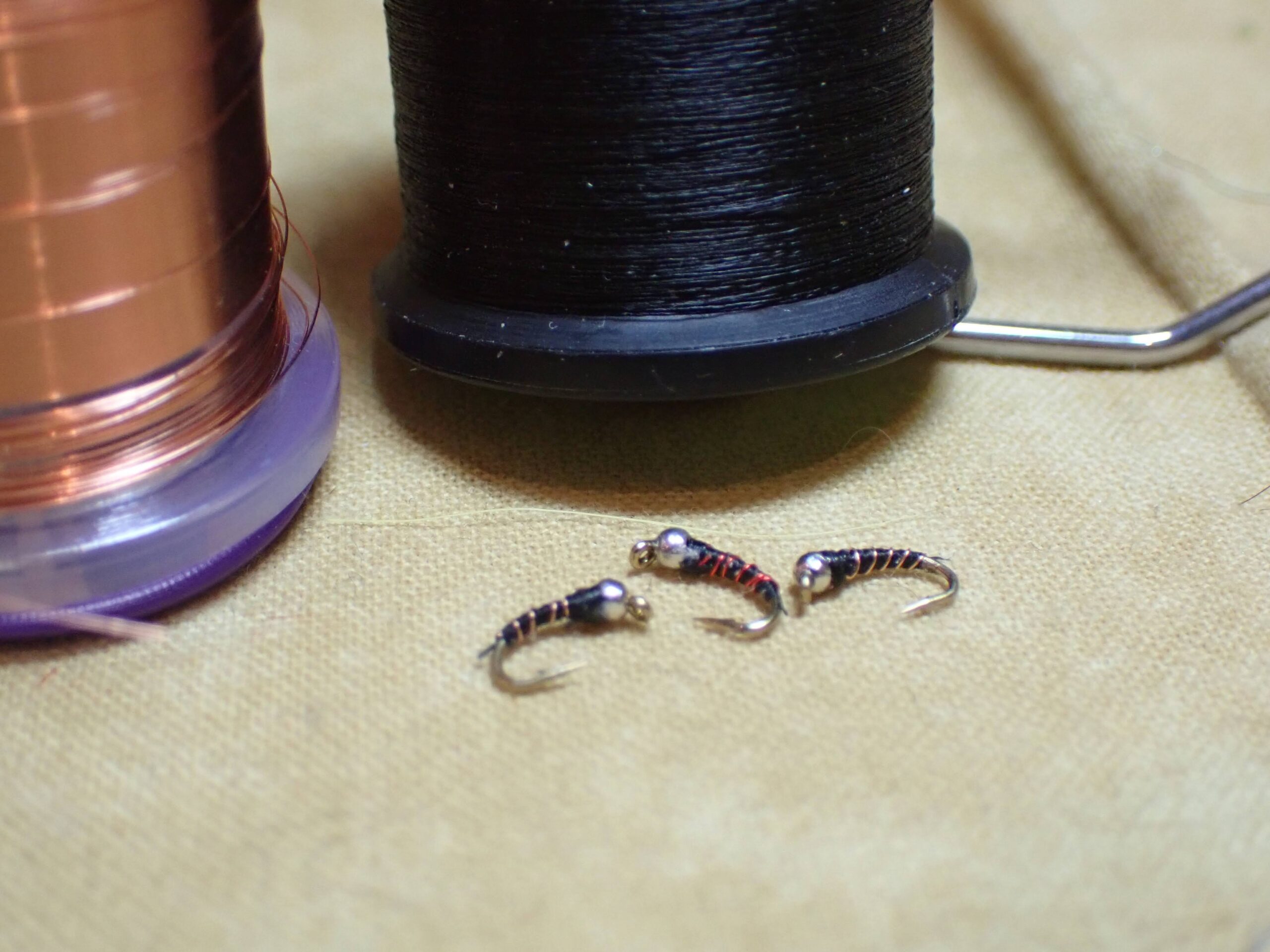
Size 20 with Copper Wire

This fly is easy to tie yet effective. I need to convince myself that trout can see this tiny morsel in the drift. Since I use the fly infrequently, I suffered very little in the way of losses. I counted my flies in my various storage containers, and I determined I was adequately supplied; however, I decided to crank out three to stay in practice, and because they are so easy to make.

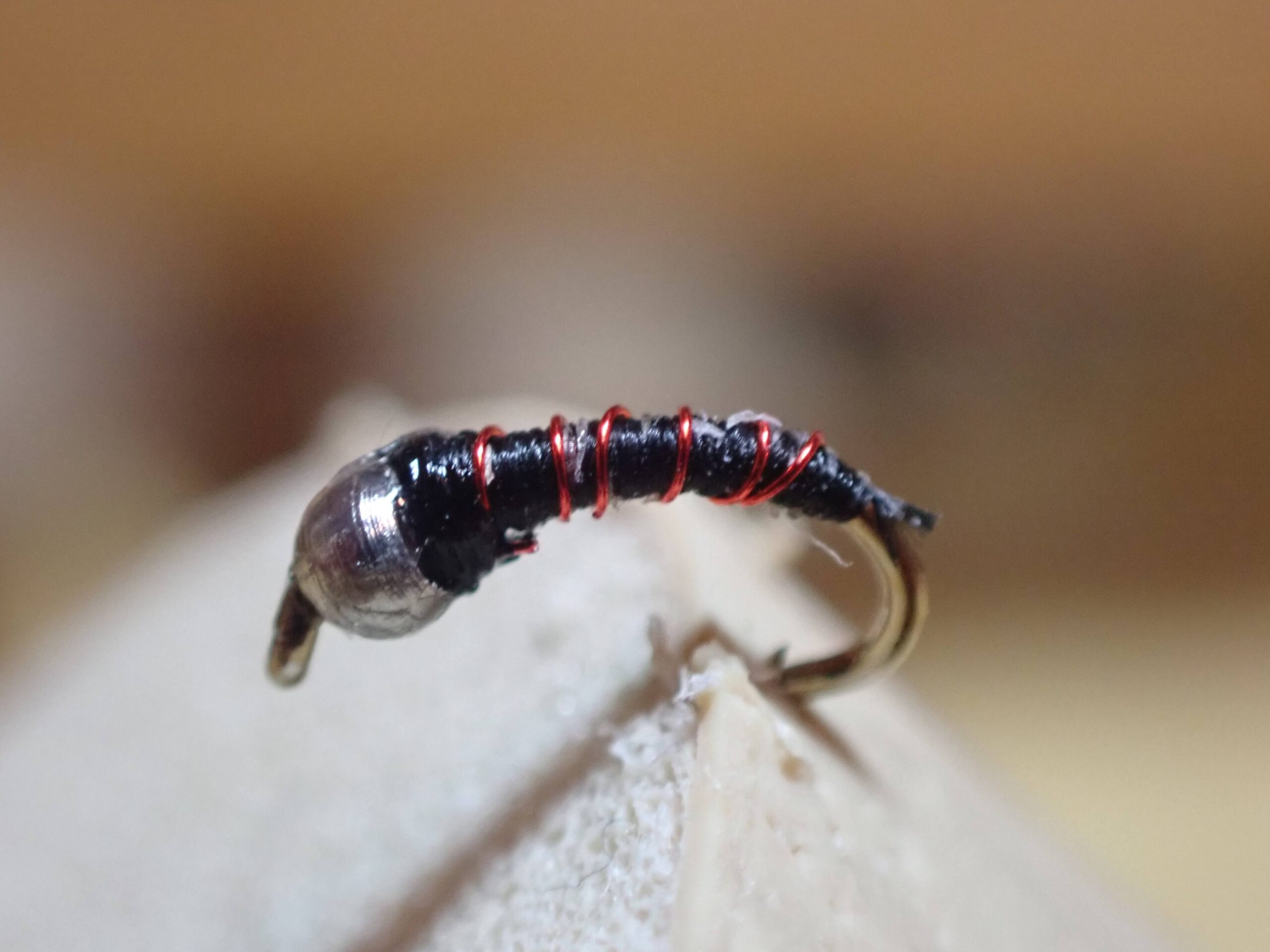
Red Rib Version

Bring on the midges in 2025.

A Batch of Three with Two Necessary Materials
 

Salad Spinner – 01/07/2025

Salad Spinner 01/07/2025 Photo Album

I encourage readers to follow this link to last year’s post, and that narrative in turn contains several additional embedded links to previous years. I should probably fish midges more frequently than I do, but they tend to fall outside more normal routine of productive flies, and I am always in disbelief, when a trout of significant size eats one of these tiny morsels.

Nevertheless, midges are prevalent year round in our streams and lakes throughout the country, so it is obviously a necessary food source for resident trout. They make up for their small size with density of biomass.

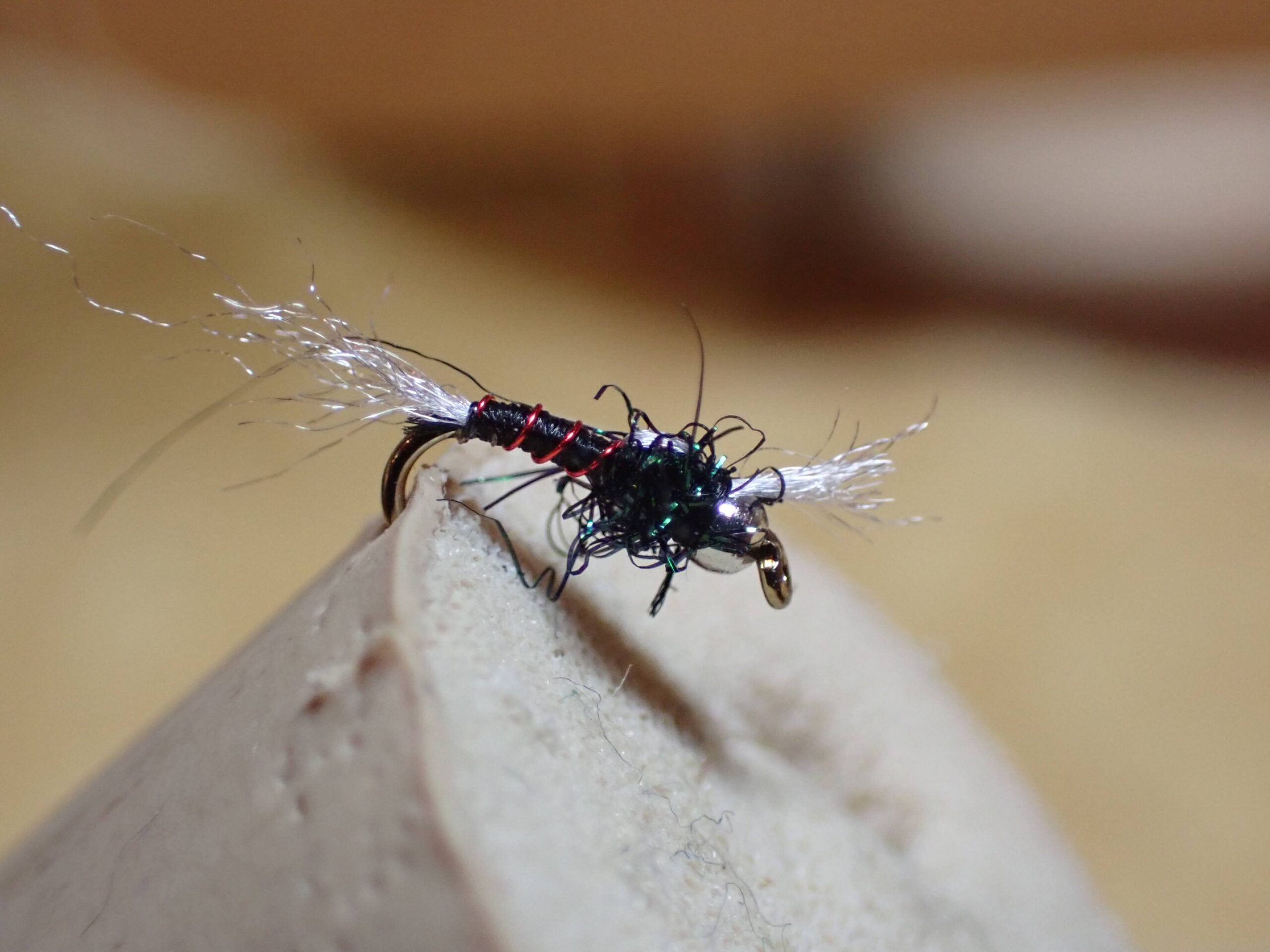
Nice View of a Salad Spinner

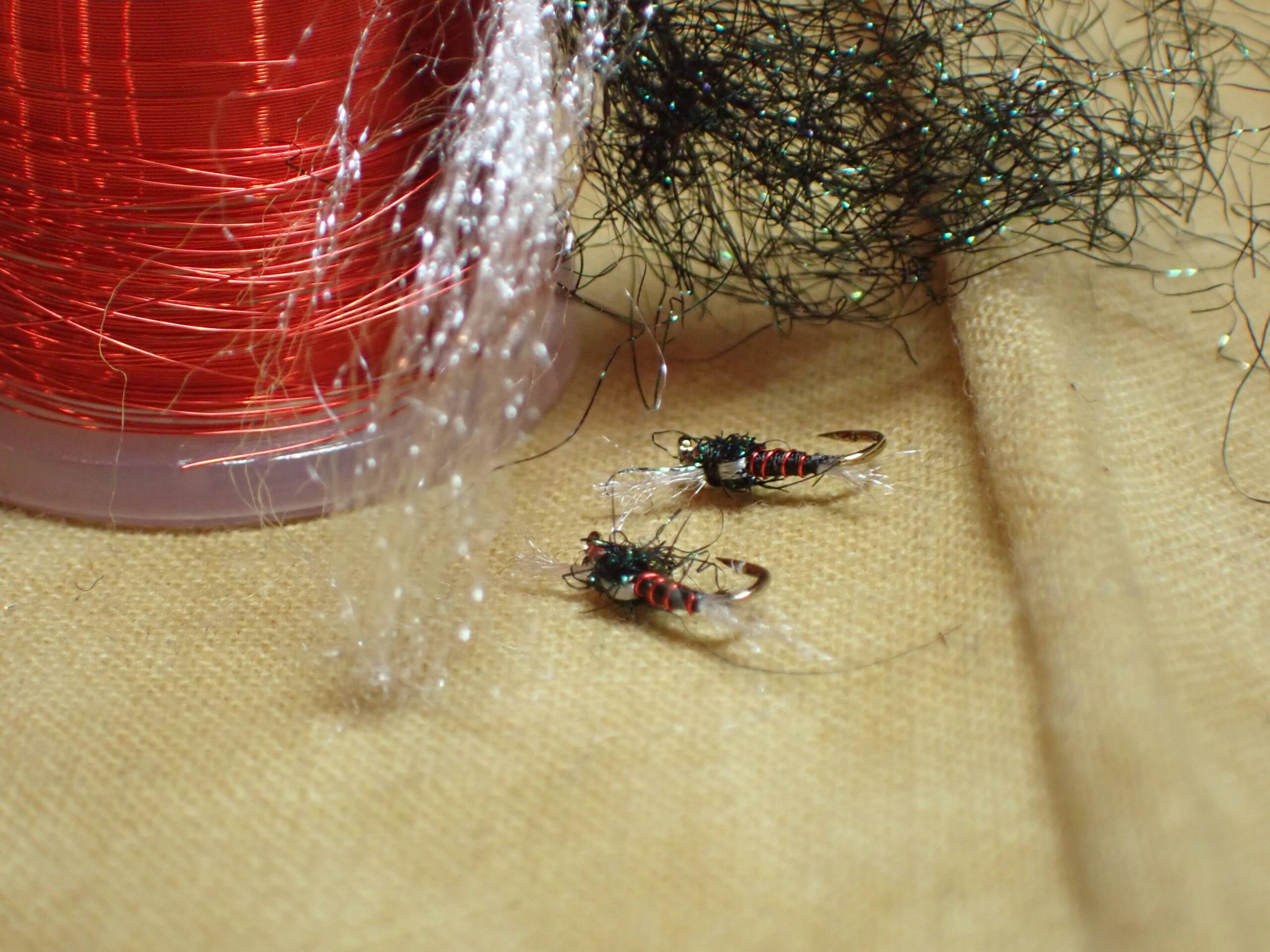
The salad spinner is an emerging midge pupa, and I love the look of the fine red wire rib over the black thread body along with the trailing white antron shuck, that then forms a wing case and an emerging forward facing wing. This fly was designed by a friend of mine, and he enjoyed so much success, that I had to add it to my arsenal.

Two New Salad Spinners and Required Materials
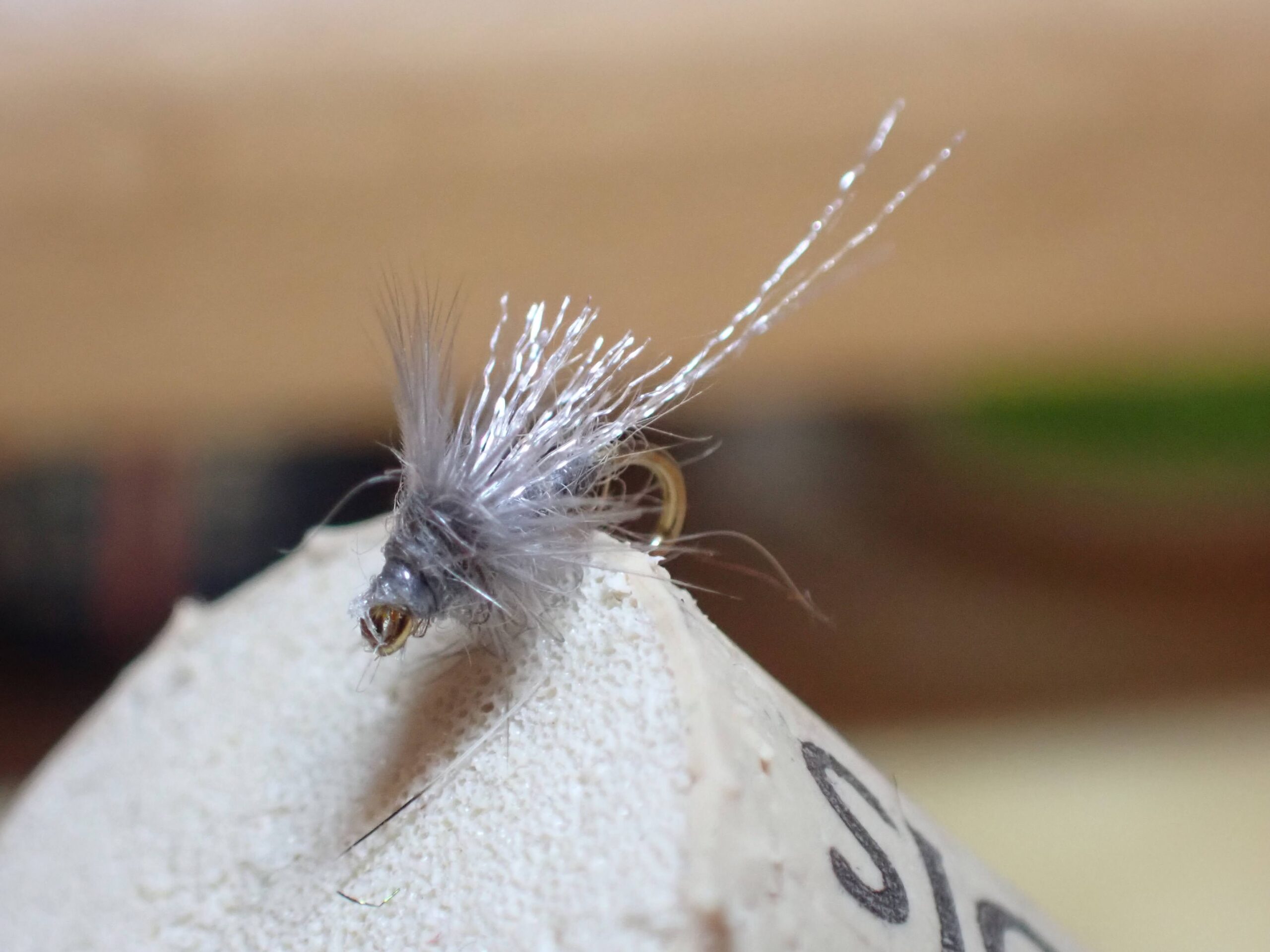
Over the last several years I have expanded my efforts to stillwater especially during run off, so I should offer the salad spinner more frequently in those environments. I counted my supply, and I easily had adequate quantities, but I elected to tie an additional two to stay in practice. They are quite easy to tie and require minimal time.

Soft Hackle Emerger – 01/07/2025

Soft Hackle Emerger 01/07/2025 Photo Album

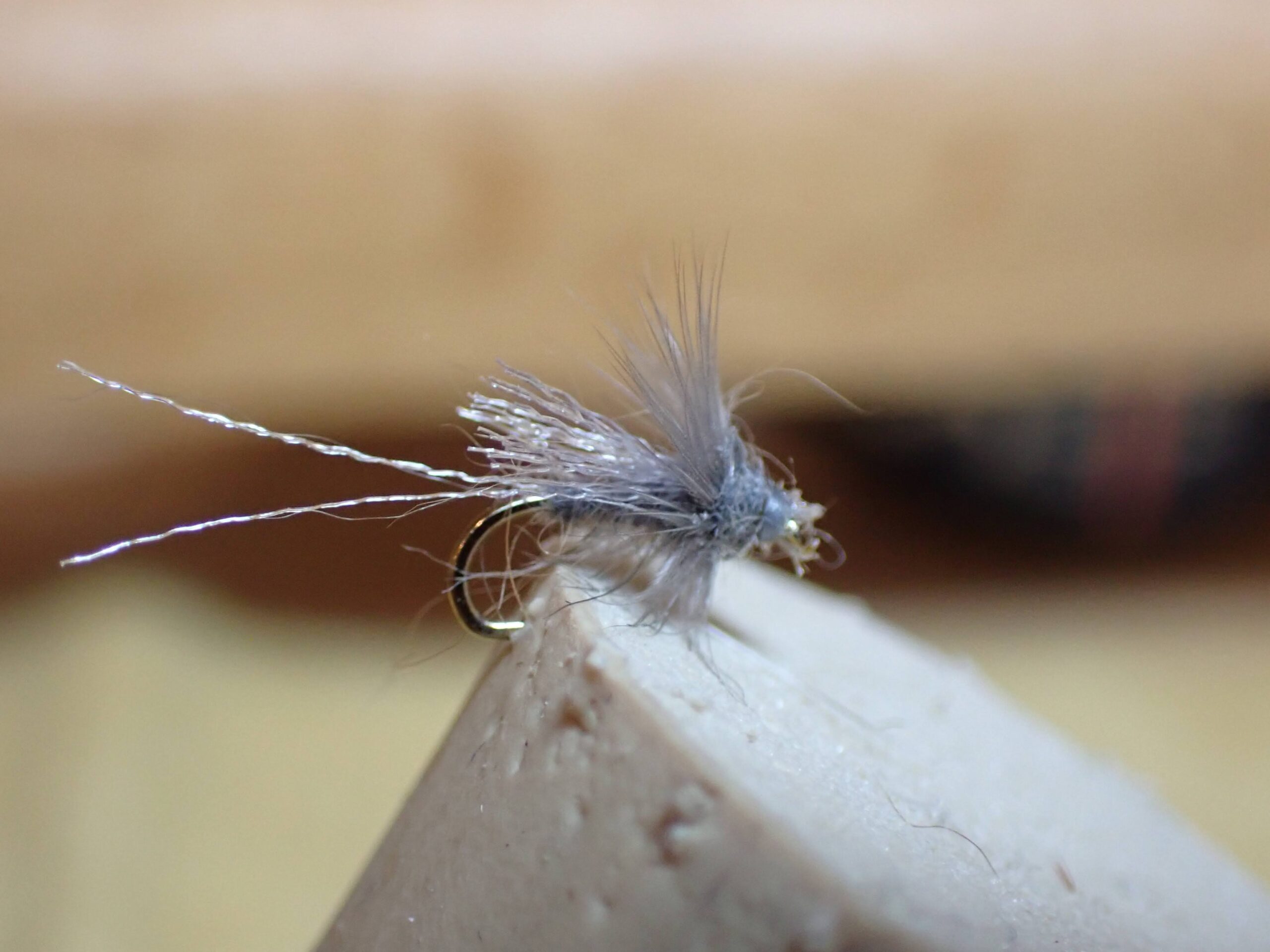
I have been tying this fly for quite a few years now, and my post of 12/19/2023 will initiate a deep dive into the history should the reader desire to pursue. It is a pattern that is present in Charlie Craven’s book, Charlie’s Fly Box. Initially I tied them without a bead, but subsequently I fell into the trap of adding a small nickel bead to obtain more sink. I have now come to realize this is exactly what one should not do for an emerger pattern. In addition, I already possessed an arsenal of beadhead RS2’s and beadhead sparkle wing RS2s for drifting deep nymphs.Size 20

Over the last three years I have come full circle. If you click on the previous link and follow the embedded link there, you can read about my favorable experiences with the soft hackle emerger on windy days and scenarios, where my CDC blue wing olive is rejected. I suspect that under certain conditions the trout key into fluttering and motion, and the soft hackles and angled wing more closely imitate cripples and struggling mayflies. Blue wing olives tend to emerge under adverse weather conditions, so wind and cold are more prevalent than still air and warm atmospheres.

Side View

When my CDC BWO is rejected, I now confidently tie on a soft hackle emerger and apply floatant to the body in an effort to fish it in the surface film. It is difficult to track, so I sometimes combine it with a buoyant hippie stomper and trail the small emerger on a one foot dropper. I also often execute an across and downstream cast and manipulate the emerger to float into the feeding trout’s window first. All these steps have served me well and enabled me to land some gorgeous fish under challenging conditions.

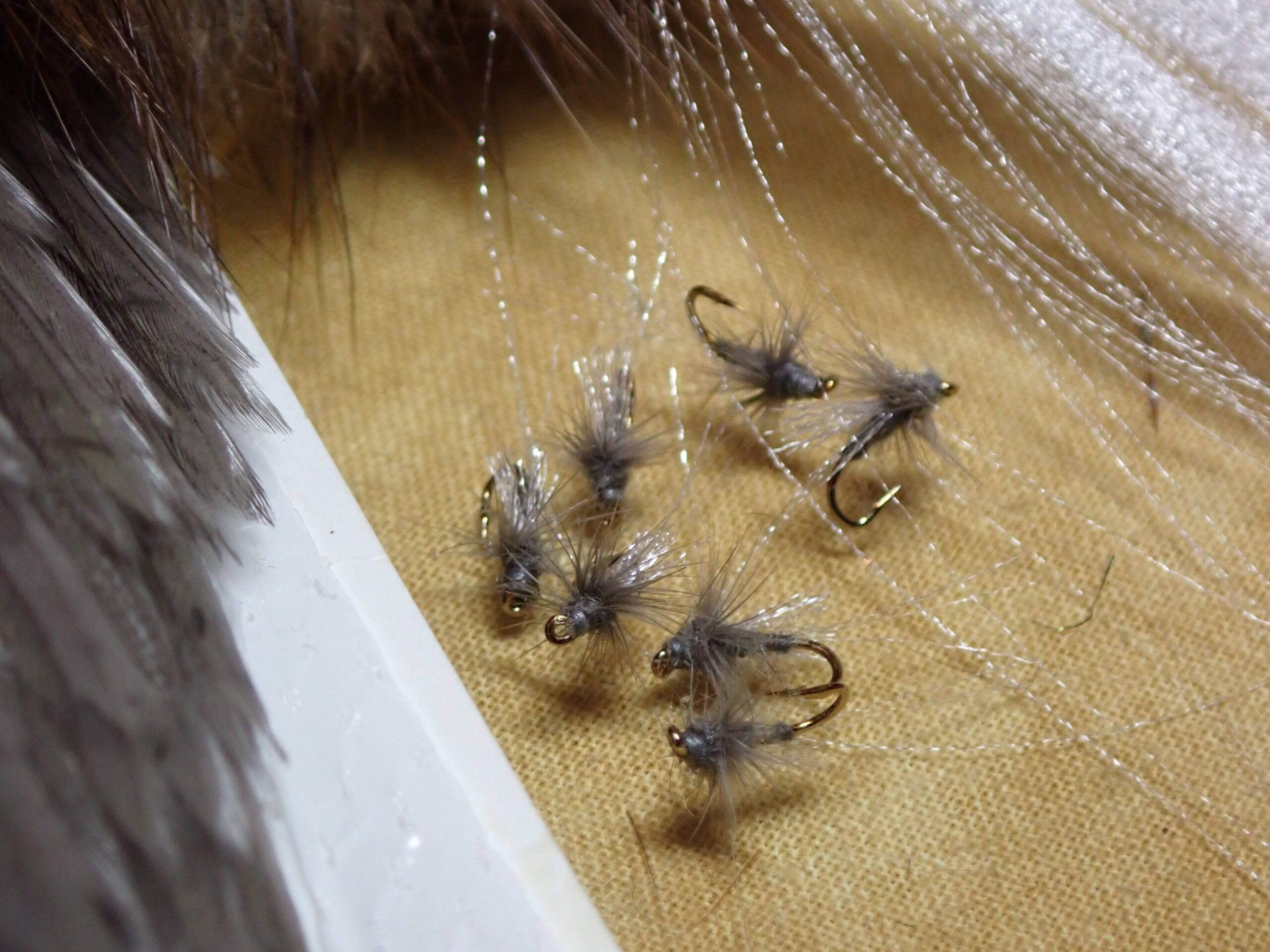
Seven New Soft Hackle Emergers

I tie these beadless soft hackle emergers in three sizes; 20, 22, and 24. I counted my supply of each, and then I produced an additional eight. Six were of the size 20 variety and two were tiny size 24’s.