Time: 11:00AM – 1:00PM
Location: Waterton Canyon
South Platte River 06/01/2026 Photo Album
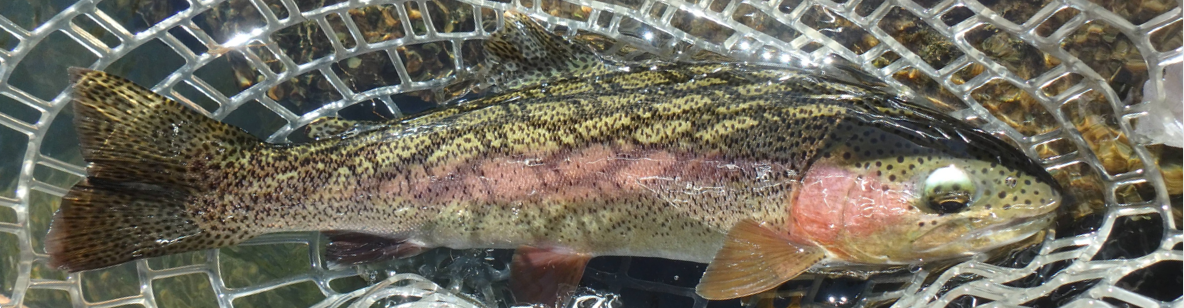
I set several goals for my fly fishing expedition on Monday, June 1, 2026. First, I planned to get exercise, and this was fulfilled, as I cycled nine miles on my roundtrip to my fishing destination and back. Second, I hoped to see wildlife, and on my return trip down the canyon I encountered two bighorn rams and paused to grab some photos. Third, I hoped to avoid some serious thunderstorms forecast for the afternoon. I made it back to the parking lot, before overhead dark clouds produced rain or hail. And last, I hoped to catch a few fish.
I chose the South Platte River in Waterton Canyon, after I reviewed all the flows on all the Colorado Rivers that I frequent. Several surprising options appeared that required longer drives, and I was not up for that, so I focused on nearby alternatives. South Boulder Creek was flowing from Gross Reservoir at 142 CFS. That level is a bit high for my tastes, but I have successfully fished SBC at flows up to 180 CFS.
The fishery that jumped out at me was the South Platte River in Waterton Canyon. Releases from Strontia Springs Dam were reasonable at 130 CFS, and the drive to that destination was forty-five minutes. Reaching the upper special regulation water, however, required a bike ride, but I viewed that as an opportunity for exercise. I made the commitment to fish the South Platte River in Waterton Canyon. It had been at least two years since I last visited the waterway in southwestern Denver.
In addition to my normal checklist of fly fishing gear, I added a backpack and mountain bike. I threw everything in the back of the Telluride and arrived at the designated parking lot by 10:30AM. The sky was bright blue and nearly cloudless as I prepared to fish. I followed my normal routine, but when I arrived at putting on my waders, wading boots, backpack and frontpack, I packed them in my backpack. My fly rod and wading staff and reel and net also found a spot in my pack.
I maintained a moderate pace, as I cycled up the gradual grade of the dirt road that used to serve as a train bed. Eventually after 4.5 miles of pedaling I arrived at my chosen base camp spot, the Rattlesnake Pavilion, but another angler occupied my preferred spot. I performed a U-turn and found a picnic table next to the river just above a bridge. I cabled my bike to the picnic table and prepared to fish by pulling on my waders and wading boots and all the other gear that was required for fly fishing.
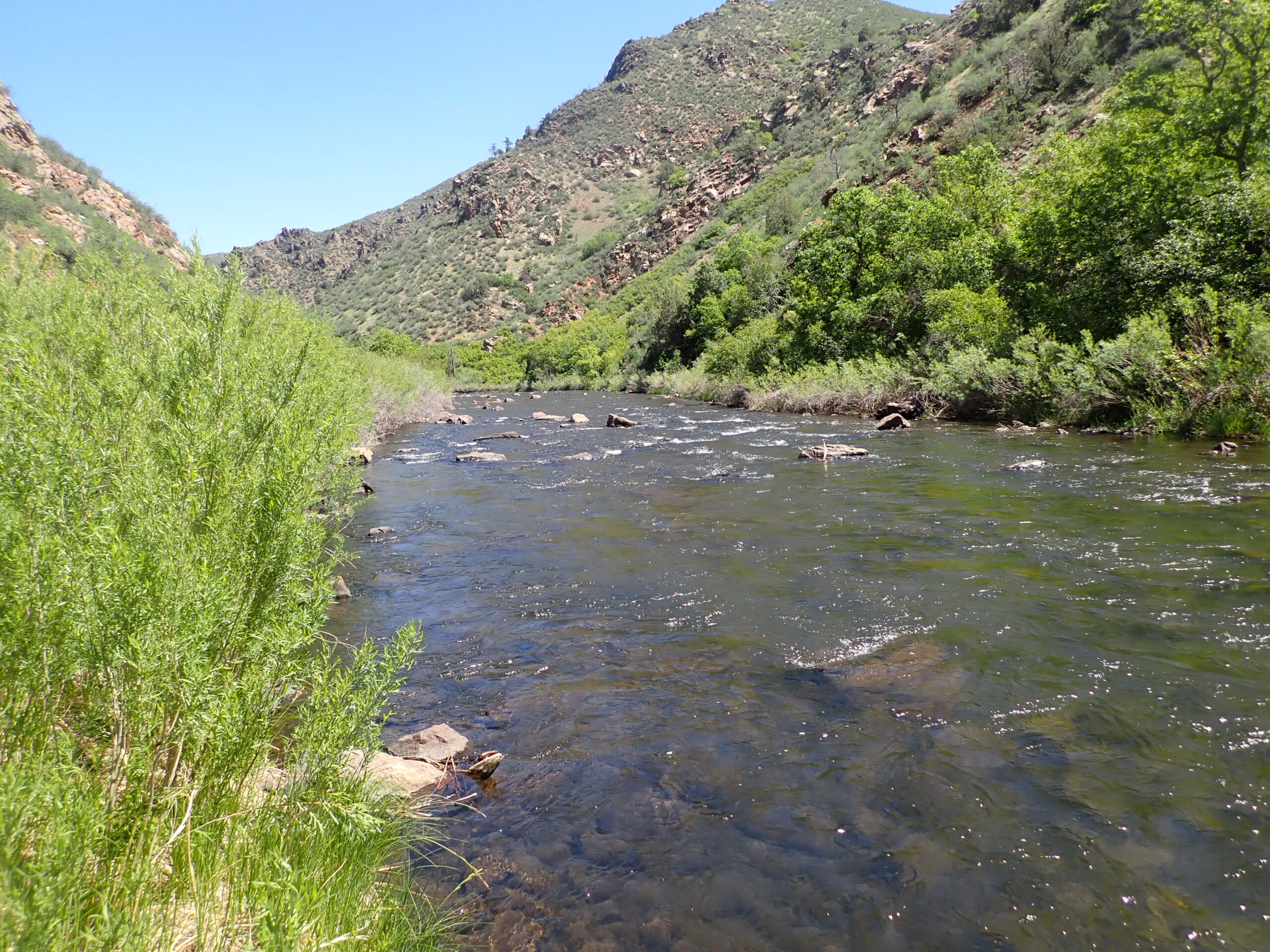 Downstream from Start
Once I was properly geared up, I hiked down the road for .5 mile, and then I angled down a short but steep bank to the river. The rest of this story is rather brief. I fished upstream from 11;00AM until 1:00PM through prime water, and I failed to catch a single fish. In fact, I never saw a fish. There were no rises, no fish darting from a clumsy wading step, no looks, no refusals and no takes.
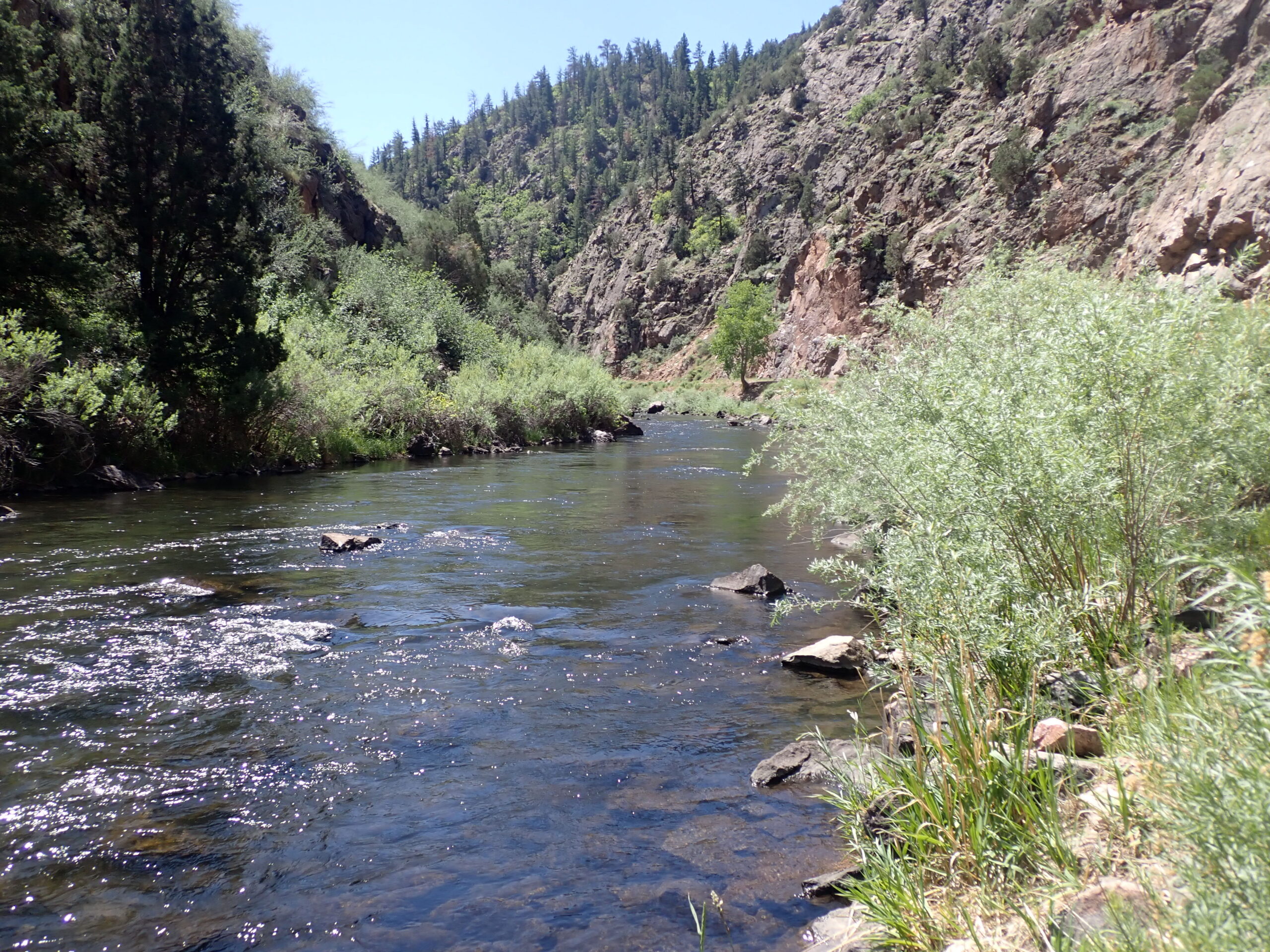 130 CFS
I led with a tan chubby Chernobyl trailing an olive Pat’s rubber legs and bright green caddis pupa, but I quickly switched the caddis pupa for a black rubber legs. This setup matched that which delivered excellent results in recent outings. After the futility of the rubber legs, I swapped the black version for a beadhead hares ear. My results did not improve, and then I replaced the olive Pat’s rubber legs with an olive perdigon. I wanted additional weight for deeper drifts with a small footprint, and the perdigon met those requirements.
I sought the seams and deep runs at the tops of the pools as well as deeper pockets, but none of these locations yielded results. I hoped that these locations were less pressured, and the faster current spurred the fish to react without much time to study the flies. It was a solid thought, but it did not produce.
At one o’clock I was wading along the edge of the river, and I placed my right foot on a slippery angled rock. I leaned all my weight against my wading staff, which I believed to be solidly anchored, but suddenly the stick slid. I placed even more weight on the staff, and it was trapped beneath a rock ledge. I heard a snap, and the wooden rod broke one-third of the way from the top. The inertia of my lean continued, and I tipped over on my right side briefly, which allowed a small amount of water to spill over the top of my waders.
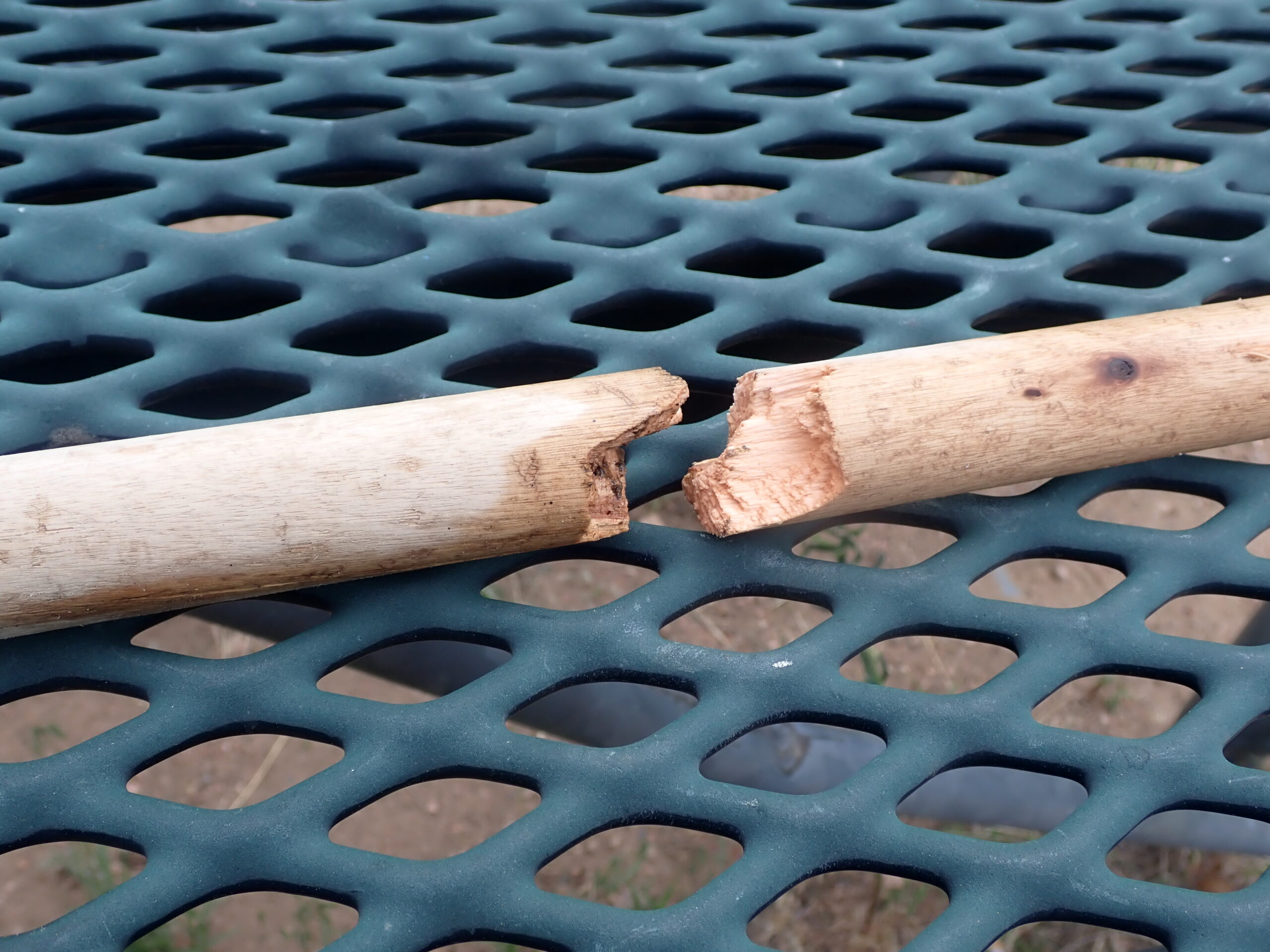 Snapped in Two
Had the fishing been average, I could have continued, but given my lack of success, I chose not to undertake the risky path of fishing without a wading stick. I was a bit wet, and some dark clouds were sliding across the sky just south of my position.
I gathered my rod and my broken wading staff and returned to my base camp at the picnic table. I quickly removed my gear and stashed it in my backpack, unlocked the bike, and coasted back to the parking lot. Along the way I encountered two rams on the side of the road next to the river. I assume they were making their way to the river for liquid refreshment. Up close they impressed me with their thick size and large horns. I took a movie and snapped a couple photos and moved on.
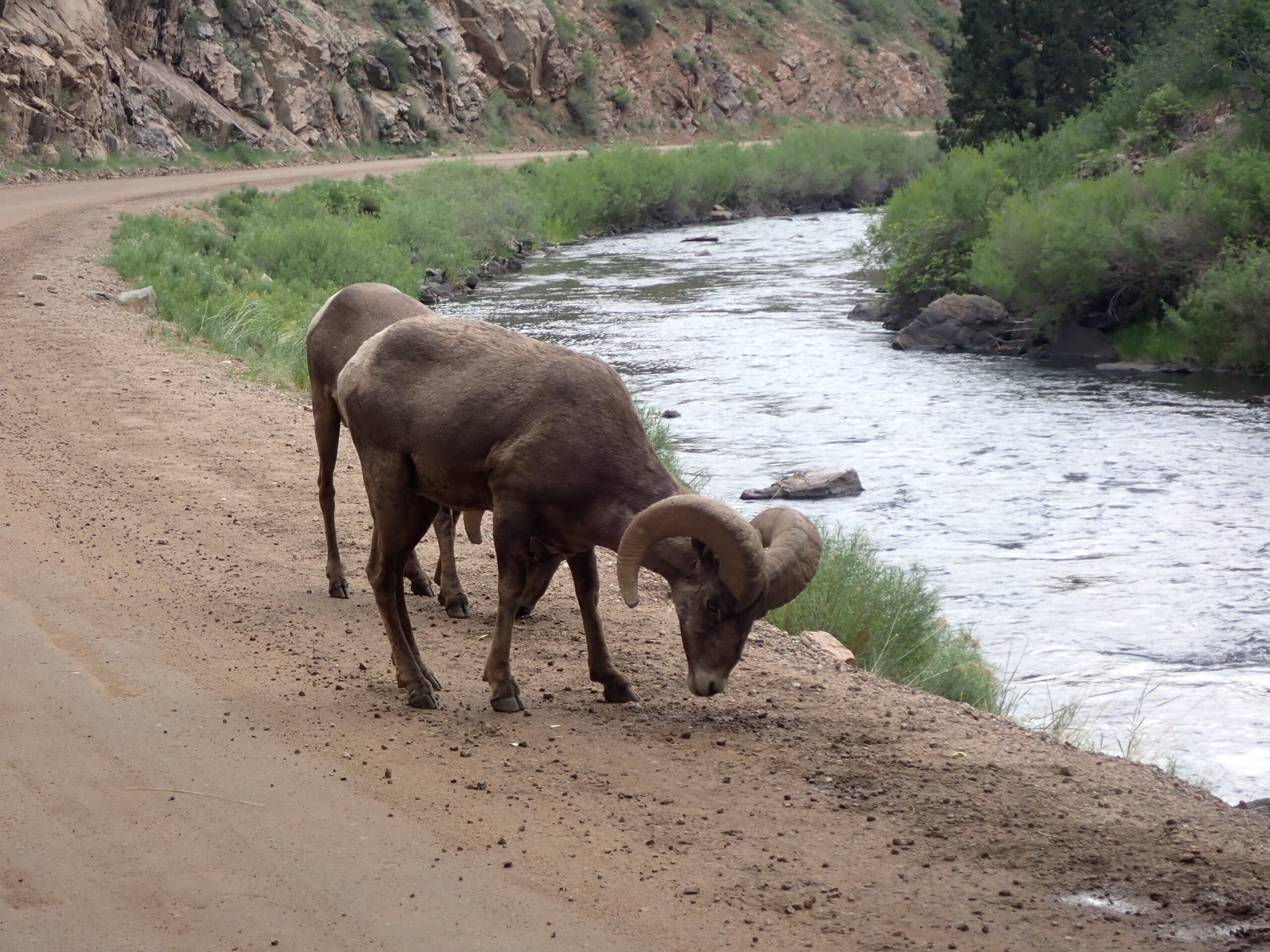 Back to Calm Along the Road
I finished loading the SUV before some drops of rain appeared on my windshield. When I returned home, I was met with the aftermath of a significant thunderstorm. Leaves were everywhere, and piles of marble size hail balls filled the raised beds and patio landscape. I quickly inspected the carnage in my garden, and it was not pretty.
After I unloaded the car, I began the task of replacing my wading staff. I had another wooden rod that I purchased at Home Depot, so I cut it to size. Next I drilled two large holes that could accept the nylon rope at the top of the staff. My final production step was to attach a rubber knob to the bottom of the wooden rod. Of course, I grabbed the the rubber knob that I miraculously recovered on a recent fishing trip. For this wading staff I attached the rubber knob with two wood screws instead of one. I am now prepared for another fishing trip, hopefully this week.
Fish Landed: 0