Time: 3:00PM – 5:30PM
Location: Near Carbondale, CO
Roaring Fork River 03/20/2026 Photo Album
I love exploring new water, and Friday was one of those days. Jane and I drove from Louisville, CO to Carbondale, CO on Thursday evening and checked into a hotel room. We reserved Thursday through Saturday nights, while we visited with daughter, Amy, on the weekend. Originally Friday was planned as a ski day, but high temperatures in the 80’s scuttled that plan. Instead we completed a two mile hike on the Marian Gulch Trail among intermittent mud and ice sections. We had two dogs to keep us company. After the hike we walked to Plosky’s Deli for sandwiches, and then I departed for the Roaring Fork River.
I debated between the Frying Pan and Roaring Fork, but flows of 41 CFS out of Ruedi Reservoir persuaded me to pass on the low water that probably required technical fishing. In addition, my late start made the closer Roaring Fork a more convenient option.
I arrived at my chosen parking lot, and as I prepared to fish, another angler arrived. He advised me to go downstream from the bridge to a pool that he just vacated. He offered that a blue wing olive hatch was in progress, but he also mentioned that there was another fisherman in place. I rigged my Sage One five weight, and the warm temperatures allowed me to simply wear my fishing shirt with no additional layers.
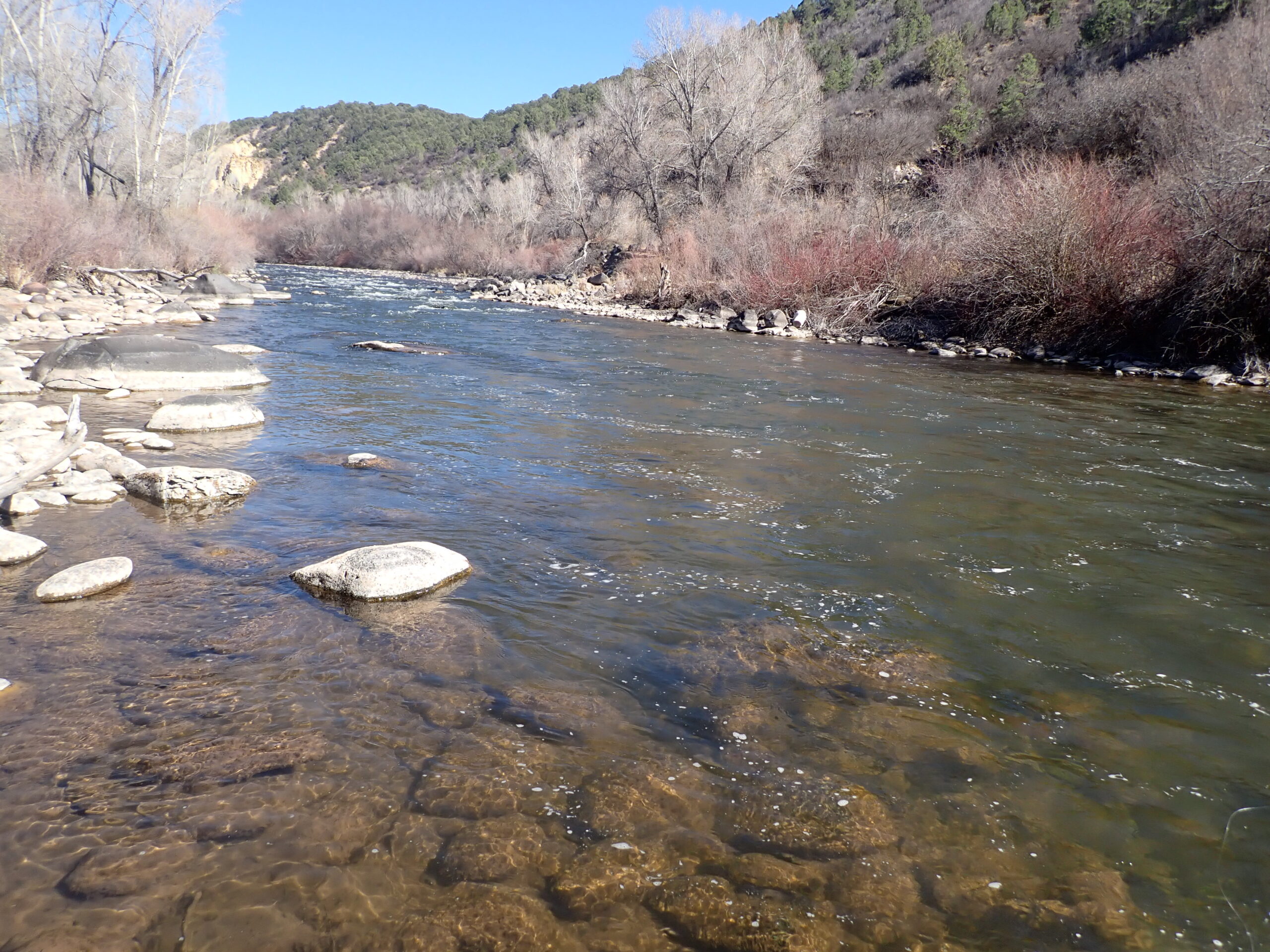 Promising Ahead
When I hiked down the path to the river, I peered under the bridge, and sure enough an angler was waded into the middle of the pool. I decided to adhere to my original plan, and I hiked for .3 mile upstream. I bypassed a long section of wide, shallow water, before I cut to the bank, where I noticed more depth. To begin I knotted a gray body chubby Chernobyl to my leader, and then I added a 20 incher and olive perdigon. These have been hot flies in recent spring outings.
I prospected some decent pockets and runs, but the fish did not cooperate. The flies were hanging up fairly frequently, so I swapped the 20 incher for a RS2 and moved the perdigon to the upper position. After quite a bit of casting through relatively attractive structure, I managed to land a twelve inch brown that snatched the perdigon. I also experienced a temporary connection, but for the most part my flies were ignored. I cycled through the RS2, a sniper baetis, and a crystal stone nymph, but none of those flies created interest.
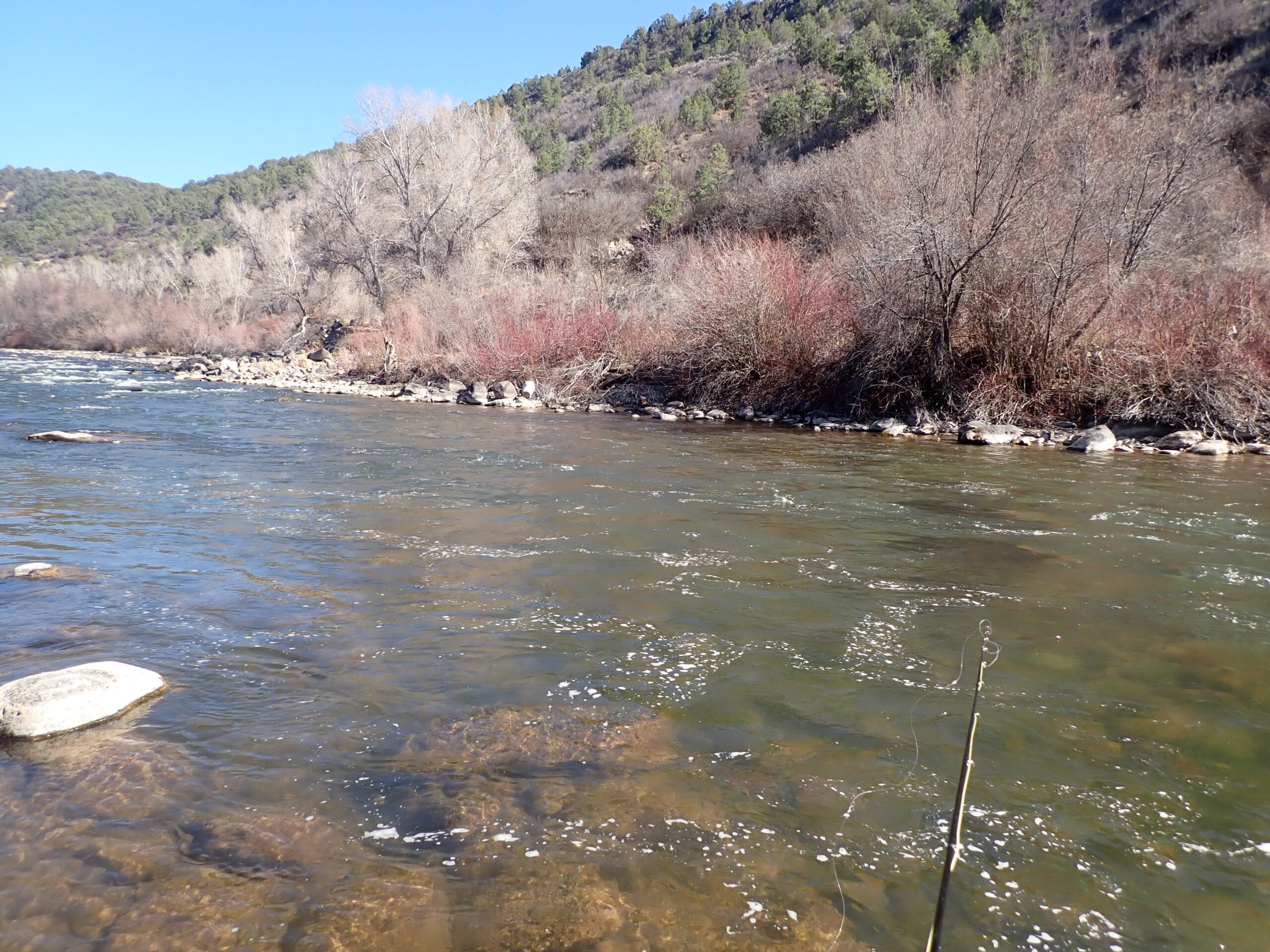 Nice Moderate Depth and Velocity
I returned to the 20 incher as the top fly and placed the perdigon on the bottom, and still the fish showed no interest. By this time it was 4:30PM, and I approached the fast water that fed a nice pool and pockets, so I decided to hike back toward the bridge to cherry pick prime lies.
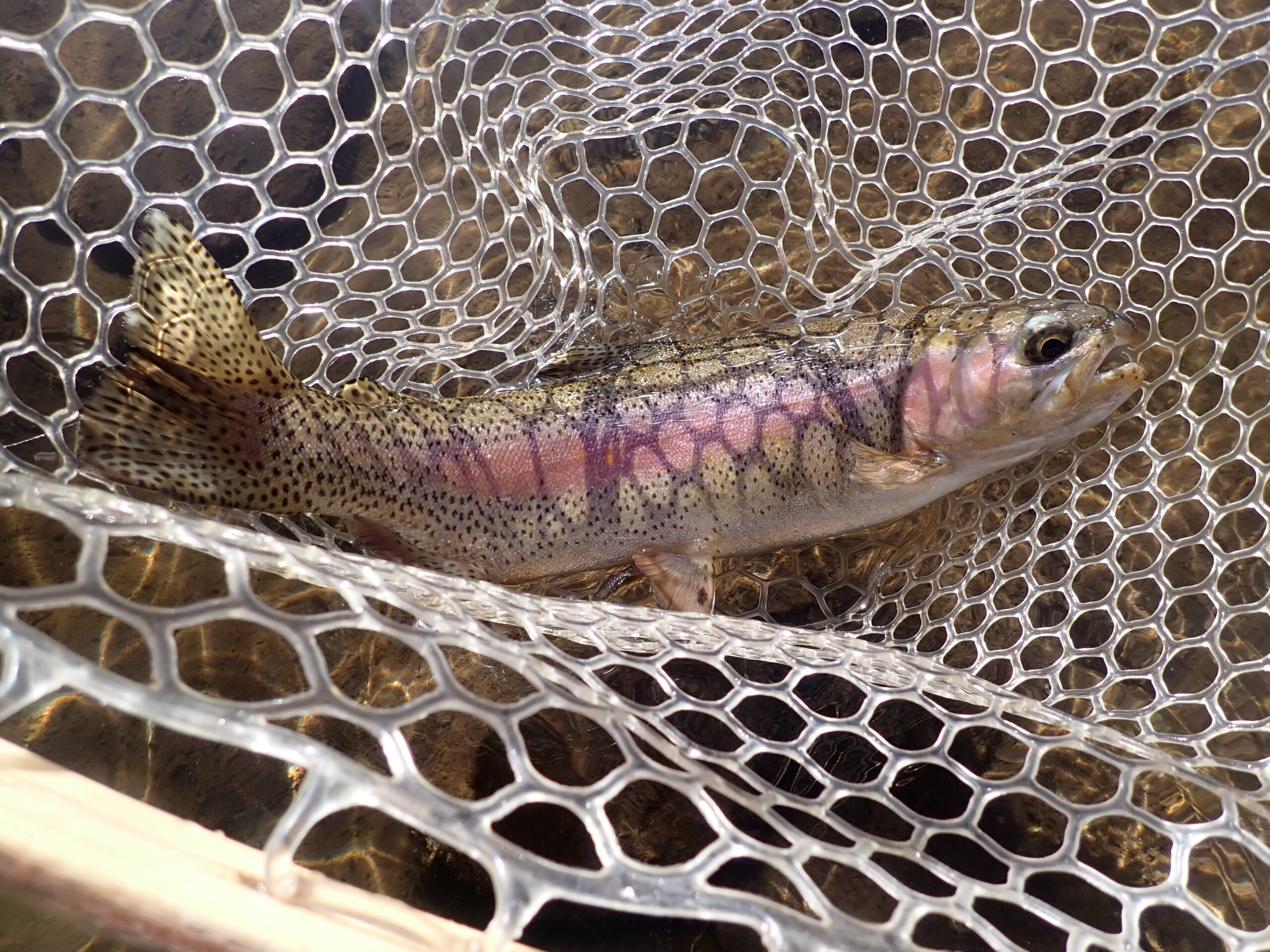 Mole Fly Produced
As it turned out, most of the intervening section was the unattractive wide and shallow area, so I arrived at a moderately attractive run above the bridge. A man was just exiting the river in wet shorts after taking a dip on the first day of spring, but he told me his swim was limited to a small deep spot next to the beach. I cast up the river to the attractive seam along the faster current, but once again futility was the result.
I gazed under the bridge and noted an angler in the pool, but it was a long section of slower moving water, so I gambled that I could fish the tail below the other fisherman. I crossed the road and found the path, and just as I was about to pass the other angler, he shouted that he was leaving, and I was welcome to his spot. I accepted his invitation and moved toward the upper one-third of the long pool.
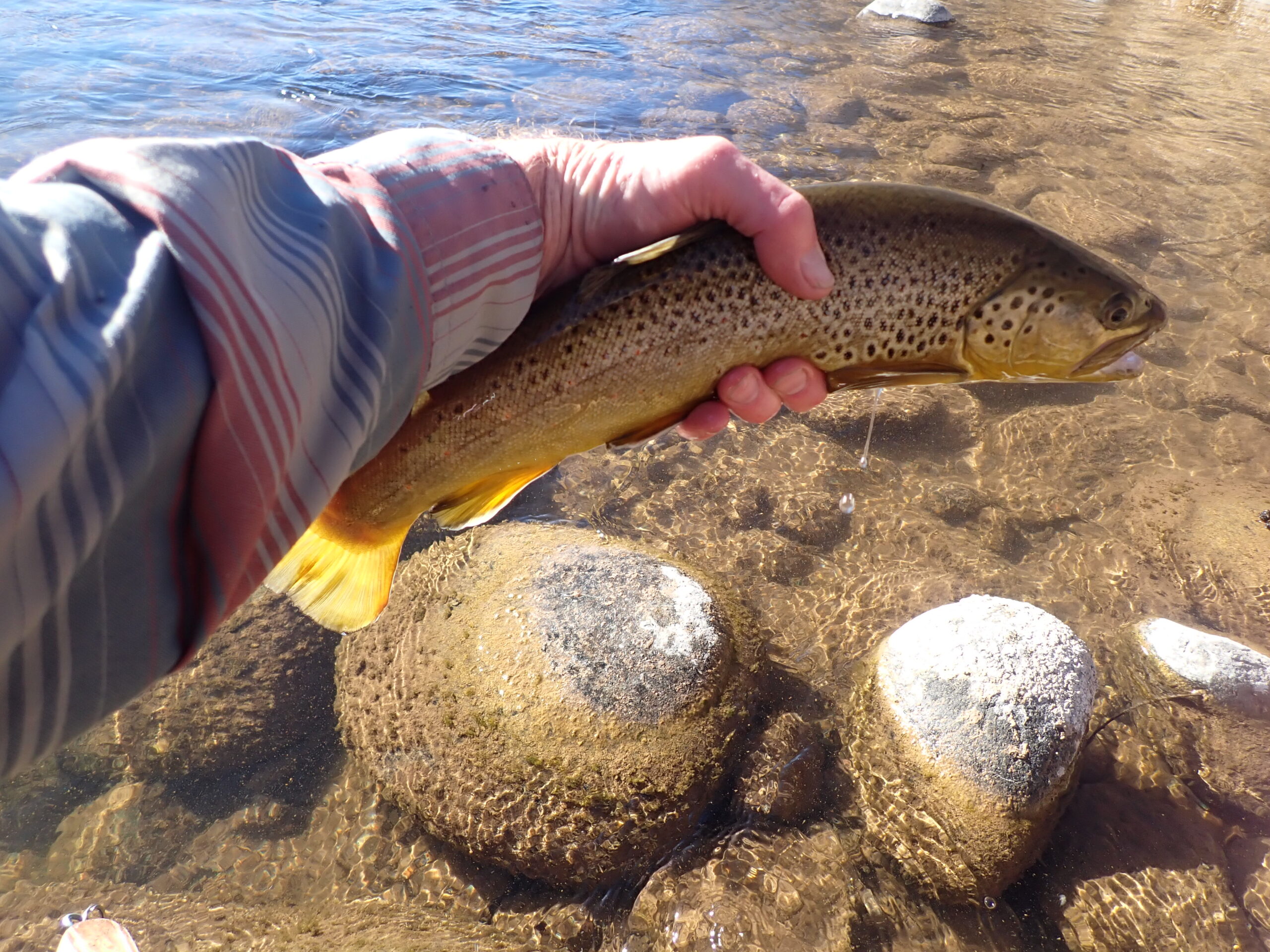 Gorgeous
I noticed a few straggling mayflies, as they flitted about, and some sporadic rises resulted. I paused briefly to observe, and then I decided to migrate to a double dry approach. I removed the three fly dry/dropper and added a peacock hippie stomper trailing a size 20 mole fly on an eighteen inch dropper of 5X tippet. I tied a small batch of mole flies several weeks ago, since they were highly recommended by Charlie Craven, so I was anxious to give them a try.
Between 4:30PM and 5:30PM I cast this combination, and the results were gratifying. Initially I focused on sporadic rises near the midsection, but this was futile, and the downstream area was in a glare, so I waded to the tail for better visibility. Sure enough, when I stared across the pool, I could see more regular rises near the far bank. The river was shallow enough that I could wade beyond the middle of the pool and cast to the bottom corner. Much to my delight a pair of eighteen inch fish grabbed the mole fly. These were stunning wild and large fish, and I was transported into a state of euphoria. My confidence in the mole fly soared.
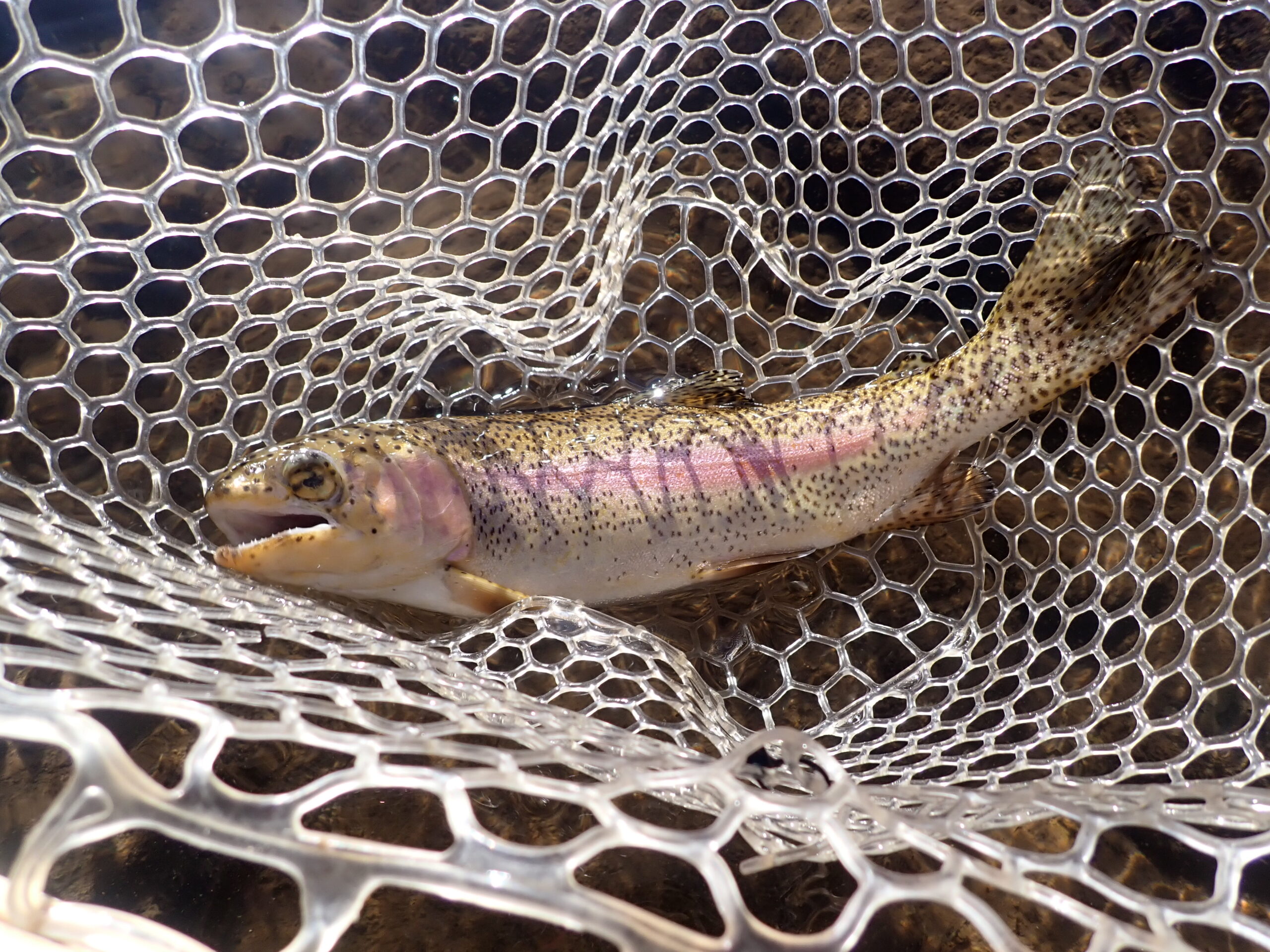 Fought Hard
The rises in the “corner” area slowed, so I turned my attention upstream. A splashy rise upstream and left of center caught my attention, so I fired a series of casts to the area, and on the third drift, a fourteen inch rainbow smacked the hippie stomper. I was incredulous.
The number of rises now slowed, so I decided to begin my exit. I crossed to the east bank, and as I began wading the shallows, I noticed three successive rises within a small area. I decided to make another attempt. On the fifth cast to the area of the rises, a bulge appeared near the hippie stomper, and I reacted with a swift hookset. Voila! I was connected, and a brief battle ensued, before I slid my net beneath a marvelous brown that approximated twenty inches. What a fish! It had the mole fly in its mouth. Perhaps Charlie is not exaggerating the effectiveness of his simple mole fly.
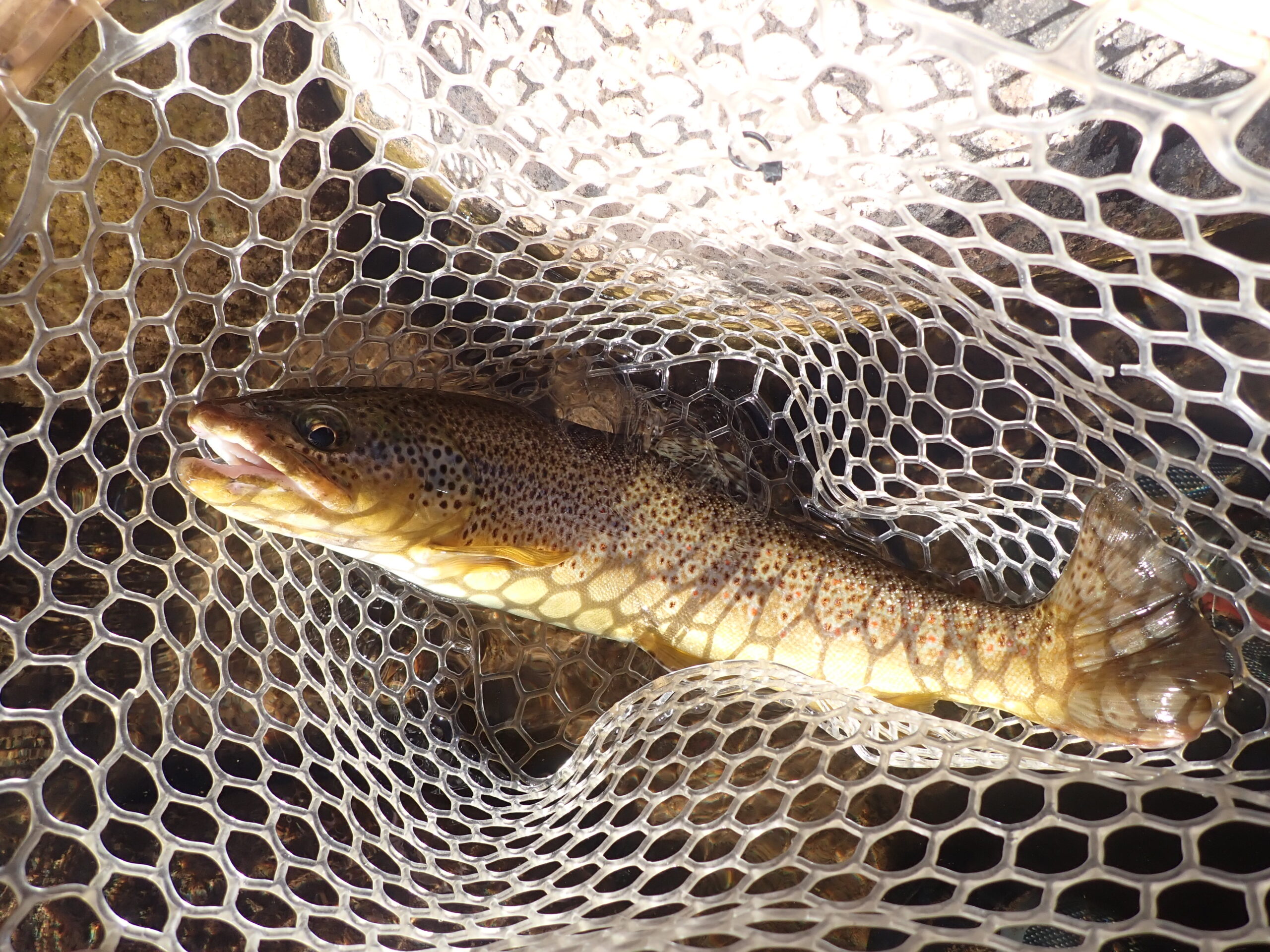 Fish of the Week
It was now 5:30 PM, so I called it a day, but some fairly regular feeding continued under the bridge near the far bank. I left these for another day. A day that began as a dud, evolved into a very rewarding outing, as I landed five trout and four sipped dry flies in the last hour of fishing. I missed the main hatch, but enough straggling baetis initiated sporadic feeding that allowed me to spot fish. The four trout landed on dries were all very fine wild specimen in the fourteen to twenty inch range. The last brown trout was quite the beast. I definitely found a new section of the river to explore more extensively.
Fish Landed: 5
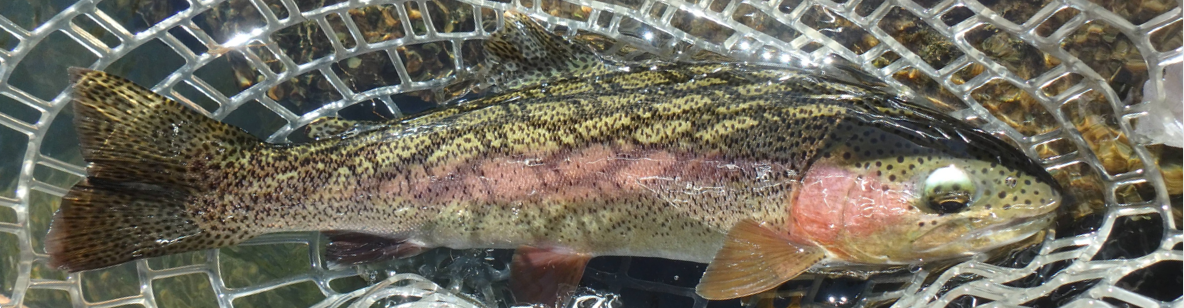
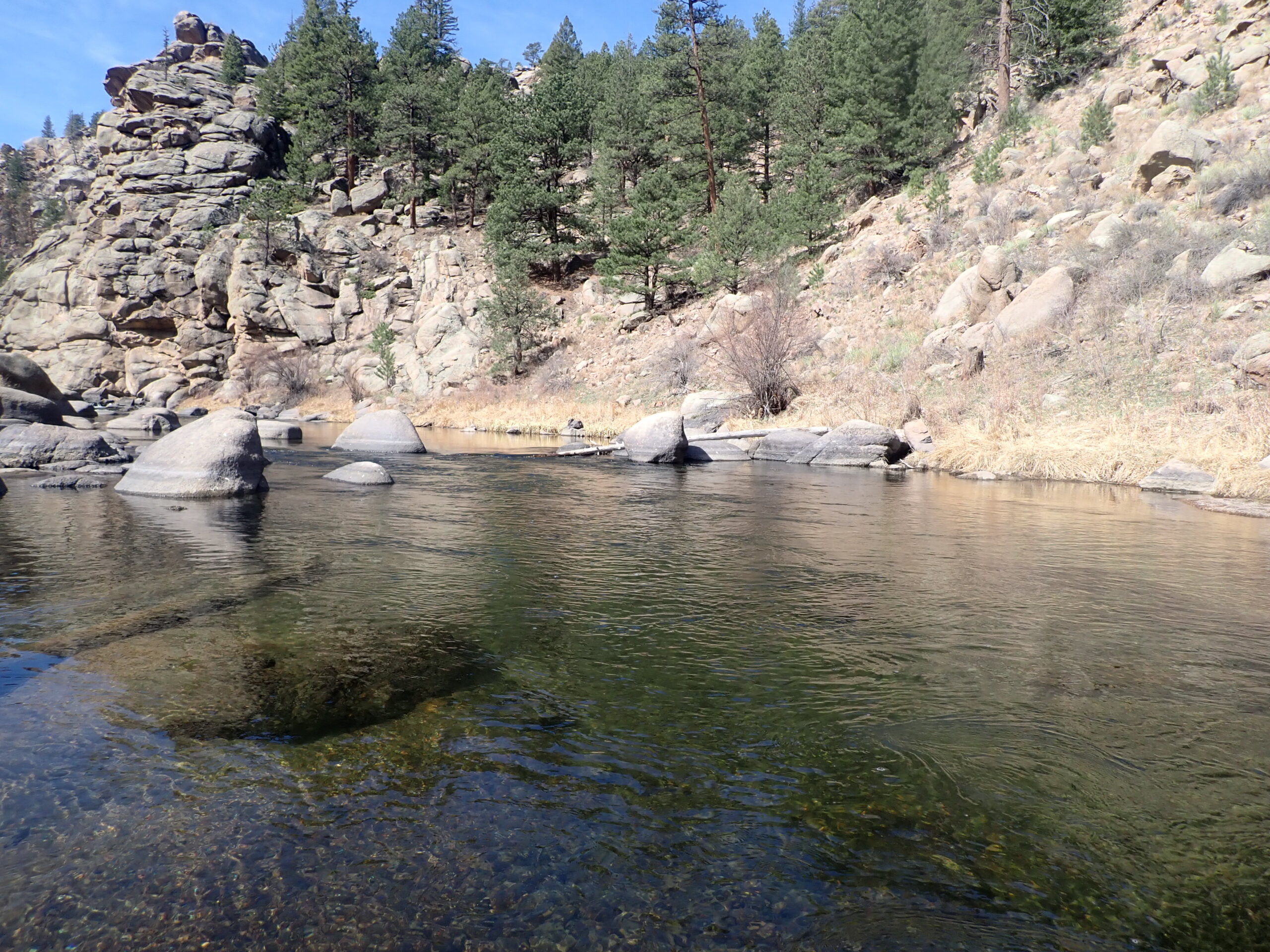 Early Action in This Section
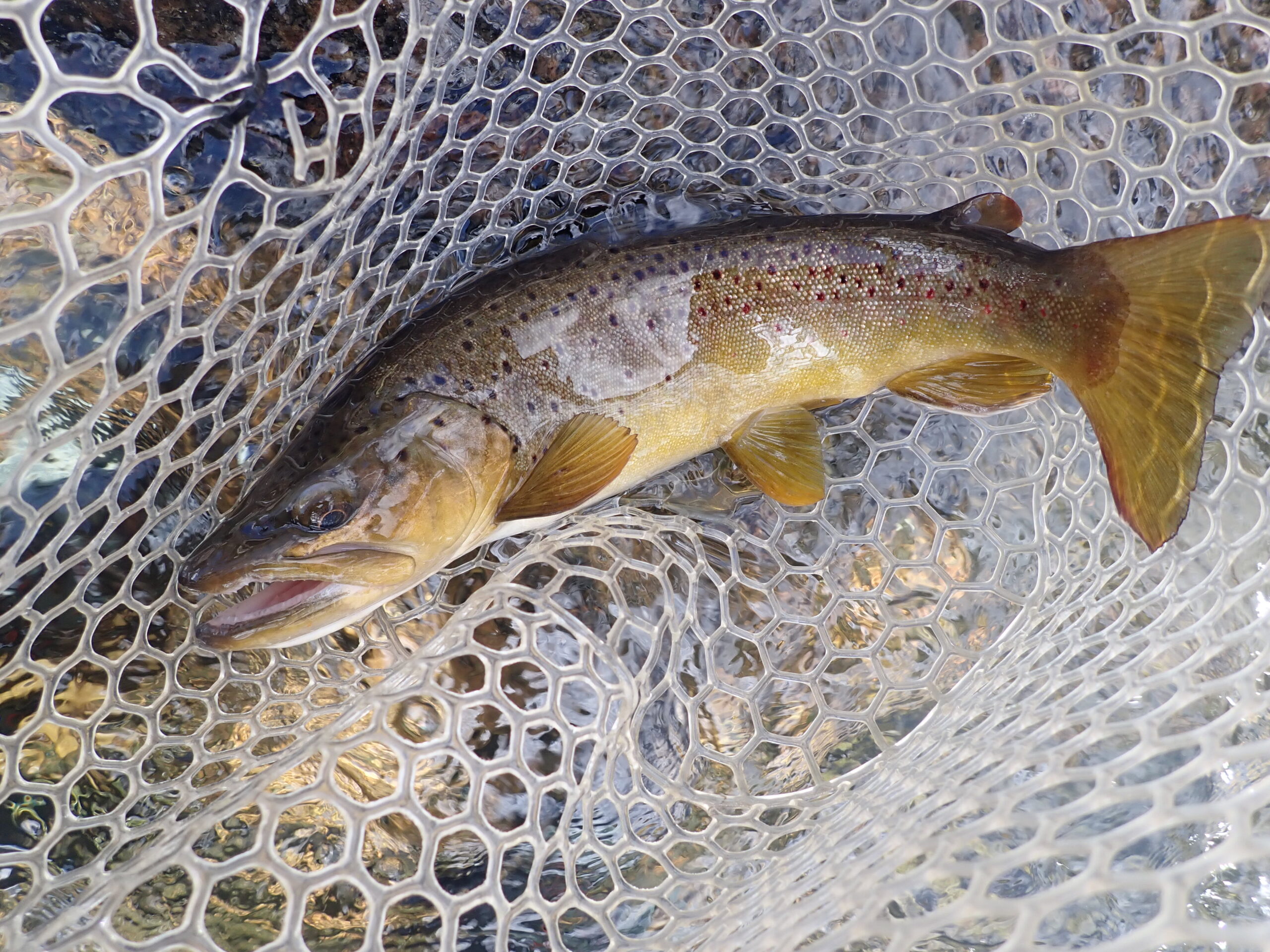 Prime Shape
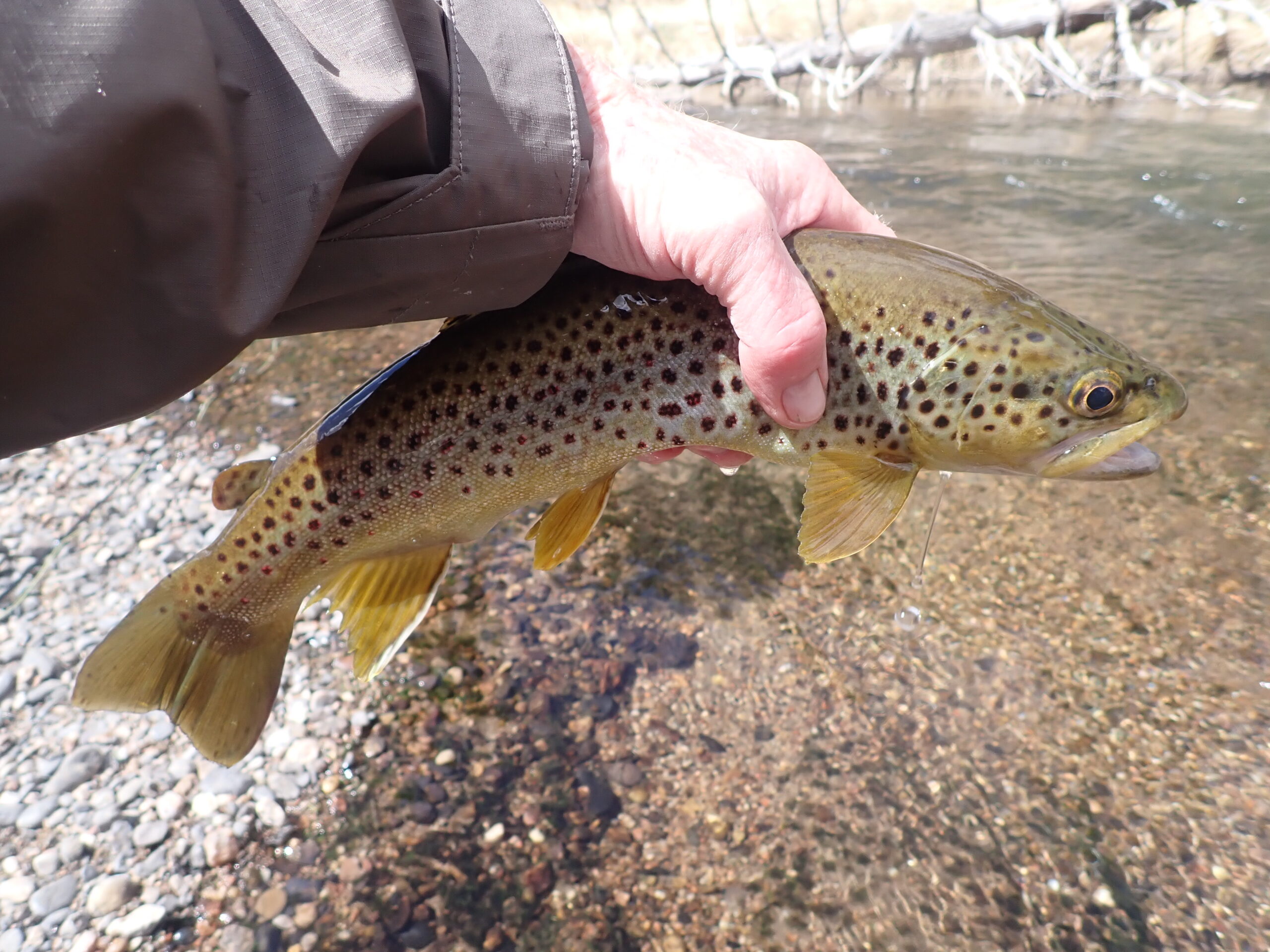 Pleased with This Catch
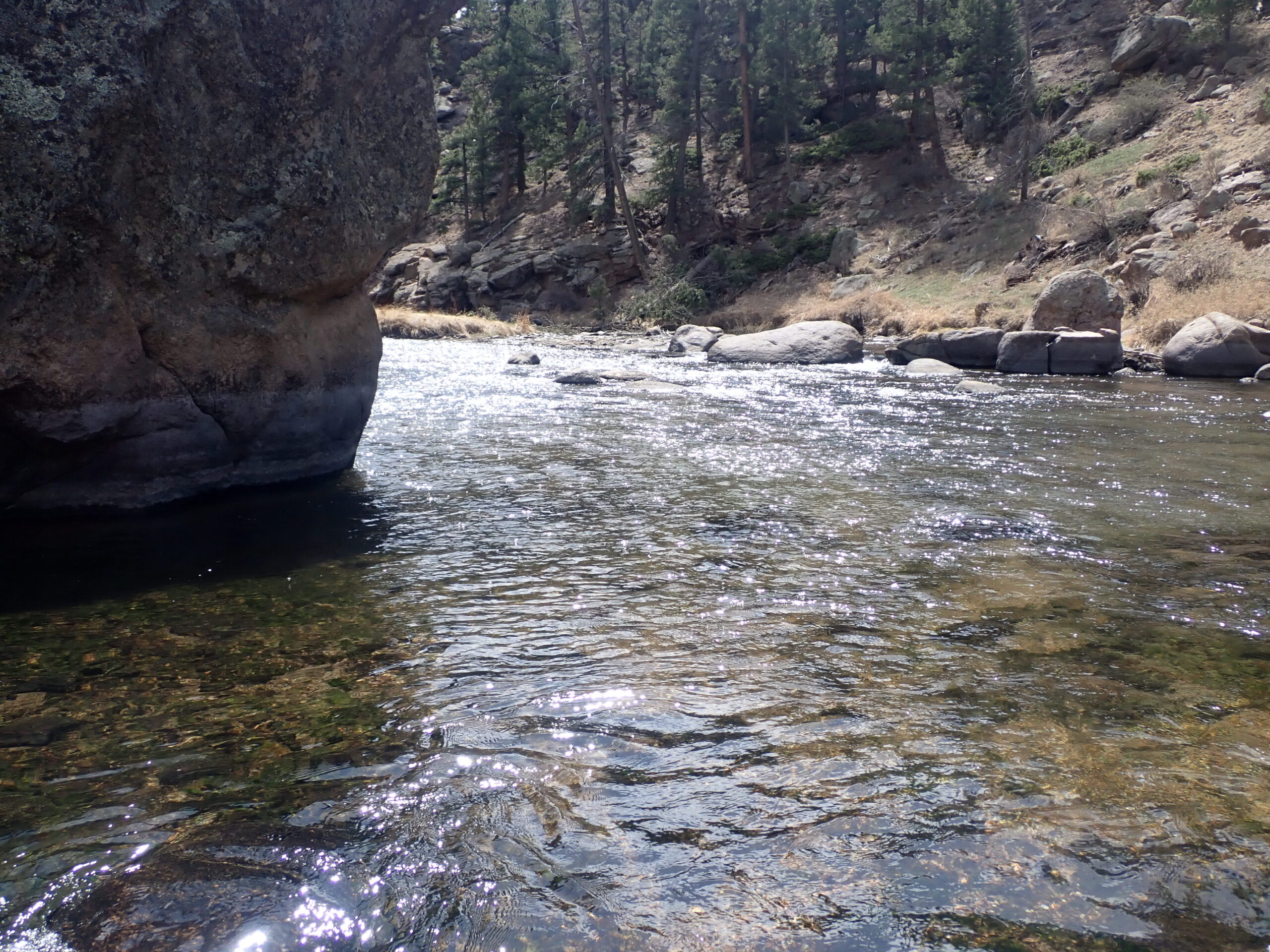 Wide Moderate Depth Riffle
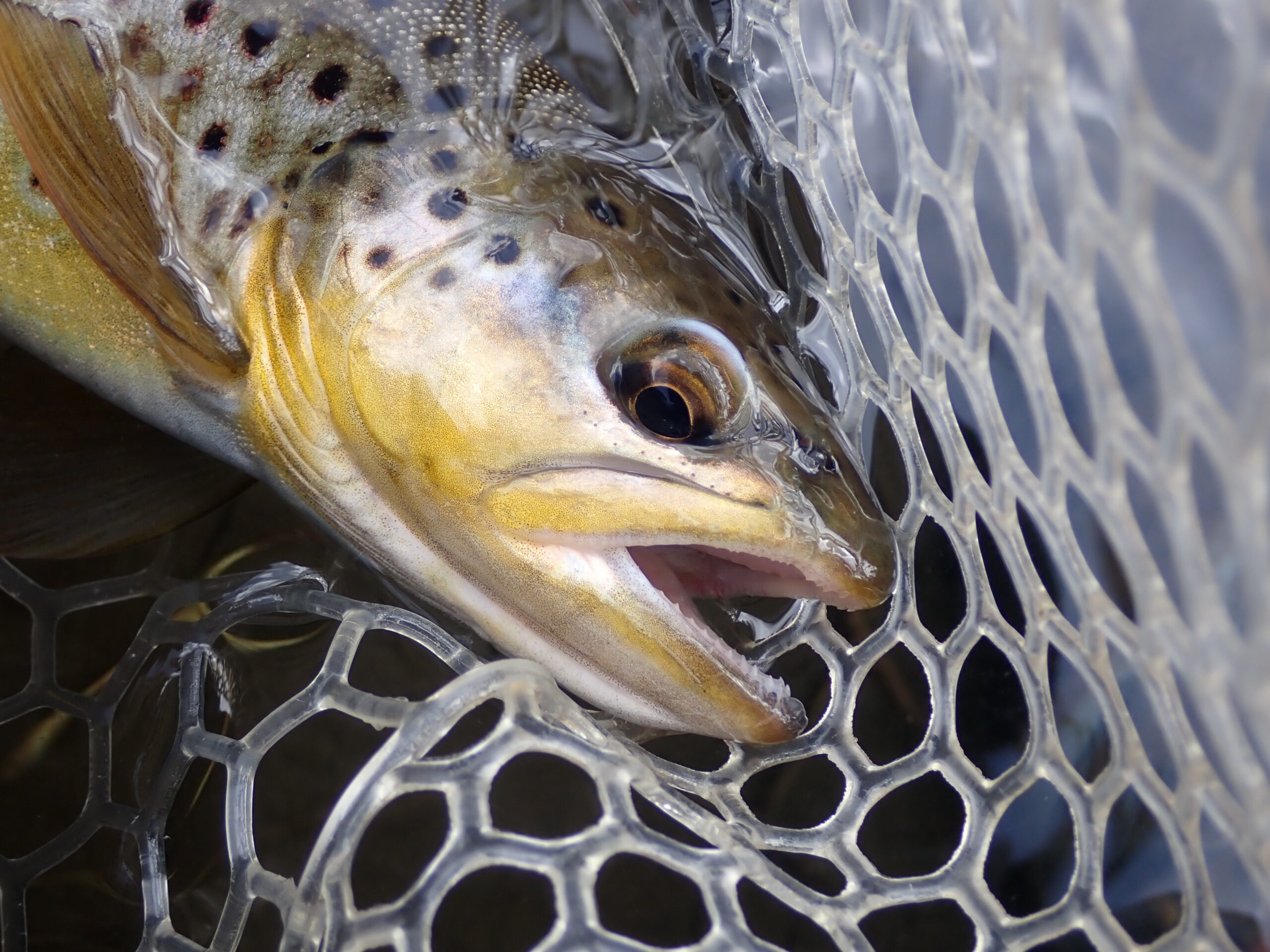 Head Shot
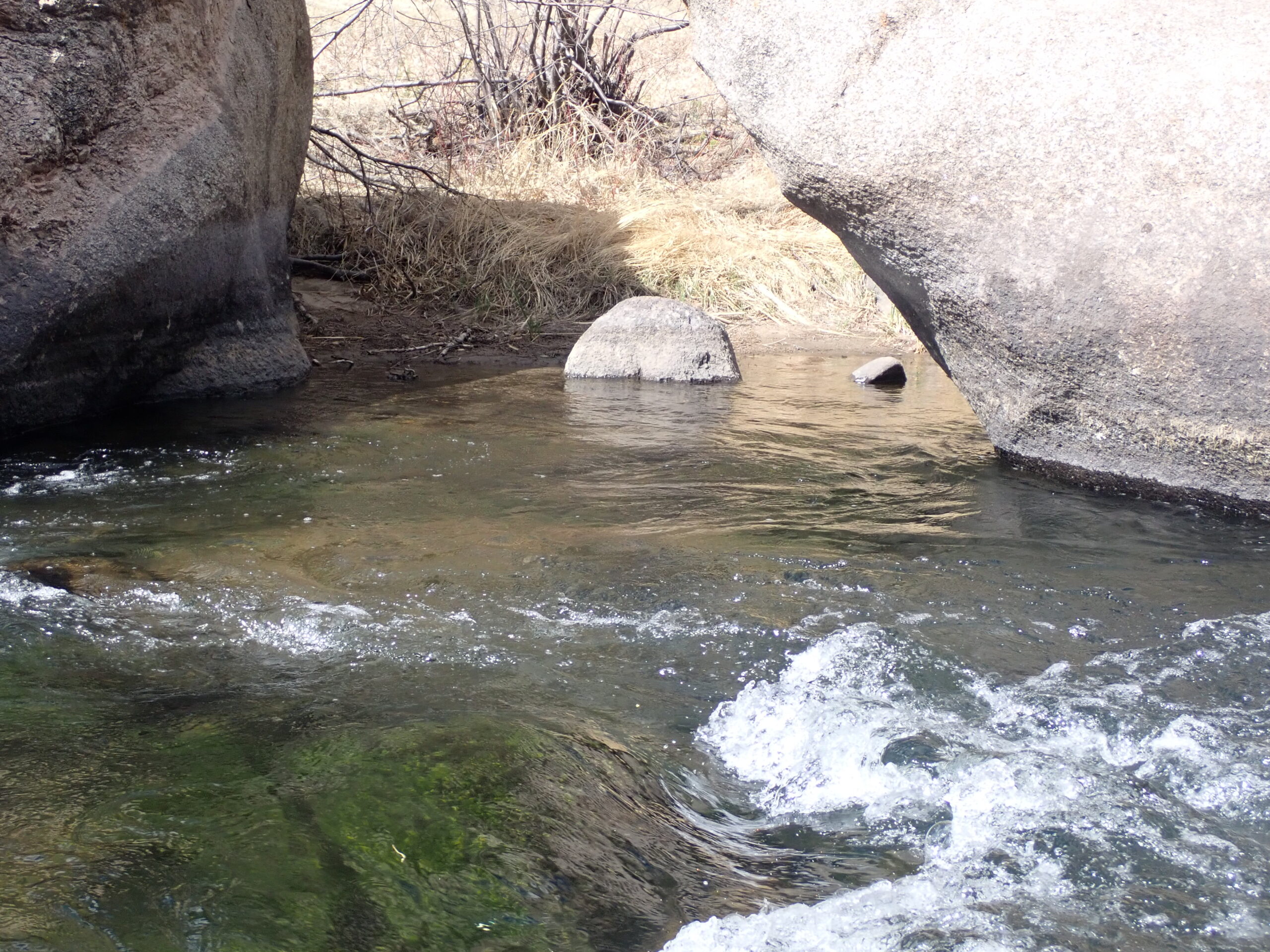 A Brown Emerged from This Hole
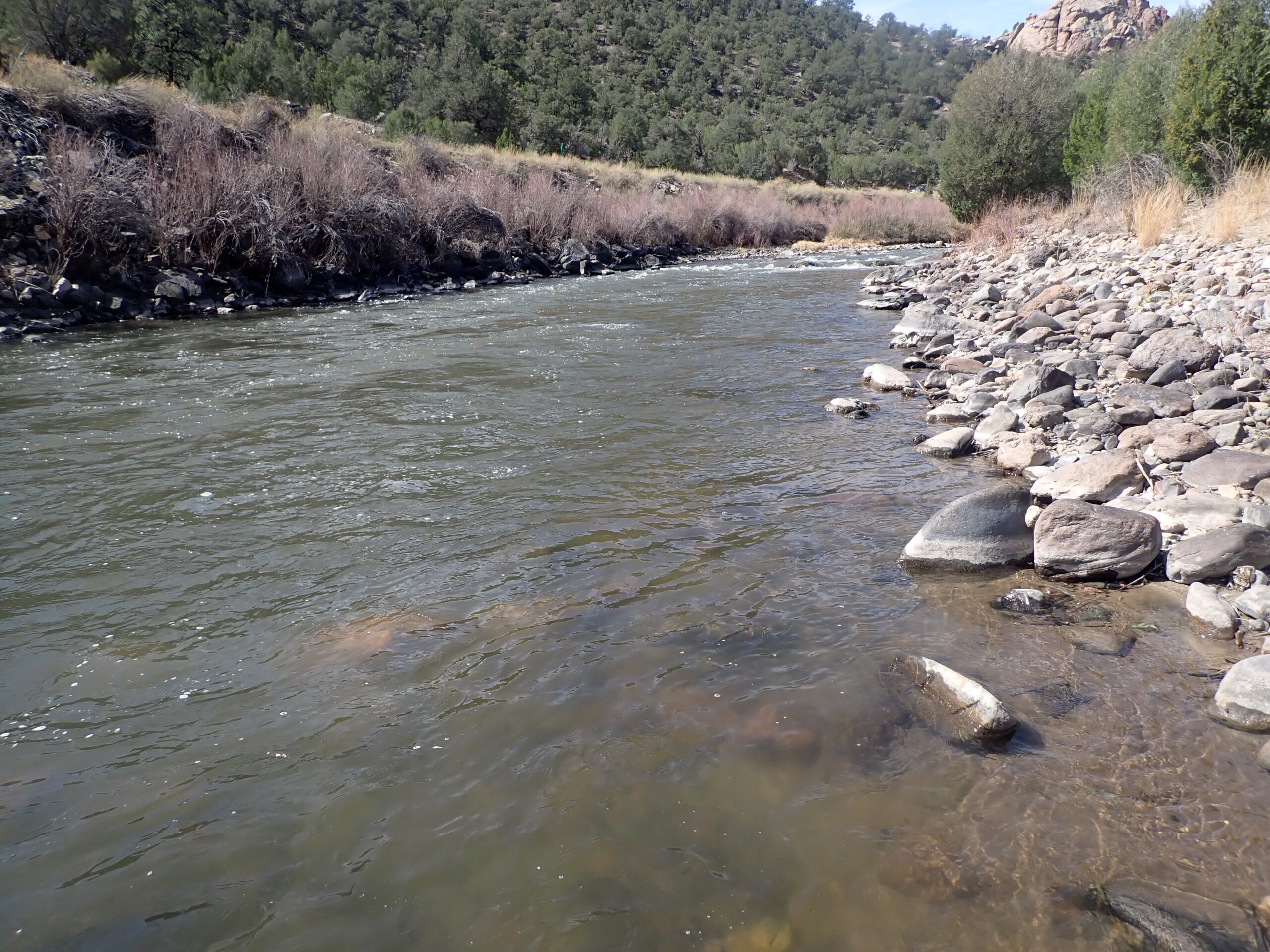 Section Number Three
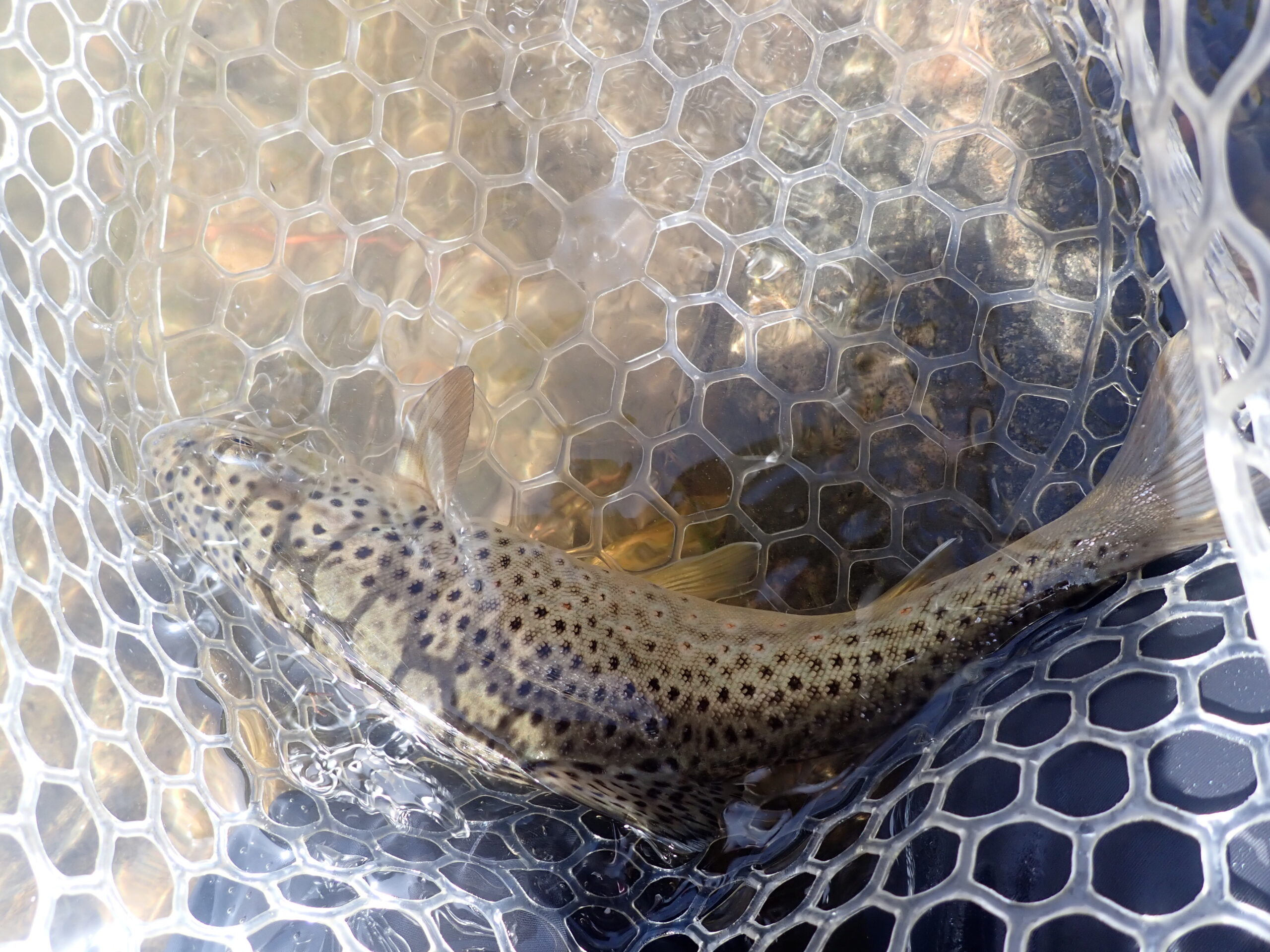 Now We Are Talking
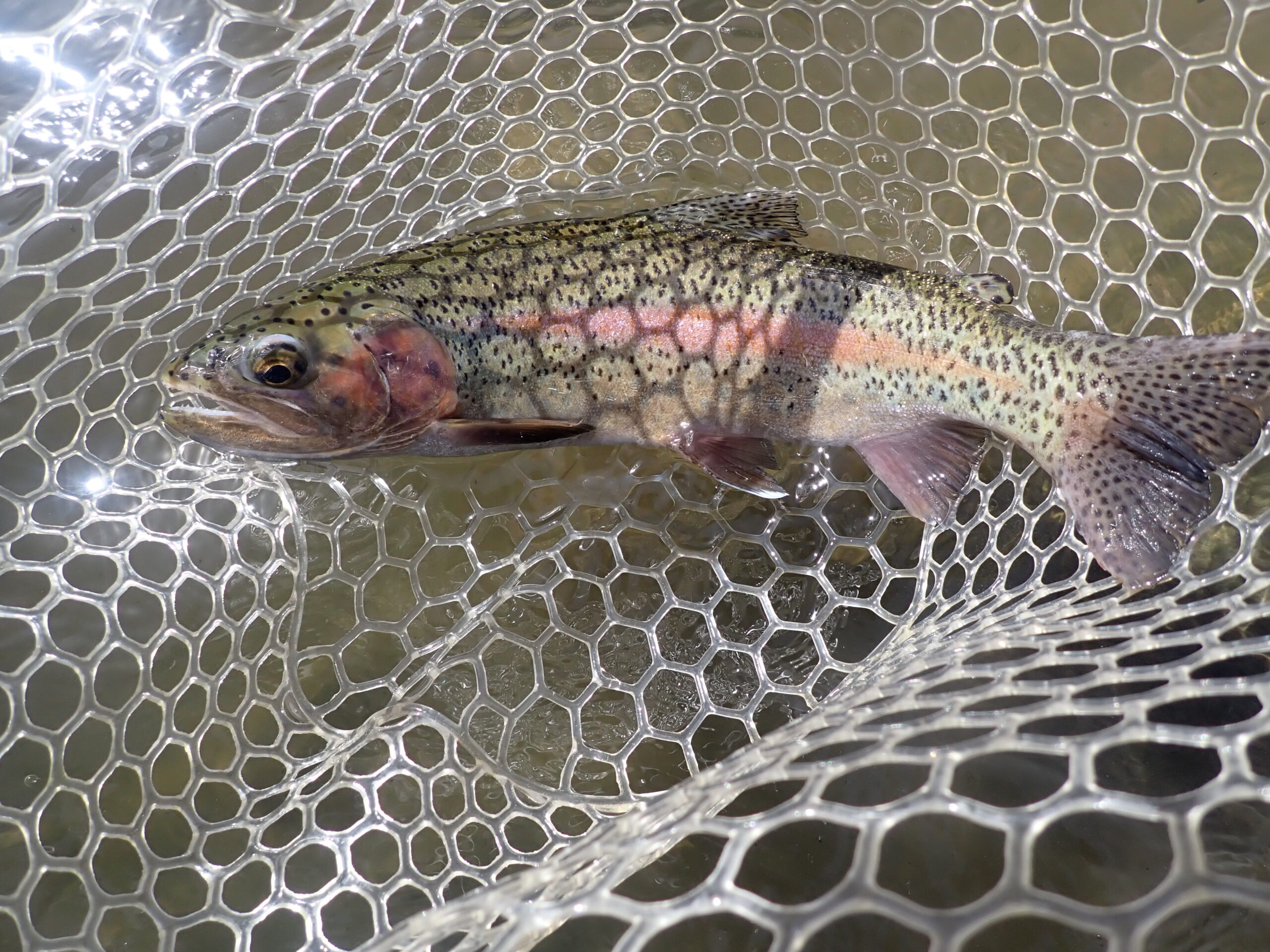 Beast of a Rainbow
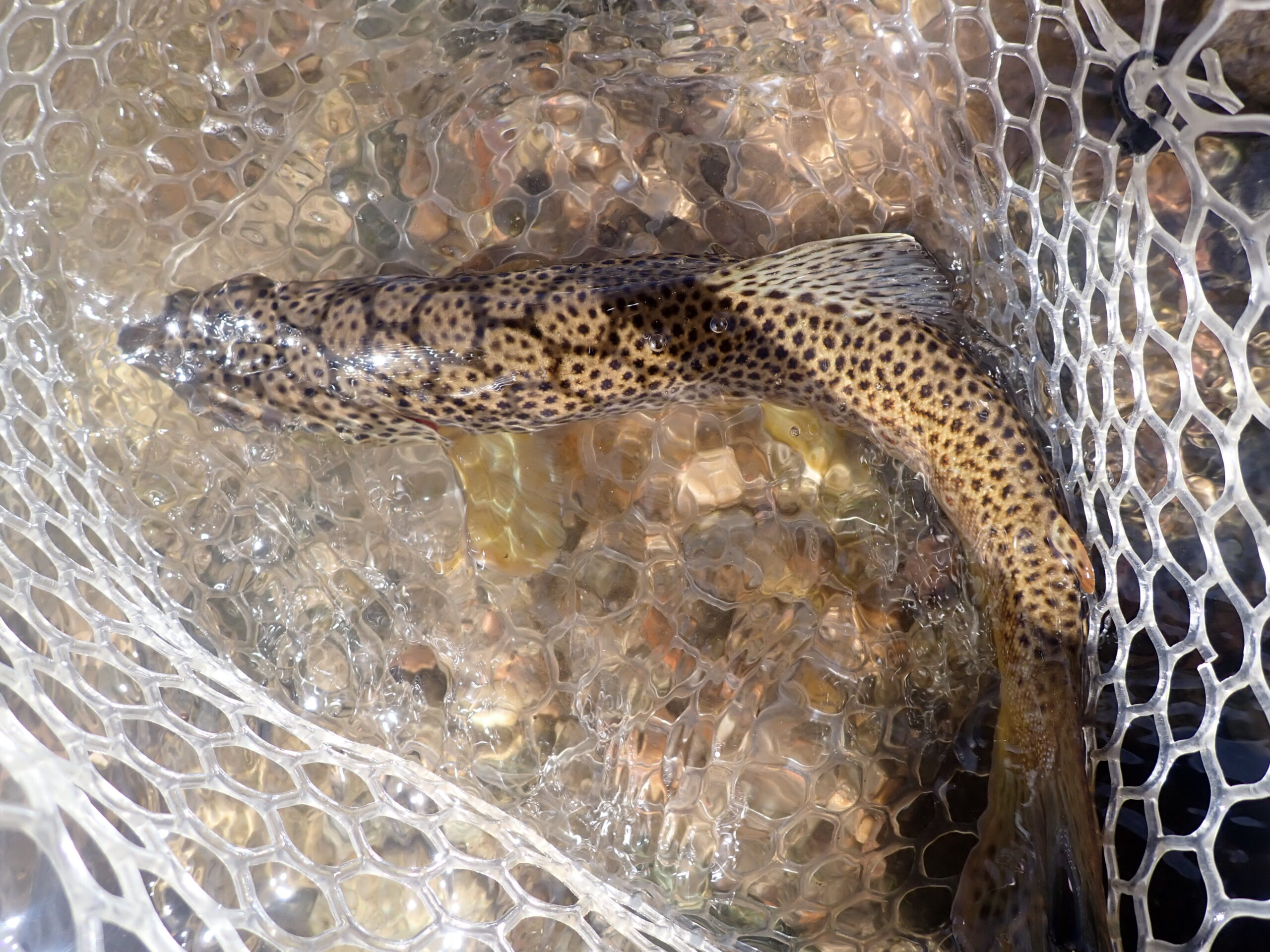 Love It
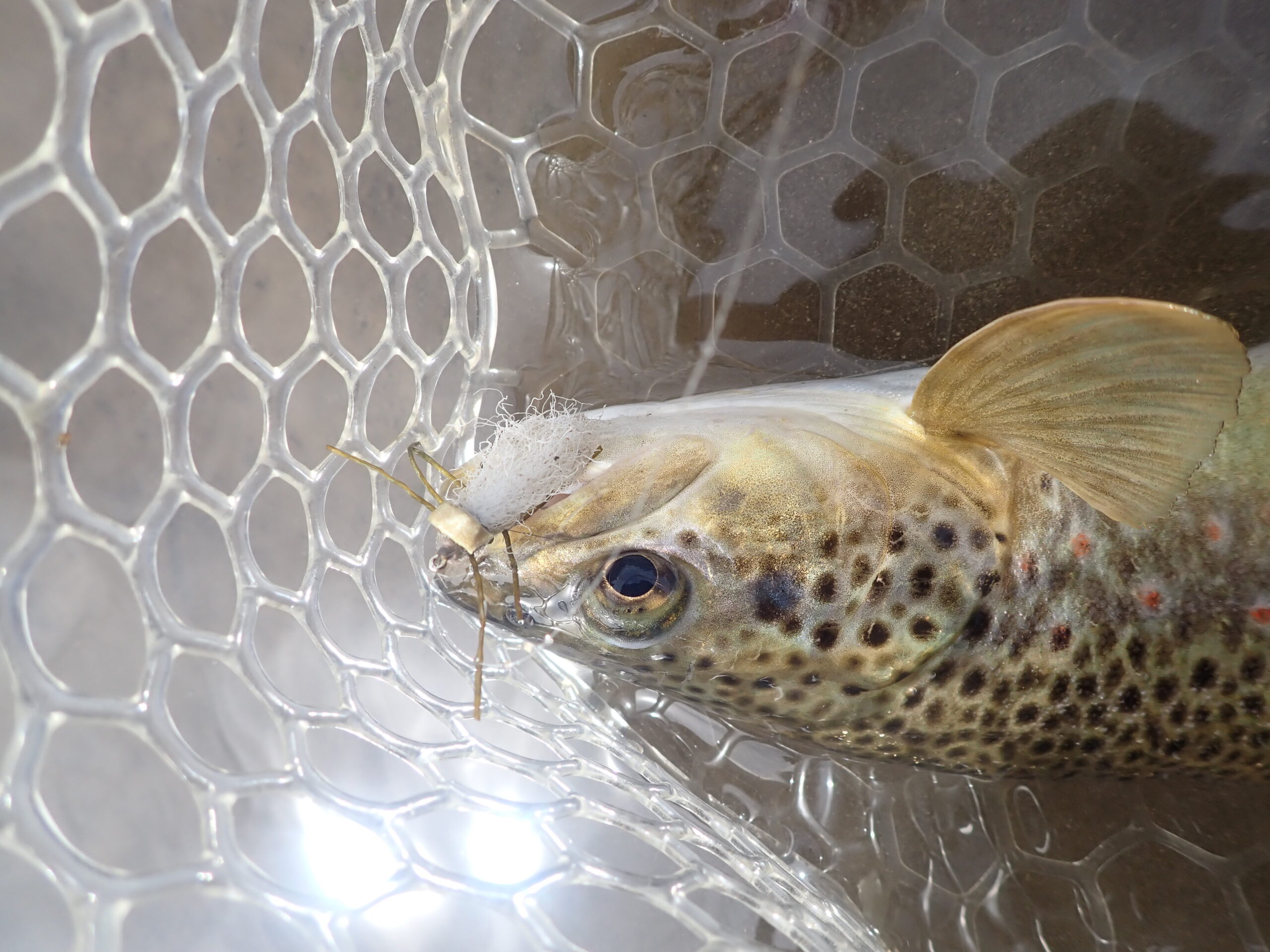 This Chubby Eater Surprised Me
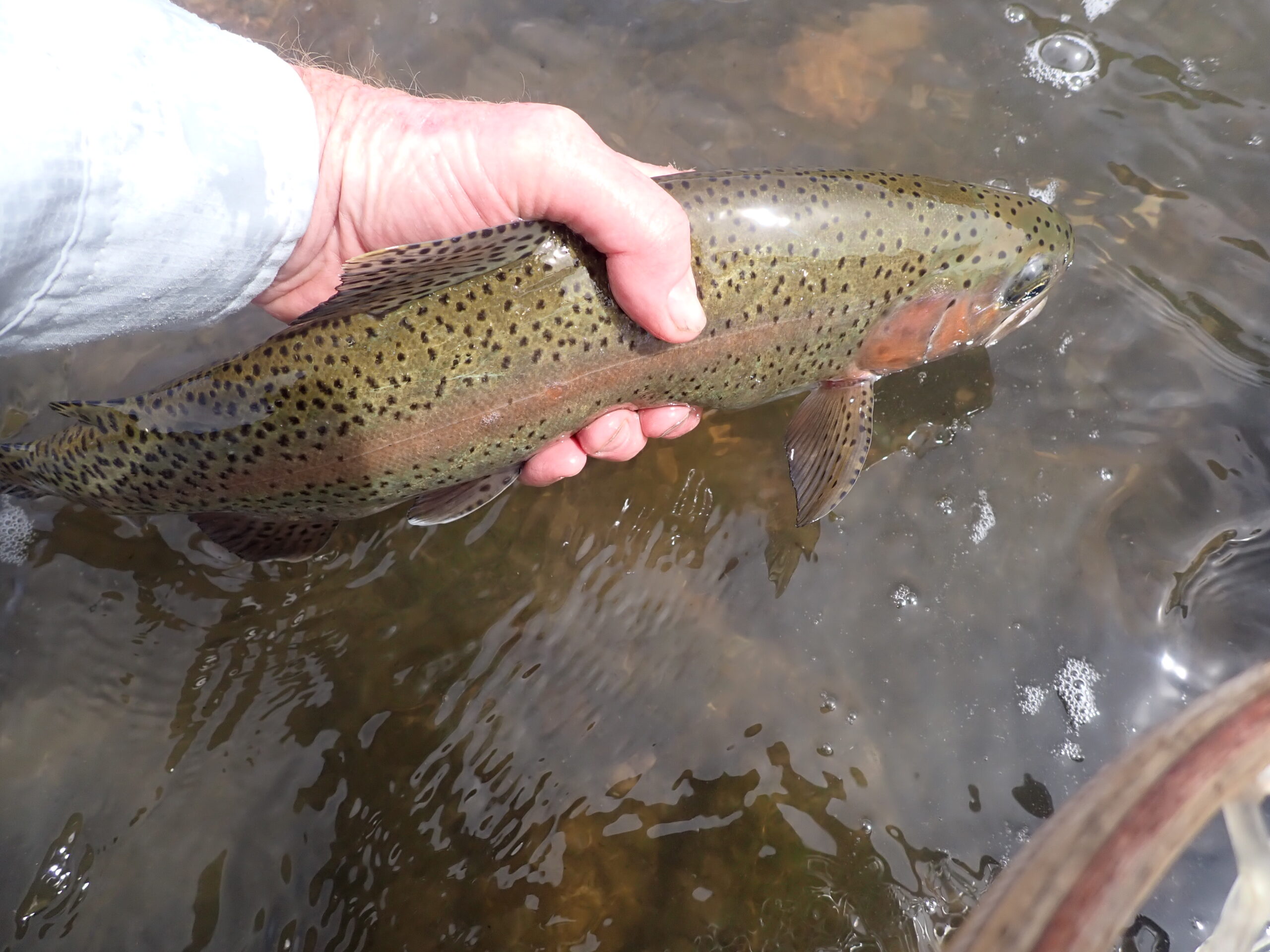 The Release Suggests the Size
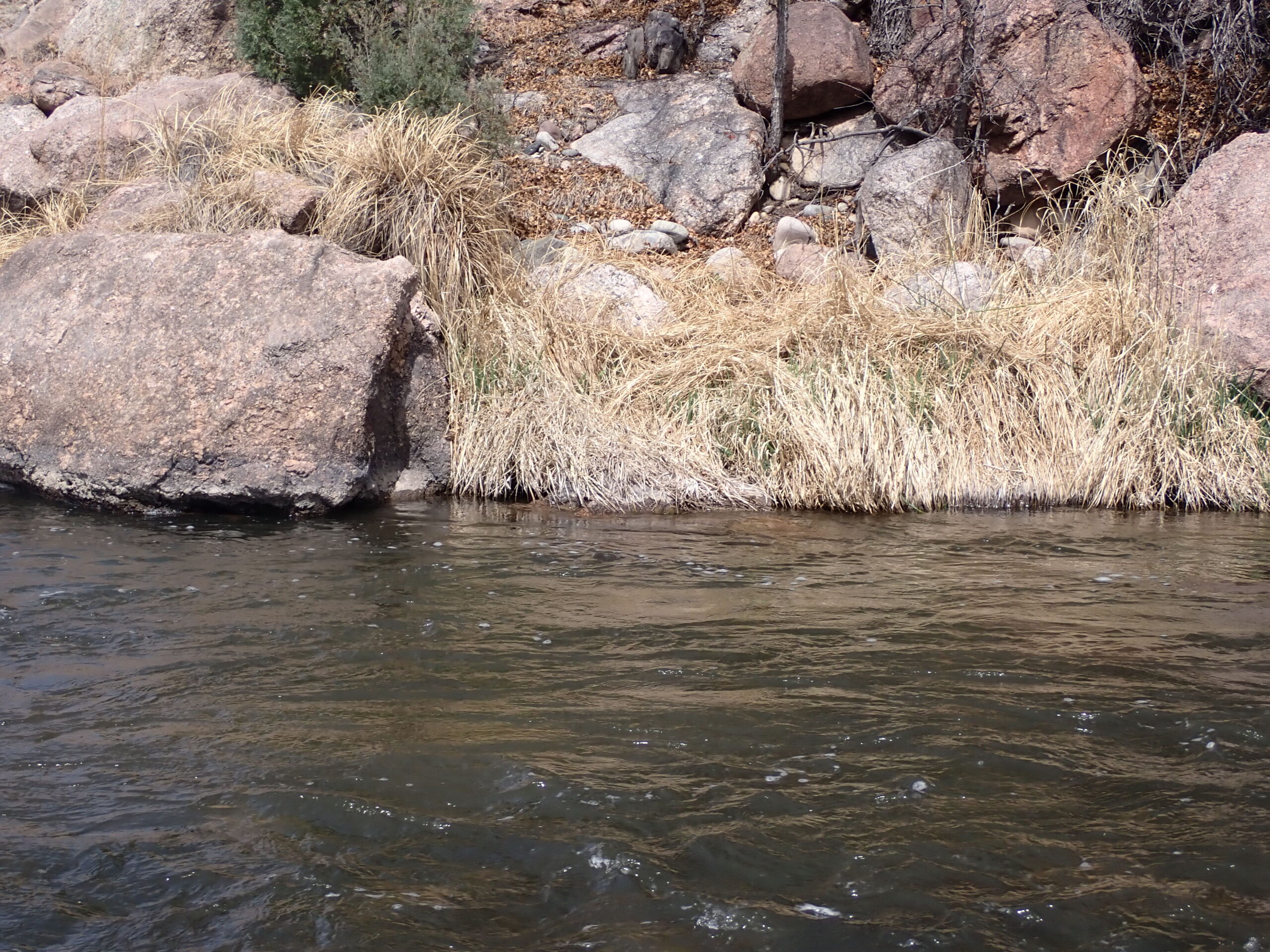 Another Fine Spot Bankside
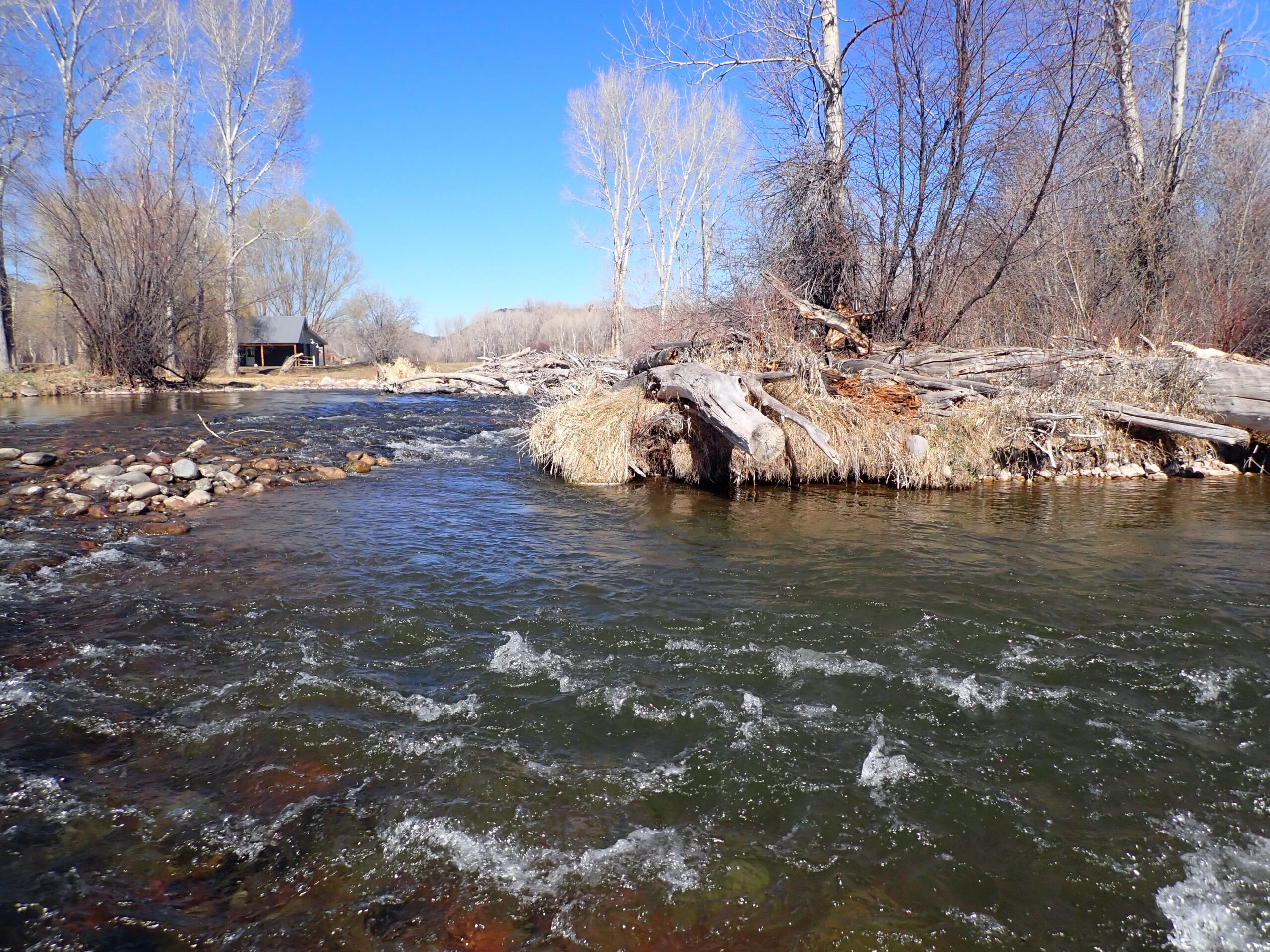 This Spot Teased Me
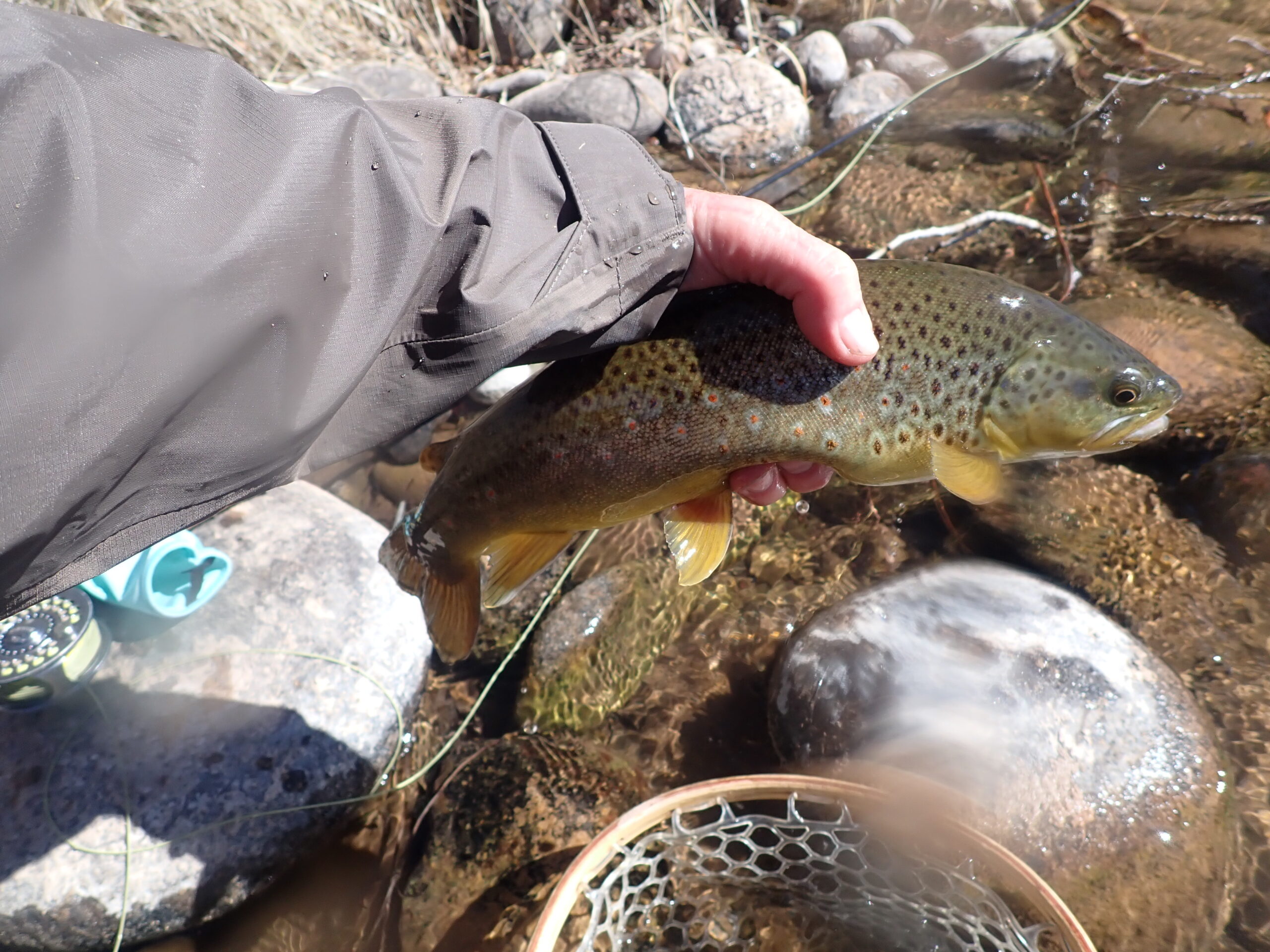 Big Gap in My Grip
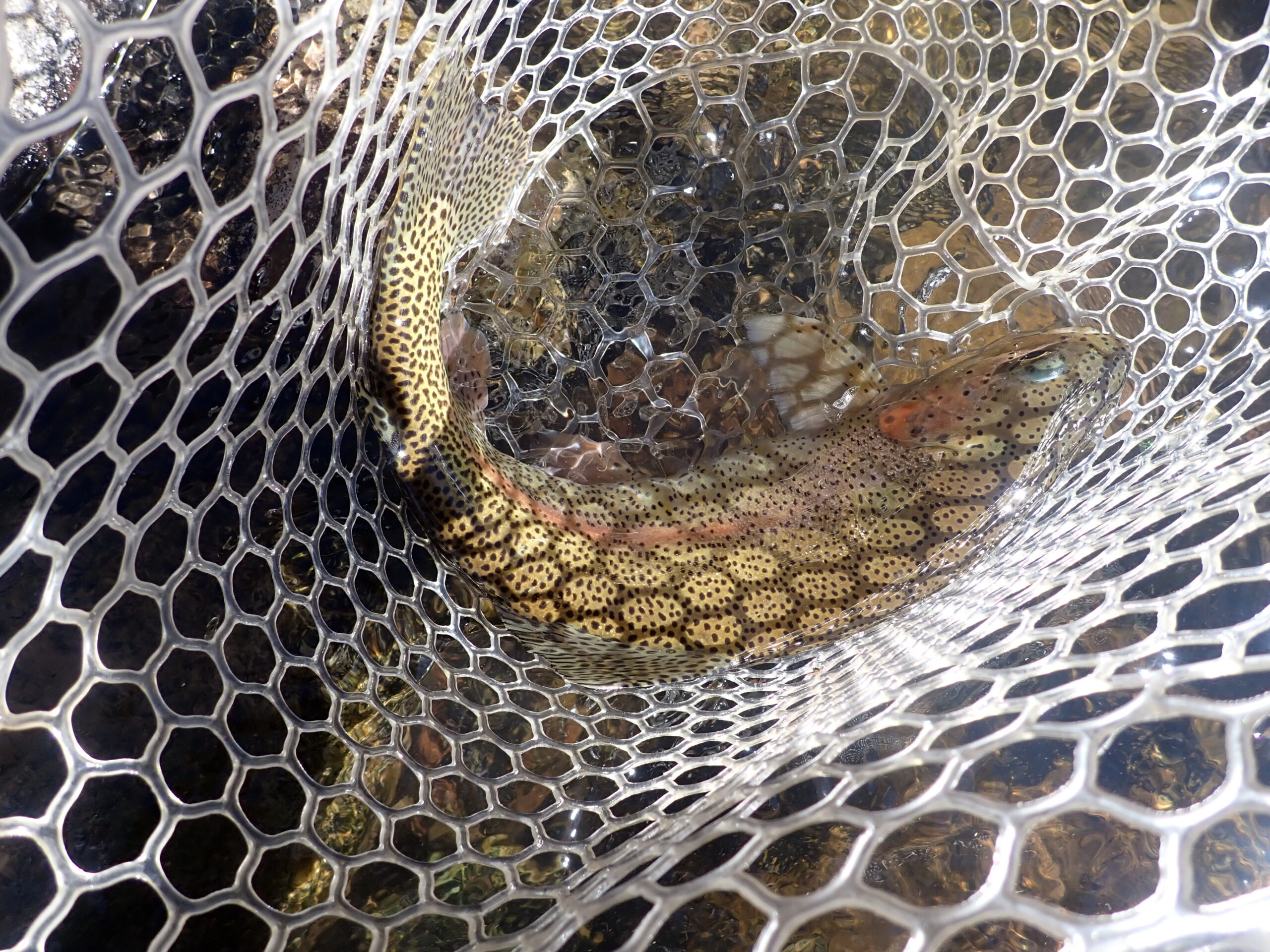 Rainbow of Similar Size
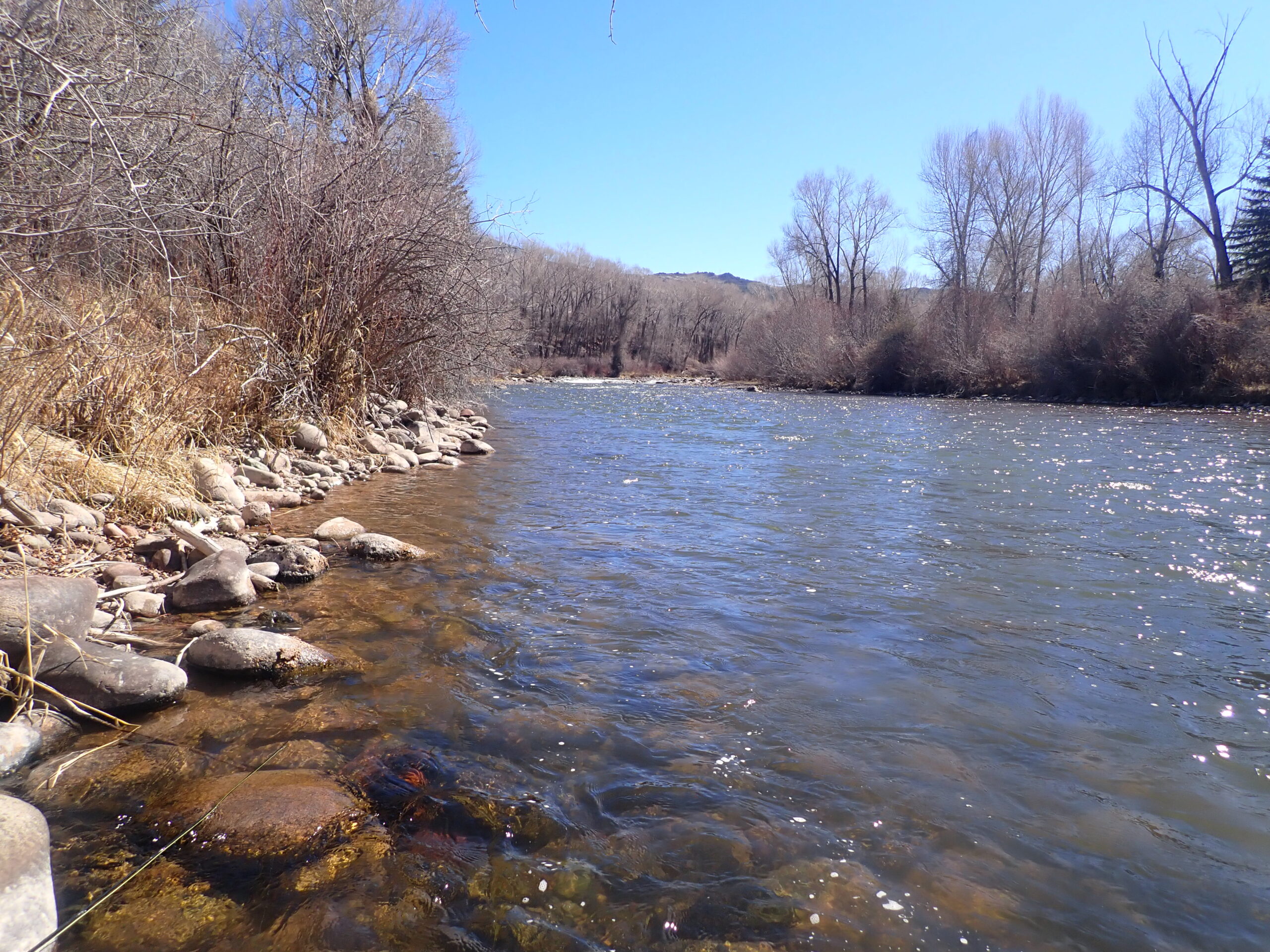 Scene of Bank Eaters
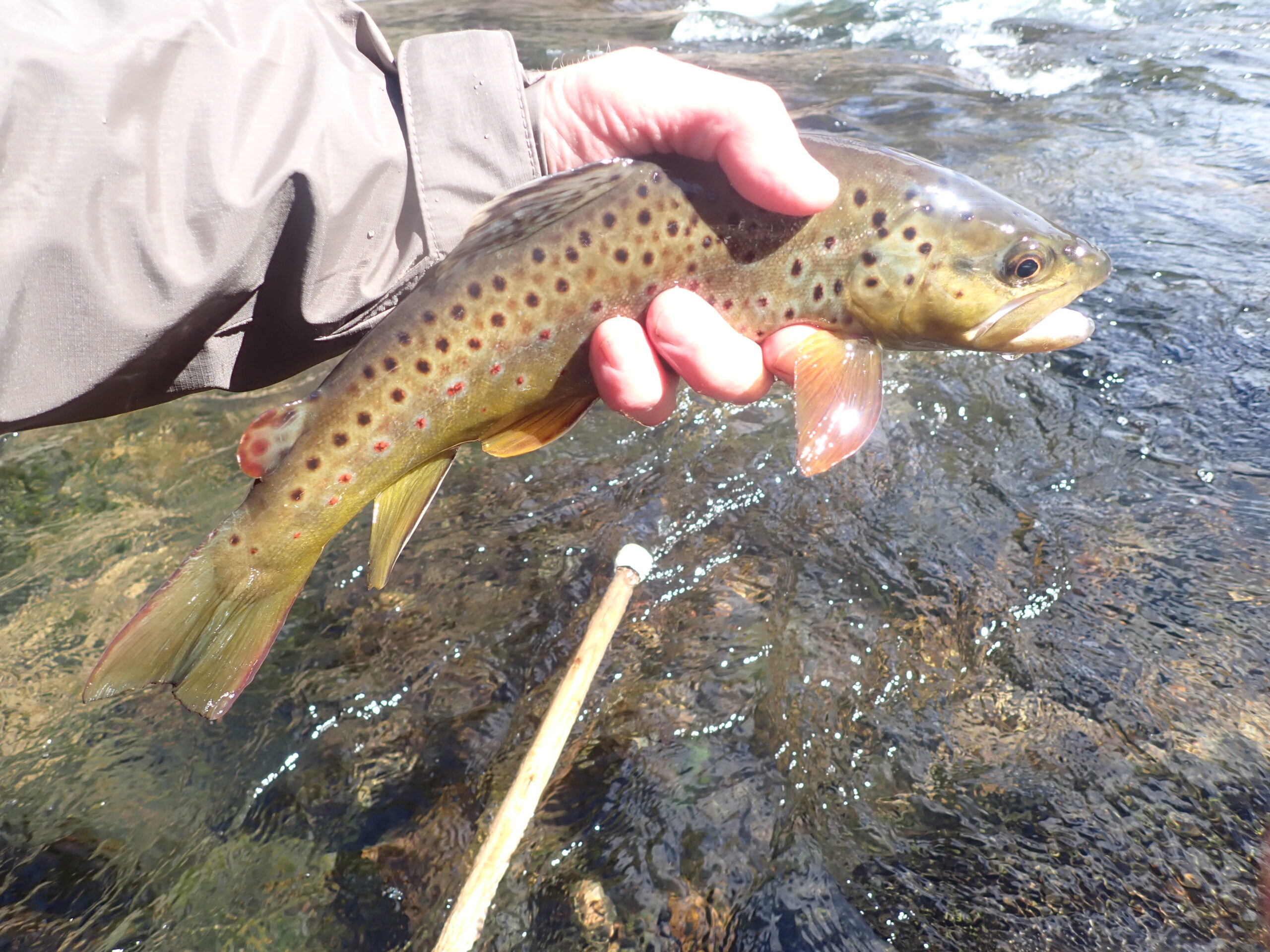 Very Pleased
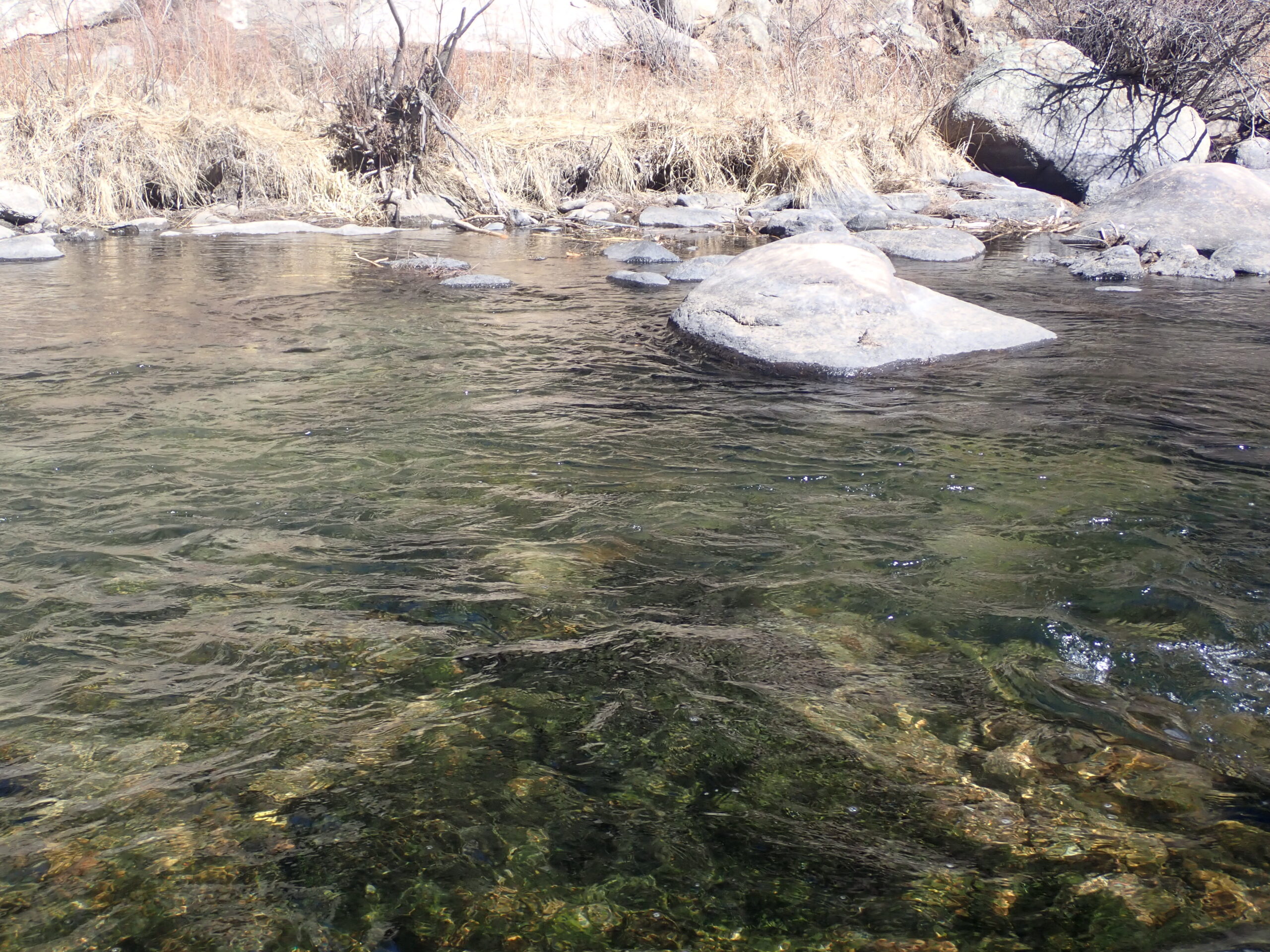 Emerged from in Front of the Large Exposed Rock
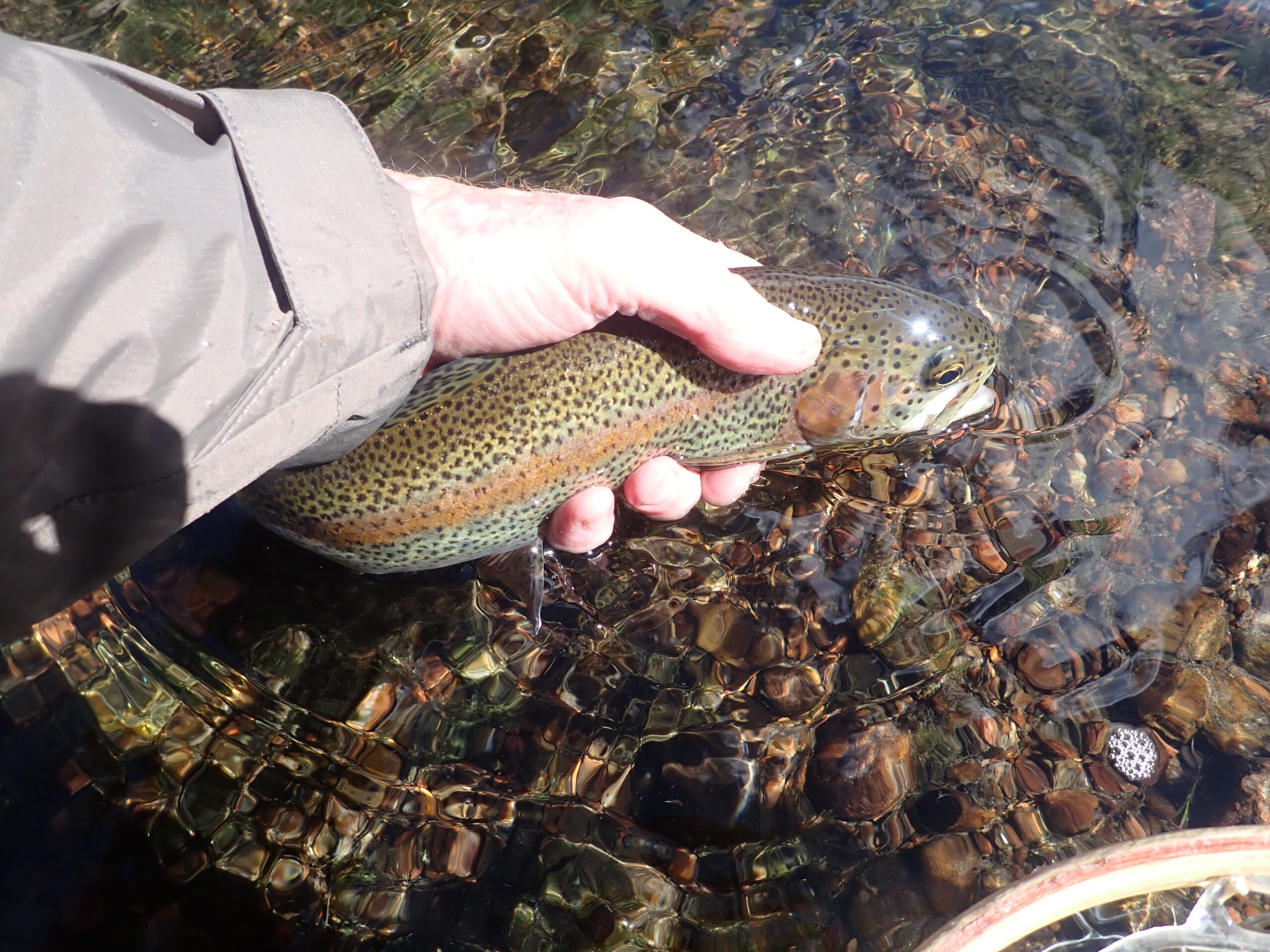 Goodbye Rainbow
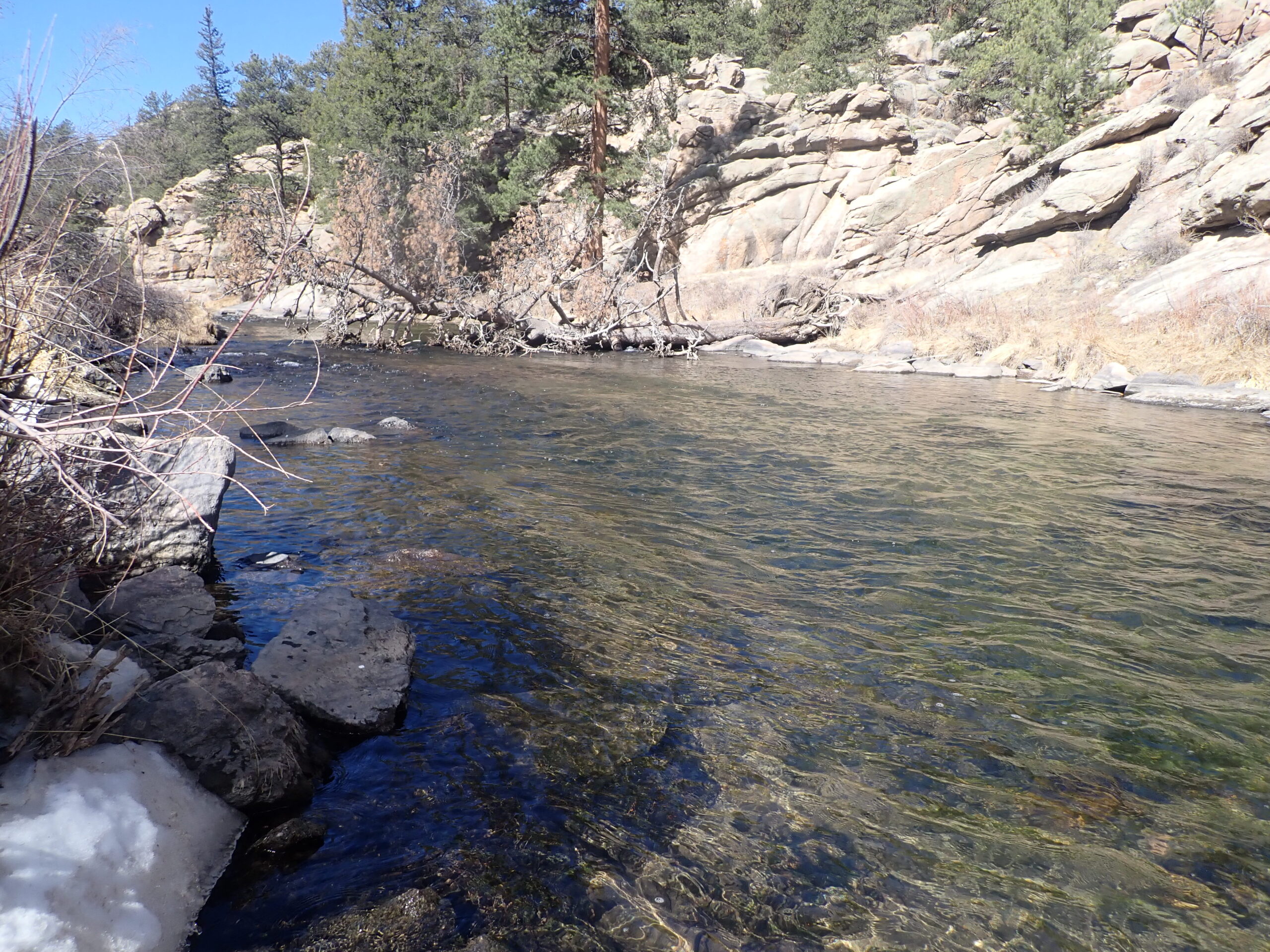 Rainbow Was From This Run
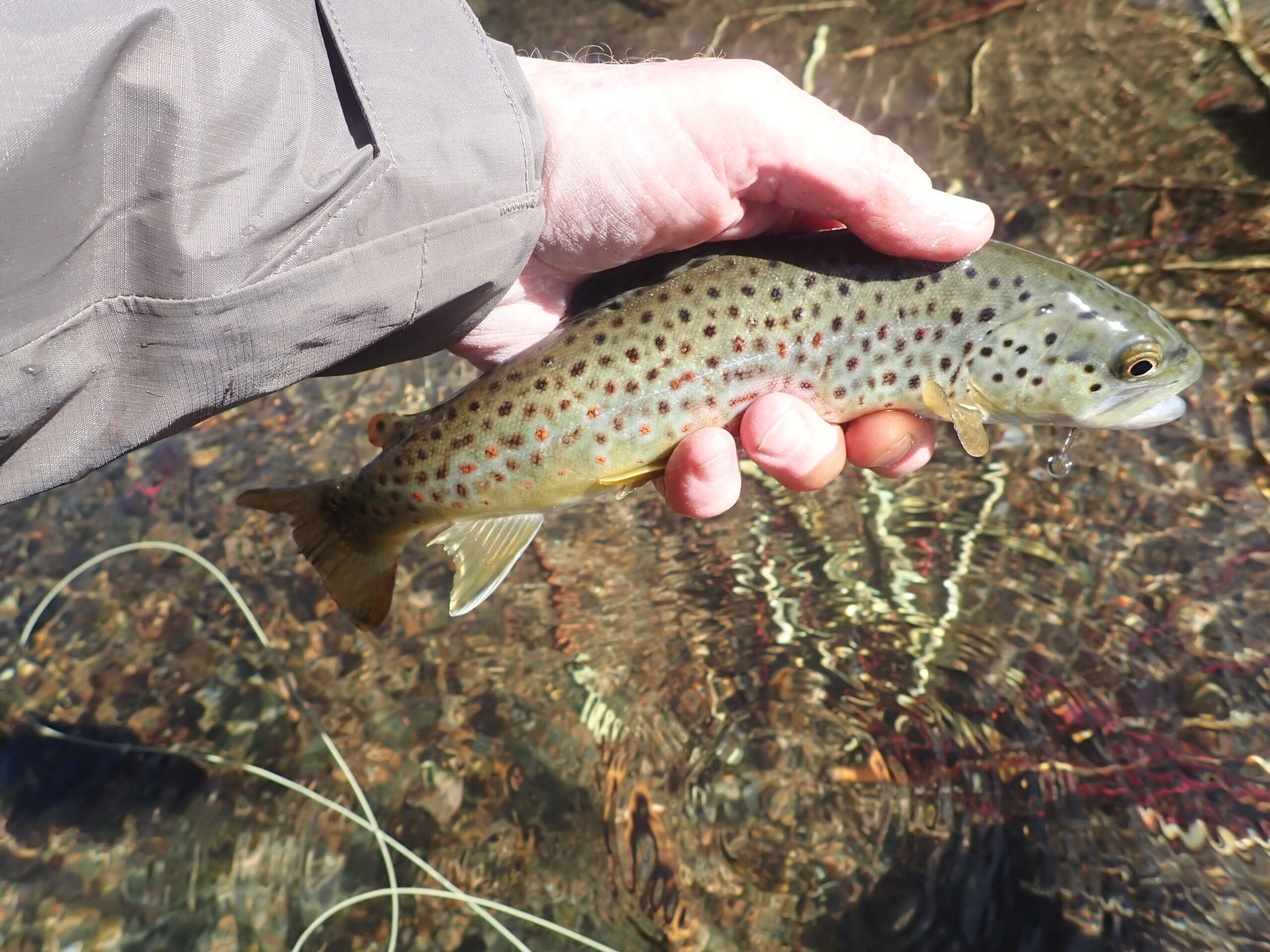 Pointed Back
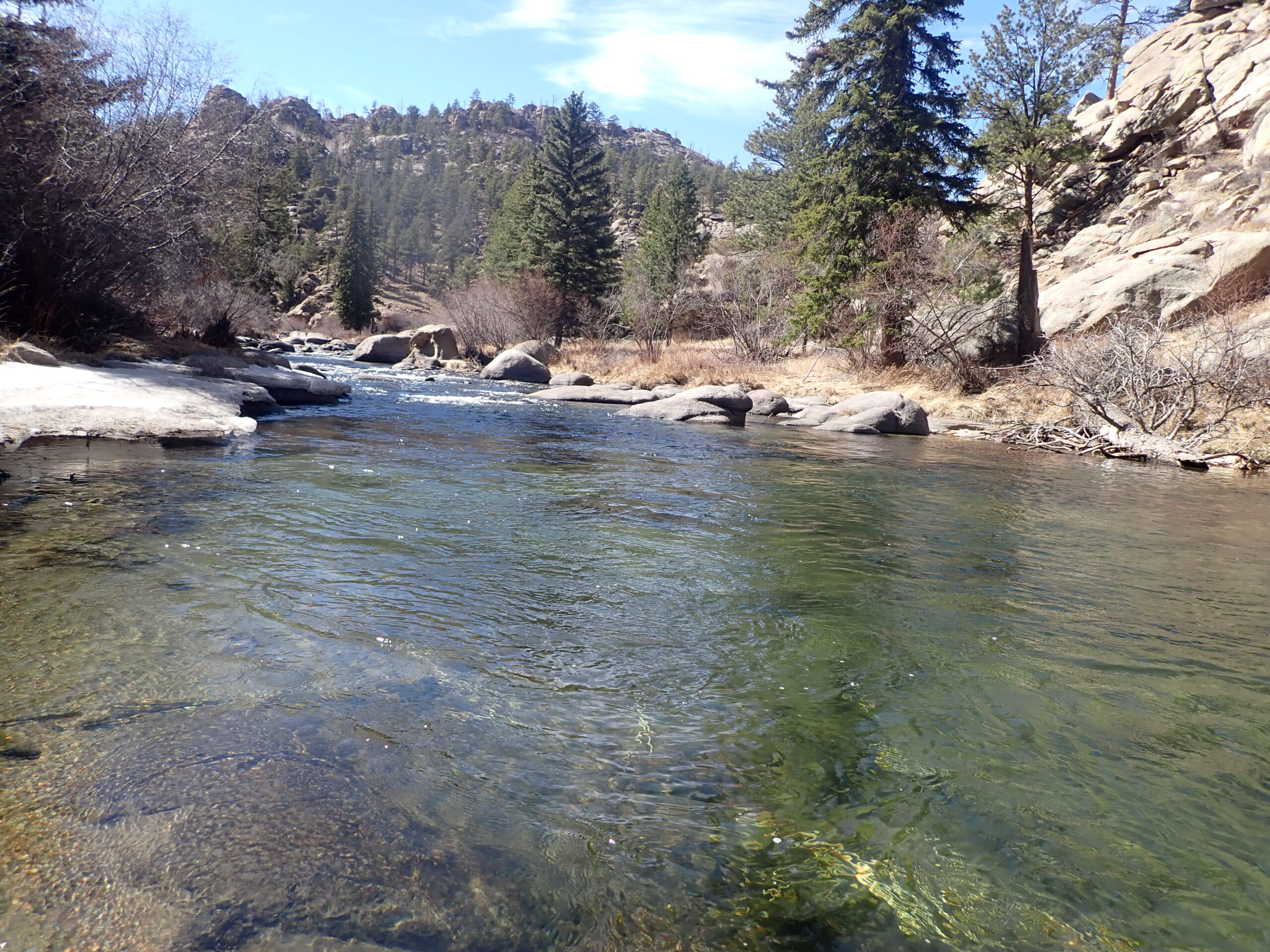 Nice Section Ahead
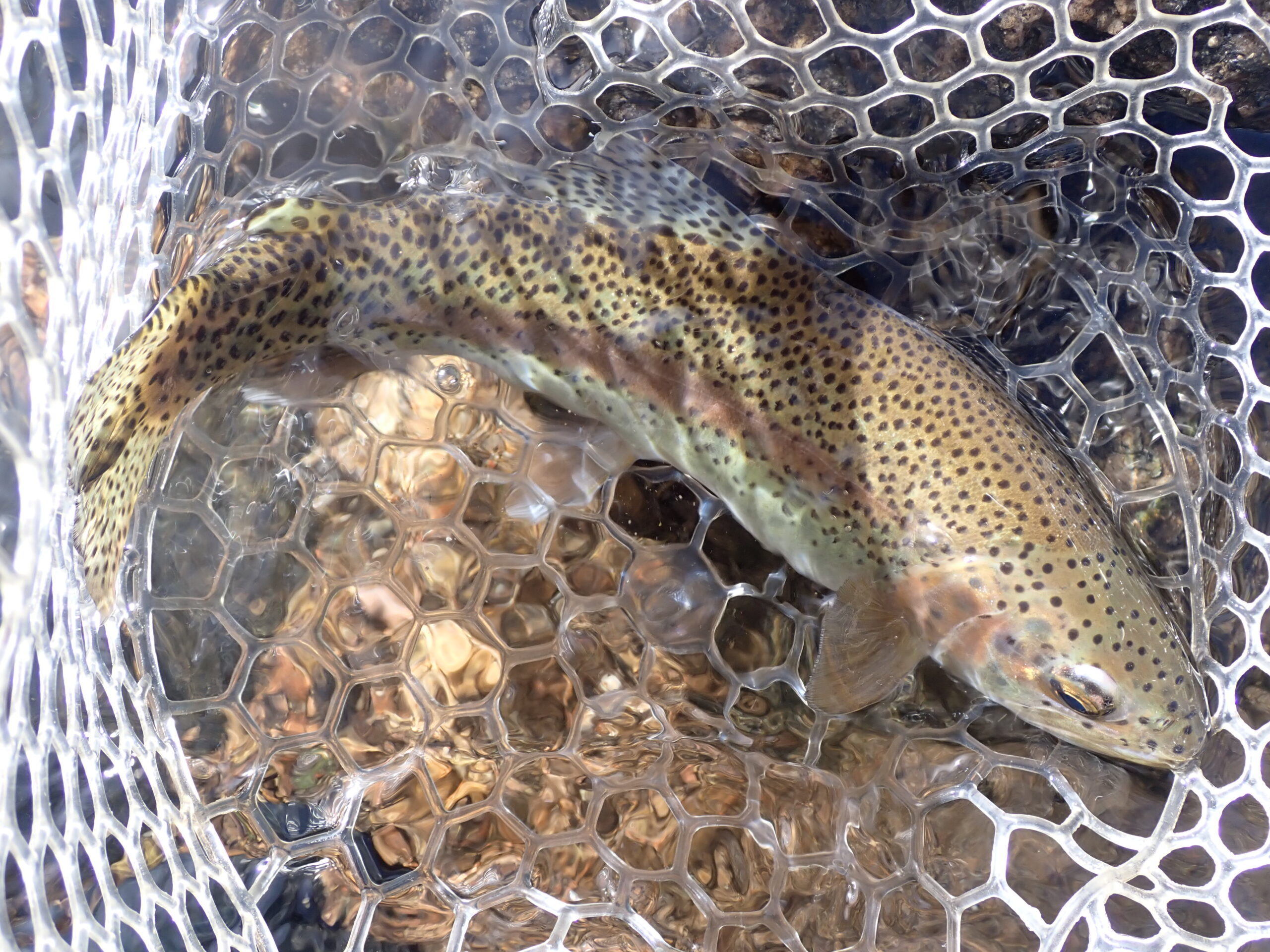 Nice Chunk
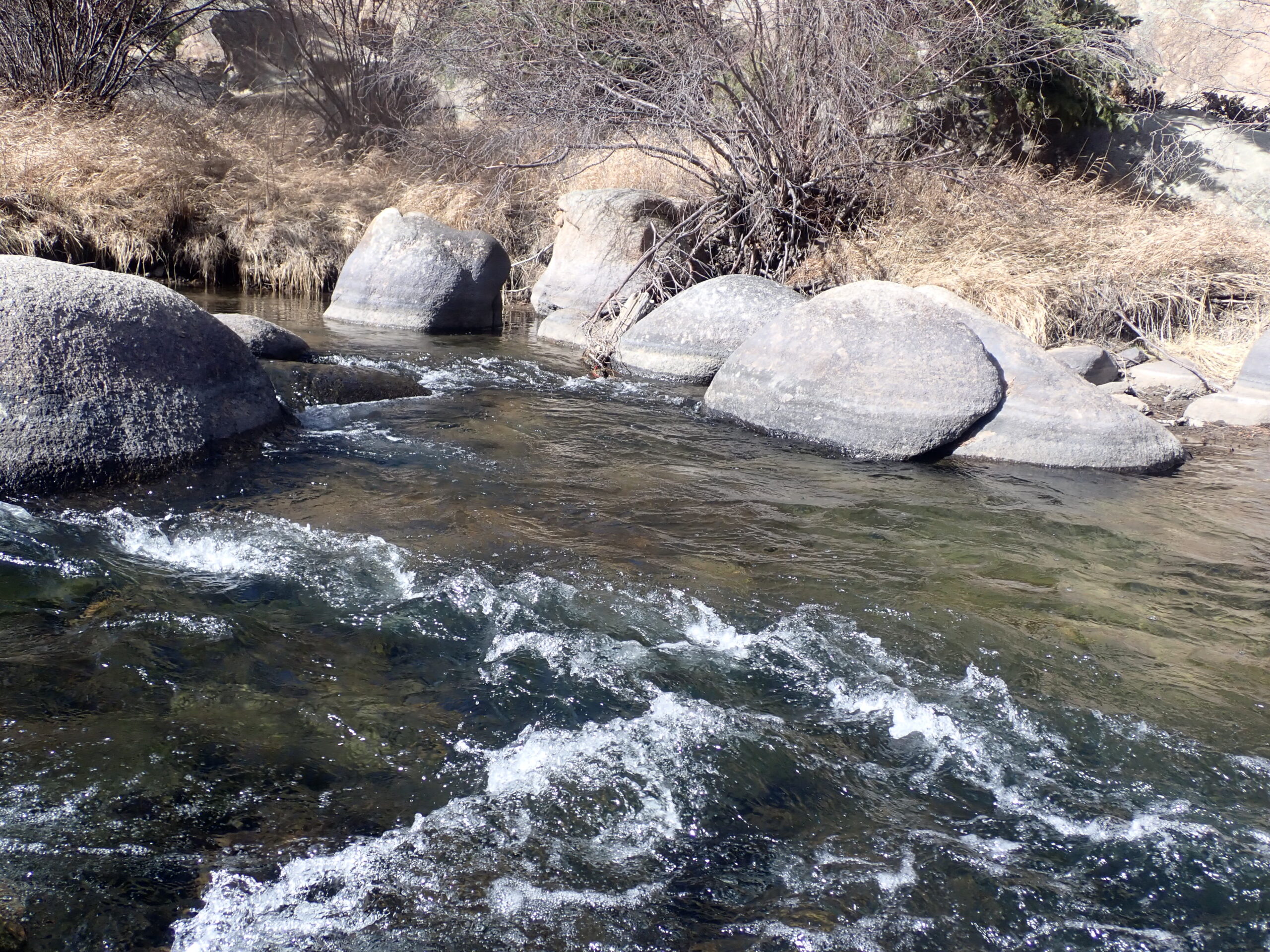 Two Trout Came from This Area
 New Setup
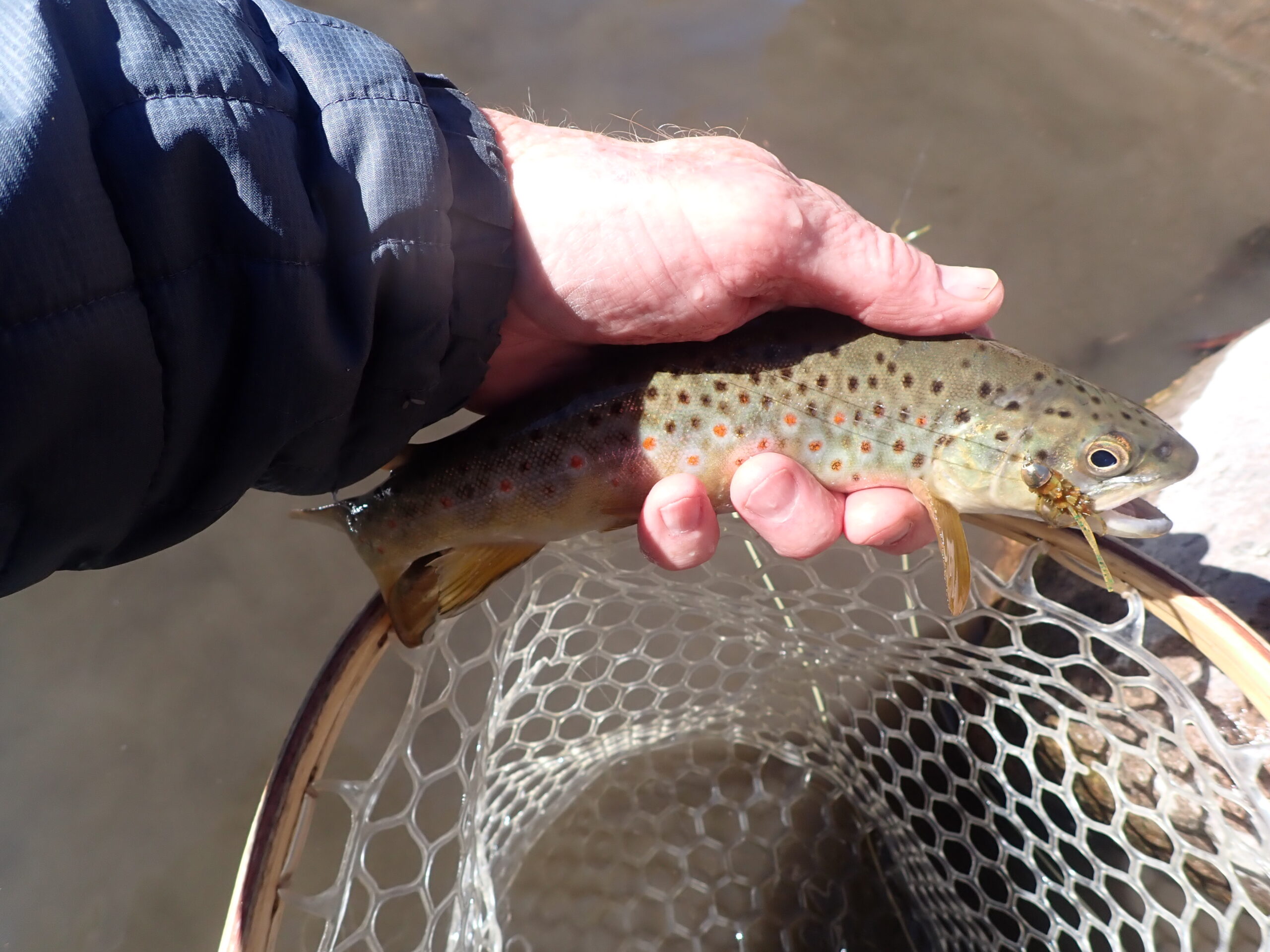 First Fish of the New Year
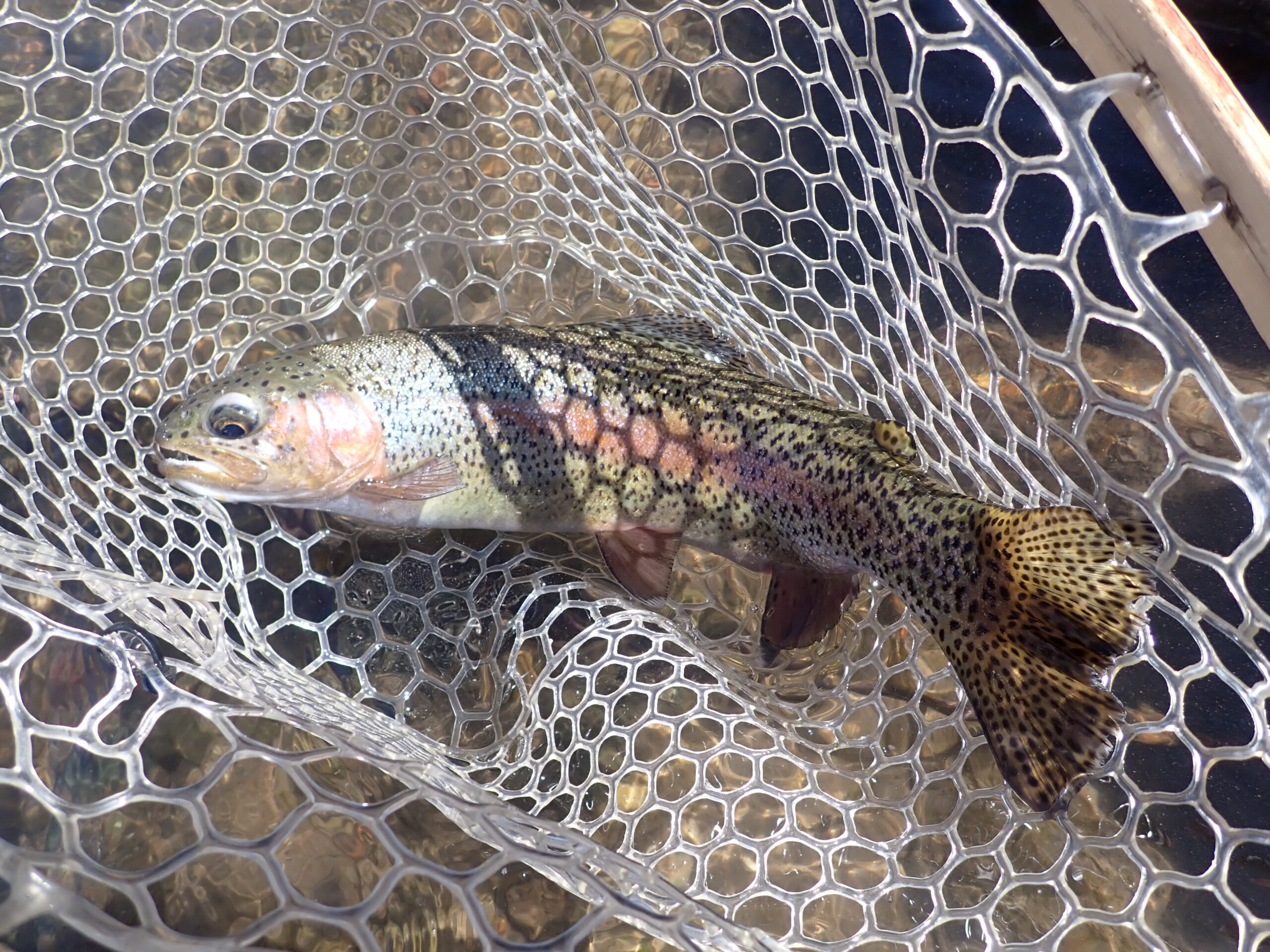 Beast Filled the Net
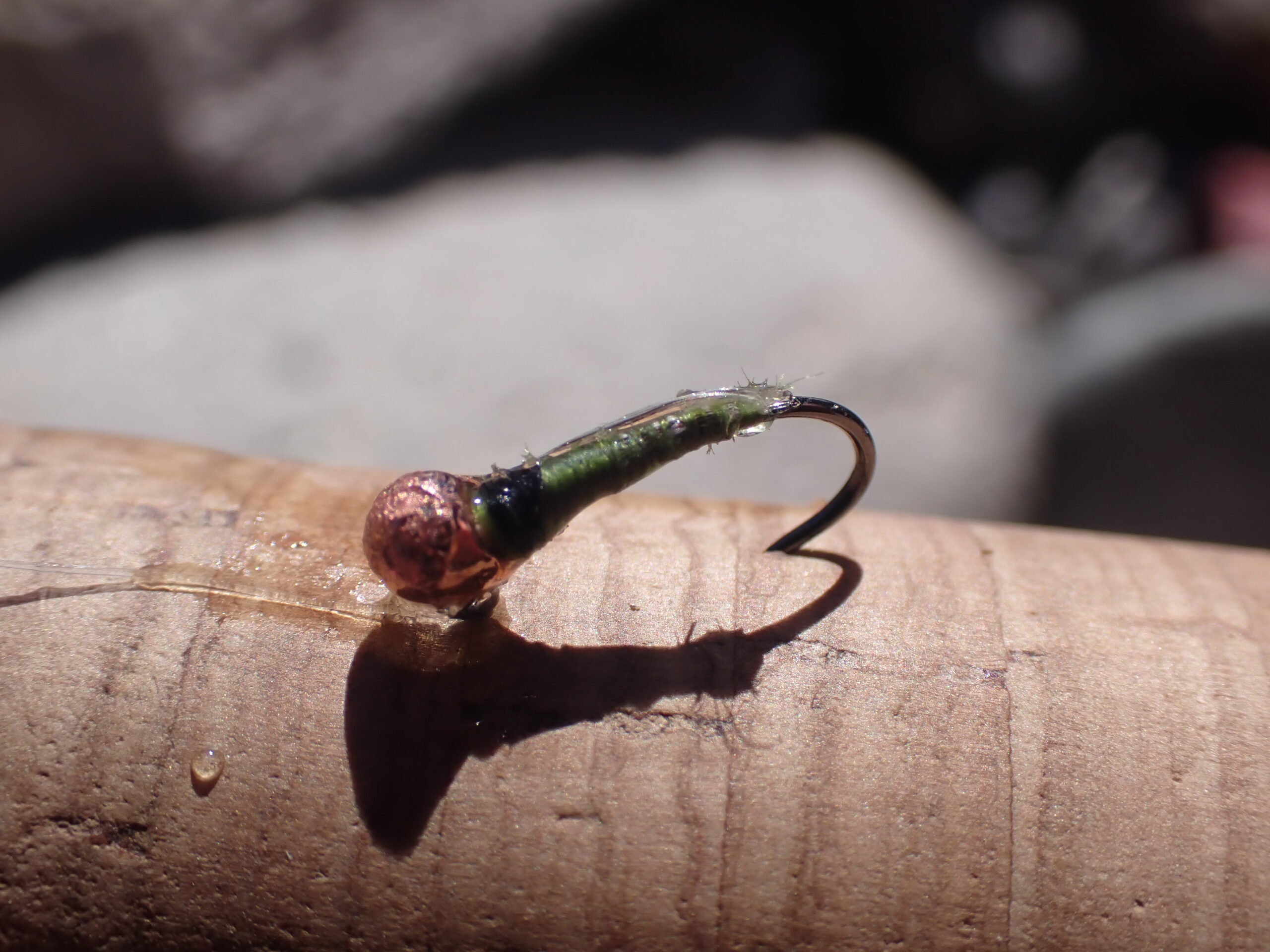 Olive Perdigon Still Stars
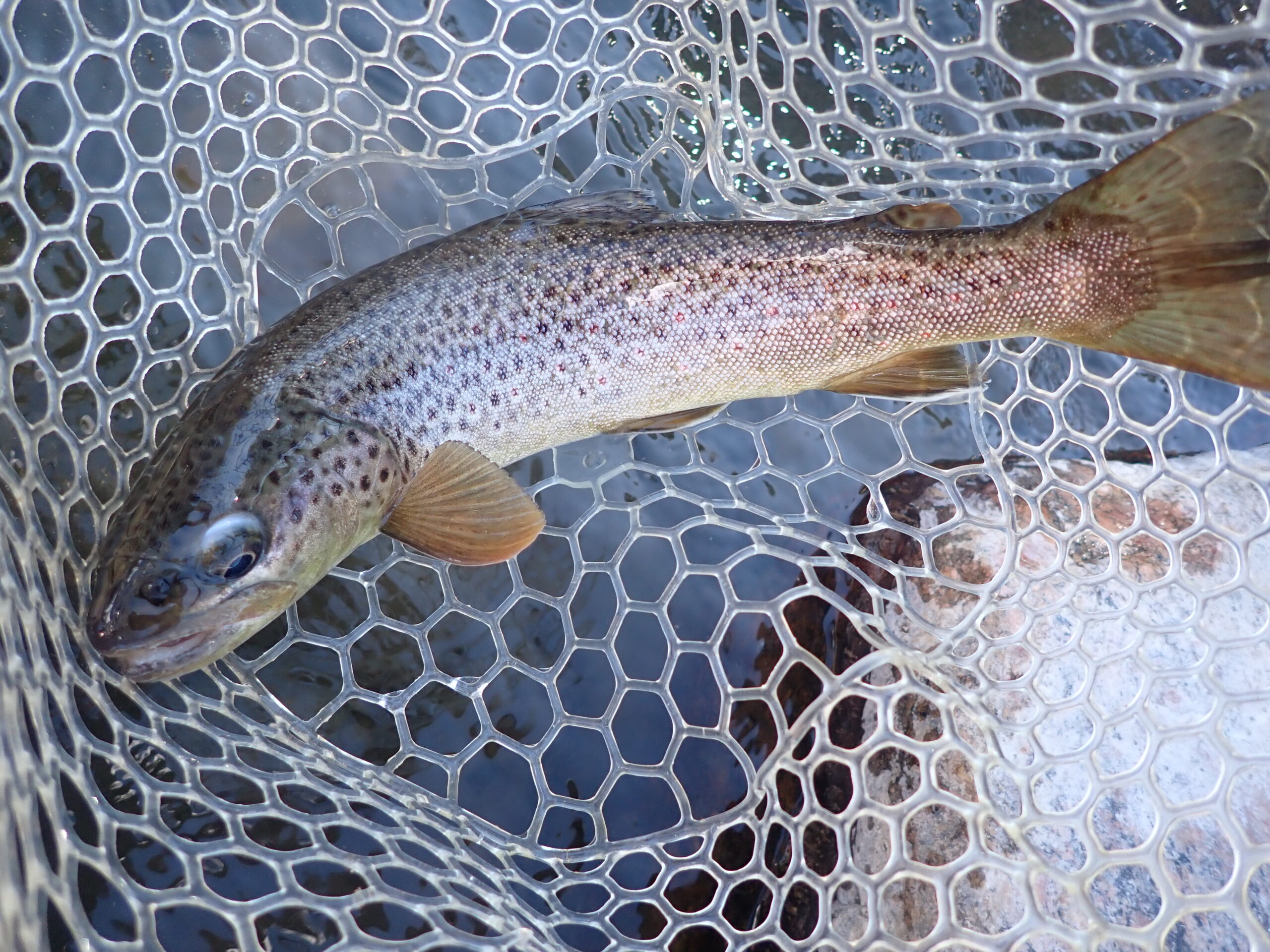 Long Brown Trout
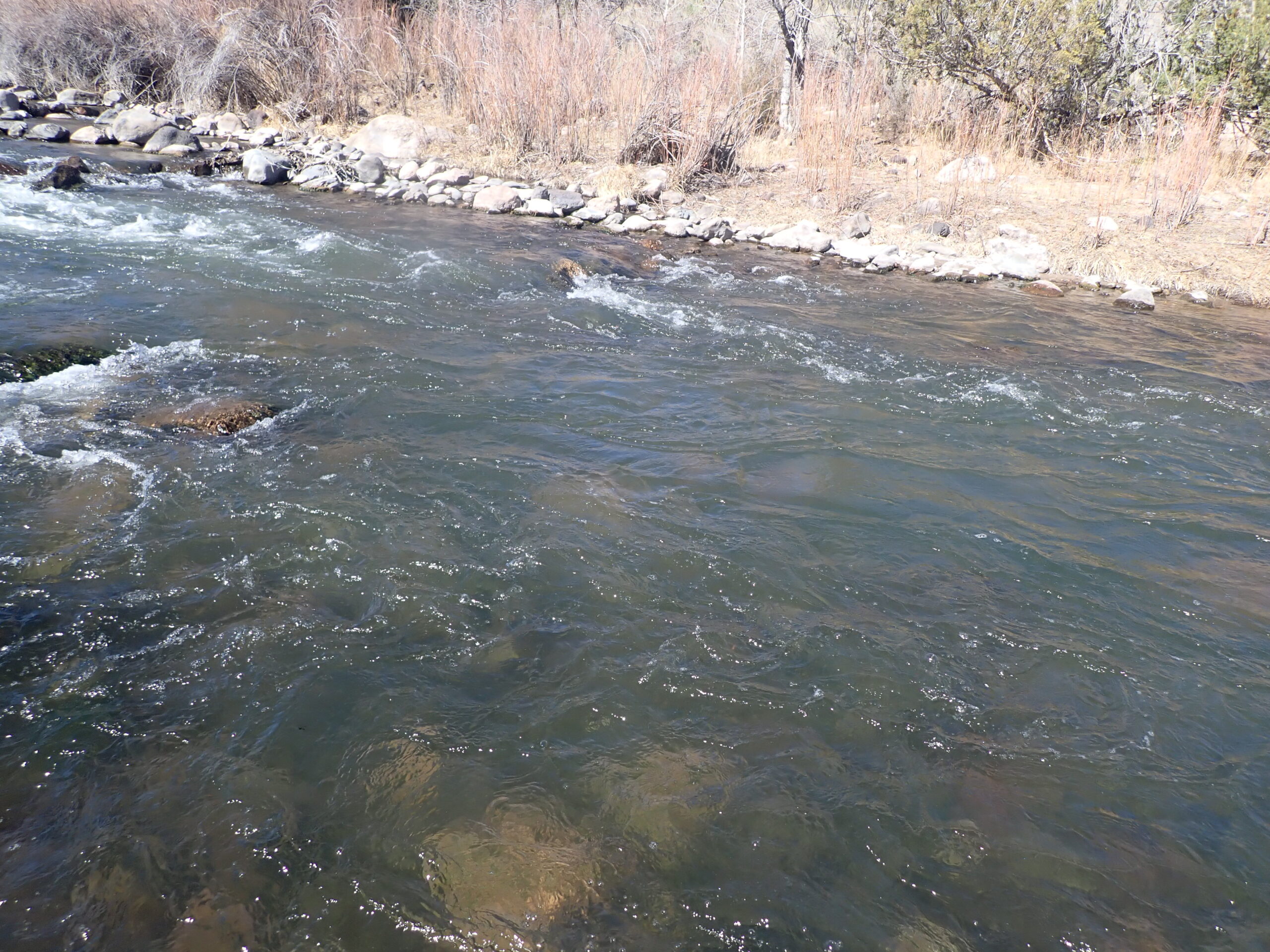 Great Trough
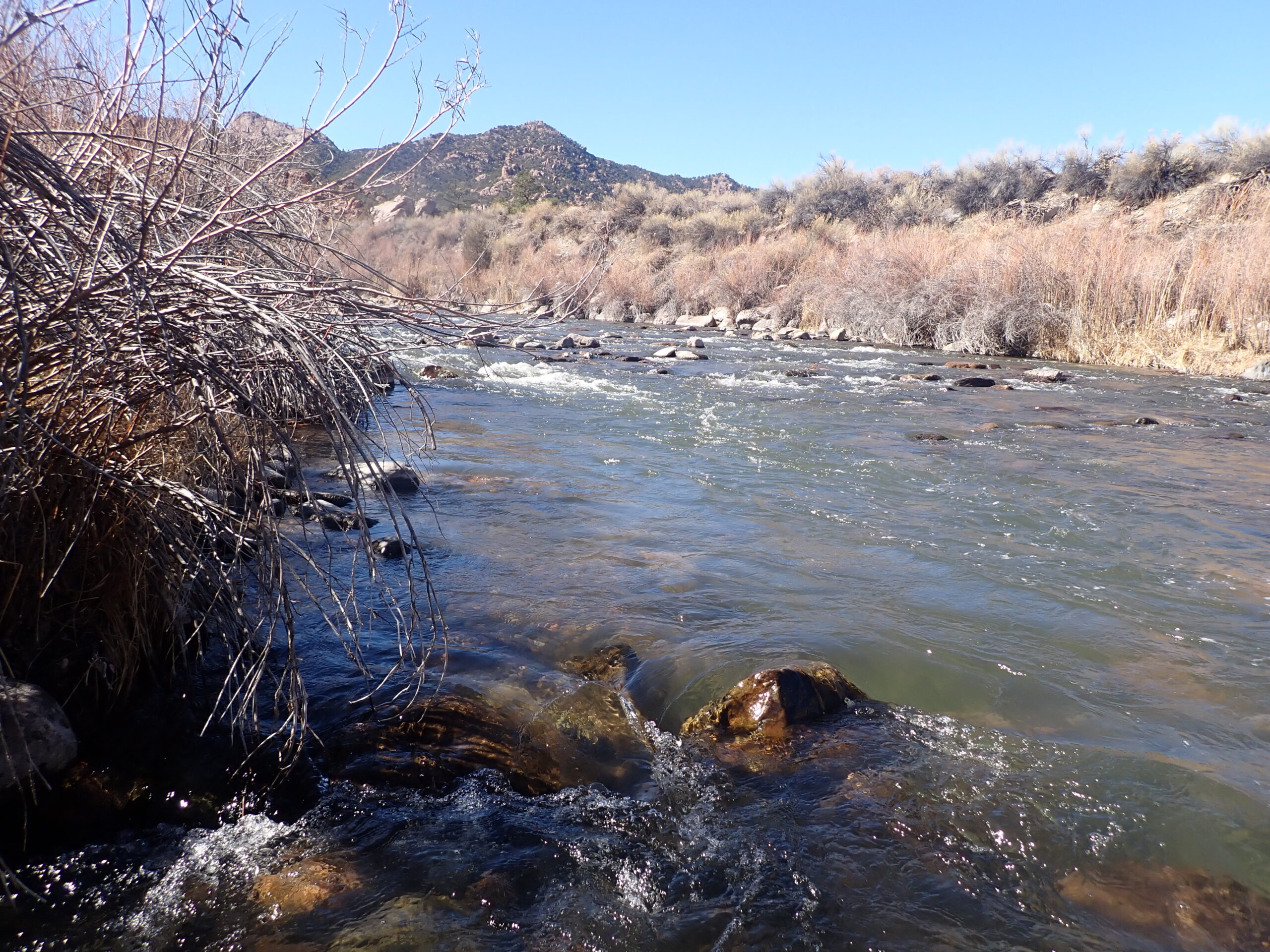 This Was a Hot Spot
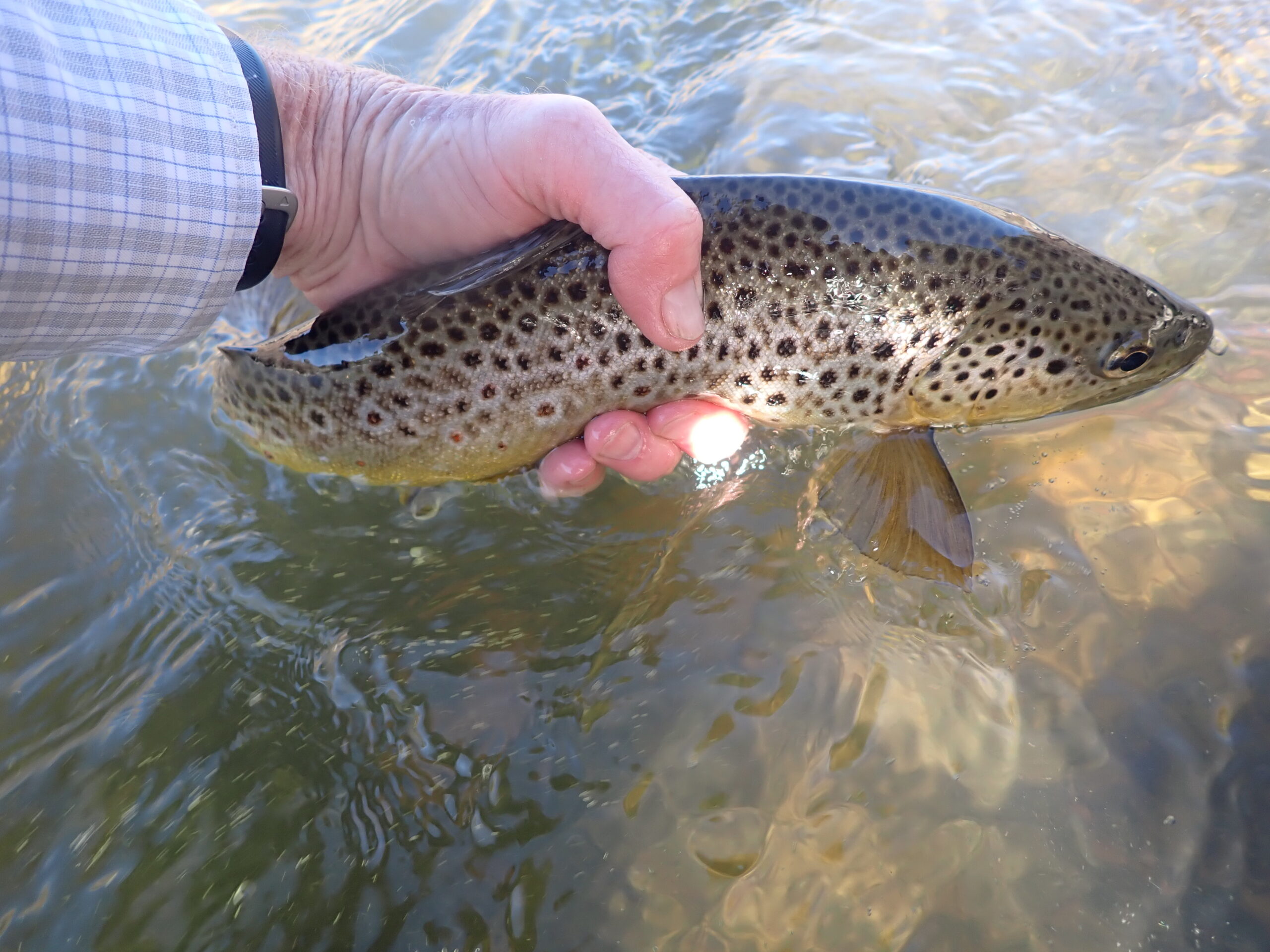 Best Brown of the Day
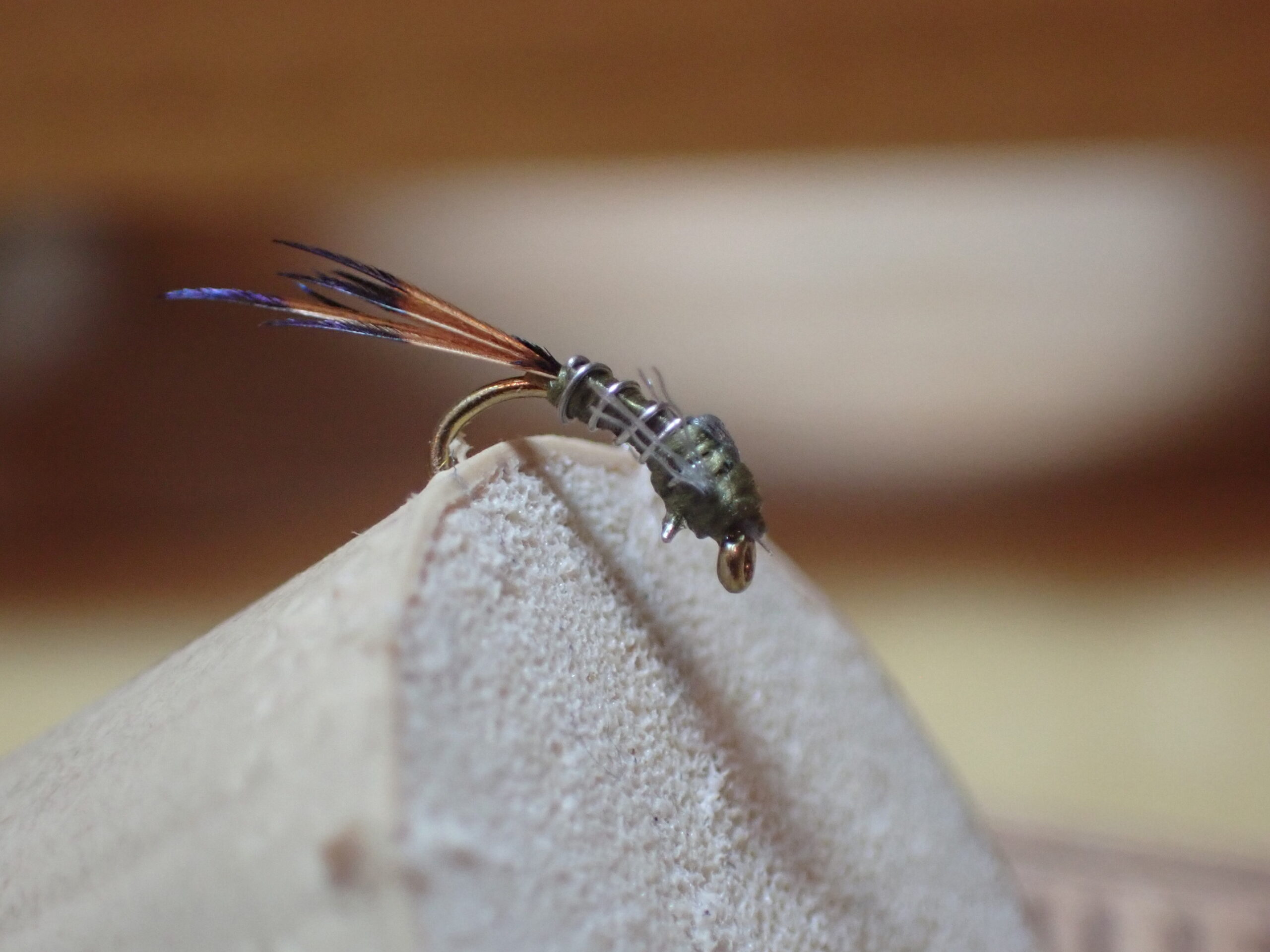 Slim Baetis
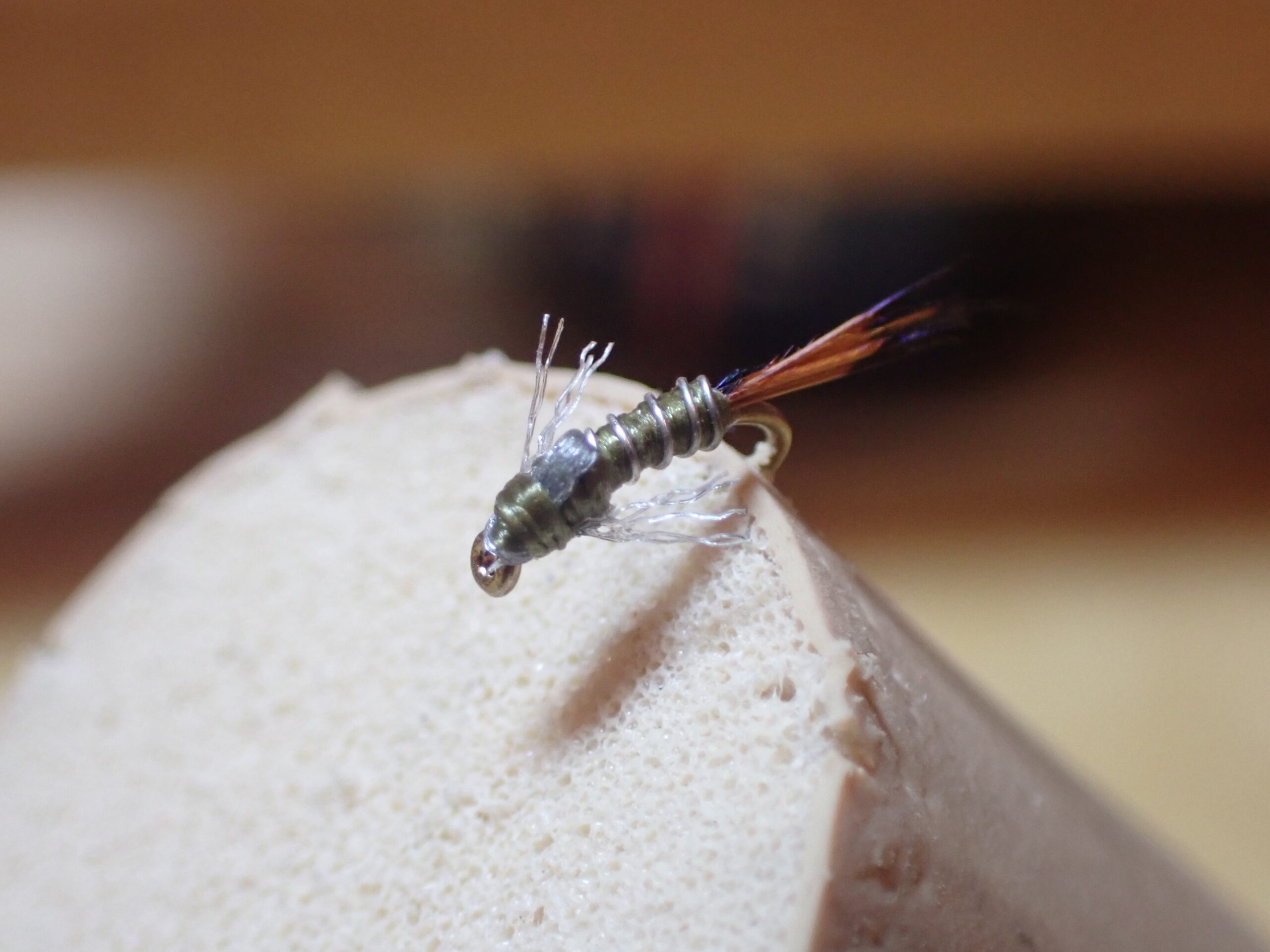 Left Side Angled
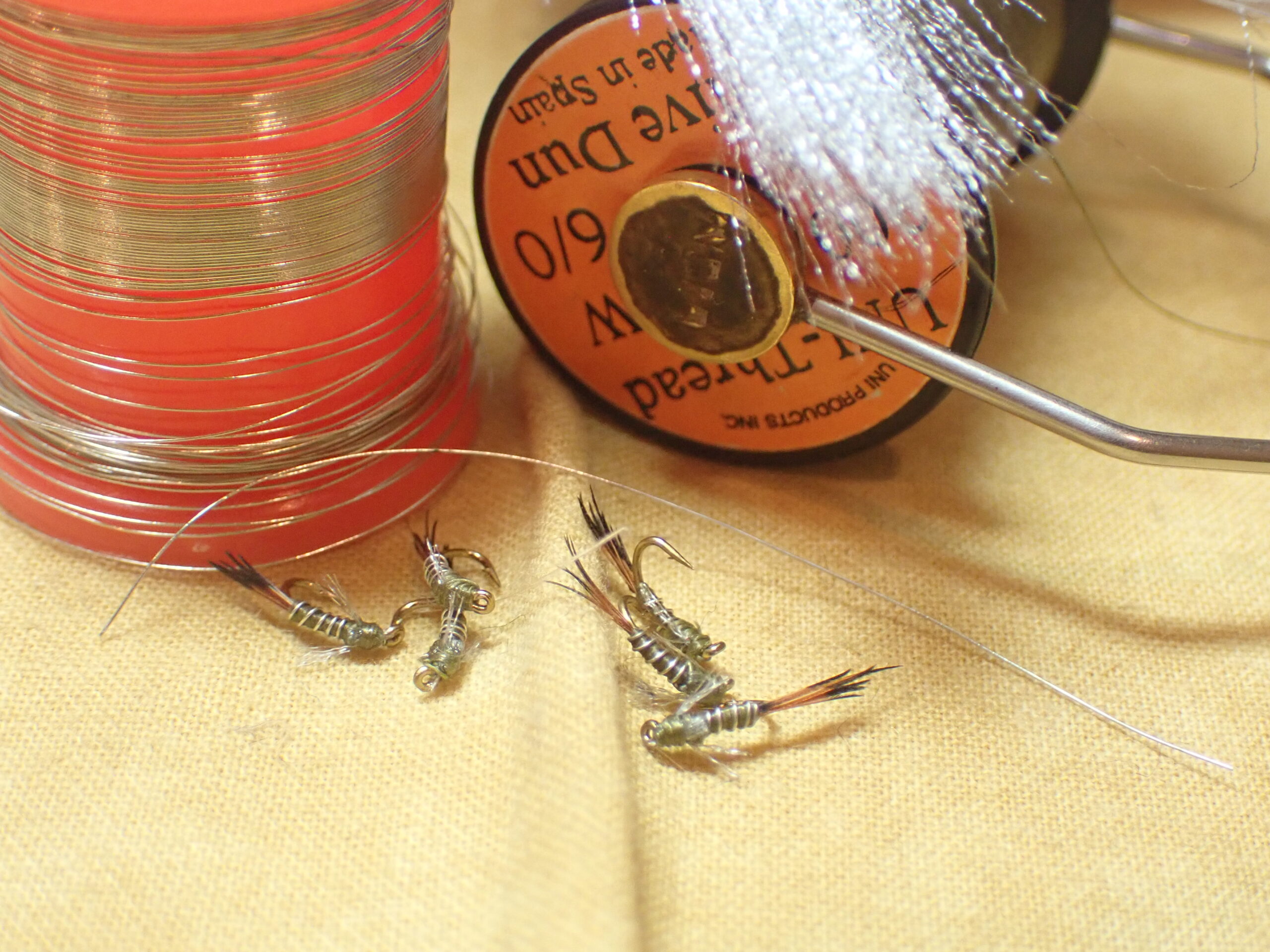 Background Materials
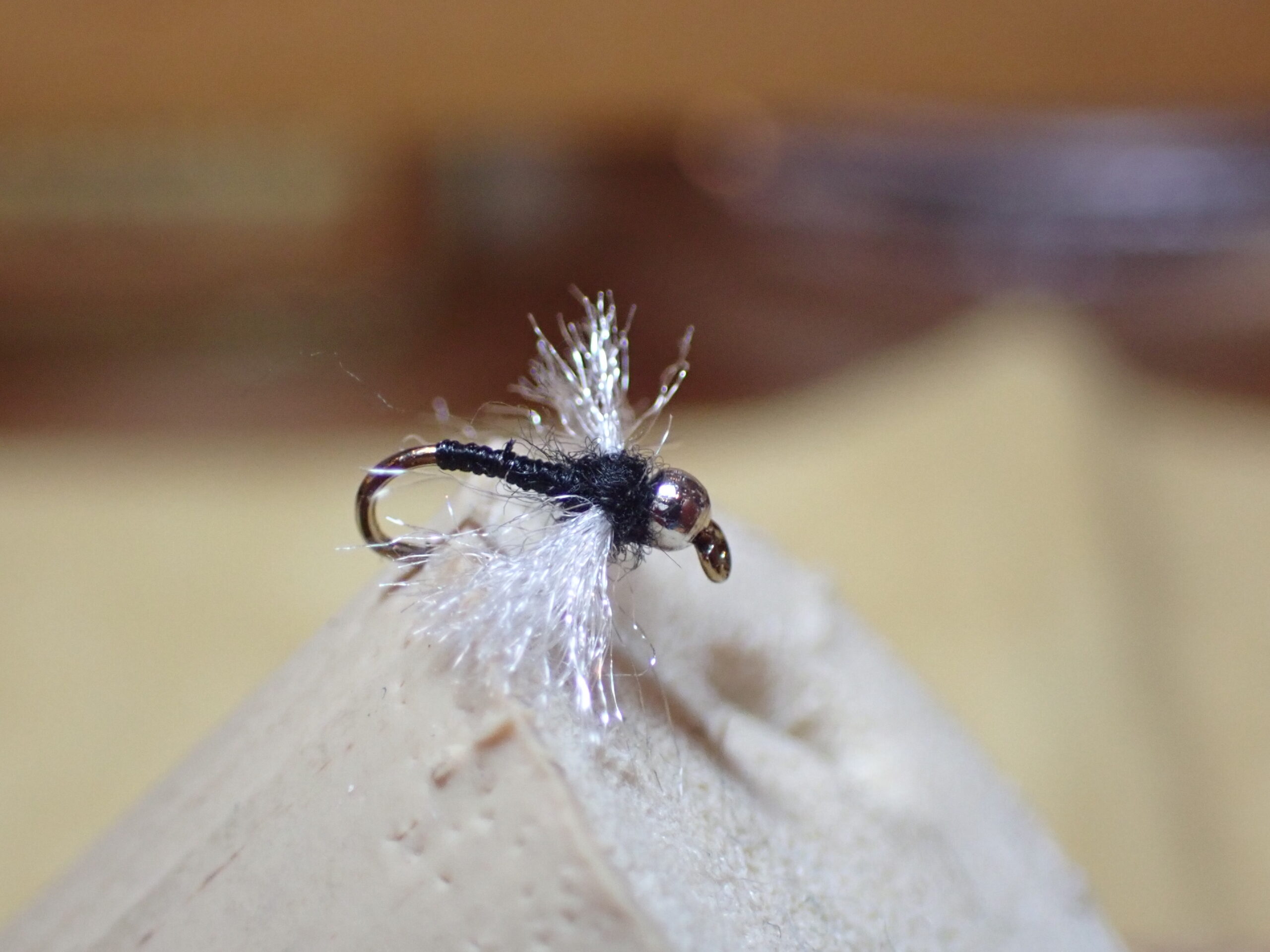 Lovely
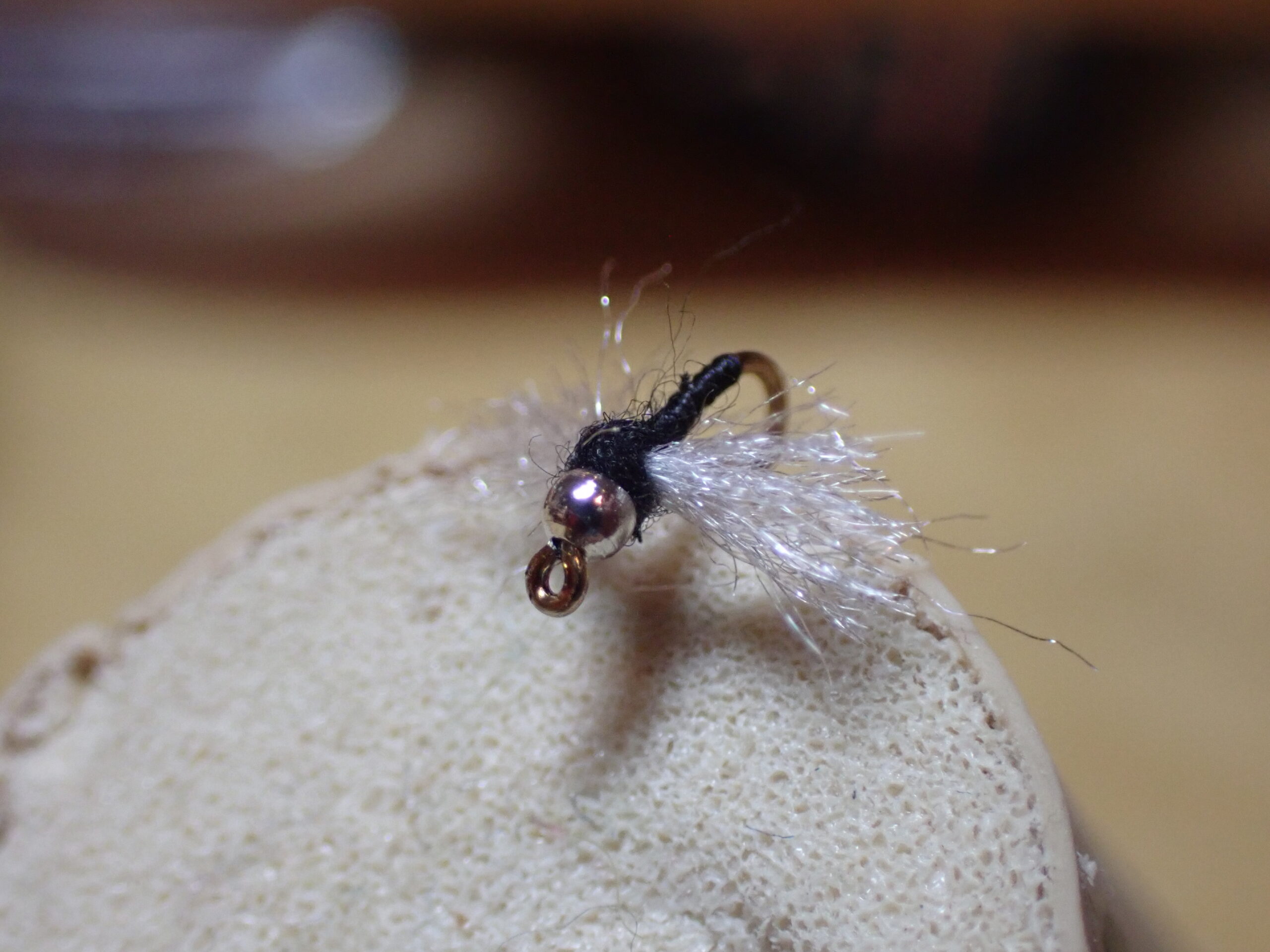 Angled Head On
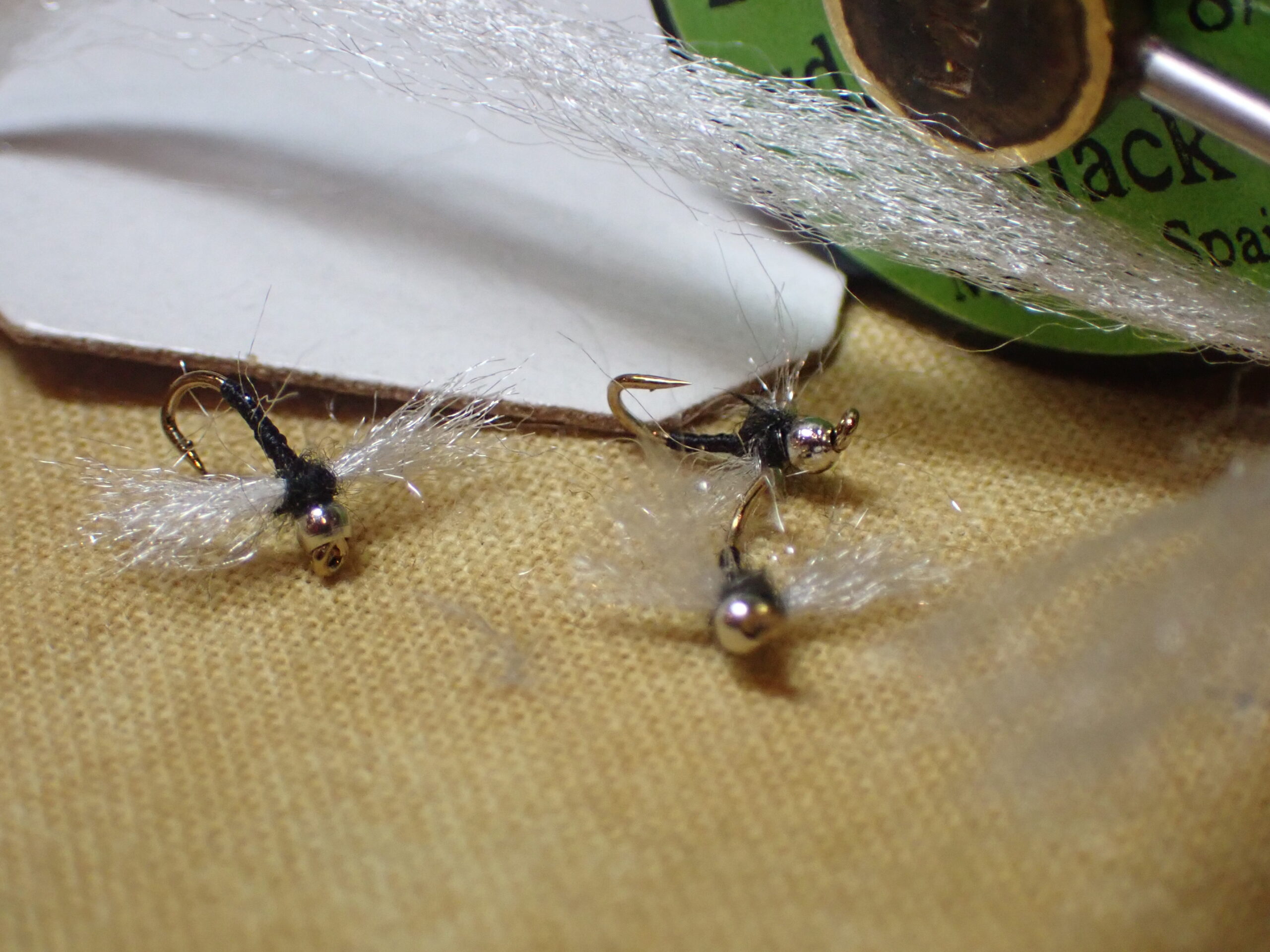 Materials in the Background
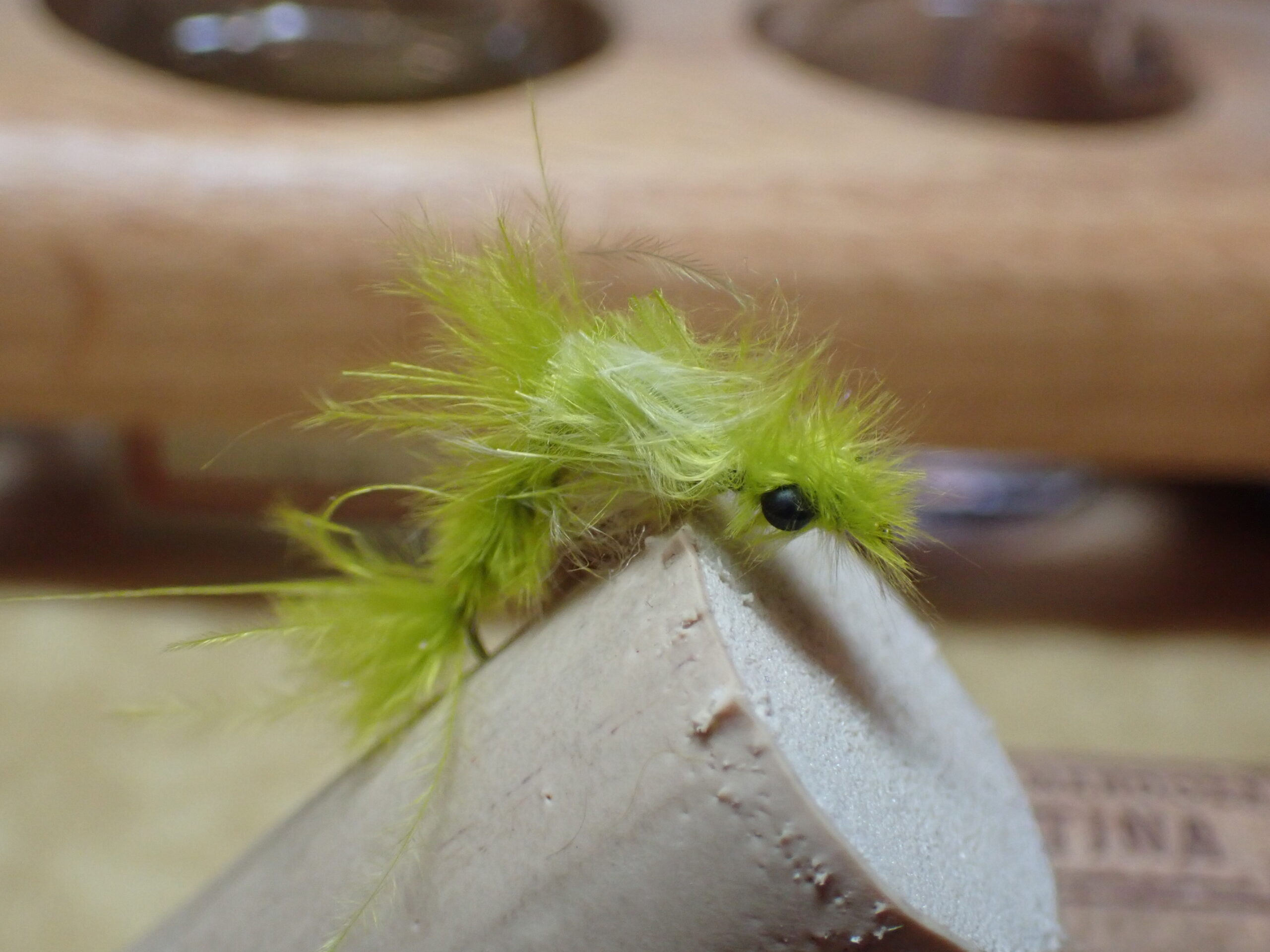 Humped
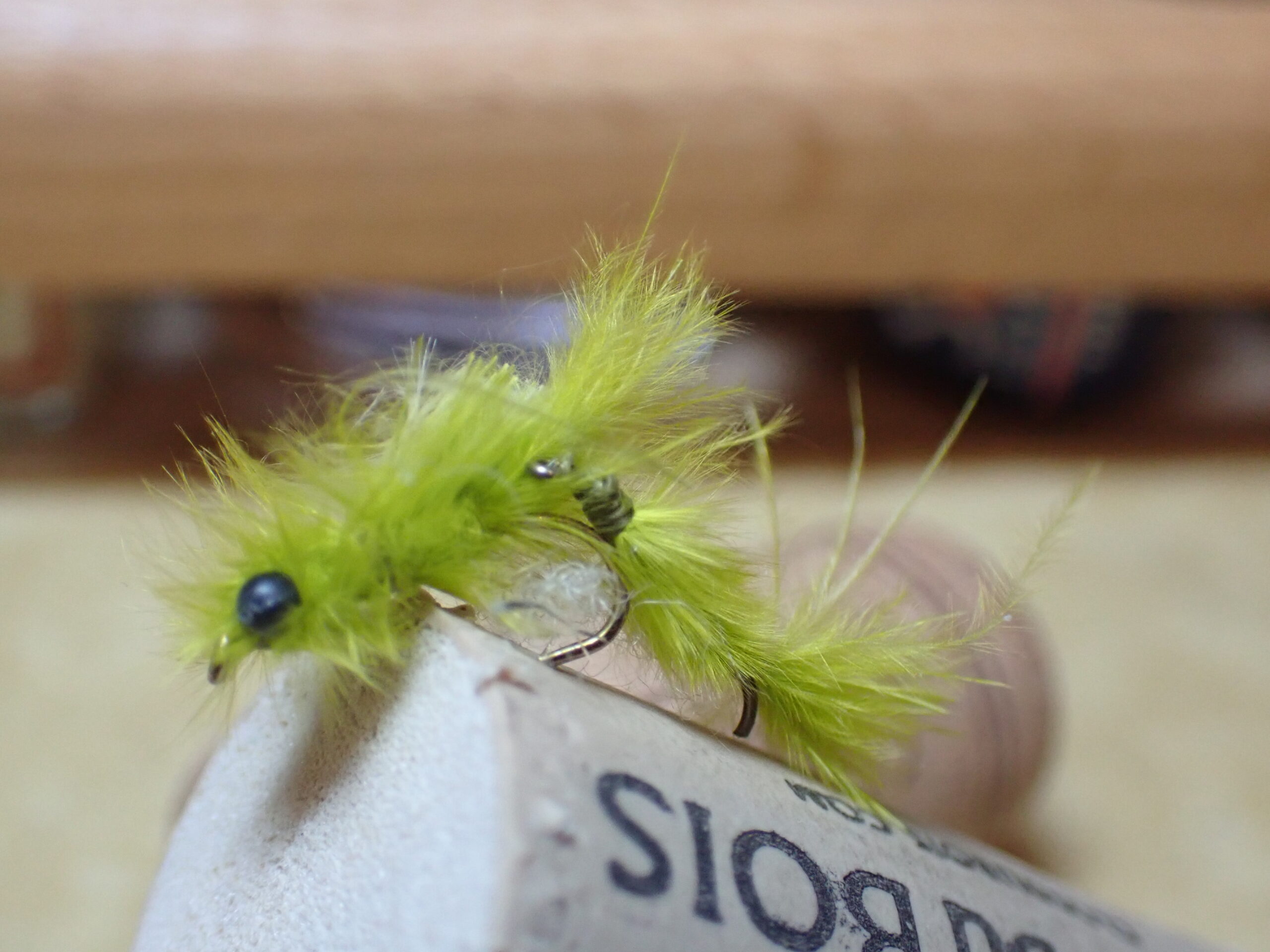 Articulated
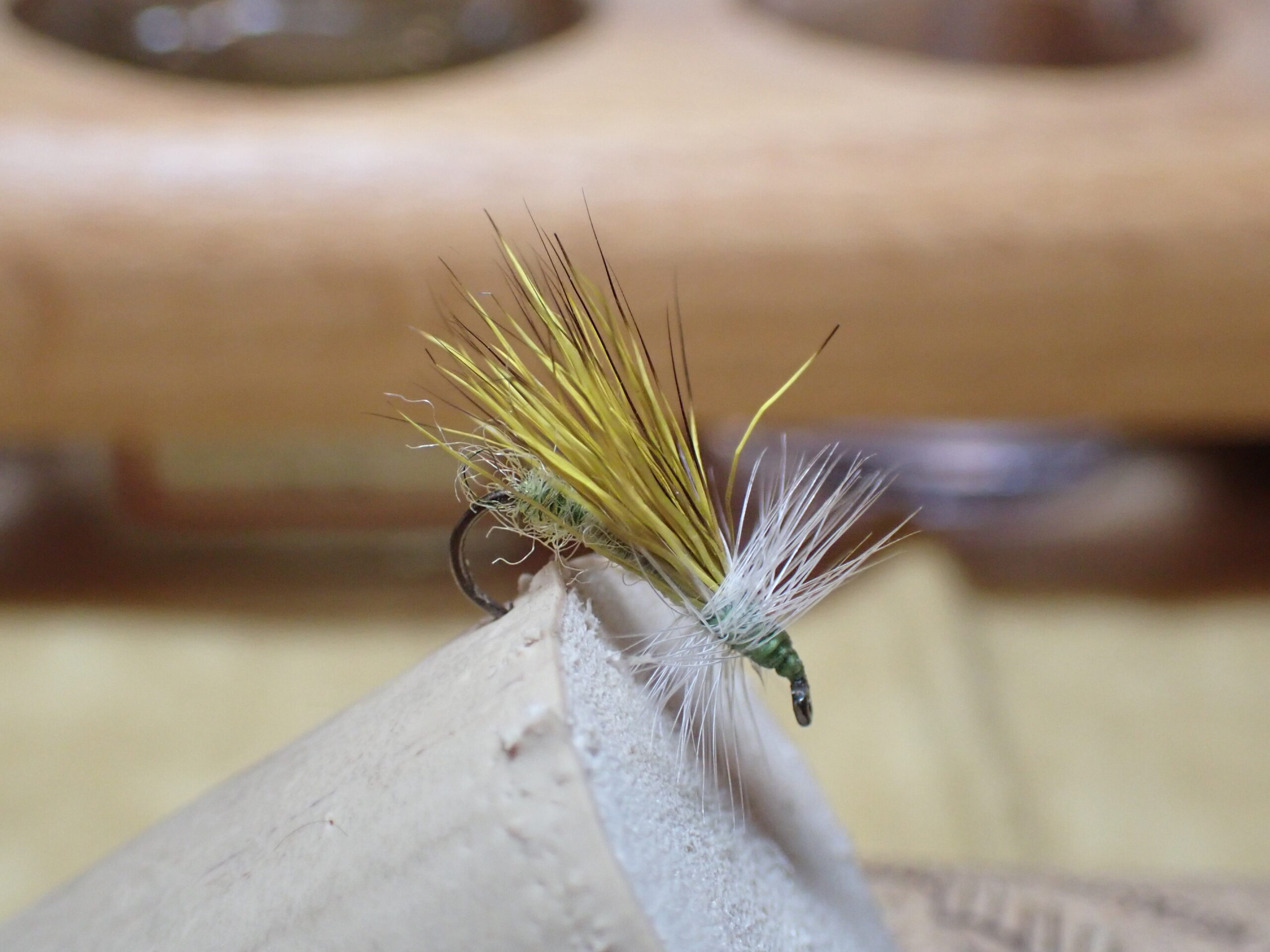 Diving
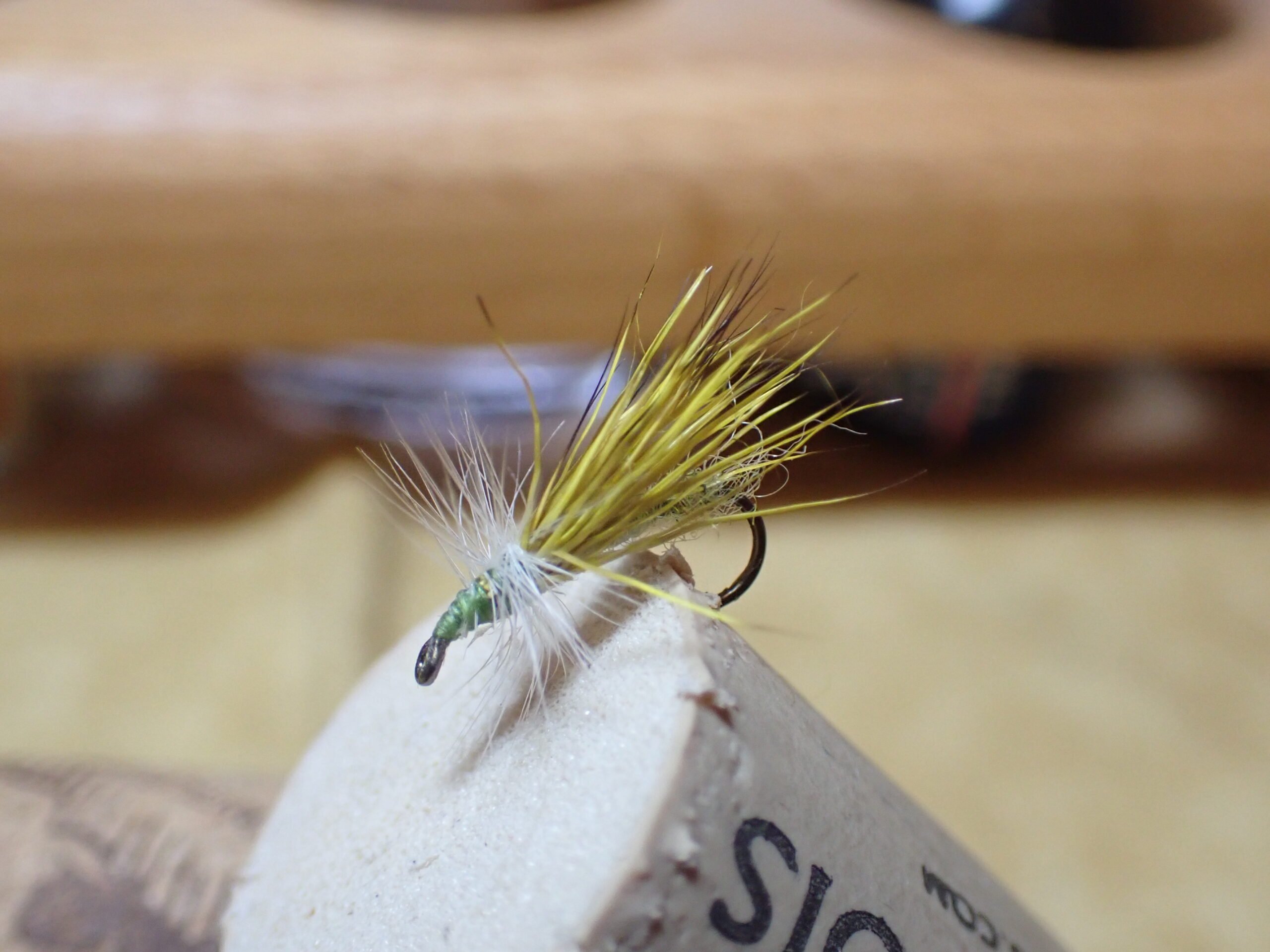 Diving the Other Way