Category Archives: Dry Flies

Green Drake Comparadun – 02/08/2026

Green Drake Comparadun 02/08/2026 Photo Album

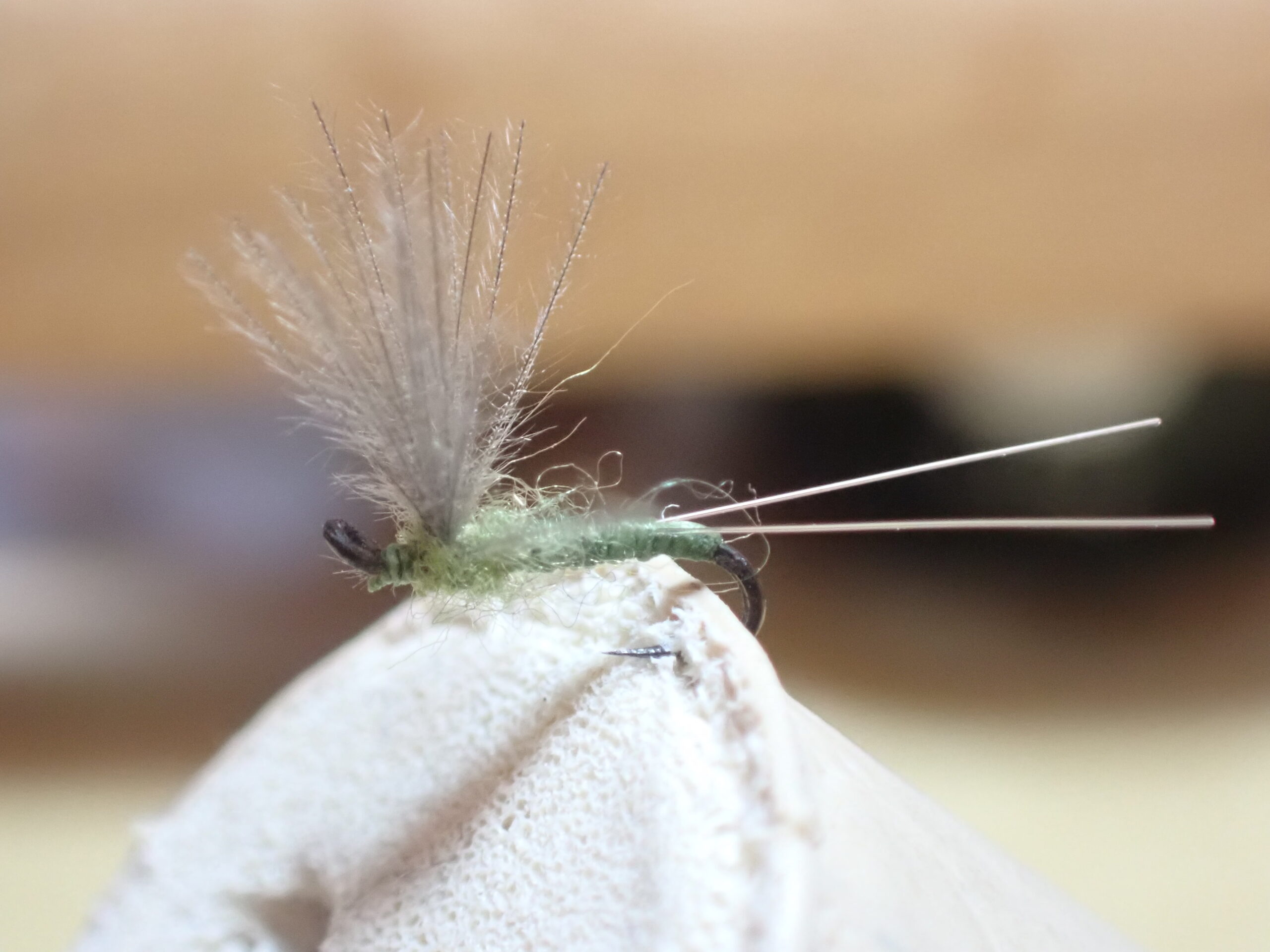
A second style of western green drake dry fly that I tie is the comparadun. Here is one of my early posts on the comparadun style of green drake. This narrative goes into great detail about my technique for splitting microfibbet tails, but I have since reverted to long moose mane fibers. The moose mane seems to float the comparadun that is void of hackle better than the microfibbets, and more importantly, the trout seem to favor the long dark tails as well.

Size 14 GD Comparadun

I also attempt to make a very full fan wing on my comparaduns. My theory is that the comparadun style shines after lunch when the naturals appear because the large dark wing triggers a response akin to the large fluttering wing of the naturals.

Nice Large Fan Wing – Trout Key on the Big Wing

I generally begin my day during prime green drake hatch season with a parachute green drake, and sometimes that is all I need. But I have also experienced days when the trout begin to refuse the parachute, and in these instances I shift to the comparadun, and quite often the low riding comparadun with the long tail and full wing does the trick. The muted colors of the comparadun make it difficult to track, but under the proper lighting conditions and because of its substantial size, I can generally pick it up.

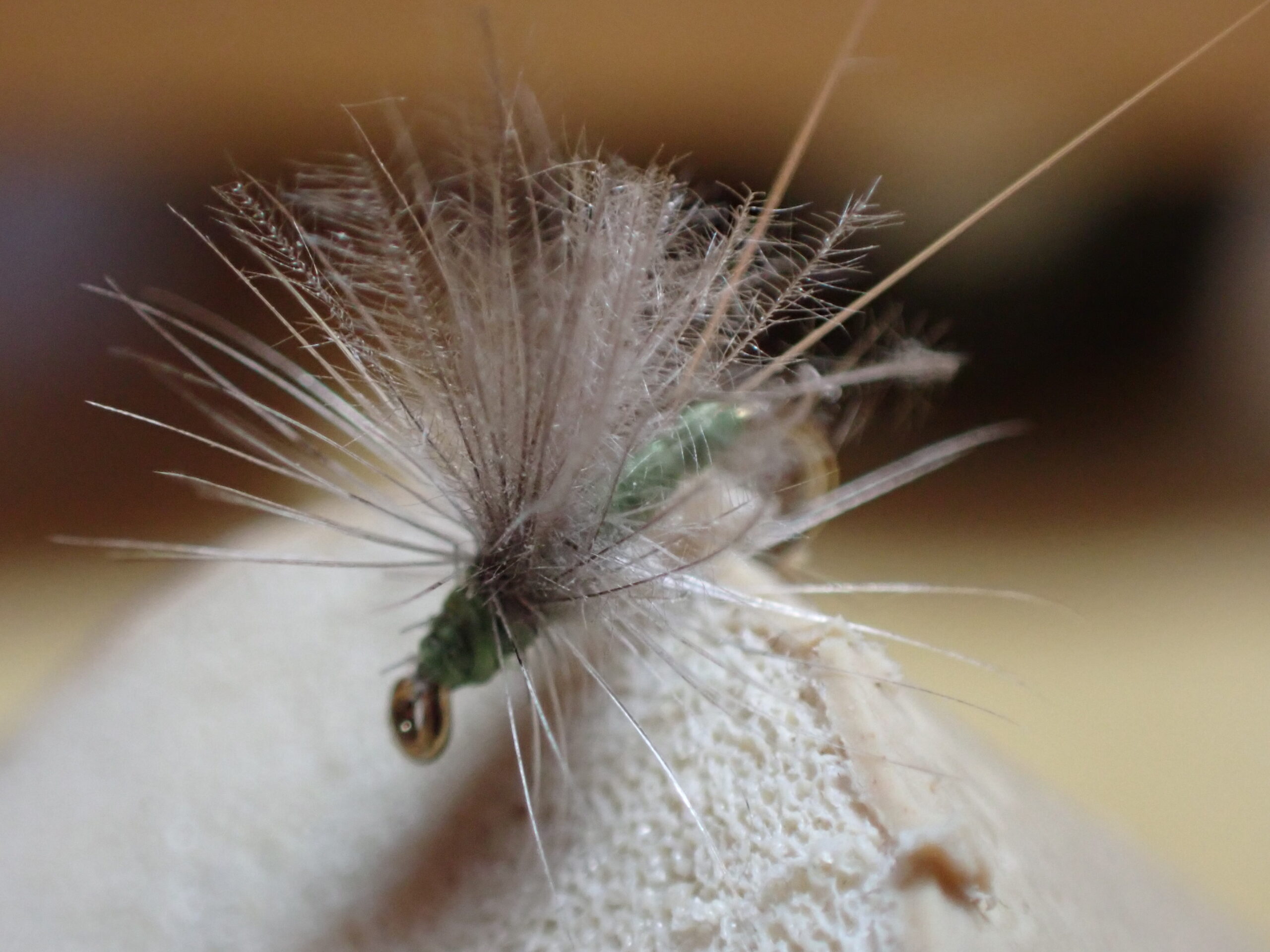
Looking Closer

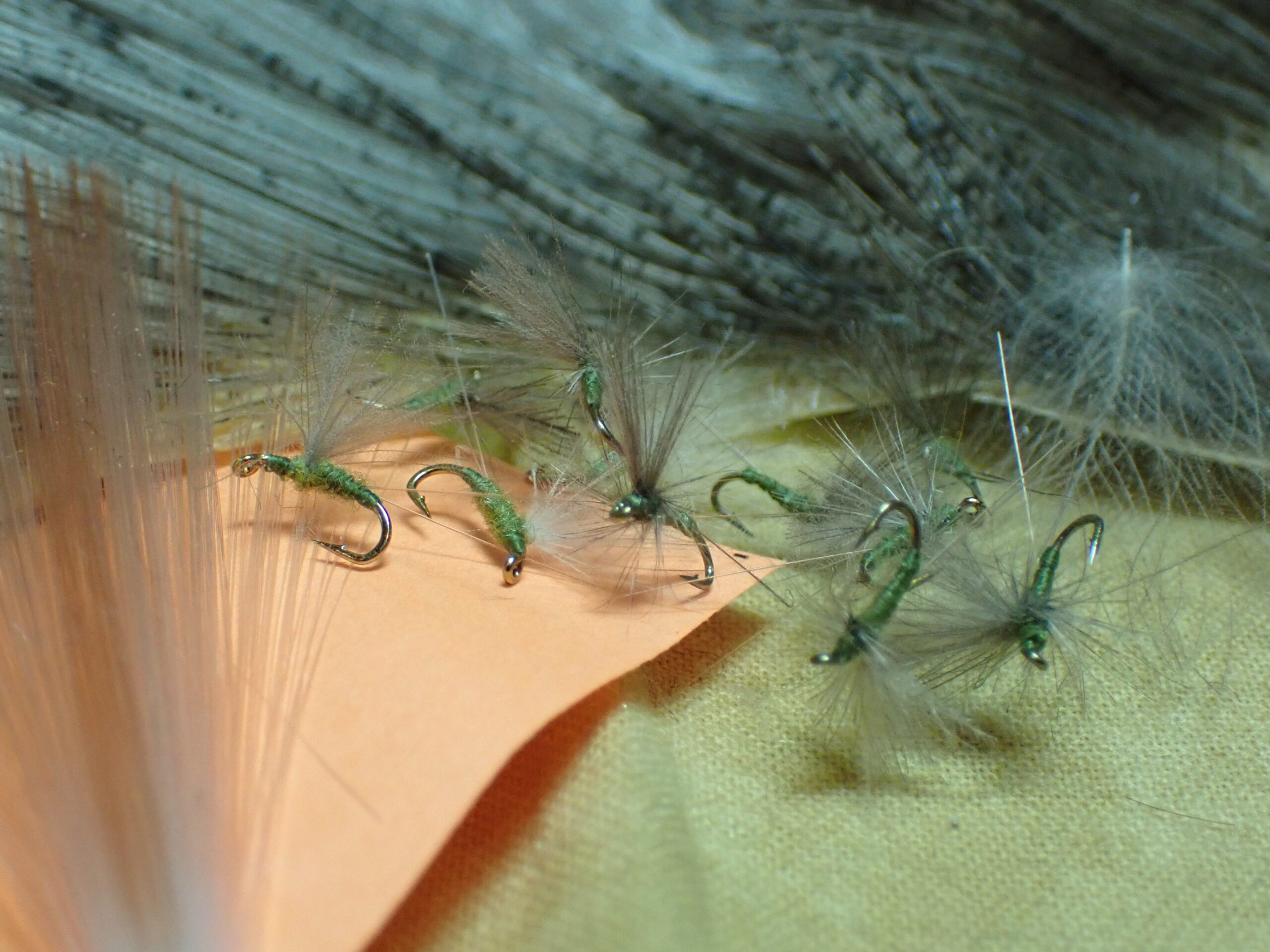
I counted my supply of green drake comparaduns and concluded that my stock was adequate. I found one unraveling version, so I repaired it, and I am prepared for the 2026 green drake season.

Mini Chubby Chernobyl – 01/24/2026

Mini Chubby Chernobyl 01/24/2026 Photo Album

The mini chubby Chernobyl is a fairly recent addition to my fly box, but is has already proven itself to be a nice complement to my array of foam dry flies. Check out my fist post on the chubby on 02/04/2024 for more insight on why I adopted this fly as a winner.

Right Side View

As noted on my 02/04/2024 post, the mini chubby offers a nice downsizing choice, when the trout are inspecting my larger chubbys or hopper patterns and refusing them. The fly is somewhat smaller, but it remains quite buoyant and maintains the profile of a grasshopper or stonefly.

Nice Wing Angle

On several occasions this fly was on fire, although it’s productivity in 2025 did not equal 2024. Nevertheless, I like carrying a decent supply of these, and they are much easier to tie than the full scale chubby Chernobyl.

Five New Chubbys

I tallied my mini chubbys in various storage locations and determined that I required two more to round off my inventory. I produced two, and I was on a roll, so I churned out another three to bring my additions to five. I cannot wait to toss a mini chubby in 2026.

Hippie Stomper – 01/23/2026

Hippie Stomper 01/23/2026 Photo Album

Read my post of 01/13/2018, as it documents my fortuitous introduction to the hippie stomper. I labeled it hippy stomper, before I learned from its creator, Andrew Grillos, that it was spelled with an “ie”.

This fly has grown from an obscure random introduction to the top producing dry fly in my fly box. I love the hippie stomper. I carry red, silver and purple body versions, but the real workhorse fly is the one with a peacock dubbed body. The hippie stomper produces all season long, and it does double duty as a fish catcher as well as an indicator.

Peacock Body

I particularly like to use a hippie stomper as the first fly in a double dry arrangement with a smaller more imitative dry trailing on a twelve to eighteen inch dropper. The buoyant hippie stomper with the white wing allows me to track both flies. This ploy is especially useful during the blue wing olive hatches, when the tiny olive tufts are nearly impossible to follow under cloudy skies and glare conditions. Many times I am surprised with the effectiveness of the hippie stomper itself in this double dry configuration.

Ready to Float

Used as the surface fly on a dry/dropper is another effective approach; however, I do not combine it with a heavy nymph such as a 20 incher or olive perdigon. A single beadhead or a beadhead along with a tiny RS2 work quite well.

Very Popular Fly

I counted my supply of hippie stompers, and this exercise revealed the need for an additional ten. I refurbished three and tied an additional eight to add eleven to my collection. They were all the peacock body variety, as I rarely deviate from this choice, and I have adequate quantities of the other colors. I cannot wait to tie a hippie stomper to my line in the new season.


Griffiths Gnat – 03/03/2025

Griffiths Gnat 03/03/2025 Photo Album

I searched back in time across this blog, and I found no posts on the Griffiths gnat. I know I have tied some, so I suppose I neglected to write a report on this diminutive fly. It requires only two materials aside from the hook and thread, and those two are peacock herl and grizzly hackle. The aspect of this fly that makes it challenging to tie is its small size.

A Model Griffiths Gnat

I expanded my efforts to fish in lakes over the past several years, and midges comprise a huge portion of the biomass in stillwaters. A Griffiths gnat is purported to be a solid imitation of an adult midge, so adequate quantities in my fly box are highly recommended. I have tied a griffiths gnat to my line from time to time on lakes, but I would characterize my success as sporadic. Unfortunately I knot one of these on my line, when the fish are rising sporadically, and I am not certain what they are eating, so I may be misjudging the source of the trout protein.

A Clump of Four

Apparently I had not tied these in a while, so I counted my supply and concluded that I could use another four, so I settled at my tying station and generated them. I am ready for stillwater action in 2025.

Tricos – 03/01/2025

Tricos 03/01/2025 Photo Album

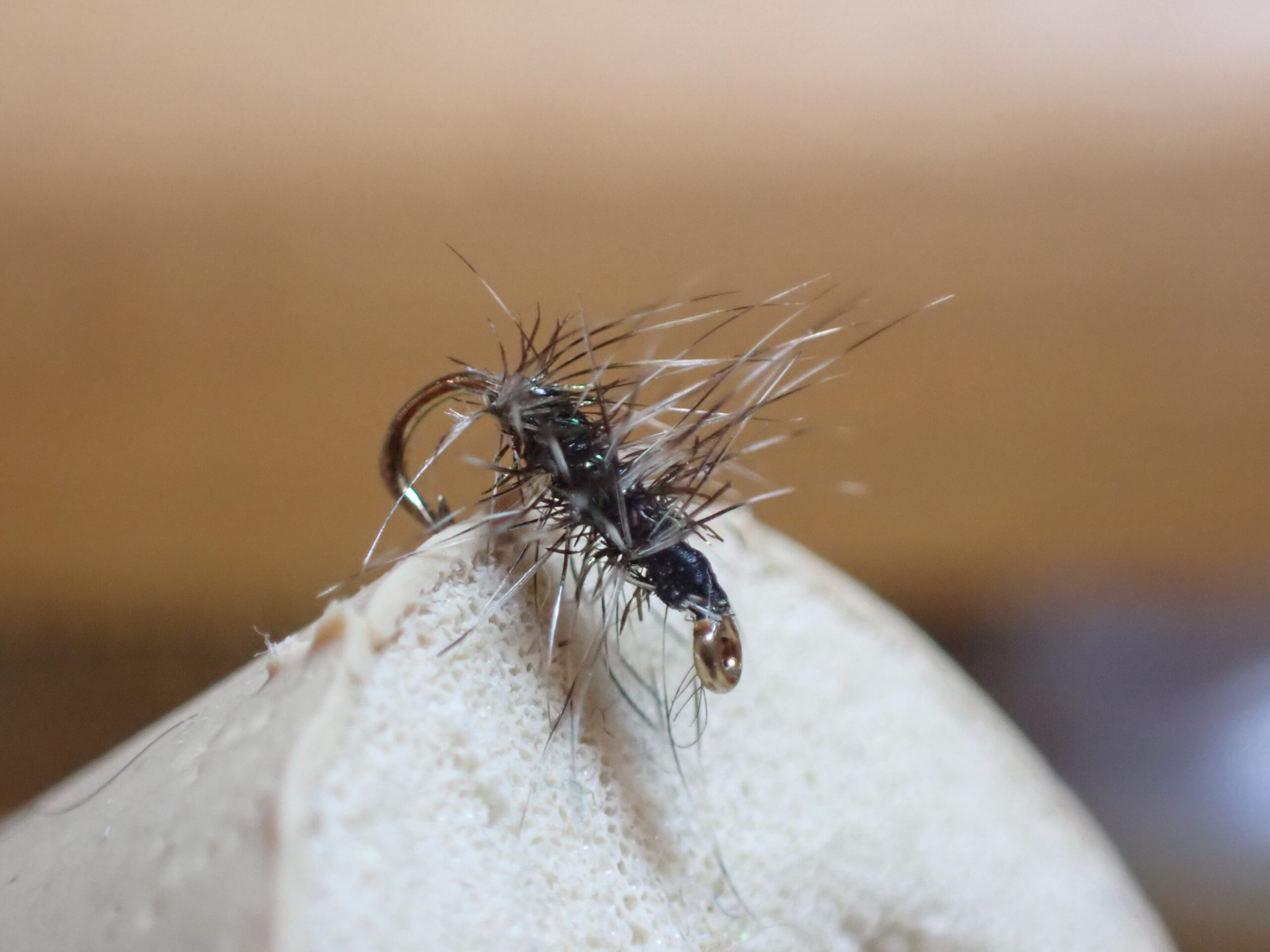
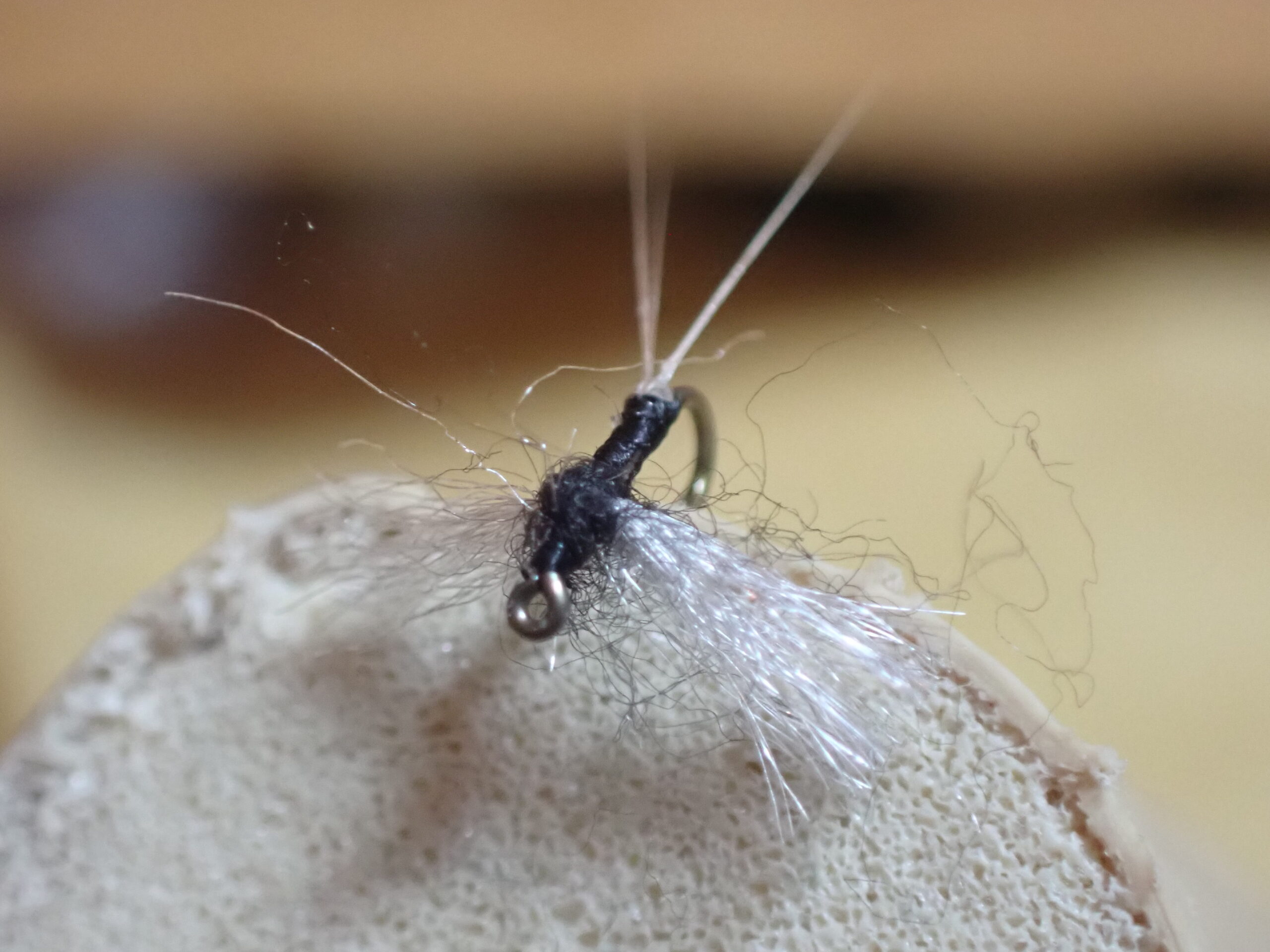
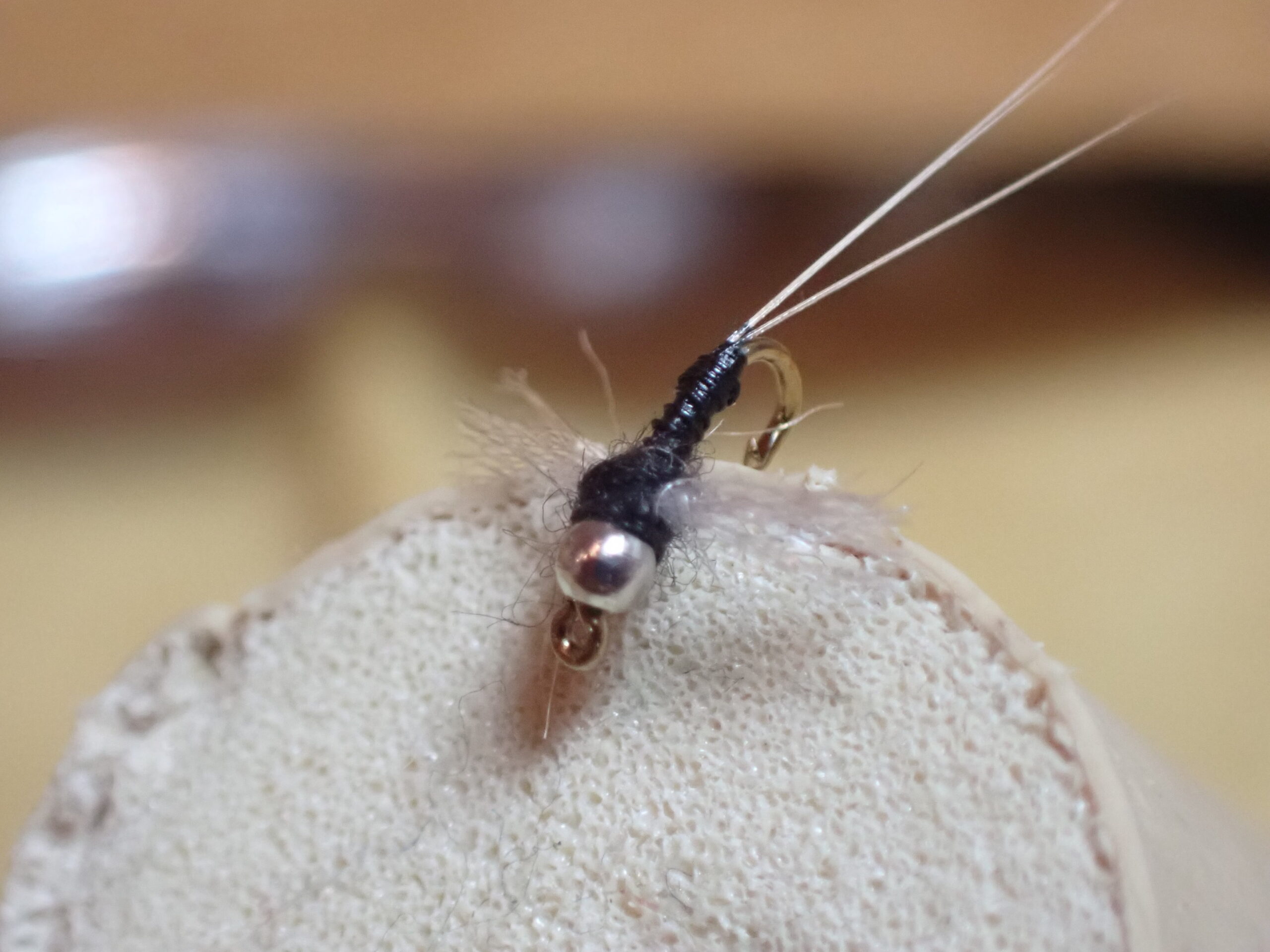
For an excellent description of my introduction to trico spinners along with a materials table and other information, click on my post of 01/15/2012. After a particularly frustrating day on the South Platte River I created trico spinners using CDC for the spent wing. My post on 02/27/2019 describes this effort to imitate the tiny but abundant mayflies. My post of 12/05/2011 describes my history with sunken tricos. This is also worth a read.

Trico Spinner

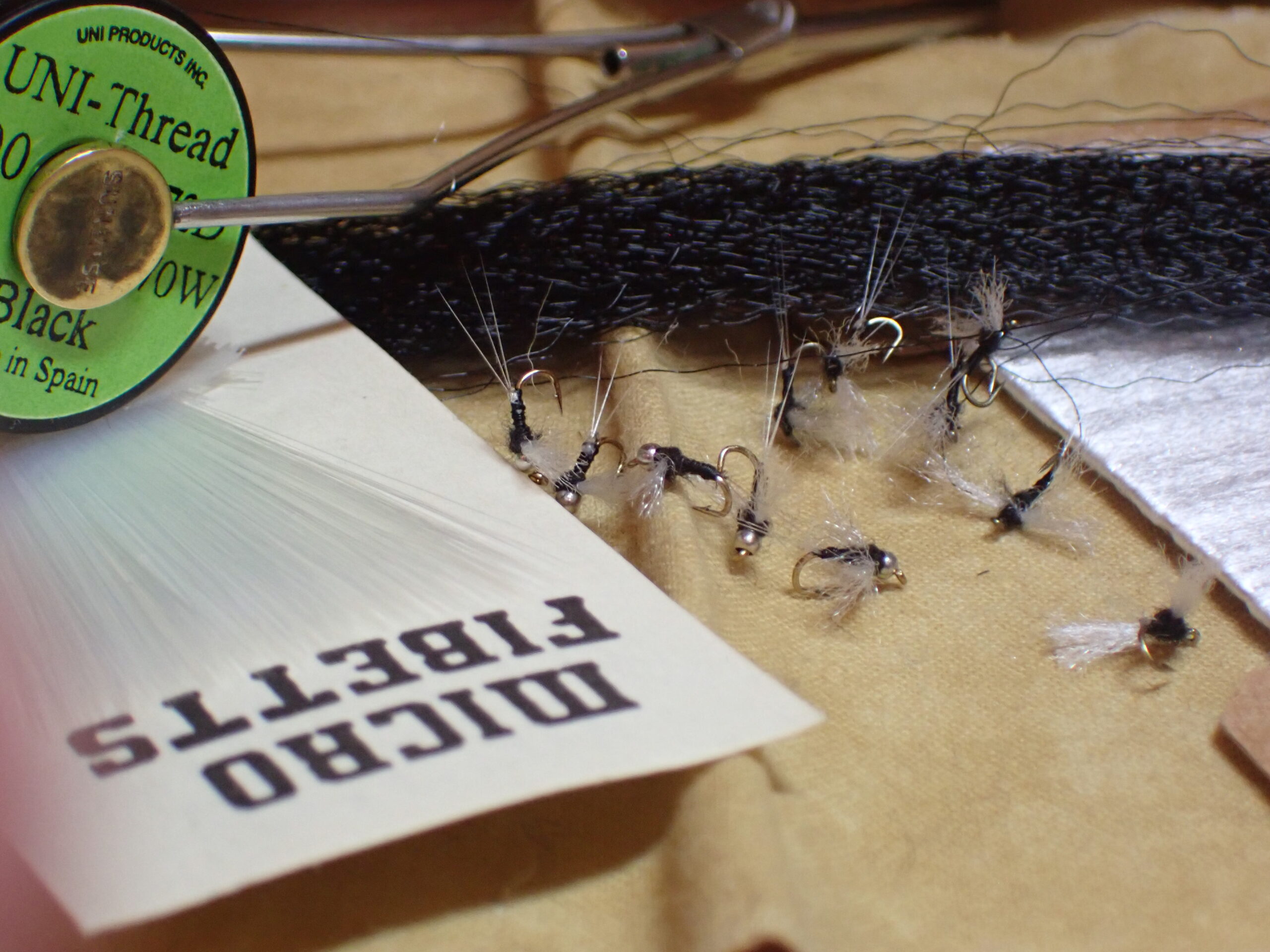
I failed to encounter a trico hatch in 2024; however, in an effort to cover all my bases, I counted my supply of spinners in size 20, 22, and 24 and sunken tricos in size 22. I concluded that I needed to tie five additional spinners in size 24, one size 20, and five sunken tricos. I experimented with various materials for tricos over the years, but for this iteration, I used white microfibbet tails, black thread bodies, white antron for the wing, and fine black dubbing for the thorax. For the sunken tricos I added a strand of super hair wound around the hook shank for the abdomen.

Sunk Trico

Hopefully I will encounter a trico hatch and spinner fall in 2025. I need to make a point of visiting the South Platte River in Eleven Mile Canyon, as the trico event is a regular occurence there. As I have learned in the past, it can be an exercise in frustration, but an experienced fly angler needs challenges from time to time.Trico Assortment


Purple Haze – 02/18/2025

Purple Haze 02/18/2025 Photo Album

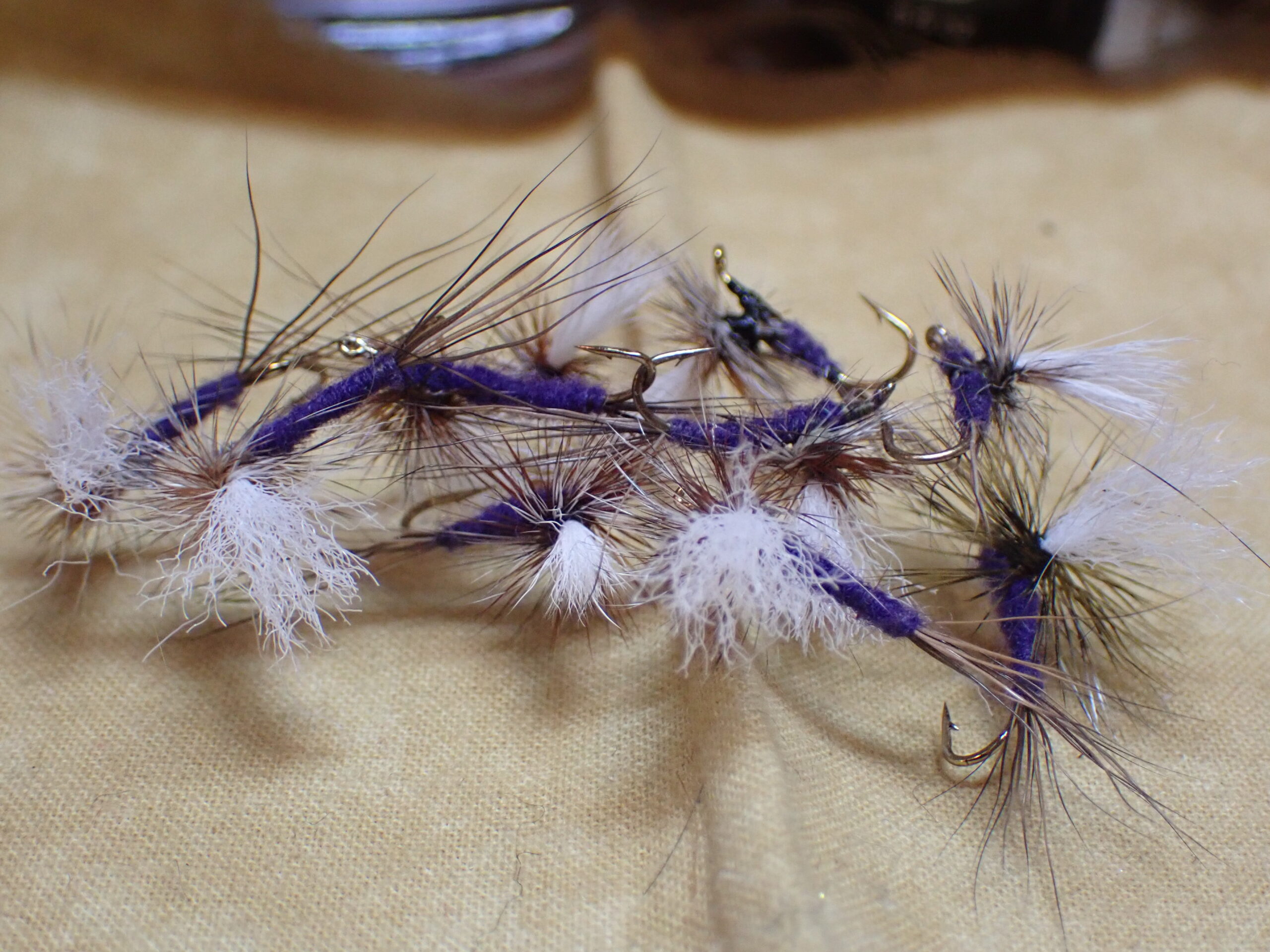
You may begin familiarizing yourself with the purple haze by accessing my 02/15/2021 post. Here I describe my introduction to the purple-bodied attractor, and a materials table is presented. I use purple dubbing for the body, but I believe the original fly uses a purple floss thread.

This fly is a relative newcomer to my winter fly tying progression. I attempted to incorporate its usage into my seasonal fishing routine, but I must admit that it tends to lag my usage of the hippie stomper, stimulators and deer hair caddis. Nevertheless, I have allocated some time to the purple haze over the past several summers, and it has produced a few nice fish.

Flies from Storage

I opened my fly storage containers and counted my purple haze population, and I concluded that I was adequately stocked with eighteen size fourteens present. I decided to skip tying the purple haze this year, but I am prepared to tie more should they suddenly be in high demand and require replenishment.

Yellow Sally – 02/18/2025

Yellow Sally 02/18/2025 Photo Album

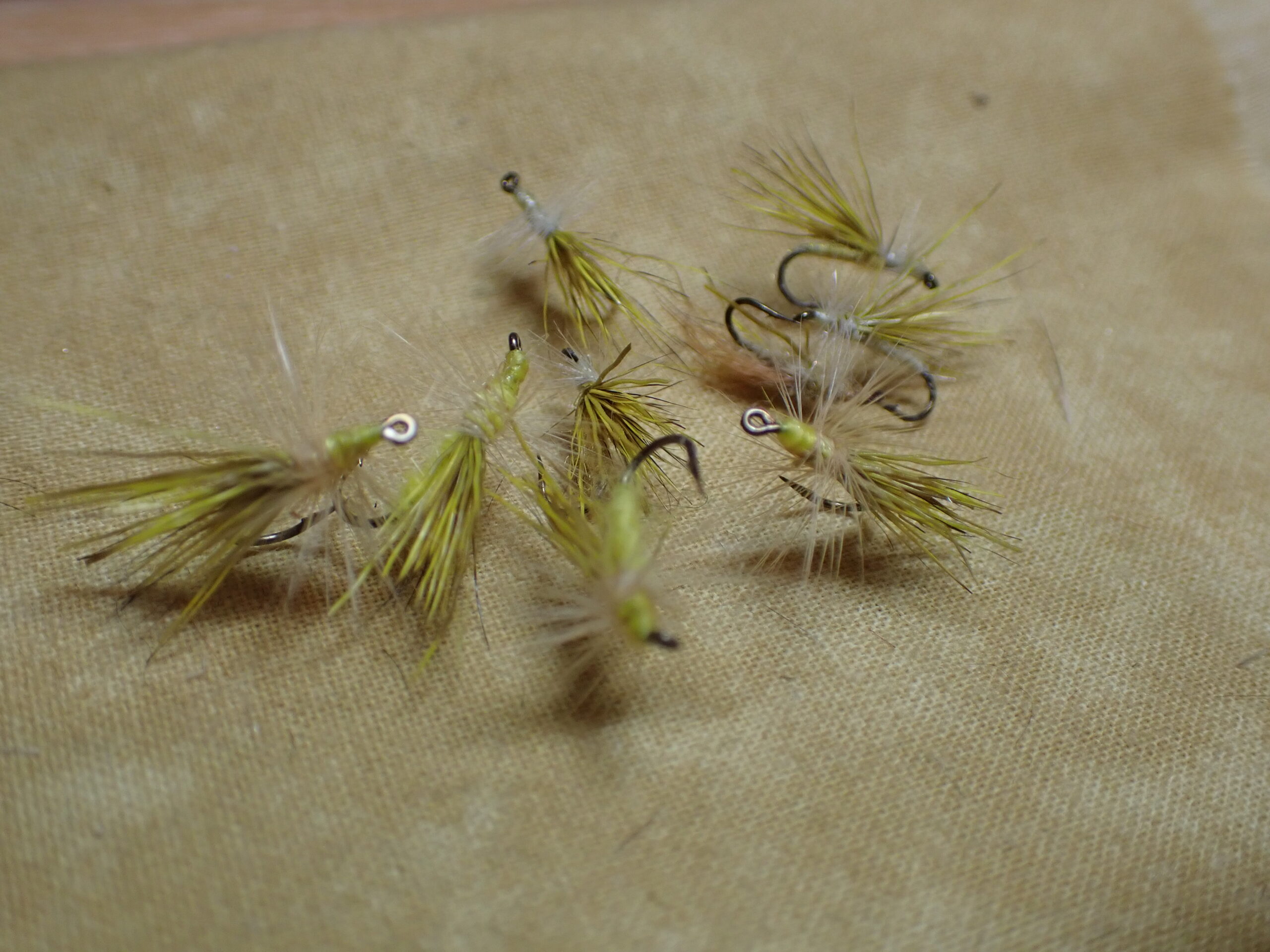
My earliest post on the yellow sally was on 02/02/2016, and the latest was 02/26/2020. I read both of these, and they are informative, if you have an interest in yellow sallies. Both describe the circumstances that provoke the usage of a yellow sally dry fly.

It has been a few years since I encountered a dense yellow sally hatch like that which amazed me on the Eagle River. Nevertheless, I spy these small stoneflies fluttering over the water quite often during July, August and early September. They are quite prevalent, so it is a good idea to carry some in your fly box. If you read my earlier posts, you will learn that I experimented with several different styles of yellow sally, but I returned to the basic deer hair version. It is tied in the same way as a deer hair caddis, albeit with yellow deer hair for the wing, a yellow dubbed body and ginger hackle.

From My Storage Box

Although I have not tied additional yellow sallies in several years, when I counted my supply, I concluded that I retained sufficient numbers to get me through the 2025 season. Thinking about yellow sallies makes me anxious for summer, and that is not a good thing, since it is only the middle of February.

Klinkhammer BWO – 02/16/2025

Klinkhammer BWO 02/16/2025 Photo Album

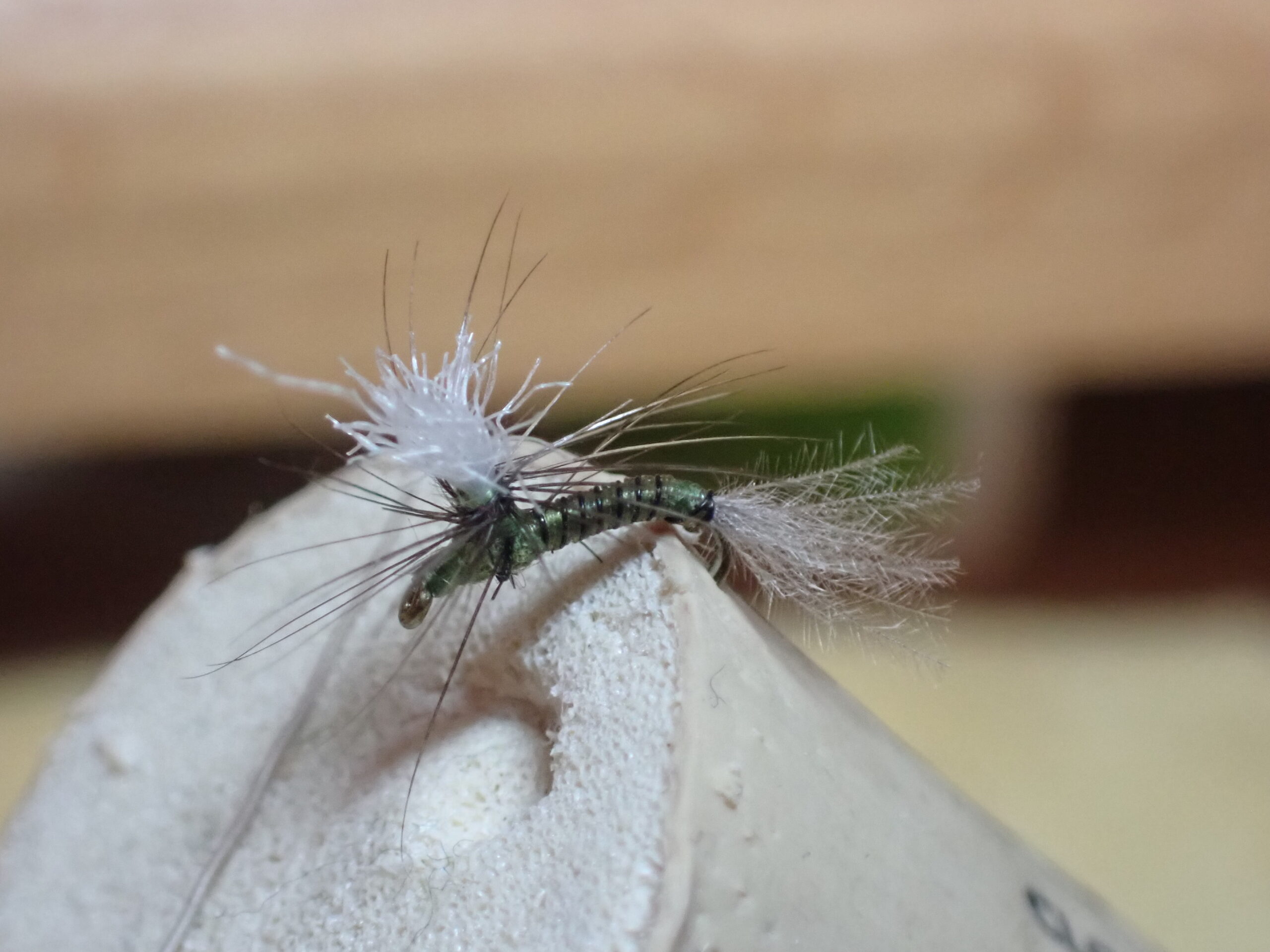
I recommend reading my post of 01/09/2018 for a more detailed explanation on the circumstances that cause me to knot a Klinkhammer BWO to my line. This article also includes a materials table.

Originally I envisioned the Klinkhammer emerger pattern as a solution to the riddle of disappointing results, when using my CDC blue wing olive during a baetis hatch. I thought that the fish were grabbing emergers, before they were blown away by the strong gusts of wind, and the Klinkhammer style with the dangling abdomen and shuck seemed like a solid bet to solve the riddle. Tilt. They did not perform any better than the CDC blue wing olive, although I have experienced sporadic luck with them. The white wing post is a positive, as it allows me to track the fly better than the gray CDC.

Visible White Wing Post Is Welcome for Tracking
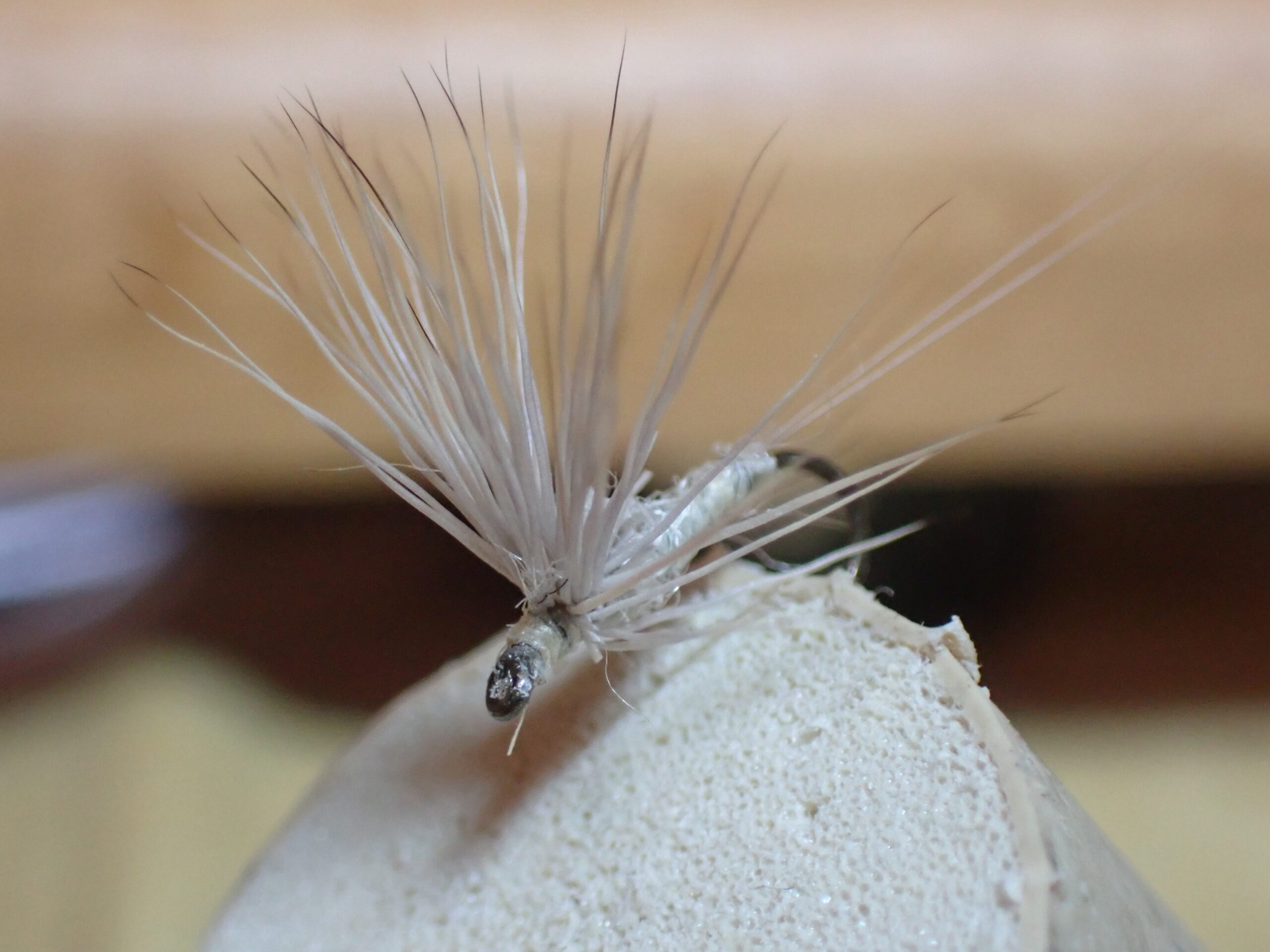
I still carry a supply of the Klinkhammers, and I decided to count the quantity in my bins. The inventory yielded the conclusion that I possessed an adequate supply, so I did not tie additional quantities for 2025.

Comparaduns – 02/16/2025

Comparaduns 02/16/2025 Photo Album

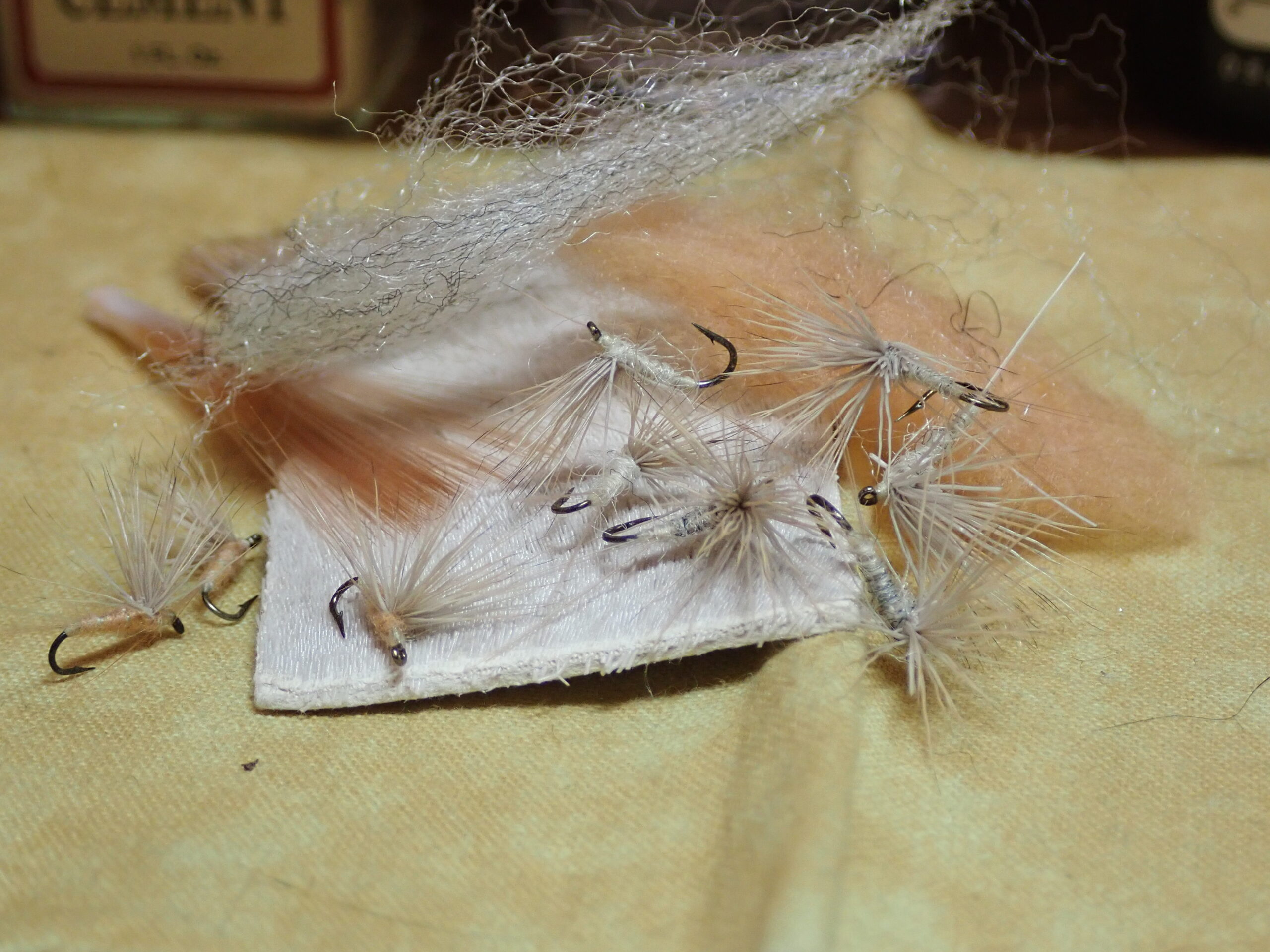
For the background story on my relationship with the comparadun, read my post of 02/21/2014. I just read it, and it brought back many of the details embedded in the adoption story of this fly. I highly recommend reading it, if you are not familiar with or a proponent of this style of fly.

Nice Fan Wing Size 16 Light Gray Comparadun
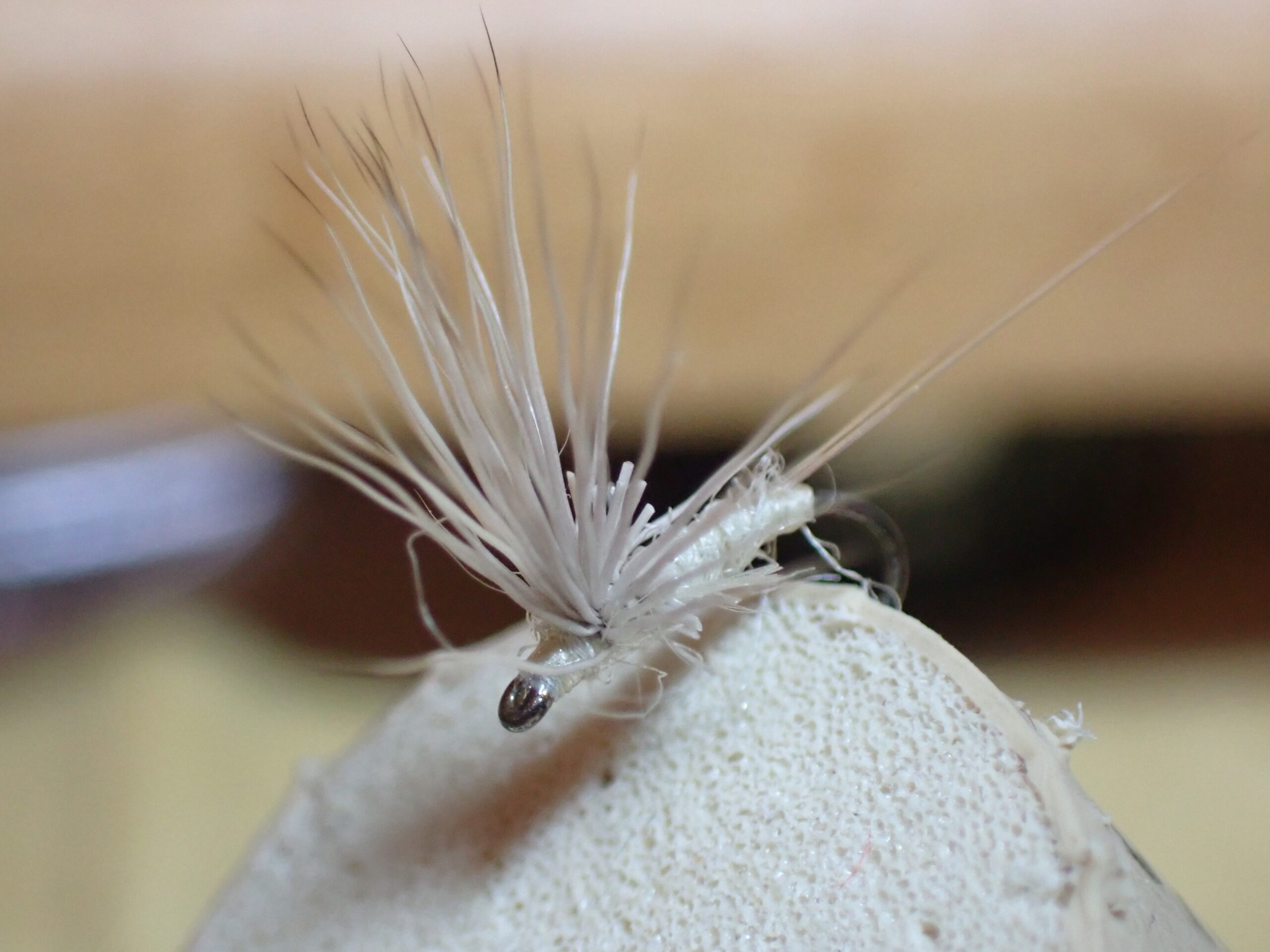
During a pale morning dun hatch, these comparaduns are indispensable. I carry them in size sixteen and eighteen and with cinnamon and light gray body colors. My poly light gray dubbing has hints of light yellow in it, and I think this is a key to its effectiveness. I bought the stuff in Pennsylvania at the inception of my fly tying career, but I retain a huge supply, and this alleviates any concerns about running out.

Size 18 Light Gray on a Refurbished Hook
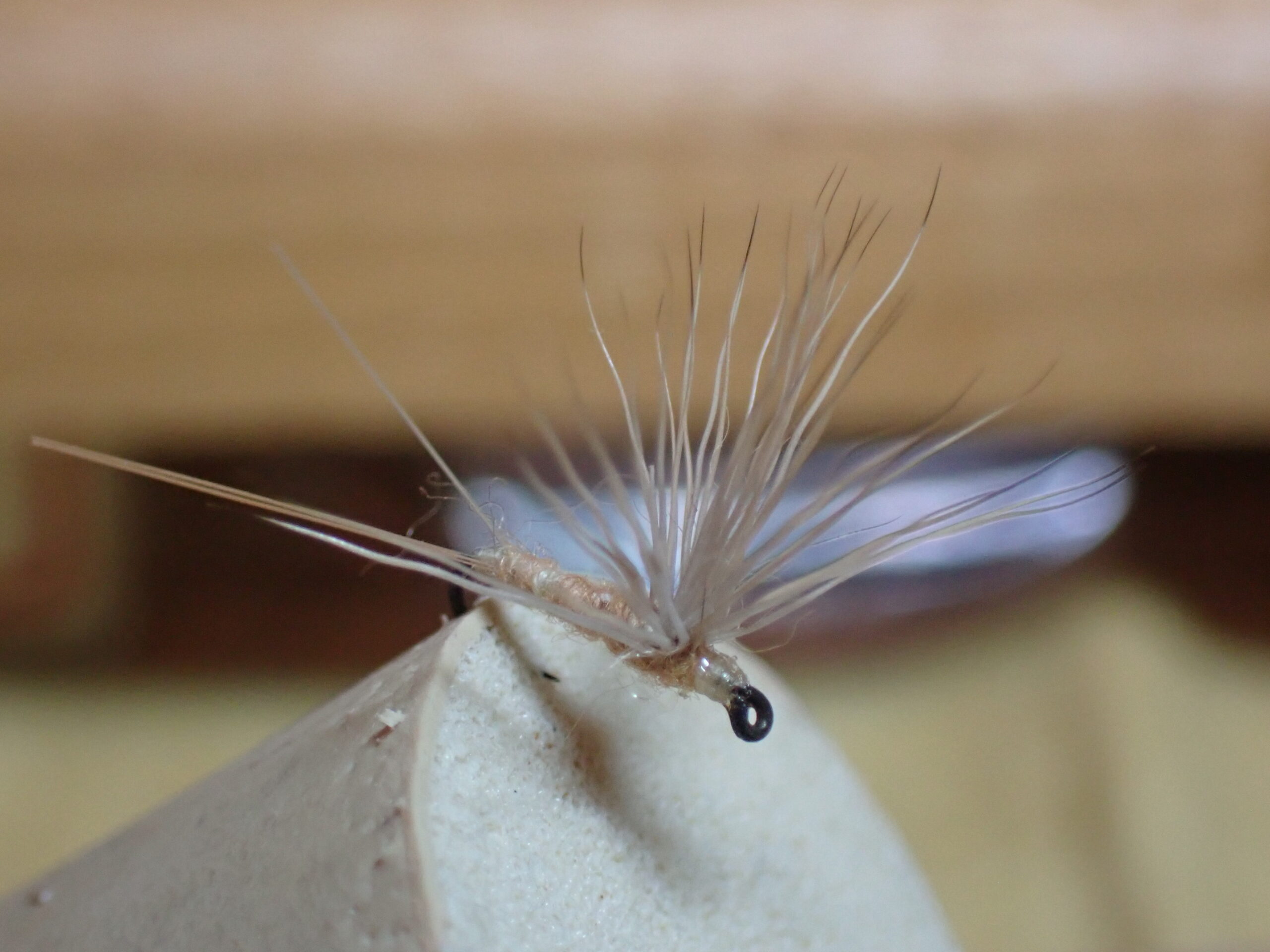
I have experienced many fantastic days of fishing to pale morning hatches, and rarely do these comparaduns let me down. I have hit the PMD hatch on the Colorado River in July, the Yampa River in June, the South Platte River in late June and July, the Arkansas River in July, South Boulder Creek in August through September, and the Frying Pan River during August through October. The cinnamon comparadun shines on the Frying Pan River.

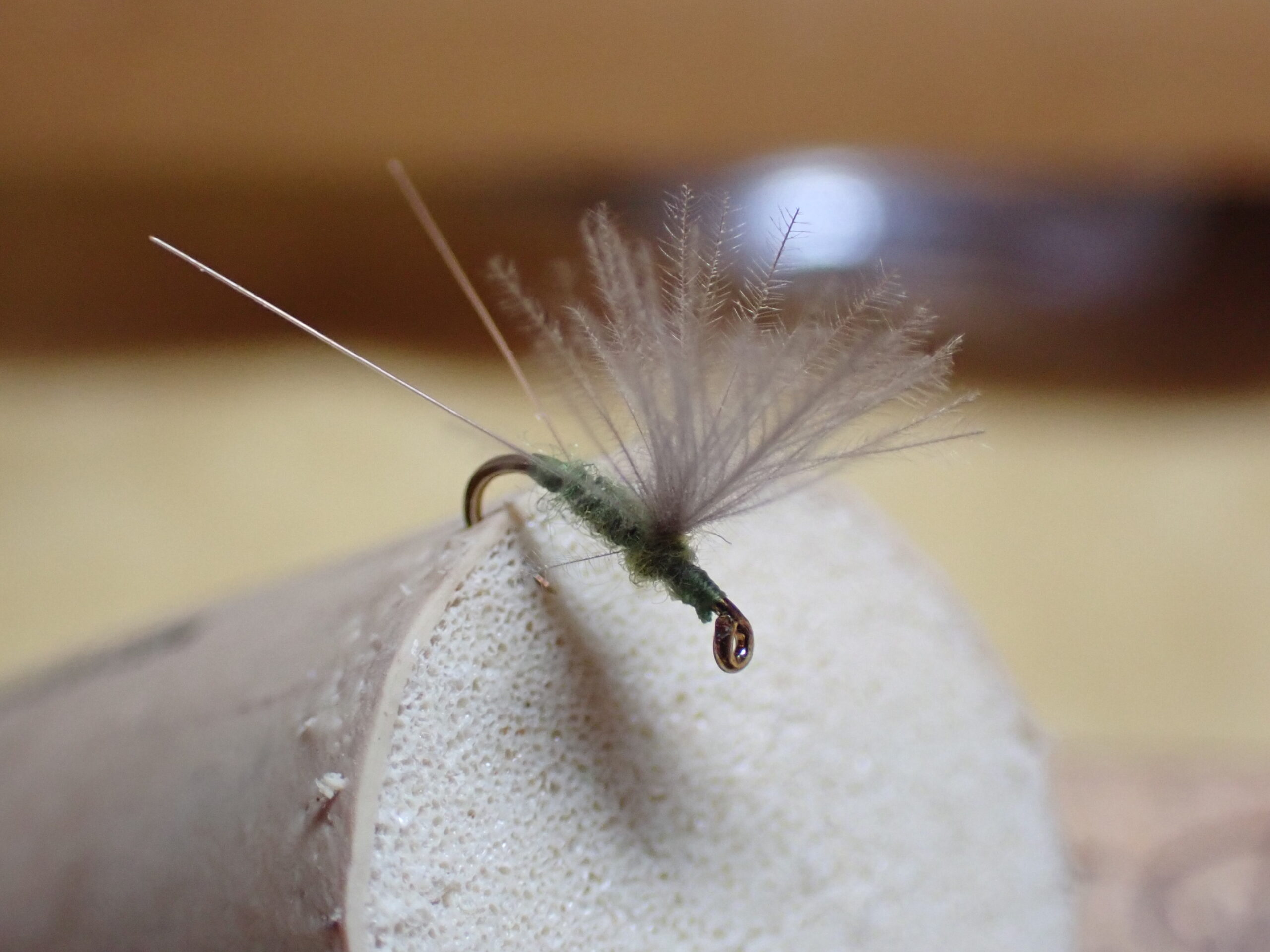
Size 18 Cinnamon Comparadun

I usually test the cinnamon version first, and on rare occasions the trout ignore it, so I switch to the light gray body color. Rarely do I find that neither of these flies work. As an aside, the salvation nymph and pheasant tail nymph are also stalwart performers before, during and after PMD hatches, but I usually use the hatch as an opportunity to fish the comparadun dry fly.

Nine New Comparaduns with Associated Materials
As is my practice, I counted my comparaduns, and I concluded that I needed to add three size 18 cinnamon, two size 18 light gray, and four size 16 light gray. Actually, I probably could have skipped tying any, but I wanted to round out my inventory to multiples of five. Why? Don’t ask. It’s just who I am.

CDC Blue Wing Olive – 02/14/2025

CDC Blue Wing Olive 02/14/2025 Photo Album

For a look at my history with this fly inspect my post of 02/18/2022. I was unable to search for more recent posts, so this leads me to believe that I have not tied these flies in a few years. That is hard to accept, because I use and lose these tiny morsels quite frequently; however, I used my chronological listing of posts to scroll back through fly reports for 2023 and 2024, and I found no more current titles referencing CDC blue wing olives. It is also possible that I forgot to complete a write up.

Size 20

At any rate, I tie these flies in three sizes; 20, 22, and 24. I also tie other small blue wing olive imitations such as the Klinkhammer version and soft hackle emergers. Generally the CDC BWO tied comparadun style gets the job done, but frustrating episodes, where the fish ignore my trusty mainstay led to experimentation with variants. Recently small soft hackle emergers fished in the film with floatant have brought a degree of success particularly during windy conditions. I suspect the soft hackle and the swept back fluoro fiber wing represent a cripple or a fly struggling to get airborne in cold temperatures with strong wind.

Minute Size 24

I also suspect that the trout key on movement, and the dead drifting motionless CDC blue wing olive does not cut it, when motion is the image that trout are scanning the surface for. For this reason I tied a few hackled CDC BWO imitations to experiment with in the upcoming season. I made these in size 22, and they are the same as a CDC BWO, except that they feature a small hackle collar wound behind and in front of the wing.

Hackled Variety

My annual count of CDC BWO’s suggested that I tie four size 20’s, two size 24’s and five size 22’s with hackle. I am anxious to continue the experiment with CDC BWO variations in 2025.

Eleven New CDC BWO Flies