Category Archives: St. Vrain Creek

North Fork of St. Vrain Creek – 05/05/2012

Time: 10:30AM – 3:30PM

Location: From fork in the trail upstream to the pond below the dam

Fish Landed: 8

North Fork of St. Vrain Creek 05/05/2012 Photo Album

After working four days during the first week of May, I was looking for opportunities to fish on Saturday before run off kicked up in a major way. Jane was up for joining me on a trip depending on the destination. I checked out the flows and reports on Clear Creek, the North Fork of the St. Vrain below Buttonrock Reservoir, the South Platte at Deckers, and the Big Thompson below Lake Estes. The flows looked nearly ideal on the St. Vrain and the report from Rocky Mountain Anglers in Boulder was favorable, so we decided to make this our location for the day. Accessing the stretch of water below Buttonrock Dam involves a 30 minute hike on a dirt road that runs along the stream. Bikes and cars are prohibited, so this was a nice location for Jane to do some hiking.

We arrived at the parking lot by 9:45 and after a nice hike on the gradually graded road, I was in the water fishing by 10:30AM. We stashed our lunch and a stadium seat for Jane by some rocks between the road and the stream, and I walked back down the road beyond the spot where a second road cuts off to the reservoir. Jane meanwhile continued her hike to the dam and lake above.

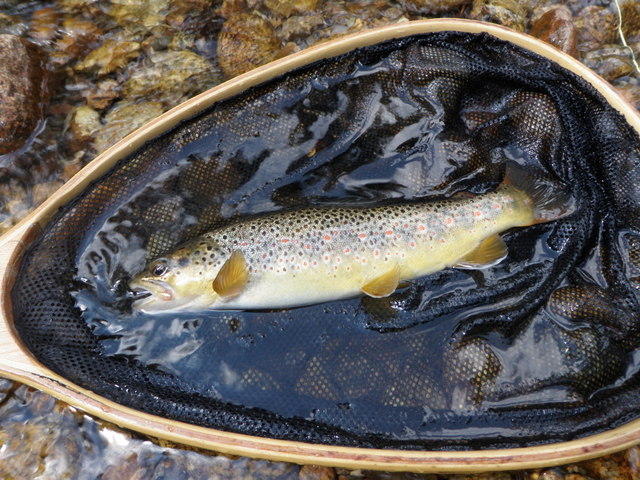
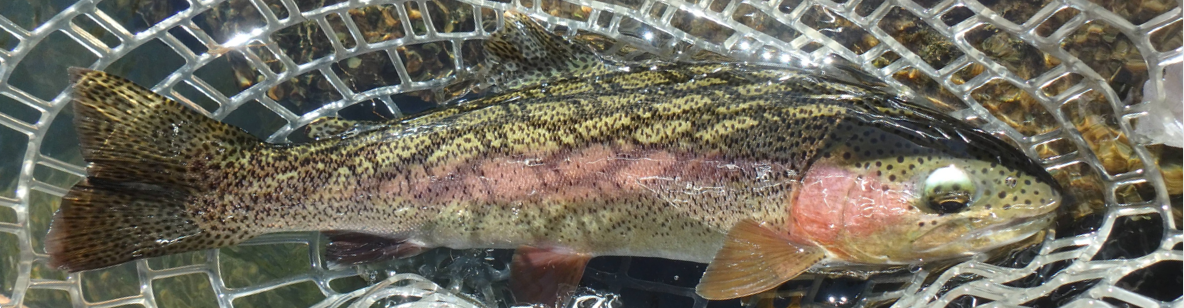
I began with a yellow Charlie Boy hopper for visibility and good floatation and dangled a beadhead hares ear nymph 2.5 feet below the bend of the hopper. I methodically began working my way upstream and covered the likely holding locations. It didn’t take long before the hopper dipped and I landed my first small brown trout on the day. This continued until noon when I arrived at the series of nice deep pools across from where we stashed our lunch. I had landed five trout, four browns and one glimmering rainbow, and most of the fish came from obscure small pockets along the left bank as I faced upstream. One of the browns actually inhaled the large foam hopper.

Pretty Rainbow

Jane had returned from her hike and was sitting along the road high above the stream. At the tail of the lower pool I landed a ten inch brown and watched a refusal in the current seam. I moved up a bit and cast to the top of the current and let the hopper drift downstream to the tail. After a five foot drift the hopper dipped and I set the hook and felt the temporary weight of a fish. Unfortunately the weight disappeared as quickly as it began, and I was disappointed to have flies back at my feet with no reward.

My focus was renewed by the near miss and I climbed some rocks to the middle pool and made some drifts through the center and spotted two refusals to the hopper. A trend was developing with hopper refusals, and I decided to switch to nymphs for this nice deep run after lunch.

My Favorite Scene

I climbed up the bank and joined Jane for lunch. She had hiked to the lake above the dam and observed quite a few fishermen and showed me some photos she’d snapped with her iPhone. The water level in the dam was already eight to ten feet below the high water line on the rocks. The lake had opened for fishing on May 1, and she spoke to a pair of fishermen who had caught one trout each. While we ate our lunches a man walked by with his two golden retrievers, and of course the dogs wanted to jump in the pool I had targeted for nymphs after lunch. After they jumped in and thrashed around a bit, he added to the mayhem by tossing some sticks and stones in the water.

After this disturbance I elected to fish the smaller top pool in the series and continue on my way upstream. I kept the hopper dropper on but added a size 22 beadhead RS2 below the BHHE as I began to observe a few small mayflies in the air. The sky was partly cloudy for the most part over the remainder of the afternoon. I’d fished for half an hour or so with no action, and I felt that I should be catching some fish, and I began seeing a few more BWO’s in the air, so I decided to try an indicator with split shot and two flies including the RS2. The top fly of the two was a bright green caddis pupa. Between 2 and 2:30 I approached a nice long run toward the middle of the river where the smooth slick fanned out to a nice slower moving pocket of moderate depth over a rocky bottom. On the first drift I observed a refusal to my red strike indicator. This usually happens a couple times during a season of fishing.

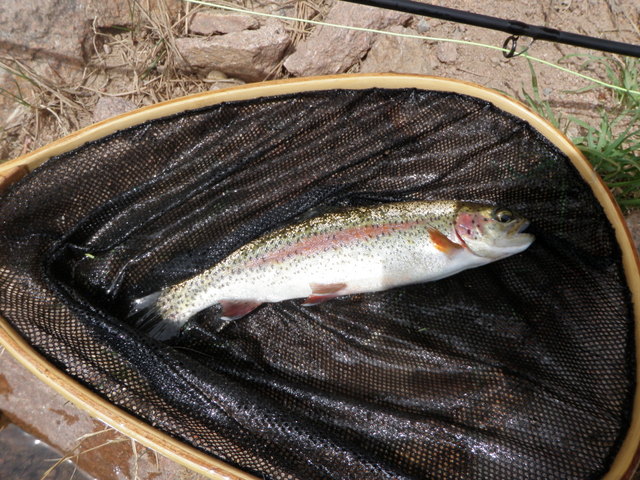
I put some more nice drifts through the attractive water and witnessed a pause in the indicator and set the hook and this time I was attached to a decent fish. As I played the fish I could feel the fish roll on top of the line and then felt the hook slip, but I was still attached to the fish. Apparently the fish had slipped the top fly but then got foul hooked by the trailing RS2. When I finally netted the fish I discovered a 15 inch lake trout. I inspected my flies and flicked them to the top of the long pocket and once again saw a pause and set the hook. This time I played a nice chunky rainbow to my net and photographed it. The rainbow had fallen for the bright green caddis pupa and represented the nicest fish on the day.

Chunky Rainbow

Could this spot hold more fish? This period represented the most intense BWO hatching time, as I observed 5-10 over a half hour period. Why weren’t the fish going for the RS2 instead of the bright green caddis? I made a couple more casts and tried the jigging action that worked on the Arkansas with periodic quick tip lifts as the flies tumbled through the sweet spot and I was rewarded with a hit and felt the throbbing of my rod. This fish cleared the surface of the water and I could see that it was brown, but for some reason after it re-entered the water it came free. I brought my flies in to inspect and realized that the line broke at the knot just below the split shot, so I assume it weakened with the fishing and occasional snags on sticks and rocks. I’d now hooked a rainbow, a lake trout and a brown in this relatively obscure deep slot.

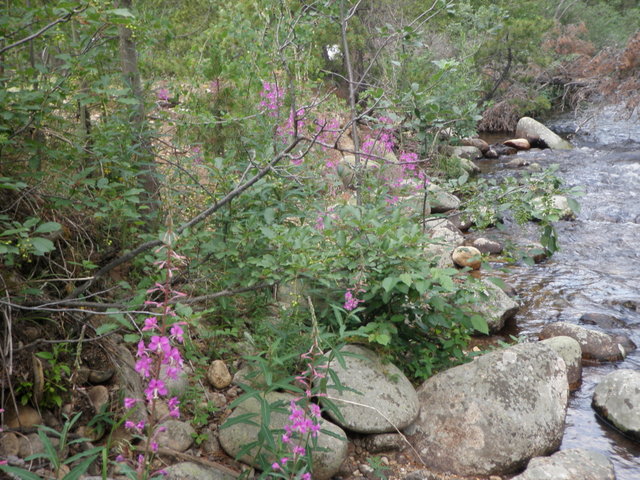
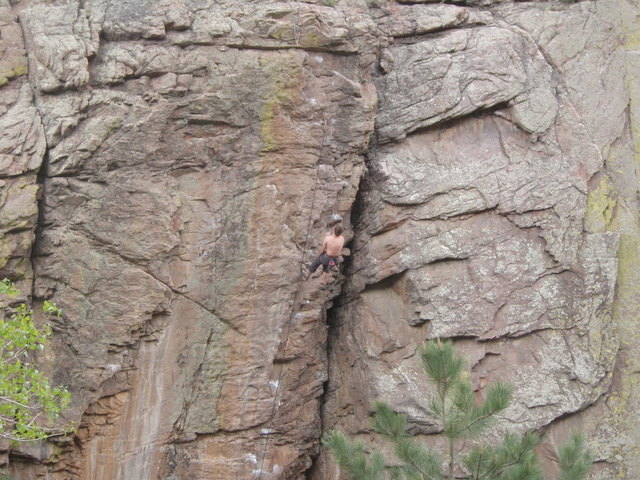
Rock Climber Near Canyon Entrance

After some additional unsuccessful probing of my hot spot I moved on up the stream and managed to land one more small brown on the bright green caddis pupa. The water between my hot spot and the settling pool below the dam was largely unattractive with fast white water and small pockets that didn’t hold fish. I reached the settling pool and hiked back down the road and found Jane in her stadium seat reading her Kindle. I dropped down the nice run that had been disturbed by the dogs and ran my nymphs through the sweet spot. I did manage to have a momentary hookup at the tail of the run as I applied the lifting action to the flies, but that was the extent of the action. Jane was ready to pack it up and return to the car, so I called it a day at 3:15 or so.


North Fork of St. Vrain Creek – 07/23/2006

Time: 10:30AM – 3:30PM

Location: Wild Basin, Finch Lake Trailhead

North Fork of St. Vrain Creek 07/23/2006 Photo Album

After having a great day on the Eagle River on Saturday, Jane and I agreed to go to Rocky Mountain National Park for the day on Sunday. Jane invited her friend, also Jane, to join us. We left the house around 8:30AM and decided to go to the Wild Basin entrance in the southeast corner of the park. This is where I fished on the Fourth of July with great success. The girls laced up their hiking boots and took off on the Ouzel Lake trail. I geared up and walked down the dirt road a decent distance. 

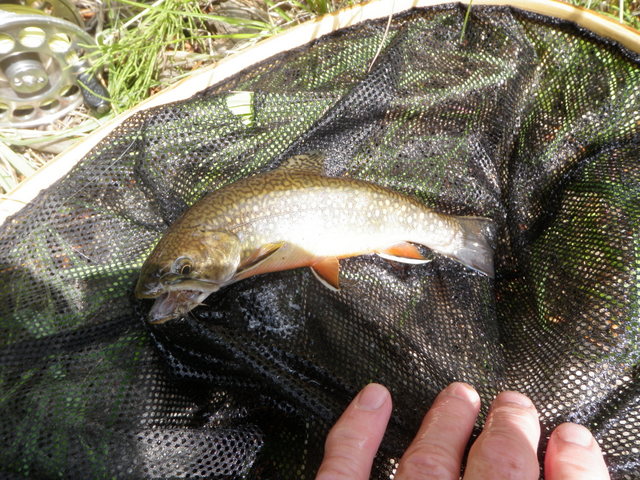
The stream level dropped considerably since the Fourth but was still flowing strong bank to bank. I tied on a green trude, and fairly quickly I landed a beautiful brook trout. I continued to catch fish, but not in the expected places. When another brookie came to my net, I thought it was going to be a brook trout day. By the end of the day I caught perhaps 5 or 6 brook trout, and they were in the 7-8 inch range, but they were very colorful. 

First Trout of the Day

I did not think the green trude was producing that well, so I converted to the royal stimulator that worked late afternoon on the Eagle. It is very buoyant and visible due to the swept back white calf tail wing. I picked up a few after the switch to the stimulator, but in a very nice run, refusals predominated, so I added a beadhead pheasant tail dropper, and the refusals morphed to takes. With the addition of the pheasant tail I began to catch predominantly brown trout. Many were in the 6-10 inch range with the occasional 11-12 inch fish, but it was great fun popping the stimulator in all the likely lies and pockets. The stream width enabled me to cover the entire area from either left, right or center position. 

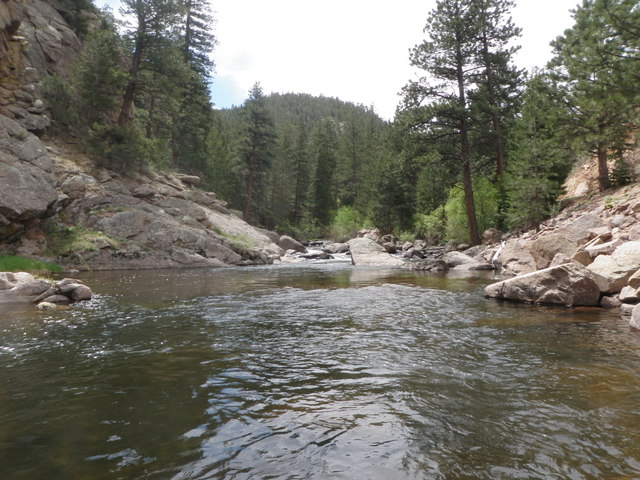
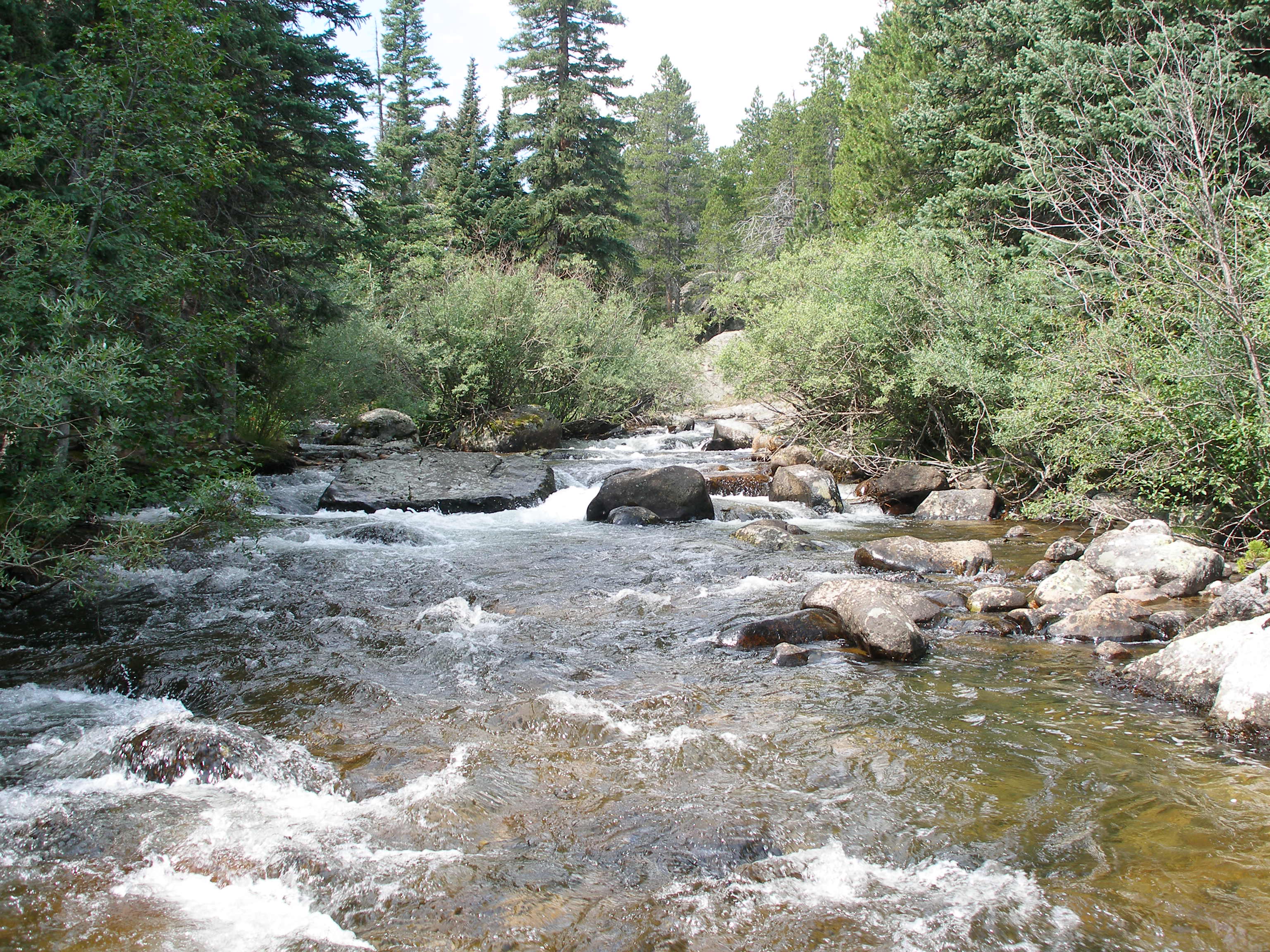
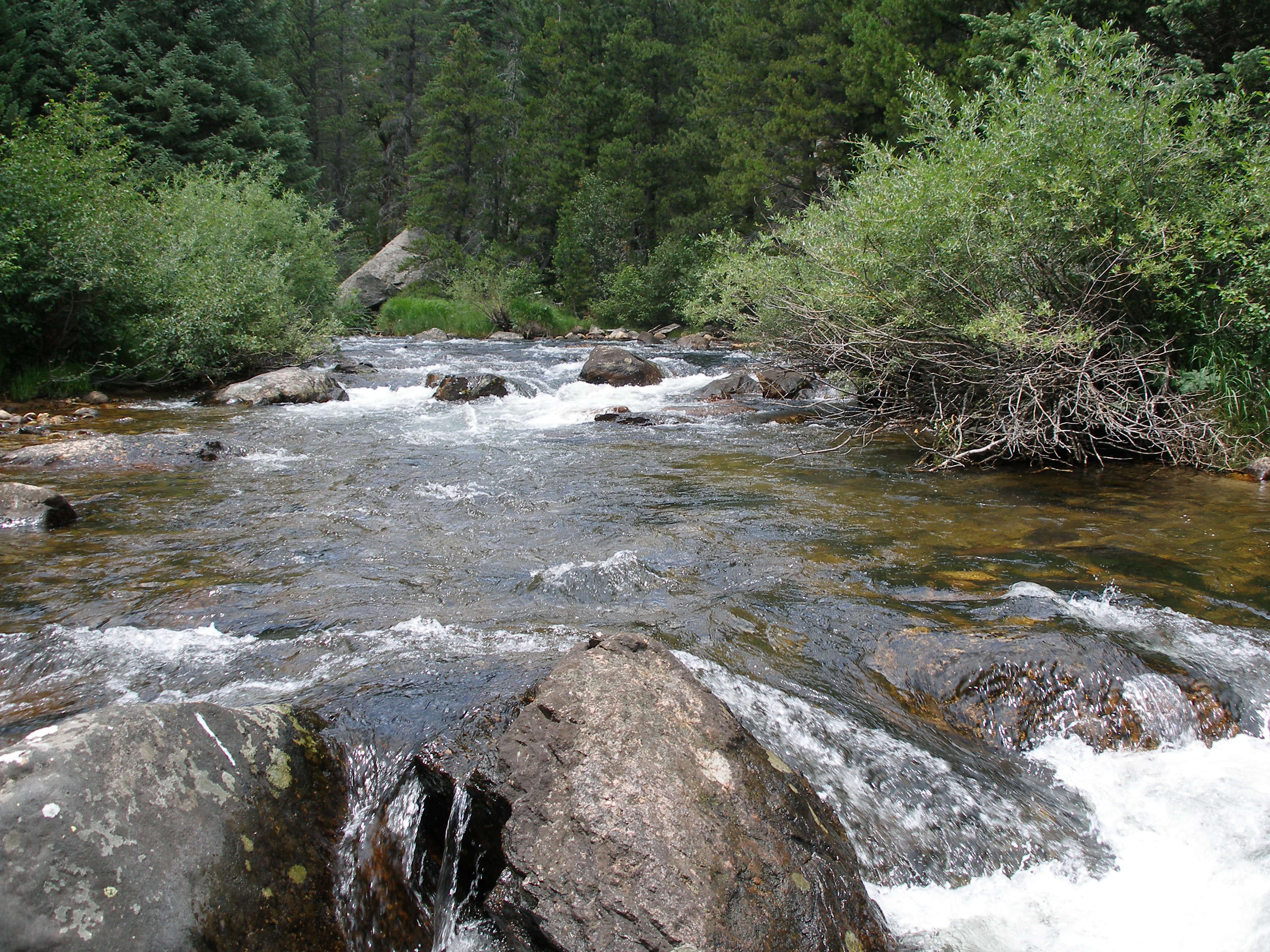
Classic High Country Stream

At around 12:30 I returned to the car for lunch. I decided to remove the backpack and just fish with the front pack to lighten the load, and I returned to the stretch where I ended before lunch. At this point the stream spread out some, whereas before lunch I moved through a section where the stream narrowed and the gradient increased. The high gradient produced deep plunge pools, but they were not yielding fish. Unlike the Fourth of July, the fish spread out from the banks, but this was only the case in areas where the gradient was more gradual, and the stream bed widened. 

One of the Larger Browns

In the first hour after lunch, I caught trout with regularity on the royal stimulator. In fact, the pheasant tail dropper became a nuisance, so I removed it and fished with only the attractor. Unfortunately after about an hour of fishing, and 20 trout landed, the hackle unraveled, and this was the only royal stimulator in my possession. I switched to a green trude again, but the hackle on this fly also broke after a few fish. I decided to return to the car to my backpack and obtain more attractor dries.

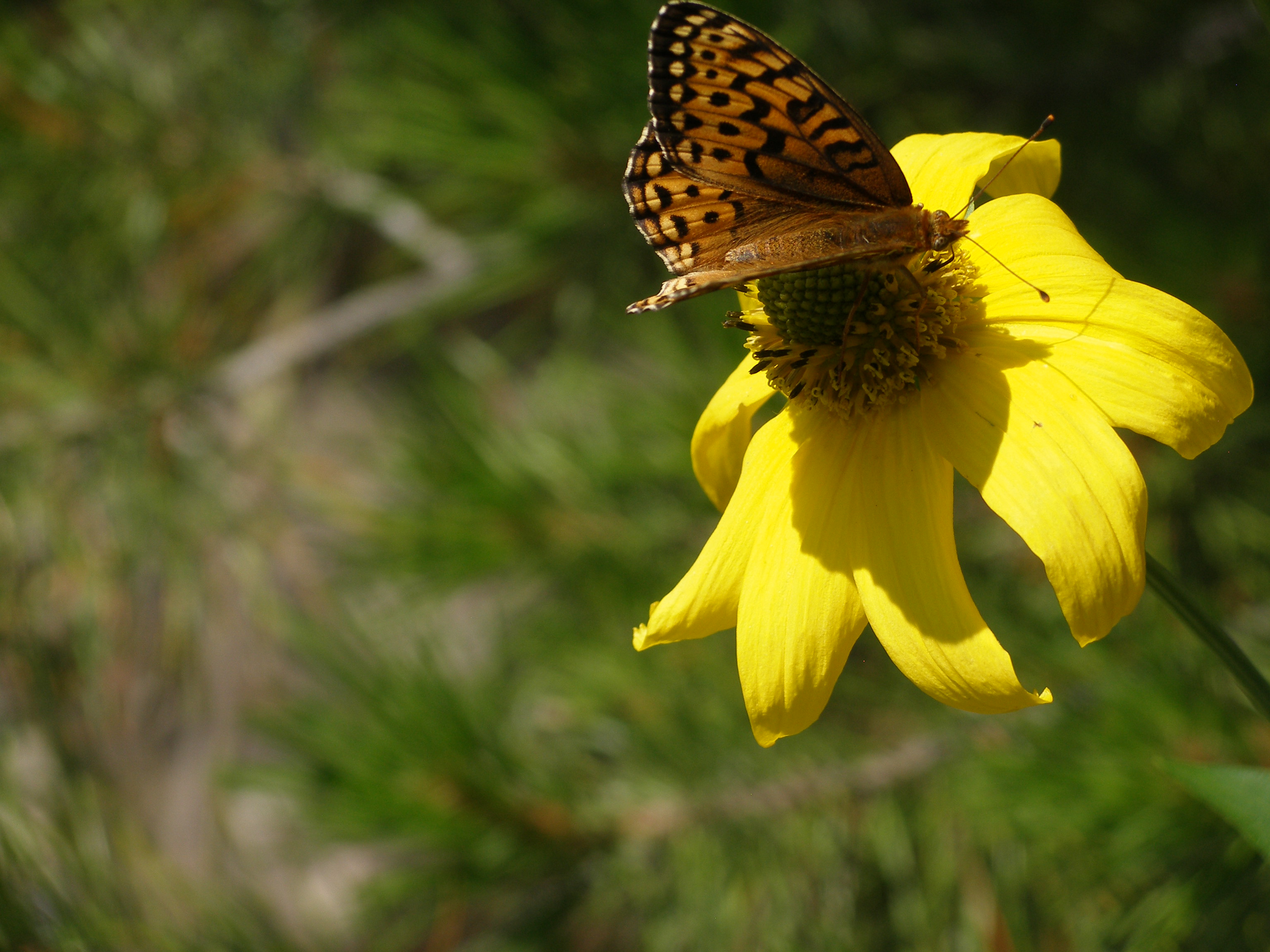
Antennae Visible


When I returned to the creek, I fished a small size 14 lime green trude. This produced quite a few fish, although I also noticed quite a few green drake mayflies fluttering about. This was at 2:30PM, and I approached a beautiful deep pool with a large rock on the left bank. I experienced a refusal on the green trude from two fish, so I switched to a green drake cripple, and I drifted this large fly over the trout that I could see in the center of the pool. The visible trout indicated that it saw the drake cripple; when it rose, inspected, and then drifted downstream under it. I held my breath, and finally the cautious trout rose and slurped the cripple. What a fun scenario.  

A Very Productive Stretch

I continued fishing the green drake cripple and caught three or more fish, but eventually I lost it on a branch on a back cast. I looked in my front pack and spotted a gray humpy, that I placed there upon my return to the car. I tied on the humpy and landed another four or five. Eventually I reached the bridge where the road crossed the stream just before the Wild Basin parking area. By this time I landed approximately 40 trout. The largest fish was only 12 inches, but it was great fun, as I popped attractors in all the likely lies, stood in an ice-cold mountain stream, and enjoyed the beauty of the Rocky Mountains. I even sat down on a rock several times and drank from my water bottle, while I took it all in. 

Fish Landed: 40

North Fork of St. Vrain Creek – 07/04/2006

Time: 10:30AM – 3:00PM

Location: Winter Parking on road to Wild Basin

North Fork of St. Vrain Creek 07/04/2006 Photo Album

After reading all the fishing reports, I noted that Rocky Mountain National Park water levels dropped, and reports suggested that it was fishing well, so Jane and I decided to spend the day in the park. I chose the southern Wild Basin area, as that contains the North Fork of the St. Vrain River. The park entrance person told us the parking was full at Wild Basin, so we parked at Winter Parking lot around .5 miles from the entrance gate. I never fished the lower water below Wild Basin parking, so I was fine with this option. Jane decided to hike the Finch Lake trail, and that was another .5 mile up the road.

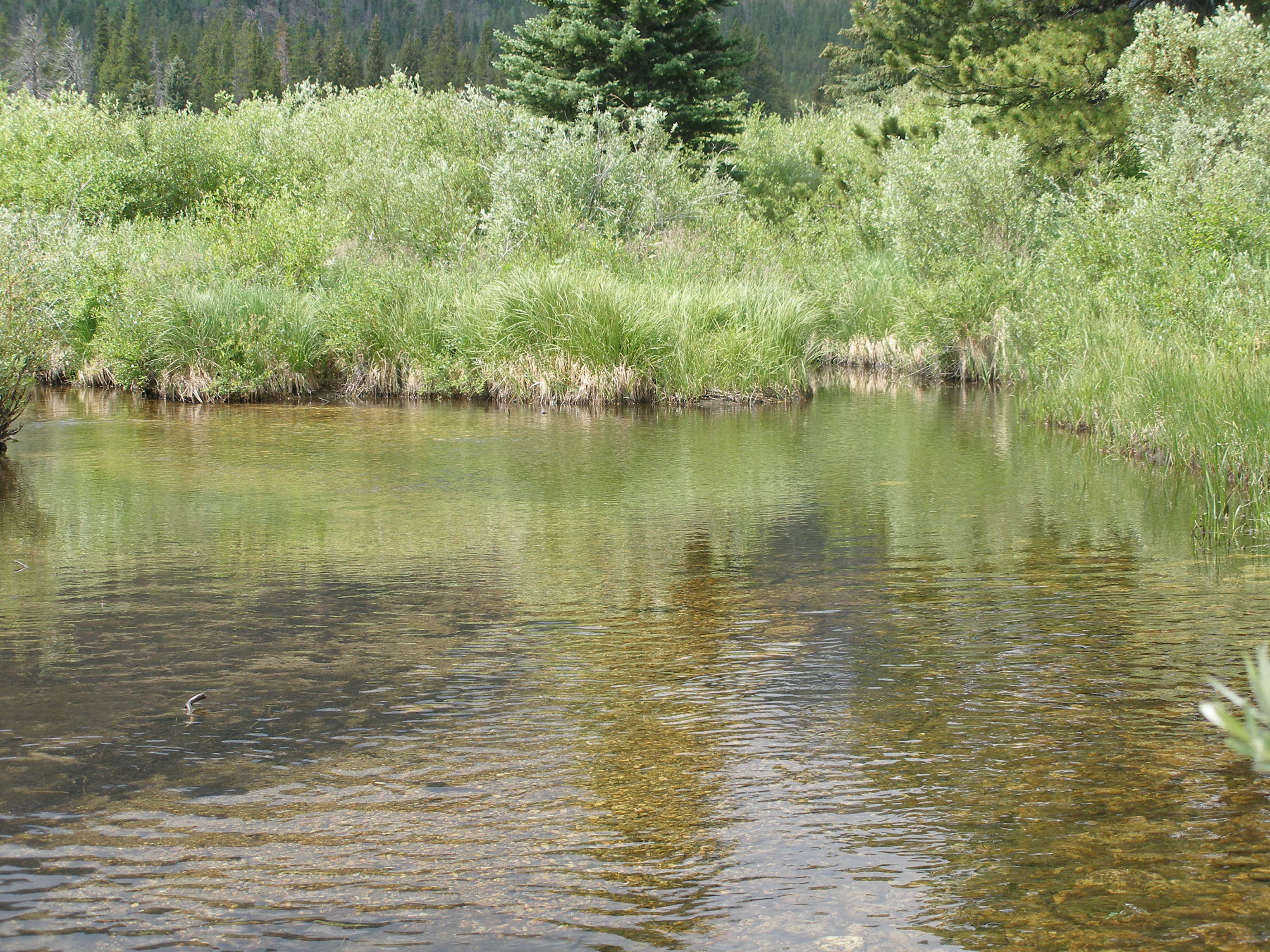
Smooth Beaver Pond

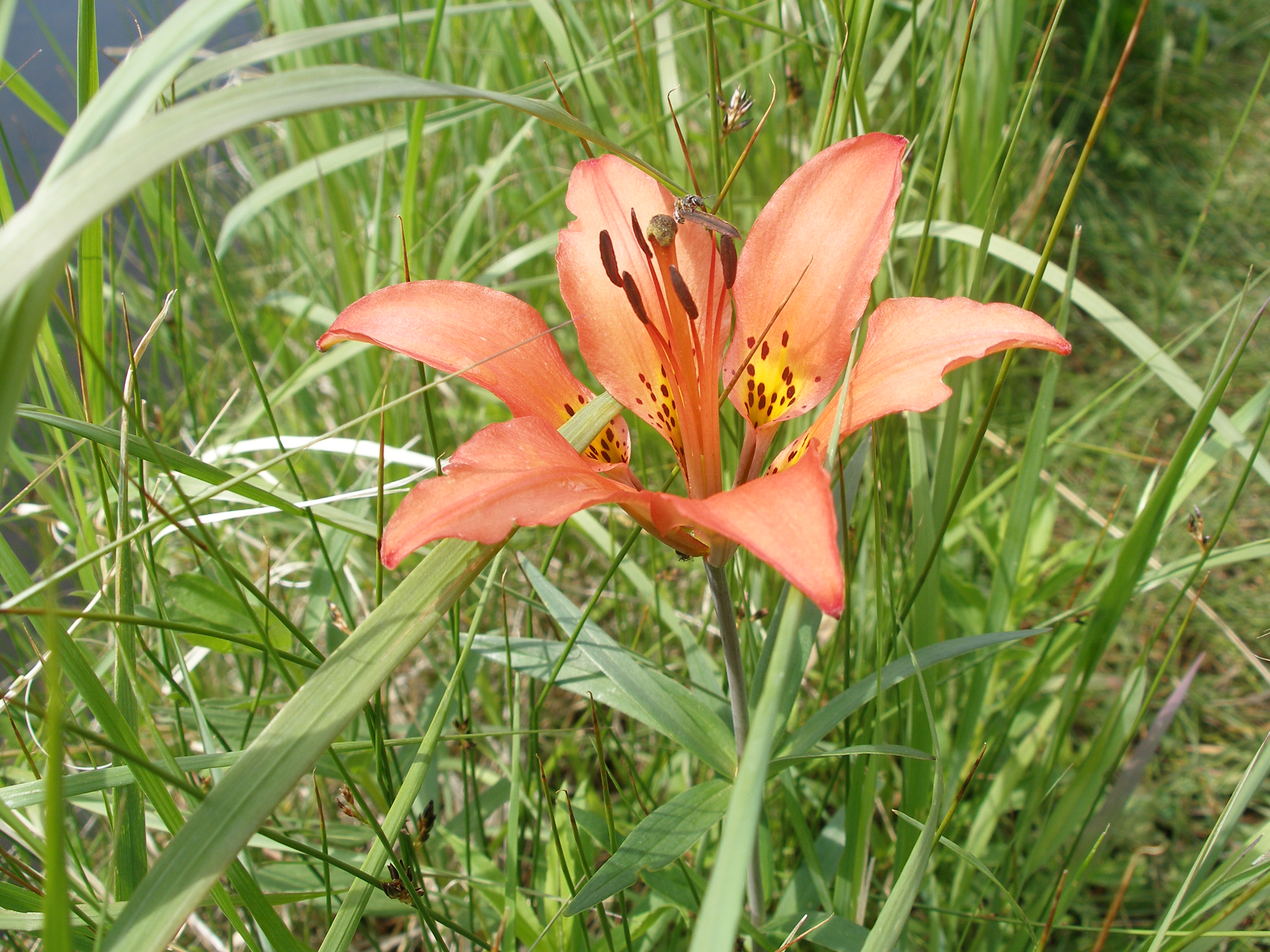
Wild Lily at RMNP

I hit the water around 10:45AM in a stretch full of channels and beaver ponds. I tied on an emerald trude and began casting in fairly shallow smooth water. Almost immediately I landed a small brook trout. I kept moving upstream a foot or two farther at a time and landed another three brookies. The last two were in the 9-10 inch range, and that represents a very reasonable size for Colorado brook trout. But the sky darkened, and a few raindrops fell, so I decided to exit and return to the car for my raincoat, before heavy rain commenced. When I reached the car, I was in the process of removing my vest and belt, when the rain really intensified, so I decided to eat my lunch in the car and wait out the storm. It was now 11:30.

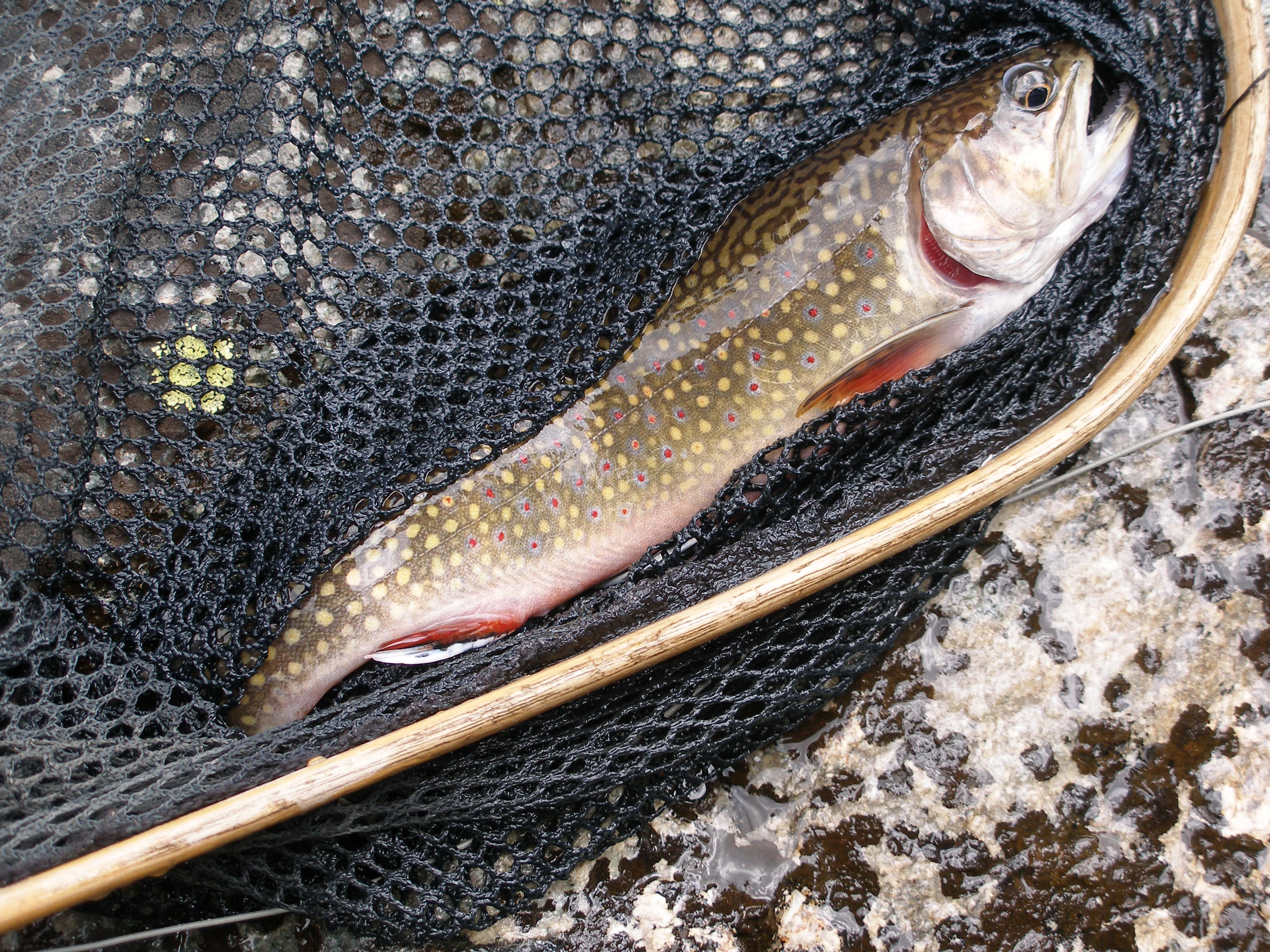
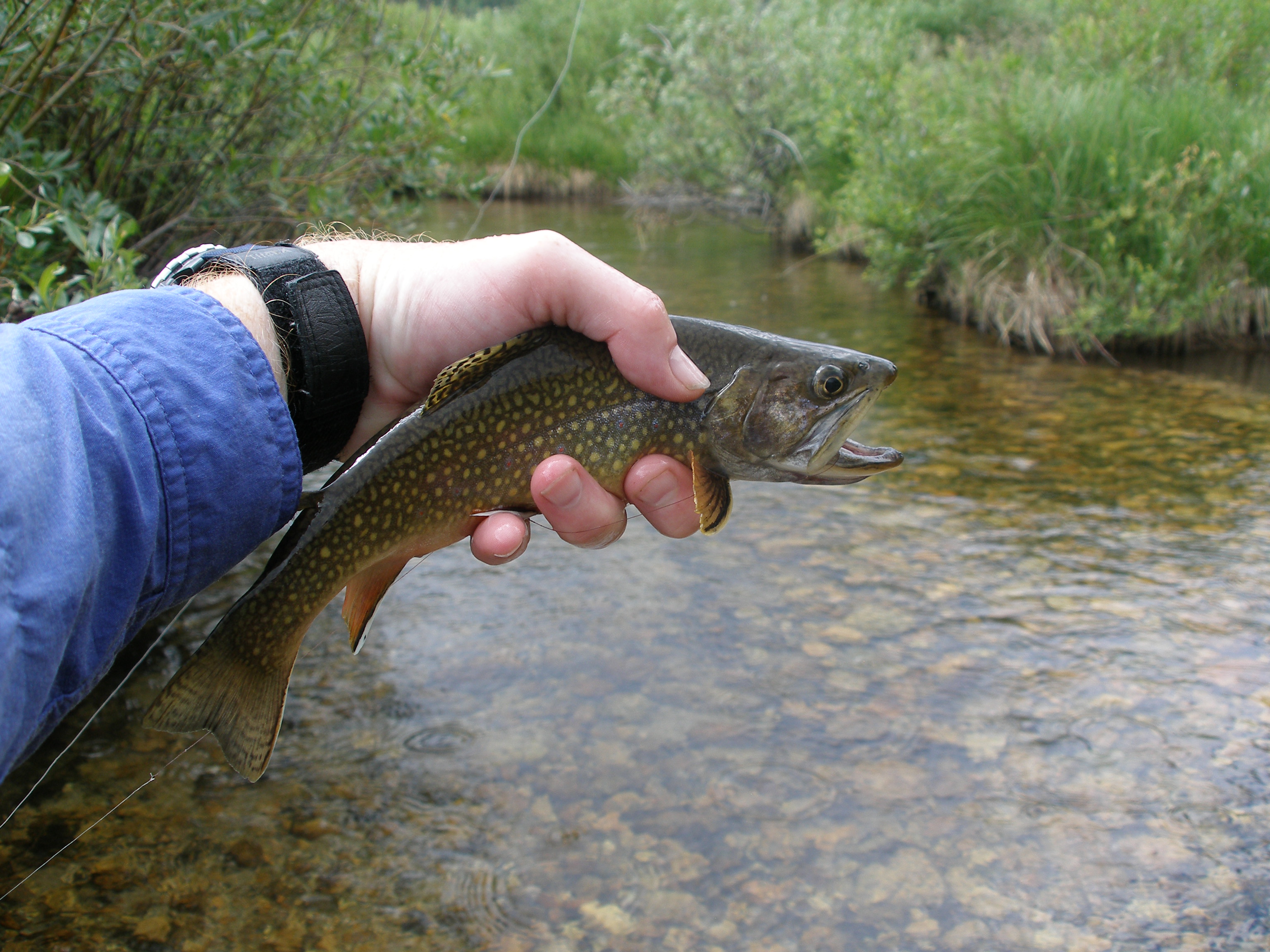
Largest Brook Trout

After lunch I put on my raincoat and returned to the beaver pond area, where I ended my earlier session. Another cloudburst developed, and the trude began sinking repeatedly, so I tied on a yellow Letort hopper and beadhead hares ear nymph. I caught a couple browns on the nymphs, but I was progressing deeper in the maze of ponds and channels, and fear of getting lost entered my thoughts. Also I really desired faster moving water.

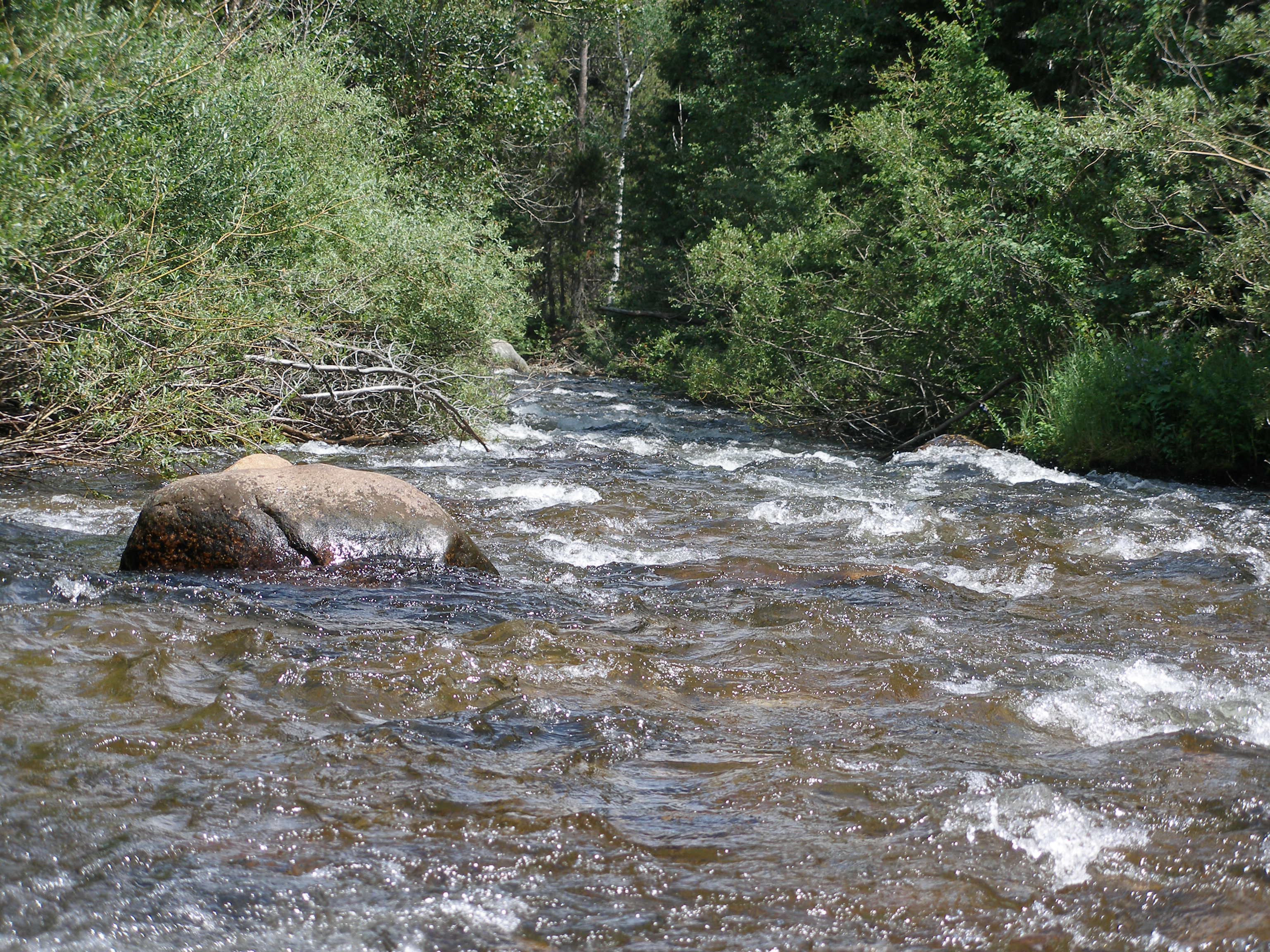
High But Clear

I exited and hiked along the stream looking for normal moving water, and I found it at a bridge, where the dirt road crossed over. Here I began fishing upstream. The creek was flowing rather high but clear, and I discovered that all the fish were in slack water lies tight to the bank. I switched to a beadhead prince dropper at some point, with the thought that it would be more visible to the resident trout population. I worked upstream covering a lot of water seeking the slack water lies along the banks, and this approach enabled me to pick up fish here and there. I lost several pairs of flies along the way and ended up utilizing prince nymphs, a chartreuse copper john, and a double bead caddis larva. For the most part, the fish were attacking the yellow Letort hopper. I lost the bright yellow version and switched over to a pale yellow model, but the fish did not seem to mind.

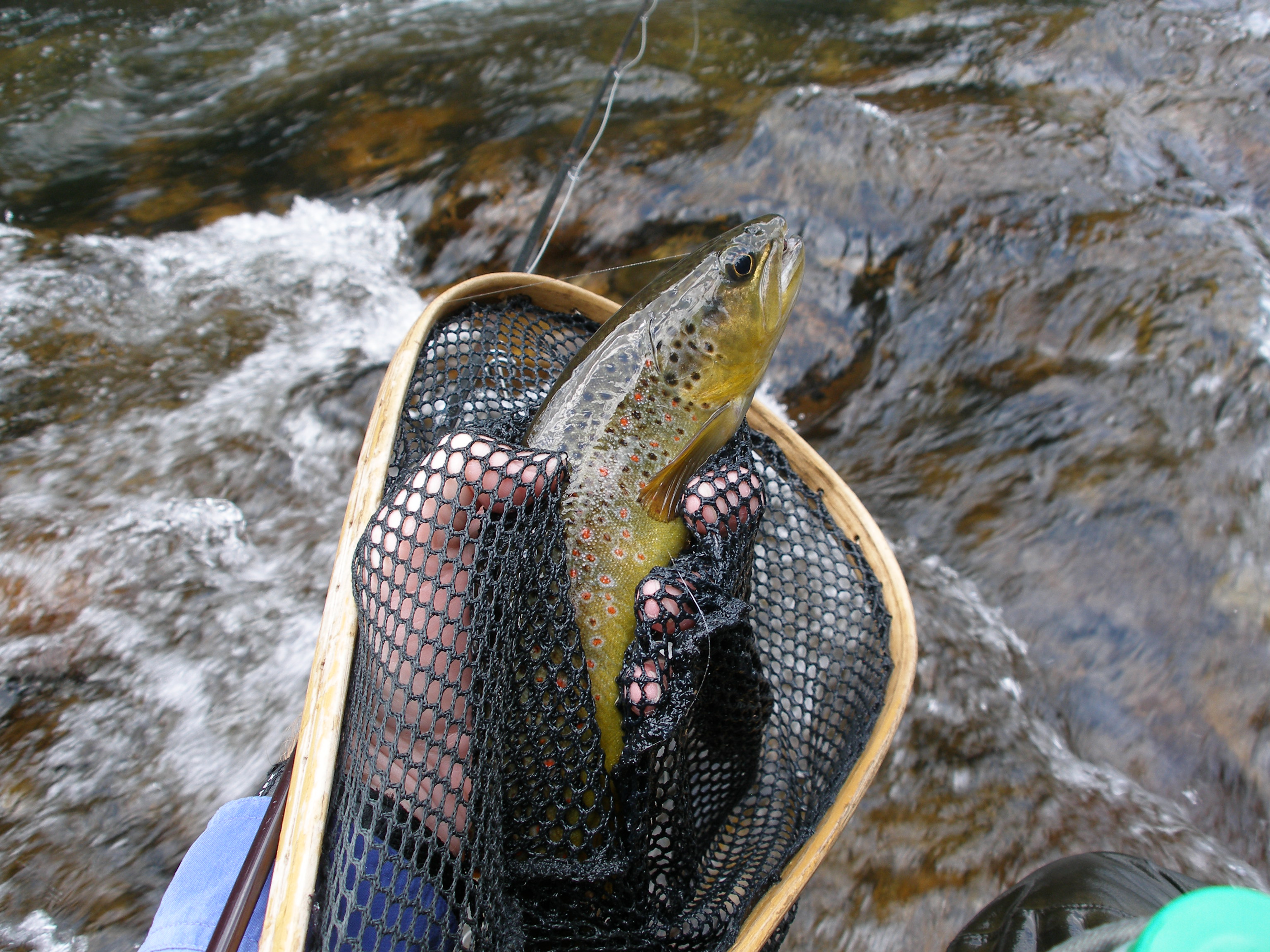
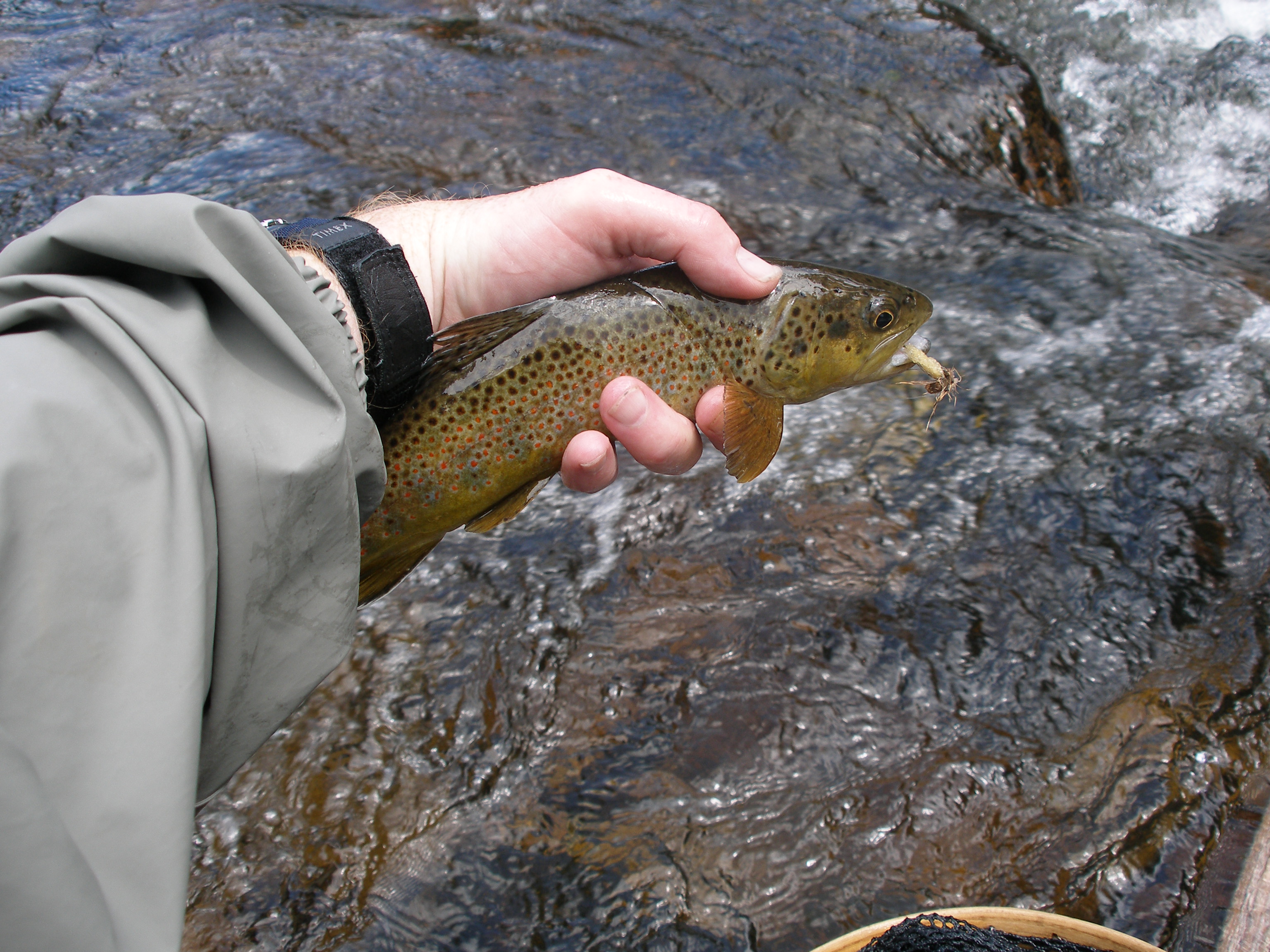
Pretty Speckled Brown

At one location near some picnic tables next to the stream in a nice pocket, I saw a fish rise but turn away. At this point I had the chartreuse copper john as a dropper. The fish appeared to be larger than others, and after a couple more casts I hooked up with a nice size brown. The fish immediately charged out of the pocket and headed downstream into some heavy white water. I let the fish run in the fast current, but after around twenty feet I applied pressure. I managed to elevate the fish to plane on the surface two or three times, but could not maneuver it to a position near me, and there was no way to follow it downstream due to tight evergreen vegetation and heavy current that bordered the bank. Eventually the fish parted the line, and once again my line was devoid of flies.

I landed seventeen trout before I quit, and I returned to the car at 3:15PM. Of the eleven trout caught after the beaver pond area, all but two or three rose to the hopper pattern.

Fish Landed: 17