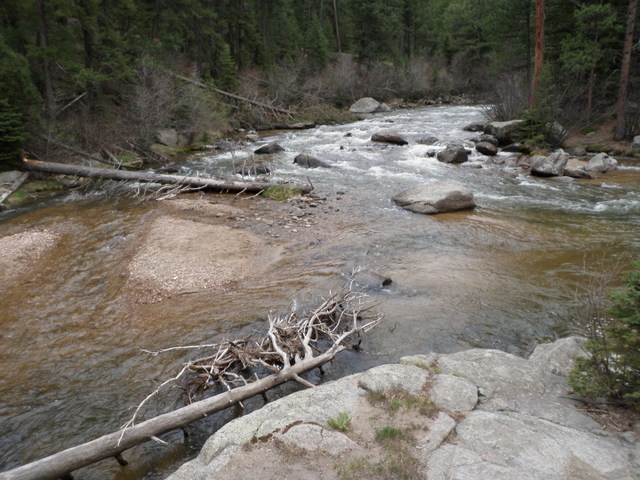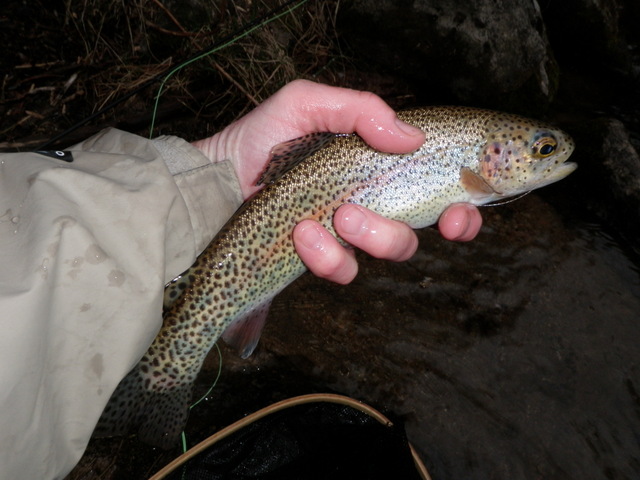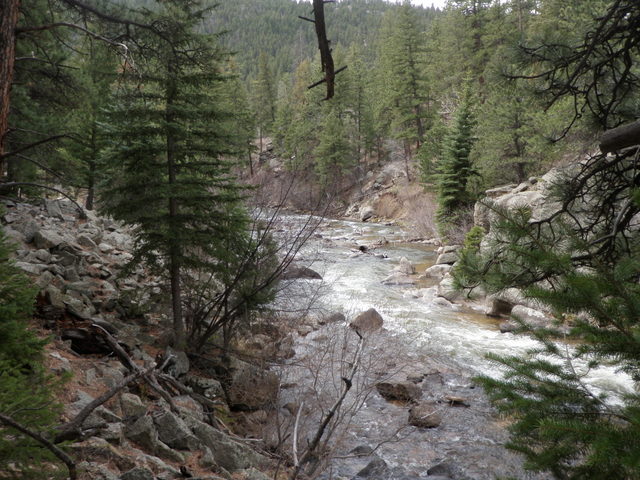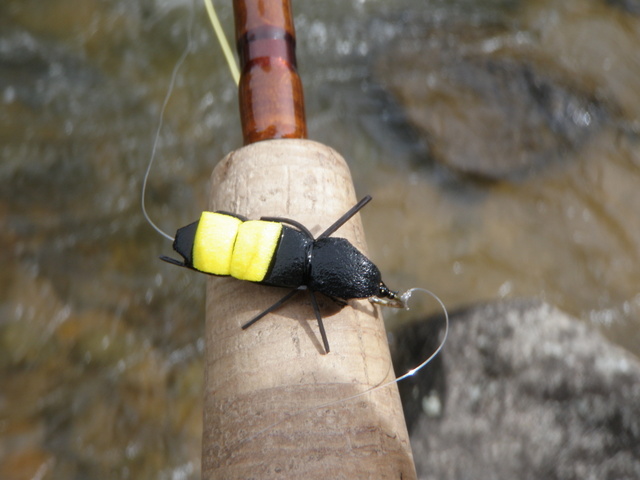
Category Archives: S. Boulder Creek

South Boulder Creek – 05/20/2014

Time: 11:00AM – 3:30PM

Location: One mile from the parking lot where there is a huge mass of large boulders extending from the path to the stream

Fish Landed: 4

South Boulder Creek 05/20/2014 Photo Album

With work commitments scheduled for Wednesday and Thursday, I knew that Tuesday was my best opportunity to enjoy a day of fishing. The high temperatures in Denver were forecast to be in the upper 70’s, so from a weather perspective as well, Tuesday was favorable for fishing.

Now the challenge revolved around finding a stream that was still in reasonable fishing condition, as I had not checked stream flows in a week. I went down the South Platte watershed list on the DWR website which is listed alphabetically. Bear Creek was at 132 cfs so I crossed it off. This is roughly six times ideal flows. Clear Creek swelled from 120 cfs to 251 cfs in the last couple days, so that was not an option. The South Platte River below Cheesman Reservoir jumped from 280 cfs to 400 cfs in a matter of a day. 400 is high, and I don’t like water that increased significantly within the last couple days as the fish haven’t had time to adjust. The South Platte River below Strontia Springs in Waterton Canyon was at 222 cfs, and from previous experience that is high for the narrow canyon stream bed, so that wasn’t a good destination. The Big Thompson skyrocketed from 130 cfs to 330 cfs in five days, so this was another show stopper.

I finally uncovered two options. South Boulder Creek below Gross Reservoir was listed at 132 cfs, and I fished it earlier in May at 148 cfs, so I knew this was manageable. The South Platte River near Lake George was presented at 75 cfs and actually this projected the best fishing conditions within a day drive of Denver. I had fished the South Platte on Friday and experienced a fine day, but I opted for South Boulder Creek due to its proximity.

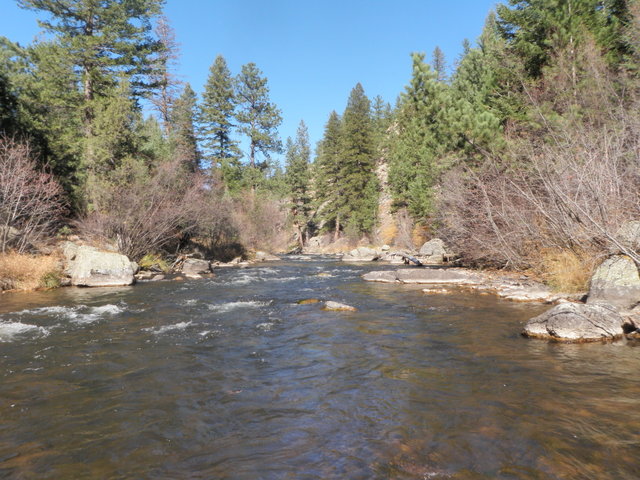
At the Start

At the Start

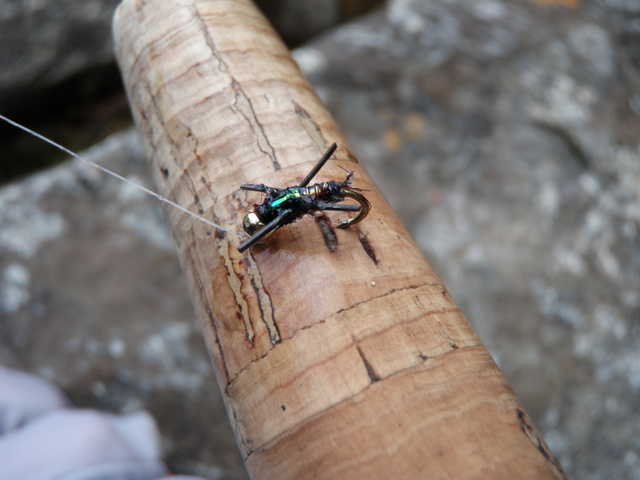
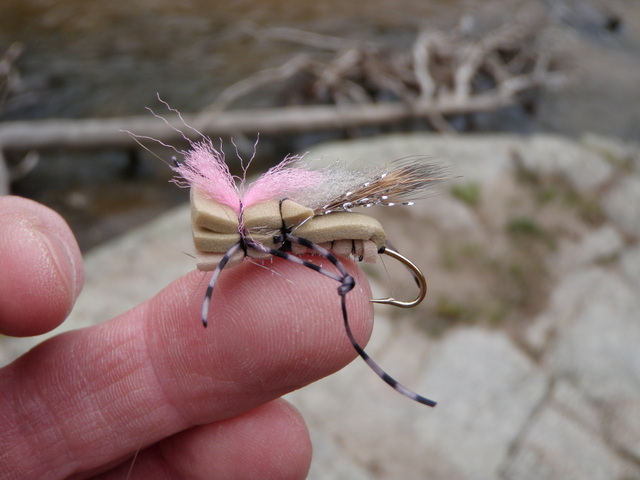
I got off to a late start as I had to handle some chores for the workmen delivering sheet rock for the basement finish project, and consequently I pulled into the parking lot above South Boulder Creek at 10:15. By the time I pulled on my waders and prepared my gear for fishing and hiked down to the stream it was approaching 11AM. It was overcast and cool with the temperature in the low 50’s when I began. I had my 5 weight Loomis two piece rod and began with a tan pool toy and below that I added a beadhead hares ear nymph. These flies were not productive and after moving upstream for thirty yards, I swapped the hares ear for an emerald caddis pupa, and added a third fly in the form of a beadhead bright green caddis pupa.

These flies also proved to be out of favor with the South Boulder Creek trout, so after a reasonable test period, I clipped off the bright green caddis pupa and replaced it with a salvation nymph. This finally turned the tide, and I landed two small rainbows on the salvation nymph. By 12:30 I had two fish in my count, and I was feeling hungry and a bit chilled, so I paused for lunch. I removed the fleece that I tied around my waist under my waders and pulled it on, and then I sat next to the stream below a nice pool and ate my lunch while observing the water.

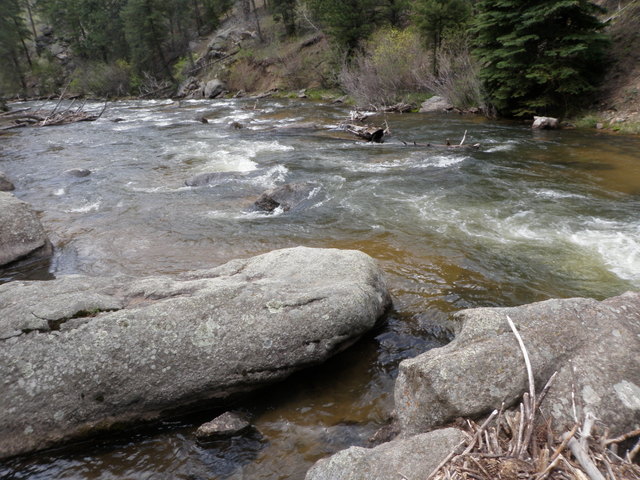
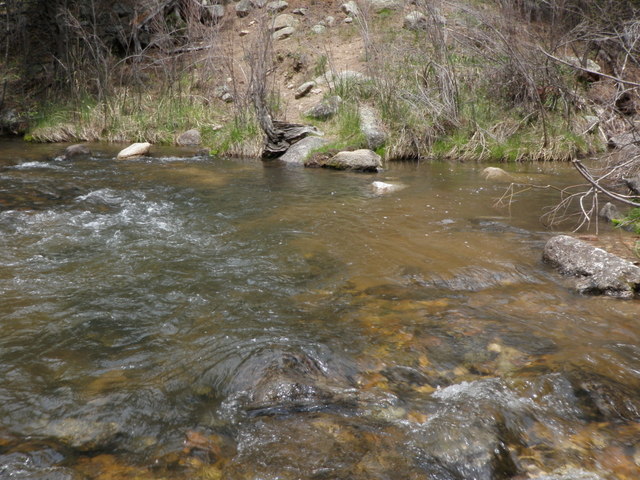
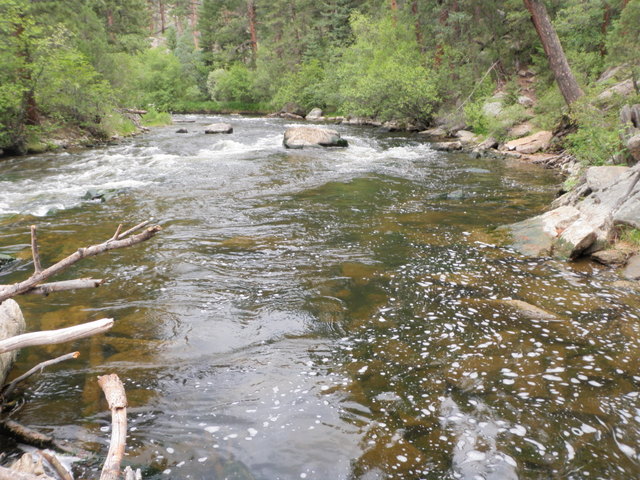
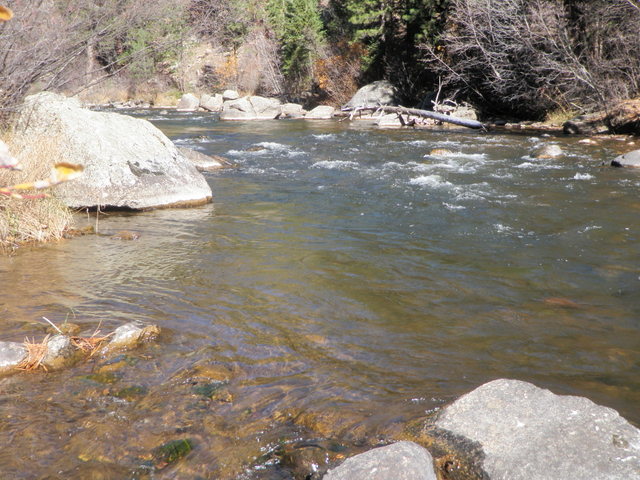
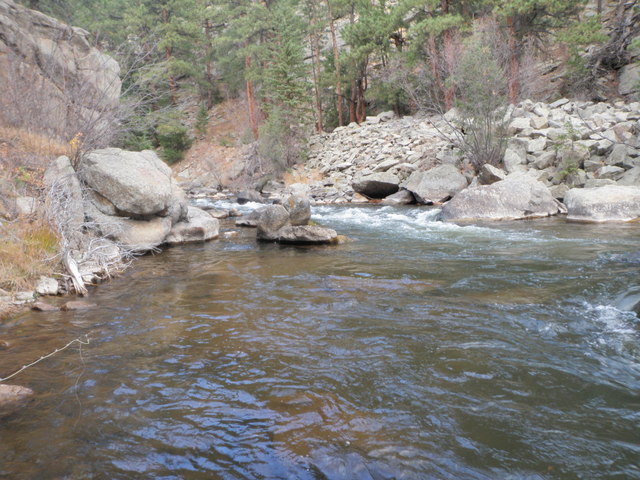
Nice Pool Did Not Yield Fish

Nice Pool Did Not Yield Fish

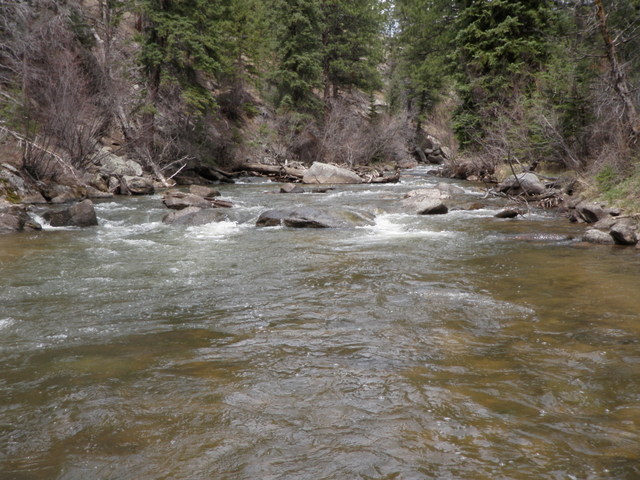
The water was high for the relatively small Boulder Creek stream bed, and there were minimal points where I could safely cross to the bank away from the path so I remained on the more accessible side. Most of the water I was able to fish was in the 5-10 feet of space bordering the bank where the high current velocity was broken by logs and large boulders. After lunch I decided to exchange the salvation nymph for a soft hackle emerger since I spotted one or two blue winged olive mayflies fluttering in the air above the water. I stuck with the pool toy, emerald caddis and soft hackle emerger for a fair amount of time and covered a decent amount of water. For some reason I began to experience fairly frequent refusals to the pool toy and disregard for the trailing subsurface patterns.

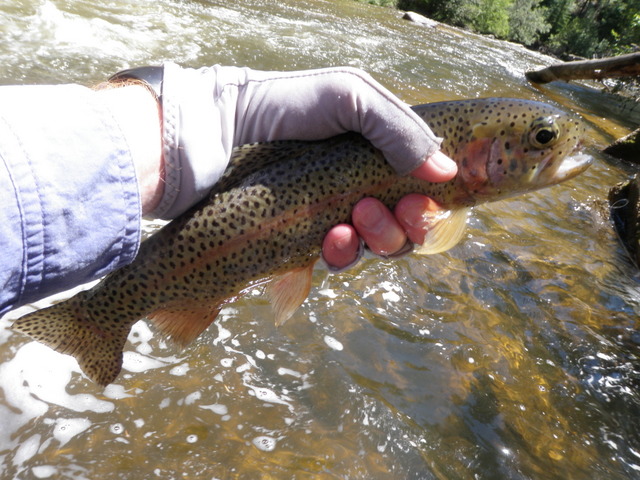
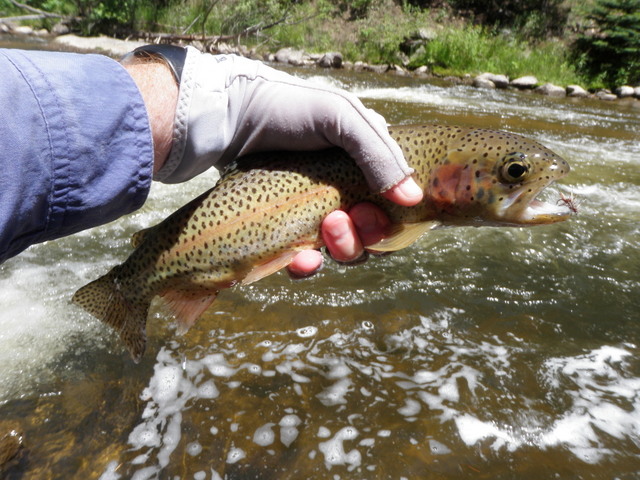
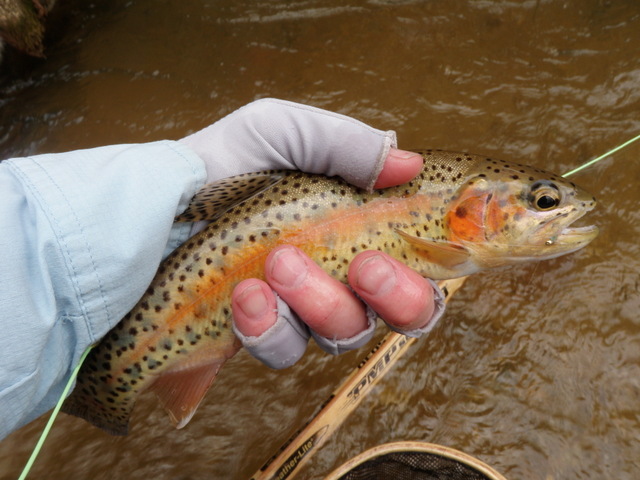
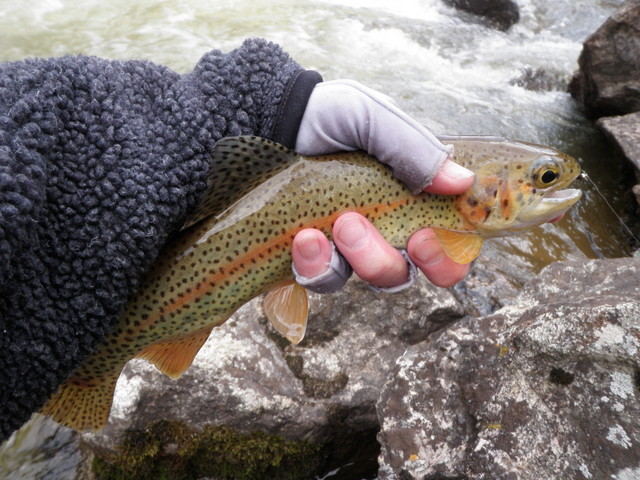
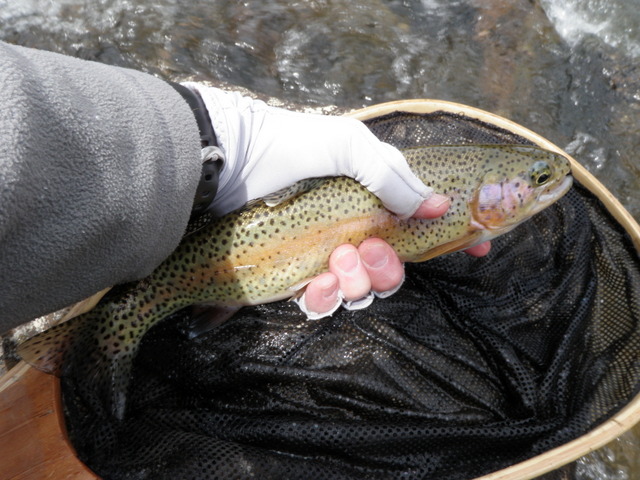
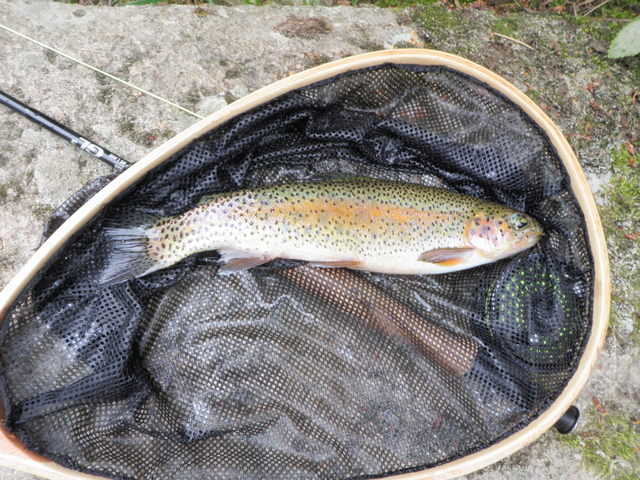
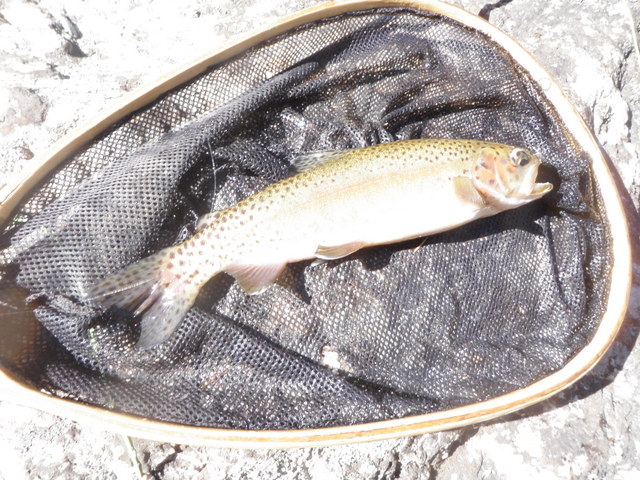
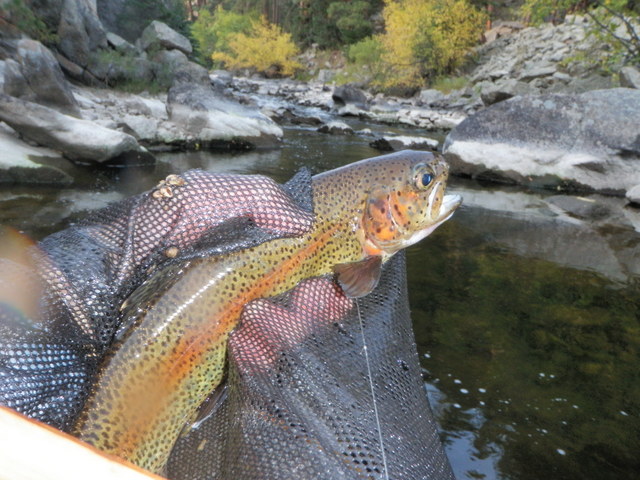
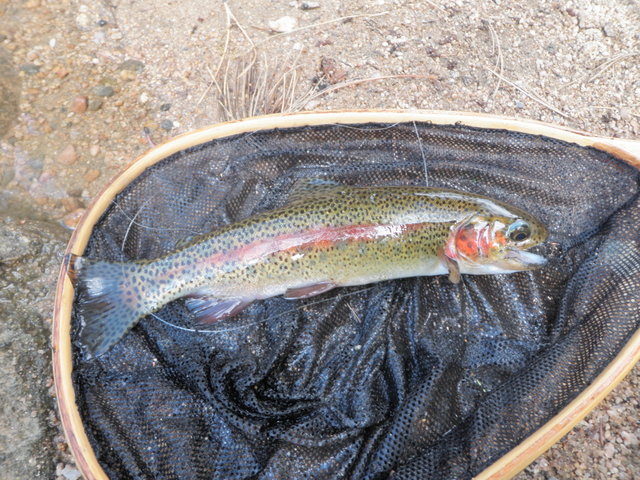
The normally productive edge water was not producing, so I began to experiment with fishing some of the deep slots and troughs where currents merged as I took a lesson from my success on Friday on the South Platte River. This actually worked, and I landed a very bright and colorful eleven inch rainbow that attacked the emerald caddis. At the tail of the drift as I gradually lifted my rod to make another cast, the rainbow grabbed the caddis.

Bright Rainbow with Emerald Caddis Pupa in Its Mouth

Bright Rainbow with Emerald Caddis Pupa in Its Mouth

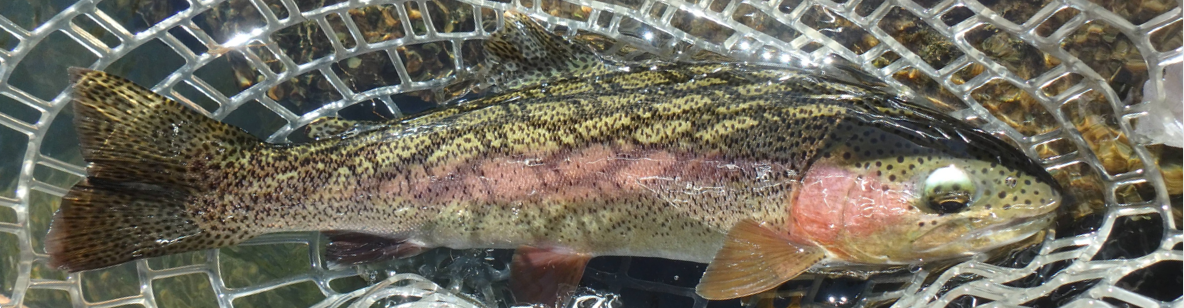
The soft hackle emerger had now been on my line for a fair amount of time without generating any interest, so I decided that there was no significant BWO activity in spite of the overcast conditions. I concluded that I might as well offer something larger and with more flash, so I reverted to the salvation nymph as it had at least produced two fish earlier. I began to direct my casts to the deeper slots and troughs and executed swings and lifts at the end of the drift and managed two land a second brightly colored rainbow on the salvation nymph. In addition I felt the temporary weight of two other fish that reacted to the swing and lift approach, however, I was unsuccessful in bringing these fish to my net. The frequency of contact with fish did in fact improve and held my interest until close to 2:30PM.

Salvation Nymph Was the Top Producer

Salvation Nymph Was the Top Producer

Despite more action and changing my tactics to prioritize a different type of water and drift, I continued to notice refusals. Once a fish rose to inspect the pool toy but returned to its lie without taking the fly, it no longer responded to repeated drifts. I was bothered by this interest in surface food accompanied by a reluctance to eat the floating morsel, so I removed my three flies and experimented with some dry flies over the final hour. I tried a gray size 16 deer hair caddis and a green size 12 stimulator, but these didn’t even generate a refusal. It was worth a try, but I now reached the pedestrian bridge and decided to cross and cover the same water that I’d cast to on my two hour visit during an earlier evening in May.

A Second Bright Rainbow in the PM

A Second Bright Rainbow in the PM

I carefully walked along the path on the south bank of the creek and then dropped down the steep slope to the point where several currents merge in a deep run before the main current then deflects off a large vertical wall. I reverted to the dry/dropper technique and deployed the tan pool toy with a beadhead hares ear and then the salvation nymph. I thoroughly covered the attractive water characterized by merging currents and the deep trough, but nothing responded to my careful presentations. I was certain that this area would yield a fish, but I was wrong. I turned around and moved up along the south bank for another twenty yards, but again I was thwarted in my efforts to land  a fish.

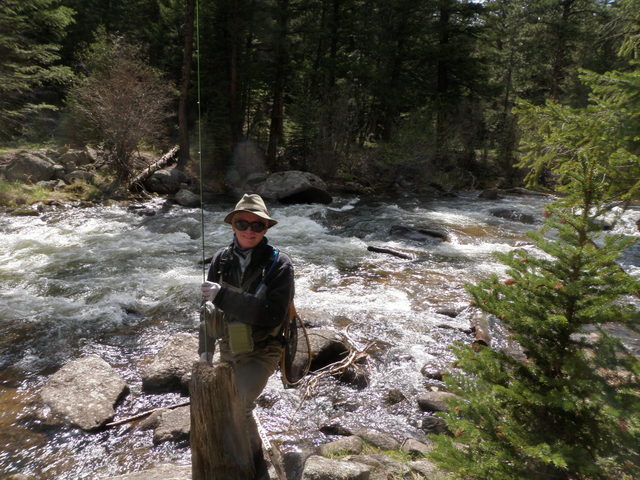
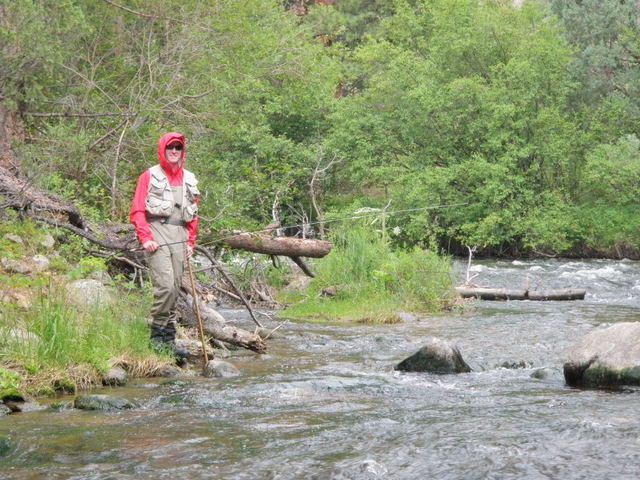
Self Timer

Self Timer

I was now growing frustrated with the lack of action, and it was approaching 3:30 so I decided to climb back up the steep bank to the path and explore the nice water on the south side above the pedestrian bridge. I angled back to the creek a short distance above the bridge and prospected twenty yards of decent water, but I’d lost confidence, and the fish weren’t doing anything to reverse my mental state. I decided to call it a day and made the return hike and ascent out of the canyon to the Santa Fe.

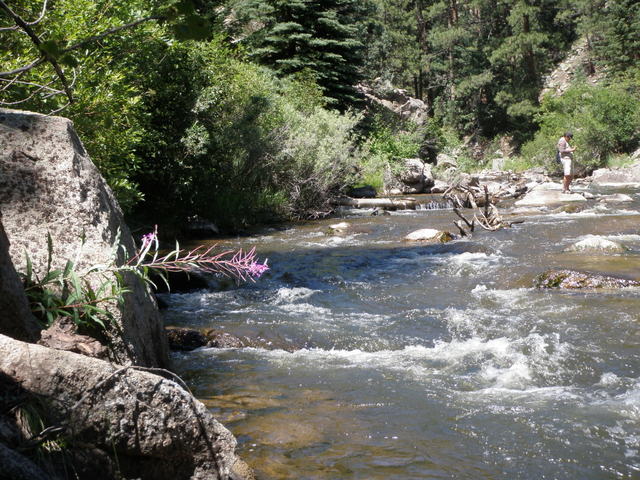
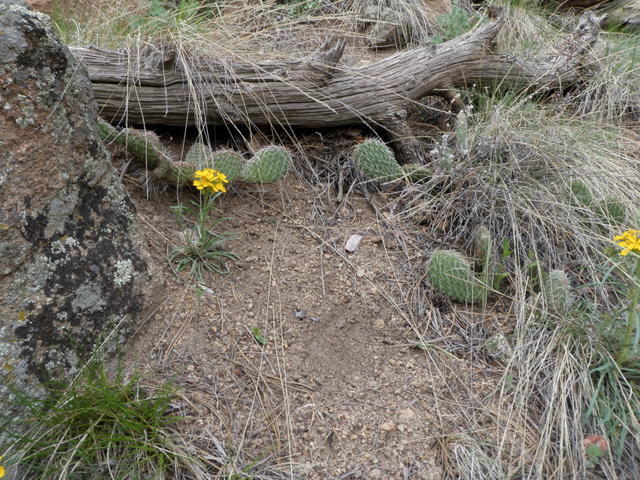
Wildflowers and Cactus

Wildflowers and Cactus

I enjoyed a beautiful day in a scenic canyon setting a little over an hour from home, and I managed to land four pretty fish. While the catch rate was beneath my usual rate, I was fishing in a stream on May 20, and that in and of itself was quite an accomplishment. My stream fishing days in Colorado appear to be numbered, and I will shortly turn my attention to stillwaters.

South Boulder Creek – 05/06/2014

Time: 5:00PM – 7:00PM

Location: From below footbridge upstream

Fish Landed: 3

South Boulder Creek 05/06/2014 Photo Album

Tuesday proved to be a gorgeous day in Denver, and I was at a good pausing point at work, so I decided to leave early and make my first evening fishing venture of 2014. By the time I left work, returned home, packed my gear and drove to South Boulder Creek below Gross Reservoir; it was 5PM. Traffic was heavy on westbound I70 resulting in an extra fifteen minutes of drive time. In addition, as I drove west I noticed some dark gray clouds hovering over the front range. I chose to place a positive spin on the weather and told myself that some overcast skies and light rain would probably translate to improved fishing.

There were three or four additional cars in the parking lot, so I didn’t have the space to myself, and three young fishermen were stringing their rods and close to departing as I climbed into my waders and put together my rod. The threesome headed down the trail ten minutes before me, but when I made my descent down the steep trail to the stream, I came upon them quite quickly as they jumped in the water relatively close to the beginning of the open fishing water.

I hiked past them and continued a half mile or so until I reached the pedestrian bridge, and here I crossed to the southeast side of the creek. The flows were up quite a bit from my previous visit, and when I checked them beforehand on the DWR web site, they were 149 cfs. I knew from a previous trip that I could fish at 180 cfs, but I also realized that this was higher than ideal and would entail tossing a lot of casts along the bank and behind current breaks.

After crossing the bridge, I began hiking up the steep trail that is part of the Walker Ranch Loop, but I veered to the left and followed a fisherman path along the south bank until I reached a very large vertical rock wall. Here I clambered down to the edge of the stream and fed my line through the guides and tied on some flies. To begin, I attached a tan pool toy and below that an emerald caddis pupa and then added a soft hackle emerger. By now it was quite overcast, so I was covering the possibility that the gloomy weather might initiate a blue winged olive hatch or an evening caddis emergence. It was clear that some adverse weather was moving in, and the temperature dropped considerably so I removed my raincoat from my backpack and pulled it on beneath my wader straps mainly to serve as a windbreaker and add a layer of warmth.

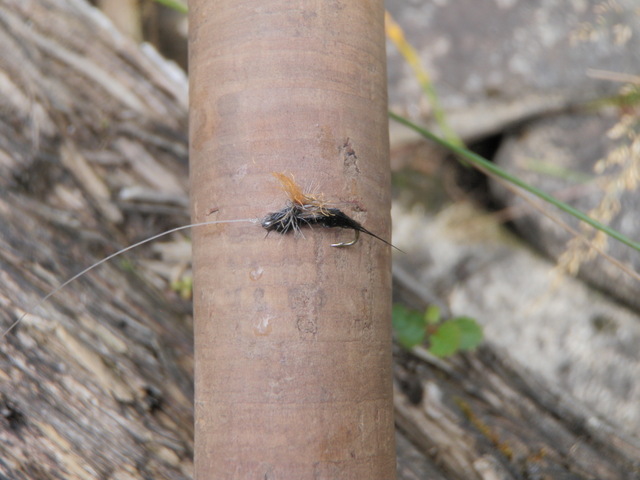
A Tan Pool Toy to Start

A Tan Pool Toy to Start

Initially I made some downstream casts to some very juicy runs that deflected against the vertical rock wall and gradually covered the water until I rolled out a forty foot cast to a nice current seam where two currents merged. In an instant I saw the pool toy dive and set the hook, but my excitement transitioned to disappointment when I realized that the nice rainbow on the end of my line was foul hooked. After another ten minutes of searching I turned my attention in the opposite direction, and I began prospecting along the left bank and moved upstream covering the forty yards of water between my start point and the bridge. This period was characterized as frustrating as I pricked two or three fish along the way and witnessed several refusals of the pool toy. I was attracting the interest of fish, but I was unable to fulfill my goal of putting some weight in my net.

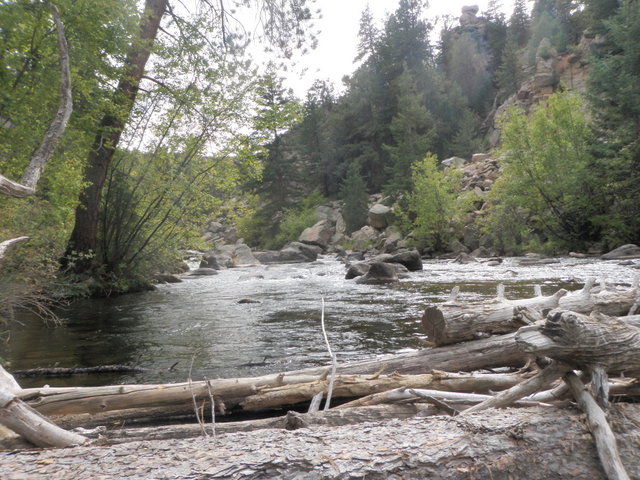
Starting Point on South Boulder Creek on Tuesday Evening

Starting Point on South Boulder Creek on Tuesday Evening

During this period I somehow broke off the soft hackle emerger, so I decided to replace it with a beadhead hares ear nymph. I wasn’t seeing any natural BWO’s in the air, and given the higher flows, I felt more confident having a larger fly that the fish could see. This seemed to help my plight and after making the change I hooked and landed a small rainbow that struck the emerald caddis pupa. I continued above the bridge and in the next nice stretch of water before a thunderous whitewater chute, I hooked and landed another rainbow on the emerald caddis. I would eventually discover that this fish was the nicest fish of the evening, and I snapped a photo while I held the catch above the stream.

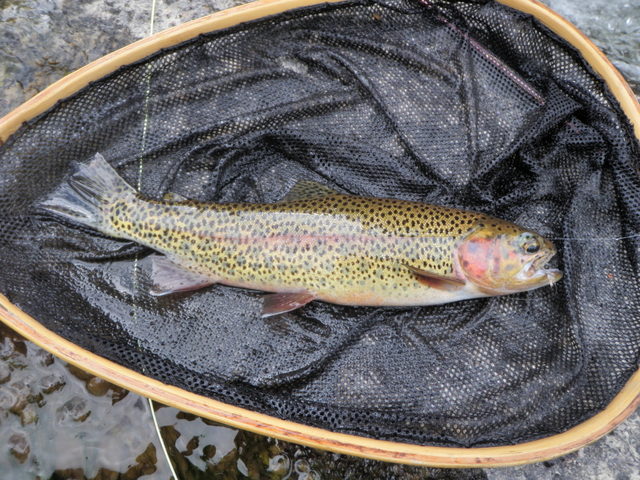
Best Fish Took Emerald Caddis Pupa

Best Fish Took Emerald Caddis Pupa

It was right around this time that some rain began to fall, and I was quite pleased that I already had my rain jacket in place to keep me warm and protect me from the moisture. The next 45 minutes or so prior to quitting were spent working my way upstream along the left bank. It seemed like the quality of the water and my approach should have been producing more action, but unfortunately this was not the case. While I was fishing the water closer to the bridge, two of the young fishermen that left the parking lot ahead of me passed me on the path along the left bank.

I managed to land one more eight inch rainbow in the last 45 minutes, and this fish struck the hares ear as I gave it a lift next to a large submerged rock, but even repeating this technique that worked once didn’t seem to increase the interest of the fish in my offerings. By seven PM I was feeling quite chilled; mainly my feet that were constantly submerged in the ice cold flows from the bottom release dam, so I decided to begin my outbound hike. As I climbed up the bank to the path I noticed several wet imprints in the gravel, so I began to suspect that the young fishermen had gone ahead of me and covered the water that I was now exiting from. I’m not suggesting that they crowded my space, but it’s always difficult to be the second fisherman through water that was recently covered by others. Fish go on high alert and procure more secure positions. The basic need of safety supersedes the other primary need of food.

I completed the vigorous hike out of the canyon and packed my gear and made the drive back to my home where Jane and I grabbed a quick bite at Burger Works. It wasn’t an extremely productive outing, but it was enjoyable to get out on a weeknight. I had quite a few opportunities to catch more fish, and as always I was alone with my thoughts and challenged trying to solve the riddle of how to entice small trout to eat imitations that I created myself. There may not be many more opportunities before the full force of the heavy snow pack rushes down the streams of Colorado.


South Boulder Creek – 04/25/2014

Time: 10:30AM – 3:30PM

Location: 1.5 miles down the path from the parking lot. Started fishing at the spot where a large vertical rock makes passage difficult.

Fish Landed: 9

South Boulder Creek 04/25/2014 Photo Album

Temperatures were projected to reach the low 70’s in Denver on Friday, April 25 so I decided to take a day off for fishing. I was frustrated by several difficult trips to the Arkansas River and had my eye on South Boulder Creek. I discovered this fishery several years ago on a train ride to Fraser, and it became my favorite spot for fishing close to the Denver metro area. I checked the flows, and they were running at 102 cfs, and I knew from previous trips that this is a good level.

I took my time on Friday morning to allow the air temperature to warm up, and after an hour of driving I pulled into the parking lot high above the canyon where the stream flows out of Gross Reservoir. I was the first car in the lot, but as I prepared to fish two more vehicles arrived, and two fishermen jumped out of each car. I decided to wear my fleece top and stuffed my raincoat in my backpack along with my lunch so I could hike quite a ways down the path and eat my lunch by the stream.

Just as I was ready to close the hatch and embark on my hike, a Denver Water truck pulled into the lot and a bearded man jumped out. He walked to the trash can and checked it, and then on the return trip to the truck he asked to check my license and that of the two gentlemen in the vehicle parked next to me. We each complied with his request, and then the other two fishermen at the far end of the lot volunteered their licenses for review as well. As I walked to the trailhead, the Denver Water employee called out and asked if I went to Bucknell. I replied yes, and then he told me he went to Penn State. After some additional conversation I learned that he was from Plymouth Meeting, and he did have a bit of a Philly accent.

South Boulder Creek on Friday

South Boulder Creek on Friday

High clouds remained in the sky for most of the morning and consequently the sun never broke through to warm the air temperature. As I walked briskly along the trail, I created enough body heat to remain comfortable, but once I arrived at my starting point, I was a bit chilled. I began fishing with a Chernobyl ant and then added a long tippet section of 5X and attached a beadhead hares ear. Finally I extended another 18 inch section from the bend of the hares ear and tied on a soft hackle emerger.

Chernobyl Ant on My Line

Chernobyl Ant on My Line

I began prospecting some attractive runs and pockets around large exposed rocks and in short order experienced a refusal to the Chernobyl ant. At least it was good to know that fish were present and looking toward the surface for a meal. I experienced a couple refusals to the Chernobyl, but continued working upstream and eventually landed a nice rainbow that gobbled the soft hackle emerger. I cast into a pocket and allowed the Chernobyl to be pulled back upstream by an eddy below an exposed rock, and the rainbow  grabbed the soft hackle emerger and pulled the Chernobyl under, although I actually saw the fish dart away from the rock and grab the subsurface fly.

Very Nice Rainbow Landed in the Morning

Very Nice Rainbow Landed in the Morning

The morning and in fact the remainder of the day continued pretty much in this fashion. I fished the Chernobyl ant, beadhead hares ear, and size 20 soft hackle emerger and landed nine fish. One gullible trout nailed the Chernobyl, and two fish snatched the beadhead hares ear in the afternoon. All the other fish that I landed favored the soft hackle emerger.

The sun never appeared in the morning, and because my sungloves were wet from handling fish, the evaporation caused my fingers to ache. This finally forced me to stop for lunch at noon, and I removed the sungloves and placed them in the zippered pocket of my waders. In addition to cold hands, my feet felt like stumps due to the icy flows coming from the bottom of the dam. The sun did come out during lunch and warmed me a bit before I resumed after lunch.

After lunch I found a spot where I could cross to the opposite bank, and I prospected up along the south side for quite awhile. I always favor the side of the stream away from the road or main path, and this did in fact seem to help in the afternoon. Also since I’m righthanded, the left bank was more natural for me to hook casts under overhanging branches and into soft pockets behind rocks and current breaks.

Attractive Stretch with Slower Current

Attractive Stretch with Slower Current

At around 2PM I was wading along the bank when I stepped on something that shifted under my weight. I looked down and spotted a net under my foot, so I reached in the creek with my hands and extracted it. Initially I thought it was fairly old and not desirable, but after swishing it in the water and removing old rotting leaves, I realized it had one of those plastic nets that doesn’t snag ones flies. It was a large net with a long handle, and it had a mayfly logo engraved at the top of the handle and the word Brodin above the mayfly. I decided to try and carry it back to the car with me, but I wasn’t ready to quit fishing so I stuffed it between the straps of my backpack and wedged it between my back and the backpack.

Major Find Was This Brodin Net

Major Find Was This Brodin Net

This lasted for a bit, but then it almost fell out, so I used the broken cord attached to the ring on the handle and tied it to my belt. This worked better but the net and handle were so long that the net dangled down to the water surface, and it hampered my wading for the last 1.5 hours. At approximately 2:30 I’d gone without any action for quite a while, so I decided to make a change and replaced the Chernobyl with a size 14 stimulator. I removed the hares ear and added a single dropper consisting of the beadhead soft hackle emerger.

The stimulator did arouse some interest, and I experienced two or three rises and momentary hook ups, so I think the fly attracted fish, but it wasn’t exactly what they were looking for. By 3:30 I’d gone quite a while without landing a fish, so I decided to find a rare crossing point and quit for the day.

It was a fun day on South Boulder Creek in a gorgeous location relatively close to Denver. The weather remained much cooler than I expected, but I managed to land nine fish and had four or five momentary hook ups and a couple foul hooked fish. With options quickly diminishing due to early snow melt, it was nice to enjoy some dry/dropper fishing on South Boulder Creek.

South Boulder Creek – 07/25/2013

Time: 10:00AM – 3:00PM

Location: A Half Hour Hike Below Gross Reservoir

Fish Landed: Dave 5; Dan 3

South Boulder Creek 07/25/2013 Photo Album

My son Dan returned to Denver after spending nearly five months in Asia, and he wanted to spend a day fishing before heading off to Durham, NC for graduate school in the Fuqua MBA program. We settled on Thursday as the best day to fit in a day of fishing. Dan had plans for most evenings, so we didn’t want to make a long trip that required two or more hours of drive time, so I researched the closer stream options.

I’ve had my eye on South Boulder Creek after some interesting visits in September and October of 2012, but the stream flows have been hovering over 200 cfs and that is relatively high for a fairly small streambed. I did notice that the flows dropped below 200 cfs to 193 a few days prior to our planned fishing venture, so I gambled this would be manageable. I felt we could do better than Clear Creek and Bear Creek on Dan’s sole fishing trip of 2013, and the Big Thompson is crowded, and the NF of the St. Vrain flows dropped precipitously thus projecting difficult fishing in my thought process.

Dan and I departed from Stapleton by 8:00AM and we did encounter a bit of morning rush hour congestion on interstate 70, but despite this hardship, we arrived at the parking lot near the dam by 9:15. The air temperature remained quite cool with quite a few large gray clouds overhead as we set up our rods and put on our waders. We packed our lunches and raincoats as I told Dan I wanted to hike quite a distance downstream on the trail.

We followed the trail all the way to its farthest point and at that location we entered the water. The sky remained overcast and Dan began with a Chernobyl ant and beadhead hares ear, and I elected to tie on a yellow Letort hopper and a beadhead bright green caddis pupa and below that a zebra midge larva as a third fly. This proved to be a mistake as I worked the right bank which required backhand casts. Backhand casts and three flies are a recipe for disaster, and I spent much of the first hour of fishing untangling some massive snarls.

Dan meanwhile was working up the left bank in expert fashion, and he landed a pair of browns on the trailing hares ear. The midge larva wasn’t producing so I replaced it with a beadhead pheasant tail, and it was this combination that produced my first fish of the day. I cast the hopper along the edge of a current seam and as it drifted back toward me the top fly paused so I set the hook and lifted my rod. Amazingly I saw two fish on my line; one on the caddis and one on the pheasant tail. The top fish freed itself fairly early in the fight allowing me to easily land the small nine inch brown that was fooled by the pheasant tail. Although it was nice to register my first fish of the day, this was probably an unfortunate incident for my long term fishing success.

The double gave me incentive to continue the three fly experiment, and that proved to be a major strategic error. Rather than connecting with multiple fish, I found myself unraveling three or four massive line snarls where I had to cut off the trailing flies and then reattach. Eventually I wised up and removed the third fly and fished the hopper and caddis until we broke for lunch at noon.

As Dan and I sat on a decaying log consuming our lunches we heard distant thunder, but since we had our raincoats, we didn’t give it much attention. After lunch I experienced a couple refusals to the yellow hopper, so I decided to make a change. Perhaps the fish were attracted by the yellow, but my fly was too large. Clearly they were looking toward the surface for their meal, so I tied on a yellow sally size 14. This proved to be a stroke of solid reasoning and within the first hour after lunch I landed another three fish and in fact I was convinced enough by the effectiveness of the yellow sally  that I exited the stream and walked back across from Dan and informed him. Unfortunately he did not have any yellow sallies in his fly box so he waited until we could meet on the same side of the stream.

Rainbow Came from Pool Just Above Logs on Left

Rainbow Came from Pool Just Above Logs on Left

I returned to my point of exit as some large but well spaced raindrops began to descend from the sky. Dan and I both extracted our raincoats and prepared for the worst. Just above my reentry point there was a jumble of dead logs that created a natural dam along the right side of the stream and a fine twenty foot long pool. I dried and fluffed my yellow sally and flicked it five feet above the stick jam and almost as soon as the fly touched the water it was savagely accosted by a fish. I set the hook and watched a twelve inch rainbow leap from the water. This would turn out to be my best fish of the day.

12 Inch Rainbow from South Boulder Creek

12 Inch Rainbow from South Boulder Creek

Shortly after photographing and releasing the rainbow the storm moved over Dan and I and  the interval between lightning flashes and thunder shrank to four seconds so Dan and I found locations next to large rocks and laid low for a bit. Once the thunder and lightning faded into the distance the rain intensified, but we resumed fishing. It was very difficult to keep my dry fly dry as there was moisture everywhere; dense raindrops descending from the sky, wet fingertips, no dry article of clothing to absorb moisture and of course the surface of the stream.

Ready to Resume Action

Ready to Resume Action

The rain continued to descend in sheets as Dan and I worked upstream, but the fish weren’t cooperating and we were getting wet and chilled so we decided to hit the trail and work our way back toward the car with the thought of fishing some nice pools closer to the parking lot should the rain end or diminish. The act of hiking on the path had the effect of warming our bodies somewhat, and we did stop briefly to fish a nice pool just upstream of the footbridge, but it was 3PM and our thoughts turned to dry clothes and the Cannonball Creek brewpub in Golden.

It was a fun day before the storm hit, although I wish I’d discovered the success of the yellow sally earlier. Should the flows decrease to the 150 cfs range, I will surely return to South Boulder Creek.


South Boulder Creek – 10/23/2012

Time: 11:00AM – 4:30PM

Location: Furthest downstream point I could go. The path ended.

Fish Landed: 11

South Boulder Creek 10/23/2012 Photo Album

It’s rare in Colorado that I observe an aquatic insect that provokes surface feeding for which I do not have a decent imitation mainly because there are only a handful of significant hatches on the local streams. As documented on Sunday’s post I encountered a decent hatch of small black stoneflies on Sunday afternoon and I struggled to find a reasonable imitation among my inventory. On Sunday night I found myself with some spare time so I sat down at my fly tying desk and created my little black stonefly imitation. I placed a size 18 dry fly hook in the vice and began with some medium olive thread. I dubbed an abdomen of dark brown olive and then added a dark gray wing made from coastal deer hair. Finally I wound two or three turns of dark dun hackle to imitate the legs. I created five of these little black stoneflies, and I was anxious to test them.

Meanwhile the weather forecast looked pretty bleak for Thursday and Friday with the possibility of rain and snow and high temperatures in Denver only in the forties. Tuesday on the other hand was expected to be gorgeous with a high in the mid-70’s, so I shuffled my work schedule to take a day off on Tuesday and then work the remainder of the week. Of course I chose to visit South Boulder Creek so I could test my new stonefly creations on the resident fish, and I was certain they would give me a passing or failing grade.

I took my time getting ready on Tuesday morning to allow for the air temperature to warm and departed the garage at 9AM and arrived at the parking lot by 10AM. I decided to rig my line for nymphing using the newly learned technique, so I sat down at the picnic table in the parking lot and tied all the connections except for the flies. I began hiking down the trail at 10:20 and decided to continue further than any previous ventures. This resulted in a 40 minute hike and ended where the path disappeared just above a stretch where the stream was too rapid to cross and my path was blocked by a huge vertical rock cliff. In order to continue I would have needed to scale the rocky hill to approximately 150 feet above the creek, so I decided to keep this little adventure for a future trip when I have a fishing partner; and therefore, entered the stream where the path ended.

I tied on a salvation nymph as the top fly and beneath that added a beadhead RS2 and began working some deep pockets in a narrow fast section. The third or fourth such pocket produced a small brown that plucked the drifting salvation nymph, but that was the extent of the action on the nymphs as I progressed upstream and eventually crossed to the opposite side.

Several Fish Resided Here But Couldn’t Be Enticed

At noon I found a nice grassy spot on the south bank and decided to munch my lunch as I’d packed it in my backpack. After lunch I removed all the nymph components and reconnected my tapered leader and tied on a Chernobyl ant with a trailing beadhead hares ear. I worked this for a bit with no interest indicated by the resident trout, so I switched the Chernobyl for a stimulator and then eventually swapped the hares ear for a salvation and then a beadhead pheasant tail. None of these offerings worked as I now approached a beautiful long run below an exposed boulder near the north edge. I noticed a couple small dimples indicating that fish were beginning to feed on the surface and I’d also spotted a couple stoneflies flitting about so I tied on the new imitation I’d created for exactly this purpose.  I clipped off the two flies and tied on the size 18 dark stonefly and flicked it to the riffled water at the top of the run. Guess what happened? A small fish rose toward my fly and turned away at the last instant, and then adding insult to injury, this happened a couple more times, but the action was initiated by different fish. I was pretty disappointed with my hatch matching capabilities as I removed the stonefly and noticed a larger mayfly, perhaps a PMD, steadily float up from the stream. I couldn’t find anything on the water so I decided to try a light gray comparadun as I usually do when fishing to a PMD hatch. Much to my surprise in short order a fish rose and sipped in the comparadun for my second catch of the day.  By now three of four additional fish were rising sporadically in the current seam, but the comparadun was not to their liking.

Could they be eating the stoneflies, but the color of mine wasn’t what they were seeking? I decided to try a size 16 light gray caddis and on the first or second cast a fish slammed the caddis, but slipped free as I played it. Again, however, when I cast the caddis to the location of the rising trout, I was severely disappointed as they ignored it just like the previous flies and continued to feed. As a last resort I tied on a different light gray comparadun, but this made no difference and I decided to tip my hat to the fish and move on. Perhaps other segments of the stream held less educated fish.

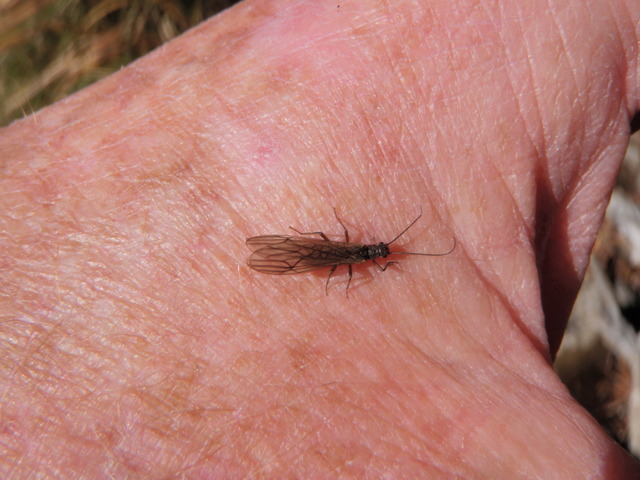
Playing off of that thought, I slid to the south side of the stream again and continued prospecting with the comparadun. It was difficult to see and fish were not showing themselves until I approached a nice deep pool created by a dead horizontal log. I paused to observe the pool and spotted a rise and as I did this I was standing beneath a tree with some branches that extended over my head. It was around 2PM and all of a sudden the stoneflies got quite active as they swarmed around my face and several actually landed on my skin. Could the rise indicate that the stoneflies were finally touching down on the water? I once again tied on one of the flies I created for this occasion and flicked a cast into the lower end of the pool. Wham! A nice brown tipped its nose out of the water and confidently slurped in my fly. It worked! My observation and efforts to match the stonefly hatch finally paid dividends.

Small Stonefly Rests on Photographer’s Hand

Over the next hour I worked my way up along the south bank and picked off six additional fish on my dark stonefly. This was quite gratifying as the fish were taking the drifting fly without hesitation. By three o’clock the stonefly event had dwindled, and it was fortunate for me, as I lost my second size 18 stonefly on an errant high backcast to a pine bough. I had one more in my front pack, but decided to switch back to a Chernobyl ant with a trailing Craven soft hackle emerger.  Between 3 and 4PM I landed number ten and eleven, and they were the nicest fish of the day. Number ten was a twelve inch brown that grabbed the emerger as I lifted the flies near the end of a drift tight to the bank.

Nice Rainbow Took Soft Hackle Emerger Along Left Side

Number eleven was a gorgeous chunky rainbow that also grabbed the soft hackle emerger. I cast the two fly combination to some still water behind an exposed rock, and since the top fly was barely moving, I decided to lift and recast, but just as I began to lift the rod tip, I noticed through my polarized glasses a quick subsurface flash as the rainbow darted to intercept the rising emerger. I set the hook and the bow dashed toward the main current and downstream a bit, but I applied side pressure and kept the head up to avoid the fish going beneath any branches or rocks.

I kept waiting for a late afternoon BWO emergence, and catching two nice fish on the emerger indicated that the fish were tuned into BWO nymphs, but by 4PM it had not happened, and my two fly offering was no longer generating any interest. Perhaps a deep nymphing set up would work? I decided to place an indicator, split shot and two flies on the tapered leader and experiment with nymphs. I selected a salvation nymph as my top fly and added a beadhead hares ear as the point, but unfortunately this did not produce any action in the final half hour before I called it a day and hiked back to the car.

I was rather pleased to land eleven trout on a beautiful late fall day. The temperature probably hit 70 degrees, and the dark stoneflies produced seven fish. I observed the stoneflies on Sunday, created a match, and used it effectively on Tuesday. Isn’t this what fly fishing is all about?

South Boulder Creek – 10/21/2012

Time: 12:00PM – 4:30PM

Location: 30 minute hike downstream from parking lot

Fish Landed: 16

South Boulder Creek 10/21/2012 Photo Album

After a rough outing on Wednesday I was anxious to find another opportunity to test the Colorado waters before hanging up my waders for the winter excepting of course the scheduled trip to Argentina in December. The weather forecast appeared to be favorable for Saturday and Sunday, so I chose Sunday as the day to make a late October fishing trip. The flows on South Boulder Creek were 95 and I can reach the water below Gross Reservoir in an hour and the stream supports a large population of rainbows who are not fall spawners, so this became my choice for Sunday.

I left the house a bit after 10AM and arrived at the parking lot shortly after 11. The lot was almost full, and I had to park next to the picnic table in the northeast corner. It was a pleasant day with air temperatures probably reaching the mid to high 60’s as I packed my lunch in my backpack along with my raincoat and assembled my Loomis 5 weight and began the hike down the path at roughly 11:20. I decided to hike beyond my furthest point to date and succeeded in this endeavor. By the time I tied on my Chernobyl ant with a trailing beadhead hares ear it was noon. I extended the tippet section that was tied to the bend of the Chernobyl to roughly three feet as I wanted to get deeper in the higher flows.

The Chernobyl/hares ear combination did not produce through some choice water so I clipped off the beadhead hares ear and added a beadhead Craven soft hackle emerger. Finally after fifteen minutes or so of additional fishing, a decent rainbow grabbed the BWO imitation at the tail of a deep run. Shortly after this, a small brown darted to the surface and snatched the Chernobyl ant. However, after this welcome success in the first hour, I began to experience refusals to the Chernobyl with no attention paid to the trailer, so I clipped off both flies and substituted a gray comparadun. This fly worked well for me in previous trips and the fly shop report suggested PMD’s and green drakes were still hatching.

I approached a nice pool with three current seams feeding the top and spotted a couple rises where the current fanned into the pool. I tossed the comparadun to the top and a nice brown tipped up and inhaled the mayfly imitation. Perhaps I’d chanced upon the winning fly for South Boulder Creek. Unfortunately this appeared to be a fluke because fish continued to rise in the riffled current at the top right of the pool, and they paid no attention to my offering. I studied the surface closely and spied two mayflies lifting off, but they were much smaller than a PMD and likely BWO’s so I switched to a CDC BWO. Unfortunately after a couple drifts, I tried to loop a cast above and to the right of a protruding dead branch, and as I picked up my line, the tiny fly lodged in the end of the branch. The only way to save the fly was to wade over and disturb the pool and the CDC fibers were now saturated and required drying and fluffing.

Nice Rainbow Early in Afternoon

I moved on above this area, but I didn’t see any more rising fish nor did I see anymore BWO’s. What I did see however were small stone flies riding the surface and dapping and fluttering up from the stream. I managed to swipe one with my net and inspected it at close range. It was a size 18 body of dark brown-olive with smokey dark gray wings and black legs. The wings were almost twice the length of the body and I looked in my fly patch and fly boxes and found two size 16 dark olive caddis with undersized hackles, so I removed the one from my fly box and tied it to my line.

Flows at Nice Level

I began prospecting with the caddis in hopes that it would be a close enough imitation of the stoneflies and It was about this time that I approached a very attractive long riffle stretch. The area was roughly 25 feet wide and 30 feet long and I flicked some casts to the lower portion and below some overhanging branches. It didn’t require more than a cast or two and a small rainbow smashed the caddis, now stonefly imitation. I fanned some casts to the left and then covered the middle area and the top and landed six more fish on the stonefly in this area and in some nice water above the riffle area. The teeth of one of the browns broke the hackle stem so I clipped it off and fished the fly with only a wing and body and no hackle. This almost worked better than the hackled version as I landed several of the fish on this fly. One fish took the fly fairly deeply indicating that it didn’t suspect that it wasn’t a real stonefly.

Unfortunately as I moved along, the stonefly activity waned and I went through a slow spell, but around 3PM I began to notice legitimate BWO’s and rising fish. In a pool with some steady risers I decided to clip off the caddis and replace with a size 22 CDC BWO and this did the trick for the next 45 minutes as I landed three additional fish. If I could spot a rise and put myself in a position where the sun glare wasn’t too bad, I could dupe the fish with my tiny imitation. One of the nicer fish sucked in the CDC BWO just as it sank below the surface.

Decent Brown Sipped BWO

Once again however the hatch slowed and disappeared and the shadows began to extend over much of the stream. I exited at this point and hiked up the path looking for stretches of water that remained in the sun. I did manage to find several of these areas and as the lighting was now quite difficult, I abandoned the size 22 CDC BWO and tied on the other size 16 olive brown deer hair caddis. Over the remaining hour I picked up four more small trout on the caddis by fishing in sunlit areas. By 4:30 the entire canyon was covered with shadows although the temperature remained quite conducive to fishing, but I decided to hike back out and return home as I was already running late compared to the return time I’d communicated to Jane.

I was quite pleased to land sixteen fish on October 21 with nearly all taking flies on the surface, and I resolved to tie some size 18 stonefly imitations so I’m prepared for the next visit. I’ve concluded that South Boulder Creek is one of the few streams in Colorado where large attractor style flies do not perform. These educated trout seem to prefer offerings on the small side and flies that actually come close to imitating the real food that they see on a day to day basis. Go figure.

South Boulder Creek – 09/26/2012

Time: 5:45PM – 7:00PM

Location: .2 miles below the footbridge

Fish Landed: Dave -0; Dan – 2

South Boulder Creek 09/26/2012 Photo Album

I picked Dan up at his apartment at 4PM as he just arrived home from work. Dan quickly changed into his fishing clothes and grabbed all his necessary equipment including the new fishing bag he received from Jane and I on his birthday. We made the relatively quick drive out route 6 to Golden and then up Coal Creek Canyon to the turn off for Gross Reservoir and South Boulder Creek. In spite of the rain earlier in the day, Wednesday evening developed into very pleasant although cool conditions.

When we exited the Santa Fe and I went to the tailgate I realized that I removed my waders and wading boots to dry and hadn’t returned them to the car! I took my rod and reel, but told Dan I would pretty much be his guide as I realized it would be difficult to get in good position to cast in the reduced flows. My rock hopping skills would be frequently tested and I would be lucky not to return with cold wet feet.

We hiked down the steep path and then followed the trail along the stream to the footbridge and then continued another .2 mile or so below that before cutting down to the stream. I added a new section of tippet to Dan’s line as he was reduced to cutting back the tapered leader, and then I tied on a size 16 light gray deer hair caddis. He moved to a good position at the tail of a long smooth pool and began casting initially to the tail and then working his way to the top with 20-25 foot long casts. The water was extremely smooth and Dan’s fly was dragging rather quickly so I explained to him how to check his cast high and allow it to flutter down with slack.

When Dan was standing at the tail of the pool he shot a cast to the small riffle at the head and executed a nice pile cast. In an instant he tightened the line and I saw a huge boil as a lunker rainbow by South Boulder Creek standards thrashed and dove and tried to get free from Dan’s fly. Eventually Dan subdued the fifteen inch bow and slid his net beneath. I tried to take a movie but only captured the final netting. I snapped a still photo as well and Dan dried his fly and moved upstream.

Dan Lands Beautiful Rainbow on South Boulder Creek

Shortly after the initial excitement Dan landed a small brown and then hooked what appeared to be a 12 inch or greater brown, but this fish managed to free itself before Dan could get it in his net. Unfortunately after this flurry of action in the first half hour or so, things slowed down and neither he nor I could entice any additional rises to our caddis imitations. Dusk began descending early in the canyon, and Dan didn’t have a headlamp to change flies, so we stuck with what was no longer working. From my position balanced on slick slimy rocks on the right side I was able to make a few inconsequential casts, and actually induced a pair of refusals.

Largest Rainbow I’ve Seen Out of S. Boulder Creek

At seven o’clock there was minimal light remaining so we quickly began hiking out of the canyon by the light of my headlamp. Fortunately I replaced the batteries recently, as we needed all the light we could muster to get two of us back up the rocky trail and then up the steep section to the parking lot.

South Boulder Creek – 09/20/2012

Time: 2:30PM – 5:30PM

Location: 20 minute walk downstream from parking lot

Fish Landed: 16

South Boulder Creek 09/20/2012 Photo Album

After living in Colorado for 22 years I discovered South Boulder Creek after a train ride to Fraser with my aunt and uncle in early August. I fished there twice and the first time the flows were 167 cfs making it difficult to cross the stream. The second time the flows were 105 cfs, and I felt this was pretty close to being ideal. What would 10 cfs be like? Read on to find out.
I finished the financial package for the month of August at work by 11:45 on Thursday and drove home for lunch. I contemplated fishing in the afternoon and decided to give South Boulder Creek a try as it is only an hour drive, and I felt I could get in two to three hours of fishing in the late afternoon. During my last trip the fishing actually picked up in the later afternoon as a pale morning dun hatch evolved. I didn’t bother checking the stream flows out of Gross Reservoir before I left.

As I slowly negotiated the twisting dirt road and caught my first glimpse of the creek, I was surprised to see extremely low flows. It took me an hour to arrive at the parking lot below the dam and by the time I put on my waders and rigged my rod it was 2PM. Another fisherman was in the parking lot removing his waders and finishing up his fishing outing, so I asked him about the low water conditions and how the fishing had been. He told me the flows were 20 cfs (I later checked the DWS web site and discovered they were actually 10 cfs), but the fishing was actually quite good in the morning but slowed considerably in the afternoon sun. He was using a small midge fly and caught most of his fish on that.

When I started descending the steep trail to the stream I passed a couple returning from fishing, and they indicated the fishing was good as well and suggested using a tungsten tongue. I was only dedicating a couple hours to this venture, so I decided to continue on and find out what it was like. How bad could it be? When I got to the bottom of the trail and caught my first full extended view of the stream I was shocked. It looked like a series of linked puddles with 65% of the stream bed exposed and displaying a steady boulder field covered by an olive brown slime. I decided to hike for 20 minutes and try to get below my point of entry on my last trip so that I would explore new water.

This worked out and I entered the stream perhaps .25 minutes below my previous entry point on my last visit to South Boulder Creek. During my last trip the light gray comparadun began producing late in the day so I opted to begin my approach with this fly. I began at a nice long narrow smooth pool slowly moving down the center of the creek bed and began making long prospecting casts with my fly. I estimate that on average I was casting 25 – 30 feet in the wide open areas, and I was making shorter casts when I was close to the trees and willows or I was casting to faster moving water.

10 CFS Is Low

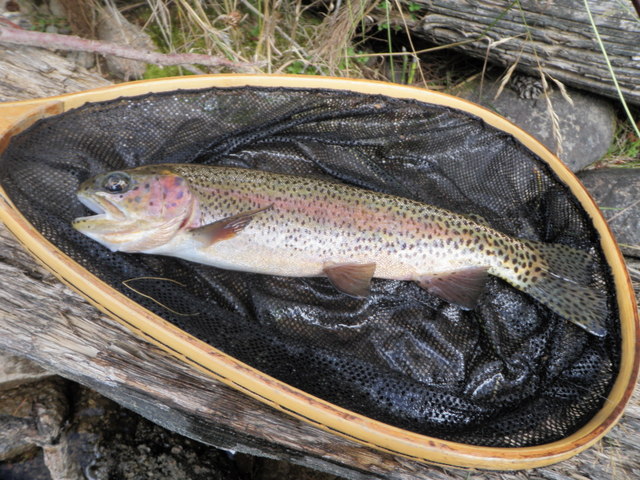
Initially I observed several refusals to my fly, but when I got to the top of the run with faster moving current I began to pick up some decent sized browns. Catching browns was unusual as I landed almost 100% rainbows on my previous two trips. The pattern I just described pretty much continued for the remainder of the afternoon until perhaps 5PM. I covered a lot of water, experienced some rejections, but also landed some decent fish on the money fly. I probably landed rainbows and browns in a 50/50 ratio and the rainbows were on average larger. My best fish were rainbows in the 12 to 13 inch range, and they were spunky and brightly colored.

Nice Brown Landed Early on S. Boulder Creek

Perhaps Largest Rainbow on S. Boulder Creek So Far

By 5PM I’d racked up 13 fish landed and began getting refusals even at the top of the pools where faster moving water was entering. These locations previously had been the best producers with nice fish taking the money fly with confidence. Shadows began to extend across the entire stream area, and I noticed more caddis bouncing around on the surface, so I swapped the gray comparadun for a deer hair caddis constructed with the same color body. This seemed to work as I landed three more fish including a very nice rainbow before calling it quits at 5:30. It was still quite pleasant temperature wise, but I needed to return to meet Jane for dinner; however, I could have continued fishing South Boulder Creek in 10 cfs flows until dark. I’m glad I followed through and wasn’t scared off by the low water.

Another Bright Rainbow


South Boulder Creek – 09/06/2012

Time: 10:30AM – 5:00PM

Location: Tailwater below Gross Reservoir; 25 minute hike down path

Fish Landed: 13

South Boulder Creek 09/06/2012 Photo Album

With my work totally caught up Thursday and Friday were available for fishing. Originally I considered biking up Waterton Canyon to fish in the South Platte River southwest of Denver, but I checked the flows and they were only in the 60’s out of Strontia Springs Reservoir. This seemed to be quite low so I looked at other options. I wanted a tailwater that wasn’t too long of a drive so this left South Boulder Creek and the South Platte River below Cheesman Canyon. I also considered setting up camp at Spruce Grove Campground along Tarryall Creek and this would position me to hike into Wildcat Canyon again or fish the South Platte in Elevenmile Canyon. The possibility of Dan and I backpacking in Wildcat Canyon was discussed so I didn’t want to do this solo if the two of us would undertake the trip over the weekend.

The flows at South Boulder Creek were just over 100. I am not as familiar with what is ideal on South Boulder Creek, but on my previous trip there the flows were 150+, and I felt that level was a bit challenging so 100 seemed about right. I chose South Boulder Creek as my destination. I packed my gear and left the house by 8:30 and arrived at the trailhead by 9:40 or so. After I put on my waders and gathered up my gear, I hiked down the trail for 25 minutes. On my previous visit I stayed above the first bridge, so I wanted to explore further downstream. My starting point was a bit beyond a picnic table situated next to the stream.

I began the day with a parachute hopper and beadhead hares ear, and in the very first small pool a trout rose and rejected the hopper at the tail and this trend unfortunately continued as I moved out in the middle and tried several more attractive spots. I clipped off the hopper and replaced it with a Chernobyl ant and the same result followed. Next I moved to a yellow Letort hopper as my indicator fly and that didn’t even create refusals. The fish were looking up and paying no attention to the nymph, so I elected to remove both flies and try a size 16 light gray caddis. This finally got me on the scoreboard as I landed two small rainbows on the caddis.

An Ant Produced Rainbow

However, after the initial success, the gray caddis also started producing refusals and I was contemplating another change as I approached a nice pool and noticed two sporadic rises. There weren’t any insects on the water so I surmised that perhaps the rises were for wind blown terrestrials in the water. I tied on a parachute black ant and miraculously a fine 13″ rainbow rose and sipped in the ant. Perhaps I had solved the riddle. I used the ant as a searching fly for quite a time after catching the rainbow, but it didn’t produce anymore. I abandoned the ant and cycled through a trial and error period with 100% error using an elk hair caddis, yellow sally, and lime green trude. I noticed a few midges buzzing about so I added a midge larva dropper and eventually gave up on the tiny midge larva and tried a beadhead pheasant tail. The pheasant tail finally worked and I added a small rainbow to my count by the time I ate lunch at noon. I packed my lunch in my fishing backpack, so I sat on a rock by the side of the stream and ate while I observed the water.

Pretty Speckled Rainbow from S. Boulder Creek Duped by Ant

After lunch I began to see some green drakes and perhaps 8-10 were observed over the course of the early afternoon. The South Boulder Creek green drakes were quite small compared to those I’ve observed in other drainages. One landed on my hand and I attempted to photograph it, but a gust of wind came along and it flew off before I could get my camera in place. Based on the hand held green drake I’d estimate they are a size 14 2XL. I tried two of my comparadun green drakes, and they generated a couple refusals, and then in a nice long wide slot I experienced a momentary hook up while executing a long downstream drift. After this excitement my hopes soared that I’d unlocked the secret of South Boulder Creek, but those thoughts were quickly dashed as I couldn’t create any more action on the green drakes. My green drakes also don’t float very well, and I may tie parachute green drakes this winter with perhaps some white calf body hair for the wing.

With the green drake failing to produce, I returned to the Chernobyl ant and beadhead pheasant tail and in a nice long riffle over moderate depth a rainbow grabbed the pheasant tail. I thought this was perhaps the precursor to fast action on the pheasant tail prior to a pale morning dun hatch, but once again my hopes were premature.

Looking Upstream

As I worked my up the stream I spotted some rises so I reverted to the light gray caddis as that produced my first two fish and once again it produced as I landed a small rainbow and my first and only brown trout of the day. I approached a nice stretch with three quality runs of moderate depth, and I was disappointed to experience three consecutive refusals from selective fish that appeared to be decent size for South Boulder Creek. What should I do now? At about this time I began to see some pale morning duns and a few more rises. The light gray caddis has the same body color as the money fly that I use as a pale morning dun imitation, so perhaps I had the right color but the wrong wing configuration. I tied on a light gray comparadun money fly and it turned out to be a stroke of genius. Between 3:30 and 5:00 PM I landed six more fish and two were nice feisty brilliantly colored rainbows in the twelve inch range. The rainbows were taking the money fly with confidence, and I was regretting not trying it sooner.

Richly Colored Rainbow Took Light Gray Comparadun

During this late afternoon time period I experienced the best situation of the day along with the ant working its magic. I was above the foot bridge and there was a short deep pocket in front of a boulder that was sticking above the water near the bank. Two small tree branches were trapped in front of the boulder and angled out into the current. I flicked the comparadun from the bank while above the boulder and let it drift downstream. Just as the fly was about to get sucked under the leading branch a fine rainbow emerged from below and inhaled the pale morning dun imitation.

Brilliant Stripe on This One

In a nice long run and pool above the bridge I picked up three or four rainbows that also sipped the comparadun with confidence. I fished this area on my previous visit, and discovered that these fish are quite choosy, so this was additional proof that the light gray comparadun was the fly to have.

At five o’clock I clipped my fly to the rod guide and hiked up the path and then climbed the steep trail to the parking lot and the car. I had my best day so far on the newly discovered South Boulder Creek. It was pretty exciting to find the right fly and also to witness green drakes hatching in early September in a location so close to home.


South Boulder Creek – 08/16/2012

Time: 9:30AM – 4:00PM

Location: Downstream from Pinecliffe

Fish Landed: 12

South Boulder Creek 08/16/2012 Photo Album

Wednesday was a day to celebrate at Saddleback Design as I finally caught up the monthly closings for 2012. I completed everything possible for July, and now I’m in wait mode as the office manager finishes the job costing. Why am I mentioning this in a fishing blog? This means that I will be able to resume my desired frequent fishing schedule for the remainder of the season. I began by fishing on back to back days on August 16 and 17.

Recall that my Aunt Judy and Uncle Lee visited us during the first week of August and during their stay we took a day trip to Fraser, CO on Amtrak. During this trip while sitting in the observatory car, I noticed a beautiful stretch of water from Gross Reservoir to the Moffat Tunnel that was South Boulder Creek. Upon my return I did some research and discovered that two popular stretches for fishermen were the tailwater below Gross Reservoir and the water below Pinecliffe that is accessed via the train tracks. On August 5, Jane and I visited the tailwater on a very hot day. I now decided to see what the Pinecliffe water was like. I was also scouting this water for possible after work fishing trips with Dan as I estimated it could be reached in one hour to one hour and fifteen minutes.

The drive time estimate proved to be accurate as I left the house at 7:50 and arrived at a small parking lot in Pinecliffe by 9:00, and I was taking my time as I wasn’t familiar with the road or the location. It was quite chilly as a front had moved through the front range on Wednesday evening, and I wore my fleece for my hike down the railroad tracks. It was a good move as the temperature never rose above the 60’s and at certain times I was actually chilled when the wind would pick up in the deep canyon. I had no idea how far I could hike down the tracks, so I decided to hike for 20 minutes or until 9:30 and see where that landed me.

Railroad Tunnel No. 1

The first stretch paralleled a dirt road, and I was reprimanding myself for not driving down the road and parking closer, but on the return I discovered that the lane was gated. At the end of the lane I crossed a railroad bridge and shortly after that went through a very short tunnel. Next I covered a ten minute hike along the railroad bed, and I could see South Boulder Creek tumbling through the canyon way below me. I began to be concerned about how I was going to get down the steep bank from the railroad bed. Eventually I arrived at the entrance to a second tunnel. This one was more intimidating as I could not see light at the other end. It also wasn’t clear that the railroad tracks continued to parallel the stream on the other side as South Boulder Creek made a turn to the left and there was a rocky hill beyond the tracks.

I noticed a steep rocky trail that cut down in front of the tunnel so I decided to cast my fate and make the descent. I carefully maneuvered down the steep rocky path with loose train bed gravel until I reached a boulder strewn stretch of the creek. I had no idea what to expect from this water, so I tied on a parachute hopper with a beadhead hares ear, my latest go to combination. At the beginning the creek consisted of fast chutes and large plunge pools, and I probed the edges of these pools and in short order landed a tiny rainbow that was too small to count. At least I knew there were fish in this newly discovered water.

Steep Path I Descended from RR Tracks

It was a beautiful setting and I continued to wonder why I’d never sampled this stream. There were steep canyon walls on both sides of me with dense trees and vegetation in the riparian zone. I fished on and landed a pair of rainbows on the hopper and photographed the second one as it had beautiful coloration. It would end up matching my largest catch of the day at around eleven inches. As I proceeded I found myself getting mostly refusals to the parahopper, so I swapped out the top fly for a Chernobyl ant. This didn’t really change things, and I continued observing mostly refusals, although I managed to land two more small rainbows, one on the Chernobyl and one on the hares ear. This pattern would largely continue over the remainder of the day. For every ten attractive pockets or pools I fished, nine would yield refusals, and in one pool I’d catch a fish.

Pretty Rainbow

After fishing the Chernobyl for an hour or so I went through a bunch of fly changes. I tried one of the new muggly caddis flies I tied using snowshoe rabbit hair, and that produced the second rainbow of matching size to the second one I’d photographed. After the muggly got saturated and stopped floating well, I tried a size 14 2XL trude with an emerald body, but that didn’t even bring refusals. I clipped that off and tied on a lime green trude, and landed a fish. A royal stimulator joined the menu and I added a beadhead pheasant tail as a dropper. Everything I tried resulted in pretty much the same pattern of 90% rejections and 10% catch.

South Boulder Creek Below Pinecliffe

I paused and looked through my attractor box while debating whether to go deep with some nymphs and avoid the surface rejection problem entirely. I discovered that I only had one yellow Letort hopper, and tried that for awhile with no success. I also noticed a smaller Letort hopper with a light gray body and used that for a longer period with a bit of success. I landed a pair of small rainbows on the beadhead pheasant tail while fishing the gray hopper on top. My fish count had climbed to eight when some darker clouds moved in and a light rain began to fall. I hadn’t packed my raincoat, but I lucked out and the rain never intensified to the point that my fleece got soaked. I began to notice a few sporadic mayflies emerge, probably PMD’s, but this didn’t seem to increase the trout’s interest in my beadhead pheasant tail. Somewhere along the line I added a RS2, but again no response.

I finally decided that since nothing was working as the top fly, I’d return to the Chernobyl since it at least floated well and minimized the need for false casting and wear and tear on my shoulder and elbow. I tied on the Chernobyl and went back to the beadhead hares ear and picked up a pair of rainbows that grabbed the nymph as it began to lift or swing at the end of drifts when I cast across and let it drift downstream.

The canyon was starting to widen and that put my mind at ease regarding how I was going to exit, and the stream was spread out a bit more causing its nature to shift from plunge pools to pockets, runs and pools. I was considering calling it a day when I approached a beautiful deep pool where the main current ran against a large flat rock on the opposite bank. I spotted numerous subtle rises in the pool so after running the Chernobyl/hares ear through the run and pool with no results, I decided to try a single dry. I wasn’t seeing anything on the water, so I decided to go with a small size 16 sparse deer hair caddis with a light gray body. This brought refusals, but I also managed to land two rainbows from the pool. Maybe I should have been using the small caddis all along?

After I’d disturbed the pool with numerous casts and two fish landings, I spotted a path on the left bank. It was around 3:30, so I decided to take advantage of an obvious exit path and climbed the steep but well worn trail to the railroad bed. This brought me to the east end of the tiny first tunnel. I hiked a short distance to the railroad bridge and spotted a rise or two in the nice pool before the creek flowed under the bridge. I circled back across the bridge and went down to the tail of the bridge pool and began tossing casts with the caddis. The fish were having none of it, but the rises continued throughout the pool. I waded across the tail and climbed up on the rocks on the upstream side of the bridge and attempted some downstream drifts to the areas of rising trout. As I was doing this, I observed five or six PMD’s slowly rising up from the stream, so I switched the caddis for a money fly, a light gray comparadun. Finally on a downstream drift a fish rose to my comparadun, and I set the hook and felt the momentary weight of a fish.

As I watched the sun came back out and the hatch temporarily paused so I decided to continue on my way to the car. I walked up the lane and discovered the locked gate at the end, and that vindicated my parking place and extended hike along the railroad bed.

It was a beautiful location, and I managed twelve small rainbows, and I saw enough promise to return and give South Boulder Creek another chance. I’d like to learn if I could hike further east along the tracks beyond the second tunnel.