Category Archives: Arkansas River

Arkansas River – 06/28/2013

Time: 8:00AM – 3:00PM

Location: Upriver from Rincon Campground

Fish Landed 15

Arkansas River 06/28/2013 Photo Album

Heat. That is what I will remember the most about my trip to the Arkansas River on June 27 and 28. It was one of the few times in my life when I was set up for some fishing, but I was too hot to actually do it.

I wrapped up the financial package for May at Saddleback Design on Wednesday so that I was in a position to go fishing on Friday and Saturday. Jane agreed to play tennis with her teammate in the summer league on Saturday morning, so Saturday was available for some fishing and I anxiously reviewed the streamflows and reports from the fly shops. Even though the snow pack was below normal in 2013, it was still much greater than 2012, and deep enough to create runoff on many Colorado Rivers. I noted that the Arkansas River had dropped to just under 700 cfs and the Eagle River was averaging around 600 cfs. I checked these first because they are freestone rivers and fish best as runoff declines and then become more difficult once they level out and resume summer flows.

I’ve experienced some success fishing the edges on the Arkansas River when the flows are up, but I was concerned that 700 was already too low for the type of fishing where the trout are all pushed to the bank to seek relief from the strong flows of the main river. The Eagle River at 600 is still a bit high and difficult to fish. The reports on the Arkansas from Royal Gorge Anglers and ArkAnglers were typically upbeat, but I checked the reports of Cutthroat Anglers in Dillon, CO, a shop that isn’t very close to either the Eagle River or the Arkansas River, and it rated the Arkansas as four stars and “on fire”. This clinched my decision and I made plans to fish the Arkansas on Friday and Saturday.

I had a dermatology appointment on Thursday morning at 8:45AM, so I planned to pack the Santa Fe afterwards and then drive to the Arkansas River below Salida and find a campsite and fish Thursday evening as well as Friday and Saturday. Unfortunately I had two biopsies taken by the dermatologist on Thursday morning thus requiring bandages, an additional complication I was not planning on. One of the spots removed was on the back of my left hand, and it was a location where a band-aid did not adhere very well.

I packed the car and was on my way by 11:15 and arrived at the first campground below Salida by 2:30PM. Unfortunately this campground was quite primitive with no fire pits or picnic tables, so I decided to move on to Rincon as I remembered this to be a more official campground. Meanwhile it was a very hot day with temperatures reaching the mid-90’s in Denver and probably the low 90’s around Salida, but I was cruising along in my air conditioned vehicle and oblivious to the heat around me. When I arrived at Rincon I quickly found an open campsite next to the river and paid for two nights, but this turned out to be a mistake. The sites were actually fairly nice although there was no shade whatsoever and the tent pad and area around the picnic table and fire pit was covered with a thick layer of gravel. This was actually quite nice for preventing tracking dirt into the tent and car, but it afforded no opportunity for driving a tent stake into the ground.

I began the task of setting up my tent in the peak late afternoon sun. Normally I can erect the REI two person tent in 15 minutes, but that would not be the case on Thursday, June 27. I forgot that the center pole of the rain fly needed to run through the center hook of the main tent, so I struggled for awhile trying to follow the directions on this step. While focusing on this last step, some strong gusts of wind began to sweep up along the river. I quickly staked out the main tent, but as I mentioned there was virtually zero penetration of the tent stakes into solid ground. A stronger gust of wind came along and tumbled the tent over a couple times and I quickly rescued it from rolling into the river. Meanwhile the bandage on the back of my hand kept sliding loose due to perspiration and all the hand movement, and I was concerned about keeping it clean and preventing infection.

There were numerous large boulders scattered about the tent pad area, so I grabbed one and tied the rope around the rock to anchor the tent instead of using the tent stake. I also threw my sleeping bag, pillow, pad and clothing bag in the tent to provide more ballast against the strong wind. Alas, even this was not enough and another gust of wind tumbled the entire tent including all my contents.

It was about this time that the occupants of the neighboring campsite arrived, and a gentleman walked over and told me that their neighbors the previous two nights had similar problems with their tent, and that explained all the boulders scattered about the tent pad. He held the tent against the relentless wind while I tossed four boulders the size of bowling balls into the tent to anchor all the corners. I then placed two more boulders on top of the outside edge of the tent on the side facing into the wind. After over an hour of frustration, my tent now withstood the steady hot wind blowing upriver, albeit with a strong lean.
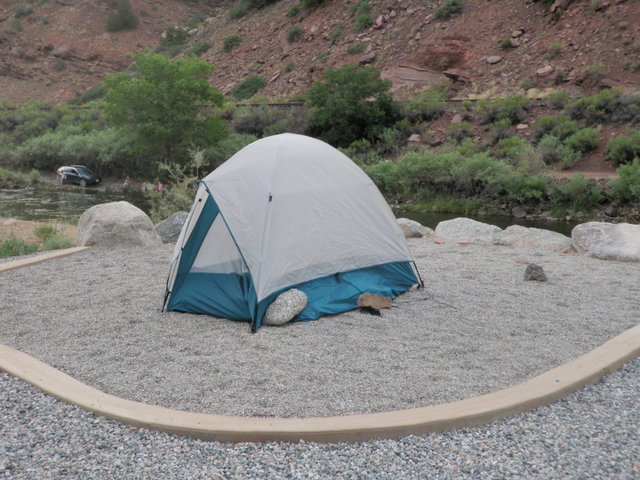
Rocks Inside and Out Anchor REI Tent

Rocks Inside and Out Anchor REI Tent

At this point I was exhausted from standing in the sun and the heat and fighting the wind and stressing over how to attach the rain fly, so I set up my stool in the shade of the Santa Fe and filled my plastic cup with a large handful of ice. The water from the blue container was so warm that it melted the ice almost instantly. I drained three large 16 ounce cups of ice water while I read an article in my fishing magazine. I planned to fish after 6PM, but I was feeling extremely drowsy, so I decided to go inside the tent and lie down. After all, the tent did provide some shade from the intense sun. But as you can imagine the heat and the wind resulted in a long nap, and when I awoke, I decided to make dinner before dark and bypass evening fishing. I had positioned myself for bonus fishing time, and now I didn’t feel like taking advantage! After dinner I cleaned up the dishes and then took a walk along the river upstream from the campground. It was around 8:30 and the intense sun dropped behind the mountains to the west as I carefully observed the river. It was running high compared to my recent visits, but there were numerous attactive slack areas behind rocks and along the bank. At one point I looked down from high above and noticed a flurry of rises in a slow moving area off to the side of the strong mid-river current. I was tempted to return to the car for my fly rod and some twilight action, but it was now 8:45 and it would be nearly dark by the time I returned. In addtion accessing this area required negotiating a steep rough path from the highway down to the river. I returned to my tent and curled up between four boulders and fell asleep almost instantly.

I awoke rather early on Friday morning and a somewhat cool breeze greeted me as the sun had not yet risen above the canyon wall on the opposite side of the river. I prepared a quick breakfast and packed up all my gear and moved the Santa Fe to a parking lot at the end of the campground intended for fishermen and rafters. I did not plan to go through the windstorm again on Friday, and I called Jane to let her know that I was bailing early and would be home Friday evening after fishing.The positive to the Rincon camping experience was that I was packed up, in my waders and ready to fish by 8AM on Friday, a welcome circumstance since it was forecast to be another hot one on the Arkansas River.

I waded into the cool river next to the campground and began casting my Loomis five weight with a Pool Toy yellow hopper and a beadhead hares ear. The Loomis handles large flies better than my Sage and Orvis rods as it flexes more in the tip section and slings larger weighty flies with ease. I worked my way upstream covering the slower moving areas with three to five casts and then moving on. At some point in the first hour I hooked two fish for a split second but failed to land, and the inability to finish was due to inattentiveness on my part. Sometime between 9 and 10 I encountered a huge rock that bordered the river and forced me to circle up and around on the bank. As I descended back to a nice looking pocket along the bank in front of the large rock I was forced to make a large step down from one ledge rock to another three feet above the river. When I reached my right foot down I couldn’t touch so I had to made a small aerial drop, but as I executed this I bumped my left side against another rock and lost my balance. I felt like I was in slow motion as I tucked my right shoulder and somehow released my rod from harms way. My legs flipped around and I remember seeing their shadows against the rock wall. In an instant I landed in the water and found my footing but not before some cold river water spilled over the top of my waders. For the first time on this trip I was actually feeling cool and refreshed. I considered returning to the car for a change of clothing, but knowing the hot temperatures ahead of me, I decided to continue fishing in my wet suit and enjoy the cooling effect of the evaporation.

I moved on and encountered some nice pockets along the edge, but continued to go without any fish. I spotted a solitary golden stonefly fluttering over the water, so I exchanged the pool toy for a size 10 yellow Letort hopper, but maintained the hares ear as the dropper fly. This didn’t change my fortunes and eventually I decided to abandon the dry dropper and try a size 14 dark olive caddis. During my walk the previous evening I noticed clouds of caddis around me and swiped one from the air and discovered a dark olive body.

The dark olive caddis turned the tide and I began to catch fish at a fairly regular rate from 10:30 until around 1:30PM. The fish were in the 9-11 inch range with an occasional 12-13 incher, but I was enjoying the fairly consistent action. When I reached the area where I’d observed rises the previous evening, I landed a couple fish, but also spotted several nice size fish right along the bank that I spooked in my efforts to manuever upstream around the shrubs and rocks.
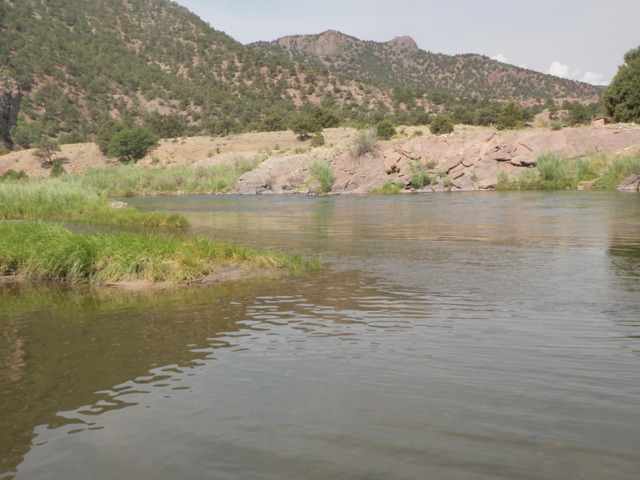
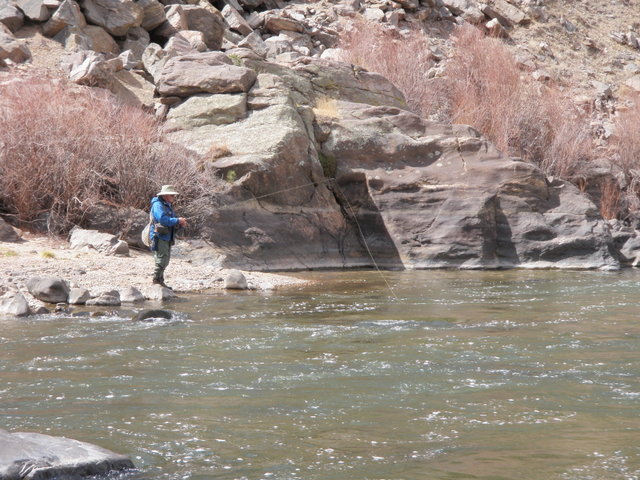
Slack Water Area Where Fish Were Rising Thursday Evening

Slack Water Area Where Fish Were Rising Thursday Evening

At around 12:30 I climbed the bank to circle around a large rock and a big tree and as I came down the other side I found a nice deep narrow slot along the bank between two large exposed boulders. Not wanting to scare any fish, I stopped 10 feet up the bank and flicked a cast to the edge of the slot. Wham! Immediately a trout rose and smashed the caddis, but as I tried to pressure it to bring it back upstream, the line snapped where I’d connected the tippet with a surgeon’s knot. This was the fourth dark olive caddis I’d lost during the morning, and only one remained in my frontpack, so I decided to return to the car and restock.

Upon my return from the car I continued working up along the left bank through some very juicy runs and pockets and reached eleven trout landed by 1:30. At this point I reached a nice deep run that fed into a twenty-five foot long pool, and here I began to see refusals to the caddis. At the same time I spotted a few pale morning duns drifting up from the river, so I tied on a light gray comparadun, but this also failed to produce. Next I opted for a light gray size 16 caddis, and this prompted more refusals so I moved on. I moved around a large bend in the river and found myself across from two modern day prospectors. I also noticed three or four golden stoneflies flying above the river in their lumbering bomber style, so I paused to return to the yellow Letort hopper and added a beadhead pheasant tail dropper 18 inches below the hopper. Hopefully the narrow profile of my hopper would imitate the stoneflies present, and the pheasant tail would represent the nymph stage of pale morning duns.

As I paused to reconfigure my flies, I gazed across the river to the prospectors and watched their routine. I’m sure they felt that climbing rocks along the river in the afternoon heat in waders and flailing away repeatedly was a boring activity, but what they were doing was even worse in my view. They were shoveling dirt from a bank twenty yards away from the river into a pan and then stooping over the river and adding water and swishing around the dirt looking for gold particles. I have no idea if they were succeeding enough to make it worth their while, but it looked like a horribly hot activity, and they had two tents set up so they appeared to be using their vacation for multiple days of gold panning.

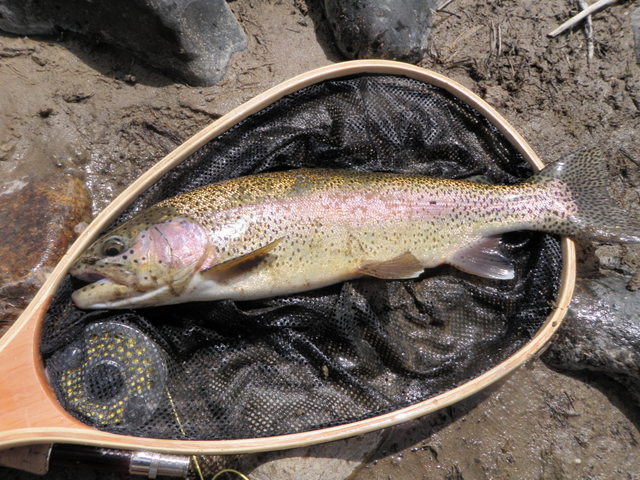
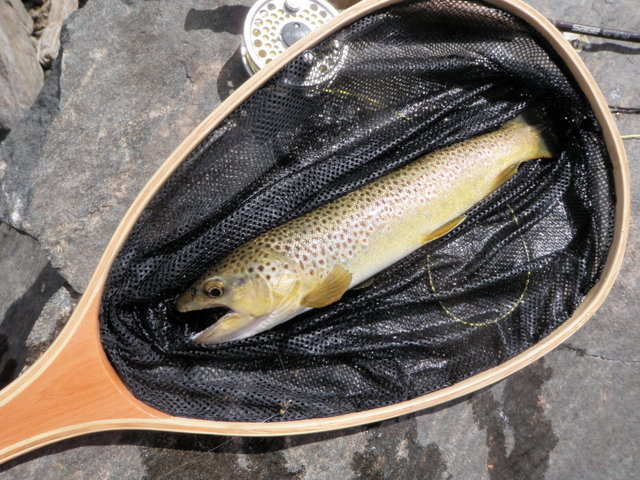
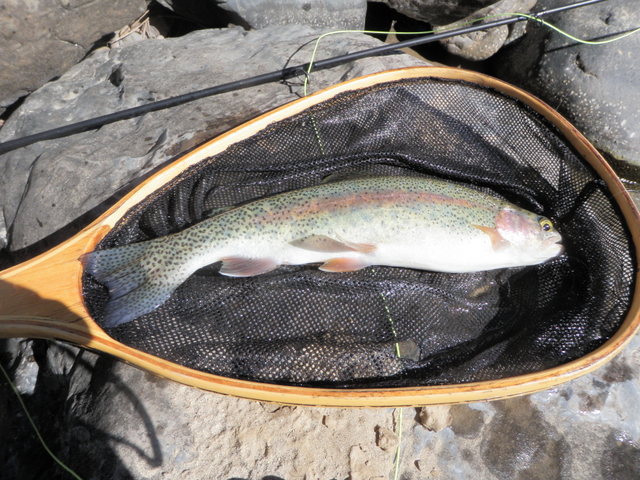
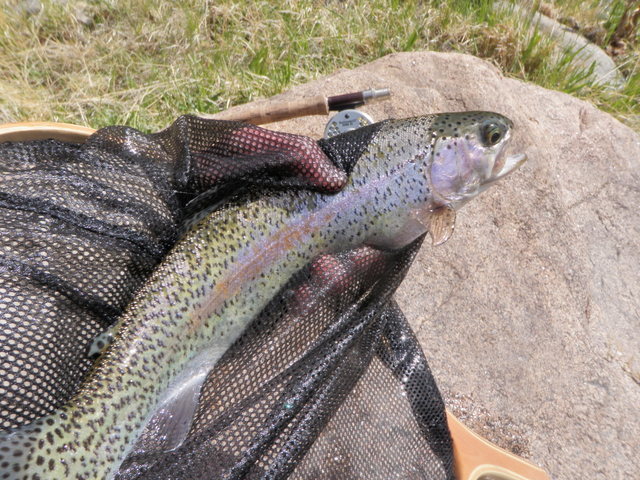
The move back to the hopper and beadhead pheasant tail paid dividends as I landed four more browns over the remainder of the afternoon before quitting at 3PM. Two were quite nice browns that grabbed the nymph as it drifted very tight to the rocks. The best fish was a beautiful rainbow that nailed the pheasant tail at the tail of a pocket as I lifted to recast. I fought the fish for 3-5 minutes, and in the process obtained some good looks at a fish that probably went between 15 and 20 inches. One of the prospectors across the river watched the battle and yelled out an admiring comment. Unfortunately late in the fight the rainbow got in some heavy current and make a quick turn and broke off the pheasant tail.
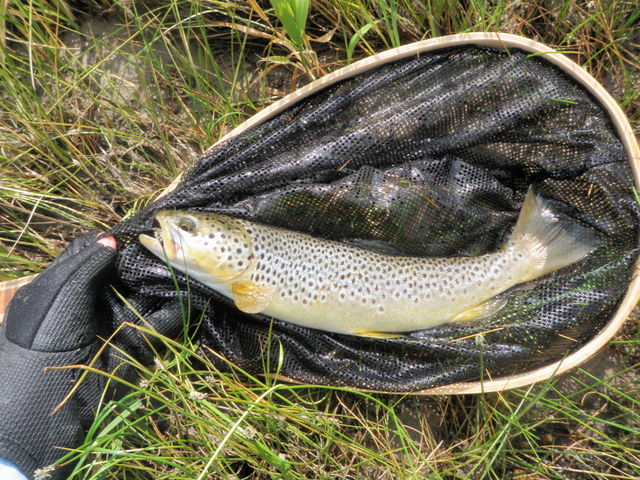
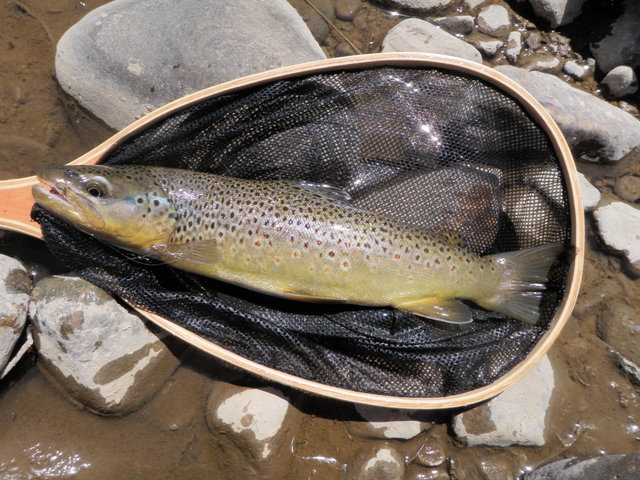
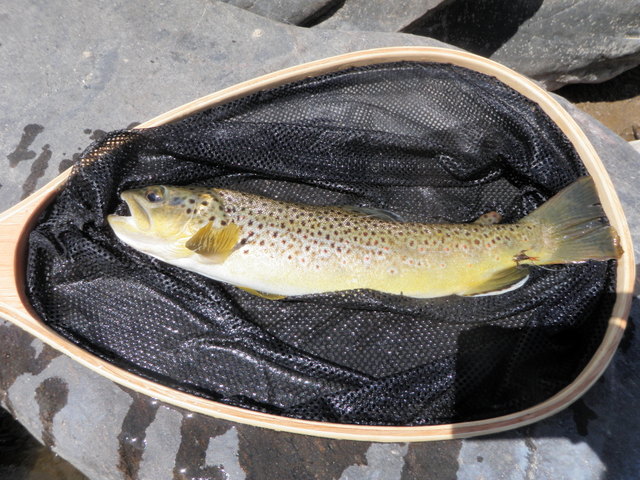
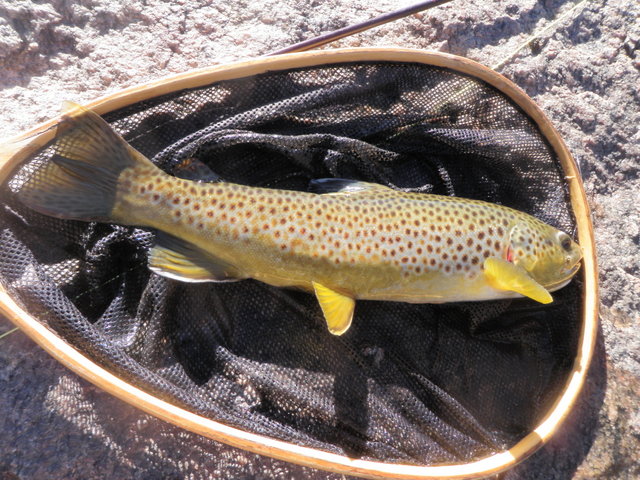
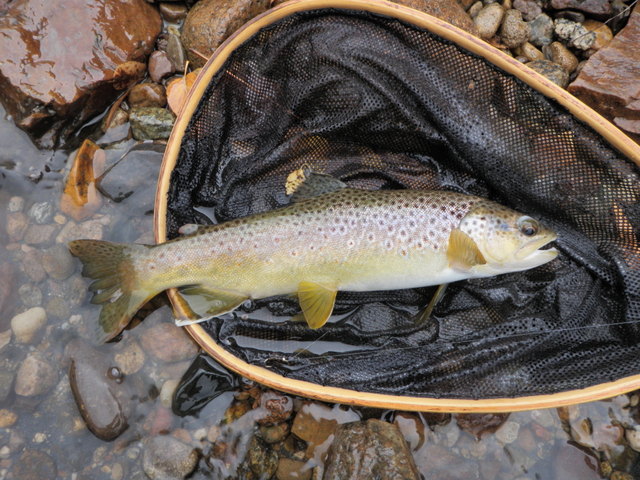
A Nice Arkansas River Brown

A Nice Arkansas River Brown

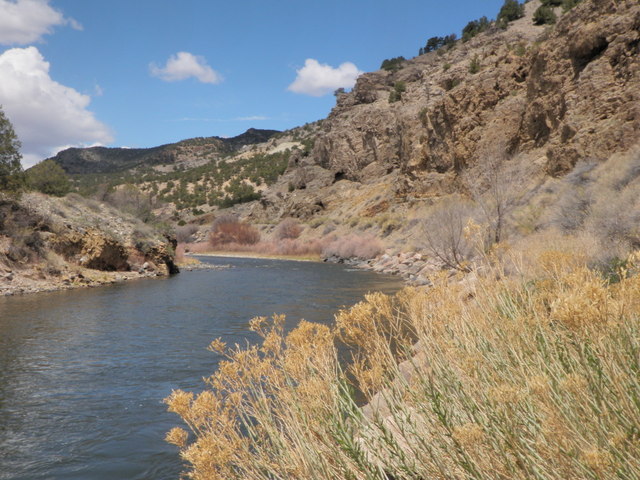
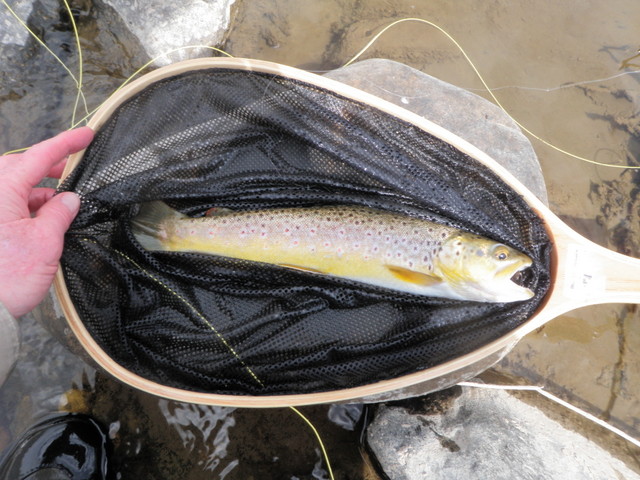
I endured a lot of frustration, but it was worth it to be able to land fifteen wild brown trout on the Arkansas River with the river at 700 cfs and air temperatures hovering in the 80’s. As I expected, Colorado rivers should be in prime fishing condition by the Fourth of July in 2013.
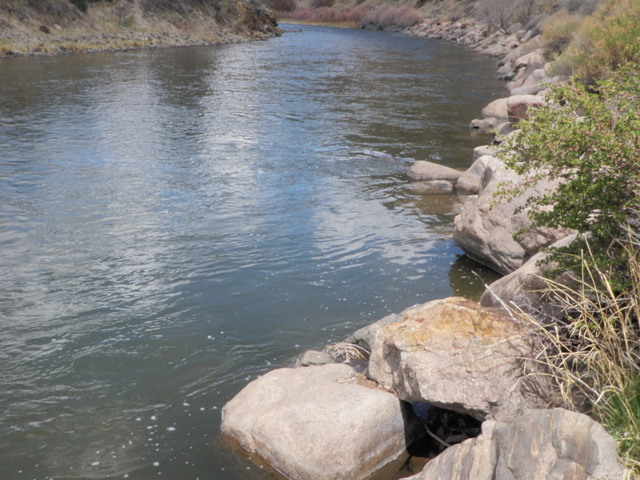
Arkansas River – 05/10/2013

Time: 10:30AM – 4:00PM

Location: Lunch Rock and downstream to nearly Wellsville Bridge

Fish Landed: 7

Arkansas River 05/10/2013 Photo Album

With the pre-snowmelt season winding down, I planned yet another trip to the Arkansas River in hopes of intersecting the caddis hatch. I hoped to travel on Thursday evening and set up my two person tent in one of the riverside campgrounds, but the precipitation and cold temperatures prevented this plan from becoming reality. Instead I got up early and managed to leave the house by 6:45 thus missing the rush hour traffic. I cruised through South Park on dry bare roads, but it was evident that the recent rain in Denver added more snow to the high country snowpack. The peaks above timberline were pure white and probably hold more snow on May 10 than they had over the entire winter season.

It was 45 degrees when I arrived at the pullout by lunch rock as I planned to experiment with the stretch of water between lunch rock and the Wellsville bridge. I visited this area in the fall and had some success but I was foiled in my attempt to fish the opposite bank by a thunderstorm that forced me back to the car. I pulled on my fleece and raincoat and strung my Sage four weight and headed down the shoulder of the road to a point where the top strand of barbed wire was removed from the fence thus enabling me to carefully climb over and descend to the river. I reached the point where the river split around a long narrow island and waded across the shallow wider channel closest to me. At this point I decided to walk to the downstream point of the island and explore the smaller braid.

The water was up a bit from what we encountered on Saturday and stained a light olive, but visibility for the fish was still adequate. Because of my success on Saturday with the dry/dropper rig and the continuing low flows I elected to go with the dry/dropper configuration and tied on a tan pool toy and below that knotted a beadhead bright green caddis pupa and a beadhead prince nymph. I thoroughly covered a nice deep pool at the bottom of the braid with no success and then moved to a nice run towards the top of the braid. It was here that I spotted a couple looks from trout that rose toward the surface and inspected the hopper but then returned to their position. This wasn’t a good sign. I continued a bit further and finally experienced a hook up with what felt like a decent fish, but it shed the hook after a thirty second connection.

When I reached the top of the island I encountered a very long deep pool so I climbed up on the rocks on the bank opposite the road and negotiated my way up along the pool. It was slow going as the bank was steep and comprised of loose gravel and I had to frequently climb and descend to get around the rabbitbush occupying the arid soil. After doing this for thirty or forty yards, I paused and spotted a nice rainbow very tight to the rocks along the shore. I dropped a few short casts above the fish, but apparently I startled it and could no longer spot its position. However, as I looked upstream, I noticed a rise in a small slick next to the bank where the current deflected from the rocks back toward the river. It was still quite sunny and before noon, so I was curious to observe what these fish might be interested in. I looked at the water more closely and as I did this spotted a couple small blue winged olives on the surface and then two or three fish magically appeared in the small area where I’d seen the previous rise. They were hovering a foot or so below the surface and finning up to snatch tiny morsels on fairly regular intervals.

Scene of Some Dry Fly Action

Scene of Some Dry Fly Action

I clipped off the pool toy and nymphs and tied on my trusty CDC BWO and lofted a cast toward the pod of fish. Unfortunately as the hatch began some clouds blocked the sun’s rays and the wind kicked up. This happened on Saturday as well and I’m curious to know how the BWO’s know to anticipate the cloudiness and wind. I continued to work out line and extended my casts by compensating for the wind with more power on the forward stroke and shooting further up above the fish. Eventually I got the fly to land in the middle of the small pool and as it drifted a foot or two a small whirlpool appeared where one of the trout sucked in the imitation. I set the hook and the rainbow did an immediate tail dance and then shot across the river a bit before it paused and I applied some side pressure. I was able to gain some ground before the rainbow sensed it was getting close to me and my waiting net at which point it bolted downstream and peeled off line at an alarming rate. Just when I thought I’d have to follow it downstream over the rocky shoreline, it stopped and I furiously reeled up line.

Same Fish Held in Net

Same Fish Held in Net

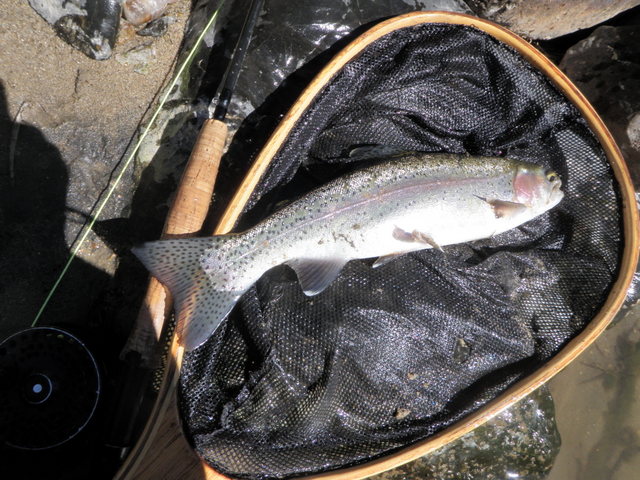
A couple more shorter runs ensued, but I finally managed to net the fish. Unfortunately I was in an awkward position and I couldn’t find a flat surface to photograph the silvery beauty so I snapped one photo while it rested in the net and followed that with a photo while I gripped it through the net. It was a thrilling first catch of the day. After I dried the CDC BWO and fluffed the wing I gazed back at the small pool and sure enough spotted a rise. Luck was on my side and the fish had resumed feeding, so I shot my fly higher up to the top of the pool as the two visible fish were above the position where I’d hooked my first victim. After numerous unproductive drifts I spotted a sip in the vicinity of my fly and raised the rod tip. Whoosh! Another rainbow shot toward the main current and put on an aerial display with several leaps above the surface. This fish put up an equally valiant battle compared to his brother, but eventually I landed and released the fine finned warrior. The second rainbow was probably fifteen inches in length and equally powerful.

Once I was ready to resume fishing I spotted a third remaining fish make a quick rise to snatch a BWO. I dried my fly and flicked a few casts to the area where the remaining fish was working, but after ten or so drifts, I never spotted the fish or another rise, so I tipped my hat and moved on. The sun was bright now and the air had warmed considerably so I removed my top layers and my backpack and sat on a large rock next to the river and ate my lunch. After lunch I resumed my up and down scramble between the river and the railroad tracks until I reached the head of the long pool. I didn’t spot anymore rises and propecting with the tiny BWO always seems futile, so I reverted to the dry/dropper method except I substituted a Chernobyl ant for the pool toy.

I continued with the caddis pupa but replaced the prince with a beadhead hares ear and worked the pockets tight to the bank. When I was opposite and slightly below a pair of fishermen on the opposite bank, I landed a 12 inch brown on the BHHE. I continued on covering quite a bit of water and picked up two more browns on the hares ear using the dry/dropper technique with three flies. It was pretty slow going, but at least I was catching the occasional fish to keep my interest up. Finally I reached lunch rock and proceeded upstream from there to a nice riffle stretch with perhaps three to four feet of depth over a rocky bottom. This type of water always produces on the Arkansas and I did manage to hook a fish that shot to the left toward the middle of the river and shook off the fly.

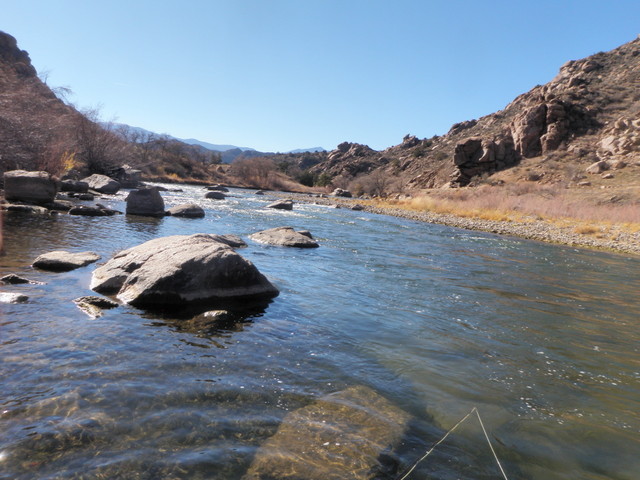
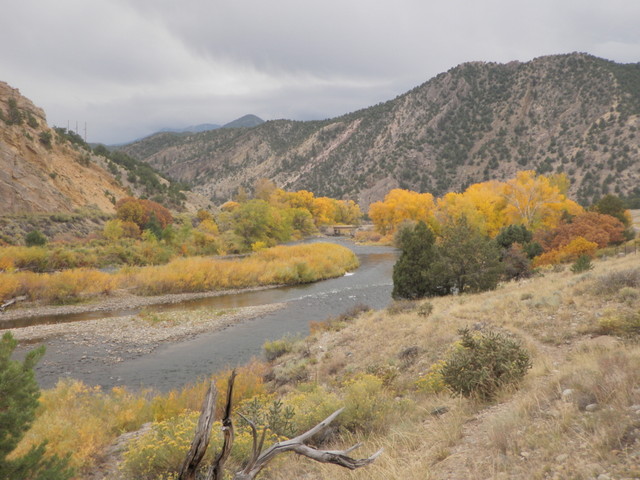
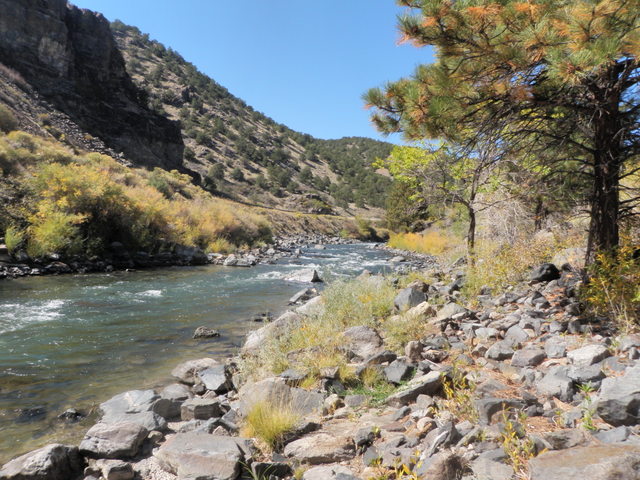
Stark Beauty of the Arkansas River

Stark Beauty of the Arkansas River

By three o’clock I reached another long slow moving pool and I was looking for faster water with riffles or pockets along the bank. Once again the sun disappeared and a breeze kicked up and I was about to skip the slow water and move up to the head of the pool and try some faster water. As I looked closely at the pool I spotted a decent trout hovering below the surface in front of a large submerged rock. I watched for a bit and I was excited to see the fish rise and sip something from the surface. There were some caddis tumbling on the surface, but then I began to see BWO’s again. I decided to convert back to the CDC BWO and as I worked on removing my flies and tying on a CDC BWO, I noticed some rises near another submerged rock eight feet further downstream.

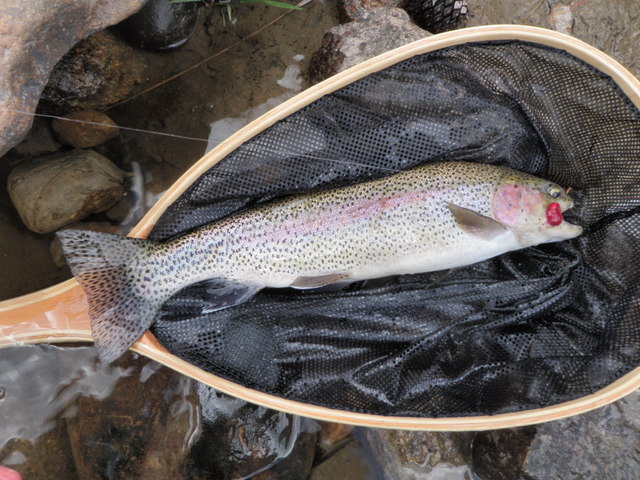
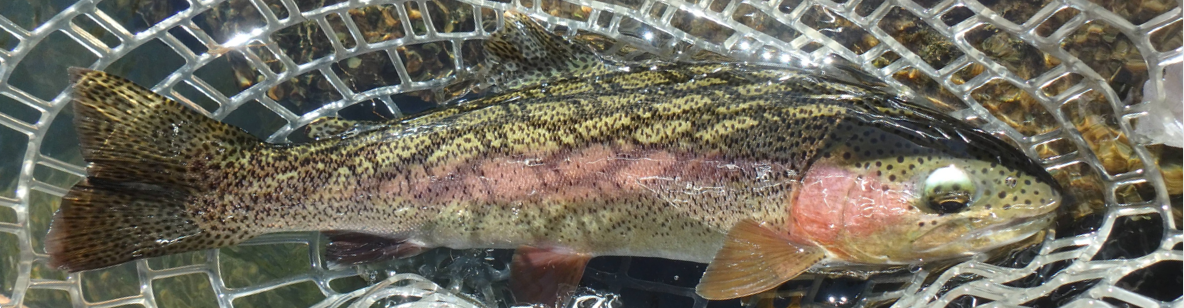
Now the trick was how to present my tiny fly without drag and accurately to these fish. The wind was once again blowing upstream, and as I cast my fly across, the wind whipped it directly upstream. It was very difficult to see where the fly landed because of its tiny size and because the wind caught it and pushed it further upstream. I continued working to get my fly over the upper fish, and eventually as I lifted to make a cast I felt the weight of a fish. This fish turned out to be another rainbow and it put up a nice fight, but eventually I slid my net under a 14 inch fish. As I netted the fish I noticed a red round object in the corner of its mouth and thought the fish had taken an egg fly, but upon closer inspection I realized that the red growth was a tumor or abnormality of some sort.

Nice Afternoon Rainbow Had Red Growth in Mouth

Nice Afternoon Rainbow Had Red Growth in Mouth

Once I released the fish, the hatch waned and the sun appeared briefly. I worked my way upstream a bit to a nice deep run with a lot of swirly currents. Again I was seeing an occasional caddis tumbling on the surface, so I decided to replace the CDC BWO with an olive brown deer hair caddis. This was much more visible, and I was determined to catch a fish on a caddis dry fly. I began prospecting the seam and run with the caddis, and much to my surprise a brown rose and slurped in the caddis. It was smaller than the rainbows I’d cuaght, but it was still fun to catch a fish on a caddis dry fly. I continued prospecting with the caddis, and once again the sun disappeared and I observed some more BWO’s on the surface. The caddis was not attacting any more interest, and as my watch ticked past 4PM I decided to walk back to a crossing point and return to the car.

It was a slow cool day on the Arkansas River but I managed to land seven fish including three quite nice rainbows that put up strong fights. I have to admit I was somewhat discouraged by the low catch rate and the off colored water. Perhaps I need to rest the Arkansas and look for some action closer to Denver before the snow melt makes fishing difficult.


Arkansas River – 05/05/2013

Time: 10:00AM – 12:00PM

Location: Braided area above Pinnacle Rock

Fish Landed: 9

Arkansas River 05/05/2013 Photo Album

The spring weather regressed on Sunday and it was quite chilly so Dave and I decided to enjoy a nice big breakfast and take our time getting to the river. We drove across the highway from our hotel to the Patio Pancake House and managed to arrive before the throngs. I ordered eggs and toast while Dave had something similar with the addition of a slice of breakfast ham. After lunch we began our drive east along the river as our strategy was to go to Texas Creek and hopefully get into the area where the caddis hatch was already in force.

Unfortunately when we arrived at the parking lot in Texas Creek there were four or five cars parked in the lot, so we made a quick U-turn and continued down the highway. When we arrived at the braided area above Pinnacle Rock, there were two cars parked at opposite ends of the long shoulder, so we decided to snag the middle spot and hopefully find some space away from the other fishermen. As we prepared to fish the dashboard thermometer displayed 41 degrees. I was quite chilly with a piercing wind making it seem worse than it was. Dave and I found the nice long deep run next to the highway void of fishermen so we grabbed our positions first thing. Dave remainded on the road side, and I waded across below the pool and worked up the side away from the highway. I began with an indicator, split shot, bright green caddis, and a size 14 prince nymph. My thought process on the prince nymph was that the caddis had already emerged, and I’ve had previous success using the prince to imitate diving caddis behind the hatch.

We shook the vegetation to see how many caddis would escape, but we were disappointed to see very few flying up from the willow branches. As I worked up the deep run with my nymphs I managed to land a small brown on the prince. I was somewhat above Dave G., and he was not having any luck at all with his nymphs. When I reached the top of the long run, I continued on for a bit to some shorter pockets, but again I wasn’t seeing any action. At this point I decided to cut across the willows to see if the north braid was occupied. Sure enough when I pushed away the willows and looked down the north channel, I spotted a fisherman downstream in the area that I like to frequent. I bushwhacked through the willows thinking I’d get above the visible fisherman by 50 yards and begin fishing from there. Unfortunately when I broke through the willows there was another fisherman close to the bank and only 10 yards downstream.

I beat a hasty retreat and began fishing where two braids join, so I was working with less volume than I desired. Over the next 1.5 hours I landed eight small browns in the 8-11 inch range and perhaps one of them reached 12 inches. All the small browns were grabbing the prince and quite a few were hanging tight to the bank in 3-4 foot slots, and they darted from their holding lie to snatch the trailing prince as it swung by. Eventually I caught up to another fisherman, so I plowed through the willows again and came out on the main stem. Here I worked some juicy pockets to no avail and then crossed by a dry creek bed and circled back to the highway.

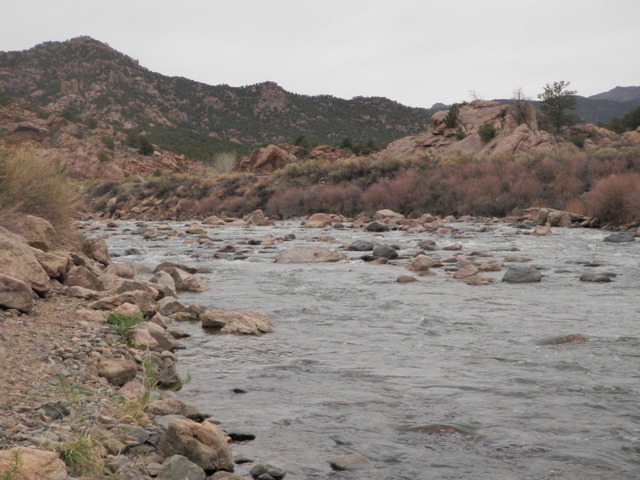
Pockets and Run Sunday Morning

Pockets and Run Sunday Morning

I walked down the highway a short distance and found Dave back in the deep run where he began the morning, and he wasn’t having much luck so we decided to head back to Denver as I had a 6PM flight to Philadelphia to catch.

Arkansas River – 05/04/2013

Time: 10:00AM – 5:00PM

Location: .2 miles below Fremont – Chafee County line

Fish Landed: 16

Arkansas River 05/04/2013 Photo Album

A month or so ago Dave Gaboury and I made plans to go fishing on the weekend of May 3-5, and we both agreed that the delayed advancement of the caddis hatch due to a cool spring made the Arkansas River the place to be. I took responsibility for lodging and booked us for Friday and Saturday night at the Hampton Inn in Salida, CO. Dave and Beth arrived a bit earlier than expected on Friday night from Kansas City, and we stopped for dinner at the Cherry Tomato in the Park Hill section of Denver. After that we were off on our journey to Salida while Beth navigated to Castle Pines to spend the weekend with some friends.

Saturday morning we ate the continental breakfast at the Hampton Inn to save time and then visited the ArkAnglers fly shop in Salida. The salesperson in the shop was quite bullish on our chances of encountering a decent caddis hatch, and Dave G. purchased some recommended flies. Once we were satisfied with our supply of flies and accessories, we jumped in the Santa Fe and drove east along the river. I was targeting my favorite spot; the boundary of Chafee and Fremont counties, but when we arrived there were three or four cars in the pullout with quite a few fishermen pulling on their waders and rigging their rods, so I proceeded another .2 mile or so and parked in a short pullout in front of a guard rail facing west. I knew we were below the small island that I regard as my favorite spot on the Arkansas River and hoped we could work our way up the river to that location.

The air temperature was probably in the low 50’s but sunny as we prepared to fish, so I zipped on my raincoat to serve as a windbreaker and add a bit of warmth. This proved to be a good move as I wore it the remainder of the day and never felt overdressed and in fact I was quite happy to have it on during several periods of overcast skies and wind. Dave G. and I dropped down a worn path to the river and then decided to cross to the north side of the river, and Dave G. elected to explore going upriver and I went downstream. I’d fished this stretch previously, but never from the north side. After hiking down the bank for 200 yards I cut down to the river a comfortable distance above the next pair of fishermen.

After hearing the reports at the fly shop, I decided to rig up initially with an indicator, split shot, beadhead bright green caddis pupa and a RS2 assuming that I was covering the two most prevalent food sources in the river. It didn’t take long before I lofted the nymphs directly upstream tight to the bank and as they drifted back toward me, I noticed a subtle pause in the indicator and lifted and set the hook in a nice 14″ brown trout. Unfortunately this was not a harbinger of things to come as I continued working the nymphs over the next 1.5 hours with no additional success. All manner of presentation were tested…dead drift, across and down swing, jerky mends, and jigging action on upstream casts.

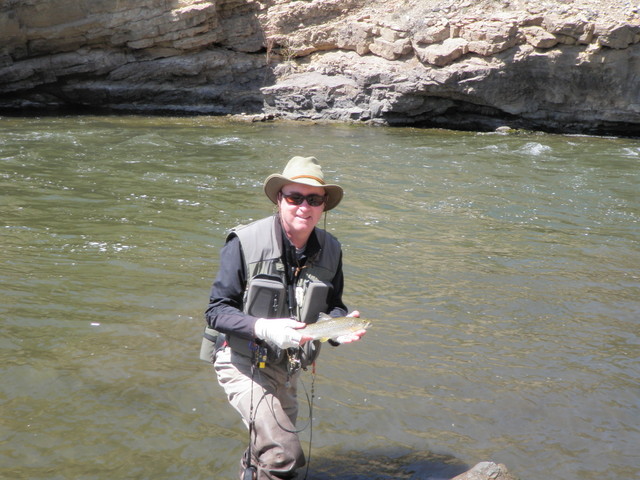
Dave G. and I had agreed to meet again at 11:30 at the river crossing point, and this worked out nicely as Dave was already there and fishing a nice deep run slightly above the crossing point. I watched Dave G. land a nice rainbow and then snapped a photo of him holding his catch. Dave reported that he was having success with a bright green caddis larva so I swapped the RS2 for a go2 caddis as it sports a bright green body. I decided to cast to a nice deep slot between the shore and a fast run that was 10-15 yards above Dave. Talk about instant gratification; in short order I was attached to a very nice fat rainbow that approximated 15 inches. This renewed my optimism so I advanced up along the north bank to some attractive deep runs below the small island and my revered small right braid.

Dave G. Displays Fine Rainbow

Dave G. Displays Fine Rainbow

I worked the double caddis combination through the normally productive deep runs below the island, but the fish were apparently not interested or focused on a different food morsel. When I reached the very bottom of the braid to the right of the island, I decided to change my approach in recognition of the smaller clear water, and removed the indicator and split shot and tied on a Chernobyl ant. I kept the two caddis flies in place as droppers off the Chernobyl ant. The first shallow run at the tail of the channel didn’t produce, but I shot a long cast to the top of the next long shallow pocket behind an exposed rock, and as the ant drifted halfway through the pocket, it paused and I set the hook. A nice brown trout torpedoed out of the pocket and made a futile attempt to escape. The brown was fooled by the bright green caddis and I now had only three fish landed on the morning, but each was a beauty in the 14 – 15 inch range. At this point I decided to return to Dave G. for lunch as I knew that if I worked further up the right braid I couldn’t stop. In addition more time might allow a hatch to develop before I returned to my holy water.

Dave G. and I grabbed the sandwiches we purchased at Safeway in the morning and found perches atop the high rock wall just below the car. After lunch I asked Dave if he fished the small braid around the island and he said no, it was too small, so I asked if he would mind if I fished it. He indicated no problem so we agreed to meet again at the car at 2PM and I set off to my end point before lunch. When I arrived at the bottom of the right braid I positioned myself at the very tail of the nice long forty foot pool just above the small pockets I fished before lunch. I began with some short casts above the tail with the Chernobyl/dropper combination, but almost immediately I began to notice rising fish. The sky had darkened and the wind picked up and I saw occasional caddis tumbling on the surface in the wind, so I was about to tie on an olive brown deer hair caddis. But wait a minute, now I began to see little BWO’s riding on the surface, and there appeared to be more of them than caddis. In addition the riseforms in the pool were tiny sipping rings, and these are not typical of caddis rises.

I clipped off the dry dropper flies and tied on a size 22 CDC BWO and observed four or five fish rising on a fairly regular basis. After quite a few casts I fooled a decent 13 inch brown that engulfed my fly directly upstream and just to the right of a large submerged rock. After I released this fish, I began to notice more regular rises in the small current seam that ran through the center of the pool, so I began running my fly along this slow moving current. Initially I pricked a pair of trout and then several refusals added to my frustration. Finally a trout sipped my imitation, but in my zeal to land one on a dry, I set too hard and snapped off the BWO. Next I swapped out my CDC BWO several times as I strived for one with a smaller wing profile.

It took quite a few casts but eventually I noticed a subtle sip on my fly and set the hook. An explosion ensued as a fat brown blasted above the surface and crashed in the pool like a swimmer executing a cannonball. The bruiser moved up and down the pool several times but I eventually applied side pressure and slid my net gently beneath the wide body. What a sag it created! After taking a photo I knelt to remove the fly and noticed it was embedded in the hard lip of the trout with only a tiny 1/8 inch space between the hook and the outside of the bony lip. It was quite a thrill to land this 16″ fat brown on a size 22 CDC BWO.

6 Inch Brown Took Size 22 BWO

16 Inch Brown Took Size 22 BWO

Unfortunately the fight with Mr. Brown scattered the other rises in the pool and while I dealt with my prize, the sun reappeared and the sky brightened and the BWO’s were no longer evident on the surface of the water. I paused before resuming my fishing and tried to spot rises in the top two thirds of the pool or even in the next short pockets, but seeing none I decided to convert back to the Chernobyl ant with a beadhead bright green caddis pupa dropper and then a second fly below that, a Craven BWO soft hackle emerger. I didn’t want to prospect the remainder of the delicious right braid in front of me with the tiny CDC BWO if no fish were visible rising to the surface.

The cycle of heavy clouds, darkened sky and increased wind followed by sun and brighter skies would play out repeatedly over the remainder of the afternoon. Each period of cloud cover and wind was accompanied by another wave of BWO emergence, although they became shorter in duration and the fish didn’t seem to tune in as much to the subsequent hatches.

Meanwhile with the end of surface feeding I again made the conversion to the dry/dropper approach, and it proved to be a stroke of genius. Over the next hour or so I worked up the right channel next to the island and landed six additional fish with perhaps half being rainbows and half browns, and these were not the average run of the mill twelve inch Arkansas River fish. They were bruisers and averaged in the 14-16 inch range. It amazed me how nearly every little pocket and nook produced fish, even spots that I normally would skip, and there were a few refusals and momentary hook ups mixed in with the six landed fish. It was insane how many above average fish this small channel delivered over an hour of fishing, and I didn’t even fish out the entire stretch as I realized I was late to meet Dave G. at our prearranged time of 2PM.

Another 16 Inch Bow, But More Girth

Another 16 Inch Bow, But More Girth

I quickly reeled up and hooked my flies to the guide and skipped to the top of the island and then crossed to the south side between two fishermen, and then practically trotted in my waders to the car. No Dave. Now what should I do? I shouted a few times and hustled down to the large rock overlooking the river where we ate lunch so I could look down the river. Seeing no Dave I remembered he had passed by me on the left side of the island next to the channel where I’d experienced a great hour of fishing, so I decided to walk up the road and scan the river as best I could looking for Dave. I ended up at the pullout at the Chafee – Fremont county line, and hadn’t seen him so I decided to resume fishing although I was feeling guilty about missing our appointment.

I crossed the river at the tail of the long pool by the county line and climbed the bank and walked down the railroad tracks toward the top of the island ahead of where I ended at 2:15. One of the fishermen I’d split on my crossing was now above the braid I was fishing so I cut down to the bottom of a long wide riffle that I like. Sure enough there was Dave G. on the opposite side, and I was quite relieved to find him. He had returned to the car before me, and when I didn’t arrive he returned to the place where I now found him.

It was now 2:30PM and we went through a period of bright skies, but this didn’t last long before clouds moved in and another smaller BWO hatch commenced. I never bothered to switch to dries and kept working the three fly system. In a nce V behind a protruding rock near the top of the riffle the ant paused, and I set the hook and played and landed a nice 13 inch rainbow. For some reason the later mid-afternoon hatch as well as one that lasted longer and began around 4PM did not bring as much action or surface feeding as the first emergence of the day.

I continued moving up along the right bank and eventually discovered a method that yielded three additional fish. I positioned myself eight feet upstream of a large boulder and cast across and allowed my flies to drift downstream and then swing across the cushion that existed in front of the large boulder. Two rainbows and a small brown fell for this ruse and attacked the trailing soft hackle emerger like it was an escaping BWO. I also experienced three or four momentary hook ups using this method. In one memorable case I thought I spotted a faint movement of a silvery ghost a foot below the surface and in front of a rock and slightly to the outside. I made a couple casts that swept short of the mark, but when I executed one with a bit more distance, I saw the ghost emerge and set the hook and felt a momentary weight. While I didn’t land this fish, it was gratifying to spot the movement and then have success with my method. This one got away but I was having enough success to keep things interesting.

Towards the end of the afternoon I was surprised to dupe a thirteen inch brown on the Chernobyl after flipping a backhand cast into some deep water behind a huge vertical rock that formed a barrier to my progression. After this I climbed up and around the rock and spotted some rising fish on the upstream side as a late afternoon BWO hatch reconvened. I managed to land a sixteenth fish on the soft hackle emerger but then switched to the CDC BWO to attempt to fool the risers. Unfortunately the wind picked up and blew straight up the river so that when I cast across the wind just shot my fly upstream and removed any intended slack. In addition I had no idea where the tiny gray winged fly was landing. When I tied on the CDC BWO I noticed a tiny nick in my leader about an inch above the hook eye, but I stupidly chose to ignore it.

I finally got the idea to move below the risers and angled some casts above and to the left of the rise. This worked better for compensating for the wind and sure enough I spotted a rise to my fly. I set the hook and felt the weight for a split second and then it was gone. You guessed it, I reeled up and the line snapped at the point of the nick or abrasion. On that note Dave and I called it quits and returned to the Hampton Inn. It was a fun day and the hour and a half between 1PM and 2:30PM was perhaps the best of the year so far.


Arkansas River – 04/26/2013

Time: 9:30AM – 4:00PM

Location: Salt Lick Access

Fish Landed: 20

Arkansas River 04/26/2013 Photo Album

I sent an email to Steve Supple asking if he was sufficiently recovered from a recent cold to join me on another fishing expedition to the Arkansas River. He replied on Thursday morning that he was taking antibiotics and felt good enough to make the trip on Friday. Judging from the fishing reports on the Royal Gorge Angler web site, I felt there was a slight chance of hitting the caddis emergence, but expected to at least have some decent action on BWO’s and caddis pupa with movement. The weather forecast called for high temperatures reaching 70 degrees with a period of cloudiness between 11 and 2 with a 30% chance of showers.

We got off to a nice early start and arrived at the Salt Lick Access area just above Five Points by 9:30AM, and we were ready to fish shortly thereafter. We noticed quite a few more fishermen in the pullouts than seen on our last trip in early April. I began my day of fishing in the nice run directly across from the steps down from the parking lot and rigged with a strike indicator, split shot, beadhead hares ear nymph and beadhead bright green caddis pupa. This combination didn’t produce any action in the long run so I crossed at the top and quickly prospected the small north braid and then moved opposite Steve in the long deep pool. This area also did not reward me for my casting, and meanwhile, Steve was landing several fish on his caddis larva imitation.

Steve Supple Fishes a Nice Run Near Salt Lick

Steve Supple Fishes a Nice Run Near Salt Lick

Hearing of Steve’s success with the caddis larva, I swapped the green caddis pupa for a go2 caddis as it showcases a shiny bright green body. At the top of the long deep pool another small channel enters from the north side of the river and features a deep hole at the bend just before joining the main river. The hole is 50% covered by foam, and on one of my drifts on the edge of the foam, I hooked and landed my first fish of the day, a small brown that fell for the hares ear. Next I moved up along the right, north bank to an area with large pockets between widely spaced exposed boulders, and here I landed a second medium size brown.

At slightly before 11AM I approached a nice run of moderate depth around some large rocks and I spotted five or more BWO’s fluttering up from the stream. As forecast by the Weather Channel, some clouds moved in and blocked the sun, and I was pleased to see some rising fish as the BWO hatch intensified. This prompted me to clip off the nymphs and I tied on a CDC BWO and this produced quite well as I landed six browns over the next hour or so from three separate deep smooth pool areas. It was too difficult to see rises in the faster moving water, but the smooth slower moving pools revealed fish actively feeding on the surface. At 11:45 it actually began to sprinkle briefly and I wasn’t seeing any likely pools or rising fish so I reeled up my fly and waded back to the highway side of the river and returned downstream and discovered Steve in the nice long deep pool just upstream from the steps and parking lot. Steve suggested I wade in above him as several fish were rising so I took his advice and waded in a few feet and began making downstream drifts in a nice current seam approximately 15 feet out from my position. Sure enough I saw a quick slurp and set the hook and landed number nine on the morning, a small nine inch rainbow.

Decent Brown

Decent Brown

Steve and I ate our lunches on one set of steps below the parking lot and after lunch I decided to walk down along the shoulder of highway 50 to the observation shelter at Five Points and then work my way back up to the parking lot. Steve on the other hand elected to fish in the nice pool and move upstream from there. As I arrived at Five Points I mentally evaluated my options. The BWO hatch appeared to have ended even though it remained relatively cloudy. We appeared to be too early for the caddis hatch as we saw minimal signs of caddis activity and my attempts to fish pupa with movement yielded nothing. I decided my best option was to prospect the ten feet of water along the bank with a Chernobyl ant as an indicator and a beadhead hares ear as my workhorse dropper. This strategy worked like a charm, and I landed eight additional fish in the two hours after lunch on the Chernobyl ant and hares ear combination. All the fish grabbed the hares ear except for one aggressive brown that slammed the Chernobyl.

Snake Rock

Snake Rock

The last two went for the hares ear as I swung it or lifted to recast so I decided to return to the nymph rig in case the fish were tuning into active caddis pupa. I removed the Chernobyl ant and replaced it with a strike indicator and split shot and then kept the BHHE as the top fly and added a beadhead bright green caddis pupa as the point fly. I fished these two flies with quite a bit of movement and landed three additional browns including one decent 12 inch fish. Just after I landed number twenty Steve appeared on the bank above me and asked how I was doing and whether I wanted to stay or move on. I asked if I could fish the remaining twenty yards before I reached the parking area, and he agreed. I failed to land any additional fish in two attractive areas, and then just before approaching the beach by the stairs, I snagged the flies on a large submerged rock and broke them both off. This made my decision to quit easy.

Steve and I kept our waders on as we decided to check out some water downstream in Canon City for fish feeding on caddis on the surface; however, when we parked in a parking lot east of Canon City and checked the water, it appeared to be dead. We decided to remove our gear and begin our return trip at around 3:45.

It was a decent day but we never encountered any significant caddis activity and the fish were smaller on average than normal. Steve and I agreed that the best action was the BWO hatch that occurred from 11AM to 12PM. We even shook the willows at the area east of Canon City and saw no caddis flitting up from the branches. The quest for Arkansas River caddis continues.

Arkansas River – 04/21/2013

Time: 11:00AM – 4:00PM

Location: Below Spike Buck access area in the morning and then Five Points after lunch

Fish Landed: 13

Arkansas River 04/21/2013 Photo Album

Two weeks of winter weather in April certainly helped the snowpack and created some nice late season skiing conditions, but it did little to quench my growing desire to feel the throb of a nice fish on my fly rod. By April 21, 2012 I’d already been fishing nine times and landed 138 trout. I certainly don’t wish for another 2012 in terms of drought conditions, but I am anxious to try my new flies and experience some decent pre-snowmelt fishing. Another spring snowstorm was in the forecast for April 22-23, so Jane agreed to join me on a Sunday excursion south to Canon City and the Arkansas River to enjoy the small window of nice spring weather. High temperatures were forecast for the mid-sixties, and we were thankful for that.

Our first stop was the Spike Buck access of the Arkansas Headwaters Recreation Area. It was nice to use my Colorado State Parks pass to avoid the usual parking fee, and I quickly climbed into my waders and rigged up my four weight Sage fly rod. Jane, meanwhile grabbed the Sunday paper and set up shop at a picnic table along the south bank of the river. At 11AM it was in the high 50’s and I felt comfortable in my Columbia long sleeved shirt under my fishing shirt as I walked anxiously down the shoulder of Route 50. When I reached the large bend in the highway roughly 100 yards below the parking lot I cut down the bank to the river. I began my quest for trout with a weighted 20 incher and a bright green caddis pupa. I worked this combination as I moved upstream and experimented with dead drifting and active manipulation but failed to entice any interest. After twenty minutes or so of focused casting, I decided to make a switch and replaced the bright green caddis with a tiny RS2.

As I approached noon and moved closer to Spike Buck I finally picked up a small brown and had several momentary hook ups presumably on the RS2; however, the action was quite slow. I decided to pick up the pace and cover more water while dedicating only three casts to any target area unless it looked particularly attractive. Also the 20 incher didn’t appear to be doing anything, so I clipped it off and added a split shot and beadhead hares ear as my top fly while continuing to present the RS2 on the point. This helped quite a bit and in a short amount of time I landed another small brown on the beadhead hares ear. By 12:30PM I’d added a third small brown, and I was close to Jane and the car so I paused for lunch.

Jane's Setup at Spike Buck

Jane’s Setup at Spike Buck

We debated whether to eat at Spike Buck or move to another location, and since I wasn’t overwhelmed with the quality of the fishing, we decided to move to the next access area up the river at Five Points. We parked along the small cul-de-sac that leads to the protruding river overlook and grabbed a picnic table under a huge cottonwood tree. More clouds began to track overhead and the breeze picked up so I decided to put on my fleece. Jane found a nice spot for her folding chair after lunch on a small beach behind a large boulder that served as a windbreaker. Meanwhile I decided to once again walk down the highway around 75 yards and then descend the steep bank to the river.

When I arrived close to the water I saw a nice 25 foot pool behind some protruding boulders and proceeded downstream a bit further to get below this enticing area. Sure enough on the first cast to the head of the pool along the left side a ten inch brown struck the RS2 as I began to lift and recast. I was encouraged by this turn of events and added another larger brown that jumped my swinging fly along the right current seam. For the next two hours I worked my way up along the left bank and prospected with my nymph combination in all the likely pockets and slots. The wind picked up off and on and periodically some clouds blocked the sun. On several occasions I spotted emerging BWO’s, but never saw any rising fish.

Nicest Fish of the Day

Nicest Fish of the Day

My fish count moved from five to ten during this stretch and most of the fish grabbed the fly on the lift or swing. As I expected the RS2 produced but I probably landed two more on the hares ear. At three o’clock I arrived at the nice pool below the large rock wall that Jane was using as a wind screen, and peered into the dark deep water. I began tossing my nymphs upstream and allowing them to drift along the long current seam that was 15 feet out from the beach where I stood. On one of these drifts the indicator dipped just as the nymphs were about to swing away from the seam and I set the hook and landed another brown in the 8-11 inch range. On two subsequent drifts higher up near the start of the pool I experienced momentary hook ups.

As I was contemplating my next move, Jane appeared on the top of the large boulder, and inquired about my plans. I told her I’d like to fish for another half hour until 3:30 and if the action didn’t pick up I’d be ready to depart. I circled around the huge boulder and dropped back down to the river to a point where there was a twenty yard stretch of pocket water. I covered the pockets next to the bank quickly using my three cast and done strategy and arrived at a sweet spot where there was a nice long slot with some fairly deep smooth water from the midpoint to the tail. As I observed a cloud blocked the sky and the wind picked up a bit and I began to notice some fairly regular rises. Perhaps I could entice some of these fish to strike my RS2 as an emerger by employing my jigging method through the slot. The area I am describing was approximately twenty-five feet long but only eight to 10 feet wide and roughly in the shape of a banana. One fairly regular riser was eight feet below the point of the slot right where the riffles smoothed out. I cast my flies and indicator above that point and as the indicator moved five feet downstream of the rise point, it suddenly darted to the side and away from me. I immediately set the hook and felt the weight of a fish that was heavier than any I’d caught so far on the day.

Unfortunately after I stopped the downstream run and turned the fish, I realized that it was foul hooked on one of the small fins along the belly behind the head. I managed to plane the fish across the surface and into my net, and it was indeed a nice rainbow probably 13-14 inches in length. I was disappointed at this turn of events, but didn’t have time to dwell on it as I realized quite a few fish continued to rise in the area. I despaired of using my nymphs for these fish and undertook the task of clipping off the nymphs, removing the spit shot and disengaging the strike indicator. I opened my foam patch in my front pack and carefully removed a size 22 CDC blue wing olive. On the third or fourth drift I spotted a rise in the approximate location of my difficult to see fly and set the hook and enjoyed the throb of a 12 inch brown. After quickly releasing the brown and sopping up the moisture absorbed by my fly on my shirt sleeve, I fluffed up the wing, and flicked another cast to an area where I’d spotted a rise. Once again after several casts and accounting for the downstream gusts of wind, I spotted a rise near the anticipated position of my fly and set the hook into another brown.

I was pretty excited with this late afternoon hatch and two bonus fish that sipped my CDC olive, but just as quickly as the action commenced, the sun reappeared and the hatch was over. There were additional clouds in the sky to the west and perhaps they would induce another flurry of hatching BWO’s, but it was now nearly 4PM, and I could tell Jane was getting anxious to make the return trip to Denver. I circled around the deep pool below the large rock and observed the water for a bit, but nothing was showing on the surface so I reeled up the fly and clipped it off and prepared for the return to Denver.

It was fun to get out after a two week postponement due to weather, but the fish were on average on the small side. I saw no signs of an imminent caddis hatch, but the fish were somewhat active on the BWO nymphs and I did experience some decent albeit brief surface action. Hopefully the next snowstorm will pass quickly and I can return to Colorado streams for addtional quality fishing.


Arkansas River – 04/03/2013

Time: 9:30AM – 4:00PM

Location: Braids above Pinnacle Rock, Salt Lick access, and Parkdale

Fish Landed: 15

Arkansas River 04/03/2013 Photo Album

After a brief cold snap moved through Colorado on Monday and Tuesday, nicer weather was forecast for the remainder of the first week of April. Steve Supple and I planned to take advantage and scheduled our first trip to the Arkansas River for Wednesday, April 3, 2013. After experiencing the fishing aberration that is named Grey Reef, would we face a dose of reality and crash back to earth with a loud thud of a day?

I arrived at Steve’s house in Lone Tree at the appointed hour of 7AM, and we transferred Steve’s gear from the garage to my Santa Fe and set out on our trip to Canon City and beyond. Traffic stalled a bit in Colorado Springs as we met the morning rush hour and the fog was rather dense from Monument to Florence, but we managed to make the trip in a couple hours. We anxiously watched the dashboard air temperature as it hovered around the freezing mark and desparately prayed for the sun to break through the clouds and warm things up before we began to fish. Unfortunately as we pulled into a pullout along route 50 at the braids section above Pinnacle Rock, the temperature read 37 degrees. I once again wore my down vest under my waders and my ski hat but decided to eshew my toe warmers.

Steve elected to fish the channel that splits away from the road just across from where we parked and I began in a moderately deep run right next to the road and across from the car. I started out with the nymphing rig and tied on an Arkansas rubber legs and a beadhead RS2. In the first run I experienced a split second hook up but then things went dead until I moved above the Y where Steve’s channel split off to a nice deep run and pool. In the bottom of this stretch I also failed to create any interest in my flies, so I decided to abandon the RS2 and tie on a reliable beadhead hares ear nymph. This turned the tide, and toward the top of the run a small brown attacked the hares ear, and I had my first Colorado brown trout of the new season.

Shortly after landing the first fish, I snagged the nymph combination on a stick, and broke off both flies. The Arkansas rubber leg didn’t seem to be doing much, so I swapped it out for a 20 incher and plucked a replacement hares ear from my patch. This combination was a winner and I landed six more browns over the remainder of the morning until around 11:45 when I worked my way across to meet Steve and return to the Santa Fe for lunch. One of the seven morning fish was a nice 13 inch brown and I stopped to photograph it as it was my first decent fish in Colorado for 2013. Steve and I compared notes, and he seemed to be having similar success, but he was catching his fish on a baetis nymph imitation.

Nice Brown Landed in the Morning on Beadhead Hares Ear

Nice Brown Landed in the Morning on Beadhead Hares Ear

We decided to move to a new location for lunch so we drove back east on route 50 to the Salt Lick access and parked there. We took our lunches down by the river and observed a pair of small browns rising fairly frequently next to a large protruding rock in front of us. This prompted me to switch the hares ear for a Craven soft hackle emerger BWO imitation as I began fishing a nice long run after lunch. I experienced two momentary hook ups as the soft hackle emerger made a swing at the end of the drift, so I crossed to the north bank and worked upstream imparting action to my flies and landed three more small browns on the tiny wet fly.

There was an exceptionally brief BWO hatch in the hour or so after lunch, but I hesitate to call it a hatch as I observed minimal surface feeding. Clearly however the fish were active on the emerging nymphs and I began to catch fish by jigging my nymphs on direct downstream drifts back toward me and executed bad downstream mends to induce takes on the acceleration. When I’d landed around 10 fish, it seemed that the action slowed, so I swapped the soft hackle emerger for a beadhead RS2, and this resulted in a couple more fish. I was catching fish but they were spaced apart and required quite a bit of casting and covering a fair amount of stream real estate.

Upstream from Salt Lick Access

Upstream from Salt Lick Access

Eventually neither of my flies were producing so I decided to try a bright green caddis pupa on the off chance that the fish were beginning to tune into these bugs which become very prevalent in a few weeks. Sure enough I added three more browns to my count on the caddis pupa and they attacked the fly aggressively on the swing. I began to impart movement on every drift and this paid modest dividends.

Afternoon Brown Attacked Green Caddis Pupa

Afternoon Brown Attacked Green Caddis Pupa

By 2:30 I reached a stretch of fast pocket water and decided to retreat back to Steve’s position and worked my way back across the river to the bank next to the road. Steve was working the pool above the parking lot with tiny BWO dry flies, and he was experiencing a bit of success, but we decided to make another move to the Parkdale recreation access.

The river is quite wide at Parkdale, but a few attractive spots presented themselves. Steve gave me a nice deep run below a huge protruding boulder directly across from the picnic tables where we parked. Meanwhile he moved up along the bank to a nice stretch more suitable to his dry flies. I worked the water below the boulder thoroughly with one split second hook up and then went above the boulder to drift my flies next to a huge 5 X 10 foot foam area. On the fifth or sixth drift a fish attacked the caddis pupa as it accelerated from beneath the foam to the run next to it. I set the hook and immediately a 14 or 15 inch brown jumped from the foam. I played the fish on an angle to my right to the top of the faster riffles just above the boulder. I decided to switch and angle the fish sideways to my left to bring it around and hopefully tire it, but the fish somehow broke free during this maneuver. When I reeled up my line I discovered the green caddis pupa was missing and all that was left was a broken knot. Needless to say I was disappointed.

I moved up the river across from Steve and decided that this water begged for a dry fly, so I sat down on the bank and removed all the nymph gear and replaced with a brand new tapered leader. I tied on a small CDC BWO imitation and made some nice downstream drifts, but to no avail. Eventually I climbed up on the bank and shuffled down the path to the picnic table area and half heartedly cast in a marginal spot near the car. In a short amount of time Steve joined me and we decided to call it a day.

We both landed double digit fish that were on the small side even for the Arkansas River. Normally this would be a satisfying opener for Colorado, but coming off the euphoria of big rainbows and lots of them on the North Platte, it was a bit of disappointment. It will take some time to come back to the reality of local fishing.

Arkansas River – 11/07/2012

Time: 10:00AM – 3:30PM

Location: Lone Pine

Fish Landed: 13

Arkansas River 11/07/2012 Photo Album

I thought my last fishing day in Colorado was probably Sunday, November 4 on the Big Thompson River, but then I read the weather forecast for the following week and noticed a high in Denver of 74 degrees. Could I really ignore an opportunity to fish in unseasonal weather in November? Nope. I read the Royal Gorge Angler fishing report and supposedly the browns were beyond their spawning period and eating everything that floated their way.

I packed the car on Tuesday evening and had everything ready for an early departure on Wednesday morning. For some reason Jane and I both woke up at 5AM even though we had the alarm set for 5:45, so I was out the door and on the road by 6AM, much earlier than planned. This put me in Canon City at the Royal Gorge Angler fly shop by 8:30 to consult with Taylor Edrington and purchase some flies. I bought four iron sallies and five midge patterns as Taylor advised using the iron sally as the top fly and a chartruese midge larva as the bottom fly. Taylor also gave me a series of locations to try on the lower end of Big Horn Sheep Canyon.

I decided to drive a bit farther than normal to Lone Pine access and parked in the first pullout beyond the entrance to the access area. The river was quite low at 200 cfs and it was rather apparent where the fish might be. I parked in the shadows and wore my stocking hat and several layers as the air temperature was probably in the high 40’s when I began fishing. My fingers were quite numb and chilled as I methodically tied on all the components of the nymph rig that I planned to deploy throughout the day. As Taylor suggested, I began with a size 14 iron sally as my top fly and the chartruese midge larva on the point. I walked down the road to the lower end of the Arkansas access area and began fishing a long run that ran along the north bank. Nothing was showing interest in my offerings so I moved to the top just below a monstrous exposed boulder and then retreated in order to skirt a huge deep pool.

When I reached the top of the large pool I began casting and running drifts through the deep run and riffles at the head of the pool. These were nice long drifts as I cast the flies three quarters upstream and then allowed them to drift quite a distance downstream into the deep pool using stack mends. Unfortunately despite all this great technique, I was only practicing my casting and mending as no fish seemed to be present in this great water. Finally I decided to change flies, so I clipped off the chartruese midge larva and replaced it with a beadhead hares ear nymph. Taylor had mentioned that hares ears were working.

After 45 minutes of fruitless casting, Taylor’s words proved to be correct as a nice 13 inch brown inhaled the hares ear in the middle of the deep run and I landed and photographed my first fish of the day. I moved upstream and at the head of another nice run of moderate depth felt the weight of a decent fish and landed another chunky twelve inch brown trout. Near the same location a smaller brown attacked the iron sally on the swing and I was now at three fish despite the chilly temperatures and the lack of action in the first 45 minutes.

Fish Came from Riffles Next to Exposed Boulder

I was now opposite the Santa Fe so I paused and climbed the bank to retrieve my lunch and ate it by the side of the river as I looked for fish in the slow moving deep water opposite my lunch rock. There were no insects and no fish, but the sun was rising higher in the sky and I shed my fleece hat and one of my top layers as I stashed my lunch back in the car and proceeded to fish upstream from where I ended the morning. It was now 12:15 and before I made too much progress I snagged on a sunken stick that was lodged against a rock, and as I attempted to dislodge the fly, I snapped off the iron sally and the hares ear.

Since the iron sally hadn’t really produced much, I decided to go with one of the twenty inchers I’d tied a couple weeks ago. This became my top fly and I added another hares ear as my point fly. I continued fishing this combination nearly the entire afternoon and landed another ten fish before quitting at 3:30. I probably covered a mile of water as there were long shallow areas or slow moving stretches that I essentially skipped. Since there were virtually no other fishermen in my path, I decided to focus on the prime spots which encompassed faster moving runs and riffles at the top of pools or behind large midstream boulders. Between one and two the action seemed to really improve as I landed four browns on the twenty incher including a heavy 15 inch brown that put up a fine battle.

Fifteen Inch Beauty Took 20 Incher

Through this period the hares ear continued to produce as well but it seemed that the average size of these fish was smaller than the twenty incher eaters. During the prime time I discovered that fish seemed to grab the fly when I jigged or bounced the two flies through a prime run or pocket. I cast to the top of a run behind a rock and then lifted and lowerd my rod tip as they drifted back toward me. Unfortunately I also foul hooked three fish and I’m not sure if this was caused by a late hook set. There were probably four or five momentary hook ups as well during the afternoon period.

Nice Riffles and Runs Ahead

At one point around 3PM I got snagged to a large boulder in a deep area, and I was unable to wade to a position to free the flies. I applied pressure by pulling the line directly toward my chest, but it snapped at the knot where the split shot was attached. I decided to try a salvation nymph with the beadhead hares ear and landed a fish on the salvation and then numbers 12 and 13 on the hares ear. By 3:30 I realized I was quite a distance upstream of the car, so I began working my way back down the path along the bank until I reached an area where a steep exit route was obvious up the bank. I climbed to the top and found a well worn trail that followed the river downstream to a gap in the fence, and from there I hiked back along the shoulder to the Santa Fe.

Thirteen fish landed in early November was a challenging accomplishment as I fished hard and made an abundance of casts while covering a mile of water, however, the afternoon was gorgeous and it was quite rewarding to catch fish on recently tied flies late in the season.

Arkansas River – 10/12/2012

Time: 11:00AM – 4:00PM

Location: Lunch Rock Above Wellsville Bridge

Fish landed: 15

Arkansas River 10/12/2012 Photo Album

Clearly the season was waning and I was anxious to make a few more productive fishing trips before settling into fly tying mode. The Arkansas River reports indicated strong BWO hatches on overcast days and Friday’s weather was shaping up to be ideal BWO conditions so I made the nearly three hour trip. I decided to move downstream from my previous two visits for variety and to try new water.

I parked at lunch rock, a massive rock that juts into the river and creates a huge eddy just beyond the large bend in the highway above the Wellsville bridge. This spot was a favorite of mine when I first moved to Colorado and began tossing flies on the Arkansas River, but in recent years I gravitated to the juicy water a bit further upstream. The car temperature registered in the mid-40’s as I dressed for fishing so I pulled on four layers including my raincoat and ski hat in preparation for a day on the river. My weather app on the iPhone forecast high temperatures of 59 with a high chance of afternoon showers and thunderstorms.

I planned to start with the new nymphing rig introduced to Dave Gaboury and me on our guided fishing trip and then switch to the familiar tapered leader setup if a decent BWO hatch developed so I chose my Sage 9 ft., 4 weight rod because it is long and stiff and works well for casting nymph rigs. I assembled the four piece rod, but decided to wait until I was by the river to convert from the tapered leader to the nymph rig. As I walked downstream along the shoulder of the highway toward the Wellsville bridge I noticed some dark gray clouds gathering in the southeastern sky, but didn’t get too concerned as rain wasn’t supposed to arrive until noon, and I was on track to be on the water by 10AM.

River in Full Color Near Wellsville

I found a place where the top wire of the barbed wire fence had been removed and it was obvious fishermen accessed the river, so I carefully climbed over and then slowly maneuvered my way down the steep bank to the river. I reached the river where it split around a small island and the character was shallow riffles on both branches so I crossed the wide shallow flow and then climbed the steep bank on the eastern side and worked my way upstream to the head of a beautiful long deep pool. As I sat on a large rock and removed my tapered leader and coiled it on to a blank tippet spool that I kept in my front pack for this purpose, I heard the rumbling of distant thunder. I was about to pull out the 0X tippet spool I’d purchased to connect the end of the fly line to the thingamabobber, when I noticed several flashes of lightning followed briefly by thunder. This unnerved me, and I didn’t want to be caught this far from my car in the event of an intense thunderstorm, so I retraced my steps and made the long loop back along the bank, crossed the river carefully at the top of the island again, and then hiked back along the right shoulder of the road.

By the time I reached the car the lightening and thunder had subsided, but it was raining moderately hard, so I opened the hatch and finished rigging my line with the shelter of the car at my disposal. I cut a 9 inch section of heavy monofilament and tied a loop on the one end and then executed a loop to loop connection with the end of the fly line. I used a clinch knot to connect the thingamabobber to the end of the 9 inch section which was now reduced to 6 inches due to the knot tying on both ends. Next I uncoiled four feet of 3X and tied that through the same opening on the thingamabobber and then connected a section of 5X to the end of the 3X and crimped a split shot above the surgeon’s knot. It was now time to choose a fly. I wanted to use a 20 incher to duplicate Taylor’s setup, but I only had one that I purchased at RGA, and I wanted to keep that for a model for tying some myself, so I used a beadhead prince in a size 12. Next I used a clinch knot to tie another section of 5X through the eye of the prince and a foot or so below the top fly, I tied on a Craven soft hackle emerger with no bead.

I was ready to go and decided not to make the long loop again, so I descended to the river below lunch rock and then hiked a path down along the river. I ended up just above the spot where I initially intended to begin but on the side of the river bordering the road, and it was now 11AM when I finally began to cast. The first long deep run and pool didn’t produce any fish, but the next spot had a strong fast deep run within ten feet of the bank I was on. I began casting directly upstream to the water between the current seam and the bank and it wasn’t long before the indicator dipped and set the hook and played a nice chunky brown with the prince nymph in its lip. With all the rigging steps, I’d forgotten to crimp the barb on the prince and I had to work the fly at length with the fish in the water to finally remove the fly. In the process of applying pressure to the fly, the two white biot wings fell out and I now had a minimal beadhead nymph with tails and a peacock body.

I decided to stick with the handicapped fly and the fish didn’t seem to care about the lack of wings, and in fact the fly without wings looked more similar to a 20 incher. I moved to the top of the narrow corridor of productive water and added two quite nice browns that attacked the Craven soft hackle emerger on the lift, and I was quite pleased with the early action. As I progressed back up to lunch rock I landed a smaller brown on the maimed prince and another nice brown on the soft hackle reaching five fish landed and I arrived at the Santa Fe by noon. By now the rain had stopped but my hands were quite chilled from being wet and the cooling effect of evaporation, so I decided to return to the car to eat lunch even though I’d stashed it in my backpack for eating by the river.

Pretty Brown Landed in Morning

All Foliage on Fire

I sat in the driver’s seat and ran the heater and turned on the heated seat while munching my lunch. The dashboard thermometer registered 57 degrees, but it certainly felt colder than that to me. After lunch I resumed my search for fish by beginning in a beautiful deep run above lunch rock, and here I hooked and landed a hot rainbow that forced me to negotiate my way down the steep path from the high rock while playing the fish. This fish also took the prince so I’d now landed an equal number on each fly. Since I was now on the bank directly across from the deep run, I made some casts across and let the nymphs drift down into the sweet spot at the base of the run, and had two momentary hookups.

Prince Nymph in Mouth of This Hot Rainbow

I moved on and worked the pockets and runs along the left bank right next to the road and increased my fish count from six to ten before reaching the tail of a beautiful long smooth pool. From head to tail the pool was probably 30 or 40 yards, and I decided to cross at the shallow tail and work up the bank away from the highway. At this point the sky to the west had become quite dark and clearly more rain was imminent, but I didn’t hear thunder, so I decided to gamble and make the crossing. I was already prepared with my raincoat on and  the hood was pulled up over my stocking hat.

I skipped the lower smooth section of the pool and moved to the midsection where there were a lot of large submerged boulders, and it looked like dynamite brown trout water. As I began casting my flies upstream and across and dead drifting them with a nice swing below me I noticed a nice rainbow eight feet in front of me in front of one of the large submerged boulders. As I watched, the rainbow was clearly feeding on something subsurface and actually rose and sipped something once or twice. I didn’t want to go through the hassle of switching my entire rig to the tapered leader to fish a dry, so I cast upstream and attempted to execute a swing in front of the fish. On perhaps my fifth attempt as I lifted my rod to swing the flies in front of the fish, it moved a foot to its right and chomped on the prince. The fight was on and the rainbow ripped line and made several streaks downstream and up before I could pressure it to the side and scoop it in my net.

Sweet Bow Lunged a Foot for Fly on Swing

By now the rain had begun and it was coming down harder than at any other point in the day. These were perfect BWO conditions, but other than my ability to catch quite a few fish on the size 22 Craven soft hackle emerger, there was no evidence that BWO’s existed on the Arkansas River. I managed to land a medium sized brown in the riffles at the head of the long pool and had two or three momentary hook ups in spite of using the down and across hook set taught by my guide, Taylor.

I waded further upstream along the bank prospecting with the nymphs and spotted a rise in front of an exposed rock. I attempted to execute the same swing technique, and sure enough five to eight feet above the rise, I felt some weight on the lift and set the hook. This action resulted in a fifteen plus inch brown leaping from the water which exposed the entire fish. Unfortunately it dove and somehow went under a stick and came free. Shortly thereafter I hooked another hot fish that streaked upstream and shook off the hook after a brief dash, but then I covered quite a bit of water with no additional action until I came to an interesting area with large high vertical rocks coming down to the water. As I gazed upstream and peered through the moderate rain I noticed another crazy fisherman waded waist deep into the run from the highway side of the river, and he was similarly hunched over in his rain jacket and hood.

I didn’t feel like climbing the rocks and circling around and above him, so I turned around and retreated with the intent of calling it a day; however, when I came next to the top of the head of the long pool, I decided to make some more casts to the area where I’d had several momentary hookups on the downstream swing. Sure enough on a long cast across to the current seam and on a downstream drift, the indicator paused and I set the hook with a down and across the chest sweep and hooked and landed a small brown. The rain was now waning a bit and small patches of blue were appearing in the western sky. As I began casting again, I observed several rises downstream and below me, and then two more fish created some rings, so I decided to make the conversion to dries.

I sat down on a rock in the continuing light rain and began the process of clipping off flies, tippet and thingamabobber, and unfortunately this process consumed around 15 minutes which probably represented 50% of the total elapsed surface fishing time. Finally I was ready and tied a size 22 CDC BWO to the end of my line and began to cast across and allow the fly to drift downstream to the fish rising in front of an exposed boulder. I was having great difficulty following my tiny tuft of a fly in the overcast dim light, but the fish continued to rise but not take my fly. Eventually I reeled up and replaced my fly with an even smaller size 24 CDC BWO. Because of the rain the CDC wings were already wet before I cast, so I had to spend time drying and fluffing.

As this was going on the sky was gradually getting brighter and I could see my tiny speck of a fly when the wing was fluffed out. After four or five casts with the size 24, I placed one just above the rock and a small brown rose and sipped it in. Meanwhile several move fish continued to rise downstream 10 yards or so in a current seam that flowed around another exposed boulder. I waded to the bank and moved down a bit so I was above the fish rising closest to me. After a few unsuccessful casts and downstream drifts, this fish also inhaled my offering, and this time I landed an eleven inch brown. Unfortunately after releasing this fish as I dried and fluffed the fly the sun came out and the fish discontinued their feeding. I decided to wade across at the tail and observe the area along the bank next to the road where I’d seen some rises while reconfiguring my line. I paused at the tail of the pool and looked upstream and observed for five minutes or so, but nothing was showing so I climbed the bank and returned to the car.

Shadows were now covering half the river and the temperature dived as the sun sank lower in the sky. My sleeves were wet from the rain trickling down my arms as I cast and as I worked on my rigging so I was feeling quite chilled and my hands were stiff and curled. I decided to abandon efforts to catch more fish at 4PM and made the three hour drive back to Denver in time to have dinner with Jane.

It was a nice day on the Arkansas as I deployed the new nymphing rig and landed quite a few chunky fish in the 12-15 inch range. The Craven soft hackle continued to perform and I rediscovered some new water. I managed to weather quite a bit of rain and remained relatively dry. I didn’t succeed in enjoying extended BWO surface fishing, but did manage to pick up a few fish on dries. Hopefully there will be a few more successful days of fishing in 2012 before the curtain closes.

Arkansas River – 10/02/2012

Time: 10:00AM – 5:30PM

Location: Chaffee – Fremont County Line Upstream

Fish Landed: 28

Arkansas River 10/02/2012 Photo Album

After a great day on Friday, September 28 I was anxious to return to the Arkansas River while the favorable weather continued. The forecast called for temperatures in the 70’s for the Arkansas River Valley near Salida, so I pushed my work off until Thursday and Friday when the temperatures were projected to plummet, and made the long trip to Salida. How would Tueday compare to Friday’s outstanding day?

I arrived at the pullout below the county border at around 9:30, and once again it was quite chilly so I wore my Columbia long sleeve undershirt under my fishing shirt and added my raincoat as a windbreaker/outer layer. I stashed my lunch in my backpack and crossed the river at the shallow tail of the long pool straight below the car. Instead of hiking downstream as I had done on Friday, I climbed to the railroad tracks and walked west and then dropped down the steep bank to the head of the long pool. I tied five additional yellow Letort hoppers on Monday with full wings as these seem to float better than the ones I made with sparse wings. I put one on my line immediately and then attached a beadhead hares ear and began prospecting along the right bank and worked my way upstream.

Large Jaw

By noon I’d landed 11 trout mostly in the 9 – 11 inch range except for number nine and that was a nice chunky 13 inch brown and number eleven was a strong rainbow. Most of the fish went for the hares ear with perhaps one or two induced to rise to the hopper on the surface.

Nice Rainbow

After lunch I continued on my way and I began to notice a fairly dense swarm of midges hovering over the water with an occasional rise visible so I swapped the hares ear for a zebra midge and added a pair of decent fish on the size 22 midge larva imitation. Soon I began seeing a few BWO’s overlapping with the midges, so I switched the midge fly to a Craven beadhead soft hackle emerger. This fly became a hot producer and I was anticipating some great early afternoon action when I encountered a spin fisherman just above me. I chatted with the gentleman who told me that he and his wife had landed 52 trout so far on the day. He didn’t appear to be wading in the water very much so I continued fishing above him, but in short order he walked around me and waded across the river to his wife. He was a nice friendly fisherman, but I still wished he hadn’t disturbed the water.

Arkansas River

I probably should have rested the water and gone further upstream, but the area I’d reached was a great stretch with numerous riffles and runs of moderate depth and that was the sort of water producing fish. I remember noting that I was at 20 fish by this point, and as I cast to the top of one of the nice runs behind a rock, the hopper dipped and I set the hook and was attached to a hot fish. It immediately raced upstream to the left of the exposed rock and then paused a bit. Just as I began to apply pressure to gain line, the fish made a sudden move and accelerated further upstream. This move took me by surprise and the line popped and came flying back toward me. Both flies were gone and the line broke at the first surgeon’s knot that attached multiple sections of tippet to my tapered leader. I had three Craven soft hackles in my foam pad at the start of the day, and now two remained…one with a bead and one without.

Nice Rainbow After Lunch

I replaced the hopper with another that I tied on Monday and then added my last remaining beaded Craven soft hackle. It didn’t take long after this rude interruption before I hooked a nice rainbow as I got a good look at it when it leaped from the river. Once again I was battling a hard fighter but this time I let it run and take line and didn’t try to rush the process. Guess what happened? I gave the rainbow too much latitude and it ran downstream next to an exposed boulder and once again my line separated from the fish. I reeled up the line and the hopper remained, but the beadhead soft hackle was gone.

What should I do now? I wasn’t far from where I’d parked the Santa Fe so I considered wading across above my position, but I knew that I only had one remaining fly with a bead. Clearly I would need to tie some more of these effective flies when I returned to my fly tying desk, but that wasn’t going to help my current situation. I decided to try the soft hackle emerger without a bead by placing it as a dropper below a beadhead salvation nymph which would provide the extra weight. Perhaps this would actually work better if the BWO emergers were near the surface. This combination worked reasonably well as I landed another six small to medium size fish up until 3:30 with a few taking the hopper and the remainder chasing the soft hackle emerger; however, the beadhead version seemed to be more popular especially with larger fish.

By 3:30 it had actually gotten fairly warm and I’d gone without action for a bit so I decided to try a black woolly bugger and worked some medium depth runs with no results, not even a bump or follow. Above these runs I encountered a nice deep pool and as I stood on some high rocks on the north bank I could observe four different fish hovering a foot below the surface and occasionally sipping something small from the surface film. They were closer to the opposite bank so I made some long casts with the woolly bugger and allowed it to sink and then made some erratic strips near the visible fish, but there was no reaction. Next I tied on a Chernobyl ant and delivered some across and downstream drifts; however, after ten casts I realized that I couldn’t avoid drag long enough for the fish to get a good look, so I clipped it off and rested the water while I observed.

I decided that the only way to get a good drift over these fish was to cross below the pool and cast from the opposite side from below. I executed this move and began casting the Chernobyl upstream hoping that a large juicy attractor would induce a strike. Amazingly in the center run it aroused an eruption, but the fish turned away at the last instant. Again I rested the water and watched intently and observed a couple very subtle rises where the fish slowly came to the surface and sipped in something tiny. At the same time I saw a few sporadic BWO’s emerging so I replaced the Chernobyl with one of the size 24 CDC BWO’s that I tied for the Big Thompson. I moved upstream a bit to get better light on the lower part of the pool where the fish were active.

As I prepared to make downstream drifts to the target fish, I gazed across the river and noticed 4-5 fish rising next to the bank just below where I’d been standing before crossing. I debated returning but didn’t want to risk another dicey crossing so I refocused on the fish in front of me. Finally after quite a few downstream drifts I enticed a 13 inch rainbow to rise in the center current and sip in my fly. I was quite pleased to succeed in landing one of the fish I’d observed.

There was another deep pool 40 to 50 yards below my position but it had been occupied by a pair of fishermen when I passed on the opposite side, so I decided to explore that area for rising fish. Sure enough three or four fish were sipping in the eddy created by the huge protruding boulder above me. There was quite a bit of glare and riffle on the surface, and it was impossible for me to follow the size 24 fly, so I moved up tight against the large rock. This placed me above half of the pool, but more importantly I was above the area where the current fanned out and the fish were rising and the glare was eliminated. Once again I began making numerous drifts initiated by soft casts checked high to create a lot of slack and eventually another 13 inch rainbow tipped up its nose and sipped in my fly. On this note I called it a day and returned to the car for a three hour return trip.

I landed more fish than Friday (28 vs 26) and only lost two decent fish to break offs vs. four on Friday, and I didn’t lose as many flies, but the average size of the fish was down considerably. For this reason, I would rank the Friday Arkansas River adventure above the Tuesday outing. Will the weather provide me with one more trip to the Arkansas River in 2012?