Author Archives: wellerfish

Frenchie – 12/20/2025

Frenchie 12/20/2025 Photo Album

As I mentioned in my last post on the silver bullet, I attended the 21st anniversary open house at Charlie’s Fly Box, and I watched Lance Egan spin some of his favorite flies. The silver bullet was one, but another was the frenchie, which caught my attention as a solid fish attractor. Lance provided ample testimony to support my supposition.

Lots of Fibers

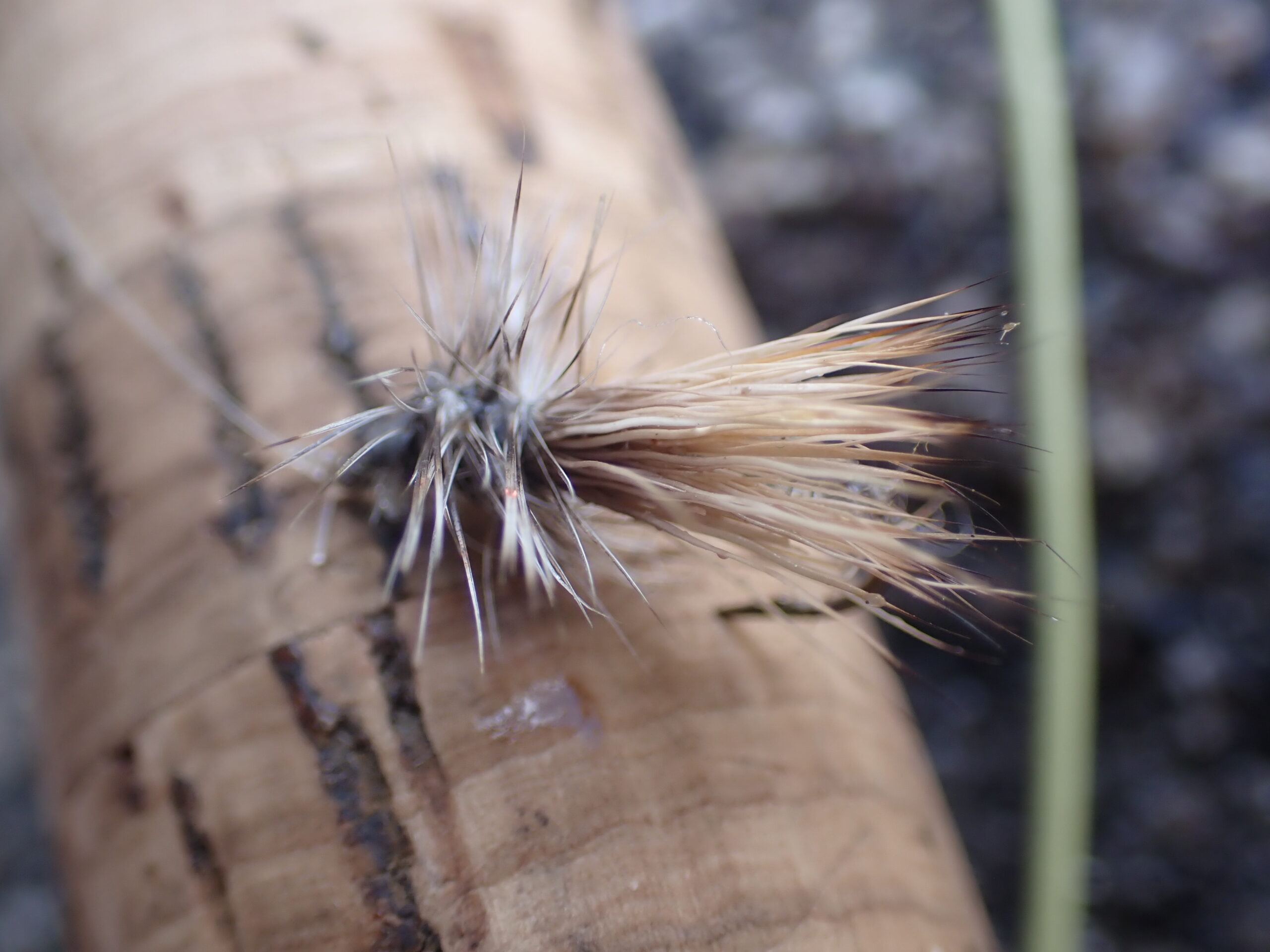
I produced five silver bullets that I plan to test during blue wing olive season, so I turned my attention to the frenchie. In order to refresh my memory, I reviewed Lance’s YouTube video on tying the frenchie, and then I gathered the materials. I did not have several, so I made substitutions. For gray pheasant tail I substituted some charcoal antron, and I replaced the cream/pink shrimp ice dubbing with some gold antron. The gold antron actually looked similar based on the YouTube image in spite of the fairly significant difference in names. I replaced the coq de leon tail fibers with a sparse clump from a grizzly spade hackle.

From the Top

I was rather pleased with my finished product. I suspect the key fish attracting features are the tungsten bead, slim profile and the contrasting colors of the red thread and gold color. I feel that my fly satisfies those needs; and, thus, will be a fish finder.

Materials and Flies

I tied five to begin my experiment. Lance said that he uses this fly instead of a pheasant tail, so I plan to follow the same strategy. This means it will be present on my line during pale morning dun activity time periods. If the frenchie produces, I will probably find myself at the vise during fishing season generating additional supply.

Silver Bullet – 12/09/2025

Silver Bullet 12/09/2025 Photo Album

As mentioned in my post of 11/08/2025. during the 2025 season I fell in love with the olive perdigon. I tied a bunch in November, and I added some versions with a brown body, but the thought crossed my mind, are there other perdigon style flies that generate similar results? I attribute much of the effectiveness of this style of fly to the tungsten bead and its ability to sink the fly rapidly to the trout’s level. Surely other patterns with a tungsten bead could be similarly effective.

On Saturday, December 6 I decided to attend the 21st anniversary function at Charlie’s Fly Box. Upon my arrival, I quickly browsed around the shop and purchased a couple items to replenish my fly tying supplies. The parking lot was nearly full, and the shop floor was buzzing with shoppers. I wandered around the store, until I found a fly tying session in a small room arrayed with chairs. I was fortunate to learn that the fly tying session, featuring tier Lance Egan, was on the verge of beginning.

Lance asked for suggestions from the audience on what he should tie, and the first request was a poacher. I was not familiar with this fly, but I watched, as Lance produced a leech style fly on a jig hook with a pine squirrel tail. More requests were sought, and someone asked for an iron lotus. The iron lotus was a perdigon style fly that was very simple to tie, and I logged it in my notes for future consideration.

Next someone raised their hand and suggested a silver bullet. This fly caught my attention.  Lance tied it on a size 16 jig hook with a silver tungsten bead. I noted this fly and vowed to make some. The final fly that I observed was a Frenchie, and I was somewhat familiar with the fly; essentially its reputation.

Left Side Look

Once I completed tying my prince nymphs, I was set to advance to the next fly, but I was so intrigued with the flies that Lance Egan tied, that I decided to insert a few new patterns. Because it was designed to primarily imitate a baetis nymph, I began with the silver bullet. I shrank the hook size from16 to 18; the smallest jig hook size in my drawer. I had some tungsten beads that were given to me by a friend who stopped tying, and they were smaller than my copper beads, so I decided to use them on the smaller size 18 hook. They were not silver, but instead a dull gold color.

Right Side Look

I found the fly tying instructions on the Fly Fish Food website owned by Lance Egan and his partner and refreshed my memory and churned out five new imitations. I plan to use these flies during baetis hatch season. They are smaller than the olive perdigon, so I am hopeful that they will more closely replicate the baetis nymphs, but they will possess the rapid sinking quality of the perdigon with a tungsten bead.

Five and Materials

Tying these is a breeze. I recommend viewing the YouTube video, but there are only seven steps including threading the bead and applying the UV resin. It is a very streamlined and simple fly. I am anxious to give them a try and possibly pair with an olive perdigon.


Prince Nymph – 12/7/2025

Prince Nymph 12/07/2025 Photo Album

My usage of the prince nymph has declined a bit, and this is probably due to the ascent of the 20 incher as a very trusted fly in my repertoire. My post of 12/03/2011 provides a bit of background and a materials table for this fly.

Right Flank

I tie prince nymphs in two sizes; size 12 2XL and size 14 2XL. The larger size nymphs are very similar to a 20 incher with the white goose biot wings replacing the more conventional thorax of the 20 incher.

Left Side

I use the size 14 2XL version, however, as more of a wet fly, and historically I found them to be a solid representation of egg laying grannom caddis. When I was younger, I possessed more endurance, and I remained on the stream until late afternoon, when the egg laying activity commenced. A swinging size 14 prince nymph was a very productive offering that scored quite a few fish. At some point I began tying the ultra zug bug, and it also imitates an egg laying caddis, although I suspect the prince is a better imitation. The ultra zug bug, however, is a far easier fly to tie, and I can afford to lose more to the stream bottom.

Five Plus Materials

I took inventory of my prince nymphs, and I concluded that I needed to tie three size 12’s and two size 14’s to keep my stock at targeted levels. Prince nymphs provide excellent practice at mounting goose biot tails and goose biot wings. Of course these steps also slow down the tying process. I feel adequately prepared for drifting prince nymphs in 2026.

20 Incher – 12/05/2025

20 Incher 12/05/2025 Photo Album

If you are interested in reading my first post regarding the 20 incher click on this link, 02/06/2014. I have gained confidence in this fly to the point, where it climbed into the upper echelon of my fly choices. The 20 incher is right there among the titans of the fly box.

I began tying this fly after Taylor Edrington of Royal Gorge Anglers introduced me to it on a guided wading trip. In recent years I discovered that it is a great fly to use in a dry/dropper configuration, when getting the fly down and deep quickly is one’s objective. If I am covering promising water, and I am convinced I have the right flies, yet the fish are not responding, I frequently add a 20 incher to my line as the top nymph. The weighted 20 incher sinks rapidly, and it is a solid fish attractor in its own right.

Angled Side View

The 20 incher combined with a blue winged olive seems to be particularly effective in the early season, but I have also experienced success during other times, especially when flows are abundant. During 2025 the 20 incher and olive perdigon were workhorse flies that yielded many trout. Talk about weight! A weighted 20 incher and tungsten bead olive perdigon generate very deep drifts, and this technique is effective in deep pockets behind large boulders and along fast seams. Getting the fly deep and at the level of the trout in these conditions is imperative.

Materials and Seventeen 20 Inchers

Because I used the 20 incher more in 2025 than previously, I registered quite a bit of shrinkage. I found seven damaged nymphs in my restoration canister, and I recovered them to reuse. For the most part I needed to strip them down, but I at least recovered the hook and bead. I approached my vise and tied an additional ten to bring my inventory total to in excess of thirty. Because I fish this weighted fly along the bottom of the stream, I inevitably lose quite a few. Hopefully I am prepared for such losses in the new year.


Ultra Zug Bug – 11/29/2025

Ultra Zug Bug 11/29/2025 Photo Album

Turn back the clock and check out my post from 01/31/2012 for the story of the ultra zug bug and a materials table. Over the years this fly has been one of my most productive. It does not crash the upper echelon of nymphs, which is populated by the hares ear nymph, salvation nymph and olive perdigon, but it is among the next tier.

Reburbished UZB

Left Side

For some reason I failed to deploy the UZB very much in 2025. and this fact was confirmed by minimal shrinkage of my supply. After I counted all my ultra zug bugs, I determined that I only needed to tie two to improve my stock to previously established season opening levels. In fact, I have so many, that I probably could have skipped them, but I like to stay in practice. I discovered two damaged UZB,s in my restore canister, so they became my two replacement flies.

Materials and New Flies

One of the things I love about this fly is the ease of tying. It only requires three materials besides the hook, bead and thread. Originally I viewed this fly as a surrogate for the prince nymph, and I used it during caddis egg laying activity, but I have found it to be effective throughout the year. I suspect the peacock dubbing is an attractor element, and in some cases I have used it in lieu of a salvation nymph, when I experience the loss of an excessive quantity of salvations. For some reason, I seem to lose salvation nymphs at a rapid clip, so the UZB substitution prevails more than one might expect.


Salvation Nymph – 11/27/2025

Salvation Nymph – 11/27/2025 Photo Album

What a discovery this fly has been. If you are interested in how I became acquainted with it, click on this link to my earliest post on the salvation nymph. This post contains a materials table and a description of the tying steps. The only modification that I implemented was to substitute UV resin over the wing case instead of clear nail polish. The salvation nymph continues to be a mainstay in my fly fishing arsenal. 2025 was not an exception, and I found it to be particularly effective when paired with an olive perdigon.

Refurbished Nymph

The originator of this fly named it the tungsten salvation nymph. Given my success when combined with a tungsten bead perdigon, I wonder if I should tie a few with tungsten copper beads to copy the original design. Certainly they would sink faster, and I could avoid the need for two nymphs which heightens the risk of tangles. Well, I did not implement this idea, and I completed my salvation tying, so I will revisit it next year.

Side View

Love This Shot

Unlike the hares ear nymph, the olive perdigon did not cut into my usage of the salvation nymph. Evidence of this was my shrinkage. I counted seventy-five in my various storage containers, so I approached the vise and churned out an additional twenty-five. The first seven were refurbishments of flies that lost legs or unraveled. In most cases I was able to salvage the abdomen construction and only needed to redo the thorax, legs and wing case.

Twenty-Five Salvations

I am ready for another season of casting the salvation nymph in western waters.

Hares Ear Nymph – 11/18/2025

Hares Ear Nymph 11/18/2025 Photo Album

This fly is a perennial workhorse fly among my collection. It is a classic for a reason; it produces. Here is a link to last year’s post, as I have little to add. You can also search on hares ear nymph for historical posts, and if you go back far enough, I am certain you will find a materials table.

Left Side View

There are tons of fly tying videos and materials lists online for the hares ear nymph. I am sure my version is a variation, but I suspect they all work equally well. I use actual fur from the mask of a rabbit that a friend shot many years ago. In spite of tying hundreds of these flies, I suspect that I have a supply of hares mask that will last my lifetime. I like using the real hares mask because it contains a dense amount of guard hairs, and I suspect that the stiff protruding hairs account for much of the fly’s effectiveness. The combination of the soft fur and the spikey guard hairs creates an irresistible buggyness.Sixteen New Hares Ear Nymphs and Necessary Materials

I felt like I utilized the hares ear less in 2025, than I did in previous years. This suspicion was supported by a reduced shrinkage in flies compared to normal. I counted eighty-four flies in my storage containers; and, therefore, I tied sixteen additional versions to bring my total to one hundred for entering the new year. One explanation for the reduced usage may be the ascent of the olive perdigon in popularity as a weighted top nymph that also attracts trout in a major way.

Brown Perdigon – 11/10/2025

Brown Perdigon 11/10/2025 Photo Album

If an olive perdigon is effective, why wouldn’t a brown version produce as well? I plan to find out. My salvation nymphs, pheasant tail nymphs, and supernova PMD’s are productive flies throughout the season, but particularly favored during pale morning dun time. It seems to me that a brown perdigon brings a similar size and color to the menu with the added benefit of extra weight to sink the nymph or sink a second fly on the dropper. What about pairing a brown perdigon with a PMD nymph imitation?

Look at the Taper

I get excited thinking about the possibilities. A month or so ago I tied three brown perdigons, but I never introduced them to the Colorado rivers during the fall. While my perdigon hooks and tungsten beads remained out on my tying tabletop, I decided to add seven additional brown perdigons to my storage boxes to bring my total to an even ten for 2026.

A Batch of Seven and Materials

I simply substituted brown thread for olive and brown spade hackle fibers for grizzly. I am now excited to test these flies and my theories on fly attractions.

Olive Perdigon – 11/08/2025

Olive Perdigon 11/08/2025 Photo Album

The olive perdigon is a relatively new addition to my fly box, but what a weapon it has become! Two years ago I possessed none, and I just finished building my supply from thirteen to thirty for the 2026 season. How did this happen?

On 10/03/2023 my friend, Dave G., invited me to join him on a private stretch of the Eagle River. Within the first hour, Dave G. was landing nice fish after nice fish, and I managed a couple dinks. I asked to borrow one of his productive flies, and it happened to be an olive perdigon with a tungsten copper-colored bead. My fortunes reversed, and I experienced a twelve fish day that included some very respectable fish.

Fast forward to the spring of 2025, and for some reason I began to experiment with the olive perdigon. I tied around ten of them over the winter of 2024-2025, and I was amazed with their productivity in the early season. They produced quantities of fish on all the Colorado rivers that I visited prior to run off. Their fish catching ability faded a bit in the post run off time frame, but when I returned to the large river valleys in the fall, their effectiveness resumed.

Side View

I attribute much of their success to the tungsten bead, I theorize that the very dense bead sinks the fly rapidly to the bottom of the river and provides a longer drift within the feeding range of the trout. When I combine it with another nymph in a three fly dry/dropper, it also sinks the paired nymph to the eye level of the trout. Although the density of the nymph is a positive for achieving long deep drifts, it also offers the disadvantage of snagging more frequently, and consequently I lost quite a few flies. The beads are quite a bit more expensive than the typical brass bead, so each lost fly is mourned by this frugal angler. The loss of flies forced me to approach my vise to tie additional perdigons during the fishing season; a task I normally try to avoid.

Opposite Side

The olive perdigon has climbed from absent to a top five mainstay in my fly box. I tie an olive perdigon to my line more frequently than my revered hares ear nymphs and salvation nymphs, so that is saying something. Given this new status as the top dog of my fly inventory, I kicked off my fly tying season yesterday by augmenting my olive perdigon supply. I counted thirteen among my fly boxes, and I decided to target a starting inventory of thirty. I can report that seventeen flies were added to my count.

Although more expensive than most nymphs due to the cost of the tungsten bead, these flies are relatively straightforward to tie. All that is required is a copper colored slotted tungsten bead, a jig hook, medium olive thread, spade hackles from a rooster neck, a black permanent marker, and UV resin and lamp.

Thread, Feather and Finished Product

Place the bead on the hook with the slot facing upward and toward the rear. Start your thread behind the bead and make tight wraps to lock the bead in place on the angled portion of the jig hook. Wrap the thread to the rear and then wrap forward to one hook eye behind the bead. Tie in six barbules from the grizzly feather to form a tail approximately three-fourths of the length of the hook shank and then wrap the thread to the bend. Wrap the thread forward to the bead and snip off the ends of the hackle. Now repeatedly wrap the thread to the rear and back to the bead to form a nice tapered body. Once you create the taper that flows nicely into the bead without leaving a gap, whip finish and cut off the thread. Grab your permanent black marker and carefully place a black spot on top of the body, where it meets the bead and then on the top of the bead. Get out your UV resin and apply a coat to the point where the bead meets the body of the fly and then coat and cover the entire thread body. Try to make the UV resin at the junction a bit thicker than the body coat. Fire up your lamp and cure the resin. You now have a new sleek olive perdigon.

Hopefully thirty will suffice for the 2026 season. If not, it probably means that the olive perdigon demanded a lot of time on my line, and running out and having to tie more in season is a good problem to have.


Big Thompson River – 11/04/2025

Time: 12:00PM – 2:30PM

Location: Canyon downstream from Estes Dam

Big Thompson River 11/04/2025 Photo Album

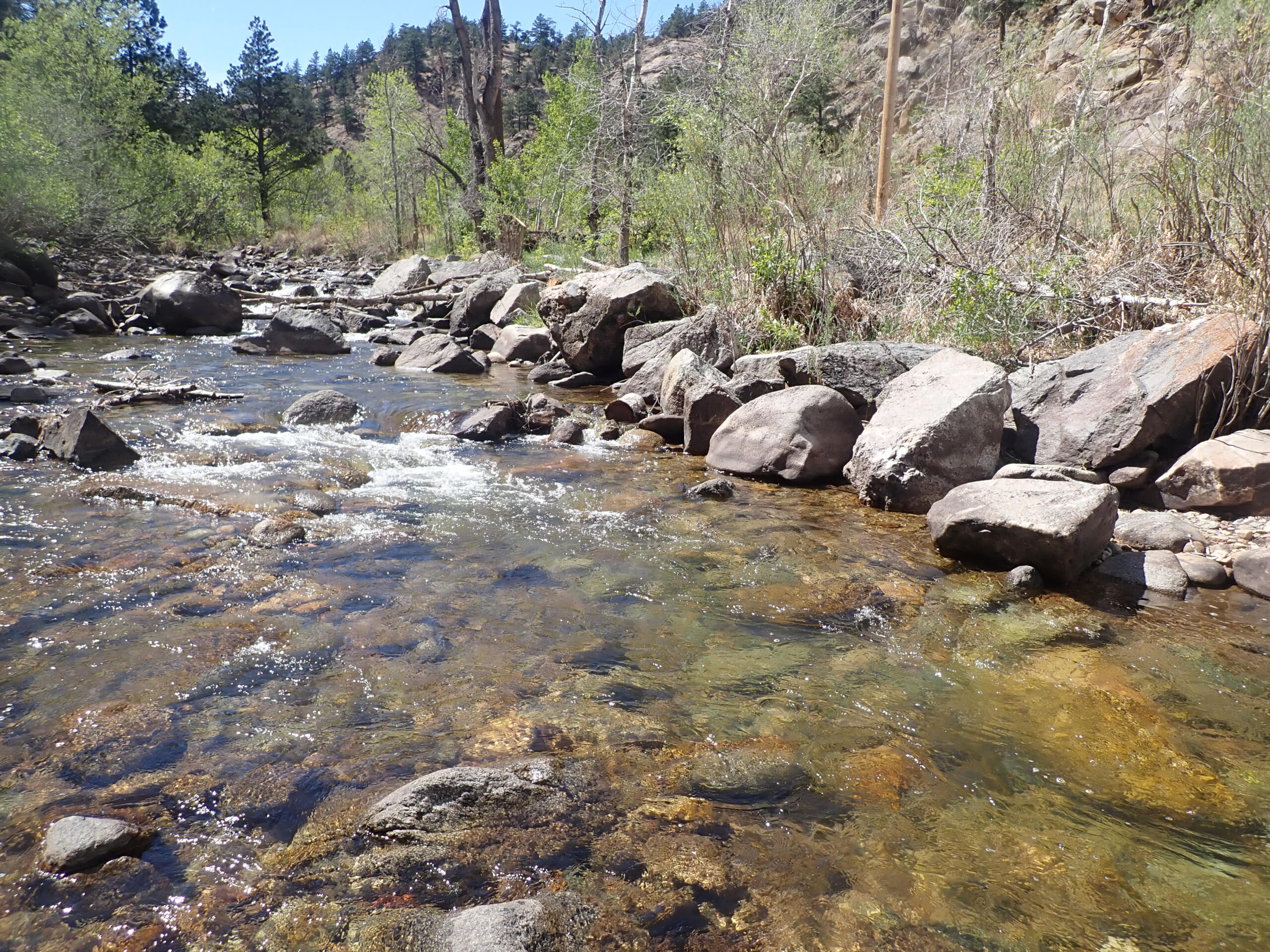
A forecast high of 77 degrees in Denver prompted me to complete a last gasp fly fishing excursion. I was not interested in a long drive, so I considered Clear Creek, South Boulder Creek and the Big Thompson River. According to my weather sources, highs of 62 were expected at all three spots. My intuition suggested that I should visit South Boulder Creek; however, I was averse to making the one mile hike to and from the creek, so I settled on the Big Thompson instead. Spoiler alert. It was a lackluster day.

I arrived at a pullout by 10:45AM, and I quickly prepared for a day on the river. The flows were tumbling along at 25 CFS, and the stream was low and clear, but it looked promising nonetheless. The dashboard temperature was 56 degrees, so I slipped on my fleece hoodie and assembled my Loomis two piece five weight. I like the slower action of the Loomis, and I expected to toss a dry/dropper most of the day.

I crossed the highway and found a fairly friendly route to the river, and then I knotted a Jake’s gulp beetle to my line. The beetle produced well on my last trip to South Boulder Creek, so I was anticipating a repeat on a different Front Range stream.

I completed two desultory casts, and then I decided to move to more attractive pools, but when I stepped with my left boot, it slipped and shot backward. I tipped forward and stopped my fall by bracing with my right hand, but it was not before a small amount of water spilled over the top of my waders. I felt the dreaded trickle down both legs, and then the wetness, as my right sock absorbed liquid. What now? I was wet and chilled, and I barely began to fish.

Had it been the summer, I would have fished on, but I was concerned about the cooler temperatures of autumn, so I scaled the bank and returned to the car. First I removed my fleece hoodie with a drenched right sleeve. Next I removed my undershirt and replaced it with a long sleeve version. I pulled off my waders and turned them inside out and placed them on the hood of the Telluride to dry in the sun. I removed my long underwear and socks and pulled on a dry pair of each. I wanted to provide adequate time for the inside of the waders to dry, so I ate my lunch early, and sure enough, after eating, the neoprene booties were dry, and I pulled them on and resumed my fishing. The sleeve of my fishing shirt was a bit wet, and the front pack was also showing the effects of being submerged, so I pulled on my raincoat to guard against additional soaking from the front pack.

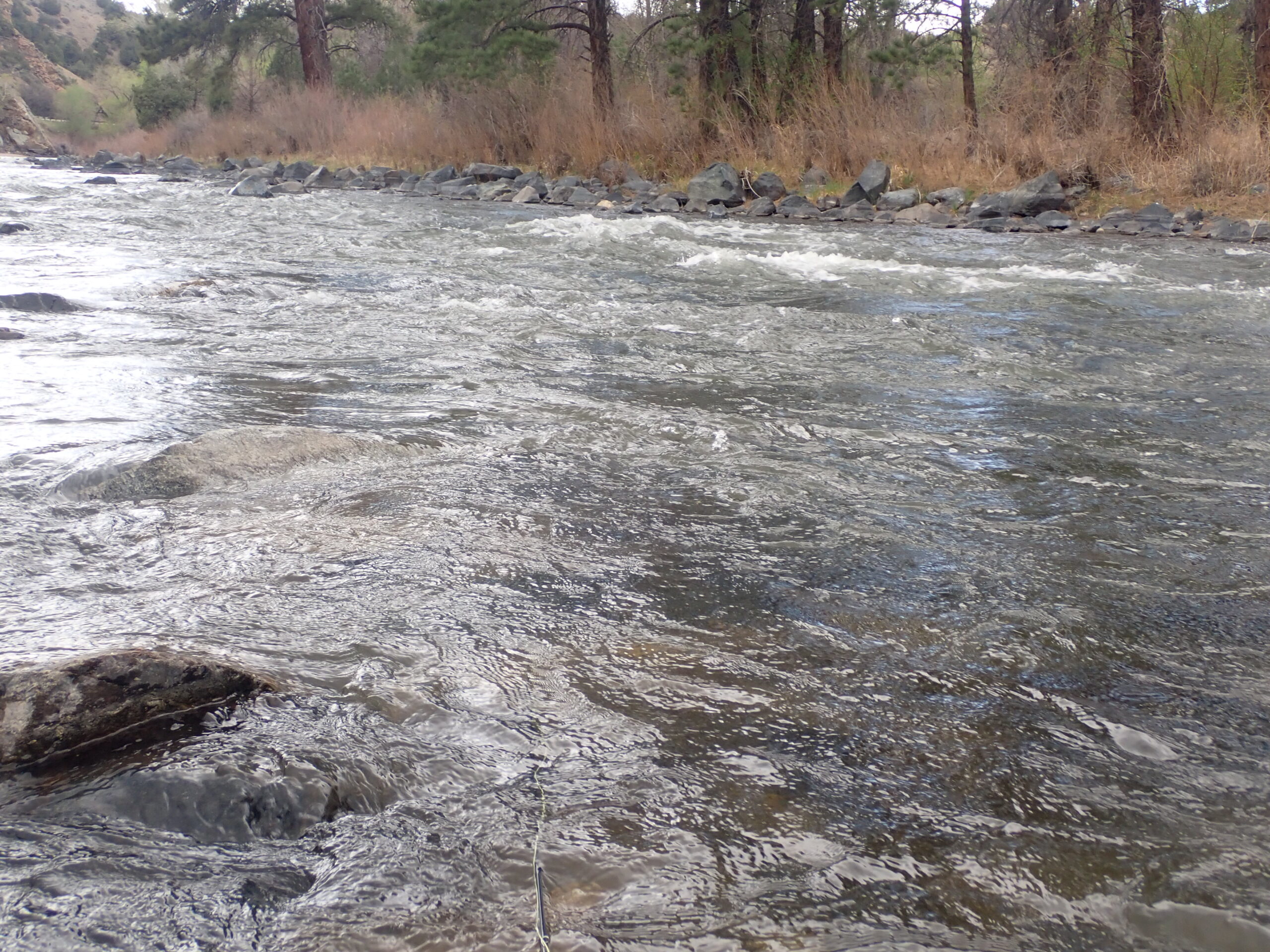
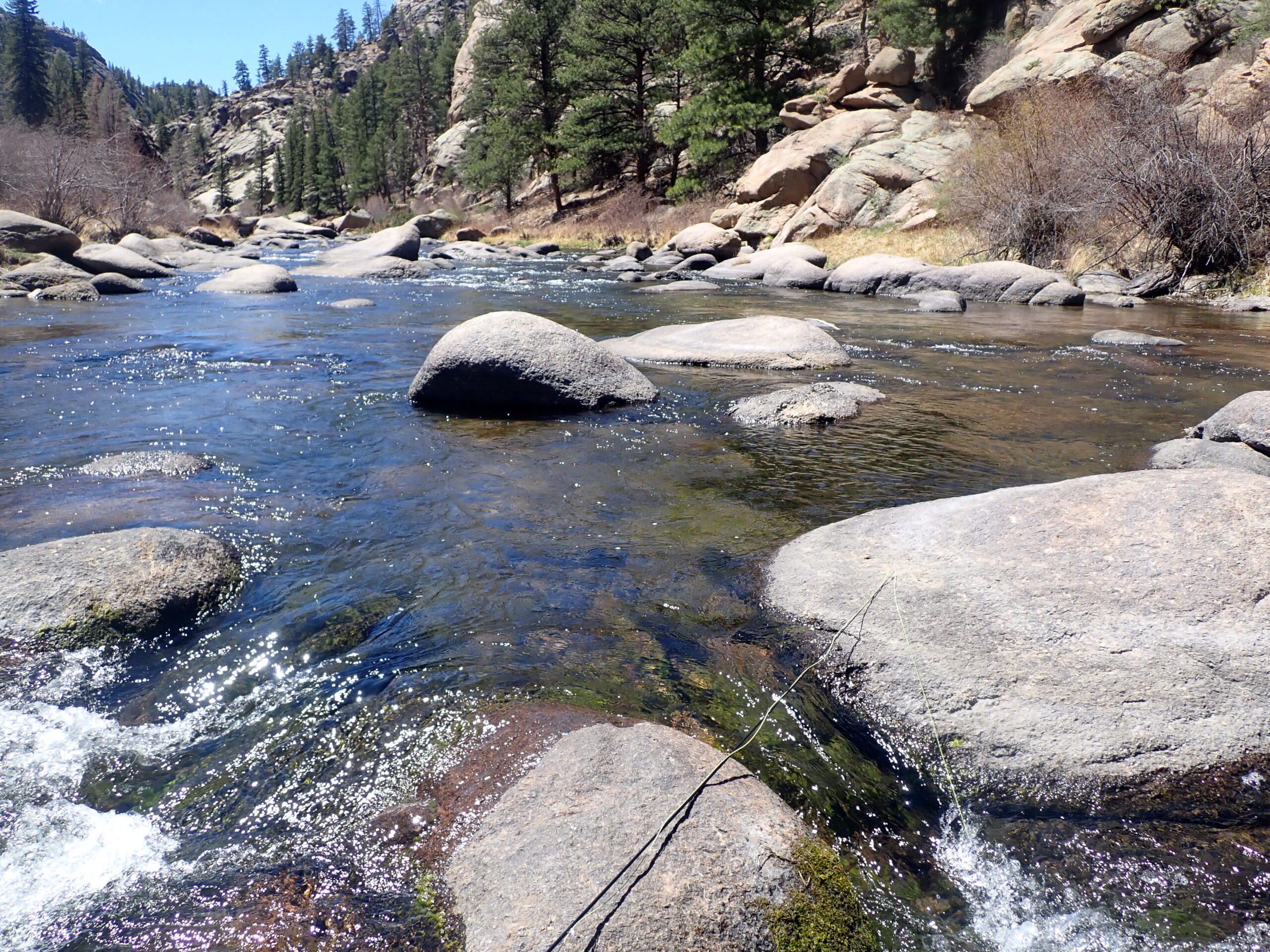
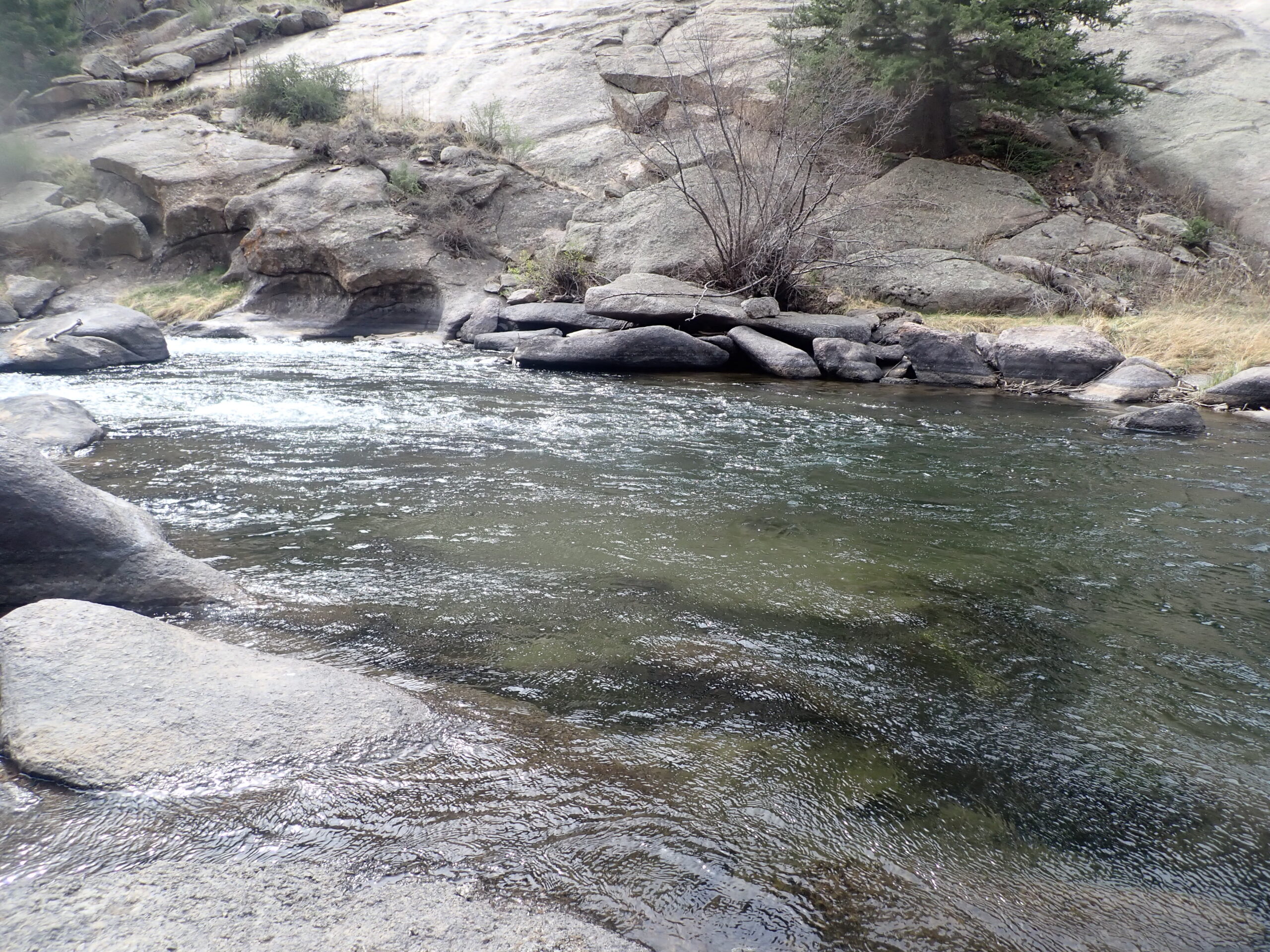
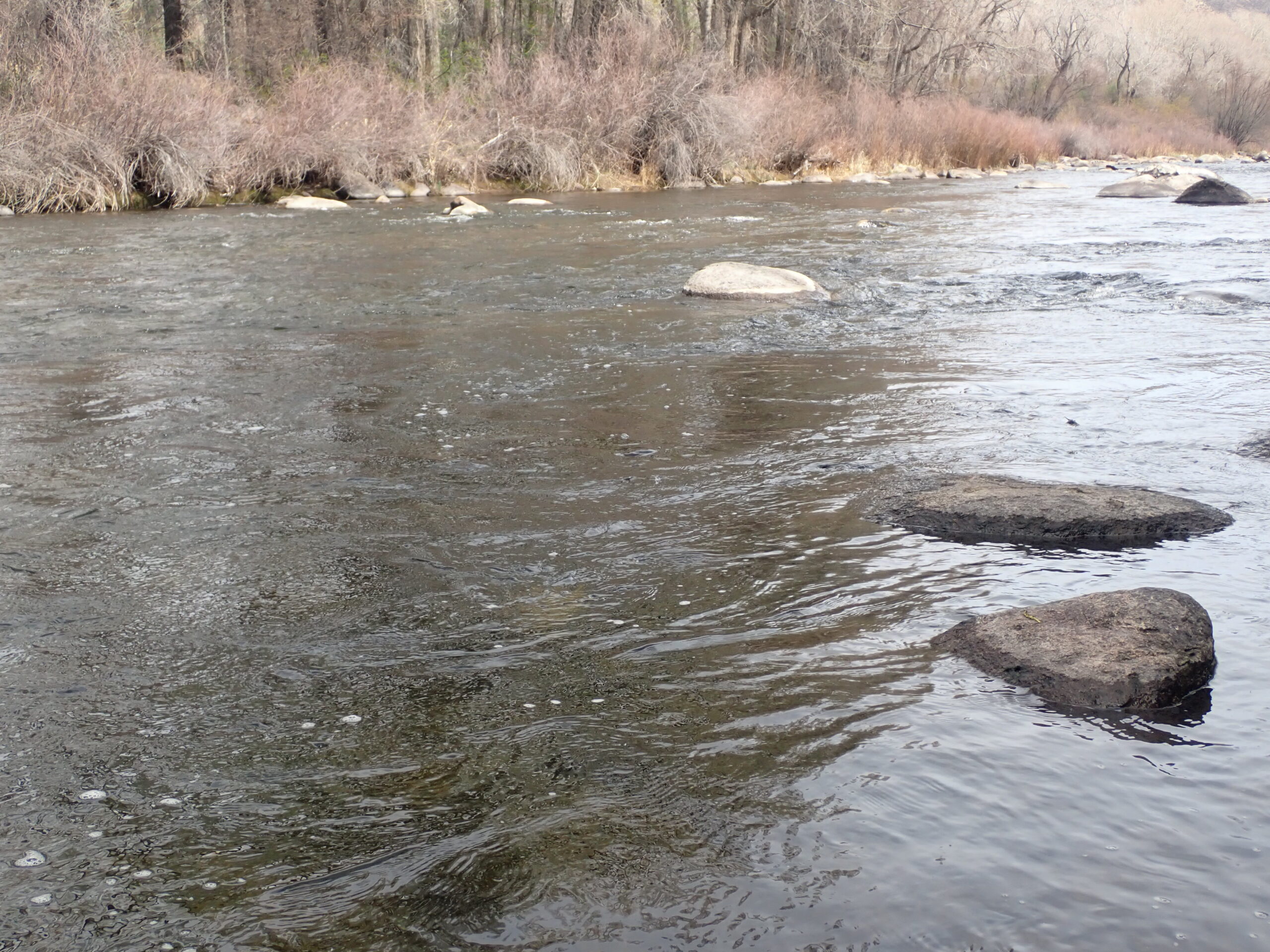
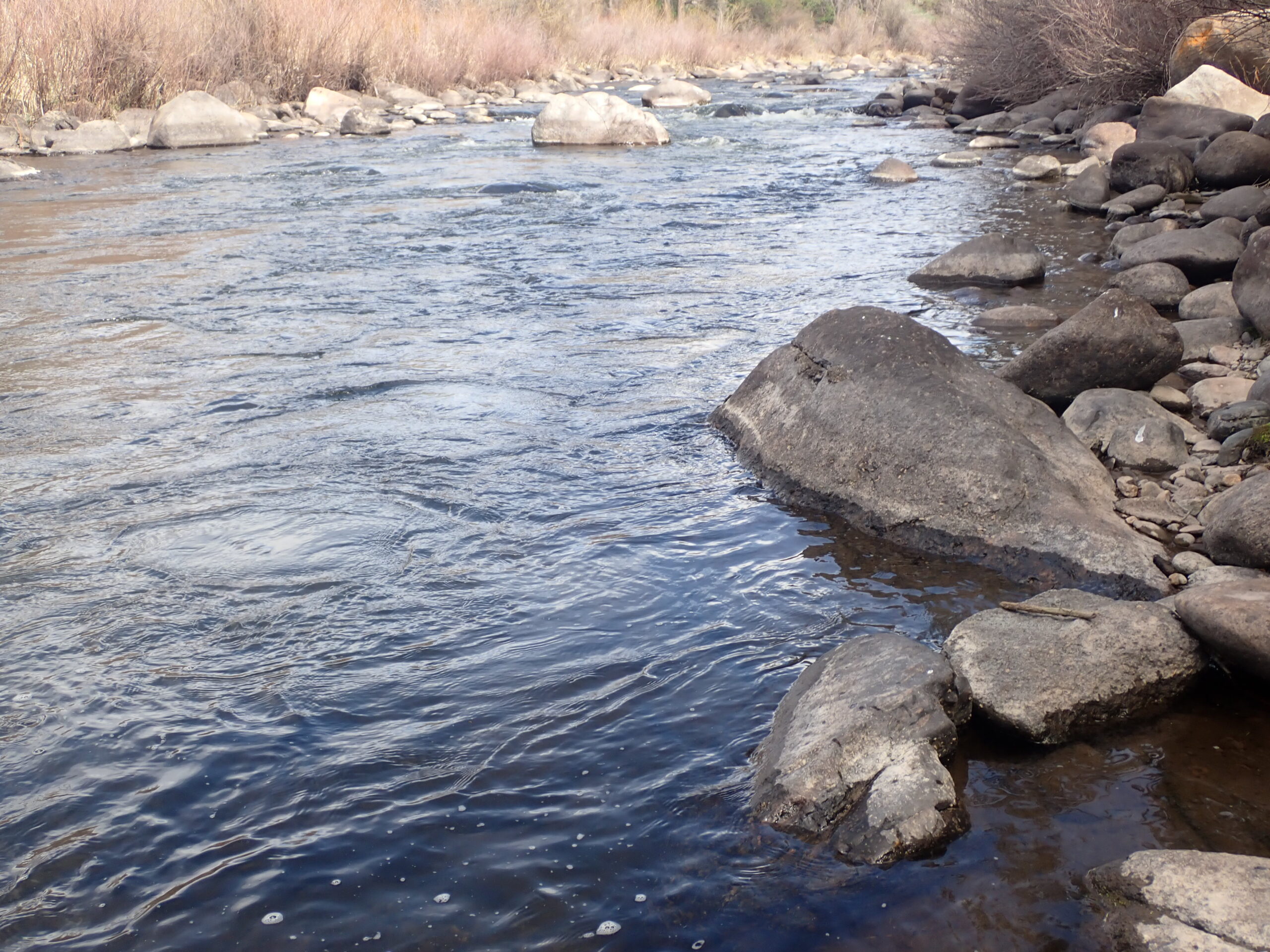
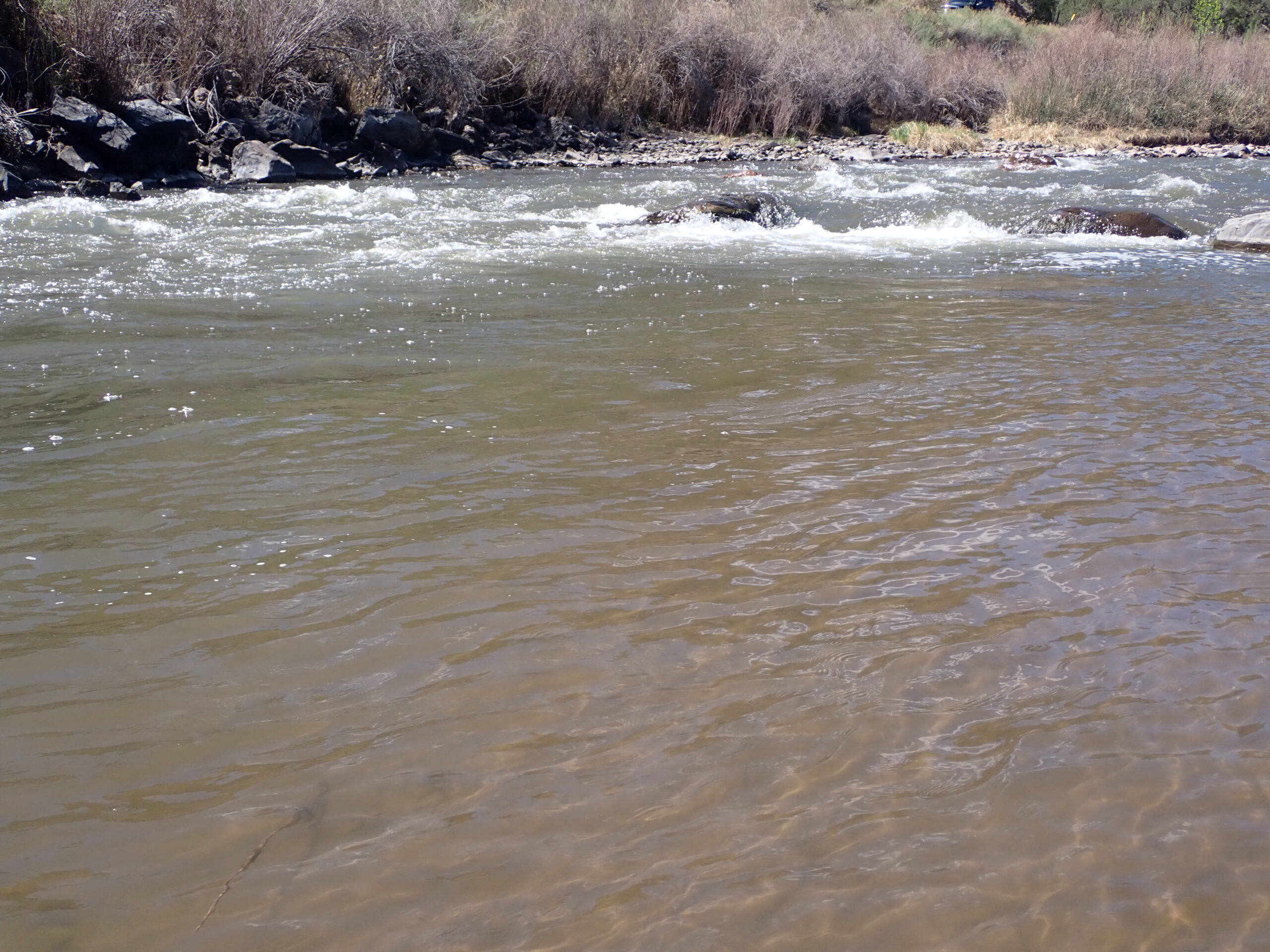
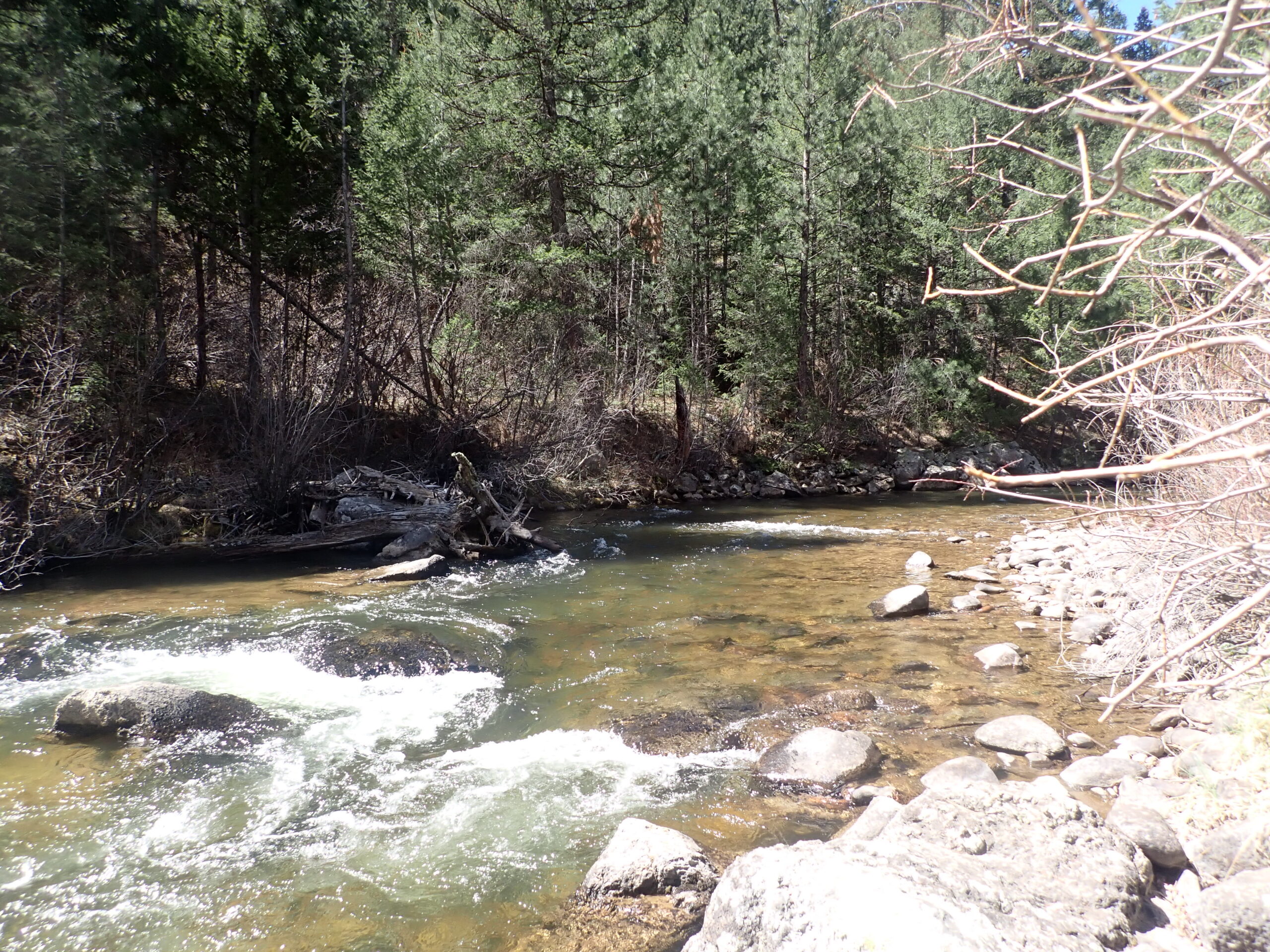
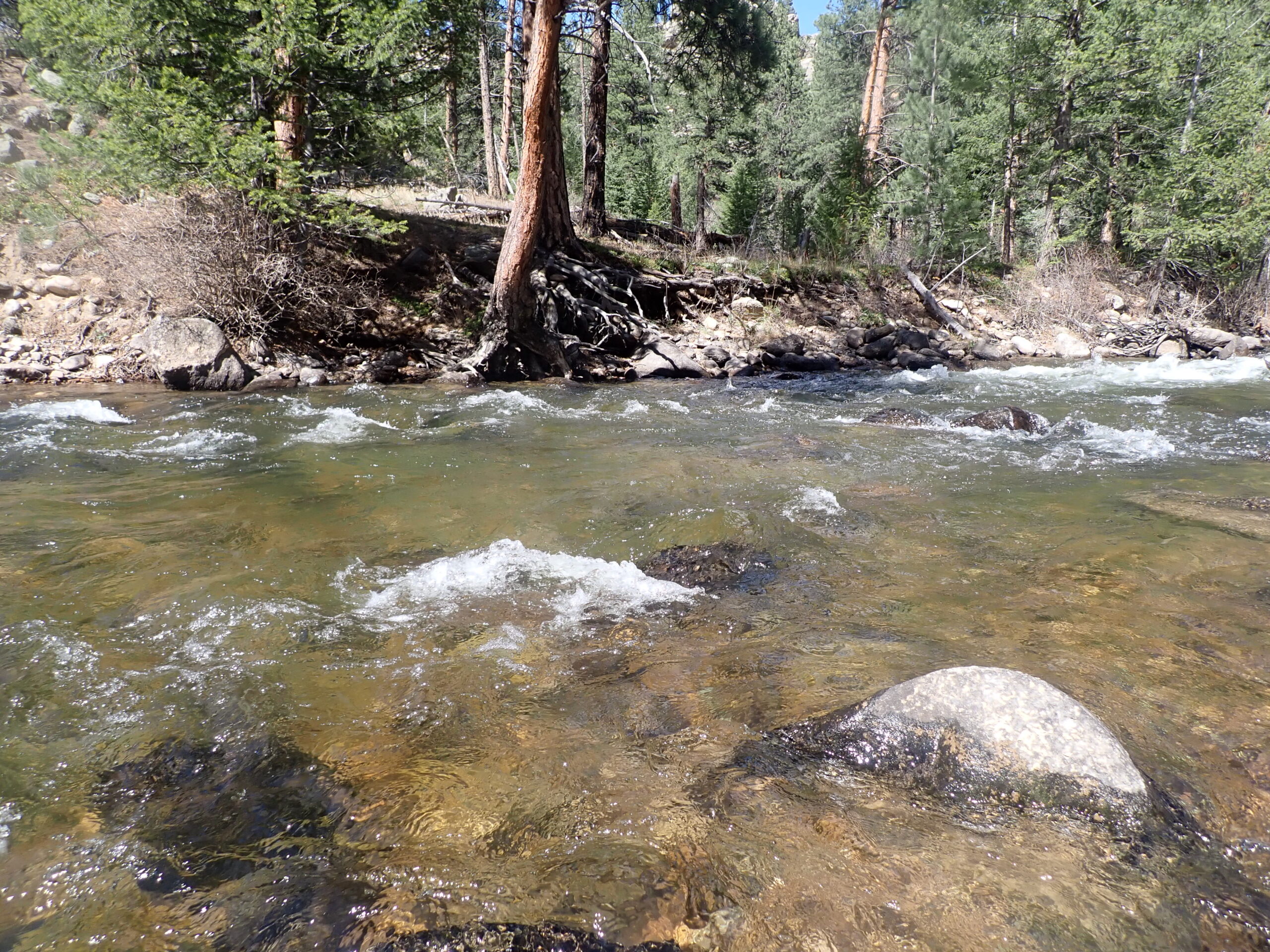
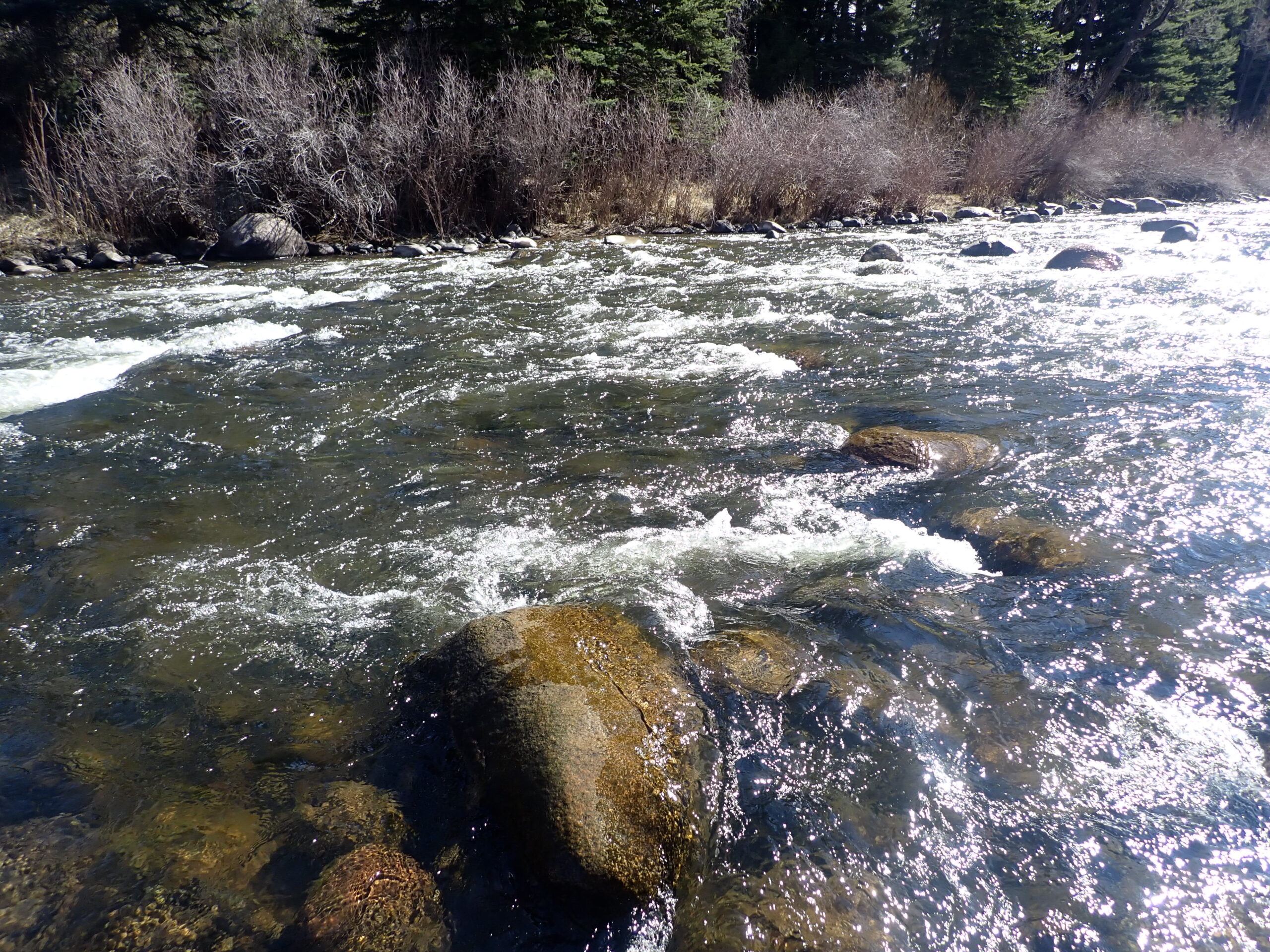
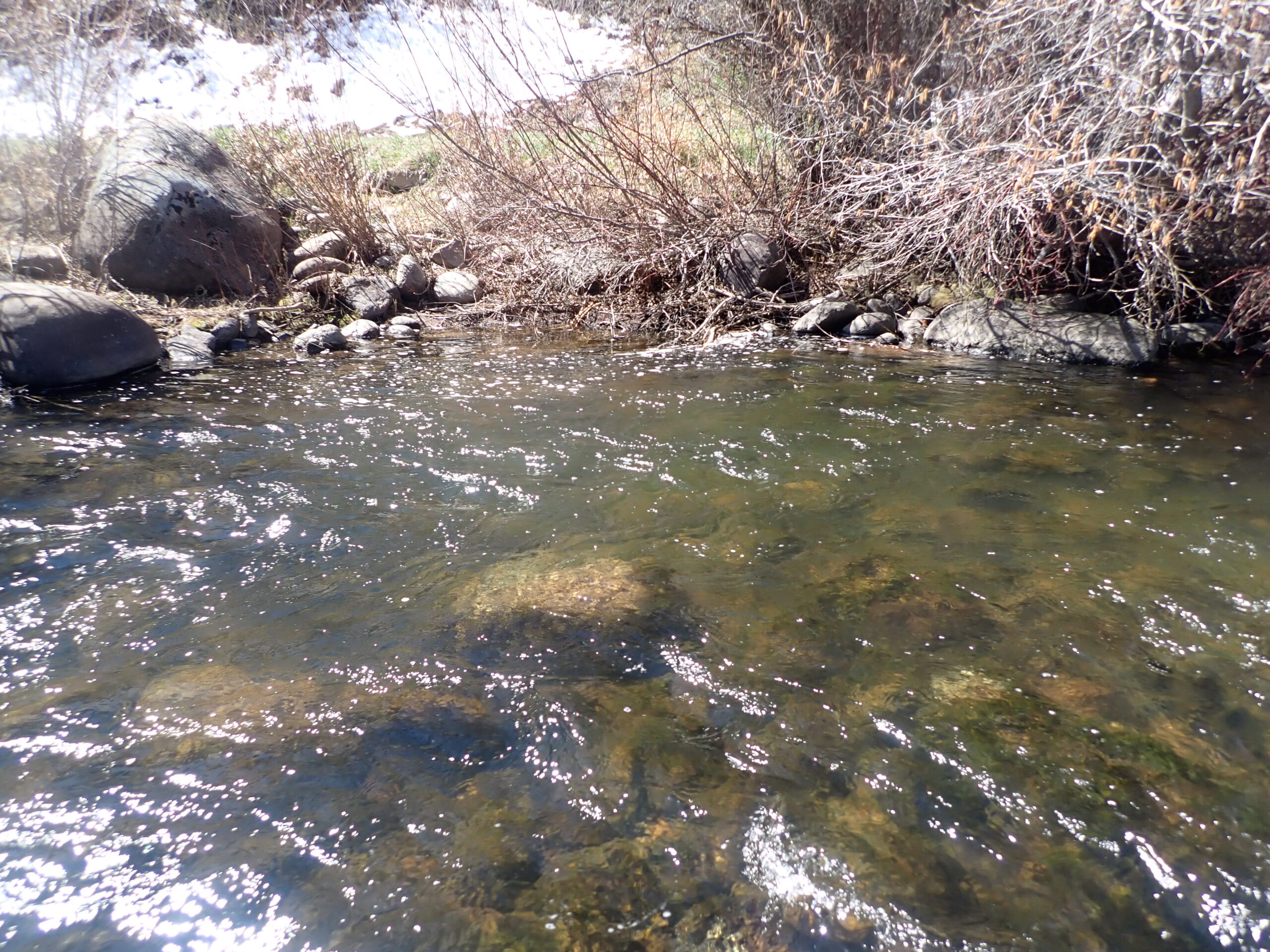
Glare and Shadows Were a Challenge

I wish I could say it was worth it. I began fishing in earnest at noon and continued until 2:30, The beetle was ineffective, so I removed it and replaced it with a peacock hippie stomper and then added an olive perdigon on a two foot dropper. The perdigon registered two small trout barely beyond my six inch minimum for counting. I covered quite a bit of stream real estate to log two small fish, so I added a beadhead hares ear nymph hoping that it would extend the depth of the drift and attract more action.

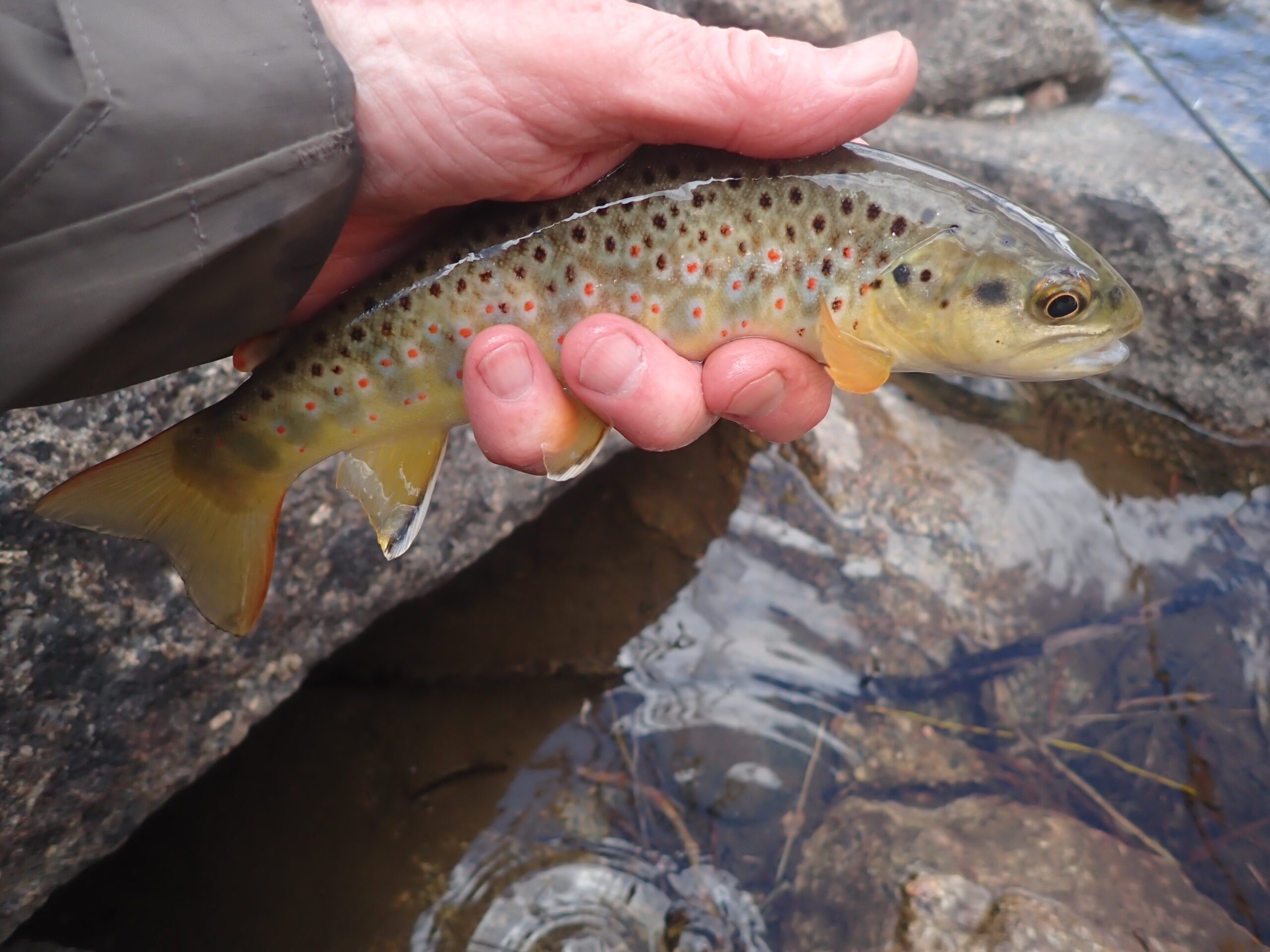
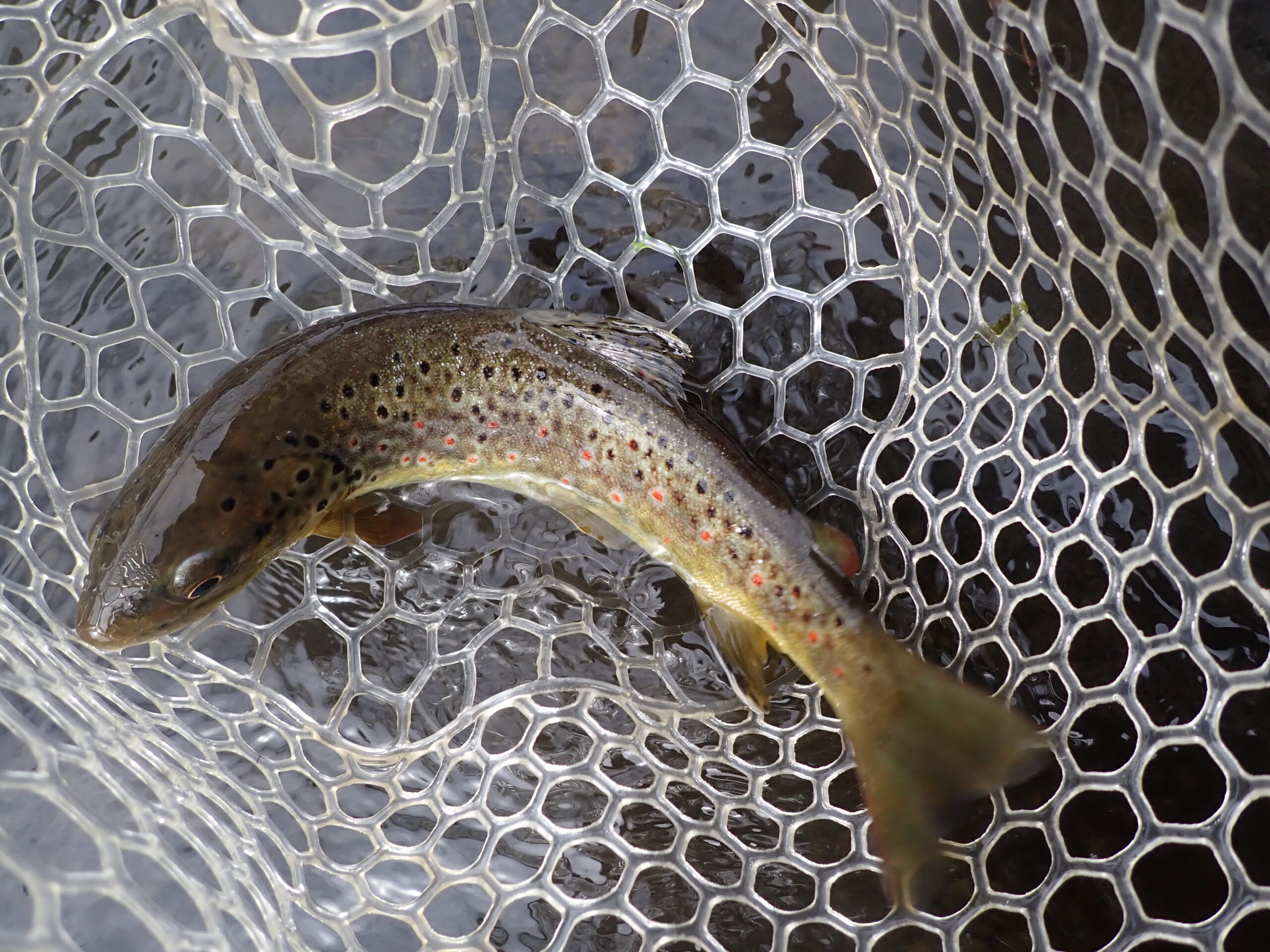
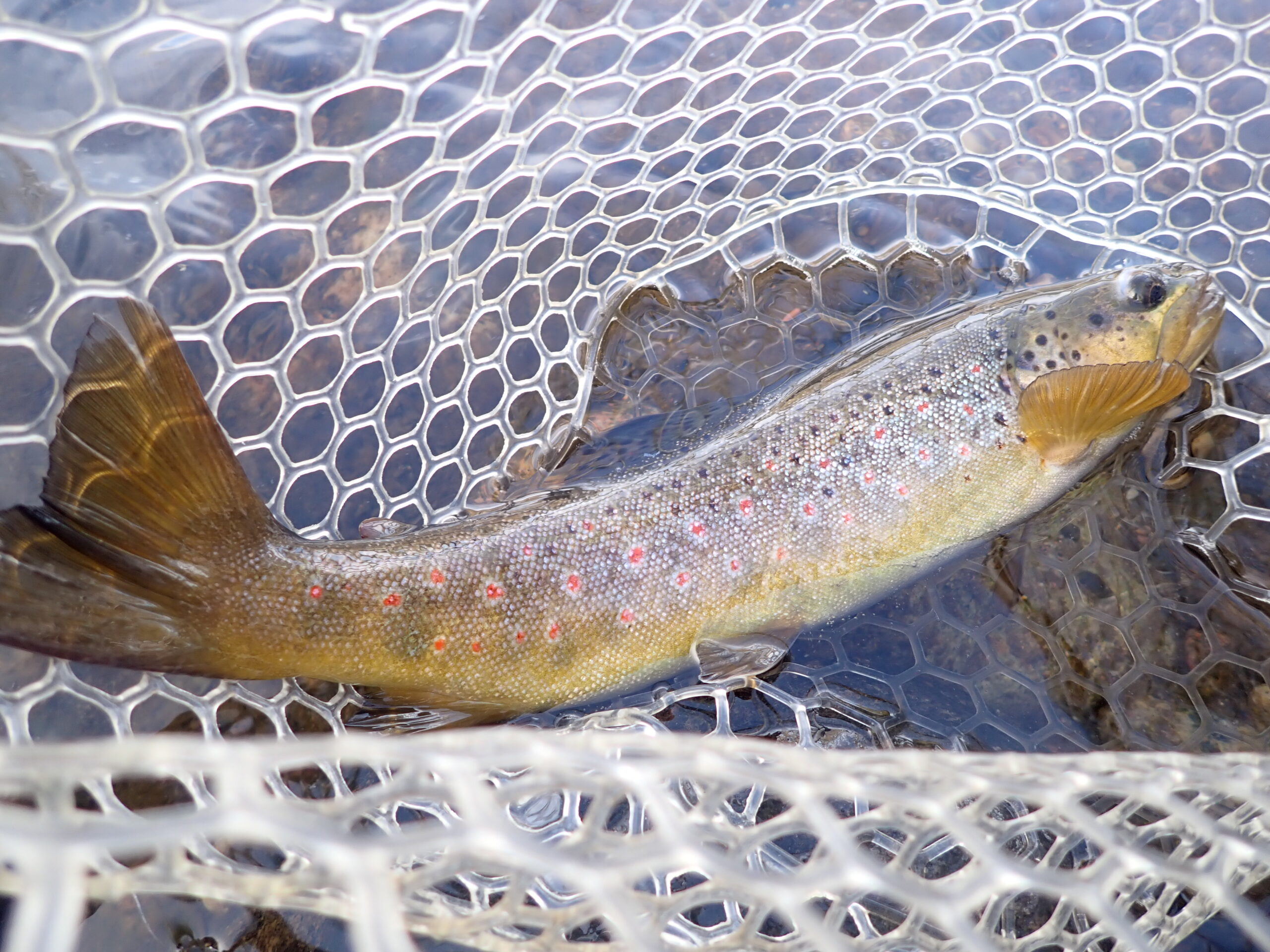
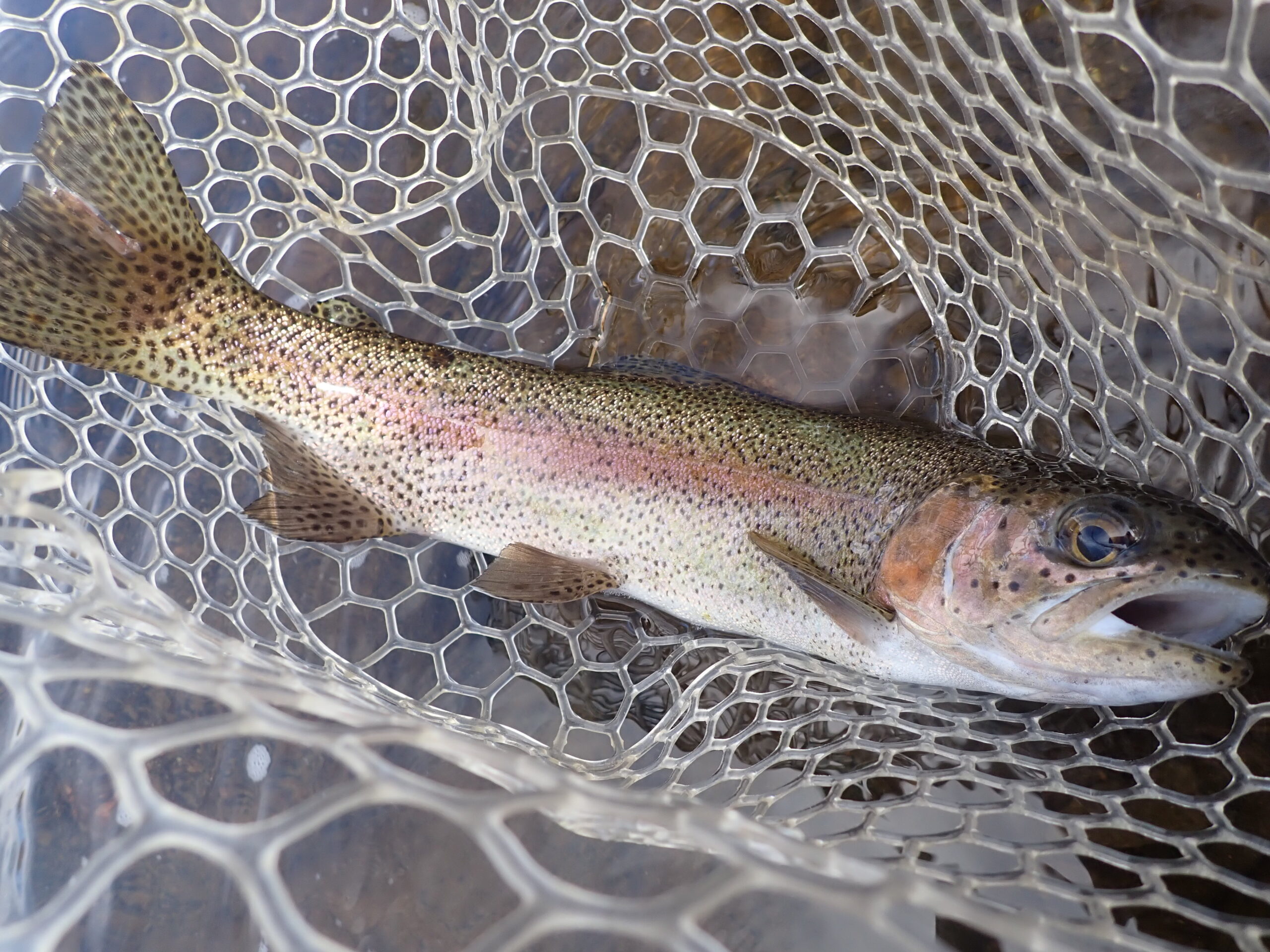
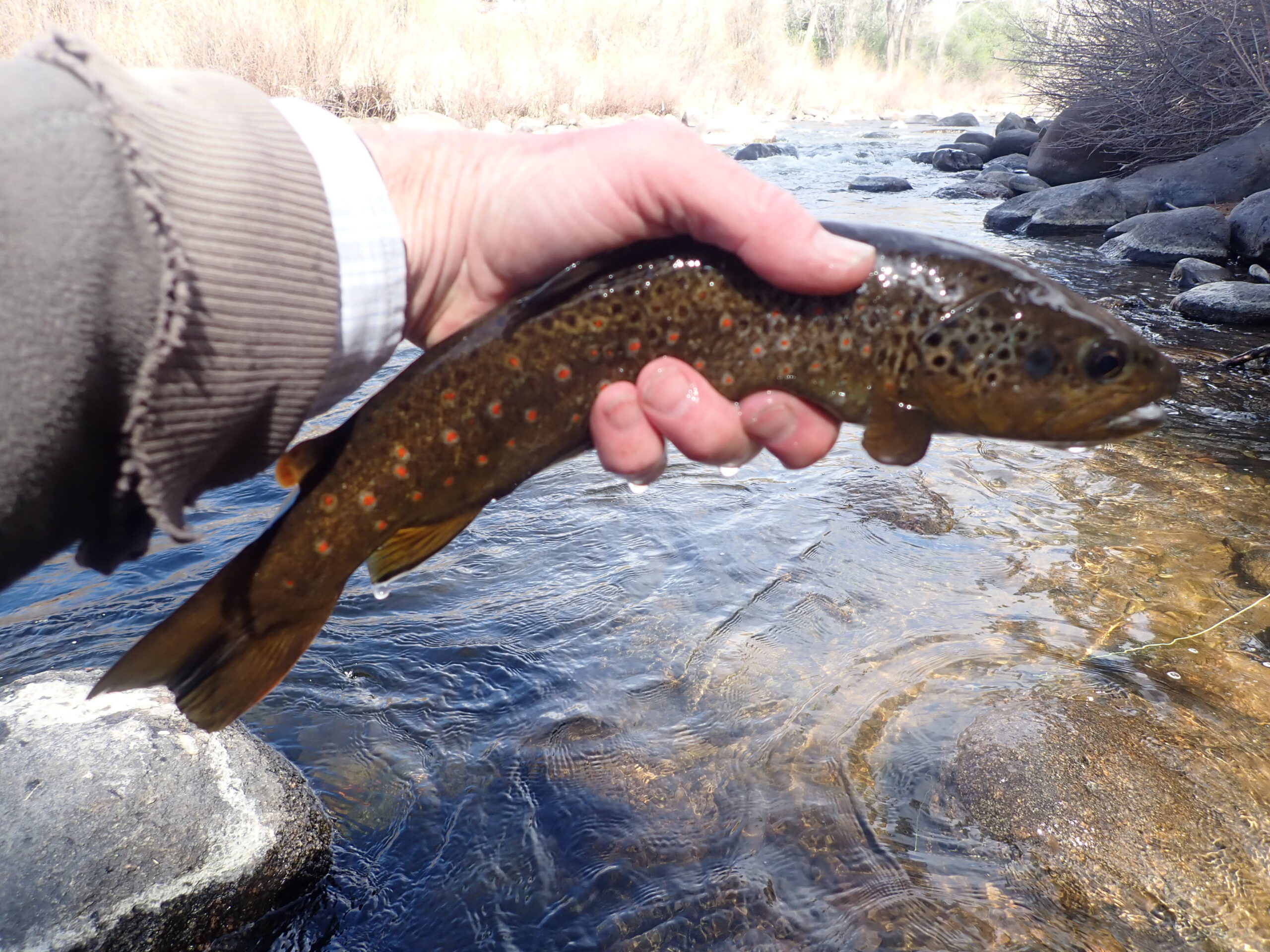
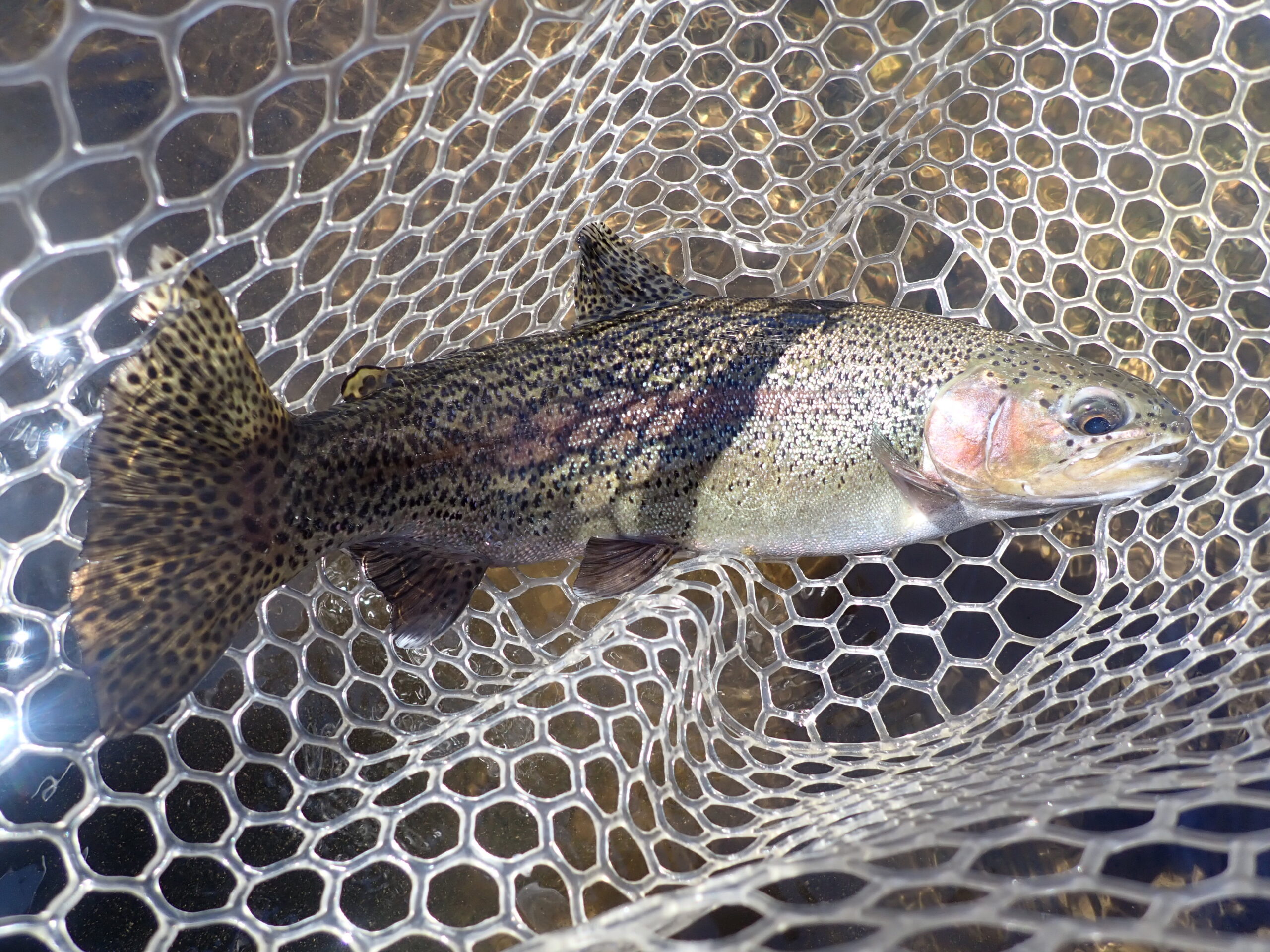
Small Jewel

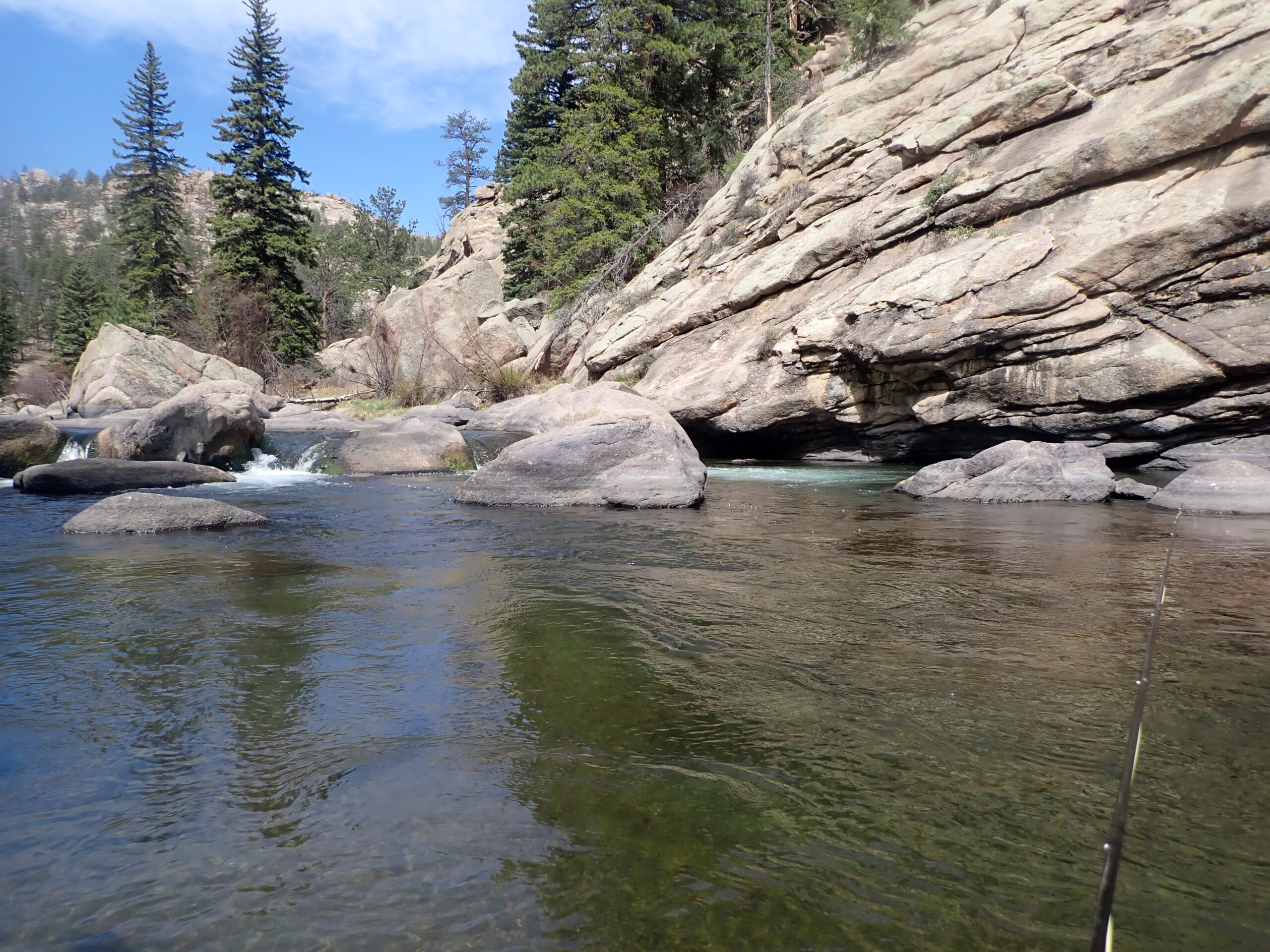
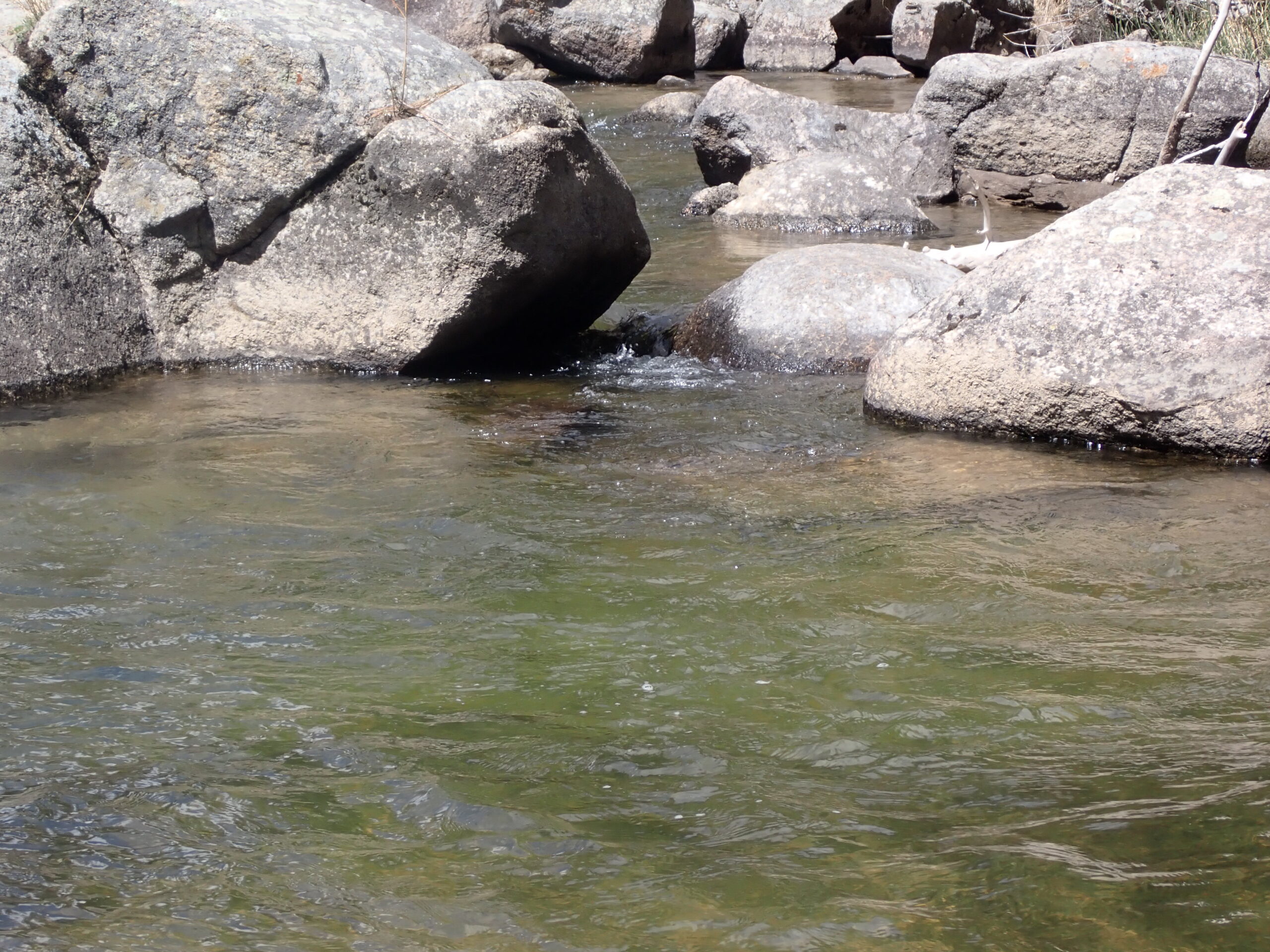
The move worked somewhat, as I raised the fish count from two to six by the time I quit at 2:30. The four additional trout were only slightly longer with the biggest extending to eight inches. It was a lot of casting for minimal return. I moved back and forth between the two banks, and the shade and sun glare were alternating hindrances to catching fish. Deep pools were not productive, although I continually attempted to cash in on their appeal.

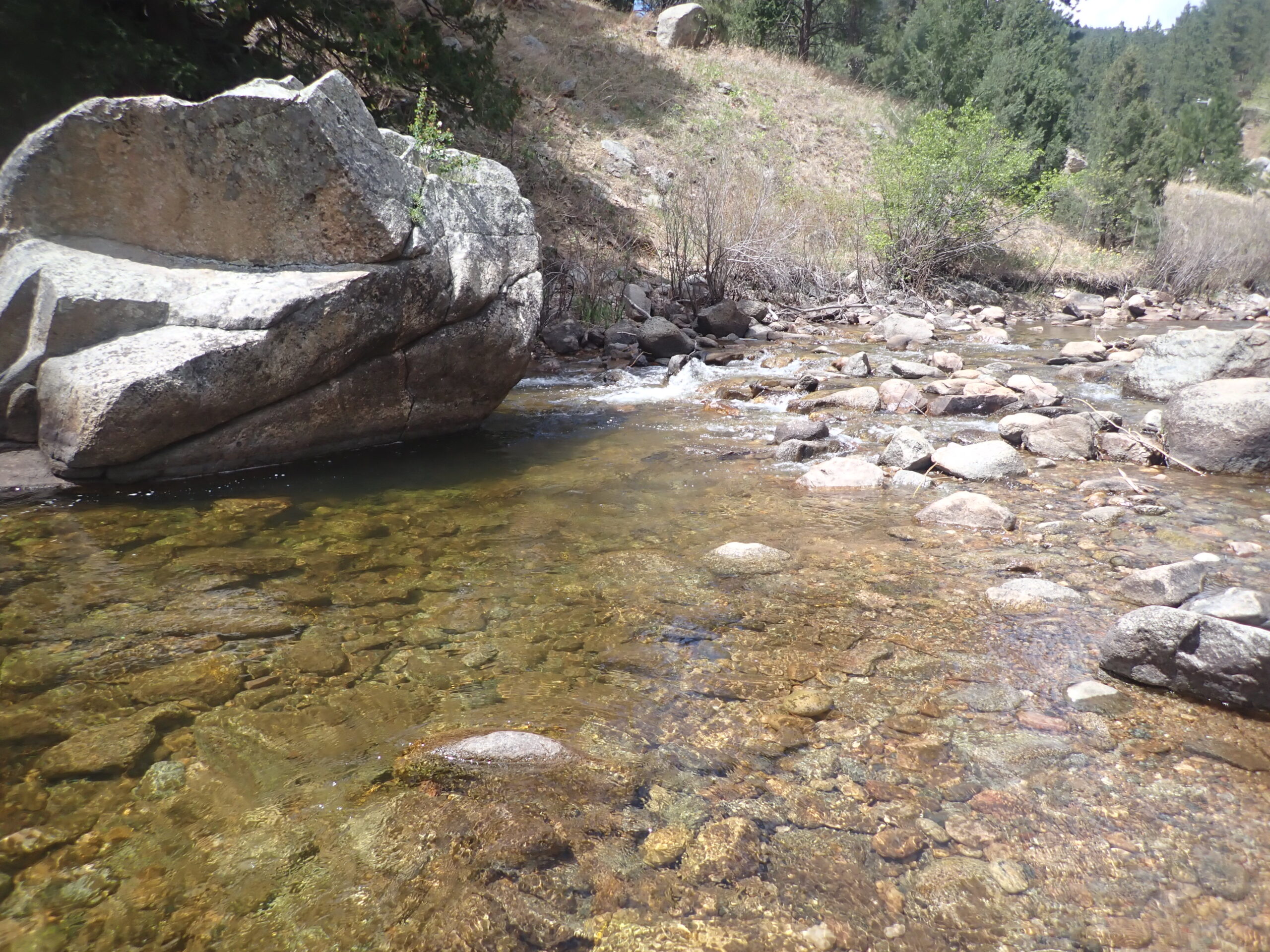
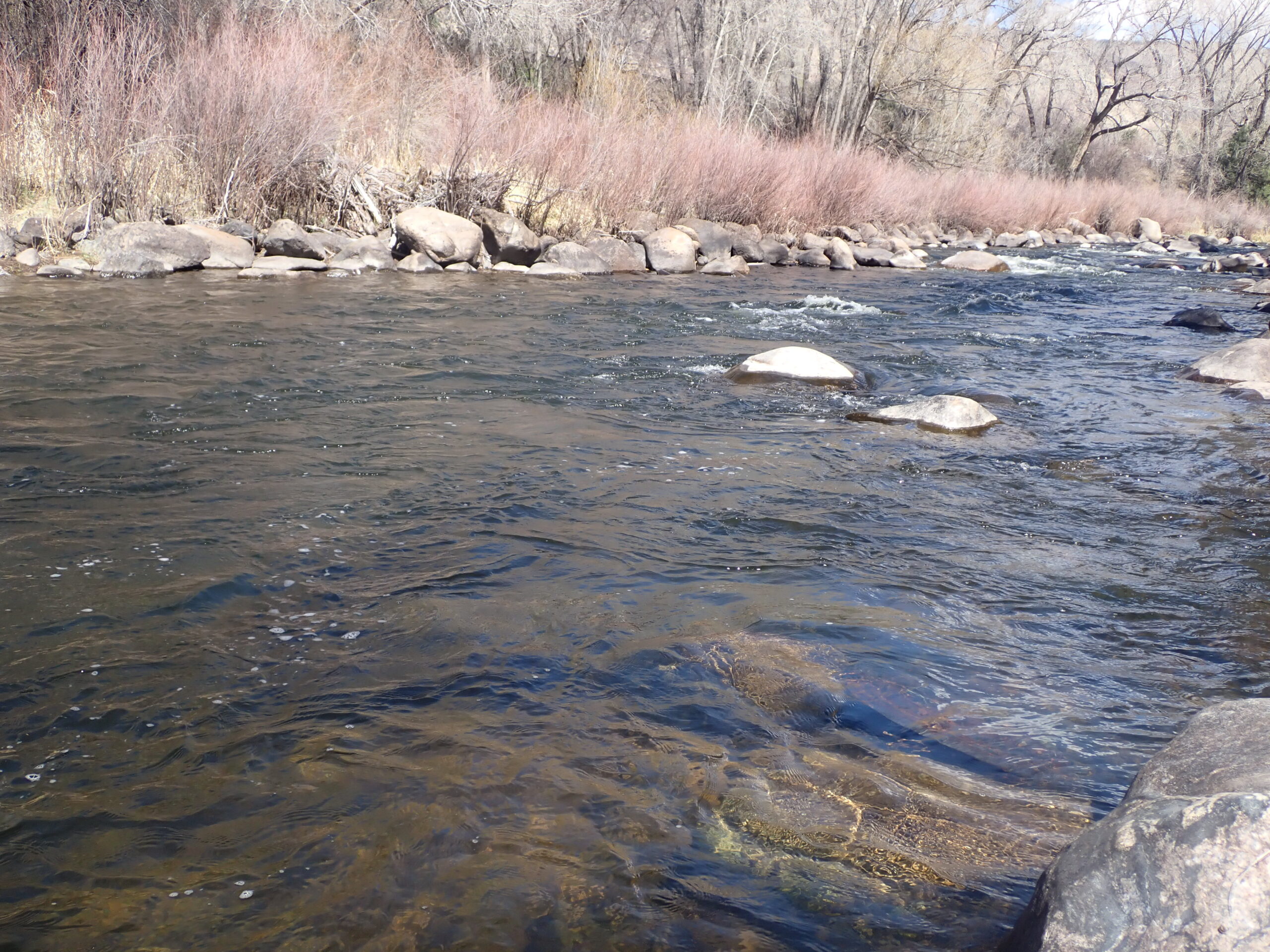
Productive Spot

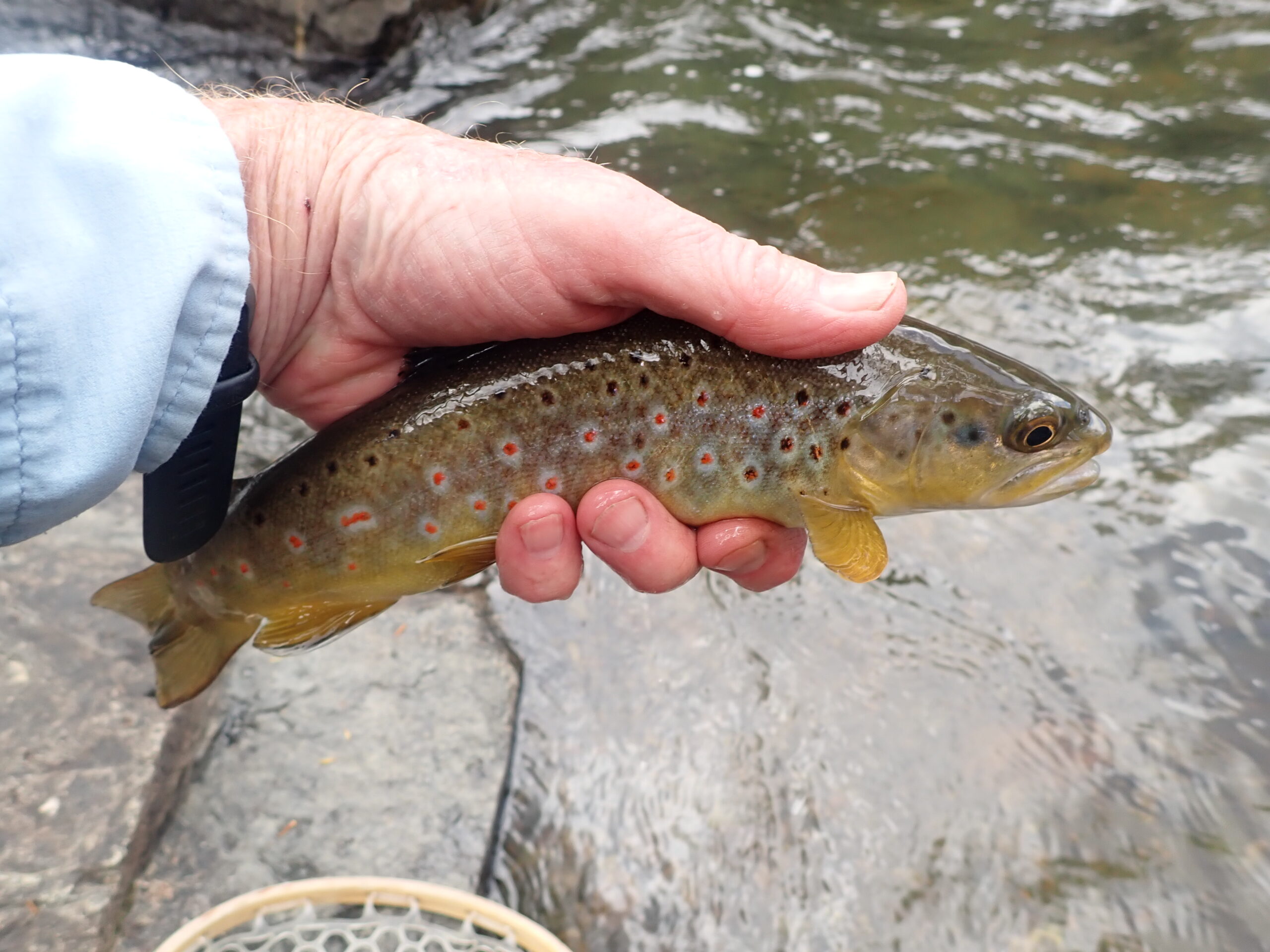
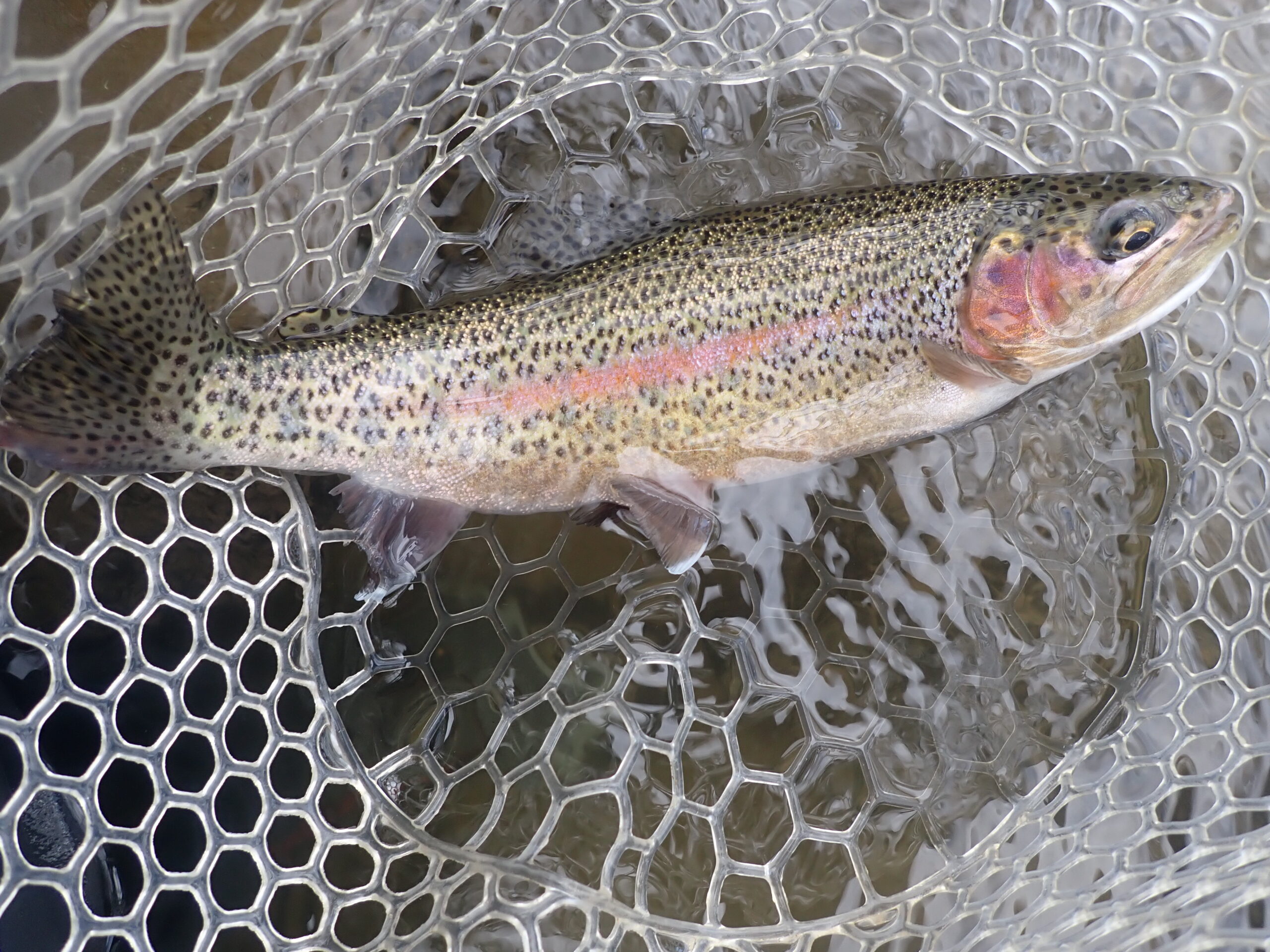
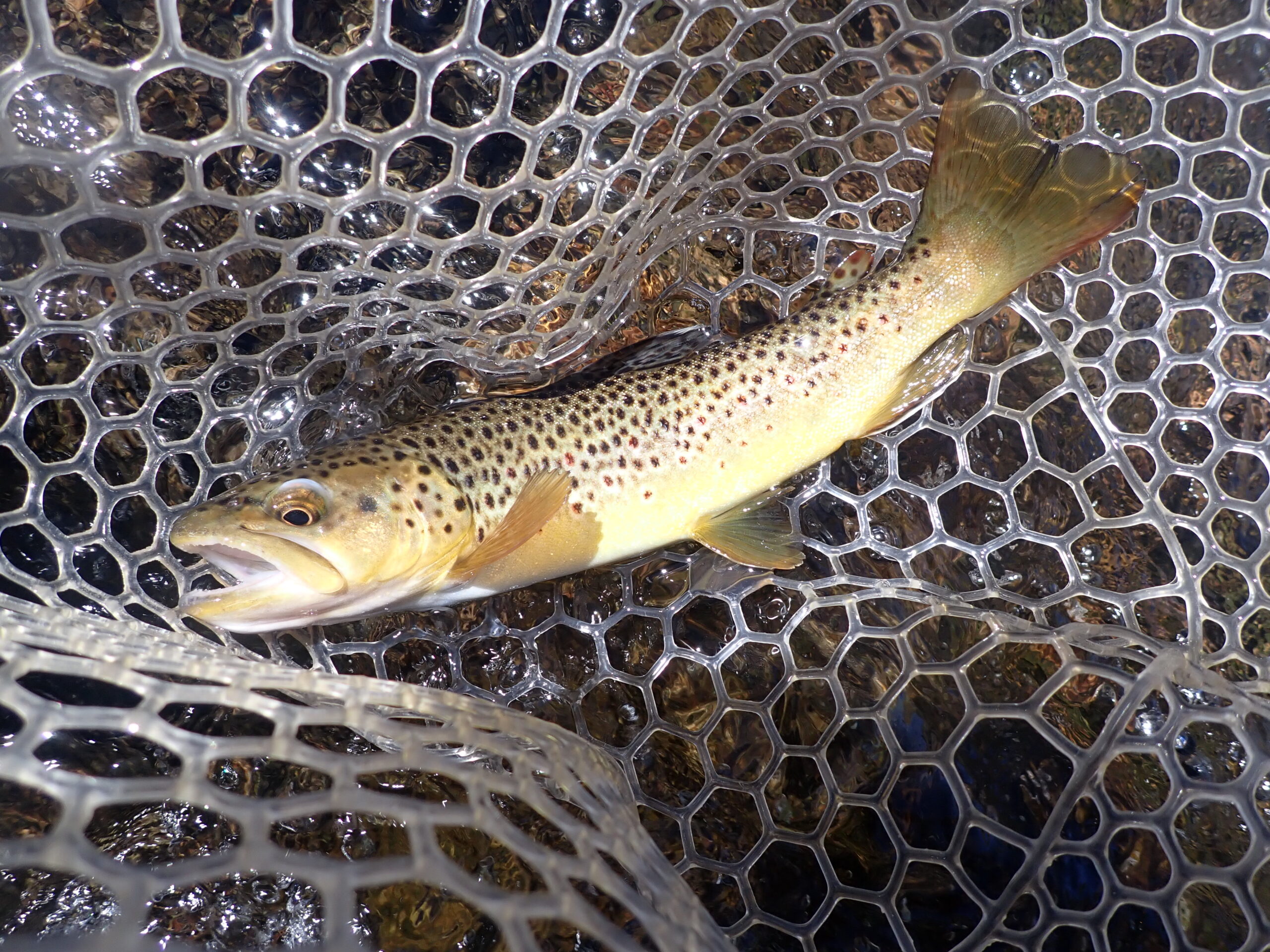
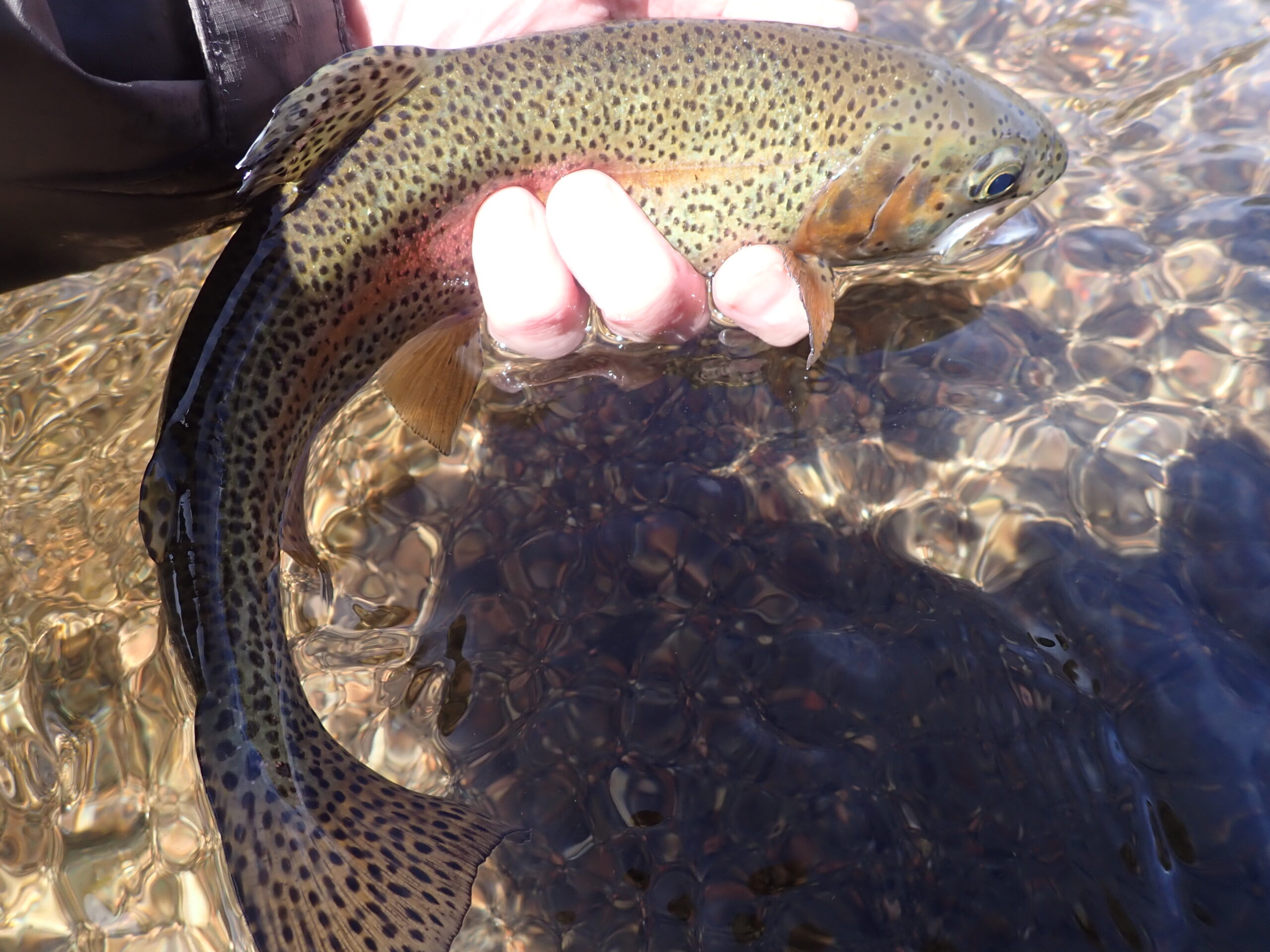
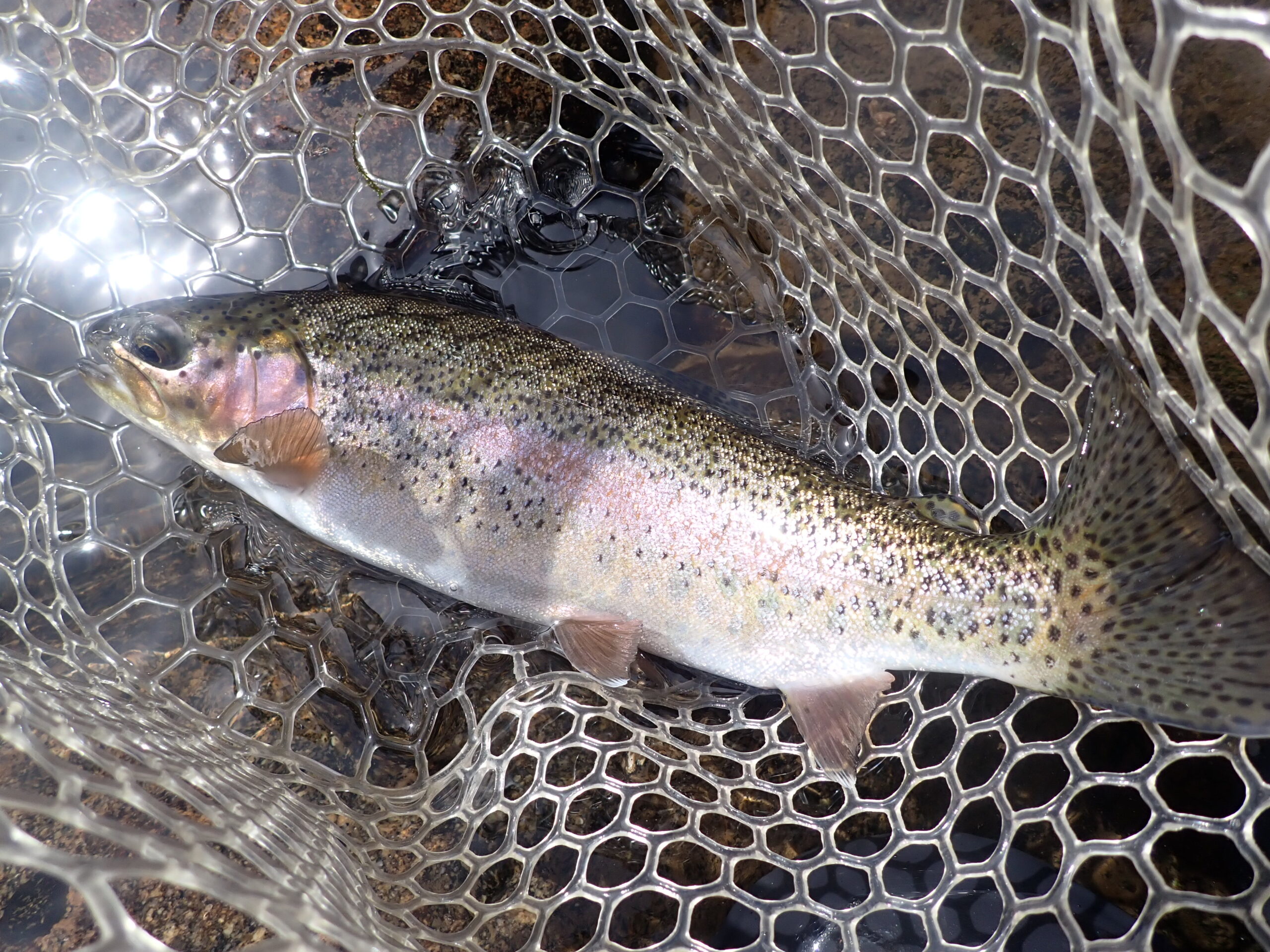
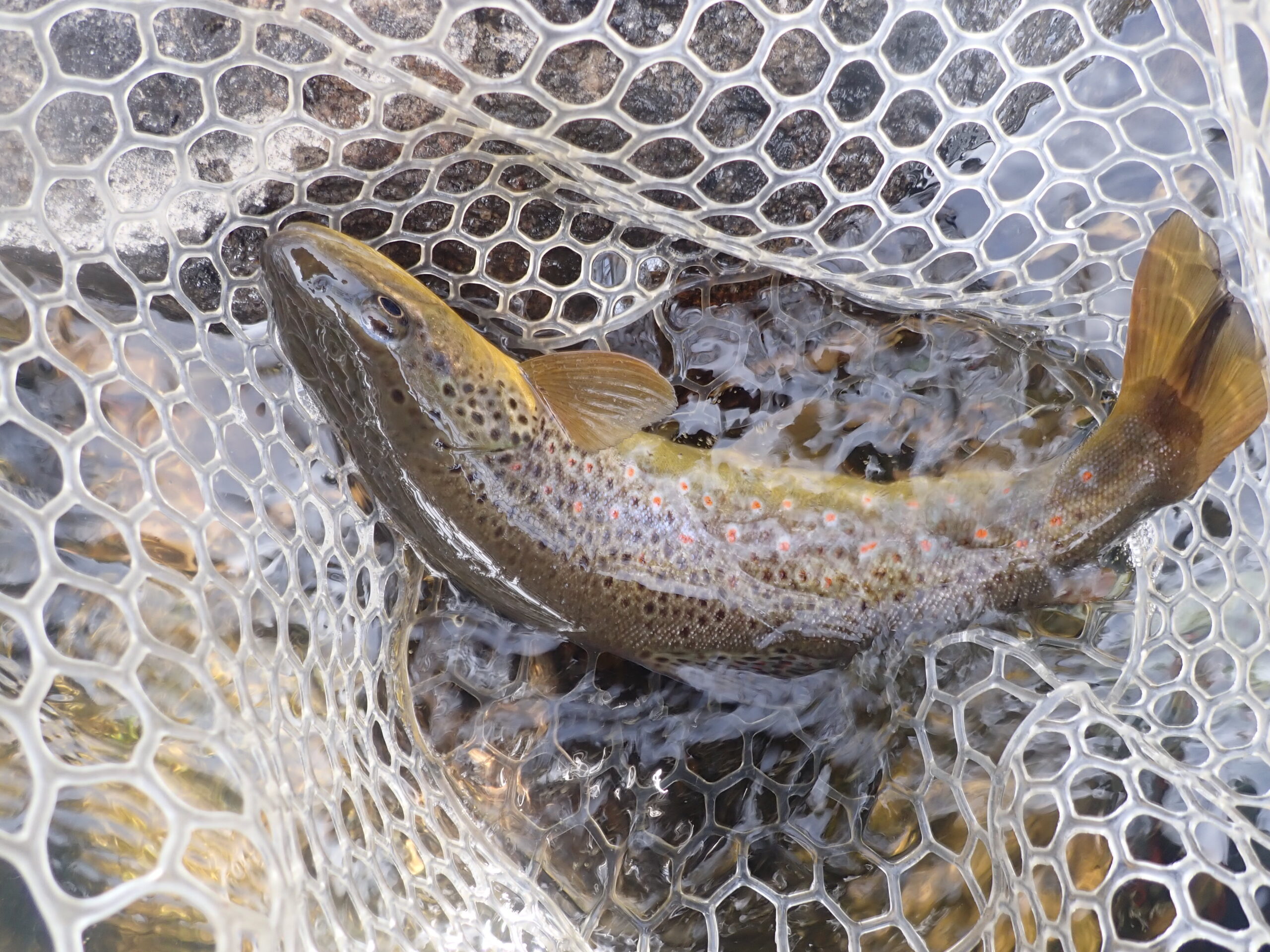
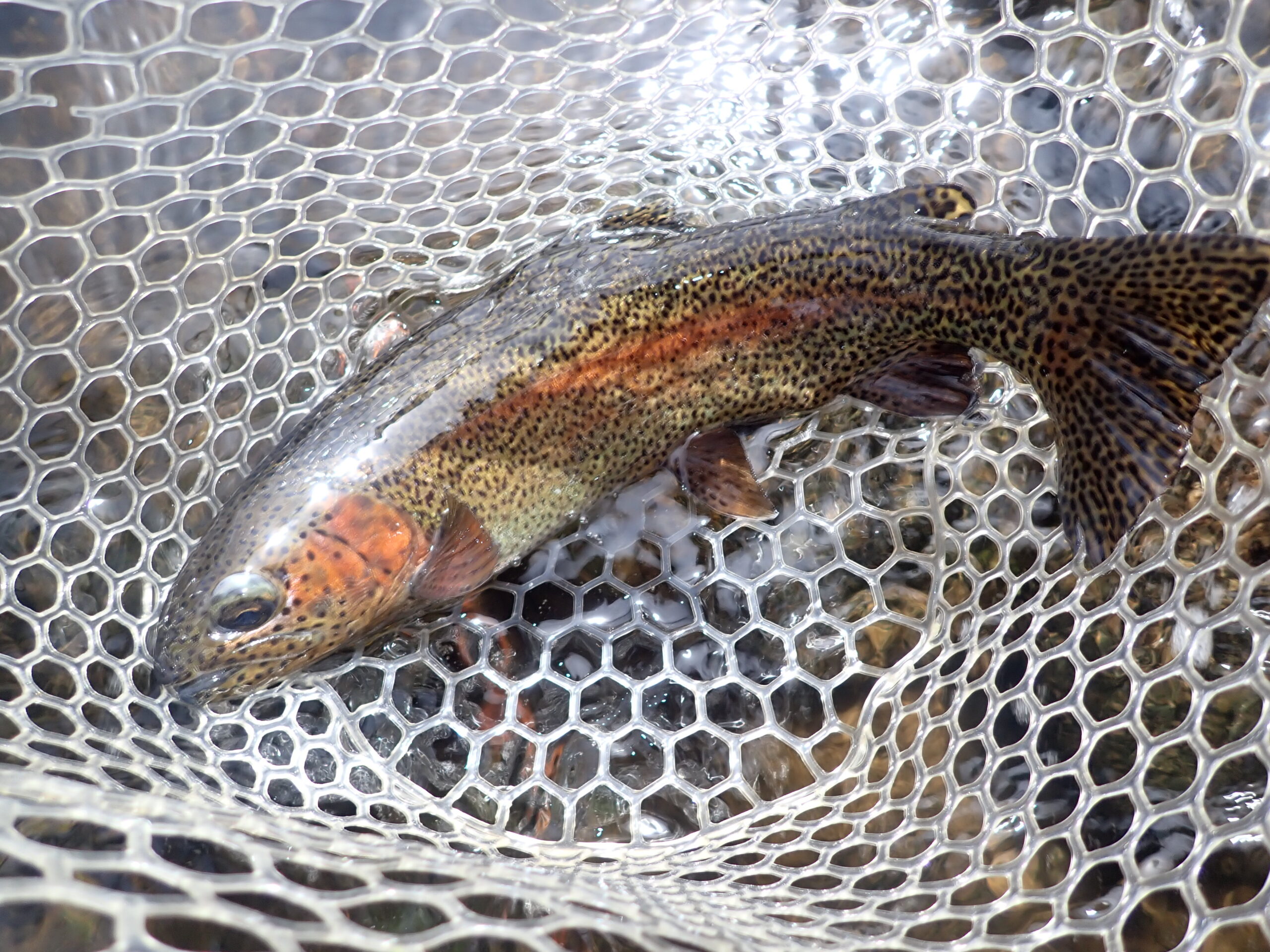
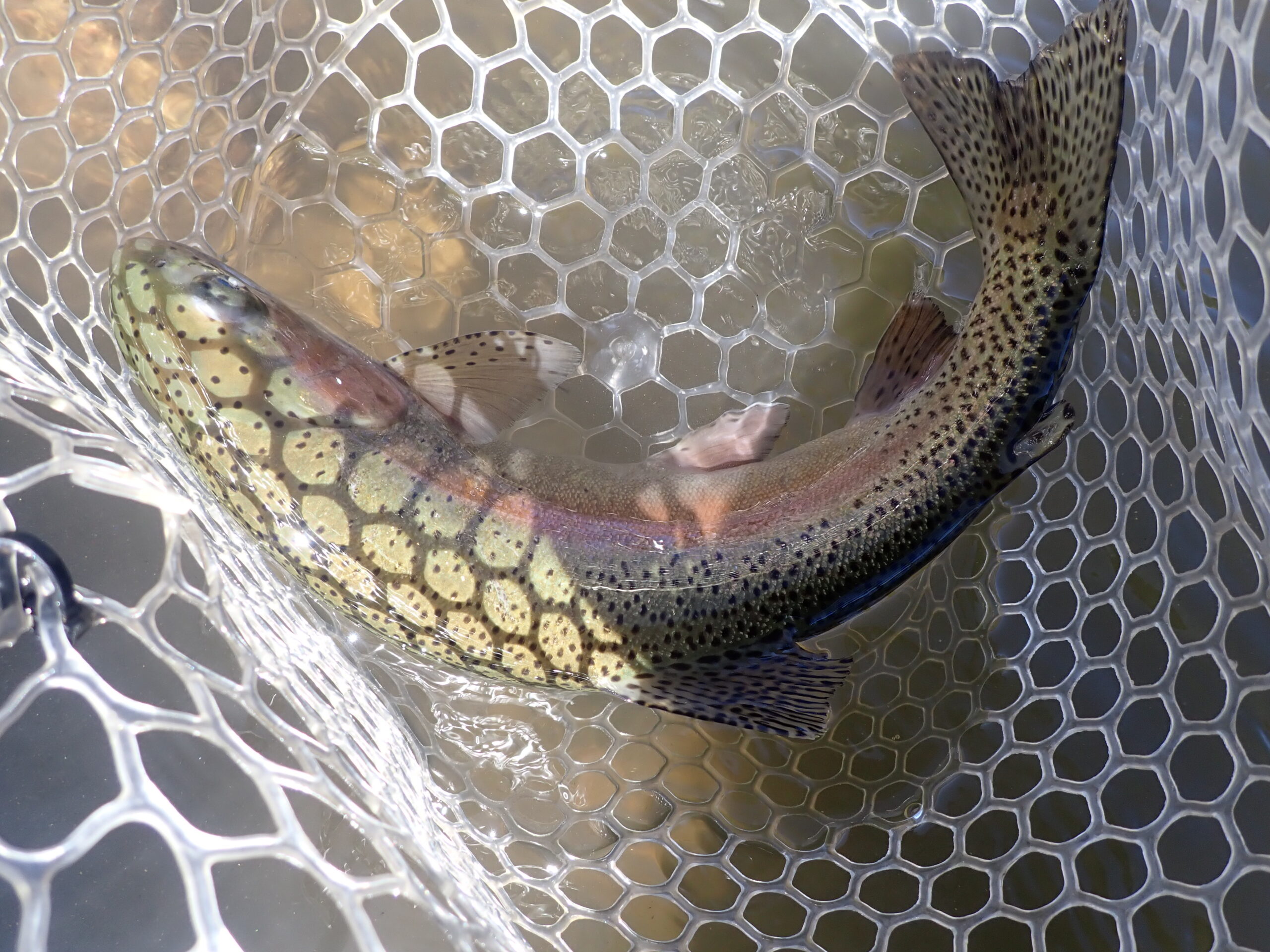
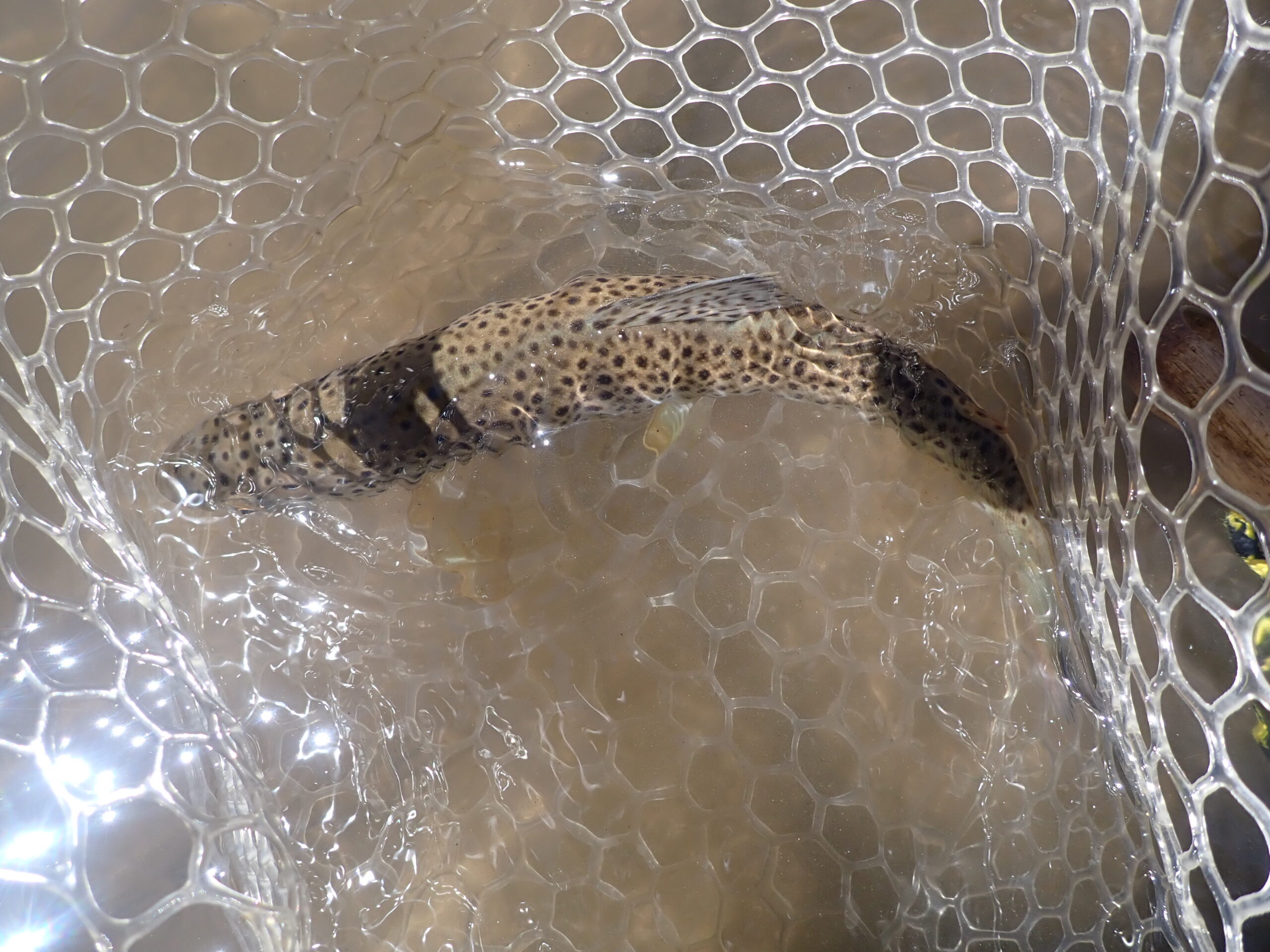
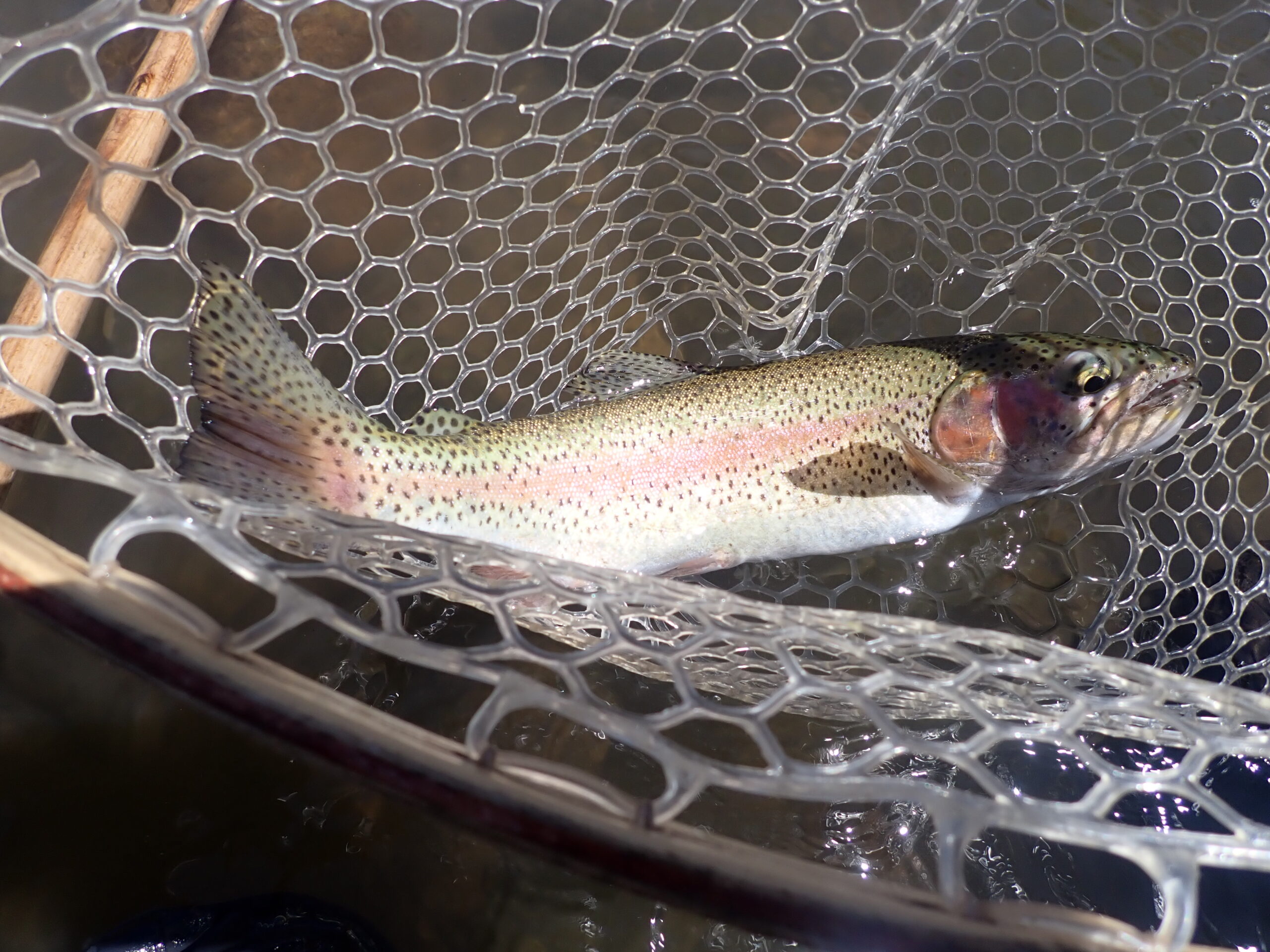
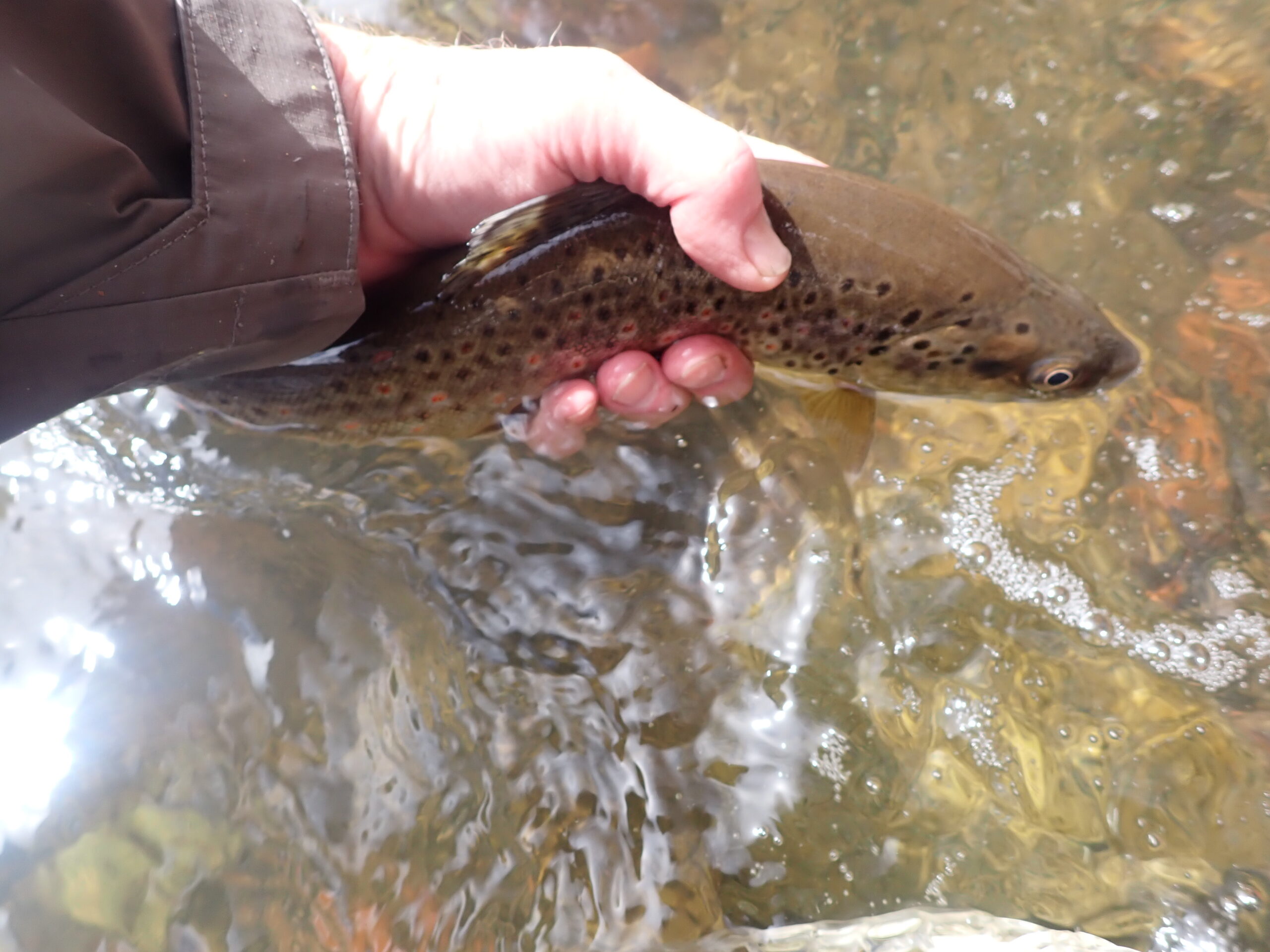
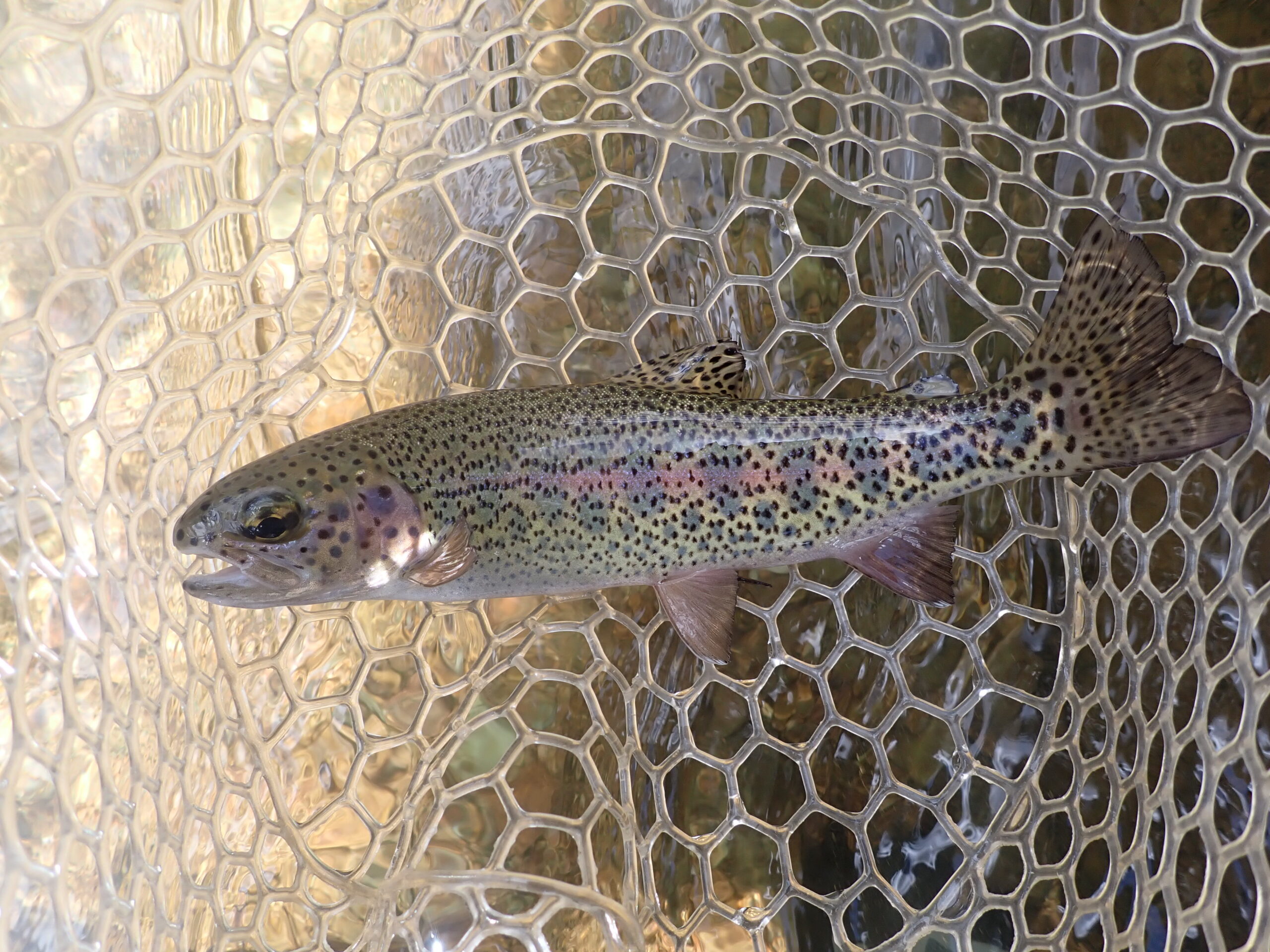
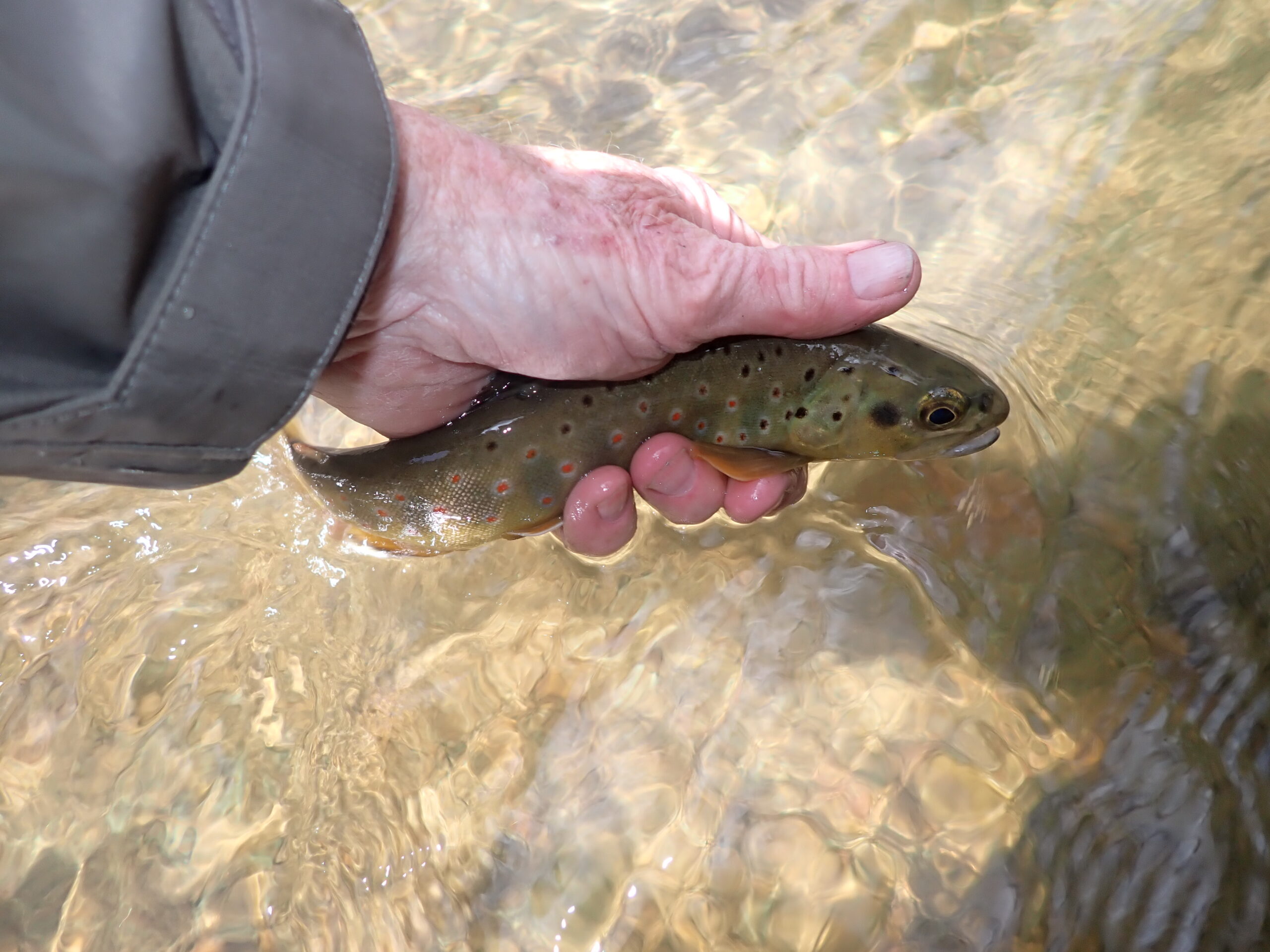
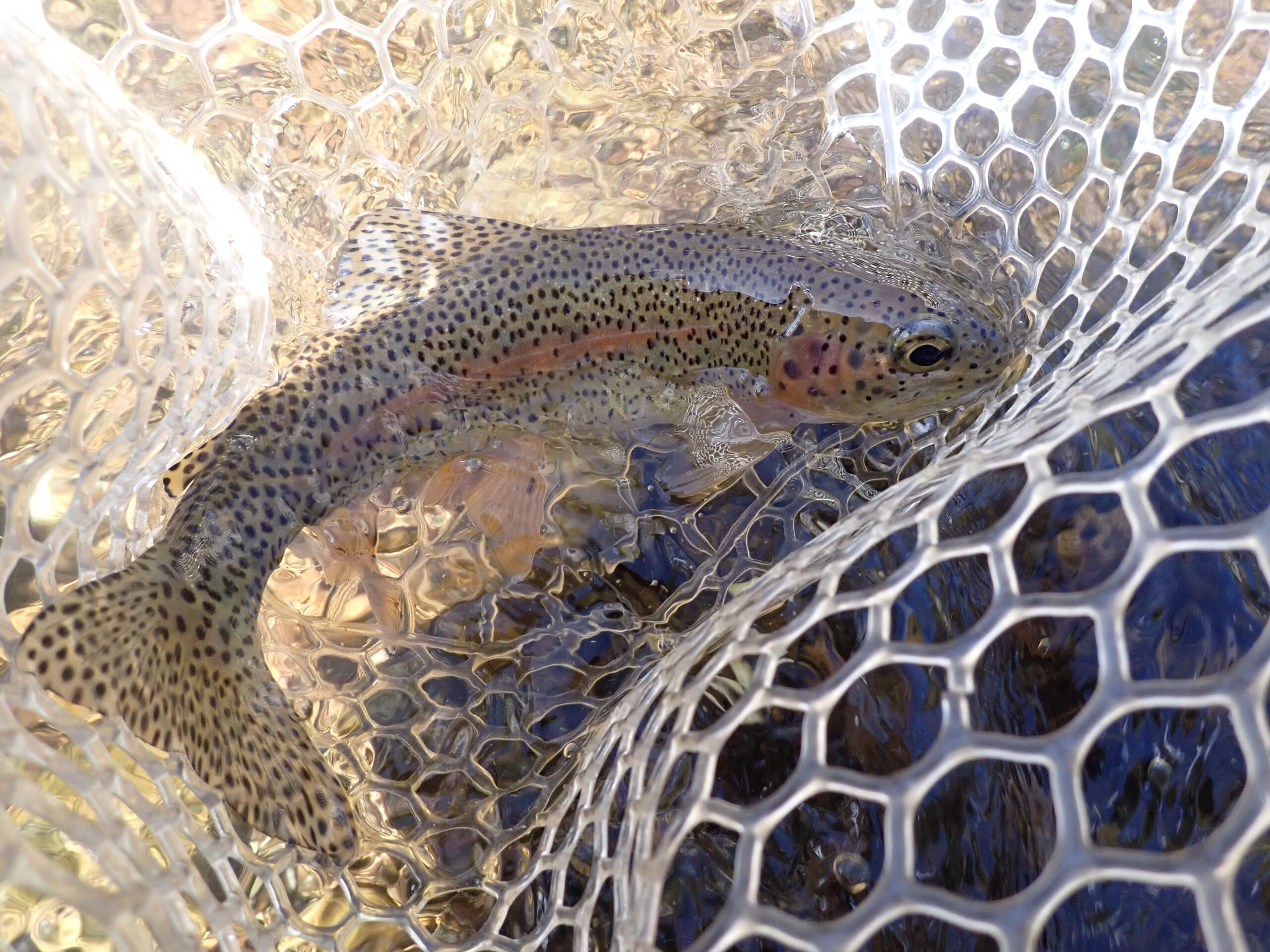
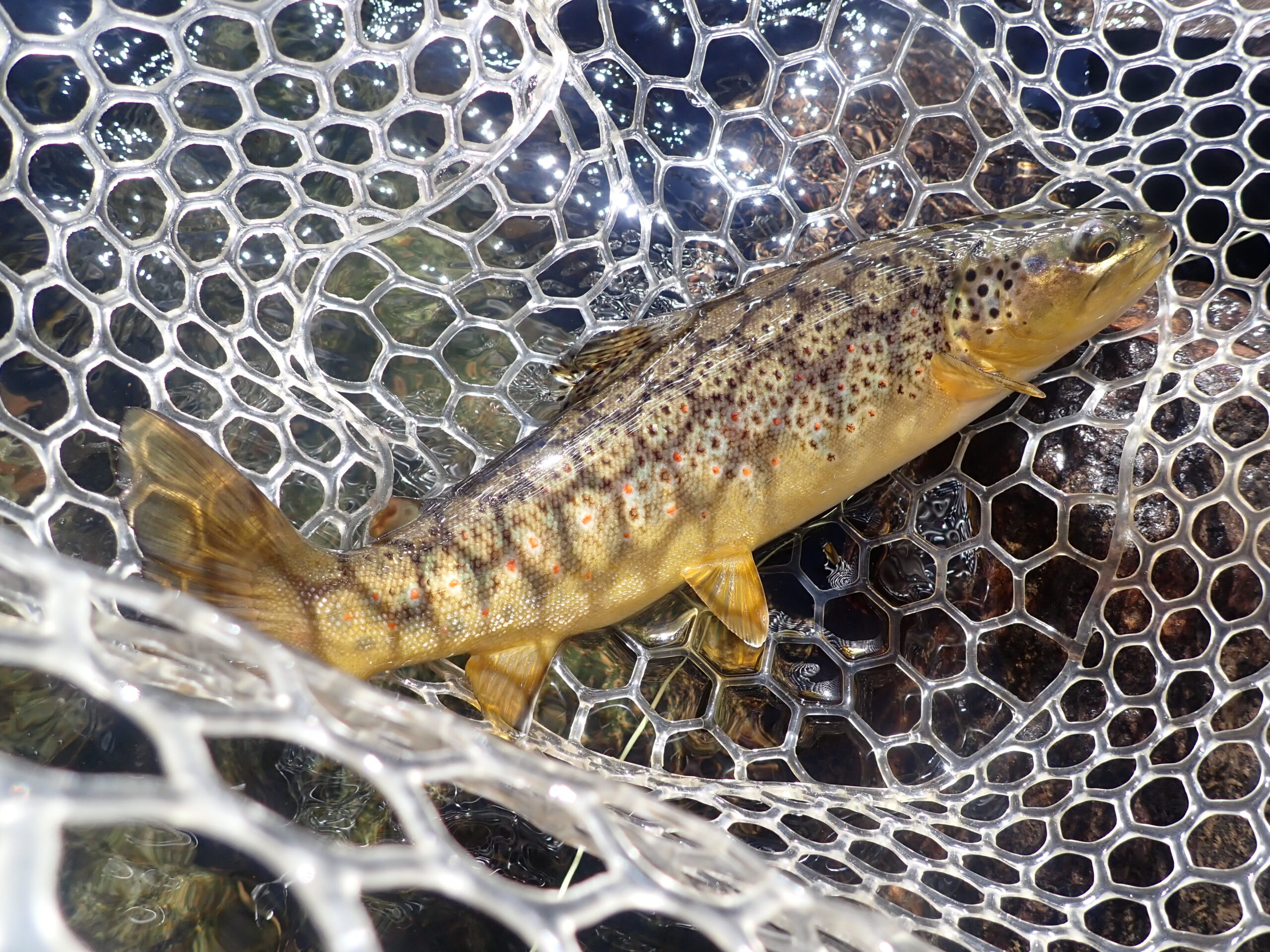
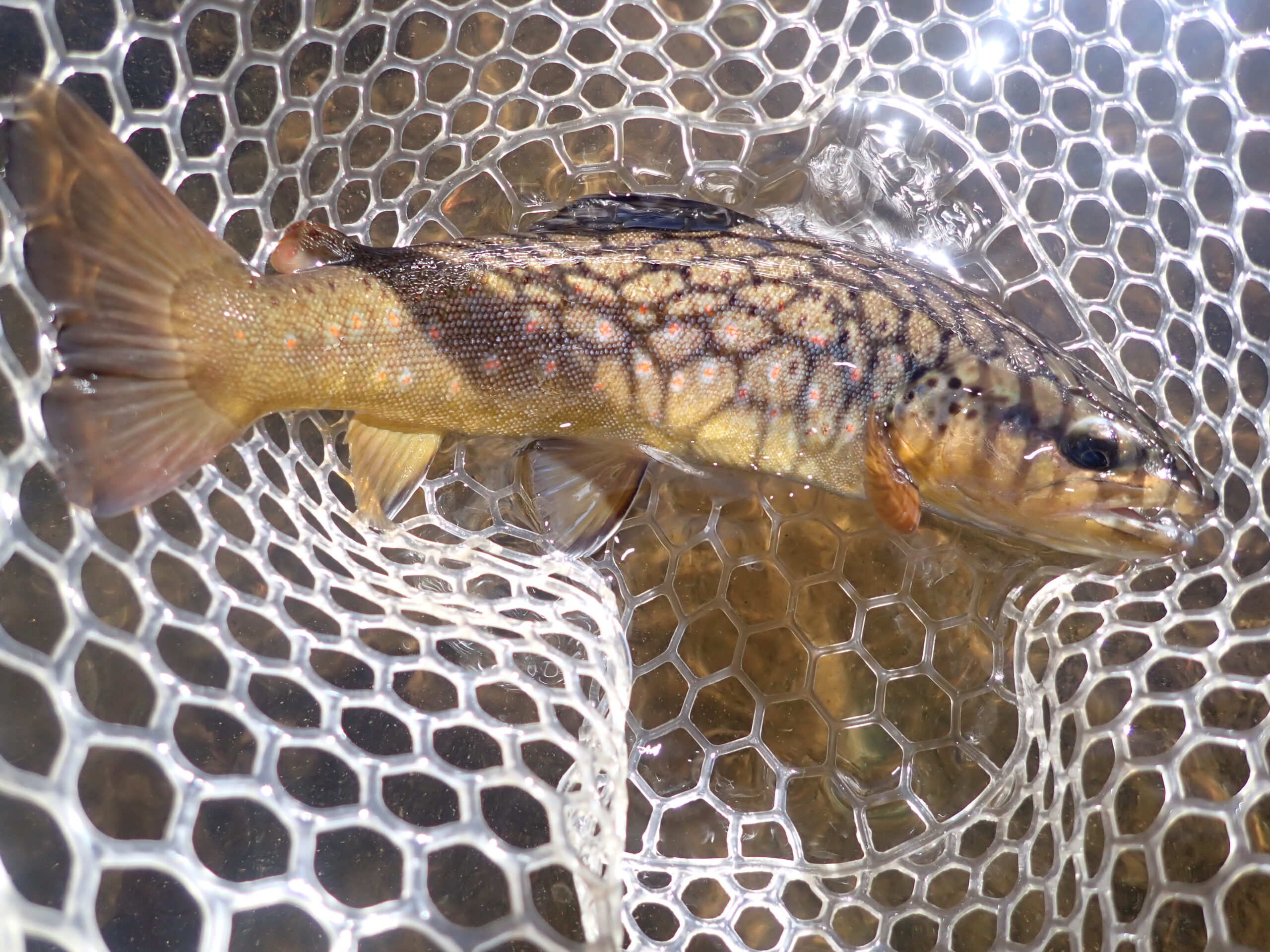
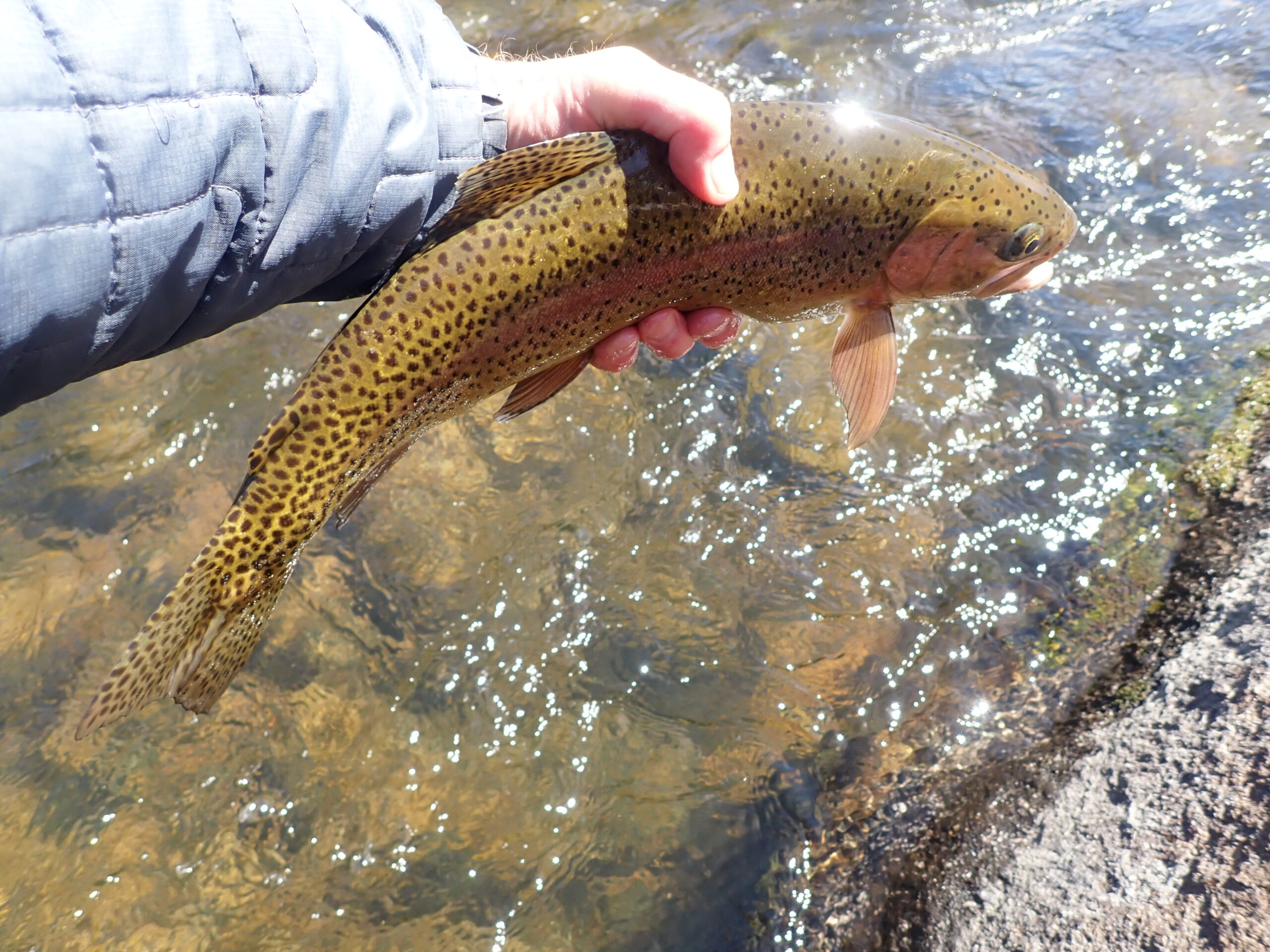
I fished around a large bend in the stream and continued into a canyon stretch. I was hoping that the canyon was not as easily accessed by anglers, as it required more rock hopping  and difficult wading, and I did manage to land four small trout, but it was not close to the unpressured bonanza that I envisioned. On the day, three of the landed fish were brown trout and three were rainbows. In the last hour I connected with two or three fish that felt slightly larger, when the flies began to swing at the tail of the run or pool, but in every case I only felt the weight of the fish for an instant.

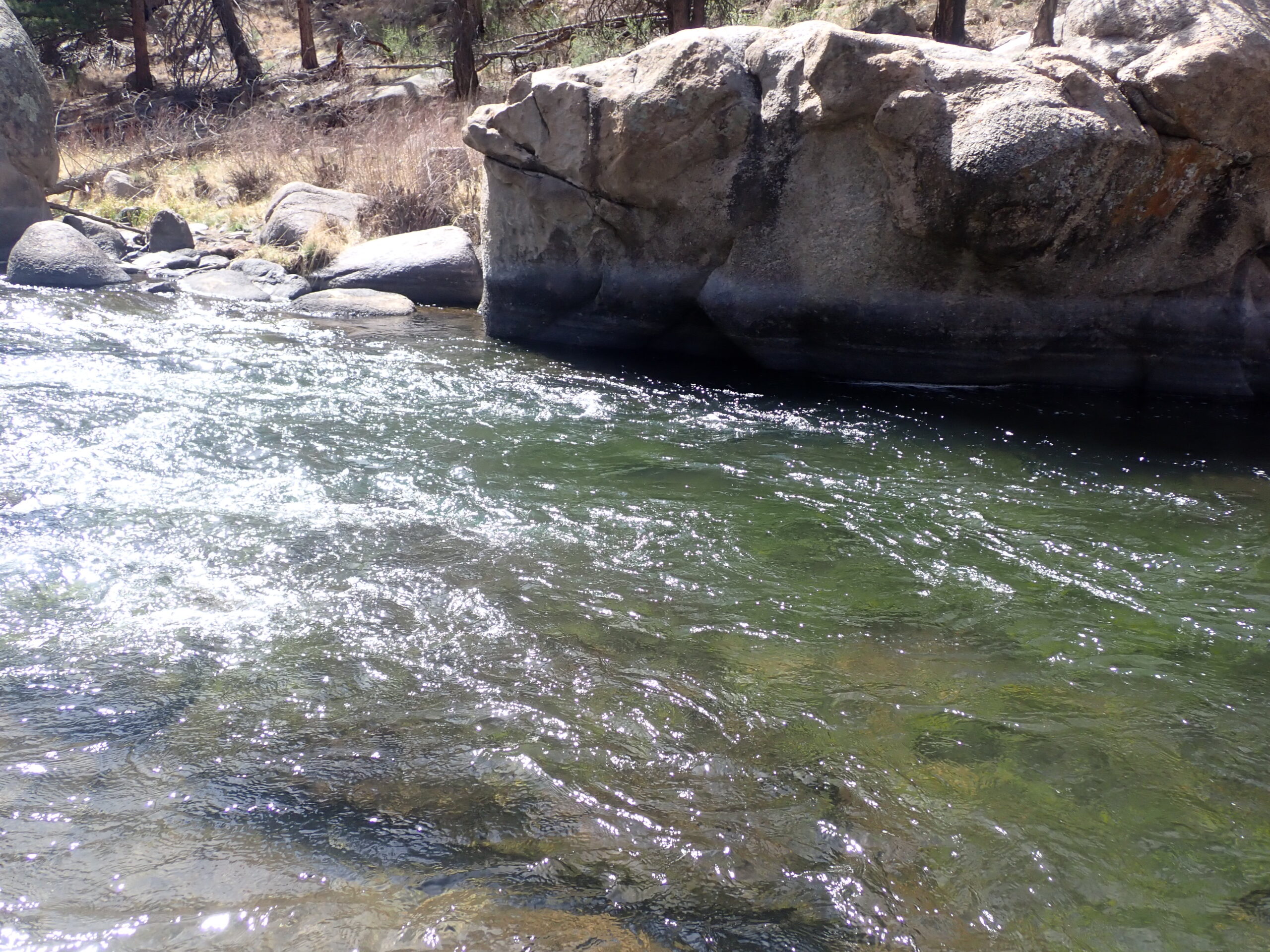
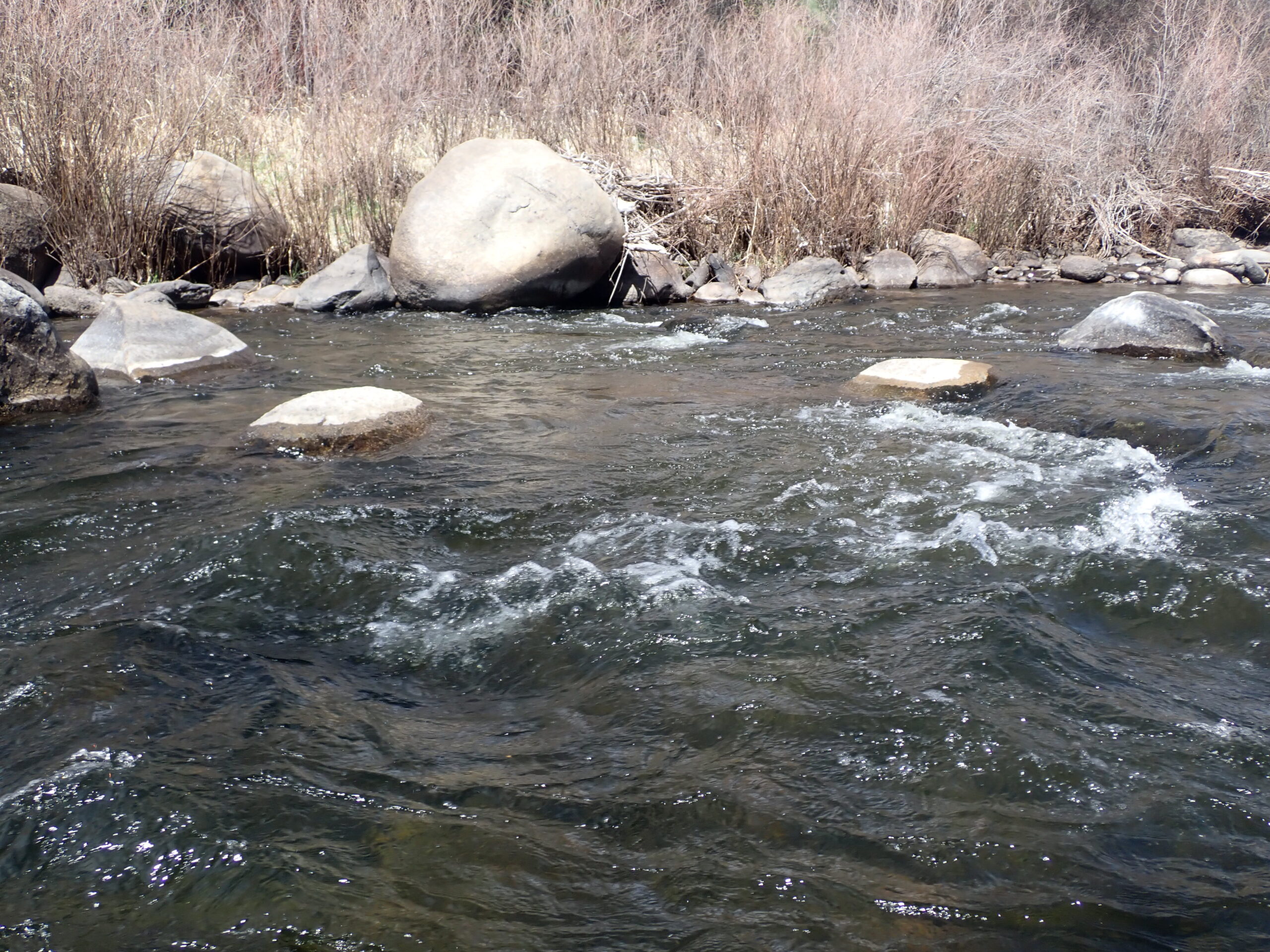
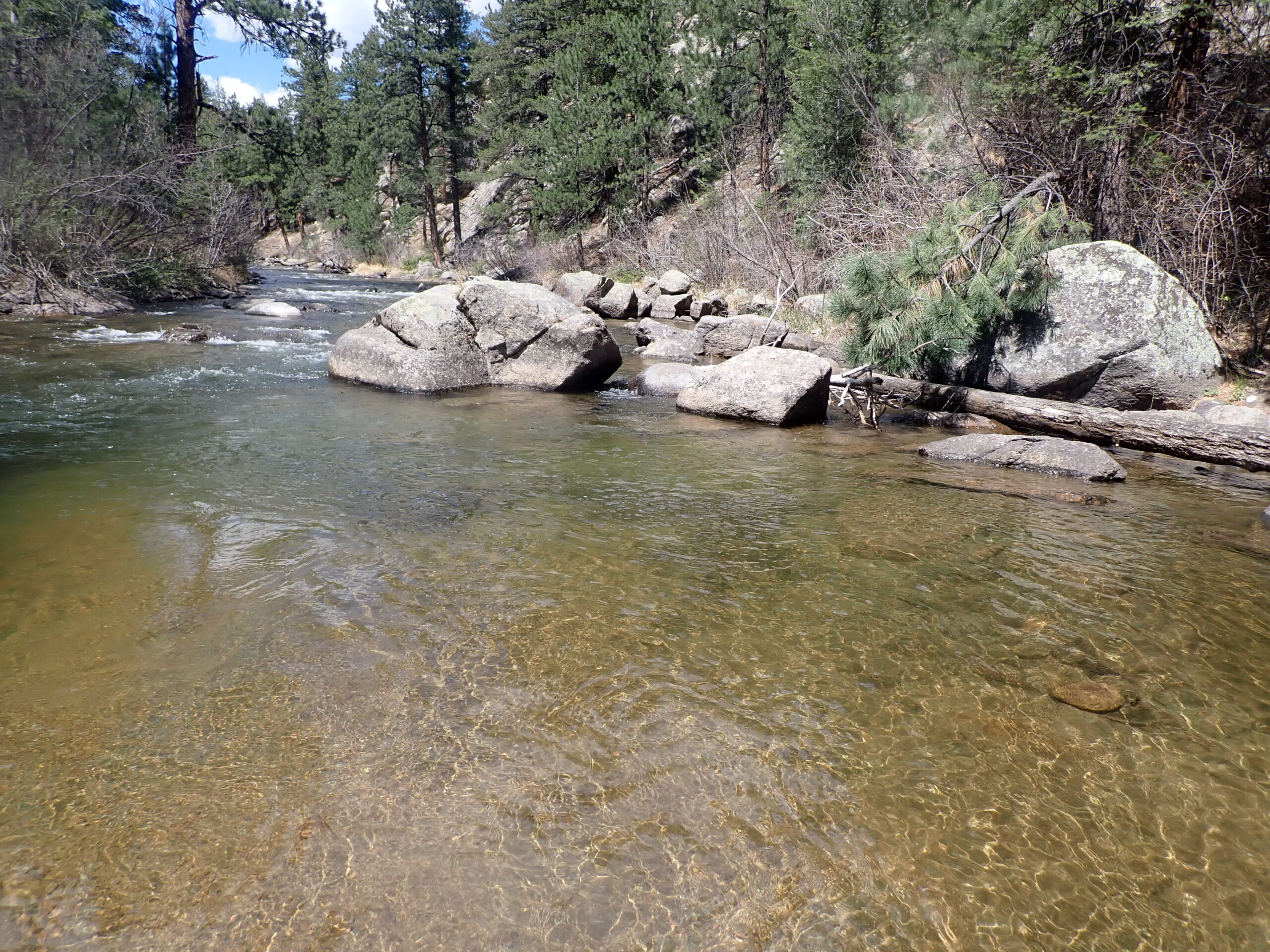
Foam Pool

Tuesday was a bonus day for this fair weather angler, but it probably convinced we to refocus my efforts on stocking my fly boxes for 2026.

Fish Landed: 6