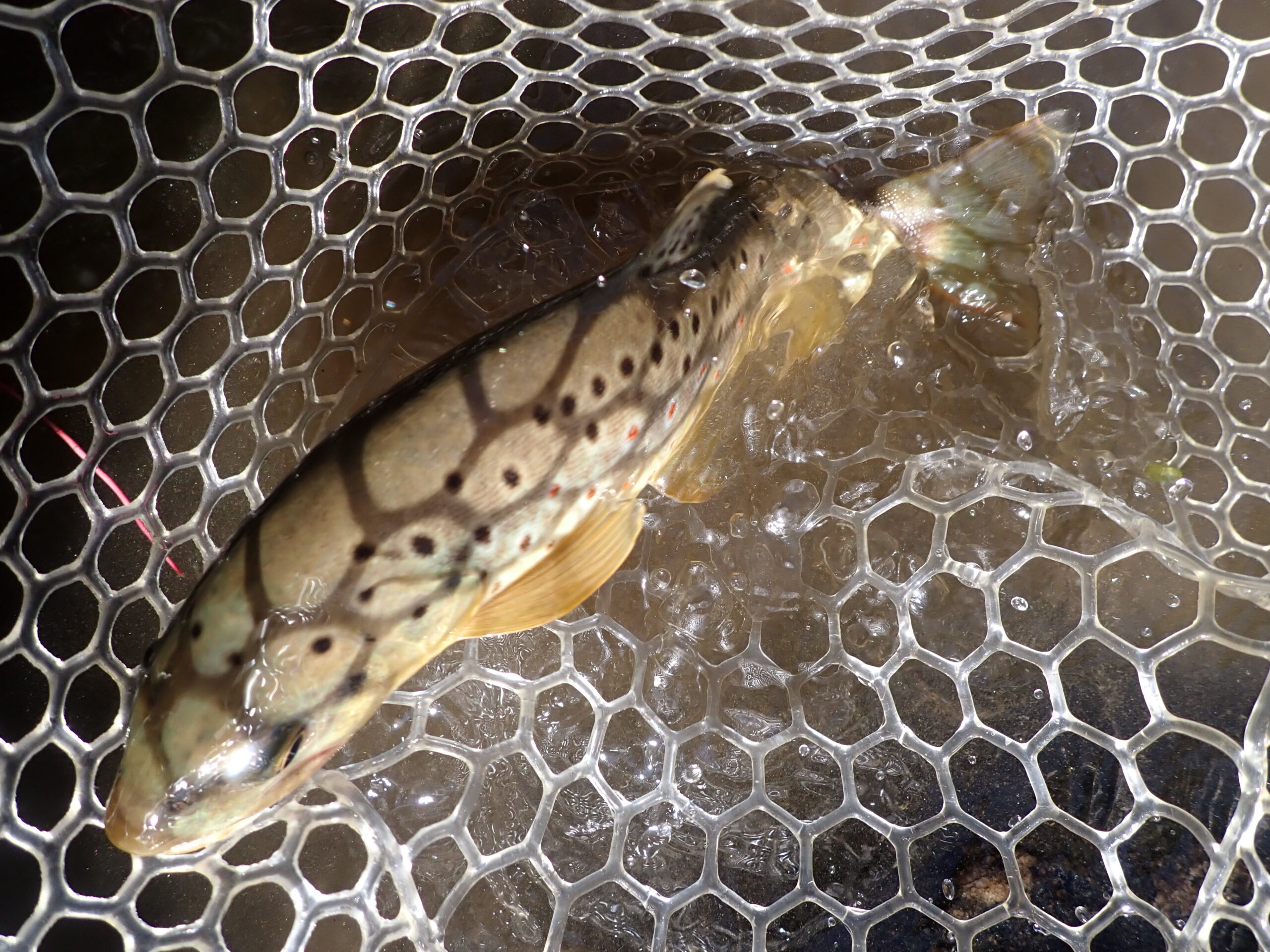
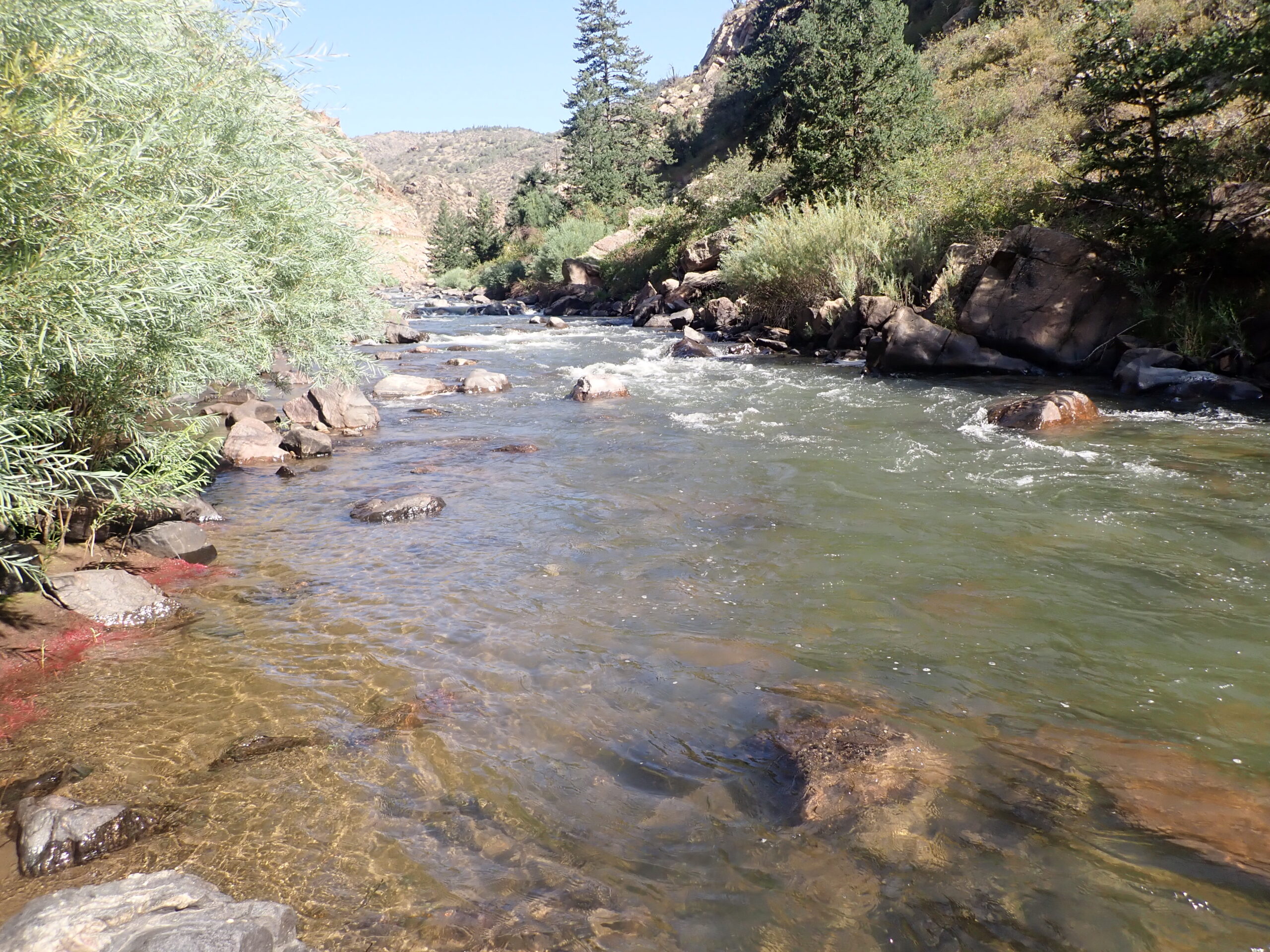
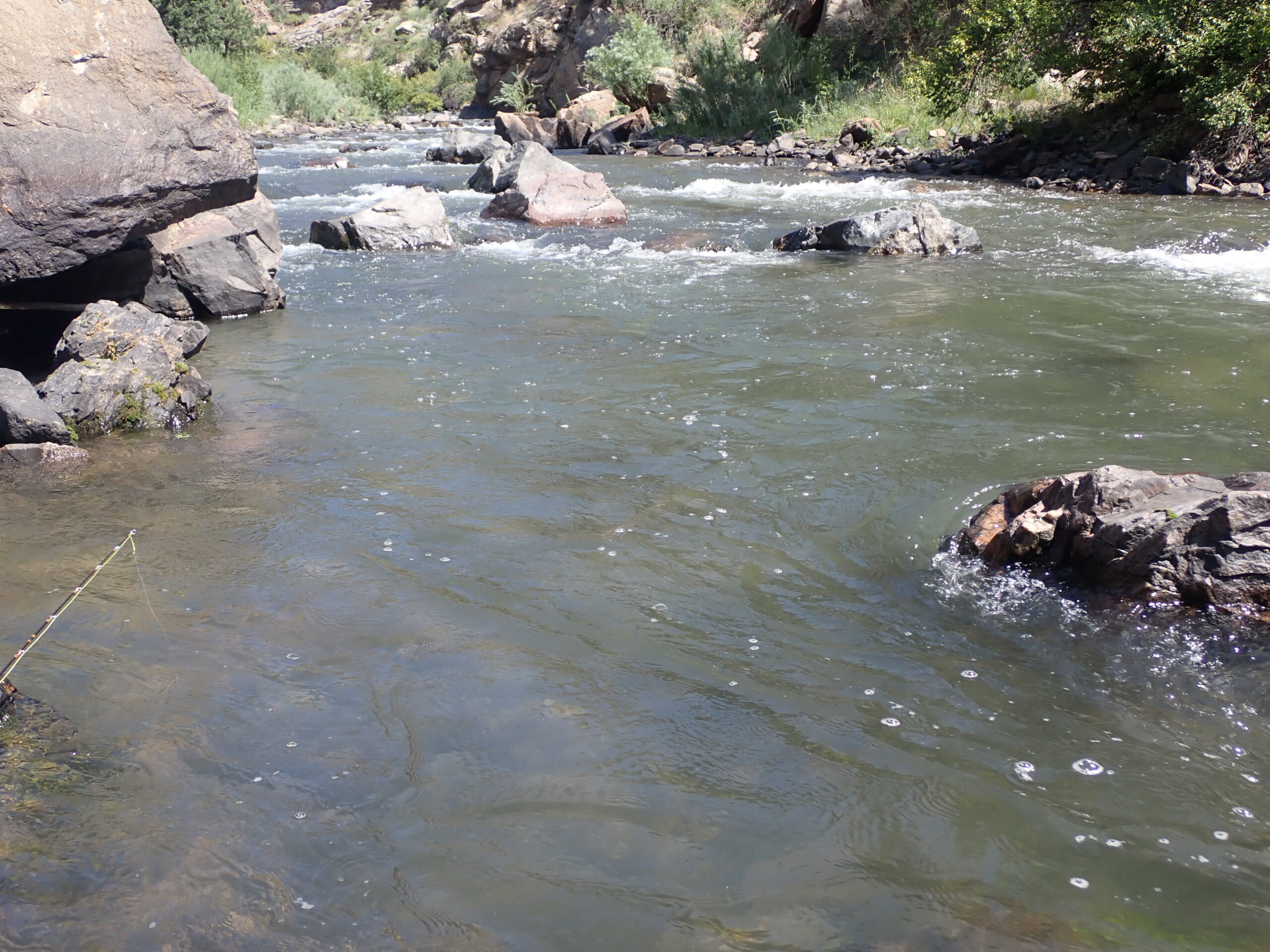
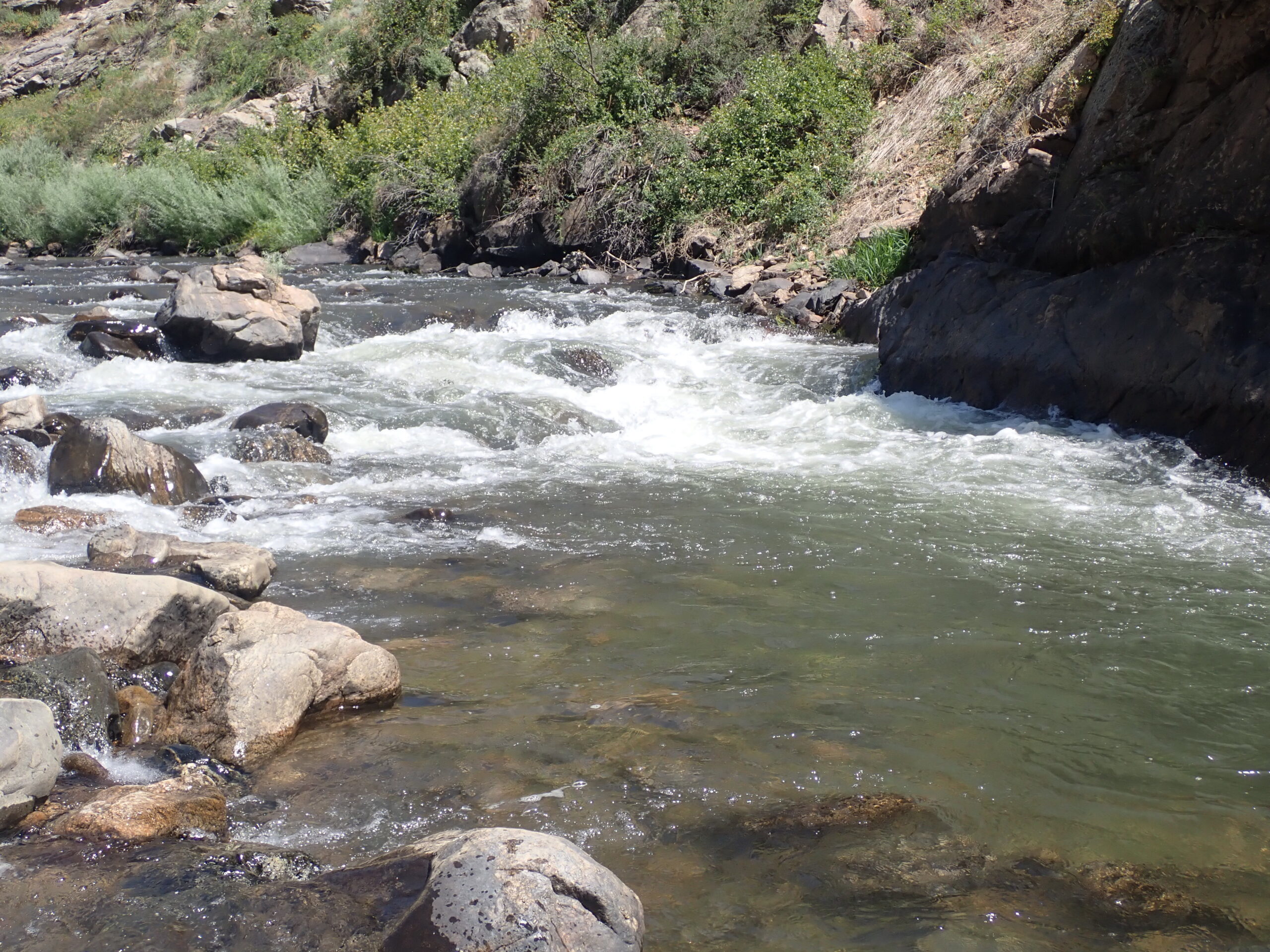
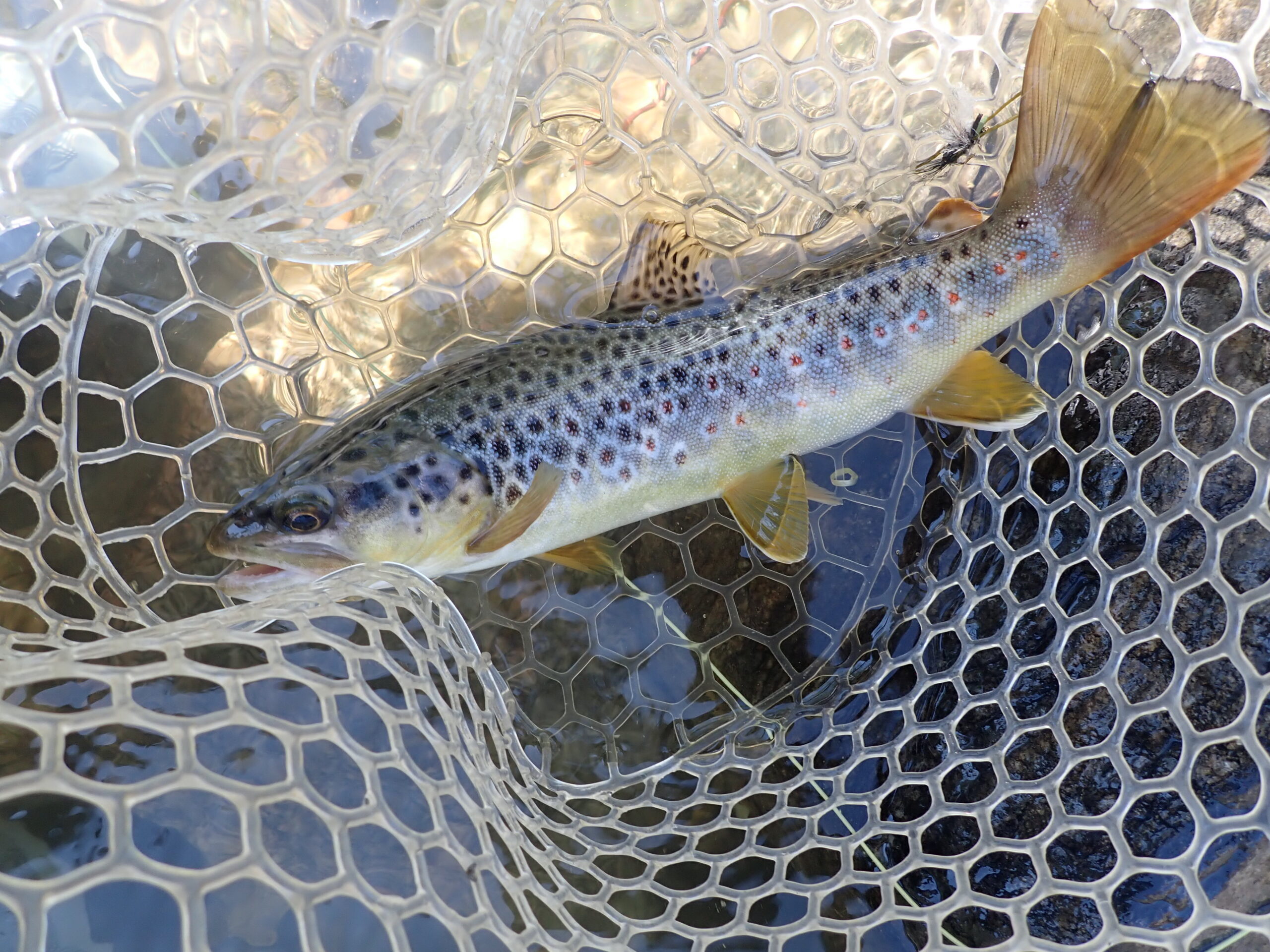
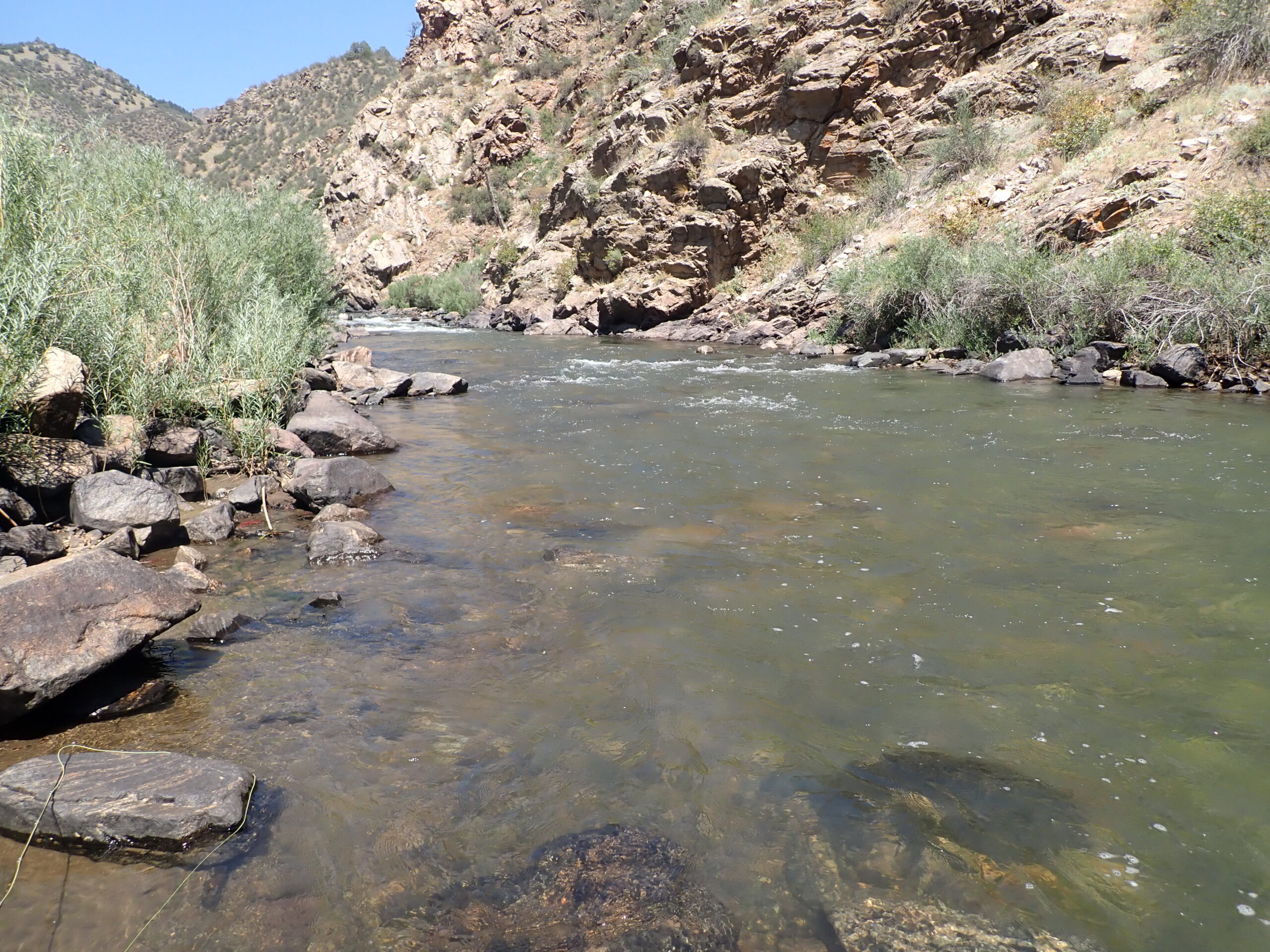
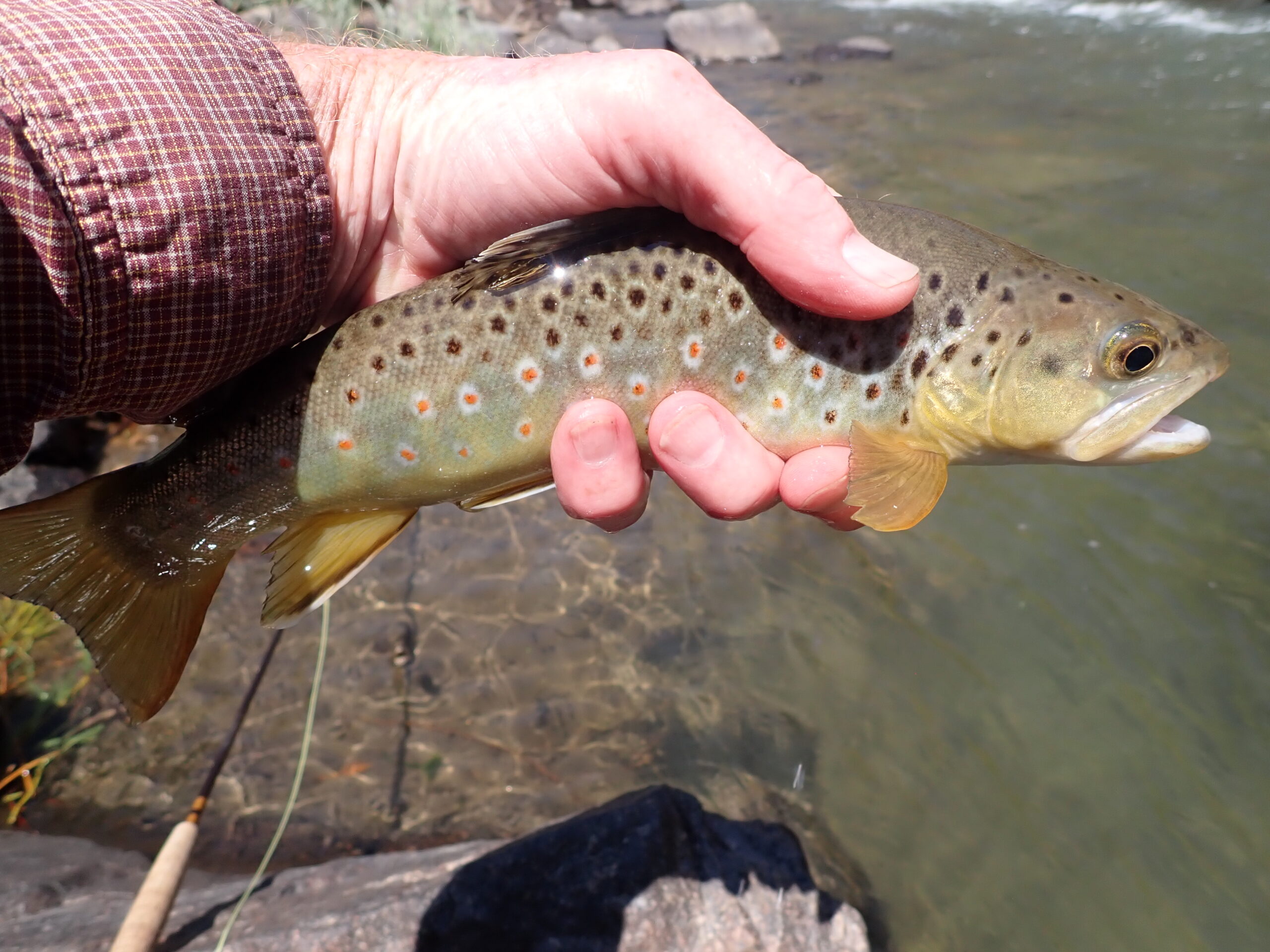
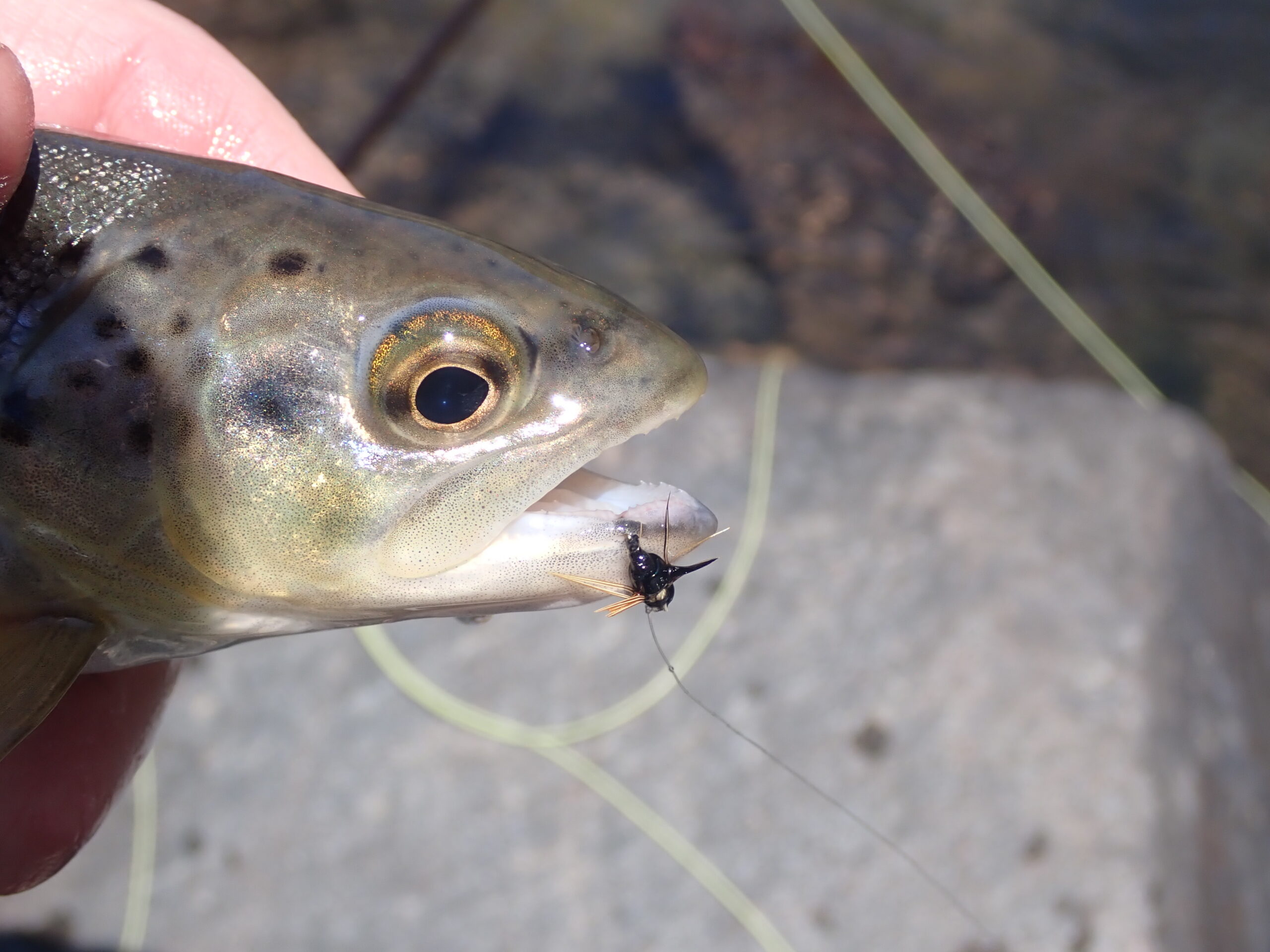
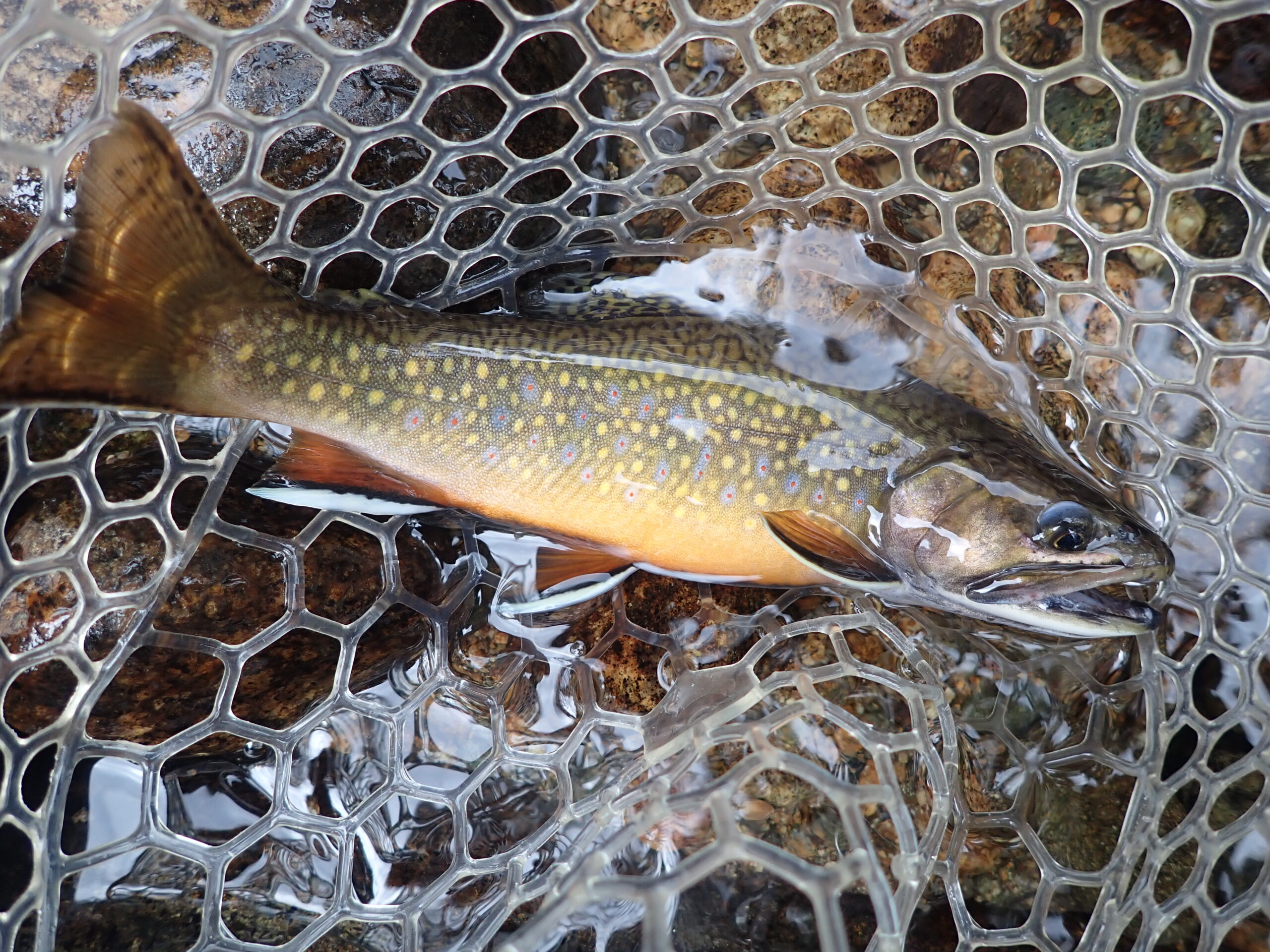
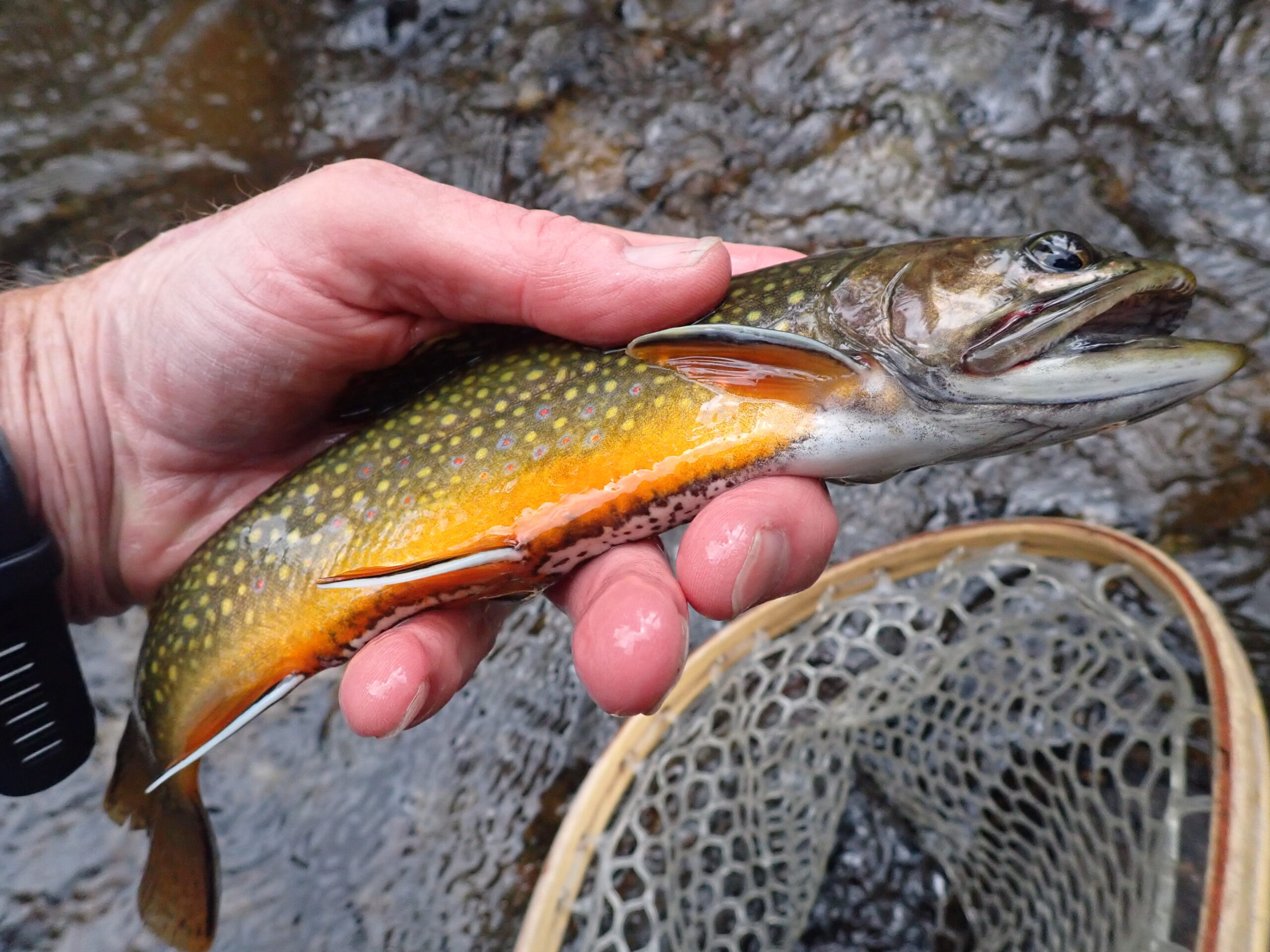
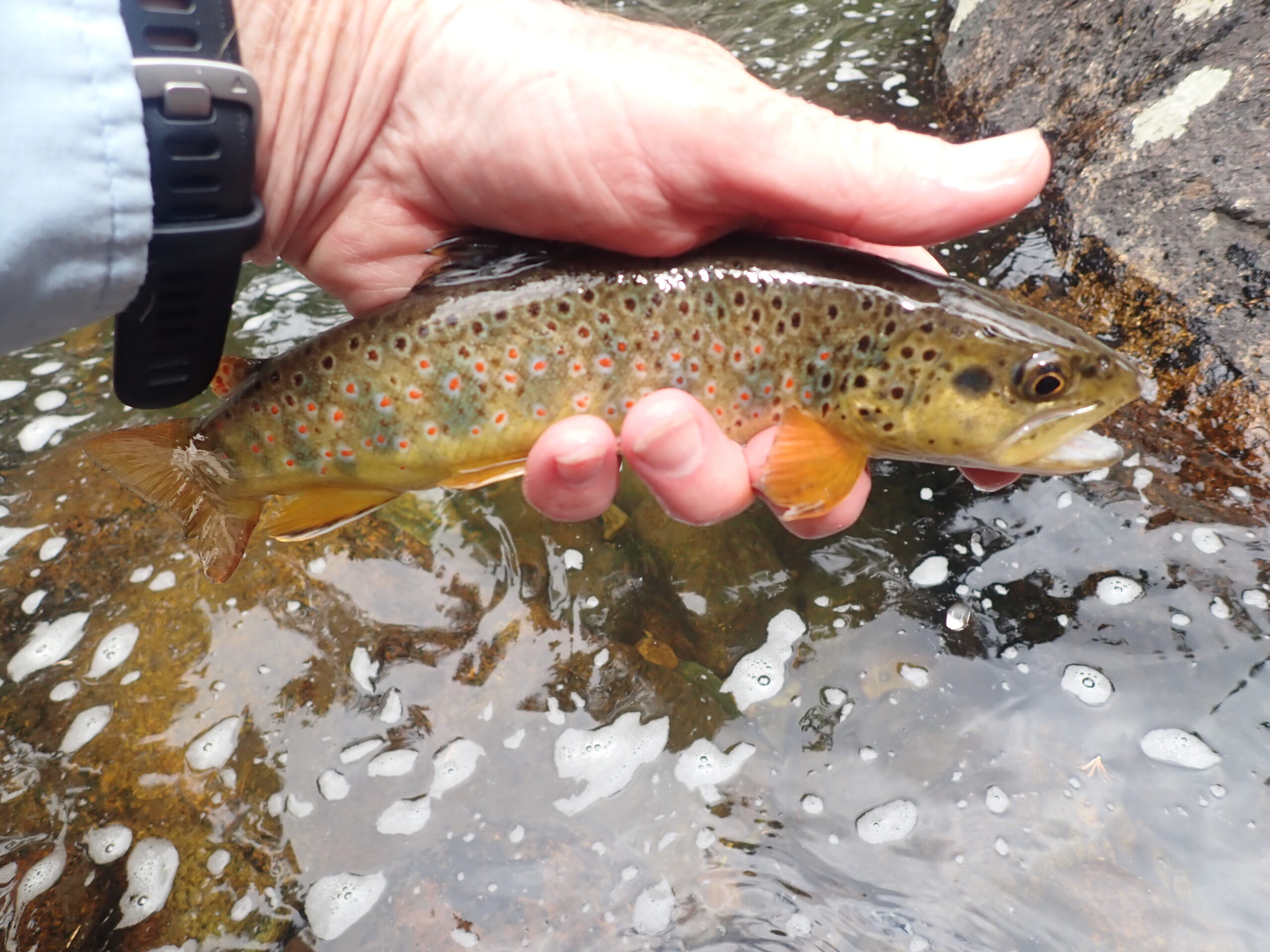
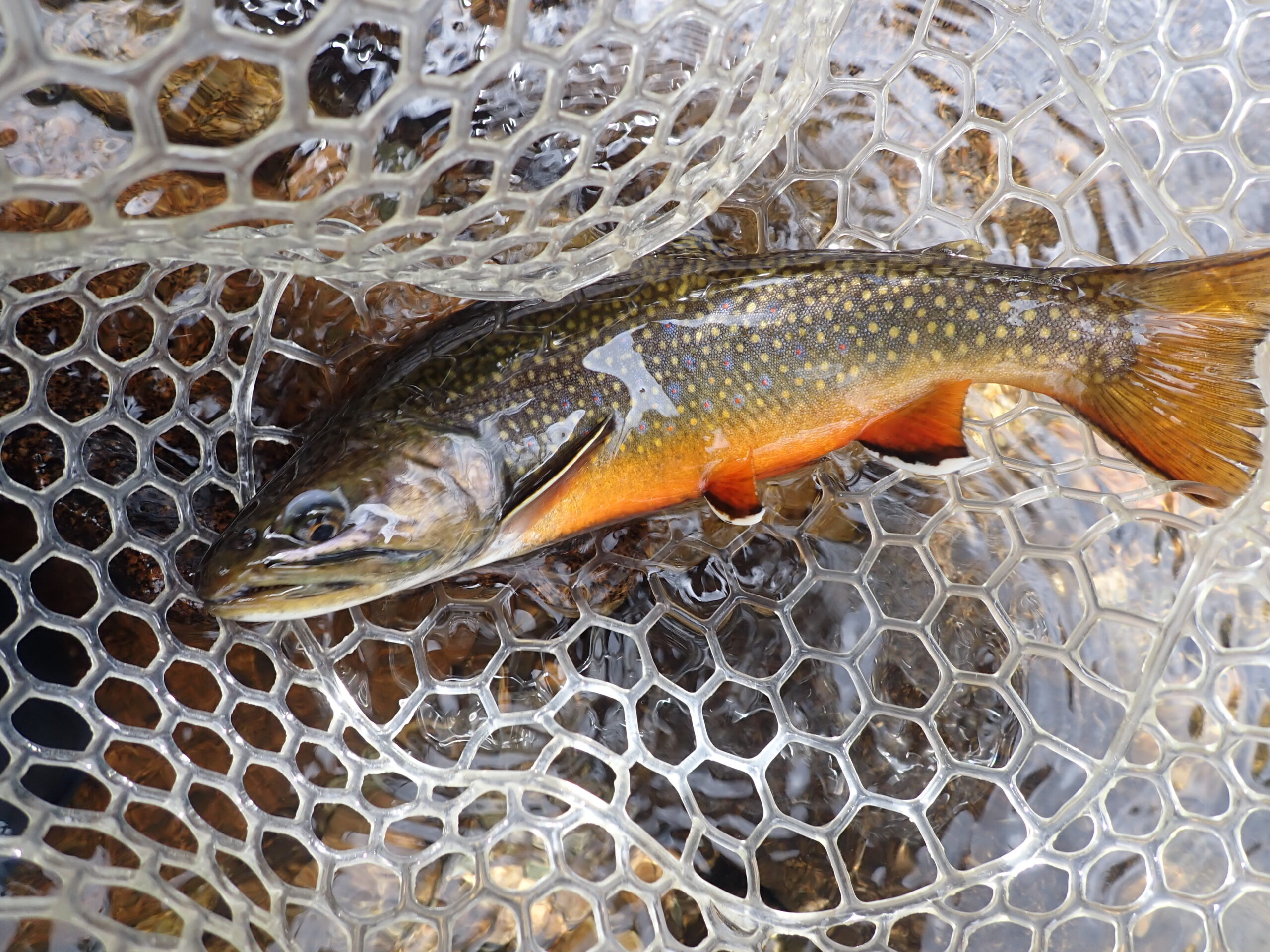
Author Archives: wellerfish

South Platte River – 03/13/2026

South Platte River 03/13/2026 Photo Album

Two months in a row offering a Friday the 13th is a rare occurrence. Is the number thirteen lucky or unlucky? I tend to think it is bad luck, so was a day of fishing a good idea? After experiencing a stellar opener on Monday on the Arkansas River, I was excited to give fly fishing another try.

The weather forecast was mostly auspicious with a high in Denver in the seventies. Unfortunately, the fly fisherman’s four letter word, wind, was raising its ugly head. I checked out the weather in three possible destinations, and finally settled on the South Platte River in Eleven Mile Canyon. Why? The temperatures on the lower Arkansas were more favorable, but the wind was severe, and I knew from experience that wind in the wide open canyon running west to east was not something to confront. I briefly entertained the option of visiting the Eagle River, but the temperatures were in the low fifties, and wind was an existential factor there as well. Wind in Eleven Mile Canyon was expected to peak in the 14 – 16 MPH range, but I knew from previous trips that the river flows from north to south, and the canyon actually shelters the angler to some degree.

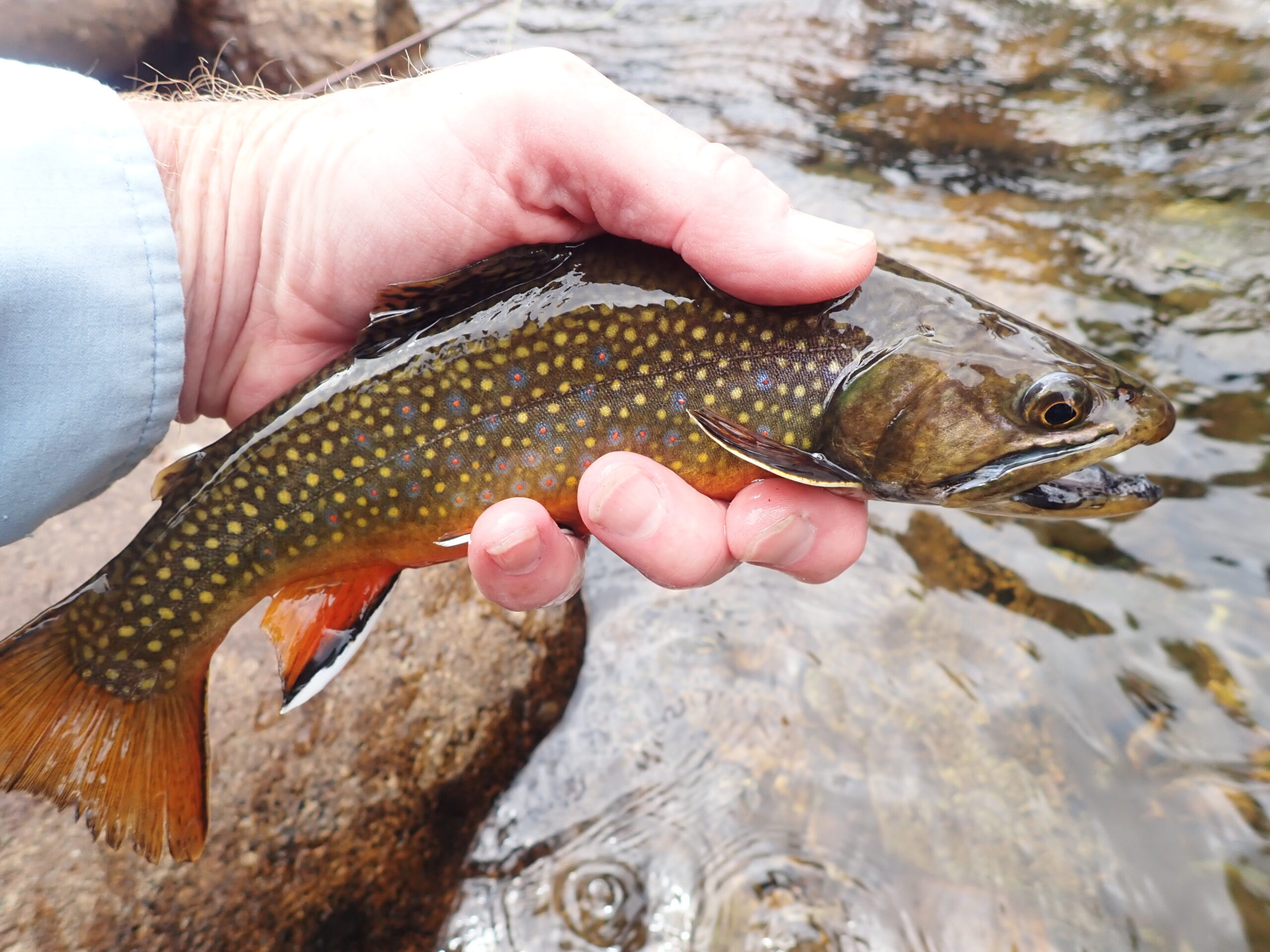
Very Pleased

I took my time and arrived at my chosen spot by 11:10. I discovered that the rates for entering the canyon were raised once again to $11, and I had the foresight to stash a pair of quarters that allowed me to pay my fee of $5.50 using my 50% senior discount. The temperature was 50 degrees, as I prepared to fish, so I pulled on my insulated long sleeve undershirt, light down North Face coat and my new raincoat as a windbreaker. These remained in place throughout the day.

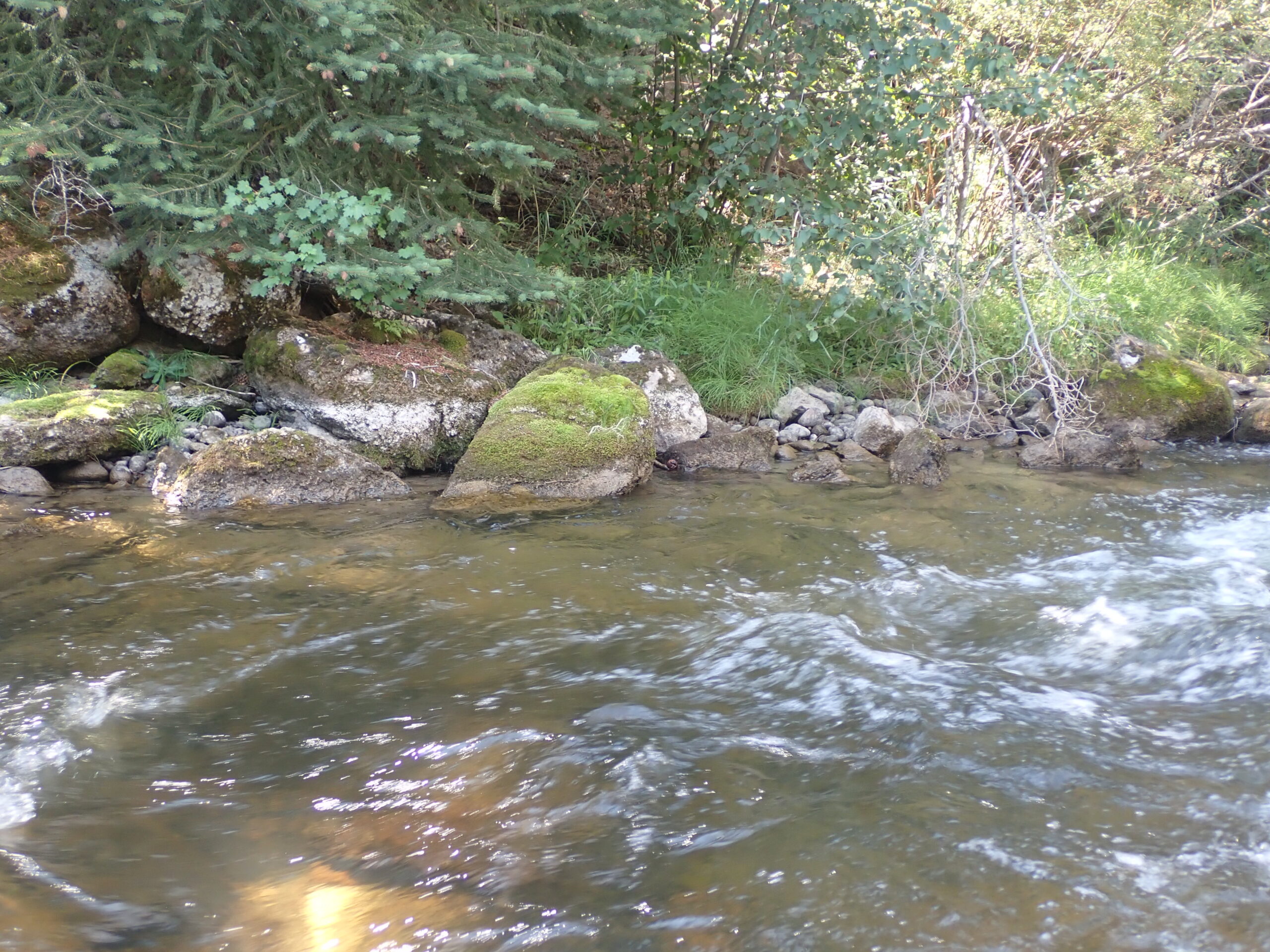
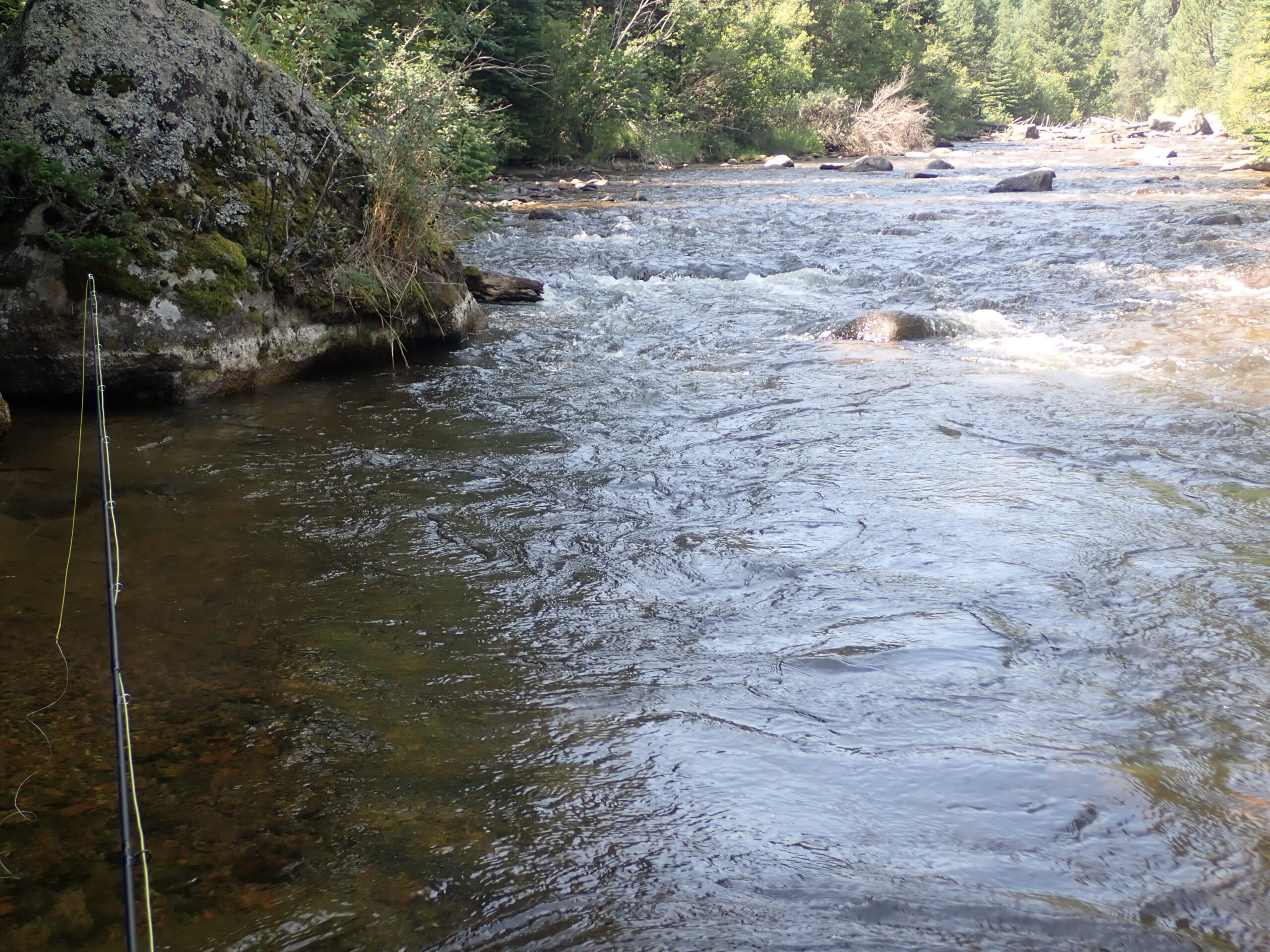
Emerged from in Front of the Large Exposed Rock

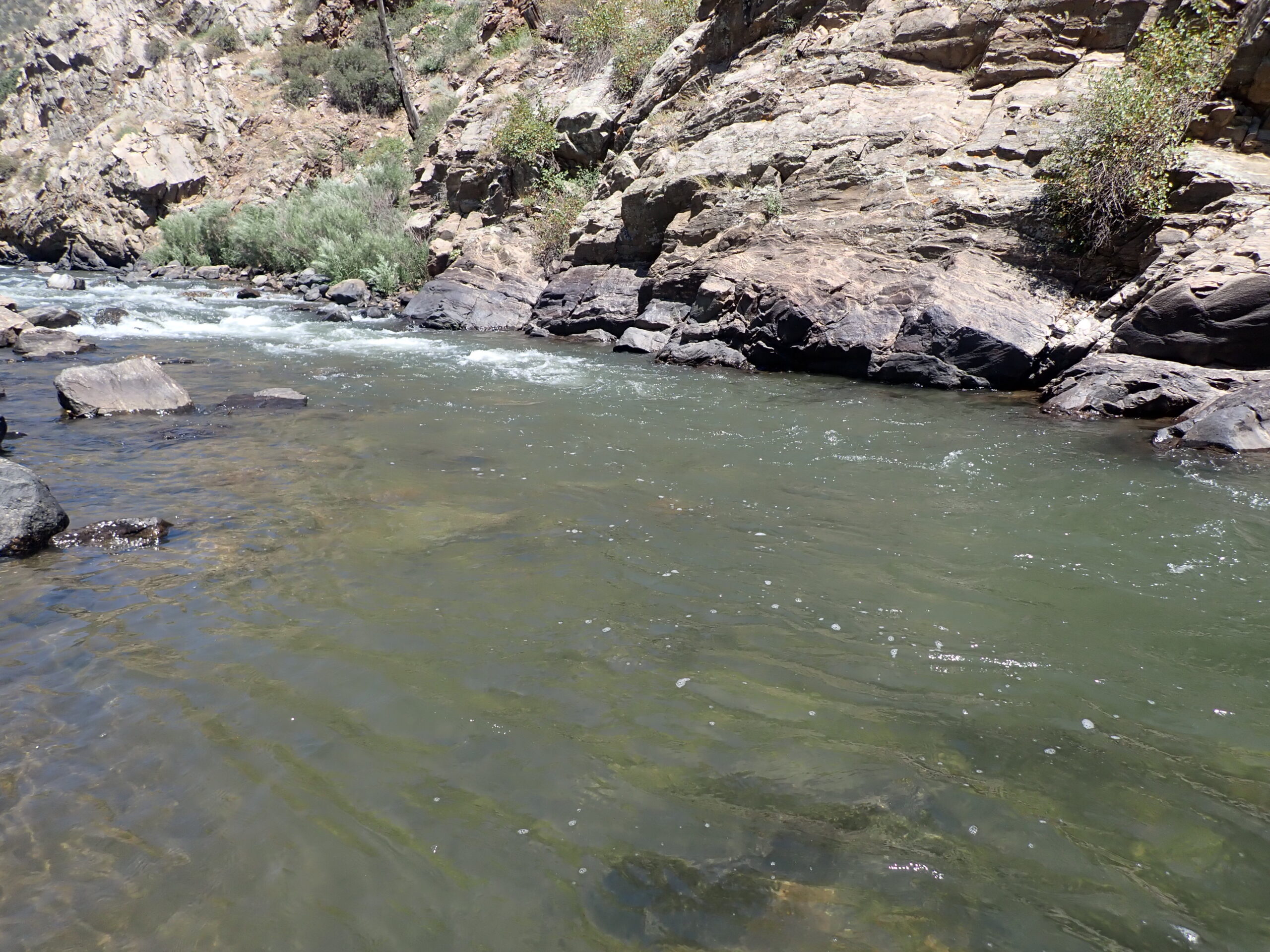
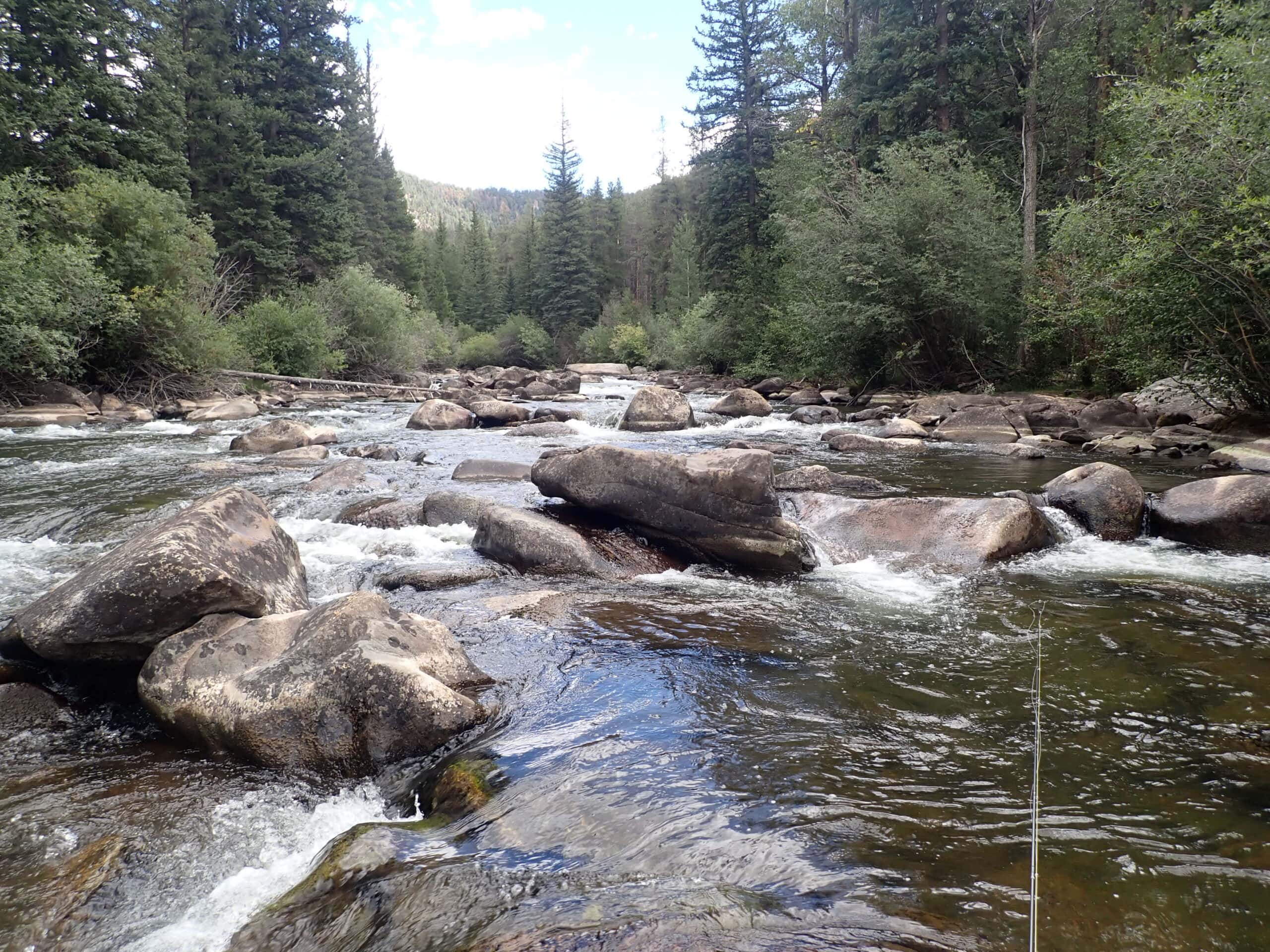
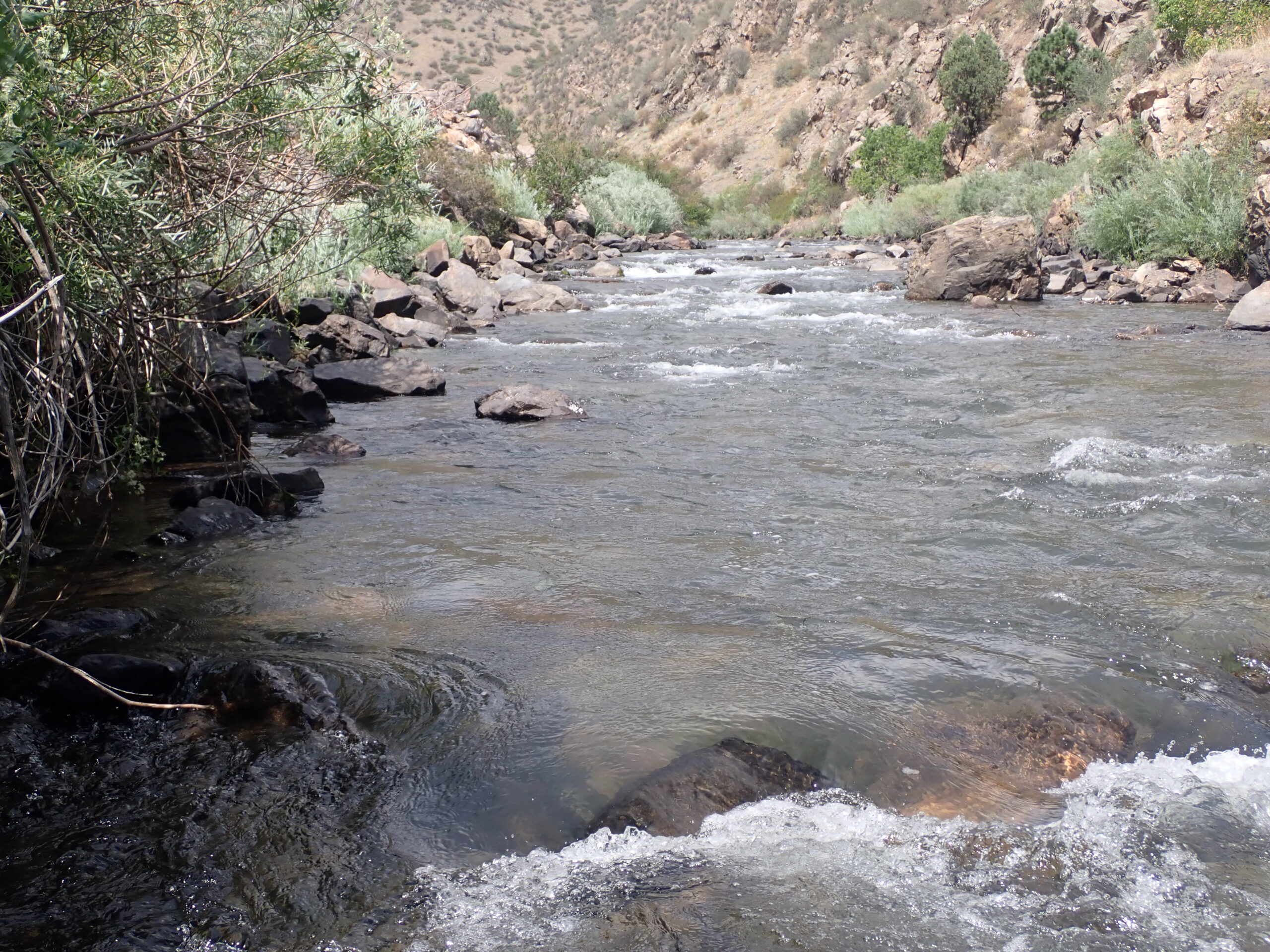
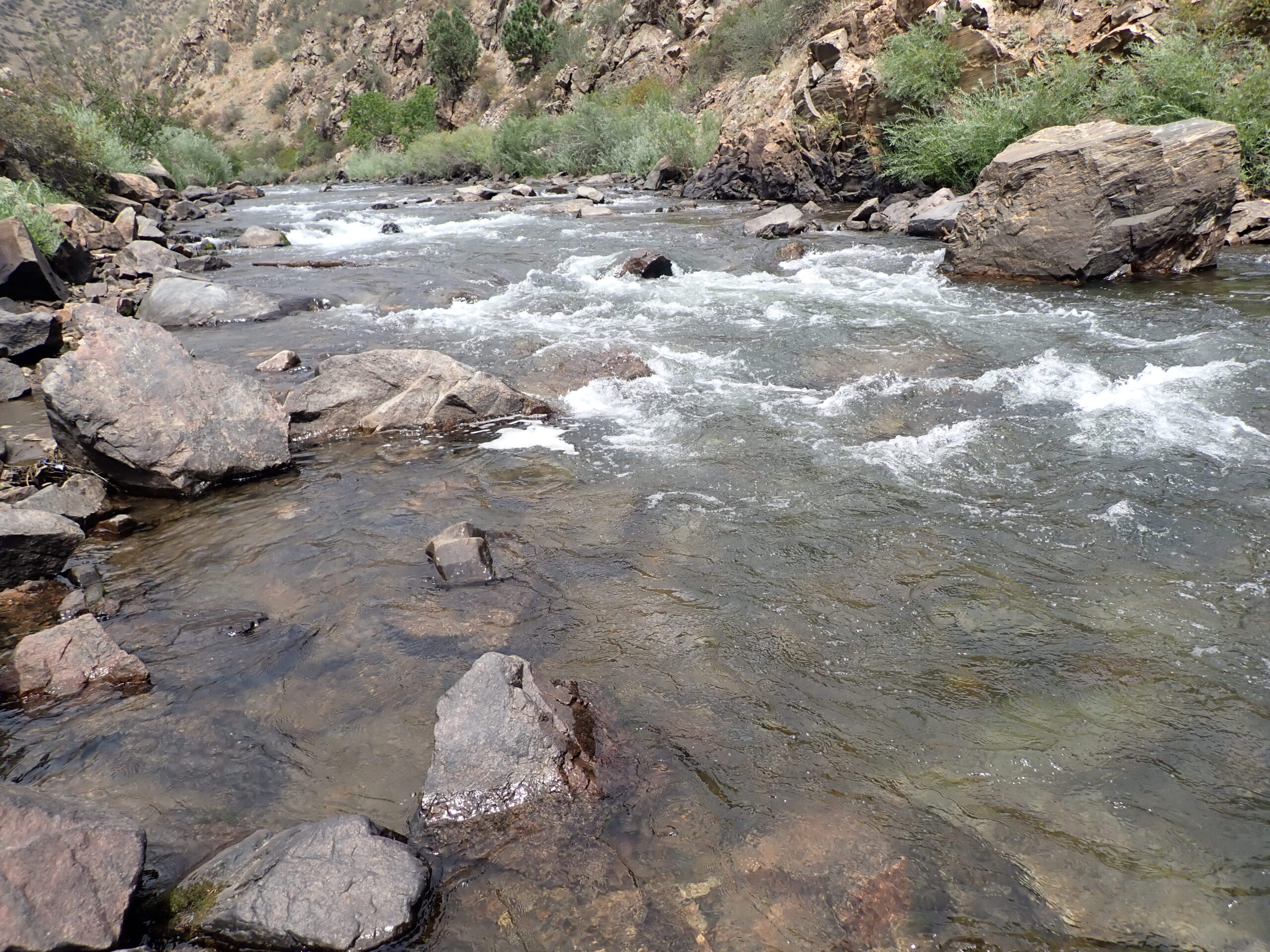
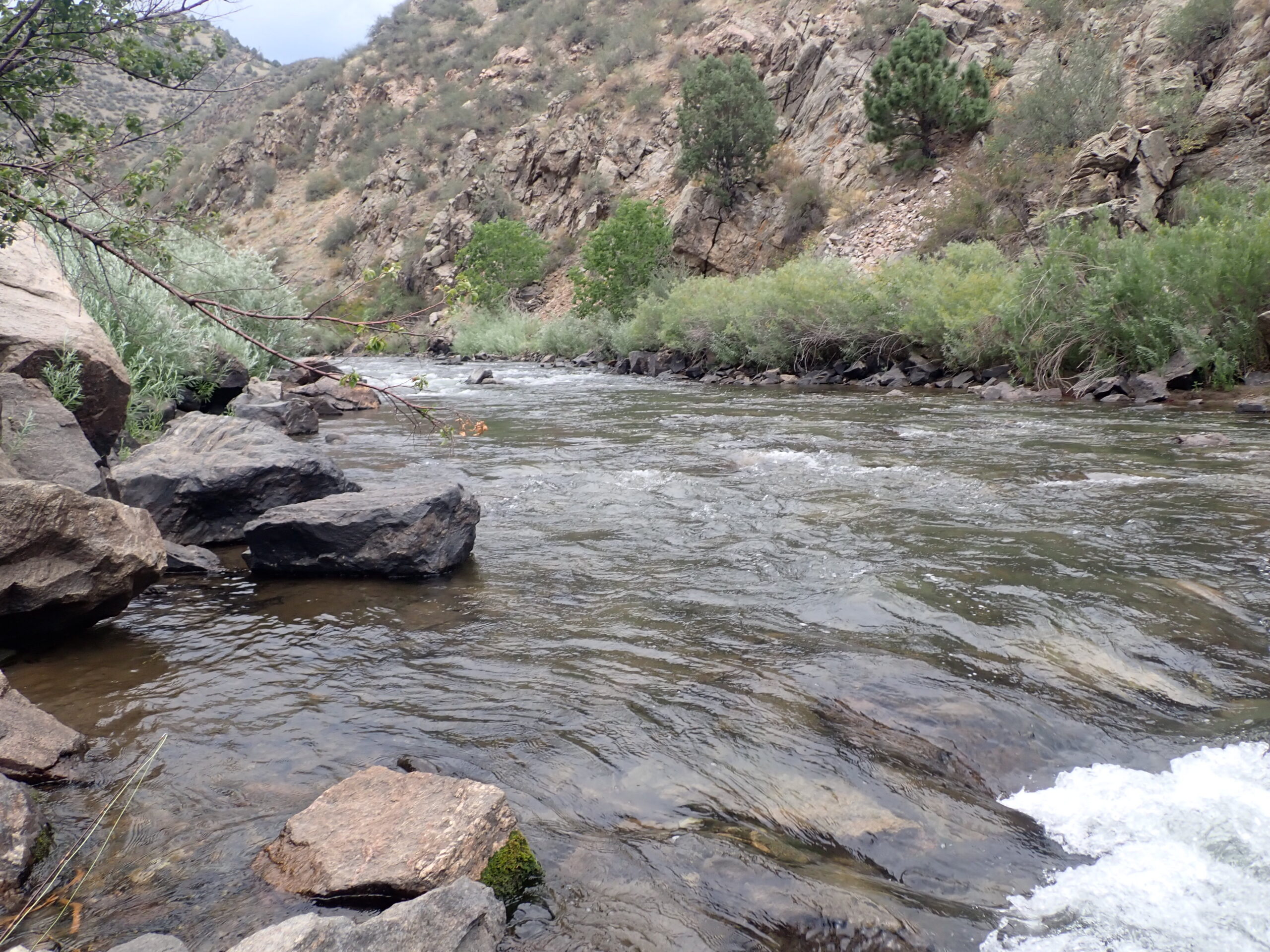
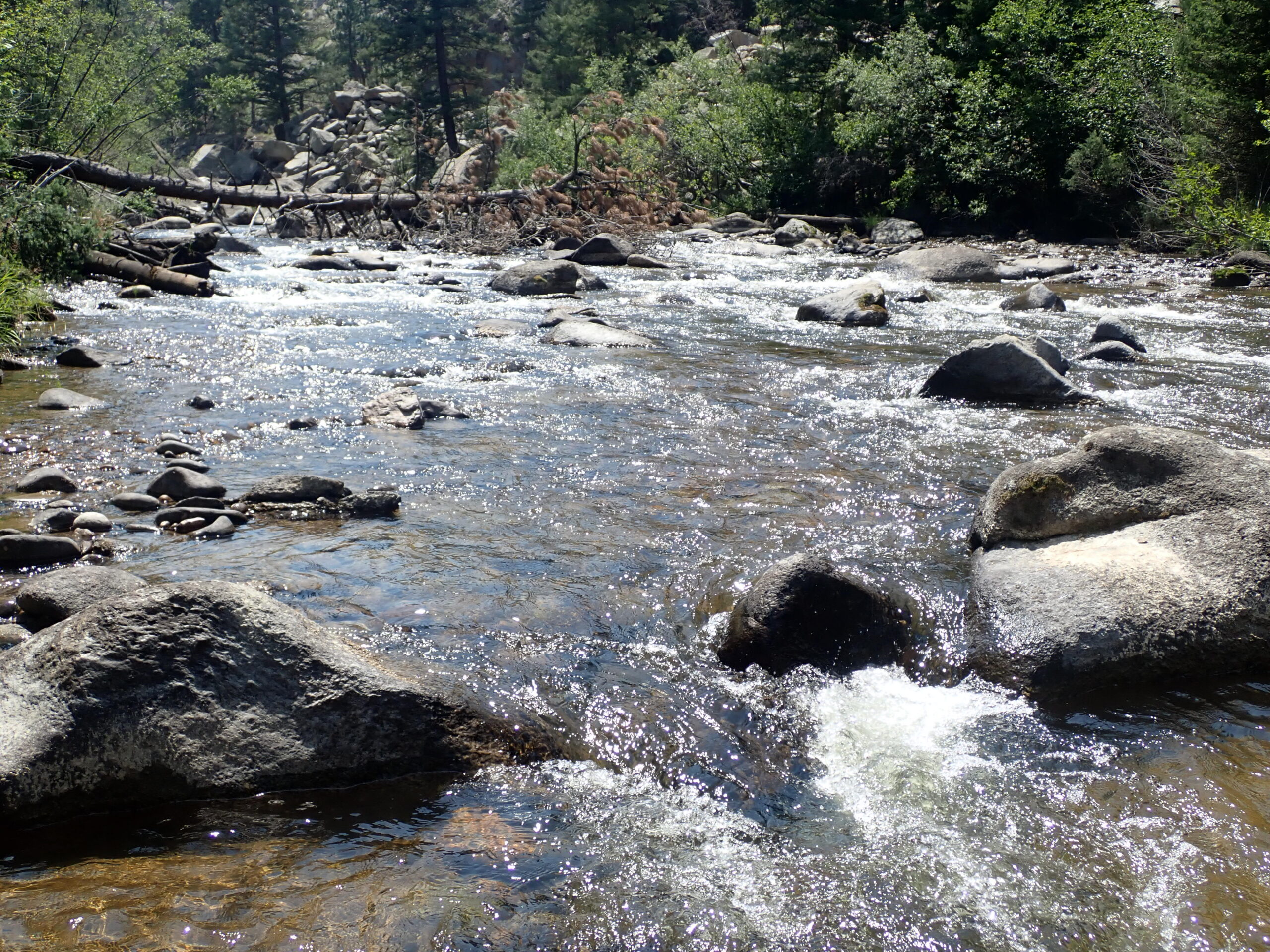
Eleven Mile Canyon on this day had a completely different aura than Big Horn Sheep Canyon on Monday, and although I was hoping for a day that approached my opener, I immediately sensed that was not going to be the case. A fair amount of snow remained along the eastern banks, and the narrower canyon shaded much of the water in the morning and early afternoon. The air felt exceptionally dry as the wind whipped across the water.

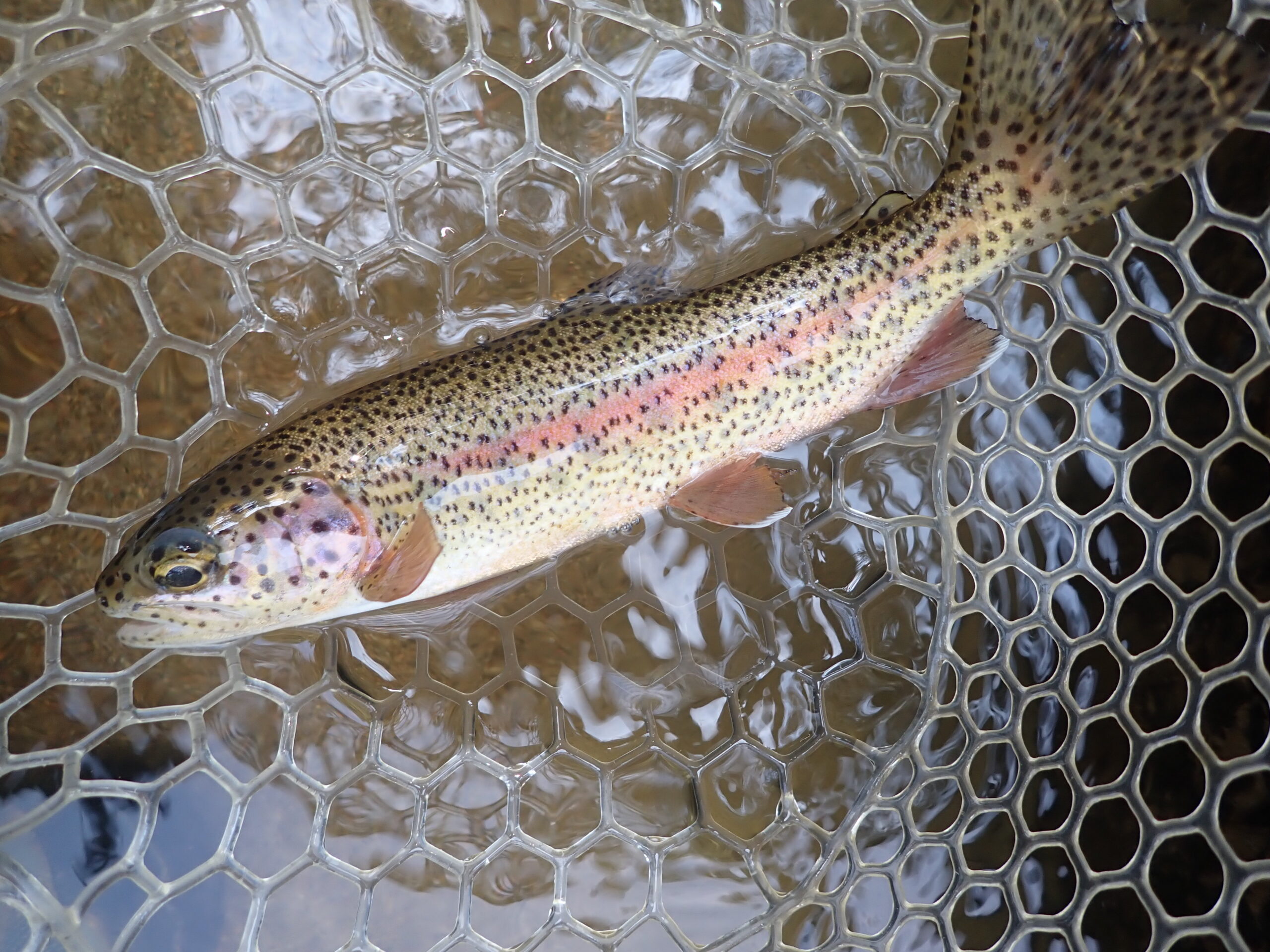
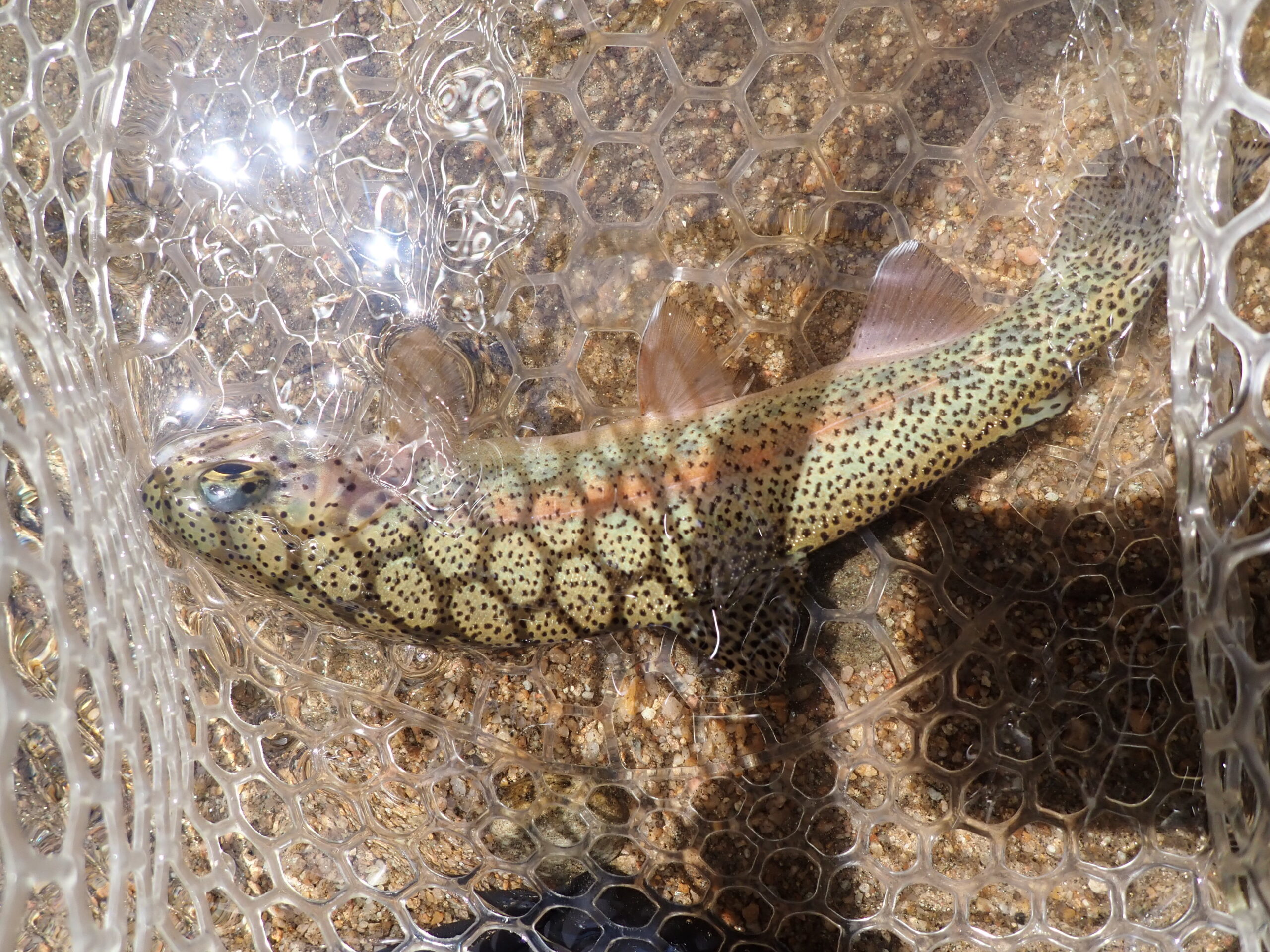
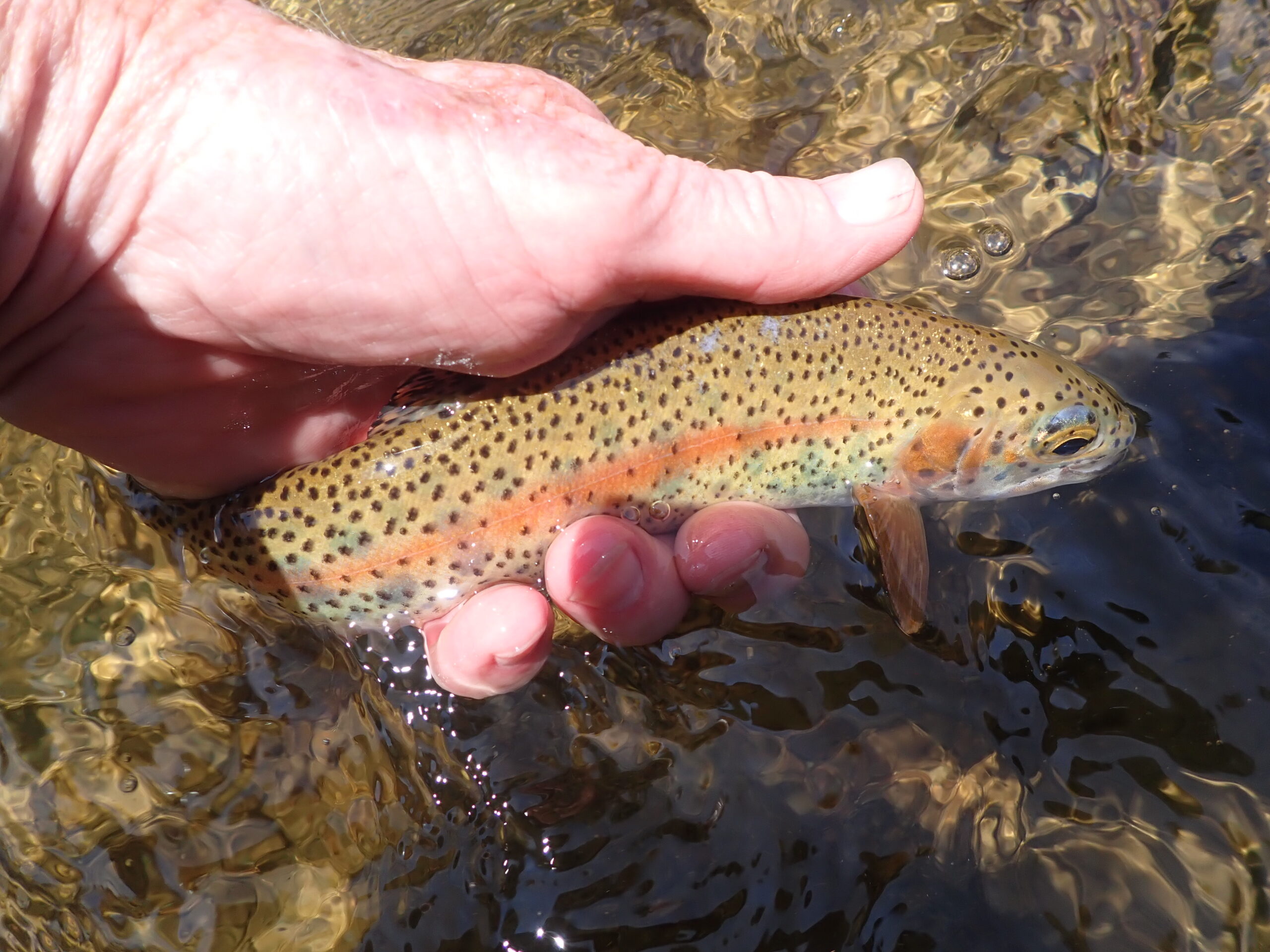
Goodbye Rainbow

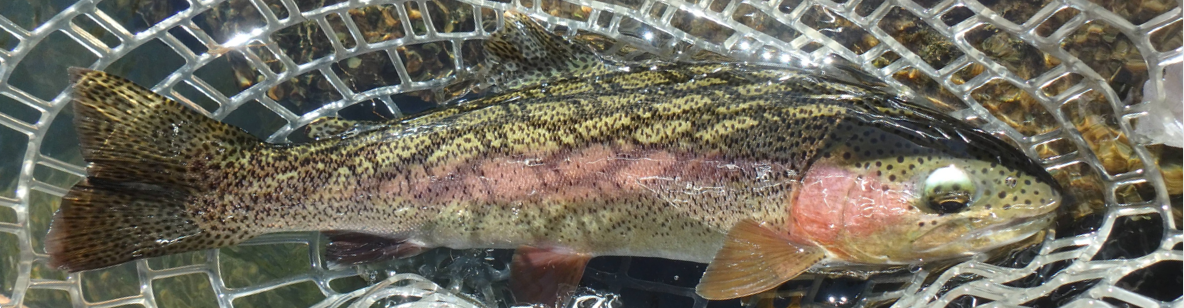
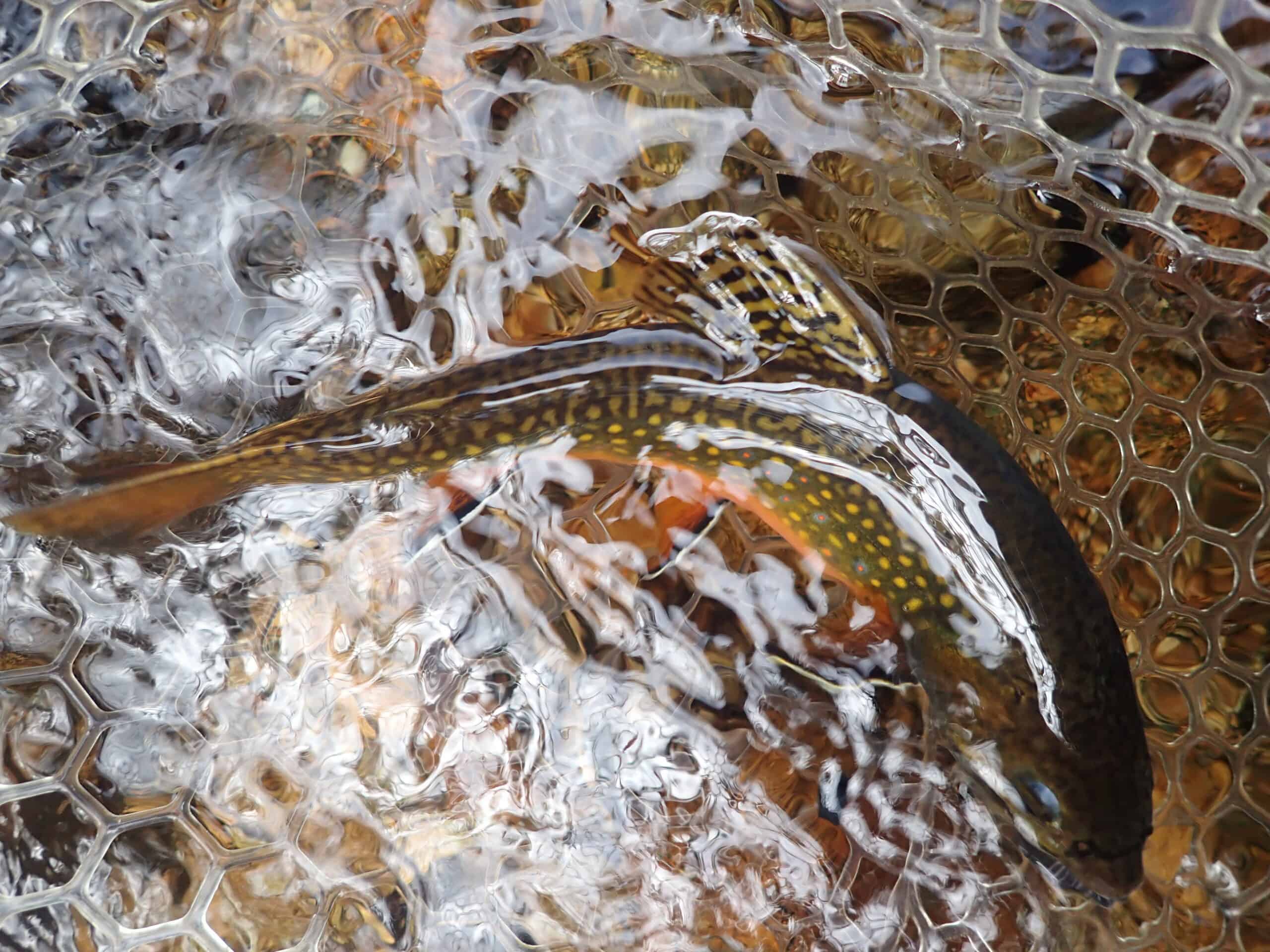
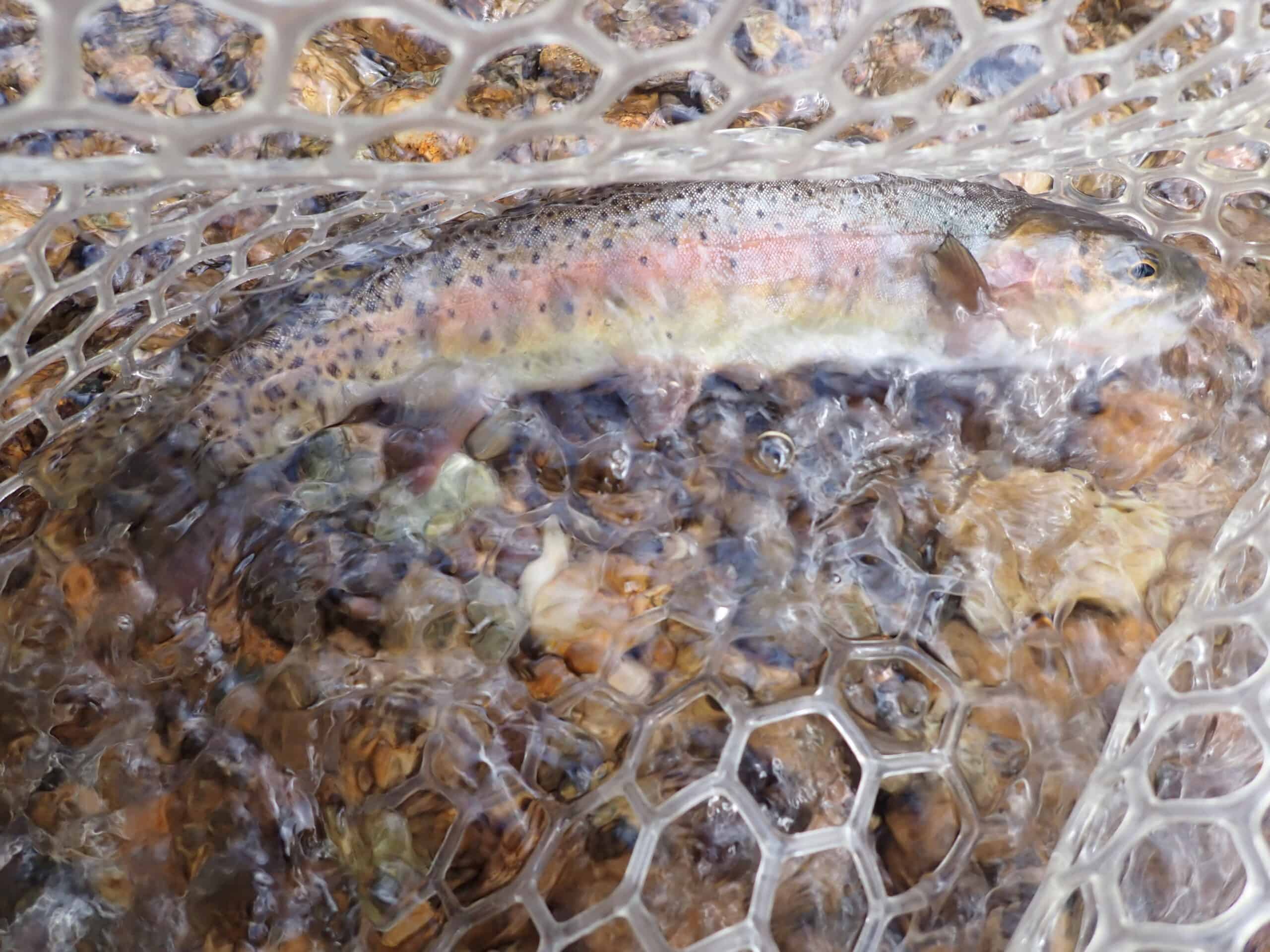
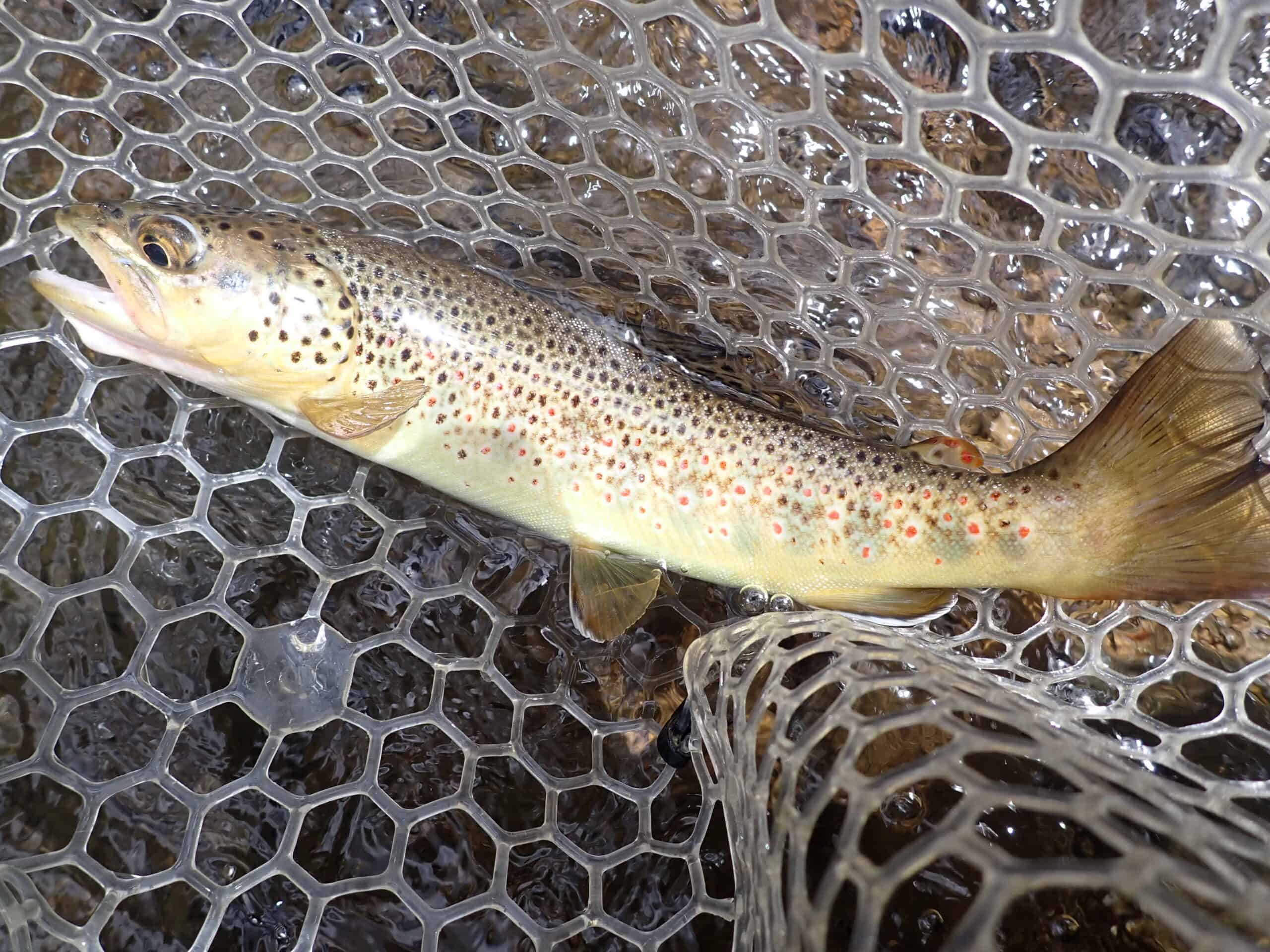
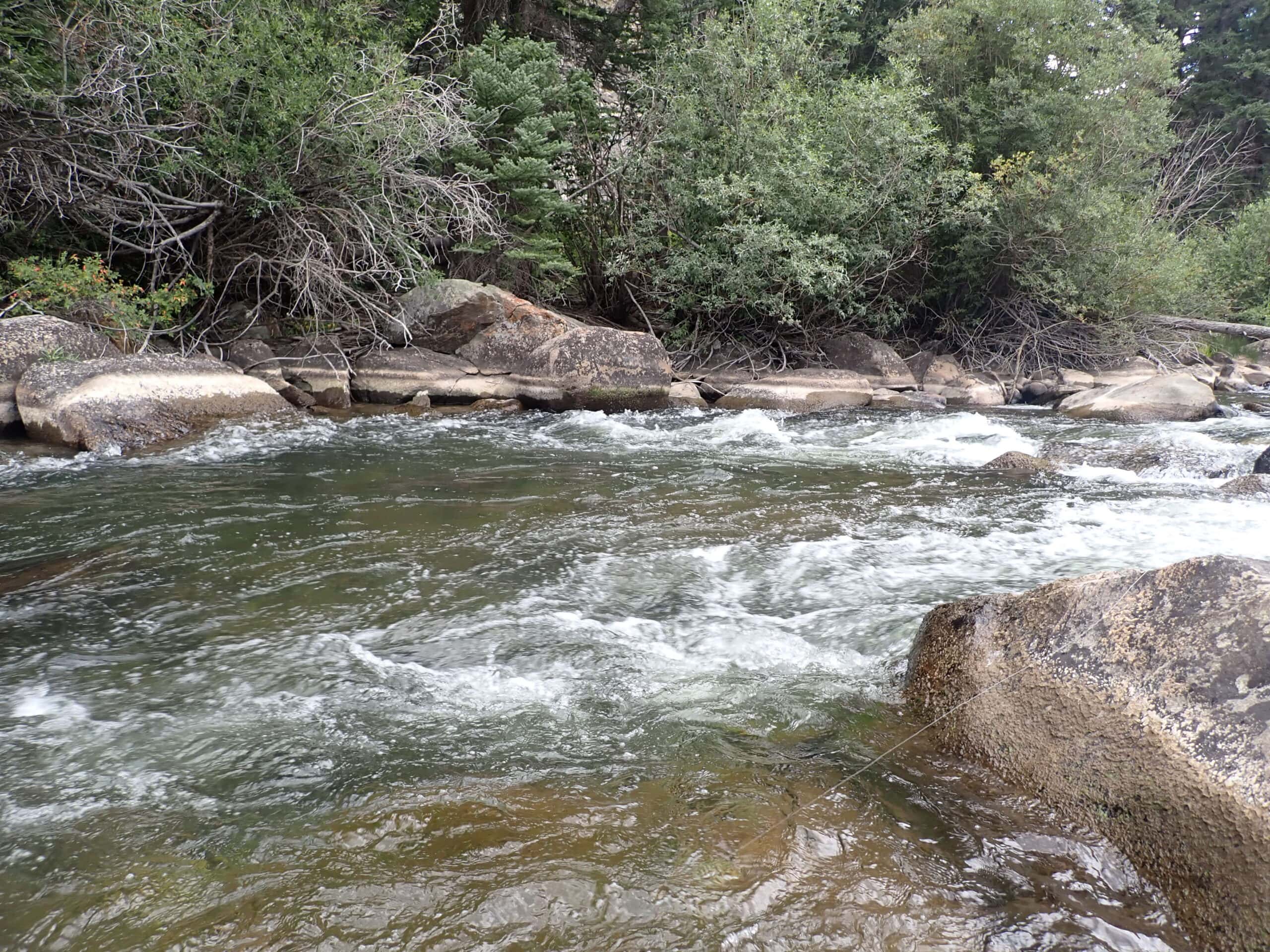
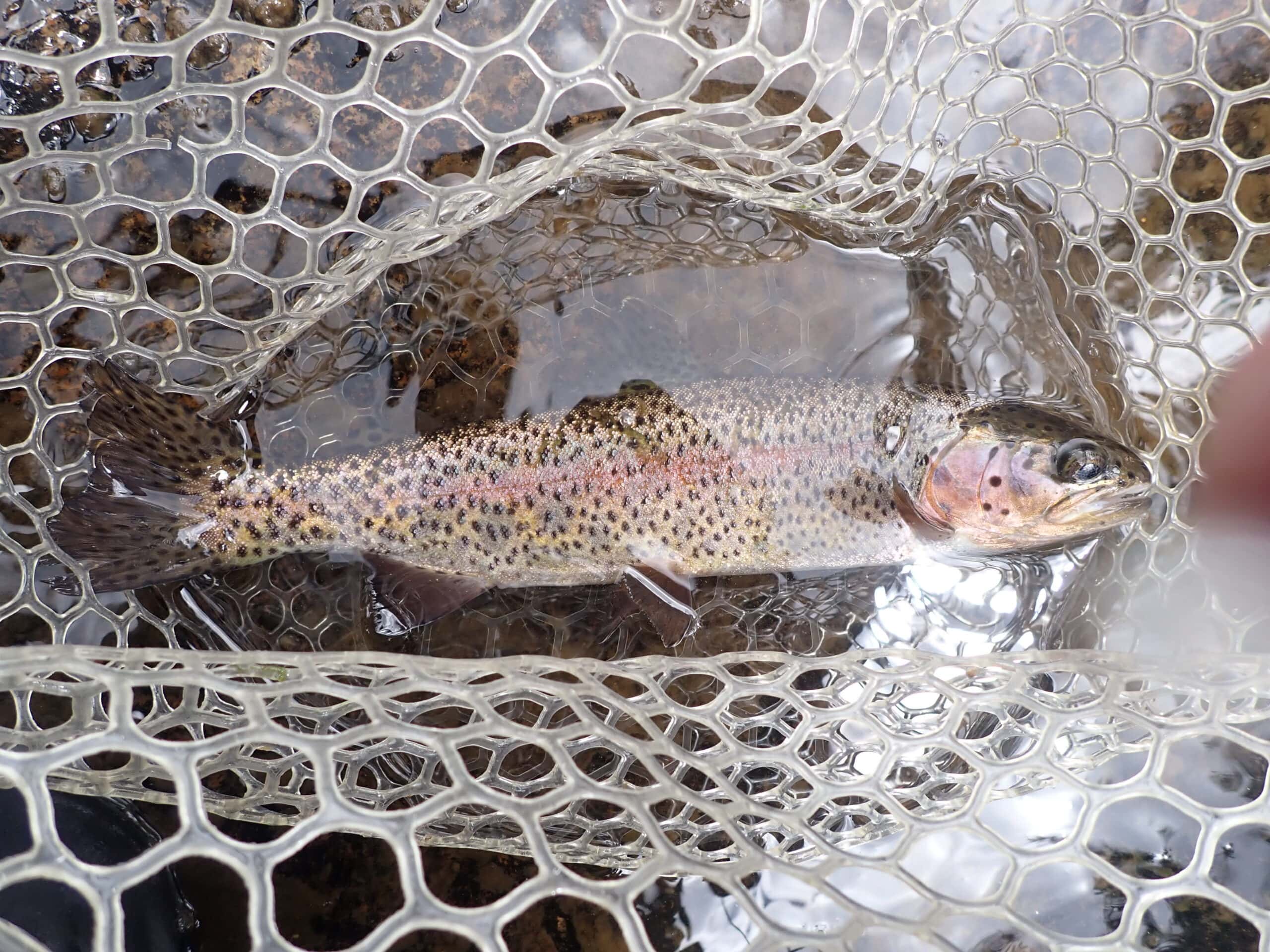
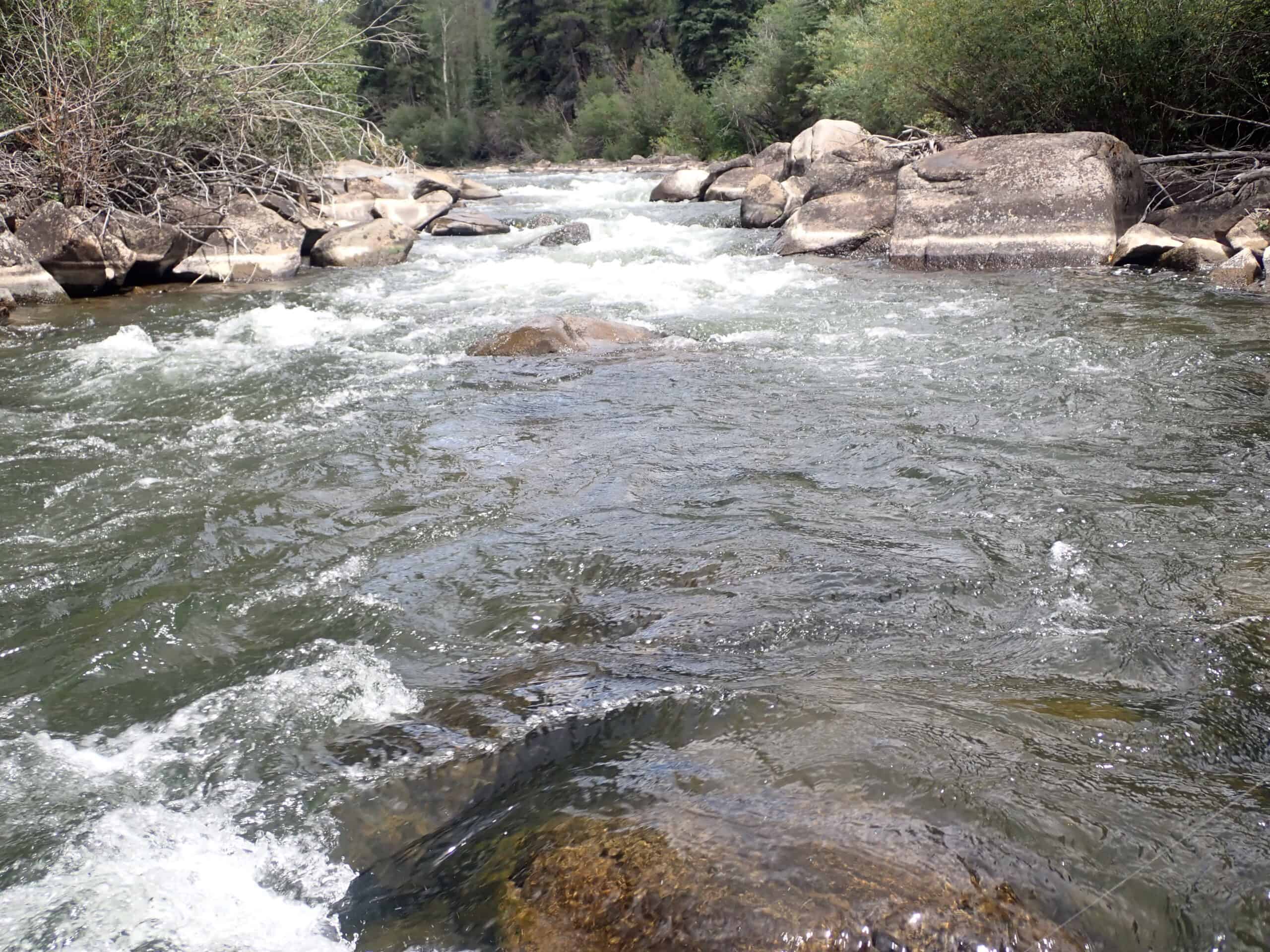
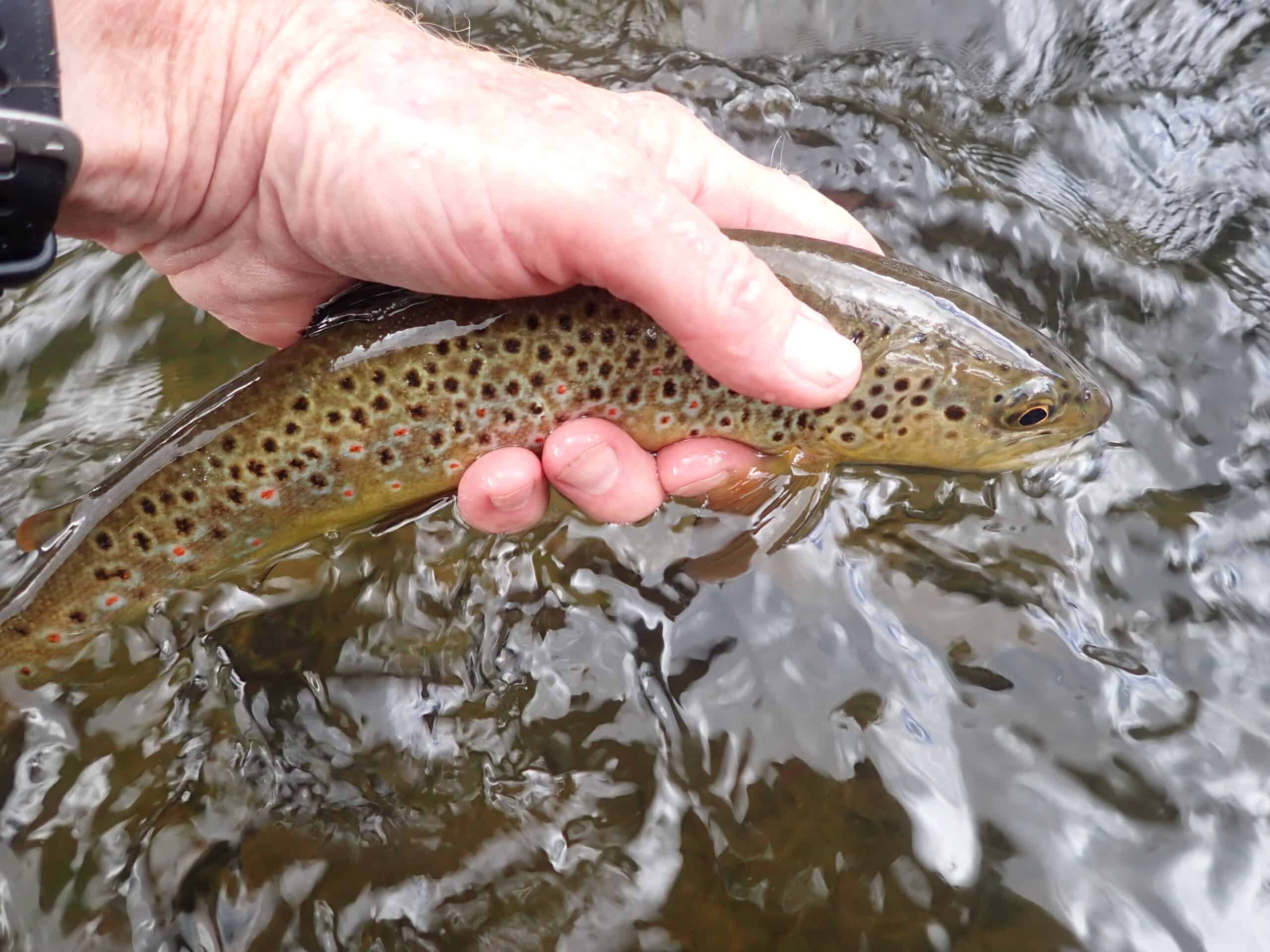
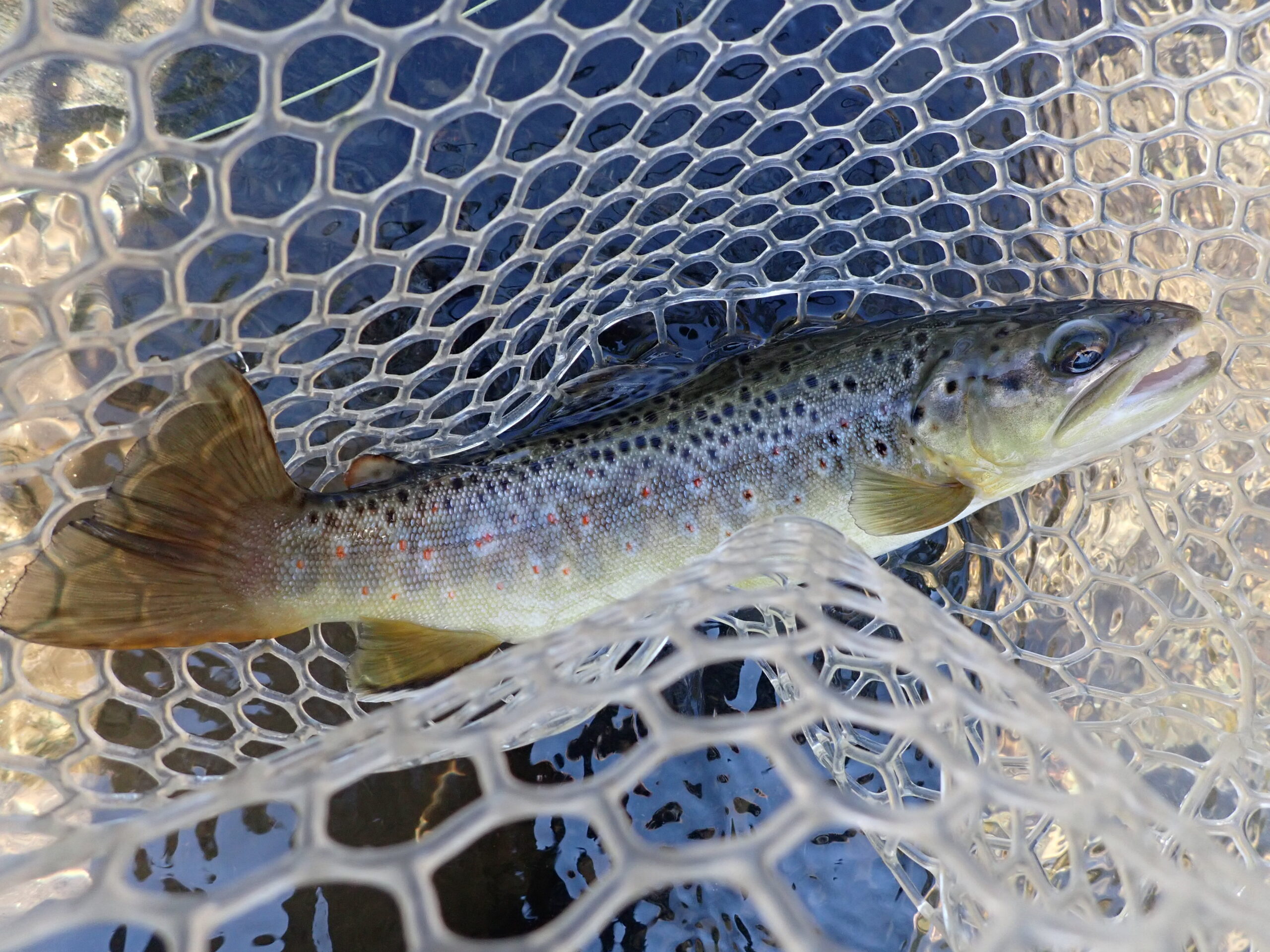
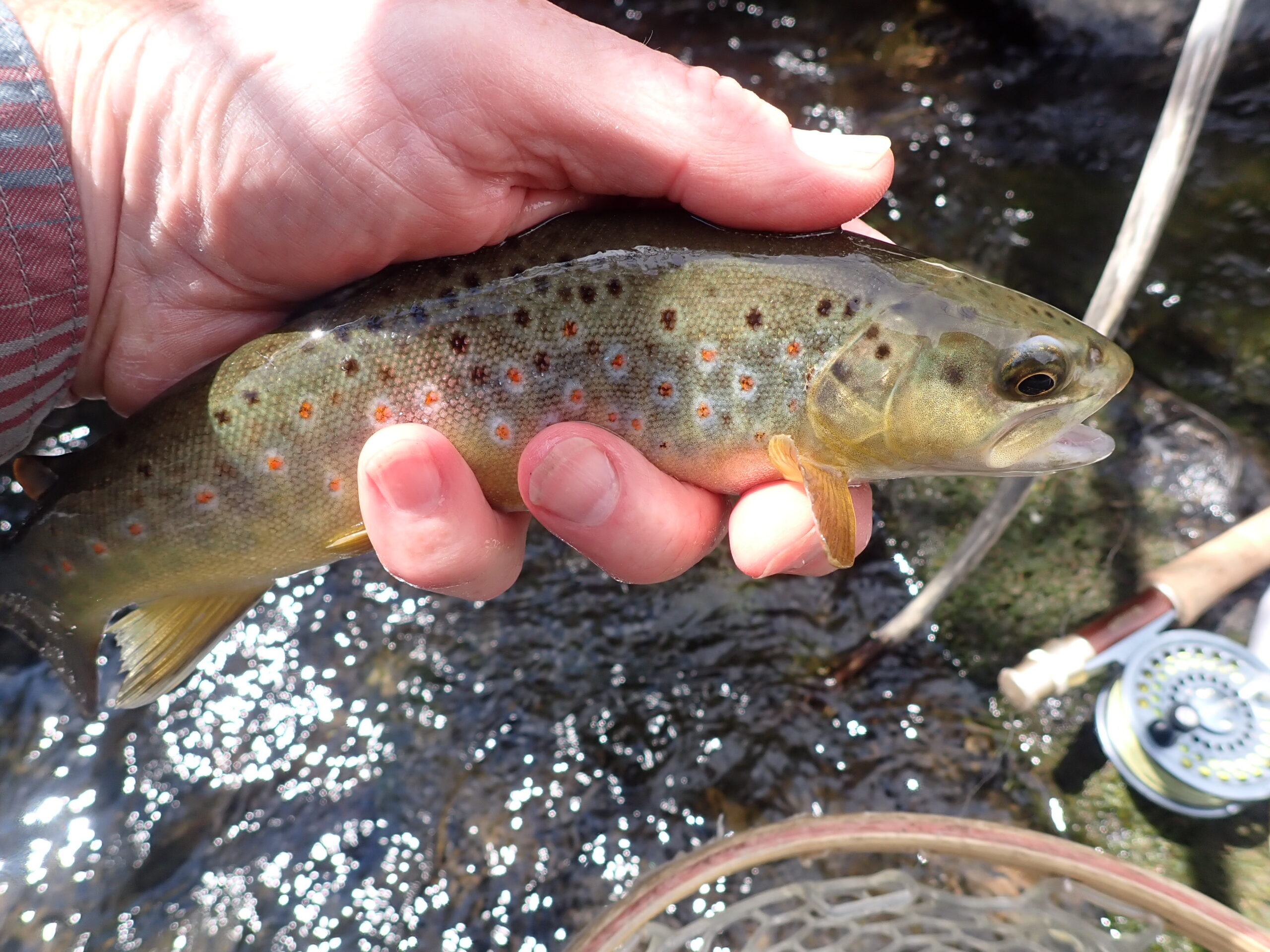
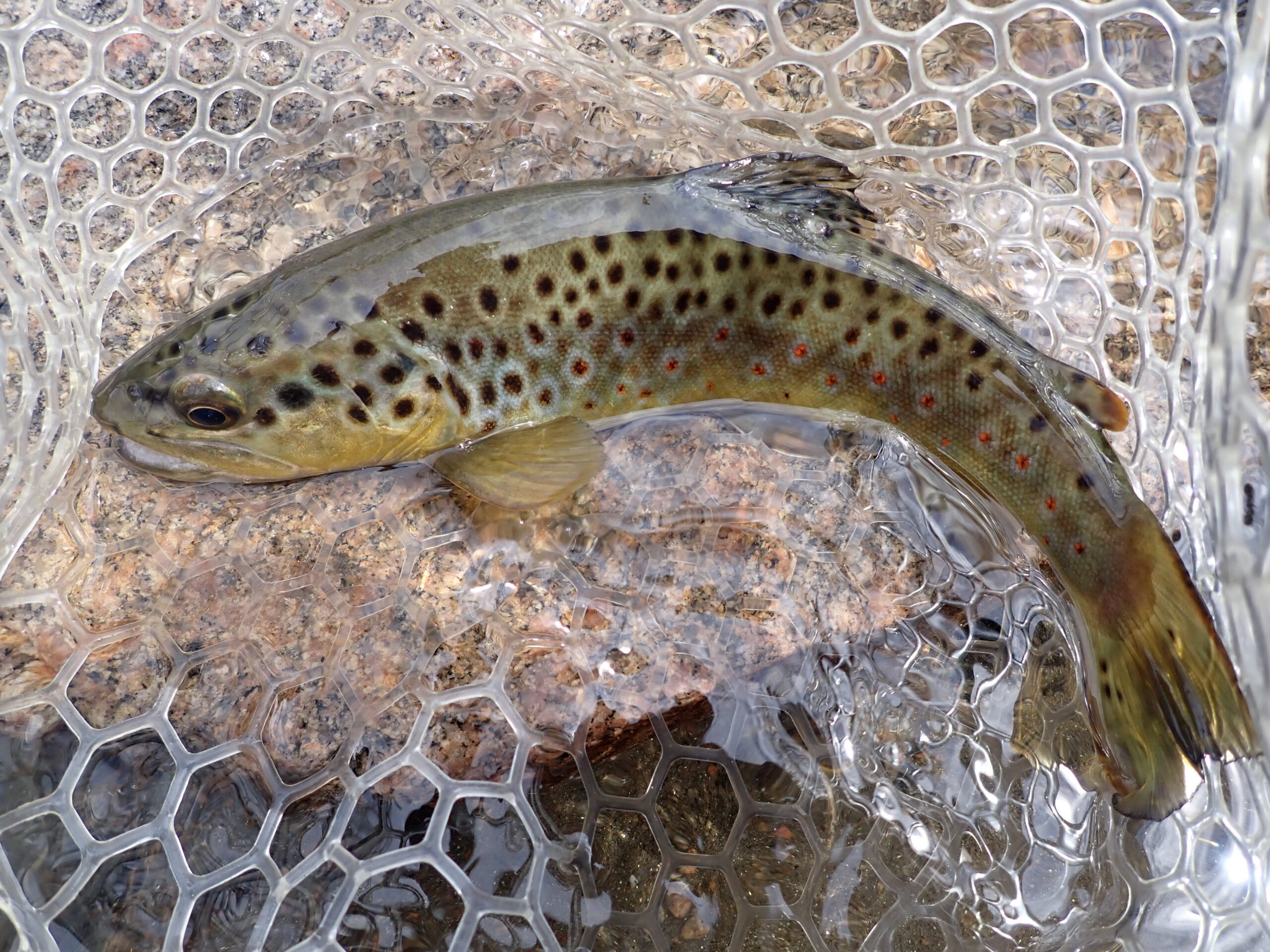
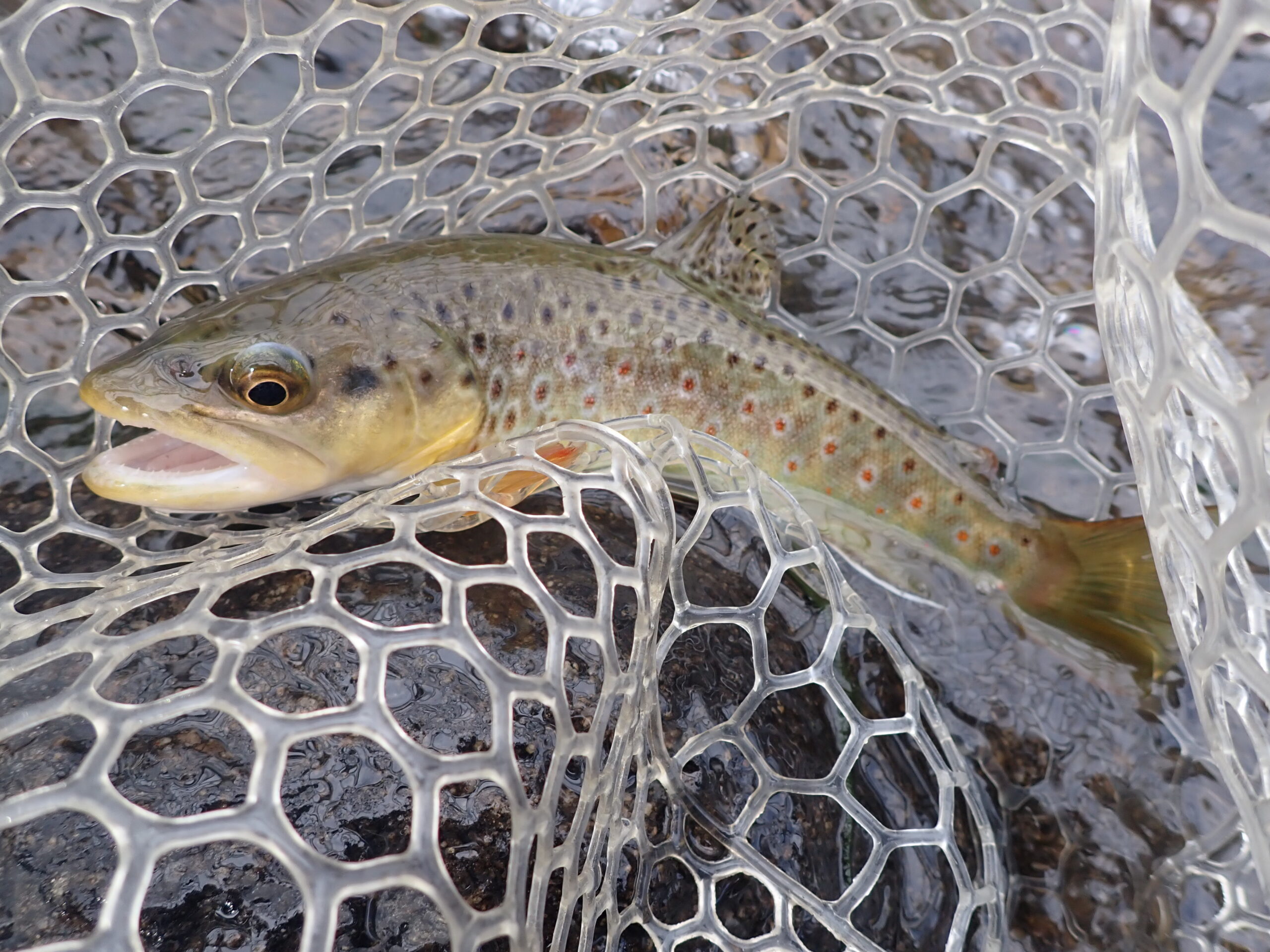
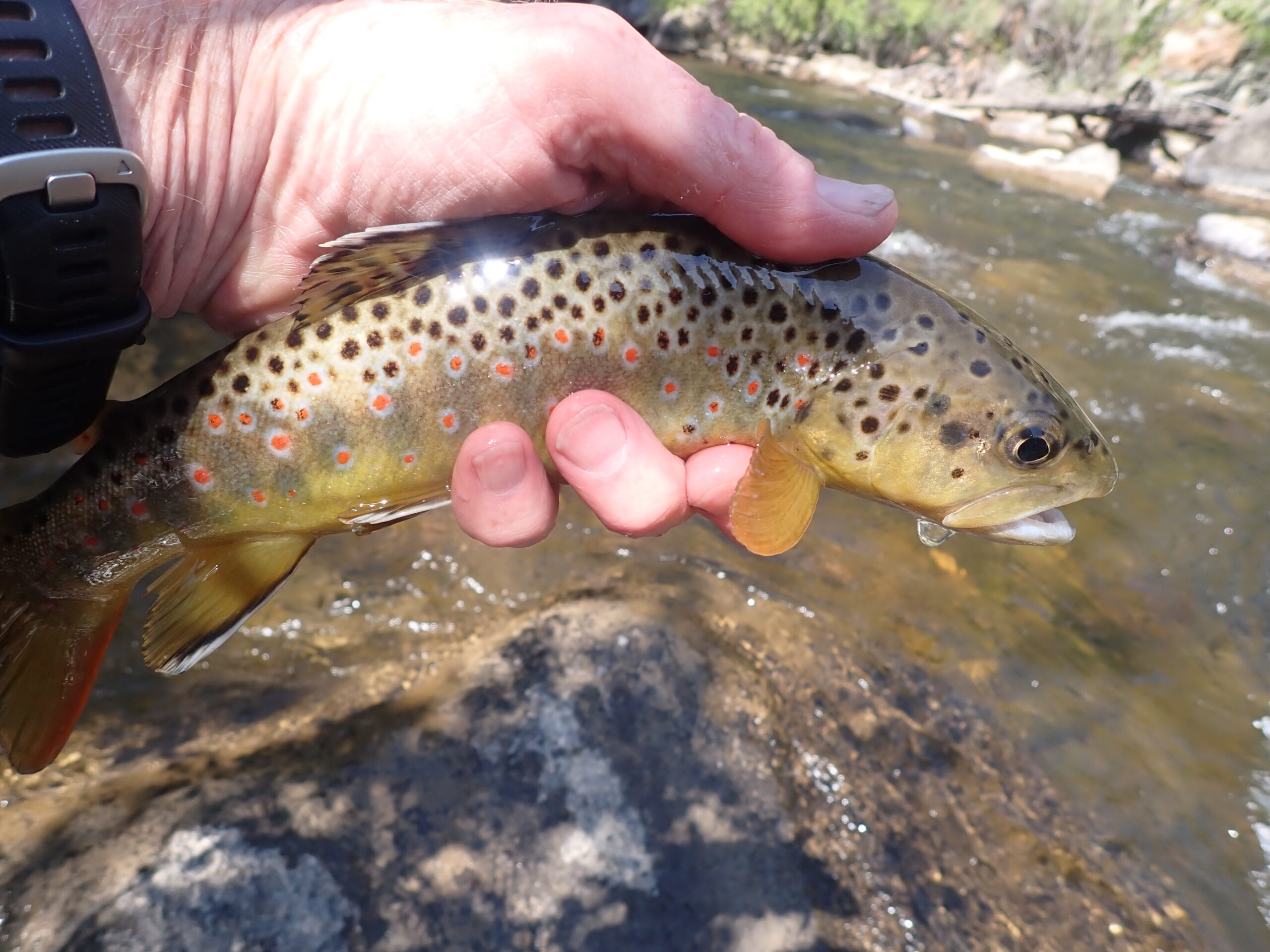
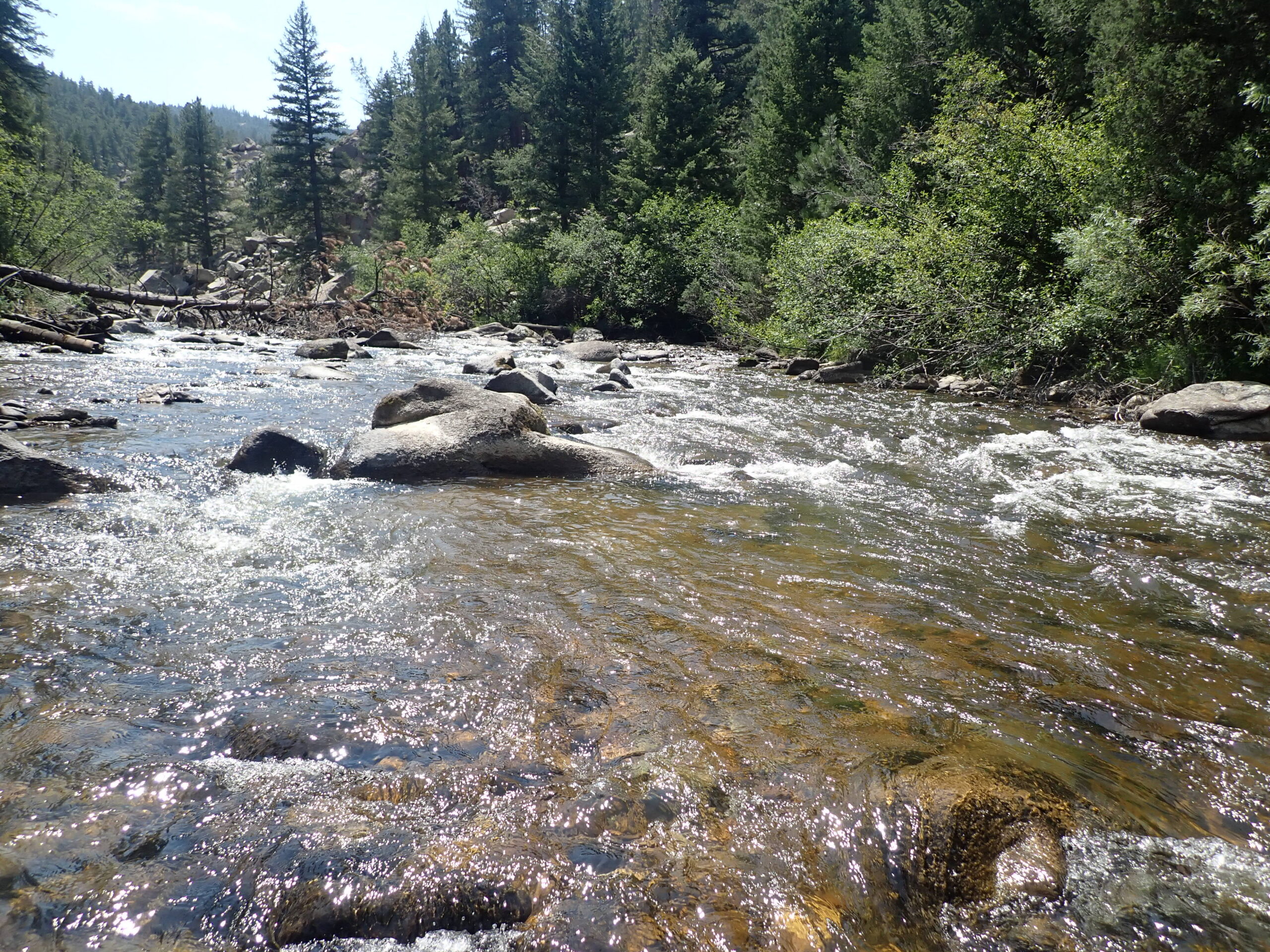
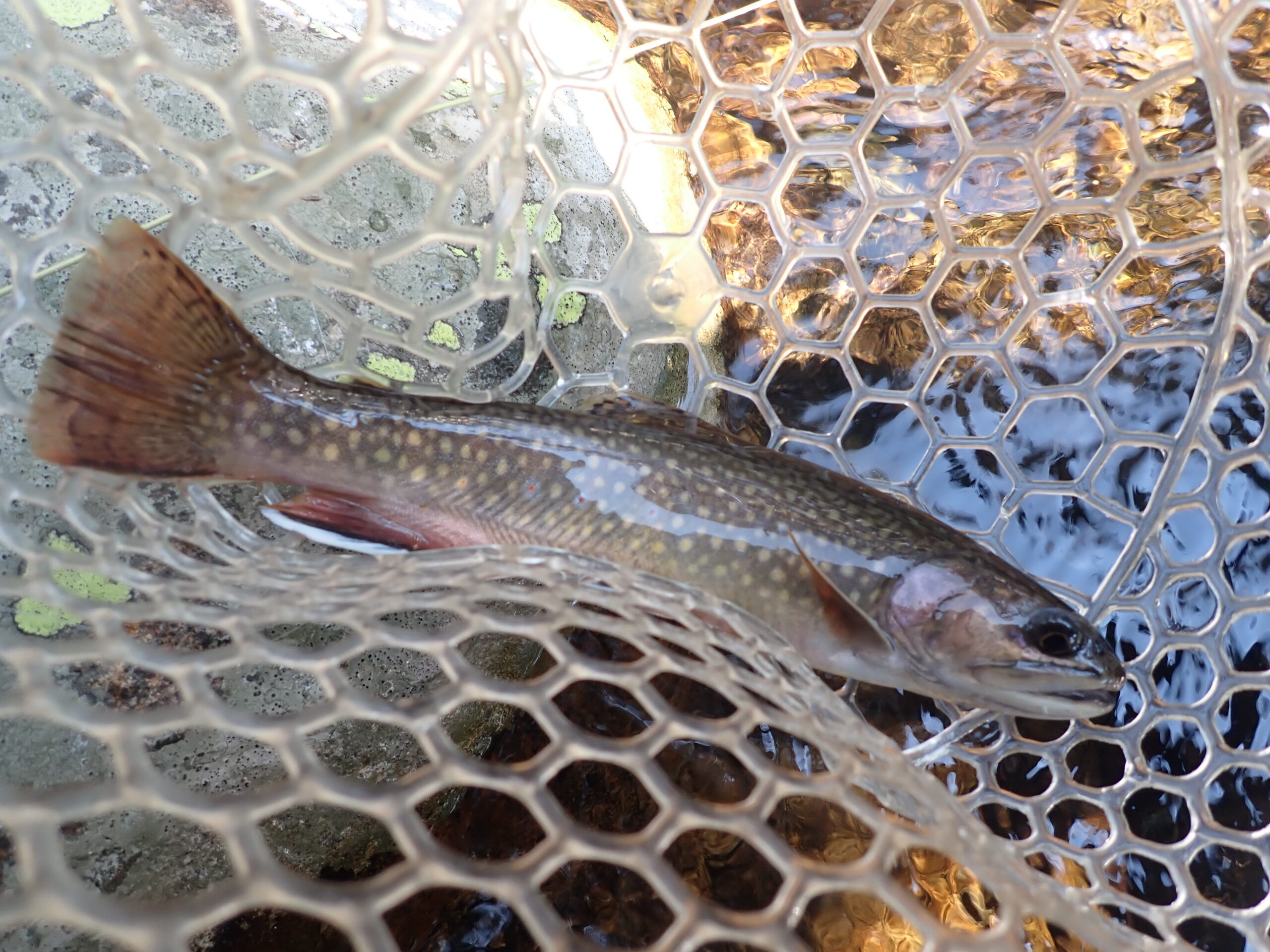
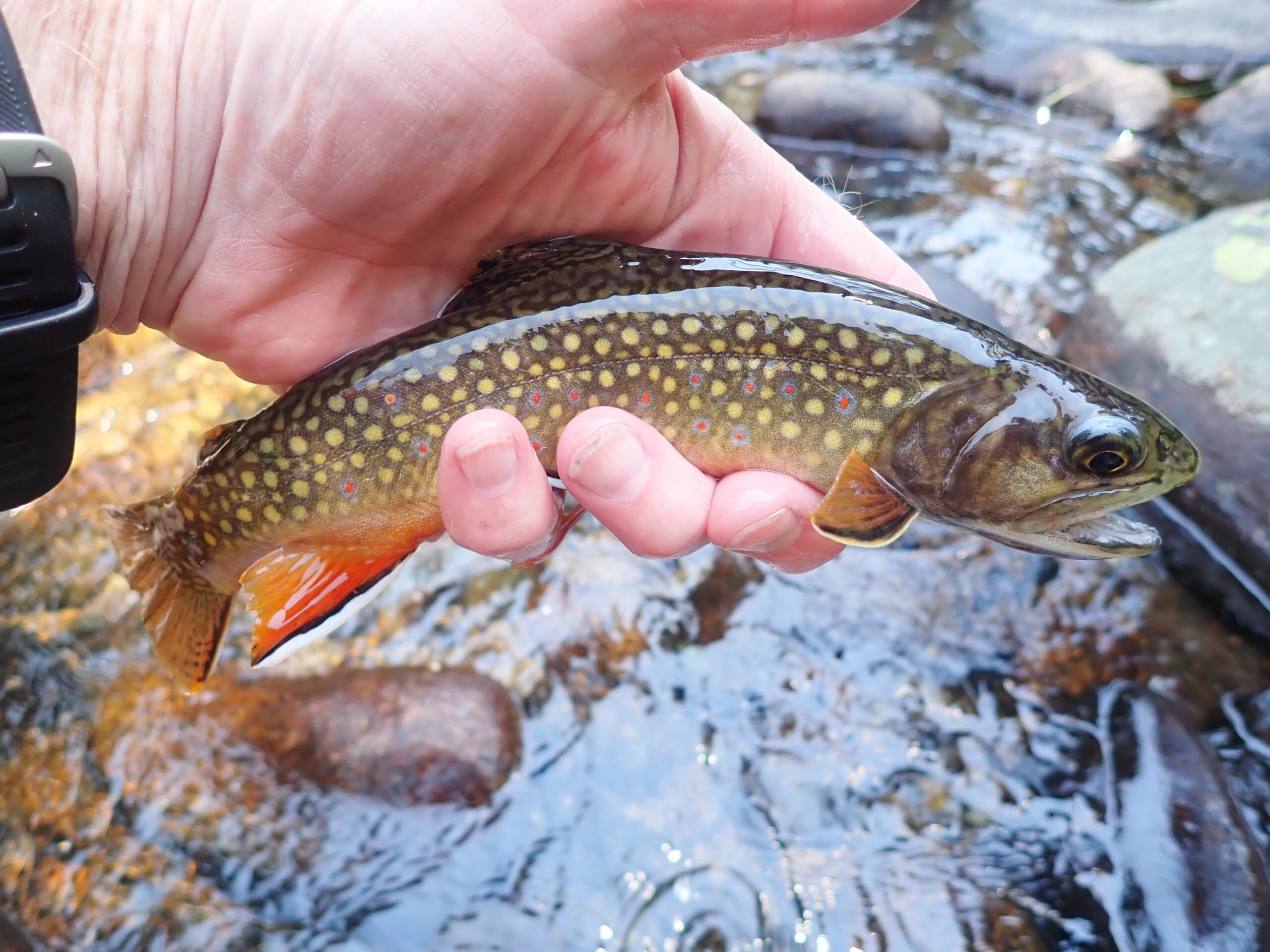
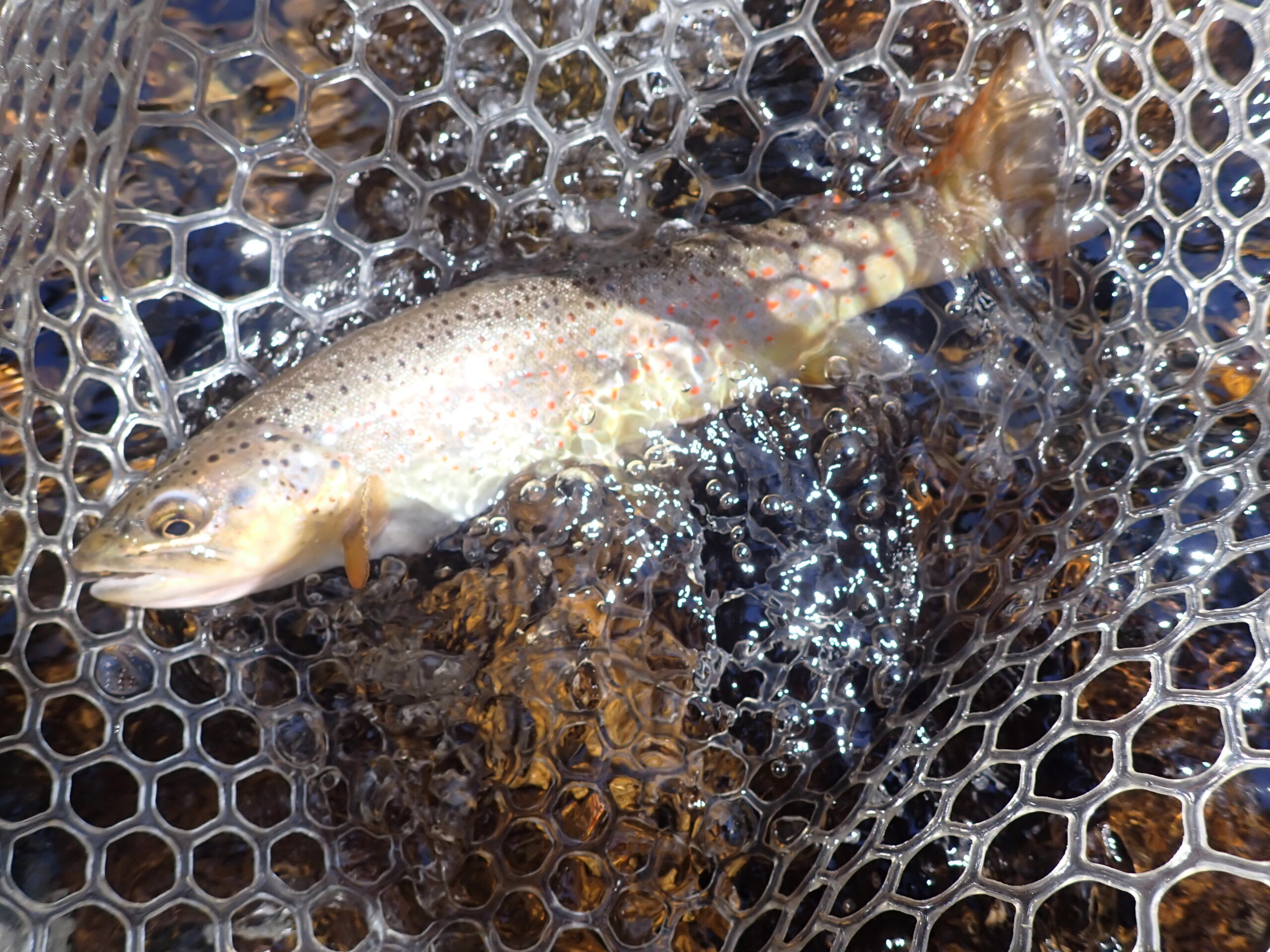
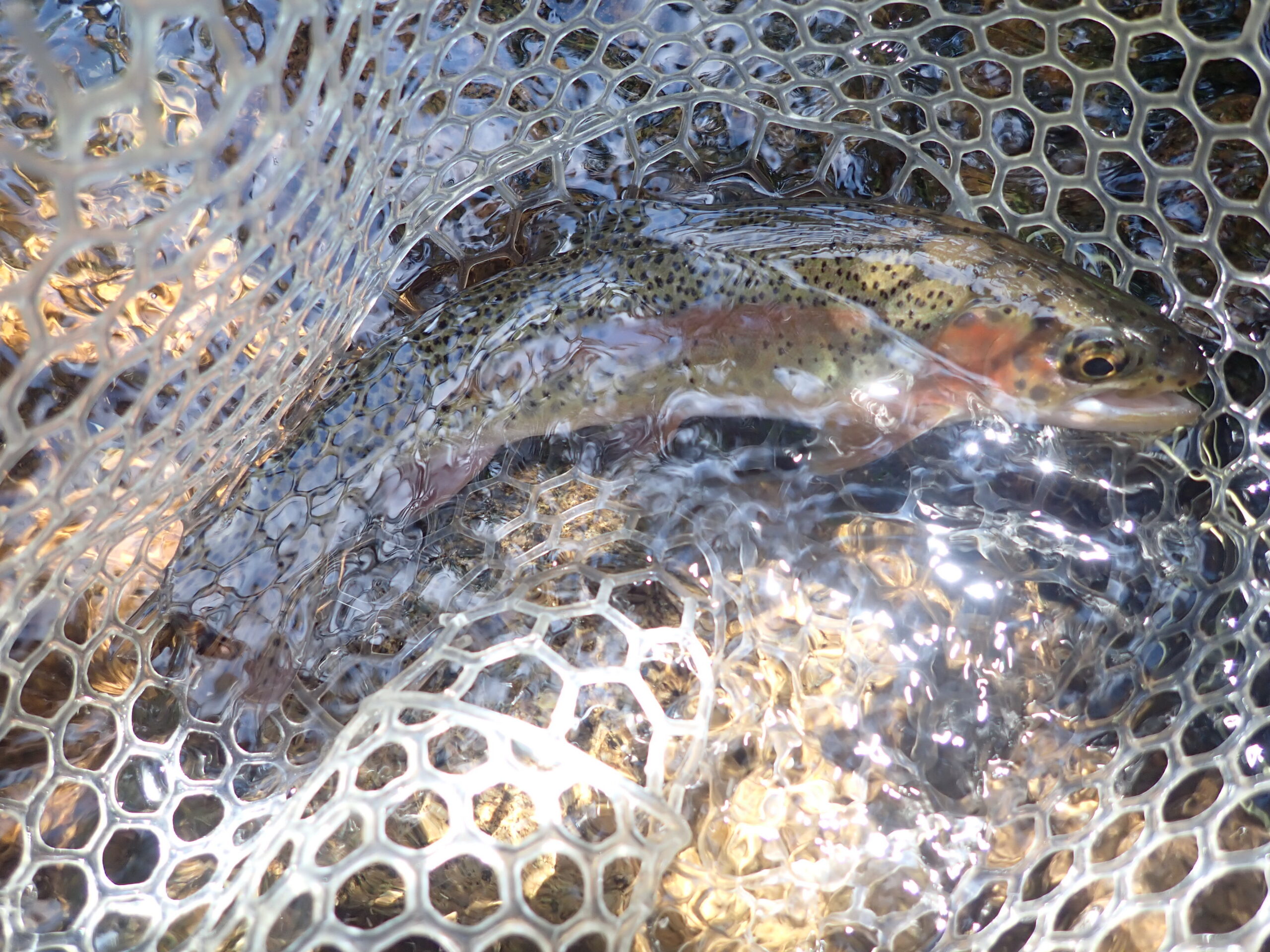
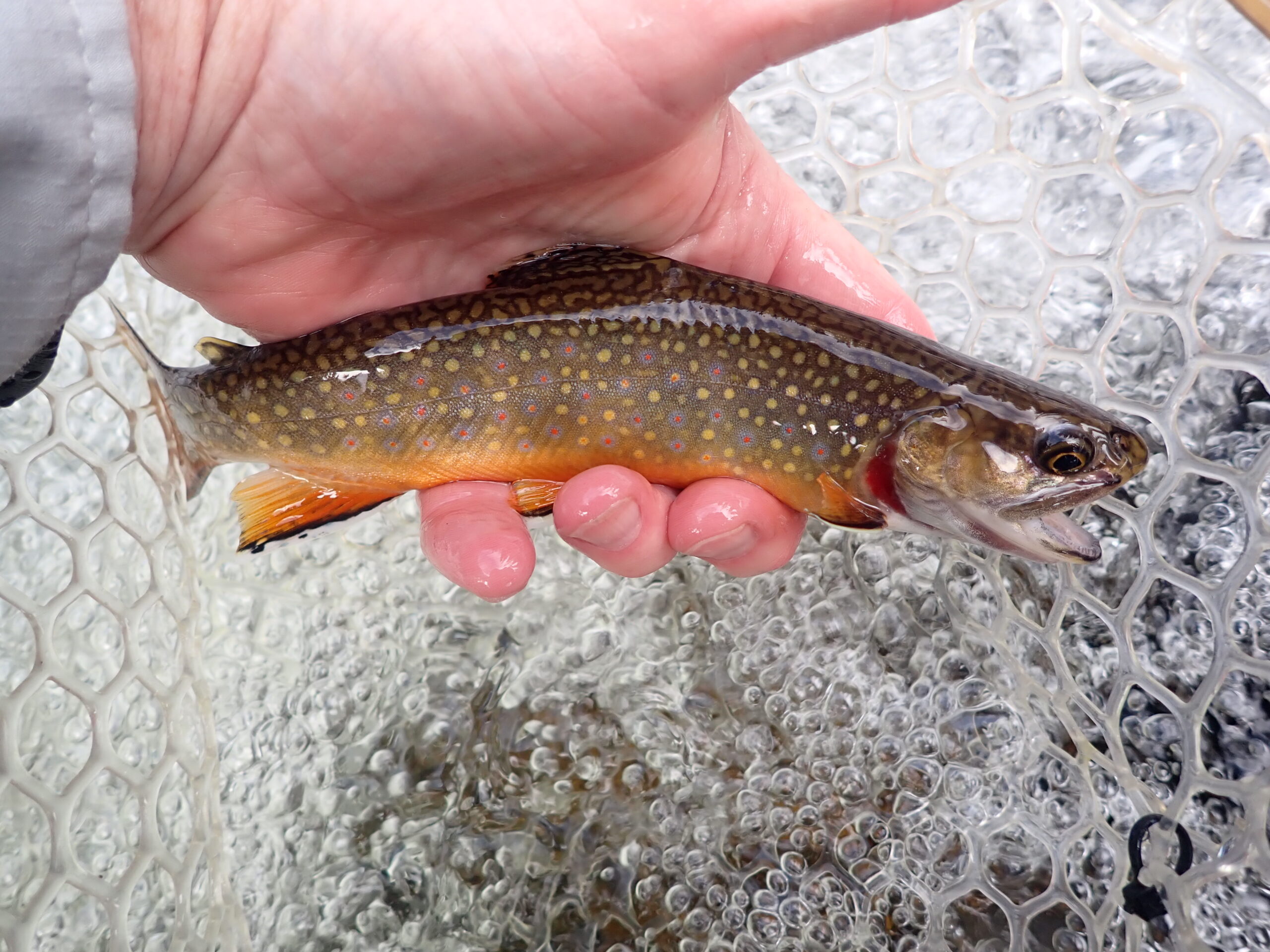
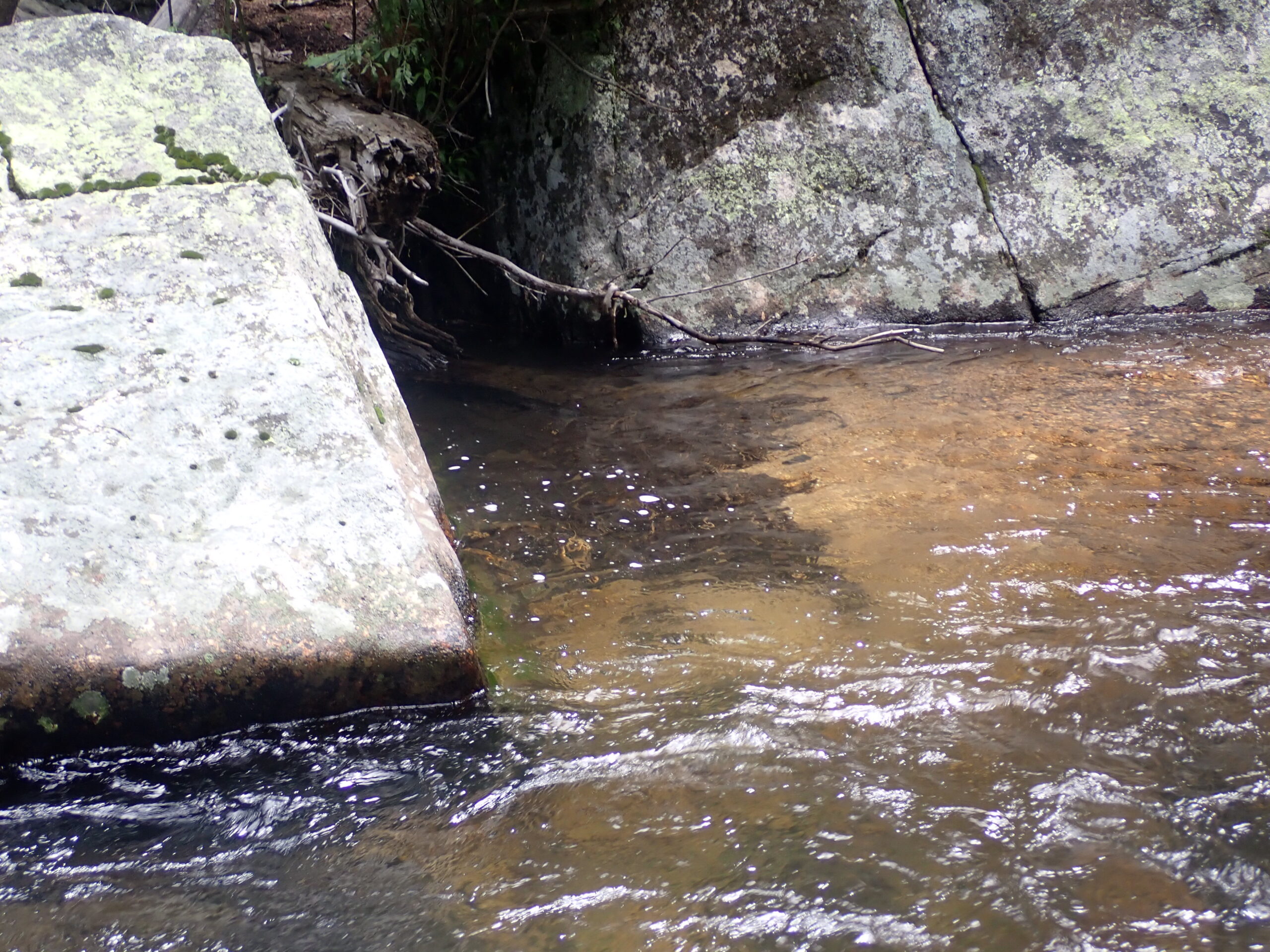
I rigged my Sage One five weight in order to combat the wind, and I hiked down the road a ways, until I encountered a very narrow section with whitewater chutes. That became my starting point. I rigged with an amber ice dub body chubby Chernobyl, a 20 incher and a silver bullet nymph. I began casting at 11:30AM, and by the time I broke for lunch at noon I netted two fine trout. The first was a fifteen inch brown that grabbed the stonefly imitation, as it swung in front of an exposed boulder. The fourteen inch rainbow emerged from a nice riffle of moderate depth, and it also snapped up the 20 incher. I was very encouraged by my thirty minutes of success in the morning.

Rainbow Was From This Run

After lunch I continued up the river prospecting with the dry/dropper, although I swapped the silver bullet for an olive perdigon. The sky continued to vary between large clouds and brief periods of sun, but the wind chill reinforced my decision to wear several layers.

Pointed Back

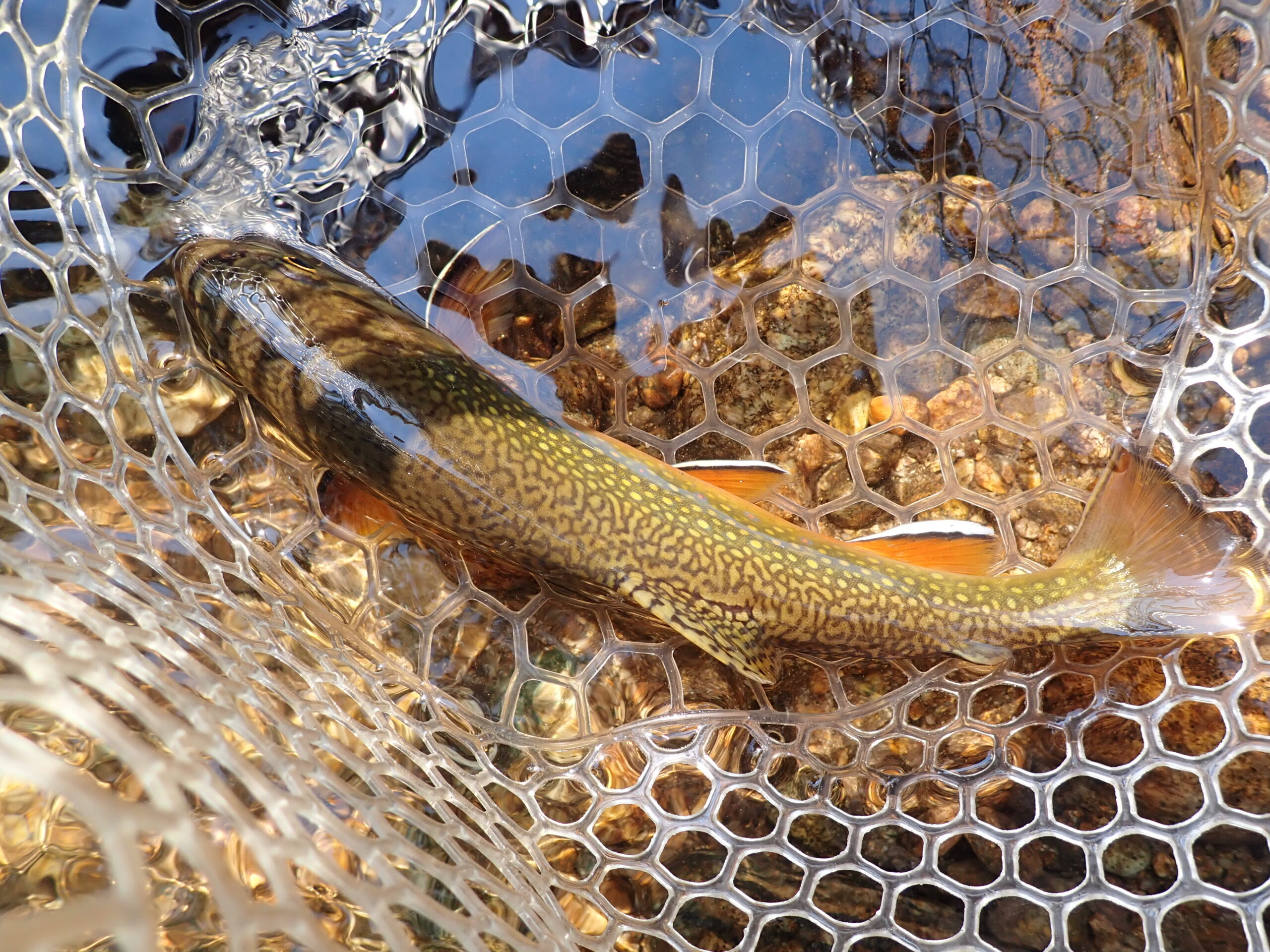
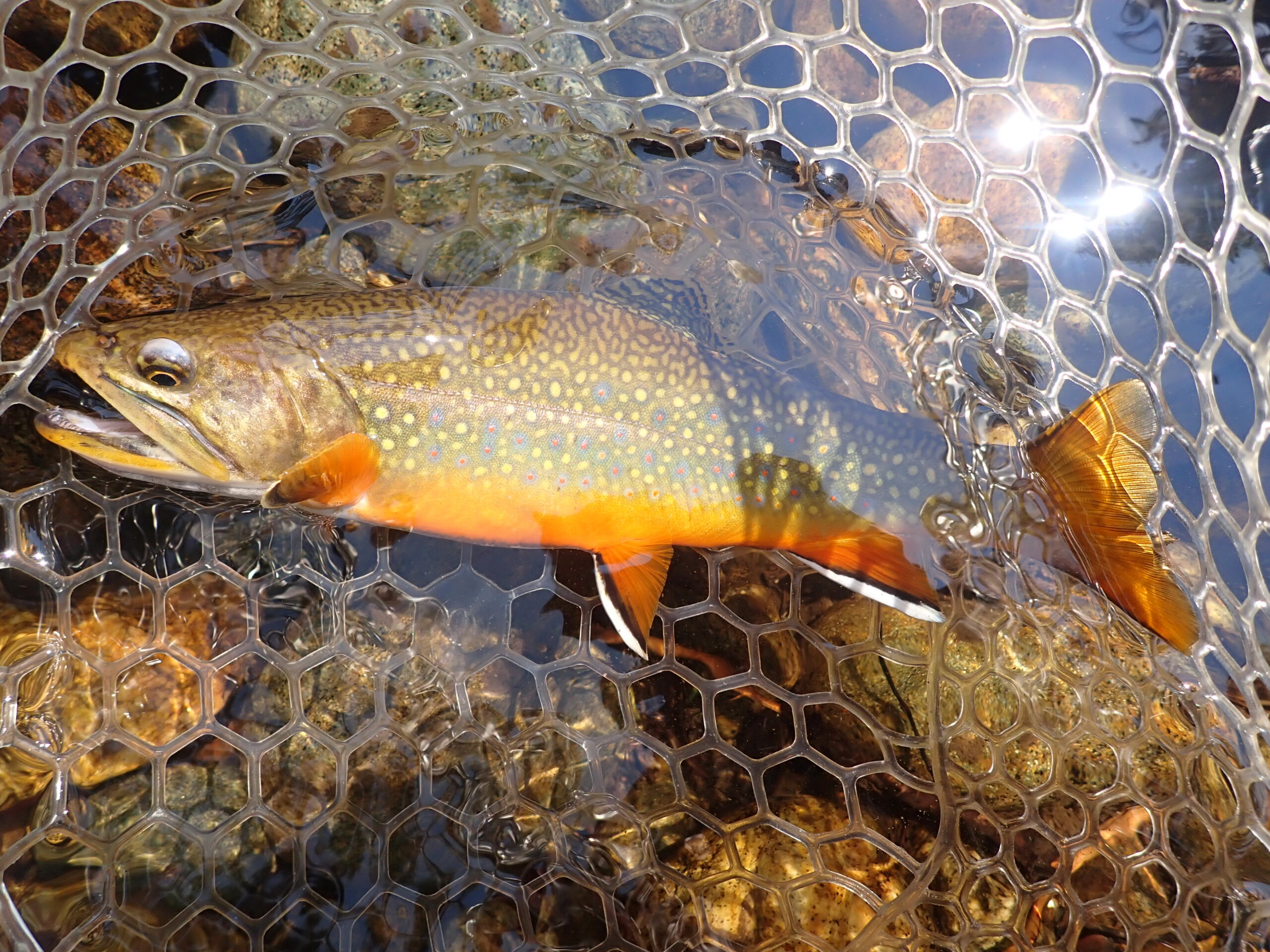
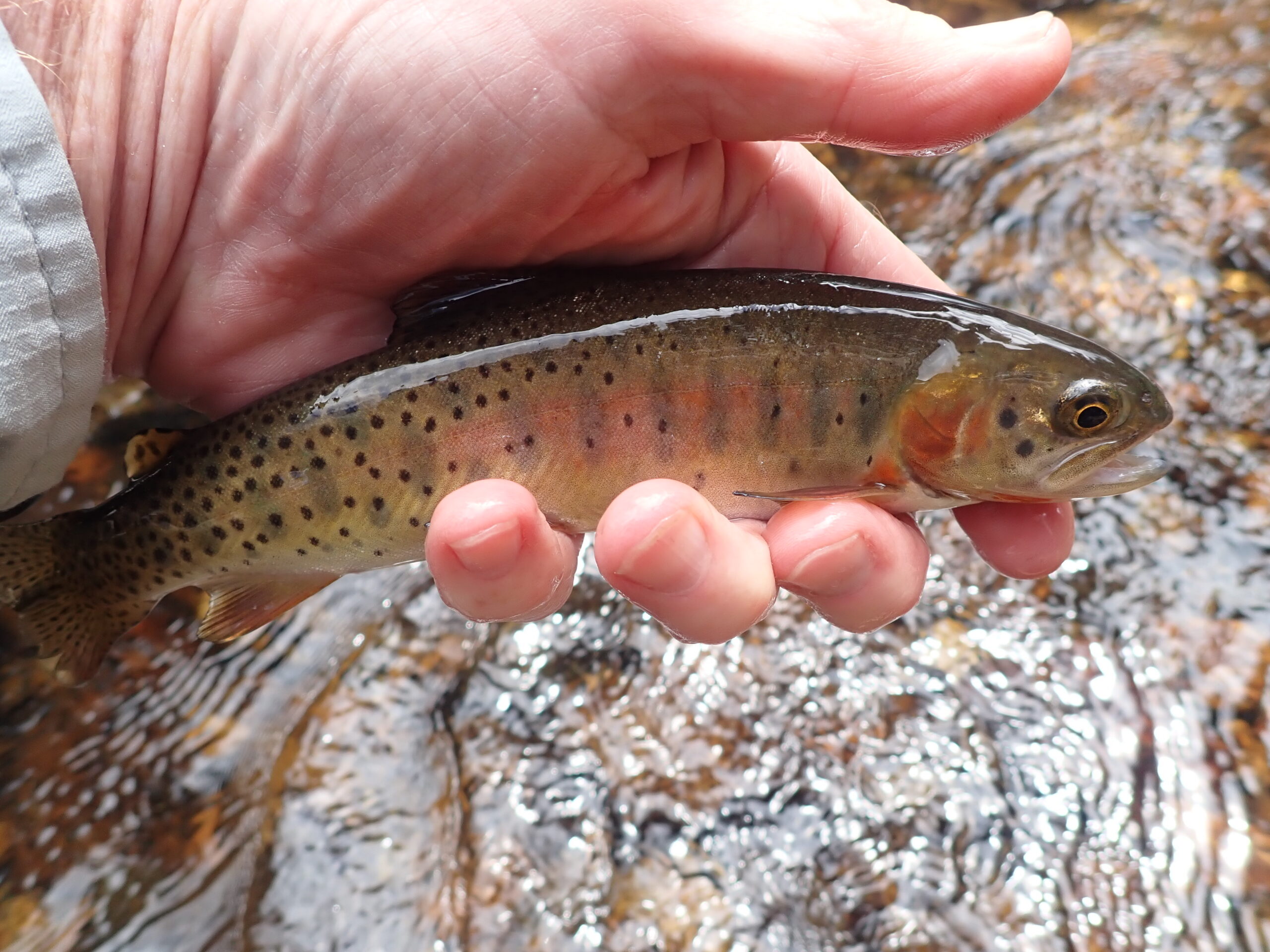
In the two hours after lunch I covered a significant amount of river real estate, and I managed to increase the fish count to four. One of the landed fish was a spunky thirteen inch rainbow, and the other was a thirteen inch brown trout. These fish preferred the olive perdigon, but I executed an abundant number of casts and carefully waded through quite a few very attractive pools and runs in order to net two trout. This was the slow going I expected, when I arrived and felt the winter-like conditions.

Nice Section Ahead

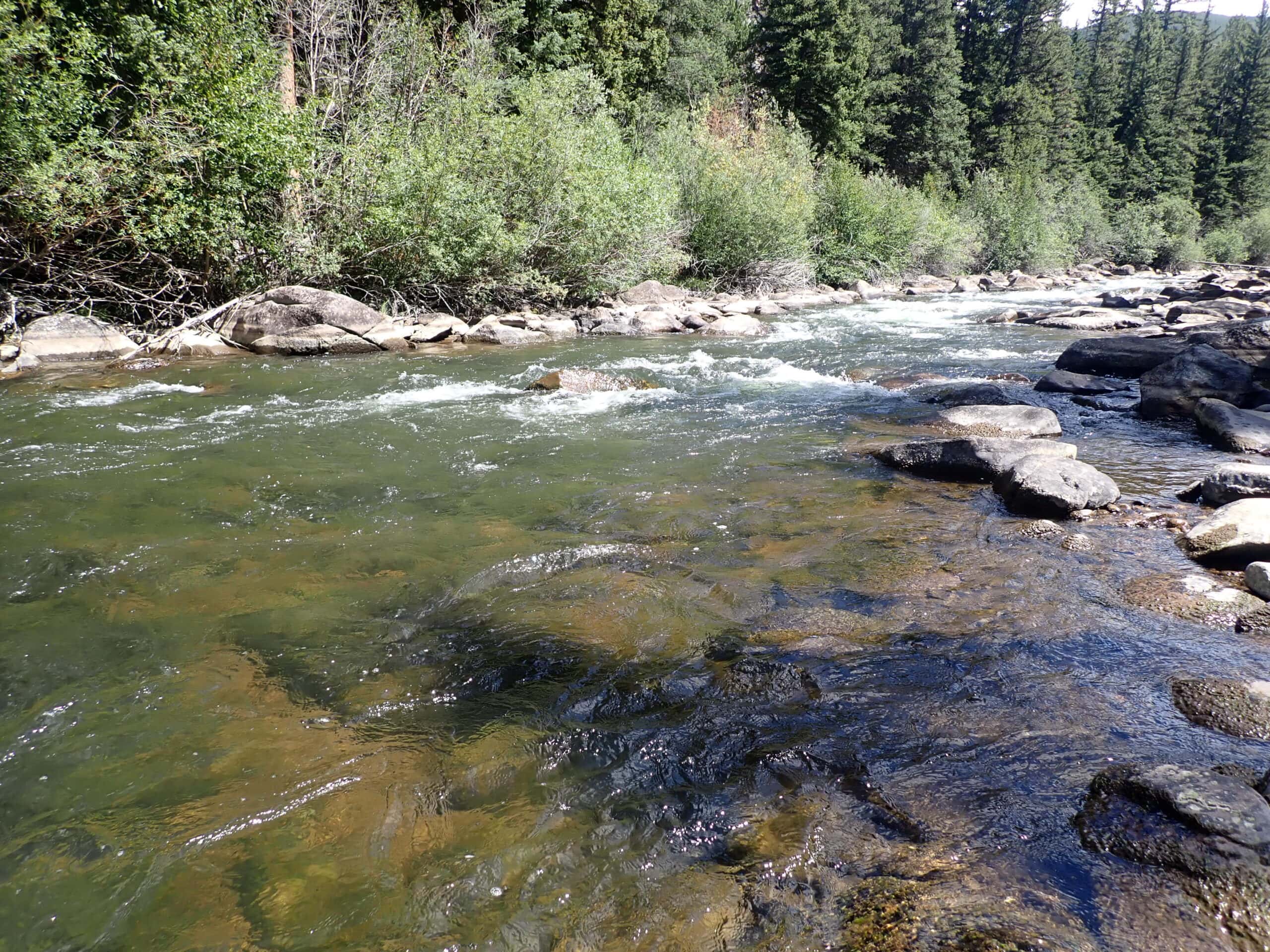
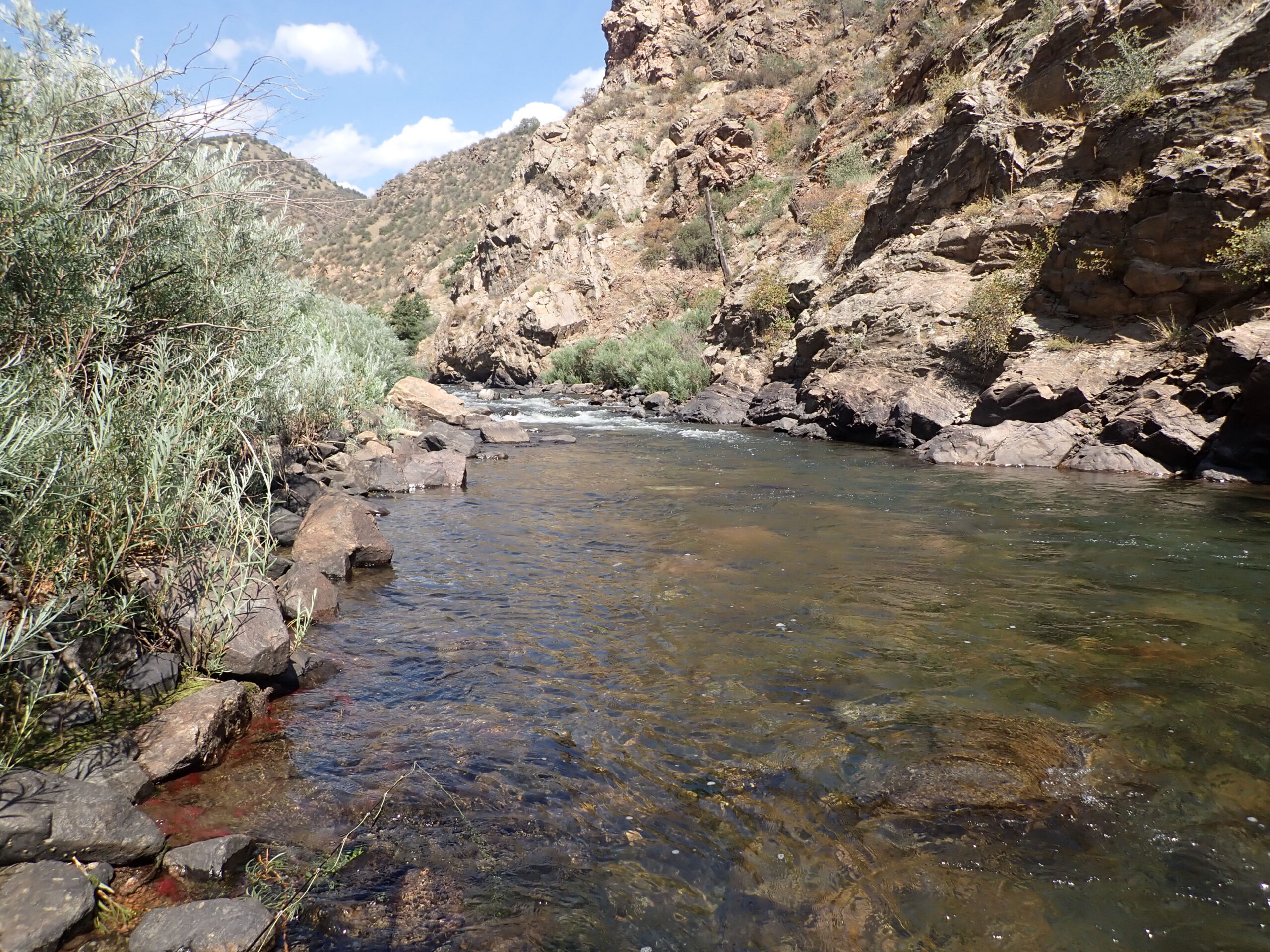
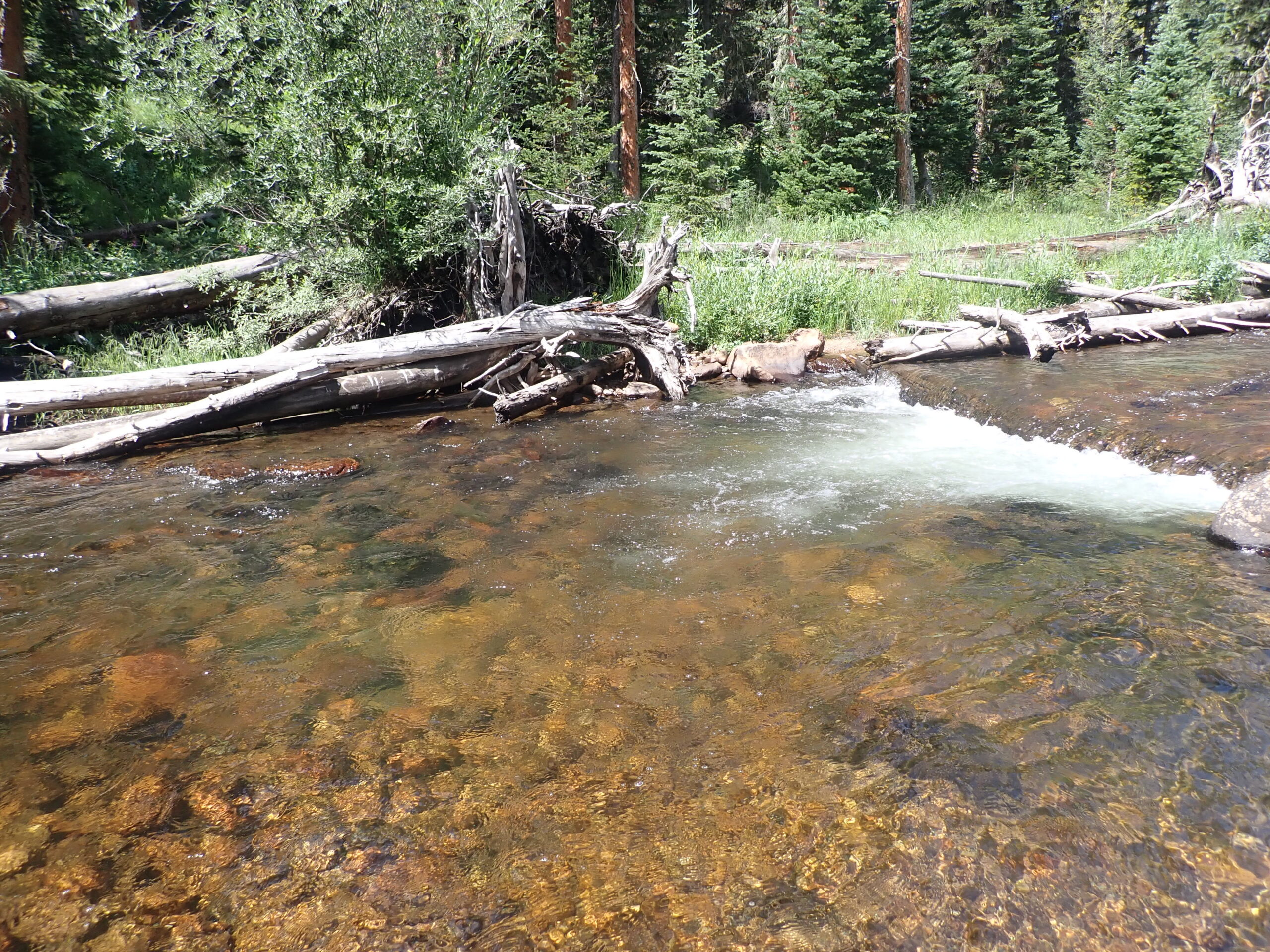
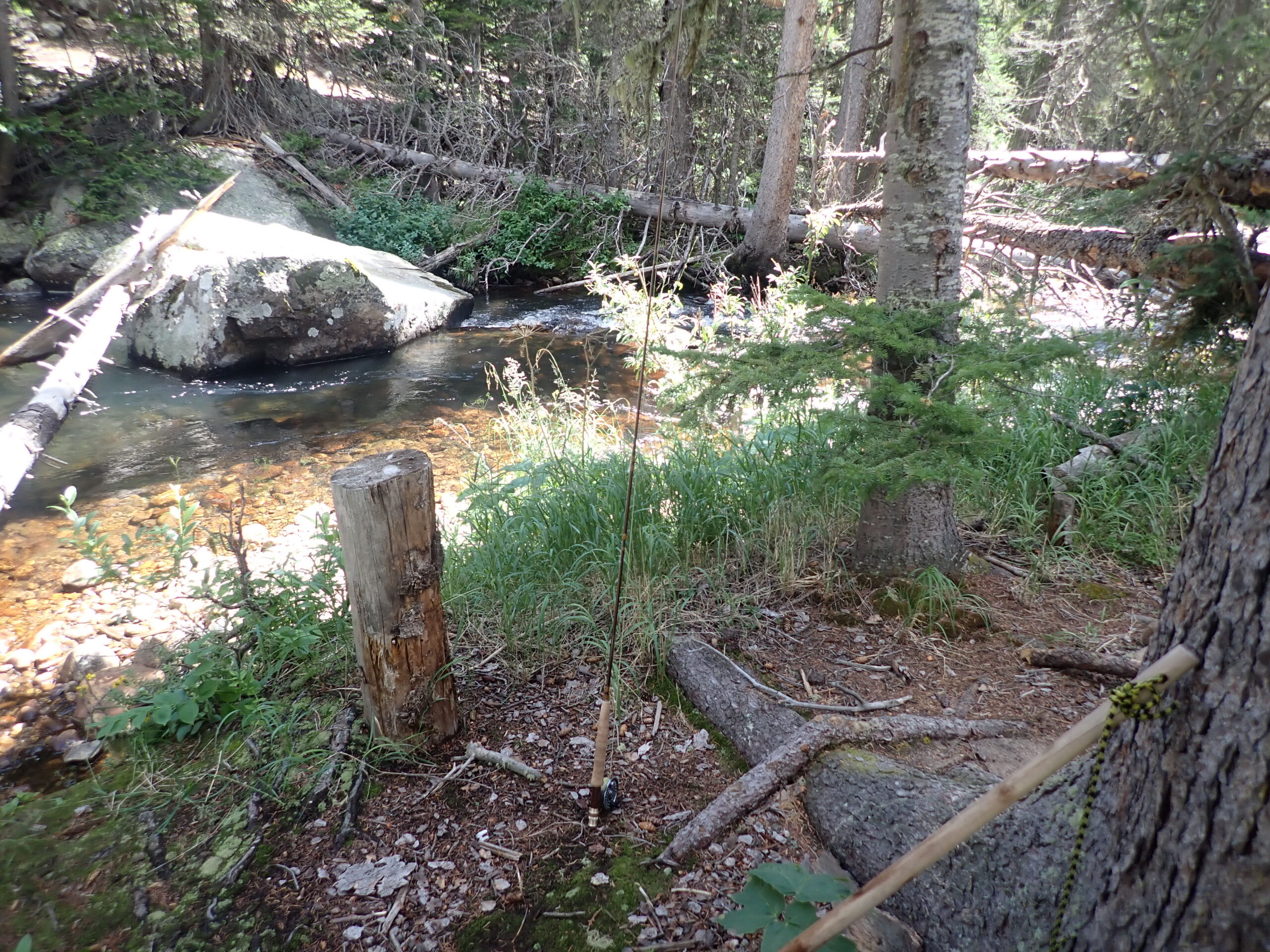
By 2:30PM I reached another whitewater chute area, so I exited and hiked back to the car and moved downstream .5 mile to an area that I was familiar with from some trips last summer. I liked the structure of the canyon in this locale, and I was convinced that it would yield better results.

Nice Chunk

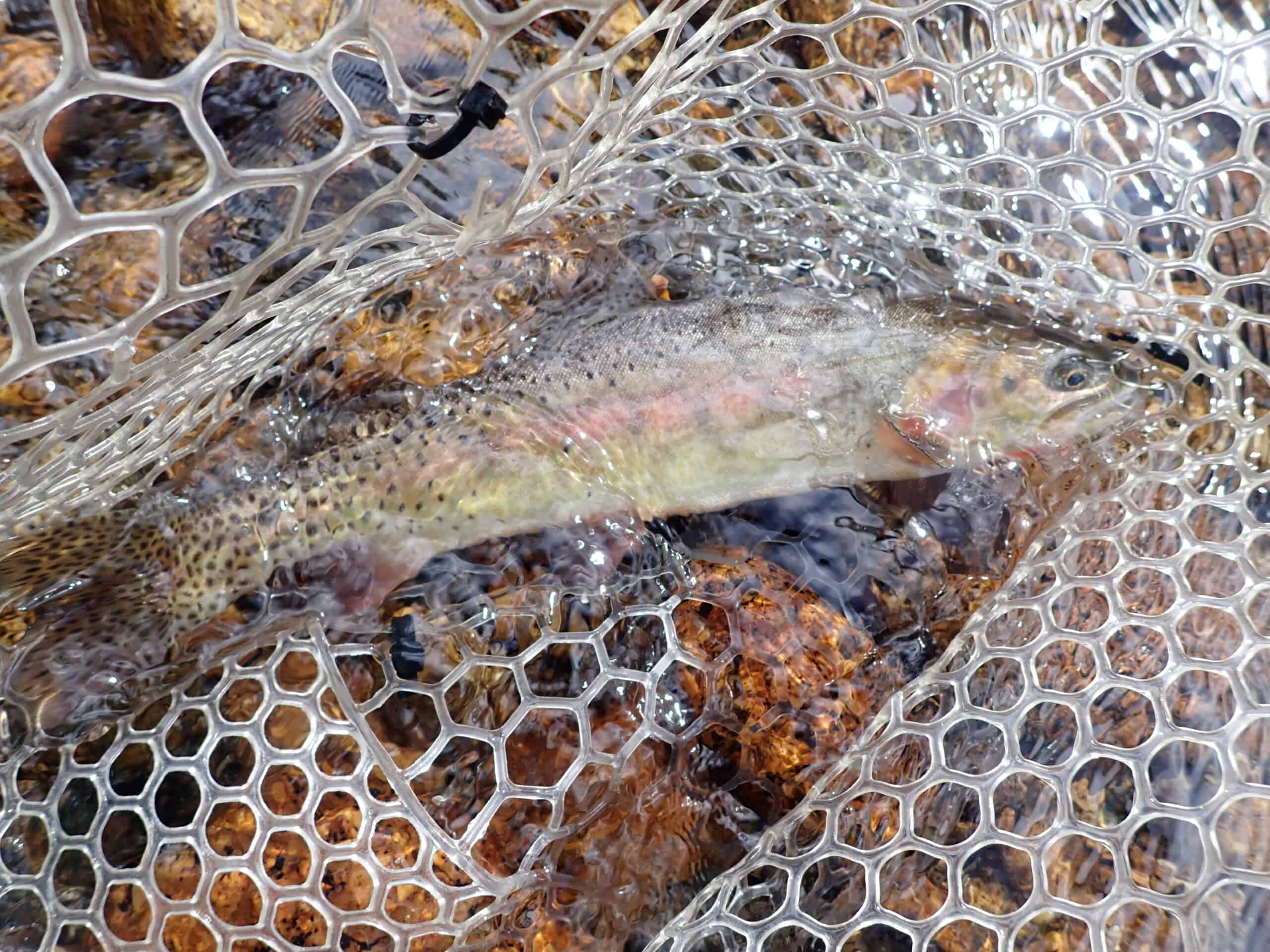
It did. In the last hour, before I called it quits, I landed two nice trout in the thirteen inch range. One was a rainbow and one was a brown, and ironically they emerged from the same nice long pocket and run along the west bank. Both of these fish showed a preference for the olive perdigon. This bit of good fortune improved my confidence, so I persisted for another thirty minutes, but I once again experienced only futility.

Two Trout Came from This Area

Was Friday’s fly fishing an unlucky Friday the 13th outing? It was actually fairly decent for winter conditions in the early season. Did it match Monday? No, but Monday was surely an outlier for early March, and I did not expect a repeat. I will, however, keep my eye on the weather over the remainder of March and look for an opportunity to return to the Arkansas River. Another week or two of mild weather will probably elevate Eleven Mile and the Eagle River into consideration for March fishing trips.

Fish Landed: 6


Arkansas River – 03/09/2026

Time: 11:30AM – 4:00PM

Location: Big Horn Sheep Canyon

Arkansas River 03/09/2026 Photo Album

I wrapped up my fly tying, and with high temperatures forecast to reach the mid-70’s on Monday, March 9, 2026, I sought a destination for my maiden fly fishing outing of 2026. I did not have to search very far, before I settled on the Arkansas River in Big Horn Sheep Canyon. The flows were around 300 CFS and ideal for wading, and the high temperature was projected to be around seventy degrees. These were prime fishing conditions for September, not late winter.

With the recent time change in place, I did not plan to be on the river early, since 11AM was really comparable to 10AM temperature-wise under standard time. I departed Denver by 8:20AM, and this enabled my arrival at my chosen fly fishing destination by 11AM.

New Setup

For my first day of fly fishing in the new year, I was breaking in a new raincoat, sungloves and new eyes. New eyes you ask? This was my first attempt to fish following cataract surgery on both eyes in December. I had my distance vision restored to 20/20, but the offset to this was an inability to see up close without the aid of magnifiers. Consequently, I was sporting new non-prescription sunglasses and magnifiers that clipped on to the brim of my hat. I tested Clic readers, but the retainer on the Clic tangled with the retainer on my sunglasses. The clip-ons only cost $10, so I concluded that the experiment was cheap, and I could always default to dueling magnifiers. In fact, I stuffed the magnifiers in my backpack just in case. The eyewear conundrum also created a change to my headwear. My floppy wide-brimmed hat was not stiff enough to hold the clip-ons, so I opted for a billed baseball cap. How would all these changes work out? Stay tuned.

First Fish of the New Year

In addition to the equipment modifications, I tied quite a few new flies over the course of the winter, and I was anxious to break them in as well. I had two Lance Egan flies, the Frenchie and silver bullet. From Juan Ramirez I tied some sniper baetis, and from Charlie Craven I produced some mole flies. I hoped to see some blue wing olive activity in order to test the baetis, silver bullet and mole fly.

Beast Filled the Net

Because of all the changes in my routine, it took me longer to prepare to fish than normal, but I found myself situated along the river ready to make my first cast at 11:30AM. I started my pursuit of trout with an amber ice dub chubby Chernobyl, Arkansas rubber legs, and silver bullet. I read that molting stoneflies were in play and that blue wing olives were hatching. There was intermittent gusting of wind, but for the most part the weather was nearly perfect. During the thirty minutes before my lunch break at noon, I landed one twelve inch brown trout on the Arkansas rubberlegs, and I experienced two temporary hook ups. I was pleased with the amount of early action.

Olive Perdigon Still Stars

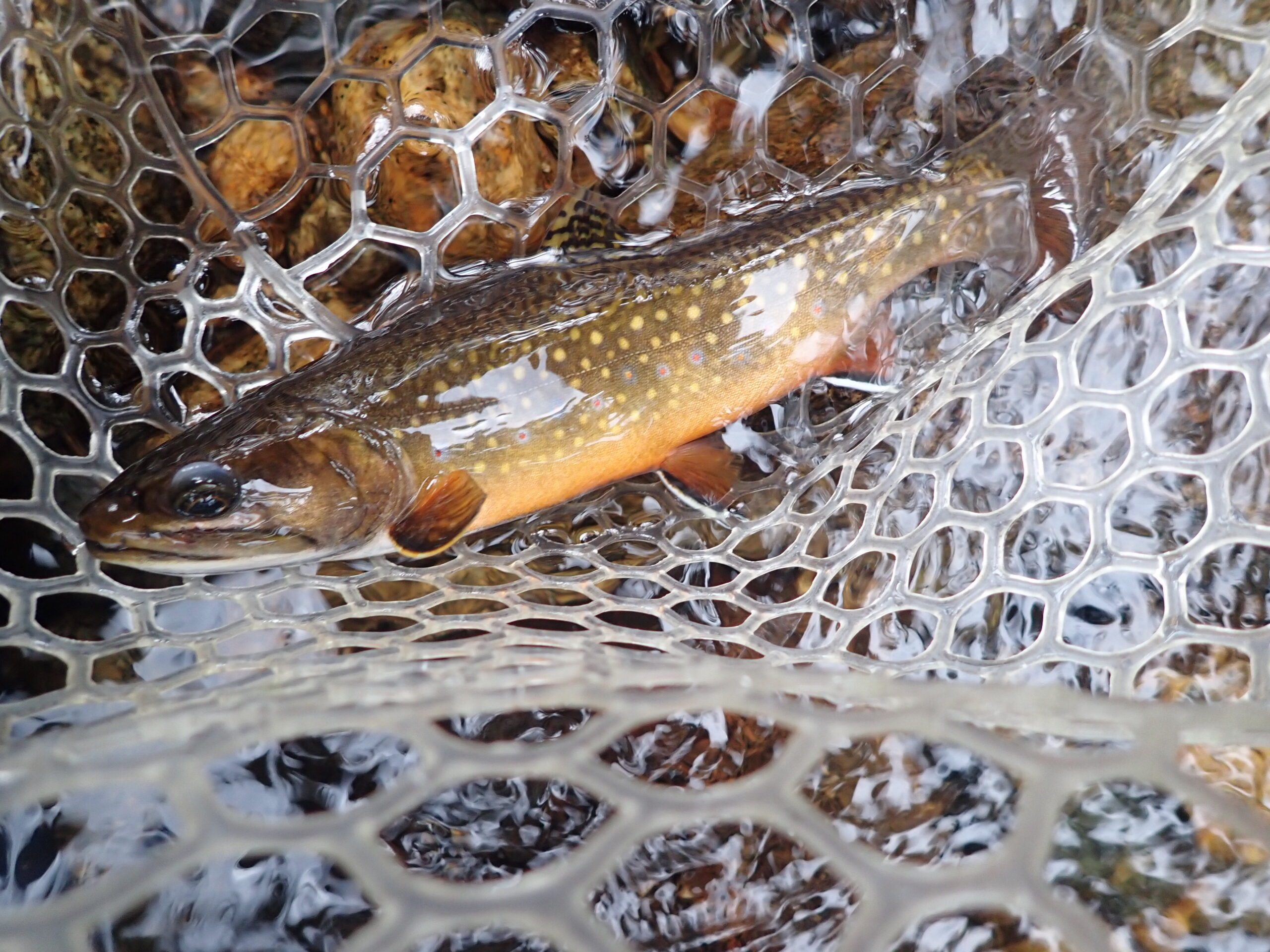
After lunch I continued up the river, but I suffered through a forty-five minute drought. The section that I fished was a bit marginal, and I managed another long distance release, but my nymphs continually snagged bottom. I concluded that the conehead Arkansas rubber legs was too heavy, so I exchanged it for an olive perdigon and swapped the silver bullet for a sniper baetis. This move paid dividends, and I landed a gorgeous eighteen inch rainbow that snatched the olive perdigon.

Long Brown Trout

Unfortunately another cold spell ensued, and I now felt as if my drifts were not gaining enough depth, so I added a 20 incher and trailed the tungsten bead olive perdigon. This action turned the tide, and for the remainder of the afternoon I progressed up the river and built the fish count from two to fifteen. Needless to say, I was a very happy angler.

Great Trough

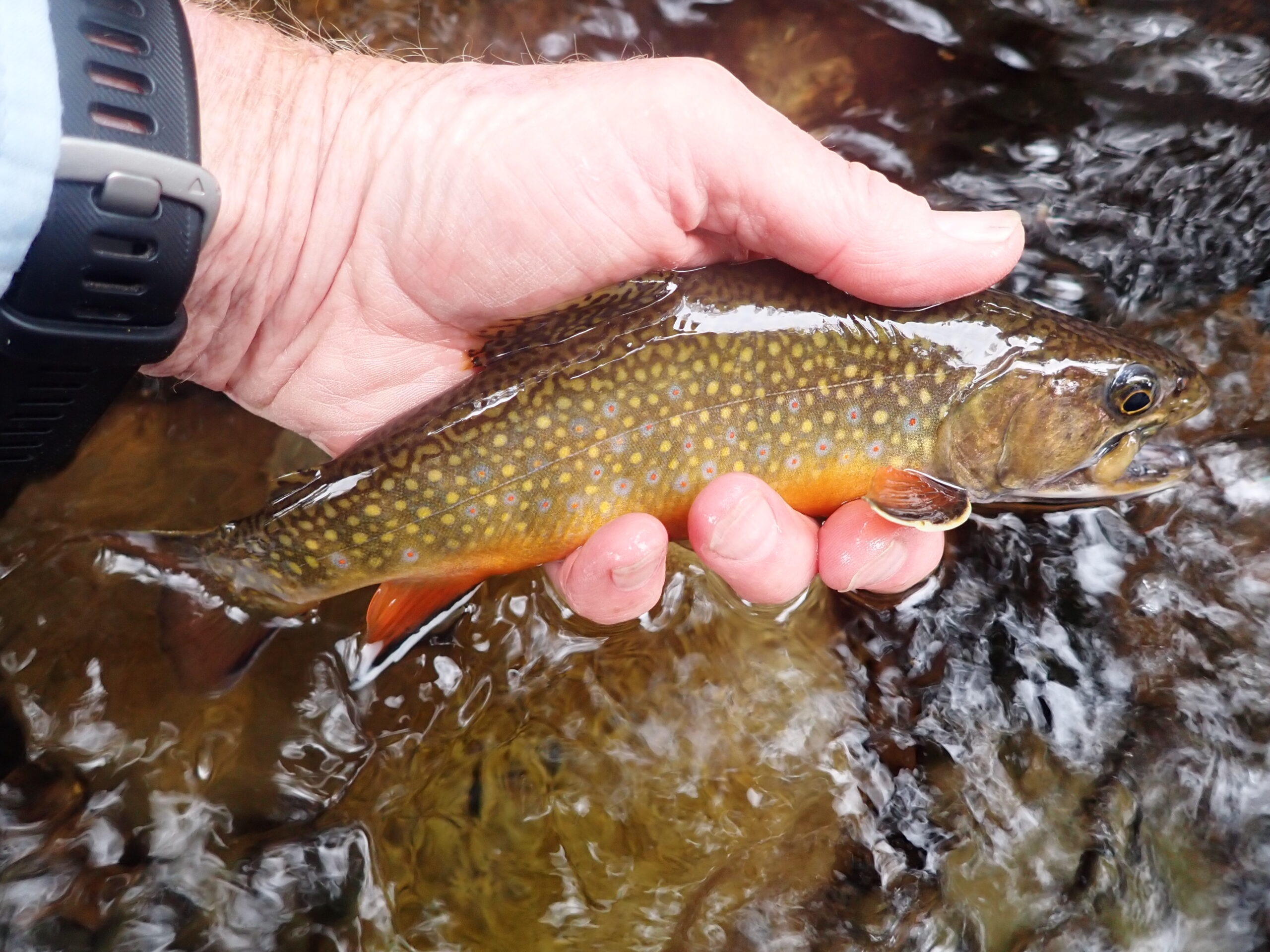
Roughly half of the landed fish snapped up the olive perdigon, and the remainder chomped the 20 incher. The quality of these fish was unsurpassed. I fought and landed a football sized brown trout that probably extended to eighteen inches, and another brown trout filled the net to about sixteen inches. A few more rainbows were in the mix, but the catch on March 9 was predominantly brown trout. Every fish that I landed on Monday was twelve inches or greater and many browns in the thirteen inch slot prevailed. I was quite pleased with the size of the trout that rested in my net.

This Was a Hot Spot

Between 2PM and 3PM there was a fairly dense blue wing olive emergence, although I never saw surface feeding. The wind was at its worst, and the tiny mayflies tumbled across the surface and through the air, as I looked on. By this time I was in faster pocket water, and it was impossible to see naturals or rises among the swirling currents, so I stuck with the dry/dropper approach. And why not, since I was landing gorgeous fish along the way. Nevertheless, I never had the opportunity to experiment with the mole fly.

Best Brown of the Day

What a day! This was, in all likelihood, my best opening day ever during my many days of fly fishing. The river was in perfect condition, and it appears that hatches are two to three weeks ahead of schedule.

Fish Landed: 15

Sniper Baetis – 03/06/2026

Sniper Baetis 03/06/2026 Photo Album

I am a fan of Juan Ramirez and a follower of @hopperjuan_fly_fishing on Instagram, and I recently saw a post of Juan’s sniper baetis. I watched the tying video and determined that it was a fairly straightforward tie, so I added it to my list. I reached the end of my list of all the standard flies that I tie based on my many years of fly fishing. It was now time to try a new fly.

Slim Baetis

My go to baetis nymph flies are RS2’s. Juan posted a photo of his sniper baetis next to some natural nymphs, and I concluded that his imitation possessed a slimmer profile and, thus, a more precise imitation of a baetis nymph.

Left Side Angled

Juan’s example was a brown version of the sniper, but he suggested they could be tied in brown, olive and gray. I decided to go with olive. I did not have the requisite fine black wire, so I substituted silver, and I made the tail from brown ring neck pheasant body feathers. For the legs and wing case, I used gray fluoro fiber. Juan’s fly did not include a bead, so I followed suit in that regard.

Background Materials

I tested the sniper baetis on my first outing on the Arkansas River, but it did not yield results, although I gave up on it after twenty minutes. I plan to give it more trials, before I draw any conclusions. If I tie more, I will probably elect to use a darker olive thread for the body. The naturals in Juan’s photo were quite dark.

Sunken Tricos – 03/01/2026

Sunken Tricos 03/01/2026 Photo Album

As I prepared to write this blog post on sunken tricos, I searched for and found my oldest previous post on this fly. The story behind my introduction to sunken tricos was well documented, and I enjoyed refreshing my memory. A materials table was also present, although I failed to use it to tie new sunken tricos.

Lovely

I had quite a bit of success on the North Platte River with the sunken tricos that I purchased; however, I must admit that I have not repeated that magical day. I am convinced, however, that an opportunity during a dense trico hatch would make my ownership of sunken tricos pay off.

Angled Head On

I counted my inventory, and I decided to tie three additional tiny versions to increase my supply to a nice round number. The output from my effort now resides in my small fly canister, and I am prepared for a trico hatch in 2026.

Materials in the Background

Wiggle Damsel – 02/28/2026

Damsel Nymph 02/28/2028 Photo Album

For a description of my early experimentation with damsel nymphs, check out my post of 12/04/2011. This marked the advent of the wiggle damsel in my fly box. My most memorable experience with the wiggle damsel occurred on Lago Fonck in Argentina, when I pulled out a wiggle damsel without my guide’s advice, and it performed in amazing fashion.

Humped

Unfortunately my other interactions with this fly have not been as momentous. I have had some sporadic success, but perhaps the larger problem has been finding damsel nymph emergences. Apparently timing is everything.

Articulated

The wiggle damsel is another example of a fly that I maintain adequate quantities of, so I skipped additional tying. Maybe this is the year, when I hit a thick damsel emergence.

Yellow Sally – 02/28/2026

Yellow Sally 02/28/2026 Photo Album

When I counted my yellow sally stock, I learned that I was adequately supplied. My post of 02/02/2016 provides a nice report on the timing of yellow sally emergences and my interaction with them.

Diving

I have witnessed some of the densest emergences of yellow sallies on the Eagle River in early July. I would not want to be without some of these flies during those times. I tried different patterns, but I settled on a version that is essentially a deer hair caddis tied in yellow. They work. I have also experienced success with iron sally and hares ear nymphs during yellow sally hatches.

Diving the Other Way


Tricos – 02/28/2026

Tricos 02/28/2026 Photo Album

The oldest previous blog post that I could find on trico spinners was dated 01/15/2012.  I reread it with interest, and it captures my earliest days of fly fishing using trico spinners. The place where I encounter tricos in Colorado the most consistently is on the South Platte River in Eleven Mile Canyon, although I have not experienced this phenomenon in recent years. Nevertheless, I like to have some on hand just in case.

Long Tails and White Wings

My 01/15/2012 post cites the usage of gray sculpin wool for the wing, but I have since reverted to white antron wings. I am not sure why. The change probably relates to the long amount of time that elapsed between tying trico spinners. I like the look of the crinkly white antron wing quite a bit. Hopefully I will get an opportunity to test some out in 2026. The trick is to be in the right place at the right time.

Overhead

I counted my trico spinners and determined that I was adequately supplied, so I did not spin out any additional imitations. I will hope for a trico spinner fall in 2026.

Parachute Ant – 02/27/2026

Parachute Ant 02/27/2026 Photo Album

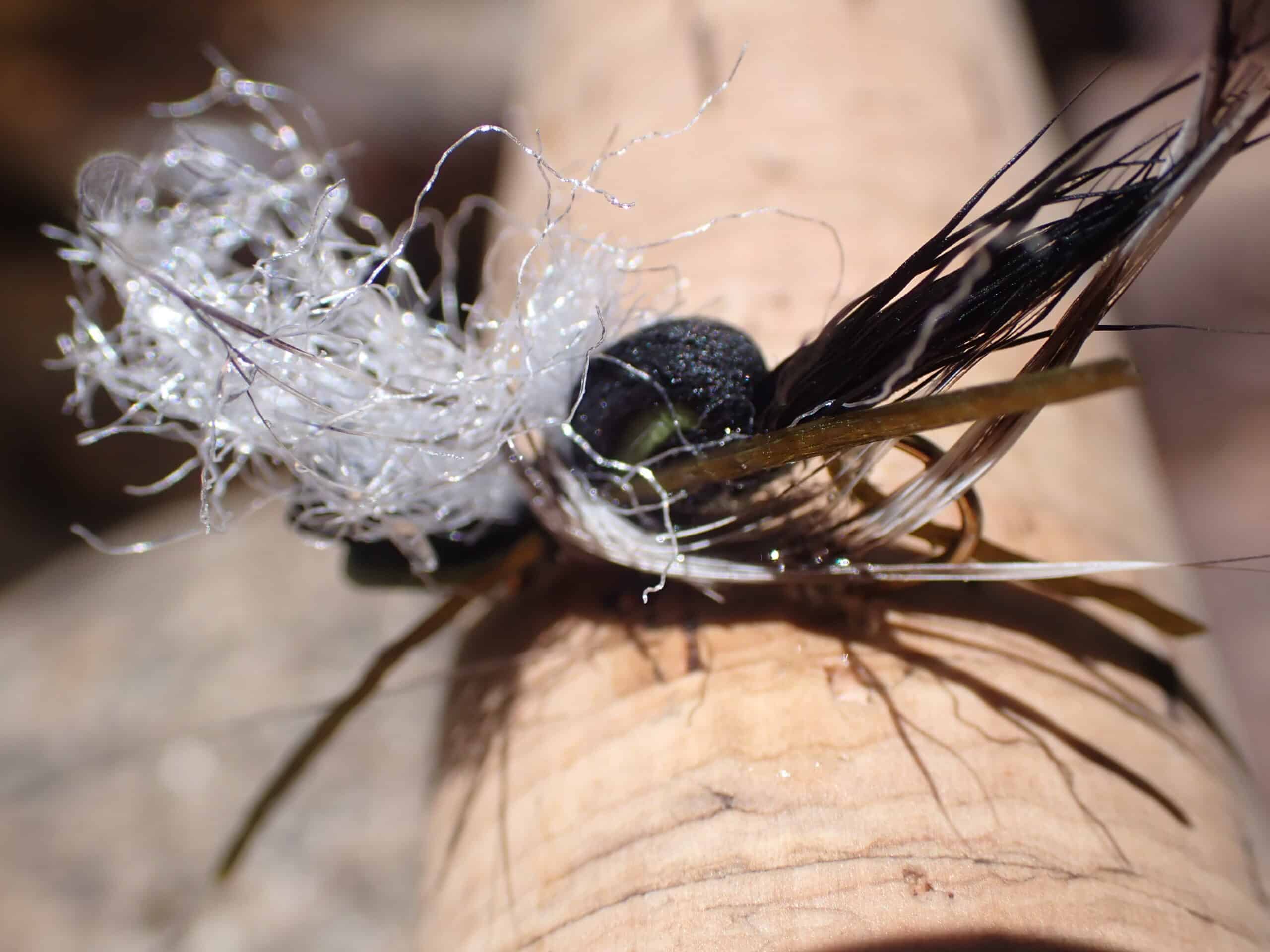
Every time I decide to tie parachute ants, I refer back to my post of 01/11/2012, because it contains a materials table and step-by-step tying instructions. I watched a tier from Pennsylvania tie these and recorded notes in my iPhone, as he walked me through the steps.

I do not use this fly frequently, as I am burdened with the paradigm that fish cannot see small flies as well as larger flies. Shame on me. I suspect that a size 18 black ant would produce quite well as the tail fly in a two dry fly arrangement when paired with a more visible leading  fly.

Right Side Angled View

The situations when I gravitate to a parachute ant are nearly all very challenging. When I encounter a regularly feeding trout, and I am unable to gain attention with what I feel is an imitative dry fly, I sometimes resort to the black parachute ant. While not always the case, the ant does come through in many difficult situations, and fooling a fish under these circumstances is highly rewarding. I would not want to be on a stream without a supply of parachute ants.

Left Side View

For some reason I stock only black ants, although I am sure that brown or even red might get the job done as well. I tie nearly all size 18. I have a few larger bionic ants made of foam, but I rarely pull them from my box. I was preparing to tie another fly, and as I searched through my zip lock bag of materials, I stumbled on some McMurray ant bodies. My friend in Pennsylvania gave me these, and I should probably whip out a few. They float quite well and are very realistic in profile as they contain the ever critical narrow waist.

Nice Waists on These

I counted my parachute ants and discovered that I needed two replacements to bring my total to a nice round number. I found one damaged ant, and after my efforts were complete, I possess three additional black parachute ants. Having an adequate supply gives me a feeling of comfort.

Comparaduns – 02/25/2026

Comparaduns 02/25/2026 Photo Album

My post of 02/21/2014 provides an excellent story behind the concept of a comparadun and my long road to adopting them as my preferred style of imitating mayfly duns. I highly suggest reading this report.

I have been fishing in Colorado and the west since 1990. That’s thirty-six years, and the comparadun has evolved into my workhorse fly for imitating mayflies. I previously posted a report on the green drake comparadun, so I will not repeat text on that fly here. The main mayfly species that I continue to imitate with comparaduns is the pale morning dun. PMD’s emerge from the middle of June until September in western waters. The freestones provide pale morning dun activity between mid-June and early August, while the tailwaters feature these abundant mayflies during August and September. I have experienced some hatches into October on tailwaters.

Cinnamon and Light Gray

During these hatches I knot a cinnamon or light gray comparadun to my line, and more times than not, they deliver fish. The trout take them with confidence. Occasionally one color works better than the other, so I have to experiment with a few fly changes. Size is another variable that throws in a wrinkle. I carry mostly size 16 along with some 18’s and a few 14’s. Late season hatch matching on the Frying Pan River typically demands cinnamon comparaduns in size 18.

Turned Around

I counted my comparaduns, and not surprisingly, my supply seemed adequate. I do not recall encountering many pale morning dun hatches during 2025. I will certainly need to remedy that situation in the coming year. I did not tie additional PMD’s, but I did refurbish one that was reduced to a very sparse clump of deer hair fibers for the wing.

CDC Blue Wing Olive – 02/18/2026

CDC Blue Wing Olive 02/18/2026 Photo Album

For an early narrative on the origin of the CDC blue wing olive (CDC BWO) please refer to my post of 03/11/2014. I read it before writing this post, and it was a nice refresher.

This fly remains my go to choice, when I encounter a blue wing olive hatch in the spring and fall. It seems to work quite often, and it is a relatively easy fly to tie. I find that it functions best, if I can make a downstream cast. Of course, this involves staying low and out of the trout’s window, since they are looking upstream, and I am above them.

Nice View

I tie these small flies primarily in size 20 and 22, although I have been known to produce a few 24’s. I tie in a small clump of CDC first in the same manner, as I create a comparadun wing. Next I move the thread rearward and create a tail made from two microfibbet tips. When I start the thread, I do not snip off the tag end, because I use it to pull back through the microfibbets to split the tails. As a last step, I dub a very fine noodle to form a tapered body and thorax.

Left Side

This fly is normally the first one I choose during a hatch. However, there are occasions, particularly when it is windy (quite often the case during BWO hatches), when the fish totally ignore this fly. These instances are very frustrating. I have had some success with adding some hackle, wound Catskill style, behind and ahead of the CDC wing. I believe that baetis mayflies create a commotion fighting the wind to get airborne, and the trout key in on movement, and the addition of hackle conveys more motion.

Five New Hackled Versions

I counted my CDC BWO’s of all sizes and determined that my inventory was adequate, so I approached the vise and produced five new versions with hackle collars in size 20. Hopefully these will fool trout during windy conditions, when the trout’s feeding habits become too finicky.